[affiliate-disclosure]
Last updated: March 2026 by Daniel Park, Licensed Cosmetologist
[table-of-contents]
Every Korean man has gotten a two block at some point. It is the default. Walk into any barbershop in Gangnam, Hongdae, or the Koreatown strip on Western Avenue in LA, and the two block haircut is the cut the barber assumes you want unless you say otherwise. There is a reason for that: it works on virtually every face shape, looks clean without much effort, and gives you enough length on top to style it a dozen different ways.
This guide breaks down everything about the two block cut, from the original Korean barbershop technique to the modern variations showing up on K-drama actors and K-pop idols in 2026. You will learn the exact terminology to use with your barber (in English and Korean), how to style it at home in under five minutes, which products actually hold thick Asian hair in place, and how to navigate the awkward growing-out phase. If you want the quick version, jump to How to Ask Your Barber.
What Is the Two Block Haircut?
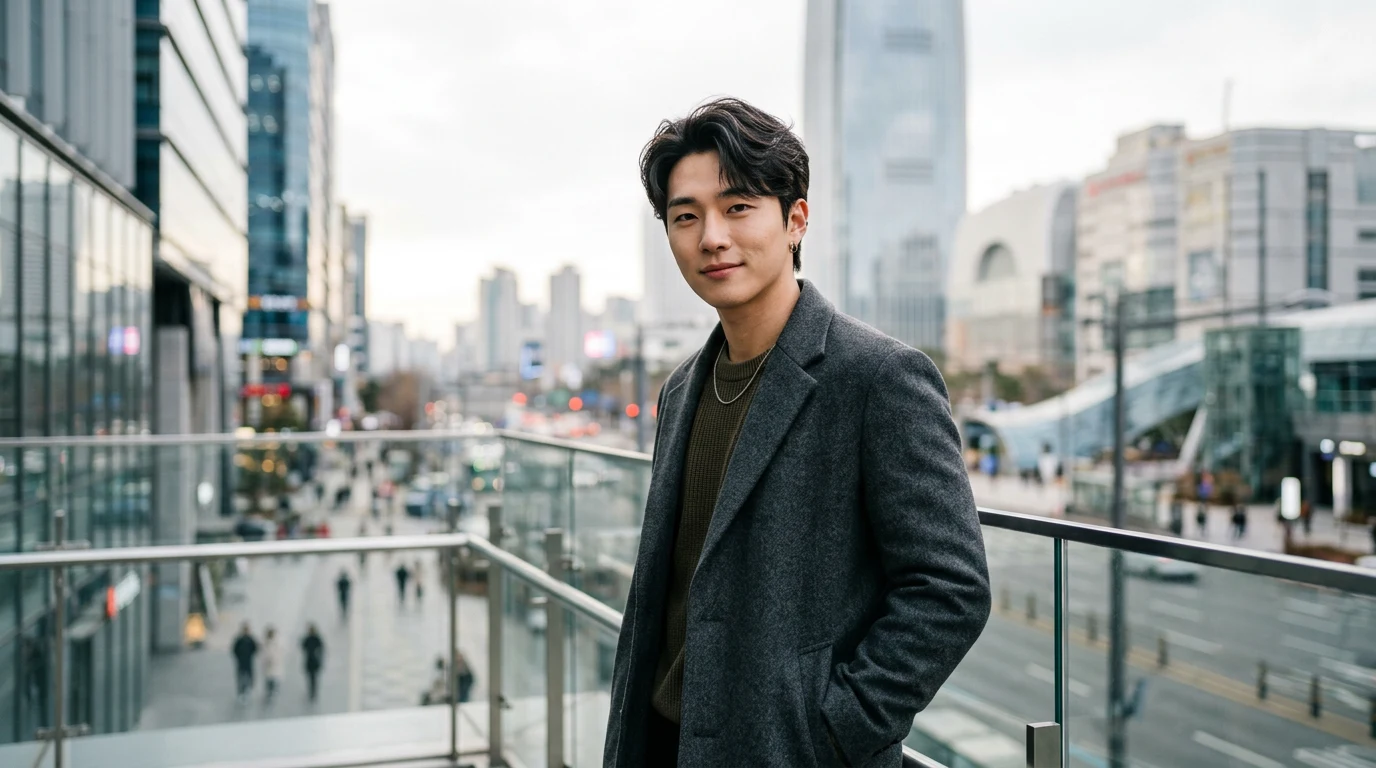
The two block haircut is a Korean men’s hairstyle built on a simple concept: your hair is divided into two distinct “blocks” of length. The sides and back are clippered short (typically a #3 to #5 guard, or about 6mm to 16mm). The top stays long, anywhere from 3 to 7 inches. The longer top section falls over the shorter sides like a curtain, creating a clean, structured silhouette.
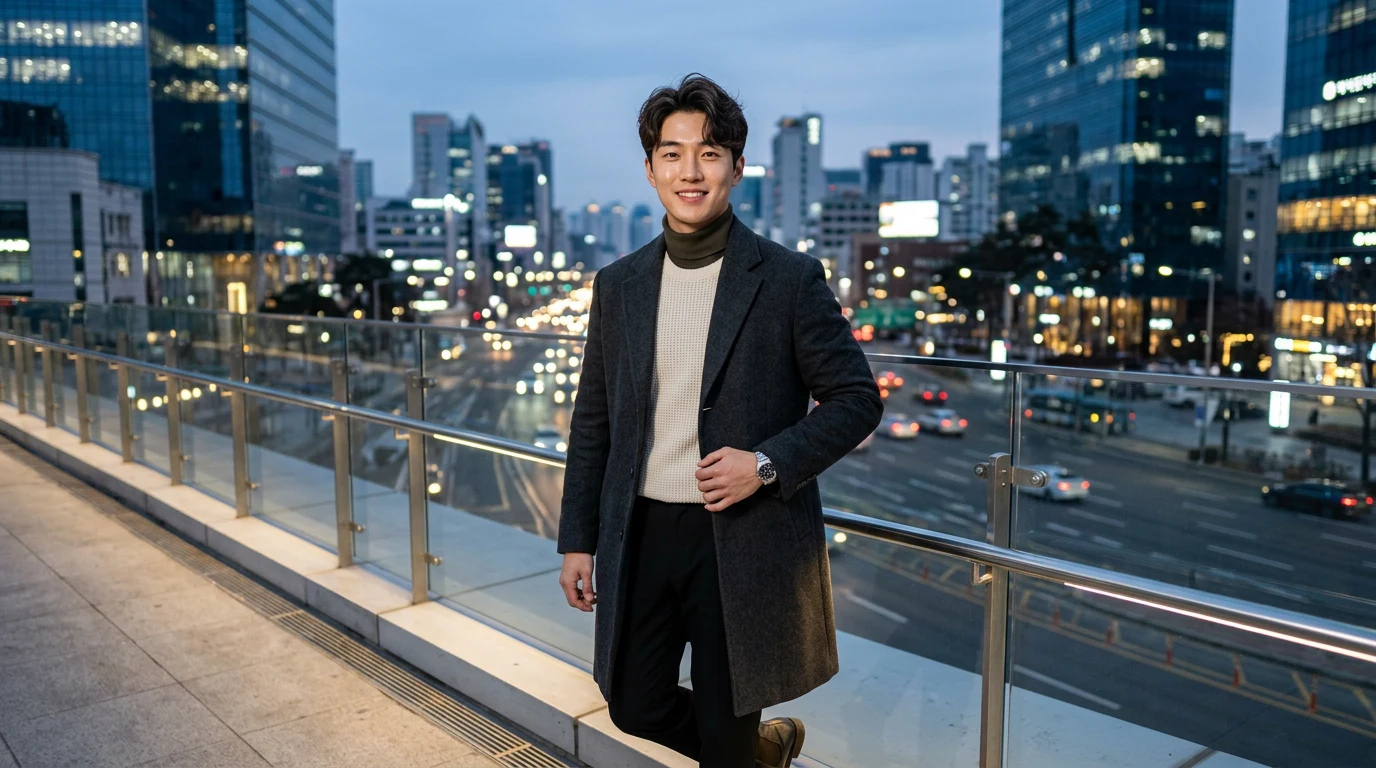
The name comes directly from the Korean term tublleok (투블럭), which is itself borrowed from the English “two block.” Korean barbers started developing this cut in the 2000s as K-pop culture began shaping men’s grooming standards across East Asia. By 2010, it had become the foundational cut at nearly every Korean barbershop and salon. It remains the single most common base cut for Korean hairstyles for men today.
How the Two Block Differs from a Western Undercut
People confuse these two cuts constantly, and I understand why: they share the same basic architecture of short sides and a long top. But the execution and the finished look are genuinely different.

A Western undercut blends the transition between the short sides and the long top. The goal is a smooth gradient, often achieved with clipper-over-comb technique. The top is typically slicked back, combed to one side, or styled upward. The overall look is sharp, polished, and architecturally precise.
The two block keeps the transition abrupt. There is a visible line where the short section ends and the long section begins. The longer top is not slicked back; it falls naturally over the shorter sides, creating soft layers that frame the face. The look is more relaxed, youthful, and textured. Where the undercut says “I spent time on this,” the two block says “This is just how my hair falls.” Even though you absolutely styled it that way on purpose.
Why It Suits Thick, Straight Asian Hair
The two block was engineered in Korean barbershops for Korean hair, which means it was designed for the thickest, densest, straightest hair type on the planet. Asian hair strands have a round cross-section and a diameter roughly 30% thicker than Caucasian hair. This makes it heavy, stiff, and resistant to holding shape without the right cut.
The two block solves these problems structurally. Clipper-cutting the sides removes the bulk that pushes outward as thick hair grows. The long top retains enough weight to fall naturally without sticking straight out. And the disconnect between the two lengths means you are not fighting your hair’s natural growth pattern. Instead, you are working with it. This is why Korean barbers developed this cut in the first place: it is the most efficient way to make thick, straight hair look intentional with minimal daily effort.
Two Block Haircut Variations
The classic two block is a starting point. Korean barbers have spent two decades refining it into variations that suit different face shapes, hair textures, and style preferences. Here are the six most popular versions you will see in Korean salons in 2026.
Classic Two Block
The original. Sides buzzed to a #3 or #4 guard, top left 4 to 5 inches, styled with a side sweep or slight forward fall. The transition between short and long is clean and visible. No blending, no graduation. This is the version you see on most Korean office workers and university students because it looks professional, requires minimal morning styling, and grows out gracefully.
Best for: Oval, round, and heart-shaped faces. The side-swept top elongates a round face and balances the width of a heart shape.
Maintenance: Trim every 3 to 4 weeks. This variation is the most forgiving when it grows out, which is why it is the default recommendation for first-timers.

Two Block with Textured Fringe
Same base cut as the classic, but the top is layered and textured with point-cutting or thinning shears. The fringe (bangs) is cut into choppy, uneven pieces that fall across the forehead. This creates movement and visual interest that the classic version lacks. Think of it as the “messier older brother” of the standard two block.
Korean barbers call the texturizing technique seullaideu keotting (슬라이드 커팅, “slide cutting”), where the shears glide down the hair strand at an angle rather than cutting straight across. It removes weight from the ends without shortening the overall length.
Best for: Square and rectangular faces. The soft, irregular fringe breaks up the strong jawline and forehead that a clean, blunt-cut fringe would emphasize.
Maintenance: Trim every 3 weeks. Textured layers lose their definition faster than blunt-cut hair because the graduated ends grow out at different rates.
Two Block with Comma Bangs
This is the variation dominating Korean social media right now. The two block base stays the same, but the bangs are styled into a single comma-shaped curl that curves away from the forehead. In Korean, it is called swimpyo meori (쉼표 머리), literally “comma hair.” The curl is created with a blow dryer and round brush, sometimes reinforced with a light perm.
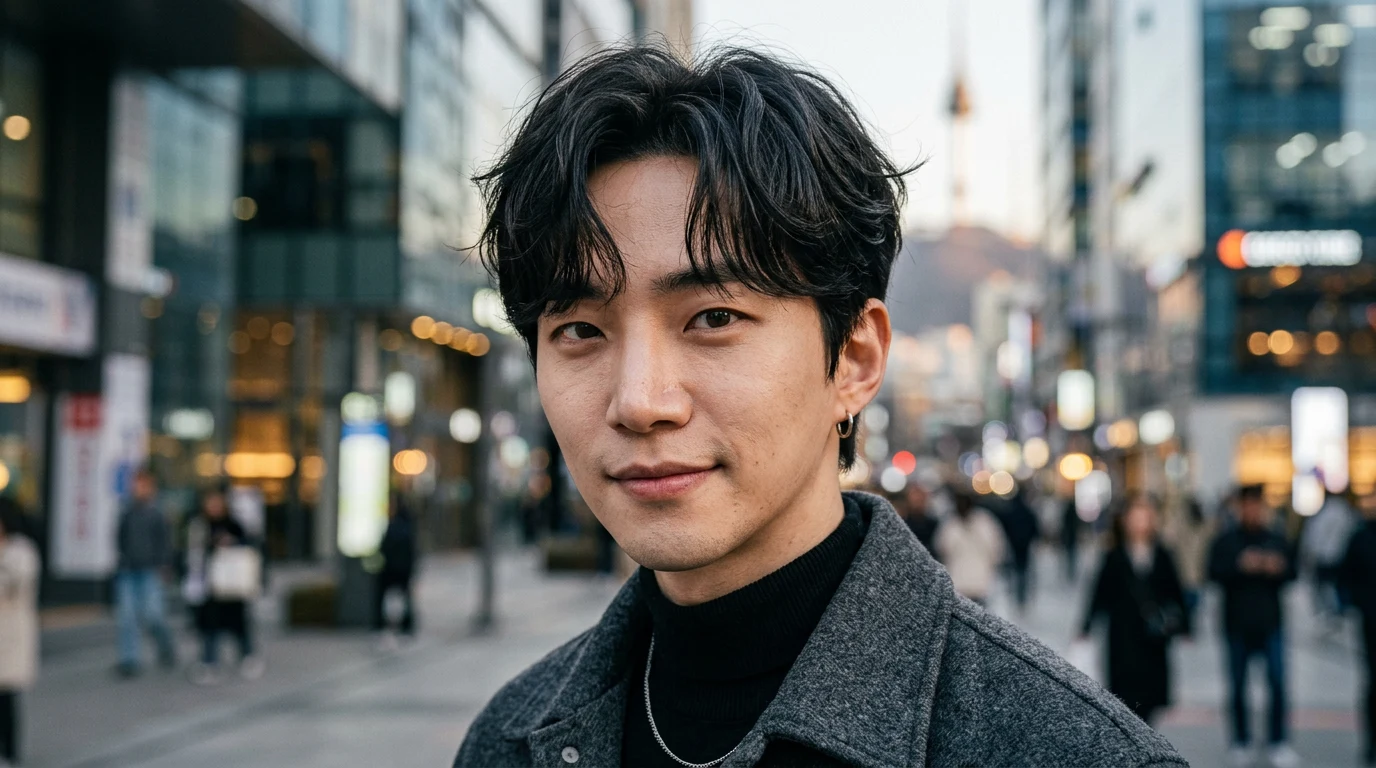
The comma bang adds a sculptural element to the otherwise understated two block. It frames the forehead, draws attention to the eyes, and photographs exceptionally well, which is probably why every K-drama leading man from the last three years has worn some version of it.
Best for: Every face shape. The comma curl can be adjusted to fall center-forehead (balances wide faces) or off-center (adds asymmetry to symmetric faces). It is the most universally flattering two block variation.
Maintenance: Daily blow-dry required. Without heat styling, the comma will flatten out within hours on thick straight hair. A light Korean perm at the front can reduce daily styling time significantly.
Two Block with Fade
A hybrid that merges the Korean two block with Western fade technique. Instead of a uniform buzz on the sides, the hair graduates from skin (or near-skin) at the temples and neckline up to a #3 or #4 where it meets the longer top. This blended transition makes the cut look less “blocky” and more contemporary.

This variation gained popularity as Korean barbers began studying Western barbering techniques through YouTube and Instagram. The result is genuinely the best of both worlds: the structural benefits of a two block with the polished gradient of a fade. It is particularly popular among Korean-American men who want a cut that reads as both Korean and Western.
Best for: Oval and oblong faces. The fade adds visual width at the sides, which balances the elongation created by the long top. Not ideal for round faces, where the added width at the temples can make the face appear wider.
Maintenance: Every 2 to 3 weeks. Fades grow out faster than a uniform buzz because the shortest sections near the skin become visible stubble within days. This is the highest-maintenance two block variation.
Two Block with Middle Part
The top is parted directly down the center, with hair falling to either side of the forehead. This creates a curtain-like frame around the face, similar to curtain bangs but with the characteristic two block disconnect at the sides. Korean salons call it gareuma (가르마, literally “parting”).
The middle part two block is the go-to for men who want a softer, more approachable look without sacrificing the clean structure of the cut. It reads as slightly more casual than the side-swept classic and slightly more polished than the textured fringe.
Best for: Oval, diamond, and heart-shaped faces. The symmetrical parting highlights facial symmetry. Avoid this variation if you have a very round face; the center part draws the eye outward and can widen the appearance of the face.
Maintenance: Trim every 3 to 4 weeks. The middle part grows out well because both sides maintain roughly equal length. A blow dryer helps train the part during the first few weeks.
Two Block for Curly and Wavy Hair
If you have naturally curly or wavy hair (whether natural texture or a perm), the two block still works. In fact, it can look even better because the textured top creates volume and movement that straight hair needs product and heat to achieve. The key difference is that the top needs to be cut slightly shorter (3 to 4 inches rather than 5 to 6) because curl adds visual length. Too long, and the top becomes overwhelming relative to the short sides.
For permed versions, Korean salons typically apply a C-curl or S-curl perm to the top section only, leaving the buzzed sides untouched. This gives you the wavy texture on top with the clean structure underneath. The Korean perm guide covers the full process.
Best for: All face shapes. Curly volume on top provides enough visual weight to balance any facial structure. Especially flattering on men with angular or narrow faces who want to add width and softness.

Maintenance: Trim every 4 to 5 weeks. Curly hair hides growth better than straight hair. If you have a perm, plan for touch-ups every 2 to 3 months as the curl loosens.
How to Ask Your Barber for a Two Block Cut
The biggest challenge with getting a two block cut is that most Western barbers do not know it by name. If you walk into a standard American barbershop and say “two block,” there is a real chance your barber has never heard the term. Here is how to communicate exactly what you want, regardless of where you get your hair cut.

Korean Terminology
If you are going to a Korean barbershop or salon (miyongshil, 미용실), the vocabulary is straightforward:
- Two block: 투블럭 (tu-beulleok). Just say it. Every Korean barber knows this term.
- Sides: 옆머리 (yeop-meori). Specify the guard length: “옆은 6mm로” means “sides at 6mm.”
- Top: 윗머리 (win-meori). “윗머리는 길게” means “keep the top long.”
- Bangs: 앞머리 (ap-meori). Specify comma bangs as “쉼표 머리로 해주세요” (swimpyo meori-ro haejuseyo).
- Blending/taper: 그라데이션 (geuraideisyeon). Use this if you want a fade transition rather than a hard disconnect.
A complete request at a Korean salon: “투블럭으로 해주세요. 옆은 9mm, 윗머리는 5인치 정도로 남겨주세요.” That translates to: “Two block, please. Sides at 9mm, keep the top around 5 inches.”
At a Western Barbershop
Skip the Korean terminology entirely and describe the cut in terms your barber already understands. For a general guide on communicating with barbers, see our how to ask for a haircut breakdown.
Here is a script that works:
“I want short sides and back, about a number 3 guard, with a disconnected transition into the longer top. Do not blend or fade the transition. Leave the top 4 to 5 inches long so it falls over the sides naturally. I want the top layered for movement, not blunt-cut.”
Key points to emphasize:
- “Disconnected” is the critical word. It tells the barber not to blend the sides into the top.
- Specify exact guard numbers. Saying “short” is vague. A #3 guard (10mm) or #4 guard (13mm) gives a precise target.
- Bring a reference photo. Showing is faster than telling. Pull up two photos: one from the front and one from the side.
- Ask about the neckline. Korean two blocks typically have a tapered neckline, not a hard square. Specify “tapered neckline” for the cleanest finish.
Korean Barbershop vs. Western Barbershop
There are real differences in how Korean and Western barbershops approach this cut, and knowing them helps you choose where to go.

Korean barbershops include blow-dry styling as part of the service. When your cut is done, the barber will spend 5 to 10 minutes blow drying and styling your hair with product. You leave the shop looking like you want to look every day. Most Western barbershops finish with a quick towel dry and maybe a palm of pomade. This means your first impression of the cut may be underwhelming until you learn to style it yourself at home.
Korean barbers also tend to use thinning shears more aggressively to remove internal bulk, especially on thick Asian hair. Western barbers may leave the top section heavier, which changes how the cut drapes and moves. If you go to a Western barber, ask them to thin out the top section. Do not be afraid to specify: “Please thin the top with thinning shears. My hair is very thick and it needs the weight removed.”
How to Style the Two Block at Home
Styling is where most guys fail with the two block. They get a great cut, go home, wash their hair the next morning, and cannot figure out why it does not look like it did when they left the barbershop. The answer is almost always the blow dryer. A two block on thick, straight hair without blow drying looks flat, heavy, and shapeless. With 3 to 5 minutes of blow drying, the same cut looks structured and intentional.
Daily 5-Minute Routine
This routine works for every two block variation and takes less time than making coffee.
- Start with towel-dried, damp hair. Not dripping wet, not dry. About 70% dry is the target. If you shower in the morning, towel off and start styling immediately. If you do not shower, dampen your hair with a spray bottle.
- Apply a heat protectant or volumizing spray. One or two sprays at the roots, focused on the crown and the front section. This is especially important for Asian hair because the round strand cross-section makes it prone to heat damage. Mise en Scene Perfect Serum is lightweight enough to use daily without buildup.
- Blow dry on medium heat, lifting at the roots. Point the dryer upward from underneath the hair, using your fingers or a round brush to lift sections away from the scalp. Concentrate on the crown area (the flattest part of Asian hair) and the fringe. Dry for 2 to 3 minutes until the hair is about 90% dry.
- Apply product. Take a pea-sized amount of wax or clay, rub it between your palms until it is warm and thin, then work it through the top section from back to front. Start at the crown and push forward. For the fringe, pinch small sections between your fingers and twist lightly for separation.
- Final shape. Use your fingers to place the fringe where you want it (side sweep, comma curl, or center part). If any pieces are not cooperating, hit them with a quick blast of cool air from the dryer to set the product.
Full Restyle (When You Need Extra Hold)
For events, dates, or days when your hair needs to hold its shape for 8+ hours, add these steps to the basic routine:
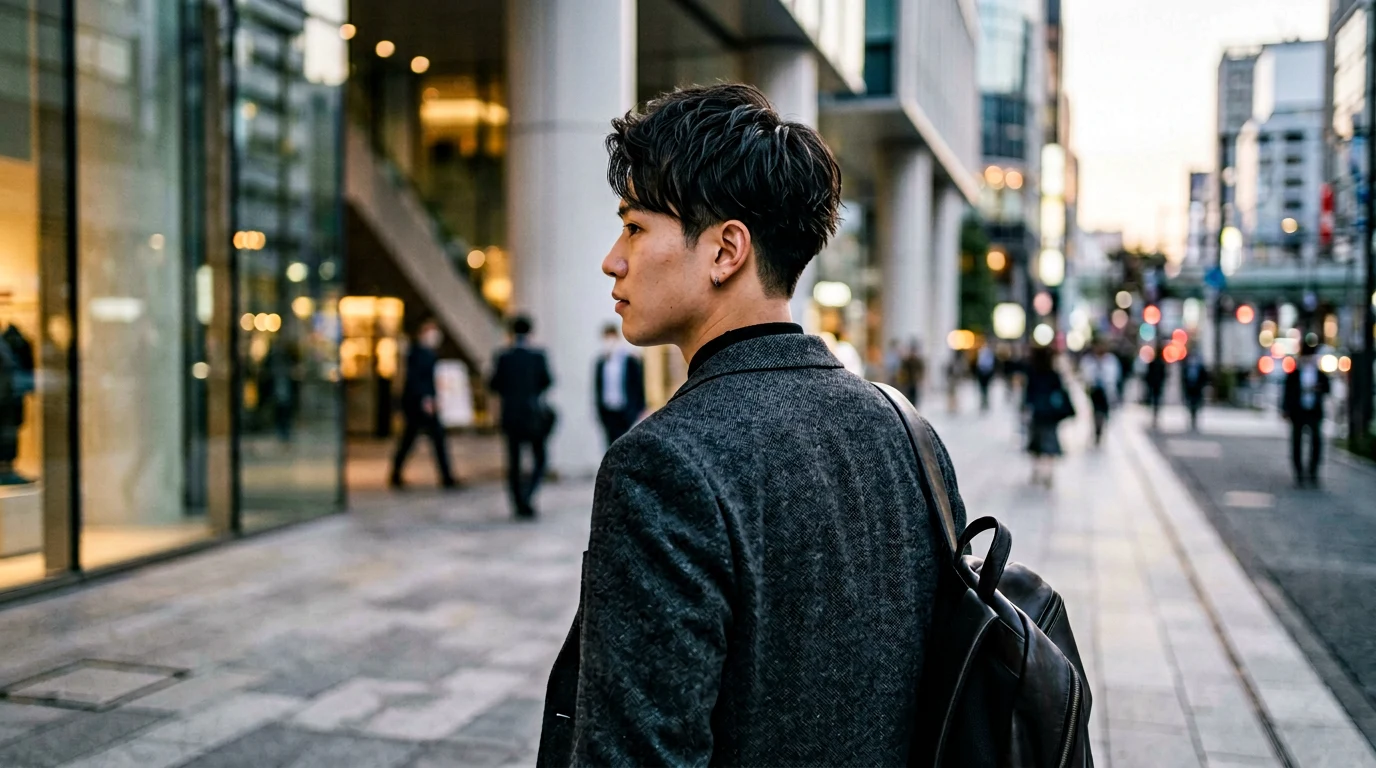
- Pre-style with mousse or setting spray. Apply to damp hair before blow drying. This creates a structural foundation that product alone cannot match on thick hair.
- Blow dry in sections. Use a round brush to wrap sections of the top hair and apply heat for 10 seconds per section. This creates directional memory in the hair, similar to what a curling iron does but with less curl and more volume.
- Layer products. Apply a light clay first (for texture and hold), then a small amount of hairspray from 12 inches away (for staying power). Do not saturate. Two light coats hold better than one heavy coat.
Best Products for the Two Block Haircut
Product selection matters more for Asian hair than for most other textures. The wrong product makes thick, straight hair look greasy, weighed down, or stiff. The right product creates hold and texture without visible residue. Here is what actually works, based on years of testing on myself and clients with the same hair type. For a deeper dive, see our best pomade for Asian hair guide.
| Product | Hold | Finish | Price (approx.) | Best For |
|---|---|---|---|---|
| Gatsby Moving Rubber (Grey) | Medium-High | Matte | $9-12 | Classic two block, daily use, restyling throughout the day |
| Shiseido Uno Fiber Neo | High | Natural | $12-15 | Textured fringe, all-day hold on thick hair without stiffness |
| Hanz de Fuko Claymation | High | Matte | $23 | Maximum texture and volume, sculpted comma bangs |
| Arimino Peace Freeze Keep Wax | Very High | Low Shine | $18-22 | Event styling, formal occasions, holding shape for 8+ hours |
| Baxter of California Clay Pomade | Medium | Matte | $23 | Subtle hold, natural look, middle part variation |
| Gatsby Moving Rubber (Pink) | High | Matte | $9-12 | Defined texture, separation, spiked or piece-y styling |
Product Notes for Thick Straight Hair
Avoid water-based pomades. They do not grip the smooth surface of Asian hair strands. Water-based products work by penetrating the hair shaft, and the tight cuticle layer on Asian hair resists absorption. Stick to wax-based or clay-based products that grip the outside of the strand.

Start with less product than you think you need. A pea-sized amount is usually enough for the top section. Asian hair shows product quickly because of its shine and density. Too much product creates a wet, heavy look that defeats the purpose of the two block’s natural drape.
Gatsby Moving Rubber is the standard for a reason. It is the product most Korean and Japanese barbers reach for first. The grey tin (Grunge Mat) provides matte hold without weight. The pink tin (Spiky Edge) gives more defined separation and hold. At under $12, there is no reason not to try it. The small 15g tin is perfect for figuring out which formula suits your styling before committing to the larger 80g jar.
Common Mistakes (and How to Fix Them)
Skipping the Blow Dryer
This is the number one mistake. I cannot stress this enough: the blow dryer is not optional for a two block on thick straight hair. Product alone cannot create the volume and directional movement that makes this cut look right. If you air-dry a two block, the top section will lay flat against your head, the sides will poke outward as they grow, and the entire cut will look like a bowl cut in progress. Three minutes with a blow dryer fixes all of this.
Using the Wrong Products
Heavy pomades, strong-hold gels, and oil-based products are designed for different hair types. On thick Asian hair, they create a shiny, stiff, helmet-like appearance. What you want is a lightweight wax or clay that provides hold without visible shine or stiffness. If your hair looks wet two hours after styling, the product is too heavy.
Waiting Too Long Between Trims
Asian hair grows fast, roughly half an inch per month. On a two block, the sides go from clean to shaggy in about four weeks. The sharp line between the two lengths, which is the defining feature of this cut, starts blurring by week three. If you stretch it to six or eight weeks, you will not have a two block anymore. You will have a growing-out mess that needs a full re-cut rather than a maintenance trim.
Uneven Side Growth
Hair does not grow at the same rate on every part of your head. On a two block, this becomes obvious fast: one side may grow out a week before the other, creating an asymmetric look. The fix is simple. Between barber visits, use a small trimmer or clipper with the same guard your barber used to clean up the faster-growing side. Stay with the same guard number and only trim the areas that are visibly longer. If you are not comfortable doing this yourself, ask your barber to show you the technique during your next visit.
The Growing-Out Phase
Every two block goes through an awkward phase around weeks 4 to 6 where the sides are too long for the cut to look intentional but too short to blend into the top. If you are growing your hair out, push through it with a hat or headband. If you want to maintain the two block, this is the window where you should be booking your next trim. Do not try to “stretch it” to save money. The cost of one extra trim per year is less than the cost of looking unkempt for 30% of the time.

Frequently Asked Questions
Is the two block haircut the same as an undercut?
No. While both feature short sides and a longer top, the two block keeps a visible, disconnected separation between the two lengths. A Western undercut blends or fades the transition. The two block intentionally creates two distinct “blocks,” with the top falling over the shorter section like a curtain. The styling philosophy is different, too: undercuts are typically slicked back or combed tightly, while two blocks are styled with natural fall and soft texture.
How often should I get it trimmed?
Every 3 to 4 weeks for most variations. If you have a two block with fade, every 2 to 3 weeks because the fade section grows out faster. Thick Asian hair grows roughly half an inch per month, and the clean lines of a two block degrade quickly. Budget for 12 to 15 barber visits per year if you want to maintain this cut consistently.
Does it work with glasses?
Extremely well. The two block is one of the best haircuts for men who wear glasses. The long top creates vertical height that balances the horizontal line of your frames. The short sides keep hair from bunching around the temples where your glasses sit. Both round and rectangular frames pair well with this cut. If you wear thicker frames, consider the textured fringe variation; the piece-y bangs create visual contrast with the solid frames.
Can I get a two block with thick hair?
The two block was designed specifically for thick hair. It originated in Korean barbershops where nearly every client has thick, dense, straight hair. The cut removes bulk from the sides and back, reducing overall weight while keeping length and styling versatility on top. If you have thick hair, this cut will feel lighter and more manageable than most alternatives. Ask your barber to use thinning shears on the top section to remove internal bulk without reducing length.
How long does my hair need to be on top?
At minimum, 3 inches for a visible two block effect. The ideal range is 4 to 6 inches, which gives enough length to style comma bangs, a side sweep, or a middle part. If you are starting from a short buzz cut, expect to wait 2 to 3 months before your top section is long enough for a proper two block. During the growing-out phase, keep the sides trimmed short while the top catches up.
Can non-Asian men get a two block?
Yes. The cut works across hair textures, though the approach changes. Men with fine, straight hair may need volumizing products and a blow dryer to create the fullness that thick Asian hair produces naturally. Men with wavy or curly hair will get a naturally textured version that requires less product. The key is finding a barber who understands the disconnected technique. Bring reference photos and use the word “disconnected” when explaining, regardless of the barber’s background.
Final Takeaway
The two block haircut has been the foundation of Korean men’s hair for over a decade, and it is still the single most practical and versatile cut for thick, straight hair. Here is what matters:
- The two block creates two distinct lengths with a visible disconnect between short sides and a long top, designed to work with thick, straight hair rather than fighting it.
- Six major variations exist, from the classic side-swept to comma bangs to a blended fade. Choose based on your face shape and how much daily styling you are willing to commit to.
- The blow dryer is non-negotiable. Product alone cannot create the volume and shape this cut needs on thick hair.
- Lightweight waxes and clays beat pomades and gels for this style. Gatsby Moving Rubber is the industry standard at Korean barbershops for a reason.
- Trim every 3 to 4 weeks. The defining feature of the two block, that clean disconnect between the two sections, degrades fast on fast-growing hair.
If you are exploring other Korean hairstyles for men or want to see how the two block fits into the broader landscape of Asian hairstyles for men, those guides cover 15+ additional styles built on the same principles. For permed two block variations, the Korean perm guide walks through the full process from consultation to maintenance. And if your grooming extends beyond hair, the Korean skincare routine for men covers the other half of Korean men’s grooming culture.