If you want to master how to get deep waves, this guide covers everything you need to know. Last updated: February 2026 by Darius Washington, Black Men’s Grooming Editor
I remember the first time I saw truly deep waves in person. I was fifteen, sitting in my uncle’s barbershop in Atlanta, and a regular named Marcus pulled his durag off after a lineup. The waves were not just visible. They had depth, like grooves cut into wood. The light caught each ridge differently. The whole shop went quiet for a second, and then everybody had something to say. That moment taught me that how to get deep waves is a different conversation than how to get 360 waves. Deep waves are the advanced discipline. This is the guide for men who already have a wave pattern and want to take it to the next level.
If you are brand new to waves and do not have a pattern yet, start with our 360 waves beginner guide first. Come back here once you have four to six weeks of consistent brushing under your belt. This guide assumes you know the basics and want depth.
Jump to what you need: The wolfing protocol for depth, the brushing technique breakdown, or the complete daily system.
What Makes Deep Waves Different from Regular Waves: How To Get Deep Waves
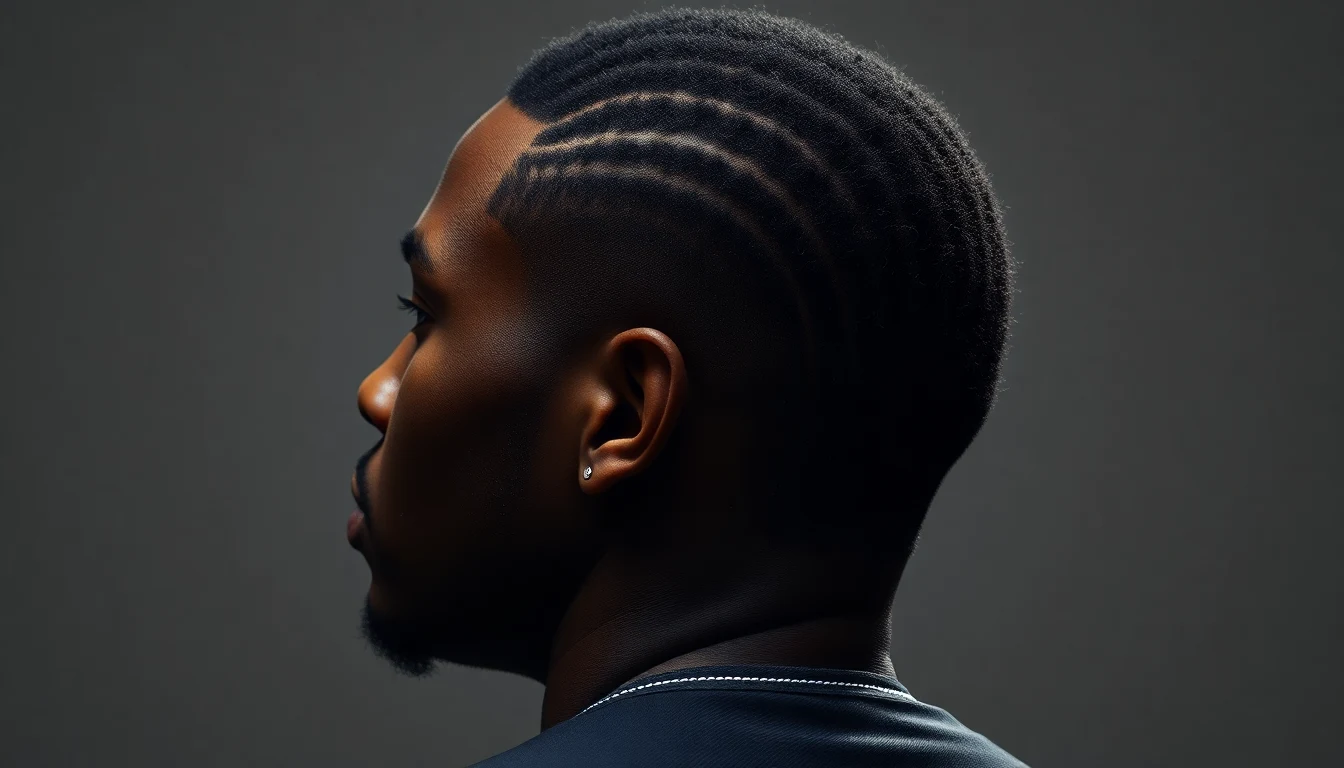
Regular 360 waves create a visible ripple across your head. The pattern is there, the curl is trained, and it looks clean. Deep waves take that pattern and push it further. The troughs between each wave ridge become pronounced enough that you can see them from across the room. The peaks catch light. The grooves cast tiny shadows. It is a three-dimensional effect that regular waves do not achieve.

The Physics of Depth
Wave depth comes from how far the curl pattern bends between its peak (the highest point of the wave) and its trough (the lowest point between waves). In regular waves, the difference between peak and trough is subtle. In deep waves, each curl is trained to compress at its lowest point and lift at its highest point, creating visible ridges.
Three factors control this depth:
- Hair length. Longer hair has more room to form a deeper sine wave pattern. This is why wolfing is the single most important factor for depth.
- Brush penetration. Harder bristles push the curl pattern deeper into its trained direction. Soft bristles only train the surface.
- Compression duration. More hours in a durag means more time for the curl to set into its deepest position. This is not optional.
Deep Waves vs. Regular Waves: Side by Side
| Factor | Regular 360 Waves | Deep 360 Waves |
|---|---|---|
| Wolfing period | 4-6 weeks | 6-12 weeks |
| Primary brush | Medium bristle | Hard bristle |
| Brush time per day | 20-30 minutes | 45-90 minutes |
| Product hold | Light to medium | Medium to heavy |
| Compression hours | Overnight + post-brush | Every moment you are not in public |
| Time to achieve | 6-8 weeks | 4-8 months |
| Maintenance difficulty | Moderate | High |
| Visual effect | Flat ripple pattern | Three-dimensional grooves with shadow |
The Extended Wolfing Protocol for Deep Waves
Wolfing is the foundation of deep waves. If you are not willing to wolf longer than you are comfortable with, you will not get deep waves. Full stop. There is no product, no brush, and no shortcut that replaces hair length. For a deep understanding of what wolfing is and why it matters, see our complete wolfing guide.
Why Standard Wolfing Is Not Enough
Standard wave wolfing is four to six weeks. That gives you enough length (roughly 3/8 to 1/2 inch depending on your growth rate) to train a visible pattern. But that length is only enough for shallow impressions. The curl does not have room to form a deep trough.
Deep waves require a minimum of six weeks, ideally eight to twelve. At eight weeks, most men have around 3/4 to 1 inch of growth. At that length, the curl pattern has enough material to bend deeply between ridges. The longer you wolf, the deeper your potential impressions.
The Extended Wolf Timeline
| Week | Approximate Length | What Happens | How You Will Feel |
|---|---|---|---|
| 1-3 | 1/8 – 1/4 inch | Hair starts growing out from last cut. Pattern still visible. | Comfortable. This feels normal. |
| 4-5 | 1/4 – 3/8 inch | Standard wolf range. Waves deepen slightly. | Getting restless. Tempted to cut. |
| 6-7 | 3/8 – 1/2 inch | Deep wave zone begins. Curl pattern bending deeper. | Hair feels thick and unruly. This is where most people quit. |
| 8-10 | 1/2 – 3/4 inch | Maximum depth potential. Waves are deep and defined under the durag. | Uncomfortable without a durag. Trust the process. |
| 10-12 | 3/4 – 1 inch | Elite wolf. Deepest possible impressions forming. | You look unkempt to the outside world. Your waves are elite under the rag. |
Surviving the Extended Wolf
Weeks six through ten are where most men break. Your hair looks rough. It does not lay flat. People ask why you have not gotten a cut. Here is how to push through.
- Wear your durag in public. There is no shame in it. A durag keeps your hair compressed and presentable while you wolf. The durag has a long history in Black culture and fashion. Own it.
- Increase your brush sessions. The longer your hair gets, the harder it is to control. More brushing keeps the pattern trained even as length increases.
- Use a stronger hold product. Switch from a light moisturizer to a medium or heavy pomade during extended wolfing. You need more hold to keep longer hair laying in the wave pattern.
- Take progress photos. Pull the durag off every Sunday, brush for five minutes, and take a picture. Comparing week four to week eight will show you depth you cannot see day to day.
- Remember the payoff. When you finally get that lineup and the deep waves are revealed, it is worth every uncomfortable day. Marcus from my uncle’s shop wolfed for ten weeks. He did not look pretty during the process. He looked legendary when it was done.
The First Cut After an Extended Wolf
This haircut is the most important one of the cycle. Do not go to a barber who does not understand waves. Communicate exactly what you need.
What to tell your barber:
“I’ve been wolfing for [number] weeks to deepen my waves. I need a cleanup, not a cut. Take it down with the grain using a 2 guard or higher. Do not cut against the grain anywhere. I want to keep as much length as possible while cleaning up the edges.”
A barber who understands waves will use clippers with the grain (WTG) and will not go shorter than a 1.5 or 2 guard. Going too short erases the depth you just spent weeks building. If your barber argues, find a new barber. Read our best clippers for Black men guide if you want to learn to maintain your waves at home.
Advanced Brushing Techniques for Depth
Brushing for deep waves is different from brushing for regular waves. You need more time, harder bristles, more deliberate angles, and a structured session format. Here is the system.
The Two-Brush Method
Deep wave training requires two brushes used in sequence during every session.
Primary: Hard bristle brush. The Crown Quality Products hard brush is the standard for deep wave training. Hard bristles penetrate deeper into the hair, pushing the curl into a more pronounced wave trough. This is your depth builder. Use it for the first 60-70% of every brush session.
Secondary: Medium bristle brush. The Torino Pro #350 is excellent here. After hard bristle work, switch to medium bristles to smooth the pattern, lay down any hairs the hard brush lifted, and create a polished finish. This is your blender. Use it for the final 30-40% of every session.
For a complete breakdown of brush options, see our best wave brush guide.
Brushing Direction: The Crown-Out System
Every single brush stroke starts at the crown of your head and moves outward toward the hairline, ears, or nape. This is non-negotiable for 360 waves of any depth. But for deep waves, the precision of your angles matters more.

Divide your head into four quadrants:
- Front quadrant: Crown to forehead. Brush straight forward.
- Right quadrant: Crown to right ear. Brush at a slight downward angle.
- Left quadrant: Crown to left ear. Brush at a slight downward angle.
- Back quadrant: Crown to nape. Brush straight down.
The key for depth is consistent angle within each quadrant. Do not let your strokes wander between angles. Each stroke in the front quadrant should be parallel to the one before it. Inconsistent angles create forks (where two wave lines collide), which destroy depth.
Pressure and Speed
For deep waves, you need firm pressure. Not painful, not scratching, but firm enough that you can feel the bristles reaching the scalp. Light brushing trains surface waves. Firm brushing trains deep waves.
Speed should be moderate and deliberate. Fast, aggressive brushing creates friction and can irritate your scalp. Slow, deliberate strokes with consistent pressure give each curl time to bend into position. Think of it like ironing a shirt. Slow, even pressure gets the wrinkle out. Fast swipes do nothing.
The Deep Wave Brush Session Structure
Each session should follow this format. I recommend three sessions per day for deep wave training.
| Phase | Duration | Brush | Purpose |
|---|---|---|---|
| Warm-up | 2-3 minutes | Medium | Wake the pattern up. Light strokes to establish direction. |
| Depth work | 10-12 minutes | Hard | Firm, deliberate strokes from crown out. This builds depth. |
| Blending | 3-5 minutes | Medium | Smooth and polish. Lay down lifted hairs. Finish the pattern. |
| Compression | 30-45 minutes | N/A | Durag on immediately. Do not touch your hair. |
Total daily brushing: 45-60 minutes across three sessions. The evening session before bed is the most important because you follow it with eight hours of overnight compression.
The Wash and Style
Once a week, do a wash and style session. This is the deepest brush session of the week.
- Shampoo with warm water. Use WaveBuilder Wave Shampoo or another sulfate-free formula. Warm water opens the cuticle and makes the hair more pliable.
- Do not towel dry aggressively. Pat gently. Aggressive toweling disrupts the pattern.
- While hair is still damp, apply pomade. Damp hair absorbs product better and brushes more easily.
- Brush each quadrant for five minutes. Twenty minutes total, hard brush the entire time.
- Finish with medium brush for three minutes.
- Durag on immediately. Leave it on for at least one hour, ideally two.
The wash and style session is where you make the biggest weekly progress on depth. The combination of clean, pliable hair and an extended brush session allows the curl pattern to set deeper than dry-hair sessions. Never skip it.
Compression Strategy for Maximum Depth
Compression is where depth gets locked in. You can brush perfectly, but if you do not compress properly, the curl springs back to a shallower position and the depth is lost. For deep waves, your compression game needs to be aggressive.
Durag Selection for Deep Waves
Not all durags compress equally. For deep waves, you need two.
Velvet durag for post-brush compression. Velvet provides the heaviest compression. The fabric grips the hair and holds it flat with more force than silk or satin. Wear this for 30 to 60 minutes after every brush session. The goal is to lock the depth you just brushed into the pattern before the hair has time to relax.
Silk durag for overnight wear. Silk preserves moisture, reduces friction, and prevents the pattern from drying out overnight. You will sleep in this for seven to eight hours. Silk prevents the hair damage and dryness that velvet can cause during extended wear.
For a full comparison of materials and our top picks, see our best durag for waves roundup.
The Double-Wrap Method
For maximum compression, use the double-wrap technique. This is an advanced move that serious wavers use during extended wolfing.
- Tie your primary durag (velvet for post-brush, silk for overnight) with firm but not painful pressure.
- Tie a second durag over the first. This adds another layer of compression without cutting off circulation.
- Alternatively, add a wave cap (stocking cap) over a single durag for a similar effect with less bulk.
Double-wrapping is for post-brush sessions (30-60 minutes) and short naps. I do not recommend double-wrapping for full overnight sleep because the extra pressure for eight hours can cause headaches and scalp irritation in some men. Test it and see how your head responds.
Compression Schedule for Deep Waves
| Time | Compression | Duration | Notes |
|---|---|---|---|
| After morning brush | Velvet durag (tight) | 30-45 minutes | Lock in the morning session before heading out. |
| During the day | Silk durag or wave cap (if possible) | As many hours as you can | Working from home? Keep the rag on. Every hour counts. |
| After midday brush | Velvet durag (tight) | 30-45 minutes | Second compression window of the day. |
| After evening brush | Velvet durag or double-wrap | 45-60 minutes | Most critical session. Follow with overnight switch. |
| Overnight | Silk durag | 7-8 hours | Never sleep without it. One missed night costs you days. |
Products Built for Deep Wave Training
Deep waves require stronger hold products than regular wave maintenance. The extra hair length from extended wolfing needs more control, and the curl pattern needs more help staying compressed between brush sessions.
Pomades and Wave Greases
| Product | Hold Level | Price | Best For |
|---|---|---|---|
| WaveBuilder Cocoa & Shea | Medium-heavy | $5-8 | Daily use during wolfing. Natural ingredients, good moisture balance. |
| 360 Style Wave Control | Medium | $5-7 | Wash and style sessions. Lighter formula absorbs well on damp hair. |
| Sportin’ Waves | Medium | $3-5 | Budget daily use. Classic formula that has worked for decades. |
For deep waves during extended wolfing, I lean toward WaveBuilder Cocoa & Shea. The hold is strong enough to keep longer hair in pattern without the petroleum buildup that classic wave greases create. Petroleum-based greases (like old-school Murray’s) provide the strongest hold but cause buildup that is hard to wash out and can clog follicles over time. Water-based pomades are the better long-term choice. For all our picks and detailed comparisons, see our best wave grease guide.
Product Application for Depth
How you apply product matters as much as what you apply.
- Warm the pomade between your palms. Rub it until it is soft and spreadable.
- Apply from the crown outward. Same direction as your brush strokes. This pre-sets the pattern before brushing.
- Use a nickel-sized amount per quadrant. More than you would use for regular waves because longer hair needs more product to stay controlled.
- Do not overload the crown. Too much product at the crown creates buildup that flattens the wave peaks instead of defining them.
- Brush immediately after applying. The product should be worked in by the brush, not by your hands.
Shampoo Frequency During Extended Wolfing
Extended wolfing with heavy product use means you need to manage buildup carefully. Wash once a week with WaveBuilder Wave Shampoo (sulfate-free). On the midweek day, do a water-only rinse with warm water and light brushing to redistribute oils without stripping the pattern.
Overwashing during wolfing is a common mistake. Every wash softens the pattern slightly. You need that pattern to stay as trained as possible between sessions. Once a week is the right balance between hygiene and pattern preservation.
Common Mistakes That Kill Wave Depth
I see these in wave communities every day. Avoid every single one.

Mistake 1: Cutting Too Soon
The number one depth killer. You wolf for five weeks, see decent waves, and decide to get a cut because you are tired of the length. Five weeks is regular wave territory. Deep waves need eight weeks minimum. If you cut at five, you are starting the depth clock over every single time. Discipline is the price of depth.
Mistake 2: Brushing Without a System
Random brushing creates forks and inconsistent depth. If your strokes wander between angles, the wave lines collide and create spots where depth disappears. Use the quadrant system. Stay parallel within each quadrant. Every stroke starts at the crown.
Mistake 3: Using a Soft Brush for Training
Soft brushes are for finished styling, not depth training. A soft brush glides over the hair surface without pushing the curl pattern deeper. It is like trying to iron a shirt without pressing down. Use hard bristles for training. Save the soft brush for photo day.
Mistake 4: Skipping Compression
Every hour without a durag is an hour where your curl pattern relaxes back toward its natural state. Deep waves require aggressive compression. If you brush for 20 minutes and then walk around without a durag for four hours, you just undid most of that work. Durag on after every session. Durag on at night. Durag on whenever you can during the day. Read our durag guide for more on why this matters.
Mistake 5: Wrong Product Weight
Light moisturizers do not have enough hold for deep wave training, especially during extended wolfing when hair is longer. You need pomade with actual hold. On the flip side, petroleum-heavy greases cause so much buildup that they flatten the peaks and reduce the visual depth you are trying to create. Water-based pomade with medium to heavy hold is the sweet spot.
Mistake 6: Inconsistent Barber Communication
Getting a different barber each visit, or a barber who does not understand wave maintenance, will destroy your depth. One cut against the grain in the wrong spot erases weeks of training. Stick with one barber who knows your wave pattern and always specify: with the grain, 2 guard or higher, cleanup only.
Mistake 7: Ignoring Scalp Health
Heavy brushing and constant compression can irritate your scalp. Dandruff, dryness, or folliculitis (infected follicles) will slow your progress and make brushing painful. Wash weekly with a medicated or sulfate-free shampoo. Moisturize your scalp, not just your hair. Use a face wash with salicylic acid along your hairline to prevent breakouts where the durag sits.
The Complete Deep Wave Daily System
This is the system. Follow it exactly for eight weeks and take progress photos every Sunday.
Morning Session (15-20 minutes)
- Remove overnight durag.
- Apply a dime-sized amount of pomade to each quadrant.
- Hard brush each quadrant for 3 minutes (12 minutes total).
- Medium brush entire head for 3 minutes.
- Tie velvet durag firmly. Wear for 30+ minutes before removing for the day.
Midday Session (10-15 minutes)
- Light pomade application if hair feels dry. Skip if still controlled.
- Hard brush each quadrant for 2 minutes (8 minutes total).
- Medium brush for 2 minutes.
- Durag on if environment allows. Even 20 minutes helps.
Evening Session (20-25 minutes)
- This is your most important session of the day.
- Apply pomade generously to each quadrant.
- Hard brush each quadrant for 4 minutes (16 minutes total).
- Medium brush entire head for 4 minutes.
- Tie velvet durag immediately. Leave on for 45-60 minutes.
- Switch to silk durag before bed. Do not remove until morning.
Weekly Schedule
| Day | Sessions | Special Activity |
|---|---|---|
| Monday | 3 sessions | Standard routine |
| Tuesday | 3 sessions | Standard routine |
| Wednesday | 3 sessions | Midweek warm water rinse (no shampoo). Brush while damp. |
| Thursday | 3 sessions | Standard routine |
| Friday | 3 sessions | Standard routine |
| Saturday | 3 sessions | Wash and style day. Full shampoo, extended brush session (30+ min). |
| Sunday | 2-3 sessions | Progress photos. Remove durag, brush for 5 min, photograph all angles. |
What to Expect: Deep Wave Progress Timeline
This timeline assumes you are starting with a basic wave pattern already established. If you are starting from scratch, add six to eight weeks for pattern formation before this timeline begins.
| Timeframe | What You Will See | What to Focus On |
|---|---|---|
| Weeks 1-2 | Pattern sharpening. Waves become more defined but not yet deeper. | Establishing the three-session routine. Building the habit. |
| Weeks 3-4 | First signs of depth in areas where your hair is thickest (usually the crown). | Hard brush technique. Consistent angles. |
| Weeks 5-6 | Depth becoming visible across most of the top. Sides still catching up. | Extended wolfing begins to feel uncomfortable. Push through. |
| Weeks 7-8 | Deep waves evident from the crown through the front and sides. | First cleanup cut (with the grain, 2 guard). Depth is revealed. |
| Months 3-4 | Pattern is locked in. Depth holds between wolfing cycles. | Second wolf cycle deepens further. Maintenance becomes easier. |
| Months 5-8 | Elite depth. Waves hold pattern even a few days after cutting. | You have arrived. Maintain with two sessions daily. |
The Cycle Effect
Here is something experienced wavers know that beginners do not: deep waves compound over multiple wolf cycles. Your first extended wolf builds the foundation. Your second wolf (after the cleanup cut) deepens the same pattern further because the curl already has muscle memory. By the third wolf cycle, your waves hold depth that would have taken twice as long to achieve in a single cycle.
Think of it like carving a groove in wood. The first pass creates a shallow line. The second pass deepens it. The third makes it permanent. Each wolf cycle is a pass. This is why patience over months, not just weeks, separates deep waves from regular waves.
Adjustments by Hair Type
Not all curl patterns respond to deep wave training the same way. Here is what to adjust based on your hair type.
4C Hair (Tightest Coils)
You have the best natural foundation for deep waves. 4C hair holds impressions more readily than any other texture because the curl pattern is tight enough to lock into position quickly. You can achieve visible depth in shorter wolfing periods (six weeks may be sufficient) and your waves will hold their depth longer between sessions.
Adjustments: Use a hard brush from day one. Your hair can handle it. Moisturize more aggressively because 4C hair dries faster than other textures. Use a pomade with moisturizing ingredients (shea butter, coconut oil) rather than petroleum-only formulas.
4B Hair (Z-Pattern Coils)
4B hair is the most common starting texture for wave training. It responds well to the standard deep wave protocol in this guide. Wolfing for eight weeks will get you excellent depth. Your curl pattern is tight enough to hold impressions but loose enough that longer wolfing periods continue to add depth past six weeks. When it comes to how to get deep waves, technique matters most.
Adjustments: Follow the standard protocol. 4B is the baseline this guide is written for. When it comes to how to get deep waves, technique matters most.
4A Hair (S-Pattern Coils)
4A hair is the loosest texture that produces traditional deep waves. The wider curl pattern means each wave is broader, and the impressions between waves are less dramatic. You will need longer wolfing periods (ten to twelve weeks) and heavier hold products.

Adjustments: Wolf longer. Use the heaviest hold pomade you can find without going to petroleum greases. Double-wrap more frequently. Your waves will be wider and less sharp than 4C waves, but they will still show depth when properly trained. For guidance on the 4A overlap with curly hair, check how to get 180 waves.
3C Hair (Loose Curls)
Be honest with yourself. 3C hair can produce waves, but they will not achieve the same depth as tighter textures. The curl pattern is too wide to create the tight, deep grooves that define elite deep waves. You can achieve a visible wave pattern with significant effort, but the depth will top out at what a 4C waver would consider medium waves.
Adjustments: Wolf for twelve weeks minimum. Use heavy pomade. Compress aggressively. Accept that your version of deep waves will look different from someone with 4C hair, and that is fine. Different texture, different result, both can look excellent.
Maintaining Deep Waves Long-Term
Getting deep waves is the first challenge. Keeping them is the ongoing discipline.

Maintenance After Achieving Depth
Once your waves are deep and established (usually after three or more wolf cycles), you can reduce your daily commitment.
- Brush sessions: Drop from three to two per day (morning and evening). Fifteen to twenty minutes each.
- Wolfing: Continue wolfing for six to eight weeks between cuts. Shorter wolves (four weeks) will gradually reduce depth over time.
- Compression: Durag every night, non-negotiable. Post-brush compression can drop to 20 minutes if your pattern is well-established.
- Products: You may be able to use lighter hold products for daily maintenance. Save the heavy pomade for wash-and-style days and the first week of each new wolf cycle.
The Two Things That Will Ruin Your Depth
- Skipping the overnight durag. Even one night without compression lets the curl pattern relax. Do this three times in a week and you will see visible depth loss.
- Going to a careless barber. One bad cut, one pass against the grain, one guard too short, and weeks of depth are gone. Find your barber. Build the relationship. Never let anyone else touch your waves.
Frequently Asked Questions
How long does it take to get deep waves?
Deep waves typically take four to eight months of disciplined brushing, extended wolfing, and consistent compression. Beginners who already have a visible wave pattern can deepen their waves within two to three months by switching to longer wolfing periods and harder brushes. Starting from scratch, expect to spend the first six to eight weeks just establishing a basic pattern before you can begin deepening it. Hair texture matters too. 4C hair holds deeper impressions faster than 4A or 3C hair because the tighter curl pattern locks into position more readily.
What is the difference between deep waves and regular 360 waves?
Regular 360 waves create a visible ripple pattern that sits relatively flat against the head. Deep waves create pronounced grooves where each wave trough dips noticeably lower than the peak. The difference is created by longer wolfing periods (eight or more weeks versus four to six), harder brush bristles that push the curl pattern deeper, stronger hold products, and more hours of compression. Deep waves catch light differently and have a three-dimensional quality that regular waves do not.
Do I need to wolf longer for deep waves?
Yes. Standard wolfing for regular waves is four to six weeks. Deep waves require a minimum of six weeks and ideally eight to twelve weeks between cuts. The extra length gives your curl pattern more room to form deeper impressions. During extended wolfing, your hair will feel unmanageable and look rough, especially in weeks six through ten. This is normal. Keep brushing, keep compressing, and trust the process. The depth you build during this uncomfortable phase is what separates deep waves from surface-level ripples.
What brush should I use for deep waves?
For deep waves, you need a hard bristle brush as your primary tool. The Crown Quality Products hard brush and Torino Pro #350 medium brush are industry standards. Hard bristles penetrate deeper into the hair, pushing the curl pattern further down and creating more pronounced wave troughs. Start each session with a hard brush for the first five to seven minutes, then finish with a medium brush to smooth and blend. Never use a soft brush for deep wave training because it lacks the penetration needed to create depth.
Can you get deep waves with 4A hair?
Yes, but it requires more effort and longer wolfing periods compared to 4B or 4C hair. The looser curl pattern in 4A hair does not hold wave impressions as tightly, so you need stronger hold products (heavy pomade rather than light moisturizer), more compression hours (durag on whenever you are not in public), and at least eight weeks of wolfing. The waves will come, but they may never reach the same depth as someone with 4C hair. That is not a limitation. It is just a different texture producing a different result. Both look excellent when properly maintained.
Should I use a wave cap or durag for deep waves?
Both serve different purposes. A durag provides targeted compression and is essential for deep waves. Silk durags preserve moisture and reduce friction, making them ideal for overnight wear. Velvet durags provide heavier compression and are better for post-brush sessions. For maximum depth, wear a velvet durag for 30 to 45 minutes after brushing, then switch to a silk durag for sleeping. Some advanced wavers add a wave cap over the durag for double compression, which increases depth but should only be done for 30 to 60 minutes, not overnight, to avoid excess scalp pressure.
Why are my waves not getting deeper?
The three most common reasons are insufficient wolfing, not enough brush time, and weak compression. If you are cutting your hair every three to four weeks, you are not giving the waves enough length to deepen. If you are brushing less than 30 minutes per day total, you are not training the curl pattern aggressively enough. And if you are sleeping without a durag even one night per week, you are losing compression time that cannot be made up. Other factors include using a brush that is too soft, using a moisturizer instead of a pomade with hold, and not brushing from the crown outward in consistent angles.
The Bottom Line on Deep Waves
Deep waves are not a different hairstyle. They are the advanced expression of the same wave discipline. The difference between regular waves and deep waves is time, effort, and consistency. More wolfing. Harder brushing. More compression. Stronger products. Fewer shortcuts.
Here is your action plan:
- Extend your wolf to eight weeks minimum. Do not cut before then, no matter how uncomfortable it gets.
- Switch to a hard bristle brush as your primary training tool. Medium for blending only.
- Brush three times daily for a total of 45 to 60 minutes.
- Compress aggressively. Velvet durag after every session. Silk durag every night.
- Use medium-heavy hold pomade. Light moisturizers do not have the hold for deep wave training.
- Communicate with your barber. With the grain, 2 guard minimum, cleanup only.
- Track your progress. Sunday photos, same lighting, same angles. The improvement will be undeniable.
Marcus from my uncle’s shop did not get those waves by accident. He got them by doing the same thing, the same way, every single day for months. That is the answer nobody wants to hear and the only answer that is true. Deep waves are built by people who refuse to quit during the uncomfortable part.
If you are just starting your wave journey, begin with our complete 360 waves beginner guide. For product recommendations across all budgets, check out our best wave grease and best wave brush roundups.
Frequently Asked Questions
How long does it take to get deep waves?
Deep waves typically take four to eight months of disciplined brushing and consistent compression. Beginners who already have a visible wave pattern can deepen their waves within two to three months by switching to longer wolfing periods and harder brushes. Hair texture matters too, as 4C hair holds deeper impressions faster than 4A or 3C hair because of the tighter curl pattern.
What is the difference between deep waves and regular 360 waves?
Regular 360 waves create a visible ripple pattern that sits relatively flat against the head, while deep waves create pronounced grooves where each wave trough dips noticeably lower than the peak. The difference comes from longer wolfing periods, harder brush bristles, stronger hold products, and more hours of daily compression.
What tools and products do I need for the advanced deep waves technique?
You’ll need a hard or medium wave brush like the Crown Quality Hard Brush or Torino Pro #350, a strong pomade such as WaveBuilder Cocoa & Shea or 360 Style Wave Control Pomade, and a quality durag in silk or velvet to maintain compression. Adding WaveBuilder Wave Shampoo to your routine helps maintain your wave pattern while keeping your hair clean.
Does my hair type affect how quickly I can achieve deep waves?
Yes, your hair texture significantly impacts wave development speed. Tighter curl patterns like 4C hair lock into deeper wave impressions faster than looser textures like 4A or 3C hair. This means you may see results more quickly if you have naturally coiled hair, but all hair types can develop deep waves with consistent effort and the right technique.