If you want to master how to grow an afro, this guide covers everything you need to know.
If you want to master how to grow an afro, this guide covers everything you need to know. Last updated: February 2026 by Darius Washington, Black Men’s Grooming Editor
My father grew his afro in 1974 in Decatur, Georgia. He has told me the story a hundred times. He walked into work at the post office with two inches of natural hair and his supervisor pulled him aside. Told him to “get that cleaned up.” He grew it out another four inches instead. That is the energy the afro has always carried: I am not changing this for you. If you want to learn how to grow an afro, you need to understand that you are growing more than hair. But this guide is about the practical side. The products, the timeline, the shaping, and how to survive the months when your hair looks like it cannot decide what it wants to be.
I grew my afro out over the course of 14 months. Every stage had its own challenges. This is the month-by-month guide I wish someone had handed me on day one.
What Makes an Afro an Afro: How To Grow An Afro
An afro is natural Black hair grown out from the scalp and shaped into a rounded, voluminous silhouette. It is not a specific cut. It is what happens when tightly coiled hair grows freely and gets picked or shaped outward rather than laid down or compressed.

The afro works because of the physics of type 4 hair. Each coil spirals tightly, and when hundreds of thousands of those coils grow together, they push against each other and create volume in every direction. The density of 4C hair in particular creates that iconic spherical shape that holds itself up.
Any man with type 4 hair (4A, 4B, or 4C) can grow an afro. The shape, density, and texture will vary depending on your specific hair type and how you maintain it, but the process is the same: stop cutting, start moisturizing, and learn to shape what grows. (We recommend this Beard Growth Serum – GROW Maximum.)
Types of Afros
| Afro Style | Description | Minimum Length | Best Hair Type |
|---|---|---|---|
| Classic round | Symmetrical, even shape all around | 3+ inches | 4B/4C (densest shape) |
| Tapered afro | Longer on top, faded or tapered on sides | 3+ inches on top | Any type 4 |
| High-top afro | Flat top or rounded top with short sides | 4+ inches on top | 4B/4C for height |
| Twist-out afro | Defined, stretched curls from untwisted twists | 4+ inches | 4A/4B (more definition) |
| Free-form afro | Minimal shaping, natural asymmetric growth | Any | Any type 4 |
The classic round afro is what most people picture. That is what this guide primarily focuses on. If you want a tapered afro with a fade on the sides, the top-growth principles are the same; you just keep the sides short.
Before You Start: Setting Expectations
Growing an afro requires patience measured in months, not weeks. I need you to accept three truths before we go further.
Truth 1: There will be an awkward stage. Between months two and five, your hair will not look like a fade and it will not look like an afro. It will look like it cannot decide. This is normal. Every single man who has ever grown an afro went through this phase. You are not the exception.

Truth 2: Your afro will not look like someone else’s. Hair density, coil pattern, head shape, and hair distribution all vary. Your afro will be shaped by your genetics. Compare your progress to your own previous months, not to someone else’s Instagram.
Truth 3: Maintenance increases as length increases. A one-inch afro takes five minutes a day. A five-inch afro takes a dedicated wash day routine plus daily moisture. You need to be willing to invest the time.
If those three realities sit well with you, let us get into it.
Month-by-Month Afro Growth Timeline
This timeline assumes you are starting from a short haircut (half inch or less) and following a consistent moisture routine. Growth is approximately half an inch per month. (We recommend this NuGrowth Beard Growth Kit for Black.)
Month 1: The Commitment
Length: 0.5-1 inch
Visible change: Minimal. Looks like you skipped your regular haircut.
Biggest challenge: The temptation to cut it.
This month is about discipline. Your hair does not look different yet. People might ask if you forgot to schedule your barber appointment. Ignore them. Go to your barber and get your edges cleaned up (lineup on the front, neckline tapered) but tell them clearly: do not touch the top.
What to do:
- Start your moisture routine now, even on short hair. Spray with water, apply a light leave-in like Cantu Shea Butter Leave-In Conditioner, seal with a few drops of oil.
- Sleep on a satin pillowcase or wear a durag at night.
- Wash once a week with a sulfate-free shampoo.
- Do not pick or comb yet. Your hair is too short. Let it grow.
Month 2-3: The Texture Phase
Length: 1-1.5 inches
Visible change: Texture becomes visible. Coils start to show pattern.
Biggest challenge: Uneven growth. Some sections grow faster than others.
Your hair starts to show its natural coil pattern. The sides and back often grow faster or slower than the top, creating an uneven look. This is completely normal. Resist the urge to “even it out” with clippers. That defeats the purpose.
What to do:
- Get your edges cleaned every two to three weeks. Lineup and neckline only.
- Start the full LOC method (Liquid, Oil, Cream). Your hair is long enough now to absorb and hold product. Apply Mielle Rosemary Mint Oil to your scalp three times per week.
- Begin gentle detangling with your fingers in the shower while conditioner is in.
- This is when you should start deep conditioning weekly. Use TGIN Honey Miracle Hair Mask for 20 minutes under a plastic cap.
Month 4-5: The Awkward Stage
Length: 2-2.5 inches
Visible change: Clearly growing out but not yet shapeable as an afro.
Biggest challenge: This is where most men quit.
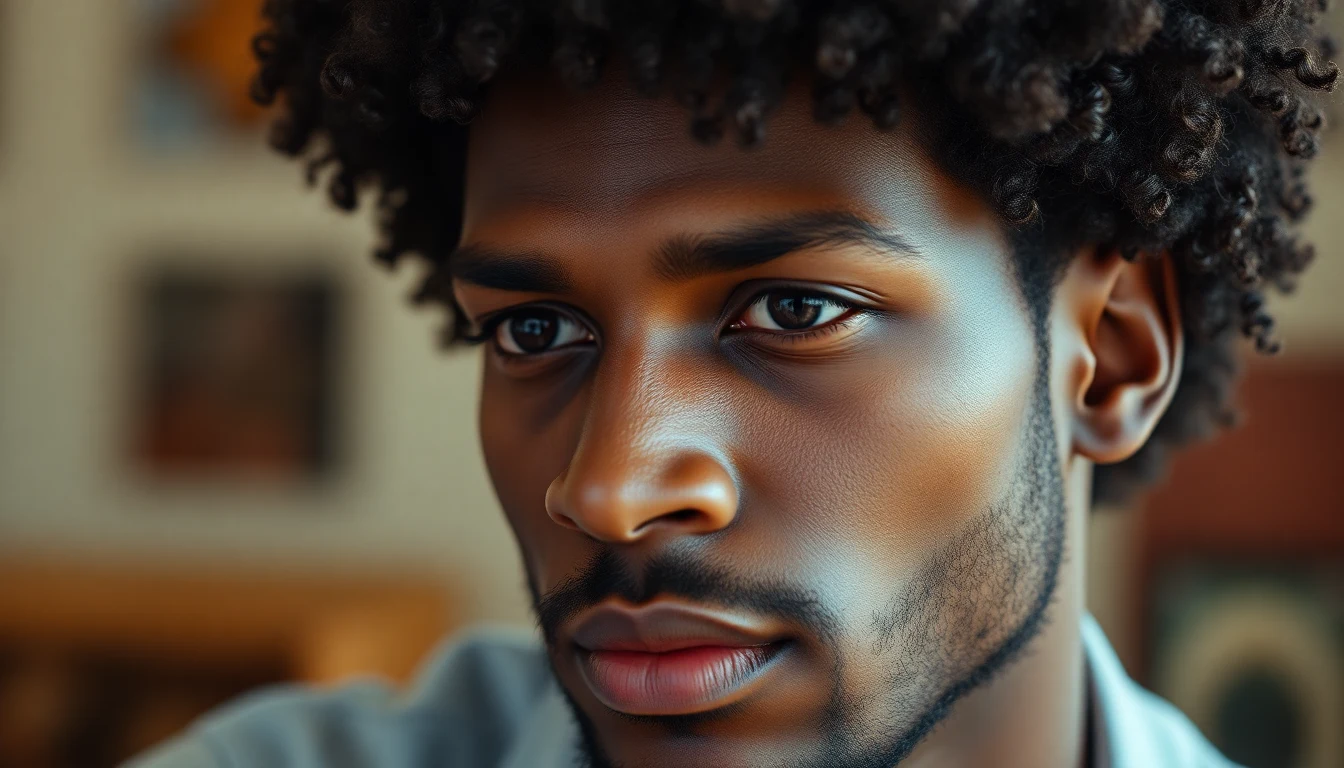
I am not going to pretend this stage is easy. Your hair is too long to look sharp and too short to look intentional. It may lean to one side, poof in some spots, and lay flat in others. You will look in the mirror and question this entire decision at least once a week.

Do not cut it. This stage is temporary. Here is how to manage it:
Survival strategies:
- Headbands and bandanas. A thin headband pushes hair away from your face and gives the illusion of structure. A bandana tied at the back looks intentional rather than unkempt.
- Twist-outs. Two-strand twist your hair at night, untwist in the morning. This gives temporary definition and elongation that makes the awkward length look styled. As I Am Double Butter Cream gives twist-outs hold without crunch.
- Keep the edges sharp. A clean lineup makes everything look purposeful. Go to your barber every two to three weeks for edges only.
- Finger coils. Wrap small sections around your finger with a styling cream. This creates defined coils that add structure during the in-between phase.
I wore a headband almost every day during months four and five. It kept me from reaching for the clippers. Find your version of that safety net.
Month 6-7: The Shape Emerges
Length: 3-3.5 inches
Visible change: Afro shape is visible when picked out. You look like you are growing an afro, not like you forgot to get a haircut.
Biggest challenge: Learning to shape it.
This is the turning point. Your hair has enough length to pick out into a round shape. The first time you pick your hair and see that silhouette in the mirror, the previous five months feel worth it.
What to do:
- Buy a wide-tooth afro pick if you do not have one. Metal teeth with a fist handle is the classic for a reason; it lifts from the root without tearing.
- Pick from the roots outward. Insert the pick at the base, near your scalp, and lift straight up. Do not drag it through the length. Let the coils separate naturally.
- Get your first shaping trim. Go to your barber and ask them to shape the outline of the afro. Round the silhouette. Take nothing off the interior length.
- Moisturize before picking, always. Dry picking rips through coils. Spritz with water and apply a light Carol’s Daughter Black Vanilla Leave-In before you touch the pick.
Month 8-9: Building Volume
Length: 4-4.5 inches
Visible change: Full afro shape. Noticeable volume. People are commenting.
Biggest challenge: Maintaining moisture as length increases.
Your afro is undeniable now. The volume is there. The shape is there. The compliments start coming from people who questioned you at month three. This is also when maintenance becomes more involved because there is more hair to moisturize and protect.
What to do:
- Increase your deep conditioning time to 30 minutes. More hair means more product needed.
- Section your hair during wash day. Four to six sections with clips makes detangling manageable and thorough.
- Consider sleeping in loose twists under a satin bonnet instead of wearing the afro to bed. Sleeping on a picked-out afro compresses it unevenly and creates tangles at the back.
- Get a shaping trim every eight to ten weeks. Your barber rounds the silhouette while you retain interior length.
Month 10-12: The Full Afro
Length: 5-6 inches
Visible change: Full, round, shaped afro that commands attention.
Biggest challenge: Ongoing maintenance commitment.
You made it. A year of growth, moisture, patience, and intentional care. Your afro is a statement piece. From this point, growth continues, but the shape is established and your routine is second nature.
What to do:
- Maintain the weekly wash day routine. Do not get complacent. Longer hair needs more moisture, not less.
- Experiment with styles: picked out for volume, twist-out for definition, tapered sides for contrast.
- Protect at night religiously. The longer your hair, the more susceptible it is to tangling and matting while you sleep.
- Continue shaping trims. A shaped afro looks intentional. An unshaped afro looks like you stopped caring.
Growth Timeline Summary
| Month | Length | Visible Height | Phase | Key Action |
|---|---|---|---|---|
| 1 | 0.5-1″ | Minimal | Commitment | Start moisture routine, clean edges only |
| 2-3 | 1-1.5″ | Texture visible | Texture | Full LOC method, deep conditioning |
| 4-5 | 2-2.5″ | Growing but uneven | Awkward | Headbands, twist-outs, patience |
| 6-7 | 3-3.5″ | 1-1.5″ above scalp | Shape emerges | First pick, first shaping trim |
| 8-9 | 4-4.5″ | 2″ above scalp | Volume | Increased moisture, section wash days |
| 10-12 | 5-6″ | 2-3″ above scalp | Full afro | Maintenance, styling variety |
Note: “Visible height” accounts for shrinkage. 4C hair shows roughly 20 to 30 percent of its actual length when dry.
The Afro Moisture Routine
An afro without moisture is a breakage machine. Every day you skip hydration is a day your ends get drier and more prone to snapping off. Here is the system.
Daily: Spritz and Seal (3 Minutes)
Fill a spray bottle with water and a small amount of leave-in conditioner (about a 4:1 ratio). Lightly mist your entire afro each morning. Follow with two to three drops of Mielle Rosemary Mint Oil rubbed between your palms and pressed into the hair. This is not a full moisture session. This is maintenance hydration. (We recommend this GIBS BioFuel Hair Conditioner For Men.)

Every 3 Days: LOC Refresh (15 Minutes)
Every third day, do a more thorough application. Spray until damp, apply Cantu Shea Butter Leave-In Conditioner, seal with oil, and finish with SheaMoisture Coconut and Hibiscus Curl Enhancing Smoothie. Work through each section of your afro, not just the surface. The interior coils dry out fastest because they get the least exposure to your products.
Weekly: Full Wash Day (60-90 Minutes)
Wash day for an afro follows the same protocol as general 4C care. Pre-poo with oil, section and detangle with conditioner, shampoo the scalp with a sulfate-free shampoo, deep condition for 20 to 30 minutes, rinse, and apply LOC layers while soaking wet. (We recommend this Black Wolf Mens Shampoo for Oily.)
For a detailed wash day breakdown with every step timed, read our full best shampoo for Black men guide. For moisturizer recommendations ranked by performance on 4C hair, see the best moisturizer for Black men roundup.
Picking and Shaping Your Afro
The afro pick is not a comb. It is a shaping tool. How you use it determines whether your afro looks full and intentional or flat and damaged.
The Right Pick
Use a wide-tooth afro pick with long, widely spaced teeth. Metal picks with rounded tips are best because they glide through coils without snagging. Avoid plastic picks with sharp, closely spaced teeth. Those are designed for straighter textures and will rip through 4C hair.
Picking Technique
Step 1: Always moisturize first. Spray your hair with water and apply a light leave-in. Never pick dry hair. Dry picking causes breakage at every contact point.
Step 2: Insert the pick at the roots, close to the scalp. Push straight up and outward. The goal is to separate and lift the coils from underneath, not to drag the pick through from the tips down.
Step 3: Work section by section. Start at the front, move to the sides, then the back, then the crown. The crown is typically the densest section and needs the most lifting.
Step 4: Shape the silhouette with your hands after picking. Pat the sides to even them out. Flatten any spots that stick out too far. Your hands do the fine shaping; the pick does the heavy lifting.

How Often to Pick
Two to three times per week is enough. Daily picking causes too much manipulation. On days you do not pick, wear your hair in twists, leave it compressed from sleeping, or let it sit naturally. Not every day has to be a full-volume afro day. Give your coils rest.
Professional Shaping
Every eight to ten weeks, visit your barber for a shaping trim. Here is what to tell them:
“I need the afro shaped. Round the silhouette, even out any uneven spots, and trim the split ends. Do not take more than a quarter inch off the overall length. I want to keep my volume.”
A good barber picks your afro out, studies the shape from all angles, and trims the outline with clippers or shears to create a symmetrical sphere. This is a skill. Not every barber knows how to shape an afro properly. Ask to see their portfolio or ask specifically if they have experience shaping natural afros. In Atlanta, this is standard. In other cities, you might need to search harder. Check our best clippers for Black men guide if you want to attempt light shaping at home between barber visits.
Essential Products for Growing an Afro
You do not need a cabinet full of products. You need the right ones in the right rotation.
The Core Four
| Product Type | Recommendation | Price | Purpose |
|---|---|---|---|
| Shampoo | SheaMoisture JBCO Shampoo | $9-12 | Sulfate-free weekly cleansing |
| Deep conditioner | TGIN Honey Miracle Hair Mask | $13-16 | Weekly intensive moisture |
| Leave-in conditioner | Cantu Shea Butter Leave-In | $5-7 | Daily/every-other-day moisture |
| Oil | Mielle Rosemary Mint Oil | $9-13 | Scalp health and moisture sealing |
Supporting Cast
| Product | Price | When to Use |
|---|---|---|
| SheaMoisture Curl Enhancing Smoothie | $10-13 | LOC cream layer for maximum moisture lock |
| As I Am Double Butter Cream | $8-12 | Alternative cream for high porosity hair; heavier moisture |
| Scotch Porter Nourish and Repair Serum | $11-14 | Finishing serum for sheen and frizz control on picked-out afro |
| Jamaican Black Castor Oil | $8-12 | Edges and thin spots; heavy sealing for extra-dry sections |
| Carol’s Daughter Black Vanilla Leave-In | $10-13 | Lightweight alternative leave-in; good for low-porosity hair |
What to Avoid
- Sulfate shampoos. They strip 4C hair of the oils it desperately needs. Always sulfate-free.
- Products with petroleum or mineral oil as a primary ingredient. These coat the hair and block moisture absorption. They give the illusion of shine while your hair dries out underneath.
- Alcohol-based sprays. Denatured alcohol evaporates and takes your hair’s moisture with it. Check ingredient lists for “alcohol denat” or “SD alcohol” and avoid them.
- “Universal” products that don’t mention coily hair. If the label shows a model with loose waves and the word “curl” but never mentions “coily” or “type 4,” it was not made for you.
Mistakes That Stall Your Afro Growth
1. Cutting During the Awkward Stage
The number one afro killer. You get frustrated at month four, go to the barber, say “just clean it up,” and they take off two months of growth. If you cannot commit to pushing through the awkward stage, you will restart this cycle forever. Set a boundary with yourself: no cutting the top until month six minimum.

2. Picking Dry Hair
Dry picking rips through coils at every intersection. Always moisture first, pick second. This one habit change will save you months of length.
3. Skipping Nighttime Protection
Sleeping on a cotton pillowcase with a picked-out afro creates a matted, tangled mess by morning. You lose moisture and break hair every night. Satin bonnet, satin pillowcase, or both. Non-negotiable. If you already use a durag for your wave routine, that same habit transfers directly to afro protection.
4. Washing Too Often
Some men shampoo every day or every other day out of habit from when they had short hair. At afro length, that frequency destroys your moisture balance. Once a week is the standard. Co-wash (conditioner only) mid-week if needed after heavy exercise.
5. Comparing to Other People’s Afros
Hair density, coil pattern, and head shape are all genetic variables. Your afro will not look like the next man’s afro. That is not a problem. That is what makes it yours. Measure progress month-over-month against your own photos, not against someone’s perfectly styled Instagram post.
6. Neglecting the Edges
Your hairline and edges take the most abuse from hats, durags, headbands, and daily friction. Apply Jamaican Black Castor Oil to your edges two to three times per week. This thick, heavy oil coats and protects the most vulnerable hair on your head. If your edges are thinning, ease up on anything tight around your hairline and give them room to recover. (We recommend this SFC Natural King Jamaican Black Castor.)

The Afro: More Than a Hairstyle
I cannot write this guide without talking about what the afro means. Not in an abstract, academic way. In a real, “this is my father’s hair and his father’s hair” way.
The afro became a political symbol in the 1960s when the Black Power movement embraced natural hair as a rejection of European beauty standards. Before that, Black men and women were expected to straighten, relax, or cut their hair short enough to look “presentable” by mainstream standards. The afro said: this is how my hair grows, and it is enough.
Angela Davis, Fred Hampton, Jimi Hendrix, the Jackson 5, Richard Pryor. These names are inseparable from the afro. The style represented pride, resistance, and identity at a time when all three were under attack.
The afro’s cultural significance did not end in the 1970s. The natural hair movement of the 2000s and 2010s brought it back with a new generation’s energy. And the CROWN Act (Creating a Respectful and Open World for Natural Hair), now law in over 20 states, exists because people were still being penalized for wearing their hair naturally as recently as a few years ago. Students sent home from school. Employees told their afro was “unprofessional.” That is the context.
You do not have to think about any of this when you grow your afro. You can grow it because you like the way it looks. That is enough. But knowing the history gives weight to the choice, and it helps to remember that every man who made this style iconic went through the same awkward stage you are about to push through.
Living With an Afro: Gym, Work, Sleep
Working Out
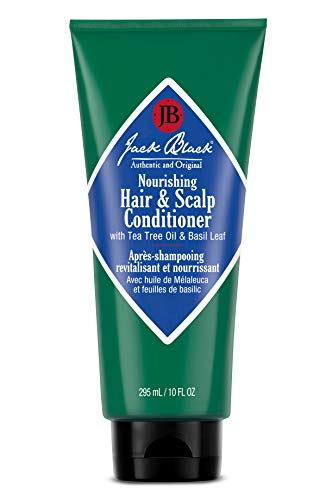
Sweat is salt water. Salt water dries out 4C hair. After a workout, rinse your scalp with plain water, apply a light leave-in conditioner, and let it air dry. Do not shampoo after every gym session. A full wash once a week is sufficient. If your hair is long enough, pull it into a loose puff or ponytail during exercise to reduce friction from headbands or hats. (We recommend this Jack Black Nourishing Hair & Scalp.)
The Workplace
If your workplace has opinions about your afro, know your rights. The CROWN Act protects natural hairstyles including afros, locs, braids, and twists from workplace discrimination in the states where it has been enacted. Even in states without the CROWN Act, Title VII of the Civil Rights Act and expanding case law provide some protection. A well-maintained, shaped afro is professional. Period. When it comes to how to grow an afro, technique matters most. When it comes to how to grow an afro, technique matters most.
That said, the first week you show up with a visibly different hairstyle, people will comment. Let them. Your hair is not a conversation topic unless you want it to be.
Sleep
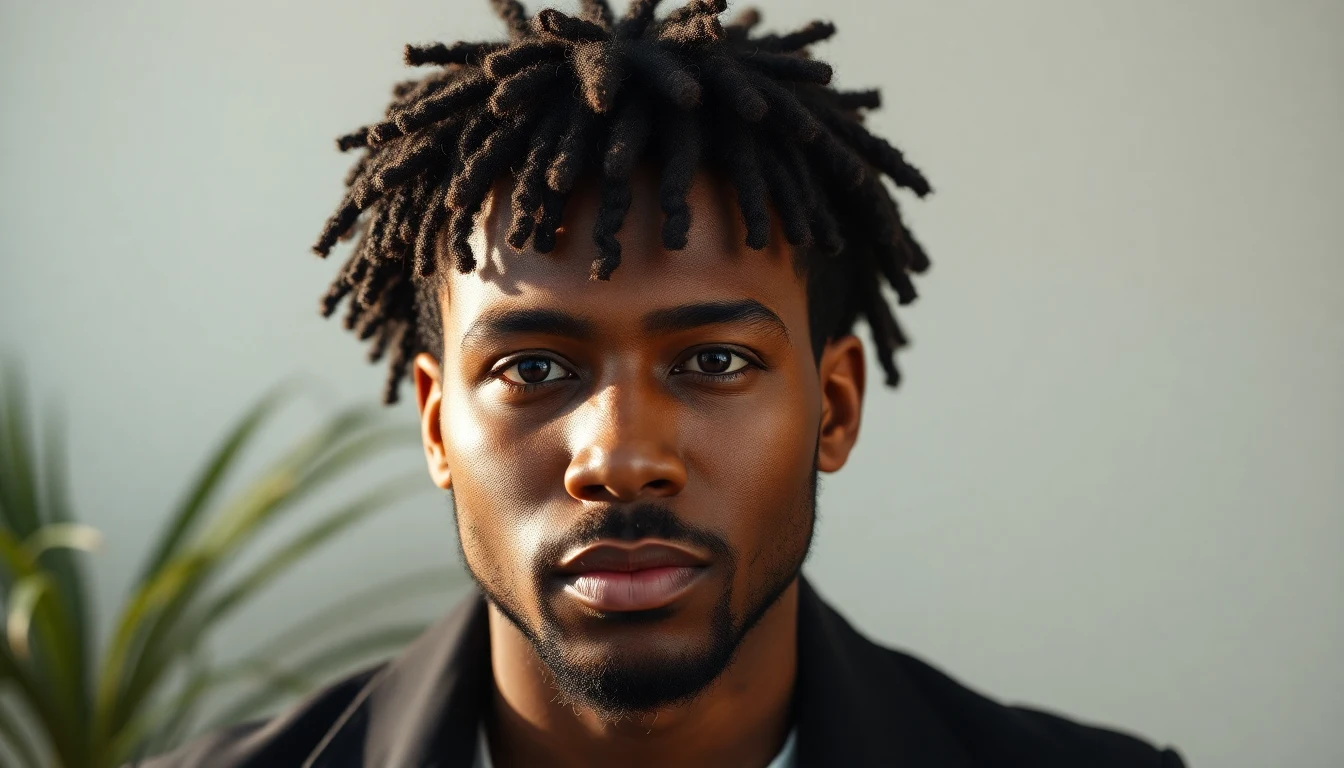
At afro length, your nighttime routine takes an extra two minutes. If your hair is short enough, lay a satin bonnet or durag over it and go to bed. If your hair is longer (four inches plus), loosely twist it into four to six large twists, then cover with a satin bonnet. This prevents the matting and tangling that happens when a full, picked-out afro compresses against a surface for eight hours.
In the morning, lightly spritz with water, untwist if you twisted, and pick lightly. Or leave it compressed for a lower-volume, more textured look. Not every day needs to be maximum volume.
Pairing Your Afro With a Beard
An afro and a well-groomed beard is one of the strongest style combinations in Black men’s grooming. The key is balance. If your afro is full and round, keep the beard defined with clean lines. If your afro is more free-form, a fuller beard matches that energy.
Check our Black men beard styles guide for specific styles that pair well with natural hair. If you are dealing with patchy areas, our patchy beard guide covers solutions. For beard maintenance oil, see our best beard oil for Black men roundup.
The beard and afro combination works because both signal the same thing: you take care of yourself, you put in the work, and you are not trying to look like anybody else.
When an Afro Is Not Working
Not every man’s hair grows into the afro shape they envisioned. If your hair is thin on top, significantly different textures on different sides, or you have traction alopecia from past hairstyles, a traditional round afro might not be the move. That is fine.
Alternatives that use the same growth:
- Tapered afro: Keeps the sides short with a fade. Works well for uneven density.
- Twist-outs and braid-outs: Uses the length for defined curl patterns instead of volume.
- Locs: If you have six or more months of growth, you can start locs from that length.
- 360 waves: If you cut back to short length, the moisture knowledge transfers directly. See our 360 waves guide.
Growing hair is never wasted effort. Whatever you choose to do with the length, the moisture habits, the product knowledge, and the patience you built all transfer.
Frequently Asked Questions
How long does it take to grow an afro?
A visible, shapeable afro takes six to twelve months. Hair grows about half an inch per month, but 4C hair shrinks 70 to 80 percent. By month six, you can start shaping. By month twelve, most men have a full afro.
How do I get through the awkward stage?
Headbands, bandanas, twist-outs, and clean edge-ups. Keep your lineup sharp every two to three weeks while the top grows freely. The awkward stage runs from roughly month two to month five. Every afro you have admired went through the same phase.
Do I need to pick my afro every day?
No. Pick two to three times per week. Daily picking causes unnecessary manipulation and breakage. Always pick on moisturized hair, starting from the roots and lifting outward.
What products should I use for an afro?
Sulfate-free shampoo, deep conditioner, leave-in conditioner, and a natural oil. SheaMoisture, Cantu, Mielle, and TGIN are reliable brands formulated for coily textures. Avoid sulfates, mineral oil, and drying alcohols.
Should I trim while growing it out?
Yes. Shape every eight to ten weeks. A quarter-inch trim prevents split ends from traveling up the shaft. You lose a small amount to trims but retain more overall because you eliminate breakage.
Can I grow an afro with 4A or 4B hair?
Yes. All type 4 hair grows into a natural afro. 4A produces a looser, more defined texture. 4B creates a denser, Z-pattern afro. 4C produces the roundest and densest shape. Most men have a mix. The routine is the same.
Is the afro just a hairstyle or does it mean something?
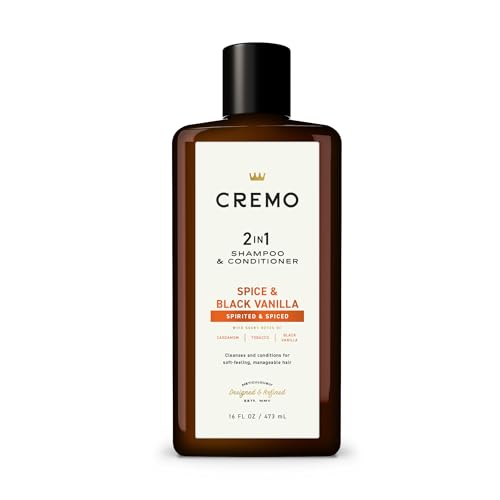
Both. The afro became a symbol of Black pride during the Civil Rights and Black Power movements. Today it represents connection to that legacy and a rejection of the idea that Black hair must be altered to be acceptable. The CROWN Act protects natural hairstyles including afros from discrimination. You do not need a political reason to grow one, but the history is there. (We recommend this Cremo Spice & Black Vanilla 2-in-1.)

Final Word
Growing an afro is one of the most rewarding grooming decisions a Black man can make. Not because of how it looks when it is done, although it will look incredible. Because of what you learn along the way. You learn your hair type. You learn what moisture does. You learn that patience pays off in a culture that wants everything fast. You learn that your natural texture is not a problem to be fixed.
Start the moisture routine today. Get your edges cleaned up. Tell your barber not to touch the top. Buy a satin pillowcase. And when you hit month four and the mirror makes you doubt yourself, come back to this guide. Every full afro you have ever seen was once at the awkward stage. They all pushed through.
Your hair is already growing. Your job is to protect what grows and shape it when it is ready.
For the complete science of 4C hair growth, moisture methods, and a detailed weekly routine, check out our companion guide on how to grow 4C hair. For skincare to match your grooming upgrade, explore our best face wash for Black men guide.
Frequently Asked Questions
How long does it take to grow an afro?
Growing a full, healthy afro typically takes 6-12 months depending on your hair texture, growth rate, and maintenance routine. Most men see noticeable results within 3-4 months, but reaching a well-defined, rounded shape usually requires patience through the awkward middle stages.
What products do I need to grow an afro successfully?
You’ll want a moisturizing leave-in conditioner, a wide-tooth afro pick, and a gentle shampoo designed for textured hair to prevent breakage and dryness. Adding a hair oil or butter once or twice weekly helps keep your curls hydrated and promotes healthy growth throughout your journey.
How do I get through the awkward stage when growing how to grow an afro?
The awkward 2-4 month phase is manageable with styling tools like headbands, bandanas, or wave caps that keep your hair looking intentional while it fills in. Regular light trims to maintain shape and keeping your hair moisturized helps you push through this stage with confidence.
What’s the correct technique for picking and shaping my afro?
Always insert your afro pick at the roots and lift upward and outward in small sections to maximize volume and create an even, rounded shape. Pick gently to avoid breaking hair, and work your way around your head systematically for balanced results.