If you want to master best beard growth products that, this guide covers everything you need to know.
If you want to master best beard growth products that, this guide covers everything you need to know. Last updated: February 2026 by Darius Washington, Black Men’s Grooming Editor
Many best beard growth product lists are either selling snake oil or ignore how patchy, tightly coiled facial hair behaves. This guide follows the published studies and separates what actually works from what just sells well.
Here is the truth about the best beard growth products. Some of them are clinically proven. Some create optimal conditions for growth. And some are pure marketing wrapped in a nice bottle. This guide separates which is which.
Want the quick answer? Jump to the evidence-ranked table. For the full science breakdown, start with the growth science section.
How Beard Growth Actually Works (The Science Most Brands Skip)
Before spending a dollar on any product, understand what is happening under your skin. Beard growth is controlled by three factors, and no product can override all of them.

1. Genetics (The Ceiling)
Your DNA determines your follicle count, distribution pattern, and the maximum density your beard can achieve. This is your ceiling. No product creates new follicles that your genetics did not program. What products CAN do is activate dormant follicles (follicles that exist but are not producing visible hair) and help existing hairs grow thicker and longer.
For Black men specifically, genetics often creates a pattern where the chin and goatee area fills in first, the jawline follows, and the cheeks fill in last. This is normal. It is not a sign that your beard is broken. It is a sign that your follicles activate on different timelines.
2. Hormones (The Engine)
Testosterone and its derivative dihydrotestosterone (DHT) drive beard growth. Your body converts testosterone to DHT via the enzyme 5-alpha reductase, and DHT binds to androgen receptors in facial hair follicles, triggering them from the dormant (vellus) phase into the active (terminal) phase. Higher DHT sensitivity in follicles means denser growth.
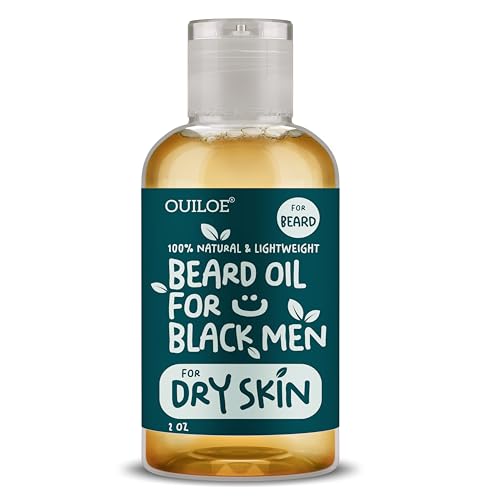
This is why beard growth often improves through your twenties and into your thirties. Hormonal changes over time activate follicles that were dormant at 20. Many Black men who struggle with beard growth at 22 have a full beard by 30 without doing anything differently. (We recommend this Ouiloe Beard Oil for Black Men.)
3. Blood Flow and Follicle Health (The Optimization Layer)
This is where products make their real impact. Even with favorable genetics and hormones, follicles need adequate blood supply (carrying nutrients and oxygen), a healthy surrounding skin environment (no clogged pores, inflammation, or dryness), and minimal breakage of existing hairs. Products that improve blood flow to the face, condition the skin and hair, and reduce breakage help you reach your genetic ceiling faster.
Best Beard Growth Products Ranked by Evidence
These are ranked by the strength of clinical evidence supporting their use for facial hair growth. Marketing claims mean nothing. Published studies mean everything.
| Product | Category | Evidence Level | How It Works | Price Range | Time to See Results |
|---|---|---|---|---|---|
| Minoxidil 5% (Kirkland) | Topical treatment | Strong (clinical trials) | Increases blood flow to follicles, extends growth phase | $15-25 (6-month supply) | 4-12 weeks |
| Derma Roller 0.5mm | Microneedling tool | Moderate (clinical trials, mostly scalp) | Micro-injuries trigger growth factor release and collagen | $8-15 (per roller) | 4-8 weeks (with minoxidil) |
| Castor Oil (Cold-Pressed) | Carrier oil | Moderate (traditional use + some studies) | Ricinoleic acid increases circulation; thick oil conditions hair | $8-14 (8 oz) | 8-12 weeks |
| Honest Amish Beard Oil | Beard oil | Moderate (ingredient-level evidence) | Jojoba, castor, and argan oils condition follicles and reduce breakage | $13-18 (2 oz) | 4-6 weeks (for condition improvement) |
| Peppermint Essential Oil | Essential oil (diluted) | Moderate (animal studies) | Menthol increases dermal blood flow | $8-12 (1 oz) | 8-16 weeks |
| Biotin 10,000mcg | Supplement | Low-moderate (deficiency correction only) | Supports keratin production; effective only if deficient | $10-18 (3-month supply) | 8-12 weeks (if deficient) |
| Rogaine Foam 5% | Topical treatment (brand name) | Strong (same active as Kirkland) | Same minoxidil formula in foam delivery | $30-50 (3-month supply) | 4-12 weeks |
| Scotch Porter Beard Growth Serum | Growth serum | Low-moderate (proprietary blend) | Biotin, castor, and botanical blend; Black-owned | $18-24 (2 oz) | 6-12 weeks |
| Wild Willies Beard Growth Supplement | Supplement | Low (no independent clinical trials) | Biotin, saw palmetto, MSM blend | $20-28 (1-month supply) | 8-12 weeks |
| Beard Club Growth Vitamins | Supplement | Low (no independent clinical trials) | Biotin, vitamin D, zinc, horsetail extract | $25-35 (1-month supply) | 8-12 weeks |
Detailed Reviews: The 10 Best Beard Growth Products
1. Minoxidil 5% (Best Overall, Strongest Evidence)
We need to talk about minoxidil honestly. It is the only topical treatment with real clinical evidence for beard growth, and the beard growth community has known this for years. Kirkland Minoxidil 5% is the generic version at a fraction of the brand name price.
A 2016 study published in the Journal of Dermatology tested 5% minoxidil on participants with thin facial hair. After 16 weeks of twice-daily application, the minoxidil group showed significantly increased hair count and diameter compared to placebo. The results were visible, measurable, and statistically significant.
How it works: minoxidil is a vasodilator. It widens blood vessels in the application area, increasing blood flow to hair follicles. This delivers more oxygen and nutrients, extending the anagen (growth) phase of the hair cycle. It also appears to increase the expression of vascular endothelial growth factor (VEGF), which stimulates new blood vessel formation around follicles.
How to use it:
- Wash and dry your face completely.
- Apply 1mL (the dropper fill line) to each problem area. Spread evenly with your fingertips.
- Leave on for at least four hours before washing.
- Apply twice daily (morning and evening) for best results.
- Be patient. Most men need 3-6 months to see significant terminal hair growth.
Side effects to know: Dry skin on the application area (common, use a light moisturizer after it dries). Temporary shedding in the first 2-4 weeks (normal; old hairs making way for new growth). Possible unwanted facial hair growth outside the target area (wash your hands thoroughly after application). Rare but possible: heart palpitations or dizziness if absorbed in large quantities.

Important for Black men: Most minoxidil clinical trials underrepresent Black participants. Anecdotal evidence from the beard growth community (Reddit r/Minoxbeards, forums) suggests similar effectiveness across ethnicities, but individual response varies. Start with once daily for the first week to test your skin’s reaction.
Kirkland vs. Rogaine: Same 5% minoxidil concentration. Kirkland costs $15-25 for a six-month supply. Rogaine costs $30-50 for three months. The foam version (Rogaine) absorbs faster and feels less sticky. The liquid version (Kirkland) is cheaper and delivers the same active ingredient. Choose based on budget and texture preference.
Price: $15-25 for a six-month supply (Kirkland liquid). Best value in the entire beard growth category.
2. Derma Roller 0.5mm (Best Supporting Tool)
A 0.5mm derma roller is the most underrated tool in beard growth. Microneedling creates hundreds of controlled micro-punctures in the skin, triggering your body’s wound healing response. This floods the area with growth factors, increases collagen production, and improves blood circulation to hair follicles.
A landmark 2013 study in the International Journal of Trichology found that microneedling combined with minoxidil was significantly more effective than minoxidil alone for hair regrowth. While the study focused on scalp hair, the mechanism applies to facial hair follicles.
The key benefit for beard growth: microneedling appears to activate dormant follicles. Those follicles exist in your skin but have not been triggered into the growth phase. The controlled injury and subsequent growth factor cascade can push them from vellus (fine, colorless) to terminal (thick, pigmented) status.
How to use it for beard growth:
- Sanitize the roller with rubbing alcohol before every use.
- Roll across the target area in four directions: vertical, horizontal, diagonal left, diagonal right. Use light pressure. You should feel mild discomfort but not pain.
- 5-10 passes in each direction. Total session: 3-5 minutes.
- Apply minoxidil AFTER microneedling for enhanced absorption (some men prefer to wait 24 hours if their skin is sensitive).
- Use once or twice per week. Not daily. Your skin needs recovery time.
- Replace the roller every 2-3 months as needles dull and can cause unnecessary trauma.
What NOT to do: Do not use on active acne, ingrown hairs, or irritated skin. Do not share your roller with anyone. Do not press hard enough to draw blood. Do not use a roller longer than 0.5mm on your face without professional guidance.
For Black men specifically: Start with a 0.25mm roller if you are prone to keloids or hyperpigmentation. Monitor your skin’s response for two weeks before moving to 0.5mm. Tightly coiled facial hair means a higher risk of ingrown hairs after microneedling, so keep the area moisturized and avoid shaving the day of treatment.
Price: $8-15 per roller. Replace every 2-3 months. One of the cheapest effective tools in beard growth.
3. Castor Oil, Cold-Pressed (Best Natural Growth Support)
Cold-pressed castor oil has been used for hair growth across cultures for centuries, and there is emerging science behind the tradition. Castor oil is roughly 90% ricinoleic acid, a unique fatty acid that increases prostaglandin E2 (PGE2) in the skin. PGE2 is a signaling molecule that dilates blood vessels and has been linked to hair growth stimulation.
A 2015 study published in the Journal of Cosmetic Science found that ricinoleic acid improved hair appearance by increasing luster and compliance, though it stopped short of claiming follicle activation. The evidence is strongest for castor oil as a conditioning agent that prevents breakage and keeps existing hairs healthy and growing longer.
How to use it:
- Get cold-pressed, hexane-free castor oil. The refined stuff loses much of the ricinoleic acid.
- Castor oil is THICK. Mix it 50/50 with a lighter carrier oil like jojoba or sweet almond for easier application.
- Apply a thin layer to your beard area at night. Massage for 2-3 minutes.
- Sleep on an old pillowcase (castor oil stains).
- Wash off in the morning with your face wash.
What works: Deep conditioning prevents breakage, which maximizes length retention. The thick consistency stays on the skin longer than lighter oils. Affordable and widely available. Compatible with every other product on this list.

What does not: It will not create new follicles. It is thick and messy. Can clog pores if you use too much or do not wash it off properly. The smell is neutral but not pleasant.
Price: $8-14 for an 8 oz bottle that lasts months.
4. Honest Amish Beard Oil (Best Conditioning Oil)
Honest Amish Beard Oil is not marketed as a growth product. It is a premium carrier oil blend (jojoba, argan, avocado, sweet almond, apricot kernel, virgin pumpkin seed, golden jojoba, and kukui nut oils) that creates the optimal environment for healthy beard growth by keeping follicles moisturized and hairs conditioned. (We recommend this NuGrowth Premium Beard Growth Oil for.)
The growth benefit is indirect but real. Dry, brittle facial hair breaks. Broken hair means shorter apparent length and thinner-looking coverage. An oil that keeps every strand conditioned and flexible means more of your hair reaches its full length potential. For Black men with tightly coiled facial hair that is prone to dryness and tangling, this matters more than for men with straight beards.
For a deep dive on beard oil formulas and how carrier oils work on coarse facial hair, check our full best beard oil for Black men guide.
What works: The multi-oil formula covers both fast-absorbing (jojoba, argan) and deep-conditioning (avocado, pumpkin seed) needs. All-natural ingredients with no synthetic fragrances. The light anise scent comes from essential oils, not parfum. Reduces beard itch during the growth phase, which is the number one reason men quit growing their beard early.
What does not: Will not activate dormant follicles. The scent is polarizing (some men love the earthy anise, others find it strong). More expensive per ounce than basic carrier oils. You are paying for the blend quality and convenience.
Best for: Men in active beard-growing phases who need to keep existing hair healthy while waiting for new growth. Pairs well with minoxidil (apply oil after minoxidil has dried, at least four hours later).
Price: $13-18 for a 2 oz bottle.
5. Peppermint Essential Oil (Best Natural Circulation Booster)
A 2014 study published in Toxicological Research tested peppermint essential oil against minoxidil, jojoba oil, and saline on mice. The peppermint oil group showed the most significant hair growth by week four, with increased dermal thickness, follicle number, and follicle depth. The menthol in peppermint oil increases blood flow to the application area, which is the same basic mechanism as minoxidil but through a different pathway.
Now, the caveat: this was an animal study. Human trials specifically for facial hair growth with peppermint oil have not been published. But the mechanism of action (increased blood flow to follicles) is sound, and the safety profile is well-established when properly diluted.
How to use it:
- NEVER apply peppermint essential oil directly to your skin. It will burn.
- Dilute to 3-5% concentration: 3-5 drops of peppermint essential oil per tablespoon of carrier oil (jojoba or castor work well).
- Apply the blend to your beard area. You should feel a mild tingling or cooling sensation. If it burns, you used too much.
- Use once daily, preferably at night.
- Wash off in the morning.
What works: The tingling sensation is real increased blood flow, not just a cosmetic effect. Menthol has anti-inflammatory properties that benefit skin health. Compatible with castor oil for a combined growth-support blend. Extremely affordable.
What does not: No human clinical trials for beard-specific growth. The strong menthol can irritate sensitive skin, especially after shaving or microneedling. Keep away from your eyes. Not effective alone; best used as part of a growth stack.
Price: $8-12 for a 1 oz bottle that lasts 3-6 months when diluted properly.
6. Biotin 10,000mcg (Best Supplement, With a Caveat)
Let me be honest about biotin in a way that most beard growth content is not. Biotin (vitamin B7) is essential for keratin production, and keratin is the protein that makes up hair. A biotin deficiency causes hair loss, skin problems, and brittle nails. Supplementing corrects a deficiency and restores normal growth.
The caveat: if you are not biotin-deficient, supplementing likely will not accelerate beard growth beyond your normal rate. Most Americans get enough biotin from diet (eggs, nuts, salmon, avocado, sweet potatoes). True biotin deficiency is relatively rare.
That said, subclinical deficiency (not low enough to diagnose but not optimal) may be more common than the numbers suggest, especially in men with restrictive diets, digestive issues, or heavy alcohol consumption. At $10-18 for a three-month supply, biotin is cheap enough that the potential upside outweighs the minimal risk.
What the research says: A 2017 review in Skin Appendage Disorders found that biotin supplementation improved hair and nail growth in patients with documented biotin deficiency. For individuals with normal biotin levels, the evidence for additional benefit was insufficient. No studies specifically measured biotin’s effect on beard growth.
How to take it: 5,000-10,000 mcg daily with food. Take it consistently for at least 8-12 weeks before evaluating results. Biotin can interfere with certain lab tests (thyroid panels, cardiac troponin), so tell your doctor you are taking it if you have blood work done.
What works: Corrects deficiency. Cheap. Low risk profile. May improve overall hair, skin, and nail health even if beard-specific results are modest. Anecdotally, many men report improved hair quality (stronger, shinier) within 6-8 weeks.
What does not: Will not grow beard hair where follicles do not exist. Limited evidence beyond deficiency correction. Can cause skin breakouts in some men (acne-like eruptions, usually at higher doses). The 10,000mcg dose is much higher than the adequate intake (30mcg), which is safe but worth noting.
Price: $10-18 for a three-month supply.
7. Rogaine Foam 5% (Best Premium Minoxidil)
Rogaine Foam contains the same 5% minoxidil as Kirkland’s liquid version but in a foam delivery system. The foam absorbs faster, does not drip, and feels less sticky on the skin. If you tried Kirkland’s liquid and disliked the greasy, alcohol-heavy feel, the foam is worth the premium.
The active ingredient and mechanism are identical: 5% minoxidil increases blood flow to follicles and extends the growth phase. The difference is entirely in the user experience. Foam dries in about two minutes versus five to ten for the liquid. It also does not contain propylene glycol, which is the ingredient in liquid minoxidil that causes skin irritation for some men.
When to choose Rogaine over Kirkland:
- You experienced skin irritation or dryness from the liquid formula.
- You want faster drying time (important if you apply before going to work).
- You prefer a less messy application.
- Budget is less of a concern than convenience.
When to stick with Kirkland:

- Budget matters. Kirkland is roughly 60% cheaper per month of use.
- You have no irritation issues with the liquid.
- You are using it at night and drying time is not critical.
Price: $30-50 for a three-month supply.
8. Scotch Porter Beard Growth Serum (Best Black-Owned Growth Product)
Scotch Porter’s Beard Growth Serum combines biotin, castor oil, and a proprietary botanical blend in a formula designed specifically for Black men’s facial hair. Calvin Quallis founded Scotch Porter to fill the gap in men’s grooming products that actually understand textured hair, and this serum reflects that mission.
The formula includes rosemary leaf extract and saw palmetto, both of which have preliminary evidence for supporting hair growth. Rosemary extract was compared to 2% minoxidil in a 2015 SKINmed study and showed comparable results for scalp hair over six months. Saw palmetto may inhibit 5-alpha reductase (the enzyme that converts testosterone to DHT), though its application to beard growth specifically is theoretical.
What works: Formulated by a Black-owned brand that understands tightly coiled facial hair. The castor oil and biotin base provides conditioning and potential growth support. The dropper applicator allows targeted application to patchy areas. Pairs naturally with Scotch Porter’s full beard care line (wash, oil, balm).
What does not: No independent clinical trials on this specific formula. The proprietary blend means you cannot verify the concentration of active ingredients. More expensive per ounce than using minoxidil plus a separate beard oil. Results will be slower and less dramatic than minoxidil.
Best for: Men who want a natural alternative to minoxidil. Men who prefer supporting Black-owned brands. Men already using the Scotch Porter grooming line who want product compatibility.
Price: $18-24 for a 2 oz bottle.
9. Wild Willies Beard Growth Supplement (Best Multi-Ingredient Supplement)
Wild Willies Beard Growth Supplement takes the shotgun approach: biotin, saw palmetto, MSM (methylsulfonylmethane), vitamin A, vitamin C, and zinc. The idea is that by covering every nutrient associated with hair health, you are more likely to address whatever deficiency might be limiting your growth.

MSM is the interesting ingredient here. It is a sulfur compound that is a building block for keratin and collagen. A small 2009 study in Health found that MSM improved hair growth in mice. Human data is limited but shows some promise for joint and skin health.
What works: Covers multiple nutritional bases in one capsule. The saw palmetto may support hormonal balance favorable to hair growth. MSM adds a keratin-building component that standard biotin supplements lack. Convenient one-pill daily routine.
What does not: No clinical trials on this specific product. Proprietary blend obscures individual ingredient doses. More expensive than buying biotin alone. The “beard growth” marketing often overpromises relative to what supplements can deliver.
Best for: Men who want a comprehensive supplement stack without buying five separate bottles. Men with generally poor diets who may have multiple mild deficiencies.
Price: $20-28 for a one-month supply.
10. Beard Club Growth Vitamins (Best for Vitamin D + Zinc)
Beard Club Growth Vitamins include biotin, vitamin D3, zinc, and horsetail extract. The vitamin D and zinc inclusions are noteworthy because both deficiencies are linked to hair loss in clinical literature, and both are more common than most men realize. (We recommend this The Beard Club Enhanced Beard Growth.)
Vitamin D deficiency affects an estimated 42% of American adults, with higher rates among Black men due to melanin’s effect on vitamin D synthesis from sunlight. A 2014 study in Molecular Endocrinology found that vitamin D receptors play a role in the hair follicle cycle. Zinc deficiency causes telogen effluvium (a type of hair shedding) and is correctable with supplementation.
What works: Addresses two common deficiencies (vitamin D, zinc) that genuinely affect hair growth. Horsetail extract provides silica, which supports hair structure. The formula targets actual biochemical pathways rather than relying on marketing alone.
What does not: No clinical trials on the specific product. Horsetail extract evidence is preliminary. More expensive than buying vitamin D and zinc separately. Same caveat as all supplements: will not override genetics.
Best for: Men who have not had their vitamin D or zinc levels checked (most men). Men with limited sun exposure. A reasonable supplement to add alongside a topical growth strategy.
Price: $25-35 for a one-month supply.

A Sample Beard Growth Routine
Here is a sample routine that combines the products above.
Morning
- Wash face with a gentle face wash.
- Pat dry completely.
- Apply 1mL Kirkland Minoxidil 5% to cheeks and patchy areas. Spread evenly.
- Wait four hours before washing face or applying other products.
Evening
- Wash face.
- Apply 1mL minoxidil. Let dry for 15-20 minutes.
- Apply a castor/jojoba oil blend (50/50 with 3 drops peppermint essential oil per tablespoon) to the entire beard area.
- Massage for 2-3 minutes.
Twice Weekly (Separate from Evening Routine)
- Sanitize 0.5mm derma roller.
- Roll across beard area: vertical, horizontal, both diagonals. Light pressure. 5 passes each direction.
- Apply minoxidil after rolling (skip the oil blend on rolling nights).
Daily Supplement
- Biotin 10,000mcg with breakfast.
- Vitamin D3 2,000 IU (if blood work shows low levels).
What to Expect
Important: Individual results vary significantly based on genetics. Men with very few cheek follicles may see less dramatic improvement, and missing days slows progress noticeably.
Specific Advice for Patchy Beards
If you are reading this because your beard has gaps, you are not alone. Patchy beards are a common beard concern among Black men, and the good news is that most patchy beards are more fixable than you think. For a deep dive, check our full guide on how to fix a patchy beard.
Strategy 1: The Growth + Fill Approach (3-6 months)
Use minoxidil on patchy areas while growing existing beard hair longer. Longer hair in filled areas covers adjacent gaps. This is the “strategic grow-out” approach, and it works for most men with moderate patchiness.
Strategy 2: The Trim-to-Match Approach (immediate)
Keep your entire beard trimmed to the length of your thinnest area. A short, uniform beard with consistent density looks better than a long beard with visible patches. Use the right trimmer set to one guard length. When it comes to best beard growth products that, technique matters most.
Strategy 3: The Style-Around-It Approach (immediate)
Some beard styles for Black men work with patchiness rather than against it. A goatee does not require cheek coverage. A chin strap avoids the cheeks entirely. An extended goatee covers chin and mustache while leaving sparse cheeks clean. Work with your natural growth pattern instead of fighting it. When it comes to best beard growth products that, technique matters most.
The Honest Truth About Genetics
Some men do not have the follicle density for a full beard. No product changes that. If you have been using minoxidil consistently for 12 months with minimal results, your follicle density may be your genetic limit. That is not a failure. It is information. Use it to choose a beard style that works with what you have. When it comes to best beard growth products that, technique matters most.
What Does NOT Work (Products That Waste Your Money)
These product categories do not work, despite what their marketing claims.
Beard Growth Sprays
Most “beard growth sprays” are water, fragrance, and trace amounts of biotin or caffeine. The concentration of any active ingredient is too low to have a physiological effect. If the product does not list a specific percentage of an active ingredient, it is decoration in a spray bottle.
Testosterone Boosters
Over-the-counter testosterone boosters (tribulus, fenugreek, D-aspartic acid) have minimal effect on testosterone levels in healthy men. Even if they raised testosterone slightly, the limiting factor in beard growth is typically DHT receptor sensitivity in follicles, not circulating testosterone. Save your money.
Beard Growth Creams (Without Minoxidil)
Creams that claim to “stimulate beard growth” without any active ingredient backed by clinical evidence are moisturizers with premium pricing. They may condition your beard (which is valuable), but conditioning and growth stimulation are different things. If a cream does not contain minoxidil, it is not a growth product. It is a moisturizer.
Shaving to Promote Thickness
Shaving does not make hair grow back thicker. This myth persists because the blunt edge of a freshly shaved hair feels coarser than a tapered natural tip. A 2007 study in the BMJ confirmed that shaving has no effect on hair thickness, color, or rate of growth. (We recommend this SFC Natural King Pro-Growth Hair &.)
Side Effects and Safety Considerations
Every product on this list has a safety profile worth knowing. Here is the honest breakdown.
Minoxidil
- Common: Dry, flaky skin at application site (60-70% of users). Use a light moisturizer after it dries.
- Occasional: Initial shedding (weeks 2-4). Unwanted hair growth on temples, forehead, or hands if product transfers.
- Rare: Heart palpitations, dizziness, chest pain. Discontinue immediately if these occur.
- Important: Toxic to cats. If you have cats, wash your hands thoroughly after application and do not let them contact treated areas.
Derma Roller
- Common: Redness and mild swelling for 12-24 hours after use.
- Occasional: Minor pinpoint bleeding. Post-inflammatory hyperpigmentation (more likely in darker skin tones).
- Preventable: Infection from unsanitized roller. Always clean with rubbing alcohol before and after use.
Biotin
- Common: None at standard doses for most people.
- Occasional: Acne-like breakouts, especially at 10,000mcg. Reduce dose if this occurs.
- Important: Interferes with lab tests. Inform your doctor before blood work.
Castor Oil and Peppermint Oil
- Castor oil: Can clog pores if over-applied. Patch test first. Wash off thoroughly in the morning.
- Peppermint oil: Causes burning if applied undiluted. Always dilute to 3-5%. Avoid contact with eyes, nose, and mouth.
When to See a Dermatologist
Products can only do so much. See a dermatologist experienced with skin of color if you experience any of the following:
- Alopecia areata: Sudden, circular bald patches in your beard that were not there before. This is an autoimmune condition, not a grooming issue.
- No response to minoxidil after 12 months: A dermatologist can assess your follicle density and recommend options like prescription treatments or PRP (platelet-rich plasma) therapy.
- Severe ingrown hairs or scarring: Pseudofolliculitis barbae (PFB) affects up to 80% of Black men who shave. If ingrown hairs are scarring your face and preventing beard growth, medical treatment comes before cosmetic products.
- Unusual hair loss: If you had beard coverage and are losing it, this may indicate a thyroid issue, nutrient deficiency, or other medical condition.
The key phrase is “experienced with skin of color.” Dermatology has historically underserved Black patients, and a provider who understands melanin-rich skin will give you better outcomes. Ask for board-certified dermatologists and check if they list skin of color or multicultural dermatology as a specialty.
Maintaining Your Beard While Growing It
Growing a beard does not mean ignoring it. Proper maintenance during the growth phase prevents the itching, dryness, and unruliness that make men quit.
Washing: Wash your beard two to three times per week with a gentle beard wash or your face wash. Do not use bar soap or body wash; they strip oils and dry out coily facial hair.
Conditioning: Apply beard oil daily. For tightly coiled facial hair, this is non-negotiable. Dry beard hair tangles, breaks, and itches. Oil keeps it soft and manageable.
Trimming: Even during a grow-out, trim your neckline and cheek line every two weeks for a kept appearance. Use the right trimmer and do not take length off the front.

Brushing: A boar bristle brush trains coily beard hair to grow downward rather than curling into the skin. Brush daily for one to two minutes after applying oil.
The itch phase (weeks 2-4): Almost every man experiences intense beard itch during weeks two through four of a grow-out. This is new hair pushing through the skin and dead cells accumulating beneath the beard. Beard oil, gentle exfoliation, and resisting the urge to shave are your tools here. The itch passes. The beard does not come back if you shave it off.
Frequently Asked Questions
Does minoxidil actually work for beard growth?
Yes. A 2016 study in the Journal of Dermatology showed 5% minoxidil applied twice daily produced significantly more facial hair than placebo over 16 weeks. Most men see vellus hairs within 4-8 weeks and terminal hairs by months 3-6. Once hairs become terminal, they typically remain after stopping minoxidil, though this can take 12-24 months of use.
How long does it take to grow a full beard for Black men?
Most Black men need 3-6 months of uninterrupted growth to see their full potential. Tightly coiled facial hair grows at the same rate as straight hair (about half an inch per month) but appears shorter because the coils compress. Genetics determines your coverage pattern. Some men fill in by month 3. Others take 12 months.
Do beard growth oils actually work?
Beard oils condition follicles, reduce breakage, and prevent the itching that makes men quit growing prematurely. They do not stimulate new follicle growth. The benefit is retention: moisturized hair grows longer because it breaks less. Think of beard oil as maximizing your genetic potential, not a growth activator.
Is derma rolling safe for beard growth?
A 0.25-0.5mm derma roller used once or twice weekly is generally safe. Sanitize before every use, never share it, and replace every 2-3 months. Do not use on active acne or irritated skin. For Black men prone to keloids, start with 0.25mm and monitor for two weeks.
Can Black men with patchy beards grow a full beard?
Many can. Patchy beards often result from uneven follicle activation, not inability to grow hair. Minoxidil can activate dormant follicles over 3-12 months. Strategic trimming and style choices work with natural growth patterns while new coverage develops.
What vitamins help beard growth?
Biotin supports keratin production but mainly helps if you are deficient. Vitamin D deficiency is linked to hair loss and is common among Black men. Zinc supports follicle health. A balanced diet with adequate protein does more than any single supplement. Get your vitamin D levels checked before supplementing blindly.
Should I shave to make my beard grow thicker?
No. Shaving does not change thickness, density, or growth rate. The blunt edge of shaved hair feels coarser, creating an illusion of thickness. Focus on moisturizing, microneedling, and time. Those actually work.
The Bottom Line
Growing a beard, especially as a Black man dealing with patchy areas or slow cheek growth, requires patience, the right products, and honest expectations about what products can and cannot do.
Here is the hierarchy of what actually works:
- Strongest evidence: Minoxidil 5% is the only topical treatment with published clinical data. If you are serious about filling patches, start here.
- Best supporting tool: 0.5mm derma roller amplifies minoxidil’s effectiveness and costs almost nothing.
- Best natural support: Cold-pressed castor oil conditions follicles and may support growth through increased circulation.
- Best daily maintenance: Quality beard oil prevents the breakage and dryness that shorten your beard’s apparent growth.
- Best Black-owned option: Scotch Porter Beard Growth Serum combines conditioning with growth-supporting botanicals.
The products matter. But consistency matters more. Consistent daily application matters. Buying a product and using it for three weeks will not change your beard.
For complementary guides, check out our best beard oil for Black men, how to fix a patchy beard, and beard styles for Black men. Build the system. Give it time. Your beard will show up.
Frequently Asked Questions
What are the best beard growth products that actually have scientific evidence behind them?
The most scientifically-backed beard growth products include minoxidil (clinically proven to increase hair density), derma rollers (which stimulate collagen production), biotin supplements (supporting keratin production), and beard oils with nourishing ingredients. This guide ranks 10 products based on clinical studies rather than marketing claims alone.
How long does it typically take to see results from beard growth products?
Most users begin noticing visible improvements within 3 to 6 months of consistent use, though results vary based on your genetics, hair type, and which products you’re using. Minoxidil, for example, requires daily application for at least 4 months before significant growth becomes apparent.
Are beard growth serums and oils effective for different cultural hair types?
Yes, beard growth products work across different ethnicities, but Black, Asian, Latino, and Middle Eastern men may experience different results based on natural beard texture, growth patterns, and skin sensitivity. Choosing products formulated for your specific hair type and skin needs will maximize effectiveness and minimize irritation.
Is it safe to use a derma roller on facial hair?
A 0.5mm derma roller is generally safe for facial use when used correctly, typically 1 to 2 times per week with proper sanitization. You should avoid rolling over active acne or open wounds, and always follow up with a quality beard oil or serum to support healing and growth.