An alcohol-free aftershave is one whose ingredient list contains no ethanol, which on a label usually appears as Alcohol Denat. If your face stings, tightens or gets bumpy after a shave, or if you avoid alcohol in personal products for religious reasons, switching is a reasonable step. It will not cure razor bumps, and it will not make a fragranced product allergy-proof, but it removes one known irritant from the routine.
This guide is written for men with razor bumps, sensitive or dry skin, and for Muslim and Sikh men who prefer to avoid alcohol. We explain what the label words mean, what the research says about ethanol and shaving, how far the evidence for witch hazel goes, and how to read a bottle before you buy it.
Key Takeaways
- On ingredient labels, “Alcohol Denat.” means denatured ethanol.[1]
- A safety review found topical ethanol is associated with skin irritation or contact dermatitis.[2]
- After hair removal with a disposable razor, transepidermal water loss rose significantly in a small study of healthy volunteers, indicating skin barrier disruption.[3]
- A review of witch hazel states that robust clinical data supporting its efficacy remain limited, even though it is widely used.[4]
- Alcohol-free does not mean fragrance-free: hydroperoxides of linalool were positive in 10.1% of patch-tested patients in one North American study.[5]
What “Alcohol Denat.” Means on a Label
Flip any traditional aftershave over and you will often see Alcohol Denat., SD Alcohol, or simply Alcohol near the top of the list. In the standard cosmetic ingredient naming system, Alcohol Denat. means denatured ethanol.[1] Ethanol in cosmetics is denatured so it tastes unpleasant and is not drunk.[1] It is the same ethanol, made undrinkable, not a different chemical.
Ingredients are listed in descending order by amount (down to the small ones), so alcohol listed first is the main ingredient. Alcohol listed near the end is a minor one. Both count as “contains alcohol”, but they are not the same experience on your skin, and we come back to that in the label section below.
Not every ingredient with “alcohol” in its name is the same thing either. Fatty alcohols such as cetyl alcohol are waxy conditioning ingredients, not ethanol. Those are not what this article is about, and we have found no source in our research that treats them as a problem for shaved skin.
What Razor Shaving Does to the Skin Barrier
Before blaming the aftershave, look at what the shave itself has done. In a small study of healthy volunteers, transepidermal water loss rose significantly after hair removal with a disposable razor, and microlesions appeared, indicating skin barrier disruption.[3] Clipper use did not significantly change water loss in that study.[3] It was measured on calf skin, not faces, and comes from a lower-tier journal, so read it as a pointer.
A better-regarded study looked at men’s faces and necks. In ten healthy men, shortly after electric shaving of the forearm, cheek and neck, water loss rose significantly with increased blood perfusion, with the size of the change varying by site.[6] Most skin measures returned to baseline 24 hours after shaving, so the changes were transient.[6]
One more paper puts it plainly: cutaneous irritation and inflammation are common after shaving, and many people still suffer post-shave redness, itching and pain despite moisturising shaving creams and aftershaves.[7] It gives no prevalence figure, so we cannot say how many men that is, only that it is a recognized problem.
What Ethanol Does on Top of That
A safety review found topical ethanol is associated with skin irritation or contact dermatitis, especially in people with aldehyde dehydrogenase (ALDH) deficiency.[2] The same review found that ethanol applied to skin can act as a penetration enhancer, so it may help other substances in a product absorb through the skin.[2]
In an ex vivo pig-ear skin model, ethanol added to a cream raised transepidermal water loss and lowered skin hydration on intact skin, consistent with barrier impairment.[8] That is lab work on animal skin, not men’s faces, and the product was a cream rather than a splash, so it supports the idea without proving it for aftershave. Interestingly, in the same model ethanol reduced dermal penetration of fluorescent dye surrogates by about 40% for the hydrophilic dye and about 20% for the lipophilic one on intact skin, which is a reminder that ethanol’s effects are complicated.[8]
What happens when the barrier is already damaged? In healthy volunteers, salicylic acid dissolved in ethanol penetrated barrier-damaged forearm skin 2.2-fold more, and up to 157-fold more when tape-stripped, than normal skin, and penetration correlated with water loss.[9] The damage in that study came from acetone, detergent or tape, not shaving, so it does not measure post-shave skin. It does show why putting something harsh on a compromised barrier is a gamble.
For balance: most adverse reactions to cosmetics and toiletries are mild or temporary and irritant rather than allergic in nature.[10] A tingle from a splash does not mean you have damaged your face. But if it happens every shave, it is a signal worth listening to.
What Alcohol-Free Formulas Use Instead
Alcohol-free aftershaves swap the ethanol base for water, glycerin-type moisturisers, emollients or a soothing botanical. Most come as balms, lotions or milks rather than thin splashes. The point of a balm is to leave a layer of moisture on the skin, not to evaporate off it.
There is some lab support for the “moisturise after” idea. In a lab skin model, the inflammation and barrier damage matching a dry razor pass were reduced by applying shaving foam before, or moisturiser after.[11] That is a laboratory model, not a trial in men with razor bumps, so we do not claim it prevents bumps. It simply points the same way as common sense: lubricate before, moisturise after.
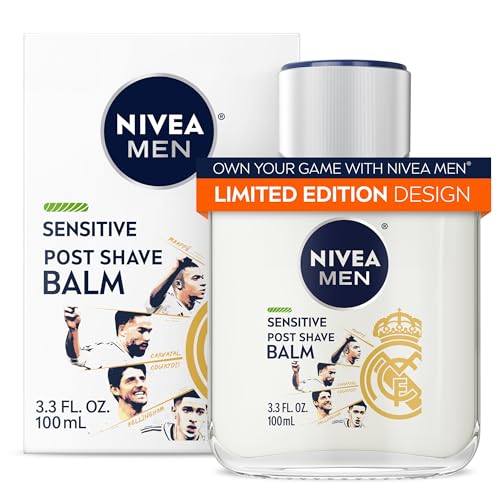
Products we cover in our guide to aftershave for sensitive skin include Bulldog Sensitive Aftershave Balm, Nivea Men Sensitive Post Shave Balm and Thayers Witch Hazel Facial Toner. Check each bottle yourself, because formulas change and some products in the same line differ in whether they contain alcohol.
Witch Hazel: How Much Evidence Is There?
Witch hazel aftershave is the classic alternative. Traditional use of witch hazel (Hamamelis virginiana) bark is mainly for its astringent properties, which are attributed to its tannins.[12] In ex vivo skin models, a witch hazel formula reduced pro-inflammatory cytokines including IL-6 and IL-8, but that is a lab study of a formula, not a human trial.[13]
Lab results are not all one-directional. In lab tests on human skin cells, witch hazel bark extract and its hamamelitannin had the strongest anti-inflammatory activity, but ellagic acid, the main metabolite produced by skin microbiota, stimulated release of inflammatory mediators from fibroblasts, so activity may change on real skin.[12] A review of witch hazel in skin care states that robust clinical data supporting its efficacy remain limited, even though it is widely used.[4]
There is a human result, but it is for eczema, not shaving. The review cites human work where a witch hazel emulsion reduced itching and erythema in patients with atopic eczema, but less than hydrocortisone cream.[4] We found no trial of witch hazel for razor bumps, so we do not say it treats them.
One practical warning: some witch hazel products are made with alcohol in the base, so “witch hazel” on the front does not guarantee “alcohol-free” on the back. Read the ingredients.
Alcohol-Free Is Not Allergen-Free
Many men switch to an alcohol-free product and keep reacting, because the fragrance is still there. A review states the prevalence of fragrance allergy in the general population is between 0.7% and 2.6%.[14] Among patch-tested patients the positive reaction rate to fragrances ranges from 5% to 11%.[14] Those patients were seen in clinics, so the second figure is not a general-population rate.
Some of the main culprits are fragrance ingredients that change once they meet air. A review of limonene says the pure compound rarely caused a positive patch test, but once exposed to air it forms hydroperoxides that are far stronger sensitizers.[15] The same is true of linalool: its hydroperoxides have a far stronger sensitizing potency than pure linalool.[16] In North American patch testing, hydroperoxides of linalool were positive in 10.1% of patients, ranking fourth among all allergens.[5] Those patients were referred for suspected contact dermatitis, so the rate is not a general-population figure. Among patch-tested dermatitis patients in another study, 5.1% had contact allergy to oxidized limonene and 7.0% to oxidized linalool.[17]
Shaving products have a long record in this area. In a clinic series of contact dermatitis patients in an older clinic, fragrances were the most common responsible ingredient in cosmetic allergy at 45.1%.[18] In the same series shaving preparations accounted for 8.0% of cosmetic allergy cases.[18] That is an old, single-clinic series, so it is background rather than a current rate.
If you have darker skin, note that in higher Fitzpatrick skin types positive patch tests often show lichenification and hyperpigmentation rather than redness and blisters, so reactions can be missed.[19] Rough, dark or itchy patches after a new product are a reason to stop and, if they persist, see a dermatologist. For men who want to cut fragrance out altogether, our fragrance-free skincare guide is the next stop.
Razor Bumps: What Alcohol-Free Can and Cannot Do
We want to be clear about expectations. A review describes razor bumps (pseudofolliculitis barbae) as seen almost exclusively in Black men aged 14 to 25, with a prevalence between 45% and 83%.[20] Razor bumps can result from stretching the skin and using blades that pull the hair instead of cutting it, so the hair tip retracts below the skin surface.[20] In a Dakar cohort, using clippers was protective against razor bumps (odds ratio 0.5),[21] while shaving against the grain carried an odds ratio of 6.3.[21]
None of those findings is about aftershave. We found no evidence that an alcohol-free aftershave prevents razor bumps, so the honest framing is this: technique and tools drive the bumps, and an alcohol-free balm is a gentler finish that avoids adding an irritant to skin that is already inflamed. Our razor bumps guide covers technique, and our best aftershave for Black men roundup covers products.
Alcohol and Faith: A Brief Note
Many Muslim and Sikh men choose alcohol-free personal products, and some simply prefer them. Scholars and communities differ on how they treat alcohol in perfumes and toiletries, and we are not the right authority to settle that. If this matters to you, please consult your own scholar or community elder. For fragrance that is made without an alcohol base, see our guides to alcohol-free cologne and attar and alcohol-free fragrance for Sikh men.
The FDA Rule That Shapes Label Claims
In the United States, the FDA decides whether a product is a cosmetic or a drug by its intended use.[22] The FDA also says a product can be both a drug and a cosmetic.[23] What that means for shoppers is simple. An aftershave that claims to heal, treat or prevent infection or disease is making a drug-style claim, and that is a different regulatory category from a product that just claims to soothe or scent.
For comparison, the FDA-approved styptic wording is “stops bleeding caused by minor surface cuts and abrasions as may occur during shaving”.[24] That is a drug claim, and it is the kind of language you will see on a real styptic product, not a general aftershave. Treat bold health claims on an aftershave bottle with healthy suspicion.
How to Read an Aftershave Label
- Scan the first few ingredients. Alcohol Denat., SD Alcohol or Alcohol at the top means an ethanol-based splash.[1]
- Do not trust the front label alone. “Gentle”, “sensitive” and “witch hazel” are marketing words; the ingredient list is the fact.
- Look for fragrance. Parfum or Fragrance is the umbrella term. Linalool and limonene are listed separately in many markets, and both can form stronger allergens when exposed to air.[15]
- Check for health claims. Words like “heals” or “prevents infection” are drug-style claims.[22]
- Patch test. Try a new product on a small area for a few days before using it on your whole face.
- Store it well. Keep products capped, cool and away from direct sun, since fragrance components can change with air exposure.[15]
How We Wrote This
This guide draws on peer-reviewed dermatology and toxicology papers, a small number of laboratory, ex vivo and animal-skin studies, clinical reviews of fragrance allergy, an industry ingredient database and US FDA guidance. Lab findings are labeled as such. We did not test any product ourselves. This article is general information and not medical advice.
Frequently Asked Questions
Is alcohol-free aftershave better for sensitive skin?
It removes one known irritant, since topical ethanol is associated with skin irritation or contact dermatitis.[2] It does not remove fragrance allergens, so read the whole label. See our sensitive skin aftershave guide.
Is witch hazel aftershave alcohol-free?
Not necessarily. Witch hazel is a plant extract valued for its astringent properties,[12] but some products are made with alcohol. Check the ingredient list for Alcohol Denat.
Does alcohol-free aftershave prevent razor bumps?
We found no evidence that it does. In one cohort, clippers were protective against razor bumps (odds ratio 0.5), and shaving against the grain carried an odds ratio of 6.3.[21][21] Technique and tools matter most.
Is alcohol in aftershave the same as the alcohol in drinks?
Chemically it is ethanol, but cosmetic ethanol is denatured so it tastes unpleasant and is not drunk.[1] Whether that matters for you religiously is a question for your own scholar.
Can I use a moisturiser instead of aftershave?
Often, yes. In a lab skin model, the inflammation and barrier damage matching a dry razor pass were reduced by applying moisturiser after, or shaving foam before.[11] A fragrance-free option avoids the allergen question altogether.
References
- ALCOHOL DENAT. (INCI database). COSMILE Europe / Cosmetics Europe (industry association)
- Safety evaluation of topical applications of ethanol on the skin and inside the oral cavity. Journal of Occupational Medicine and Toxicology, 2008
- Changes of the skin barrier and bacterial colonization after hair removal by clipper and by razor. Journal of Biomedical Photonics & Engineering, 2016
- Hamamelis virginiana L. in Skin Care: A Review of Its Pharmacological Properties and Cosmetological Applications. Molecules, 2025
- North American Contact Dermatitis Group Patch Test Results: 2021-2022. Dermatitis : contact, atopic, occupational, drug, 2025
- An exploratory study of structural and microvascular changes in the skin following electrical shaving using optical coherence topography. Skin research and technology : official journal of International Society for Bioengineering and the Skin (ISBS) [and] International Society for Digital Imaging of Skin (ISDIS) [and] International Society for Skin Imaging (ISSI), 2024
- Bensal HP Attenuates the Inflammatory Response in Hair Shaving Associated Dermatitis. Journal of drugs in dermatology : JDD, 2016
- Influence of Ethanol as a Preservative in Topical Formulation on the Dermal Penetration Efficacy of Active Compounds in Healthy and Barrier-Disrupted Skin. Pharmaceutics, 2025
- Effect of barrier perturbation on cutaneous salicylic acid penetration in human skin: in vivo pharmacokinetics using microdialysis and non-invasive quantification of barrier function. The British journal of dermatology, 1999
- Adverse reactions to cosmetics and methods of testing. Indian Journal of Dermatology Venereology and Leprology, 2009
- Development of a novel in vitro strategy to understand the impact of shaving on skin health: combining tape strip exfoliation and human skin equivalent technology. Frontiers in medicine, 2023
- Chemical composition, skin microbiota metabolism, antimicrobial potential and anti-inflammatory properties of witch hazel bark (Hamamelis virginiana L.). Journal of ethnopharmacology, 2025
- Revealing the Therapeutic Potential: Investigating the Impact of a Novel Witch Hazel Formula on Anti‐Inflammation and Antioxidation. Journal of Cosmetic Dermatology, 2024
- Allergic Contact Dermatitis to Fragrances. Dermatologic clinics, 2020
- Limonene Hydroperoxides. Dermatitis : contact, atopic, occupational, drug, 2019
- Linalool Hydroperoxides. Dermatitis : contact, atopic, occupational, drug, 2019
- Contact allergy to oxidized linalool and oxidized limonene: Patch testing in consecutive patients with dermatitis. Contact dermatitis, 2022
- Contact allergy to cosmetics: causative ingredients. Contact Dermatitis, 1987
- Allergic Contact Dermatitis and Patch Testing in Skin of Color Patients. Dermatitis : contact, atopic, occupational, drug, 2023
- Dermatology in black skin. Anais Brasileiros de Dermatologia, 2024
- [Pseudofolliculitis barbae in police students in Dakar: epidemiological and clinical aspects, and associated risk factors]. Medecine tropicale et sante internationale, 2024
- Is It a Cosmetic, a Drug, or Both? (Or Is It Soap?). U.S. Food and Drug Administration
- Cosmetics Labeling Guide. U.S. Food and Drug Administration
- 21 CFR Part 347, astringent definition and aluminum sulfate styptic. U.S. Government Publishing Office (CFR 2024), 2024
