If you want to master shadow fade haircut, this guide covers everything you need to know. Last updated: February 2026 by Marcus Chen-Williams, Editor-in-Chief
The shadow fade haircut is the fade for men who want precision without the stark contrast of exposed skin. It takes the same blending principle that makes skin fades so popular and dials it back just enough to create a softer, more natural gradient. Instead of taking the sides down to bare scalp, the shadow fade stops at a thin layer of stubble, leaving a visible “shadow” at the lowest point that gives the cut its name.
I have watched this haircut go from a niche barber term to one of the most requested fades in shops from Seoul to Atlanta to London. The reason is simple: it works on every hair type, holds its shape longer than a skin fade, and looks polished without demanding a barber visit every seven days. Whether you have straight, wavy, curly, or coily hair, the shadow fade adapts. This guide breaks down exactly how it works, what to ask your barber for, and how to maintain it.
What Is a Shadow Fade?: Shadow Fade Haircut
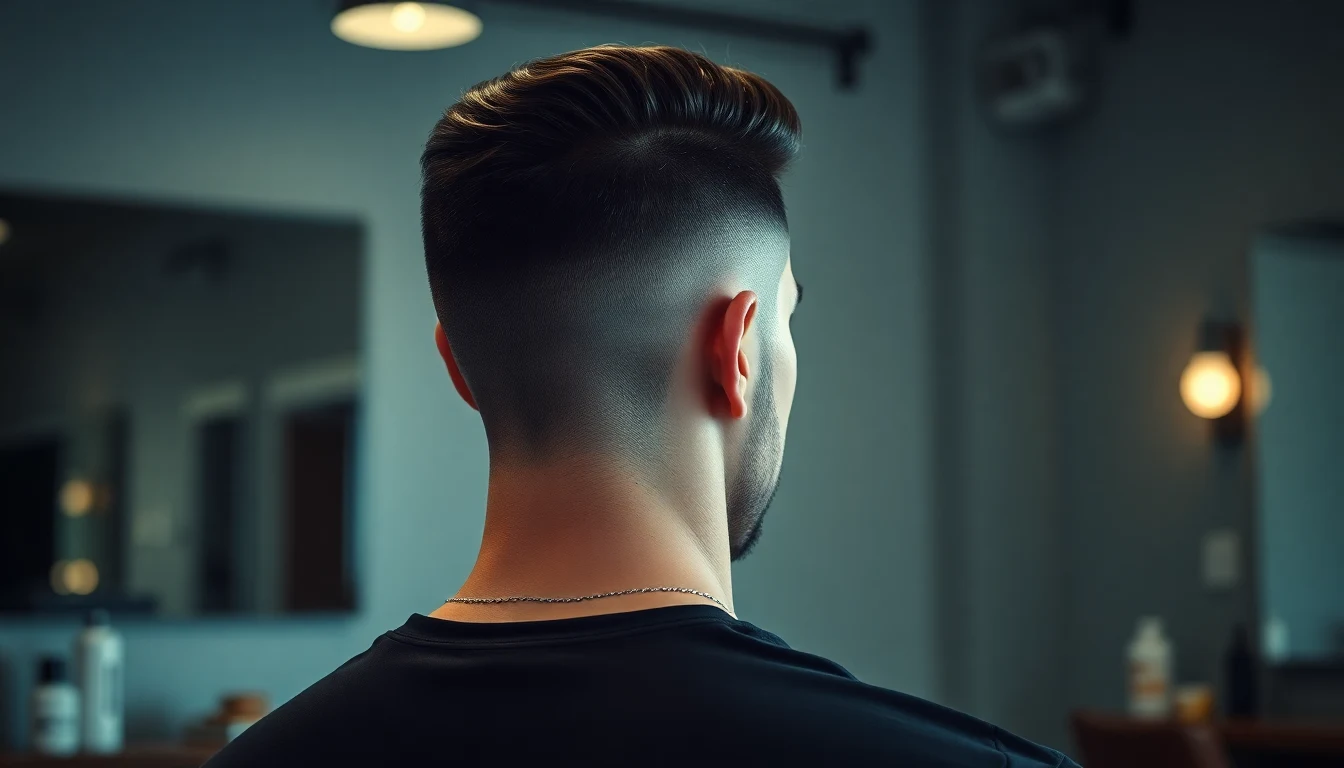
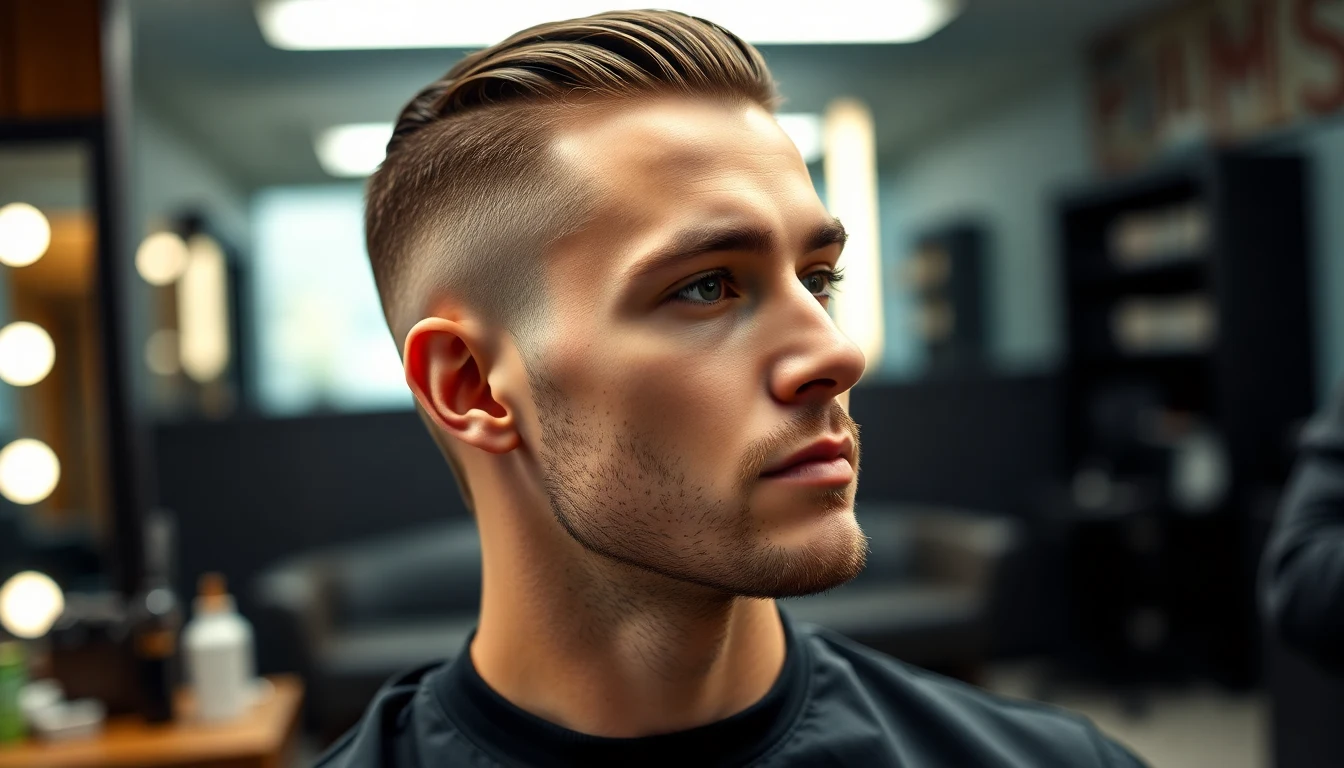
A shadow fade is a haircut where the hair on the sides and back blends gradually from longer on top to very short at the bottom, but never reaches bare skin. The shortest point of the fade sits at roughly a 0.5 to 1 guard length, which leaves a thin, even layer of stubble rather than exposed scalp. That remaining stubble creates a dark “shadow” against the skin, producing a softer visual transition than a skin fade.
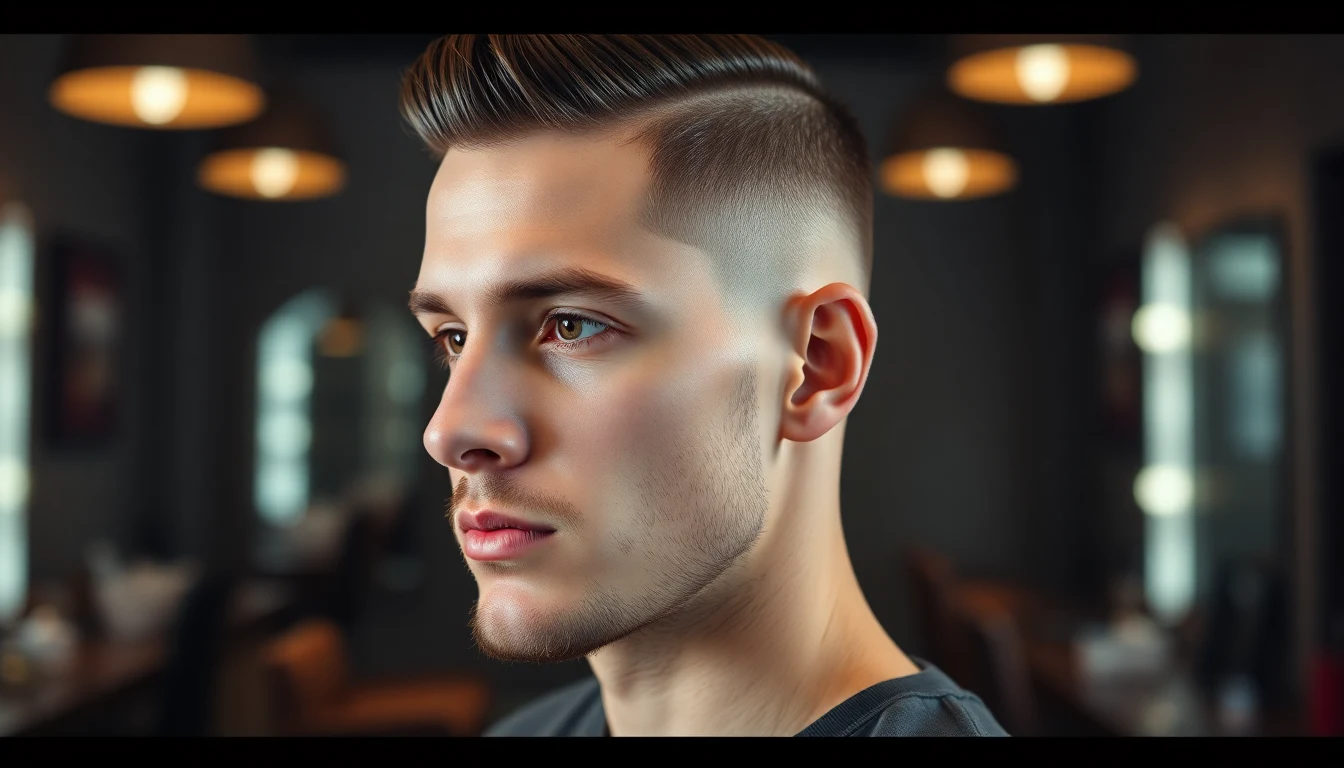
The technique is identical to any other fade: your barber works through multiple clipper guard lengths, blending each transition so there are no visible lines. The difference is in the endpoint. Where a skin fade finishes with a foil shaver to remove every trace of hair, the shadow fade finishes at the lowest clipper guard and leaves it there.
Three characteristics define a shadow fade:
- No exposed skin: The lowest point retains hair, however short. This is the defining feature that separates it from a skin fade.
- Gradual gradient: The blend zone is typically wider than a skin fade, creating a stretched, smooth transition through multiple lengths.
- Soft contrast: Instead of the dramatic hair-to-skin line of a skin fade, the shadow fade produces a tonal shift that looks intentional but not aggressive.
The shadow fade sits in a sweet spot between a taper fade (which is even more conservative) and a skin fade (which is more dramatic). Think of it as the middle ground: clean enough for the boardroom, sharp enough for the weekend.
Shadow Fade vs. Skin Fade, Low Fade, Mid Fade, and Taper
The fade family tree has a lot of branches, and the terminology confuses even experienced barbers. Here is how the shadow fade relates to every other major fade style, with clear distinctions so you know exactly what you are asking for.
Shadow Fade vs. Skin Fade
This is the comparison that matters most. The skin fade takes the sides down to zero, exposing bare scalp at the lowest point. The shadow fade stops short, keeping a thin layer of stubble. The visual difference is significant: a skin fade has a sharp, clean line where hair meets skin, while a shadow fade has a soft tonal gradient that fades into a dark shadow.
Practical differences:

- Maintenance: Skin fades need a touch-up every 7 to 10 days. Shadow fades hold for 2 to 3 weeks.
- Boldness: Skin fades read as intentionally sharp and modern. Shadow fades read as polished but natural.
- Scalp sensitivity: Men with sensitive scalps, razor bumps, or folliculitis often prefer shadow fades because the clipper guard stays between the blade and the skin.
- Professional settings: Shadow fades are safer for conservative workplaces where a skin fade might draw unwanted attention.
Shadow Fade vs. Low Fade
A low fade describes where the fade starts on the head (just above the ears), not how short it goes. You can have a low skin fade or a low shadow fade. The terms are not interchangeable. When someone says “low fade” without specifying, they usually mean the blend starts low and the shortest point is somewhere around a 1 or 1.5 guard, which technically makes most low fades shadow fades by default.
Shadow Fade vs. Mid Fade and High Fade
Same principle applies. A mid fade starts at the temples and a high fade starts above the temples, but neither term tells you whether the shortest point is skin or shadow. You can request a “mid shadow fade” or a “high shadow fade” and your barber will know exactly what you mean: the starting height is mid or high, and the endpoint is a 0.5 to 1 guard rather than bare skin.
Shadow Fade vs. Taper
A taper fade is the most conservative member of the fade family. The hair shortens gradually around the ears and neckline but maintains a natural, unshaved look throughout. There is no dramatic contrast between the top and sides. A shadow fade has more visual impact than a taper because the gradient is steeper and the shortest point is noticeably shorter, but less impact than a skin fade. The hierarchy from most subtle to most dramatic: taper, shadow fade, skin fade.
Shadow Fade Variations
The shadow fade is not one haircut. It is a technique that adapts to your starting height, hair texture, and the style you want on top. Here are the variations barbers execute most often and who each one works best for.
Low Shadow Fade
The low shadow fade starts just above the ears and stays close to the natural hairline. The blend zone is compact, usually covering about an inch of real estate on the sides. This is the most subtle shadow fade, and it is virtually invisible from across a room. Up close, the precision shows.
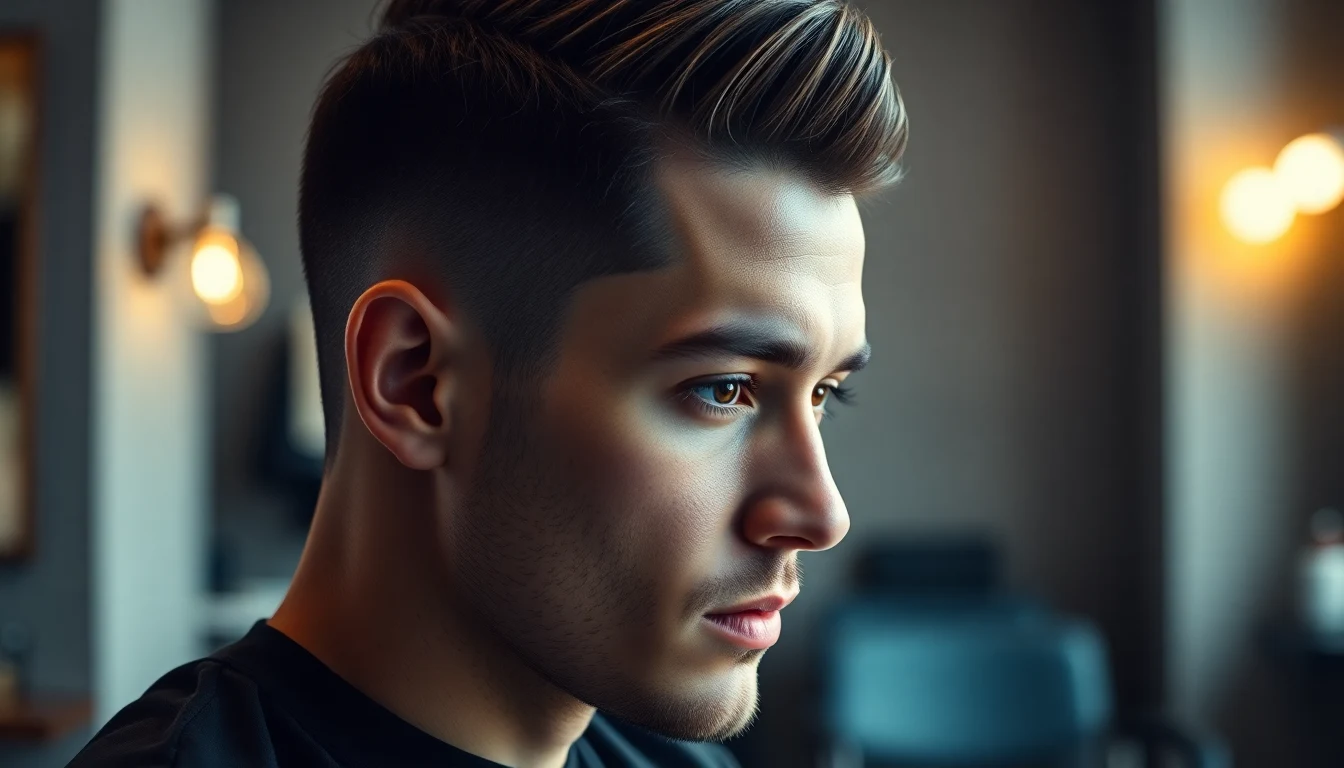
Best for: Corporate professionals, men with oblong or rectangular face shapes (avoids adding visual height), first-timers who want to ease into faded styles, men with fine or thin hair who want clean sides without revealing too much scalp.
Pairs with: Side parts, conservative textured crops, comb-overs, classic business cuts.
Mid Shadow Fade
The mid shadow fade starts at the temples, roughly halfway up the side of the head. This is the most versatile and most commonly requested shadow fade. It provides noticeable contrast between the top and sides without the boldness of a high fade. I see this variation more than any other in modern barbershops, and for good reason: it flatters almost every face shape and works with almost every hair texture.
Best for: Oval and diamond face shapes, men who move between casual and professional environments, most hair types including curly and coily textures.
Pairs with: Textured crops, quiffs, pompadours, curly tops, braids, curly fades.

High Shadow Fade
The high shadow fade removes hair from the majority of the sides, with the blend starting above the temples near the parietal ridge. It creates strong vertical emphasis and dramatic contrast, but the lack of exposed skin keeps it a degree softer than a high skin fade. This variation makes the hair on top the focal point.
Best for: Round and square face shapes (elongates and adds angularity), men who want bold contrast without the maintenance of a skin fade, thick or dense hair that benefits from volume contrast.
Pairs with: Pompadours, mohawk styles, high-volume curls, afro tops, slick backs.
Shadow Fade with Design
The shadow fade’s gradient creates an excellent canvas for shaved designs, hard parts, and geometric patterns. Because the transition zone retains some hair rather than going to bare skin, the design sits within a tonal range that makes it visible without being as stark as a design carved into a skin fade. Popular additions include hard part lines along the natural part, temple designs, and surgical line-ups.
One note: designs reduce the longevity of any fade. A shadow fade with a design needs a touch-up every 10 to 14 days to keep the pattern crisp. Without the design, the same fade could go 2 to 3 weeks.
Shadow Fade with Beard
When a shadow fade meets a beard, the goal is a seamless transition from the faded sides into the facial hair. The sideburns act as the bridge: your barber should blend the fade gradient into the top edge of the beard so there is no harsh line where the haircut ends and the beard begins.
This combination works particularly well because the shadow fade’s soft gradient naturally mirrors the density gradient of a well-maintained beard. A skin fade into a beard can create a jarring contrast (bare skin above the beard line, full hair below), but the shadow fade’s retained stubble makes the connection smoother.
Key instruction for your barber: Tell them you want the fade to “connect” or “blend into” the beard line, not terminate above it. The sideburn area should show a continuous gradient from the shortest point of the fade into the thickest part of the beard.
Shadow Fade Across Hair Types
One of the shadow fade’s strengths is its adaptability across every hair texture. But “it works on all hair types” does not mean the technique is identical for all hair types. Here is how barbers approach the shadow fade differently depending on what they are working with.
Straight Hair (Types 1A-1C)
Straight hair lies flat against the head, which means every imperfection in the blend is visible. The shadow fade on straight hair demands precise clipper work, with the barber moving through multiple guard sizes in small increments. There is no natural texture to hide a rough transition.
The result, when done well, is exceptionally clean. The gradient appears as a smooth shift in density from top to bottom, almost like a photograph with carefully adjusted contrast. This look is popular in East Asian hairstyles and Scandinavian grooming, where the soft blend complements the natural lie of straight hair.

Barber tip: Ask for a “stretched” blend on straight hair. Compressed blends that work on textured hair can look choppy on straight strands.
Wavy Hair (Types 2A-2C)
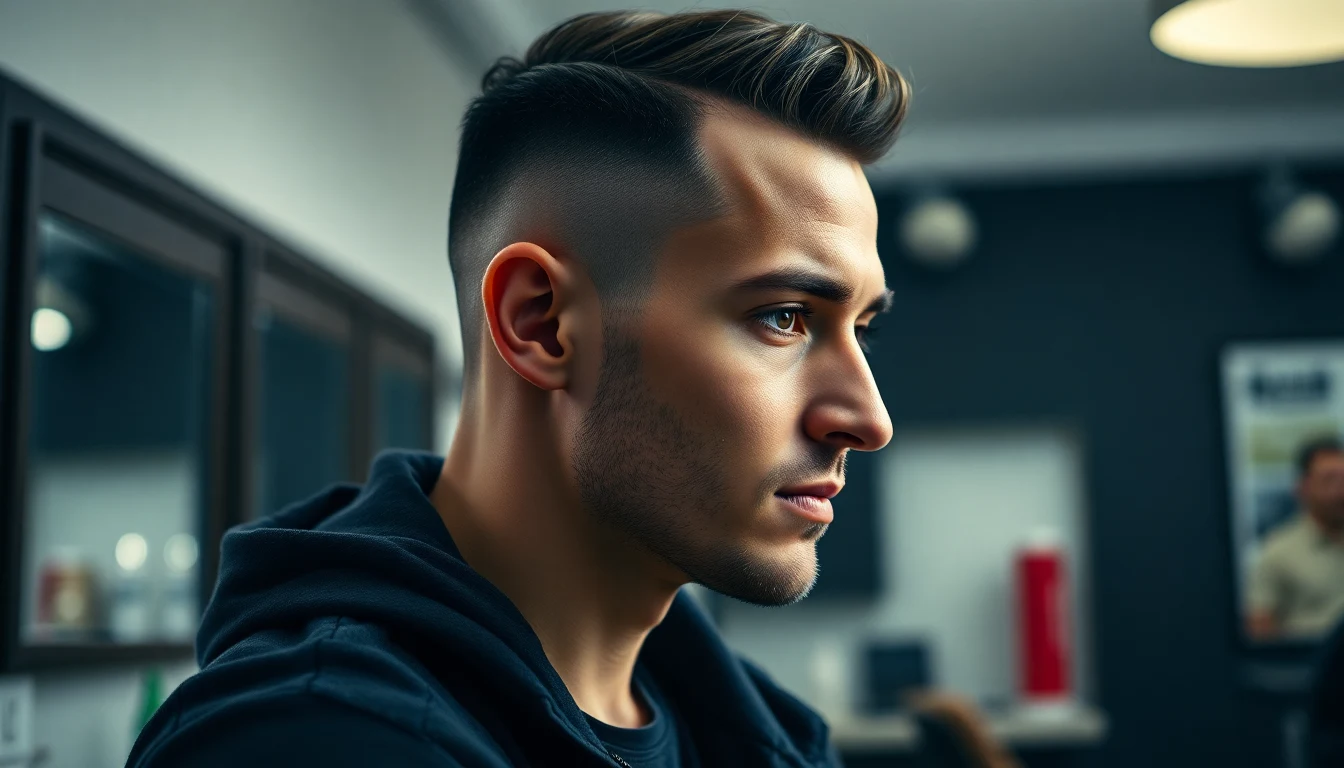
Wavy hair is forgiving in the blend zone. The natural movement of the hair disguises minor inconsistencies, making the shadow fade slightly easier to execute and longer-lasting visually. The waves also add dimension to the transition, so the fade appears to have more depth than it would on straight hair.
Barber tip: Wavy hair can be blended slightly faster (fewer guard transitions) because the texture does some of the work. Ask your barber to leave enough length on top to let the waves form naturally.
Curly Hair (Types 3A-3C)
The shadow fade and curly hair are a natural match. Curls create their own visual gradient as the hair gets shorter, because shorter curls sit tighter to the head and appear darker while longer curls have more volume and light exposure. This means the shadow fade’s gradient is enhanced by the hair’s own texture.
For men with type 3B and 3C curls, the shadow fade creates a dramatic frame around the natural curl pattern on top. The curly fade has become one of the most popular hairstyles globally, and the shadow variation keeps it approachable for men who do not want the sharpness of a skin fade.
Barber tip: Curly hair should be blended dry whenever possible. Wet curly hair lies flatter and longer, which can lead to an uneven fade once the hair dries and springs back up.
Coily Hair (Types 4A-4C)
Coily and afro-textured hair pairs powerfully with the shadow fade. The tight curl pattern creates a dense, dark appearance at shorter lengths that perfectly embodies the “shadow” effect. The gradient from the coily texture on top to the close-cropped sides is naturally striking, even without taking the hair down to skin.
Barbers working with 4B and 4C hair often use a combination of clipper-over-comb and open/closed lever techniques to achieve the blend. The density of coily hair means the barber may need more passes to create a smooth gradient, but the end result holds its shape exceptionally well.
Barber tip: Make sure your barber is experienced with your specific texture. A shadow fade on 4C hair requires different techniques than on 3A hair. If you are looking for a barber who specializes in textured hair, check our guide to the best clippers for Black men, which also includes barber selection advice.
Shadow Fade by Face Shape: A Visual Guide
Your face shape determines which shadow fade variation creates the most balanced proportions. This is not about strict rules. It is about understanding how the placement of the fade’s starting point affects the visual geometry of your head. Use this as a starting point, not a mandate.

| Face Shape | Best Shadow Fade | Why It Works | What to Avoid |
|---|---|---|---|
| Oval | Mid shadow fade | Balanced proportions need balanced contrast. The mid fade complements without distorting. | No restrictions. Oval faces work with all variations. |
| Round | High shadow fade | Removes width from the sides, elongates the face, adds angularity. Pair with volume on top. | Low shadow fade (adds visual width at the widest point). |
| Square | Mid or high shadow fade | Softens the angular jawline while adding vertical emphasis. The shadow’s soft gradient avoids making the square shape look too rigid. | Very low fades that emphasize the jaw’s width. |
| Oblong/Rectangular | Low shadow fade | Keeps visual weight near the ears, which adds width and avoids making a long face look longer. | High shadow fade (adds even more vertical length). |
| Heart/Triangle | Low to mid shadow fade | Maintains width at the temples to balance a narrower chin. The soft gradient avoids sharpening the upper face too much. | High fade (can exaggerate the top-heavy proportions). |
| Diamond | Mid shadow fade | Balances prominent cheekbones by adding proportional contrast at the temples without removing too much or too little. | Extreme high or low (both can exaggerate the diamond’s angles). |
The real rule: Bring reference photos to your barber and let them assess your specific head shape, hair density, and growth patterns. No chart replaces a skilled barber’s eye. If your barber does not consider face shape when recommending a fade height, that is a signal to find a more detail-oriented barber.

- NAIL CARE KIT from 3 Swords Germany with professional manicure and pedicure tool
- CONTENTS: Cuticle scissors, nail scissors, cuticle nipper, nail nipper, tweezers
- STEEL IMPLEMENTS: Hand made, bright nickel plated (protection against corrosion)
What to Tell Your Barber: Communication Scripts
The gap between “what you wanted” and “what you got” almost always comes down to communication. Here are specific scripts you can use or adapt when requesting a shadow fade. Customize the length on top and the starting height to your preference.
Script 1: First-Time Shadow Fade
“I want a shadow fade on the sides. Not a skin fade. I want the shortest point to be about a half-guard or one-guard length, so there’s still a thin layer of hair at the bottom. Start the fade around [low/mid/high], and leave about [X inches] on top. Here are some reference photos.”
Why this works: It specifies that you do not want skin showing, gives a concrete guard length for the shortest point, and establishes the starting height and top length. The reference photos close any remaining ambiguity.
Script 2: Shadow Fade with Beard Connection
“I want a mid shadow fade that connects into my beard. Blend the sideburns so there’s no hard line between the fade and the beard. Keep the fade at about a half-guard at the shortest point and fade it up into about [X inches] on top. The beard line should flow into the fade naturally.”
Script 3: Shadow Fade on Curly or Coily Hair
“I want a shadow fade, blended dry if possible. No skin showing at the bottom. Start the fade at [low/mid/high] and keep [X inches] of curl on top. I want the curls to contrast with the sides but keep the transition soft, not a hard line.”
Script 4: Conservative Shadow Fade for Professional Settings
“I need something clean but subtle. A low shadow fade, shortest point at a one-guard, with a natural taper into the neckline. About [X inches] on top, parted to the [side]. Nothing too sharp or dramatic. I want it to look like a really well-maintained haircut, not a statement.”
What If Your Barber Doesn’t Know the Term?
Not every barber uses “shadow fade” as a standard term. If they look confused, rephrase it: “I want a regular fade that stops at a half-guard or one-guard at the shortest point. No foil shaver, no bare skin. Just a clean blend that fades into short stubble at the bottom.” Most barbers will immediately understand. And always, always bring photos.
Clipper Guard Reference Chart for Shadow Fades
Understanding clipper guard numbers helps you speak your barber’s language. Here is a reference chart showing what each guard leaves and where it fits in a typical shadow fade.
| Guard Number | Hair Length | Role in Shadow Fade |
|---|---|---|
| No guard (bare blade) | ~0.2mm | Not used in shadow fades. This creates a skin fade. |
| 0.5 guard | ~1.5mm | The shortest point of most shadow fades. Leaves a visible “shadow” of stubble. |
| 1 guard | ~3mm | The shortest point for a softer shadow fade. Slightly more coverage than a 0.5. |
| 1.5 guard | ~4.5mm | Transition zone. The blend moves through this length between the shortest and mid-lengths. |
| 2 guard | ~6mm | Upper transition zone. The fade is moving from short to the longer hair on top. |
| 3 guard | ~10mm | Where the fade typically meets the styled hair on top for shorter styles. |
| 4 guard | ~13mm | For longer styles on top. The fade’s upper boundary before scissors take over. |
Key takeaway: When you tell your barber “shadow fade, shortest point at a 0.5,” you are saying: “Blend through all the guard lengths, but stop at 1.5mm instead of going to skin.” That single instruction defines the shadow fade.

How a Shadow Fade Is Cut: The Barber’s Process
Understanding the process helps you evaluate your barber’s skill and know what to expect in the chair. A proper shadow fade takes 25 to 40 minutes depending on your hair texture and the level of detail involved. Here is the typical sequence.
Step 1: Establish the Top Length
Your barber will usually start by cutting the hair on top to your desired length using scissors or the appropriate clipper guard. This establishes the “ceiling” of the fade and gives the barber a visual target for the blend.
Step 2: Set the Guideline
Using the shortest guard (typically a 0.5 or closed 1), the barber cuts a guideline around the bottom perimeter of the sides and back. This is the lowest point of the fade. For a low shadow fade, this guideline sits just above the ears. For a mid, it is at the temples. For a high, it extends above the temples.
Step 3: Build the Gradient
This is where the skill shows. Starting from the shortest guideline, the barber works upward through progressively longer guards, blending each transition. A typical sequence might go: 0.5 guard, 1 guard, 1.5 guard, 2 guard, then clipper-over-comb or scissors to connect to the top. Each guard’s cutting zone overlaps slightly with the next, creating a seamless gradient with no visible lines.
Step 4: Refine the Blend
After the initial passes, the barber checks for any inconsistencies. On straight hair, they may use a clipper-over-comb technique to smooth the transition. On curly or coily hair, they may use the clipper lever (opening and closing it mid-stroke) to fine-tune specific areas. This refinement pass is what separates a competent fade from a clean one.
Step 5: Detail Work
The barber cleans up the neckline, around the ears, and the hairline using a precision trimmer like the Andis Slimline Pro Li or BaBylissPRO GoldFX. If you requested a lineup, hard part, or design, this is when they execute it. The detail pass frames the entire cut.
Step 6: Final Check
A good barber will show you the cut from every angle: front, both sides, back. Use this moment to point out anything you want adjusted. It is much easier to fix a shadow fade in the chair than to come back later.
Maintaining Your Shadow Fade Between Visits
The shadow fade is lower maintenance than a skin fade, but “lower maintenance” is not the same as “no maintenance.” Here is how to keep your fade looking intentional between barber visits.
Touch-Up Schedule
- Sharpest look: Every 10 to 14 days
- Good-looking range: Every 2 to 3 weeks
- Maximum stretch: 3 to 4 weeks (the fade will be noticeably grown out but still structured)
Compare this to a skin fade, which typically needs attention every 7 to 10 days. The shadow fade’s extra longevity comes from the fact that regrowth at the bottom does not create a stark line against bare skin. It simply makes the shadow slightly thicker.
At-Home Maintenance Between Visits
Neckline cleanup: The neckline is the first area to lose its shape. Use a quality trimmer like the Andis Slimline Pro Li to clean up the back of the neck and around the ears every 5 to 7 days. Do not attempt to touch the fade itself. Just maintain the edges.

Product application: Use styling products appropriate for your hair type on top. Pomade, clay, or cream for straight and wavy hair. Curl cream or defining gel for curly and coily hair. Avoid heavy products that weigh down the top and reduce the contrast between the styled top and the faded sides.
Scalp care: Even though the shadow fade retains more hair than a skin fade, the shorter areas of the sides are more exposed to sun, sweat, and dryness. Use a lightweight moisturizer or scalp serum on the faded areas if you notice dryness or flaking. When it comes to shadow fade haircut, technique matters most.
What to Avoid Between Visits
- Do not try to re-fade the sides yourself. Fading requires line-of-sight to the entire blend zone, which is impossible to achieve on your own head. A botched at-home fade attempt is one of the most common reasons men end up in the barber chair earlier than planned.
- Do not let the top grow out of proportion. If the top gets significantly longer while the fade stays the same length, the proportions shift and the haircut loses its balance. If you are growing out the top intentionally, tell your barber so they can adjust the fade height accordingly.
Best Clippers for Shadow Fades
If you are a barber reading this, or if you want to understand what your barber should be using, here are the clippers and trimmers best suited for shadow fades. When it comes to shadow fade haircut, technique matters most.
| Tool | Role | Why It Works for Shadow Fades | Price Range |
|---|---|---|---|
| Wahl Magic Clip | Primary clipper | Stagger-tooth blade with adjustable taper lever allows micro-adjustments in the blend zone. The gold standard for fading. | $90-$150 |
| Wahl 5 Star Senior | Primary clipper | Powerful motor handles dense, coily hair. The adjustable blade gets close without going to skin. | $80-$130 |
| Andis Master Cordless | Primary clipper | Lightweight with a carbon-steel blade. Preferred by barbers who do a high volume of fades daily. | $130-$180 |
| BaBylissPRO GoldFX Trimmer | Detail trimmer | Precision outlining for lineups, edge cleanup, and detail work around the fade perimeter. | $70-$100 |
| Andis Slimline Pro Li | Detail trimmer | Compact and precise. Ideal for home maintenance of the neckline between barber visits. | $50-$70 |
If you are maintaining a shadow fade at home between visits, the Andis Slimline Pro Li is the best investment. It handles neckline cleanups and edge maintenance without the bulk or power of a full-size clipper. When it comes to shadow fade haircut, technique matters most.

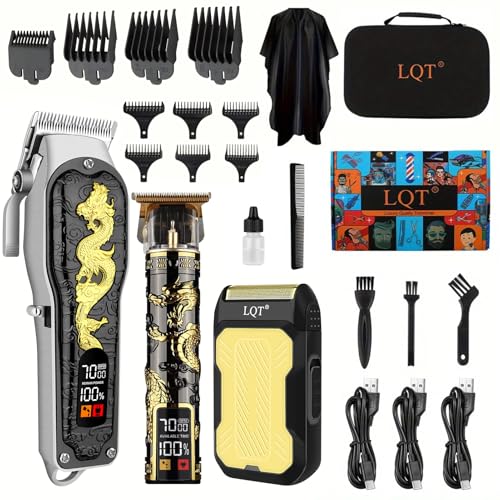
- 【PROFESSIONAL HAIR CLIPPERS SET】The LQT professional hair clipper set perfectly
- 【UPGRADE ACCESSORIES】 The LQT clippers for men equipped with 4 guide combs(,3,6,
- 【POWERFUL MOTOR & LARGR CAPACITY BATTERY】The LQT clippers for hair cutting conta
Who Should Get a Shadow Fade (and Who Should Consider Other Options)
The shadow fade is versatile, but it is not the right choice for every situation. Here is a straightforward assessment.
Get a Shadow Fade If:
- You want a clean, modern fade without the commitment to weekly barber visits
- Your workplace has conservative grooming standards
- You are prone to razor bumps, ingrown hairs, or folliculitis on the sides of your head
- You are getting a fade for the first time and want something forgiving
- You want a fade that connects smoothly into a beard
- You want a clean look that does not require constant upkeep
Consider a Skin Fade Instead If:
- You want maximum contrast and sharpness on the sides
- You are comfortable with weekly or biweekly barber visits
- You want shaved designs or patterns that pop against bare skin
- You prefer a bold, dramatic look over a subtle one
Consider a Taper Instead If:
- You want the most conservative possible option
- Your workplace has strict grooming policies
- You prefer a traditional, classic look with minimal contrast on the sides
Shadow Fades Across Cultures: Global Styling Context
The shadow fade has gone global. What started as a barbershop technique in the United States has been adopted and adapted by grooming cultures worldwide. The fundamentals are the same everywhere, but the execution and styling choices reflect local preferences.
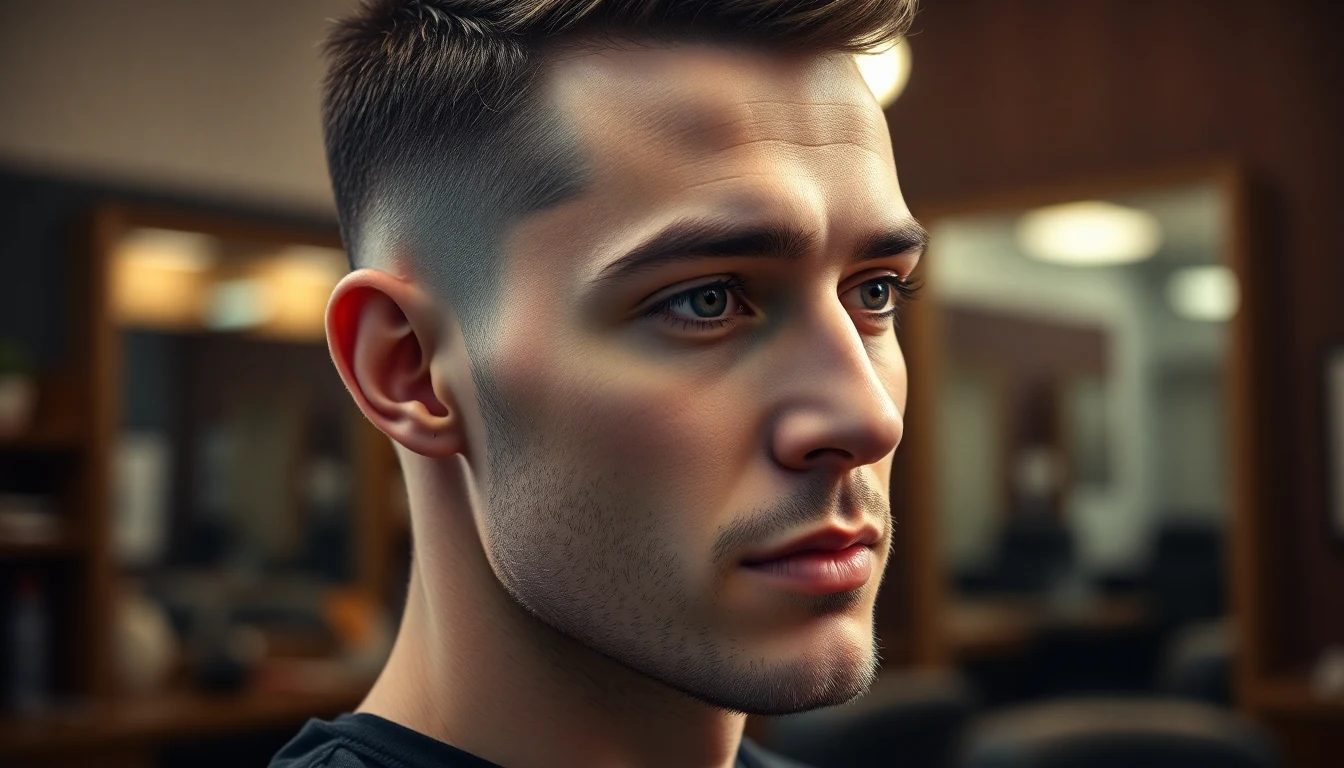
In East Asian barbershops, the shadow fade often accompanies textured, forward-styled tops with heavy fringe. The soft gradient complements the natural density and straightness of East Asian hair, and the look leans clean and structured. Check our Asian men’s hairstyle guide for specific style pairings.
In African and Caribbean barbershops, the shadow fade frames afro-textured styles like twists, waves, and short natural curls. The 4C texture creates an especially satisfying shadow effect at the lowest point, where the dense coils read as a deep, dark gradient even at a 0.5 guard. The technique requirements differ significantly from straight-hair fading, which is why barber experience with your specific texture matters.
In Latin American barbershops, the shadow fade frequently pairs with sharp lineups, hard parts, and the Edgar cut. The emphasis is on geometric precision and clean lines, with the shadow fade providing a softer backdrop for the detailed work on top.
In European and Middle Eastern barbershops, the shadow fade often connects into beard work, with the fade-to-beard blend receiving as much attention as the fade itself. The shadow fade’s soft gradient makes this connection more natural than a skin fade, which can create a jarring transition from bare skin to full beard.
The point is this: the shadow fade is not a Western haircut or an Eastern one. It is a technique that translates across every hair type and grooming tradition. What changes is the styling context around it.

Frequently Asked Questions
What is the difference between a shadow fade and a skin fade?
The key difference is how far the blend goes at the shortest point. A skin fade takes the hair all the way down to bare scalp using a foil shaver or bare trimmer blade. A shadow fade stops short of exposed skin, keeping a thin layer of stubble or “shadow” at the lowest point, typically achieved with a closed 0.5 or 1 guard. The result is a softer, more gradual gradient that reads as natural rather than dramatic. Shadow fades require less frequent maintenance because there is no stark skin line to grow out, and they work well in professional environments where a skin fade might feel too bold.
How often should I get a shadow fade touched up?
A shadow fade holds its shape for about 2 to 3 weeks, which is longer than a skin fade. Because there is no exposed skin line, regrowth blends naturally into the existing gradient rather than creating an obvious contrast. Most men schedule a touch-up every 2 to 3 weeks to keep the fade looking intentional. If you want it consistently sharp, every 10 to 14 days is ideal. Between visits, you can clean up the neckline and edges at home with a quality trimmer to extend the life of the cut.
Does a shadow fade work on straight hair?
Shadow fades work on straight hair, though the technique requires more precision from your barber. Straight hair lies flat against the head, which means every clipper line and guard transition is visible. There is less natural texture to disguise the blend. Your barber will need to use a clipper-over-comb technique and move through multiple guard lengths slowly to create a seamless gradient. The result on straight hair is clean and polished, with a subtle shift in density rather than a dramatic contrast. Many East Asian and European hairstyles pair particularly well with shadow fades because the soft blend complements the natural lay of straight hair.
Can I ask for a shadow fade with a design or pattern?
Yes, shadow fades pair well with shaved designs, hard parts, and line-ups. The soft gradient of the shadow fade creates a clean canvas for detailed work without the starkness of exposed skin. Popular combinations include a shadow fade with a hard part line, a shadow fade with a geometric design at the temple, or a shadow fade with a crisp lineup at the hairline. The design sits within the faded area, using the tonal contrast of the shadow to make the pattern visible. Tell your barber you want the design before they start the fade so they can plan the placement and depth accordingly.
What is the best shadow fade for a round face?
A high shadow fade works best for round faces. By removing visual weight from the sides high up on the head, a high shadow fade elongates the face and creates the illusion of a more angular jawline. Pair it with extra volume or length on top, whether that is a textured crop, pompadour, or styled curls, to maximize the vertical emphasis. Avoid low shadow fades on round faces because they keep the visual weight near the widest part of the head and do not provide enough contrast to counterbalance the roundness.
Is a shadow fade easier to maintain than a skin fade?
Yes, a shadow fade is significantly easier to maintain. Because the lowest point retains a thin layer of hair rather than bare skin, regrowth is less obvious and the fade does not lose its shape as quickly. A skin fade starts looking grown-out within 5 to 7 days as the stark skin-to-hair line blurs. A shadow fade looks clean for 2 to 3 weeks because the gradient simply becomes slightly less defined rather than disappearing entirely. This makes the shadow fade a better choice for men who do not want to visit the barber every week or two.
What should I tell my barber to get a shadow fade?
Tell your barber three specific things: that you want a shadow fade (not a skin fade), where you want the fade to start (low, mid, or high), and what length you want on top. A clear request sounds like this: “I want a mid shadow fade, no skin showing at the bottom, with about 2 inches on top textured and pushed to the side.” Bring two or three reference photos showing the front, side, and back views. Emphasize that you do not want the blend to go down to bare skin. If your barber does not know the term “shadow fade,” explain that you want a regular fade that stops at a 0.5 or 1 guard at the shortest point rather than going to skin.
The Bottom Line on the Shadow Fade
The shadow fade is the most practical fade in the modern barbershop. It delivers the clean, blended look that has made fades the dominant men’s hairstyle worldwide, but it does so without demanding a barber visit every week. It works on straight, wavy, curly, and coily hair. It flatters every face shape when matched to the right starting height. It connects cleanly into beards. And it reads as polished in both professional and casual settings.
If you have been getting skin fades and feeling like the maintenance is unsustainable, try a shadow fade on your next visit. If you have been getting basic fades and want something more refined, the shadow fade is the natural next step. And if you are new to fades entirely, the shadow fade is the best place to start.
Tell your barber what you want using the scripts above. Bring reference photos. Specify the starting height and the guard length at the shortest point. And if you need a barber who can execute the technique on your specific hair type, the right tools make a difference. Start with our guides to the best clippers for fades and all fade types explained.
The shadow fade is not the flashiest cut in the shop. It is the smartest one.
Frequently Asked Questions
What is a shadow fade haircut and why is it better than a skin fade?
A shadow fade haircut is a subtle fade that stops short of exposed skin, keeping a thin layer of stubble at the lowest point instead of cutting down to bare scalp like a skin fade. This creates a softer, more gradual blend that looks natural and requires less frequent maintenance since regrowth blends seamlessly into the existing gradient rather than creating a stark line.
How often do I need to get a shadow fade touched up?
You should schedule a touch-up every 2 to 3 weeks to keep your shadow fade looking intentional, though it holds its shape longer than a skin fade due to the lack of exposed skin line. If you want it consistently sharp, every 10 to 14 days is ideal, and you can extend the cut’s life between visits by cleaning up the neckline and edges at home with a quality trimmer.
Does a shadow fade work on all hair types including curly and textured hair?
Yes, shadow fades work on all hair types including straight, curly, coily, and textured hair because the technique focuses on the gradient of length rather than a specific hair texture. The key is using the right clipper guards and having a barber experienced with your particular hair type to ensure the fade blends smoothly.
Can I get a shadow fade if I work in a professional office environment?
Absolutely, a shadow fade is ideal for professional settings because it’s more subtle and conservative than a skin fade, reading as a polished, intentional cut rather than bold or edgy. The soft gradient maintains a clean, groomed appearance that works well in corporate, formal, or client-facing roles.