If you want to master buzz cut hairstyles, this guide covers everything you need to know. Last updated: February 2026 by Marcus Chen-Williams, Editor-in-Chief
The buzz cut is the most honest haircut a man can get. No hiding behind product, no relying on styling technique, no blaming bad hair days on humidity. A buzz cut is your head, clippers, one guard size, and the truth. It is also, by a wide margin, the most practical haircut in existence: five minutes to cut, zero minutes to style, looks the same at 6 AM as it does at midnight.
But calling it “one haircut” sells it short. The buzz cut hairstyles universe is deeper than most people realize. An induction buzz and a textured buzz with a fade are technically both buzz cuts, but they look nothing alike. The guard size you choose, whether you add a fade, how you handle the lineup, and what you do with your beard all change the personality of the cut. This guide walks through every major buzz cut variation, matches them to face shapes and hair textures, and includes a step-by-step DIY tutorial so you can maintain the cut at home if you choose.
Clipper Guard Size Chart: The Foundation of Every Buzz Cut
Before we get into variations, you need to understand the numbers. When someone says “give me a number 2 buzz,” they are referring to a clipper guard size. Each guard number corresponds to a specific hair length. Here is the full chart.

| Guard Number | Length (mm) | Length (inches) | Visual Description | Best For |
|---|---|---|---|---|
| No guard | ~0.2-0.5mm | ~1/64″ | Barely visible stubble. Near-bald. | Induction buzz, military buzz, bald look without a razor |
| #0.5 | ~1.5mm | ~1/16″ | Very short stubble. Scalp visible through hair. | Ultra-close buzz, receding hairline |
| #1 | ~3mm | ~1/8″ | Short, defined stubble. Hair color clearly visible. | Close buzz, clean athletic look |
| #2 | ~6mm | ~1/4″ | Short but clearly there. Shows texture and curl pattern. | Most popular buzz length. Versatile across all head shapes. |
| #3 | ~10mm | ~3/8″ | Visible length with natural movement. Covers scalp completely. | First-time buzz cuts, conservative look, thinning hair |
| #4 | ~13mm | ~1/2″ | Clearly short but with texture. Hair lies in a direction. | Longer buzz, crew-cut territory, textured buzz |
| #5 | ~16mm | ~5/8″ | Noticeable length. Starts to look like a short haircut rather than a buzz. | Transition from buzz to grown-out style |
| #6 | ~19mm | ~3/4″ | Short haircut territory. Can be parted or textured. | Short crop, barely-a-buzz look |
| #7 | ~22mm | ~7/8″ | Full short hair. No longer reads as a “buzz cut.” | Short overall haircut baseline |
| #8 | ~25mm | ~1″ | One inch of hair. The longest most standard guard sets go. | Short textured style baseline |
The sweet spot for most men: A number 2 or number 3 guard. The number 2 is the classic “buzz cut look,” short enough to be clean but long enough to show hair color and texture. The number 3 adds a bit more length and is more forgiving on uneven scalps or unusual head shapes.
Important note: Guard sizes are not perfectly standardized across brands. A Wahl #2 guard and an Andis #2 guard may differ by a fraction of a millimeter. The difference is small enough to be irrelevant for most cuts, but if you are particular about exact length, check the manufacturer’s specification for your specific clipper model.
Every Buzz Cut Variation Explained
The buzz cut family tree has more branches than you might expect. Here is every major variation, what it looks like, and who it works best for.
Induction Buzz Cut
The induction buzz is the shortest buzz cut you can get without a razor. No guard, bare clipper blade against the scalp, leaving nothing but a thin veil of stubble. The name comes from military induction, where every new recruit gets this cut on their first day of basic training. It is the great equalizer: everyone looks the same.
Outside the military, the induction buzz is a bold choice. It fully exposes the shape of your skull, your hairline, any scars, and any asymmetry. It also fully eliminates any hairstyle maintenance for the next week. No product, no comb, no mirror check. You are done.
Best for: Men with well-proportioned head shapes (oval, slightly rectangular), men who are comfortable with their hairline regardless of recession, athletes who want zero interference from hair, men making a dramatic style change.
Not ideal for: Men with very bumpy or irregular scalp topography, sensitive scalps that react to bare-blade clipping, very pale scalps that contrast sharply with a tanned face (though this evens out with sun exposure).
Maintenance: Re-buzz every 3 to 5 days to maintain the ultra-short look. A no-guard buzz grows out fast because there is so little length to start with.
Number 1 Through Number 4 Buzz Cut
These are the standard all-over buzz cuts, differentiated only by guard size. Same length everywhere on the head. No fade, no graduation, just one guard from front to back and ear to ear.
Number 1 Buzz (3mm)
Close-cropped stubble. Your scalp is visible through the hair, but the hair itself is clearly there. It reads as deliberate short hair, not a shaved head. This is a strong choice for men with darker hair who want the shadow-on-scalp look, and it works particularly well on men with a receding hairline because it minimizes the contrast between hairline and crown.
Number 2 Buzz (6mm)
The default buzz cut. When someone says “buzz cut” without specifying a number, this is usually what they mean. It shows hair color and texture clearly, provides full scalp coverage for most hair densities, and looks clean on every hair type. On curly and coily hair, the number 2 is long enough to see the curl pattern. On straight hair, it lies flat and uniform. This is the safest starting point for a first-time buzz.
Number 3 Buzz (10mm)
The conservative buzz. Enough length that the hair has some visual weight and movement. Covers the scalp fully on all but the thinnest hair. The number 3 is popular among men who want a low-maintenance short cut without the “military” connotation of a shorter buzz. It is also forgiving: slight unevenness in head shape, minor scars, and scalp imperfections are less visible at this length.

Number 4 Buzz (13mm)
The longest length that still reads as a “buzz cut.” At half an inch, the hair has enough length to show natural direction, texture, and movement. Curly and wavy hair starts to form visible patterns. Straight hair lies flat but in a specific direction. The number 4 is the bridge between a buzz cut and a short hairstyle, and it works well as the “top length” for a buzz-with-fade combination.
Buzz Cut with Fade
This variation keeps the top at a uniform buzz length but adds a fade on the sides and back. Instead of one guard length everywhere, the top stays at your chosen number (typically 2, 3, or 4) while the sides blend down to a shorter length or to skin.

The fade transforms the buzz cut from a utilitarian choice into a styled haircut. It adds structure, dimension, and intention. A number 3 all-over buzz reads as “I keep it simple.” A number 3 on top with a mid fade to skin on the sides reads as “I know exactly what I want.”
Popular combinations:
- Number 2 top + low skin fade: Clean, athletic, modern. The slight length difference between top and sides creates subtle contrast.
- Number 3 top + mid fade: The most popular buzz-with-fade combination. Enough contrast to be noticeable, balanced enough for any setting.
- Number 4 top + high fade: Maximum contrast for a buzz cut. The top has visible texture while the sides are dramatically short. Works well on round faces.
- Number 2 top + taper: The most conservative fade option. The sides are slightly shorter than the top with a natural graduation. Barely noticeable but adds polish.
The buzz-with-fade is the variation I recommend most often because it gives you the simplicity of a buzz cut with the visual sophistication of a more complex haircut. It does require a barber (fading your own sides is hard), but the maintenance between visits is still just a quick re-buzz of the top at home. See our complete guide to the best clippers for fades if your barber needs a recommendation.
Buzz Cut with Lineup
A lineup (also called a shape-up or edge-up) adds a clean, precisely defined border along the hairline, temples, and sideburns. Instead of letting the buzz cut end wherever your natural hairline falls, a barber uses a precision trimmer to carve sharp, geometric lines.
The lineup is a defining element in Black and Latino barbering traditions, and it dramatically changes the feel of a buzz cut. A buzz cut without a lineup looks natural and relaxed. A buzz cut with a lineup looks intentional and sharp. The crisp edges frame the face and create a structured appearance that elevates the simplest of haircuts.
Key detail: Lineups require maintenance. The sharp edges grow out within 5 to 7 days, so you either need to visit a barber frequently or learn to maintain the line at home with a trimmer like the BaBylissPRO GoldFX. Without regular maintenance, a grown-out lineup looks worse than no lineup at all.
Buzz Cut with Beard
If the buzz cut is the most honest haircut, the buzz-with-beard is the most versatile. Facial hair completely changes the character of a buzz cut by redistributing visual weight from the top of the head to the lower face.
Buzz + clean-shaven: The purist look. All face, all bone structure. Works best on men with strong jawlines and defined facial features. Can look too stark on round or soft faces.
Buzz + stubble (1-3 day growth): Adds ruggedness without commitment. The subtle shadow of facial hair softens the starkness of the buzz cut and adds texture to the overall look. This is the combination I see most often in fashion and editorial contexts.
Buzz + full beard: The contrast between an ultra-short head and a full beard creates a dramatic, masculine look. The beard becomes the main feature, and the buzz frames it. This combination works exceptionally well on round faces because the beard adds length to the lower face while the buzz keeps the top tight. It also works well for men with thinning hair on top who want to shift the focal point away from the head.
Buzz + tapered beard: The beard gradually shortens as it approaches the sideburns, creating a seamless transition between the buzz cut and the facial hair. This requires barber skill. The fade on the sides (if present) should connect smoothly into the beard taper. When done well, it is one of the cleanest looks in men’s grooming.
Textured Buzz Cut
The textured buzz adds subtle length variation to the top of the head, creating visual interest that a uniform buzz does not provide. Instead of one guard length everywhere on top, the barber uses scissors or multiple guard sizes to create slight differences in length that show the hair’s natural texture.
On straight hair, this means small areas of slightly longer and slightly shorter hair that create a “lived-in” look. On wavy or curly hair, the texture amplifies the natural pattern. On coily hair, the varied lengths create depth and dimension within the tight curl pattern.

The textured buzz is the most “styled” buzz cut variation. It still takes minutes to maintain compared to a full hairstyle, but it shows more craftsmanship than a one-guard all-over. It pairs well with a fade on the sides and a lineup at the hairline.

Military Buzz Cut
The military buzz has specific standards depending on the branch and regulation, but in civilian barbering, it refers to a very short, uniform buzz (typically a number 1 or 2) with a squared neckline and minimal styling. The emphasis is on neatness, uniformity, and functionality.
What separates the military buzz from a standard short buzz is the neckline treatment. Where a modern buzz cut might have a tapered or faded neckline, the military buzz traditionally has a squared, blocked neckline that follows the natural hairline without rounding or blending. This gives it a distinctive, no-nonsense appearance.
Modern update: Many men who want the military aesthetic now combine the short top length with a low fade or taper on the neckline, which gives the clean, functional look of a military buzz with a slightly more contemporary finish.
Burr Cut
The burr cut is a number 1 or number 2 buzz with an emphasis on uniformity. The term is sometimes used interchangeably with “buzz cut,” but technically the burr cut refers specifically to a very short, even buzz that creates a soft, velvety texture across the entire scalp. The name comes from the feel: running your hand across a burr cut feels like touching felt or a carpet burr.
The burr cut is popular among men who like the tactile quality of very short hair and want the simplest possible maintenance routine. It is also a common choice for men starting chemotherapy who want to take control of their hair loss on their own terms.
Buzz Cut by Face Shape: A Complete Matching Guide
The buzz cut removes the option of using hair to balance facial proportions, which means your face shape and head shape become the dominant visual factors. Here is how to choose the right buzz cut variation for your specific proportions.
| Face Shape | Best Buzz Cut Variation | Why It Works | What to Avoid |
|---|---|---|---|
| Oval | Any variation. You won the genetic lottery for buzz cuts. | Balanced proportions look good at any length and with or without a fade. | Nothing. Oval faces are the most versatile. |
| Round | Buzz with high fade, number 3-4 on top | The fade removes visual width from the sides while the slightly longer top adds vertical emphasis. Add a beard for extra jaw definition. | Uniform all-over buzz at a very short length (emphasizes roundness). Skip the induction buzz unless you have a strong beard to compensate. |
| Square | Number 2-3 all-over or buzz with mid fade | The strong jawline and angular features are assets that a buzz cut highlights. Keep it simple and let the bone structure do the work. | Nothing major. Square faces suit buzz cuts naturally. Very high fades can make the angular jaw look too rigid. |
| Oblong/Rectangular | Number 3-4 uniform buzz (no fade or very low fade) | Keeping the sides at the same length as the top avoids adding vertical emphasis to an already long face. The uniform length creates visual width. | High fades (elongate the face further). Very short all-over buzz (reduces the visual weight that balances vertical proportions). |
| Heart/Triangle | Number 2-3 uniform buzz with low fade or taper | Maintaining some width at the temples balances the narrower chin. A low fade or taper keeps the transition subtle. | High fades that remove width from the upper face and exaggerate the narrow chin. |
| Diamond | Number 3-4 buzz with mid fade | Slightly longer on top softens the prominent cheekbones. The mid fade provides balanced contrast without over-emphasizing the diamond shape. | Induction buzz (exposes the full diamond shape without any hair to moderate it). High fades that draw attention to the widest point. |
The Beard Factor
Facial hair can override nearly every face-shape concern listed above. A full beard adds visual weight to the lower face, which means:
- Round faces can get away with shorter, simpler buzz cuts because the beard elongates the jaw
- Heart-shaped faces benefit enormously from a beard because it widens the narrow chin
- Oblong faces should keep beards shorter and wider rather than long and narrow
- Diamond faces can use a beard to add width below the cheekbones
If you are unsure whether a buzz cut will work for your face shape, grow your beard out first. The combination is significantly more versatile than the buzz cut alone.
Buzz Cuts Across Hair Textures
A buzz cut is not texture-neutral. The same guard number produces very different visual results depending on your hair type. Understanding this helps you choose the right length and set the right expectations.
Straight Hair (Types 1A-1C)
Straight hair lies flat and uniform after buzzing. The result is clean, sleek, and predictable. At shorter guards (1-2), straight-haired buzz cuts look very smooth and even. At longer guards (3-4), the hair starts to show its natural direction, usually growing forward or slightly to one side.
Consideration: Straight hair can expose scalp imperfections and irregular head shapes more readily than textured hair because it lies flat against the skull. If you have bumps, dents, or scars on your scalp, a number 3 or 4 provides more coverage than a number 1 or 2.
Straight-haired buzz cuts are popular across East Asian grooming cultures, where the clean, uniform look pairs well with Asian hairstyle aesthetics that emphasize structure and precision. In Korean grooming, the slightly longer buzz (number 3-4) has become a trend, often paired with clear skin and minimalist fashion.
Wavy Hair (Types 2A-2C)
Wavy hair adds natural dimension to a buzz cut that straight hair does not provide. Even at short lengths, the waves create subtle visual movement across the scalp. At a number 2, the waves are compressed but still visible. At a number 3 or 4, they become a prominent feature that gives the buzz cut a textured, “lived-in” quality.
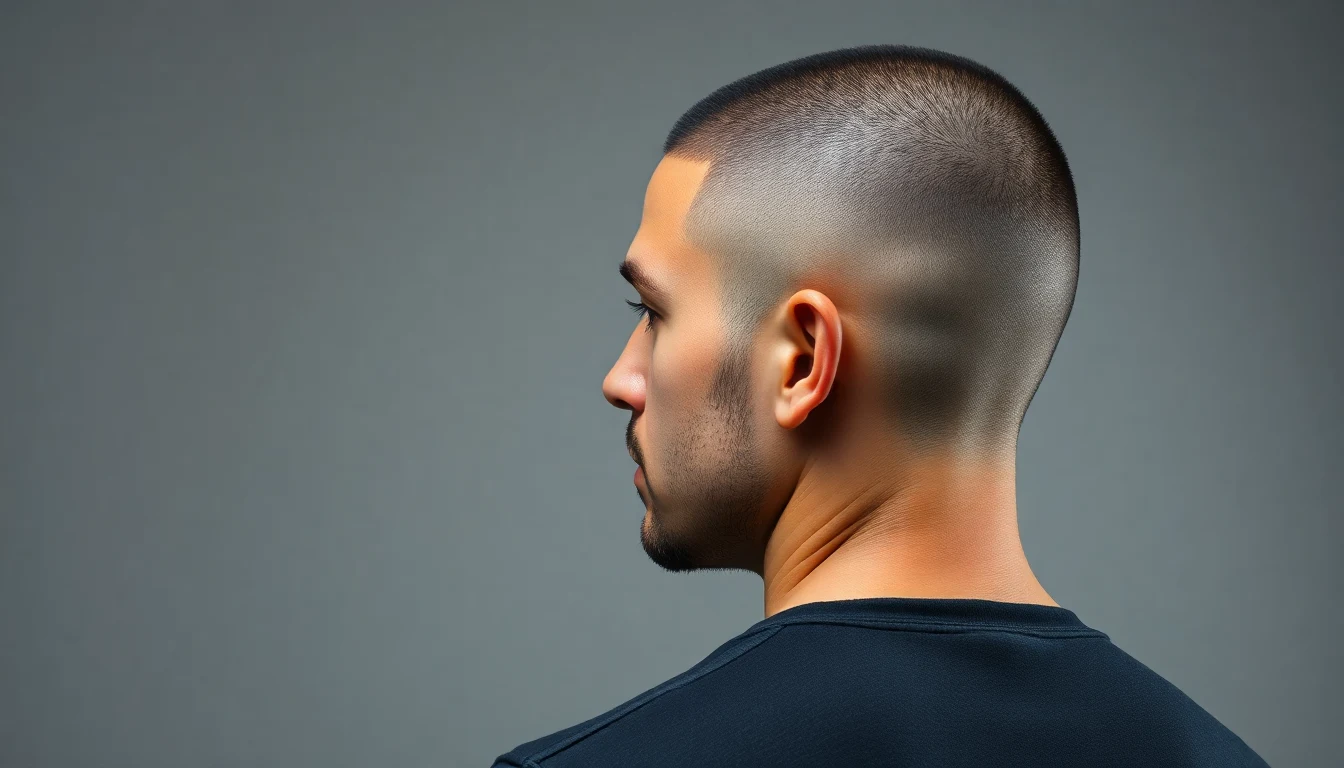
Consideration: Wavy hair may look slightly uneven at very short lengths (number 1 or induction) because the waves lie in different directions. This is rarely a problem at number 2 and above.
Curly Hair (Types 3A-3C)
Curly hair and buzz cuts are an excellent combination. The curl pattern adds texture, depth, and visual interest that transforms a simple buzz into something more dynamic. At a number 2, the curls sit tight and create a dense, uniform appearance. At a number 3 or 4, the curls start to form visible spirals and ringlets that make the buzz cut look more styled even though the length is consistent.
Consideration: Curly hair appears shorter than straight hair at the same guard length because curls contract. If a straight-haired friend has a number 2 buzz and you want the same visual length, you may need a number 3 guard to achieve a similar appearance. Factor this in when choosing your guard size.

The curly fade variation is one of the most popular haircuts globally, and it works just as well with a buzz-length top.
Coily Hair (Types 4A-4C)
Coily and afro-textured hair at buzz cut length creates a dense, defined look with significant visual presence. The tight curl pattern means that even a very short buzz has texture and dimension. At a number 1, coily hair creates a shadow effect similar to the shadow fade. At a number 2 or 3, the coils are visible and create a soft, velvety texture.
Consideration: Coily hair can be more prone to razor bumps and irritation when clipped very short, especially at the neckline and around the ears. Using a sharp, high-quality clipper makes a significant difference. Our guide to the best clippers for Black men covers the tools that minimize irritation on textured hair.
The buzz cut holds particular cultural significance in Black grooming traditions, from the military-influenced cuts of the mid-20th century to the modern textured buzz with lineup that dominates current trends. When paired with a fresh lineup and a fade, a buzz on coily hair is one of the sharpest looks in any barbershop.

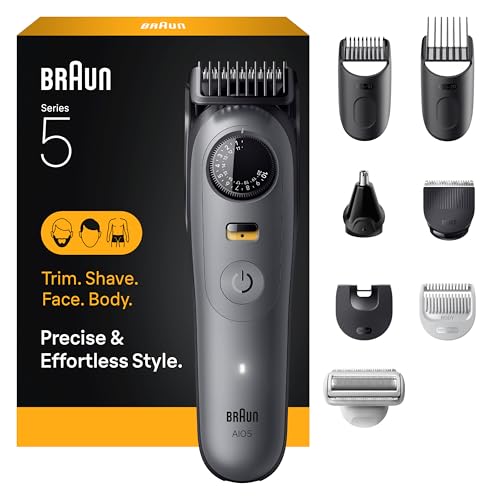
- Professional Men’s Haircutting Kit: Bestbomg professional haircutting set includ
- Powerful Motor & Ultra Sharp Blades: Equipped with a quiet and powerful motor (M
- 220min Long Run-Time & Fast Charging: Hair clipper runs 220mins (3h charge), bea
DIY Buzz Cut Tutorial: Step-by-Step at Home
The buzz cut is one of the few haircuts you can genuinely do yourself at home. No barber school required. Here is a step-by-step guide that covers the basic all-over buzz, plus tips for adding a lineup and managing the neckline.
What You Need
- Clippers with guard attachments: The Wahl Color Pro is an excellent entry-level option with color-coded guards. For better motor power and durability, the Wahl Elite Pro is worth the upgrade.
- A handheld mirror: For checking the back of your head. A two-mirror setup (wall mirror + handheld) is essential.
- A towel or cape: To catch clippings.
- A precision trimmer (optional): For cleaning up the neckline and edges. The Andis Slimline Pro Li is a solid, affordable choice.
- Good lighting: Natural daylight or a bright bathroom light. Shadows hide missed spots.
Step 1: Choose Your Guard Size
If this is your first buzz cut, start with a number 4 guard. You can always go shorter on a second pass, but you cannot add hair back. If you have buzzed your hair before and know what length you like, attach that guard.
Make sure the guard is securely snapped onto the clipper. A guard that pops off mid-cut will leave a bald stripe through your hair.
Step 2: Start at the Front
Begin at your forehead hairline and run the clippers straight back toward the crown, against the direction of hair growth. Use firm, even pressure but let the clippers do the work. Do not push down hard. Move in slow, overlapping passes.
Starting at the front lets you see what the length looks like immediately. If the number 4 is too long for your taste, you can switch to a number 3 before committing the entire head.
Step 3: Work the Sides
Starting from the bottom of the sideburn, run the clippers upward against the grain. Work from the front of the ear to behind the ear in overlapping vertical passes. Hair growth direction on the sides varies by person, so you may need to run the clippers in multiple directions to catch everything.

Use the handheld mirror to check above and behind the ears. This is the most commonly missed area in a DIY buzz.
Step 4: Handle the Back
This is the hardest part of a DIY buzz cut. Using the handheld mirror positioned behind your head and a wall-mounted mirror in front, run the clippers from the nape of the neck upward toward the crown. Move slowly and check frequently. If you have someone available to spot-check the back, ask them now.
Run your non-clipping hand over the back of your head to feel for longer patches. Your hand will detect unevenness that your eyes might miss.
Step 5: Go Over the Crown
The crown (the swirl at the back-top of your head) is where hair grows in multiple directions. You need to run the clippers in at least three or four different directions across the crown to get even coverage. Forward, backward, left-to-right, and right-to-left. Hair that is cut “with the grain” will appear longer than hair cut “against the grain,” so multiple directions ensure uniformity.
Step 6: Clean Up the Neckline
You have two options for the neckline:
Natural neckline: Simply follow your existing hairline with a slightly shorter guard or the bare blade. This looks the most natural but least defined.
Squared/lined neckline: Using a precision trimmer without a guard, create a straight, horizontal line across the back of the neck, then clean up everything below the line. This gives a sharper, more intentional look. For a first attempt, the natural neckline is safer. The squared neckline requires some skill to get straight.

Step 7: Edge Cleanup
Use a trimmer without a guard to clean up around the ears and at the sideburns. Remove any stray hairs that the clipper guard pushed over instead of cutting. If you want a lineup at the hairline and temples, use the trimmer to carefully carve clean lines. Go slowly and check constantly. A botched lineup is the most visible mistake in a DIY buzz cut.
Step 8: Final Check
Run your hands over your entire head, feeling for any spots that are longer than others. Check every angle in the mirror: front, both sides, back, and top. If you find missed patches, go over them with the same guard.
Pro Tips for Home Buzz Cuts
- Buzz dry hair, not wet. Wet hair clumps together and lies flat, hiding uneven lengths. Dry hair stands up and shows exactly what the clipper is doing.
- Clean and oil your clippers before each use. A blade that drags or pulls instead of cutting cleanly will leave an uneven finish and irritate your scalp.
- Do not rush the back. The back of the head is where every DIY buzz cut fails. Spend twice as long on the back as you think you need to.
- Buzz in good lighting. A dimly lit bathroom hides patches that will be obvious in daylight.
- Schedule your buzz the night before a free day, not before work. If something goes wrong, you have time to fix it or visit a barber.
Buzz Cut Style Inspiration
Sometimes a reference photo is worth a thousand words. Here are recognizable buzz cut styles organized by variation, so you can show your barber exactly what you want or calibrate your DIY approach.
The Close Buzz (Number 1-2)
This is the classic ultra-short buzz popularized by athletes, actors, and musicians who let their facial features and bone structure take center stage. Think of the clean, sharp look common on red carpets and magazine covers. The key is a uniform length and a fresh lineup. At this length, grooming shifts from hair care to skin care: moisturized scalp, sunscreen on exposed skin, and a clean-shaven or stubbled face.
The Standard Buzz (Number 2-3)
The most common buzz cut in the real world. Long enough to show texture, short enough to require zero styling. This is the everyday buzz cut that millions of men wear to work, to the gym, and everywhere else. It looks good on its own, better with a fade, and best with a well-maintained beard.
The Buzz with Fade
The styled buzz cut. This combination has become one of the most requested haircuts in modern barbershops. The uniform top paired with a skin fade or mid fade on the sides creates a contemporary look that works in professional settings and casual ones. Add a lineup and you have a clean, structured haircut that happens to take zero minutes to style.

The Buzz with Full Beard
The ultimate contrast haircut. An ultra-short buzz on top paired with a full, well-groomed beard creates a striking masculine look that has become a dominant style in men’s grooming over the past decade. The beard compensates for the minimal hair on top and adds significant character to the overall appearance. This combination is particularly effective for men with thinning hair or a receding hairline who want to redirect visual attention.
Buzz Cuts for Receding Hairlines and Thinning Hair
Let’s talk about the elephant in the room. A significant percentage of men searching for “buzz cut hairstyles” are considering the cut because their hair is thinning, receding, or both. Here is the honest assessment.
A buzz cut is arguably the single best haircut for a receding hairline. Here is why: recession becomes visible because of the contrast between areas of thick hair and areas of thin hair. A comb-over or longer style amplifies this contrast by keeping thick hair next to thin areas. A buzz cut eliminates the contrast by reducing everything to a uniform short length. The hairline is still technically receding, but it is far less noticeable when surrounded by hair that is only 3 to 6 millimeters long everywhere.
Recommended approach by stage:
- Early recession (temples receding slightly): A number 2-3 buzz with a clean lineup squares off the temples and creates a deliberate, defined hairline. Nobody can tell whether it is a style choice or a response to thinning.
- Moderate recession (visible thinning at crown or temples): A number 1-2 buzz minimizes the visible difference between thick and thin areas. Adding a fade on the sides keeps the look modern rather than purely functional.
- Advanced thinning (significant scalp visibility on top): An induction buzz or number 0.5 reduces everything to stubble, fully committing to the ultra-short look. Pair with a beard if possible. This is the most confident response to significant hair loss and consistently looks better than any attempt to hold onto length.
The mental barrier is often bigger than the aesthetic one. Most men who finally commit to buzzing their thinning hair report that they wish they had done it sooner. The stress of managing thinning hair disappears, and the result looks more intentional and confident than the longer style they were maintaining.
Buzz Cut Maintenance and Scalp Care
The buzz cut is low-maintenance, not no-maintenance. Here is what the ongoing upkeep looks like.
Re-Buzz Schedule
| Guard Length | Re-Buzz Frequency | Notes |
|---|---|---|
| Induction / No guard | Every 3-5 days | Growth is immediately noticeable at this length |
| Number 1 | Every 5-7 days | Stubble transitions to short hair quickly |
| Number 2 | Every 7-10 days | The sweet spot for most men. Weekly re-buzz keeps it clean. |
| Number 3-4 | Every 10-14 days | Longer lengths are more forgiving of growth |
Scalp Care
A buzz cut exposes your scalp to elements that longer hair normally shields. This means your scalp care routine becomes more important.
- Sunscreen: Apply SPF 30 or higher to your scalp when spending time outdoors. Scalp sunburn is painful, damages skin, and increases skin cancer risk. A buzzed scalp gets direct UV exposure that longer hair blocks.
- Moisturizer: Short-buzzed scalps can get dry, flaky, or ashy. A lightweight, non-greasy moisturizer applied after showering keeps the scalp healthy and the hair looking its best.
- Exfoliation: Once a week, use a gentle scalp scrub or exfoliating shampoo to prevent buildup. With very short hair, dead skin cells have nowhere to hide and can create visible flaking.
- Shampoo frequency: You can reduce shampooing to every 2 to 3 days with a buzz cut. There is less hair to get oily, and overwashing can strip the scalp of natural oils. A rinse with water on non-shampoo days is usually sufficient.
Clipper Maintenance
If you are doing your own buzz cuts at home, your clippers need regular care:
- Clean after every use: Brush out hair from the blade and guards. A clogged blade pulls hair instead of cutting it.
- Oil the blade: Apply 2-3 drops of clipper oil to the blade before and after each use. This keeps the blade cool, reduces friction, and extends its life.
- Replace the blade: Most clipper blades last 6 to 12 months with regular home use. If the blade starts pulling, snagging, or leaving an uneven cut even after oiling, it is time for a replacement.
- Charge cordless clippers fully: A dying battery reduces motor speed, which leads to uneven cuts. Always start a buzz with a full charge.
Best Clippers for Buzz Cuts
You do not need a professional-grade clipper for a basic buzz cut, but a good tool makes the job faster, more even, and less irritating. Here are our top picks for home buzz cuts and barber-quality fading. When it comes to buzz cut hairstyles, technique matters most.
| Clipper | Best For | Key Feature | Price Range |
|---|---|---|---|
| Wahl Color Pro | Home buzz cuts (beginner) | Color-coded guards eliminate guessing. Reliable motor for all-over buzzing. | $25-$35 |
| Wahl Elite Pro | Home buzz cuts (upgraded) | Self-sharpening blades, powerful motor, stays sharp for months of home use. | $50-$70 |
| Wahl Magic Clip | Buzz with fade (barber quality) | Stagger-tooth blade with taper lever. The gold standard for fading. | $90-$150 |
| Andis Master Cordless | Buzz with fade (barber quality) | Lightweight, powerful, precise. Preferred by high-volume barbers. | $130-$180 |
| Wahl 5 Star Senior | Coily and thick hair | High-torque motor handles dense hair without snagging or pulling. | $80-$130 |
For the average home buzzer: The Wahl Color Pro does everything you need for under $35. The Wahl Elite Pro is a meaningful upgrade if you plan to buzz your hair for years. When it comes to buzz cut hairstyles, technique matters most.
For buzz-with-fade at home or in the shop: The Wahl Magic Clip is the tool most barbers reach for when fading. If you are attempting a fade at home, this clipper’s adjustable taper lever gives you the control you need. When it comes to buzz cut hairstyles, technique matters most.

For coily and afro-textured hair: The Wahl 5 Star Senior has the motor power to move through dense, tightly-coiled hair without bogging down. Weaker clippers pull and snag on 4B-4C hair, causing irritation and an uneven cut.
What to Tell Your Barber: Communication Scripts
Even for a haircut as simple as a buzz, clear communication prevents mistakes. Here are scripts for common buzz cut requests.
Script 1: Basic All-Over Buzz
“I want a number [2/3/4] all over. Same length everywhere. Natural neckline. No fade.”
This is the simplest request in barbering. Use this when you want the standard, uniform buzz with no embellishments.
Script 2: Buzz Cut with Fade
“I want a number [3/4] on top with a [low/mid/high] fade on the sides. Take the fade down to [skin / a 0.5 guard / a 1 guard]. Clean up the neckline with a taper.”
Specifying the fade height and the shortest point of the fade tells the barber exactly what you want without ambiguity.
Script 3: Buzz with Lineup
“Number [2/3] all over with a sharp lineup at the hairline and temples. Square off the sideburns. I want the edges crisp.”
Script 4: Buzz for Thinning Hair
“I want it short. Number [1/2] all over. Blend the hairline naturally, do not create a sharp line at the temples. I want it to look clean but not draw attention to the hairline.”
The instruction to “blend the hairline naturally” tells the barber not to create a lined-up edge at receding temples, which can actually emphasize the recession.
Script 5: Textured Buzz with Fade and Beard Connection
“Number [3/4] on top with some texture. Mid fade on the sides down to a [0.5/1] guard. Connect the fade into my beard so there is no hard line at the sideburns. Sharp lineup at the front.”
This is the most complex buzz cut request and requires a skilled barber. Bring reference photos for the texture and beard connection you are looking for.
Frequently Asked Questions
What buzz cut number should I ask for?
The most popular buzz cut lengths are number 2 (6mm) and number 3 (10mm). A number 2 is short enough to look clean and deliberate but long enough to show some hair texture and color. A number 3 provides a bit more coverage and is more forgiving on uneven scalps. If you want the shortest possible buzz without going fully bald, a number 1 (3mm) gives you close-cropped stubble. For a first-time buzz cut, start with a number 3 or 4 and go shorter on subsequent cuts if you want less length. You can always cut more off, but you cannot put it back.
Will a buzz cut look good on my head shape?
Buzz cuts are more flattering than most people assume, but head shape matters. Oval and slightly rectangular head shapes look best because the proportions are naturally balanced with no hair to compensate. Round head shapes work well with a buzz cut that incorporates a fade on the sides to add some vertical contrast. The head shapes that sometimes struggle with a full buzz are very narrow or very wide heads, where the uniform length can emphasize the asymmetry. If you are unsure, start with a longer guard (number 3 or 4) and see how it looks before going shorter. And remember that strong facial hair can completely change the proportion of a buzz cut by adding weight to the lower face.
How do I maintain a buzz cut at home?
A buzz cut is one of the easiest haircuts to maintain at home. You need a quality clipper with guard attachments, a handheld mirror for the back of your head, and 15 to 20 minutes every 1 to 2 weeks. Start by attaching your desired guard, running the clippers against the grain of your hair in overlapping passes to ensure even coverage. For the back and sides, use a handheld mirror or ask someone to check for missed spots. Clean up the neckline and around the ears with a shorter guard or bare blade. The entire process takes less time than most men spend styling their hair in a single morning.
Can I buzz my hair if I have a receding hairline?
A buzz cut is one of the best haircuts for a receding hairline. By reducing all the hair to a uniform short length, you eliminate the contrast between thick and thin areas that makes recession visible. The hairline becomes less of a focal point because there is no longer hair next to it to highlight the difference. Many men find that buzzing their hair is the most confident response to a receding hairline because it looks intentional rather than like an attempt to hide something. A number 1 or 2 guard works well for this purpose. Pair it with a clean lineup at the temples for an even more defined look.
How often do I need to cut a buzz cut to keep it looking fresh?
Most buzz cuts need a trim every 1 to 2 weeks to maintain their clean appearance. Hair grows about half an inch per month, which means a number 2 buzz will look noticeably longer within 7 to 10 days. The exact frequency depends on how tight you keep it. If you wear a number 1, you will probably want to re-buzz weekly because the short length makes growth more obvious. If you wear a number 3 or 4, you can stretch it to every 2 weeks before the shape starts to change. One advantage of the buzz cut is that the maintenance is fast. A full re-buzz takes 15 minutes at home.

What is the difference between a buzz cut and a crew cut?
A buzz cut is a uniform length all over the head, achieved with a single clipper guard. A crew cut has a graduated length, with the top slightly longer than the sides. The top of a crew cut is usually styled with a slight lift or texture, while a buzz cut lies flat. Think of the crew cut as a buzz cut’s more styled cousin. Both are short and low-maintenance, but the crew cut provides more shape and the ability to style the front upward or to the side. If you want absolute simplicity, go with a buzz cut. If you want a little more character while keeping things short, a crew cut is the step up.
Do buzz cuts work on curly or coily hair?
Buzz cuts work exceptionally well on curly and coily hair. In fact, the natural texture of curly and coily hair adds visual interest to a buzz cut that straight hair does not provide. At a number 2 or 3 guard, curly hair creates a soft, textured appearance with natural dimension. Coily and afro-textured hair at a short buzz length looks dense and defined, with the curl pattern adding depth even at very short lengths. The key consideration is that curly and coily hair may appear shorter than straight hair at the same guard length because the curls contract. Your barber or you may need to use one guard size longer than you would for straight hair to achieve the visual length you want.
The Bottom Line on Buzz Cut Hairstyles
The buzz cut is not a default. It is not what you get when you have “given up” on your hair. It is one of the most intentional haircuts you can choose. It says you know what you want, you do not need maintenance complexity to feel confident, and you would rather spend your morning doing something other than styling your hair.
The range of buzz cut hairstyles is wider than most people realize. From the ultra-close induction buzz to the textured buzz with a fade and lineup, there is a version of this cut that works for every face shape, every hair texture, and every style preference. The buzz cut with a fade has become one of the most requested haircuts in modern barbershops precisely because it combines the simplicity of a buzz with the polish of a styled cut.
If you are thinking about getting a buzz cut, here is the honest advice: try it. Start with a longer guard (number 3 or 4), see how it feels, and go shorter from there if you want to. The worst case scenario is a few weeks of growth before you are back to whatever length you had before. The best case is discovering the haircut you should have been wearing all along.
For the right clipper to get started, see our guide to the best clippers for fades. For style context on how the buzz cut fits into the broader fade landscape, explore our complete breakdown of every type of fade. And if you decide you want more length on the sides than a buzz provides, the taper fade is the natural next step.
Five minutes to cut. Zero minutes to style. All day to look sharp. That is the buzz cut.
Frequently Asked Questions
What buzz cut number should I ask for at the barber?
The most popular buzz cut lengths are number 2 (6mm) and number 3 (10mm). A number 2 looks clean and deliberate while showing hair texture, while a number 3 provides more coverage and is more forgiving on uneven scalps. For your first buzz cut, start with a number 3 or 4 and go shorter on future cuts if you want less length.
Will a buzz cut hairstyle look good on my head shape?
Buzz cuts work well for most head shapes, but oval and rectangular heads see the best results since their proportions are naturally balanced. Round head shapes can look great with a buzz cut that includes a fade on the sides for vertical contrast. If you have a very narrow or wide head, try a longer guard like number 3 or 4 to avoid emphasizing asymmetry.
What is the difference between buzz cut variations?
Buzz cut variations range from the induction cut (extremely short, around 1-2mm) to textured buzz cuts that leave slightly more length for dimension. The main differences come from guard sizes, fade techniques on the sides, and whether you maintain a uniform length or add blending. Each variation offers different maintenance levels and aesthetic appeal based on your personal style.
How do I maintain my buzz cut between barber visits?
Most buzz cuts need trimming every 2-3 weeks to maintain their sharp appearance, which many men do at home with quality clippers. You can use the same guard number you started with or go slightly shorter for a fresher look each time. Regular maintenance keeps your buzz cut looking intentional rather than grown out.