If you want to master indian men hairstyles, this guide covers everything you need to know.
If you want to master indian men hairstyles, this guide covers everything you need to know. Last updated: February 2026 | Written by Rohan Mehta, Indian & South Asian Grooming Editor
Every Sunday at the family dinner table in Houston, my mother has an opinion about my hair. Too long, too short, too messy, why did you cut it, why did you not cut it. I am 28 years old with a chemistry degree and she still reaches across the table to push a strand off my forehead. If you grew up in an Indian household, you know exactly what I am talking about.
Here is the thing that nobody in the mainstream grooming world seems to understand about Indian men hairstyles: we are working with hair that is fundamentally different from what 95% of grooming guides are written for. Indian and South Asian men typically have some of the thickest, highest-density hair of any demographic. Individual strands are wider in diameter. The overall density per square centimeter is higher. It grows fast, it grows heavy, and it has a mind of its own. That is not a weakness. That is a raw material advantage. You just need cuts and techniques designed for it.
I wrote this guide because I got tired of searching “best men’s hairstyles” and seeing the same European-textured undercuts that look nothing like they would on my head. This is the resource I wish existed five years ago: a complete guide to hairstyles that actually work on thick, dark, South Asian hair. I am covering modern cuts, Bollywood-inspired styles, traditional-to-modern transitions, product recommendations tested on hair like ours, and practical barber communication tips. Whether your hair is pin-straight, slightly wavy, or somewhere in between, you will find your next cut here.
Understanding Indian and South Asian Hair: Indian Men Hairstyles
Before we get into specific cuts, let me break down what makes our hair unique. This is not just trivia. Understanding your hair type determines which styles will look effortless on you and which ones will be a daily fight.
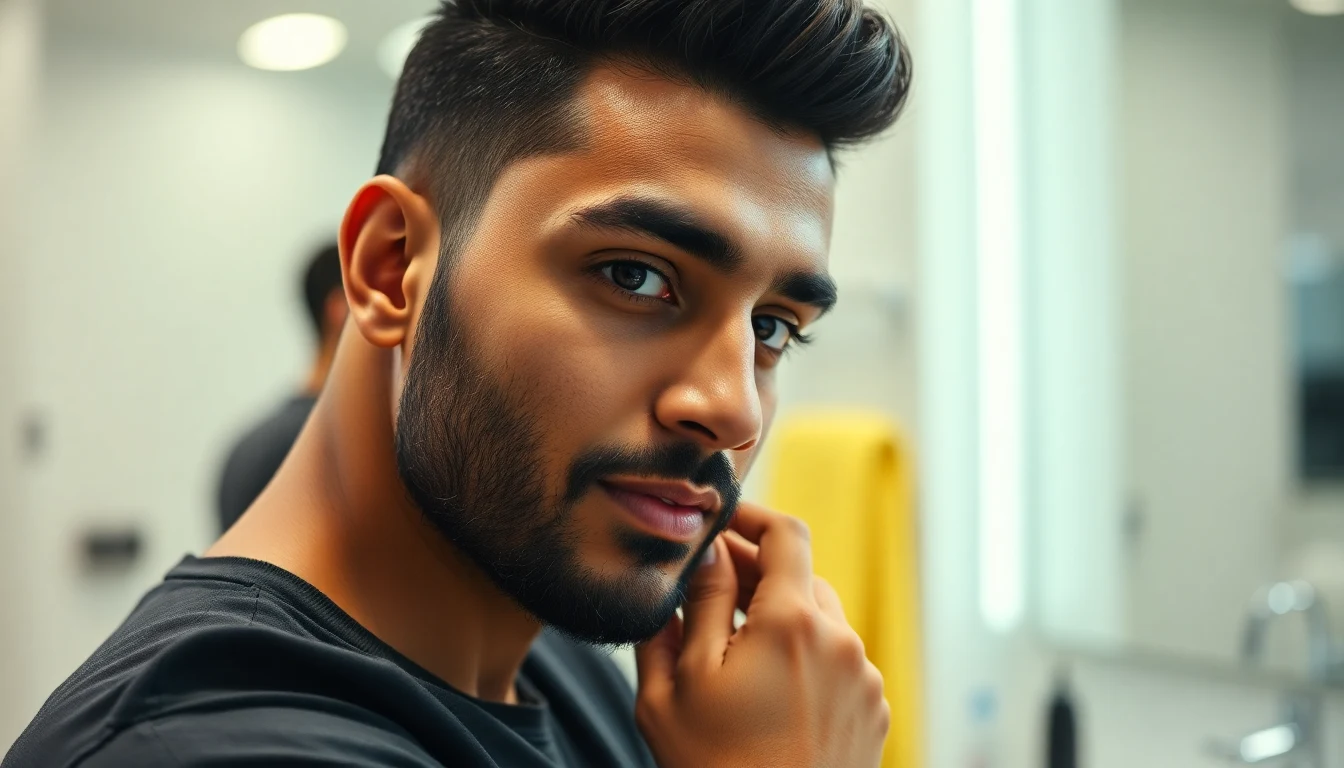
The Science of Thick, Dark Hair
Indian hair has several distinct characteristics that affect how cuts look and behave.
- Strand diameter: Individual Indian hair strands are among the widest of any ethnicity. Wider strands mean more body, more weight, and more natural hold.
- Density: High follicle count per square centimeter. This gives you incredible volume but also means bulk management is a real concern. Without thinning or texturizing, thick Indian hair can become a heavy, shapeless mass.
- Texture range: Most Indian men fall between Type 1B (straight with body) and Type 2A (slight wave). North Indian hair tends toward the straighter end, while South Indian hair often has more wave and curl. This is a generalization, not a rule.
- Growth rate: Indian hair grows approximately 6 inches per year on average, which means you will need trims every 4 to 6 weeks to maintain most styled cuts.
- Color: Naturally dark (dark brown to black), which creates strong visual contrast with faded or buzzed sides. This contrast is one of our biggest styling advantages.
- Scalp tendency: Often oily, especially in humid climates. Overproduction of sebum is common, which means product choice matters. Heavy waxes and oil-based pomades can make the greasiness worse.
Hair Type Quick Reference
| Hair Type | Common In | Characteristics | Best Styles |
|---|---|---|---|
| Thick, straight (1B-1C) | North India, Gujarat, Punjab | Heavy, strong, holds structure well | Pompadour, slick back, classic side part, undercut |
| Straight with body (1C-2A) | Central and Western India | Some natural lift, slight wave when longer | Textured quiff, comb over, medium-length styles |
| Wavy (2A-2B) | South India, Sri Lanka, coastal regions | Natural wave pattern, frizz in humidity | Textured waves, tousled looks, longer layered styles |
| Wavy-to-curly (2B-2C) | Varies across regions | Defined waves approaching curls, needs moisture | Curly top fade, natural texture styles |
For those whose hair leans toward the curlier end, you might also find useful information in our Asian hairstyles for men guide, which covers texture management across a range of Asian hair types.
The 10 Best Hairstyles for Indian Men
These cuts are selected specifically because they work with thick, dark, high-density hair. For each one, I am giving you a full breakdown: what it looks like, who it flatters, how to style it, and what to tell your barber.

1. The Textured Quiff
If I had to recommend one hairstyle to every Indian man who asked, this would be it. The textured quiff takes the volume that thick hair gives you naturally and turns it into the whole point of the style. Instead of fighting your density, you are using it.
The structure: 3 to 4 inches on top, gradually shorter toward the back, with a taper fade or low fade on the sides. The top is styled up and slightly back at the front, with texture and movement instead of a slicked, rigid shape. On thick Indian hair, you get natural lift at the front that guys with finer hair need product and a blow dryer to achieve.
Who it flatters: Round and square face shapes especially (the height elongates the face). Works on straight-to-wavy hair (1B-2A). Appropriate for professional settings, social events, everything.
Styling:
- Towel-dry hair until about 80% dry
- Apply a small amount of Hanz de Fuko Claymation or Baxter of California Clay to your palms, rub together for 10 seconds
- Work through the top from back to front
- Use your fingers to push the front up and slightly back
- Optional: 60 seconds of blow-drying the front section upward for extra lift
What to tell your barber: “Textured quiff. Leave 3 to 4 inches on top, taper the sides, and texturize the top with point-cutting so it has movement. I want to style it up at the front, not slicked.”
2. The Modern Pompadour
Think of every Bollywood hero who has ever walked dramatically in slow motion with the wind hitting his hair. That silhouette, the height, the sweep, the drama, that is the pompadour. And here is the good news: thick Indian hair was basically designed for this cut.
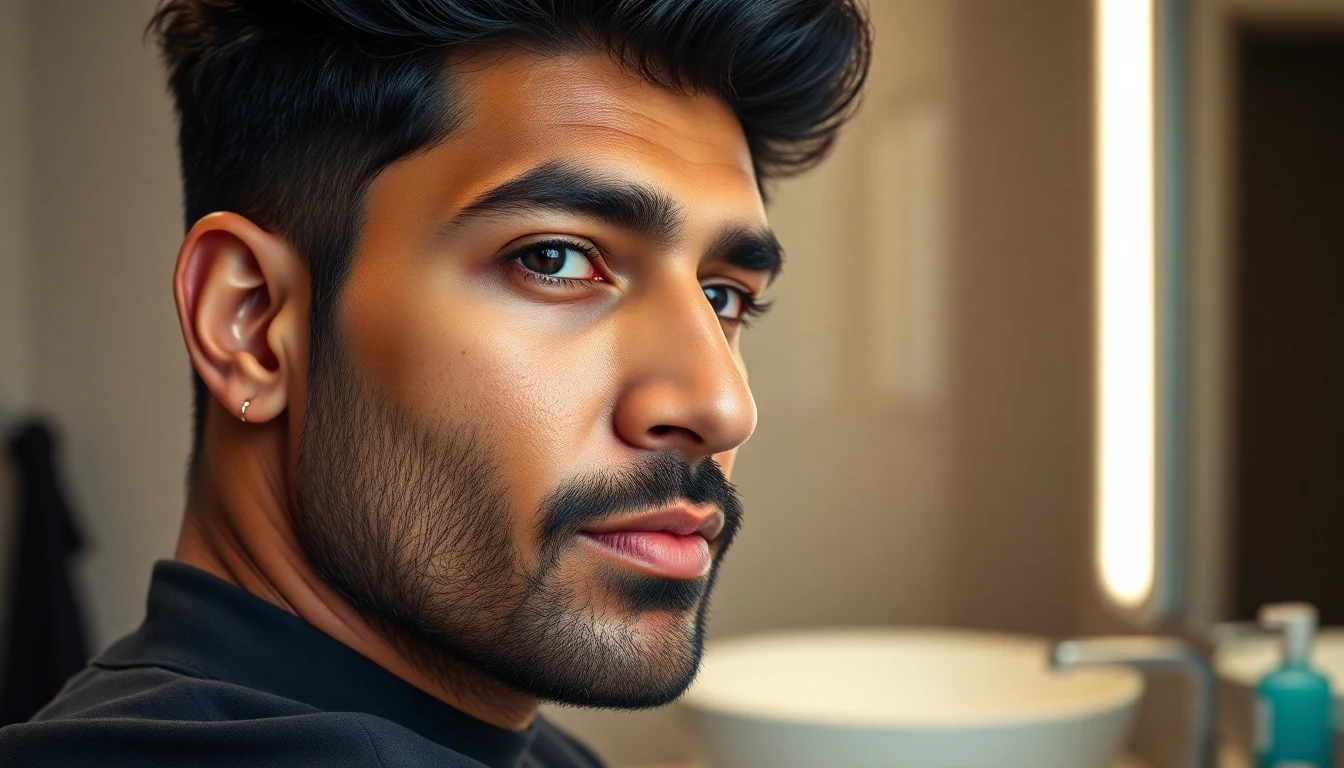
The pompadour involves sweeping longer hair on top up and back from the forehead, creating a wave of volume that is taller at the front and tapers back. Combined with a fade or taper on the sides, the contrast between the voluminous top and clean sides is striking on dark hair.
Who it flatters: Round, square, and heart-shaped faces. The vertical height balances wider facial proportions. Works best on straight to slightly wavy hair (1B-2A). Requires 4 to 6 inches on top.
Why it works on Indian hair: The natural density holds the pompadour shape without excessive product. Where a fine-haired man needs heavy pomade and 10 minutes of blow-drying, your hair holds the volume with moderate product and minimal heat. (We recommend this SFC Natural King Pro-Growth Hair &.)
Styling:

- Blow-dry on medium heat, directing the front section upward with a round brush
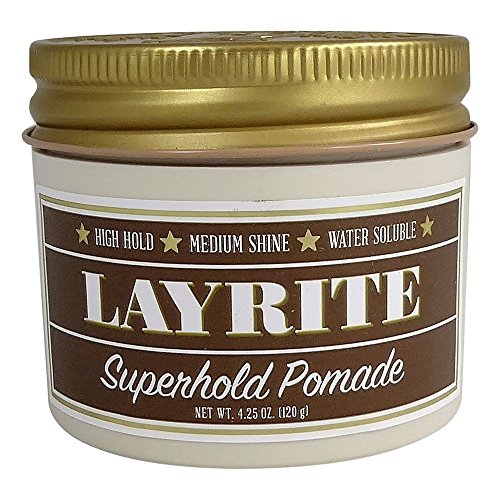
- When the hair is dry and has volume, apply Layrite Superhold Pomade from back to front
- Use your fingers or a comb to shape the front wave
- Finish with a light hairspray for hold in humidity
What to tell your barber: “Modern pompadour. Leave 5 inches on top, gradually shorter toward the crown. Low fade or taper on the sides. Thin the top slightly so it has volume without becoming a helmet.”
3. The Disconnected Undercut
The disconnected undercut is one of the most popular indian men hairstyles right now, and for good reason. It creates dramatic contrast between the long, styled top and the very short (often buzzed) sides, with no gradual blend between them. On thick, dark hair, this contrast is even more pronounced than on lighter hair because the color difference between the dense top and the buzzed skin is sharper.
Who it flatters: Oval and oblong face shapes. Works on all Indian hair textures. Best for men comfortable with a bold, fashion-forward look. Less appropriate for very conservative professional environments, though that is changing.
Variations:
- Undercut with slick back: Top combed straight back with pomade. Polished, sharp.
- Undercut with textured top: Top styled with matte product for a casual, messy look.
- Undercut with side sweep: Top swept to one side for a versatile, everyday style.
- Undercut with man bun: If the top is long enough (6+ inches), tie it back for a different look.
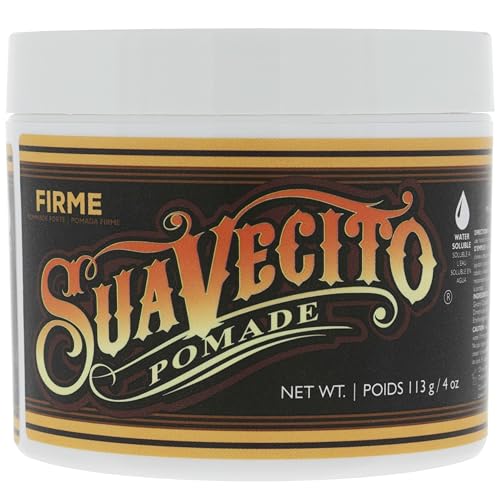
Styling: For the slick-back version, use Suavecito Firme Hold. For the textured version, American Crew Fiber gives matte hold without weight. Apply to damp hair and style according to your chosen variation.
What to tell your barber: “Disconnected undercut. Buzz the sides with a #1 or #2 guard, no blend into the top. Leave the top [4-5-6] inches. I want a hard disconnection, not a fade.”
4. The Classic Side Part
If your nani (grandmother) or papa (father) has ever looked at your hairstyle with quiet disapproval, this is the cut that earns you the nod of respect. The classic side part is timeless, professional, and universally flattering. It is the haircut that says “I take this seriously” without trying too hard.
The structure is simple: hair parted on one side (typically the left for most Indian men, but go with whichever side your hair naturally wants to fall), combed neatly to the side, with a taper or low fade on the sides. On thick hair, you get a clean, substantial shape that holds all day with minimal product.
Who it flatters: Literally every face shape. This is the universal cut. Appropriate for weddings, job interviews, Diwali family gatherings, Tuesday mornings. It never goes out of style because it was never “in style” in the trendy sense. It just works.
Styling:
- Comb damp hair into a side part
- Apply a small amount of medium-hold pomade or clay
- Comb into place
- Done. Two minutes.
What to tell your barber: “Classic side part. Taper the sides, leave 2 to 3 inches on top. Part on the [left/right]. Clean, conservative look.”
5. Textured Crop with Fade
The textured crop is the lowest-maintenance styled cut on this list. It is short enough to survive a humid Chennai afternoon without collapsing, but has enough character to look intentional. For Indian men who want a modern look without spending 10 minutes in front of the mirror every morning, this is the answer.
The cut: short, choppy, forward-styled hair on top (1.5 to 2.5 inches) with a fade on the sides. The texture comes from point-cutting that removes bulk and creates movement. This is essential on thick Indian hair because without texturizing, a short crop looks like a dense cap sitting on your head.
Who it flatters: Round and square faces especially (the forward fringe softens the forehead). Works on all textures. Excellent for active lifestyles, athletes, or anyone who values efficiency.
Styling: Work a pea-sized amount of matte paste or clay through towel-dried hair. Push forward with your fingers. Done in 30 seconds.
What to tell your barber: “Textured crop. About 2 inches on top, point-cut for texture, not blunt. Mid fade on the sides. Style it forward.”
6. Medium-Length Textured Waves
If your hair has any natural wave (Type 2A-2B, which is common in South Indian and coastal-region hair), this style lets your natural texture do the work. Instead of fighting your wave pattern with heavy product and blow-drying, you grow it out to medium length (3 to 5 inches) and let the natural movement speak for itself.
This is the closest thing to the effortless Bollywood look that actors like Hrithik Roshan and Ranveer Singh have made aspirational. The difference is that this version is achievable without a personal stylist. The key is the right layering from your barber and minimal, lightweight product.
Who it flatters: Oval and heart-shaped faces. Best on naturally wavy hair (2A-2B). Requires patience during the awkward growing-out phase (weeks 4 through 8 after your last cut).
Styling:
- After washing, towel-dry gently (do not rub; squeeze the water out to preserve your wave pattern)
- Apply a light amount of sea salt texturizing spray to damp hair
- Scrunch hair with your hands to encourage wave definition
- Let it air-dry or diffuse on low heat
- Once dry, run your fingers through for a natural, tousled look
What to tell your barber: “I want to grow the top out to about 4 to 5 inches. Layer it so the weight is manageable but the wave pattern shows. Taper the sides to keep it clean while the top grows.”
7. The Buzz Cut with Fade
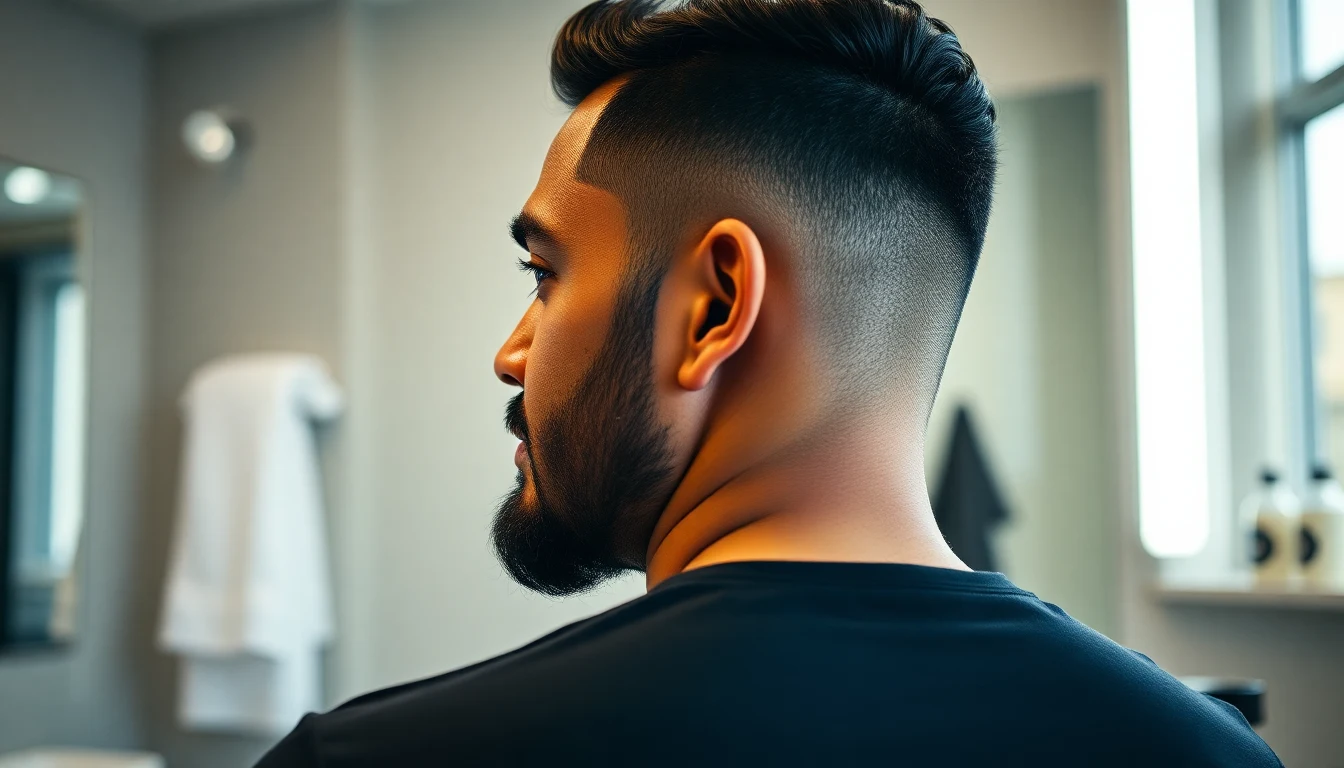
The buzz cut is the zero-maintenance option, and on thick, dark Indian hair, it looks significantly better than it does on lighter or thinner hair. That is because the contrast between the dense dark stubble on top and the faded sides creates natural definition that fine hair simply cannot achieve.
The key to a great buzz cut on Indian hair is the fade and the lineup. Without those two elements, a buzz cut is just “short hair.” With them, it is a deliberate style choice. The lineup around the forehead and temples gives it structure, and the fade adds dimension to the sides.
Who it flatters: Oval, square, and diamond face shapes. Works on any hair texture. Ideal for hot climates, active lifestyles, or men experiencing hair thinning who want a clean, confident look.
Hair thinning note: I know this is a sensitive topic in our community. Hair loss is common among Indian men, and the cultural anxiety around it is real. If you are noticing thinning, the buzz cut with a fade is one of the most flattering options because it eliminates the contrast between thick areas and thin areas. It is not giving up. It is making a decision, and that confidence reads clearly.
What to tell your barber: “Buzz cut, #1 or #2 on top. Skin fade on the sides. Clean lineup around the forehead and temples. Shape the neckline.”
8. The Faux Hawk with Taper
The faux hawk takes the mohawk concept and makes it wearable for everyday life. Instead of shaved sides and a dramatic ridge, you get tapered or faded sides with the top styled upward toward the center. On thick Indian hair, the center ridge has excellent natural volume and stands up with minimal product.
Who it flatters: Round and square faces (the vertical height elongates). Straight-to-wavy hair. For men who want something edgier than a quiff but more approachable than a full mohawk.
Styling: Blow-dry the top upward toward the center, then use strong-hold clay or pomade to define the ridge. Work from the front toward the back, pinching the hair upward along the center line.
What to tell your barber: “Faux hawk. Keep 3 to 4 inches on top down the center, taper the sides. I want enough length to style it up, but not a full mohawk.”
9. The Slick Back with Low Fade
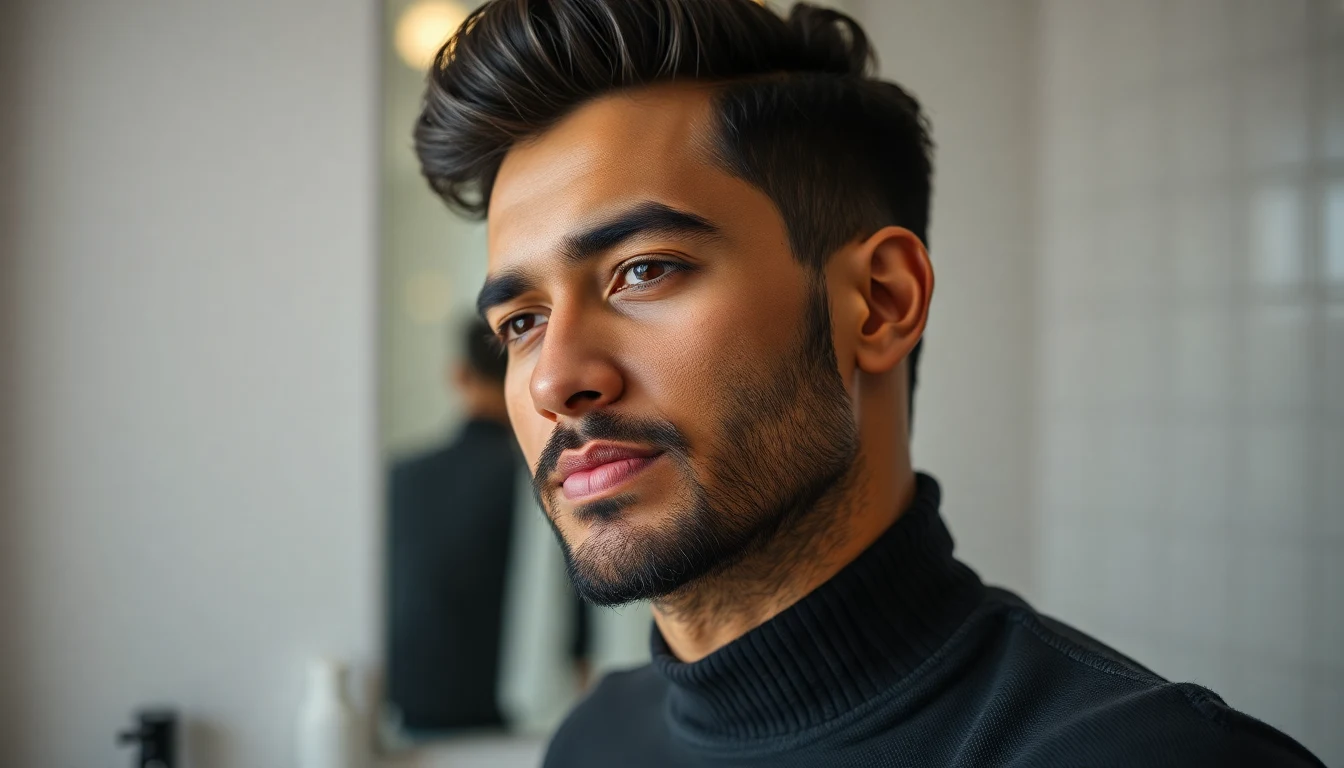
The slick back is a power move on thick Indian hair. Where the pompadour creates height, the slick back creates sleekness. Hair is combed straight back from the forehead, laying flat against the head, with a low fade or taper on the sides. It is the style you reach for when you want to look sharp with zero ambiguity. Wedding functions, board meetings, first impressions. This cut handles all of them.
Who it flatters: Oval and oblong face shapes. Thick, straight hair (1B-1C) holds this shape best. You need at least 4 inches on top for the hair to stay back.

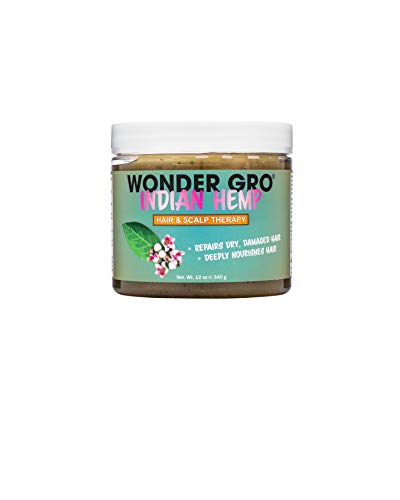
Why Indian hair excels here: The natural weight and density keep the hair combed back without excessive product. Light-to-medium-hold pomade is all you need, while fine-haired men need heavy-hold product to prevent flyaways. (We recommend this Indian Hemp Hair Grease Pomade.)
Styling:
- Apply pomade to damp hair
- Comb straight back from the forehead
- Blow-dry on medium heat while combing back to set the direction
- Finish with a touch more product on the sides to keep stray hairs in check
What to tell your barber: “Slick back on top, low fade on the sides. Leave 4 to 5 inches on top. I want to comb it straight back. No part.”
10. The Long Layered Cut
For Indian men who prefer longer hair (and there is a rich cultural tradition for it, from the jata of ascetic traditions to the Sikh kesh), a well-layered long cut can look exceptional on thick, dark hair. The key word is “layered.” Without layers, thick Indian hair at length becomes a heavy, triangular shape that swallows your head. With layers, the weight is distributed and the hair moves naturally.
Who it flatters: Oval and oblong faces. Wavy hair (2A-2B) looks especially good at length because the natural pattern creates movement. Requires commitment. Growing out thick hair takes 8 to 12 months to reach chin length.
Styling: A leave-in conditioner or light Moroccan Oil Treatment keeps the ends healthy and controls frizz. Avoid heavy products that weigh the hair down; let the natural texture and movement be the focus.
What to tell your barber: “Long layers. Keep the overall length but add layers through the mid-lengths and ends to remove weight. I want it to move, not sit heavy.”
Bollywood-Inspired Styles: What is Achievable and What is Styling
Let me be honest about Bollywood hair. Actors like Shah Rukh Khan, Hrithik Roshan, Ranveer Singh, and Vicky Kaushal have personal stylists, access to extensions, and professional touch-ups between every scene. The hairstyles you see on screen are achievable, but they require context about what is real and what is enhanced.
Bollywood Styles You Can Actually Get
| Actor / Style | The Look | What to Ask For | Your Hair Needs |
|---|---|---|---|
| Hrithik Roshan (War-era) | Medium-length, swept back, textured with volume | Modern pompadour or textured sweep-back, 4-5 inches on top | Straight to slightly wavy, thick |
| Vicky Kaushal (Uri / modern) | Short textured crop with military precision | Textured crop with mid fade, 1.5-2 inches on top | Any texture |
| Sidharth Malhotra | Classic side part, clean, professional | Side part with taper, 2-3 inches on top | Straight, medium-to-thick |
| Ranveer Singh (casual looks) | Tousled, medium-length, effortless waves | Medium-length textured style, 4-5 inches, layered | Wavy texture (2A-2B) |
| Ayushmann Khurrana | Textured quiff, slightly messy, approachable | Textured quiff with taper, 3-4 inches on top | Straight with slight body |
What to Watch Out For
- Volume that seems impossible: Many Bollywood hairstyles use volumizing powder, teasing at the roots, or even clip-in pieces for extra body in specific scenes. Your thick hair gives you natural volume, but do not compare your morning hair to a cinematic still with professional styling.
- Perfectly tousled “messy” looks: “Messy” on screen is actually very carefully styled with product, a blow dryer, and multiple adjustments. The at-home version will look slightly different, and that is fine. Authentic is better than trying to replicate a movie poster.
- Color-treated hair: Some actors use highlights or lowlights that add visual dimension to their hair. On natural dark Indian hair, the style will look slightly different without color treatment. Consider subtle highlights if you want to add that dimension, but test with a good colorist who understands dark hair.
Managing Common Indian Hair Challenges
Challenge 1: Too Much Volume
This is the most common complaint I hear from South Asian men. “My hair is too thick. It puffs out. It looks like a helmet.” The fix is not cutting it shorter. The fix is removing weight strategically.
Solutions:
- Thinning shears: Ask your barber to thin the bulk with thinning shears, especially around the sides and crown. This removes internal density without changing the overall shape.
- Texturizing: Point-cutting on top creates gaps and movement in the hair that prevent the “solid block” appearance.
- Blow-drying technique: Instead of letting thick hair air-dry (which often results in a puffy shape), blow-dry with a round brush to direct the volume where you want it. Down for sleeker looks, up and back for quiffs and pompadours.
- Product choice: Avoid volumizing products. Use matte clay, paste, or wax, which compress and define the hair rather than adding more body.
Challenge 2: Oily Scalp
Indian men, especially those in humid climates, often deal with overactive sebaceous glands. The scalp produces excess oil, which makes hair look greasy by midday.

Solutions:
- Do not wash daily. I know this sounds counterintuitive. But daily shampooing strips natural oils, and your scalp responds by producing even more. Wash every 2 to 3 days with a gentle, sulfate-free shampoo.
- Condition the lengths, not the roots. Apply conditioner from the mid-shaft down. Putting conditioner on your scalp adds unnecessary moisture where you already have too much.
- Use water-based styling products. Oil-based pomades and waxes compound the greasiness. Water-based clay, paste, or gel rinses clean and does not add oiliness.
- Dry shampoo is your friend. On day 2 or 3 between washes, a light application of dry shampoo at the roots absorbs excess oil and adds some texture. Find one that does not leave white residue on dark hair.
Challenge 3: Cowlicks and Growth Patterns
Cowlicks, those stubborn swirls where the hair grows in a different direction, are common in thick Indian hair and can make styling frustrating. The crown cowlick is the most common: that spot at the back of the head where the hair radiates outward like a pinwheel.
Solutions:
- Work with it: If your cowlick pushes hair to the right, part on the right and let it flow naturally. Fighting it requires more product and more effort every single day.
- Leave length: The weight of longer hair helps control a cowlick. If you cut the cowlick area too short, the hair stands straight up with nothing to weigh it down.
- Blow-dry against it: Right after a shower, while the hair is damp and pliable, blow-dry the cowlick area in the direction you want. Hold for 30 seconds. This temporarily resets the growth direction.
- Ask your barber: A good barber will work around your cowlick when cutting. Tell them about it upfront so they can adjust the cut accordingly.
Challenge 4: The Awkward Growing Phase
If you are transitioning from a short cut to a medium or long style, weeks 4 through 8 are rough. The top is not long enough to style properly, the sides are puffing out, and you look like you just forgot to get a haircut. I have been there. My maa (mother) asked me three times during that phase if everything was okay.
How to survive it:
- Get the sides trimmed every 3 weeks to maintain a clean shape while the top grows
- Use a headband or hat during the worst of it (no shame)
- Matte products help control the shape during the transition
- Remind yourself that every medium and long hairstyle on this list went through this phase first
The Oiling Tradition: Science Meets Champi
No guide to Indian men hairstyles is complete without addressing hair oil. The champi (head massage with oil) is one of the oldest grooming traditions in South Asian culture. My nani (grandmother) did it every Sunday. My mother still does it when I visit. And despite what some Western grooming guides will tell you, the tradition is not just nostalgia. It is backed by real science. When it comes to indian men hairstyles, technique matters most. When it comes to indian men hairstyles, technique matters most.
The 2003 Rele and Mohile study demonstrated that coconut oil is one of the only oils that actually penetrates the hair shaft (most other oils just coat the surface). This penetration reduces protein loss, strengthens the cortex, and prevents hygral fatigue (the damage caused by repeated swelling and drying). So when your grandmother said nariyal tel (coconut oil) was good for your hair, she was right. She just did not have the journal citation.
How to Oil Your Hair the Right Way
- Warm the oil slightly. Not hot, just warm to the touch. This improves absorption and feels better during the massage.
- Apply to dry or slightly damp hair. Not freshly washed. The oil needs to penetrate, and a clean, stripped hair shaft absorbs more readily.
- Massage your scalp for 5 to 10 minutes. This is the champi part. Use your fingertips (not nails) in circular motions. The massage increases blood flow to the follicles, which supports hair health and growth.
- Leave it for at least 30 minutes. Overnight is traditional and more effective, but even 30 minutes provides benefit.
- Wash it out completely. This is critical. Use a shampoo that can cut through the oil. You may need to shampoo twice. Leftover oil makes your hair greasy and defeats the purpose of your styling products.
The Right Oil for Your Hair
| Oil | Hindi Name | Best For | Scientific Status |
|---|---|---|---|
| Coconut oil | Nariyal tel | Deep conditioning, protein loss prevention | Well-studied. Penetrates the hair shaft (Rele & Mohile, 2003). |
| Amla oil | Amla | Strengthening, potential anti-graying support | Antioxidant activity in vitro. Limited human clinical trials. |
| Castor oil | Arandi ka tel | Appearance of thickness, scalp moisture | No clinical evidence for growth. Good emollient. Thick consistency coats strands. |
| Bhringraj oil | Bhringraj | Traditionally used for growth and graying | One 2008 animal study showed activity. Very limited human data. |
| Neem oil | Neem | Scalp health, dandruff, antibacterial | Well-studied antibacterial and antifungal properties. |
Important: Oil your hair as a treatment, not a styling product. Keep your oiling routine and your styling routine separate. Applying oil, then product, then wondering why your hair looks greasy is a mistake I see constantly. Oil, wash, then style. In that order.
Talking to Your Barber: Communication Tips for Indian Men
Whether your barber is an Indian nai (barber) who does head massages and ear cleaning as standard service, or a Western-trained stylist who has never cut Indian hair before, clear communication is everything.
If Your Barber is Familiar with Indian Hair
You are in good hands. Focus on specifics: the style name, the length on top (in inches), the fade type, and any texturizing you want. Bring a reference photo. Indian barbers appreciate directness.
If Your Barber is Not Familiar with Indian Hair
This is common in the diaspora, especially if you are going to a non-South Asian barbershop. Here is what to communicate upfront:

- “My hair is thicker and denser than average.” This tells them to allow more time and to use thinning shears or texturizing technique.
- “It will look shorter dry than wet.” Thick hair can deceive. When wet, it lays flat and looks longer. When dry, it springs up and loses 0.5 to 1 inch of apparent length. A good barber knows this, but not all barbers have experience with very thick hair.
- “Please thin the top if it gets too heavy.” If they do not thin it, thick Indian hair can look mushroom-shaped after a cut. Proactively requesting this prevents the issue.
- “The fade will show a strong contrast because my hair is very dark.” This is context that helps them blend more carefully, since any harsh line will be highly visible against dark hair.
The Reference Photo Rule
Always bring reference photos. But here is what most guides do not tell you: bring photos of men who have a similar hair type to yours. Showing your barber a photo of a fine-haired Scandinavian man’s undercut and expecting it to look the same on your thick Indian hair will lead to disappointment. Save photos from Korean hairstyles for men or other thick-hair references, Bollywood actors, or South Asian Instagram barber pages. The closer the reference hair matches your hair, the closer the result will match the photo.
Product Recommendations for Indian Hair
Product choice makes or breaks a hairstyle on thick hair. Here is what I recommend after testing dozens of products on hair like ours.
Styling Product Comparison
| Product | Hold (1-5) | Finish | Best For | Price | Buy |
|---|---|---|---|---|---|
| Baxter of California Clay | 3 | Matte | Textured quiff, casual styles, natural looks | ~$23 | Shop |
| Hanz de Fuko Claymation | 4 | Matte | Strong-hold textured styles, faux hawks | ~$23 | Shop |
| Layrite Cement Clay | 5 | Matte | Maximum hold, pompadour, extreme styles | ~$18 | Shop |
| Suavecito Firme Hold | 5 | High shine | Slick backs, formal pompadours, classic looks | ~$13 | Shop |
| Layrite Superhold | 5 | Medium shine | Humidity-proof hold, structured styles | ~$18 | Shop |
| American Crew Fiber | 3 | Low shine | Short textured styles, crops, everyday hold | ~$18 | Shop |
| Sea Salt Spray | 1-2 | Matte/textured | Wavy hair enhancement, beach texture, pre-style | ~$12 | Shop |
Product Selection by Style
- Textured quiff or crop: Matte clay (Baxter or Claymation). Apply to damp hair, style with fingers. The matte finish keeps thick hair looking natural, not heavy or greasy.
- Pompadour or slick back: High-hold pomade (Suavecito Firme or Layrite Superhold). Apply to damp hair after blow-drying the shape. The shine complements the polished look.
- Natural waves or medium length: Sea salt spray for texture, or a very light amount of fiber for slight hold. Too much product weighs down the natural movement you want to show.
- Buzz cut or very short styles: No product needed. If you want a slight sheen, a tiny amount of light oil on your palms patted over the top.
Products to Avoid on Indian Hair
- Volumizing products: You already have volume. Adding more creates an uncontrollable puff.
- Heavy oil-based pomades: Combined with naturally oily scalps, these create greasiness that requires multiple washes to remove.
- Lightweight gels: They do not have the hold strength for thick hair. Your style collapses by midday.
- Anything marketed as “flexible hold” or “light hold”: For fine hair. Not for yours.
Hairstyles by Occasion
Your cut stays the same; your styling shifts. Here is a quick reference for dialing your look up or down.
| Occasion | Best Style | Product | Vibe |
|---|---|---|---|
| Office / professional | Side part, low-fade comb over | Medium-hold pomade or clay | Clean, conservative, reliable |
| Diwali / festival | Pompadour, slick back | High-hold pomade, finishing spray | Polished, celebratory |
| Wedding function | Pompadour, classic side part | Strong pomade, light oil for sheen | Formal, refined |
| Weekend / casual | Textured quiff, natural waves | Matte clay or sea salt spray | Relaxed, effortless |
| Date night | Slick back, styled undercut | Medium-to-strong pomade | Confident, intentional |
| Gym / active | Buzz cut, short crop | None | Functional, clean |
Home Maintenance: Keeping Your Cut Sharp
Daily Routine (3 Minutes)
- Shower or wet your hair
- Towel-dry to damp (squeeze, do not rub if you have wavy hair)
- Apply your product (warm it between your palms first)
- Style with fingers or comb
- 60 seconds of blow-drying if you need volume or direction control
Weekly Maintenance
- Oil treatment (optional but recommended): Once a week, before your wash day. Coconut or amla oil, 30 minutes minimum, then shampoo out completely.
- Clarifying wash: Once a week, use a clarifying shampoo to remove product buildup. Follow with conditioner on the lengths.
- Trim schedule: Every 4 to 6 weeks for most styles. If you have a fade, the sides may need attention every 3 weeks.
Tools for Home
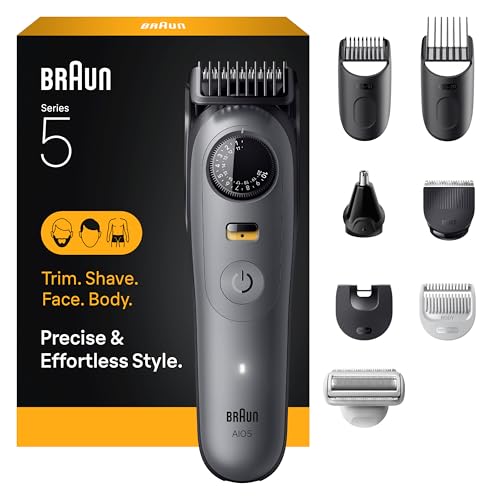
If you want to maintain your fade between barber visits or handle basic trimming at home, invest in a quality clipper. Thick hair requires a strong motor (electromagnetic or rotary, not pivot). The BaBylissPRO GoldFX handles thick hair without pulling or snagging. For a complete guide to choosing clippers, see our best clippers for fades breakdown.
Frequently Asked Questions
What hairstyle suits Indian men with thick hair?
Most hairstyles work well with thick Indian hair because density gives you natural volume and hold. The textured quiff, modern pompadour, and disconnected undercut are particularly flattering because they use that thickness as an advantage. The key is choosing a cut that works with your hair’s natural growth direction and having your barber thin or texturize the top to control weight.
How do I reduce volume in thick Indian hair without cutting it too short?
Ask your barber for thinning (using thinning shears) or texturizing (point-cutting to remove bulk). Both reduce weight and volume without changing the overall length. At home, use a matte clay or paste instead of gel, which can make thick hair look even heavier. Blow-drying with a round brush also helps direct volume where you want it.
Should Indian men oil their hair before or after styling?
Oil your hair as a treatment, not as a styling product. Apply oil the night before or a few hours before washing, then shampoo it out completely before styling. Leaving oil in your hair and then applying styling products creates buildup, greasiness, and makes your style fall flat. Keep your oiling routine and your styling routine separate.
What is the best fade for Indian hair?
A taper fade or low fade works best for most Indian men because it provides a clean, gradual transition that looks professional and maintains easily. Skin fades also look sharp on thick, dark hair because the contrast between the faded skin and the dense top is very defined. Ask your barber to blend carefully because thick hair can show harsh lines if the fade is not gradual enough.
How often should Indian men wash their hair?
Every 2 to 3 days for most Indian men. Daily washing strips natural oils, which can trigger your scalp to overproduce sebum, making your hair oilier over time. If your scalp tends toward oily (common in humid climates), use a gentle sulfate-free shampoo and condition only the mid-lengths and ends. On non-wash days, rinse with water only.
Do Bollywood hairstyles work on all Indian hair types?
Not always. Bollywood actors often have professional stylists and sometimes use extensions, texturizers, or perms to achieve specific looks. The styles are achievable, but you need to account for your natural texture. If you have very straight, thick hair (Type 1B-1C), pompadours and slick backs will work easily. If you have wavy hair (2A-2B), textured and tousled styles are more natural. Show your barber the specific reference photo rather than just saying the actor’s name.
How do I manage cowlicks in Indian hair?
Work with the cowlick, not against it. If you have a crown cowlick that pushes hair in a certain direction, choose a style that follows that direction. Blow-drying in the opposite direction with heat can temporarily flatten a cowlick, and a strong-hold product locks it down. For stubborn cowlicks, ask your barber to leave extra length in that area so the weight helps control the direction.
Find Your Cut: The Quick Decision Framework
| If You Want… | Get This | Maintenance Level | Minimum Length on Top |
|---|---|---|---|
| Versatile, universally flattering | Textured quiff | Medium | 3-4 inches |
| Maximum drama and volume | Modern pompadour | High | 4-6 inches |
| Bold, fashion-forward | Disconnected undercut | Medium | 4-5 inches |
| Professional, timeless | Classic side part | Low | 2-3 inches |
| Low maintenance, modern | Textured crop | Very low | 1.5-2.5 inches |
| Natural texture showcase | Medium-length waves | Low | 3-5 inches |
| Zero maintenance | Buzz cut with fade | None | Buzz length |
| Edgy, statement cut | Faux hawk | Medium-high | 3-4 inches |
| Polished power look | Slick back | Medium | 4-5 inches |
| Long hair done right | Long layered cut | Medium | 6+ inches |
Final Thoughts
Indian men have some of the thickest, most resilient hair on the planet. That is not a grooming challenge. That is a foundation. Every style in this guide is built on the understanding that your hair has natural advantages that mainstream guides do not account for: volume without product, density that holds shape, and a dark color that creates striking contrast with any fade.
The problem was never your hair. The problem was that nobody was writing grooming advice for it. This guide is my attempt to change that.
Find the cut that fits your face shape, your lifestyle, and your personal style. Learn how to communicate with your barber, whether they are a nai in Delhi or a stylist in Dallas. Invest in products that are designed for thick, high-density hair. And if you want to keep the champi tradition going, know that your nani was ahead of the science by about 50 years.
Your hair is an asset. Start treating it like one.
Next steps: Explore our Asian hairstyles for men guide for more thick-hair inspiration, check out all types of fades to understand your options, or find the right tools in our best clippers for fades guide.