If you want to master best beard dye for black, this guide covers everything you need to know.
If you want to master best beard dye for black, this guide covers everything you need to know. Last updated: February 2026 by Darius Washington, Black Men’s Grooming Editor
Gray beard hair does not care about your timeline. It shows up at 25 for some brothers and waits until 45 for others, but the moment you spot those first silver strands wired through your chin, you need a plan. Finding the best beard dye for Black men is not about vanity. It is about maintaining the look you have built, whether that is a full beard with a fresh fade, a sharp goatee for the office, or a styled stubble that frames your jawline right.
I started seeing gray in my beard around 28. Not a lot, just enough that my barber in Atlanta pointed it out during a lineup. “You want me to hit that?” he asked, already reaching for the Bigen. That was my introduction to beard dye, and since then I have tested close to two dozen products across the full spectrum: temporary brush-ins for quick touch-ups before events, semi-permanent formulas for weekly maintenance, and permanent dyes for brothers who want to set it and forget it.
This guide covers the ten best options I recommend in 2026, with specific attention to how each one performs on coarse, tightly coiled facial hair and dark skin tones. You will also get a full application tutorial, a breakdown of dye types, and the safety warnings that too many product roundups skip over.
Our Top Picks at a Glance: Best Beard Dye For Black
If you need an answer right now, here is the short version. Every product below is covered in detail further down.
| Product | Type | Best For | Processing Time | Price Range |
|---|---|---|---|---|
| Just For Men Mustache & Beard | Semi-permanent | Overall best for easy gray coverage | 5 minutes | $8-12 |
| Bigen EZ Color | Semi-permanent | Barbershop favorite, ammonia-free | 10 minutes | $6-10 |
| Grizzly Mountain Beard Dye | Semi-permanent (organic) | Natural/organic ingredients | 30-60 minutes | $15-20 |
| Cleverman Beard Dye Kit | Semi-permanent | Custom shade matching | 10 minutes | $20-25 |
| True Sons Hair Dye | Temporary | Gradual, natural-looking coverage | 5 minutes | $25-30 |
| Godefroy Professional Tint Kit | Semi-permanent | Professional-grade at home | 3-5 minutes | $12-18 |
| SoftSheen-Carson Dark & Natural | Semi-permanent | Formulated for coarse textured hair | 5 minutes | $5-8 |
| Blackbeard for Men Formula X | Temporary (brush-in) | Quick touch-ups, zero commitment | Instant | $20-25 |
| RefectoCil Professional Tint | Semi-permanent | Salon-grade, precise application | 10 minutes | $15-20 |
| Cremo No-Mix Hair Color | Semi-permanent | Beginner-friendly, no mixing | 5 minutes | $10-15 |
Why Black Men Dye Their Beards
Let me be direct. Gray in your beard is not a problem that needs fixing. Plenty of brothers rock salt-and-pepper beards that look distinguished and intentional. But if gray is not the look you are going for, then dyeing is a legitimate grooming tool, no different from getting a lineup or choosing the right beard oil.
The specific challenge for Black men comes down to contrast. When gray hairs show up in a dark beard, they are impossible to ignore. A single silver strand in jet-black facial hair catches light differently and draws the eye. On a lighter beard, gray blends in gradually. On ours, it announces itself.
There is also the texture factor. Coarse, tightly coiled beard hair is thicker in diameter than straight facial hair, which means gray strands feel wiry and can stick out at odd angles instead of lying flat. This is why some brothers notice gray in their beard before they see it on their head. The combination of high contrast and texture change is what sends most of us looking for a solution.
When Dyeing Makes Sense
- Scattered gray (under 30% gray): A semi-permanent dye covers these effortlessly and keeps your beard looking uniform
- Patchy gray concentration: When gray clusters in one area (usually the chin or sideburns), it can look uneven. Targeted dye application evens the tone
- Professional settings: Some brothers prefer a more youthful, consistent appearance for client-facing roles or interviews
- Style consistency: If your beard style depends on clean lines and even density, gray can disrupt the visual pattern
When to Skip It
- Heavy gray (60%+ gray): At this point, a fully dyed dark beard can look unnatural. Consider embracing it or using a blending technique that softens gray without eliminating it
- Sensitive skin or eczema: If you have active skin conditions under or around your beard, dye chemicals can trigger flare-ups. Talk to a dermatologist experienced with skin of color first
- You like the look: Seriously. A well-groomed gray or salt-and-pepper beard on dark skin is striking. There is no rule that says you need to cover it
Types of Beard Dye: Temporary vs. Semi-Permanent vs. Permanent
Before I get into specific products, you need to understand the three categories. Each one works differently on your hair, lasts a different amount of time, and carries different levels of risk for coarse, curly beard hair.
Temporary Beard Dye
How it works: Coats the outside of the hair shaft with color. Does not penetrate the cuticle or alter the hair’s structure.
Duration: Washes out with one to three shampoos. Some brush-in products last until your next wash.
Best for: Brothers who want zero commitment. Good for testing a shade before committing, for touch-ups before a date or event, or for guys who only have a few visible gray hairs and do not want a full dye routine.

Pros: No chemical damage. No patch test required (though I still recommend one). Easy to apply and remove. No mixing.
Cons: Can rub off on pillowcases, shirt collars, and your partner’s face. Does not hold up in rain, sweat, or humidity. Limited shade range.
Coarse hair consideration: Temporary dyes sometimes struggle to coat tightly coiled hair evenly because the curl pattern creates surfaces that the product skips over. You may need to work the product through more thoroughly than the instructions suggest.
Semi-Permanent Beard Dye
How it works: Deposits color molecules into the outer layers of the hair cuticle without fully opening it. No ammonia, though some formulas contain mild developers.
Duration: Two to six weeks, depending on how often you wash your beard and the specific formula. Fades gradually rather than washing out all at once.
Best for: Most Black men. This is the sweet spot. Semi-permanent dyes provide reliable gray coverage that looks natural, fades gracefully, and does not require the chemical commitment of permanent dye.
Pros: Natural-looking results. Gradual fade means no harsh root lines. Less drying than permanent dye. Wide shade range.
Cons: Still contains chemicals that can irritate sensitive skin. Requires a patch test. Does not cover gray as completely as permanent dye on very resistant (coarse, thick) gray hairs.
Coarse hair consideration: Resistant gray hairs, the kind that feel like copper wire, sometimes need an extra minute or two of processing time beyond what the box says. Check at the minimum time first, then add one to two minutes if the gray is still visible.
Permanent Beard Dye
How it works: Uses ammonia (or an ammonia substitute) to open the hair cuticle, then deposits color deep inside the cortex using a peroxide developer. The color becomes part of the hair’s structure.
Duration: Does not wash out. Lasts until the hair grows out or is cut. You will see new gray at the roots as hair grows in, typically within four to six weeks.
Best for: Brothers with heavy gray who want complete, long-lasting coverage and are willing to manage root touch-ups.
Pros: Fullest gray coverage. Does not fade with washing. No color transfer onto fabrics.
Cons: Most damaging to hair. Opens the cuticle, which makes coarse beard hair even more prone to dryness and breakage. Contains the harshest chemicals, including PPD in most formulas. Visible root line as gray grows back. Can look unnatural if the shade is even slightly off.
Coarse hair consideration: Permanent dye is the most effective at covering resistant gray, but the tradeoff is real. Coarse, tightly coiled beard hair is already prone to dryness. The ammonia and peroxide process strips moisture further. If you go this route, commit to daily beard oil application and use a sulfate-free wash exclusively.
Quick Comparison: Dye Types
| Factor | Temporary | Semi-Permanent | Permanent |
|---|---|---|---|
| Gray Coverage | Light blending | Moderate to full | Complete |
| Duration | 1-3 washes | 2-6 weeks | Until grows out |
| Hair Damage | None | Minimal | Moderate to high |
| Natural Look | Good | Best | Depends on shade match |
| Patch Test Needed | Recommended | Required | Required |
| Color Transfer | Yes (water, sweat) | Minimal after set | None |
| Best for Coarse Hair | Fair (uneven coating) | Good | Best coverage |
| Price per Application | $3-8 | $4-15 | $8-20 |
Detailed Reviews: The 10 Best Beard Dyes for Black Men
1. Just For Men Mustache & Beard (Best Overall)
Type: Semi-permanent | Shades for dark skin: Real Black (M-55), Jet Black (M-60), Dark Brown (M-45) | Processing time: 5 minutes | Price: $8-12

Just For Men dominates the beard dye market for a reason. The five-minute processing time is not marketing hype; it genuinely works in five minutes on most beard textures. The brush-in applicator reaches into the coils and curves of tightly textured facial hair better than most competitors, and the color develops evenly without splotching.
I have used the Real Black (M-55) shade for years, and my recommendation for Black men is to start there rather than Jet Black (M-60). M-60 can look flat and unnaturally uniform on dark skin because it eliminates all tonal variation. M-55 provides a deep, rich black that still has some dimension to it.
Works for: Most Black men looking for reliable, affordable gray coverage. The five-minute processing time makes it practical for a quick touch-up before work. Available at every drugstore, which means no waiting for shipping.
Does not work for: Brothers with very sensitive skin. The formula contains PPD, which is the most common allergen in hair dyes. If you have a history of contact dermatitis or eczema around your beard area, patch test thoroughly or look at the Grizzly Mountain or True Sons options below.
Barber’s take: My barber keeps Just For Men in the shop because it is fast and predictable. He uses it between appointments when a client wants a quick touch-up with their lineup.
2. Bigen EZ Color for Men (Best Barbershop Pick)
Type: Semi-permanent | Shades for dark skin: Jet Black, Natural Black, Darkest Brown | Processing time: 10 minutes | Price: $6-10
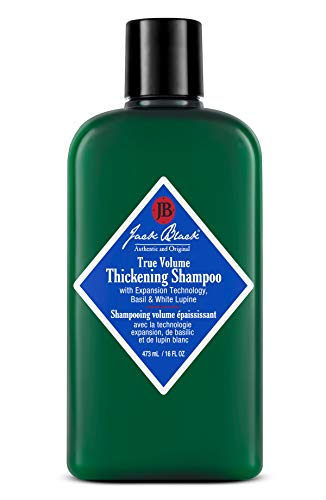
If you have ever sat in a Black barbershop and watched your barber pull out a small box of dye, there is a strong chance it was Bigen. This brand has been a staple in Black grooming for decades. The EZ Color formula is ammonia-free, which matters for coarse beard hair that is already prone to dryness. (We recommend this Jack Black True Volume Thickening Shampoo.)
Bigen’s color molecules are smaller than most competitors, which allows them to penetrate the thick cuticle of coarse facial hair more effectively. The result is more thorough gray coverage with less processing time than you would expect from an ammonia-free formula. The ten-minute processing time is slightly longer than Just For Men, but the trade-off is a gentler formula that does not leave your beard feeling like straw.
Works for: Brothers who want a barbershop-trusted brand with a gentler formula. Excellent for coarse, tightly coiled beard hair that resists lighter dyes. The ammonia-free formula is kinder to the skin underneath. (We recommend this Herb For Men Mustache & Beard.)
Does not work for: Impatient applicators. Bigen requires more careful application than Just For Men’s brush-in system. The mixing process takes a couple of extra minutes, and you need to work the product through your beard thoroughly to avoid uneven spots.
Barber’s take: Bigen is the dye I see most often in Atlanta shops. Barbers trust it because the color holds, it does not irritate most clients, and the shade range works well across different Black skin tones.
3. Grizzly Mountain Beard Dye (Best Natural/Organic)
Type: Semi-permanent (organic) | Shades for dark skin: Dark Brown, Black | Processing time: 30-60 minutes | Price: $15-20
Grizzly Mountain is for the brother who reads ingredient labels. This is a plant-based beard dye that uses henna, indigo, and herbal extracts instead of synthetic chemicals. There is no PPD, no ammonia, no peroxide, and no parabens. If you have reactive skin or you simply prefer to keep chemicals off your face, this is your best option.
The catch is time. Where Just For Men needs five minutes, Grizzly Mountain needs 30 to 60 minutes of processing. That is because plant-based dyes work slower. They coat and gradually stain the hair rather than forcing open the cuticle with chemicals. The payoff is a color that looks remarkably natural because it builds in layers rather than depositing a single flat tone.
Works for: Sensitive skin. Chemical-free grooming routines. Brothers who want the most natural-looking results and are willing to invest extra time. The plant-based formula actually conditions coarse hair during the dyeing process, which is the opposite of what chemical dyes do.
Does not work for: Anyone who wants a five-minute solution. The 30-to-60-minute processing window is not flexible; cutting it short leaves you with a reddish undertone instead of the deep dark shade you wanted. Also, the color range is limited. If you need a very specific shade, Cleverman below offers better customization.
4. Cleverman Beard Dye Kit (Best Custom Shade Match)
Type: Semi-permanent | Shades for dark skin: Custom-blended (Dark Brown to Jet Black range) | Processing time: 10 minutes | Price: $20-25
Cleverman’s selling point is personalization. You take a quiz on their website that asks about your natural hair color, the percentage of gray you are covering, your skin tone, and the look you want (natural vs. full coverage). They blend a custom shade and ship it to your door on a subscription schedule.

For Black men, this solves a real problem. Most drugstore beard dyes offer three or four “dark” shades that were developed with lighter skin tones as the default. The difference between Natural Black and Jet Black might look subtle on the shelf, but on dark skin, the wrong shade reads immediately. Cleverman’s custom blending accounts for your specific skin tone, which means the color looks like it grew out of your face rather than being painted on.
Works for: Brothers who have tried drugstore dyes and found that every shade looks slightly off. The custom blending is genuinely useful for dark skin tones where a half-shade difference matters. The subscription model means you never run out.
Does not work for: One-time users or budget-conscious buyers. At $20-25 per kit, Cleverman is twice the cost of Just For Men. The subscription model saves money over time, but the upfront cost is higher.
5. True Sons Hair Dye for Men (Best Gradual Coverage)
Type: Temporary/gradual | Shades for dark skin: Dark Brown, Black | Processing time: 5 minutes (daily application) | Price: $25-30
True Sons takes a completely different approach. Instead of covering gray in one application, it builds color gradually over multiple uses. You apply it like a conditioner after washing your beard. Each application deposits a thin layer of color, and over the course of a week or two, the gray blends in naturally.
This is the most undetectable beard dye I have used. Nobody notices the change because it happens incrementally. There is no “yesterday gray, today jet black” moment that screams “he dyed his beard.” The gradual buildup also means you control the depth. Want a soft blend with some gray still showing? Use it every other day. Want full coverage? Use it daily.
Works for: Brothers who want the most natural-looking transition. Men who are dyeing for the first time and do not want a dramatic change. Good for light to moderate gray (under 40%). The gentle formula works well on sensitive skin.
Does not work for: Heavy gray coverage. If you are 60% or more gray, the gradual approach takes weeks to show meaningful results, and you may never achieve full coverage. Also, because the color washes out with each shampoo, you need to apply it consistently. Skip a week and the gray comes back.
6. Godefroy Professional Tint Kit (Best Professional Grade)
Type: Semi-permanent | Shades for dark skin: Natural Black, Dark Brown, Jet Black | Processing time: 3-5 minutes | Price: $12-18
Godefroy is what many barbershops use when they are not reaching for Bigen. The Professional Tint Kit comes with pre-measured capsules, a developer, and a mixing tray, which eliminates the guesswork of measuring ratios. The three-to-five-minute processing time is the fastest in this roundup, and the color payoff is dense enough to cover resistant gray in coarse beard hair.
The kit includes 20 applications, which brings the per-use cost down to under a dollar. That makes it the best value option for regular dyers. The professional-grade formula is also more concentrated than drugstore alternatives, which means better coverage with less product.
Works for: Regular dyers who want professional results at home without the barbershop markup. The pre-measured capsules make the mixing process foolproof. Excellent gray coverage on thick, coarse facial hair.
Does not work for: First-time dyers who want a simple brush-in experience. The capsule-and-developer system has a slight learning curve. The formula also contains PPD, so patch testing is essential.
7. SoftSheen-Carson Dark & Natural (Best Budget Pick)
Type: Semi-permanent | Shades for dark skin: Natural Black, Jet Black | Processing time: 5 minutes | Price: $5-8
SoftSheen-Carson has been in the Black hair care business since 1964. Their Dark & Natural line was specifically formulated for the thicker, coarser hair texture that is common in Black men. That distinction matters. Most beard dyes are developed and tested on straight or wavy hair, then marketed as “for all hair types.” Dark & Natural was built from the ground up for our texture.
The formula spreads easily through tightly coiled beard hair without clumping or pooling in the curls. The color is rich and even, and the five-minute processing time is accurate for coarse hair, which is unusual. Most five-minute dyes need an extra couple of minutes on resistant gray. At $5-8 per box, this is the most affordable option that actually delivers professional-looking results on textured facial hair.
Works for: Budget-conscious brothers who want a product made specifically for their hair texture. Available at most drugstores in neighborhoods with significant Black populations, as well as beauty supply stores.
Does not work for: The shade range is extremely limited (essentially black and slightly less black). If you want brown tones, a warm black, or any kind of nuanced color, you will need to look at Cleverman or Bigen.
8. Blackbeard for Men Formula X (Best Temporary Touch-Up)
Type: Temporary (brush-in) | Shades for dark skin: Black, Dark Brown | Processing time: Instant (brush-in application) | Price: $20-25
Blackbeard for Men is not a dye in the traditional sense. It is a color-depositing formula that you brush through your beard like mascara. The tube has a small brush applicator that lets you target specific gray hairs without coating your entire beard. The color dries in about 90 seconds and holds until you wash it out.
I keep a tube in my travel bag for exactly this purpose. When I need to look sharp for a meeting and do not have time for a full dye session, three minutes with Blackbeard and the gray is invisible. It is also the safest option on this list because the formula sits on top of the hair and never penetrates the cuticle. Zero chemical processing means zero damage.
Works for: Travel, quick touch-ups, events, and interviews. Brothers with minimal gray who just need to knock out a few visible strands. Guys who are curious about dyeing but do not want to commit to a semi-permanent product.
Does not work for: All-day wear in heat or humidity. The formula can transfer if you sweat heavily or if someone touches your beard. It also does not hold up to swimming or rain. This is not a replacement for semi-permanent dye; it is a complement to it.
9. RefectoCil Professional Tint (Best Salon-Grade Precision)
Type: Semi-permanent | Shades for dark skin: Natural Brown, Blue Black, Deep Black | Processing time: 10 minutes | Price: $15-20
RefectoCil is a European brand that is standard in professional salons and barbershops worldwide. The formula was originally designed for eyebrow and eyelash tinting, which means it is formulated for the delicate skin around the eyes. That translates to a beard dye that is gentler on facial skin than most competitors while still delivering rich, long-lasting color.
The Blue Black shade is particularly good for Black men because it has a subtle cool undertone that reads as natural on darker skin tones. Most “black” dyes have a warm or neutral base, which can look reddish in certain lighting. RefectoCil’s blue-black reads as genuinely dark without the artificial flatness of a pure black.
Works for: Brothers who want precise, salon-quality results. The fine-tipped application and gentle formula make it ideal for detailing around the edges of a goatee, along a cheekline, or in the mustache area where precision matters. See our beard styles guide for styles that benefit from precise color application.
Does not work for: Beginners. RefectoCil requires separate purchase of the developer, and mixing ratios need to be precise. The processing time is sensitive; an extra two minutes can push the color darker than intended. This is a product for guys who have dyed their beard before and want to upgrade.
10. Cremo No-Mix Hair Color (Best for Beginners)
Type: Semi-permanent | Shades for dark skin: Dark, Darkest | Processing time: 5 minutes | Price: $10-15
Cremo designed this product specifically to remove every possible barrier to entry. There is no mixing, no measuring, no developer, and no tray. You squeeze the product directly onto the included comb-applicator and brush it through your beard. That is it. The comb distributes color evenly through the hair, and five minutes later you rinse.
The results are solid for the simplicity of the process. The color is consistent, the coverage on gray is reliable, and the fade is gradual rather than patchy. It will not match the depth of Bigen or the precision of RefectoCil, but for a first-time dyer who is nervous about making a mistake, Cremo makes it almost impossible to go wrong.
Works for: First-time beard dyers. Brothers who want the simplest possible process. The no-mix formula eliminates the most common application errors (wrong ratios, uneven mixing, overprocessing).
Does not work for: Very coarse, resistant gray. The gentler formula and simplified process mean slightly less coverage power on thick, wiry gray hairs. If your gray beard hair feels like steel wool, you may need the extra penetration of Bigen or Godefroy.
What to Look for When Choosing a Beard Dye
Not every beard dye is created equal, and the wrong choice on coarse, curly facial hair shows immediately. Here is what to evaluate.

Shade Matching for Dark Skin
This is where most brothers go wrong. The instinct is to grab the darkest shade available because your natural hair is black. Resist that instinct. Jet black dye on dark skin eliminates all the natural tonal variation in your beard and creates a flat, artificial look that is visible from across the room. (We recommend this SFC Natural King Jamaican Black Castor.)
Instead, go one shade lighter than you think you need. Real Black or Natural Black will look darker on your beard than it does on the box. Your dark skin provides the backdrop that deepens the color further. A shade that looks brown in the box often reads as a natural, dimensional black once it is on your face.
Formula Compatibility with Coarse Hair
Tightly coiled beard hair has a thicker cuticle than straight or wavy hair. This means dye molecules need more time to penetrate, or they need a stronger formula to push through. Products designed for “all hair types” are typically formulated for medium-textured hair, which means they may underperform on 4B and 4C facial hair.
Look for products that either explicitly state compatibility with coarse or textured hair, or that have a strong reputation in Black barbershops. The barbershop test is real: if professional barbers who work on textured hair daily trust a product, it works.
Skin Safety
Your beard sits on your face. Unlike head hair dye, which primarily contacts your scalp, beard dye touches your cheeks, chin, neck, and the sensitive skin around your lips. The stakes for a bad reaction are higher because the affected area is visible and difficult to hide.
Check the ingredient list for PPD (para-phenylenediamine). This is the chemical responsible for most allergic reactions to hair dye. If you have ever had a reaction to any dye product, choose a PPD-free alternative like Grizzly Mountain, True Sons, or Blackbeard for Men.
Maintenance Compatibility
Think about your existing beard care routine. If you wash your beard daily, a temporary dye will fade out within days. If you use heavy beard oils and butters, know that these can create a barrier that affects how semi-permanent dye processes. If you swim regularly, chlorine accelerates color fade on all dye types.
Match your dye type to your lifestyle. Low-maintenance brothers should lean toward semi-permanent or permanent. High-frequency groomers who wash and oil daily may prefer temporary products they can reapply as needed.
How to Apply Beard Dye: Step-by-Step Tutorial
I have watched barbers dye hundreds of beards, and I have done my own often enough to know exactly where most brothers make mistakes. Follow this process and you will get even, natural-looking results every time.
What You Need
- Beard dye kit (your product of choice)
- Petroleum jelly (Vaseline)
- Disposable gloves (even if the kit includes them, keep extras)
- Old towel or barber cape
- Timer (your phone works)
- Beard comb
- Cotton swabs for cleanup
- Mild, sulfate-free beard wash
Step 1: Prep Your Beard (5 minutes)
Wash your beard with a gentle, sulfate-free beard shampoo to remove oil, product buildup, and dirt. Dye adheres best to clean hair. Do not condition your beard before dyeing because conditioner coats the hair shaft and creates a barrier that prevents even color absorption.
Towel dry until your beard is damp, not wet. Excess water dilutes the dye and leads to patchy, uneven coverage. On coarse, curly hair, water gets trapped in the coils, so squeeze and blot thoroughly.
Step 2: Protect Your Skin (2 minutes)
Apply a thin layer of petroleum jelly along your cheekline, jawline, around your ears, and along your neckline. This creates a barrier that prevents dye from staining your skin. Pay extra attention to the area around your lips and the creases beside your nose. These spots absorb dye quickly and are difficult to scrub clean.
For Black men, skin staining is less visually noticeable than it is on lighter skin, but it still happens. The stain appears as a dark, slightly different texture on the skin that is visible up close. The petroleum jelly barrier eliminates this issue entirely.
Step 3: Mix and Apply (5-10 minutes)
Follow your specific product’s mixing instructions. For products like Just For Men and Cremo that do not require mixing, skip to application. For products like Bigen and Godefroy that require a developer, mix in the provided tray until the color is uniform with no streaks.
Apply the dye in the direction of hair growth using the included brush or applicator. On tightly coiled beard hair, you need to work the product into the curls rather than just brushing it over the surface. Use short, firm strokes and press the applicator into the beard to ensure color reaches the inner layers. (We recommend this Just For Men Mustache & Beard,.)
Start at the chin and work outward toward the sideburns. The chin typically has the most resistant gray and benefits from the longest processing time. By starting there, those hairs get an extra minute or two of exposure.

Step 4: Process and Time (3-60 minutes, depending on product)
Set your timer for the minimum recommended time. This is critical. Overprocessing is the most common mistake, and on coarse hair, the consequences are amplified. Overprocessed beard hair becomes brittle, dry, and loses its natural curl pattern.
Check the color at the minimum time by wiping a small section with a damp cloth. If the gray is still visible, add one to two minutes and check again. Never exceed the maximum processing time listed on the product.
Step 5: Rinse and Condition (5 minutes)
Rinse with lukewarm water (not hot) until the water runs clear. Hot water opens the cuticle and causes color to bleed out faster. On coarse hair, lukewarm water is sufficient to remove excess dye without stripping the color you just deposited.
After rinsing, apply a beard conditioner or a small amount of beard oil to replenish moisture. The dyeing process, even with semi-permanent products, removes some of the natural oils from your beard. Conditioning immediately after helps seal the cuticle and lock in both moisture and color.
Step 6: Clean Up (2 minutes)
Remove the petroleum jelly barrier with a warm, damp cloth. Check for any dye stains on your skin, especially around the jawline and ears. Fresh stains can be removed with a cotton ball dipped in rubbing alcohol or a dedicated stain remover. After 24 hours, stains become much harder to remove.
If your face wash does not remove light staining, a mixture of baking soda and dish soap applied with a toothbrush works on most skin types. Be gentle around the beard line to avoid disturbing the fresh dye.
Safety Warnings: PPD Allergies and Patch Testing
I am putting this section in bold terms because it is the one thing most beard dye guides either skip or bury at the bottom. PPD allergic reactions can be severe, and they can develop at any time, even if you have used the same product for years. When it comes to best beard dye for black, technique matters most.
What Is PPD?
Para-phenylenediamine (PPD) is a chemical compound found in most permanent and many semi-permanent hair dyes. It is what makes the color permanent. PPD works by oxidizing inside the hair shaft, creating the color molecule that bonds to your hair. The problem is that PPD is also one of the most common contact allergens in the world.
What a PPD Reaction Looks Like
Mild reaction: Itching, redness, mild swelling around the dyed area. Usually appears within 24-48 hours of application.
Moderate reaction: Contact dermatitis with blistering, significant swelling, burning sensation, and crusting. Can spread beyond the application area.
Severe reaction (rare but serious): Anaphylaxis, extreme facial swelling, difficulty breathing. This is a medical emergency requiring immediate treatment. When it comes to best beard dye for black, technique matters most.
On dark skin, the early redness that signals an allergic reaction is harder to see. This means reactions can progress further before you notice them. Touch-based symptoms like itching, burning, and raised bumps are more reliable indicators on darker skin tones than visual redness alone.
How to Patch Test (Do This Every Time)
- Mix a small amount of the dye according to the product instructions
- Apply a dime-sized amount behind your ear or on the inside of your elbow
- Leave it on for the full recommended processing time, then rinse
- Wait 48 hours. Check for itching, redness, swelling, or any skin irritation
- If any reaction appears, do not use the product on your beard. Try a PPD-free alternative instead
Important: Patch test every time you use a new product, switch brands, or if more than six months have passed since your last use of a product. PPD sensitivity is cumulative, meaning repeated exposure increases the likelihood of developing an allergy over time.
PPD-Free Alternatives
If you know you are sensitive to PPD, here are your safest options from this roundup:
- Grizzly Mountain Beard Dye (plant-based, zero synthetic chemicals)
- True Sons (gradual color, gentle formula)
- Blackbeard for Men (temporary, sits on the hair surface)
- Bigen EZ Color (ammonia-free, though still contains some synthetic dye agents; patch test to confirm tolerance)
Maintaining a Dyed Beard: Keeping Color and Health
Dyeing your beard is only half the job. Maintaining the color and keeping your beard healthy after chemical treatment is where most brothers fall off. Coarse, tightly coiled beard hair requires more post-dye care than straight or wavy hair because the dyeing process amplifies existing dryness.
Daily Moisture Is Non-Negotiable
After dyeing, your beard oil routine goes from recommended to mandatory. The dyeing process strips some of the natural sebum from your hair and the skin underneath. On coarse, curly hair that already struggles with moisture retention, this creates a compounding dryness problem.

Apply beard oil daily, working it from root to tip. Focus on the chin and jawline areas where dye is applied most heavily. For the first week after dyeing, I apply oil twice daily (morning and before bed) to counteract the post-dye dryness. After that first week, return to your normal once-daily application.
Switch to Sulfate-Free Washing
Sulfates are the cleansing agents in most shampoos that create lather. They are also the fastest way to strip dye from your beard. Switch to a sulfate-free beard wash immediately after dyeing. This preserves the color while still cleaning your beard effectively.
Wash your beard two to three times per week maximum. Daily washing fades color faster on coarse hair because the rough cuticle surface releases color molecules more readily when agitated with detergent. Between washes, rinse with water and condition.
Protect from Sun and Chlorine
UV exposure breaks down dye molecules, especially in semi-permanent formulas. If you spend significant time outdoors, consider a beard balm or oil with UV-protective ingredients. Chlorinated pool water is even more aggressive. Wet your beard with clean water before swimming; a pre-saturated beard absorbs less chlorinated water.
Touch-Up Schedule
| Dye Type | Touch-Up Frequency | What to Watch For |
|---|---|---|
| Temporary | After each wash | Color fading evenly vs. patchily |
| Semi-permanent | Every 2-4 weeks | Gray reappearing at roots; color shift (warm undertones emerging) |
| Permanent | Every 4-6 weeks (roots only) | Visible root line where gray grows in |
Signs You Need to Give Your Beard a Break
- Excessive dryness that oil cannot correct: Your cuticle may be over-processed. Take a two-to-three-week break from dyeing and focus on deep conditioning
- Breakage at the mid-shaft: This indicates the hair structure is weakened. Stop dyeing and let your beard recover with daily oil and weekly deep conditioning treatments
- Itching or irritation that was not there before: You may be developing sensitivity to an ingredient. Switch to a different formula or consult a dermatologist experienced with skin of color
- Color depositing unevenly: Buildup from product or previous dye applications can cause splotchy results. Use a clarifying wash to strip old color before reapplying
Budget Breakdown: Good, Better, Best
Beard dye costs add up over time. Here is what to expect at each budget level based on monthly use.
| Budget Level | Product | Cost per Application | Annual Cost (Monthly Use) | Best For |
|---|---|---|---|---|
| Budget ($5-10/mo) | SoftSheen-Carson Dark & Natural | $5-8 | $60-96 | No-frills gray coverage on textured hair |
| Budget ($5-10/mo) | Just For Men | $4-6 | $48-72 | Widely available, reliable results |
| Mid-range ($10-18/mo) | Bigen EZ Color | $6-10 | $72-120 | Ammonia-free, barbershop trusted |
| Mid-range ($10-18/mo) | Godefroy Professional (20-pack) | $0.60-0.90 | $7-11 | Best value for frequent dyers |
| Premium ($20-30/mo) | Cleverman Custom | $20-25 | $240-300 | Custom shade matching for dark skin |
| Premium ($20-30/mo) | Grizzly Mountain Organic | $15-20 | $180-240 | Chemical-free, conditions while coloring |
My pick for value: If you are dyeing monthly, the Godefroy 20-pack is unbeatable at under a dollar per application. If you want the best balance of quality, convenience, and price, Just For Men at $4-6 per use is the sweet spot that most brothers land on.
Common Mistakes Black Men Make When Dyeing Their Beards
I made most of these mistakes myself before I figured out the process. Save yourself the trial and error.
1. Choosing Jet Black When Natural Black Works Better
This is the number one mistake. Jet black dye on dark skin creates an unnaturally uniform, one-dimensional look. It looks like you colored your beard with a Sharpie. Natural black or dark brown provides depth, dimension, and a finish that reads as “his natural color” rather than “he dyed his beard.”
2. Skipping the Patch Test
I know. You have used the product before. You do not have sensitive skin. You are in a rush. Do the patch test anyway. PPD sensitivity is cumulative. The 15th application can trigger a reaction that the first 14 did not. A 48-hour patch test is a small investment compared to a swollen face and a trip to urgent care.
3. Applying on a Dirty or Oily Beard
Product buildup, beard oil, and natural sebum create a barrier that prevents dye from reaching the hair shaft. Always wash your beard immediately before dyeing. Some brothers assume their beard oil will protect the hair during the process. It does not. It just blocks the color from depositing evenly.
4. Overprocessing to Cover Stubborn Gray
When a few gray hairs resist the dye, the instinct is to leave the product on longer. This is a mistake on coarse hair. Overprocessing dries out the entire beard to chase a few stubborn strands. A better approach: accept that 95% coverage looks natural, and use a temporary brush-in product like Blackbeard for Men to spot-treat the remaining gray between sessions. (We recommend this Reusable Hair & Beard Dye for.)
5. Dyeing Too Often
Coloring your beard every week is too much. Even semi-permanent dye accumulates on the hair with repeated applications, leading to buildup that makes the color look darker and less natural over time. Stick to the recommended touch-up schedule for your dye type. If you feel the need to dye more often, switch to a temporary product for the in-between weeks.
6. Ignoring the Skin Underneath
Your face is not your scalp. The skin under your beard is thinner, more sensitive, and more prone to irritation from chemical dyes. Use the petroleum jelly barrier every time. After dyeing, apply a gentle facial moisturizer to the skin beneath your beard. If you notice persistent itching or flaking after dyeing, switch to a gentler formula or consult a dermatologist.
7. Not Accounting for Beard Style
A full beard hides minor application inconsistencies because the density of hair camouflages uneven spots. A goatee or chin strap exposes every flaw because there is less hair and more visible skin. If you wear a precision beard style, invest in a product with a fine applicator like RefectoCil or use the brush-in Blackbeard for Men for detailed work.

Frequently Asked Questions
How often should I dye my beard?
Most semi-permanent beard dyes last two to four weeks before visible fading begins, especially around the chin where friction from eating and wiping breaks down color fastest. Plan to touch up every three to four weeks if you are using a semi-permanent formula. Temporary options like brush-in color wash out with each shampoo, so you would apply those as needed before events or daily if you prefer. Permanent dyes last until new gray grows in, which typically means a root touch-up every four to six weeks.
Can beard dye cause skin irritation on dark skin?
Yes. The primary concern is PPD (para-phenylenediamine), a chemical found in most permanent and many semi-permanent dyes. PPD allergies can cause contact dermatitis, swelling, and in rare cases severe reactions requiring medical attention. Dark skin can mask early redness, which makes allergic reactions harder to catch visually. Always perform a 48-hour patch test behind your ear or on the inside of your elbow before every application, even if you have used the product before. Sensitivity can develop over time with repeated exposure.
Will beard dye damage my coarse, curly beard hair?
Permanent dyes that use ammonia and peroxide can dry out coarse, curly beard hair because the chemical process opens the hair cuticle to deposit color. This makes the hair more porous and prone to moisture loss. Semi-permanent and temporary dyes are gentler because they coat the outside of the hair shaft rather than penetrating it. If you use permanent dye, increase your beard oil application to twice daily for the first week after coloring and use a sulfate-free beard wash to slow color fading.
What beard dye shade should Black men choose?
Choose a shade one level lighter than your natural beard color for the most natural result. If your natural beard hair is jet black, go with a dark brown or natural black rather than the darkest shade available. Jet black dye on dark skin can look flat and artificial because it eliminates the natural tonal variation in facial hair. A dark brown or soft black lets some dimension come through, which reads as more authentic. If you have significant gray and want full coverage, natural black provides enough depth without looking painted on. (We recommend this Men’s Beard Dye for Men in.)
Is there a beard dye specifically made for Black men?
SoftSheen-Carson Dark & Natural was specifically formulated for coarse, textured facial hair and is one of the few dyes designed with Black men in mind. Bigen EZ Color is also popular in Black barbershops because of its ammonia-free formula and its ability to cover gray on tightly coiled hair without harsh chemicals. Most mainstream beard dyes like Just For Men work on all hair textures, but the processing time may differ on coarse hair. Always follow the instructions and check results at the minimum time before leaving the product on longer.
Can I dye my beard at the barbershop instead of at home?
Many Black barbershops offer beard coloring as a service, and this is the safest route if you are new to dying your beard. Your barber can match the shade precisely to your head hair and skin tone, apply the product evenly around the difficult areas like the chin crease and under the jawline, and monitor the processing time based on your specific hair texture. Expect to pay between $15 and $40 for a beard dye service depending on your city and the barber’s experience. Ask your barber what brand they use and whether they perform a patch test for first-time clients.
How do I cover gray in a patchy beard without it looking obvious?
If your beard is patchy, a full dye job can actually draw more attention to the thin spots because the uniform dark color contrasts sharply against visible skin. Instead, use a temporary brush-in product like Blackbeard for Men or True Sons, which let you build up color gradually and blend around sparse areas. Apply the color only where gray is visible rather than coating the entire beard. For a more permanent approach, a semi-permanent dye one shade lighter than your natural color softens the gray without creating a harsh contrast against the skin showing through thinner patches. See our guide on how to fix a patchy beard for more strategies.
Final Recommendations
Choosing the right beard dye comes down to three factors: your gray coverage needs, your skin sensitivity, and how much time you want to spend on maintenance. Here is the short version.
- Best overall: Just For Men Mustache & Beard in Real Black (M-55) for the combination of speed, coverage, availability, and price
- Best for barbershop authenticity: Bigen EZ Color for its ammonia-free formula and decades of trust in Black barbershops
- Best for sensitive skin: Grizzly Mountain Beard Dye for a completely plant-based, chemical-free option
- Best for natural look: True Sons for gradual, undetectable gray coverage
- Best budget pick: SoftSheen-Carson Dark & Natural for a product built specifically for coarse, textured hair at under $8
Whatever you choose, patch test first. Every single time. And remember that the goal is not to eliminate every gray hair. The goal is a beard that looks intentional, healthy, and like it belongs on your face. A well-maintained, slightly imperfect dye job will always look better than a “perfect” one that reads as artificial.
For the complete toolkit, pair your dye routine with a solid beard oil, the right beard trimmer for maintaining your shape, and a style from our Black men beard styles guide that fits your face. If you are working on growing your beard out before dyeing, check our guides on how to get a thicker beard and the best beard growth products to fill in first.
Stay sharp.