If you want to master best beard straightener for black, this guide covers everything you need to know.
If you want to master best beard straightener for black, this guide covers everything you need to know. Last updated: February 2026 by Darius Washington, Black Men’s Grooming Editor
Coarse, curly beard hair has its own rules. It grows in tight coils, it tangles faster than straight facial hair, and it shrinks to half its actual length. For Black men who want a longer, more defined beard look without the wild texture that makes every morning a negotiation with the mirror, the best beard straightener for Black men is the tool that changes the conversation. But picking the wrong one will fry your facial hair, burn your chin, and leave you with damage that takes months to grow out.
I have tested heated brushes, mini flat irons, press combs, and the blow dryer technique on my own 4C beard for the better part of three years. Some of these tools elongated my curls into a smooth, controlled shape that lasted all day. Others scorched the tips and left my beard feeling like dried-out steel wool. The difference came down to temperature control, plate or bristle quality, and how well the tool was designed for the specific geometry of a man’s face.
This guide ranks the ten best beard straightening tools for 2026, breaks down the technique for each tool type, and gives you the temperature guide that will keep your coarse, curly beard healthy while you style it.
Our Top Picks at a Glance: Best Beard Straightener For Black
Here is the rundown. Full reviews with hair-type-specific recommendations are below the table.
| Product | Type | Temp Range | Best For | Price |
|---|---|---|---|---|
| Aberlite Pro | Heated brush | 300-450F | Overall best for coarse beards | $35-45 |
| Arkam Premium | Heated brush | 280-430F | Best temperature control | $30-40 |
| Wild Willies | Heated brush | 300-400F | Quick heat-up, travel friendly | $25-35 |
| Tame’s Easy Glide | Heated brush | 330-450F | Extra-coarse, thick beards | $30-40 |
| Beardbrand Heated Brush | Heated brush | 310-400F | Premium build, natural finish | $50-65 |
| Andis High Heat Press Comb | Press comb | Up to 450F | Maximum straightening power | $30-40 |
| BaBylissPRO Mini Iron | Mini flat iron | Up to 440F | Professional-level control | $25-35 |
| Kent Heated Beard Brush | Heated brush | 300-400F | Gentle on sensitive skin | $40-50 |
| Conair Mini Pro Flat Iron | Mini flat iron | Up to 410F | Budget flat iron option | $15-20 |
| Aberlite Pocket | Heated brush (compact) | 300-400F | Travel and touch-ups | $25-30 |
Why Black Men Straighten Their Beards
Let me get something out of the way first. There is nothing wrong with a natural, curly beard. Some of the best beard styles for Black men showcase the natural texture rather than fighting it. Straightening is not about “fixing” your beard. It is about having options.
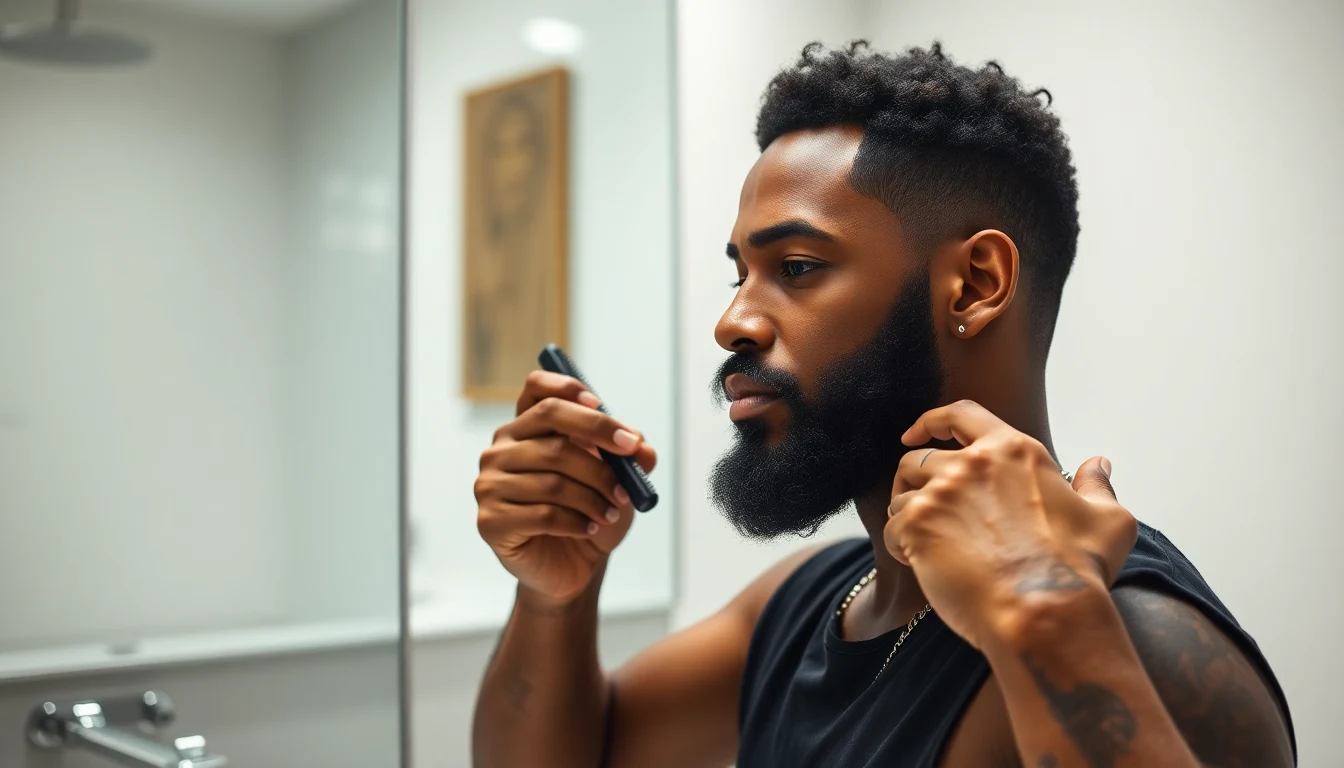
Here is the reality. A six-inch beard on a Black man with 4C facial hair looks like a three-inch beard because of curl shrinkage. That shrinkage can make it difficult to achieve certain styles that require visible length, like a pointed ducktail or a flowing full beard that falls below the chin. Straightening elongates the curl, reveals the true length, and opens up styles that coarse, tightly coiled hair cannot otherwise display.
Common Reasons
- Length reveal: Showing the actual length of your beard that shrinkage hides. A 4C beard can shrink 50-75%, meaning your two-inch beard might actually be four to six inches of hair
- Style versatility: Certain beard shapes, like the Verdi, ducktail, or long full beard, require visible length that curly hair compresses
- Symmetry: Curly beards can grow unevenly when different sections have different curl patterns. Straightening creates a uniform look
- Professional settings: Some brothers prefer a more controlled, polished beard appearance for corporate or client-facing work
- Tangles and maintenance: Loosening tight coils makes it easier to comb through, apply products, and maintain shape between barber visits
When Not to Straighten
- Your beard is shorter than one inch: There is not enough length for a heated tool to grip safely without burning your skin. Use a blow dryer instead
- You have active skin conditions: Eczema, folliculitis, or razor bumps under the beard can be aggravated by heat. Treat the skin first
- Your beard is already damaged: Split ends, dry patches, or breakage means your hair cannot handle additional stress. Focus on moisture restoration first
- You want stick-straight results: Beard hair, especially coarse 4C facial hair, should be elongated, not flattened. Forcing it completely straight looks unnatural and causes the most damage
Types of Beard Straighteners: Which One Is Right for You
There are three main approaches to straightening a beard, and each one carries different tradeoffs for coarse, tightly coiled facial hair.
Heated Beard Brushes
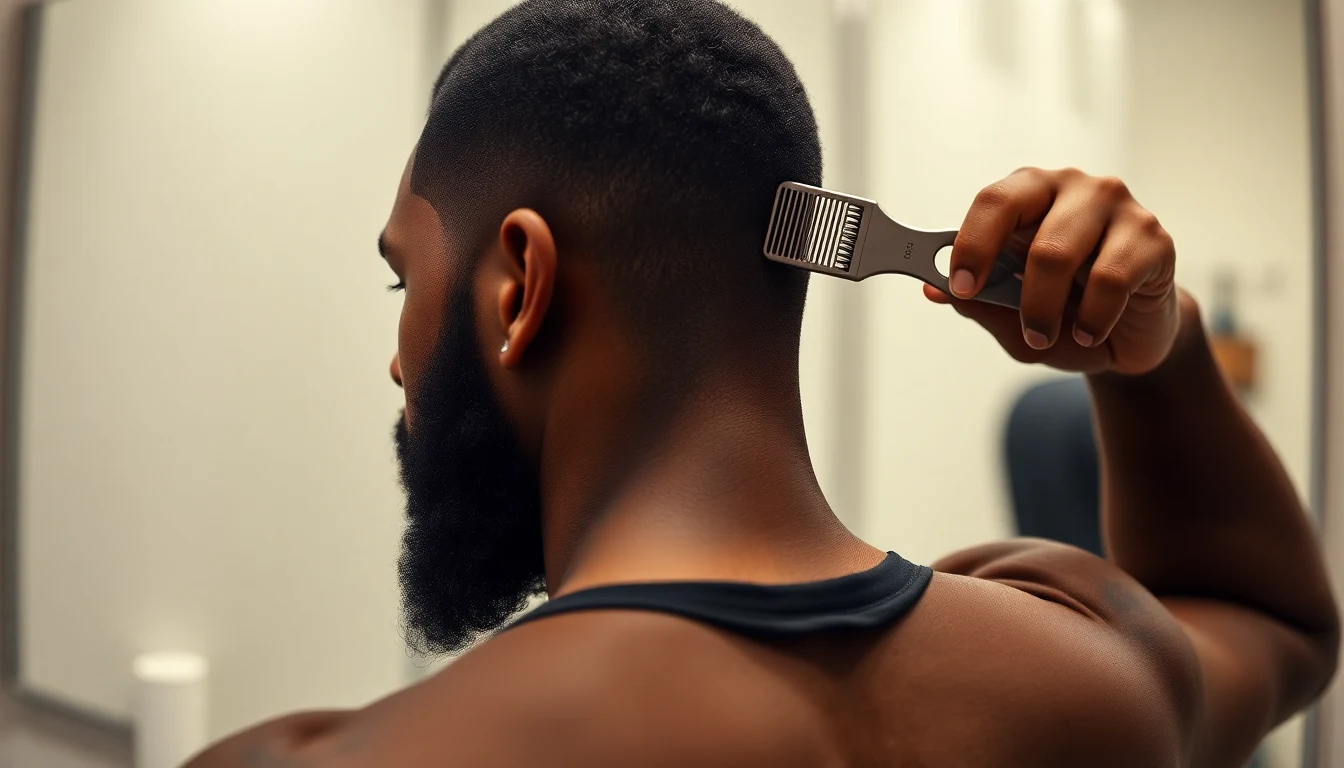
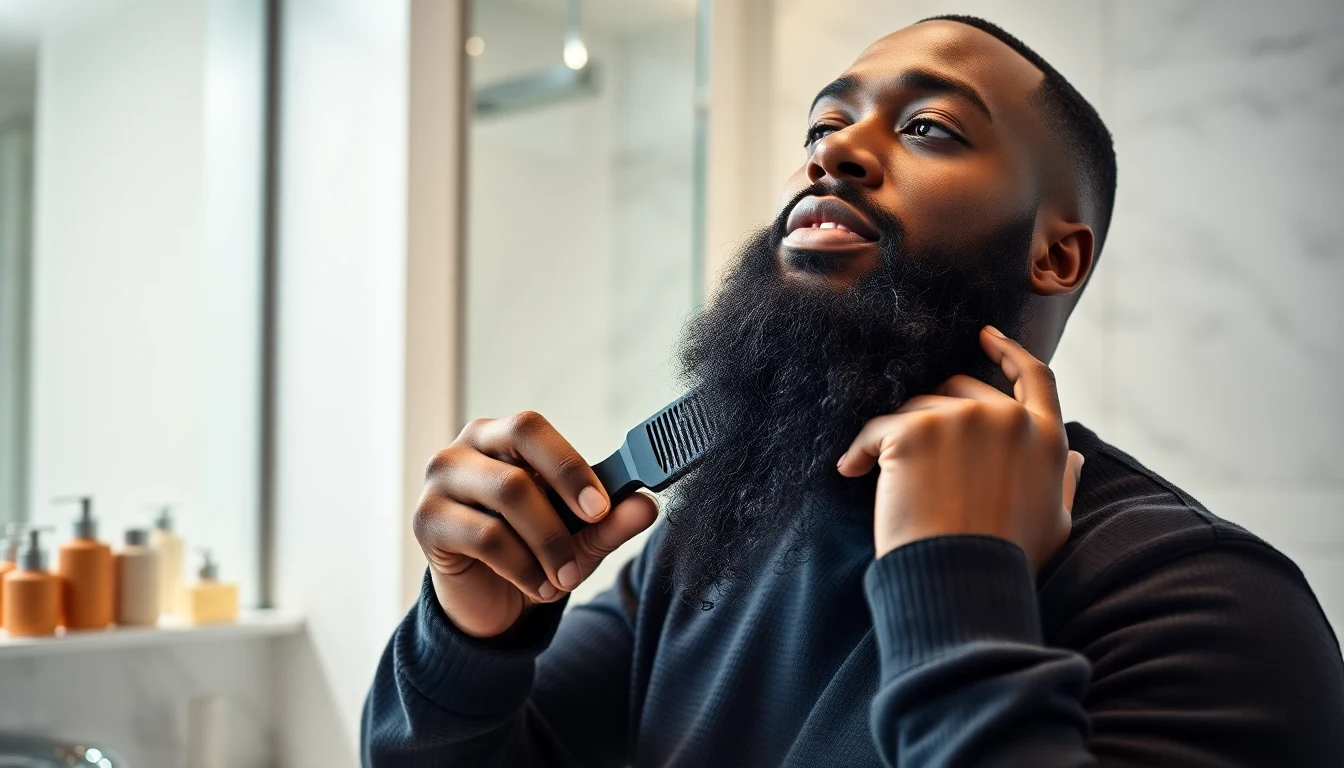
How they work: A heated brush with temperature-controlled ceramic or tourmaline bristles. You run it through your beard like a regular comb, and the heated bristles smooth and elongate the curls as they pass through.
Best for: Most Black men. The bristle design prevents the heating element from making direct contact with your skin, which significantly reduces burn risk on the face, neck, and lips. The brushing motion is intuitive; if you can comb your beard, you can use a heated brush.
Results: Smoothed, elongated curls with a natural-looking finish. You will not get the flat, pin-straight look of a flat iron, but that is actually a good thing for coarse beard hair. The slight wave that remains looks intentional rather than artificial. (We recommend this SFC Natural King Pro-Growth Hair &.)
Drawback: Less straightening power than a flat iron. Very thick, very tightly coiled sections (especially at the chin) may need multiple passes. The brush head can be too wide for precision work on smaller beard styles like goatees.
Mini Flat Irons
How they work: Two heated plates (typically ceramic or titanium) that clamp together on a section of beard hair. You pull the iron slowly through the hair while the plates apply heat and pressure to straighten each section.
Best for: Experienced users who want maximum straightening power and precise control. The narrow plates (half-inch to one-inch wide) navigate the contours of the face better than a standard hair straightener.
Results: The most dramatic straightening of the three methods. Can take 4C beard hair from tight coils to smooth, sleek strands. The results last longer than a heated brush because the direct plate-to-hair contact applies more concentrated heat.
Drawback: Highest burn risk. The hot plates are exposed, and one slip near the lip line or jawline leaves a burn mark that takes days to heal. Also the most drying method because the concentrated heat opens the cuticle more aggressively. Requires more skill and patience to use safely on facial hair.

Blow Dryer with Round Brush
How they work: You wrap a section of beard hair around a round boar bristle brush, then direct warm air from a blow dryer over the brush while pulling it through the hair. The combination of heat and tension elongates the curl.
Best for: Short beards (under two inches), sensitive skin, or brothers who want the gentlest approach. This method distributes heat more evenly and applies less concentrated thermal energy than heated tools.
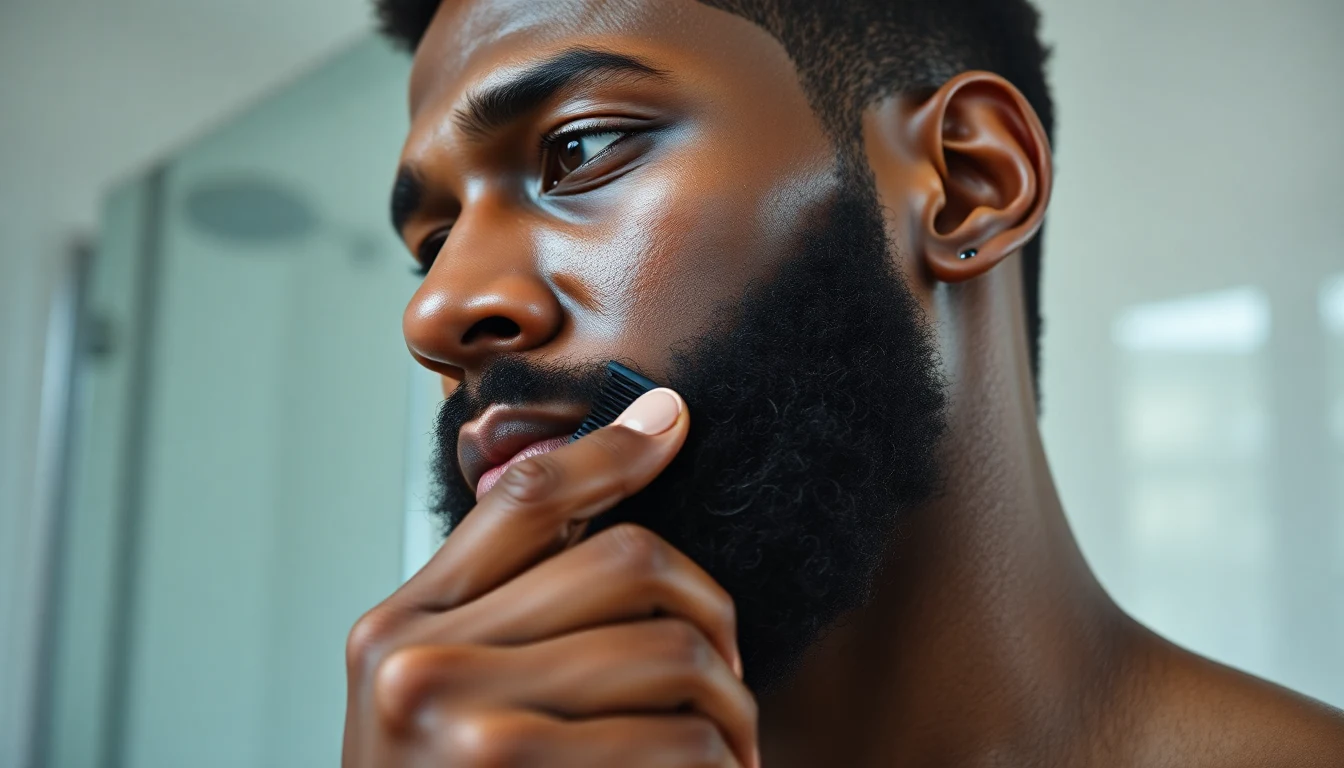
Results: The most natural-looking finish. Your beard looks like a slightly looser version of its natural texture rather than a straightened version. The volume is maintained while the length is extended. This is the method most high-end barbers use because it looks effortless.
Drawback: Requires two free hands and some coordination. The results do not last as long as a heated brush or flat iron, especially in humidity. Takes more time than a single-tool approach. Less effective on very tightly coiled 4C facial hair without multiple passes.
Quick Comparison: Straightening Methods
| Factor | Heated Brush | Mini Flat Iron | Blow Dryer + Brush |
|---|---|---|---|
| Straightening Power | Moderate | High | Mild |
| Natural Look | Good | Fair (can look too straight) | Best |
| Burn Risk | Low | High | Very low |
| Heat Damage Risk | Moderate | High | Low |
| Ease of Use | Easy | Intermediate | Intermediate |
| Time Required | 3-5 minutes | 5-10 minutes | 5-10 minutes |
| Best Beard Length | 1-6+ inches | 2-6+ inches | 0.5-4 inches |
| Portability | Good | Excellent | Poor (two tools) |
| Price Range | $25-65 | $15-40 | $30-60 (dryer + brush) |
Temperature Guide by Beard Type
This is the section that can save your beard. Temperature is the single most important variable in beard straightening, and getting it wrong causes damage that takes months to grow out.
Your barber probably told you that coarse hair needs more heat. That is partially true. Coarse hair tolerates more heat, but tolerating and needing are different things. Start at the low end and increase only if the lower temperature is not producing results after two slow passes.
| Beard Type | Texture Description | Starting Temp | Max Safe Temp | Notes |
|---|---|---|---|---|
| 3A-3B (loose curls) | Defined, springy curls; some wave pattern visible | 280F | 330F | Low heat is usually sufficient. These textures straighten easily. |
| 3C-4A (tight curls) | Tighter coils, pencil-width; significant shrinkage | 300F | 350F | Moderate heat. One to two passes per section. |
| 4B (Z-pattern coils) | Z-shaped bends, less definition; dense growth pattern | 320F | 375F | Firm heat. May need two passes on stubborn sections. |
| 4C (tightest coils) | Tightest possible coils; maximum shrinkage (50-75%) | 330F | 400F | Highest safe range. Never exceed 400F on beard hair. |
| Gray beard hair (any type) | Thicker, more wiry; reduced natural moisture | 300F | 350F | Gray hair is drier and more brittle. Use LOWER heat, not higher. |
Critical rule: Never exceed 400 degrees Fahrenheit on beard hair, regardless of texture. Beard hair is thinner and more fragile than head hair, and the skin underneath is more sensitive. Most head-hair straighteners default to 410-450 degrees, which is too hot for facial use. If your tool does not have adjustable temperature settings, do not use it on your beard.
Gray beard note: This is counterintuitive, but gray beard hair actually needs less heat, not more. Gray hair has lost much of its natural melanin and internal moisture, making it more susceptible to thermal damage. The wiry texture makes it feel like it needs more heat, but what it actually needs is slower passes with moderate heat and a generous application of heat protectant.
Detailed Reviews: The 10 Best Beard Straighteners for Black Men
1. Aberlite Pro Beard Straightener (Best Overall)
Type: Heated brush | Temp range: 300-450F | Heat-up time: 30 seconds | Plates/bristles: Ceramic tourmaline | Price: $35-45
The Aberlite Pro is the beard straightener I recommend most often because it hits the sweet spot of power, safety, and usability that coarse, curly beards demand. The temperature range goes up to 450F, though I rarely take it past 375F on my 4C facial hair. The real advantage is the ceramic tourmaline bristles, which distribute heat more evenly than standard ceramic and generate negative ions that reduce frizz.
What separates the Aberlite from cheaper heated brushes is the bristle layout. The outer guard bristles are not heated, while the inner bristles carry the heat. This two-layer design means you can brush close to your skin without the heating element touching your face. For Black men with tight curls that grow close to the skin surface, this safety buffer is essential.
I can straighten my full beard in about four minutes with three passes on each section. The results last through a full workday and survive moderate Atlanta humidity, which is saying something.
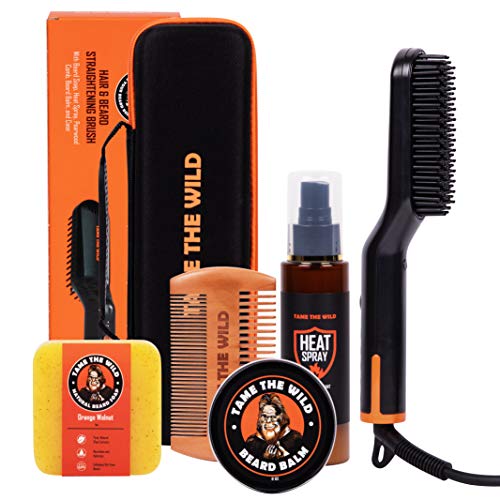
Works for: Most Black men with 3C through 4C beard hair. The wide temperature range accommodates every texture. Fast heat-up time and intuitive design make it accessible for beginners. (We recommend this Tame the Wild Beard Straightener with.)
Does not work for: Very short beards (under one inch). The brush head is too large for precision work on goatees or chin straps. For those styles, use the BaBylissPRO mini iron below.
2. Arkam Premium Beard Straightener (Best Temperature Control)
Type: Heated brush | Temp range: 280-430F | Heat-up time: 30 seconds | Plates/bristles: Ionic ceramic | Price: $30-40
The Arkam’s standout feature is its precision temperature control. Where most heated brushes offer three or four preset levels, the Arkam lets you dial in the exact temperature you want in five-degree increments. For Black men who have learned their beard’s specific temperature sweet spot, this precision is valuable.
The ionic ceramic bristles produce a smooth finish without the static that cheaper tools create, which matters on coarse hair that is already prone to flyaways. The lower end of the temperature range (280F) makes it safe for looser curl patterns and gray beard hair that needs gentler treatment.
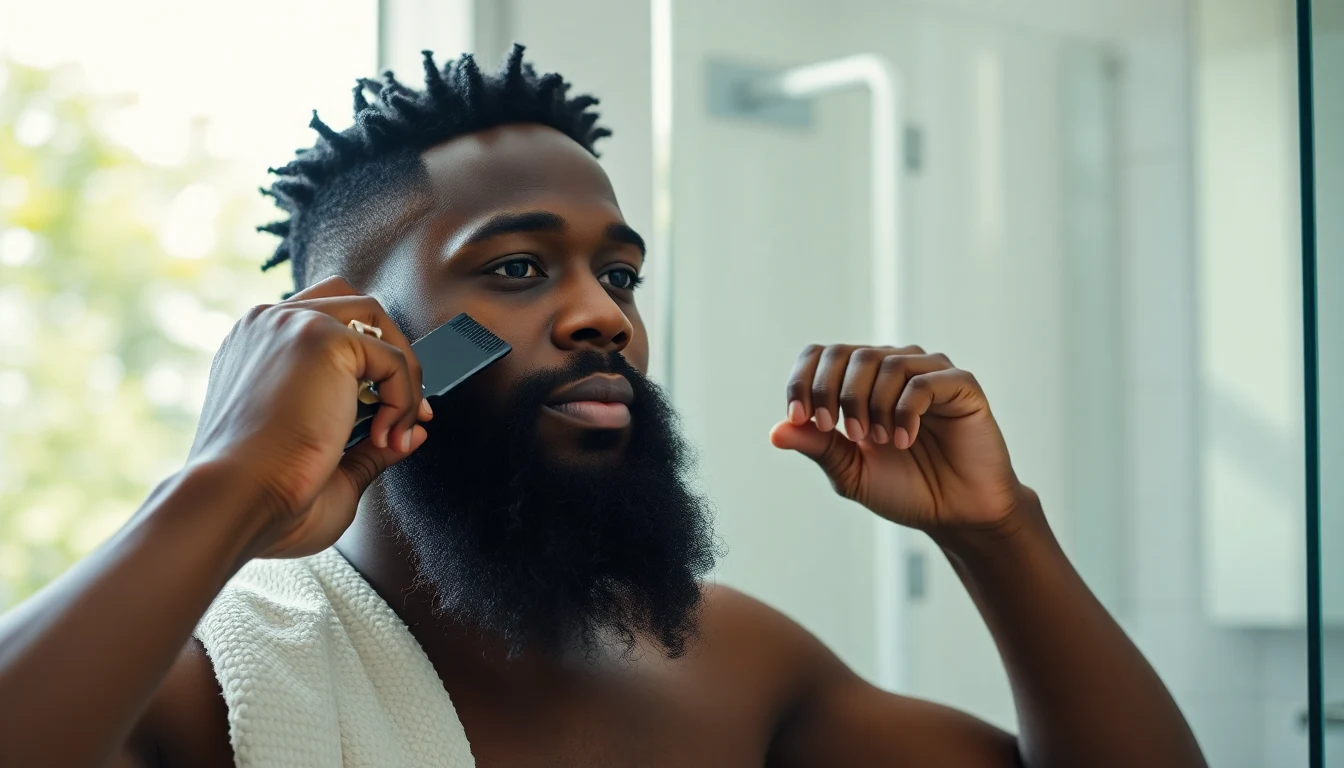
Works for: Brothers who know their exact temperature needs. The precise control and lower minimum temperature make it the safest option for mixed-texture beards where different sections need different heat levels.
Does not work for: Impatient straighteners. The precise temperature control is wasted if you just crank it to the maximum every time. If you want a simple “turn it on and go” tool, the Wild Willies below is more your speed.
3. Wild Willies Beard Straightener (Best Quick-Use Option)
Type: Heated brush | Temp range: 300-400F | Heat-up time: 20 seconds | Plates/bristles: Ceramic | Price: $25-35
Wild Willies built this for the brother who has three minutes between stepping out of the shower and walking out the door. The 20-second heat-up time is the fastest in this roundup, and the simplified three-setting temperature control (low, medium, high) eliminates any decision paralysis. Pick a setting, wait 20 seconds, and start brushing.

The build quality is a step below the Aberlite and Arkam, which is reflected in the lower price. The bristles are standard ceramic rather than tourmaline, so you will get slightly more frizz on very coarse hair. But for the price and the convenience, it delivers solid results that hold through a normal day.
Works for: Budget-conscious brothers. Quick morning routines. Travel (the compact size fits in a Dopp kit). First-time buyers who want to try beard straightening without a major investment.
Does not work for: 4C hair that needs precise temperature control. The three-setting system does not offer the granularity that very coarse, resistant curls sometimes require. If medium is too low and high is too hot, you are stuck.
4. Tame’s Easy Glide Beard Straightener (Best for Extra-Thick Beards)
Type: Heated brush | Temp range: 330-450F | Heat-up time: 30 seconds | Plates/bristles: Ceramic with anti-scald guard | Price: $30-40
Tame’s built this specifically for thick, dense beards. The bristle spacing is wider than most competitors, which allows the brush to pass through high-density coarse hair without snagging or pulling. If you have ever used a heated brush that got stuck in your beard like a rake in wet grass, you understand why bristle spacing matters.
The anti-scald guard is a plastic barrier between the outer bristles and the heating element. It is more pronounced than the Aberlite’s design, creating a larger buffer zone between the heat and your skin. For brothers with very tight 4C curls that grow outward and close to the face, this extra protection matters.
The higher minimum temperature (330F) means this is not ideal for looser curl patterns that straighten at lower heat. It is purpose-built for the coarsest, thickest beard textures.
Works for: Brothers with 4B and 4C beards that are dense enough to break combs. The wider bristle spacing and higher heat floor handle the thickest facial hair without snagging. The anti-scald guard is the most protective in this roundup.
Does not work for: Thin or patchy beards. The wider bristle spacing means less contact with individual hairs, so sparse sections do not get caught by the bristles effectively. Also not ideal for 3A-3B textures; the minimum 330F is unnecessarily high for looser curls.
5. Beardbrand Utility Heated Brush (Best Premium Option)
Type: Heated brush | Temp range: 310-400F | Heat-up time: 45 seconds | Plates/bristles: Tourmaline ceramic with boar bristle outer layer | Price: $50-65
Beardbrand charges a premium, and the build quality justifies it. The dual-material bristle design combines heated tourmaline ceramic inner bristles with natural boar bristle outer bristles. The boar bristles distribute your natural sebum from root to tip while the ceramic bristles apply heat. The result is a beard that looks straightened and naturally conditioned at the same time. (We recommend this Tame the Wild Premium Beard Grooming.)
The 400F maximum is intentionally lower than competitors because Beardbrand designed this for beard preservation, not maximum straightening power. Their philosophy aligns with how I approach beard heat styling: elongate the curl, do not destroy it. If you want a stick-straight beard, this is not your tool. If you want a smooth, controlled, natural-looking beard with visible length, this is the best heated brush you can buy.
Works for: Brothers who prioritize beard health and are willing to invest accordingly. The natural boar bristles add a conditioning element that no other heated brush offers. The lower max temperature provides a built-in safety net against overheating.
Does not work for: Very coarse 4C beards that need temperatures above 400F for effective straightening. Budget shoppers. The Aberlite Pro delivers 85% of the results at 60% of the price.
6. Andis High Heat Press Comb (Best for Maximum Straightening)
Type: Electric press comb | Temp range: Up to 450F (adjustable) | Heat-up time: 60 seconds | Material: Gold-plated ceramic | Price: $30-40
The press comb is a tool with deep roots in Black hair culture. Your grandmother used one on the stove. Andis electrified the concept and gave it adjustable temperature control. This is the most powerful straightening tool on this list. The gold-plated ceramic teeth conduct heat efficiently and glide through hair without the snagging that cheaper combs cause.
I want to be clear: this is an advanced tool. The heated teeth are fully exposed, meaning every surface that touches your beard is at full temperature. There is no safety guard between the heat and your skin. In the hands of someone experienced, the Andis press comb can straighten the coarsest 4C beard hair into a smooth, flowing style that lasts for days. In the hands of a beginner, it will leave burns on your jawline and neck.
If you grew up watching Black women press their hair, you understand the technique: slow, steady pulls with consistent tension. That same technique applies to beard use. Start from the root, clamp the comb close to the skin (without touching the skin), and pull through to the tip in one smooth motion.
Works for: Experienced users who need maximum straightening power on very coarse, resistant facial hair. Brothers who want results that last multiple days without restyling. Anyone familiar with press comb technique from the cultural tradition.
Does not work for: Beginners. First-time beard straighteners. Short beards (you need at least two inches of length to safely use a press comb). Brothers with sensitive skin near the beard line. The burn risk is the highest of any tool on this list. (We recommend this Beard Straightener Grooming Kit for Men,.)
7. BaBylissPRO Nano Titanium Mini Iron (Best Mini Flat Iron)
Type: Mini flat iron | Temp range: Up to 440F | Heat-up time: 30 seconds | Plates: Nano titanium, 1/2 inch | Price: $25-35
BaBylissPRO is a professional salon brand, and the Nano Titanium Mini is the tool I have seen most often in barber stations for beard work. The half-inch titanium plates heat evenly across their entire surface, which eliminates the hot spots that cheaper flat irons create. Hot spots are the primary cause of uneven straightening and localized heat damage on coarse beard hair.

The nano titanium material recovers heat faster than ceramic after each pass, which means the temperature stays consistent even when you are working through thick, dense sections. On 4C facial hair, this heat recovery is critical because thick hair absorbs more thermal energy per pass.
The compact size navigates the chin, jawline, and mustache area precisely. You can straighten individual sections with the control that a heated brush cannot match. For beard styles that require sharp lines and defined shapes, the mini flat iron is the right tool.
Works for: Experienced users who want professional-level precision. Ideal for goatees, Van Dykes, and other detail-oriented beard styles. The half-inch plates are narrow enough for mustache work.
Does not work for: Beginners. Full beards that would take too long to straighten section by section with half-inch plates. Brothers who are nervous about putting hot plates near their face. Use a heated brush first and upgrade to the mini iron once you are comfortable with heat styling.
8. Kent Heated Beard Brush (Best for Sensitive Skin)
Type: Heated brush | Temp range: 300-400F | Heat-up time: 45 seconds | Plates/bristles: Ceramic with extended anti-burn guard | Price: $40-50
Kent has been making brushes in England since 1777, and their heated beard brush carries that heritage forward. The distinguishing feature is the extended anti-burn guard, which creates the widest buffer zone of any heated brush in this roundup between the heating element and your skin. For brothers with sensitive skin, razor bump scarring, or folliculitis under the beard, this extra protection prevents the heat from aggravating existing skin conditions.
The ceramic bristles produce a gentle, even heat distribution that smooths without aggressive straightening. This is not the tool for maximum curl elimination. It is the tool for brothers who want a polished, controlled look without pushing their skin or hair to the limit.
Works for: Sensitive skin. Brothers with ingrown hairs, razor bumps, or eczema under the beard. The extended guard and moderate temperature range prioritize skin safety over maximum straightening power. Good for daily use because the gentler heat causes less cumulative damage.
Does not work for: Very coarse, very tightly coiled beards that need aggressive heat to elongate. The Kent prioritizes gentleness, which means 4C beard hair may need more passes than with the Aberlite or Tame’s. If you want dramatic straightening results, look elsewhere.
9. Conair Mini Pro Flat Iron (Best Budget Flat Iron)
Type: Mini flat iron | Temp range: Up to 410F | Heat-up time: 30 seconds | Plates: Ceramic, 3/4 inch | Price: $15-20
At $15-20, the Conair Mini Pro is the most affordable flat iron on this list and the entry point for brothers who want to test the flat iron approach without investing in the BaBylissPRO. The ceramic plates are wider than the BaBylissPRO (three-quarter inch vs. half inch), which covers more beard area per pass but sacrifices some precision in tight spots like the chin crease.
The 410F maximum temperature is adequate for most beard textures, though brothers with the coarsest 4C facial hair may find it slightly underpowered compared to the 440F BaBylissPRO. The heat distribution is less even than titanium plates, so move the iron steadily without pausing in one spot.
Works for: Budget shoppers. Brothers who want a flat iron for occasional use rather than daily styling. The wider plates make it faster for full-beard straightening than the BaBylissPRO, though less precise.
Does not work for: Daily use on coarse beards. The ceramic plates degrade faster than titanium under repeated high-heat use. Precision styles that require navigating tight facial contours. The three-quarter-inch plates are too wide for mustache detail work.
10. Aberlite Pocket Beard Straightener (Best Travel Option)
Type: Compact heated brush | Temp range: 300-400F | Heat-up time: 30 seconds | Plates/bristles: Ceramic | Price: $25-30
The Aberlite Pocket is a scaled-down version of their Pro model, designed to fit in a travel bag or desk drawer. The brush head is about 60% the size of the full Pro, which makes it easier to pack but limits how much beard you can cover in a single pass. For brothers who straighten at home with a full-size tool but need something for travel or midday touch-ups at the office, this fills the gap.
The temperature range and ceramic bristle technology are identical to the Pro, which means you are not sacrificing heat quality for portability. What you lose is coverage area and ergonomics. The smaller handle is less comfortable during a full straightening session, but for a quick three-minute touch-up, it works fine.
Works for: Travel. Office touch-ups. As a secondary tool to complement a full-size straightener at home. Brothers with shorter beards (one to three inches) where the smaller brush head provides adequate coverage.
Does not work for: Primary daily use on a full, thick beard. The smaller brush head turns a four-minute routine into a seven-minute routine. Not worth it as your only straightener unless portability is your top priority.
How to Straighten Your Beard: Step-by-Step for Coarse, Curly Hair
The technique matters as much as the tool. I have seen brothers with the best straightener on the market get bad results because they skipped steps or used the wrong approach for their hair type.
Step 1: Start with a Clean, Dry Beard
Wash your beard with a sulfate-free beard shampoo and towel dry completely. Your beard must be fully dry before applying heat. Straightening wet or damp coarse hair causes steam damage inside the hair shaft, which is worse than heat damage from a dry application. The steam literally boils the moisture inside the hair, causing bubbles in the cortex that weaken the structure.
If you do not have time for a full wash, at minimum brush out any tangles and ensure your beard is not damp from sweat or product application.
Step 2: Apply Heat Protectant
Spray a heat protectant evenly throughout your beard, making sure it reaches the inner layers, not just the surface. Heat protectant creates a thermal barrier between the tool and your hair, reducing the effective temperature your hair experiences by 20-40 degrees. On coarse hair that you are already pushing to 350-375F, that buffer can be the difference between healthy straightening and damage.
Do not use beard oil as a substitute for heat protectant. Beard oil conducts heat rather than blocking it. Applying oil before heat styling can actually increase thermal damage by heating the oil on your hair to temperatures that cook the cuticle.
Step 3: Comb Through First
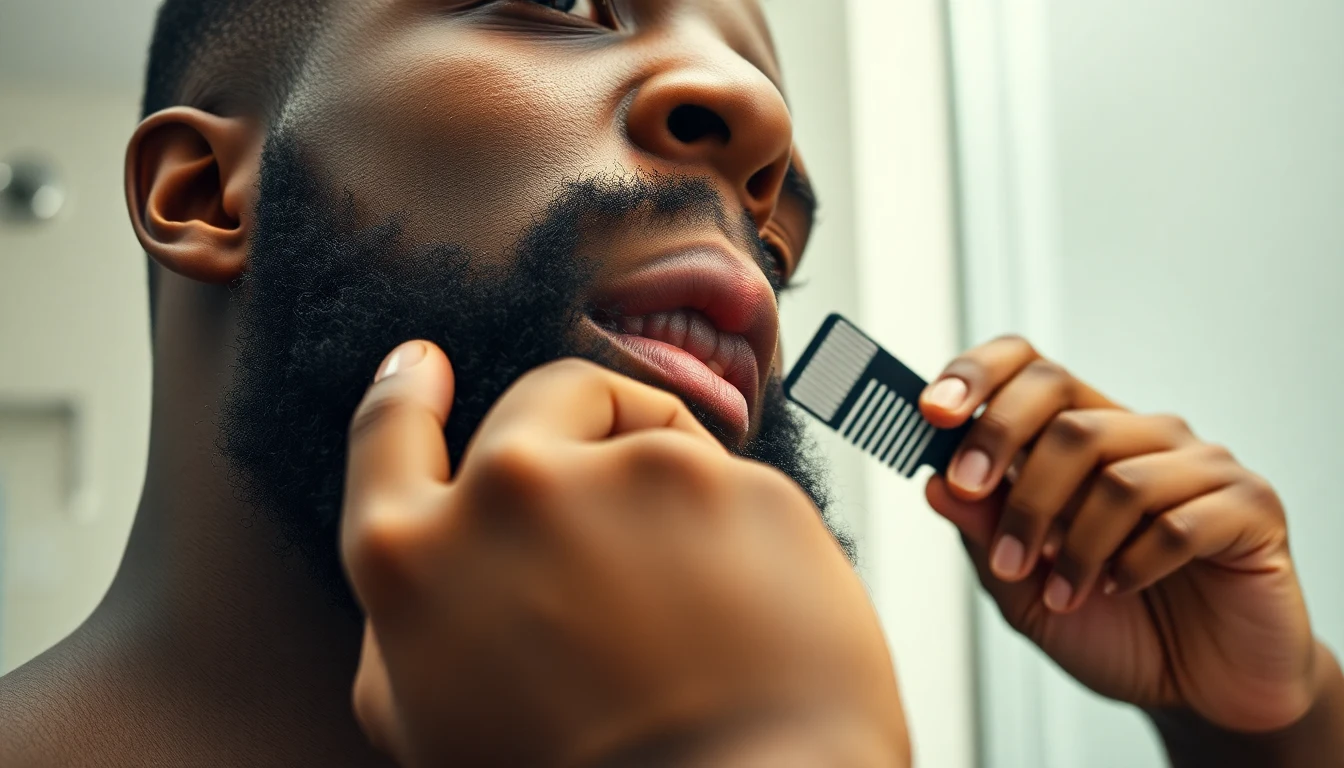
Before you turn on any heated tool, comb your entire beard with a wide-tooth comb to remove tangles. Pulling a heated brush or flat iron through tangled coarse hair does two things, neither of them good: it rips out hair at the tangle point, and it concentrates heat on the knotted section because the tool pauses there. Detangle cold, then straighten smooth.
Step 4: Section Your Beard (For Full Beards)
If your beard is longer than two inches, divide it into sections: left cheek, right cheek, chin, and mustache. Work one section at a time. This ensures even heat distribution and prevents you from going over already-straightened sections multiple times, which causes unnecessary heat exposure. When it comes to best beard straightener for black, technique matters most.
Step 5: Straighten with the Correct Technique
For heated brushes: Start at the root and brush downward through the hair in slow, steady strokes. Maintain light tension by pulling slightly as you brush. Do not press the brush hard against your skin. Two slow passes are better than four fast passes because slow passes apply heat more evenly along the entire hair strand.
For mini flat irons: Clamp the iron on a small section of hair about half an inch from the root. Close the plates firmly (but not with a death grip) and slide slowly from root to tip. One smooth pass per section. If the section needs a second pass, wait five seconds for the hair to cool before going over it again.
For blow dryer and round brush: Wrap a section of beard hair around the round brush. Aim the dryer nozzle at the wrapped section from a distance of three to four inches. Use medium heat, not high. Rotate the brush slowly as the warm air flows over the hair. Pull the brush through once the section feels warm and begins to relax.
Step 6: Apply Beard Oil to Finish
Once your entire beard is straightened, apply three to five drops of beard oil to replenish moisture, add natural shine, and set the style. Work the oil from root to tip using your fingers, not a brush. Brushing immediately after straightening can disrupt the smoothed cuticle and introduce frizz.
Avoid heavy butters or waxes immediately after straightening. The weight can cause the beard to flatten unnaturally. A lightweight oil like argan or jojoba is ideal because it absorbs quickly without adding heaviness. When it comes to best beard straightener for black, technique matters most.
Preventing Heat Damage on Coarse, Curly Beard Hair
Heat damage on coarse beard hair is not theoretical. I have seen it on myself and on friends who ignored the warning signs. Once the damage is done, you cannot reverse it. The damaged hair must grow out and be trimmed away. Prevention is the only strategy.
What Heat Damage Looks Like
- Loss of curl pattern: Sections of your beard that used to curl tightly now hang limp or straight even after washing. The heat has permanently broken the disulfide bonds that create your natural curl
- Split ends: The tips of your beard hair split into two or more strands. This is visible under close inspection and feels rough when you run your fingers through it
- Dry, straw-like texture: Even with daily oil application, the hair feels dry and brittle. The cuticle has been permanently opened, allowing moisture to escape faster than you can replace it
- Breakage at mid-shaft: Hair breaks in the middle of the strand rather than at the tip. This indicates structural weakness in the cortex from repeated thermal stress
- Color change: Heat-damaged beard hair can develop a reddish or lighter hue, especially on naturally dark hair. This is the melanin being degraded by excessive heat
Prevention Rules
- Always use heat protectant. Every single time. Not optional. Not “sometimes.” Every time.
- Start low, increase if needed. Begin 30-50 degrees below your maximum safe temperature. If one slow pass at 330F straightens a section, you do not need 375F.
- Limit frequency. Two to three times per week maximum. Give your beard at least one full day between heat styling sessions for the hair to recover moisture.
- One to two passes per section. If two slow passes do not straighten a section, the issue is usually technique or temperature, not number of passes. A third and fourth pass on the same section dramatically increases damage risk.
- Never straighten wet or damp hair. Steam damage is more destructive than heat damage because it occurs inside the hair shaft where protectants cannot reach.
- Deep condition weekly. Use a beard mask or deep conditioning treatment once per week to replenish the protein and moisture that heat styling depletes. Focus on products with keratin, argan oil, or shea butter.
- Replace your tool when it degrades. Ceramic plates and bristles lose their coating over time, creating uneven heat distribution and hot spots. If your tool is more than two years old and you use it regularly, the plates may be degraded.
Recovery Plan for Heat-Damaged Beards
If you are already dealing with heat damage, here is the protocol.
- Stop all heat styling immediately. No exceptions. No “just one more time.” The damage compounds with each additional heat application.
- Trim the split ends. Use a quality beard trimmer to remove the damaged tips. Even a quarter-inch trim removes the worst of the splits and prevents the damage from traveling up the hair shaft.
- Apply beard oil twice daily. Morning and night. Choose an oil with argan, jojoba, or avocado oil base. These penetrate the hair shaft rather than just coating the surface.
- Deep condition weekly. Apply a protein-rich beard mask, wrap your beard in a warm towel, and leave it for 15-20 minutes. Rinse with cool water.
- Wait. Beard hair grows approximately half an inch per month. Depending on your beard length and the extent of the damage, full recovery takes three to six months. The damaged hair grows out and is replaced by healthy new growth.
The Blow Dryer and Round Brush Technique (Detailed Guide)
This method deserves its own section because it is the most versatile, the gentlest, and the technique that professional barbers use most often on clients. If you are not ready for a heated brush or flat iron, start here.
What You Need
- A blow dryer with a concentrator nozzle (the narrow attachment that directs airflow)
- A round boar bristle brush (one to one-and-a-half inch diameter for beards)
- Heat protectant spray
- Beard oil for finishing
The Process
- Start with a clean, towel-dried beard. Unlike heated tools, the blow dryer method works best when your beard is about 80% dry. The remaining moisture provides the flexibility needed for the brush to shape the hair.
- Spray heat protectant throughout. Focus on the tips, which dry fastest and are most susceptible to heat damage.
- Attach the concentrator nozzle. Without it, the air disperses too widely and does not apply enough directed heat to each section.
- Set the dryer to medium heat, high speed. You want airflow more than temperature. The brush provides the tension; the air provides the heat. This combination is gentler than a heated tool because the heat is not making direct contact with the hair.
- Wrap a section of beard hair around the brush. Starting at the root, place the brush under the beard section and wrap the hair over the bristles.
- Direct the airflow along the hair. Point the nozzle down (root to tip) at a three-to-four-inch distance. This direction smooths the cuticle rather than roughing it up. Move the dryer slowly along the wrapped section for five to eight seconds.
- Pull through. While the hair is still warm, slowly pull the brush through to the tip. The combination of heat and tension elongates the curl as it cools.
- Repeat for each section. Work through your entire beard, focusing on the sections with the tightest curls first.
- Finish with a blast of cool air. Switch the dryer to cool and pass it over your entire beard. The cool air sets the style by closing the cuticle.
- Apply beard oil. Three to five drops, worked root to tip with your fingers.
The blow dryer method typically takes seven to ten minutes for a full beard, compared to three to five minutes for a heated brush. The results are subtler. Your beard will look like a more relaxed version of its natural texture rather than a straightened version. For many brothers, that natural-looking elongation is exactly what they want.
Common Mistakes Black Men Make When Straightening Their Beards
1. Using Head-Hair Temperatures on Beard Hair
Your beard is not your head. Head hair can tolerate 410-450F because the scalp produces more sebum and head hair follicles produce thicker strands with more internal moisture. Beard hair is thinner per strand, drier by default, and the underlying facial skin is more sensitive. Using your head-hair temperature settings on your beard is the fastest path to damage.
2. Straightening a Wet Beard
Some brothers hop out of the shower and immediately reach for the heated brush. This causes steam damage, which is worse than standard heat damage because it occurs inside the hair shaft. The water trapped in the cortex literally boils when it meets a 350F heating element. Dry your beard completely before applying any heated tool.
3. Skipping Heat Protectant
I hear this one all the time. “It’s just my beard, it’s not that serious.” It is that serious. The skin on your face is thinner and more sensitive than your scalp. The hair on your face is more fragile than the hair on your head. Heat protectant reduces effective temperature by 20-40 degrees and prevents direct thermal contact between the tool and the cuticle. It takes ten seconds to apply. There is no valid excuse for skipping it.
4. Multiple Passes on the Same Section
When a section does not straighten on the first pass, the instinct is to go over it again. And again. And again. Each pass applies cumulative heat that the hair does not fully cool from between passes. By the third or fourth pass, you are applying heat to already-stressed hair that has not recovered. The result is localized heat damage that shows up as a dry, straight section surrounded by healthy curls. Two slow passes maximum. If it does not straighten, increase the temperature by 10 degrees rather than adding passes.
5. Straightening Every Day
Your beard needs recovery days. Straightening daily does not give the hair time to reabsorb moisture, and the cumulative thermal stress weakens the hair structure over weeks. Two to three sessions per week is the sustainable maximum for coarse beard hair. On off days, use a light beard balm to control shape without heat.
6. Forgetting to Clean the Tool
Beard oil, product residue, and dead skin cells accumulate on heated brush bristles and flat iron plates. This buildup degrades heat distribution, creates hot spots, and transfers old product onto clean hair. Wipe your tool down with a damp cloth after every use. Deep clean the bristles with rubbing alcohol once a week.
7. Choosing the Wrong Tool for Your Beard Length
A heated brush on a half-inch beard will burn your face. A mini flat iron on a six-inch full beard will take 20 minutes and test your patience. Match the tool to the length: blow dryer for short beards (under one inch), heated brush for medium beards (one to four inches), and flat iron or press comb for long beards (four inches and up) that need section-by-section work.
Frequently Asked Questions
Is it safe to straighten a Black man’s beard every day?
Daily straightening is not recommended for coarse, curly beard hair. The repeated heat exposure strips moisture from already dry facial hair, leading to brittleness, split ends, and permanent loss of curl pattern over time. Two to three times per week is the maximum frequency I recommend, and even that requires consistent use of heat protectant spray and daily beard oil application. If you need a straightened look daily, consider using a blow dryer on low heat with a round brush instead of a heated brush or flat iron, as this method applies less concentrated heat to the hair.
What temperature should I use on coarse, curly beard hair?
Start at 300 to 330 degrees Fahrenheit and increase only if needed. Coarse beard hair is thicker in diameter and has a dense cuticle, which means it tolerates slightly higher heat than fine hair. However, higher tolerance does not mean higher is better. Most coarse beard hair straightens effectively between 330 and 375 degrees. Never exceed 400 degrees on facial hair. If your beard does not respond at 375, the issue is usually technique (not enough passes with proper tension) rather than insufficient heat. Increasing beyond 375 risks thermal damage that cannot be reversed.
Will straightening my beard permanently change my curl pattern?
Occasional straightening with proper heat protection will not permanently alter your curl pattern. The straightened effect is temporary and reverts to your natural texture after your next wash. However, repeated overheating (high temperatures without protectant, multiple daily passes, or straightening wet hair) can cause irreversible damage to the hair’s internal protein structure, which weakens the curl pattern over time. If you notice your beard is not curling back as tightly as it used to after washing, you are likely experiencing heat damage. Stop straightening for four to six weeks and focus on deep conditioning treatments.
Should I straighten my beard before or after applying beard oil?
Apply heat protectant before straightening and beard oil after. Using beard oil before heat styling is a common mistake because oil conducts heat and can essentially fry your beard hair at temperatures that would otherwise be safe. Heat protectant spray is formulated to create a barrier between the heat tool and the hair without conducting additional thermal energy. After straightening, apply beard oil to lock in moisture, add shine, and keep the straightened style looking natural rather than dry and stiff.
What is the difference between a beard straightening brush and a mini flat iron?
A beard straightening brush is a heated brush with temperature-controlled bristles that you run through your beard like a regular comb. It is safer for beginners because the bristles prevent direct contact between the heating element and your skin. A mini flat iron has two heated plates that clamp down on the hair, providing more intense heat and more dramatic straightening results. The flat iron gives you more control over stubborn sections but carries a higher risk of burns on the face and neck if you are not experienced. For most Black men, a heated brush provides sufficient straightening for daily wear without the burn risk.
Can I use a regular hair straightener on my beard?
You can, but a regular full-size flat iron is too large for precise beard work. The wide plates cannot navigate around the chin, jawline, or upper lip without risking burns to your face. If you already own a flat iron and want to test beard straightening before investing in a dedicated tool, use it only on the larger beard sections below the jawline and use extreme caution near the face. For proper beard straightening, a mini flat iron with half-inch to one-inch plates or a dedicated heated beard brush is significantly safer and more effective for the contours of your face.
How do I fix heat-damaged beard hair?
Heat damage cannot be fully reversed because the high temperature permanently alters the protein bonds inside the hair shaft. What you can do is manage the damage and prevent it from worsening. Stop all heat styling immediately. Apply a deep conditioning treatment or beard mask with keratin and argan oil once per week. Use beard oil daily, focusing on the damaged sections. Trim split ends every two to three weeks with a quality beard trimmer to prevent the damage from traveling up the hair shaft. Over time, the damaged sections will be replaced by new growth. Depending on your beard length and growth rate, a full recovery takes three to six months of no-heat care.
Budget Breakdown: Good, Better, Best
| Budget Level | Product | Type | Price | Best For |
|---|---|---|---|---|
| Budget ($15-25) | Conair Mini Pro | Mini flat iron | $15-20 | Affordable flat iron entry point |
| Budget ($15-25) | Wild Willies | Heated brush | $25-35 | Quick-use budget heated brush |
| Mid-range ($30-45) | Aberlite Pro | Heated brush | $35-45 | Best overall value and performance |
| Mid-range ($30-45) | BaBylissPRO Mini | Mini flat iron | $25-35 | Professional-grade flat iron |
| Premium ($50+) | Beardbrand Heated Brush | Heated brush | $50-65 | Best build quality, healthiest results |
My recommendation for most Black men: Start with the Aberlite Pro. At $35-45, it hits the price-to-performance sweet spot. The temperature range handles every beard texture from 3C to 4C, the safety guard prevents burns, and the ceramic tourmaline bristles reduce frizz on coarse hair. If you decide you want more precision after getting comfortable with heat styling, add the BaBylissPRO Mini Iron for detail work on specific sections.
Final Recommendations
Straightening a coarse, curly beard is a skill, not just a purchase. The right tool matters, but the technique, temperature discipline, and post-styling care are what separate a healthy, styled beard from a heat-damaged one. Here is what you need to remember.
- Best overall: Aberlite Pro for the combination of safety, performance, and value that works across all coarse beard textures
- Best for precision: BaBylissPRO Nano Titanium Mini Iron for professional-grade control on detail-oriented beard styles
- Best for sensitive skin: Kent Heated Beard Brush for the widest safety guard and gentlest heat approach
- Best for thick, dense beards: Tame’s Easy Glide for the wider bristle spacing that handles high-density 4C facial hair
- Best gentlest method: Blow dryer with a round boar bristle brush for the most natural-looking results with the lowest damage risk
Start with lower temperatures than you think you need. Use heat protectant every single time. Limit yourself to two to three sessions per week. And keep your beard moisturized with daily beard oil application. Follow those four rules and your beard stays healthy regardless of which tool you choose.
If you are building out your full beard grooming toolkit, pair your straightener with the right beard trimmer for shape maintenance, check our beard styles guide for style inspiration, and explore beard growth products if you are still filling in. For brothers with patchy beards, straightening can actually help by making existing hair look longer and fuller, which reduces the appearance of thin spots.
Stay sharp.