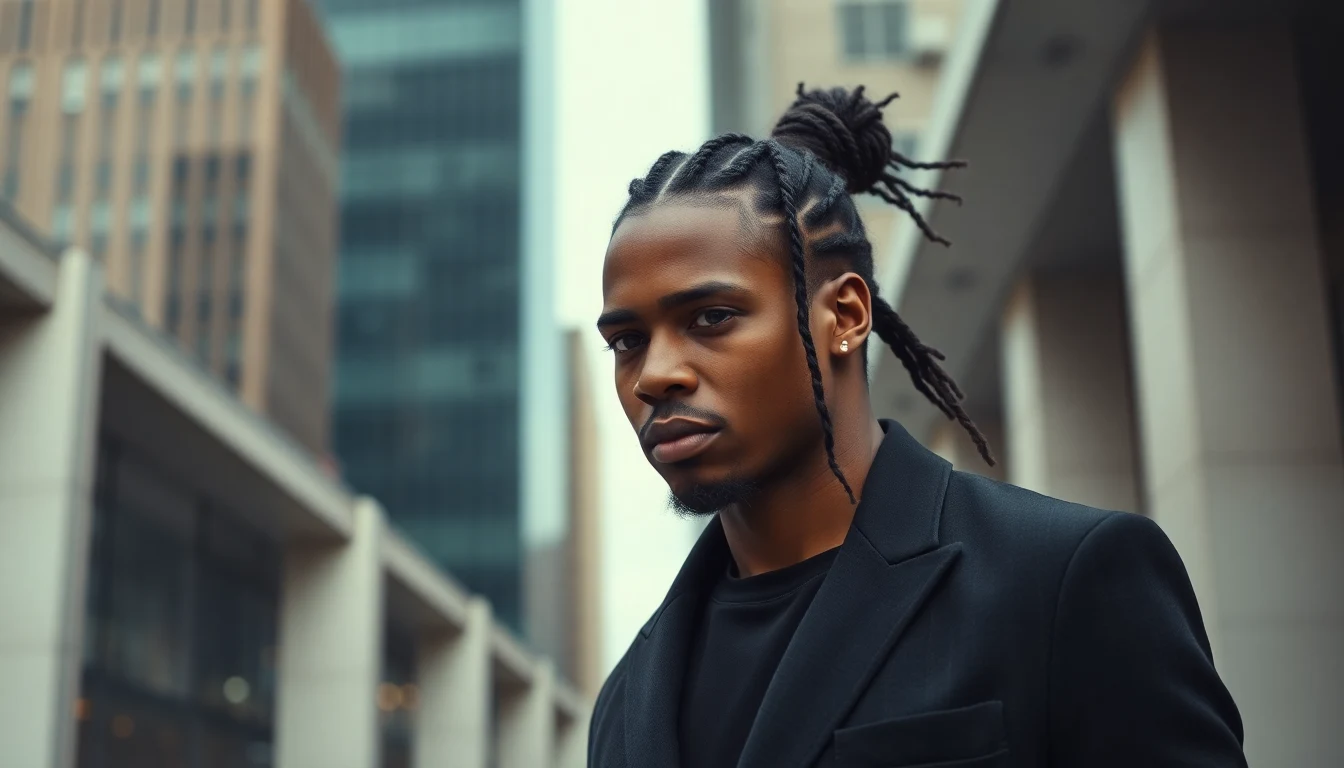
If you want to master long hairstyles for black men, this guide covers everything you need to know. Last updated: February 2026 by Darius Washington, Black Men’s Grooming Editor
I spent 14 months growing my hair out in 2021. Months three through six almost broke me. The awkward stage is real, and nobody warns you about how many times you will stare at your head in the mirror and consider reaching for the clippers. I did not cut it. And when I finally had enough length to rock a twist-out that hit my jawline, I understood why every man who has grown his hair out says the same thing: it was worth it. Long hairstyles for Black men are not just about length. They are about the patience, the routine, and the reward of watching your hair become something that turns heads.
This guide covers 20 long styles with realistic timelines, maintenance levels, and product recommendations. I also included an awkward stage survival section because that stretch of time is where most men give up. Do not give up.
If you only read one section, jump to the awkward stage survival guide. That is where the real battle happens.
The Growing Timeline: What to Expect: Long Hairstyles For Black Men
Before we talk about styles, let me set expectations. Black hair grows at the same rate as every other hair type: roughly half an inch per month, or about six inches per year. The reason it looks like it grows slower is shrinkage. 4C hair can shrink up to 75% of its actual length. That means six inches of 4C hair looks like one and a half inches until you stretch it out.
Length retention, not growth rate, is the real challenge. Your hair is growing. The question is whether it is breaking off as fast as it grows. Moisture, protective styling, and gentle handling are the three pillars of keeping every inch you grow.
Here is a realistic timeline based on 4B/4C hair textures:
| Time | Approximate Length | What It Looks Like | Available Styles |
|---|---|---|---|
| Month 1-2 | 0.5-1 inch | Growing out a fade or short cut. Texture is visible but length is minimal. | TWA (teeny weeny afro), short twists |
| Month 3-6 | 1.5-3 inches | The awkward stage. Hair sticks out, does not lay flat, looks unfinished. | Two-strand twists, finger coils, sponge curls, flat twists |
| Month 6-9 | 3-4.5 inches | Starting to show real length when stretched. Frohawk territory. | Frohawk, twist-out, bantu knot-out, starter locs |
| Month 9-12 | 4.5-6 inches | Chin-length when stretched. Visible length even with shrinkage. | Afro, braids, twists, loc’d styles, man bun (tight) |
| Month 12-18 | 6-9 inches | Shoulder-length when stretched. Full range of long styles available. | All styles in this guide |
| Month 18-24 | 9-12 inches | Past the shoulders when stretched. Established long hair. | All styles, plus ponytails, half-up half-down |
If you are starting from a buzz cut, give yourself a full 12 months before judging whether long hair works for you. Most of the styles in this guide require at least six inches of stretched length. Be patient. If you want a head start on the growing process, our how to grow 4C hair guide covers the full regimen.
20 Long Styles Worth Growing Out
1. Traditional Locs (Various Stages)
Locs are the gold standard of long hairstyles for Black men. They start as twisted or coiled sections of hair that mat and lock together over time, forming permanent ropes of hair. The journey from starter locs to mature locs takes two or more years, but the patience pays off with a style that is low-maintenance, deeply cultural, and looks better the longer you wear it. (We recommend this Cremo Spice & Black Vanilla 2-in-1.)
Our full how to get dreads guide covers starting methods in depth. For this article, here is what matters: traditional locs (palm-rolled or two-strand twist started) give you uniform, neat sections. They require retwisting every four to six weeks during the first two years to maintain shape.
Growth requirement: Start with at least two to three inches of hair. The loc journey itself adds 12 to 24+ months before they look “long.”
Maintenance: Wash every 10 to 14 days with a residue-free shampoo. Retwist every four to six weeks. Moisturize with a lightweight oil (jojoba, grapeseed). Avoid heavy butters and waxes that cause buildup inside the loc.
Best for: Men who want a long-term commitment style. Locs reward patience. If you want something you can undo next month, skip to the twist-out.
2. Two-Strand Twists
Two-strand twists wrap two sections of hair around each other to create rope-like coils. Unlike locs, twists are temporary. You can unravel them for a twist-out, redo them in a new pattern, or take them out completely. That versatility makes them one of the most popular long styles.
At six or more inches of length, two-strand twists hang freely and swing when you move. Shorter twists (three to four inches) stand up and can be shaped into a mohawk or other structured style.
Growth requirement: Minimum three inches for short twists. Six or more inches for hanging twists.
Maintenance: Retwist every five to seven days or as needed. Use Cantu Shea Butter Leave-In Repair Cream as a base before twisting for moisture and hold. Sleep in a satin bonnet or on a satin pillowcase to reduce frizz.
Best for: Men who want a defined, structured look that can be changed weekly. Works on all 4-type textures.
3. Braids (Box Braids)
Box braids section the hair into squares (or triangles) and braid each section from root to tip. On long natural hair, the braids can reach the shoulders or below. This is a protective style that tucks your ends away and reduces daily manipulation, which directly supports length retention.
Growth requirement: Minimum four inches for short box braids. Six or more inches for medium to long braids without extensions. With extensions, you can start with three or more inches of natural hair.
Maintenance: Braids last two to four weeks before they need redoing. Keep the scalp moisturized with a lightweight oil. Wash every seven to 10 days by diluting sulfate-free shampoo in water and applying to the scalp, then rinsing thoroughly. Do not rub the braids themselves.
Best for: Men who want a protective style that lasts weeks, not days. Box braids reduce daily styling time to nearly zero.
4. The Afro
The afro is the original long hairstyle for Black men and it remains the most powerful statement you can make with your hair. No manipulation. No straightening. Just your natural coils grown out and shaped into a rounded crown of hair.
Growing a full afro from a short cut takes six to 12 months depending on your target size. The shape requires regular trimming to maintain roundness, which seems counterintuitive when you are trying to grow it out. But an untrimmed afro becomes lopsided because hair grows at different rates across your head. Our guide on how to grow an afro covers this in detail.
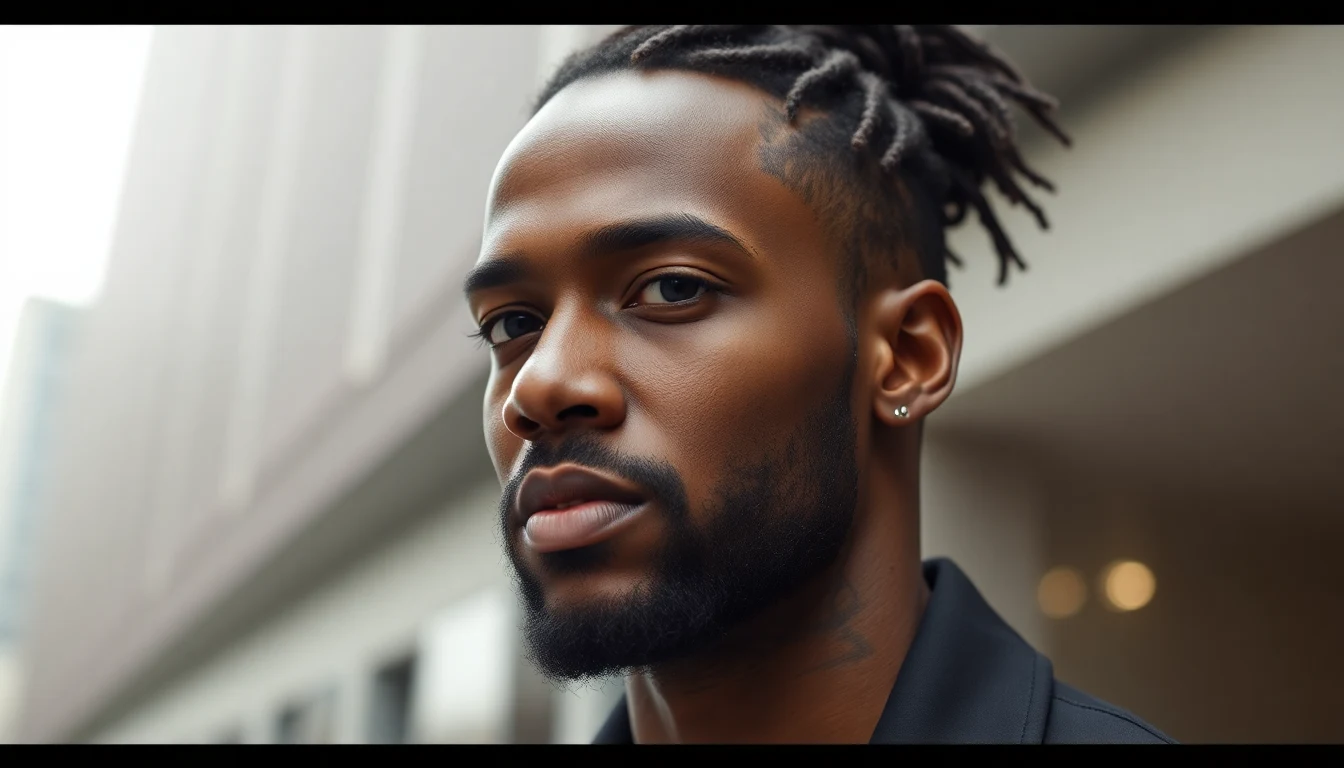
Growth requirement: Minimum four inches for a visible afro. Six or more inches for a full, round shape. Eight or more inches for a large statement afro.
Maintenance: Daily moisture is mandatory. Apply Mielle Pomegranate & Honey Leave-In every morning, focusing on the ends. Pick out the afro with a wide-tooth pick for volume. Deep condition weekly. Trim every eight to 12 weeks for shape.
Best for: Men who want to celebrate their natural texture at maximum volume. Round and oval face shapes carry the afro best because the rounded shape complements their features.
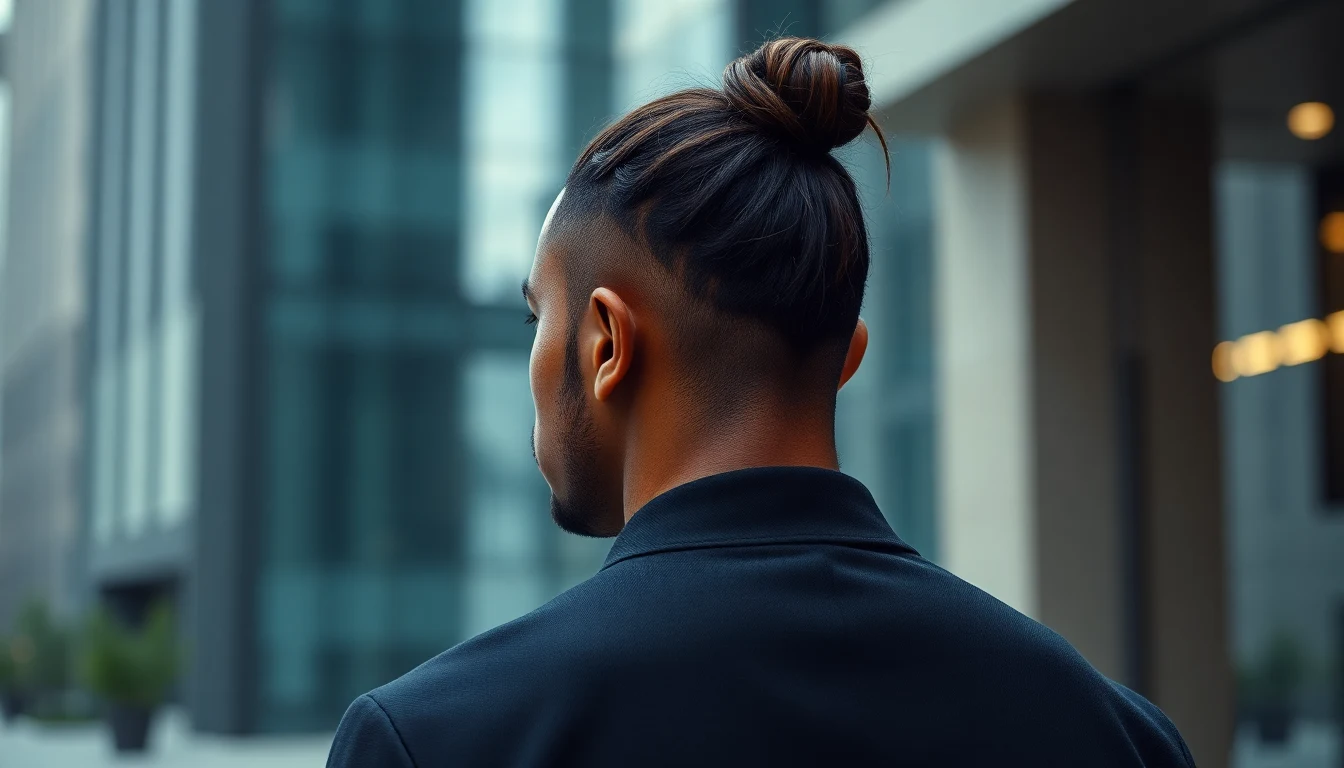
5. Man Bun
The man bun gathers all of your hair at the crown or back of the head and secures it with a hair tie. On textured hair, the man bun has a fuller, rounder shape than it does on straight hair, which is a visual advantage. It keeps hair out of your face and looks polished with minimal effort.
Growth requirement: Minimum six inches of stretched length, ideally eight or more inches for a secure bun that does not need constant re-tying.
Maintenance: Low daily effort. Moisturize in the morning, gather, tie. Use satin or silk-covered hair ties to avoid breakage at the tie point. Do not pull the bun too tight. Traction alopecia (hair loss from pulling) is a real risk with tight buns worn daily. Alternate between a bun and wearing your hair down.
Best for: Men with six or more inches of hair who want a quick, clean look for work or casual settings. All face shapes work with a man bun because the pulled-back style exposes your facial structure.
6. Ponytail
The ponytail is the man bun’s more relaxed cousin. Gather the hair at the back and let it hang instead of wrapping it into a bun. On textured hair, a ponytail has volume and movement that straight-hair ponytails lack. The natural texture creates a puff at the end that looks intentional and full.
Growth requirement: Minimum eight inches of stretched length. Shorter than that and the ponytail is too small to hold.
Maintenance: Same as the man bun. Moisturize, tie back, go. Use satin hair ties. Avoid pulling too tight. Alternate with other styles to prevent traction stress.
Best for: Men with longer hair who want the simplest possible daily routine. Works especially well on locs, twists, and stretched natural hair.
7. Free-Form Locs
Free-form locs are locs that form without retwisting, without palm-rolling, without any manipulation at all. You wash your hair, maybe separate sections to prevent them from combining into one massive loc, and let nature do the rest. The result is irregular, organic, and unique to your head.
Free-form locs are the lowest-maintenance long style on this list. They are also the least predictable. Some locs will be thick. Some will be thin. They will not be uniform. If uniformity matters to you, go with traditional locs instead.
Growth requirement: Start with any length. Free-form locs begin forming as soon as you stop combing and brushing. The visible “loc look” develops between months three and nine.
Maintenance: Wash every seven to 14 days. Separate locs that are combining if you want to keep them distinct. Moisturize with a light spray (water and oil mix). That is it. No retwisting. No products. No appointments.
Best for: Men who want maximum simplicity and are comfortable with an organic, unpredictable aesthetic. Free-form locs carry deep cultural significance in Rastafari and broader African diaspora traditions.
8. Flat Twists
Flat twists are like cornrows but use a two-strand twist technique instead of a three-strand braid. They sit flat against the scalp and create defined rows. On longer hair, the ends of the flat twists hang freely, combining the scalp pattern of cornrows with the texture of two-strand twists.
Growth requirement: Minimum three inches for flat twists that stay close to the scalp. Six or more inches for flat twists with hanging ends.
Maintenance: Flat twists last three to seven days depending on how well you protect them at night. Redo them weekly. Moisturize the scalp between the twists with a light oil. Sleep in a satin bonnet.
Best for: Men who want a braided look but prefer the texture and speed of twists over traditional cornrows. Flat twists are faster to install than cornrows and create a similar visual effect.
9. Cornrows
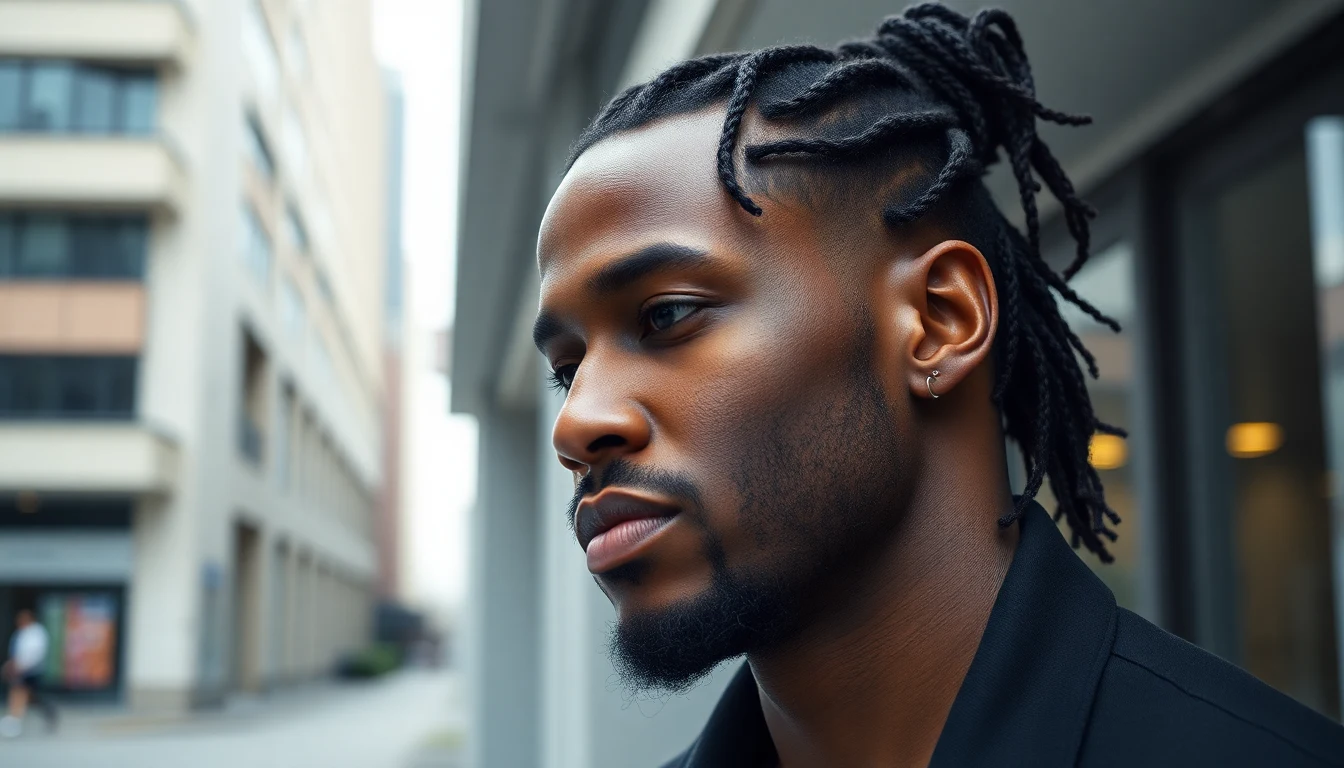
Cornrows braid the hair flat against the scalp in rows using a three-strand underhand braiding technique. They have been worn across the African continent and the diaspora for thousands of years. On long hair, cornrows keep everything secured and protected while showcasing the pattern design on your scalp.
The pattern options are endless: straight back, curved, zigzag, geometric designs, combinations with fades on the sides. A skilled braider turns cornrows into art.
Growth requirement: Minimum three inches for tight cornrows. Four or more inches for cornrows with visible hanging ends. With longer hair, the hanging braided ends become a major style feature.
Maintenance: Cornrows last one to three weeks. Keep the scalp oiled. Wrap in a satin scarf or bonnet at night. Wash by applying diluted shampoo to the scalp and rinsing carefully. Do not leave cornrows in for more than four weeks; the new growth at the roots creates tension that leads to traction alopecia.
Best for: Men who want a protective style with visual complexity. Cornrows are one of the best options for active lifestyles (sports, workouts) because everything stays flat and secure.
10. Twist Out
The twist-out is the workhorse of long natural hair styling. You two-strand twist your hair (or flat twist it) with product, let it set overnight or for several hours, then unravel the twists to reveal stretched, defined curls. The result shows your actual length while adding curl definition that raw 4C hair does not display on its own. (We recommend this OCEAN VIEW DEEP WAVES POMADE –.)
If you are curious about getting more curl definition, our guide on how to get curly hair as a Black man covers the techniques in depth.
Growth requirement: Minimum four inches for a visible twist-out. Six or more inches for a twist-out that hangs and shows real length.
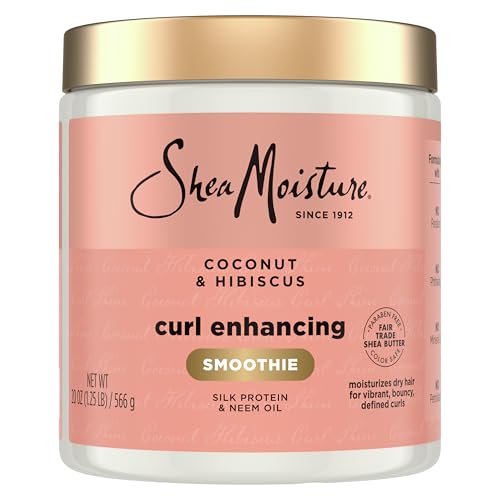
Maintenance: Set twists the night before. Unravel in the morning. The twist-out lasts one to three days before frizzing out, at which point you retwist and repeat. Use SheaMoisture Curl Enhancing Smoothie as the base product for moisture and hold. Follow with Cantu Leave-In Repair Cream for extra moisture on high-porosity hair.
Best for: Men who want to show their length without committing to a permanent style. The twist-out is temporary, versatile, and looks different every time depending on twist size, product, and drying time.
11. Bantu Knots
Bantu knots coil sections of hair into small, tight knots that sit on the scalp. Originally from the Zulu and broader Bantu-speaking peoples of Southern Africa, this style is both a finished look on its own and a method for creating curls (a bantu knot-out). Worn as-is, the knots create a bold, geometric pattern across the head.
Growth requirement: Minimum three inches for small knots. Six or more inches for larger, more defined knots that hold their shape securely.
Maintenance: Bantu knots last two to five days when protected at night with a satin scarf. Installing them takes 30 to 60 minutes depending on the number of sections. When you are ready to change the look, unravel the knots for a bantu knot-out with defined spiral curls.
Best for: Men who want a cultural statement style that doubles as a curl-setting method. Bantu knots look best on 4B and 4C hair because the tighter coils hold the knot shape firmly.
12. High Top Fade (Long Top)
The high top fade with a long top is the bridge between a short hairstyle and a long one. The sides are faded (check our types of fades guide), and the top grows tall, creating a rectangular or cylindrical silhouette. Made famous in the late 1980s and early 1990s, the style has come back in a more natural, textured form.
Growth requirement: Minimum four inches on top for a noticeable high top. Six or more inches for the tall, flat-top silhouette.
Maintenance: The fade needs a barber visit every two weeks. The top needs daily moisturizing and picking out for volume. Shape the top with a wide-tooth pick and use a light gel for 4C hair to define the edges if you want a sharper silhouette.
Best for: Men who want the visual impact of long hair on top with the clean structure of a fade on the sides. Round faces benefit from the vertical height.
13. Frohawk (Long Version)
The long frohawk takes the mohawk concept and extends it with natural length. The sides can be faded, shaved, or pinned back while the center strip of hair grows to four or more inches of natural coils. At this length, the frohawk has real height and drama.
Growth requirement: Minimum four inches in the center. Six or more inches for a tall, imposing frohawk.
Maintenance: Daily moisture and picking for volume on the top section. Fade maintenance every two to three weeks on the sides. Products: leave-in conditioner for daily moisture, a pick for volume, and an oil to seal the ends.
Best for: Men who want a structured long style without the commitment of growing all their hair long. The faded sides keep things clean while the top section grows wild.

14. Long Curls (Defined)
Defined long curls use techniques like finger coils, curl sponges, or twist-outs to create visible, bouncy curls at length. This style is most achievable for 3C through 4B hair types, which have enough natural curl definition to hold the pattern. 4C hair can achieve this look but typically needs a twist-out or rod set to create the definition. (We recommend this Natural Wave Pomade Strong Hold Easy.)
Growth requirement: Minimum six inches for visible long curls that hang.
Maintenance: High. Define curls every one to two days using a curl cream and styling method (twist-out, finger coils, or sponge). Use a quality leave-in conditioner as the base layer. Sleep on satin. Detangle gently with fingers or a wide-tooth comb on wet, conditioned hair only.
Best for: 3C through 4B hair types with patience for daily definition routines. Oval and heart face shapes complement the volume of defined long curls.
15. Shoulder-Length Natural
This is your hair, fully grown out, stretched to its natural length with no specific style imposed on it. A wash-and-go, a blow-out, a pulled-back puff. The shoulder-length natural is the “I grew it and I wear it how I feel” approach. Some days it is a twist-out. Some days it is a pineapple puff. Some days it is just out.
Growth requirement: 12 to 18 months of growth from a short cut, depending on your hair’s density and shrinkage pattern. 4C hair at shoulder length when stretched might look chin-length in its shrunken state.
Maintenance: Medium. Wash weekly with a sulfate-free shampoo. Deep condition every week. Moisturize daily with the LOC method (liquid, oil, cream). Trim dead ends every 10 to 12 weeks. The flexibility of this style is its maintenance advantage: you choose how much effort to put in on any given day.
Best for: Men who have completed the growing phase and want to wear their length however they feel. This is not a specific style. It is a length achievement that unlocks every style.
16. Half Up, Half Down
Gather the top section of your hair and tie it back while letting the bottom half hang free. This works with locs, twists, natural curls, or any long texture. The half-up half-down style shows your length in the back while keeping hair out of your face.
Growth requirement: Minimum eight inches for enough hair to separate into two sections and have the top portion reach the tie point.
Maintenance: Low. Tie, adjust, go. Use a satin scrunchie or hair-friendly tie to prevent breakage at the gathering point. Moisturize as usual for your base texture.
Best for: Men with longer locs, twists, or natural hair who want a clean look that takes 30 seconds. Works for every face shape because the pulled-back top section reveals your facial structure while the bottom half adds volume.
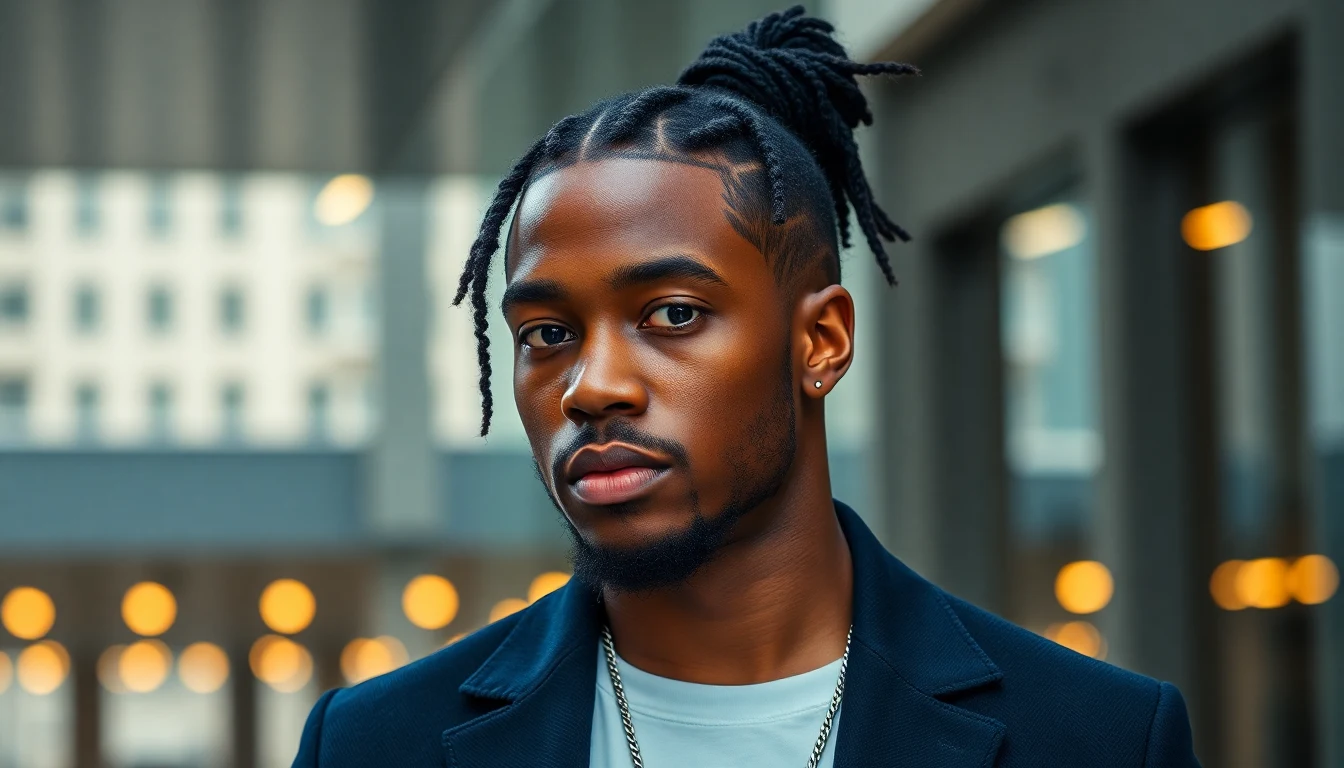
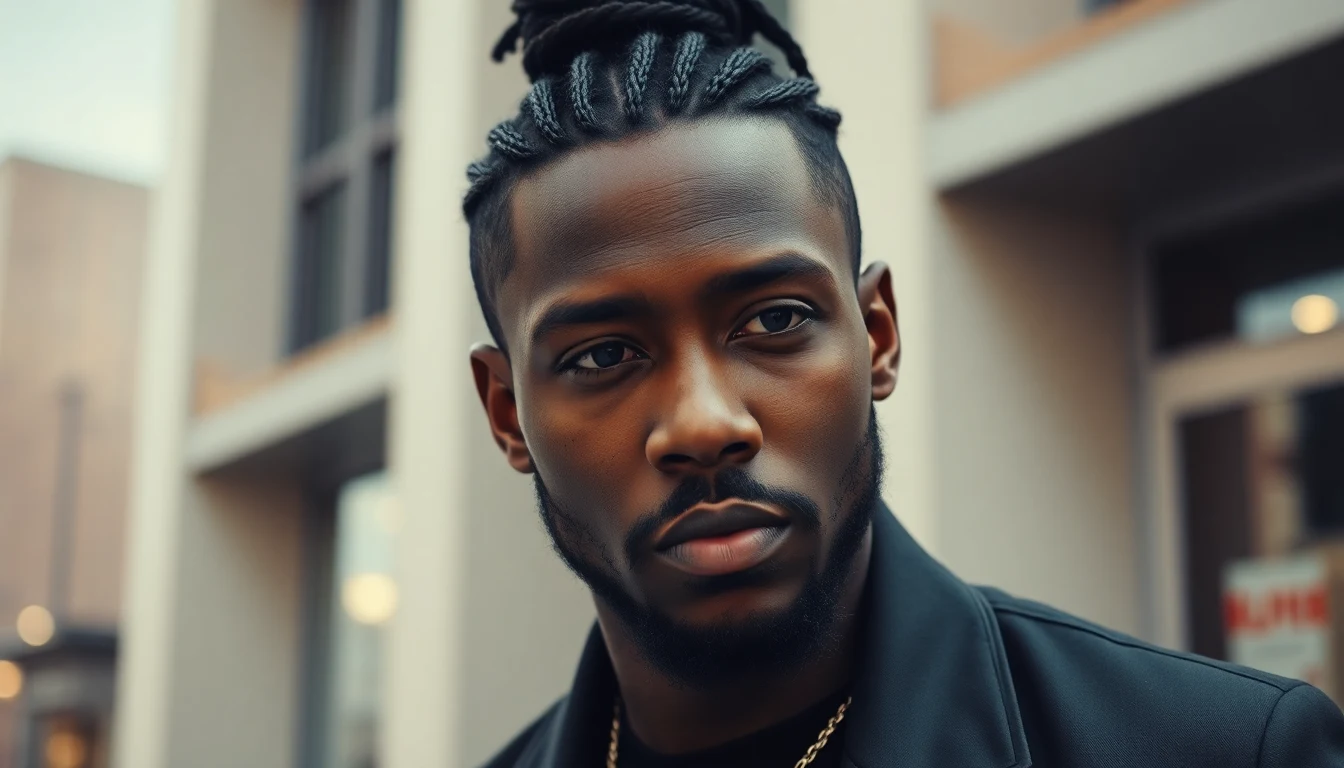
17. Braided Man Bun
Cornrow or flat-twist all of your hair toward the crown or back, then gather the ends into a bun. This combines the visual detail of braids with the neatness of a bun. The braided pattern is visible on the sides and front, and the bun sits cleanly at the back.
Growth requirement: Minimum six inches for cornrows that reach a small bun. Eight or more inches for a fuller bun with longer braid tails.
Maintenance: The braids need redoing every one to three weeks. The bun portion is effortless once the braids are installed. This is a good style for men who want to braid once and then have low daily effort for weeks.
Best for: Men who want the polish of a man bun with more visual interest than a simple gather. Works especially well for professional settings where you want your hair controlled but want it to look deliberate.
18. Loc’d Ponytail
Once your locs reach shoulder length or longer, gathering them into a ponytail becomes one of the cleanest ways to wear them. The locs create a thick, textured ponytail that looks nothing like a straight-hair version. Each loc maintains its individual character while the gathered shape keeps everything orderly.
Growth requirement: Locs need to be at least shoulder-length, which typically means 18 to 24+ months into the loc journey depending on your starting method and growth rate.
Maintenance: Regular loc care (wash, moisturize, retwist as needed) plus a hair tie. That is it. The loc ponytail adds zero extra maintenance to your existing loc routine.
Best for: Men with established locs who want a quick daily style. The ponytail is the default “I have locs and I need them out of my way” style, and it looks sharp every time.
19. Free-Form Afro
The free-form afro is the afro without the shape-up. No trimming for roundness. No picking for uniformity. You grow it, moisturize it, and let it do whatever it does. The result is bigger, wilder, and more asymmetrical than a maintained afro, with different sections growing at different rates and in different directions.
Growth requirement: Six or more inches for a noticeable free-form shape. 10 or more inches for a large, statement free-form afro. When it comes to long hairstyles for black men, technique matters most.
Maintenance: Daily moisture with Carol’s Daughter Black Vanilla Hair Sheen or a water-based spray. Weekly deep conditioning with TGIN Honey Miracle Hair Mask. No trimming, no shaping. Detangle gently with fingers in the shower. When it comes to long hairstyles for black men, technique matters most.
Best for: Men who want their afro to grow without constraints. The free-form afro is a rejection of the idea that natural hair needs to be “managed.” It is a statement as much as a style.
20. Interlocked Locs
Interlocking is a loc maintenance method where the new growth is pulled through the base of the loc using a tool instead of being palm-rolled or twisted. This creates extremely neat, tight locs that last longer between maintenance sessions. Long interlocked locs have a cleaner, more uniform look than palm-rolled locs.
Growth requirement: Same as traditional locs. Start with two to three inches. The interlocking technique applies during maintenance, not starting.
Maintenance: Interlock every six to eight weeks. Wash every seven to 14 days. Moisturize with a lightweight oil. The longer intervals between maintenance sessions make interlocking ideal for men who do not want to visit a loctician every month. Use a quality Jamaican Mango & Lime Locking Gel during installations if your loctician recommends it.
Best for: Men who want neat, uniform locs with less frequent maintenance than traditional palm-rolling. Active men benefit from interlocking because the locs stay put during workouts, swimming, and daily activity.


- Deeply Hydrates & Softens – Infused with Shea Butter and natural oils to conditi
- Supports Natural Beard Growth – Strengthens and revitalizes facial hair for a fu
- Tames, Moisturizes & Styles – Lightweight, non-greasy formula helps control friz
The Awkward Stage Survival Guide
Months two through six. This is where most men quit. Your hair is too long for short styles and too short for long styles. It sticks out at the sides, flattens on top, and looks like you forgot to get a haircut rather than like you are growing one. Here is how to survive it.
Why It Happens
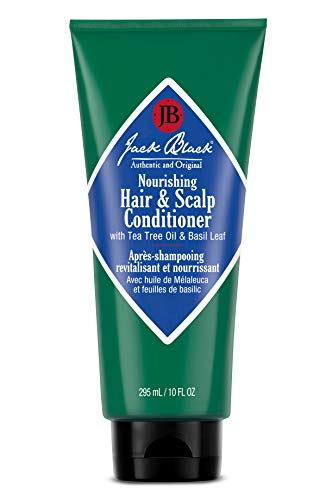
Short 4C hair stays close to the scalp because it does not have enough length to fight gravity. Once it passes one and a half to two inches, the coils start pushing outward. They do not lay flat. They do not hang. They just stick out. This is normal. This is not permanent. Every long-haired Black man went through this exact phase. (We recommend this Jack Black Nourishing Hair & Scalp.)
Styles That Get You Through
| Awkward Stage Style | Required Length | How It Helps | Daily Effort |
|---|---|---|---|
| Two-strand twists | 2+ inches | Gives structure and direction to unruly hair | Low (once installed, lasts 5-7 days) |
| Finger coils | 2+ inches | Creates defined coils that look intentional | Medium (redo every 3-5 days) |
| Flat twists | 2+ inches | Keeps hair flat against the scalp in defined rows | Low (redo weekly) |
| Bantu knots | 3+ inches | Controls hair completely, doubles as a curl-setting method | Low (lasts 2-5 days) |
| Curl sponge | 1.5+ inches | Creates defined mini curls quickly on short-ish hair | Medium (daily or every other day) |
| Durag or wave cap | Any length | Compresses hair flat for a clean look while it grows underneath | None (just put it on) |
Mental Game
I am going to be honest with you. The awkward stage is a mental battle more than a hair battle. You will look at your head every morning and think about cutting it. You will see fresh fades on other men and feel a pull toward the clippers. Here is my advice:
- Set a deadline, not a daily review. Tell yourself: “I will not evaluate my hair until month eight.” Stop checking the mirror every day for progress. Hair grows too slowly for daily assessment to show anything useful.
- Take monthly progress photos. Same angle, same lighting, first of every month. When you compare month one to month four, you will see the growth. Daily comparison shows nothing.
- Find your awkward-stage style. The table above gives you options. Pick one that makes you feel like you look intentional, not unkempt.
- Get a barber who supports the grow-out. Tell your barber you are growing it out. A good barber will shape the sides and edges to keep you looking clean without cutting the length. If your barber pushes back or trims the top without asking, find a new barber.
Maintenance Guide by Hair Style
Long hair demands more care than short hair. There is no shortcut. The good news is that a solid routine takes 10 to 15 minutes per day once you learn it. Here is what each style category requires.
Daily Essentials (All Long Styles)
- Moisturize. Apply a leave-in conditioner or water-based spray every morning. Focus on the ends, which are the oldest and driest part of your hair. Scotch Porter Leave-In Conditioner is lightweight and does not create buildup.
- Seal. Follow the leave-in with a light oil (jojoba, argan, or grapeseed) to lock the moisture in. Rub between your palms and smooth over the hair.
- Protect at night. Satin bonnet, satin pillowcase, or satin-lined cap. Cotton pillowcases absorb moisture from your hair and create friction that leads to breakage. This is non-negotiable.
Weekly Essentials (All Long Styles)
- Wash. Once every seven to 10 days with a sulfate-free shampoo. Sulfates strip natural oils. For locs, extend to every 10 to 14 days.
- Deep condition. After every wash, apply a deep conditioner and leave it on for 15 to 30 minutes. TGIN Honey Miracle Hair Mask is my top pick. The honey and olive oil combination penetrates 4C coils effectively.
- Detangle. On wet, conditioned hair only. Never detangle dry 4C hair. Use your fingers first to remove major tangles, then follow with a wide-tooth comb. Start from the ends and work up to the roots. Never start from the roots.
Monthly Essentials
- Protein treatment. Once per month, replace your deep conditioner with a protein treatment to strengthen hair. Signs you need protein: hair feels mushy when wet, curls lack definition, excessive shedding. Signs you have too much protein: hair feels stiff, dry, and snaps easily.
- Trim dead ends. Every 10 to 12 weeks, trim a quarter to half inch off the ends. Dead ends split and travel upward, causing more breakage. You are not losing length by trimming. You are protecting the length you have.
Products for Long Textured Hair
The products that work on short 4C hair do not always work on long 4C hair. Short hair needs hold. Long hair needs moisture, slip (for detangling), and lightweight formulas that do not weigh down the length. Here is my product framework.
| Product Type | What It Does | My Pick | Alternative |
|---|---|---|---|
| Leave-in conditioner | Daily moisture base | Mielle Pomegranate & Honey Leave-In | Scotch Porter Leave-In |
| Curl cream | Definition and moisture | SheaMoisture Curl Enhancing Smoothie | Cantu Curl Activator |
| Deep conditioner | Weekly intensive moisture | TGIN Honey Miracle Hair Mask | SheaMoisture Manuka Honey Masque |
| Sealing oil | Locks in moisture | Cold-pressed jojoba oil | Argan oil or grapeseed oil |
| Sulfate-free shampoo | Clean without stripping | See full roundup | Any SLS-free formula |
| Locking gel (for locs) | Holds twists during loc formation | Jamaican Mango & Lime Locking Gel | Pure aloe vera gel |
Products to Avoid on Long Hair
- Heavy petroleum-based products (mineral oil as the first ingredient). They coat the hair shaft and block moisture from penetrating. Fine for waves, bad for long hair that needs moisture to survive.
- Products with drying alcohols (alcohol denat, isopropyl alcohol). They evaporate moisture and leave hair brittle.
- Heavy silicones (dimethicone as the first ingredient) without clarifying regularly. Silicones create a coating that blocks moisture. If you use silicone-based products, clarify with a mild shampoo every two to three weeks.
- Excessive gel on locs. Gel that hardens inside the loc creates buildup that is nearly impossible to remove and can contribute to loc rot (mildew inside the loc from trapped moisture).
Length Retention: Why Your Hair Is Not “Growing”
I hear this constantly: “My hair does not grow.” It does. Every head of healthy hair grows roughly half an inch per month. The problem is breakage. If your hair breaks off at the same rate it grows, your length stays the same. Here are the biggest enemies of length retention for textured hair.
Dryness
This is enemy number one. 4C hair is naturally dry because the tight coil pattern makes it difficult for sebum (your scalp’s natural oil) to travel down the hair shaft. The oil gets stuck at the root. The ends get nothing. That is why daily moisturizing is not optional. It is structural maintenance.
Mechanical Damage
Rough combing, tight styles, and cotton pillowcases all create friction that snaps hair. The fix: detangle gently on wet, conditioned hair. Avoid tight braids and ponytails that pull at the hairline. Sleep on satin. These are not suggestions. They are requirements for keeping your length.
Single-Strand Knots (Fairy Knots)
4C hair forms tiny knots at the ends of individual strands because the tight coil pattern wraps around itself. These knots create weak points where the hair snaps. Prevention: keep your ends sealed with oil or butter, stretch your hair regularly (twist-outs, braids), and trim knots when you find them.
Heat Damage
Blow dryers, flat irons, and hot combs permanently alter the protein structure of your hair if used at high temperatures or too frequently. If you use heat, keep it under 350 degrees Fahrenheit and always use a heat protectant. Better yet, minimize heat entirely. Air drying and stretching through braids or twists achieve similar results without the damage.
Over-Manipulation
The more you touch your hair, the more it breaks. This sounds simple but it contradicts the instinct to constantly reshape and adjust. Once you have styled your hair for the day, leave it alone. Protective styles (braids, twists, locs) exist specifically to reduce daily manipulation.
Frequently Asked Questions
How long does it take to grow long hair as a Black man?
Most Black men need 12 to 18 months to reach chin-length hair and 18 to 24 months to reach shoulder length. The timeline depends on your hair type, health, and care routine. 4C hair grows at the same rate as other types (about half an inch per month), but shrinkage of up to 75% makes it look shorter. The key is length retention through moisture, protective styling, and minimal manipulation. You are not growing slowly. You are shrinking significantly. (We recommend this Jack Black Beard Oil for Men.)
What is the awkward stage and how do you get through it?
The awkward stage is the period between months two and six when your hair is too long for short styles but too short for long styles. It sticks out, does not lay flat, and looks unfinished. Get through it by wearing protective styles like two-strand twists, cornrows, or twist-outs that give structure to the length you have. A durag or wave cap at night helps control the shape. Do not cut it. The awkward stage is temporary. The styles on the other side are permanent. (We recommend this Lusters S-Curl 360 Wave Control Pomade.)

How often should you wash long Black hair?
Wash once every seven to 10 days with a sulfate-free shampoo. Overwashing strips the natural oils that textured hair desperately needs for moisture retention. Between washes, co-wash (conditioner-only wash) if your scalp feels dirty or itchy. Always follow with a deep conditioner and leave-in conditioner. If you have locs, you can extend wash intervals to every 10 to 14 days, but make sure you dry them completely to prevent mildew.
What is the easiest long hairstyle to maintain for Black men?
Free-form locs are the easiest long hairstyle to maintain because they require no retwisting, no daily styling, and minimal product. You wash, moisturize, and let your hair loc naturally. The tradeoff is that free-form locs have an unpredictable shape, so if you want uniform, neat locs, you will need to retwist. For non-loc styles, a simple pulled-back ponytail or man bun is the lowest daily effort once your hair reaches the length required.
Does long hair damage 4C hair?
Long hair does not damage 4C hair. Poor maintenance of long hair damages it. The most common causes of breakage in long 4C hair are dryness (insufficient moisture), mechanical damage (rough combing, tight styles, cotton pillowcases), and single-strand knots (fairy knots). Prevent these with regular deep conditioning, satin pillowcases, finger detangling before using a wide-tooth comb, and keeping your ends sealed with an oil or butter.
Can Black men grow long hair without locs?
Absolutely. Locs are one option, not the only option. Black men grow long hair as afros, twist-outs, braid-outs, free-hanging natural curls, and stretched styles. The key is consistent moisture, protective styling during the growing phase, and patience with shrinkage. Many men assume their hair cannot grow long because the shrinkage makes it look short. A twist-out or stretched style reveals your true length.
What products are best for growing long textured hair?
Focus on moisture and protein balance. A sulfate-free shampoo, a deep conditioner used weekly, a leave-in conditioner for daily moisture, and a sealing oil (jojoba or argan) for the ends. Avoid products with drying alcohols, mineral oil as the first ingredient, or heavy silicones that cause buildup. SheaMoisture, Mielle, and TGIN are reliable brands for long textured hair care.
Final Word
Growing long hair as a Black man is a decision that tests your patience every week for a full year. The awkward stage is real. The shrinkage is frustrating. The daily moisturizing routine never stops. But the styles waiting on the other side of that commitment are worth every uncomfortable month.
Here is what to remember:
- Your hair IS growing. Half an inch per month. Shrinkage hides it. Breakage steals it. Moisture and gentle handling keep it.
- The awkward stage ends. Months two through six are the hardest. Use protective styles to survive them. Do not cut.
- Pick a style that matches your maintenance tolerance. Free-form locs require almost nothing. Defined curls require daily effort. Be honest about how much time you will spend.
- Moisture is the foundation. Leave-in conditioner, sealing oil, and satin at night. Every single day. Non-negotiable.
- You have 20 options above. Locs, twists, braids, afros, buns, ponytails, and everything in between. Your texture gives you more versatility than any other hair type.
If you want a structured style while you grow, check out our mohawk hairstyles for Black men guide for cuts that keep the sides clean while the top grows. For curl definition techniques, our how to get curly hair guide breaks down the methods. And for the product foundation that makes everything work, start with our best leave-in conditioner for 4C hair roundup.
Start growing today. Set your deadline at month 12. Take your progress photos. And do not touch those clippers.