The black man bun is one of the most versatile long hairstyles available to men with textured hair, and it is long overdue for a proper guide. Not a paragraph buried inside a generic “men’s bun” article. Not a slideshow with no context. A real breakdown of how to grow the length, which variations work with which textures, how to hold it without destroying your hairline, and how to wear it with confidence in a culture that still has opinions about men with long hair.
I grew my hair out twice. The first time, I quit at month four because the awkward stage tested every ounce of my patience. The second time, I made it to eight inches and wore a bun for two years before cutting it. The difference was knowledge. I knew what to expect, what products to use, and how to style the in-between phases. That is what this guide gives you.
If you only read one section, start with The Growing-Out Timeline. Understanding the phases prevents 90% of guys from quitting early.
Why the Man Bun Works on Textured Hair: The Black Man Bun
Textured hair has a structural advantage when it comes to buns that straight-haired guys cannot replicate. The coil pattern creates natural grip. When you gather 4A, 4B, or 4C hair into a bun, the strands interlock and hold their position without slipping. Straight hair slides out of a bun within minutes unless it is secured tightly. Textured hair stays put with minimal tension.
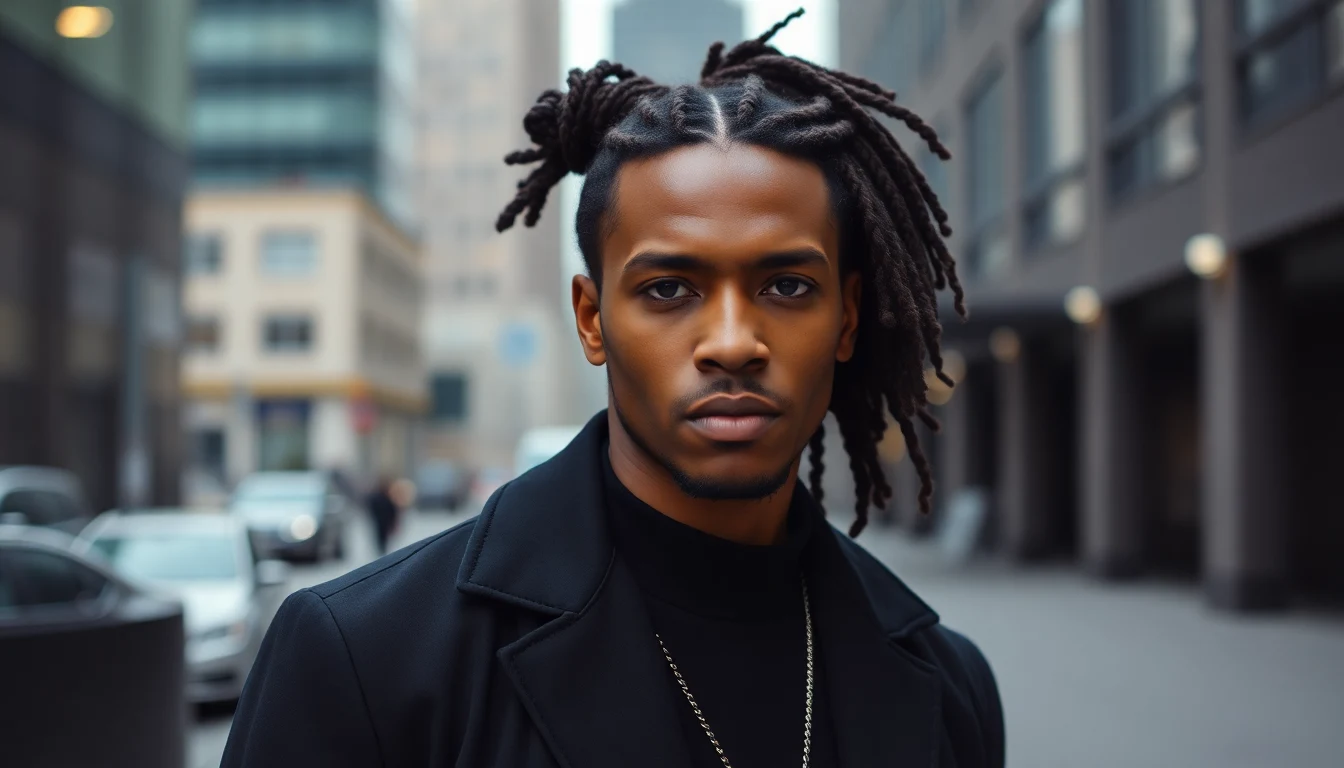
That grip also means the bun itself carries more volume. A man bun on textured hair looks fuller, rounder, and more substantial than the same length of straight hair wound into a knot. This is not a small aesthetic difference. It is the reason the man bun on Black men tends to look intentional and structured, while on straight hair it often looks limp or accidental. (We recommend this Jack Black Beard Oil for Men.)
The other advantage is versatility. Textured hair can be stretched, twisted, braided, and then gathered into a bun. Each preparation method changes the bun’s shape and size. A twist-out bun looks different from a wash-and-go bun, which looks different from a stretched bun. One length of hair gives you multiple distinct looks, which is not something a straight-haired man bun offers.
There is also a cultural dimension that matters. Long hair on Black men has a history that predates current trends by centuries. From the Maasai warriors who wore elongated styles to the natural hair movement that reclaimed length and texture, growing your hair long is not borrowing from another culture. It is reconnecting with your own.
How Long Does Your Hair Need to Be?
The minimum length for a functional man bun on textured hair is approximately 6 inches of stretched length. That is the length when you gently pull a coil straight, not the length it appears when the hair is in its natural shrunken state.
Here is where most guys miscalculate. 4C hair with 75% shrinkage that appears to be 2 inches long might actually be 8 inches when stretched. The visual length is misleading. Always measure stretched length when assessing bun readiness.
Length Requirements by Bun Type
| Bun Style | Minimum Stretched Length | Ideal Stretched Length | Growth Time (Avg) |
|---|---|---|---|
| High Bun | 6-7 inches | 8-10 inches | 12-18 months |
| Low Bun (Nape) | 5-6 inches | 7-8 inches | 10-14 months |
| Half Bun | 4-5 inches | 6-8 inches | 8-12 months |
| Bun with Undercut | 6-7 inches (top) | 8-10 inches (top) | 12-18 months (top only) |
| Bun with Fade | 5-6 inches (top) | 7-9 inches (top) | 10-16 months (top only) |
| Loc’d Bun | 8-10 inches | 12+ inches | 18-24+ months |
| Twist Bun | 5-6 inches | 7-9 inches | 10-16 months |
Black hair grows an average of 4-6 inches per year (roughly half an inch per month), which is consistent with all hair types. The difference is retention. Breakage, dryness, and mechanical damage from styling can reduce the length you actually keep. Maximizing length retention is the real challenge, not growth speed.
The Growing-Out Timeline: What to Expect
This is the section that saves you from quitting. Growing out textured hair for a man bun is a commitment measured in months, not weeks. Every phase has its challenges, but knowing what is coming makes each one manageable.
Month 1-2: The Easy Phase
Your hair is still short. It looks like a longer version of your current cut. No special styling required. People probably will not notice you are growing it out. Enjoy this period because it is the last time your hair will be low-maintenance for a while.
What to do: Start a moisture routine if you do not already have one. Wash with a sulfate-free shampoo weekly. Deep condition every wash day. Apply a leave-in conditioner daily. This foundation prevents the breakage that derails most grow-out attempts.
Month 3-5: The Awkward Phase
This is where most guys break. Your hair is too long to look intentionally short but too short to tie back. It sticks out at angles. It does not cooperate with your old styling routine. It looks, frankly, messy. People will ask if you are growing it out. Some will suggest you cut it.
What to do: Protective styles are your best friend here. Two-strand twists, flat twists, braids, and twist-outs all manage the length while looking intentional. Headbands and du-rags also work for casual settings. Do not trim the length. Resist the urge. The awkward phase is temporary. Cutting it resets the clock.
I wore twists almost exclusively during months 3-6 of my grow-out. They kept the hair contained, reduced tangles, and actually looked good. Nobody knew I was in an awkward phase because the twists gave the length a purpose.
Month 6-8: The Turning Point
Around the six-month mark, you can start pulling the top into a small half bun. It will not be neat. Some hair will escape. The sides might be too short to reach. But you will see the vision coming together for the first time, and that is motivating.
What to do: Start experimenting with gathering the hair. Use a satin scrunchie, never a rubber band, to hold what you can grab into a small puff or knot on top. Continue protective styling the rest. Keep up the moisture routine aggressively. This is the period where dryness causes the most breakage because the hair is long enough to tangle but not long enough to weigh itself down.
Month 9-12: The Payoff Begins
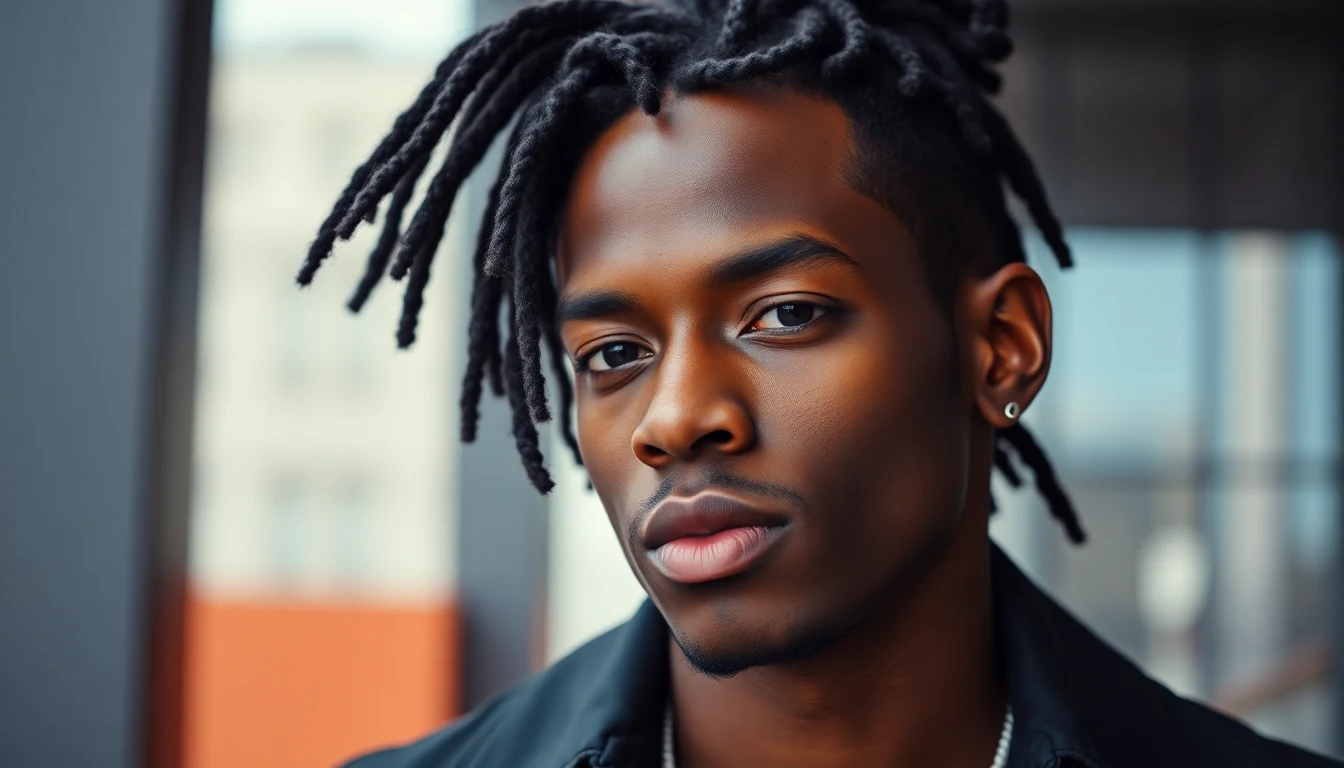
By month nine, most guys with average growth and good retention can achieve a small but legitimate bun. By month twelve, the bun has real volume and presence. You can pull all of the hair back, the sides reach, and the shape is clean.
What to do: Establish your bun styling routine (detailed in the step-by-step section below). Schedule a trim to even out the ends. Not a cut, a trim. A quarter inch to half inch maximum, just to remove split ends and give the bun a cleaner silhouette. Mastering the black man bun takes practice but delivers great results. Mastering the black man bun takes practice but delivers great results.
Month 12-18: Full Versatility
At this stage, you have enough length for every bun variation on this list. High bun, low bun, half bun, bun with undercut. The hair has weight, movement, and options. Most guys find their preferred style during this period and settle into a consistent routine.

What to do: Rotate between bun styles to prevent tension alopecia. Do not wear the same tight bun in the same position every single day. Give your hairline breaks. Let the hair down at home when possible. Mastering the black man bun takes practice but delivers great results.
Seven Man Bun Variations for Black Men
Not all buns are the same. The position, preparation, and pairing with other elements create distinctly different looks. Here are seven variations, each with its own character.
1. The High Bun
Gathered at the crown of the head, the high bun is the most visible and dramatic position. It lifts the face, emphasizes jawline and cheekbones, and carries serious visual presence. On textured hair, the natural volume creates a rounded, substantial shape that sits on top of the head like a statement.
Best for: Oval and round face shapes. The height elongates the face and balances proportions.
Requires: 6-8 inches minimum stretched length. All sections must reach the crown without pulling.
Hold method: Satin scrunchie or spiral coil tie. Two wraps maximum. Do not overtighten.
2. The Low Bun
Positioned at the nape of the neck, the low bun is the most understated and professional-friendly variation. It reads as polished and intentional. In corporate settings where the high bun might draw attention, the low bun blends in while still looking distinctive.
Best for: Professional environments. Longer face shapes benefit from the lower placement, which does not add height. For more guidance, AAD provides expert resources on Black hair care.
Requires: 5-7 inches minimum. The nape position is easier to reach than the crown.
Hold method: Fabric-covered elastic or satin scrunchie. Tuck loose ends under the bun for a cleaner shape.
3. The Half Bun (Half Up, Half Down)
The half bun gathers the top section of hair into a bun while leaving the bottom half loose. This is the most versatile variation because it works at shorter lengths (you only need the top to reach), it shows off your natural texture below the bun, and it transitions easily from casual to polished.
Best for: Guys in the growing-out phase who do not have enough length for a full bun yet. Also works as a permanent style if you like showing off texture.
Requires: 4-5 inches minimum on top. Bottom can be any length.
Hold method: Satin scrunchie for the bun. Light gel or cream on the loose sections for definition.
4. The Bun with Undercut
Shave or buzz the sides and back short (usually a #1 or #2 guard), leave the top long enough for a bun. The contrast between the tight sides and the full bun on top creates an aggressive, modern silhouette. This is the variation that gets the most attention because the architectural contrast is impossible to miss.
Best for: Guys who want the bun aesthetic without committing to long hair all over. The undercut also eliminates the awkward phase on the sides.
Requires: 6-8 inches on top. Sides buzzed or faded.
Hold method: Same as high bun. The undercut makes gathering the top easier because there is less hair to manage.
Maintenance: Sides need a barber visit every 1-2 weeks to keep the contrast clean. Reference our types of fades guide to pick the right side profile.
5. The Bun with Fade
Similar to the undercut but with a gradual fade instead of a blunt contrast. The fade transitions smoothly from skin at the temples and neckline up into the longer hair on top, which is then gathered into a bun. This version is more polished than the undercut and reads as more refined.
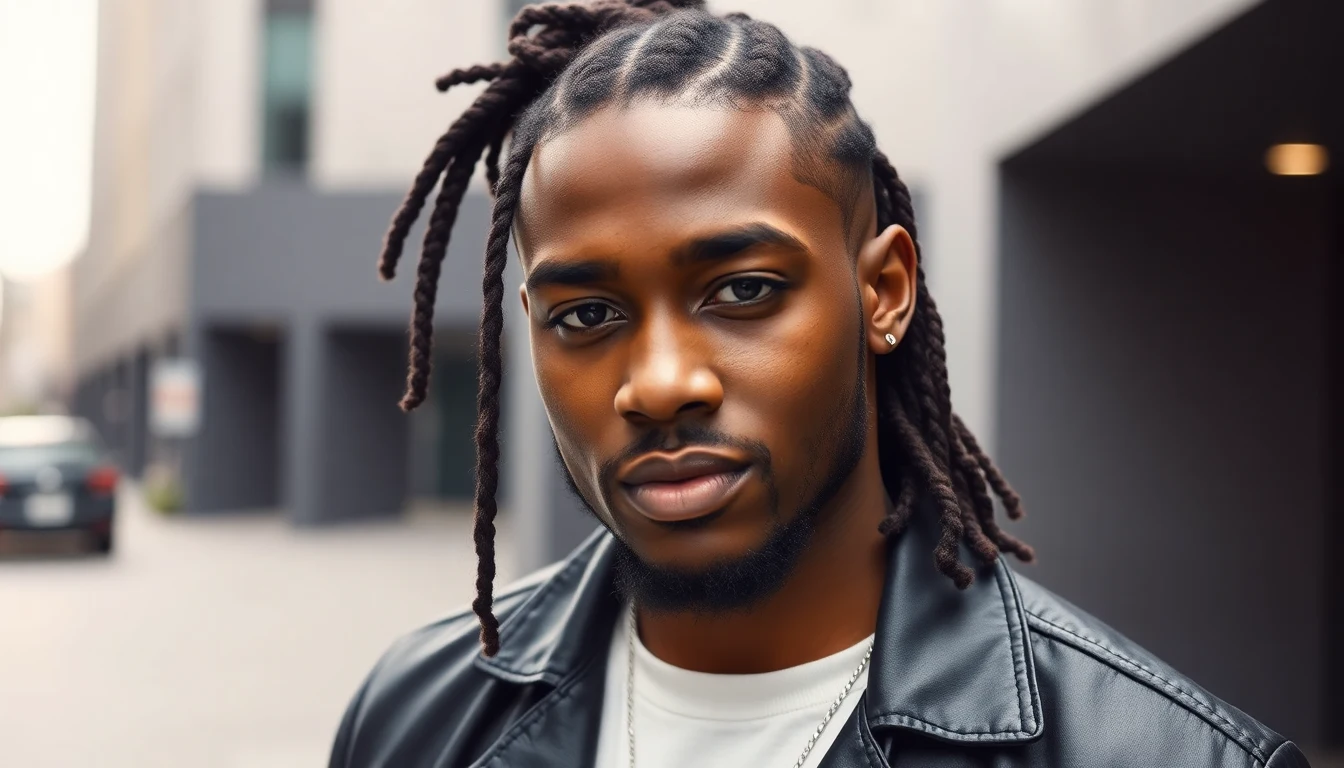
Best for: Guys who want the practicality of shorter sides but a softer transition than the undercut provides.
Requires: 5-7 inches on top. Fade on sides and back.
Hold method: Satin scrunchie. The fade reduces bulk on the sides, making the bun the clear focal point. Understanding the black man bun is key to a great grooming routine. Understanding the black man bun is key to a great grooming routine. Understanding the black man bun is key to a great grooming routine.
6. The Loc’d Bun
If you have locs, the man bun is one of your best styling options once the locs reach sufficient length. Mature locs gathered into a bun create the most voluminous, visually impactful version of this style. The individual locs create texture within the bun shape that loose hair cannot replicate.

Best for: Loc wearers with locs at least 8-10 inches long (usually teen locs or mature locs).
Requires: 8-12+ inches of loc length. Starter locs and baby locs are usually too short and too fragile for bun tension.
Hold method: Large satin scrunchie or a fabric wrap. Locs have weight, so the holder needs to be substantial. Thin elastics will snap or pull too tightly.
Maintenance: Retwisting schedule continues as normal. Wash locs before styling the bun if lint or buildup is visible at the roots.
The cultural significance of locs in a bun deserves mention. The CROWN Act (Creating a Respectful and Open World for Natural Hair), now law in over 25 states, specifically protects hairstyles like locs from workplace and school discrimination. If you have ever hesitated to wear your loc’d bun in a professional setting, know that legal protections are expanding. The style is not unprofessional. Policies that say otherwise are, in many jurisdictions, illegal.
7. The Twist Bun
Start with two-strand twists throughout the hair, then gather the twists into a bun. The twists create a rope-like texture that adds definition and visual interest to the bun shape. This is one of the best-looking variations because the twists create organized visual lines converging at the bun point.
Best for: Guys who want definition and control. Twists reduce frizz and make the gathering process easier.
Requires: 5-7 inches of stretched length. Smaller twists require less length than larger ones.
Hold method: Satin scrunchie. The twists help the bun hold its shape even with minimal tension.
Step-by-Step: How to Style a Man Bun on Textured Hair
This process works for loose textured hair (3C through 4C). Loc’d buns follow the same general principle but skip the detangling and product application steps.
What You Need
- Wide-tooth comb or detangling brush (Denman brush or Wet Brush)
- Leave-in conditioner or styling cream
- Satin scrunchie or spiral coil hair tie (never rubber bands)
- Edge control gel (optional, for a polished finish)
- Spray bottle with water or water-based leave-in mixture
The Process
- Start with damp hair. Mist your hair with the spray bottle until it is uniformly damp, not dripping. Damp textured hair is more pliable and less prone to breakage during styling. If you are working with a day-old twist-out or stretch, you may be able to skip this step.
- Apply leave-in conditioner or styling cream. Work a quarter-sized amount of SheaMoisture Jamaican Black Castor Oil Leave-In or Cantu Leave-In Repair Cream through the hair from roots to ends. This adds slip, which makes detangling and gathering easier. It also provides moisture and light hold.
- Detangle gently. Starting from the ends and working up to the roots, use a wide-tooth comb or detangling brush to remove knots. Never start from the roots and pull downward. That is how you rip out hair. On 4C hair, finger detangling in sections before using a comb reduces breakage significantly.
- Decide on your bun position. High bun: gather toward the crown. Low bun: gather toward the nape. Half bun: section the top from the bottom at ear level. The position you choose determines where you direct the hair.
- Gather the hair. Using both hands, smooth the hair from the front hairline and temples backward toward your chosen bun position. Then gather the sides. Finally, sweep the back. The goal is a smooth, even collection of hair at the gathering point without lumps or uneven tension.
- Twist and wrap. Hold the gathered hair in one hand. With the other hand, gently twist the length in one direction until it starts to coil around itself naturally. Guide the coiling hair into a circular shape at the base. Do not wind it so tightly that you feel pulling at the scalp.
- Secure with a satin scrunchie. Wrap the scrunchie around the base of the bun. Two loops are usually sufficient. If the bun is large, a single loop with a firm (but not tight) grip works. The scrunchie should hold the shape without compressing the bun flat.
- Smooth the edges (optional). For a polished finish, apply a small amount of Eco Styler Olive Oil Gel to your edges with a soft brush. Smooth the hairline in the direction of the bun. This step is optional, but it takes the look from casual to clean.
- Final check. Look at the bun from all angles. Tuck any loose strands under the scrunchie. If the bun feels too tight at any point, loosen it slightly. You should be able to slide one finger between the scrunchie and your scalp without effort.
Important: Time and Tension Limits
Do not wear a tight bun for more than 8-10 hours at a time. Constant tension on the hairline causes traction alopecia, a form of hair loss caused by repeated pulling. This is not hypothetical. Traction alopecia is one of the most common causes of hairline recession in men and women who wear tight ponytails, buns, and braids (Khumalo et al., British Journal of Dermatology, 2007).

Take the bun down at home. Let the hair rest overnight in a loose pineapple (a high, loose gathering secured with a satin scrunchie) or wear a satin bonnet. Alternate between bun positions throughout the week so no single section of the hairline bears constant stress.
Products That Hold Without Damage
The wrong products and accessories cause more damage than the bun itself. Here is what to use and what to avoid.
What to Use
| Product | Purpose | Recommended Option | Price |
|---|---|---|---|
| Satin Scrunchie | Hold the bun without snagging | Kitsch Satin Scrunchies (pack of 5) | $8-$12 |
| Spiral Coil Hair Tie | Even tension distribution | Invisibobble or generic spiral ties | $5-$8 |
| Leave-In Conditioner | Moisture and slip for styling | SheaMoisture JBCO Leave-In | $10-$13 |
| Edge Control Gel | Sleek edges and polished finish | Eco Styler Olive Oil Gel | $4-$7 |
| Hair Oil | Seal moisture, add shine | Mielle Rosemary Mint Oil | $9-$12 |
| Deep Conditioner | Weekly moisture replenishment | TGIN Honey Miracle Mask | $13-$16 |
What to Avoid
| Product/Accessory | Why It Is Harmful | Alternative |
|---|---|---|
| Rubber bands | Snag, tear, and pull out hair when removed. Cause immediate mechanical damage. | Satin scrunchies or spiral coil ties |
| Thin elastic bands | Concentrate tension on a narrow strip. Lead to breakage at the tie point. | Wide satin scrunchies that distribute pressure |
| Metal clasps or clips | Catch on coily hair and create single-point stress. | Fabric-covered holders or claw clips with smooth edges |
| Heavy gels/waxes for all-day hold | Cause product buildup, flaking, and dryness over time. | Light creams and leave-ins for daily use, gel only for edges |
| Alcohol-based sprays | Dry out already moisture-needy textured hair. | Water-based sprays or leave-in conditioner sprays |
I cannot stress this enough: rubber bands are the enemy. I have watched guys rip out chunks of 4C hair trying to remove a rubber band from a bun. The rubber catches on the coils and creates traction that no amount of gentleness can avoid. Spend the $8 on satin scrunchies. Your hairline will thank you in five years.
Maintaining Healthy Hair While Wearing a Bun
A bun is a low-manipulation style, which is generally good for textured hair. But “low manipulation” is not “no maintenance.” Here is the routine that keeps your hair healthy while you wear it up.
Weekly Routine
- Wash day (once per week). Take the bun down completely. Wash with a sulfate-free shampoo or co-wash with As I Am Coconut CoWash. Focus on the scalp. Let the lather run through the length without scrubbing, which causes tangles.
- Deep condition (every wash day). Apply TGIN Honey Miracle Mask or Scotch Porter Nourish & Repair Conditioner from mid-shaft to ends. Cover with a plastic cap. Leave on for 20-30 minutes. Rinse with cool water.
- Leave-in and seal. Apply leave-in conditioner to damp hair. Follow with a light oil (Mielle Rosemary Mint Oil) to seal the moisture in. This is the LOC method (Liquid, Oil, Cream) adapted for bun maintenance.
- Detangle and restyle. Detangle gently while the hair is conditioned and slippery. Then restyle the bun in a slightly different position than the previous week to distribute tension evenly across the hairline.
Daily Maintenance
- Moisture refresh. Mist the hair lightly with a water and leave-in conditioner mixture every morning before restyling the bun. Textured hair loses moisture quickly, especially in dry or air-conditioned environments.
- Nighttime protection. Take the bun down before bed. Sleep in a loose pineapple with a satin scrunchie, or wear a satin bonnet. Never sleep with a tight bun. Eight hours of sustained tension is how traction alopecia starts.
- Scalp check. Every few days, part the hair at the crown and check for dryness, flaking, or tenderness. If you see flaking, your scalp needs moisture (try a light oil directly on the scalp). If you feel tenderness, your bun is too tight. Adjust immediately.
Monthly Maintenance
- Trim check. Examine the ends every 4-6 weeks. If you see split ends or single-strand knots (fairy knots, common on 4C hair), trim a quarter inch. Regular micro-trims prevent splits from traveling up the shaft and causing more breakage.
- Protein treatment. Once a month, replace your regular deep conditioner with a light protein treatment to strengthen the hair. Overusing protein makes textured hair brittle, so once per month is the right frequency for most guys.
Addressing the Man Bun Stigma
Let me be real about this because pretending it does not exist would be dishonest. The man bun carries stigma in some corners of the Black community. Long hair on Black men sometimes triggers reactions that range from curiosity to outright pushback. “That’s a woman’s style.” “Why don’t you just cut it?” “You look different.” I have heard all of them.
Here is what I learned wearing a bun for two years: the opinions fade and the confidence stays. The first few weeks, people commented. By month two, the comments stopped. By month six, people associated the look with me so completely that they could not imagine me without it.
In Professional Settings
The man bun is increasingly accepted in professional environments, but context matters. Here is a practical guide based on industry norms as of 2026:
| Industry | Acceptance Level | Best Variation | Notes |
|---|---|---|---|
| Tech / Startups | High | Any variation | Grooming standards are relaxed across most tech companies. |
| Creative / Media | High | Any variation | Often encouraged as self-expression. |
| Corporate / Finance | Moderate | Low bun, neat edges | Keep it polished. A sleek low bun reads as put-together. |
| Healthcare | Moderate | Low or high bun, secured | Must be secured for hygiene. Scrub caps cover easily. |
| Education | Moderate-High | Any variation | Most school systems have relaxed hair policies. Check your district. |
| Legal | Lower | Low bun, minimal volume | Conservative environments may require extra polish. |
| Trades / Labor | Varies | Bun secured under hard hat | Safety is the primary concern. Secure hair under PPE. |
The CROWN Act, which prohibits discrimination based on natural hairstyles, is now law in more than 25 states and multiple cities. If you experience workplace pushback specifically about your man bun or natural hair, document it. The legal landscape is shifting in your favor.
Building Confidence
Confidence with a man bun comes from three things:
- Execution. A neat, well-maintained bun signals intention. A messy, uneven bun with flyaways everywhere signals that you do not know what you are doing. Master the styling technique and keep the hair healthy. Execution silences most critics.
- Ownership. Wear it like you chose it, because you did. Apologetic body language (“I’m growing it out, I know it looks weird”) invites critique. Standing tall and wearing the style with certainty communicates that this is your look, not an accident.
- Historical grounding. You are not the first Black man to wear long hair. Samurai, Maasai warriors, and West African kings all wore structured long hairstyles. The idea that short hair is the default for men is a modern Western norm, not a universal truth. Knowing this history gives the style roots (no pun intended) deeper than trend cycles.
Growing-Out Survival Guide
The grow-out phase is where most guys fail. Here are the strategies that got me through it and that I recommend to every guy I talk to about growing out textured hair. When it comes to the black man bun, technique matters most.
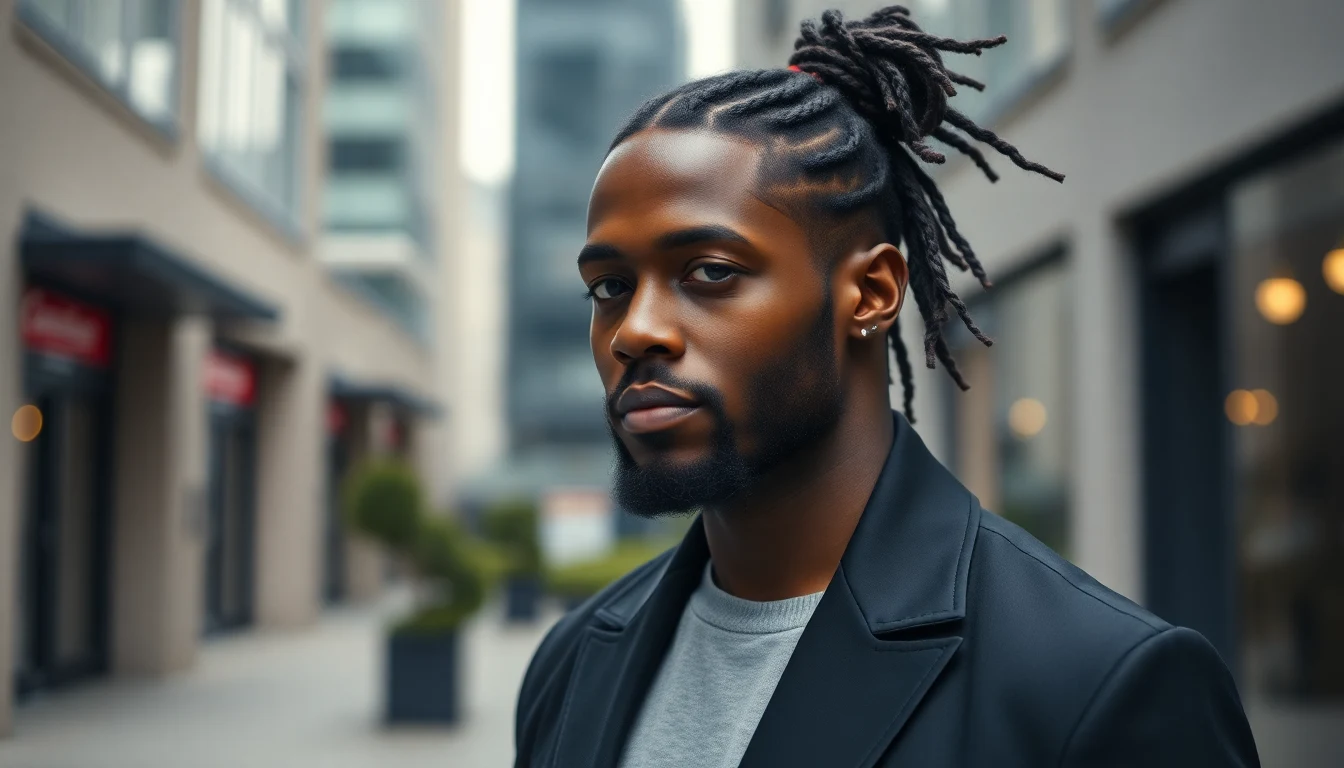
Awkward-Phase Hairstyles
During months 3-8, when the hair is too long for a short style and too short for a bun, use these transitional looks: When it comes to the black man bun, technique matters most.
- Two-strand twists: The single best transitional style. Twists look intentional at any length, keep the hair protected, and stretch it slightly over time. Defined twists on shorter hair can even become their own look.
- Flat twists: Lie closer to the scalp than regular twists. Good for a sleek, professional appearance during the awkward phase.
- Headband: A simple, wide fabric headband pushes the hair back and creates a clean silhouette. Works well in casual settings.
- Durag or wave cap: Compresses the hair and gives you a clean look while the hair grows underneath. Remove when you want the volume out.
- Twist-out or braid-out: Unravel twists or braids after a day for defined, elongated texture that looks styled even at shorter lengths.
Barber Visits During the Grow-Out
You still need your barber during the growing phase, but the instructions change. Tell your barber: When it comes to the black man bun, technique matters most.
- “I am growing the top out. Only clean up the neckline and around the ears.”
- “Do not take anything off the length. Shape only.”
- “I want to keep the sides longer than usual. Just clean up the edges.”
If you are going for a bun with undercut or bun with fade, tell your barber the endgame so they can maintain the sides appropriately while the top grows. A good barber will shape the grow-out so it looks intentional at every stage.

Nutrition for Hair Growth
What you eat affects how fast your hair grows and how strong it is. The key nutrients for hair growth are:
- Biotin (B7): 30-100 mcg daily. Found in eggs, nuts, sweet potatoes. Supports keratin production.
- Iron: Deficiency is a common cause of slow growth. Red meat, spinach, lentils. If you suspect deficiency, get bloodwork before supplementing.
- Zinc: Supports hair tissue growth and repair. Oysters, beef, pumpkin seeds.
- Vitamin D: Low levels are associated with alopecia. Sunlight, fatty fish, fortified milk. Black men are more likely to be vitamin D deficient due to higher melanin levels reducing vitamin D synthesis from sunlight (Forrest & Stuhldreher, Nutrition Research, 2011).
- Water: Hydration directly affects hair moisture from the inside. Minimum 8 glasses daily.
Supplements can help if your diet is inconsistent, but food sources are more bioavailable. A daily multivitamin plus consistent hydration covers most gaps.
What to Tell Your Barber
Communication with your barber is critical during and after the grow-out. Here are the exact scripts for common scenarios:
During the Grow-Out
“I’m growing my hair out for a man bun. I need you to clean up the neckline and around the ears, but don’t touch the length anywhere else. I know it looks awkward right now. Just shape it, don’t cut it.”
For a Bun with Undercut
“I want a [#1 / #2 / skin] on the sides and back. Everything from about two inches above my ears and up, leave it. I’m growing the top for a bun. I’ll come in every two weeks for the sides.”
For a Bun with Fade
“Give me a [low / mid / high] fade on the sides. Blend it into the length on top. Don’t take any length off the top. I want it long enough to pull back.”
When You Have the Full Bun
“Just clean up the neckline, temples, and edges. If you see any split ends on the length, trim the very tips, a quarter inch max. I want to keep the length.”
Frequently Asked Questions
How long does it take a Black man to grow a man bun?
Most Black men need 10-18 months to grow enough length for a full man bun, depending on hair type and retention. A half bun is achievable in 8-12 months. Black hair grows at the same rate as all hair types (about 6 inches per year), but length retention is the main challenge. Consistent moisture, protective styling, and minimal heat use maximize the length you keep.
Does a man bun cause hair loss?
A man bun itself does not cause hair loss, but wearing it too tight or in the same position every day can lead to traction alopecia, a form of hair loss caused by repeated pulling on the hair follicles (Khumalo et al., British Journal of Dermatology, 2007). Prevent this by using satin scrunchies instead of rubber bands, keeping the bun loose enough to slide a finger underneath, alternating between bun positions, and taking the bun down at night.
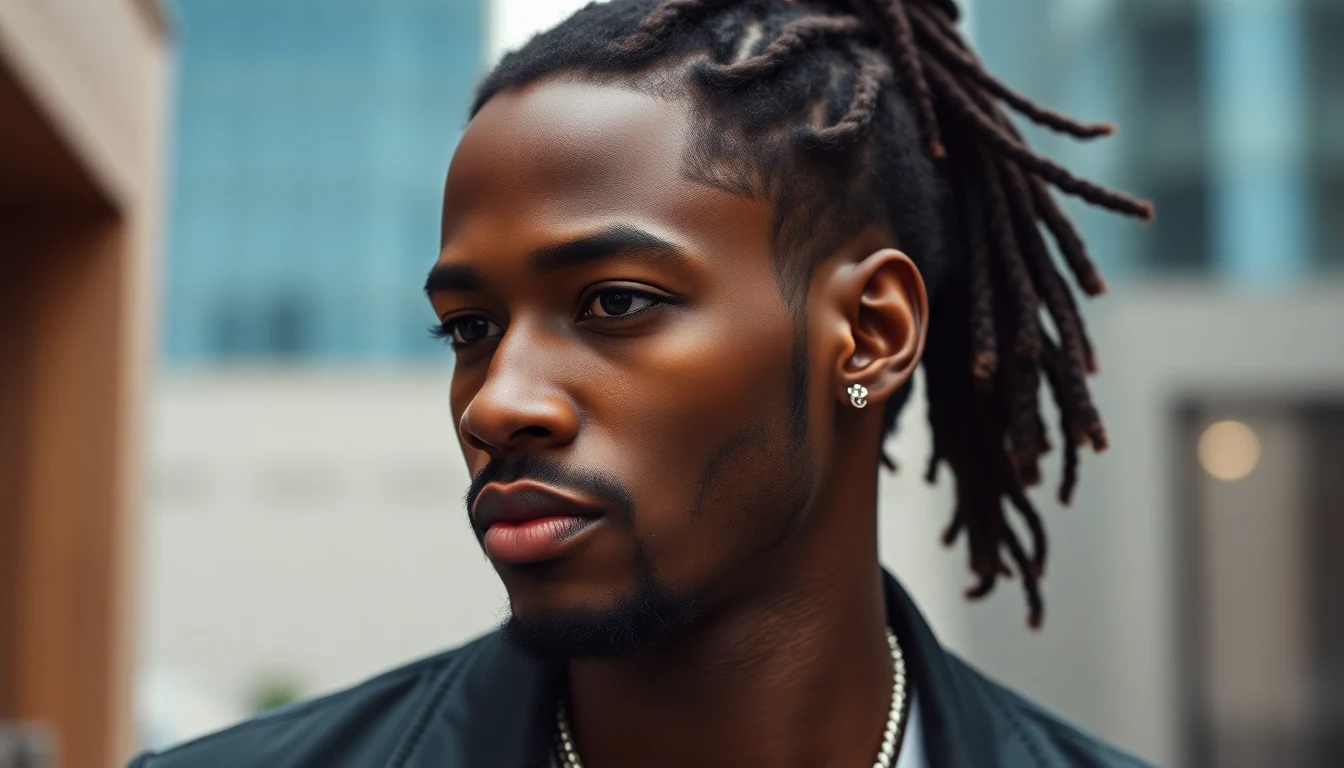
What products should I use for a man bun on 4C hair?
The essential products are a leave-in conditioner for moisture and slip, a satin scrunchie or spiral coil hair tie for hold, and a light hair oil for sealing moisture. For a polished finish, add edge control gel. Deep condition weekly. Avoid rubber bands, heavy gels, and alcohol-based products.
Can you have a man bun with short sides?
Yes. The man bun with undercut (shaved sides) and the man bun with fade (graduated sides) are two of the most popular variations. You only need length on top, usually 6-8 inches of stretched length, while the sides stay short. This combination eliminates the awkward growing-out phase on the sides and creates a clean contrast.
Is the man bun professional enough for work?
In most industries in 2026, yes. A neat, well-maintained man bun is widely accepted in tech, creative, healthcare, and education fields. More conservative industries like finance and law may require a sleeker variation like the low bun with smooth edges. The CROWN Act, now law in over 25 states, protects natural hairstyles from workplace discrimination, providing legal backing for wearing textured hair in professional settings.
How do I keep my man bun from looking messy?
Three factors determine a clean man bun: moisture, gathering technique, and edges. Start with damp, conditioned hair for smooth gathering. Use a wide-tooth comb to remove tangles before styling. Smooth from the hairline backward with both hands before wrapping. Apply edge control gel along the hairline with a soft brush for a polished finish. Tuck any loose strands under the scrunchie. Refresh moisture daily with a water and leave-in conditioner spray.
What to Do Next
Here is the summary:
- Decide your target style. Pick one of the seven variations based on your face shape, hair texture, and lifestyle.
- Start the moisture routine today. Deep conditioning, leave-in conditioner, and sealing with oil are non-negotiable whether you are on month one or month twelve of the grow-out.
- Buy satin scrunchies. Throw away the rubber bands. This is a $10 investment that protects years of growth.
- Tell your barber the plan. Use the scripts above so they shape the grow-out intentionally, not accidentally.
- Be patient through the awkward phase. Months 3-8 are temporary. Twists, flat twists, and headbands get you through. The bun on the other side is worth the wait.
If you are starting from scratch, our guide to growing healthy 4C hair covers the foundational moisture and protein balance your hair needs. For length retention specifically, the afro growing guide has techniques that apply directly to the bun growing-out phase.
The man bun on textured hair is not a trend. It is a versatile, expressive style backed by cultural history and supported by a growing legal framework that protects your right to wear it. Grow it, style it, own it.
Last updated: February 2026
Written by Darius Washington, Black Men’s Grooming Editor at CulturedGrooming.com
Further reading: For research-backed grooming advice, see Healthline Men’s Health.
Explore more tips at CulturedGrooming.com.
Further reading: For research-backed grooming advice, see Healthline Men’s Health.