Razor bumps are a mechanical problem before they are a product problem. The American Academy of Dermatology (AAD) explains that razor bumps, medically called pseudofolliculitis barbae, develop when a razor cuts hairs short. Coarse, curly hairs can then curve back into the skin, and the skin reacts to each trapped hair. The AAD adds that this is especially common in men with a darker skin tone. An aftershave sits at the very end of that chain, so it helps to know what it can and cannot do before you pick one.
How this guide was produced: Cultured Grooming does not buy or test the products it covers. This guide draws on manufacturer specifications and ingredient lists, published guidance from dermatology and barbering sources, and publicly available owner reviews.
What an Aftershave Can and Cannot Do
The AAD recommends a soothing aftershave that is formulated to reduce the risk of razor bumps and irritation, and says to stop using one that burns or stings. That is the job description: calm the skin and cut irritation after a shave. It does not change the angle at which a curly hair leaves the follicle, and no label can promise otherwise.
The same AAD guidance puts most of the prevention in technique. In short:
- Shave daily, or at least every 2 to 3 days, so hairs have less time to grow long enough to curve into the skin.
- Hold a warm compress on the area for 5 minutes, or shave at the end of a shower, so the hairs soften and swell.
- Use a moisturizing shaving cream and let it sit for 1 to 2 minutes. The AAD says never to dry shave.
- Shave in the direction the hair grows, and never go over an area more than 2 times.
- Replace a single-blade razor after 5 to 7 shaves.
- Rinse with warm water, then hold a cool compress on the skin for 5 minutes before the aftershave.
If growing the beard out is an option, the AAD says it removes the cause. It reports fewer bumps within 1 month of stopping and none after 3 months. If bumps keep coming back despite better technique, the AAD advises seeing a board-certified dermatologist, because repeated bumps can leave deep grooves and raised scars.
What to Read on an Aftershave Label
Makers publish ingredient lists and positioning claims. Those are the only things a guide like this can compare honestly, so these are the questions worth asking of each product.
- Alcohol-free or not? Alcohol-free formulas are the safer starting point for skin that stings. Fatty alcohols such as stearyl or cetearyl alcohol are a different ingredient from drying ethanol, even though the word appears in both.
- Fragrance? Fragrance shows up on a label by name or through components such as linalool, citronellol and geraniol. If your skin reacts easily, a fragrance-free formula removes one variable.
- What does the maker actually claim? Claims about bumps and irritation are the maker’s own. Treat them as intent, not as a measured result.
- Is it also a moisturizer? A lotion-style aftershave can double as the moisturizer step; a treatment-style serum usually leaves that to a separate product.
The Aftershave Options on This Page
Bump Patrol Sensitive Strength
Patrol Grooming, the maker of Bump Patrol, describes the Sensitive version as the alcohol-free formula, “as effective as the original, but without alcohol.” It says the line has been on the market since 1991, is made with hydration boosters, and can clear bumps in as little as 48 hours. That last line is a marketing claim, and the AAD’s own timeline for razor bumps is much longer when the cause is not addressed. The maker’s FAQ names aloe vera, witch hazel and vitamin E as key ingredients, but the product page read for this guide does not carry a full ingredient list, so check the box before buying if you avoid a specific ingredient.

On paper it suits men who want a treatment-style aftershave without alcohol and are comfortable relying on the maker’s description. Skip it if you need a complete ingredient list before you buy.
The Beard Club Aftershave Lotion
The Beard Club describes its aftershave as a fast-absorbing, alcohol-free lotion built around chamomile, tea tree oil and willow bark, free from parabens, sulfates and gluten. The published ingredient list opens with water, isopropyl myristate, glycerin, propanediol and phenoxyethanol, then a group of emulsifiers, then willow bark extract, tea tree leaf oil and chamomile flower extract. It also lists the skin lipids ceramide NP, ceramide AP, ceramide EOP, phytosphingosine and cholesterol, which belong to the moisturizing side of the job. Fragrance (parfum) is on the list, which matters if fragrance is a trigger for you. The maker says the lotion helps prevent shaving bumps and irritation.
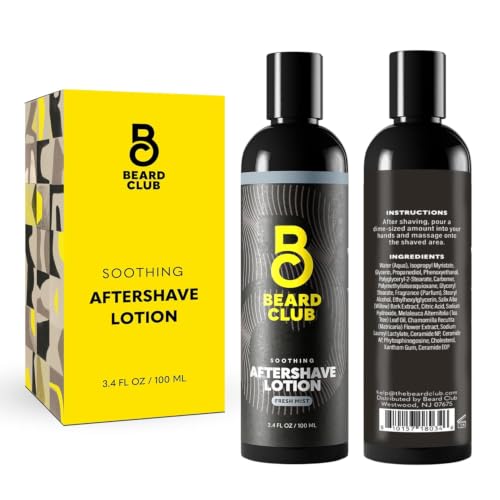
The Beard Club sells the same lotion as a single bottle and as a 3 pack. The card below is the 3 pack listing.

On paper it suits a daily lotion-style routine for men who tolerate a lightly scented product. The 3 pack only makes sense if you shave often enough to use it up.
Jack Black Double-Duty Face Moisturizer SPF 20
This is not an aftershave in the usual sense. Jack Black sells it as a lightweight moisturizer with broad-spectrum SPF 20, listing avobenzone 2.2% and octocrylene 9.5% as the sunscreen actives. Its directions say to use it after cleansing and shaving and to apply it 15 minutes before sun exposure, and it is listed in a 1.5 oz tube and a 3.3 oz bottle. The AAD recommends a sunscreen with an SPF of 30 or higher, so SPF 20 sits below that benchmark. The ingredient list includes lavender oil, geranium oil, linalool, citronellol and geraniol, so it is not fragrance-free.

Jack Black Skin Saviors Set
Jack Black’s Skin Saviors set bundles 4 products in travel-friendly TSA-approved sizes: the Pure Clean Daily Facial Cleanser, the Double-Duty Face Moisturizer SPF 20, an Intense Therapy Lip Balm with SPF 25, and the Face Buff Energizing Scrub. It is a skincare starter kit rather than a razor-bump product. The scrub is the item to approach with care: the AAD’s razor bump routine calls for a gentle cleanser applied with a soft cloth, not aggressive exfoliation.

Related Products Listed Here
Ouiloe Beard Oil for Dry Skin
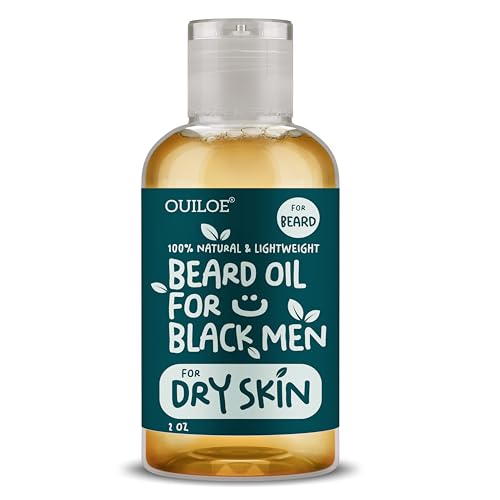
Ouiloe markets this oil as unscented, fragrance-free and non-comedogenic, for dry, sensitive or acne-prone skin under a beard. Its listed ingredients are grapeseed, abyssinian, vitamin E, meadowfoam seed, sesame seed, almond and jojoba oils, so anyone with a sesame or nut allergy should read the list first. The maker also claims it helps reduce ingrown hairs and razor bumps; treat that as a marketing claim rather than a dermatology result. The Amazon listing in the card is the 2 oz size.
tiovara Beard Trimmer
The tiovara trimmer is listed as a 3-in-1 grooming kit that is IPX7 waterproof for wet or dry use. IPX7 is a water-resistance rating for brief immersion, not a statement about cut quality. No maker specification page was reachable for this guide, so blade type, battery life and guard lengths are unverified here. It is relevant to this topic only as a beard and body grooming tool listed alongside the aftershaves.

A Simple Aftershave Routine
- Wash with a gentle, non-comedogenic cleanser and warm water.
- Soften the hair with a warm compress for 5 minutes, or shave at the end of a shower.
- Apply moisturizing shaving cream and give it 1 to 2 minutes.
- Shave with the grain, with a fresh blade, without pulling the skin tight.
- Rinse with warm water, then hold a cool compress on the skin for 5 minutes.
- Apply the aftershave. If it burns or stings, stop using it and try a different formula.
Frequently Asked Questions
Can aftershave prevent razor bumps?
Not on its own. The AAD puts most of the prevention in technique: softening the hair, shaving with the grain, using a sharp blade and shaving often enough that hairs do not grow long. A good aftershave calms the skin afterward and fits into that routine.
Should Black men avoid aftershave with alcohol?
The AAD says to stop using any aftershave that burns or stings. Alcohol-free formulas are the lower-risk place to start for reactive skin, but the label alone does not guarantee comfort.
Is fragrance a problem in aftershave?
Not for everyone, but fragrance and its components are a common reason for irritation. If your skin reacts, a fragrance-free product removes one variable.
Do I need a moisturizer as well as an aftershave?
A lotion-style aftershave with moisturizing ingredients can cover both steps for many routines. A treatment-style product usually leaves moisturizing to a separate step.
When should I see a dermatologist?
The AAD advises seeing a board-certified dermatologist if you still get razor bumps after you change how you shave, because repeated bumps can cause deep grooves and raised scars.
The Short Version
Fix the shave first: soften the hair, shave with the grain, keep the blade fresh. Then choose an aftershave by its published ingredient list and the maker’s own claims, not by promises of fast results. Of the options on this page, Bump Patrol Sensitive and the Beard Club lotion are the two actual aftershaves. The right one depends on whether you want a treatment-style or lotion-style finish, and whether fragrance bothers your skin.
