Disclaimer: This article is for informational purposes only and is not medical advice. Hair loss can have many causes, some of which require professional diagnosis and treatment. Consult a board-certified dermatologist before starting any new treatment, especially medications like minoxidil or finasteride.

I’ve sat in enough barber chairs and had enough honest conversations to know this: hair loss hits different when nobody in the grooming industry is talking about the specific ways it affects Black men. Traction alopecia from tight braids and fades. CCCA that dermatologists are just now taking seriously. Patterns that don’t match the Norwood scale charts designed around straight hair. If you want to know how to prevent hair loss black men actually experience, you need information that starts with our hair, our styles, and our biology. Not a generic “use Rogaine” article with a stock photo that doesn’t look like you. This is the guide I wish existed when I first noticed my edges getting thinner.
If you only read one section, go to the “Signs to Watch For” checklist. Early detection is everything with hair loss. The earlier you act, the more you save.
Why Hair Loss Affects Black Men Differently: How To Prevent Hair Loss
Hair loss is not one condition. It’s a category that includes at least half a dozen distinct causes, and several of them disproportionately affect Black men due to hair texture, styling culture, and historical gaps in dermatological research.
Here’s what makes this different for us:
- Tightly coiled hair is structurally unique. The elliptical cross-section of 4B/4C hair means it’s more prone to breakage at twist points. When external tension (from braids, locs, or tight fades) combines with this structure, the follicle takes damage faster than straight-haired follicles would under the same stress.
- Styling culture involves traction. Cornrows, tight braids, heavy loc extensions, durags worn too tightly, and close-shaved fades with sharp edge-ups all create mechanical stress on the hairline and temples. These are cultural staples, not vanity choices. But the physics of tension on follicles doesn’t change based on cultural significance.
- CCCA is underdiagnosed. Central Centrifugal Cicatricial Alopecia (CCCA) is a scarring form of hair loss that starts at the crown and radiates outward. It predominantly affects people of African descent and was historically dismissed as “just thinning.” Research is catching up, but many general dermatologists still miss it.
- Clinical trials underrepresent us. Most hair loss studies, including the landmark minoxidil and finasteride trials, enrolled predominantly white participants. The data is extrapolated to Black men, but specific efficacy data on 4C hair and darker skin types is limited. I’ll be honest about what the science does and doesn’t confirm throughout this guide.
Common Causes of Hair Loss in Black Men
Androgenetic Alopecia (Male Pattern Baldness)
This is the most common cause of hair loss in men worldwide. Dihydrotestosterone (DHT), a hormone converted from testosterone, shrinks hair follicles over time until they stop producing visible hair. In Black men, the pattern often looks different from the classic “Norwood scale” progression designed around straight hair. Instead of a clean receding M-shape at the temples, you might notice diffuse thinning across the top, loss of density at the crown, or a general softening of the hairline. A 2018 study in the Journal of Clinical and Aesthetic Dermatology noted that androgenetic alopecia in Black men frequently presents differently from other ethnic groups, making self-diagnosis unreliable.
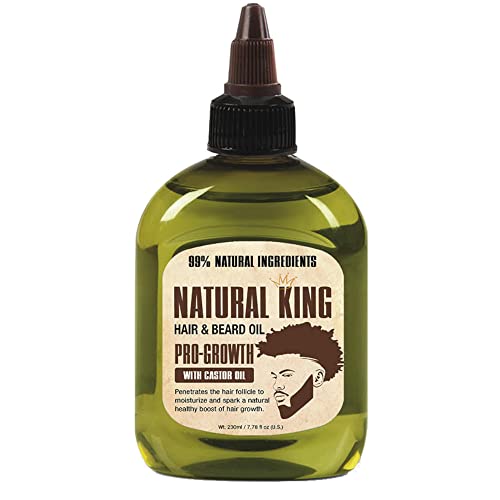
What to watch for: Gradual thinning at the crown or temples. Hair that used to be dense and thick now feels thinner. Your barber starts needing less time on the top. Your fade shows more scalp than it used to. (We recommend this SFC Natural King Pro-growth Castor Hair.)
Traction Alopecia
This is the one I want every Black man to understand. Traction alopecia is hair loss caused by repeated pulling or tension on the hair follicle. It’s not genetic. It’s mechanical. And it’s almost entirely preventable.
The most common causes in Black men:
- Tight braids and cornrows. When braids pull at the hairline, temples, or nape, they create chronic inflammation at the follicle. Over months or years, the follicle scars and stops producing hair.
- Heavy or long locs. Mature locs get heavy. That weight pulls on the roots, especially at the temples and crown. Men who retwist their locs too tightly or too frequently compound the problem.
- Tight edge-ups and lineup maintenance. Getting your edges shaved with a straight razor every two weeks creates repeated micro-trauma at the hairline. The hairline can recede permanently from this cycle.
- Durags and wave caps worn too tightly. A durag should compress, not constrict. If it leaves deep indentation lines on your forehead or temples, it’s too tight. Over time, this contributes to follicular stress.
- Man buns and tight ponytails. Pulling longer hair into a tight top knot puts constant tension on the front hairline and temples.
The critical fact: Traction alopecia is reversible in the early stages. If you catch it while the follicle is inflamed but not scarred, the hair can grow back once you remove the tension. Once the follicle scars over, the loss is permanent. That’s why the checklist below matters.

Central Centrifugal Cicatricial Alopecia (CCCA)
CCCA is a scarring alopecia that begins at the crown and spreads outward in a centrifugal pattern. It predominantly affects people of African descent and is more commonly discussed in relation to women, but it affects men too, and it’s often misdiagnosed as standard male pattern baldness.
A 2019 study in the Journal of the American Academy of Dermatology found that CCCA may have a genetic component linked to a mutation in the PADI3 gene, which affects hair shaft formation. Researchers at Johns Hopkins also found associations between CCCA and uterine fibroids in women, suggesting systemic factors beyond hair care practices.
What makes CCCA different from androgenetic alopecia:
- It starts at the very center of the crown and expands outward in a circular pattern.
- The affected scalp often appears shiny or smooth (scarring has replaced the follicles).
- It can cause tenderness, itching, or a tingling sensation at the crown before visible hair loss appears.
- A scalp biopsy is needed to confirm the diagnosis. CCCA destroys the follicle permanently, so early detection is critical.
If you notice thinning starting specifically at the center of your crown, see a dermatologist who specializes in hair loss in patients of color. Do not wait. CCCA cannot be reversed once the scarring is established, but early treatment can stop it from spreading.
Alopecia Areata
Alopecia areata is an autoimmune condition where the immune system attacks hair follicles, causing round, smooth patches of hair loss. It can happen anywhere on the head or body. It’s not caused by styling, stress alone, or products. While stress can trigger episodes, the underlying cause is immune system dysfunction.
This condition affects all races, but it’s worth noting because its presentation on darker skin and tightly coiled hair can look different from textbook images (which are overwhelmingly based on white patients). If you develop a sudden, smooth, round bald patch with no scarring, see a dermatologist immediately. Several treatments exist, including corticosteroid injections and the newer JAK inhibitor medications (baricitinib was FDA-approved for alopecia areata in 2022).
Nutritional Deficiencies
This one gets overlooked. Your hair follicles need specific nutrients to function. Deficiencies in the following can contribute to thinning or shedding:
- Iron: Low ferritin levels are linked to telogen effluvium (excessive shedding). A simple blood test can check this.
- Vitamin D: A 2019 study in Dermatology and Therapy found associations between vitamin D deficiency and alopecia areata. Black men are at higher risk for vitamin D deficiency due to melanin’s effect on vitamin D synthesis from sunlight.
- Zinc: Zinc supports hair follicle cell division. Deficiency can lead to diffuse thinning.
- Biotin: Often marketed as a hair growth supplement, but biotin deficiency is rare in people with a balanced diet. Supplementation only helps if you’re actually deficient.
- Protein: Hair is made of keratin, a protein. Inadequate dietary protein (common in restrictive diets) can reduce hair growth.
Before supplementing, get blood work. Random supplementation without knowing your levels is guessing, not strategy.
Signs to Watch For: Your Early Detection Checklist
Print this. Put it on your bathroom mirror. Check it monthly. Early detection is the single most important factor in preventing permanent hair loss.
Monthly Hair Loss Self-Check
Do this on the first of every month. It takes two minutes.
- [ ] Hairline check: Take a photo of your hairline from the front. Compare to last month’s photo. Is the hairline retreating? Are the temples thinner?
- [ ] Crown check: Use a second mirror or your phone to photograph the top/crown of your head. Is the center showing more scalp than before?
- [ ] Edge check: Run your fingers along your temples and the edges of your hairline. Is the hair thinner, softer, or shorter than the rest? Do you see small broken hairs?
- [ ] Shed count: After detangling on wash day, look at the hair in your comb and shower drain. A noticeable increase from your baseline is a signal.
- [ ] Scalp sensitivity: Does your crown, temples, or hairline feel tender, itchy, or tingly? This can be an early sign of CCCA or folliculitis before visible loss appears.
- [ ] Texture change: Has any area of your hair become noticeably finer or softer than the rest? This indicates miniaturization, where DHT is shrinking the follicle.
- [ ] Part widening: If you part your hair, is the part getting wider? This indicates diffuse thinning.
If you check “yes” to 2 or more items, schedule a dermatologist appointment this month.

Prevention Strategies That Actually Work
1. Reduce Tension on Your Hair
This is the single most impactful prevention strategy for Black men because traction alopecia is the most preventable form of hair loss in our community. (We recommend this Jack Black Beard Oil for Men.)
Practical changes:
- Looser braids. If your braids give you a headache or cause small bumps at the hairline, they’re too tight. Tell your braider directly. A good braider will adjust without pushback.
- Rotate styles. Don’t wear the same tension style for months without breaks. Alternate between braids, a free natural style, twists, and cuts. Each style stresses different areas. Rotation distributes the load.
- Reduce edge-up frequency. Getting a razor-sharp lineup every two weeks puts chronic stress on your hairline. Stretch it to three or four weeks when possible. Touch up with clippers instead of a straight razor.
- Gentle durags. Silk durags create less friction than polyester. Tie them snug, not tight. If the tie line leaves a deep indentation on your forehead, loosen it.
- Lighter locs. If your locs are heavy, consider reducing length. Discuss with your loctician about maintaining shorter, lighter locs that put less tension on the roots. Avoid adding heavy extensions.
- Give your edges a break. If you’re growing your hair out, let your edges exist without constant manipulation. Slicking down edges with gel and a brush daily adds up. Rest periods let the follicles recover.
2. Scalp Care Routine
A healthy scalp environment supports healthy follicles. Clogged, inflamed, or dry scalps compromise the foundation where hair grows.
- Wash regularly with the right shampoo. Every 7-10 days with a sulfate-free shampoo that cleanses without stripping. A clean scalp is a healthy scalp.
- Scalp massage. Three to five minutes of fingertip circular massage during each wash. A 2016 ePlasty study found that standardized scalp massage increased hair thickness over 24 weeks by improving blood flow to follicles.
- Lightweight scalp oils. After washing, apply a few drops of Mielle Rosemary Mint Oil or tea tree oil diluted in a carrier oil directly to the scalp. A 2015 study in BMC Complementary Medicine and Therapies (formerly BMC Complementary and Alternative Medicine) found that rosemary oil performed comparably to 2% minoxidil for androgenetic alopecia over six months.
- Exfoliate monthly. A gentle scalp scrub or a salicylic acid-based scalp treatment removes dead skin cells and product buildup that can suffocate follicles.
- Address dandruff aggressively. Chronic dandruff (seborrheic dermatitis) creates scalp inflammation that can weaken follicles. If over-the-counter dandruff shampoos aren’t controlling it, see a dermatologist. Prescription-strength ketoconazole shampoo also has mild anti-DHT properties.
3. Nutrition for Hair Health
You can’t supplement your way out of a bad diet, but specific nutrients support follicle function. Build these into your daily eating rather than relying on pills.

| Nutrient | Why It Matters for Hair | Food Sources | Daily Target |
|---|---|---|---|
| Protein | Hair is 95% keratin (a protein). Low protein = slow growth. | Chicken, fish, eggs, beans, lentils | 0.8-1g per pound of body weight |
| Iron | Carries oxygen to follicles. Low ferritin = shedding. | Red meat, spinach, fortified cereals | 8mg (men); get levels tested |
| Vitamin D | Stimulates follicle cycling. Black men at higher deficiency risk. | Fatty fish, fortified milk, sunlight | 1000-2000 IU daily (test first) |
| Zinc | Supports cell division in the follicle. | Oysters, beef, pumpkin seeds | 11mg |
| Omega-3 fatty acids | Reduces scalp inflammation. | Salmon, mackerel, walnuts, flaxseed | 1-2 servings of fatty fish per week |
| Biotin | Supports keratin production. Only helpful if deficient. | Eggs, nuts, sweet potatoes | 30mcg (easily met through diet) |
Important: Get blood work done before supplementing iron or vitamin D. Excess iron is toxic. Excess vitamin D accumulates and can cause hypercalcemia. Work with your doctor. Don’t guess.
4. Stress Management
Chronic stress triggers telogen effluvium, a condition where hair follicles prematurely enter the resting phase and then shed simultaneously. The stressor can be emotional (grief, anxiety, job loss) or physical (illness, surgery, extreme dieting). The shedding typically occurs two to three months after the stressor.
I’m not going to tell you to “just relax.” That’s useless advice. What I will say is that the barbershop conversations I’ve had about stress, anxiety, and mental health have been some of the most important conversations of my life. Black men deal with specific stressors, and the cultural expectation to push through silently makes it worse.
If you’re dealing with chronic stress and noticing increased shedding:
- Talk to someone. A therapist, your barber, a friend. The barbershop has always been a space for this. Use it.
- Exercise. Regular physical activity reduces cortisol. Even three 30-minute walks per week measurably lowers stress hormones.
- Sleep. Sleep deprivation increases cortisol and disrupts hair growth cycling. Seven to eight hours is the target.
- The shedding from stress-related telogen effluvium is usually temporary. Once the stressor resolves and cortisol normalizes, regrowth begins within three to six months.
5. Gentle Hair Handling
Beyond specific styles, how you handle your hair daily matters for retention.
- Detangle wet, with conditioner. Never dry. Never without slip. Start from the ends, work up. This prevents snapping weakened strands. See my full 4C hair growth guide for the step-by-step routine.
- Moisturize consistently. The LOC method (Liquid, Oil, Cream) keeps coils hydrated and flexible. Dry coils snap. Moisturized coils bend. The right leave-in conditioner makes this easy.
- Satin everything. Satin pillowcase, satin bonnet, satin-lined hats. Cotton pulls moisture and creates friction that breaks hair at the weakest points.
- Limit heat. Keep it under 350 degrees Fahrenheit, maximum once a month. Heat damage weakens the hair shaft permanently. Every heat session you skip is breakage you prevent.
Treatment Options: What the Science Says
I’m going to be honest about what works, what might work, what doesn’t work, and what we don’t know enough about. Hair loss treatment is an industry full of promises and light on evidence. Here’s the evidence.
Minoxidil (Rogaine)
What it does: Minoxidil is a vasodilator that increases blood flow to hair follicles and extends the growth phase (anagen phase) of the hair cycle. It’s available over the counter in 2% and 5% concentrations (liquid and foam).
What the evidence says: Minoxidil is FDA-approved for androgenetic alopecia. The major clinical trials showed hair regrowth or reduced loss in approximately 60% of men after 4-6 months of consistent use. However, most of these trials enrolled predominantly white participants. A 2020 retrospective study in the Journal of Drugs in Dermatology found that Black patients responded to minoxidil but had higher rates of scalp dryness and irritation, likely due to the alcohol content in the liquid formula. (We recommend this Beaueli Minoxidil Beard Growth Kit For.)
Practical notes for Black men:
- The 5% foam is generally better tolerated than the liquid on textured hair. The liquid can dry out the scalp and leave residue that’s visible on darker skin.
- Apply to a clean, dry scalp. Oily or product-covered scalp reduces absorption.
- You must use it every day, indefinitely. If you stop, the hair gained from minoxidil sheds within two to three months. This is a lifetime commitment if you start.
- Results take 4-6 months minimum. Many men quit at month two thinking it’s not working. Give it six months before evaluating.
- It works best for thinning areas where follicles are still alive but miniaturized. It does not regrow hair in areas where follicles have scarred over (like late-stage traction alopecia or CCCA).
Finasteride (Propecia)
What it does: Finasteride blocks the enzyme (5-alpha reductase) that converts testosterone to DHT. Less DHT means less follicle miniaturization. It’s a prescription oral medication, typically 1mg daily.
What the evidence says: The original trials showed that finasteride maintained or increased hair count in about 83% of men after two years. Again, these trials were not representative of Black men. A 2023 review in Dermatologic Therapy called for more diverse inclusion in hair loss trials and noted that while the mechanism should work across ethnicities, dose-response data specific to Black men remains limited.
Side effects (the honest discussion):
This is where I won’t sugarcoat things. Finasteride’s side effect profile includes:
- Sexual side effects: Decreased libido, erectile dysfunction, and reduced ejaculate volume have been reported in 2-4% of users in clinical trials. Most studies show these resolve after stopping the medication.
- Post-finasteride syndrome (PFS): A small number of men report persistent sexual, neurological, or psychological symptoms after discontinuing finasteride. PFS is controversial in the medical community. The FDA added warnings in 2012, and some studies support its existence, while others dispute its prevalence. If you’re considering finasteride, discuss this directly with your doctor.
- Mental health: Some reports link finasteride to depression and anxiety. The evidence is mixed, but it’s worth monitoring.
My take: Finasteride works well for many men. The side effect rate is low but real. Make this decision with a doctor who will actually discuss the risks, not dismiss them. Get baseline blood work (including testosterone and PSA) before starting, and check in at three-month intervals.

Platelet-Rich Plasma (PRP)
What it does: PRP therapy involves drawing your blood, spinning it in a centrifuge to concentrate the platelets (which contain growth factors), and injecting that concentrated plasma into your scalp at areas of thinning.
What the evidence says: A 2019 meta-analysis in Dermatologic Surgery found that PRP showed statistically significant improvement in hair density and thickness compared to placebo in most included studies. It appears most effective for androgenetic alopecia and is being explored for other types.
Practical notes:
- Requires multiple sessions (typically 3-4 initial treatments spaced 4-6 weeks apart, then maintenance every 6-12 months).
- Costs $500-$1,500 per session. Insurance does not cover it.
- Minimal side effects (mild scalp soreness for a day or two).
- Not a standalone solution. Best used in combination with minoxidil or finasteride.
- Ask your dermatologist about their specific PRP protocol. Not all centrifuge systems produce the same platelet concentration, and higher concentration generally means better results.
Microneedling (Dermarolling)
What it does: Microneedling uses tiny needles (0.5mm to 1.5mm) to create controlled micro-injuries in the scalp. This triggers a wound-healing response that includes increased collagen production, growth factor release, and improved absorption of topical treatments like minoxidil.

What the evidence says: A 2013 study in the International Journal of Trichology found that microneedling combined with minoxidil produced significantly better results than minoxidil alone. A 2021 systematic review confirmed these findings across multiple studies.
Practical notes for Black men:
- Use a derma pen, not a derma roller. Pens create vertical punctures, while rollers drag and tear. On tightly coiled hair, a roller will snag and pull. Pens are more precise.
- 1.0mm to 1.5mm needle depth for the scalp. Anything less doesn’t reach the dermis where growth factors matter.
- Do it once a week to once every two weeks. More is not better. The scalp needs time to heal.
- Wait 24 hours after microneedling before applying minoxidil. The open micro-channels increase absorption significantly, which can cause systemic side effects if applied immediately.
- Black skin has a higher risk of keloid formation. While scalp keloids from microneedling are rare, start with shorter needle lengths (0.5mm) and see how your skin responds before going to 1.5mm. If you have a history of keloids, discuss this with your dermatologist first.
Low-Level Laser Therapy (LLLT)
What it does: LLLT devices (laser caps, laser combs, laser helmets) emit red or near-infrared light at specific wavelengths that are thought to stimulate hair follicle metabolism and extend the growth phase. (We recommend this SFC Natural King Pro-Growth Hair &.)
What the evidence says: The FDA has cleared several LLLT devices as safe for treating hair loss. A 2014 study in the American Journal of Clinical Dermatology found that LLLT produced a significant increase in hair density compared to sham devices. The effect size is modest. You’re not going to go from thinning to a full head of hair with a laser cap alone.
Practical notes:
- Best used as an adjunct to other treatments, not as a standalone.
- Requires consistent use (15-25 minutes, 3-4 times per week).
- Costs range from $200 (laser combs) to $1,000+ (laser caps).
- No significant side effects reported.
- Be wary of marketing claims that promise dramatic results. The clinical evidence supports mild to moderate improvement.
What Does NOT Work
Let me save you some money and false hope:
- Biotin supplements (if you’re not deficient): Biotin deficiency is rare. If your levels are normal, extra biotin won’t grow hair. It’s one of the most over-marketed supplements in the hair loss space.
- Hair growth gummies: Most contain biotin, vitamins you already get from food, and sugar. The clinical evidence for these products specifically is nonexistent.
- “Hair growth shampoos” without active ingredients: A shampoo that claims to grow hair but doesn’t contain minoxidil, ketoconazole, or another evidence-backed ingredient is a moisturizing shampoo with marketing.
- Essential oils alone: Rosemary oil has some evidence for mild benefit (comparable to 2% minoxidil in one study), but most essential oils sold as “hair growth” solutions have no clinical backing. Use them for scalp health, not as a primary treatment for diagnosed hair loss.
- Scalp detoxes and cleanses marketed as hair loss cures: A clean scalp supports healthy hair, but no “detox” reverses androgenetic alopecia or CCCA.
Specific Risks from Common Black Men’s Hairstyles
I’m not telling you to stop wearing these styles. I’m telling you how to wear them safely.
Tight Fades and Edge-Ups
The fresh fade is a cultural staple. But bi-weekly razor edge-ups create repeated micro-trauma along the hairline. Over years, this can cause the hairline to recede permanently.
Safer approach: Extend time between edge-ups to three to four weeks. Use clippers with a half guard for touch-ups between barber visits instead of a razor. Tell your barber to keep the lineup natural rather than creating artificially sharp angles. The sharper the angle, the more follicles get razored repeatedly.
Braids and Cornrows
Traction alopecia from braids is the most common form of preventable hair loss in Black men.

Safer approach: Braids should never hurt. If they do, they’re too tight. Leave a finger’s width of slack at the hairline. Don’t leave braids in longer than four weeks. Take a two-week break between braid installations. Avoid adding heavy extensions that increase the pull weight. Moisturize your scalp while braids are in, using a lightweight oil like Mielle Rosemary Mint Oil applied with an applicator bottle every two to three days.

Locs
Locs are a long-term commitment with real cultural and spiritual significance. But they carry unique hair loss risks that require attention.
Safer approach: Don’t retwist too frequently. Every four to six weeks is sufficient. Let new growth exist between retwists. Avoid palm-rolling with excessive pressure. Keep locs at a manageable weight. If your locs reach your shoulders, the weight on your crown and temple follicles is significant. A loctician who prioritizes scalp health over aesthetic tightness is worth finding. If you’re starting locs, my complete guide to starting and maintaining locs covers methods, timelines, and maintenance.
360 Waves
Waves themselves don’t cause hair loss. But the maintenance habits can contribute. When it comes to how to prevent hair loss, technique matters most.
Safer approach: Don’t over-brush. Three to four brush sessions per day, five to ten minutes each, is sufficient during active training. More than that creates mechanical stress. Don’t tie your durag so tightly that it leaves marks. Use a silk durag to minimize friction. During the wolfing phase, resist the urge to get a cut too early. Wolfing builds the wave pattern; cutting too short and too often means more friction from brushing shorter, more fragile hair. For the full system, see my 360 waves guide. When it comes to how to prevent hair loss, technique matters most.
When to See a Dermatologist
Not all hair loss needs a doctor. Normal shedding is 50-100 hairs per day. Seasonal increases happen. But some situations require professional evaluation immediately.
See a Dermatologist If:
- You notice sudden, rapid hair loss (over days or weeks, not months).
- You develop smooth, round bald patches (possible alopecia areata).
- Your crown is thinning in a circular pattern with shiny, smooth scalp (possible CCCA).
- Your hairline is receding despite changing styles and reducing tension.
- Your scalp is itchy, painful, or shows bumps or pustules near the hairline (possible folliculitis or scarring alopecia).
- You’ve tried over-the-counter treatments for six months with no improvement.
- You have a family history of early baldness and want to start preventive treatment.
Finding the Right Dermatologist
This matters more than most men realize. Dermatology has a well-documented gap in training on skin and hair conditions in patients of color. A 2018 study in the Journal of the American Academy of Dermatology found that most dermatology textbooks significantly underrepresent images of skin conditions on darker skin tones.
Look for:
- A board-certified dermatologist (not an aesthetician, not a trichologist without medical credentials).
- Experience treating patients with darker skin tones and textured hair. Ask directly: “How many Black patients do you treat for hair loss?”
- Familiarity with CCCA, traction alopecia, and androgenetic alopecia presentation in Black men.
- Willingness to do a scalp biopsy if the diagnosis isn’t clear. A biopsy is the gold standard for distinguishing between scarring and non-scarring alopecia.
Resources:
- Skin of Color Society (skinofcolorsociety.org): Directory of dermatologists specializing in diverse skin types.
- Black Derm Directory: A listing of Black dermatologists across the US.
- Ask your barber. Seriously. Barbers in the Black community often know which local dermatologists actually understand our hair and skin. My barber referred me to the dermatologist I still see today.
Building a Hair Loss Prevention Routine
Here’s the complete system, pulled together from everything above. Adjust based on your specific situation.
Daily (5 Minutes)
- Moisturize hair with the LOC or LCO method (spray, oil, cream). Hydrated coils resist breakage.
- Apply rosemary mint oil to the scalp if you’re targeting thinning areas (2-3 drops, massage in).
- Sleep on satin. Every night, no exceptions.
Weekly
- Wash day with sulfate-free shampoo. Massage the scalp for three to five minutes during washing.
- Deep condition for 20-30 minutes with heat.
- Gentle detangling while conditioner is in. Wide-tooth comb only. Ends to roots.
Monthly
- Self-check using the checklist above. Take photos. Compare.
- Clarifying wash to remove buildup.
- Scalp exfoliation (gentle physical scrub or salicylic acid treatment).
Every 3-6 Months
- Evaluate your hairstyle tension. Are your edges healthy? Is your hairline holding?
- Blood work if you’re supplementing or if shedding has increased (iron, vitamin D, thyroid, testosterone).
- Trim to remove damaged ends.
What to Expect: The Recovery Timeline
If you’ve already noticed thinning and you’re starting treatment or changing your routine, here’s a realistic timeline. Managing expectations prevents frustration, which prevents quitting.
| Timeframe | What to Expect |
|---|---|
| Month 1 | No visible change. Internal processes are starting. Follicles are shifting from resting to growth phase. |
| Month 2-3 | Possible increased shedding (especially with minoxidil). This is normal. The follicle is pushing out the old, miniaturized hair to make room for thicker growth. Don’t panic. Don’t quit. |
| Month 4-6 | First visible improvement. Thinning areas may show softer, finer baby hairs (vellus hairs) emerging. Shedding stabilizes. If using minoxidil, this is when most men first notice results. |
| Month 6-12 | Meaningful improvement. Vellus hairs thicken into terminal hairs. Density increases. This is where photos from month one become your motivation. |
| Month 12+ | Continued improvement or maintenance. Most treatments reach peak benefit around month 12-18. After that, the goal shifts to maintaining what you’ve regained. |
Critical note: This timeline applies to follicles that are still alive but miniaturized. Scarred follicles (from advanced traction alopecia or CCCA) do not recover. The timeline also assumes consistent, daily adherence to your routine and treatments. Missing doses or skipping weeks resets your progress.
Frequently Asked Questions
Is hair loss genetic for Black men?
Androgenetic alopecia (male pattern baldness) has a strong genetic component and affects Black men, though it often presents differently than in other ethnic groups. The pattern may be more diffuse rather than following the classic Norwood scale. However, many Black men experience hair loss from non-genetic causes like traction alopecia and CCCA. A dermatologist can determine whether your specific hair loss is genetic, mechanical, or a combination.
Can tight braids cause permanent hair loss?
Yes. Traction alopecia from tight braids is one of the most common forms of preventable permanent hair loss in the Black community. In the early stages, when the follicle is inflamed but not yet scarred, the hair can regrow once tension is removed. In later stages, the follicle scars over and the loss becomes permanent. This is why reducing tension and taking breaks between braid installations is essential.
Does minoxidil work on Black hair?
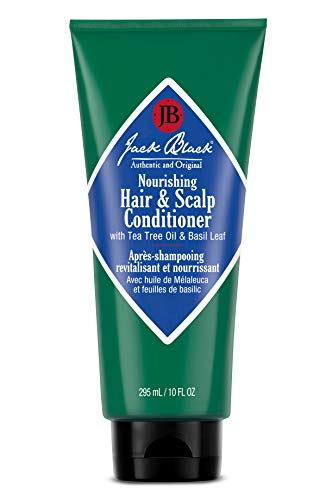
Minoxidil works on the follicle, not the hair shaft, so it should work regardless of hair texture. Clinical evidence supports its efficacy, though most major trials enrolled predominantly white participants. Black men may experience more scalp dryness from the liquid formula. The 5% foam is generally better tolerated. Consistent daily use for at least six months is needed to evaluate results. (We recommend this Jack Black Nourishing Hair & Scalp.)
What is CCCA and should I be worried?
Central Centrifugal Cicatricial Alopecia is a scarring form of hair loss that starts at the crown and expands outward. It predominantly affects people of African descent and can cause permanent hair loss because it destroys the follicle. Early signs include thinning at the center of the crown, scalp tenderness or tingling in that area, and a shiny appearance to the affected scalp. If you notice these symptoms, see a dermatologist immediately. Early treatment can halt progression, but lost follicles cannot be recovered.
Are hair growth supplements worth it?
Only if you have a documented deficiency. Biotin, which is the most heavily marketed hair supplement, only benefits people who are actually biotin-deficient, which is rare in people eating a balanced diet. Vitamin D supplementation may help Black men because melanin reduces vitamin D synthesis from sunlight, leading to higher deficiency rates. The responsible approach is to get blood work done, identify any deficiencies, and supplement specifically for those. Random vitamin stacking is expensive guessing.
How do I know if my hair loss is from stress?
Stress-related hair loss (telogen effluvium) typically appears as diffuse, all-over thinning rather than in specific patterns. It usually starts two to three months after a major stressor (emotional trauma, illness, surgery, extreme weight loss). The key distinguishing feature is that it’s temporary. Once the stressor resolves and cortisol levels normalize, regrowth begins within three to six months. If your shedding is localized to specific areas (temples, crown, edges), the cause is more likely mechanical or hormonal rather than stress-related.
Your Next Steps
Here’s what to do this week:
- Do the self-check. Take photos of your hairline, crown, and temples. This is your baseline. You can’t measure progress without a starting point.
- Assess your current styles for tension. Are your braids too tight? Is your durag leaving marks? Is your barber razoring your edges every two weeks? Make one adjustment this week.
- Start scalp massage. Every wash day, three to five minutes. Free, effective, and low commitment.
- Add a lightweight scalp oil. Rosemary mint oil or Jamaican Black Castor Oil applied to the scalp after washing, two to three times per week.
- Schedule blood work if you’re noticing thinning. Check iron, vitamin D, zinc, and thyroid function. Bring the results to your dermatologist.
- If thinning is already visible, book a dermatologist appointment. Look for one experienced with skin and hair of color. Don’t wait another three months hoping it stops on its own.
For the full daily and weekly hair care system, read my complete guide to growing healthy 4C hair. For product recommendations, check the best shampoo for Black men, best moisturizer for Black men, and best leave-in conditioner for 4C hair roundups.
Hair loss is treatable. It’s most treatable when caught early. The photos you take this week might be the most important thing you do for your hair all year.
Last updated: February 2026