By Daniel Park, Asian Hair Editor.
The Gap Between Anime and Reality
Let me start with the honest truth that most “anime hairstyle” articles skip over: anime hair is drawn, not grown. Illustrators design hair to communicate personality, not to follow gravity. Goku’s hair stands vertical because it signals power. Sasuke’s hair defies physics because it looks cool on the page. No amount of wax, spray, or blow-drying will make real human hair do what pencil lines do.
That said, the anime hairstyle real life gap is not as wide as you might think. Plenty of anime-inspired elements translate to wearable, everyday styles. The trick is understanding which elements carry over (texture, movement, volume, directional styling) and which do not (gravity-defying spikes, perfectly geometric shapes, hair that holds a single position all day without product).
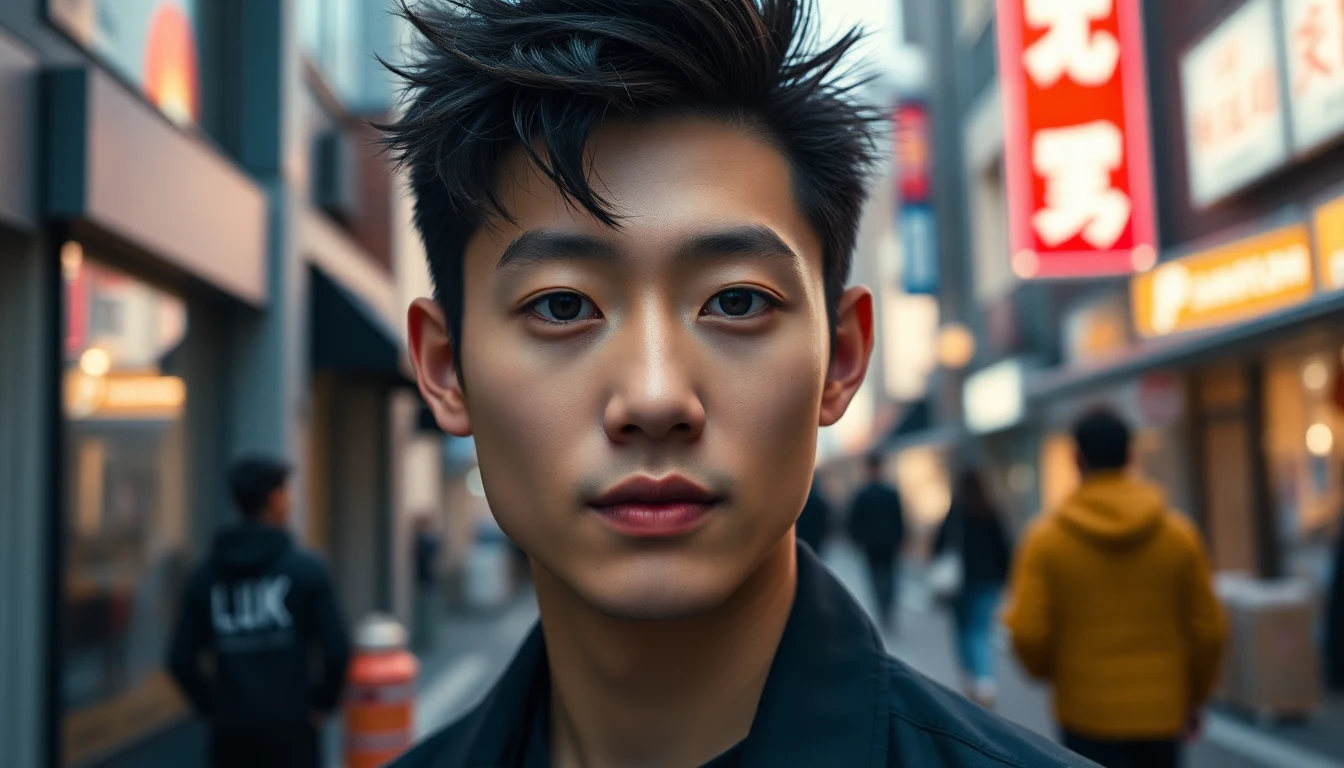
Plenty of guys in their late teens and early twenties walk in with a screenshot of an anime character and ask, “Can you do this?” The answer is almost always a version of yes, but with adjustments. This guide covers 10 anime-inspired hairstyles that actually work with real hair, what products and techniques you need, and what to realistically expect.
What Makes Anime Hair Look “Anime”
Before we get into specific styles, it helps to understand what your brain reads as “anime hair.” Four visual elements define the look.
- Extreme volume. Hair in anime is almost always drawn bigger than a real head of hair. This creates a sense of presence and energy.
- Sharp strand separation. Instead of blending together, anime hair breaks into distinct, chunky sections that move as individual pieces.
- Directional spikes or flow. Hair either defies gravity (pointing upward or outward) or flows in one dramatic direction.
- Unusual color. Blue, silver, pink, green. Anime uses hair color as a character identifier.
Of these four, volume and strand separation are the most achievable in real life. Directional styling is possible with strong-hold products. Color is achievable but requires bleaching dark Asian hair first, which comes with real damage trade-offs. Gravity-defying spikes beyond 2 to 3 inches are not achievable without wires or extensions.
10 Anime-Inspired Hairstyles That Actually Work
Each style below includes the anime inspiration, the realistic version, how to achieve it, time investment, and maintenance reality. I have organized them from easiest to hardest to pull off.
1. The Natural Messy Shag
Anime inspiration: Slice-of-life protagonists. Think the relaxed male leads from romance anime who always look like they just woke up but somehow still look put together. Makoto Tachibana from Free!, most Studio Ghibli male characters.

The realistic version: A medium-length shag cut (4 to 6 inches on top) with internal layering to create natural movement. The hair falls loosely around the face and ears without looking styled. This is the easiest anime-inspired style because you are literally going for “effortless.”
How to achieve it: Ask for a layered medium-length cut with texturizing through the mid-lengths. No product required on most days. On days you want more definition, work a pea-sized amount of matte clay through damp hair and let it air dry. The layers do the work.
Time investment: 0 to 2 minutes daily. This is a wash-and-go style.
Maintenance: Trim every 5 to 6 weeks. Thick Asian hair holds this shape longer than thinner textures because the strand weight keeps the layers from getting flyaway.
2. Curtain Bangs / Center Part
Anime inspiration: This one has crossed so far into mainstream that people forget it started as anime-coded. Nearly every male anime character with a “cool, calm” personality wears some version of a center part with bangs framing the face. It shows up everywhere from shonen to romance genres.
The realistic version: A center part with face-framing bangs, 4 to 6 inches long, shorter at the sides. This is essentially the same style that is trending in Korean hairstyles for men and K-pop hairstyles right now. The overlap between anime aesthetics and K-pop aesthetics is massive.
How to achieve it: You need at least 4 inches of length in the fringe to make the curtain effect work. Ask your barber for a center part with face-framing layers and a taper or low fade on the sides. Style by blow-drying the bangs outward from the center using a round brush, then finish with a light-hold wax to maintain the part.
Time investment: 5 to 8 minutes with blow-drying. 2 minutes if you just let it air dry (less defined but still good).
Maintenance: Trim every 4 weeks. The bangs grow into your eyes fast on Asian hair.
3. Soft Fringe / Bowl-Adjacent
Anime inspiration: Male characters in school settings, slice-of-life series, and calmer personalities. The “good student” archetype almost always has a soft, rounded fringe. Think Arima from Your Lie in April or Todoroki’s hair before the dramatic styling.

The realistic version: A rounded fringe that sits across the forehead, slightly above the eyebrows, with soft layering to prevent the full bowl-cut look. The key difference between “anime-coded soft fringe” and “bad bowl cut” is internal layering. Without it, thick Asian hair will form a literal helmet.
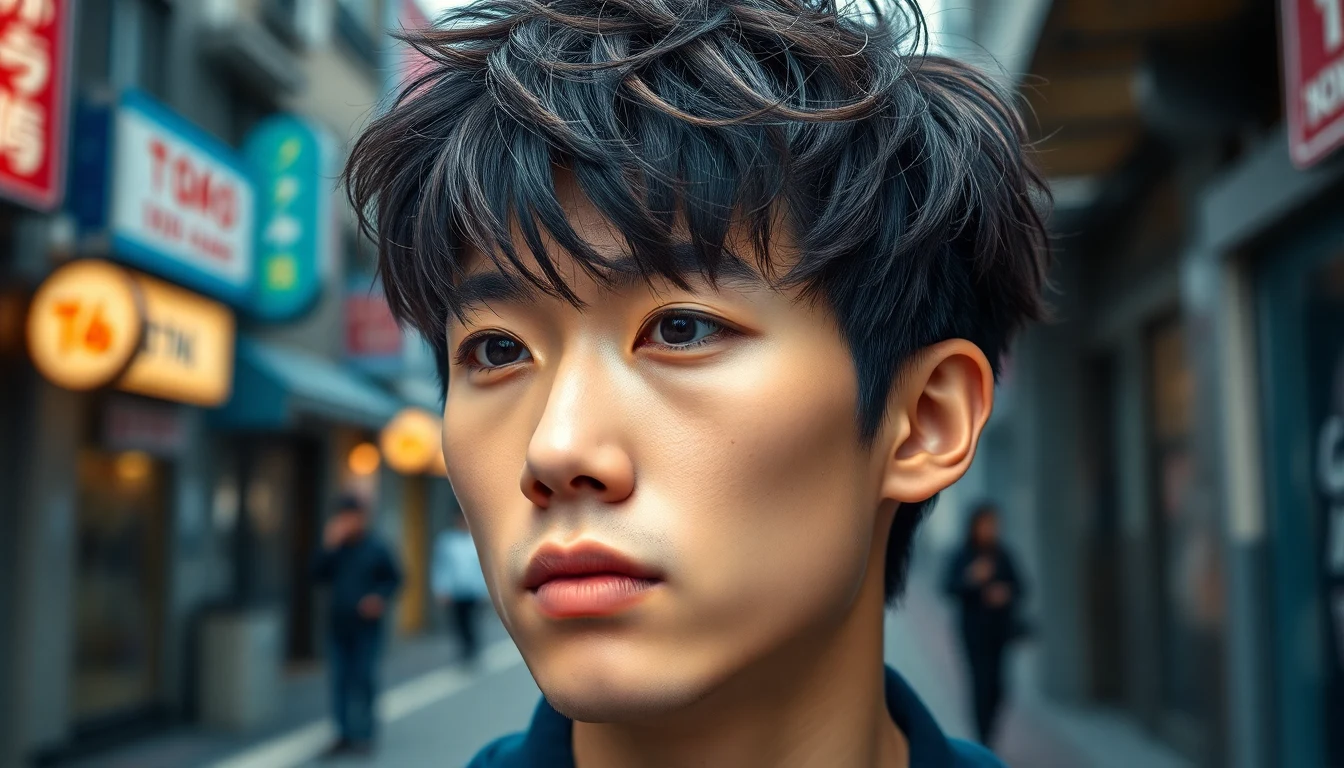
How to achieve it: Ask for a textured fringe cut, eyebrow length, with point-cutting to break up the blunt line. The sides should taper into the fringe, not disconnect. A fingertip of light wax on the tips prevents the fringe from separating into clumps.
Time investment: 2 to 3 minutes. Blow dry the fringe forward, apply product to the tips, done.
Maintenance: Every 3 weeks. The fringe grows into your eyes quickly, and the shape balloons when it grows out.
4. Textured Messy Top
Anime inspiration: Shonen protagonists. The messy, “I just fought someone” hair that somehow looks amazing. Deku from My Hero Academia (minus the green), Hinata from Haikyuu, half of the Naruto cast. This is the most recognizably anime-coded style that still works in real life.
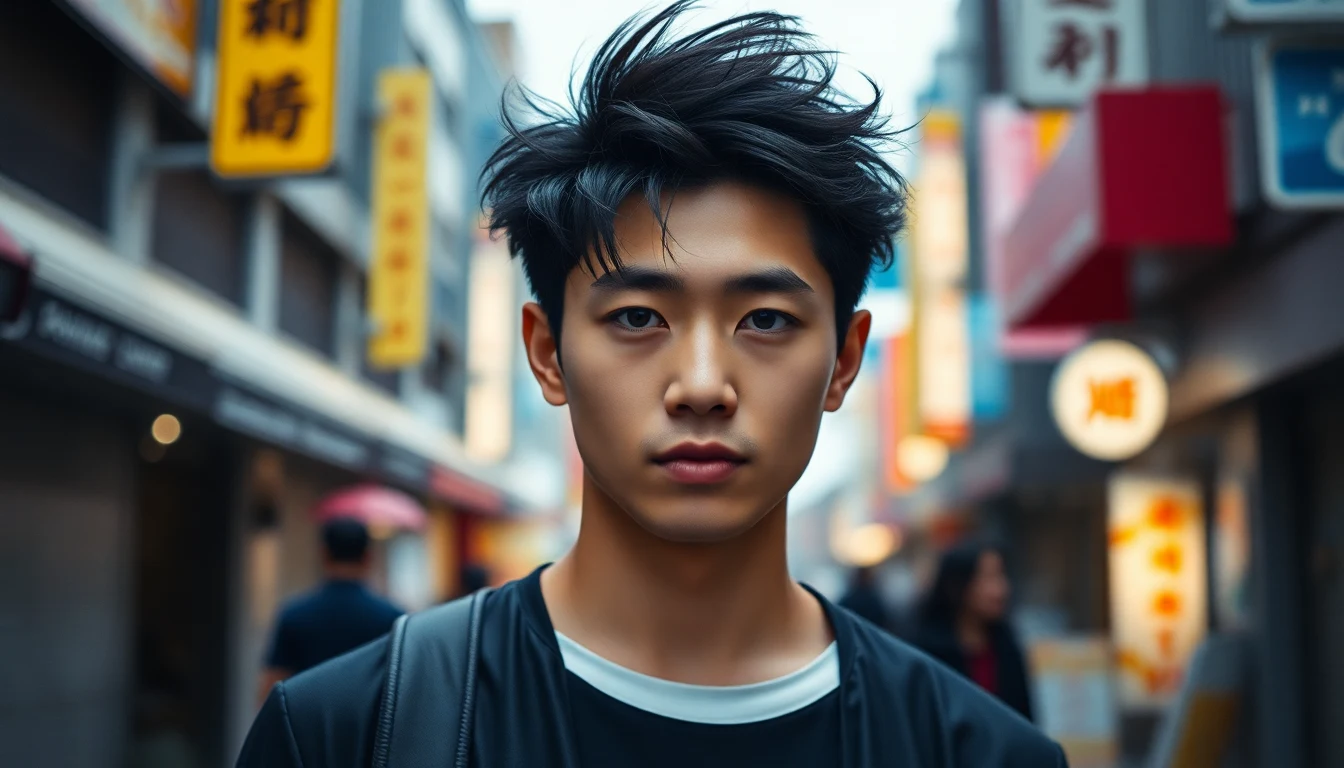
The realistic version: A short to medium cut (3 to 4 inches on top) with heavy texturizing, styled in multiple directions using matte clay or wax. The sides are either tapered or faded. The goal is controlled chaos: hair that looks messy but clearly intentional.
How to achieve it: The cut needs heavy point-cutting or razor work to break up the density. Without texturizing, thick Asian hair will just form a block shape. Style by working Lipps L08 Matt Hard Wax or Hanz de Fuko Claymation through dry hair, pinching and pulling sections in different directions. Use a blow dryer on medium heat to set the shape.
Time investment: 8 to 12 minutes. This is not a low-effort style. The “messy” look requires deliberate styling.
Maintenance: Every 3 to 4 weeks. The texturizing grows out and the hair reverts to its natural block shape.
5. Undercut with Styled Top
Anime inspiration: The cooler, more polished characters. Levi from Attack on Titan, Gojo from Jujutsu Kaisen (when his hair is down), most anime characters coded as “sophisticated” or “dangerous.” The undercut communicates control and intention.
The realistic version: A disconnected undercut with the top styled in one direction, either swept back or to the side. The contrast between the short sides and the longer, styled top creates the dramatic silhouette that reads as anime-inspired. This is also one of the most popular Asian hairstyles for men in general.

How to achieve it: Ask for a disconnected undercut, #1 or #2 guard on the sides, 4 to 5 inches on top. The disconnection (no blending between top and sides) is what gives it the anime edge. Style by blow-drying the top backward or to one side, then locking it in place with a medium-to-strong hold wax. Gatsby Moving Rubber (grey tin, Grunge Mat) works well here.
Time investment: 5 to 10 minutes with blow-drying.
Maintenance: Every 3 weeks. The sides grow out fast and the disconnection disappears. If you want to stretch it, you can clean up the sides yourself with quality clippers.
6. The Wolf Cut
Anime inspiration: This is the most anime-coded hairstyle that has gone fully mainstream. The layered, shaggy silhouette with face-framing pieces and a slightly longer back mirrors what you see on dozens of anime characters. It blurs the line between J-fashion, K-pop, and anime aesthetics. If you are looking for a wolf cut for Asian men, this is your entry point.
The realistic version: A heavily layered cut with shorter pieces framing the face and longer layers at the back and crown. The silhouette is wider and shaggier than a standard layered cut. On thick Asian hair, this style gets incredible volume without any product because the layers lift naturally.
How to achieve it: Ask for a wolf cut with face-framing layers, textured throughout, and a slightly longer back. The shorter layers should hit around the cheekbones. No fade on the sides; this is a scissors-only cut. Style with a texturizing spray or a small amount of matte clay for definition.
Time investment: 3 to 5 minutes. Blow dry with fingers for volume, apply a light product for separation. This style rewards less effort, not more.
Maintenance: Every 4 to 5 weeks. The wolf cut actually looks good while growing out, which is rare for structured cuts.
7. Slicked Back
Anime inspiration: The villain. The mentor. The cool older brother. Slicked-back hair in anime always signals confidence and authority. Aizen from Bleach, Nanami from Jujutsu Kaisen, countless yakuza and boss characters. It is also the style most likely to get you compliments from people who have never watched anime in their lives.
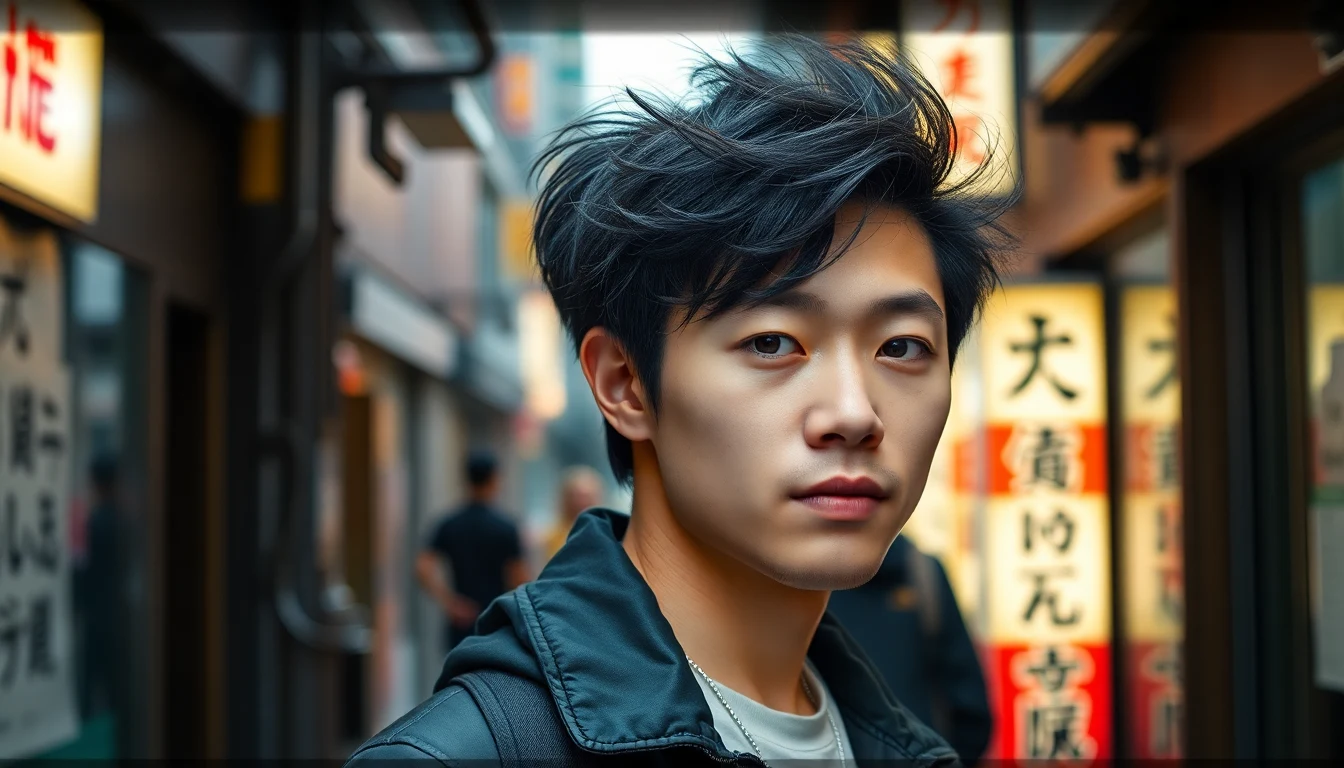
The realistic version: Hair pushed back from the forehead and held in place with a water-based pomade or strong-hold gel. For thick Asian hair, you need at least 4 inches of length to slick back without the hair springing forward. An undercut on the sides keeps the profile clean.

How to achieve it: Blow dry hair backward while damp, using a comb to train the direction. Apply a generous amount of water-based pomade, working from the front hairline to the crown. Use a fine-tooth comb to smooth everything back. Finish with a light mist of hairspray to lock it. The key for Asian hair: do not fight your hair’s natural weight. Work with the fall-back direction, not against it.
Time investment: 5 to 8 minutes.
Maintenance: The cut itself lasts 4 to 5 weeks. Daily styling is non-negotiable. Skip a day and thick Asian hair springs forward.
8. The Soft Spiky Look
Anime inspiration: Dragon Ball is the obvious reference, but softer spikes appear across the medium. Killua from Hunter x Hunter, Bakugo from My Hero Academia (toned way down), and dozens of supporting characters. This is where the anime-to-reality gap gets widest, and where most guys get it wrong.
The realistic version: Forget vertical spikes. Real hair can hold about 2 to 3 inches of upward lift before gravity wins. The realistic version is a short to medium cut (2 to 4 inches on top) styled upward and outward using strong-hold wax and a blow dryer. The tips are separated into chunky sections that point in different directions. It is spiky, but it is not defying physics.
How to achieve it: This requires the strongest hold products in your arsenal. Start with damp hair and blow dry upward at the roots using your fingers to lift. Apply Gatsby Moving Rubber (purple tin, Wild Shake) or Uevo Design Cube (hard wax) to each section, pinching the tips to create separation. Lock everything with a freezing spray. For maximum hold on Asian hair, apply a volumizing powder at the roots before the wax.
Time investment: 10 to 15 minutes. This is the most labor-intensive style on this list.
Maintenance: Trim every 3 weeks. Longer hair is heavier and will not hold the upward shape. Staying short is essential.
9. Bleached/Colored Spiky
Anime inspiration: Every protagonist with silver, blonde, or unnatural hair. Kaneki from Tokyo Ghoul (white), Gojo from Jujutsu Kaisen (white/silver), Denji from Chainsaw Man (blonde). Color is one of the most powerful anime signifiers, and it is achievable. But I need to be honest about what it costs your hair.
The realistic version: A spiky or textured style in bleached blonde, silver, or platinum. On Asian hair, this requires 2 to 3 rounds of bleaching because you are starting from a level 1 (jet black) and need to reach level 9 or 10 (pale yellow) before toning to silver or platinum. Each bleaching session lifts about 2 to 3 levels.

How to achieve it: Go to a professional colorist. I cannot stress this enough. At-home bleaching on virgin black Asian hair is how you end up with orange hair and broken strands. A professional will use 20 to 30 volume developer, process in stages over multiple sessions (spaced 4 to 6 weeks apart), and use Olaplex or a bond-repair treatment between sessions to minimize breakage.
Once you reach your target level, a toner creates the final shade (silver, ash blonde, platinum, etc.). Expect to spend $150 to $250 per session, with 2 to 3 sessions needed for the full transformation.
Time investment: 3 to 4 hours at the salon per session for the color. Daily styling is the same as any other spiky/textured cut.
Maintenance: Roots show within 3 to 4 weeks on dark hair. Touch-ups run $80 to $150. You will also need purple shampoo, deep conditioning masks weekly, and heat protectant every single time you use a blow dryer. Bleached hair is permanently altered in structure. It holds products differently (usually better, because the cuticle is rougher), but it also breaks more easily.
10. The Two Block (Anime Remix)
Anime inspiration: The two block is already the foundation of most Korean hairstyles, but adding anime-inspired elements transforms it. Think of characters who have a clean, structured cut with one dramatic element: an asymmetric fringe, an exaggerated length difference between top and sides, or one section styled in a completely different direction.
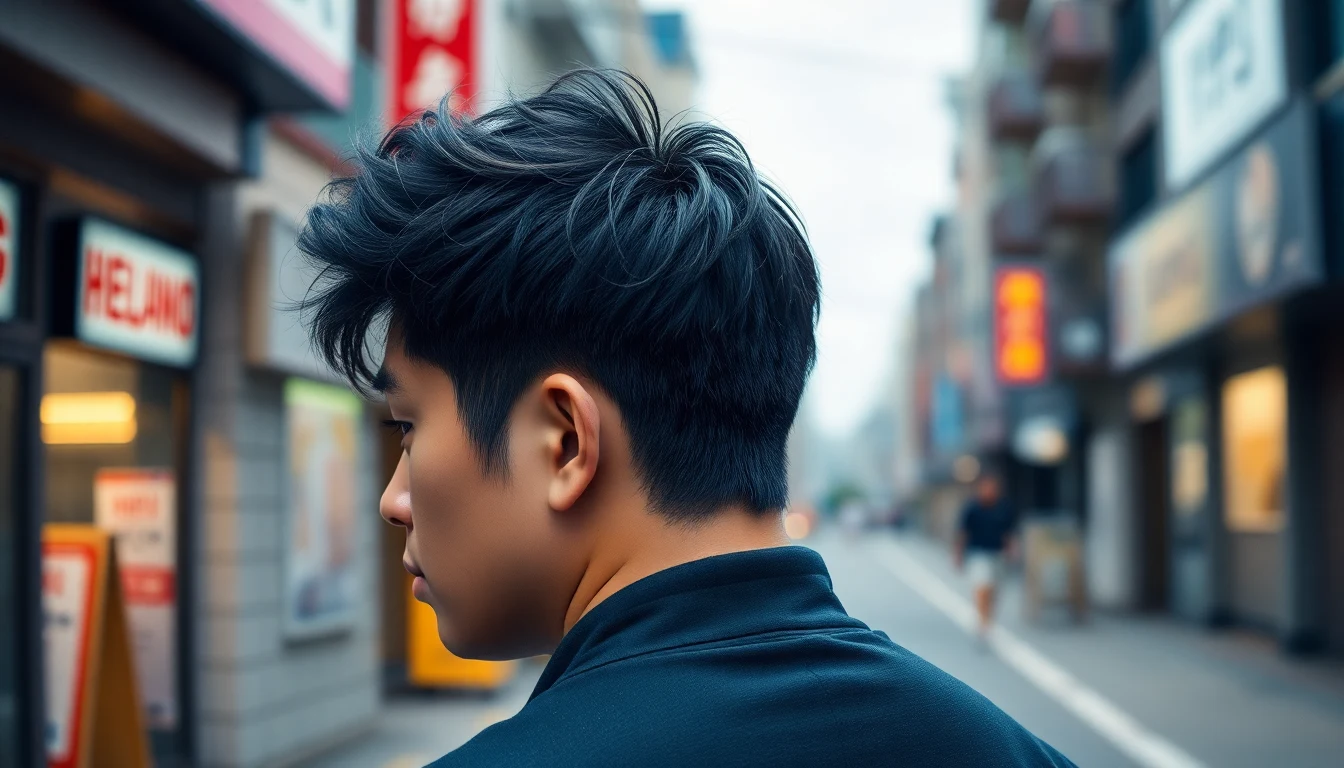
The realistic version: A two block base (short sides, longer disconnected top) with one intentional anime-coded element. Options include: an asymmetric fringe that covers one eye, an exaggerated 5-to-6-inch top length styled with volume and direction, or color on the top section only while the sides stay natural.
How to achieve it: Ask for a two block with a #2 guard on the sides and 5 to 6 inches on top. Then specify your anime element. For the asymmetric fringe, ask for the bangs to be point-cut at an angle. For volume, blow dry the top upward and forward. For partial color, bleach only the top section (this creates a natural-looking color transition since the sides are buzzed short).
Time investment: 5 to 10 minutes for styling. More if you add the coloring component.
Maintenance: Every 3 weeks for the cut. The two block’s clean sides-to-top contrast is the first thing you lose when it grows out.
The Product Guide for Anime-Inspired Hair
Standard hair products are not enough for most anime-inspired styles. You need products that are built for extreme hold, volume, and separation. Here is your lineup, organized by function.
| Product Type | What It Does | Best For | Recommended |
|---|---|---|---|
| Strong-hold matte wax | Holds shape, creates separation, no shine | Spiky looks, textured messy top | Gatsby Moving Rubber (grey or purple tin) |
| Matte clay | Firm hold with dry texture | Wolf cut, messy shag, directional styling | Hanz de Fuko Claymation |
| Freezing spray | Locks extreme shapes in place | Spiky looks that need all-day hold | Schwarzkopf Got2b Glued Freeze Spray |
| Volumizing powder | Creates lift at roots, absorbs oil | Any style needing height or volume | Osis+ Dust It Mattifying Powder |
| Texturizing spray | Adds grit and separation to clean hair | Messy shag, wolf cut | Sea salt spray (any brand) |
| Heat protectant | Prevents damage from blow dryer | Every style that uses heat | Mise en Scene Perfect Serum |
Technique tip for Asian hair: Always start with damp (not wet) hair. Towel dry until hair is about 80% dry, then blow dry with your fingers lifting at the roots. Apply product to dry hair for maximum hold. If you apply wax or clay to wet hair, the water dilutes the product and you lose 50% of the hold.

Hair Color for Anime-Inspired Styles
Color is the most transformative element you can add, and the most damaging. Here is what you need to know before sitting in the colorist’s chair.
Starting from black hair (level 1-2): Every shade lighter requires bleaching. There is no color deposit that lifts black hair to blonde. The process opens your hair’s cuticle with developer and strips out melanin. This is permanent structural damage. It can be managed, but it cannot be undone.
Gentler first steps: If you are not ready for full bleaching, start with a dark ash brown or dark red tint. These require only one round of lightening (about 2 levels up) and create a subtle anime-coded effect without the full commitment. In indoor lighting it reads as “interesting,” and in sunlight it catches as a color shift.
The silver/platinum route: Requires 2 to 3 bleaching sessions. Budget $300 to $600 total. You will need purple shampoo (twice weekly), deep conditioning masks (weekly), and a sulfate-free daily shampoo. Your hair will feel different. It will be drier, rougher, and more porous. But it will also hold styling products better because the roughened cuticle grips wax and clay.
Partial color: A compromise that works well. Color the top section only (where the length is) and leave the buzzed sides natural. The color grows out more gracefully because the roots are partially hidden by the longer top layer falling over them.
What to Tell Your Barber
Showing your barber an anime screenshot without context is a recipe for confusion. Use this table to translate what you want into language your barber understands.
| What You Want | What to Say | What NOT to Say |
|---|---|---|
| Spiky texture | “I want the top point-cut for separation, styled upward with product.” | “I want it to look like Goku.” |
| Messy, multi-directional look | “Heavy texturizing on top, I want to style it in different directions.” | “Make it look messy.” |
| One-sided fringe | “Asymmetric fringe, longer on the left, angled from eyebrow to cheekbone.” | “I want emo bangs.” |
| Wolf cut / shaggy layers | “Layered wolf cut, shorter at the face, longer at the back and crown.” | “I want a mullet.” (This gets you a different cut.) |
| Clean undercut with dramatic top | “Disconnected undercut, #1 on sides, 5 inches on top, no blending.” | “Short on the sides, long on top.” (Too vague.) |
Pro tip: Bring two reference photos. One of the anime character for the vibe, and one of a real person with a similar (realistic) hairstyle. The anime screenshot shows your barber what aesthetic you are going for. The real photo shows what is actually achievable. If you need help finding the right fade terminology, we have a dedicated guide for that.
FAQ
Can I actually achieve Goku or Vegeta’s hair from Dragon Ball?
Not the literal vertical spikes. Real hair can hold about 2 to 3 inches of upward lift with strong-hold products. Beyond that, gravity wins. What you can achieve is a softened version: short, spiky, lifted at the crown with chunky separation. It captures the energy of the style without looking like a costume. For anything taller than 3 inches, you would need hair extensions, wires, or a wig.
Which anime hairstyles work best for thick Asian hair?
Thick, straight Asian hair is actually ideal for anime-inspired styles. The natural strand strength and volume give you a head start on looks that thinner hair cannot hold at all. The textured messy top, wolf cut, curtain bangs, undercut with styled top, and natural shag all work exceptionally well. Styles requiring tight curls (without a perm) or extremely fine wisps do not suit thick hair.
How much does it cost to get an anime-inspired hairstyle?
The cut runs $30 to $60 at most salons. Add bleaching/color for $100 to $250 per session (2 to 3 sessions for platinum). Styling products run $15 to $25 per item, and you will need 2 to 3 products minimum. Total first-time investment for a colored anime-inspired look: $250 to $500. For a natural-color anime-inspired cut with products: $50 to $100.

Will anime-inspired hair look weird at work or school?
Most styles on this list are subtle enough for professional settings. Curtain bangs, the messy shag, the undercut, and the wolf cut are all mainstream hairstyles that happen to be anime-coded. Extreme bleaching or tall spikes will draw attention in conservative environments. When in doubt, start with a natural-color style and add more dramatic elements as you get comfortable.
How long does it take to style anime-inspired hair each morning?
It depends on the style. The natural messy shag takes zero to two minutes. Curtain bangs and the wolf cut take three to five. The textured messy top and spiky looks take eight to fifteen. Slicked-back styles take five to eight. Budget your time honestly before committing to a style. The number-one reason guys abandon anime-inspired hair is that they chose a style requiring 15 minutes of daily work and only had 5.
Can you actually pull off anime hairstyles in real life, or do they only look good in drawings?
Yes, many anime hairstyles can work in real life, but they require realistic adjustments. The key is trading impossible vertical spikes and exaggerated angles for directional lift, texture, and separation that work with your natural hair growth patterns and Asian hair characteristics.
What’s the difference between an anime hairstyle real life version and the original cartoon style?
The main difference is that real-life versions focus on achievable lift and texture rather than gravity-defying spikes. Cartoon styles often have unrealistic proportions and vertical height that don’t account for how hair actually grows and moves on your head.
How do I ask my barber for an anime-inspired haircut without showing them a cartoon?
Bring photos of real men wearing the style you want, like the soft spiky or curtain bangs examples, rather than anime artwork. Describe what you’re looking for in terms of texture, direction, and placement, such as ‘lifted at the crown with separated tips’ or ‘center-parted bangs that frame the face.’
Are curtain bangs a good anime hairstyle option for Asian men?
Yes, curtain bangs are one of the most wearable anime-inspired styles for Asian men because they translate directly from anime to real life. They work well with Asian hair texture when styled with a soft center part and are versatile enough for everyday wear.