By Daniel Park, Asian Hair Editor.
Chinese Men’s Hair: Precision, Pragmatism, and Quiet Confidence
Chinese barbershop culture does not get the same spotlight as Korean salon culture or Japanese precision grooming. That is a mistake. Walk into any proper barbershop in Shanghai, Guangzhou, or Beijing’s Sanlitun district, and you will find a grooming tradition built on clean execution, practical maintenance, and styles that look polished without screaming for attention.
The Chinese approach to men’s hair sits at the intersection of professional polish and effortless cool. While Korean hairstyles lean toward trendy K-drama aesthetics and Japanese haircuts emphasize architectural precision, Chinese men’s hairstyles tend to prioritize versatility. A style that works in a boardroom on Monday and at a rooftop bar on Friday. That pragmatism is not boring. It is strategic.
The biggest thing to know is this: Chinese hair has more variety than people assume. Northern Chinese men often have thick, coarse strands similar to Korean hair, while southern Chinese men frequently have finer, softer texture that responds differently to product and heat. This guide accounts for that range. Every style below includes notes on which Chinese hair types it suits best and how to adjust your approach accordingly.
Chinese Hair Texture: What You Are Actually Working With
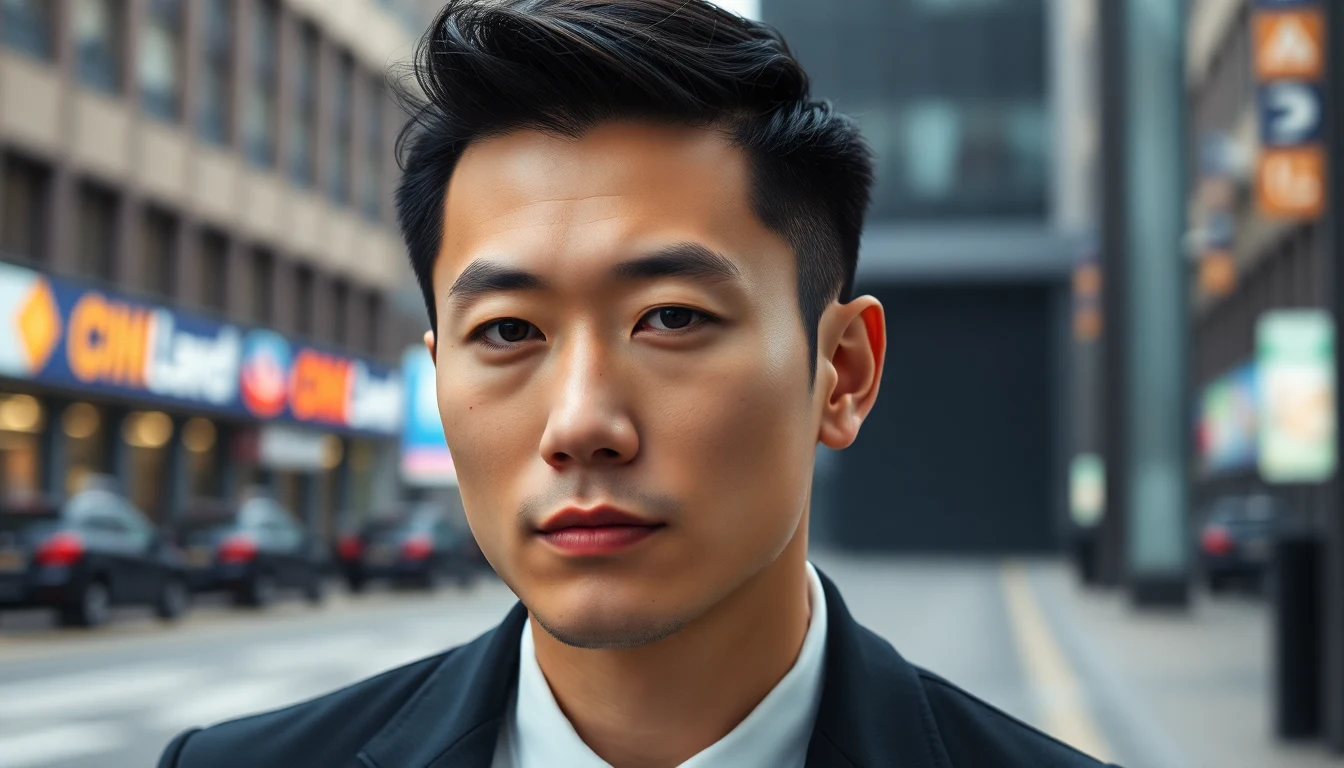
Chinese men’s hair shares the round cross-section common to all East Asian hair types. That round shape is what gives it the natural straightness and high-gloss shine. But within that category, Chinese hair has its own characteristics that affect how you choose and maintain a style.
What Chinese hair does well:
- Naturally straight and smooth, which means side parts, slick backs, and clean professional styles hold their shape with minimal effort.
- Generally finer individual strand diameter than Korean hair, which makes it easier to manipulate with product and heat styling.
- Good natural density. Most Chinese men have enough hair volume that thin or sparse cuts are rarely a concern in their 20s and 30s.
- The natural shine of healthy Chinese hair makes polished styles look effortless, even with very little product.
Where Chinese hair gets tricky:
- Finer strands (common in southern Chinese hair) can go flat quickly, especially in humid conditions. Volumizing products and blow dry technique become essential.
- Very straight hair resists holding curves and texture. Comma hair and wavy styles may require a perm or daily curling iron work.
- When cut too short on the sides (under 1 inch), straight Chinese hair tends to stick outward rather than lie flat. Tapers and gradual fades work better than hard disconnects for most men.
10 Chinese Hairstyles for Men: Classic to Modern
Every style below is organized from most accessible (minimal styling, low maintenance) to most involved. I have included specific barber instructions in both English and Mandarin Chinese where relevant, because clear communication gets you a better cut regardless of the barber’s background.
1. Textured Crop
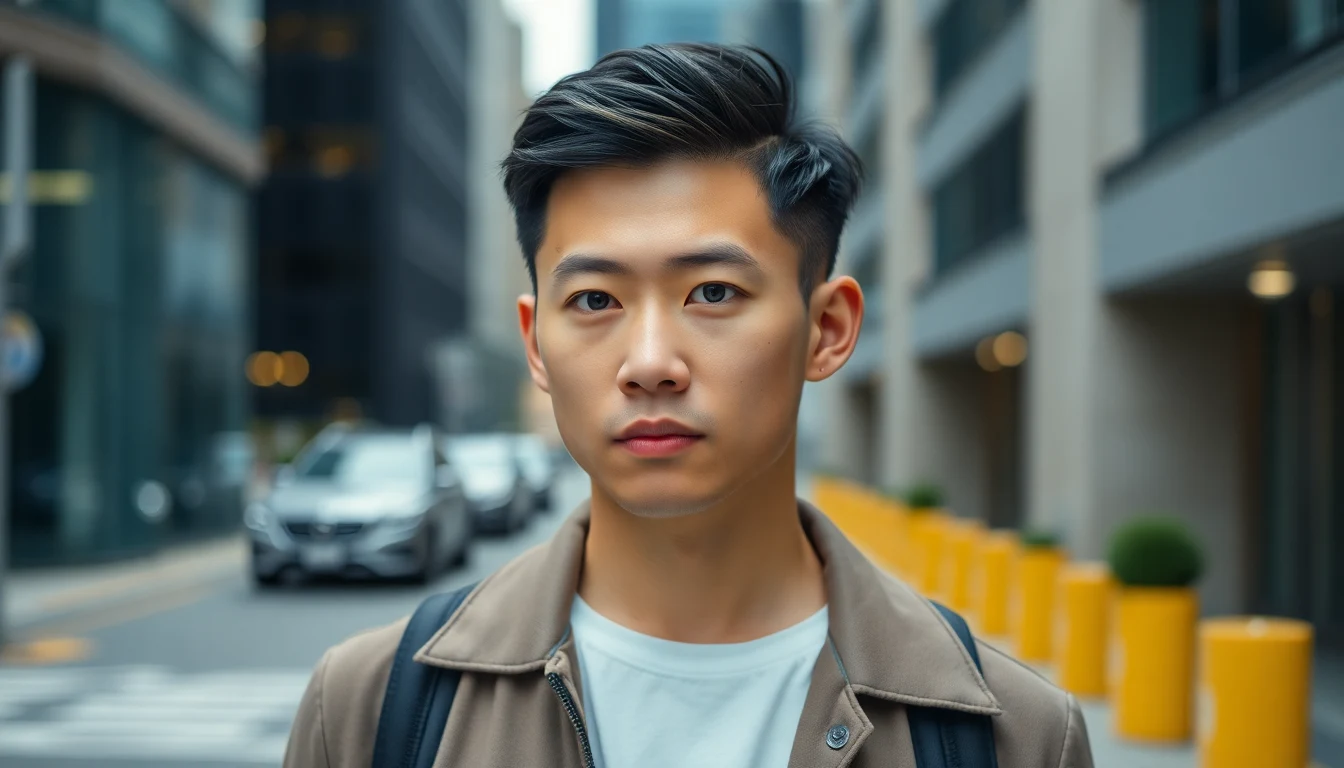
The textured crop is the most requested Chinese men haircut right now. Short on the sides with choppy, point-cut layers on top that create visual movement in otherwise pin-straight hair. The crop works because it takes Chinese hair’s natural density and gives it dimension without requiring daily product application.
Best face shapes: Round, square, and wide foreheads. The textured fringe shortens the visual length of the face.
What to tell your barber: “Textured crop, tapered sides, no hard disconnect. Point-cut the top for texture and leave the fringe slightly longer so it falls forward naturally.”
Maintenance: Trim every 3 to 4 weeks. On styling days, a small amount of matte clay worked through damp hair is all you need. On off days, it looks good air-dried.
Product: Gatsby Moving Rubber grey tin (strong hold, matte) or any lightweight matte clay. Avoid anything with shine; the crop looks best with a natural, dry finish.
2. The Clean Side Part
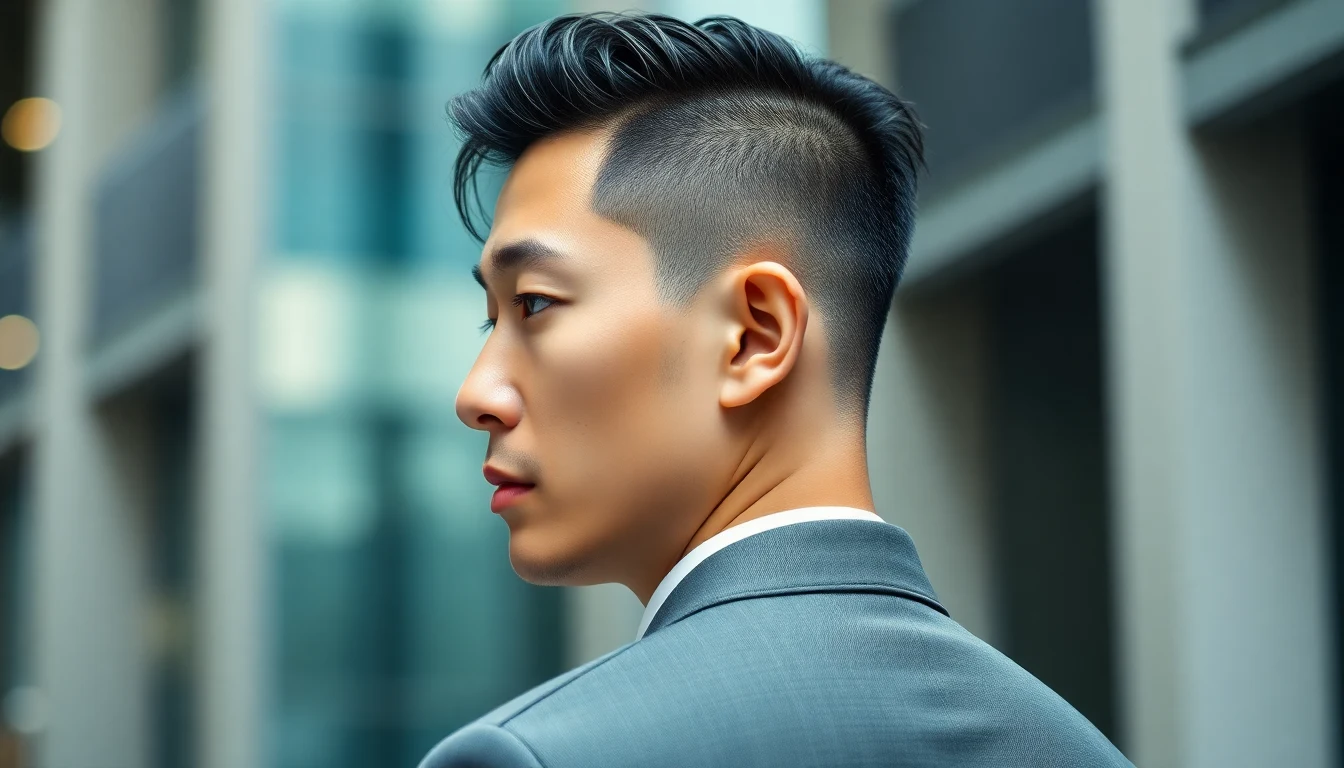
The quintessential Chinese professional cut. A natural side part with a clean taper fade on the sides and 3 to 4 inches of length on top, combed neatly to one side. This is the style you see on Chinese executives, news anchors, and anyone who needs to look put-together without looking like they tried too hard.
Best face shapes: Oval, oblong, and diamond. The side part creates an asymmetrical frame that balances most facial proportions.
What to tell your barber: “Classic side part. Taper the sides and back, keep 3 to 4 inches on top. I want a clean, professional look with a natural part on my dominant side.”
Maintenance: Trim every 3 weeks to keep the taper crisp. Daily styling takes under 3 minutes: towel-dry, apply a small amount of water-based pomade, comb to the side, done.
Product: Water-based pomade or a medium-hold styling cream. Chinese hair holds a side part naturally, so you do not need heavy product. Lighter is better here.
3. The Slick Back
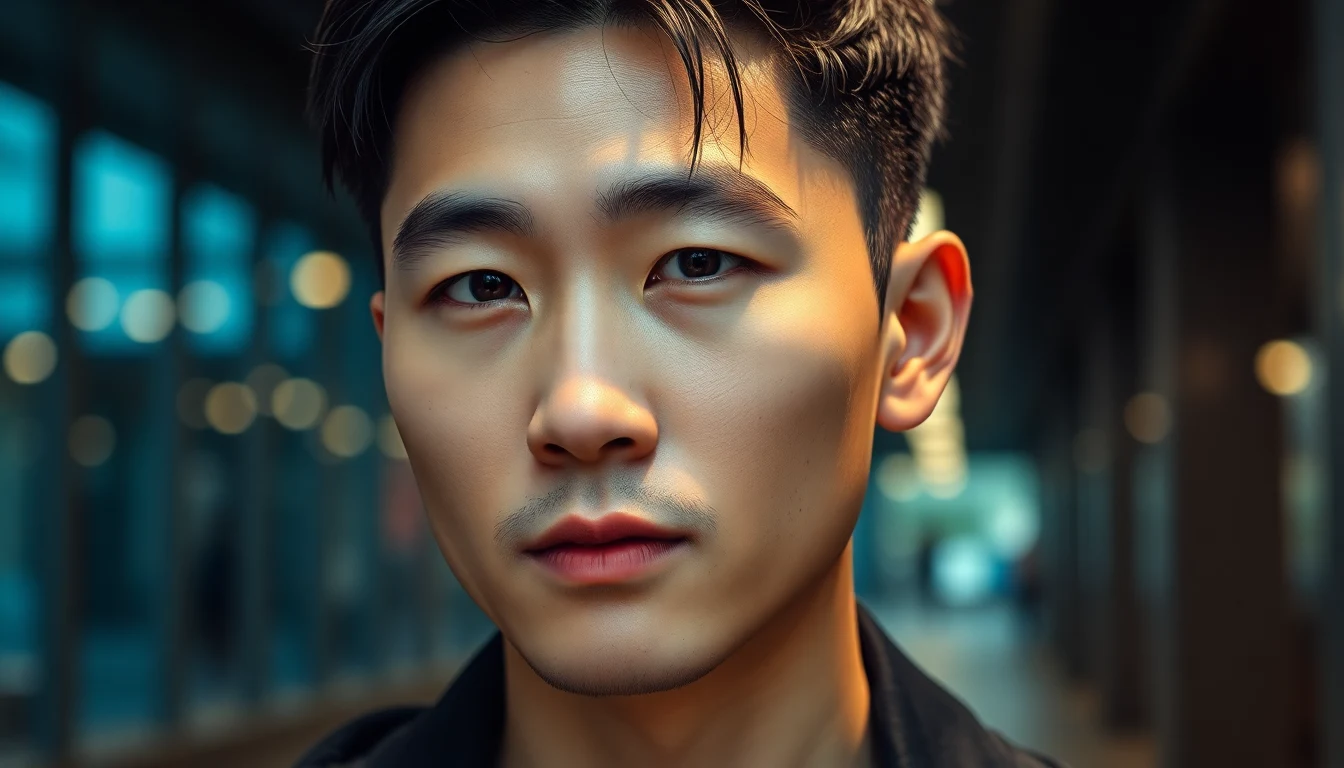
The slick back is where Chinese hair’s natural straightness becomes a genuine advantage. While men with curly or wavy hair fight their texture to achieve this look, straight Chinese hair practically defaults to it with the right length and a single pass of a comb. You need 4 to 6 inches on top and tapered or faded sides.
Best face shapes: Angular faces, strong jawlines, and oval shapes. The slick back exposes the entire forehead and facial structure, so it favors men with balanced or defined features.
What to tell your barber: “Slick back style. Taper fade on the sides, leave 5 inches on top minimum. I want to be able to push everything straight back.”
Maintenance: Trim every 3 to 4 weeks. Blow dry back from the forehead with a round brush to build volume and direction. Apply pomade or styling cream while hair is still warm from the dryer.
Product: Medium to strong hold water-based pomade. Oil-based pomade works too but is harder to wash out. For finer Chinese hair, use a volumizing spray before blow drying to prevent the style from falling flat by midday.
4. Undercut with Volume
A disconnected undercut with significant volume and height on top. This is the boldest style on this list. The sides are clippered short (a #1 or #2 guard), creating a sharp contrast with the longer, styled top section. The modern Chinese hairstyle version of the undercut tends to keep the top swept back or to the side rather than spiked, giving it a more refined edge than Western undercut variations.

Best face shapes: Round and square faces benefit the most. The height on top elongates the face, and the tight sides slim the overall silhouette.
What to tell your barber: “Disconnected undercut. #1 or #2 on the sides, leave 4 to 5 inches on top. I want volume on top, not flat.”
Maintenance: Trim every 2 to 3 weeks. The sides grow out fast and start to lose the disconnected line. Daily styling requires blow drying the top with a round brush for volume, then setting with a matte wax or clay.
Product: Volumizing spray as a base, then matte clay or fiber paste for hold. For thicker northern Chinese hair, a strong-hold matte wax like Gatsby Moving Rubber grey tin keeps the height all day.
5. Two Block Variation
The two block cut originated in Korea, but it has been widely adopted across East Asia, and Chinese men wear it well. The Chinese variation tends to be slightly shorter on top than the Korean version (3 to 4 inches rather than 4 to 5) with a less dramatic disconnect. The result is a cleaner, more conservative look that reads “intentionally styled” rather than “K-drama cosplay.”
Best face shapes: All face shapes. This is a universally flattering structure. Adjust the top length and fringe direction to customize for your face.
What to tell your barber: “Two block cut, Chinese variation. Clipper the sides at a #3 or #4, keep 3 to 4 inches on top. I want the top to fall over the sides naturally, but more controlled than a traditional Korean two block.”
Maintenance: Trim every 3 to 4 weeks. The shorter top means less daily styling than a full Korean two block. A small amount of lightweight wax applied after blow drying is enough.
Product: Lightweight matte wax. Gatsby Moving Rubber green tin (Air Rise) works well for the natural, slightly volumized look this variation calls for.
6. Modern Caesar
The Caesar cut, updated for Chinese hair. Short all around (1 to 2 inches on top) with a short, blunt fringe that sits horizontally across the forehead. This is the style for men who want structure without any daily styling commitment. It also works exceptionally well for Chinese men with finer hair, because the uniform short length creates the illusion of more density.
Best face shapes: Oval and diamond faces. The horizontal fringe can make round faces look wider, so round-faced men should consider a slightly angled fringe instead of a perfectly horizontal one.
What to tell your barber: “Modern Caesar. 1.5 inches on top, blunt fringe, tapered sides and back. Keep it clean and tight.”
Maintenance: Trim every 2 to 3 weeks. Zero daily styling required. Run your fingers through it after a shower and let it air-dry. That is genuinely the entire routine.
Product: Optional. If you want a touch of texture, a small amount of matte paste. Most days, nothing.
7. Short Neat Style
The default Chinese men hair style for millions of men across mainland China. Short, neat, well-maintained. Sides tapered or scissor-cut short, top kept at 2 to 3 inches and combed forward or slightly to one side. No drama, no fuss, no product required. It is the haircut equivalent of a well-fitted plain white shirt.
Best face shapes: All face shapes. This style is so neutral and well-proportioned that it flatters universally.
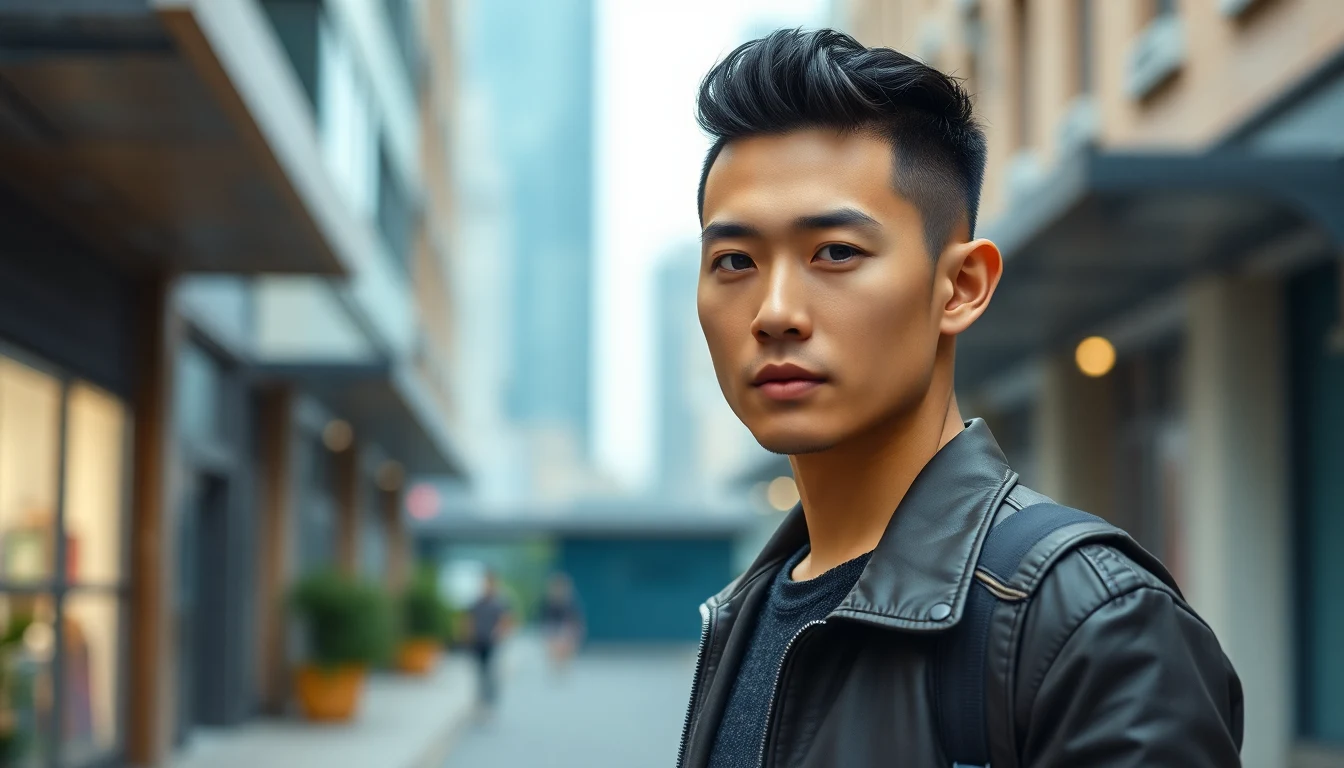
What to tell your barber: “Short and neat. Scissor-cut on the sides, 2 to 3 inches on top, tapered neckline. I want it to look clean without looking styled.”
Maintenance: Trim every 3 to 4 weeks. This is a wash-and-go style. Towel dry, finger-comb, and walk out the door.
Product: None needed. If your hair tends to stick up at the crown, a dab of lightweight styling cream controls it without visible product.
8. Medium Length with Texture
For Chinese men who want to grow their hair past the short-neat default without looking unkempt. Medium length (4 to 5 inches on top) with strategic layers and texturizing throughout. The layers prevent the flat, heavy curtain effect that straight Chinese hair defaults to at medium length. This style bridges the gap between the conservative short cut and the more dramatic long styles.
Best face shapes: Oval, heart, and diamond. The added length and movement soften angular features.
What to tell your barber: “Medium length, layered and texturized. I want it to look like it has natural movement, not like I am just growing it out.”
Maintenance: Trim every 4 to 5 weeks. Blow dry with a concentrator nozzle to build shape and direction. Product is optional but recommended for controlling the layers.
Product: Lightweight styling cream or a few drops of hair serum on damp hair before blow drying. Finish with a small amount of matte wax for piece-y definition.
9. Buzz Cut
The buzz cut is universal, but Chinese hair gives it a distinctive look. The thick, dark strands at very short length create a clean, uniform shadow that reads as intentional and masculine. This is the military-adjacent cut that has crossed over into mainstream style, particularly among younger Chinese men in creative and tech industries who want zero maintenance without sacrificing a polished appearance.
Best face shapes: Oval faces and well-proportioned skulls. The buzz cut hides nothing, so your head shape becomes the focal point. Try it if you have a well-shaped head. Avoid it if you have a very flat back of the skull or prominent ears that get highlighted without surrounding hair.
What to tell your barber: “Buzz cut, #2 or #3 guard all over. Clean up the neckline and edges with a razor.”
Maintenance: Touch up every 1 to 2 weeks to maintain the clean, fresh look. You can do this yourself with a set of quality clippers at home.
Product: None. Sunscreen on the scalp in summer if you are spending time outdoors.

10. Traditional Short Back and Sides
The classic barbershop standard, adapted for Chinese hair. Scissor-cut short on the back and sides (not clippered), with a slightly longer top that can be combed to the side, pushed forward, or swept back depending on your preference that day. This is the cut your father and grandfather wore, and it persists because it works. The traditional version uses scissors throughout for a softer, more blended finish than clipper-cut fades.
Best face shapes: All face shapes. Like the short neat style, this cut is proportionally balanced and adapts to any facial structure.
What to tell your barber: “Traditional short back and sides, all scissors, no clippers. Blend the sides into the top gradually. I want it to look classic and clean.”
Maintenance: Trim every 3 to 4 weeks. Minimal daily styling. A comb and a touch of light pomade on the top is enough to give it direction.
Product: Light pomade or styling cream. The all-scissors cut creates a softer finish that benefits from a product with a natural or low-shine finish rather than a high-gloss pomade.
Chinese Hairstyles at a Glance
| Style | Length on Top | Daily Styling | Trim Frequency | Best Face Shapes |
|---|---|---|---|---|
| Textured Crop | 2-3 in | 2-3 min | 3-4 weeks | Round, square |
| Clean Side Part | 3-4 in | 3 min | 3 weeks | Oval, oblong, diamond |
| Slick Back | 4-6 in | 5 min | 3-4 weeks | Angular, oval |
| Undercut with Volume | 4-5 in | 5-10 min | 2-3 weeks | Round, square |
| Two Block Variation | 3-4 in | 3-5 min | 3-4 weeks | All |
| Modern Caesar | 1-2 in | 0 min | 2-3 weeks | Oval, diamond |
| Short Neat | 2-3 in | 1 min | 3-4 weeks | All |
| Medium with Texture | 4-5 in | 5-10 min | 4-5 weeks | Oval, heart, diamond |
| Buzz Cut | <0.5 in | 0 min | 1-2 weeks | Oval, well-shaped skull |
| Short Back and Sides | 2-3 in | 2 min | 3-4 weeks | All |
What to Tell Your Barber: English and Mandarin Phrases
Whether you are visiting a Chinese barbershop where Mandarin is the primary language or an English-speaking barber who has never cut Chinese hair, the right vocabulary eliminates miscommunication. This table gives you phrases in both languages.
| English Phrase | Mandarin (Pinyin) | Chinese Characters |
|---|---|---|
| I want a haircut | Wo yao li fa | 我要理发 |
| Short on the sides | Liang bian jian duan | 两边剪短 |
| Keep the top longer | Shang mian liu chang | 上面留长 |
| Taper the sides gradually | Liang bian man man guo du | 两边慢慢过渡 |
| Thin it out / remove bulk | Da bo yi dian | 打薄一点 |
| Side part | Pian fen | 偏分 |
| Slick it back | Wang hou shu | 往后梳 |
| Buzz cut / shave it short | Tui ping tou | 推平头 |
| Add some texture / layers | Jian chu ceng ci gan | 剪出层次感 |
| Clean up the neckline | Xiu yi xia hou mian | 修一下后面 |
| Not too short | Bu yao tai duan | 不要太短 |
| I have a reference photo | Wo you yi zhang can kao tu | 我有一张参考图 |
Pro tip: A reference photo on your phone is still the most effective communication tool regardless of language. Show the front, side, and back views of the style you want. Chinese barbers, like barbers everywhere, prefer visual reference over verbal description.
Products That Work for Chinese Hair
Chinese hair responds best to lightweight products that provide hold without adding weight or greasiness. Heavy products weigh down the naturally straight strands and create a flat, oily appearance that works against most of the styles on this list.
For structured styles (side part, slick back, two block):
- Gatsby Moving Rubber, Grey Tin (Grunge Mat): Strong hold, matte finish. The go-to for most of these cuts. Two swipes, rubbed between your palms, applied from the crown forward.
- Water-based pomade: Medium hold with a clean, slight shine. Ideal for the side part and slick back. Washes out in one shampoo, which matters for daily styling.
For textured styles (textured crop, medium length, Caesar):
- Matte clay or fiber paste: Adds separation and definition to choppy layers without shine. Work a pea-sized amount through towel-dried hair.
- Sea salt spray: Applied to damp hair before blow drying, it creates grit and texture in straight hair that would otherwise lie flat.
For fine Chinese hair specifically:
- Volumizing spray or powder: Apply at the roots before blow drying. This is the single most impactful product for men with finer, softer Chinese hair who struggle with volume.
- Dry shampoo: On day-two hair, a light application at the roots absorbs oil and restores volume.
Avoid: Heavy oil-based pomades, gel (creates hard, crunchy hold), and any product labeled “extra hold” or “maximum strength” unless you have the thickest, most resistant hair type. Overloading straight Chinese hair with heavy product is the fastest way to ruin any of these styles.
Frequently Asked Questions
What is the best hairstyle for Chinese men with straight hair?
The textured crop and the clean side part are the two most versatile options. Both work with the natural direction and density of straight Chinese hair rather than against it. The textured crop adds visual interest through choppy layers, while the side part delivers a refined, professional look that holds its shape all day. Choose based on whether you want a casual or formal default appearance.
How is Chinese men’s hair different from Korean or Japanese hair?
Chinese hair tends to sit in the middle of the East Asian spectrum. Korean hair is typically the thickest and most coarse, Japanese hair tends to be very straight with a slightly finer strand diameter, and Chinese hair varies more widely depending on regional background. Northern Chinese men often have thicker, coarser hair similar to Korean hair, while southern Chinese men may have finer, softer strands. All three share the round cross-section that gives East Asian hair its natural straightness and high shine.
How often should Chinese men get haircuts?
Every 3 to 4 weeks for most styles. Straight East Asian hair grows approximately half an inch per month, and structured styles like the side part and undercut lose their shape noticeably by week five. Buzz cuts need attention every 1 to 2 weeks. If you are growing your hair out, stretch appointments to 5 or 6 weeks but ask your barber to clean up the neckline and sides during the transition.
What hair products work best for Chinese men’s hair?
Lightweight matte clays and waxes outperform heavy pomades. Gatsby Moving Rubber (grey tin for strong hold, green tin for natural movement) is the staple across East Asia. Avoid gel entirely; it creates a stiff look that contradicts the natural movement these styles are built on. For slick back and side part styles, a water-based pomade gives a cleaner finish without the heaviness of oil-based options.
Can Chinese men get perms for more texture?
Yes, and it is increasingly common. C-curl and down perms are popular at Chinese and pan-Asian salons, particularly for men whose pin-straight hair resists holding shape with heat styling alone. A perm typically costs $80 to $200 in the US and lasts 2 to 3 months. If you have never had a perm, start with a down perm. It relaxes stiff hair into a more manageable, slightly wavy texture rather than adding dramatic curls.
What are the best Chinese hairstyles for men with straight hair?
The textured crop, clean side part, and slick back are ideal Chinese hairstyles for men with straight hair because they work with your natural texture rather than against it. These cuts enhance the sleekness of straight Asian hair while providing modern style and definition through layering and strategic tapering.
How do I ask my barber for the right cut based on my face shape?
You should communicate your face shape to your barber and ask them to recommend a cut that balances your proportions. This guide includes a face shape guide that helps you understand which Chinese men’s hairstyles work best for round, square, oval, or rectangular faces.
What products should I use to style and maintain these hairstyles?
The specific products depend on your desired look and hold level, which is why this guide includes product recommendations for each hairstyle. For textured crops and side parts, you’ll typically want a matte or natural-finish product, while slicked back styles benefit from higher-hold pomades or gels.
How often should I get a haircut to maintain these Chinese men’s styles?
Most of these modern cuts require a trim every 3 to 4 weeks to maintain clean lines, tapered sides, and proper shape. Regular maintenance ensures your textured crop stays defined and your side part or slick back remains sharp and polished.
Your Next Step
Here is the quick breakdown:
- Lowest maintenance: Buzz cut or short neat style. Zero to one minute of daily styling.
- Best all-rounder: Textured crop. Works for most face shapes, minimal product, looks good on day one and day three.
- Most professional: Clean side part or traditional short back and sides. Boardroom-ready without looking overdone.
- Most modern: Undercut with volume or medium length with texture. Requires daily styling but makes a statement.
- Product starter: Gatsby Moving Rubber grey tin.
Pick a style, screenshot the barber instructions (English and Mandarin), and book a cut. If you are exploring Asian hairstyles beyond Chinese-specific cuts, our complete guide covers the full range across East and Southeast Asian hair types. And if any of the faded styles caught your eye, our types of fades breakdown explains every variation in detail.
Written by Daniel Park, Asian Hair Editor