I’ve sat in barber chairs in Gangnam, Koreatown, and Midtown Manhattan, and the conversation always starts the same way: a photo on your phone, a Korean actor or idol on screen, and the question, “Can you do this?” The answer is almost always yes. But knowing which Korean hairstyle to show your barber, and how to actually maintain it once you leave the chair, is where most guys get lost.
This guide covers 15 Korean hairstyles for men that are actually trending in 2026, not recycled listicles from four years ago. I’ve worn most of these cuts myself, styled them on clients, and watched them evolve firsthand in Seoul and New York. For each style, you’ll get the Korean name, who it works for, exactly how to ask for it (in English and Korean terms your barber will recognize), the products you need, and a realistic maintenance breakdown.
If you only read one section: Start with the Comma Hair section. It’s the single most requested Korean men’s cut right now, and it’s the one most guys get wrong when they try to communicate it to a non-Korean barber.
15 Korean Men’s Hairstyles Worth Your Barber’s Time: Korean Hairstyles For Men
Every style below is organized by complexity: from cuts that need zero chemical treatment to ones that require a salon perm. I’ve included Korean terminology because walking into a miyongshil (미용실, Korean salon) with the right vocabulary gets you a better cut. Period.
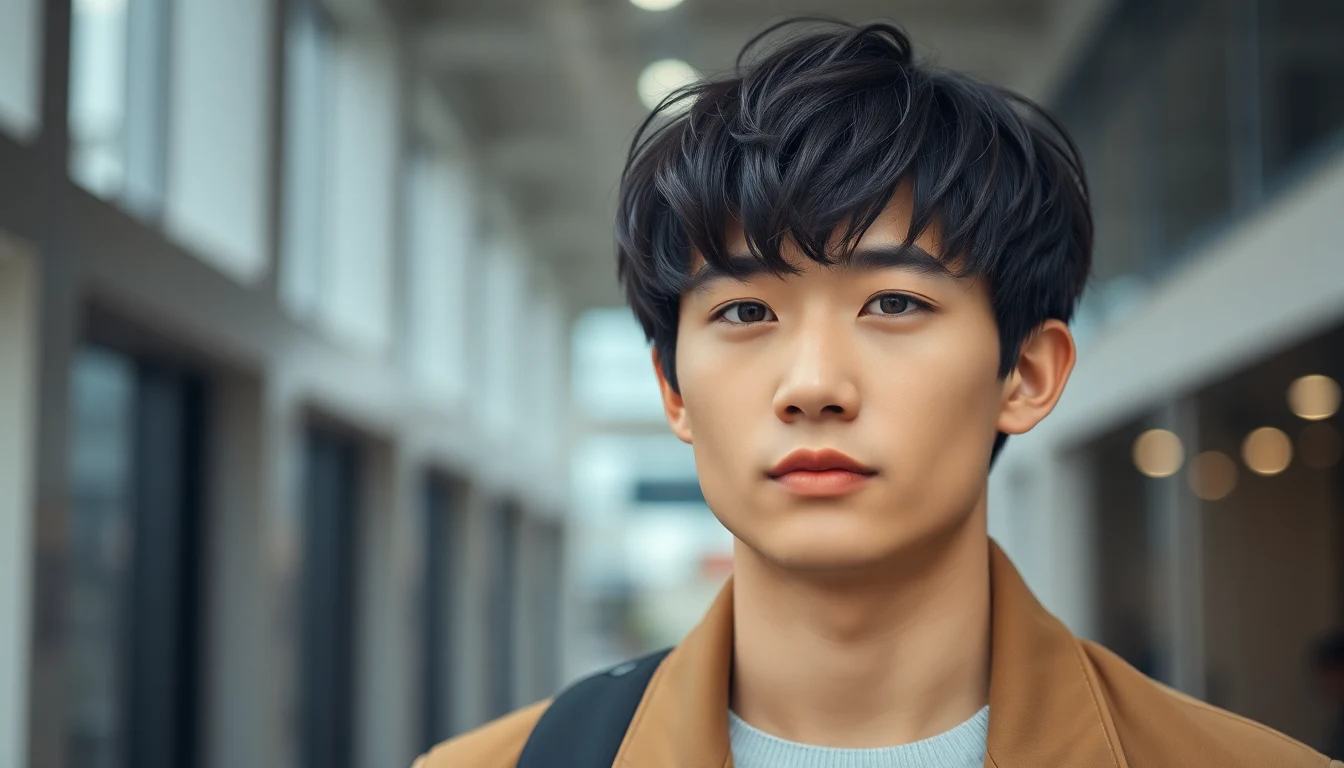
Quick note: I’m writing from a Korean-American perspective with Type 1A thick, straight hair. If you’re working with a different texture, I’ll flag where the advice changes.
1. Classic Two Block (투블럭)
The foundation of Korean men’s hairstyling. If you’re not familiar with the two block, check out our complete two block haircut guide for the deep dive. The short version: sides and back are clippered short (usually a #3 or #4 guard), the top stays 3 to 5 inches long, and the longer section falls naturally over the shorter sections to create a clean, layered frame around the face.
Korean name: Tublleok (투블럭)
Who it suits: Every face shape, but especially oval and oblong faces. This is the safest starting point if you’ve never tried a Korean cut. Works in offices, on dates, and everywhere in between.
How to ask for it:
- In English: “I want a two block cut. #3 or #4 on the sides, leave 4 inches on top, and I want the top to fall over the sides naturally, not blended.”
- Korean terms: “투블럭으로 해주세요. 옆은 3mm, 윗머리는 길게 남겨주세요.” (Tublleok-euro haejuseyo. Yeop-eun 3mm, winmeori-neun gilge namgyeojuseyo.)
Products needed: A lightweight matte wax like Gatsby Moving Rubber (grey tin for hold, pink for movement). Two swipes, start at the crown, work forward.
Maintenance: Trim every 3 to 4 weeks. The sides grow out fast on thick hair and start pushing the top layer outward, losing the clean line that defines this cut.
2. Modern Two Block (모던 투블럭)
The 2026 evolution of the classic. The modern version adds a subtle low fade on the sides instead of a uniform clipper length, plus texturizing on the top through point-cutting or razor work. You get the same structure as the classic but with more dimension and a softer transition between the two sections.
Korean name: Modeon Tublleok (모던 투블럭)
Who it suits: Round and square faces benefit most. The fade slims the silhouette at the temples, and the textured top adds vertical height. If the classic two block feels too “uniform” for you, this is the upgrade.
How to ask for it:
- In English: “Two block with a low fade instead of a straight clipper line. Texturize the top with point cutting. I want movement, not a blunt line.”
- Korean terms: “투블럭인데 옆에 페이드 넣어주세요. 윗머리는 텍스쳐 넣어주세요.” (Tublleok-inde yeope peideu neoeojuseyo. Winmeori-neun tekseuchweo neoeojuseyo.)
Products needed: A matte clay or Uevo Design Cube (dry wax) for piecey definition. Blow dry before applying; this cut looks flat without volume at the roots.
Maintenance: Every 3 weeks. The fade grows out faster than a uniform clipper cut and needs more frequent attention to stay sharp.
3. Comma Hair (쉼표 머리)
The most searched Korean men’s hairstyle on social media in 2026, and the one I get asked about the most. Swimphyo meori (쉼표 머리) literally translates to “comma hair” because the fringe curls inward at the forehead like a comma punctuation mark. It’s a two block base with the front section curled into that signature comma shape using a curling iron, round brush, or perm treatment.
I’ll be honest: this is the style that separates a good Korean barber from one who just knows how to do a two block. The comma has to sit naturally. Too tight and you look like you’re wearing a costume. Too loose and it just looks like your bangs blew sideways.
Korean name: Swimphyo meori (쉼표 머리)
Who it suits: Best for oval, heart, and diamond face shapes. The comma frames the forehead without covering it completely, which flatters faces that benefit from showing some forehead. You need at least 3 inches of length in the fringe for the comma to form properly.
How to ask for it:
- In English: “I want comma hair. Two block base, but curl the fringe inward on one side so it forms a comma shape on my forehead. The curl should look natural, not stiff.”
- Korean terms: “쉼표 머리로 해주세요. 앞머리를 안쪽으로 자연스럽게 말아주세요.” (Swimphyo meori-ro haejuseyo. Ammeori-reul anjjog-euro jayeonseureobge marajuseyo.)
Products needed: Heat protectant spray, a 32mm curling iron or round brush, and a light-hold setting spray. For product hold throughout the day, a fingertip of wax at the tips of the comma only. Mise en Scene Perfect Serum on damp hair before blow drying prevents the frizz that ruins the clean comma shape.

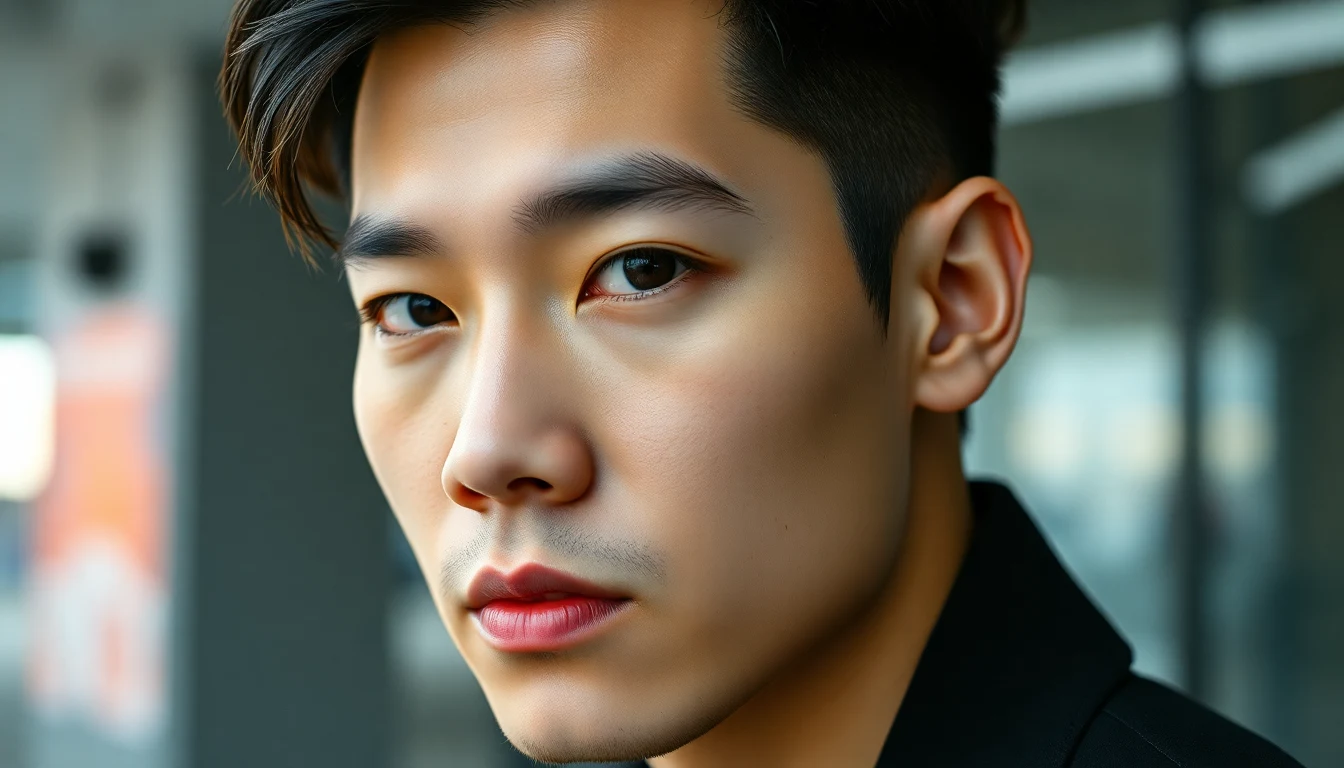
Maintenance: Daily styling takes 5 to 10 minutes once you learn the technique. The cut itself needs trimming every 3 to 4 weeks. If your hair is pin-straight and refuses to hold the curl, a C-curl perm (see #8) on the fringe section eliminates the daily curling iron routine.
4. Middle Part (가르마)
The gareuma (가르마, center part) made a massive comeback through K-drama actors like Song Kang and Park Seo-joon. This is a clean center part with the hair falling to both sides, typically 4 to 6 inches long on top. It looks simple, but thick Korean hair makes it tricky. Without the right layering, you end up with curtains instead of a hairstyle.
Korean name: Gareuma (가르마)
Who it suits: Symmetrical oval and oblong faces. This style exposes your entire face, so it works best when your features are balanced. If you have a wider forehead, consider the curtain bangs variation (#10) instead.
How to ask for it:
- In English: “Center part, 5 inches on top, layered through the sides so it doesn’t tent outward. I want it to frame my face, not stick out at the ears.”
- Korean terms: “가르마로 해주세요. 윗머리 길이는 유지하고, 옆은 레이어 넣어주세요.” (Gareuma-ro haejuseyo. Winmeori giri-neun yuji-hago, yeop-eun reieyo neoeojuseyo.)
Products needed: A lightweight volumizing mousse at the roots before blow drying. Finish with a dime-sized amount of a natural-finish wax to define the part and control flyaways. Heavy products kill this look.
Maintenance: Trim every 4 to 5 weeks. This cut has more grow-out room than a two block because there’s no short-to-long transition to maintain.
5. Textured Crop with Fringe (텍스쳐 크롭)
A Korean take on the European textured crop. The top is kept shorter (2 to 3 inches), heavily texturized with point-cutting, and the fringe falls forward onto the forehead in choppy, uneven pieces. It’s the most low-maintenance Korean style on this list and one of the few that actually looks better on the second or third day without restyling.
Korean name: Tekseuchweo keulob (텍스쳐 크롭)
Who it suits: Round faces and men with wider foreheads. The forward fringe narrows the face visually, and the texture prevents the flat, helmet look that thick straight hair defaults to at shorter lengths.
How to ask for it:
- In English: “Textured crop, 2 inches on top, fringe falling forward. I want it choppy and piecey, not blunt.”
- Korean terms: “크롭으로 해주세요. 윗머리 짧게, 텍스쳐 많이 넣어주세요.” (Keulob-euro haejuseyo. Winmeori jjalbge, tekseuchweo mani neoeojuseyo.)
Products needed: Matte clay or a dry wax. Lipps L08 Matt Hard Wax is ideal here. Apply to dry hair, pinch and pull sections for separation. No blow dryer needed.
Maintenance: Every 3 to 4 weeks. The fringe grows into your eyes fast if your hair grows at typical East Asian rates.
6. Korean Down Perm (다운펌)
Here’s where we get into chemical treatments. The daunpeom (다운펌) is the gentlest Korean perm. It doesn’t create curls. Instead, it relaxes thick, straight hair that sticks up or out, pressing it downward to lie flat and flow in one direction. Think of it as anti-volume treatment. If your hair sticks up at the crown or pushes outward at the sides no matter what you do, this is the fix.
Korean name: Daunpeom (다운펌)
Who it suits: Men with thick, coarse hair that resists lying flat. Particularly effective for guys whose hair sticks straight up at the crown or fans outward at the sides. Not recommended if your hair is already thin or flat; it’ll look limp.
How to ask for it:
- In English: “I want a down perm to flatten my hair. It sticks up at the crown and pushes out at the sides. I don’t want curls, just control.”
- Korean terms: “다운펌 해주세요. 머리가 자꾸 뜨는데 눌러주세요.” (Daunpeom haejuseyo. Meori-ga jakku tteuneunde nulleojuseyo.)
Products needed: Minimal. That’s the beauty of a down perm. A light serum like Mise en Scene Perfect Serum on damp hair, blow dry with a round brush pulling downward, done. Skip heavy waxes; they weigh down permed hair differently than natural hair.
Maintenance: Lasts 2 to 3 months before you need a touch-up. No special shampoo required, but avoid clarifying shampoos that strip the treatment faster.
7. Korean S-Curl Perm (S컬 펌)
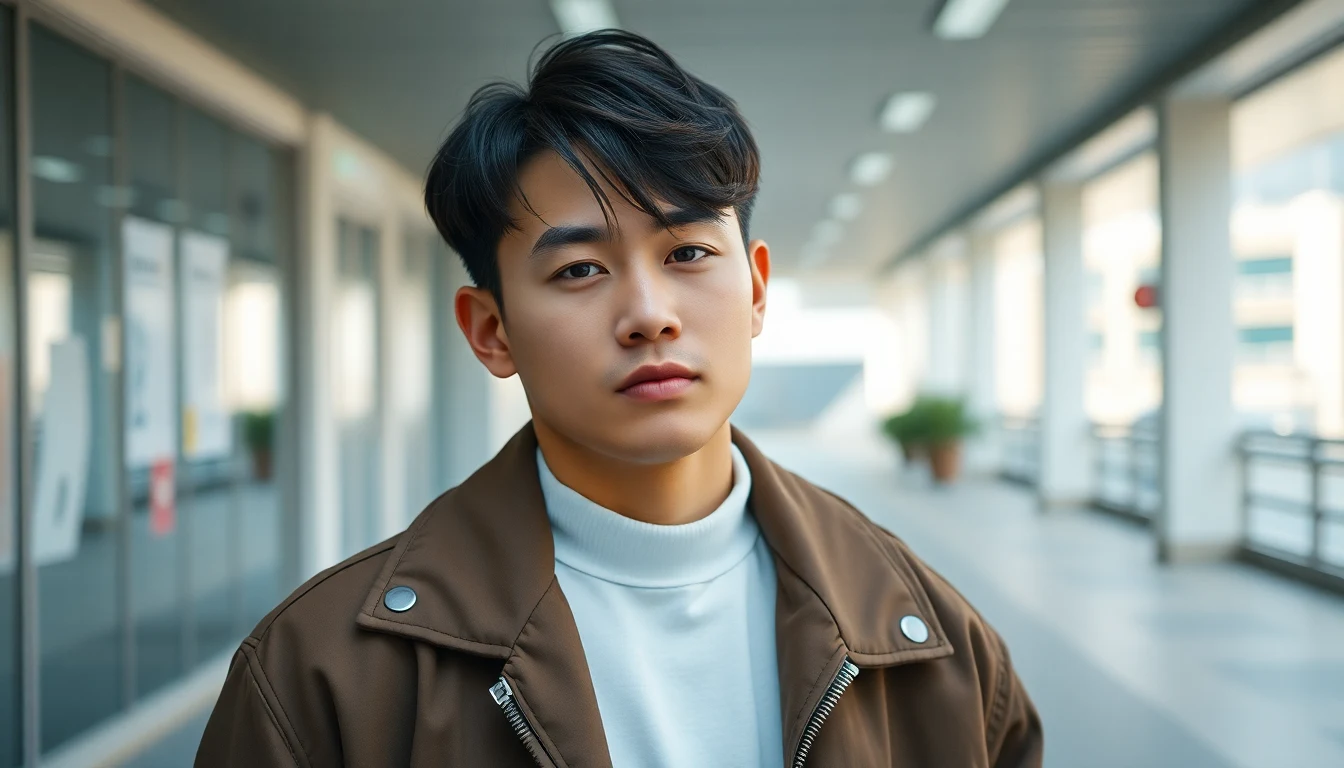
The S-curl creates a loose, natural-looking wave pattern throughout the top section. It’s named for the S-shaped wave it produces, which adds significant volume and movement to straight hair without looking obviously permed. If you’ve seen Korean actors with hair that looks effortlessly wavy, there’s a 90% chance there’s an S-curl perm underneath.
Korean name: Eseu-keol peom (S컬 펌)
Who it suits: Most face shapes. The waves add width (good for oblong faces) and can be styled to add or reduce height. Best on hair that’s at least 4 inches long on top. If you have a round face, ask your stylist to focus the wave pattern higher on the head to create vertical elongation.
How to ask for it:
- In English: “S-curl perm on top only. I want natural-looking waves, not tight curls. Keep the sides short, no perm on the sides.”
- Korean terms: “윗머리만 S컬 펌 해주세요. 자연스러운 웨이브로요.” (Winmeori-man eseu-keol peom haejuseyo. Jayeonseureoun weibeu-royo.)
Products needed: A curl-enhancing mousse or light cream applied to damp hair. Scrunch upward while blow drying with a diffuser attachment. A wax-based product like Gatsby Moving Rubber (pink tin, Spiky Edge) helps define individual wave sections without crunchiness.
Maintenance: Lasts 2 to 3 months. Sleep on a silk pillowcase to extend the perm’s life. The waves loosen gradually, so it grows out naturally rather than leaving an obvious grow-out line.

8. Korean C-Curl Perm (C컬 펌)
My personal favorite perm for thick Korean hair. The C-curl creates inward-curling ends that form a C-shape, particularly at the fringe and sides. It’s the perm that makes comma hair effortless and gives the entire top section a soft, rounded silhouette. Where the S-curl adds waves throughout, the C-curl focuses the movement at the ends only.
Korean name: Ssi-keol peom (C컬 펌)
Who it suits: Every face shape. This is the most universally flattering Korean perm because the inward curl naturally frames the face. Particularly good for men who want the comma hair look without daily curling iron work. Also excellent for disguising a wide forehead; the curled ends create a softer frame.
How to ask for it:
- In English: “C-curl perm. I want the ends to curl inward, especially the fringe. Soft C-shape, not a full curl.”
- Korean terms: “C컬 펌 해주세요. 끝만 안쪽으로 말리게요.” (Ssi-keol peom haejuseyo. Kkeutman anjjog-euro malligeyo.)
Products needed: A light hold wax and heat protectant. After the perm sets, daily styling is just blow dry with a round brush (pulling inward at the ends) and a fingertip of wax. The perm does 80% of the work.
Maintenance: Lasts 2 to 3 months. This perm grows out more gracefully than most because the C-curl relaxes into a natural-looking bend rather than going completely straight.
9. Wolf Cut (울프컷)
The Korean wolf cut is not the same animal as the TikTok wolf cut Western barbers are doing. Let me be clear about that. The Korean version (ulpeu-keot) keeps more structure on top and layers heavily through the back and sides to create a shaggy, mullet-adjacent silhouette without the full commitment of a mullet. Think controlled chaos, not vintage rock band.
For the full breakdown, see our wolf cut for Asian hair guide.
Korean name: Ulpeu-keot (울프컷)
Who it suits: Oval, heart, and diamond faces. The heavy layers through the jaw area add width at the bottom, which balances narrower chins. Not ideal for round faces unless the layers are kept above the jawline. Works best with at least 5 inches of length.
How to ask for it:
- In English: “Korean wolf cut. Heavy layers through the back and sides, keep the top structured. I want it shaggy, not messy. The layers should frame my jaw.”
- Korean terms: “울프컷 해주세요. 뒷머리 레이어 많이 넣어주세요.” (Ulpeu-keot haejuseyo. Dwinmeori reieyo mani neoeojuseyo.)
Products needed: A sea salt spray for texture, followed by a matte clay for definition. Apply the salt spray to damp hair, blow dry with your fingers (no brush), then pinch sections with clay.
Maintenance: Every 4 to 5 weeks. This cut actually looks better slightly grown out, so you have more room between trims than a two block.
10. Curtain Bangs (커튼뱅)
Not to be confused with the middle part. Curtain bangs use a center or slightly off-center part, but the fringe sections are cut shorter (typically to the cheekbone) and layered to sweep outward like, well, curtains. The key difference from a middle part is that curtain bangs have visible layering in the fringe area that creates an arched frame around the forehead.
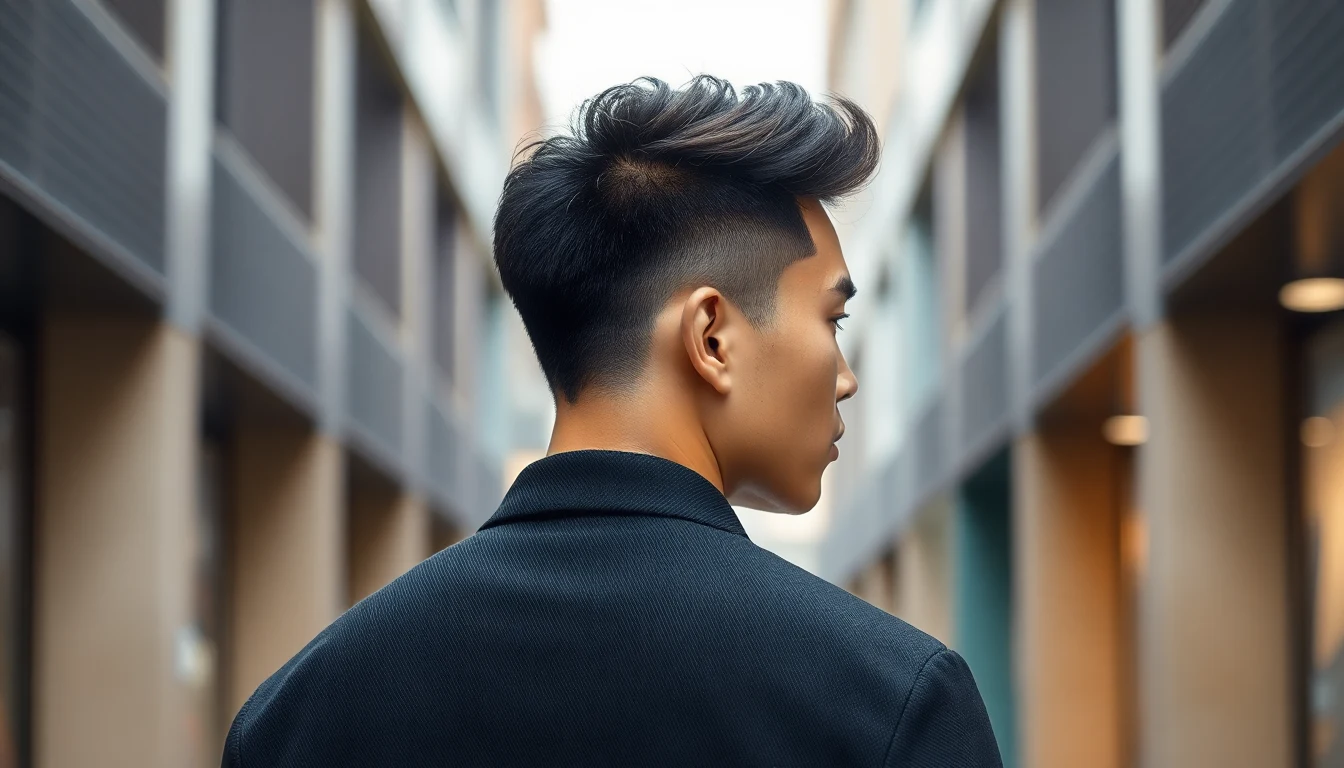
Korean name: Keoteon baeng (커튼뱅)
Who it suits: Wide foreheads, square faces, and round faces. The curtain framing visually narrows the forehead without covering it completely. This is the go-to recommendation I give clients who want a middle part but feel too exposed with a standard gareuma.
How to ask for it:
- In English: “Curtain bangs with a center part. Frame the fringe to cheekbone length, layered to sweep outward. I want it to look like a natural part, not a blunt bang.”
- Korean terms: “커튼뱅으로 해주세요. 앞머리 광대뼈까지, 바깥으로 흐르게요.” (Keoteon baeng-euro haejuseyo. Ammeori gwangdaeppyeo-kkaji, bakkateuro heuleugeyo.)
Products needed: Volumizing powder at the roots for lift. A round brush and blow dryer to train the bangs outward. A light finishing spray to set the direction. Skip wax on the fringe; it makes curtain bangs clump together and loses the airy effect.
Maintenance: Every 3 to 4 weeks. The fringe length is critical; once it passes your chin, it stops looking like curtain bangs and starts looking like you forgot to get a haircut.
11. Regent Cut (리젠트 컷)
The Korean regent cut is a structured, swept-back style that combines the formality of a pompadour with the softness of Korean styling. The hair is swept back and slightly to one side from a deep side part, with enough volume at the front to create a subtle quiff. It’s the most “adult” style on this list, commonly seen on Korean businessmen and news anchors.
Korean name: Rijenteu keot (리젠트 컷)
Who it suits: Mature professionals. Square and rectangular face shapes benefit from the upward and backward direction, which elongates the face. Also works well for men with receding hairlines; the swept-back style works with the natural recession rather than fighting it.
How to ask for it:
- In English: “Regent cut with a deep side part. Swept back with volume at the front. Keep it structured but not stiff. Sides tapered, not buzzed.”
- Korean terms: “리젠트 컷으로 해주세요. 옆 가르마 깊게, 앞머리 볼륨 넣어주세요.” (Rijenteu keot-euro haejuseyo. Yeop gareuma gipge, ammeori bollyum neoeojuseyo.)
Products needed: A medium-hold pomade with slight shine. This is one of the few Korean styles where pomade is preferred over matte wax. Blow dry backward with a round brush to set the direction before applying product.
Maintenance: Every 3 weeks. The tapered sides and structured top lose their shape quickly on thick, fast-growing hair.

12. Pompadour Fade (폼피두어 페이드)
A Korean-Western hybrid that’s gained traction with younger Korean-Americans who want a style that bridges both grooming cultures. The classic pompadour volume on top, combined with a skin or low fade on the sides, finished with Korean styling sensibilities (softer, less gel-helmet, more natural movement).
Korean name: Pompiduo peideu (폼피두어 페이드)
Who it suits: Oval and round faces. The height at the front elongates round faces dramatically. You need at least 4 inches on top for the pompadour volume to work. Not great for men with very fine hair within the Asian spectrum; you need the strand thickness to hold the lift.
How to ask for it:
- In English: “Pompadour with a low skin fade. I want volume and height at the front, but styled with a matte product, not slicked. Korean styling, not rockabilly.”
- Korean terms: “폼피두어에 페이드 넣어주세요. 앞쪽 볼륨 살려주세요.” (Pompiduo-e peideu neoeojuseyo. Apjjok bollyum sallyeojuseyo.)
Products needed: A pre-styler volumizing spray, blow dryer with concentrator nozzle, and a matte clay for the finish. The Korean approach to the pompadour uses matte texture instead of the high-shine pomade Western barbers default to.
Maintenance: Every 2 to 3 weeks. The fade needs frequent upkeep, and the pompadour shape depends on precise proportions between top length and side length.
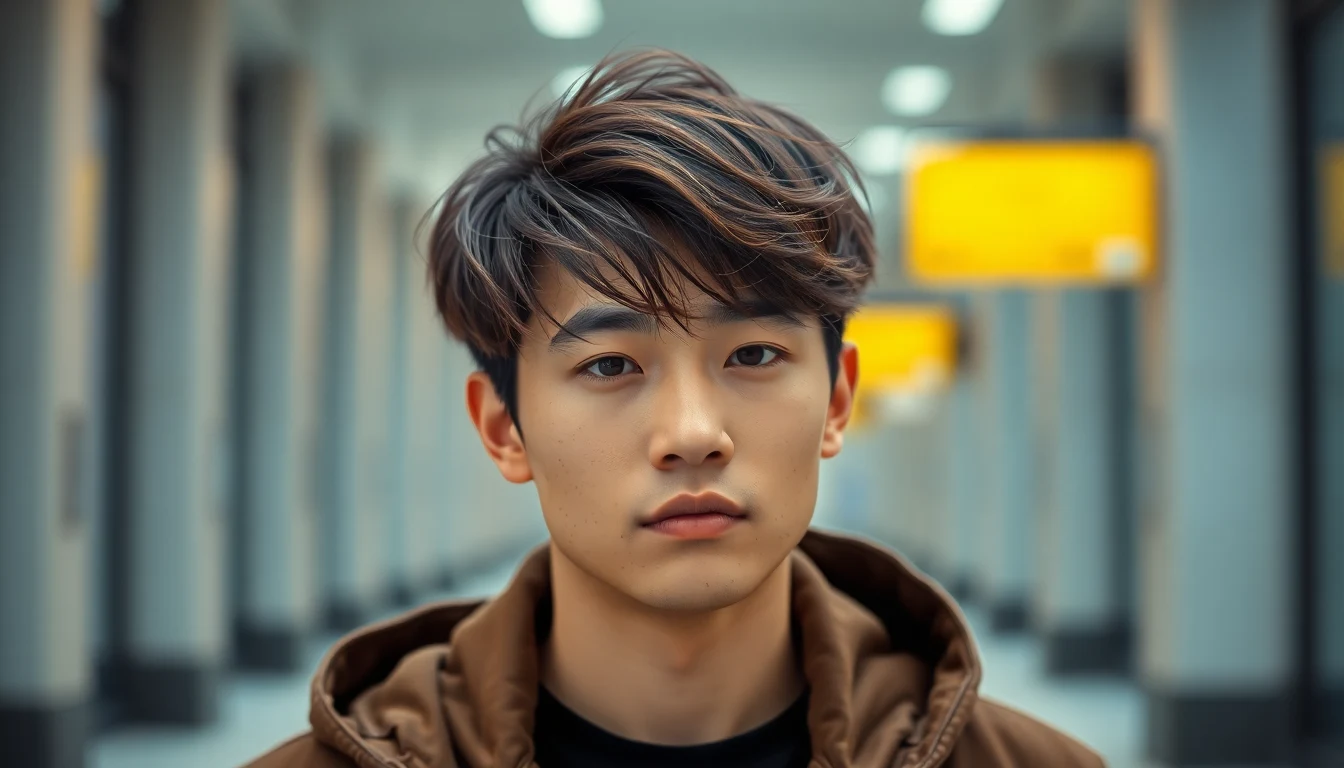
13. Slick Back (슬릭 백)
The Korean slick back differs from the Western version in one important way: it’s never fully plastered down. Korean styling keeps some volume at the roots and a slight lift off the scalp, even when the direction is straight back. The result is a clean, pulled-back look that still feels alive rather than painted on.
Korean name: Seullig baek (슬릭 백)
Who it suits: Strong jawlines and angular features. This style pulls everything away from the face, so your bone structure needs to carry the look. Also excellent for men who are tired of dealing with fringe and bangs. If you have a round face, add volume at the crown to prevent looking flat.
How to ask for it:
- In English: “Slick back, but not flat. I want volume at the roots with the hair swept straight back. Sides tapered, not skin fade.”
- Korean terms: “슬릭 백으로 해주세요. 뿌리 볼륨은 살려주세요.” (Seullig baek-euro haejuseyo. Ppuri bollyum-eun sallyeojuseyo.)
Products needed: A water-based pomade for a natural shine, or matte clay for a drier finish. Blow dry backward first, then apply product from front to back. Thick Korean hair actually excels at this style because the strand density holds the shape without excessive product.
Maintenance: Every 3 to 4 weeks. One of the lower-maintenance Korean styles since the grow-out phase doesn’t disrupt the overall silhouette dramatically.
14. Ivy League (아이비리그)
Also called a Princeton cut in some shops. The Korean ivy league is a short, preppy cut with a side part, 1 to 2 inches on top, and a clean taper on the sides. It’s the style I recommend to clients who want to look put-together with zero daily styling effort. Blow dry, a tiny amount of wax, out the door.
Korean name: Aibirigu (아이비리그)
Who it suits: Every face shape. This is the universal soldier of Korean haircuts. Particularly popular with Korean men in corporate environments or the military grow-out phase (more on that in the barbershop culture section). If you’re 30+ and want a style that reads “I care about my appearance but I’m not trying to be a K-pop idol,” this is it.
How to ask for it:
- In English: “Ivy league cut. Side part, 1.5 inches on top, tapered sides. Clean and classic.”
- Korean terms: “아이비리그로 해주세요. 깔끔하게, 옆 가르마.” (Aibirigu-ro haejuseyo. Kkalkkeum-hage, yeop gareuma.)
Products needed: Almost nothing. A small amount of natural-finish wax to define the part and add slight texture. This cut works best when it looks like you didn’t spend time on it.
Maintenance: Every 2 to 3 weeks for a truly clean look. At this length, thick Asian hair shows growth quickly. The upside is that haircuts this short are faster and cheaper.
15. Korean Buzz Cut (버즈컷)
Every Korean man has a relationship with the buzz cut, whether he chose it or not. Mandatory military service means 18 to 21 months of the beojeu-keot, and the post-service grow-out is practically a rite of passage. But the buzz cut has also become an intentional style choice in 2026, particularly among Korean men who want a zero-maintenance reset.
Korean name: Beojeu-keot (버즈컷) or sakbal (삭발, shaved head)
Who it suits: Men with well-shaped skulls and strong facial features. The buzz cut hides nothing, so your head shape and bone structure are on full display. If you’ve always wanted to try it, do it in summer when the shorter length keeps you cool.
How to ask for it:
- In English: “Buzz cut, #2 all around” (for a soft buzz) or “#1 for a closer cut.” Specify if you want the sides tighter than the top for a more shaped look.
- Korean terms: “삭발로 해주세요” (Sakbal-ro haejuseyo) for a full shave, or “버즈컷, 짧게” (Beojeu-keot, jjalbge) for a standard buzz.
Products needed: None for styling. Invest in a good SPF for your scalp (suddenly exposed skin that’s never seen the sun) and a moisturizer. Growing a beard to balance the bare head is a popular Korean-American move, but genetics play a significant role.
Maintenance: Every 1 to 2 weeks to maintain the clean buzz length. Many Korean men buy clippers and maintain this at home.

16. Korean Mullet (멀릿)
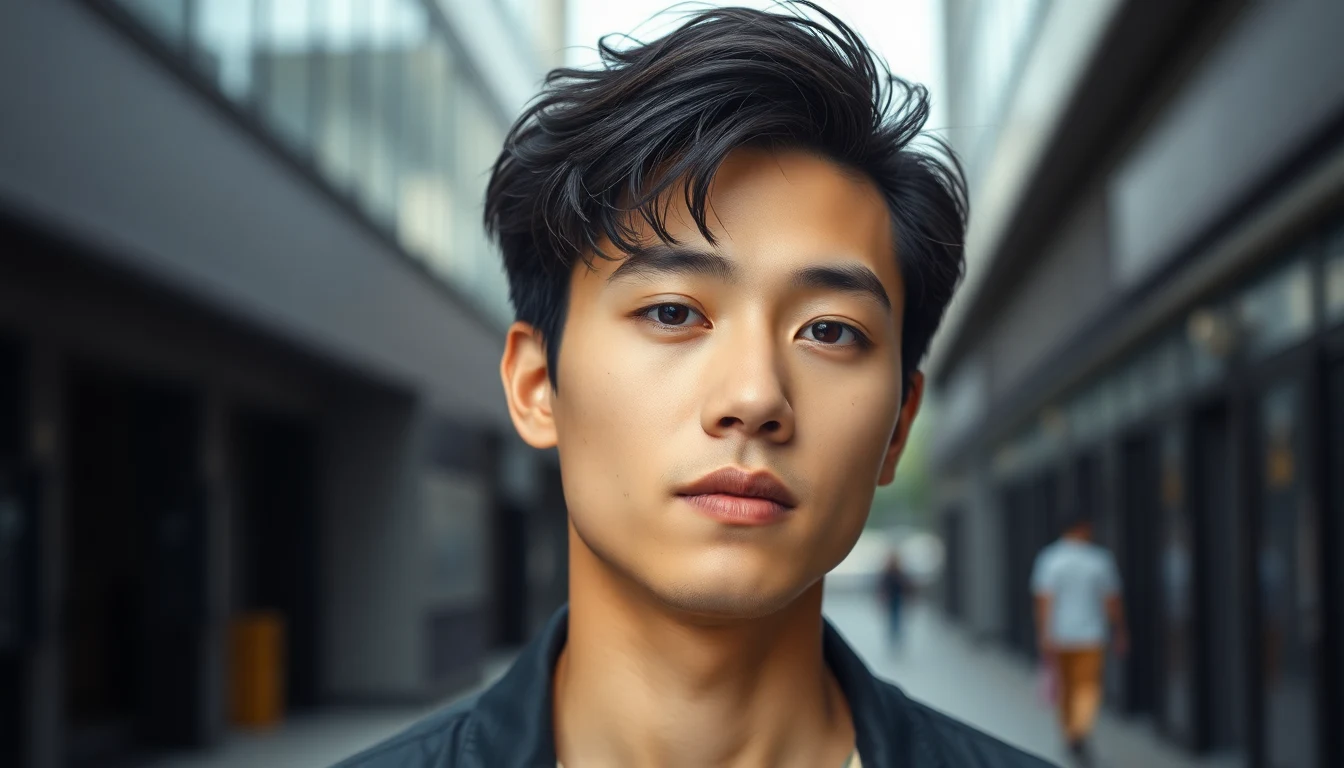
Before you close this tab: the Korean mullet is not the 1980s party-in-the-back disaster you’re picturing. The Korean version (meollis) keeps the front and top at medium length with heavy layers, while the back extends to the nape with tapered, wispy ends. It’s closer to a long wolf cut than a traditional mullet. K-pop groups like Stray Kids and ATEEZ popularized this look, and it’s crossed into mainstream Korean street style.
Korean name: Meollis (멀릿)
Who it suits: Heart and diamond faces. The length at the back balances a narrow jawline, and the layered front adds width through the forehead area. You need confidence for this one. It’s a statement style that gets attention.
How to ask for it:
- In English: “Korean mullet. Not an 80s mullet. Layered top and front at chin length, back extending to the nape with tapered ends. Think K-pop, not country music.”
- Korean terms: “멀릿으로 해주세요. 뒷머리 길게, 레이어 많이.” (Meollis-euro haejuseyo. Dwinmeori gilge, reieyo mani.)
Products needed: A texturizing spray or sea salt spray for natural movement. Matte wax for definition at the front. Avoid heavy products at the back; the wispy, tapered ends should move freely.
Maintenance: Every 4 to 5 weeks. The grow-out is forgiving because the style already has intentional length variation.
17. Layered Medium (레이어드 미디엄)
The catch-all Korean style for men who want medium-length hair (4 to 6 inches) with movement and shape. Layered medium is exactly what it sounds like: medium-length hair throughout with strategic layers to prevent the flat, heavy look that thick Korean hair defaults to without intervention. It’s the style you see on Korean university campuses everywhere.
Korean name: Reioeodeu midieom (레이어드 미디엄)
Who it suits: Every face shape when the layers are adjusted correctly. A good stylist will customize layer placement: more layers at the crown for volume (good for round faces), more layers at the sides for slimming (good for square faces), even layering throughout for a balanced look (good for oval faces). When it comes to korean hairstyles for men, technique matters most.
How to ask for it:
- In English: “Medium length all around, layered throughout for movement. I want it to look intentional, not like I’m just growing my hair out.”
- Korean terms: “레이어드 미디엄으로 해주세요. 전체적으로 레이어 넣어주세요.” (Reioeodeu midieom-euro haejuseyo. Jeonchejeogeuro reieyo neoeojuseyo.)
Products needed: A lightweight styling cream or Mise en Scene Perfect Serum on damp hair, blow dry with fingers, and finish with a matte wax for definition. This style relies more on the cut than the product.
Maintenance: Every 4 to 5 weeks. The layers need reshaping to prevent a shapeless grow-out, but this is one of the more forgiving styles between cuts.
Korean Hairstyles at a Glance: Comparison Table
| Style | Length on Top | Perm Needed? | Daily Styling Time | Trim Frequency | Best Face Shapes |
|---|---|---|---|---|---|
| Classic Two Block | 3-5 in | No | 5 min | 3-4 weeks | All, esp. oval |
| Modern Two Block | 3-5 in | No | 5-10 min | 3 weeks | Round, square |
| Comma Hair | 3-5 in | Optional (C-curl) | 5-10 min | 3-4 weeks | Oval, heart, diamond |
| Middle Part | 4-6 in | No | 5 min | 4-5 weeks | Oval, oblong |
| Textured Crop | 2-3 in | No | 2-3 min | 3-4 weeks | Round, wide forehead |
| Down Perm | 3-5 in | Yes | 3-5 min | Perm every 2-3 mo | All (for thick, stiff hair) |
| S-Curl Perm | 4+ in | Yes | 5-10 min | Perm every 2-3 mo | All, esp. oblong |
| C-Curl Perm | 3-5 in | Yes | 5 min | Perm every 2-3 mo | All (most versatile perm) |
| Wolf Cut | 5+ in | No | 5-10 min | 4-5 weeks | Oval, heart, diamond |
| Curtain Bangs | 4-6 in | No | 5-10 min | 3-4 weeks | Wide forehead, square, round |
| Regent Cut | 3-5 in | No | 5-10 min | 3 weeks | Square, rectangular |
| Pompadour Fade | 4+ in | No | 10 min | 2-3 weeks | Oval, round |
| Slick Back | 4-6 in | No | 5 min | 3-4 weeks | Angular, strong jawline |
| Ivy League | 1-2 in | No | 2 min | 2-3 weeks | All |
| Buzz Cut | <1 in | No | 0 min | 1-2 weeks | Well-shaped skull |
| Korean Mullet | 4-6 in | No | 5-10 min | 4-5 weeks | Heart, diamond |
| Layered Medium | 4-6 in | No | 5 min | 4-5 weeks | All |
The Korean Hair Texture Advantage (and Where It Works Against You)
Let’s talk about why Korean hairstyles look so good on Korean hair, and the specific challenges that come with it.
East Asian hair, particularly Korean and Japanese hair, has a round cross-section with a strand diameter of 80 to 120 micrometers. That’s the thickest of any ethnicity. Each individual strand has 7 to 10 cuticle layers compared to 5 to 7 for Caucasian hair. The result: incredible strand strength, natural shine, and a density that holds shape beautifully once you get it to cooperate.
Where this works for you:
- Styles that rely on volume and structure (two block, pompadour, regent) hold their shape all day with minimal product.
- The natural shine of healthy Korean hair makes slick back and middle part styles look polished without heavy product.
- Strand thickness means your hair looks full even though East Asian hair has lower follicle density per square centimeter.
- Thick strands resist heat damage better, so blow drying and curling iron use are less damaging than on finer hair types.
Where this works against you:
- Thick, straight hair resists curling without chemical treatment. Curling iron styles (comma hair, textured waves) may drop flat within hours unless you use a perm or strong-hold products.
- When cut too short on the sides (under 1 inch), Korean hair sticks straight out instead of lying flat. This is why the two block works better than a traditional buzz-sides cut.
- The thick cuticle makes color processing and perming take longer and require stronger chemicals. Budget extra time (and money) for salon treatments.
- Hair grows roughly 6 inches per year, which is fast enough that most styles need a trim every 3 to 4 weeks to maintain their shape.
- Heavy or greasy products show more on thick, straight hair because there’s less texture to absorb them. Stick to lightweight waxes and clays.
Understanding your hair texture isn’t just academic. It directly determines which styles are low-maintenance for you and which ones require daily work or chemical treatment. The comparison table above includes a “Perm Needed?” column specifically because thick, straight Korean hair has a definitive relationship with each style’s feasibility.
Korean Barbershop Culture: What to Expect Before You Sit Down
Walking into a Korean hair salon for the first time is a different experience than a standard American barbershop. Here’s what you need to know, whether you’re visiting a shop in Koreatown, LA, K-town Manhattan, or an actual neighborhood salon in Seoul.
미용실 (Miyongshil) vs. 이발소 (Ibalso): Salon vs. Barbershop
In Korea, these are two different places, and the distinction matters.
A miyongshil (미용실, beauty salon) handles cutting, perming, coloring, and full styling for both men and women. Think of it as a full-service salon. These are where you go for comma hair, C-curl perms, and any style that requires chemical treatment or detailed technique. Stylists here have completed a formal training program and are licensed.
An ibalso (이발소, barbershop) is the traditional men’s barbershop. Typically older-school, focused on straightforward cuts: buzz cuts, ivy leagues, clean side parts. Many include a hot towel shave, face massage, and eyebrow trimming as standard service. The vibe is more neighborhood hangout than design studio. Pricing is lower. Some ibalso have been in the same location for decades, and the owner knows every regular by name.
In the US, Korean-owned salons often blur this line. A shop in Koreatown might handle everything from a simple buzz to a full perm. But if you see “이발소” on the sign, expect a traditional cut-and-shave shop. If you see “미용실” or “헤어샵” (hair shop), expect full salon services.
Pricing: Korea vs. US
| Service | Seoul (KRW / USD) | US Korean Salon | US General Barbershop |
|---|---|---|---|
| Basic men’s cut | 15,000-30,000 won ($11-$22) | $30-$50 | $25-$45 |
| Designer cut (named stylist) | 30,000-80,000 won ($22-$59) | $50-$80 | N/A |
| Perm (C-curl, S-curl, down) | 50,000-100,000 won ($37-$74) | $80-$200 | $100-$250+ |
| Color | 40,000-100,000 won ($30-$74) | $60-$150 | $70-$200 |
| Traditional ibalso cut + shave | 10,000-15,000 won ($7-$11) | $20-$35 | N/A |
Tipping Culture Differences
In Korea, tipping is not customary at salons or barbershops. The price on the menu is the price you pay. Some high-end Gangnam salons have started accepting tips from international clients, but a Korean stylist will not expect one and may even politely decline.
In the US, tip your Korean barber or stylist. Standard is 15% to 20%, same as any American salon. Korean-owned shops in the US operate on American tipping norms, and their stylists depend on tips as part of their income. I’ve seen guys skip the tip because “tipping isn’t Korean culture,” and I promise you, the stylist notices.
What Comes Standard (That You Didn’t Expect)
Korean salons, especially those run by older sajangnim (owners), often include services that American shops charge extra for:

- Eyebrow grooming: A quick trim and shape. Don’t be surprised when they reach for your eyebrows without asking; it’s standard.
- Ear and nose hair trim: Same deal. It’s part of the “complete grooming” philosophy.
- Shampoo and blow dry: Always included with a cut. You’ll get a full wash, sometimes with a brief scalp massage.
- Styling tutorial: Many Korean stylists will show you how to recreate the style at home. Pay attention. This is worth more than the haircut itself.
K-Beauty Styling Products: What Korean Men Actually Use
Forget the heavy American pomades. Korean and Japanese styling products are formulated for thick, straight East Asian hair, which means lightweight textures, strong hold without weight, and matte to natural finishes. Here are the brands that dominate the Korean men’s grooming shelves. For a deeper comparison of what works for Asian hair textures, see our best pomade for Asian hair roundup.
Gatsby Moving Rubber
The most ubiquitous Asian men’s hair product on the planet. Made by Mandom Corporation (Japan), available in seven color-coded tins. For Korean hairstyles, you’ll use three of them.
- Grey Tin (Grunge Mat): Strong hold, matte finish. Best for two block, textured crop, pompadour. The workhorse.
- Pink Tin (Spiky Edge): Strong hold, slight sheen. Best for defined, separated pieces. Good for wolf cut and comma hair.
- Green Tin (Air Rise): Light hold, matte. Best for root volume and natural movement. Good for middle part and curtain bangs.
How to use: Two swipes from the tin (your index and middle finger). Rub between palms until warm. Start at the crown, work toward the front. Never start at the fringe; you’ll overload it. Available at our product page.
Mise en Scene
Amorepacific’s men’s styling line. The Perfect Serum is the hero product: a lightweight leave-in oil serum that tames frizz, adds shine, and protects against heat damage. My mom has been using the women’s version for 20 years, and she was right about this one.
- Perfect Serum (Original): Apply 2 to 3 drops to damp hair before blow drying. Works as a heat protectant and frizz tamer.
- Styling Wax: Medium hold, natural finish. Good for styles that need control without stiffness.
Uevo Design Cube
From Japanese brand Demi. The Design Cube line uses color-coded cubes (similar to Gatsby’s color system) for different hold and finish combinations. The Dry Wax (green) is the standout for Korean styles: strong hold, completely matte, and washes out in one shampoo. If Gatsby feels too waxy for you, Uevo is the upgrade.
Lipps (Japan)
The professional-grade option. Lipps L08 Matt Hard Wax is what you’ll find in actual Korean and Japanese salons. Strong hold, zero shine, and a fiber-based formula that creates the kind of separation and texture you see in salon photos. More expensive than Gatsby, but you need less product per use. A single tin lasts 3 to 4 months with daily use.
Arimino Peace
Another Japanese salon brand. The Arimino Peace Freeze Keep Wax is the strongest-hold product on this list. If you have the thickest, most uncooperative hair and need a style to last 12+ hours, this is the product. The tradeoff: it’s harder to wash out and can leave residue if you don’t double shampoo.
Product Tips for Korean Hairstyles
- Always blow dry first. Korean styling is 70% blow dry technique and 30% product. Applying wax to un-styled hair gives you a flat, greasy look.
- Use a concentrator nozzle. That narrow attachment on your blow dryer exists for a reason. It directs heat to specific sections, which is how you get root volume and directional control.
- Less product than you think. Thick hair absorbs product differently. Start with half of what the instructions say and add more if needed. You can always add; you can’t subtract.
- Skip gel entirely. Gel creates a hard, crunchy hold that contradicts the natural movement Korean hairstyles are built on. If someone recommends gel for a Korean style, they’re not familiar with these cuts.
Frequently Asked Questions
What is the most popular Korean hairstyle for men in 2026?
The two block cut remains the foundational Korean men’s haircut, but swimphyo meori (comma hair) is the single most requested style in 2026. It combines a two block base with a signature comma-shaped curl on the forehead. The style has been popularized by K-drama actors and idol groups, and it works for casual and professional settings.
Can non-Korean men pull off Korean hairstyles?
Yes. Most Korean male haircuts work across ethnicities, though the styling approach changes based on your hair texture. Men with thinner or wavier hair may need different products or a perm to achieve the volume and movement that thick, straight East Asian hair provides naturally. The key is finding a barber experienced with Asian-inspired cuts who can adapt the structure to your specific hair type. The cut itself is a technique; it’s not restricted to any ethnicity.
How often should I visit the barber to maintain a Korean hairstyle?
Every 3 to 4 weeks for most Korean styles. Thick, straight East Asian hair grows roughly 6 inches per year and loses its shape quickly. Two block variations and comma hair get noticeably overgrown by week five. Korean perms need chemical touch-ups every 2 to 3 months, though you’ll still need a trim between perm appointments.
How much does a Korean hairstyle cost at a salon?
In the US, expect $30 to $60 for a cut at a Korean salon, plus $80 to $200 for perm treatments. In Seoul, the same cut runs 15,000 to 30,000 won ($11 to $22 USD), and perms cost 50,000 to 100,000 won ($37 to $74 USD). Korean barbershops in US Koreatowns tend to fall between Korean and mainstream American pricing.
Do I need a perm for Korean hairstyles?
Not for most of them. The classic two block, modern two block, middle part, regent cut, slick back, ivy league, buzz cut, curtain bangs, textured crop, wolf cut, mullet, and layered medium all work without chemical treatment. Comma hair, S-curl, and heavily textured styles benefit from a perm if your hair is pin-straight and refuses to hold shape with products and heat styling alone.
What products do Korean men actually use for styling?
Lightweight waxes and clays, not heavy pomades. Gatsby Moving Rubber (grey or pink tin), Mise en Scene styling wax, and Arimino Peace are the most common. Korean men also rely heavily on a blow dryer with a concentrator nozzle, volumizing spray, and heat protectant as pre-styling essentials. The styling process in Korea prioritizes blow dry technique over product volume.
Your Next Step
Here’s the quick recap:
- Safest starting point: Classic or modern two block. Works for every face shape, no chemical treatment, moderate maintenance.
- Most trending in 2026: Comma hair (쉼표 머리). Requires some daily styling or a C-curl perm for effortless results.
- Lowest maintenance: Textured crop or ivy league. Minimal styling time, frequent but quick trims.
- Most dramatic transformation: S-curl perm or Korean mullet. Statement styles that change how people perceive your look entirely.
- Product staple: Start with Gatsby Moving Rubber (grey tin). It works for 80% of the styles on this list.
What to do tonight: Pick one style from this list. Screenshot the section with the barber instructions (both English and Korean terms). Book an appointment at a Korean salon near you, or use the barber scripts to communicate the cut clearly to any skilled barber.
For the foundation of most of these styles, read our complete two block haircut guide. If you’re exploring Asian hairstyles for men beyond the Korean-specific cuts here, that guide covers the full range. And if the wolf cut caught your eye, our wolf cut for Asian hair deep dive is coming soon.
For those of you working with thick hair, most of the product and styling advice in this guide applies directly to your texture, regardless of ethnicity.
Last updated: February 2026 | Written by Daniel Park, Licensed Cosmetologist
Frequently Asked Questions
What are the most popular Korean hairstyles for men right now?
The trending Korean hairstyles men are choosing in 2026 include the two block cut, comma hair, and various perm styles like C-curl and S-curl perms. These styles are popular because they offer clean, modern aesthetics that work well with Asian hair textures and require minimal daily styling.
How do I ask my barber for a two block haircut?
Ask your barber for very short, clipped sides (typically 0.5 to 1 inch) with significantly longer hair on top that you can style. The article includes specific barber scripts that you can show your stylist to ensure they understand the exact length and blending you want.
What is comma hair and how do you style it?
Comma hair is a Korean hairstyle featuring a distinctive comma-shaped curl that frames the forehead, creating a soft, youthful look. The style typically requires some product and styling technique, and works best with hair that has natural texture or a slight perm to hold the shape.
Which Korean perm style is best for thick or coarse hair?
The C-curl perm and down perm tend to work well with thicker Asian hair types because they add definition without creating excessive volume. The article compares different perm styles with product recommendations, so you can choose based on your specific hair texture and desired look.