Fourteen hundred years before the invention of the modern toothbrush, Muslims were cleaning their teeth with miswak. The Prophet Muhammad (peace be upon him) used siwak (another name for miswak) regularly and emphasized its importance for oral hygiene. Fast forward to 2026, and modern dental research has confirmed what the sunnah prescribed: miswak is not just a cultural practice; it is a scientifically effective oral care tool. The question is not whether miswak works. The question is how to combine its proven benefits with modern dentistry for the best possible oral health.
What Is Miswak?
Miswak is a tooth-cleaning twig made from the Salvadora persica tree (also called the toothbrush tree or arak tree). The tree grows naturally across the Middle East, Africa, and South Asia. To prepare a miswak, you cut a pencil-thick branch, remove about half an inch of bark from one end, then chew the exposed end until the fibers separate into a brush-like texture. These soft fibers act like bristles, cleaning the teeth and gums when rubbed across them.
Miswak has been used for oral hygiene across multiple cultures for millennia. It appears in ancient Egyptian records, Babylonian texts, and Greek medical writings. But its most significant cultural association is with Islam, where it became a deeply embedded sunnah practice.
The Sunnah of Miswak
The Prophet Muhammad (peace be upon him) emphasized miswak in numerous hadith. He was reported to have said that siwak purifies the mouth and pleases the Lord. He used miswak before every prayer, before entering the home, upon waking, and during wudu (ritual washing). The companions observed him using miswak so frequently that it was considered one of his most consistent daily practices.
All four madhabs (schools of Islamic jurisprudence) agree that miswak use is recommended (sunnah). Some scholars classify it as sunnah mu’akkadah (strongly emphasized sunnah), meaning it carries extra spiritual weight. The practice is recommended at specific times: before wudu, before prayer, before reciting Quran, upon entering the home, and upon waking from sleep.
The Science: What Research Actually Shows
Here is where it gets interesting. Modern scientific research has extensively studied Salvadora persica, and the findings validate the traditional use in remarkable ways.
Natural Fluoride Content
Miswak naturally contains fluoride, the same compound added to commercial toothpaste and municipal water supplies for cavity prevention. Research published in the Journal of Contemporary Dental Practice found that Salvadora persica contains 1.0 to 8.0 mg/L of fluoride, depending on the geographic source of the tree. This is within the range considered effective for preventing tooth decay.
Fluoride works by remineralizing tooth enamel, making it more resistant to acid erosion from bacteria. The fact that miswak delivers fluoride naturally, without the need for synthetic toothpaste, is one of its most compelling scientific advantages.
Antibacterial Properties
Salvadora persica contains several naturally occurring antibacterial compounds.
Salvadorine: An alkaloid with demonstrated antimicrobial activity against oral bacteria, particularly Streptococcus mutans (the primary bacterium responsible for tooth decay).
Trimethylamine: This compound lowers the pH of the oral environment, creating conditions unfavorable for bacterial growth.
Sulfur compounds: Salvadora persica contains traces of sulfur, which has known antibacterial properties.
Benzyl isothiocyanate: This compound, also found in mustard and wasabi, has strong antimicrobial activity and inhibits the growth of oral pathogens.
A systematic review published in the Journal of Evidence-Based Dental Practice analyzed multiple studies comparing miswak to conventional toothbrushing. The conclusion: miswak was as effective as, and in some studies more effective than, conventional toothbrushing for reducing plaque and gingivitis when used correctly.
Silica Content
Miswak contains natural silica, a gentle abrasive that helps remove surface stains and plaque mechanically. This functions similarly to the silica added to commercial whitening toothpastes, but in a natural, unprocessed form. The abrasion is gentle enough not to damage enamel when used correctly.
Gum Health Benefits
Multiple studies have demonstrated that regular miswak use reduces gingival inflammation (gingivitis). A study published in the Saudi Dental Journal found that miswak users had significantly lower gingival bleeding scores compared to non-users. The combination of mechanical cleaning (the bristle-like fibers) and antibacterial compounds (salvadorine, trimethylamine) appears to be particularly effective for gum health.
Miswak vs. Toothbrush: An Honest Comparison
| Category | Miswak | Toothbrush + Toothpaste |
|---|---|---|
| Plaque removal | Effective (comparable to manual toothbrush) | Effective (electric brushes superior to manual) |
| Antibacterial action | Natural compounds active for hours | Depends on toothpaste formula |
| Fluoride delivery | Natural fluoride (variable concentration) | Standardized fluoride (1000-1500 ppm) |
| Gum health | Excellent (reduces gingivitis) | Good to excellent (depends on technique) |
| Reach (back teeth) | Limited (harder to reach molars) | Better (designed for all areas) |
| Interdental cleaning | Limited (fibers do not reach between teeth) | Limited (still needs floss/interdental brushes) |
| Portability | Excellent (pocket-sized, no water needed) | Less portable (needs toothpaste, water, rinsing) |
| Cost | Very low ($1-$3 per stick, lasts 1-2 weeks) | Moderate ($3-$8+ per brush, $3-$10 per toothpaste) |
| Environmental impact | Fully biodegradable | Plastic waste (1 billion+ toothbrushes in landfills annually in the US alone) |
| Whitening | Mild (natural silica) | Varies (some toothpastes contain stronger whitening agents) |
The honest assessment: miswak is remarkably effective for a natural product. It holds its own against a manual toothbrush in clinical studies. Where it falls short is in reaching the back molars (the stick is not angled like a toothbrush head) and in interdental cleaning (neither miswak nor toothbrushes clean between teeth well; you need floss for that). This is why the ideal approach, in my view, is to combine both rather than choosing one exclusively.
How to Use Miswak Properly
Preparing a Fresh Miswak
Step 1: Cut or break a pencil-thick piece from a Salvadora persica branch, roughly 6 to 8 inches long (the length of a toothbrush).
Step 2: Using a knife or your teeth, peel about half an inch of bark from one end.
Step 3: Chew the exposed wood gently until the fibers separate and fan out like a small brush. This usually takes 1 to 2 minutes of gentle chewing.
Step 4: The brush end is now ready for use. The separated fibers will be soft and flexible.
The Brushing Technique
Hold the miswak with three fingers and the thumb, similar to how you hold a pen. Brush in a gentle up-and-down motion (vertical strokes, not horizontal). Clean the outer surfaces of all teeth, the inner surfaces (turn the stick), and the chewing surfaces. Brush the tongue gently to remove bacteria. A thorough session takes 3 to 5 minutes.

Do NOT brush with horizontal sawing motions. This can abrade gum tissue over time. Vertical or circular motions along the tooth surface are gentler and more effective, just as with a conventional toothbrush.
Maintaining Your Miswak
After each use, rinse the bristle end with water and let it air dry. Trim off used fibers every 2 to 3 days by cutting about a quarter inch from the tip and re-chewing to expose fresh fibers. Store in a ventilated container or case (not sealed plastic, which promotes bacterial growth). Replace the entire stick every 1 to 2 weeks, depending on use frequency.
Combining Miswak with Modern Oral Care
The best oral health comes from combining the proven benefits of miswak with the advantages of modern dentistry. Here is a practical integrated routine.
Morning (After Fajr)
Brush with a toothbrush and fluoride toothpaste. This ensures standardized fluoride delivery and thorough coverage of back teeth. Floss or use interdental brushes. This is the one thing neither miswak nor toothbrush does well.
Throughout the Day (Before Each Prayer)
Use miswak before each prayer session. This is the sunnah timing and also the most practical: you are already at the wudu station, and miswak takes 1 to 2 minutes. The antibacterial compounds in miswak provide ongoing protection between your morning and evening toothbrush sessions. Carry your miswak in a pocket case or in your prayer bag.
Evening (Before Bed)
Brush again with toothbrush and fluoride toothpaste. Floss. Use an antiseptic mouthwash if desired (check halal status; many mouthwashes contain ethanol). The nighttime session is the most important because saliva production drops during sleep, reducing your mouth’s natural defense against bacteria.
The Result
By combining miswak (5 times daily, before prayers) with toothbrush and floss (twice daily, morning and night), you are cleaning your teeth 7 times a day. That is more frequent than any dental association recommends, and the results show. Brothers who maintain this combined routine consistently report fewer cavities, healthier gums, and fresher breath than those using either method alone.
Miswak During Ramadan Fasting
This is one of the most common questions during Ramadan. Can you use miswak while fasting?
The majority opinion: Yes. The Hanafi, Maliki, and Hanbali schools all permit miswak use throughout the fasting day, including after midday. The reasoning: miswak is a dry tool; it does not introduce food or drink into the body. The Prophet (peace be upon him) used miswak while fasting, according to multiple narrations.
The Shafi’i nuance: The Shafi’i school considers it preferable (mustahab) to limit miswak use to the morning hours while fasting and makruh (disliked, though not forbidden) after midday. This is a minority position but widely followed in Southeast Asian Muslim communities.
Scholars differ on when miswak is best used while fasting, but the oral-health reasoning does not depend on which school you follow. Saliva production drops during fasting hours, which gives bacteria a more favorable environment, and regular miswak use works against that. For that reason Ramadan is where this sunnah earns its place most clearly.
Miswak for Beard-Related Oral Issues
An often overlooked connection: brothers with longer beards sometimes develop irritation at the corners of the mouth where beard hair contacts the lips. Food particles can also get trapped in the mustache area. Regular miswak use, particularly brushing the teeth behind the mustache area, helps keep this zone clean. Pair this with regular beard care and mustache trimming for optimal hygiene.
Where to Buy Quality Miswak
Miswak is widely available at Islamic bookstores and gift shops, online Islamic retailers, Middle Eastern and South Asian grocery stores, Amazon and other general e-commerce platforms, and some natural health food stores.
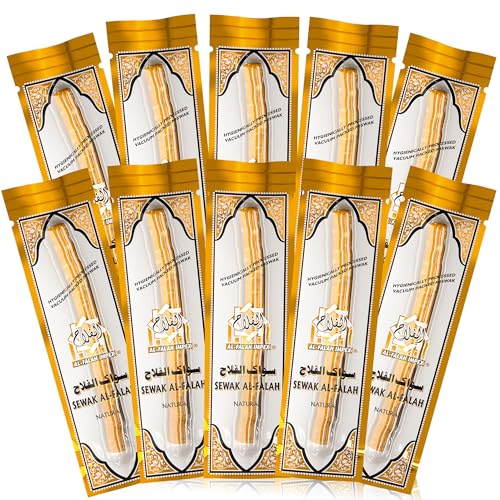
When buying, look for sticks that are fresh (flexible, not brittle and dried out), the right thickness (pencil-thick is ideal; too thin and they snap, too thick and they are hard to chew), vacuum-sealed or freshly packaged (exposure to air dries them out), and sourced from Salvadora persica (not random twigs marketed as miswak).
A pack of 10 miswak sticks typically costs $5 to $15, providing several months of supply. This makes miswak one of the most affordable oral care options available.
Common Miswak Mistakes
Using a dried-out stick. If your miswak has become dry and brittle, soak the tip in water for 30 minutes to rehydrate the fibers before use. A dry miswak is less effective and can irritate gums.

Brushing too aggressively. Miswak fibers are gentle, but excessive pressure can still damage gum tissue. Use the same gentle pressure you would with a toothbrush. Let the fibers and natural compounds do the work.
Not replacing frequently enough. If the fibers are matted, discolored, or have lost their texture, it is time to trim or replace. Using a worn miswak is like using a worn toothbrush: less effective and potentially harboring bacteria.
Skipping back teeth. This is the most common functional limitation. Make a conscious effort to reach your molars. Angle the miswak toward the back of your mouth and use shorter strokes. It takes practice, but it is possible.
Storing in sealed plastic. Sealed storage creates a moist environment where bacteria thrive. Use a ventilated case, a cloth pouch, or simply leave it to air dry between uses.
The Environmental Case for Miswak
In an era of growing environmental consciousness, miswak deserves attention as one of the most sustainable oral care options available. Consider the numbers: the United States alone sends over 1 billion plastic toothbrushes to landfills every year. Each one takes 400+ years to decompose. Add in the plastic toothpaste tubes, the packaging, and the shipping, and the environmental footprint of conventional oral care is substantial.
Miswak, by contrast, is fully biodegradable. It grows on trees in arid regions that are often unsuitable for other agriculture. It requires no packaging (though it is typically sold in simple plastic or paper wrapping). It needs no toothpaste, no water for rinsing (though water is welcome), and no electricity (unlike electric toothbrushes). For environmentally conscious brothers, miswak is the ultimate zero-waste oral care tool.
This does not mean you should abandon your toothbrush entirely (we covered the combined approach above). But replacing even two of your daily brushing sessions with miswak reduces your plastic waste meaningfully over a year. And when you consider that the sunnah prescribed this practice 1,400 years before “sustainability” became a buzzword, there is something humbling about that.
Miswak Varieties and Quality Differences
Not all miswak is created equal. The source matters.
Pakistani/Indian miswak (peelu): Often from Salvadora persica or Salvadora oleoides. Tends to be thinner, with a milder flavor. Good for beginners.
Saudi/Yemeni miswak (arak): Typically from Salvadora persica grown in the Hejaz region. Generally considered the highest quality due to soil conditions and climate. Slightly thicker, with more pronounced natural compounds.
African miswak: Found across North and East Africa. Quality varies by region and specific tree species. Ethiopian and Sudanese miswak is often excellent.
Freshness is more important than origin. A fresh miswak from Pakistan is better than a dried-out one from Saudi Arabia. When you bend the stick gently, it should flex slightly without cracking. If it snaps cleanly, it is too dry. If the bark peels away easily and the wood underneath is moist and fragrant, you have a good stick.
Miswak for Children
Introducing miswak to children is a beautiful way to connect them with the sunnah from a young age. For children under 6, supervise miswak use closely. Use thinner sticks that fit comfortably in small mouths. Teach gentle vertical strokes. Make it a pre-prayer routine so it becomes associated with salah (prayer). Continue using a children’s toothbrush with fluoride toothpaste as the primary cleaning tool; miswak supplements but should not replace proper pediatric dental care.
Frequently Asked Questions
Can miswak replace a toothbrush entirely?
For basic oral hygiene, miswak can be sufficient. Clinical studies show comparable effectiveness to manual toothbrushes for plaque and gingivitis control. However, modern toothbrushes (especially electric ones) provide better reach to back teeth and more consistent coverage. The ideal approach is combining both: toothbrush and toothpaste twice daily, miswak throughout the day. If you must choose only one (traveling, camping), miswak is a surprisingly capable standalone tool.
Does miswak whiten teeth?
Miswak provides mild whitening through its natural silica content, which acts as a gentle abrasive to remove surface stains. It will not produce dramatic whitening like peroxide-based treatments, but regular use helps maintain a cleaner, brighter appearance. Think of it as maintenance whitening rather than transformational whitening.
Is miswak safe for braces or dental work?
Use caution with braces. The fibers can get caught in brackets and wires. If you have braces, use miswak very gently on the exposed tooth surfaces and avoid the bracket areas. For crowns, fillings, and other dental work, miswak is generally safe because its abrasion level is mild. If you have specific dental concerns, ask your dentist about incorporating miswak into your routine.
What does miswak taste like?
Fresh miswak has a mildly peppery, slightly bitter taste that is not unpleasant. Some people describe a faint mustard-like warmth (from the benzyl isothiocyanate). After a few uses, most people find the taste neutral or even pleasant. It is very different from the strong mint flavor of commercial toothpaste, but many brothers come to prefer its subtle, natural character.
Can I use miswak with toothpaste?
You can, but it is unnecessary. The whole point of miswak is that it provides cleaning, antibacterial action, and fluoride without needing an additional product. If you apply toothpaste to your miswak, you are essentially using it as a toothbrush, which works but negates its self-contained convenience. Save the toothpaste for your regular toothbrush sessions.
Omar Al-Rashid
Can miswak actually replace my regular toothbrush for daily oral care?
While miswak has proven antibacterial and cleaning properties backed by modern dental research, most dentists recommend using it as a complement to rather than a replacement for your toothbrush. Miswak works best when combined with modern oral care practices like flossing and regular dental checkups for optimal health.
What makes miswak effective compared to modern toothbrushes?
Miswak contains natural fluoride, silica, and compounds with antibacterial properties that help remove plaque and protect gum health. However, modern toothbrushes are specifically engineered for consistent pressure and bristle design, so the most effective approach is using both tools together in your oral hygiene routine.
How do I properly prepare and use a fresh miswak stick?
Start by removing the bark from the tip of the miswak stick, then gently chew or rub the frayed end to soften the fibers before brushing. Use gentle circular motions on your teeth and gums, similar to how you’d use a regular toothbrush, and rinse your mouth with water afterward.
Is it safe to use miswak if I’m wearing braces?
Miswak can be challenging to use effectively with braces since the frayed fibers may catch on wires and brackets. It’s better to stick with a soft-bristled electric or traditional toothbrush designed for orthodontic care and consult your orthodontist about the safest oral hygiene practices for your specific situation.