Most “best moisturizer” lists rank products by how they feel, how they smell, or how expensive they are. None of those criteria matter if you have sensitive skin. What matters is what is in the bottle. Evaluate every moisturizer the same way: flip it over and count the ingredients. The fewer ingredients, the fewer potential triggers. The fewer triggers, the less your skin reacts.
Why Ingredient Count Is the First Filter
Every ingredient in a formula serves a purpose: active, emollient, preservative, emulsifier, pH adjuster, fragrance, colorant. For someone without skin sensitivities, the difference between 12 ingredients and 35 ingredients is largely irrelevant. For someone with reactive skin, every additional ingredient is another variable in an equation your immune system is already struggling to solve.
The ingredient count framework:
| Ingredient Count | Rating | Rationale |
|---|---|---|
| Under 10 | Excellent | Minimal variables. Every ingredient is essential. Easiest to troubleshoot if a reaction occurs. |
| 10-15 | Good | Standard for well-formulated sensitive skin products. Room for functional actives beyond basics. |
| 16-20 | Acceptable | Common for mainstream “sensitive” lines. Usually includes a few unnecessary ingredients. |
| 21-30 | Caution | Likely includes fragrance, multiple preservatives, or redundant emollients. Higher reaction risk. |
| 30+ | Avoid | Too many variables for reactive skin. Even if no single ingredient is a known irritant, the cumulative load increases risk. |
Ingredient count alone is not sufficient. A 7-ingredient moisturizer with denatured alcohol as ingredient #3 is worse than a 14-ingredient formula without any irritants. But count is the fastest screening tool. It takes three seconds to flip a bottle and count. That three seconds eliminates 60% of products on any shelf.
The Full Ingredient Audit
After the count passes, run the full four-step evaluation from the lagom rosacea routine:
- Count ingredients (done)
- Known irritant check: Scan for alcohol (denatured, SD, isopropyl), fragrance/parfum, menthol, peppermint, eucalyptus, witch hazel. Any of these is an automatic disqualification for rosacea-prone skin.
- Key actives and concentrations: What is the moisturizer actually doing? Ceramides for barrier repair? Niacinamide for inflammation? Or just dimethicone sitting on your skin doing nothing therapeutic?
- Formulation logic: Do the ingredients work together? A ceramide cream with alcohol is like building a wall while someone else knocks it down.
What Makes a Moisturizer “Good” for Sensitive Skin
The lagom (Swedish: “just the right amount”) moisturizer for sensitive skin has these characteristics:
Must-Have Ingredients
- Ceramides (NP, AP, EOP): These are the structural lipids of your skin barrier. Ceramide NP is the most critical. Products listing “ceramide complex” without specifying types are usually using lower-quality ingredients.
- Glycerin: The most effective humectant in dermatology. Attracts and holds water. Should be in the top 5 ingredients for meaningful concentration.
- Niacinamide (2-5%): Anti-inflammatory, strengthens the barrier by boosting ceramide production, reduces redness. At 2-5%, it is therapeutic without being irritating. At 10%, it can cause stinging and flushing in sensitive skin.
Beneficial Ingredients
- Squalane: A lightweight emollient that mimics your skin’s natural sebum. Non-comedogenic. Extremely well-tolerated.
- Panthenol (Provitamin B5): Humectant and anti-inflammatory. Supports wound healing. Particularly good in winter formulations.
- Cholesterol: Works synergistically with ceramides to repair barrier structure. Often overlooked.
- Centella asiatica extract: Anti-inflammatory. The madecassoside compound supports barrier repair.
Ingredients to Avoid
- Any form of fragrance: parfum, essential oils, limonene, linalool, coumarin
- Denatured alcohol / SD alcohol / isopropyl alcohol: Destroys the lipid barrier
- Menthol / peppermint / camphor: Triggers vasodilation and flushing
- Witch hazel: Astringent that strips natural oils
- Sodium lauryl sulfate (SLS): Rare in moisturizers, common in cleansers, always irritating
The Rankings: Moisturizer Evaluation Table
These moisturizer categories are based on publicly available ingredient lists. Rather than naming specific brands (which change formulations regularly), this guide provides the specification template that defines what to look for in each category. Check the current ingredient list before purchasing any product.
| Category | Ingredient Count | Key Actives | Irritant-Free | Finish | Price Range | Best For |
|---|---|---|---|---|---|---|
| Ultra-Minimal Barrier Cream | 5-8 | Ceramides, glycerin | Yes | Dewy | $8-15 | Acute flares, elimination baseline |
| Ceramide + Niacinamide Cream | 10-14 | Ceramide NP/AP/EOP, niacinamide 4%, cholesterol | Yes | Matte to semi-matte | $14-22 | Daily use, best overall value |
| Centella Recovery Cream | 10-16 | Madecassoside, panthenol, ceramides | Yes | Dewy | $15-25 | Post-flare recovery, winter repair |
| Squalane-Based Lightweight | 8-12 | Squalane, glycerin, hyaluronic acid | Yes | Matte | $12-20 | Summer, oily-combination sensitive skin |
| Rich Winter Barrier Balm | 12-18 | Ceramides, shea butter, squalane, petrolatum | Yes | Dewy to rich | $16-30 | Extreme cold, severely dry skin |
| Zinc Oxide Tinted Moisturizer | 14-20 | Zinc oxide 12%+, ceramides, iron oxides | Yes | Semi-matte, light coverage | $18-35 | Rosacea with redness, combines moisturizer + sun protection |
Budget Pick: Under $15
The best value in sensitive skin moisturizers is a simple ceramide + glycerin formula with 10-14 ingredients. Products in this range use the same fundamental ingredients (ceramide NP, ceramide AP, ceramide EOP, glycerin, cholesterol) as products costing three times as much. The difference is usually packaging, marketing, and a few additional beneficial-but-not-essential ingredients like niacinamide.
What to look for in a budget ceramide moisturizer:
- Glycerin in the top 3 ingredients
- At least two named ceramides (not just “ceramide complex”)
- Cholesterol listed (supports ceramide function)
- Fragrance-free (check the full INCI list, not just the front label)
- No denatured alcohol in the first 10 ingredients
A formula meeting these specifications will cost $10-15 for a 12-16 oz container and will outperform most $40+ “luxury” sensitive skin creams that add fragrance, essential oils, and unnecessary botanical extracts.
Mid-Range: $15-25
In the mid-range, you gain access to more sophisticated actives: higher-quality centella asiatica extracts (standardized madecassoside content), meaningful concentrations of niacinamide (4-5%), and better emollient systems (squalane + ceramides rather than just mineral oil + dimethicone).
The mid-range is the sensible tier for a daily moisturizer. The ingredient quality is genuinely better than budget options, without the premium pricing that often just funds marketing and packaging. This is the lagom zone: not the cheapest, not the most expensive, but the most sensible value for what your skin actually needs.
Key advantages of mid-range over budget:
- Better preservation systems (gentle preservatives like phenoxyethanol rather than parabens, though parabens are not actually harmful for most people)
- Standardized active concentrations (you know you are getting 4% niacinamide, not “niacinamide” listed at 0.1%)
- More elegant textures (absorb faster, less greasy, layer better under sunscreen)
Premium: $25+
Premium moisturizers for sensitive skin often justify their price with proprietary ingredient complexes, clinical testing data, and dermatologist endorsements. Some of this is legitimate. A moisturizer with clinical data showing statistically significant improvement in TEWL and ceramide levels is worth more than one without data.

However, the law of diminishing returns applies aggressively in this range. A $45 moisturizer is not three times better than a $15 one. It might be 15-20% better in texture, absorption speed, and long-term barrier support. Whether that margin justifies the cost is a personal calculation.
What genuinely differentiates premium options:
- Clinical trial data (not just “dermatologist tested,” which is meaningless)
- Optimized ceramide ratios (mimicking the natural 1:1:1 ratio of ceramides, cholesterol, and fatty acids)
- Advanced delivery systems (liposomal encapsulation of actives for better penetration)
- Airless pump packaging (prevents oxidation and contamination better than jars)
Best for Rosacea
Rosacea skin needs anti-inflammatory actives in addition to standard barrier support. The ideal rosacea moisturizer contains:
- Niacinamide 4-5%: Reduces redness, strengthens barrier, calms inflammation
- Ceramides (NP + AP minimum): Barrier repair
- Centella asiatica or licorice root extract: Additional anti-inflammatory support
- Zinc oxide (optional): If combined with sunscreen, zinc provides anti-inflammatory protection plus UV blocking
Avoid rosacea moisturizers that include “soothing” botanical extracts like chamomile, lavender, or tea tree. These contain volatile compounds that can trigger flushing in reactive skin despite their reputation as “calming” ingredients. For a complete fragrance-free product guide, see my dedicated article.
Best for Winter
Winter moisturizers need higher occlusive content to prevent TEWL in low-humidity indoor and outdoor environments. See my winter skincare guide for the full seasonal routine, but the moisturizer specifications are:
- Cream or balm texture (not gel or lotion)
- Shea butter or petrolatum in the ingredient list (occlusives)
- Squalane (emollient that does not feel heavy)
- Ceramides (always)
- Optional: panthenol for additional humectant support
Application Technique (It Actually Matters)
How you apply moisturizer is almost as important as what you apply. For sensitive skin:
- Apply to damp skin. Within 60 seconds of cleansing, while skin is still slightly damp. This traps water under the emollient layer.
- Use gentle pressure. Press and pat, do not rub. Friction irritates reactive skin and can trigger flushing.
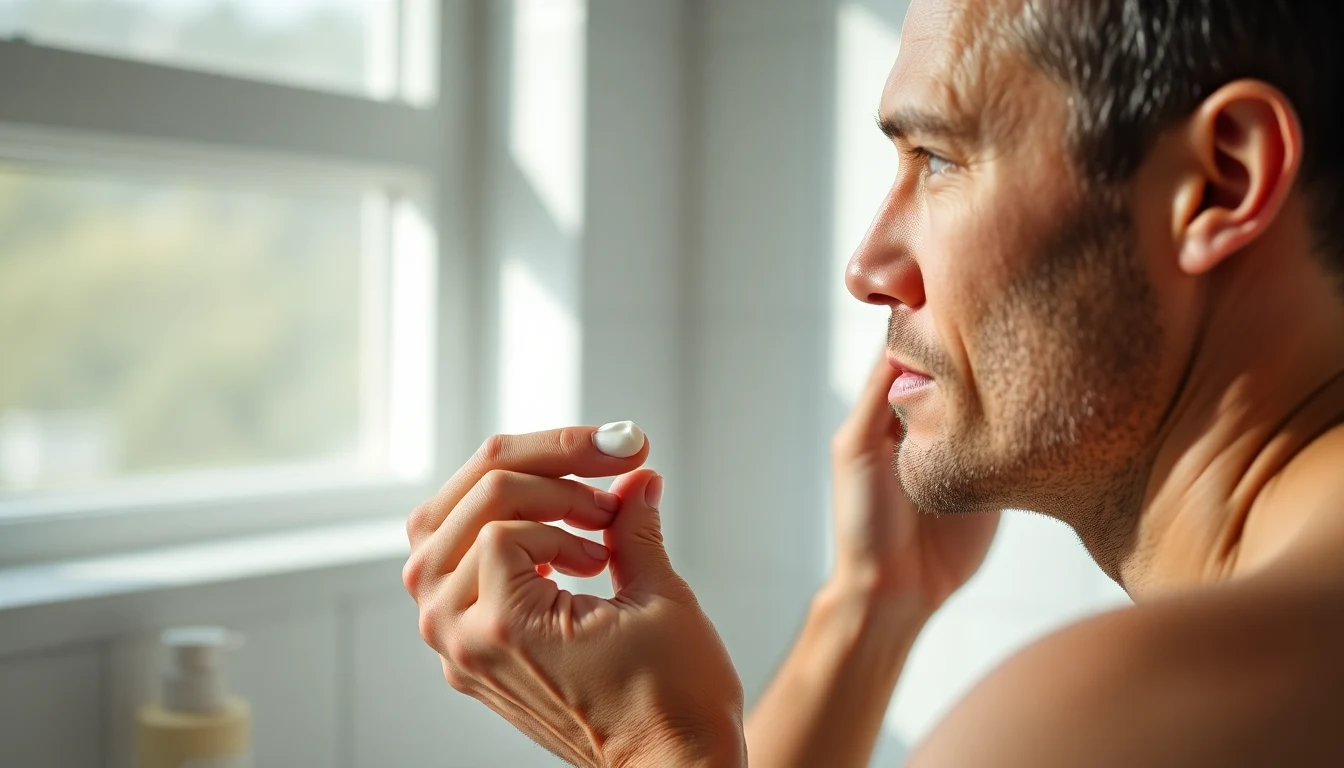
- Amount: A nickel-sized amount for the full face. Enough to cover evenly without a thick layer. Lagom.
- Wait 2-3 minutes before applying sunscreen on top. This allows the moisturizer to absorb and form a stable base layer.
- Do not mix products in your palm unless you know the formulations are compatible. Mixing can destabilize pH or emulsion systems.
How to Patch Test (Stop Skipping This)
Every new moisturizer gets a patch test. Every single one. I do not care if it has 6 ingredients and was formulated by angels. Rosacea does not care about product reputations.
The process:
- Apply a small amount behind one ear or on the inner forearm.
- Wait 24 hours. Check for redness, itching, or bumps.
- If clear, apply to one small area of your face (jawline is a good test site).
- Wait another 24 hours.
- If clear, incorporate into your routine.
- Do not introduce more than one new product per two weeks. If a reaction occurs, you need to know exactly which product caused it.
This is slow. That is the point. Two days of patience is better than two weeks of a full-face flare because you skipped the test.
Reading a Moisturizer Label: A Step-by-Step Walkthrough
The process is quick and rules out many poor choices before you spend a dollar.
Step 1: Flip the Bottle
Ignore the front label entirely. “Dermatologist recommended,” “clinically proven,” “for sensitive skin” are unregulated marketing terms. The INCI (International Nomenclature of Cosmetic Ingredients) list on the back is the only legally required truth on the packaging. In the US, ingredients are listed in descending order of concentration down to 1%, after which they can appear in any order. This means the first 5-7 ingredients compose the vast majority of the formula.
Step 2: Count
Count every ingredient from first to last. Compare against the framework above. If the count exceeds 30, put it back without reading further. You have eliminated a product in under 10 seconds.
Step 3: Scan for Red Flags
Look for the disqualifiers: fragrance, parfum, alcohol denat., SD alcohol, isopropyl alcohol, menthol, mentha piperita (peppermint), eucalyptus, and hamamelis virginiana (witch hazel). If any appear, the product fails regardless of what else is in the formula. A ceramide moisturizer with fragrance is like a fire extinguisher filled with gasoline: the concept is right but the execution is self-defeating.
Step 4: Identify the Actives
Now look for what the product actually does. Ceramides (NP, AP, EOP) for barrier repair. Niacinamide for inflammation control and ceramide production. Glycerin for hydration. Squalane for emollience. Cholesterol for lipid matrix support. If none of these appear in the first 10 ingredients, the product is not doing meaningful work for sensitive skin, regardless of its marketing claims.
Step 5: Check the Vehicle
The vehicle (base of the formula) determines how the actives are delivered. Water-based (aqua as first ingredient) formulas are lighter. Oil-based or emulsion-based formulas are richer. For daily use, a water-in-oil or oil-in-water emulsion with ceramides is the lagom standard. For winter or nighttime, a richer oil-based formula provides better occlusion.
Common Moisturizer Mistakes Men Make
These are the patterns that come up most often:
- Using body lotion on the face. Body lotions are formulated for thicker trunk and limb skin. They often contain fragrance, higher concentrations of surfactants, and preservatives that facial skin (thinner, more vascular, more reactive) does not tolerate. Use a product formulated for the face.
- Skipping moisturizer because skin “feels oily.” Oily skin is not the same as hydrated skin. Dehydrated skin overproduces sebum as a compensatory mechanism. Skipping moisturizer on oily-but-dehydrated skin actually increases oil production. A lightweight ceramide moisturizer (gel-cream texture) addresses this paradox: it hydrates without adding occlusion that traps sebum.
- Choosing moisturizer by scent. If the first thing you do with a moisturizer is smell it, you are optimizing for the wrong variable. A moisturizer’s job is barrier support, not aromatherapy. Every pleasant scent in a skincare product comes from fragrance chemicals that your skin’s immune system may eventually object to.
- Applying to dry skin. Moisturizer on dry skin sits on the surface. Moisturizer on damp skin (within 60 seconds of cleansing) traps water underneath the emollient layer, boosting hydration significantly. This is a free improvement that requires zero additional products.
- Using too much. A nickel-sized amount covers the full face. Thicker application does not mean better protection. It means slower absorption, potential pore congestion, and wasted product. Lagom: the right amount, not the maximum amount.
Frequently Asked Questions
Is a more expensive moisturizer actually better for sensitive skin?
Not necessarily. The core ingredients that matter for sensitive skin (ceramides, glycerin, niacinamide, squalane) are not expensive raw materials. What you are often paying for in premium products is better texture, clinical testing, and elegant packaging. A $14 ceramide cream with 12 ingredients and no fragrance will protect your barrier just as effectively as a $50 one with the same base formula. Read the ingredient list, not the price tag.
Can I use the same moisturizer year-round?
If you live somewhere with consistent humidity and temperature, yes. If you live in a place like Minneapolis where winter humidity drops to 15-20% indoors, no. Your summer gel-cream will not provide sufficient barrier protection in January. Consider two moisturizers: a lighter one for May through September, and a richer cream for October through April. This is a lagom adjustment, not a complete routine overhaul.
What about moisturizers with SPF?
Combination moisturizer-sunscreens are convenient but have two issues for sensitive skin. First, to achieve the labeled SPF, you need to apply a specific amount (2mg per square centimeter of skin), which is more than most people apply as moisturizer. Second, the UV filters themselves can be irritating. I prefer separate products: a ceramide moisturizer followed by a dedicated mineral sunscreen. Better protection, better barrier support, easier to reapply sunscreen without reapplying moisturizer.
Why do some “for sensitive skin” products still irritate me?
Because “for sensitive skin” and “hypoallergenic” are unregulated marketing terms. There is no legal standard that a product must meet to carry these labels. A product labeled “for sensitive skin” can still contain fragrance, alcohol, and essential oils. Always read the full INCI ingredient list. The label on the front is marketing. The list on the back is chemistry. Trust the chemistry.
Should I refrigerate my moisturizer?
It is not necessary for most formulations, but applying a cool (not cold) moisturizer can feel soothing on flushed rosacea skin. If you choose to refrigerate, make sure the product is in an opaque, sealed container. Temperature cycling (fridge to counter to fridge) can destabilize emulsions over time. A dedicated mini-fridge for skincare is fine if you have one, but it is not a requirement for product efficacy.
Rosacea varies significantly between individuals. Work with a dermatologist for a personalized treatment plan.
Erik Lindqvist
Why is ingredient count so important when choosing the best moisturizers for sensitive skin?
The fewer ingredients in a moisturizer, the fewer potential triggers your sensitive skin will encounter. Each ingredient in a formula serves a specific purpose, and for men with sensitive skin, minimizing the number of components reduces the risk of irritation and adverse reactions.
Can I use the same moisturizer year-round if I have sensitive skin?
While you can use the same moisturizer year-round if it works well for you, many men with sensitive skin find they need different formulations for winter versus summer. Winter typically requires richer, more emollient moisturizers, while summer may call for lighter formulas that won’t feel heavy in heat and humidity.
What should I do if a product labeled ‘for sensitive skin’ still irritates my face?
Marketing labels can be misleading, so focus on reading the actual ingredient list rather than relying on product claims. Flip the bottle, count the ingredients, and look for known irritants specific to your skin type and cultural grooming needs, as sensitivities vary widely among individuals.
Is patch testing really necessary before using a new moisturizer?
Yes, patch testing is essential for men with sensitive skin because it allows you to identify potential reactions before applying a product to your entire face. Apply a small amount to a discrete area like behind your ear or on your jawline and wait 24 hours to check for any adverse reactions before full application.