Last updated: February 2026 by Marcus Chen-Williams, Founder & Editor-in-Chief
The high fade haircut is one of the boldest, cleanest cuts you can walk out of a barbershop with. It is also one of the most requested styles across every hair type and cultural background I have encountered in over a decade of covering men’s grooming. There is a reason for that: the high fade creates immediate visual structure, works with almost any style on top, and looks sharp on day one in a way few other cuts can match.
But here is the thing. A high fade on thick, straight East Asian hair behaves completely differently from a high fade on 4B coils. The clipper techniques change. The grow-out timeline changes. The product needs change. Most guides treat the high fade like a single haircut with a single set of instructions, and that is why so many men walk out of the chair disappointed.
If you only read one section, jump to How to Ask Your Barber. That script will prevent the most common miscommunications. If you want to pick the right variation for your face and hair type, read the 7 Variations section and the Face Shape Guide. For the full picture, start here.
What Is a High Fade?
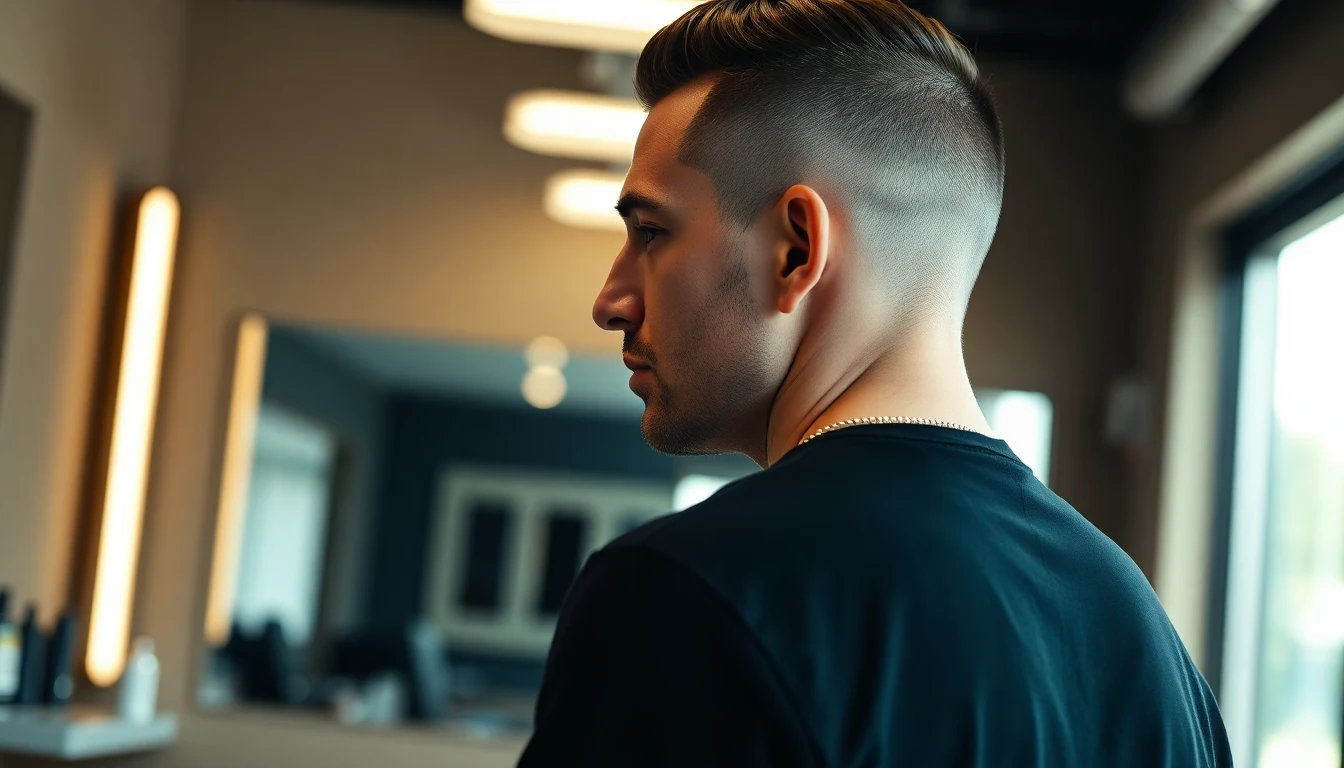
A high fade is a blending technique where the transition from long hair on top to short or bare skin on the sides starts high on the head, typically two to three inches above the ear. The fade line sits near the upper temples or even at the parietal ridge (that bony curve where the top of your head starts to slope down toward the sides).
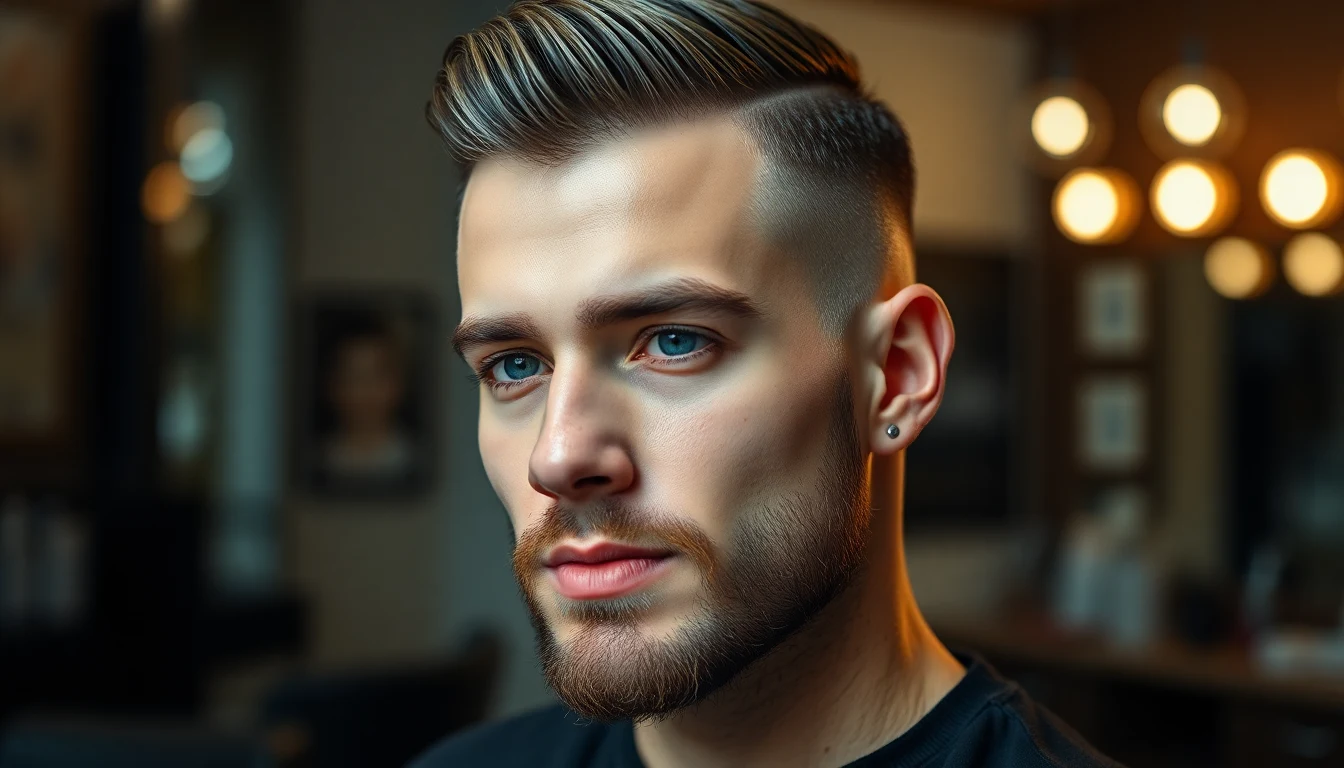
Compare that to a mid fade, where the blend starts at the temple line, or a low fade, where it begins just above the ear. The higher the starting point, the more of the sides and back are cut short, and the more dramatic the contrast between top and sides.
The Clipper Guard Breakdown
Understanding guard numbers makes the difference between getting the cut you want and getting a cut you tolerate. Here is how a typical high fade is built: (We recommend this American Crew POMADE FOR HOLD AND.)
| Zone | Location | Typical Guard | What It Looks Like |
|---|---|---|---|
| Top | Crown and above | Scissors or #4-#8 | Full length, styled as desired |
| Blend zone | Parietal ridge to upper temple | #2-#3 | Visible transition area where lengths merge |
| Mid-side | Temple to ear level | #1-#1.5 | Very short, but still visible stubble |
| Lower side (skin fade) | Ear level to hairline | #0 or bare blade | Skin visible or very faint shadow |
| Lower side (taper fade) | Ear level to hairline | #0.5-#1 | Short hair visible, no bare skin |
The critical distinction is the bottom of the fade. A high skin fade takes the lower portion all the way to bare skin. A high taper fade stops short, leaving a thin layer of hair visible throughout. Both start high, but they end very differently. (We recommend this Old Spice Hair Pomade for Men,.)
High Fade vs. Mid Fade vs. Low Fade
The difference comes down to one question: where does the blend begin? As I covered in our complete guide to types of fades, fade height is measured by the starting point of the transition from long to short.
| Feature | Low Fade | Mid Fade | High Fade |
|---|---|---|---|
| Blend starts at | 0.5-1 inch above ear | Temple line | Upper temple / parietal ridge |
| Side hair visible | Most of the sides | Upper half of sides | Top of head only |
| Contrast level | Subtle | Moderate | Dramatic |
| Maintenance frequency | Every 2-3 weeks | Every 2 weeks | Every 10-14 days |
| Best for face shape | Oval, oblong, diamond | All shapes (universal) | Round, square, heart |
| Workplace vibe | Conservative / corporate | Versatile | Creative / casual / bold |
7 High Fade Variations (And Who Each One Suits)
Not all high fades are the same cut. The starting height is consistent, but the technique, finish, and pairing with the top style create distinct looks. I have spent time in barbershops across four cities watching these executed on different hair types. Here are the seven variations worth knowing.
1. High Skin Fade

The high skin fade (also called a high bald fade) takes the sides and back down to bare skin from the ear up to near the crown. It is the most dramatic variation, creating the strongest contrast between top and sides. Your barber uses a foil shaver or bare blade (no guard) on the lower two-thirds, then blends through a #0.5 and #1 into the top.
Best for: Thick, dense hair seeking maximum contrast. Curly and coily types (3A-4C) look particularly striking. Not ideal for: Visible scalp conditions on the sides, conservative workplaces, or fine hair that looks sparse at the blend zone.
2. High Taper Fade
The high taper fade starts just as high but never exposes bare skin. The shortest point is a #0.5 or #1, leaving a shadow of hair visible all the way down. It is the professional-friendly version, giving you the structure without the aggressive contrast. For more detail on taper fades at all heights, see our taper fade haircut guide.
Best for: Workplace-appropriate styling and fine or thin hair, where retained stubble prevents the “patchy” look skin fades can cause. Not ideal for: Men seeking maximum visual impact.
3. High Drop Fade
A drop fade follows a curved line that “drops” lower behind the ear instead of running straight across. Combined with a high starting point at the front, it creates dramatic contrast at the temples with a more gradual transition at the back. The style featured in the Edgar haircut often uses a variation of this fade.
Best for: Natural curl or wave patterns that benefit from extra length at the crown. Popular in Latino barbering and increasingly common across all backgrounds. Not ideal for: Flat or thin hair at the back, where the drop shape draws attention to low density.
4. High Burst Fade
The burst fade radiates outward from around the ear in a semicircular pattern. A high burst fade pushes that radial pattern higher, creating a dramatic arc of exposed skin above the ear.
Best for: Pairing with a mohawk, faux hawk, or South of France style. The burst shape guides the eye toward the center of the head. Particularly popular with coily or curly hair. Not ideal for: Conservative settings. This is inherently a statement cut and requires a highly skilled barber.
5. High Fade with Hard Part
A hard part is a razor-shaved line defining the boundary between the top hair and faded sides. It runs from the front hairline back toward the crown, making your part line permanent and precise.
Best for: Straight to wavy hair (Type 1A-2C) styled to one side: side parts, comb-overs, and pompadours. Works especially well on the thick, straight hair common in East Asian and South Asian men. Not ideal for: Coily or very curly types, where the line grows out unevenly within days, or men who change their parting frequently.
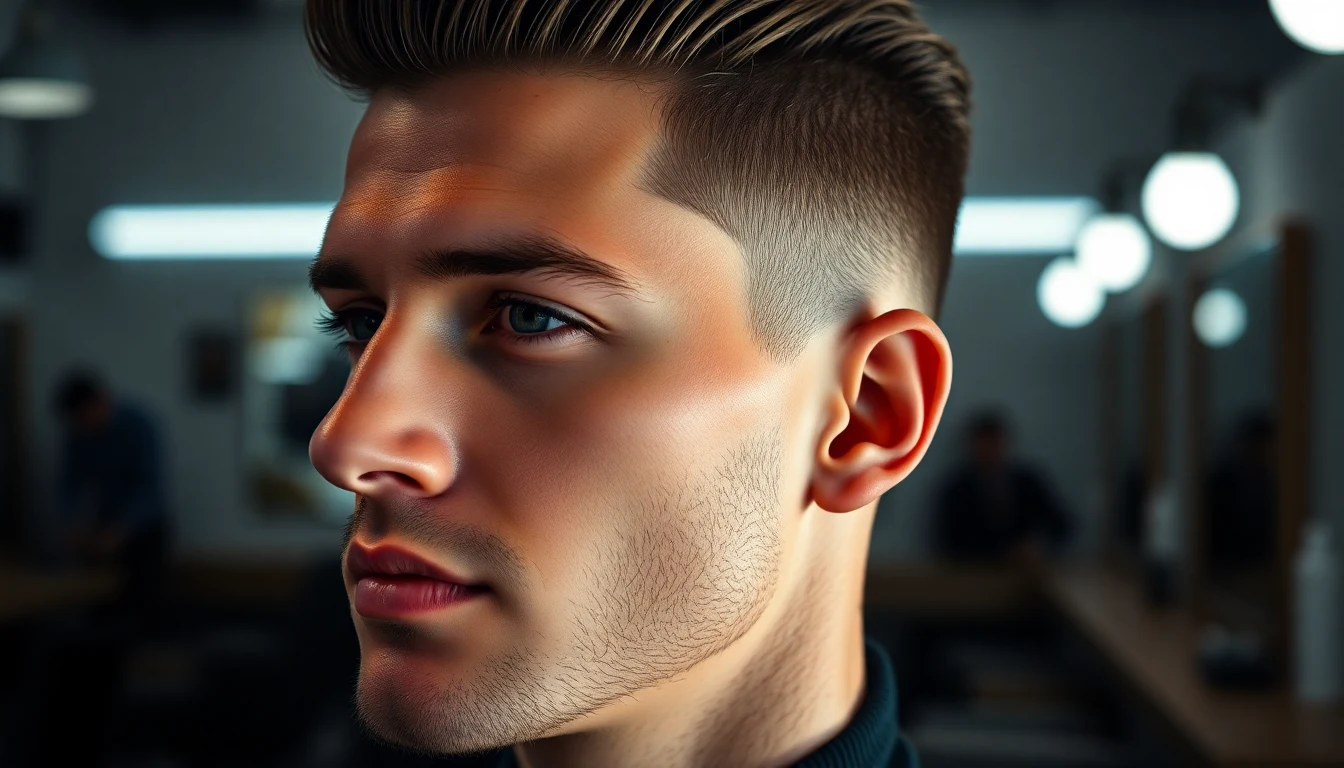
6. High Fade with Design
Razor-etched patterns, lines, or geometric shapes added to the faded area. The large canvas of a high fade gives the barber maximum surface area. Designs range from simple parallel lines to intricate custom artwork.
Best for: Statement haircuts for events or personal expression. Coily and curly hair holds designs best (denser canvas). Not ideal for: Men who need their cut sharp for more than five to seven days, or those on a budget (design work adds $10-$25 per visit).
7. High Fade with Beard
Pairing a high fade with a full or shaped beard creates balanced visual weight: minimal hair on the sides, substantial hair on the jawline. The key is the transition. A skilled barber tapers the sideburn area so the fade flows seamlessly into the beard line.
Best for: Full, even beard growth. One of the most universally flattering combinations, especially for round faces where the height on top and length on the chin create vertical elongation. Not ideal for: Patchy beard growth on the cheeks, or sparse sideburns that create a disconnect between fade and beard.
High Fade Variations at a Glance
| Variation | Contrast Level | Best Hair Types | Maintenance | Workplace Friendly |
|---|---|---|---|---|
| High skin fade | Maximum | All; best on thick/curly | Every 10-14 days | Moderate |
| High taper fade | High | All; best for fine hair | Every 2-3 weeks | Yes |
| High drop fade | High | Wavy, curly, coily | Every 2 weeks | Moderate |
| High burst fade | Maximum | All; pairs with mohawk | Every 10-14 days | No |
| High fade + hard part | Very high | Straight, wavy (1A-2C) | Every 2 weeks | Yes |
| High fade + design | Statement | All; best on dark/coily | Every 5-7 days | Rarely |
| High fade + beard | High | All with full beard | Every 2 weeks | Yes |
High Fade by Hair Type
The same high fade looks and behaves differently on every hair type. Here is what to expect across four texture categories.

| Hair Type | Advantage | Challenge | Best Variation | Product Tip |
|---|---|---|---|---|
| Straight (1A-1C) | Produces the cleanest, sharpest fade lines from day one | Shows regrowth fastest; fine strands can look thin at the blend zone | High taper fade (avoids sparse look on fine hair) | Layrite Superhold Pomade or texture powder |
| Wavy (2A-2C) | Waves disguise minor grow-out, extending time between trims | Inconsistent wave patterns can cause asymmetrical fades | Any high fade variation | Sea salt spray or light-hold cream |
| Curly (3A-3C) | Natural volume creates striking contrast with faded sides; minimal styling needed | Requires a barber skilled in clipper-over-comb on textured hair to avoid a visible “shelf” | High skin fade or high drop fade | SheaMoisture Curl Enhancing Smoothie |
| Coily (3C-4C) | Holds shape for days; dense texture allows precise sculpting and shape-ups | Requires freehand technique and open/closed blade adjustments; not all barbers have this skill | High skin fade | Moisture spray + curl cream; edge control between visits |
Straight hair is common in East Asian, Southeast Asian, and many European men. For more straight-hair styles that pair with fades, see our Asian hairstyles for men guide. Curly textures span Latino, mixed-race, Mediterranean, and South Asian backgrounds. Coily hair (4B-4C) produces some of the most iconic high fade looks because the contrast between tight coils and bare skin is inherently dramatic.
The universal rule for all textures: find a barber who fades YOUR hair type regularly. A barber who excels at straight-hair fades may struggle with coily textures, and vice versa. Check their portfolio before sitting down.
Which Face Shape Suits a High Fade?
Face shape matters more with a high fade than with any other fade height, because you are removing a significant amount of visual weight from the sides of the head. That changes your proportions. Here is how each face shape interacts with this style.
| Face Shape | Compatibility | Notes |
|---|---|---|
| Round | Excellent | The high fade’s best match. Removing side volume elongates the face. Add height on top (pompadour, textured crop) for maximum effect. |
| Square | Very good | Emphasizes the strong jawline. A high fade with a beard softens the angles slightly while keeping the structured look. |
| Oval | Good | Works well, but oval faces can pull off almost any fade height. No specific advantage here over a mid fade. |
| Oblong / Rectangle | Use caution | The high fade can make an already long face look longer. If you go high, keep the top shorter to avoid adding more vertical emphasis. A mid fade may be a safer choice. |
| Diamond | Good | The high fade highlights cheekbones, which suits diamond faces. Keep some texture or volume on top to balance the narrow forehead and chin. |
| Heart / Triangle | Good | Works when the top has enough volume to balance the wider forehead. A high fade with a beard is particularly effective, as the beard adds width at the chin to balance the shape. |
The universal rule: if your face is wider than it is long, a high fade will help. If your face is already longer than it is wide, proceed carefully or opt for a low fade that retains more side volume.
How to Ask Your Barber for a High Fade
I have watched enough barber-client interactions to know that most bad haircuts come from miscommunication, not lack of skill. The words you use in the chair determine what you walk out with. Here are scripts for each variation.
General High Fade Script
“I want a high fade. Start the blend above my temples, about two inches above the ear. Take the sides down to a [#0 for skin / #1 for taper] and blend it into the top. I want to keep [X inches / this much] on top.”
Variation-Specific Scripts
High skin fade: “High skin fade. Bare skin on the sides from the ear up, with the blend starting near the crown. I want a sharp contrast between the top and the sides.”
High taper fade: “High taper fade. Start the taper above the temples, but do not go to skin. I want to see a little hair all the way down. Keep it gradual.”
High drop fade: “High fade in the front that drops lower as it wraps around to the back. I want the fade line to curve down behind my ears.”
High burst fade: “High burst fade around the ears. I want the fade to radiate outward from the ear in a circular pattern, going up high on the sides.”
High fade with hard part: “High fade with a hard part on the [left/right] side. Shave the part line in with a razor. I part my hair to the [left/right].” When it comes to high fade haircut, technique matters most.
Three Things to Always Bring
- A reference photo. Save two or three photos on your phone that show the fade from the side and back. One photo from the front is helpful but less critical than side views.
- Your guard preferences. If you know what guard numbers you have used before, tell your barber. “Last time I had a #1.5 on the sides and it was a little too long” gives them a concrete starting point.
- What you did NOT like last time. Telling your barber what went wrong is often more useful than telling them what you want. “Last time the blend started too low” or “the transition was too harsh” saves everyone time.
Maintenance Schedule and Products
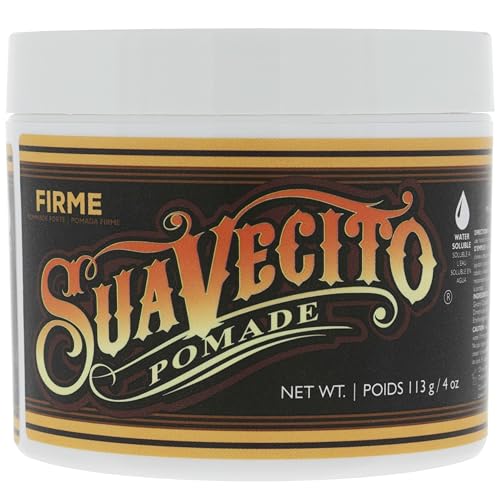
A high fade is a high-maintenance haircut. That is the trade-off for the clean look. Here is a realistic maintenance schedule based on fade type and hair texture. (We recommend this Suavecito Pomade Firme Hold.)
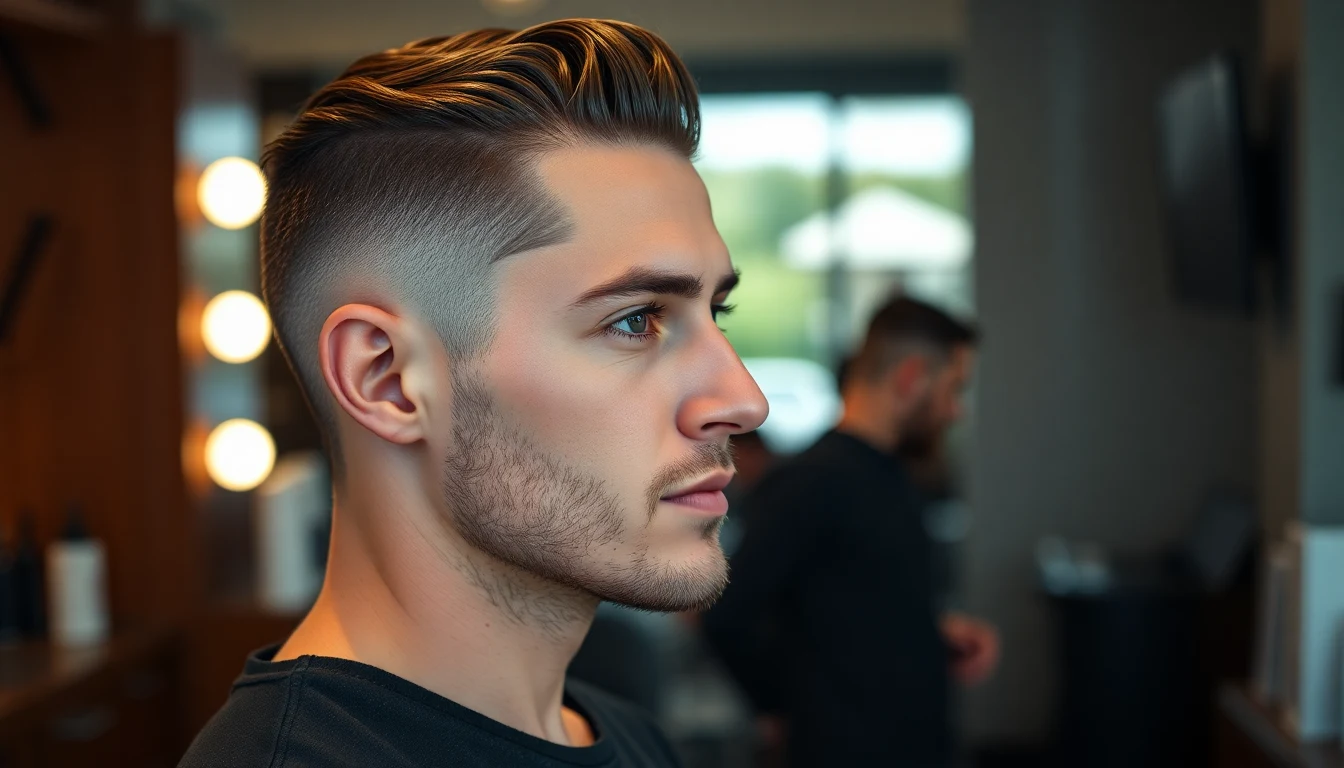
Trim Frequency
| Variation | Straight Hair | Wavy Hair | Curly Hair | Coily Hair |
|---|---|---|---|---|
| High skin fade | Every 7-10 days | Every 10-14 days | Every 10-14 days | Every 14 days |
| High taper fade | Every 14 days | Every 2-3 weeks | Every 2-3 weeks | Every 2-3 weeks |
| High fade + design | Every 5-7 days | Every 5-7 days | Every 7 days | Every 7-10 days |
Straight hair shows regrowth fastest. Curly and coily hair disguises minor grow-out, keeping the blend looking cleaner for longer.
Between-Visit Maintenance
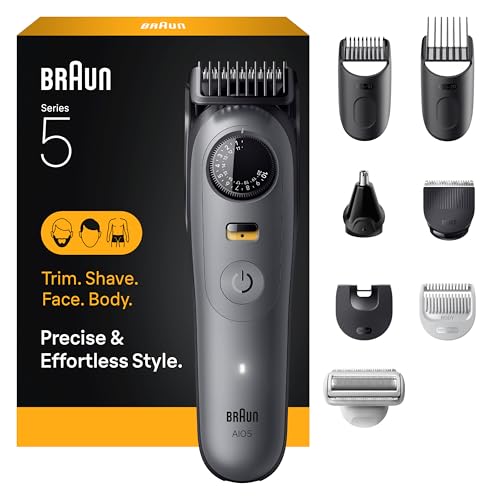
- Edge cleanup: Use a precision trimmer like the Andis Slimline Pro Li to clean up the neckline and around the ears every three to five days. Do not attempt to redo the fade blend yourself.
- Moisturize the scalp: Exposed skin on a high skin fade gets dry and flaky, especially in cold climates. Apply a lightweight, unscented moisturizer after showering.
- Sun protection: Faded areas are directly exposed to UV. Apply sunscreen to the sides or wear a hat when outdoors.
Recommended Products by Hair Type
| Hair Type | Top Styling | Recommended Product |
|---|---|---|
| Straight, thick | Pompadour, slick back | Suavecito Firme Hold Pomade |
| Straight, fine | Textured crop, side part | Texture powder or lightweight clay |
| Wavy | Natural texture, messy crop | Sea salt spray or light cream |
| Curly (3A-3C) | Defined curls, curly fringe | SheaMoisture Curl Enhancing Smoothie |
| Coily (3C-4C) | Coil-out, twist-out, waves | Moisture spray + curl cream |
Clippers Worth Owning
If you want to maintain your neckline and edges between visits, these are the tools barbers trust. For a full breakdown, see our upcoming best clippers for fades guide.
- Wahl Professional 5-Star Magic Clip: The industry standard for fade work. Stagger-tooth blade adjusts from #000 to #1 without changing guards.
- Andis Master Cordless: Powerful motor handles thick, coarse hair without snagging. Preferred by barbers who work with dense textures.
- BaBylissPRO GoldFX Clipper: Lightweight, sharp, and precise. A strong choice for detail work and home touch-ups.
Common Mistakes (And How to Avoid Them)
After a decade in this space, I see the same problems repeatedly. Here are the five most common high fade mistakes.
- Choosing the wrong barber. A high fade requires precision blending across a large area. Check your barber’s fade portfolio before sitting down. If you have coily hair, find someone who fades coily hair regularly.
- Not specifying the bottom finish. Saying “high fade” without clarifying skin, taper, or a specific guard number leaves your barber guessing. Always state the lowest guard you want.
- Ignoring face shape. The high fade is not universally flattering. Men with long, narrow faces can look disproportionate. See the face shape guide above.
- Skipping maintenance. A high fade looks overgrown by day 10. If you cannot visit the barber every two weeks, a high taper fade or mid fade is a better fit for your schedule.
- Over-styling the top. The high fade already creates drama on the sides. Keep the top proportional: roughly three to five times the length at the blend point.
Frequently Asked Questions
What is a high fade haircut?
A high fade is a haircut where the blend from long to short starts high on the head, typically two to three inches above the ear near the upper temple or crown. The sides and back are cut very short or down to skin from that high starting point, creating a dramatic contrast with the longer hair on top. It is one of the most popular fade styles because of its clean, bold appearance.
What is the difference between a high fade and a high taper fade?
A high fade blends the hair down to bare skin or a very short clipper length near the bottom. A high taper fade uses the same high starting point but keeps a small amount of visible hair all the way down, never going to skin. The taper version is slightly more conservative and grows out more gracefully, while the skin version creates a sharper, more dramatic contrast.
Which hair type works best with a high fade?
The high fade works across all hair types, but it is particularly striking on curly and coily hair (Type 3A through 4C) because the contrast between textured top and clean sides is naturally dramatic. Thick, straight hair common in East Asian and South Asian men also holds high fade shapes well. Fine, straight hair can work but requires a skilled barber to avoid the blend looking thin or patchy.
How often should I get a high fade touched up?
Most high fades need a trim every 10 to 14 days to stay sharp. The higher the fade starts and the shorter the sides are cut, the faster regrowth becomes noticeable. High skin fades show growth the fastest. If you are on a budget, a high taper fade is more forgiving and can stretch to two or three weeks between visits.
Does a high fade work for round faces?
Yes. The high fade is one of the best fade options for round faces. By removing volume from the sides high up on the head, it creates vertical emphasis that visually elongates the face. Pair it with some height on top, like a pompadour or textured crop, for maximum effect. Round-faced men should generally avoid low fades, which retain side volume and can make the face appear wider.
The Bottom Line
The high fade is a versatile, bold haircut that works across hair types and backgrounds when it is executed correctly. Here is what to take away:
- The high fade starts its blend at the upper temple or parietal ridge, removing most of the hair on the sides for maximum contrast.
- Seven distinct variations exist. Your best choice depends on your hair type, face shape, maintenance budget, and personal style.
- Curly and coily hair types produce some of the most striking high fades, but every texture works with the right variation and the right barber.
- Round and square faces benefit the most. Oblong faces should proceed with caution or consider a mid or low fade.
- Expect to visit your barber every 10 to 14 days for a skin fade, or every two to three weeks for a taper fade.
Your next step: save two or three reference photos from the variation that matches your hair type and face shape. Bring them to your next barber visit along with the script from the How to Ask Your Barber section. If you are still deciding between fade heights, start with our complete guide to types of fades to see all your options side by side.
Frequently Asked Questions
What’s the difference between a high skin fade and a high taper fade?
A high skin fade takes the hair down to bare skin starting high on the head near the crown, creating a sharp, clean look. A high taper fade, on the other hand, leaves no exposed skin and features a gradual blend that starts above the temple, offering a softer transition that works well for various hair types.
Can I get a high fade haircut if I have thick or textured hair?
Yes, a high fade haircut works across every hair type when your barber understands how to properly blend and shape your specific texture. For textured or curly hair, a skilled barber will adjust the fade technique to work with your natural curl pattern rather than against it.
How often do I need to get my high fade touched up?
Most men with a high fade need to visit their barber every 2 to 3 weeks to maintain the sharp blend and crisp line-up, since the fade grows out quickly when it starts so high on the head. The exact frequency depends on how fast your hair grows and how clean you want the fade to look.
What should I tell my barber when asking for a high fade?
When requesting a high fade, specify whether you want a skin fade, taper fade, or drop fade variation, and describe where you want the fade to start (near the crown or above the temple). You can also bring reference photos showing the exact fade style and top length you’re looking for to ensure you and your barber are on the same page.