By Jaylen Torres, Curly Hair Editor
Same curl type, same curl cream, same application technique, and two men still get different results. One man’s curls come out soft and defined. The other’s look greasy, because the product sits on top of the hair instead of absorbing. Porosity is often the difference: one has high porosity hair, the other low. Same curls, completely different needs.
Hair porosity for curly hair men is the most underrated concept in curl care. Curl type (2A through 4A) tells you what your hair looks like. Porosity tells you what your hair needs. And when you pick products based on porosity instead of just curl pattern, everything changes. Products absorb instead of sitting. Moisture lasts instead of evaporating. Definition holds instead of falling flat.
This guide explains what porosity is, how to test yours, and exactly which products work for low, medium, and high porosity curly hair. If you want the full picture of building a routine around your specific hair, pair this with our curly hair routine guide.
What Hair Porosity Actually Is
Your hair shaft has three layers: the medulla (innermost core), the cortex (middle layer that gives hair its strength and color), and the cuticle (outermost protective layer made of overlapping scales, like shingles on a roof). Porosity is about that cuticle layer.


Low porosity: The cuticle scales lie flat and tight against each other. Water and products have a hard time getting in. But once moisture does get in, it stays. Think of it like a tightly sealed container. Hard to fill, slow to empty.
Medium porosity: The cuticle scales are slightly raised, allowing a balanced flow of moisture in and out. This is the “easiest” porosity to manage because most products work well and moisture levels stay consistent.
High porosity: The cuticle scales are raised, damaged, or have gaps between them. Moisture gets in easily but leaves just as fast. Your hair absorbs product instantly but dries out quickly and tends to frizz because the cuticle cannot seal properly.
How to Test Your Porosity
The Float Test
This is the most popular test and the easiest to do at home.
- Wash your hair with a clarifying shampoo to remove any product residue. Product on the hair can fake the results by making strands heavier or more hydrophobic.
- Let your hair dry completely.
- Take 2-3 clean strands from different areas of your head (crown, temple, nape). Porosity can vary across your head.
- Drop them into a glass of room-temperature water. Not hot, not cold. Room temperature.
- Wait 2-4 minutes. Do not poke, stir, or push them under.
| Result | Porosity | What It Means |
|---|---|---|
| Hair floats on the surface | Low | Cuticle is sealed tight, water cannot penetrate |
| Hair sinks slowly, sits in the middle | Medium | Balanced absorption |
| Hair sinks quickly to the bottom | High | Cuticle is open, absorbs water rapidly |
The Spray Test
Spritz a section of clean, dry hair with water from a spray bottle. Watch what happens.

- Low porosity: Water sits on top in beads. Takes a while to absorb.
- Medium porosity: Water absorbs within 5-10 seconds.
- High porosity: Water absorbs almost instantly, and the hair darkens immediately.
The Slip Test
Slide your finger up a single hair strand from tip toward root (against the natural direction of the cuticle).
- Low porosity: Feels smooth, almost slippery. Cuticle is flat.
- Medium porosity: Slight texture but mostly smooth.
- High porosity: Feels rough, bumpy, or catches on your finger. The raised cuticle creates friction.
Which test is most reliable? Use all three and go with the majority result. No single test is definitive, but when two or three agree, you have a reliable answer. The spray test is the most practical for a quick check. The slip test is the most physically informative.
Low Porosity Curly Hair: Complete Guide
Low porosity is common in men with mixed-race hair, particularly in the 3A-3C range. Your cuticle lies flat and tight, which means your hair resists absorbing moisture and products. The good news is that once moisture gets in, it stays. The challenge is getting it in.
Signs You Have Low Porosity
- Products sit on top of your hair instead of absorbing, leaving a film or greasy feeling.
- Hair takes a long time to get fully wet in the shower.
- Hair takes a very long time to air dry (hours, not minutes).
- Product buildup happens quickly, even with small amounts.
- Your curls look weighed down easily.
- Deep conditioning does not seem to make a noticeable difference.
Product Strategy for Low Porosity
| Category | What to Use | What to Avoid |
|---|---|---|
| Shampoo | Lightweight sulfate-free, Maui Moisture Curl Quench | Heavy moisturizing shampoos, anything with shea butter or heavy oils |
| Conditioner | Lightweight, water-based, silicone-free | Heavy masks, thick butters |
| Leave-In | Spray-format leave-in or very light cream | Thick cream leave-ins that sit on the surface |
| Styler | Water-based gel like Eco Styler Olive Oil Gel | Heavy curl creams, butters, thick custards |
| Oil | Lightweight oils (grapeseed, argan) sparingly | Heavy oils (coconut oil can coat too heavily, castor oil) |
Techniques for Low Porosity
- Use warm water. Heat opens the cuticle slightly, allowing products to penetrate. Apply conditioner and leave-in under warm running water, not after stepping out of the shower.
- Steam treatments. A warm towel wrapped around your head for 10 minutes after applying conditioner uses heat to open the cuticle. Works better than cold deep conditioning for low-porosity hair.
- Clarify more often. Low-porosity hair builds up product faster because less absorbs and more sits on the surface. Clarify every 2 weeks instead of monthly.
- Apply product in small amounts. Less is more. Your hair cannot absorb large amounts at once. Apply thin layers and let each one set before adding another.
- Humectant-based products. Look for glycerin, honey, and aloe vera as top ingredients. These attract moisture from the air into your hair without adding weight.
High Porosity Curly Hair: Complete Guide
High porosity means your cuticle is raised, allowing moisture to flow in and out easily. This can be genetic or caused by damage (heat styling, bleaching, sulfate shampoo over many years). Your hair absorbs everything instantly but cannot hold onto moisture. The result is curls that feel moisturized right after applying product but dry out within hours.

Signs You Have High Porosity
- Hair absorbs water instantly in the shower.
- Products seem to disappear into your hair without visible effect.
- Hair dries very quickly after washing.
- Curls frizz easily, especially in humidity.
- Hair feels dry again just hours after moisturizing.
- Color treatments absorb very fast (and fade fast too).
- Hair feels rough or straw-like when dry.
Product Strategy for High Porosity
| Category | What to Use | What to Avoid |
|---|---|---|
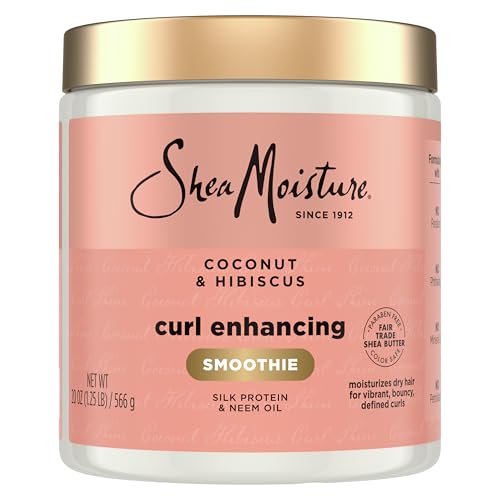
| Shampoo | Rich moisturizing shampoo, SheaMoisture Coconut & Hibiscus | Clarifying shampoos (too stripping for already-open cuticles) |
| Conditioner | Heavy, protein-enriched conditioner, leave on for 5-10 min | Lightweight rinse-out conditioners |
| Leave-In | Thick cream leave-in, Aunt Jackie’s Leave-In | Spray-format leave-ins (not heavy enough) |
| Styler | SheaMoisture Curl Enhancing Smoothie + gel on top | Gel alone without cream underneath |
| Sealing Oil | Coconut oil or Palmer’s Cocoa Butter as a final seal | Skipping the seal step entirely |
Techniques for High Porosity
- Seal, seal, seal. After applying your leave-in and cream, add a thin layer of oil or butter on top. This physically coats the cuticle, trapping moisture inside that would otherwise escape.
- Cold water rinse. Finish your shower with cold water. Cold causes the cuticle to contract and lie flatter, sealing in whatever moisture you just applied. This is the opposite of the warm-water technique for low porosity.
- Protein treatments. The amino acid chains in protein treatments temporarily fill gaps in the damaged cuticle, reducing moisture loss. Do a protein treatment once a month. But do not overdo it. Too much protein makes hair brittle.
- The LOC Method. Layer products in this order: Liquid (water or leave-in), Oil (thin layer to seal), Cream (to add moisture and hold). This layering traps moisture under the oil seal.
- Avoid heat styling. High porosity hair is already more fragile. Heat tools open the cuticle further and increase moisture loss. If you diffuse, use the lowest heat setting.
Medium Porosity: The Easy One
If you tested at medium porosity, congratulations. Most products work well for you, and maintaining moisture balance is relatively straightforward. Medium porosity hair absorbs moisture at a healthy rate and retains it reasonably well.
Your approach: Follow a standard curly hair routine without the extreme modifications needed for low or high porosity. Use mid-weight products, condition regularly, and your curls will cooperate. The SheaMoisture Coconut & Hibiscus line is formulated right in the middle of the product-weight spectrum, making it a natural match.
The one thing to watch: medium porosity can shift toward high porosity over time with heat damage, coloring, or harsh products. Protect what you have by avoiding sulfates and minimizing heat.
Porosity Decision Tool
Use this flowchart to determine your porosity-based product strategy in under 2 minutes.
| Question | If Yes | If No |
|---|---|---|
| Does water bead on your dry hair instead of absorbing? | Likely low porosity, go to Step A | Continue |
| Does your hair absorb water almost instantly? | Likely high porosity, go to Step B | Continue |
| Does water absorb in 5-10 seconds? | Likely medium porosity, go to Step C | Retest |
Step A (Low Porosity): Lightweight gel + water-based leave-in spray + warm water application + clarify every 2 weeks.

Step B (High Porosity): Heavy cream + gel seal + oil seal on top + cold water rinse + protein treatment monthly.
Step C (Medium Porosity): Standard mid-weight products + regular routine + adjust seasonally.
Porosity vs. Curl Type: Which Matters More?
Both matter, but for product selection, porosity wins. Here is why.
Two guys walk into a bathroom with 3B curls. Guy A has low porosity. Guy B has high porosity. If they both use the SheaMoisture Curl Enhancing Smoothie, Guy A’s hair will look greasy and weighed down because his cuticle cannot absorb the heavy cream. Guy B’s hair will look moisturized and defined because his open cuticle soaks it right up.
Same curl type. Same product. Opposite results. That is porosity at work.

How to use both: Use curl type to determine your technique (scrunching vs. finger coiling, number of routine steps, wash frequency). Use porosity to determine your product weight and ingredients. For our full product guide organized by both factors, check best curly hair products for men.
Dealing with Mixed Porosity
Just like mixed curl types, mixed porosity across your head is common. The crown might be low porosity while the nape (which gets more friction from pillows and collars) might be higher. Your temples and hairline, exposed to more sun and elements, can be higher porosity than the protected areas underneath.
How to manage it: Identify your two porosity zones and apply different products to each. It sounds complicated, but in practice it just means using a lighter touch on the low-porosity areas and a heavier hand with cream and oil on the high-porosity areas. After a few washes, it becomes automatic.
This is especially relevant for mixed-race men whose hair often has multiple textures and porosities across different sections.
How Seasons Affect Porosity Care
| Season | What Happens | Adjustment |
|---|---|---|
| Summer | Humidity is high. High-porosity hair absorbs excess moisture from the air, causing frizz. Low-porosity hair handles humidity better. | High: add anti-humectant gel. Low: use humectant-based products to take advantage of the moisture in the air. |
| Winter | Indoor heating dries air. All porosity types lose moisture faster. Low porosity repels the moisture it needs even more. | All: switch to heavier products. Low: add a light oil seal. High: layer more generously and seal with butter. |
| Spring/Fall | Moderate conditions. Most balanced season for curl care. | Return to standard routine. Adjust weekly based on humidity forecast. |
The Protein-Moisture Balance
This is advanced territory, but if you have been managing your porosity and something still feels off, the protein-moisture balance might be the issue.

Too much moisture, not enough protein: Hair feels mushy, limp, overly soft. Curls stretch and do not bounce back. This happens when you use only moisturizing products without any protein. Fix: add a protein treatment (look for hydrolyzed keratin, silk protein, or wheat protein in products).
Too much protein, not enough moisture: Hair feels stiff, brittle, straw-like. Curls snap instead of stretching. This happens when you overdo protein treatments. Fix: deep condition with a protein-free moisturizing mask and back off protein products for 2-3 weeks.
| Symptom | Cause | Fix |
|---|---|---|
| Mushy, limp, no bounce | Moisture overload / protein deficiency | Add protein treatment |
| Stiff, brittle, snapping | Protein overload / moisture deficiency | Deep condition with moisture-only products |
| Soft with good bounce | Balanced | Maintain current routine |
General guideline: High-porosity hair needs protein more often (monthly treatments) because the damaged cuticle loses protein naturally. Low-porosity hair needs protein less often (every 6-8 weeks) because the cuticle is intact. Medium porosity falls in between.
Frequently Asked Questions
What is hair porosity and why does it matter for curly hair?
Hair porosity is how well your hair absorbs and retains moisture. It is determined by how tightly or loosely the cuticle layer (the outermost protective layer) of your hair shaft lies. For curly hair, porosity matters because it determines which products work for you, how much moisture your hair needs, and why two guys with the same curl type can have completely different results with the same product.
How do I test my hair porosity?
The simplest test is the float test. Take a clean hair strand (wash it first to remove product residue) and drop it into a glass of room temperature water. Wait 2 to 4 minutes. If the hair floats on top, you have low porosity. If it sinks slowly and settles in the middle, you have medium porosity. If it drops to the bottom quickly, you have high porosity. Repeat with 2 to 3 strands from different areas of your head for accuracy.

Can you change your hair porosity?
You cannot change your genetic porosity, which is determined by your hair’s natural cuticle structure. However, damage from heat styling, chemical processing, bleaching, and harsh sulfate shampoos can raise your cuticle layer and shift your hair toward high porosity over time. You can manage high porosity with protein treatments and sealing products, and you can work with low porosity by using lightweight products and warm water to open cuticles.
What products should low porosity curly hair men use?
Low porosity hair needs lightweight water-based products that do not sit on top of the hair. Avoid heavy butters and thick creams. Use a lightweight gel as your primary styler, a water-based leave-in spray (not cream), and rinse with warm water to open the cuticle for better absorption. Clarify monthly to prevent product buildup, which low porosity hair is especially prone to because the cuticle does not absorb products easily.
Is high porosity hair damaged or natural?
It can be either. Some people are genetically high porosity, meaning their cuticle layer is naturally more open. Others develop high porosity from damage like heat styling, bleaching, or years of sulfate shampoo use. The care approach is similar either way: use moisture-rich products, seal with an oil or butter after applying leave-in, and incorporate protein treatments to temporarily patch the open cuticle. The difference is that genetic high porosity is permanent while damage-induced high porosity can partially recover over time.
More Curly Hair Men Guides

- Curly Hair Undercut for Men: Best Variations and How to Maintain Them
- How to Define Curls for Men: Products, Techniques, and Curl Type Guide
- Curly Hair Fade: The Complete Guide to Styles, Cuts, and Maintenance
- Best Shampoo for Curly Hair Men: Sulfate-Free Picks That Don't Strip Curls
- Best Curly Hair Products for Men: By Curl Type (2A to 4C)
What is hair porosity and why does it matter more than my curl type?
Hair porosity refers to your hair’s ability to absorb and retain moisture, which directly determines what products will actually work for you. While curl type tells you what your hair looks like, porosity tells you what your hair needs, making it the key to finding products that absorb properly instead of sitting on top of your curls.
How do I test whether I have low or high porosity hair?
You can use three simple tests: the float test (place a strand in water and see if it sinks or floats), the spray test (spray water on your hair and observe how quickly it absorbs), or the slip test (slide your fingers along a strand to feel resistance). Each test reveals how easily your hair absorbs moisture.
Why did my friend’s curl cream work perfectly on him but look greasy on my curly hair?
You likely have different hair porosities. If the product sits on top of your hair instead of absorbing, you probably have low porosity hair that needs lightweight, water-based products, while your friend with high porosity hair can use richer creams that absorb quickly.
What’s the difference between using a hair porosity guide for men with curly hair versus just following general curl care advice?
A porosity-focused guide helps you select products and techniques specifically matched to your hair’s moisture absorption capacity, ensuring your products actually work instead of building up or drying out. General curl advice ignores this critical factor, which is why many men struggle even when following the right curl type recommendations.