By Jaylen Torres, Curly Hair Editor
Biracial men often get hair advice from two completely different worlds. One side says use grease and a durag. The other says coconut oil and let it grow. The barber says buzz it short. Nobody mentions curl types or porosity, or that a single head can carry three different textures: 3A at the temples, 3B on top, something approaching 3C in the back. Treat the whole head as one uniform thing and it backfires, which is why so many biracial men stay frustrated with their hair for years.
Mixed race hair care for men is not the same as general curly hair care. It requires understanding that your hair is not one type. It is a blend of textures, porosities, and needs that change depending on where you are on your head. This guide teaches you how to identify your specific texture zones, build a routine that addresses each one, and stop forcing your hair into a one-size-fits-all approach that was never designed for you.
If you want the foundational routine this builds on, start with our curly hair routine guide.

Why Mixed Race Hair Requires a Different Approach
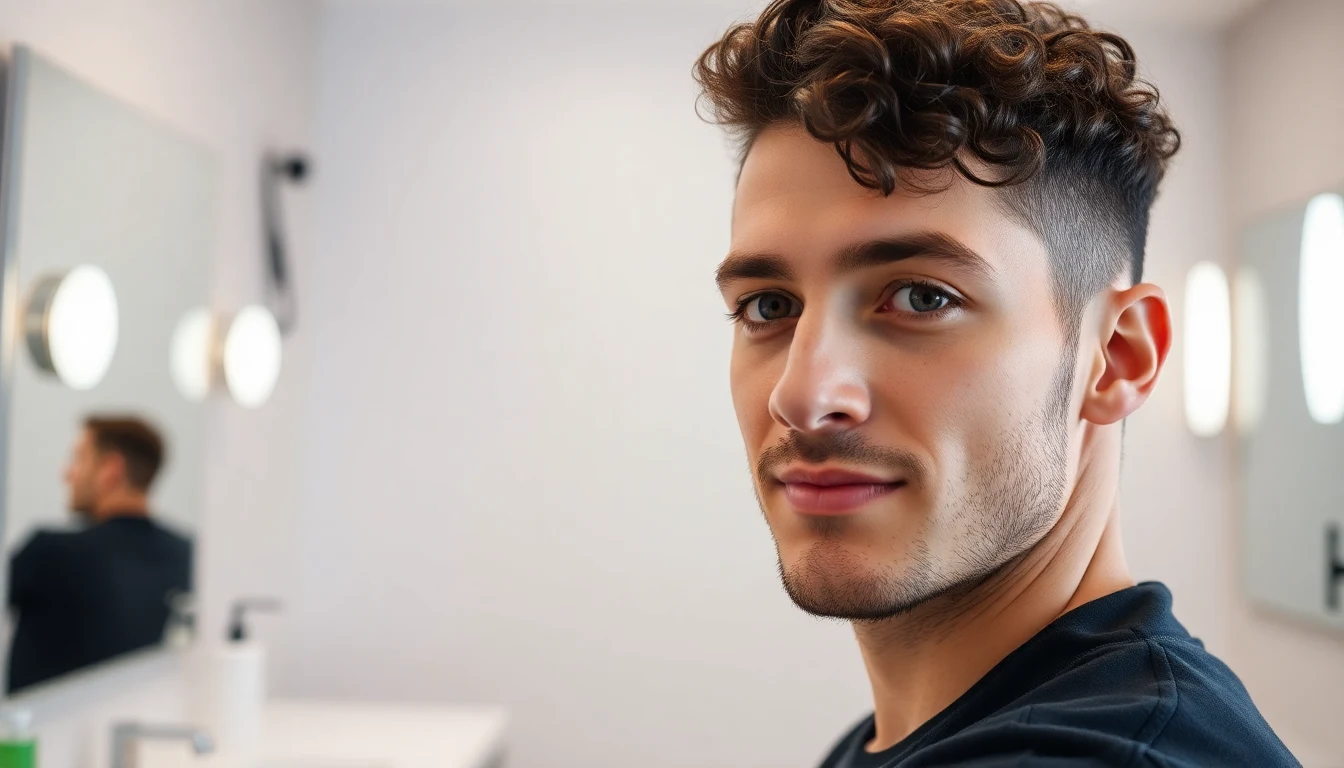
When you inherit hair genetics from parents of different ethnicities, you do not get a clean average. You get a mosaic. Your hair follicles are influenced by both genetic lines, and because hair follicle shape determines curl pattern, different follicles across your scalp can produce different curl types. That is why your crown might spiral tightly while your temples hang in looser waves.
What makes this challenging:
- Multiple textures on one head. The temple area often has the loosest pattern, the crown has the most volume and definition, and the nape tends toward the tightest coils.
- Mixed porosity. Different texture zones often have different porosity levels. Your looser sections might be low porosity (resisting moisture) while your tighter sections are medium to high porosity (absorbing fast but losing moisture quickly). See our porosity guide for testing.
- Products marketed for one or the other. “Curly hair” products tend to be lightweight, designed for 2A-3A. “Black hair” products tend to be heavy, designed for 4A-4C. Biracial men in the 3A-3C range fall right in the gap.
- Conflicting advice from family. You get one set of traditions from one side and different traditions from the other. Neither is wrong, but neither is complete for your specific blend.
Identify Your Texture Zones
Before you buy any product, map your texture zones. Wash your hair with a gentle shampoo, skip all product, and let it air dry completely. Then examine each area.
| Zone | Common Texture (Biracial Men) | Why |
|---|---|---|
| Temples/Hairline | Looser (often 2C-3A) | Thinner hair density, more sun exposure, frequent hat friction |
| Crown/Top | Medium (often 3A-3B) | Densest area, strongest curl pattern expression |
| Sides | Variable (3A-3C) | Often matches crown but can lean tighter, especially near the ears |
| Nape/Back | Tightest (often 3B-3C, sometimes 4A) | Highest friction from pillows and collars, tends toward tighter pattern |
Your assignment: Write down or memorize which curl type you see in each zone. This is your texture map, and it determines everything about your routine. If you are rocking a curly hair fade, your sides and nape are buzzed anyway, so you really only need to care about the crown and top zones for product application.

Building a Zone-Based Routine
The core concept is simple: use the same wash and condition process for your whole head, but adjust your leave-in and styling products by zone. Looser zones get lighter products. Tighter zones get heavier products. Same routine structure, different product weights.
Wash Step (Whole Head)
Shampoo and condition your entire head the same way. Use a mid-weight sulfate-free shampoo like the SheaMoisture Coconut & Hibiscus, which works across the 3A-4A range without being too light or too heavy. Massage into the scalp everywhere, condition the lengths everywhere, and detangle section by section with a wide-tooth comb.
Leave-In Step (Zone-Adjusted)
| Zone | Leave-In Approach | Product Pick |
|---|---|---|
| Loose zones (2C-3A) | Skip leave-in or use a tiny amount of lightweight cream | OGX Coconut Curls (pea-sized) |
| Medium zones (3A-3B) | Standard cream leave-in application | Aunt Jackie’s Quench (dime-sized) |
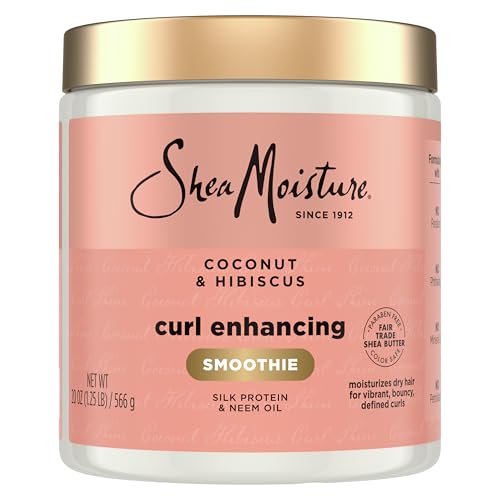
| Tight zones (3B-4A) | Generous cream leave-in, seal with oil | SheaMoisture Smoothie (dime-sized) + coconut oil |
Styling Step (Zone-Adjusted)
| Zone | Styling Approach | Product Pick |
|---|---|---|
| Loose zones | Light gel only, scrunch application | Eco Styler Gel (pea-sized) |
| Medium zones | Gel, praying hands + scrunch | Eco Styler Gel (dime-sized) |
| Tight zones | Cream + gel, praying hands + finger coil | Cream + Eco Styler Gel |
This sounds complicated, but it takes 2 extra minutes. Once you have done it three or four times, your hands know where to apply what. It becomes muscle memory. And the difference in your curl definition across your whole head is immediately visible.
The Cultural Gap Nobody Talks About
Let me be real about something that does not get discussed enough in “curly hair” articles. Growing up biracial means your hair identity is caught between communities. The Black hair care aisle at the store has products that might be too heavy for your looser sections. The “mainstream” hair aisle has nothing that understands your tighter sections. When you search online, most curly hair advice comes from white women with 2B waves or Black women with 4C coils. The 3A-3C space where most mixed-race men live gets very little attention.
And then there is the barbershop. Many traditional barbers are trained on either straight or 4C hair, not the in-between. If your barber does not know how to shape a curly fade on mixed-texture hair, the cut can look uneven because the different curl zones have different volumes. Finding a barber who understands multi-textured hair is worth the search. Ask to see their curly cut portfolio before sitting in the chair.

Our curly hair fade styles guide covers specific cuts that work well for mixed-texture hair.
Common Biracial Hair Combinations
While every individual is different, certain heritage combinations tend toward certain texture patterns. This is a general guide, not a rule.
| Heritage Blend | Common Curl Range | Common Characteristics |
|---|---|---|
| Black + White | 3A-3C | Visible curl definition, moderate shrinkage, often mixed porosity |
| Black + Latino/a | 3B-4A | Tighter overall pattern, high density, strong shrinkage in tighter zones |
| Black + Asian | 2C-3B | Thick individual strands, looser curl pattern but high density |
| Latino/a + White | 2B-3A | Wavy to loose curly, lower density, less shrinkage |
| South Asian + Black | 3A-3C | Thick strands, moderate to tight curls, often low porosity |
Use this as a starting point, not a label. Your actual texture depends on your specific genetic mix and environmental factors. Always go by what you see on your own head after an air-dry test. For heritage-specific style guides, see our Hispanic men hairstyles and Black men curly hair guides.
Products That Work Across Mixed Textures
The ideal products for mixed-race hair sit in the middle of the weight spectrum. Not too light (would do nothing for your tighter zones) and not too heavy (would weigh down your looser zones). Here is the lineup I recommend for 3A-3C mixed texture.

| Product | Role | Why It Works for Mixed Textures |
|---|---|---|
| SheaMoisture Coconut & Hibiscus Shampoo | Cleanser | Mid-weight, moisturizing without heaviness, works across 3A-4A |
| Aunt Jackie’s Quench Leave-In | Leave-in (medium zones) | Medium weight, adjustable by amount per zone |
| SheaMoisture Curl Enhancing Smoothie | Leave-in/cream (tight zones) | Heavier formula for tighter sections that need more moisture |
| Eco Styler Olive Oil Gel | Styler (all zones) | Universal hold, adjustable by amount, affordable |
| Coconut Oil | Seal (tight zones only) | Penetrates hair shaft, seals moisture in tighter coils |
Total cost: Under $40 for a full product lineup that lasts 6-8 weeks at men’s hair lengths. For more product options, see our full product guide.
The Pre-Poo: Why Mixed Race Hair Benefits Most
A pre-poo (pre-shampoo treatment) involves applying oil to your hair before washing. The oil fills the gaps in the cuticle, preventing shampoo from stripping too much moisture. This is especially beneficial for mixed-texture hair because your tighter zones are more prone to dryness than your looser zones, and the pre-poo protects them during the wash.
How to pre-poo:
- Apply coconut oil to dry hair, focusing on the tighter zones (nape, back, and any 3C-4A sections).
- Use a nickel-sized amount. Rub between palms and smooth through hair.
- Let sit for 15-30 minutes. Overnight under a shower cap works even better.
- Shampoo as normal. The oil layer protects the hair shaft during cleansing.
Why coconut oil specifically: Unlike most oils that only coat the outside of the hair shaft, coconut oil is small enough at the molecular level to actually penetrate inside the hair. This means it strengthens from within rather than just sitting on the surface. Research published in the Journal of Cosmetic Science confirmed coconut oil’s unique ability to reduce protein loss during washing.

Best Haircuts for Mixed Race Curly Hair
| Style | Description | Best For | Maintenance |
|---|---|---|---|
| Curly Top Fade | Faded sides, curly top 3-5 inches | All mixed textures, the universal go-to | Barber visit every 3-4 weeks |
| Tapered Natural | Gradual length increase from neck to crown, no hard fade line | Guys with relatively uniform texture | Every 4-6 weeks |
| Medium All-Over | 3-5 inches uniformly, shaped to head contour | Guys who want to show all their curl patterns | Trim every 6-8 weeks |
| Undercut with Curls | Disconnected short sides, longer defined curls on top | 3A-3B dominant texture | Every 3-4 weeks |
Barber tip: Ask for a “dry cut” on the curly sections. Cutting curly hair wet can lead to uneven lengths when it dries and shrinks. A barber who cuts mixed-texture hair dry understands how each curl zone will behave at its natural length.
Understanding Shrinkage on Mixed Textures
Shrinkage is how much shorter your hair appears when dry compared to when it is stretched or wet. On mixed-race hair, shrinkage varies dramatically by zone.
| Curl Type Zone | Approximate Shrinkage | Example |
|---|---|---|
| 3A | 10-20% | 5 inches wet = 4-4.5 inches dry |
| 3B | 25-35% | 5 inches wet = 3.25-3.75 inches dry |
| 3C | 40-50% | 5 inches wet = 2.5-3 inches dry |
| 4A | 50-70% | 5 inches wet = 1.5-2.5 inches dry |
This is why your hair can look uneven when dry even though it was cut evenly when wet. Your tighter zones shrink more, making them appear shorter. A good barber accounts for this by leaving slightly more length in the tighter zones to create a balanced visual result.
Mistakes Biracial Men Make with Their Hair
- Treating the whole head as one texture. Your hair has zones. Using the same product weight everywhere leaves some sections weighed down and others under-moisturized.
- Only shopping one hair care aisle. The best routine for mixed hair uses products from both the “curly hair” and “Black hair care” sections. Match products to zones, not to marketing.
- Brushing dry curls. This is especially damaging on mixed textures because the tighter zones tangle more easily. Only detangle when wet, with conditioner in, using a wide-tooth comb.
- Giving up too quickly. Mixed-texture hair takes longer to “figure out” because there are more variables. Give any routine 4-6 weeks before judging results.
- Ignoring the nape. The nape is where the tightest texture lives and where breakage happens first. Give it extra moisture and be gentle when detangling.
- Cutting curly hair wet. Wet cuts on mixed textures lead to uneven results when shrinkage kicks in. Find a barber who does dry curly cuts.
A Note on Identity and Hair
This guide would be incomplete without a word on identity. For biracial and mixed-race men, hair is wrapped up in identity in a way that guys with straightforward hair types do not always understand. Your hair might “look Black” to some people and “not Black enough” to others. People have opinions. Relatives have opinions. Strangers have opinions.
Your hair is your hair. It does not need to fit neatly into one racial category to be valid, healthy, or good. Learning to work with your specific blend of textures instead of trying to make your hair “act” like one type or the other can be the most freeing change you make to your appearance. It is not about choosing a side. It is about understanding what you have and making it thrive.
That is the whole point of this guide: not to push your hair toward looking like one thing or another, but to help it look like the best version of exactly what it is.
Frequently Asked Questions
Why is mixed race hair so hard to manage?
Mixed race hair is challenging because it often has multiple curl types and porosities across different sections of the same head. The crown might be 3A while the nape is 3C. The temples might be low porosity while the back is high porosity. Products and techniques that work for one section may not work for another. The solution is zone-based care: identifying your texture zones and applying different product amounts or types to each zone.
What products are best for biracial men’s hair?
The best products depend on your specific curl pattern, which varies person to person. Most biracial men with 3A to 3C curls do well with a sulfate-free shampoo like SheaMoisture Coconut and Hibiscus, a medium-weight leave-in like Aunt Jackie’s Quench, and a gel for definition. If you have tighter 3C to 4A sections, use a heavier cream on those areas specifically. The key is adjusting product weight by zone rather than using one product uniformly.
How often should biracial men wash their hair?
Most biracial men do best washing with sulfate-free shampoo twice a week, with an optional co-wash in between. This preserves the natural oils that mixed-texture curls need for moisture while keeping the scalp clean. If your scalp tends oily, you can shampoo every other day with a very gentle formula. If your curls are on the tighter side (3C to 4A), once a week with a co-wash mid-week often works better.

What is the best haircut for biracial men with curly hair?
The most popular and versatile option is a curly top fade, where the sides are faded short and the top is left long enough to show curl definition (usually 3 to 6 inches). This works well for mixed-texture hair because the faded sides eliminate the areas where different textures meet awkwardly, and the top showcases your best curl pattern. Other good options include a tapered cut that follows your natural curl pattern and a medium-length all-over cut if your texture is relatively uniform.
Should biracial men use products for Black hair or products for curly hair?
Use products matched to your specific curl type and porosity, regardless of how they are marketed. Many biracial men fall in the 3A to 3C range, which overlaps between “curly hair” and “Black hair care” product lines. If your tighter sections are 3C to 4A, products marketed for Black hair (heavier creams, deeper moisturizers) will work better on those specific sections. Use lighter “curly hair” products on your looser zones. It is about texture and porosity, not racial category.
Why does my mixed race hair feel different in different parts of my head?
Biracial men often have multiple texture zones on their head due to inheriting different curl patterns from each parent. You might have 3A curls at your temples, 3B on top, and tighter curls in the back, which means each zone needs its own care approach rather than treating your entire head as one texture type.

What’s the best way to start a mixed race hair care routine?
Begin by identifying your specific texture zones using the curl typing system, then build a zone-based routine that adjusts your leave-in conditioner and styling products for each area. The key is using a pre-poo treatment before washing, which benefits mixed textures by providing extra moisture and protection to your varied curl patterns.
How do I choose haircuts that work for my mixed texture curls?
Look for cuts designed specifically for mixed race curly hair that account for different shrinkage rates across your head, rather than traditional barber cuts meant for uniform hair types. Ask your barber if they have experience with multi-textured curls and can cut each zone appropriately so your hair looks intentional and well-shaped.
Why do traditional grooming tips from my family not work for my biracial hair?
Your mom’s greasing method and your dad’s coconut oil approach each work for single, uniform hair types, but your mixed race hair has different porosity levels and moisture needs in different zones. You need a customized strategy that blends advice from both sides while addressing the unique challenge of managing 3A-4A curls that aren’t one consistent texture.