By Tane Matua, Thick Hair Editor
A common belief in Polynesian communities, where nearly everyone has brown skin, is that sunscreen is for pale people. Rugby in the midday Pacific sun without a shirt, hours of surfing with nothing on the skin, outdoor work, fishing from boats, and entire weekends at the beach often happen with zero sun protection. And when tourists at the resort burn lobster-red after forty minutes while locals stay the same shade of brown, it reinforces the belief that melanin is an impenetrable shield against the sun.
That belief is risky. Melanin provides meaningful UV protection, roughly equivalent to an SPF of 8 to 13, but this protection is partial, not complete. Pacific Islander men develop skin cancer. Pacific Islander men experience photoaging. Pacific Islander men suffer UV damage to their skin. The difference is that the damage is harder to see on darker skin, which means it often goes undetected until it reaches a more advanced stage. The myth that dark skin does not need sun protection is not just wrong. It is dangerous.
This guide covers the reality of UV exposure for Pacific Islander men, how melanin actually works as sun protection and where its limits are, the skin cancer statistics that every PI man should know, how to choose and apply sunscreen for darker skin tones without the white cast and greasy residue that make many men avoid it, and the traditional plant-based sun protection methods that Pacific Islander ancestors used long before commercial sunscreen existed.
The UV Reality in the Pacific
Pacific Island nations receive some of the highest UV radiation levels on Earth. The combination of equatorial latitude, high altitude sun angle, thin ozone layer over parts of the Southern Hemisphere, and reflective surfaces (ocean water, white sand) creates UV exposure levels that significantly exceed those in temperate regions. A man living in Samoa, Tonga, Fiji, or Hawaii receives two to three times the annual UV dose of a man living in London or Seattle.
The UV Index in the Pacific regularly reaches 11 to 14 during summer months, classified as “extreme” by the World Health Organization. At these levels, unprotected skin can sustain DNA damage within 15 to 20 minutes, regardless of melanin content. The damage is cumulative, meaning every unprotected hour outdoors adds to a lifetime total that determines your risk of skin cancer, premature aging, and hyperpigmentation.
For Pacific Islander men who have migrated to Australia, New Zealand, or the continental United States, the UV picture varies by location but remains significant. Australia and New Zealand have some of the highest skin cancer rates in the world, driven partly by ozone depletion over the Southern Hemisphere. Hawaii and the American Pacific territories receive extreme UV year-round. Even mainland US cities like Los Angeles, Phoenix, and Miami deliver UV levels high enough to cause meaningful skin damage during summer months.
How Melanin Actually Protects You (and Where It Stops)
Melanin is a remarkable natural sunscreen. It absorbs UV radiation and converts it into harmless heat, protecting the DNA in your skin cells from the mutations that lead to cancer. The more melanin your skin contains, the more UV radiation it intercepts before it can damage cellular DNA. This is a real, measurable, significant biological advantage that darker-skinned populations carry.
Research published in the Journal of the American Academy of Dermatology estimates that the natural melanin in darker skin provides protection roughly equivalent to an SPF of 8 to 13. This means that a Pacific Islander man with moderate-to-dark brown skin absorbs approximately 85 to 92 percent of UVB radiation before it reaches the deeper layers of the skin where DNA damage occurs. By comparison, a very fair-skinned person’s natural melanin provides roughly SPF 2 to 3, absorbing only about 50 percent of UVB radiation.
This advantage is substantial. It is why Pacific Islander men can spend an hour in the sun without visible sunburn while a fair-skinned person burns in fifteen minutes. It is why Pacific Islander skin ages more slowly than lighter skin on average, with wrinkles and fine lines appearing later in life. And it is why skin cancer rates are lower in Pacific Islander populations than in European-descended populations.
But an SPF of 8 to 13 is not an SPF of infinity. It means that 8 to 15 percent of UVB radiation still penetrates to the deeper skin layers where it can cause DNA mutations, collagen breakdown, and cellular damage. Over a lifetime of high UV exposure, that 8 to 15 percent adds up. Think of it this way: if you spend 30 years working, playing, and living outdoors in a tropical environment without sunscreen, your skin absorbs enough UV radiation to cause real damage, even through melanin’s protective filter. The damage just manifests differently than it does on lighter skin.
Additionally, melanin provides much stronger protection against UVB (the burning rays) than against UVA (the aging and cancer-causing rays that penetrate deeper into the skin). UVA rays pass through melanin more readily than UVB, meaning your natural protection against the type of UV that causes the most serious long-term damage is lower than the overall SPF number suggests. This is one reason why broad-spectrum sunscreen (which blocks both UVA and UVB) is recommended for all skin tones.
Skin Cancer in Pacific Islander Communities: The Statistics
The statistics around skin cancer in Pacific Islander communities deserve attention because they challenge the false narrative that dark skin provides complete protection.
While Pacific Islanders develop melanoma at lower rates than European-descended populations, when melanoma does occur in PI communities, it is diagnosed at a later stage more frequently. Data from the National Cancer Institute shows that Pacific Islander and Native Hawaiian patients are more likely to present with regional or distant-stage melanoma compared to white patients, who are more often diagnosed at the localized stage. Late-stage diagnosis means lower survival rates. The five-year survival rate for localized melanoma is over 98 percent. For distant-stage melanoma, it drops to approximately 30 percent.
The late-diagnosis pattern occurs for two interconnected reasons. First, the cultural belief that dark skin does not get skin cancer leads PI men to ignore warning signs that would send a lighter-skinned person to the dermatologist. A changing mole, an unusual spot, a sore that does not heal, these are dismissed as irrelevant because “we don’t get that.” Second, skin cancer on darker skin is harder to detect visually. The contrast between a suspicious lesion and the surrounding skin is lower on brown skin than on pale skin, making early changes less obvious to both the patient and sometimes even to clinicians who were trained primarily on presentations in lighter skin.
Beyond melanoma, Pacific Islanders also develop non-melanoma skin cancers (basal cell carcinoma and squamous cell carcinoma), particularly in areas of high UV exposure. These cancers are less deadly but still require treatment and can cause significant local damage if not caught early. Squamous cell carcinoma, in particular, tends to be more aggressive in darker-skinned patients and has a higher metastasis rate compared to its behavior in lighter-skinned populations.
There is also the issue of acral melanoma, a type of skin cancer that occurs on the palms of the hands, soles of the feet, and under the nails. Acral melanoma affects people of all skin colors at roughly equal rates, but it accounts for a much higher proportion of melanoma cases in darker-skinned populations because other forms of melanoma are less common. This means PI men should pay particular attention to any unusual marks on their palms, soles, and nail beds, areas that many people never think to examine.
Choosing Sunscreen for Darker Skin
The reason most Pacific Islander men have never used sunscreen consistently is not that they are unaware of its existence. It is that the products available have been formulated for lighter skin and are terrible on darker skin tones. White cast that makes you look ashy. Greasy formulations that clog pores and cause breakouts. Thick, paste-like textures that feel like wearing a mask. When every sunscreen experience is unpleasant, it is rational to stop using sunscreen. The problem was never their willingness. It was the products.
Fortunately, the sunscreen market has evolved significantly, and there are now excellent options that work well on darker skin tones without the drawbacks that made many men avoid sunscreen in the past.
Mineral vs. Chemical Sunscreens
Mineral sunscreens (containing zinc oxide and/or titanium dioxide) work by sitting on top of the skin and reflecting UV rays. They provide excellent broad-spectrum protection but are the primary culprits for white cast on darker skin. Traditional mineral sunscreens leave a visible white or grayish film that is immediately noticeable on brown skin.
Chemical sunscreens (containing ingredients like avobenzone, octisalate, homosalate, and octocrylene) work by absorbing UV rays and converting them into heat within the skin. They tend to be more cosmetically elegant on darker skin because they absorb into the skin without leaving a visible residue. However, some chemical filters can cause irritation in sensitive skin.
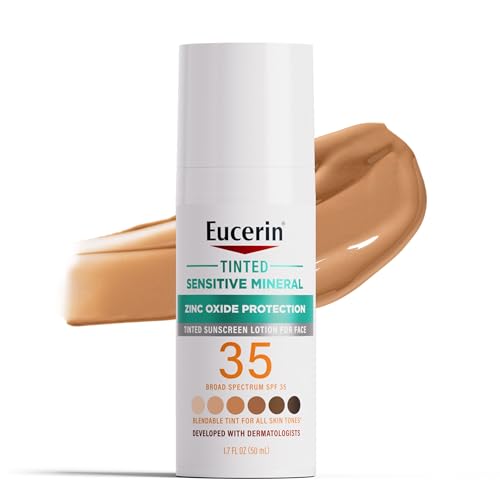
For Pacific Islander men, the best options are typically either chemical sunscreens (which go on invisible) or newer-generation mineral sunscreens that use micronized or nano zinc oxide to minimize white cast. Tinted mineral sunscreens are another excellent option: the added pigment counteracts the white cast and actually blends with medium-to-dark skin tones.

What to Look For
SPF 30 or higher. SPF 30 blocks approximately 97 percent of UVB rays, and the incremental benefit of higher SPF numbers diminishes rapidly (SPF 50 blocks about 98 percent). For the level of protection Pacific Islander skin needs, given its natural melanin base, SPF 30 is the sweet spot: enough additional protection to address the gap that melanin leaves, without requiring the thickest, most cosmetically unpleasant formulations.
Broad-spectrum designation. This confirms the product protects against both UVA and UVB rays. Since melanin is less effective against UVA, broad-spectrum protection is essential for addressing the specific vulnerability that darker skin has.
Lightweight, non-greasy formulation. Look for products labeled “matte finish,” “oil-free,” or “dry touch.” These formulations absorb quickly and do not leave the greasy residue that makes sunscreen feel uncomfortable on active men in warm climates. Gel and fluid formulations tend to be lighter than traditional creams and lotions.
No white cast. Either choose a chemical sunscreen, a tinted mineral sunscreen, or a mineral sunscreen specifically marketed as “invisible” or “sheer” on darker skin tones. Tinted mineral sunscreens are particularly good because the pigment adapts to your skin tone while providing the physical UV barrier.
Product Recommendations
Several sunscreens perform well on Pacific Islander skin tones. Black Girl Sunscreen (despite the name, works excellently on PI skin) is a chemical sunscreen that goes on completely invisible on medium-to-dark skin, has no white cast, and uses a moisturizing, non-greasy formula. Supergoop Unseen Sunscreen is a clear gel formula that leaves zero white cast and works well under other products or on its own. La Roche-Posay Anthelios Ultra-Light Invisible Fluid SPF 50+ is a lightweight chemical sunscreen that dries matte and disappears on all skin tones. For men who prefer mineral protection, Australian Gold Botanical Tinted Face Sunscreen comes in shades that work with brown skin and provides the physical UV barrier of zinc oxide without visible white cast.
How to Apply Sunscreen Correctly
Even the best sunscreen fails if it is applied incorrectly. Here is the technique that ensures proper protection.
Use enough. Most men significantly under-apply sunscreen. For the face alone, you need approximately a nickel-sized amount. For the face, neck, and ears combined, use about a quarter-sized amount. Under-application is the most common sunscreen mistake and effectively reduces the SPF by half or more. If you applied SPF 30 but used half the recommended amount, your actual protection is roughly SPF 8 to 10, which barely adds to your natural melanin protection.
Apply 15 to 20 minutes before sun exposure. This allows the sunscreen to bind to the skin and form a uniform protective layer. Applying sunscreen as you walk out the door means your skin is unprotected for the first 15 to 20 minutes outdoors.
Reapply every two hours during continuous sun exposure. Sunscreen degrades with UV exposure, sweat, and friction. If you are surfing, playing rugby, or doing any outdoor activity, reapply at least every two hours. Water-resistant formulas last 40 to 80 minutes in water, but “water-resistant” does not mean “waterproof.” Reapply after swimming or heavy sweating.
Do not skip your ears, neck, and the back of your hands. These areas receive significant UV exposure and are common sites for skin cancer that men overlook. The tops of the ears, the back of the neck (especially for men with short hair), and the backs of the hands should be included in every sunscreen application.
Apply to all exposed skin, not just the face. If you are shirtless at the beach, apply sunscreen to your entire torso, shoulders, back, and arms. The “I only need it on my face” approach leaves large areas of skin unprotected. For PI men who frequently go shirtless in tropical environments, full-body application is essential during prolonged sun exposure.

Traditional Plant-Based Sun Protection
Long before commercial sunscreen existed, Pacific Islander communities used plant-based preparations to protect their skin from the intense tropical sun. These traditional methods provide real (though limited) UV protection and remain relevant as complementary practices alongside modern sunscreen use.
Coconut Oil
Coconut oil has been used across the Pacific as a skin protectant for centuries. Research published in Pharmacognosy Research found that coconut oil blocks approximately 20 percent of UV radiation, equivalent to roughly SPF 7 to 8. This is modest compared to commercial sunscreen, but it is not nothing, especially when applied to skin that already has a natural melanin SPF of 8 to 13. The combination of melanin plus coconut oil provides roughly SPF 15 to 20 protection, which was adequate for ancestral lifestyles that included shade-seeking behavior, clothing, and activity patterns that limited peak-sun exposure.
Coconut oil also provides skin conditioning benefits that help maintain the skin barrier, which is itself a line of defense against UV damage. Healthy, well-moisturized skin is more resistant to UV penetration than dry, damaged skin. The traditional practice of applying coconut oil before outdoor activities served a dual purpose: modest UV filtering and skin barrier maintenance.
Monoi Oil
Monoi oil, the traditional Tahitian preparation of coconut oil infused with tiare flowers, provides similar UV filtering to plain coconut oil with the added benefit of the tiare flower’s anti-inflammatory compounds. Tahitian and French Polynesian communities have used monoi as a sun-protective body oil for centuries, applying it generously before outdoor activities. The anti-inflammatory properties of the tiare infusion help reduce the skin’s inflammatory response to whatever UV radiation does penetrate, potentially reducing some of the downstream damage caused by sun exposure.
Noni (Morinda citrifolia)
Noni, a fruit native to the Pacific Islands, has been used in traditional Polynesian medicine for numerous purposes including skin protection. The fruit contains antioxidants (particularly scopoletin and xeronine) that help neutralize the free radicals generated by UV exposure. While noni does not provide significant UV filtering on its own, its antioxidant activity helps mitigate the oxidative stress that UV radiation causes in the skin. Some modern skincare formulations now incorporate noni extract as an antioxidant booster in conjunction with sunscreen for this reason.
Tamanu Oil
Tamanu oil (Calophyllum inophyllum), used across Polynesia for skin healing and protection, has demonstrated modest UV-absorbing properties in laboratory studies. More significantly, tamanu oil is exceptionally effective at healing UV-damaged skin, reducing inflammation, promoting skin cell regeneration, and helping to fade hyperpigmentation caused by sun exposure. Traditional use of tamanu as an after-sun treatment aligns with modern understanding of its wound-healing and anti-inflammatory properties.
Important Context for Traditional Methods
Traditional plant-based sun protection worked within the context of traditional lifestyles. Pacific Islander ancestors did not simply apply coconut oil and spend eight hours in direct midday sun. Their sun protection was a system: plant oils for skin conditioning, clothing (such as the lavalava) for body coverage, shade structures (fale in Samoa, whare in New Zealand) for midday rest, and activity patterns that placed heavy outdoor labor in the cooler morning and late afternoon hours rather than at solar noon. The plant oils were one component of a comprehensive sun management approach.
Modern PI men who want to honor these traditional practices should view them as complementary to, not replacements for, modern sunscreen. Use coconut oil or monoi for daily skin conditioning and its modest UV filtering. Use commercial SPF 30+ sunscreen for prolonged outdoor activities, sports, and any situation where you will be in intense sun for extended periods. The combination of traditional and modern approaches provides the best protection.
Skincare Beyond Sun Protection
Sun protection is the most critical skincare practice for PI men, but a complete skincare routine addresses several other concerns common to Pacific Islander skin.
Hyperpigmentation
Post-inflammatory hyperpigmentation (PIH) is more common and more visible in darker skin tones. When PI skin is injured, whether by acne, cuts, burns, or irritation, the healing process often produces excess melanin at the injury site, leaving a dark spot that can persist for months or years. This is not scarring in the structural sense but rather excess pigmentation that takes time to fade.
The most effective approach to hyperpigmentation is prevention: sun protection (which prevents existing dark spots from getting darker), gentle skincare (which avoids the irritation that triggers new hyperpigmentation), and treatment of underlying conditions (particularly acne, which is the most common trigger for PIH in men). For existing dark spots, ingredients like niacinamide, vitamin C, alpha arbutin, and azelaic acid help to gradually fade hyperpigmentation over several months. These ingredients inhibit excess melanin production without lightening the surrounding normal skin tone.
A 10 percent niacinamide serum applied twice daily is one of the most effective and well-tolerated treatments for PIH in darker skin. Niacinamide reduces the transfer of melanin to the upper skin layers without the irritation risk associated with more aggressive brightening agents. It also controls oil production and strengthens the skin barrier, providing multiple benefits beyond its pigment-correcting effect.

Ingrown Hairs and Razor Bumps
Pacific Islander men with thick, coarse facial hair are prone to pseudofolliculitis barbae (razor bumps), a condition where shaved hair curls back into the skin and causes inflammation. The thick hair shaft common in PI men creates sharp, stiff ends when cut that are more likely to re-enter the skin than finer hair types. Each ingrown hair triggers an inflammatory response that can lead to painful bumps, infection, and subsequent hyperpigmentation.
Prevention strategies include shaving with the grain (never against), using a single-blade safety razor rather than multi-blade cartridge razors (which cut hair below the skin surface, increasing ingrown risk), keeping the skin exfoliated with a gentle chemical exfoliant (salicylic acid or glycolic acid), and moisturizing after shaving to keep the skin supple and the hair exit pathway clear. For men who experience severe razor bumps, growing a short beard and trimming with clippers rather than shaving completely eliminates the problem by keeping the hair above skin level.
Keloid Scarring
Pacific Islanders have a higher genetic predisposition to keloid scarring, a condition where scar tissue grows beyond the boundaries of the original wound. Keloids can form after any skin injury, including cuts, surgery, piercings, and tattoos. For PI men who are prone to keloids, this has practical implications for grooming: be cautious with ear piercings (common keloid site), inform your tattoo artist about keloid tendency (some areas of the body are more prone than others), and treat any skin wound with proper care to minimize the inflammatory response that drives keloid formation.
Silicone-based scar sheets applied to healing wounds for 12 to 24 hours daily over several months can help prevent keloid formation by maintaining moisture and applying gentle pressure to the scar. If keloids do develop, early treatment with a dermatologist (corticosteroid injections, silicone treatment, or cryotherapy) is more effective than waiting until the keloid has fully matured.
Daily Skincare Routine for PI Men
A practical daily skincare routine for Pacific Islander men does not need to be complicated. Three products cover the essentials: cleanser, moisturizer, and sunscreen.
Morning routine: Wash your face with a gentle, non-foaming cleanser (CeraVe Hydrating Facial Cleanser or Cetaphil Gentle Skin Cleanser are both affordable and effective). Apply a lightweight moisturizer. Apply broad-spectrum SPF 30 sunscreen. Total time: two minutes.
Evening routine: Wash your face with the same gentle cleanser to remove sunscreen, oil, and environmental grime accumulated during the day. Apply moisturizer. If treating hyperpigmentation, apply niacinamide serum before moisturizer. Total time: two minutes.
Weekly addition: Exfoliate once or twice per week with a chemical exfoliant (salicylic acid for oily skin, glycolic acid for normal-to-dry skin). Chemical exfoliants are preferred over physical scrubs for darker skin because they are less likely to cause the micro-irritation that triggers hyperpigmentation.
Sun Protection for Specific Activities
Different activities require different sun protection strategies. Here is how to approach the activities that PI men most commonly engage in.
Surfing and Ocean Swimming
Water reflects UV radiation, increasing your exposure by up to 25 percent compared to land-based activities. Combined with the fact that wet skin absorbs UV more readily than dry skin, ocean activities represent the highest UV risk scenario for PI men. Use a water-resistant SPF 30+ sunscreen, apply 20 minutes before entering the water, and reapply immediately after exiting. For extended surf sessions, consider wearing a rash guard or surf shirt, which provides mechanical UV blocking without the need for reapplication.
Rugby and Outdoor Sports
Outdoor team sports present a unique challenge: sweat degrades sunscreen rapidly, physical contact (especially in rugby) rubs it off, and reapplication opportunities are limited during play. Apply a sport-specific, water-resistant sunscreen before the match and reapply during halftime. For training sessions, apply before warm-up and reapply every 90 minutes. Sunscreen sticks are convenient for quick reapplication on the face, ears, and neck during water breaks without getting product on your hands (which can make the ball slippery).

Outdoor Work
PI men who work outdoors in construction, landscaping, fishing, or agriculture face chronic UV exposure that accumulates over years and decades. Daily sunscreen application before work, with reapplication during breaks, is the minimum protection needed. A wide-brimmed hat, long-sleeved shirt with UPF rating, and sunglasses provide additional mechanical protection that does not need reapplication. For workers who resist daily sunscreen due to the inconvenience, wearing UPF-rated clothing is an easier behavior to adopt and provides consistent protection throughout the workday.
Driving
UVA rays penetrate car windshields and side windows. Men who drive frequently accumulate asymmetric UV damage on the left side of the face, left arm, and left hand (right side in countries that drive on the left). This is one reason why skin cancer sometimes appears more frequently on the driver’s side of the body. If you spend significant time driving, apply sunscreen to your face and exposed arms before getting in the car, or consider UV-filtering window film on the side windows.
Addressing the Cultural Barrier
The biggest obstacle to sun protection in PI communities is not access to products or knowledge about UV damage. It is the cultural perception that sunscreen is for pale skin and that using it somehow denies your Pacific Islander identity or suggests that your skin is inadequate. This perception needs to be confronted directly because it is literally costing lives through late-stage cancer diagnoses.
Using sunscreen does not diminish your melanin or your cultural identity. It enhances the protection that your melanin already provides. Think of it as layering defenses: your melanin is the first line, sunscreen is the second. A warrior does not refuse armor because his skin is tough. He adds armor on top of his natural toughness because he understands that every layer of protection matters in battle. UV radiation is the battle your skin fights every day, and giving it additional ammunition through sunscreen is strength, not weakness.
Pacific ancestors understood this intuitively. They used coconut oil, monoi oil, and plant preparations specifically because they recognized that even their naturally protected skin benefited from additional coverage. The traditional practices of sun protection, shade-seeking, and midday rest were not accidents. They were deliberate strategies developed over generations of living under extreme UV conditions. Modern sunscreen is simply the latest iteration of a practice that Pacific people have engaged in for millennia: protecting the skin against the sun.
Having conversations about sun protection within PI families and communities is important. When uncles and cousins see a man applying sunscreen before a rugby match, there is often joking or questioning. Being prepared to explain the science, pointing to the skin cancer statistics, and framing sun protection as traditional rather than foreign helps normalize the practice. The goal is to shift the cultural narrative from “sunscreen is for pale people” to “sun protection is something Pacific ancestors practiced and that is worth continuing.”
Skin Checks: What to Monitor
Regular self-examination of your skin is a critical complement to sun protection. Early detection of skin cancer dramatically improves outcomes, and self-checks are free, private, and take less than five minutes once a month.
Use the ABCDE rule for evaluating moles and spots: Asymmetry (one half differs from the other), Border irregularity (edges are ragged, notched, or blurred), Color variation (multiple colors or shades within the same spot), Diameter larger than 6 millimeters (about the size of a pencil eraser), and Evolution (the spot is changing in size, shape, or color over time). Any spot that meets one or more of these criteria warrants a dermatologist visit.
For PI men specifically, pay extra attention to the palms of your hands, soles of your feet, under your fingernails and toenails, and inside your mouth. These areas are where acral melanoma appears, and they are the sites most often overlooked in darker-skinned patients. A dark streak under a nail that was not caused by injury, a sore on the sole of your foot that does not heal, or an unusual dark spot on your palm should all be evaluated by a dermatologist.
Additionally, any existing mole that changes, any new spot that appears and grows, or any sore that does not heal within three weeks should be examined. Do not let embarrassment, fear, or the belief that “it can’t happen to me” delay your visit to a dermatologist. Remember: the melanoma statistics for PI men are worse not because PI men get more melanoma, but because they wait too long to get it checked.
Frequently Asked Questions
Do Pacific Islanders really need sunscreen every day?
For everyday activities with minimal sun exposure (indoor work, short walks, driving), daily sunscreen on the face is recommended but the stakes are lower. For any outdoor activity lasting more than 30 minutes, including sports, beach time, outdoor work, and gardening, sunscreen is strongly recommended regardless of skin tone. The daily habit of applying a lightweight SPF 30 moisturizer to the face each morning provides baseline protection with minimal effort and prevents cumulative UV damage over the years.

What SPF level should Pacific Islander men use?
SPF 30 is the recommended minimum for PI men during outdoor activities. Your natural melanin provides SPF 8 to 13, and adding SPF 30 sunscreen on top provides comprehensive protection. SPF 50 is warranted for extended high-exposure activities (all-day beach, multi-hour surf sessions, outdoor work in tropical sun). Going higher than SPF 50 provides marginal additional benefit and often comes with thicker, less comfortable formulations.
Can sunscreen lighten my skin?
Sunscreen does not lighten your natural skin tone. What it does is prevent additional tanning and photodarkening, which means your skin may gradually return to its natural baseline color rather than the sun-darkened shade you are accustomed to. Your natural melanin level, determined by genetics, remains unchanged. If you want to maintain a tan, sunscreen will slow tanning, but it will not bleach or lighten your inherent skin color.
Is coconut oil enough for sun protection?
For brief, casual sun exposure (walking to the car, running errands), coconut oil combined with your natural melanin may provide adequate protection. For any prolonged outdoor activity, coconut oil alone is not sufficient. Its UV filtering capability (approximately SPF 7 to 8) combined with melanin’s natural SPF (8 to 13) provides roughly SPF 15 to 20 total protection, which falls below the SPF 30 minimum recommended for extended sun exposure. Use coconut oil as a daily moisturizer and complement it with commercial sunscreen for outdoor activities.
Do I really need sunscreen if I have darker skin as a Pacific Islander man?
Yes, you absolutely do. While melanin provides natural UV protection equivalent to roughly SPF 8-13, this is only partial protection. Pacific Islander men develop skin cancer and experience photoaging just like anyone else, but the damage is harder to see on darker skin, which means it often goes undetected until it’s more advanced.
What SPF level should Pacific Islander men use for sun protection and skincare?
You should use at least SPF 30 or higher, applied generously and reapplied every two hours or after swimming. Since your natural melanin provides only SPF 8-13 equivalent protection, additional sunscreen closes the gap and provides the comprehensive UV defense your skin needs in high-sun environments.
Can skin cancer develop on darker skin tones?
Yes, skin cancer absolutely develops on darker skin, including melanoma. The challenge is that cancerous changes are harder to spot visually on melanated skin, which is why regular dermatological check-ups are especially important for Pacific Islander men who spend time in high-UV environments.
How does melanin actually protect my skin from UV damage?
Melanin acts as a natural UV filter by absorbing and scattering ultraviolet radiation before it damages deeper skin layers. However, this protection is incomplete, providing only partial defense equivalent to SPF 8-13, which means additional sun protection measures are still necessary to prevent skin cancer and photoaging.
Conclusion: Protecting What Protects You
Your melanin is a gift from your ancestors. It has protected Pacific people for thousands of years, allowing them to thrive in some of the most UV-intense environments on Earth. But melanin is not invincible, and treating it as though it is puts you at risk for the very outcomes that proper sun protection prevents: premature aging, hyperpigmentation, and skin cancer diagnosed too late.
Sun protection for Pacific Islander men is not about denying your heritage or imitating another culture’s skincare routine. It is about giving your skin the additional support it needs to continue protecting you for a lifetime. Your ancestors used coconut oil and monoi and shade and clothing and activity timing to manage their sun exposure. You have all of those tools plus modern sunscreen that actually works on your skin tone. Use everything available to you. Protect the skin that protects you. And start today, because UV damage is cumulative, and every unprotected hour counts.