If you want to master best wave brushes for 360, this guide covers everything you need to know.
If you want to master best wave brushes for 360, this guide covers everything you need to know. Last updated: February 2026 by Darius Washington, Black Men’s Grooming Editor
Every waver figures out eventually that the brush matters as much as the brushing. The best wave brush is not the one that looks good on a shelf. It is the one that matches your hair length, your wave stage, and your brushing routine.
This guide covers seven wave brushes across hard, medium, and soft bristle categories. We break down the bristle science, explain the brush progression system that separates beginners from guys with championship waves, and match each brush to specific hair types and wave stages.
If you only read one section, jump to the comparison table. If you want to understand why bristle stiffness changes everything, read the bristle guide first.
Our Top Picks at a Glance: Best Wave Brushes For 360
Here is every wave brush in this guide, ranked by bristle stiffness, handle type, and best use case.

| Brush | Bristle Type | Stiffness | Handle | Best Hair Type | Price |
|---|---|---|---|---|---|
| Torino Pro #350 | Hard boar | Extra hard | Club (no handle) | 4B/4C, wolfing | $$ |
| Torino Pro #730 | Medium boar | Medium-firm | Curved handle | 4A/4B, daily use | $$ |
| Crown Quality Products | Hard boar | Hard | Contoured wood | 4B/4C, established waves | $$$ |
| Royalty (Medium) | Medium boar/nylon | Medium | Club grip | All types, daily use | $$ |
| Diane (Soft) | Soft nylon | Soft | Contoured handle | All types, finishing | $ |
| WavEnforcer Double-Sided | Hard + soft | Hard/Soft | Ergonomic grip | All types, versatile | $ |
| Annie Military | Medium boar | Medium | Military palm strap | 4A/4B, travel | $ |
$ = under $10 | $$ = $10-20 | $$$ = $20+
What Makes a Wave Brush Work
A wave brush is not a regular hair brush with a different label. The difference comes down to bristle material, bristle density, and bristle length.
Bristle material: Boar bristle is the standard. Natural boar hair distributes your scalp’s oils along the hair shaft while brushing because of its porous, scaled surface. Synthetic nylon bristles glide over hair rather than gripping it, making them gentler but less effective at pulling tight curls into wave patterns. The best hard brushes use boar. The best soft brushes use nylon. The best medium brushes often blend both.
Bristle density: Higher density means more contact points per stroke, which translates to more consistent pull across your wave pattern. A sparse brush leaves gaps where hair does not get trained. For 4C hair, you want the highest density you can find. Tighter coils need more bristle contact to override the natural curl direction.
Bristle length: Longer bristles reach deeper into hair during the wolfing phase. Shorter bristles work better on fresh cuts. This is why a single brush cannot do everything well across all hair lengths.
Detailed Reviews: 7 Best Wave Brushes
1. Torino Pro #350 Hard Brush (Best for Wolfing)
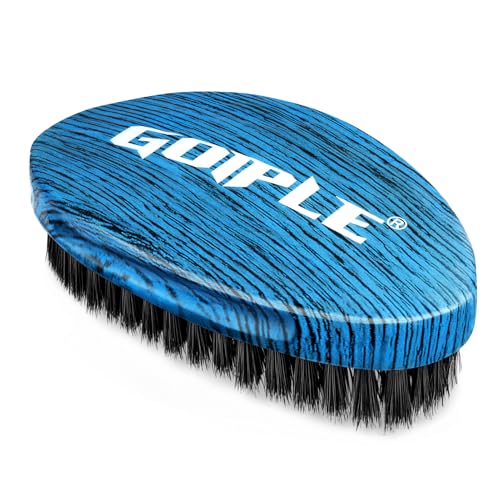
The Torino Pro #350 is the brush for when you are three weeks into a wolf and your hair is fighting back. Extra-hard boar bristles penetrate deep into longer 4B and 4C hair and force the curl pattern flat against the scalp. The club-style grip with no handle lets you apply palm pressure directly over the bristles for maximum control over each stroke.

Pros:
- Deepest bristle penetration in this lineup
- Club grip allows direct palm pressure for maximum control
- Dense boar bristle rows distribute oils while training waves
Cons:
- Too aggressive for freshly cut hair or sensitive scalps
- No handle means less reach for the back of your head
Best for: 4B/4C hair during the wolfing phase (3+ weeks of growth). If you are building 360 waves and past the beginner stage, this is your workhorse.
2. Torino Pro #730 Medium Brush (Best Daily Driver)
If we could only recommend one wave brush, the Torino Pro #730 would be it. Medium-firm bristles train and maintain a wave pattern without the scalp punishment of a hard brush. The curved handle angles the bristle plate against your scalp more naturally, which means more consistent contact across the crown and sides. A lot of guys lose wave definition on the sides because their brush does not sit flat against the curve of the head. This handle fixes that. (We recommend this 360 Curved Wave Brush For Men.)
Pros:
- Ideal stiffness for daily brushing on short to medium hair
- Curved handle improves contact angle on sides and crown
- Works for both 4A and 4B textures without adjustment
Cons:
- Not aggressive enough for deep wolfing on 4C hair
- Handle adds length that makes it harder to pack for travel
Best for: 4A/4B hair at short to medium length. Daily maintenance. Beginners who want one brush that performs well during the first month of wave training. Pair this with a solid durag after every session and you have most of the wave system covered.
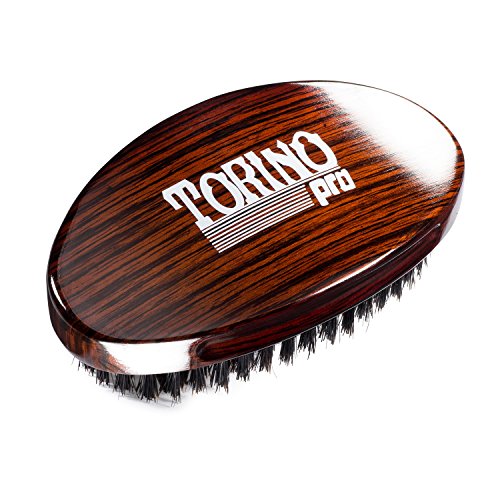
3. Crown Quality Products Premium Brush (Best Build Quality)
The Crown Quality Products Premium Brush is our pick for build quality. Dense, reinforced boar bristle rows set into a contoured hardwood body. What separates Crown Quality from cheaper hard brushes is bristle consistency. Every bristle is the same length and stiffness, delivering even pressure across the wave pattern. Cheaper brushes have uneven rows that create hotspots where some sections get overtrained while others barely get touched. (We recommend this 360 Curved Wave Brush For Men.)
Pros:
- Premium hardwood construction that survives years of daily use
- Most consistent bristle pull in this lineup
- Dense bristle pattern distributes natural oils effectively
Cons:
- Higher price point than most wave brushes
- Hard bristles may be too aggressive for beginners or 4A hair
Best for: 4B/4C hair with an established wave pattern. Guys who want a hard brush that will last years instead of months.
4. Royalty Wave Brush, Medium (Best for All Hair Types)
The Royalty Wave Brush is the crowd-pleaser. Medium boar and nylon bristles blended together give you oil distribution from the boar with the smooth glide of nylon. It suits guys who are not sure about their hair type or wave stage. It is forgiving. It pulls enough to train waves on shorter hair but does not punish a sensitive scalp like pure hard boar does. (We recommend this 360 Curved Wave Brush For Men.)
Pros:
- Blended bristles work across all 4-type hair textures
- Compact club grip is easy to control and travel-friendly
- Low learning curve for beginners
Cons:
- Not enough pull for serious wolfing on thick 4C hair
- Bristle blend wears down faster than pure boar options
Best for: Anyone who wants a single medium brush that handles daily maintenance without overthinking hair type. Beginners still learning to brush. Guys with 4A or looser 4B hair who find pure boar medium brushes too stiff.

5. Diane Wave Brush, Soft (Best Finishing Brush)
The Diane Wave Brush does a job that a lot of wavers skip: finishing. Soft nylon bristles glide over the top of your wave pattern without penetrating deep enough to disturb it. Use the Diane after your main session with a hard or medium brush. Ten to 15 strokes per section lays down flyaways, smooths wave ridges, and distributes product evenly across the surface. It also works well right before putting on a durag because it creates a flat surface for the fabric to compress against.
Pros:
- Perfect finishing brush after main sessions
- Smooths flyaways without disturbing the pattern
- Budget-friendly price
Cons:
- Cannot train waves on its own
- Nylon bristles do not distribute oils like boar
Best for: The finishing step of any session. Pre-durag laying. Also works as a starter brush for young beginners with sensitive scalps who are building brushing discipline before moving to medium bristles.
6. WavEnforcer Double-Sided Brush (Best Value)
The WavEnforcer Double-Sided Brush puts a hard brush and a soft brush in one tool. Flip it over and you switch from training to finishing without reaching for a second brush.
Pros:
- Two brushes in one at a budget price
- Hard side is genuinely hard with good bristle density
- Easy to travel with
Cons:

- No medium bristle option on either side
- Hard-side bristles wear down faster than dedicated hard brushes
Best for: Beginners who want hard and soft without buying two tools. Budget wavers. A solid backup brush for your gym bag or work locker.
7. Annie Military Wave Brush (Best Travel Brush)
The Annie Military Wave Brush uses a palm strap instead of a handle, keeping the brush compact enough to fit in a back pocket. Military-style wave brushes have been in barbershops for decades because the strap lets you brush with a relaxed hand position that reduces fatigue during long sessions. The bristles are medium boar with solid density.
Pros:
- Palm strap design reduces hand fatigue and fits in a pocket
- Budget-friendly without sacrificing bristle quality
- Strap adjusts to different hand sizes
Cons:
- Less bristle coverage than full-sized brushes
- Not enough pull for wolfing sessions on thick 4C hair
Best for: Travel and on-the-go touch-ups. A second brush for your gym bag, work locker, or car.
Bristle Stiffness Guide: Hard vs. Medium vs. Soft
Bristle stiffness is not a preference. It is a technical choice that should match your hair length and wave stage. Using the wrong stiffness at the wrong time is the number one reason guys stall out on their wave progress.

Hard bristles are 12 to 15mm long, densely packed boar, and stiff enough to resist bending when pressed against your scalp. Use them when your hair is three or more weeks into a wolf. At that length, 4B and 4C curls have enough spring to resist a medium brush. Hard bristles penetrate to the scalp and physically redirect each curl’s growth direction. Avoid on freshly cut hair, sensitive scalps, and wet hair.
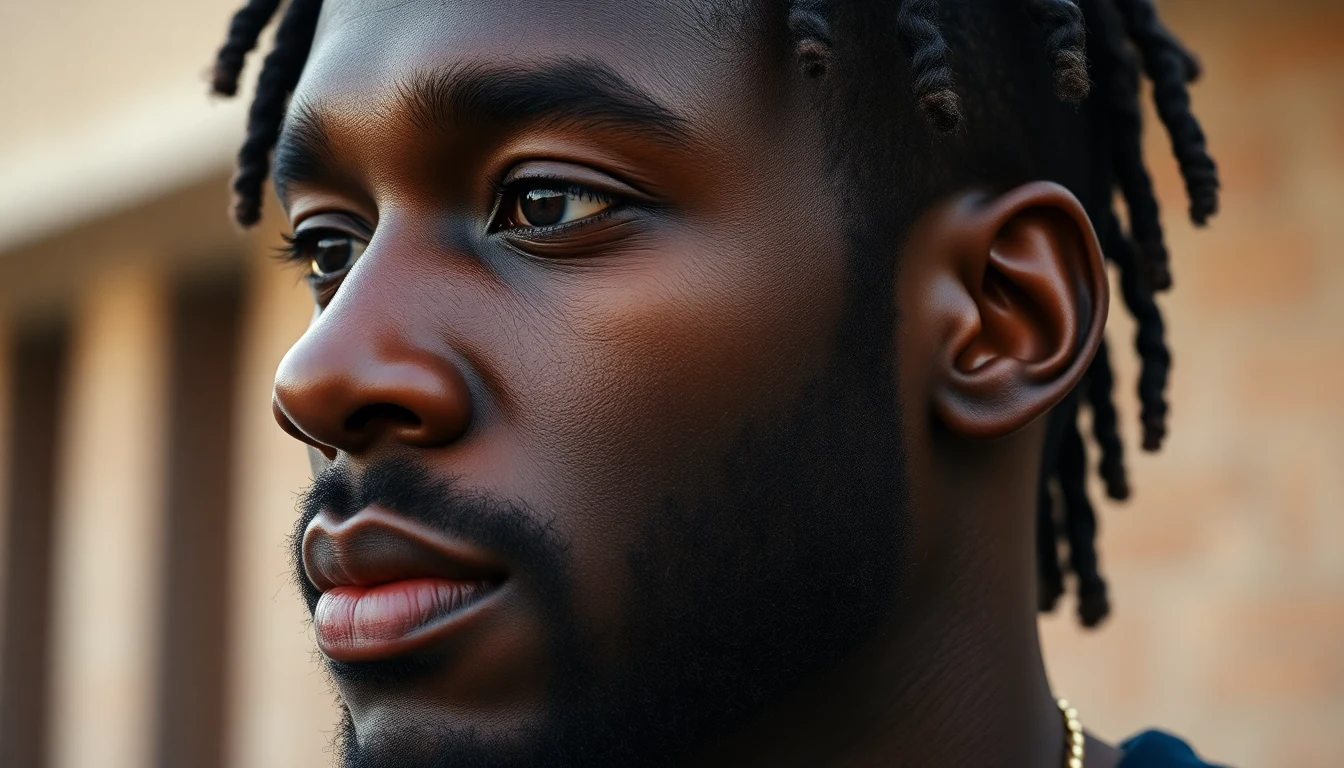
Medium bristles are 8 to 12mm long with moderate flex. They are the backbone of your routine, providing enough pull to train waves on short to medium hair without scalp fatigue. Most of your sessions throughout the year should use a medium brush. Use for daily maintenance, the first two weeks of a wolf, and all-purpose brushing on 4A and 4B hair.
Soft bristles are typically nylon, 5 to 8mm long, and flex completely under light pressure. They do not train waves. They lay down the top layer of hair, smooth flyaways, and distribute product evenly. Think of soft brushing as the clear coat on a paint job. Use after every main session (10 to 15 finishing strokes) and before applying a durag. Never use soft as your only brush.
The Brush Progression System
Week 1 (after a fresh cut): Medium brush only. 100 strokes per section, twice a day. Your hair is too short for hard bristles and too short for soft to do anything useful.
Weeks 2 to 3 (early wolf): Medium brush for main sessions. Add 10 to 15 soft brush strokes at the end to lay and polish. Waves should be visibly forming.
Weeks 3 to 6 (deep wolf): Switch main sessions to a hard brush. The hair is long enough now that medium bristles cannot overpower the curl spring. Finish every session with soft brush strokes.
After your cut: Drop back to medium. The cycle repeats. This progression is what separates casual wavers from guys with deep, connected patterns. You match the tool to the hair length.

How to Brush for Waves: Technique and Direction
A good brush without good technique is just expensive scalp scratching. Here is the system.
The four zones: Your head has four brushing zones, each with a different stroke direction. Crown: brush forward from the crown point to your hairline. Left side: brush from the crown down and left, angling toward the temple. Right side: mirror the left. Back: brush straight back from the crown. The back is where most guys lose their 360 wave pattern because they cannot see what they are doing. Use a second mirror.
Stroke count: 100 to 150 strokes per zone for a standard session (400 to 600 total, about 15 to 20 minutes). During wolfing, increase to 200 per zone. Two 15-minute sessions per day beat one 30-minute session. Morning and night. Every day. Skipping sessions is what creates patches.
Brush angle: Hold the brush at 30 to 45 degrees to your scalp. Flat against the head is too passive. Perpendicular is too aggressive. That sweet spot lets bristles penetrate into the hair and redirect the curl while pulling smoothly through.
The wash-and-brush method: Twice a week, brush during your shower. Apply shampoo, brush through the lather with a medium brush (never hard on wet hair), rinse, apply conditioner, brush again, and rinse. Warm water opens the hair cuticle, making strands more pliable and easier to train. Follow immediately with a durag while hair is still slightly damp. This method accelerates wave development faster than dry brushing alone.
Brush Maintenance and Replacement
Product buildup on bristles reduces stiffness, clogs the gaps between rows, and transfers old pomade back into clean hair. Clean your brushes weekly. Five minutes keeps them performing like new. When it comes to best wave brushes for 360, technique matters most. When it comes to best wave brushes for 360, technique matters most.
Weekly cleaning: Run a wide-tooth comb through the bristles to remove trapped hair and lint. Hold bristle-side down under warm (not hot) water. Apply a small amount of dish soap or shampoo and scrub each row with your fingers. Rinse until all soap is gone. Air dry bristle-side down on a towel. Never dry bristle-side up; water pools in the base and rots the wood.
Monthly deep clean: Soak the brush in warm water with two tablespoons of baking soda for 15 minutes. This dissolves pomade and wave grease that regular soap misses. Scrub with an old toothbrush between the bristle rows, rinse, and air dry.
When to replace: Every three to four months with daily use. Signs it is time: hard brush feels like a medium, bristles are visibly bent or splayed, bald spots appear where rows have thinned, or your wave definition decreases despite consistent sessions. A new $15 brush every three months is cheaper than stalling your progress with worn bristles.
Which Brush for Your Hair Type and Wave Stage
Here is the breakdown so you stop wasting time with the wrong tool.
4A hair (defined S-coils): The most cooperative texture for waves. The curl pattern is already S-shaped, so you are tightening an existing wave rather than creating one from scratch. Stay with a medium brush for most of your routine. You may never need a hard brush unless you wolf past four weeks. Recommended: Torino Pro #730, Royalty Medium, Annie Military for travel. (We recommend this Curved 360 Wave Brush For Black.)
4B hair (Z-pattern coils): The brush progression system is essential here. The Z-pattern resists flattening more than 4A, so escalate stiffness as hair grows. Medium for weeks one to three, hard for weeks three through six. Always finish with soft. Recommended: Torino Pro #730 (daily), Crown Quality Products (wolfing), Diane Soft (finishing).
4C hair (tightest coils): Maximum curl spring resistance means you need maximum bristle force. Hard brushes are your main tool during wolfing. Medium handles the first two weeks after a cut. A soft brush after every session is not optional; 4C hair is the most fragile texture and needs the gentle finishing pass. Recommended: Torino Pro #350 (primary wolfing), Torino Pro #730 (post-cut daily), Diane Soft (mandatory finishing). (We recommend this 360 Curved Wave Brush For Men.)
Mixed textures: Most guys do not have one uniform texture across their entire head. 4B on the crown and 4C on the sides is common. Brush each zone with the stiffness that matches that zone’s texture. The WavEnforcer Double-Sided is built for exactly this situation.
Understanding your hair type is the first step. If you are also choosing the right clippers, make sure your barber knows your wave pattern before they cut. Tell your barber you are waving and ask for a fade that leaves enough length on top for your brush to grip.

Frequently Asked Questions
What wave brush should a beginner start with?
Start with a medium bristle brush like the Torino Pro #730 or the Royalty Wave Brush. Medium bristles train your curl pattern without irritating your scalp. Once you see waves forming after two to four weeks, add a hard brush for wolfing and a soft brush for finishing. Starting with a hard brush before your waves are established leads to scalp soreness without better results.
How often should I replace my wave brush?
Every three to four months with daily use. Bristles lose stiffness over time. If your sessions feel easy and your waves are losing definition, the bristles are worn down. A hard brush that feels like a medium needs replacing. Weekly cleaning extends the lifespan, but degradation is inevitable.
Should I brush wet or dry hair for waves?
Both serve different purposes. Dry brushing is your daily tool and should make up most sessions. Wet brushing during or after a shower pushes hair into a deeper wave pattern while the cuticle is open. Never use a hard brush on wet hair; wet hair is more elastic and breaks easier. Combine daily dry sessions with two to three wet sessions per week.
How many brush strokes do I need per session?
100 to 150 strokes per section (crown, sides, back) for a standard session, about 15 to 20 minutes total. Quality matters more than count. Fifty focused strokes with proper angle beat 300 lazy strokes with no pattern. During wolfing, increase to 200 strokes per section.
What is the difference between a hard and medium wave brush?
Hard brushes have stiffer, densely packed boar bristles that penetrate deeper and pull more aggressively. They are designed for wolfing when hair is longest and needs maximum force to lay flat. Medium brushes have shorter, more flexible bristles that provide consistent pull without scalp irritation. Medium is your daily driver. Most wavers need both: hard during wolfing, medium for everyday sessions.
The Bottom Line
Waves are not about genetics. They are about having the right system. The brush is the most important tool in that system.
- Start with medium (Torino Pro #730 or Royalty Medium) and learn proper technique before adding harder bristles.
- Follow the brush progression: medium after a fresh cut, hard during the wolf, soft to finish every session.
- Match your brush to your hair type. 4A stays on medium. 4C needs hard during wolfing. Mixed textures need multiple brushes.
- Clean weekly, replace every three to four months. Worn bristles equal weak waves.
If we had to put one brush in your hand right now, it would be the Torino Pro #730 for daily versatility, or the WavEnforcer Double-Sided if you want hard and soft in one tool on a budget.
Now pair your brush with the right durag, learn the full 360 wave system, and put in the sessions. The waves come to the guys who show up every morning and every night. No shortcuts.

Frequently Asked Questions
What’s the best wave brush for someone just starting their 360 wave journey?
When you’re beginning, start with a medium bristle brush like the Torino Pro #730, which balances effective wave development with comfort during daily brushing sessions. Hard brushes can be too aggressive for beginners and may cause scalp irritation, so saving those for later stages of your wave progression makes sense.
How do hard, medium, and soft bristle brushes differ in their purpose?
Hard bristle brushes like the Torino Pro #350 are designed for intense wolfing sessions and breaking in new hair patterns, medium brushes work best for daily maintenance and consistent wave setting, and soft brushes are ideal for finishing your waves without disrupting the pattern you’ve already developed. The bristle type directly affects how aggressively the brush pulls your hair into wave formation.
Should I use the same wave brush throughout my entire grooming routine?
No, you’ll get the best results by rotating through different bristle types depending on your wave progression stage. Most men follow a brush progression system where they use hard brushes during wolfing, transition to medium for daily maintenance, and finish with soft brushes to preserve their wave definition.
What makes the Torino Pro #350 different from other hard bristle wave brushes?
The Torino Pro #350 features dense boar bristles that provide the strongest pull available, making it specifically engineered for wolfing sessions when you’re intensely developing your wave pattern. Its design makes it one of the hardest-pulling brushes on the market, which is why it’s recommended for experienced wave enthusiasts rather than beginners.