Ask around Black barbershops and the drop fade comes up constantly, and for good reason. It flatters more face shapes than a standard fade, sits cleanly against a beard, and works on every texture from straight to 4C. The sticking point is vocabulary: most people in the chair can picture the cut but can’t name it.
This guide covers every variation of the drop fade, how it differs from other fades (including the commonly confused drop taper), which face shapes and hair types it suits, and the exact language to use with your barber to get it right the first time.
What Is a Drop Fade?
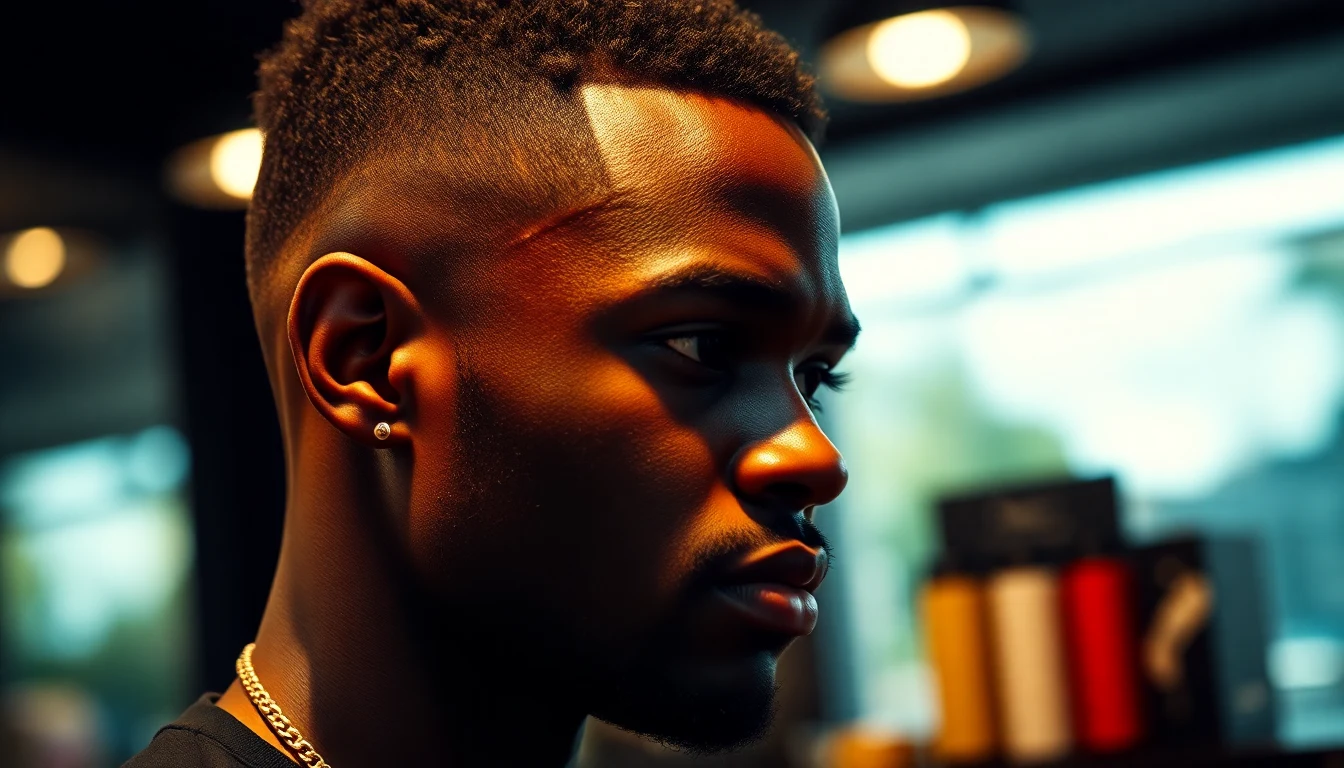
A drop fade is a fade haircut where the fade line curves downward behind the ear and around the nape of the neck, rather than running in a straight horizontal line across the sides of the head. The “drop” refers to that downward curve, which creates a more natural, rounded silhouette at the back.
On a standard high or low fade, the fade line sits at a consistent height all the way around the head. On a drop fade, the line is highest at the temple and gradually drops lower as it moves behind the ear, dipping toward the nape before rising again on the other side.
This curved neckline does two important things. First, it follows the natural shape of the skull more closely, which creates a cleaner, more intentional look from the back. Second, it leaves more length on the sides and back compared to a fade that sits at the same height, which gives the barber more to blend and often results in a smoother gradient.
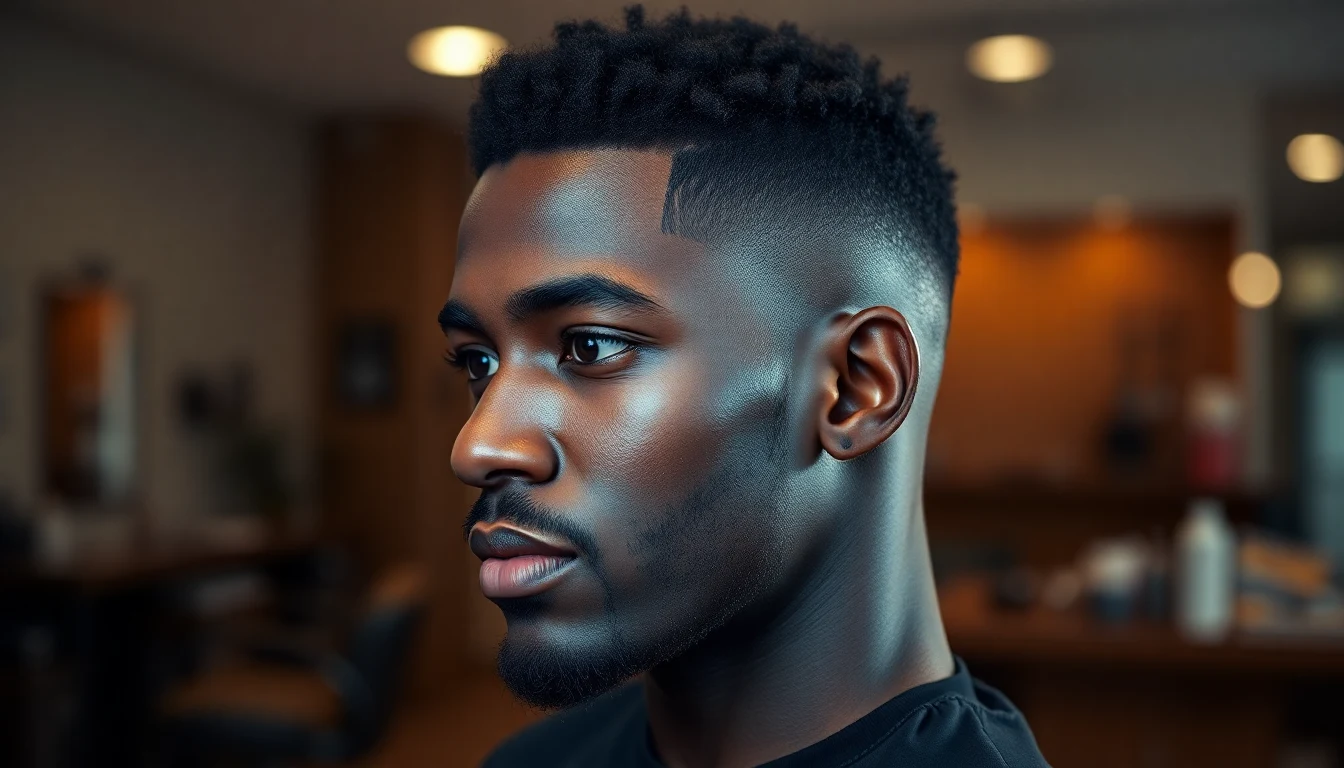
The drop fade is particularly popular in Black barbershops and Latino barbershops because it pairs well with the hairstyles commonly worn on top, including 360 waves, afros, Caesar cuts, and twist outs, and because the curved shape complements the rounder head shapes more common in Black and Latino men.
Drop Fade vs. Regular Fade: What’s the Difference?
The core difference is the shape of the fade line. A regular fade (whether high, mid, or low) maintains a consistent height as it wraps around the head. A drop fade deliberately drops the line lower at the back.

In practice, this means a drop fade takes slightly more skill to execute cleanly. The barber has to follow a curved path rather than a straight one, and the blending has to remain smooth through the transition. A well-executed drop fade looks seamless from every angle. A sloppy one shows the curve as a hard line.
From a wearability standpoint, many men find the drop fade more forgiving. Because the fade line drops at the back where hair growth is often denser, the cut maintains its clean appearance slightly longer before the grow-out becomes obvious.
Drop Fade vs. Taper Fade: A Common Confusion
The terms drop fade and drop taper get used interchangeably at many barbershops, but they describe different things.
A taper fade blends from longer hair down to shorter hair gradually, finishing just above the natural hairline without necessarily reaching skin. A fade, by contrast, blends all the way down to skin (or a #0 clipper guard) at some point in the gradient.
A drop taper follows the downward curved path of a drop fade but stops short of skin. It’s subtler, more conservative, and grows out more gradually. A drop fade that goes to skin (also called a drop skin fade or drop bald fade) is more dramatic and requires more frequent touch-ups to stay sharp.
When sitting in the chair, clarify this distinction explicitly. “Drop fade to skin” and “drop taper” will produce noticeably different results. See the taper fade guide for a deeper comparison of taper vs. fade mechanics.
All Drop Fade Variations
This cut comes in several heights and finishes. The height describes where the fade begins on the side of the head. The finish describes how short the hair gets at its shortest point.

Low Drop Fade
The fade starts just above the ear and drops down close to the neckline. This is the most conservative variation, leaving the most hair on the sides. It works well for professional settings and suits men who want definition without a dramatic statement. The low fade sits at this height but without the drop curve.
Mid Drop Fade
The fade starts at the middle of the side of the head, roughly at the temple, and drops behind the ear. This is the most common request and the one most people picture when they say “drop fade.” It balances impact with versatility. The mid fade reference covers the height in detail.
High Drop Fade
The fade starts high on the sides, near the top of the temple, and drops behind the ear. This is the most dramatic variation, maximizing contrast between the top and sides. It suits men with strong hair texture on top who want to emphasize volume or height. See the high fade guide for context on how high fades behave generally.
Drop Skin Fade (Bald Drop Fade)
Any of the above variations can be taken all the way down to skin at the lowest point. This produces the sharpest contrast and the cleanest look but also requires the most maintenance, typically every 1 to 2 weeks to keep it looking fresh. The skin fade guide covers the technique and maintenance in full.
Drop Taper (No Skin)
As discussed above, this follows the drop curve but blends to a short guard (typically a #1 or #1.5) rather than going to skin. More low-maintenance and grows out more cleanly.
Which Face Shape Suits a Drop Fade?
Its curved neckline makes this cut more universally flattering than a straight-line fade, but face shape still matters for choosing the height and finish.
Oval face: The most versatile face shape for haircuts. Any variation works. A mid or high drop fade with volume on top enhances the natural proportions.

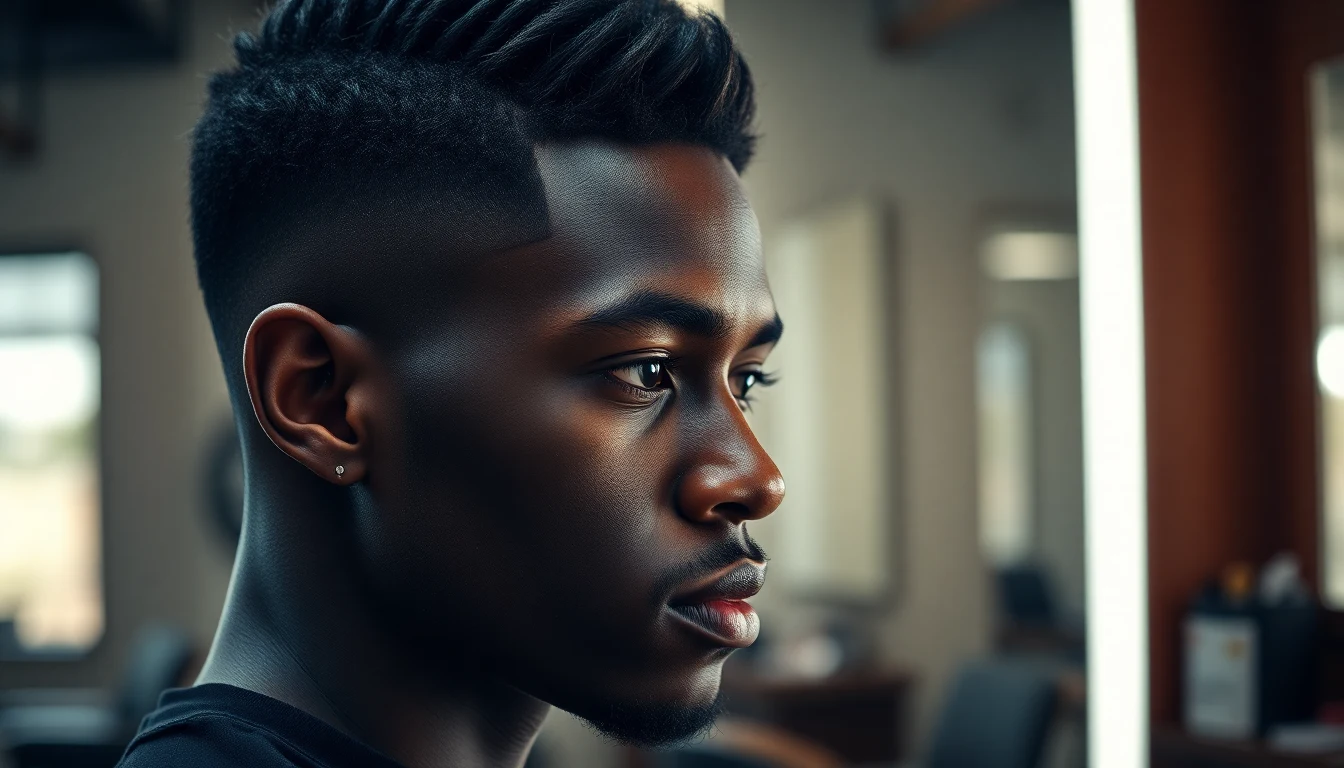
Round face: A higher drop fade with height on top creates the illusion of length. Avoid low drop fades with flat tops, which can emphasize the roundness. This is one of the most searched combinations: drop fade + round face + Black men.
Square face: A mid drop fade with some texture on top softens the angular jawline. The curved neckline complements the strong jaw better than a straight-line fade.
Diamond face: The wider cheekbones and narrower jaw benefit from a low-to-mid drop fade that keeps the sides tighter, balancing the face without adding width at the temples.
Heart face: A low drop fade keeps the sides minimal, which balances the wider forehead. Pair with a textured or messy top rather than a high, voluminous style.
Drop Fade for 4C Hair and Coarse Textures
This cut works on all hair types, but there are important considerations for men with 4C, 4B, or coarse/thick hair that most barbershop articles don’t address.
Shrinkage affects how the drop looks. 4C hair can shrink to 75 percent or less of its actual length when dry. This means a drop fade that looks perfectly spaced when the hair is stretched or damp may appear tighter and higher when the hair fully coils and shrinks. Experienced barbers who work regularly with 4C hair account for this when setting the fade line, cutting with some anticipation of where the hair will land when dry.
If your barber is less familiar with 4C shrinkage, mention it directly. Ask them to check the fade height after the hair has dried and coiled naturally before finishing.

Coarse, dense hair grows out faster at the edges. The hairline on thick, coarse hair tends to look overgrown within 10 to 14 days rather than the 2 to 3 weeks that applies to finer hair types. Budget for more frequent touch-ups if maintaining a skin-to-bald finish.
The cut pairs naturally with common 4C styles on top. A twist out, afro, or bantu knot-out on top of a drop fade is a combination that looks intentional and sharp. Most articles show this style paired with waves or straight textures. For men wearing natural 4C styles, the curved neckline provides a clean frame without fighting the texture.
What to Tell Your Barber
Miscommunication is the most common reason men leave the barbershop with something other than what they wanted. Here is the exact language to use. See the full haircut communication guide for the broader principles.
Basic request: “I want a drop fade, mid height, skin at the bottom.”
If your barber is less familiar with the term: “I want the fade line to drop down behind my ear and follow the curve of my head around the back, rather than going straight across.”
Specifying guard numbers: The lowest point of a skin drop fade goes to a #0 or open blade. Ask the barber to use a #1.5 or #2 at the top of the fade and blend down from there. Confirming guard numbers removes ambiguity.
Bring a photo. Drop fades vary significantly based on how high the drop sits and how dramatic the curve is. A photo of the specific look you want from the front and back is the clearest communication tool available. Save two or three examples to your phone before the appointment.
If your barber doesn’t know the term drop taper vs. drop fade, clarify by asking: “Should the fade go all the way to skin, or blend to a short guard?” That single question pins down the most important variable.
Styling the Top With a Drop Fade
Think of the fade as a frame and the top as the statement. These styles pair well with it across different hair types.
360 Waves: The most classic pairing in Black barbershop culture. A mid or high drop fade taken to skin creates the sharpest contrast with a waved top. Maintain the waves between cuts with a wave brush, durag, and wave cream. See the 360 waves guide.
Afro: A high drop fade with a natural afro on top is a statement look. The tight sides and volume on top create strong visual contrast. Keep the afro shaped and moisturized with a product like SheaMoisture Curl Enhancing Smoothie or Cantu Men’s Collection curl cream. The afro growth guide covers maintenance.
Caesar Cut: A horizontally cut fringe paired with a drop fade is a timeless combination. Works well with straight-to-wavy textures. The Caesar’s clean lines mirror the precision of the drop fade’s curved neckline.
Textured Crop: A cropped, messy top with natural texture suits a mid drop fade well. Popular across Black, Latino, and Asian communities. The contrast between the textured crop and the tight sides is where the look gets its energy.
Blowout: A blowout on top of a high drop fade creates maximum volume and a dramatic silhouette. See the blowout guide for technique.
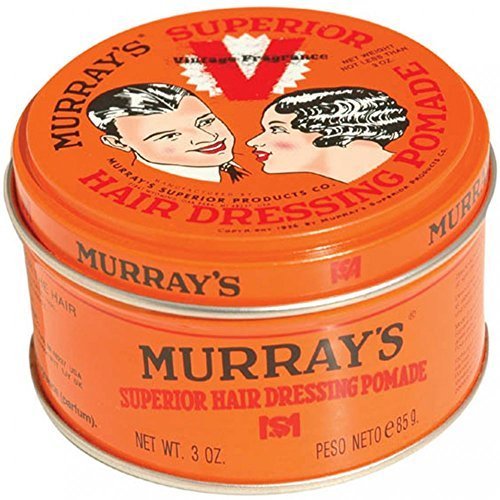
For styling products: Murray’s Pomade for defined wave looks, Mielle Organics Pomegranate and Honey Curl Smoothie for twist outs, and Wave Nouveau for looser curl definition. Avoid heavy greases that sit on the scalp and clog follicles along the freshly faded hairline.
Drop Fade With a Beard
The curved neckline flows naturally into a beard’s shape rather than creating a hard horizontal edge above it, which is why this cut pairs particularly well with beard styles.
For a full beard, the barber should connect the drop fade’s lowest point to the beard’s neckline cleanly. This typically means lining up the beard with the Andis T-outliner or BaByliss Pro GoldFX for precision at the jawline and under the chin.
For a short beard or stubble, a skin drop fade keeps the overall look tight. For a longer beard, a low or mid drop fade (rather than high) balances the volume of the beard with the sides. For beard style inspiration that pairs with fades, the Black men beard styles guide covers combinations by beard length.
Maintenance: How Often to Get a Drop Fade
Taken to skin, this cut looks its sharpest for the first 7 to 10 days. After 2 weeks, the grow-out becomes noticeable, particularly at the neckline and around the ears where the curved line sits lowest.
General maintenance schedules by finish:
- Skin/bald drop fade: Every 1 to 2 weeks for sharp maintenance
- Mid drop fade (#0.5 at shortest): Every 2 to 3 weeks
- Drop taper (#1 at shortest): Every 3 to 4 weeks
For home upkeep between barber visits, the best clippers for fades covers tools capable of maintaining a neckline cleanly. The Andis Master and Wahl Magic Clip are commonly recommended for at-home edge cleanup. The BaByliss Pro FX outliner handles the neckline detail work. Use a handheld mirror and a wall mirror together to see the back clearly.
How Much Does a Drop Fade Cost?
Pricing varies by city and shop, but general ranges in the US as of 2026:

- Budget barbershops: $20 to $30
- Mid-range shops: $30 to $50
- Premium barbershops in major cities: $50 to $80+
The cut typically costs $5 to $10 more than a standard fade at the same shop because of the additional skill involved in executing the curved line cleanly. Standard tipping is 15 to 20 percent on top of the service price.
Drop Fade vs. Burst Fade vs. Temple Fade
These three fades are often confused because they all involve fade lines that follow non-horizontal paths.
A burst fade radiates outward from behind the ear in a semicircular pattern, like a sunburst. A drop fade follows the natural curve of the head downward; the burst fade creates a more pronounced arc specifically around the ear.
A temple fade (also called a temp fade) fades specifically at the temple area, creating a tight, defined look at the hairline near the forehead without necessarily changing the fade height behind the ear. The former is about the back and sides; the temple fade is specifically about the front corners.
Many men combine a temple fade with a drop fade for a look that is clean at the front and curved at the back. Ask your barber for a “drop fade with a temp” if that is the look you want.
Frequently Asked Questions
Can a drop fade work on thin or fine hair? Yes. This cut is actually forgiving for thin hair because the fade line naturally draws the eye upward, toward the top where the hair has more volume. A low drop fade is the most conservative option for thin hair.
Does a drop fade work on locs? A shaved or very short sides with the loc’d top is a popular combination, but it is not technically a fade in the traditional sense since the top is locs rather than a blended gradient. Some barbers can taper the sides around locs; results depend on the loc thickness and the barber’s experience.

Is the drop fade suitable for job interviews or professional settings? A low drop fade or drop taper is professional in virtually any setting. A high skin drop fade is more expressive and may draw attention in conservative environments, though perceptions have shifted significantly in recent years.
What’s the difference between a drop fade and a skin fade? A skin fade describes how short the hair gets at its lowest point (to skin/bald). A drop fade describes the shape of the fade line (curved downward). A drop skin fade is both: a drop-shaped fade line that goes all the way to skin. More in the skin fade guide.
What’s the main difference between a drop fade and a regular fade?
A drop fade features a fade line that curves downward behind the ear and around the nape of the neck, rather than running straight across. This curved design follows your skull’s natural shape more closely and leaves more length on the sides and back, creating a cleaner, more intentional look.
Does the drop fade haircut work well with coarse or textured hair?
Yes, the drop fade works exceptionally well across all hair textures, including 4C hair and coarse textures. The curved neckline and varied fade heights actually complement textured hair better than standard fades, creating a more flattering silhouette.
What should I tell my barber when asking for a drop fade?
Describe the fade line as curving downward behind your ear toward the nape of the neck rather than staying at a consistent height. You can also specify the height variation you want (low, mid, or high drop) and whether you prefer a skin fade or taper version to ensure you get exactly what you’re looking for.
How often do I need to get a drop fade to maintain it?
You should visit your barber every 2 to 3 weeks to maintain a drop fade’s sharp appearance and defined lines. Regular maintenance keeps the curved fade line clean and prevents the style from growing out unevenly.