By Darius Washington, Black Men’s Grooming Editor
ASAP Rocky changed how braids on men get read. Around 2018, he showed up to a red carpet event with waist-length braids, gold cuffs scattered through them, and a designer outfit that made the whole thing look like it belonged in a museum. Braids were nothing new in the barbershop. But Rocky took braids out of the barbershop and put them on the runway. That shift mattered.
Before Rocky, braided hairstyles for men in hip-hop mostly meant Allen Iverson cornrows or maybe some short box braids. Rocky did not just wear braids. He styled them. He accessorized them. He grew them longer than anyone expected and made that length a statement. The result was that barbershops and braid salons across the country saw a wave of young Black men asking for “ASAP Rocky braids” by name.
This article covers Rocky’s complete hairstyle evolution from his early mixtape days through his current era. I break down every signature look, explain how to recreate each one, and give you the exact product list and braider conversation you need to walk out of the salon looking right. If you are thinking about braids or already wear them and want to switch up the style, this is your playbook.
ASAP Rocky’s Influence on Men’s Braided Hairstyles
To understand why ASAP Rocky’s braids matter, you have to understand the landscape before him. In the early 2010s, men’s braids in hip-hop were in a quiet period. The Allen Iverson era of cornrows had peaked in the early 2000s. Lil Wayne had shifted the conversation toward dreadlocks. Most rappers were either wearing short cuts, fades, or letting their natural hair grow into freeform styles.
Rocky came up out of Harlem with a fashion sensibility that pulled from high fashion, streetwear, and Black hair traditions simultaneously. He did not treat braids as just a hairstyle. He treated them as an accessory on par with his jewelry, his clothing, and his overall aesthetic. That approach changed how an entire generation of young Black men saw braided styles.
Breaking the “Feminine” Stigma on Long Braids
One of Rocky’s biggest contributions was normalizing very long braids on men. Before him, most men kept their braids relatively short, rarely extending past the shoulders. Rocky pushed the length to his waist and beyond. In doing so, he challenged the unspoken idea that long, decorated braids were exclusively a women’s style. Young men who wanted to grow their hair long suddenly had a blueprint. If one of the most respected names in hip-hop could wear waist-length braids with gold accessories and still carry himself with confidence, the style was open to anyone.
Braids as High Fashion
Rocky’s front-row presence at fashion shows for Dior, Gucci, and Calvin Klein put braids in front of an audience that had traditionally ignored Black hair culture. When he sat front row at Paris Fashion Week with immaculately maintained braids, he was not just attending fashion. He was making a statement that Black hairstyles belong in those spaces. Fashion editors, designers, and stylists took notice. Braids started appearing on runways. Editorial shoots began featuring braided styles on male models. Rocky was a significant catalyst for that shift.
The Cultural Weight
Braids carry deep cultural significance in Black communities. They are protective styles rooted in African traditions that date back thousands of years. Cornrows, in particular, were used as maps, status symbols, and cultural identifiers in various African societies. When Rocky wears braids on global platforms, he is bringing that history into contemporary spaces, even if the audience does not always recognize the depth behind the aesthetic. For many Black men who grew up getting their hair braided by mothers, aunties, and neighborhood braiders, seeing that tradition celebrated at the highest levels of fashion and music hits differently.
His Braid Evolution: A Complete Timeline
Rocky’s hair journey spans over a decade and covers more styles than most men try in a lifetime. Here is the full timeline, broken down by era.

2011 to 2012: The Mixtape Era (Cornrows and Short Braids)
When ASAP Rocky first broke onto the scene with his Live.Love.A$AP mixtape in 2011, he was mostly wearing straight-back cornrows. Simple, clean, classic. The braids were tight, the parts were sharp, and the lineup was always fresh. This was Harlem barbershop culture at its most straightforward. Nothing flashy. Just well-executed cornrows that showed he took his grooming seriously.
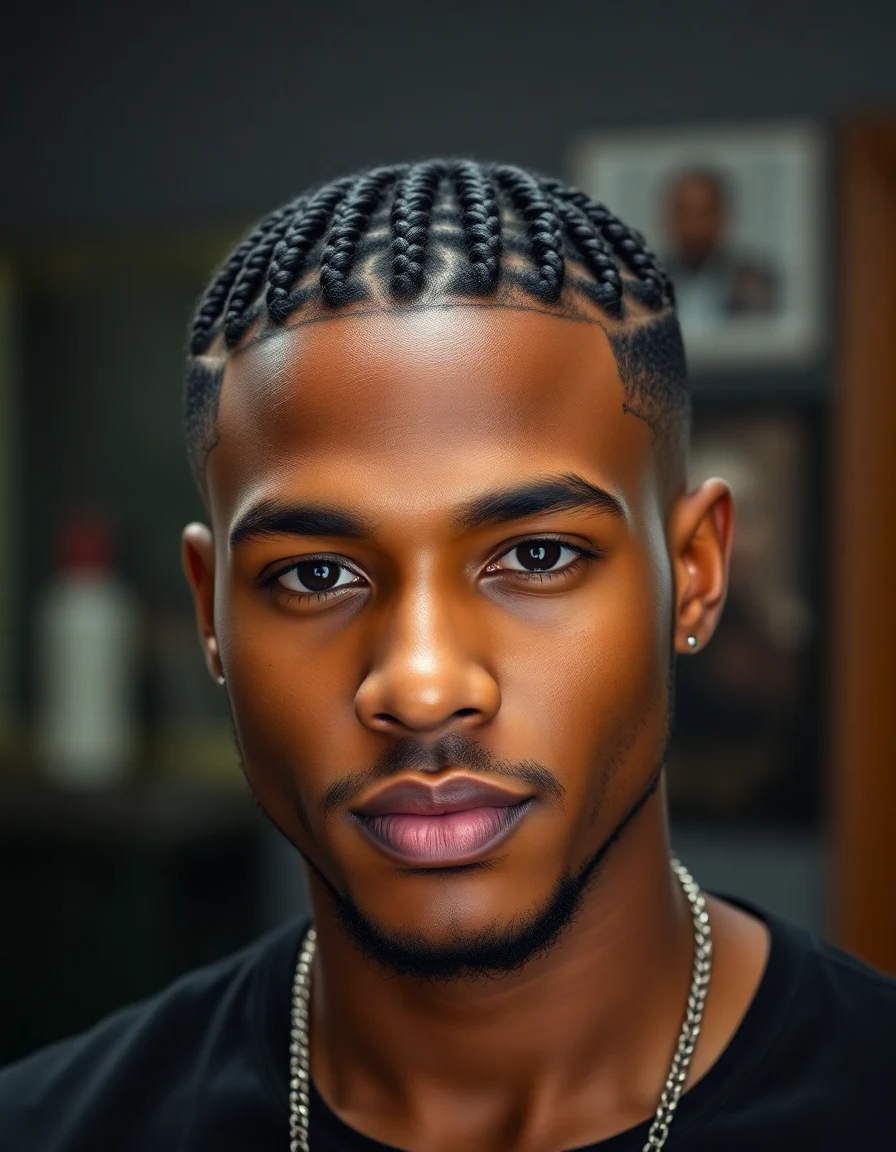
During this period, he also experimented with shorter box braids, sometimes with the braids pulled back or left to hang just past his ears. The look was understated compared to what would come later, but it established braids as his default hairstyle rather than something he rotated in and out.
2013 to 2015: The Long.Live.A$AP to A.L.L.A. Era (Growing It Out)
With his debut album Long.Live.A$AP in 2013 and follow-up At.Long.Last.A$AP in 2015, Rocky started pushing his braid length. This was the transitional period. The braids got longer, the styles got more varied, and he began adding subtle details like colored extensions and different parting patterns. He moved beyond basic straight-backs and started incorporating diagonal parts, curved rows, and varying braid thicknesses within the same style.
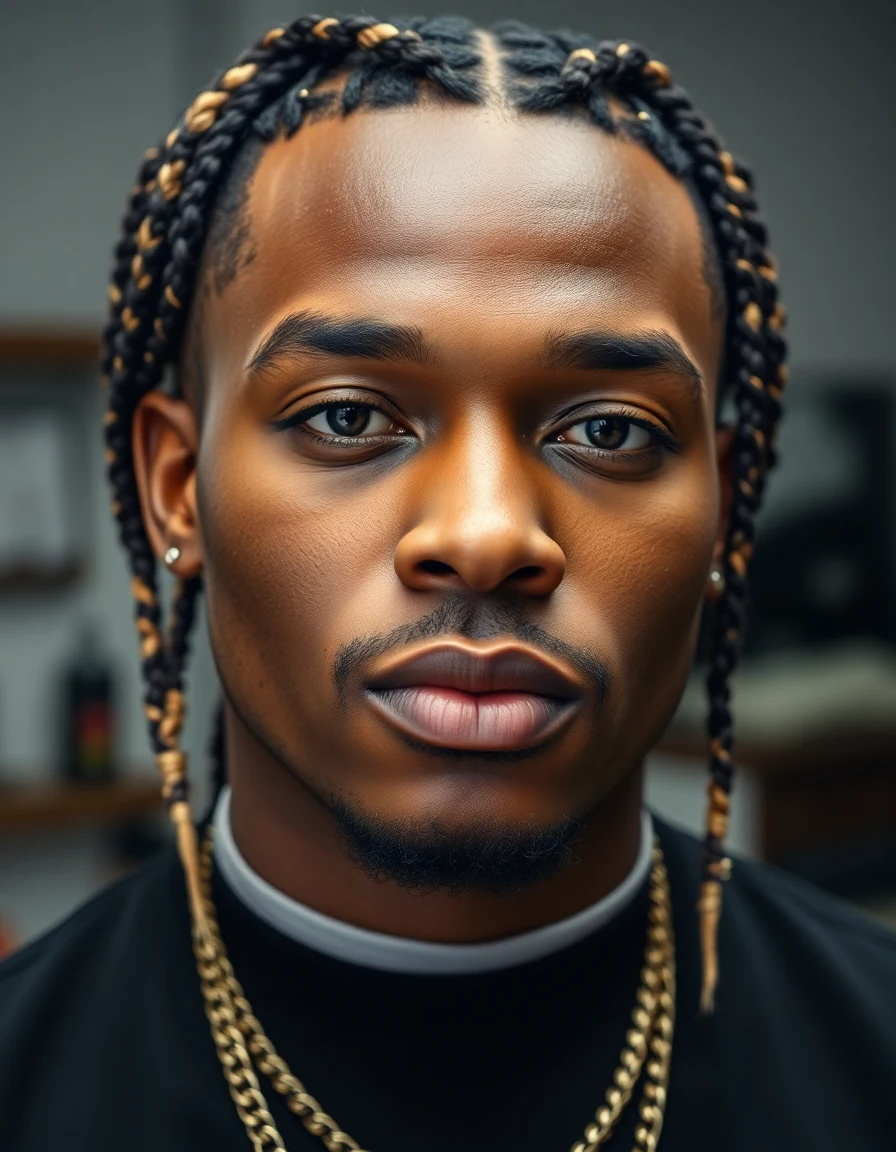
This era also saw him alternate between cornrows and box braids more frequently, sometimes switching styles between appearances in the same week. He was clearly experimenting with what worked for different settings. Cornrows for performances. Box braids for fashion events. That versatility became part of his brand.
2016 to 2018: The Fashion Icon Transition (French Braids and Pigtails)
This is when Rocky broke the mold entirely. Around 2016 and into 2017, he started wearing his braids in two long French braid pigtails. Two thick plaits hanging past his shoulders, sometimes with a center part, sometimes with a slight side part. The style was bold. It was polarizing. And it was everywhere.
The two-braid look became his most recognizable hairstyle during this period. He wore it to the Met Gala. He wore it in music videos. He wore it walking through airports. The pigtails gave him a silhouette that was instantly recognizable, even from a distance. For a generation of young men who followed his style, this was the look that inspired them to walk into a braid salon and ask for something they had never tried before.
2018 to 2021: The Long Braid Statement (Waist-Length Box Braids)
By 2018, Rocky had fully committed to extremely long braids. We are talking waist-length or longer. These were box braids with extensions, and they were styled with intention. Gold cuffs. Silver rings. Beads at the ends. Wraps at intervals. Every public appearance featured braids that looked like they had been freshly done, which means he was maintaining them rigorously or getting them redone frequently.
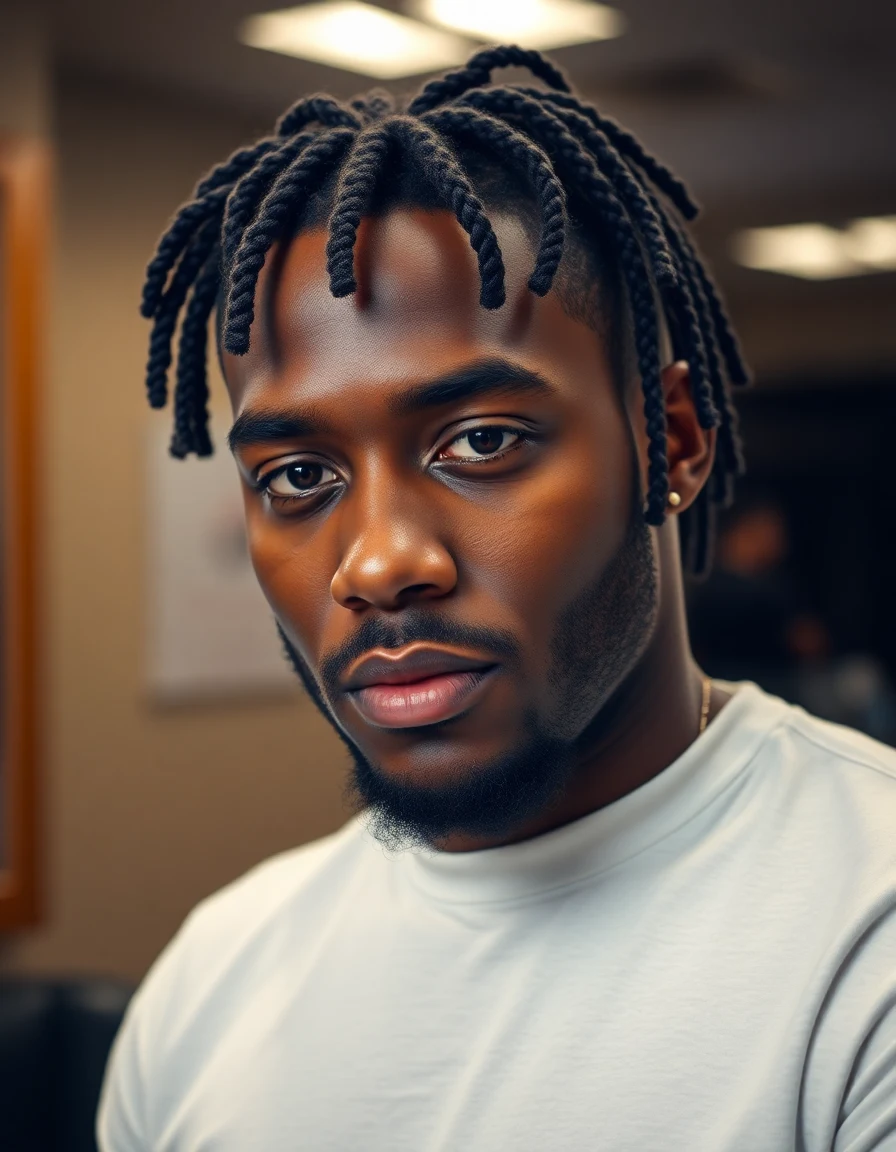
This era cemented the “ASAP Rocky braids” as a specific look in barbershop vocabulary. When men walked into salons asking for his style, braiders knew exactly what they meant: long, thick or medium box braids with accessories, usually with a center part. The braiding hair market saw a surge in demand for longer packs specifically because of this trend.
2022 to 2024: Refinement and Variation
In more recent years, Rocky has continued to evolve his braided looks while keeping the long length as his baseline. He has been spotted with micro braids, feed-in braids with intricate patterns, braids with color accents (burgundy, blonde, and caramel highlights woven through black braids), and cornrow patterns that feed into a ponytail or gathered style at the back.
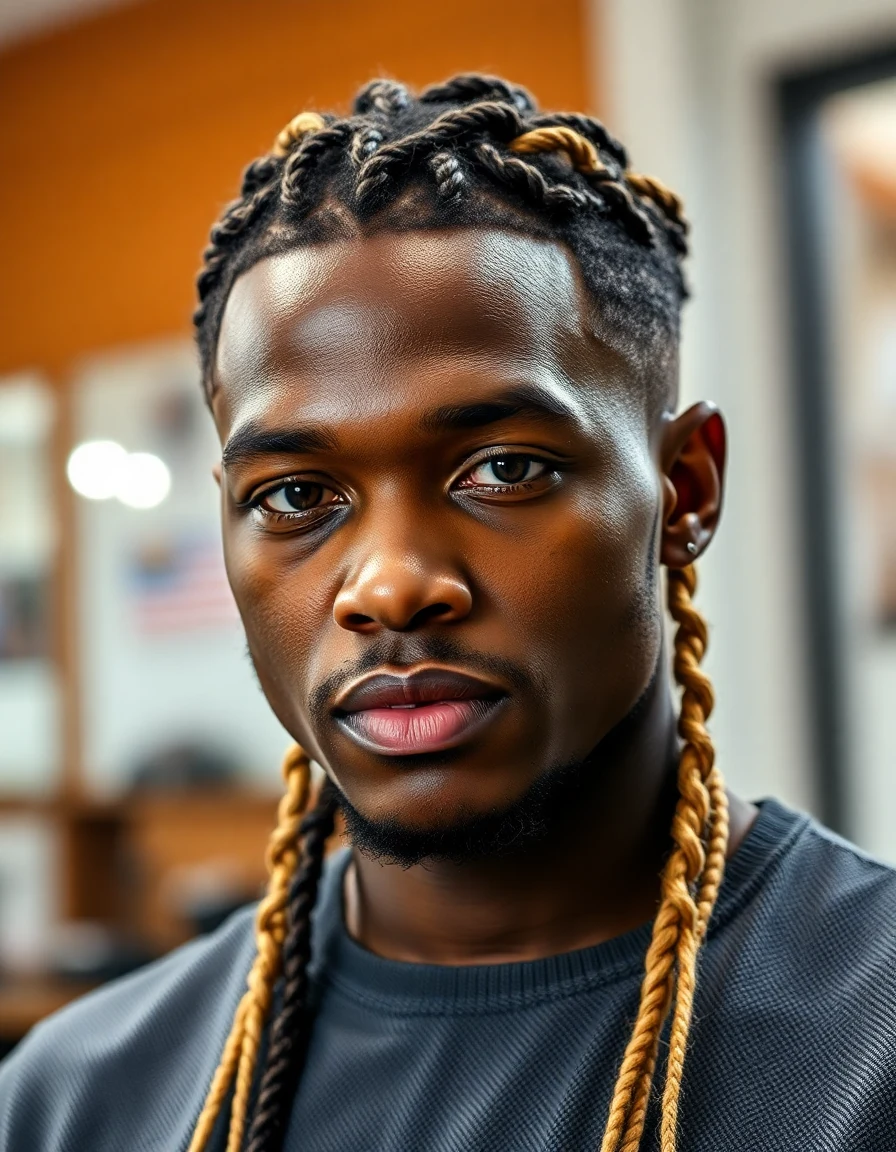
He has also played with the line between braids and other protective styles, occasionally rocking twisted styles or hybrid looks that combine elements of cornrows and box braids in a single installation. The accessories have evolved too. Shell beads, leather wraps, and metallic thread have all appeared alongside the gold cuffs from earlier years.

2025 to Present: The Current Look
As of early 2026, Rocky continues to wear braids as his primary hairstyle. His current look leans toward long box braids, sometimes pulled back, sometimes styled freely. The braids remain a central part of his identity as a fashion figure. With his ongoing presence at fashion weeks and his relationship with Rihanna keeping him in the public eye, his hair continues to set trends. Recent appearances show him favoring clean, unadorned braids with a focus on the braid quality itself rather than heavy accessorizing.
Breakdown of Each Signature Style
Let me break down each of Rocky’s major braid styles so you can understand the technique, the length requirements, and the maintenance involved in each one.
Style 1: Straight-Back Cornrows
Era: 2011 to 2013 (and revisited throughout his career)
Difficulty: Moderate
Time in Chair: 1 to 2 hours
Minimum Hair Length: 3 inches
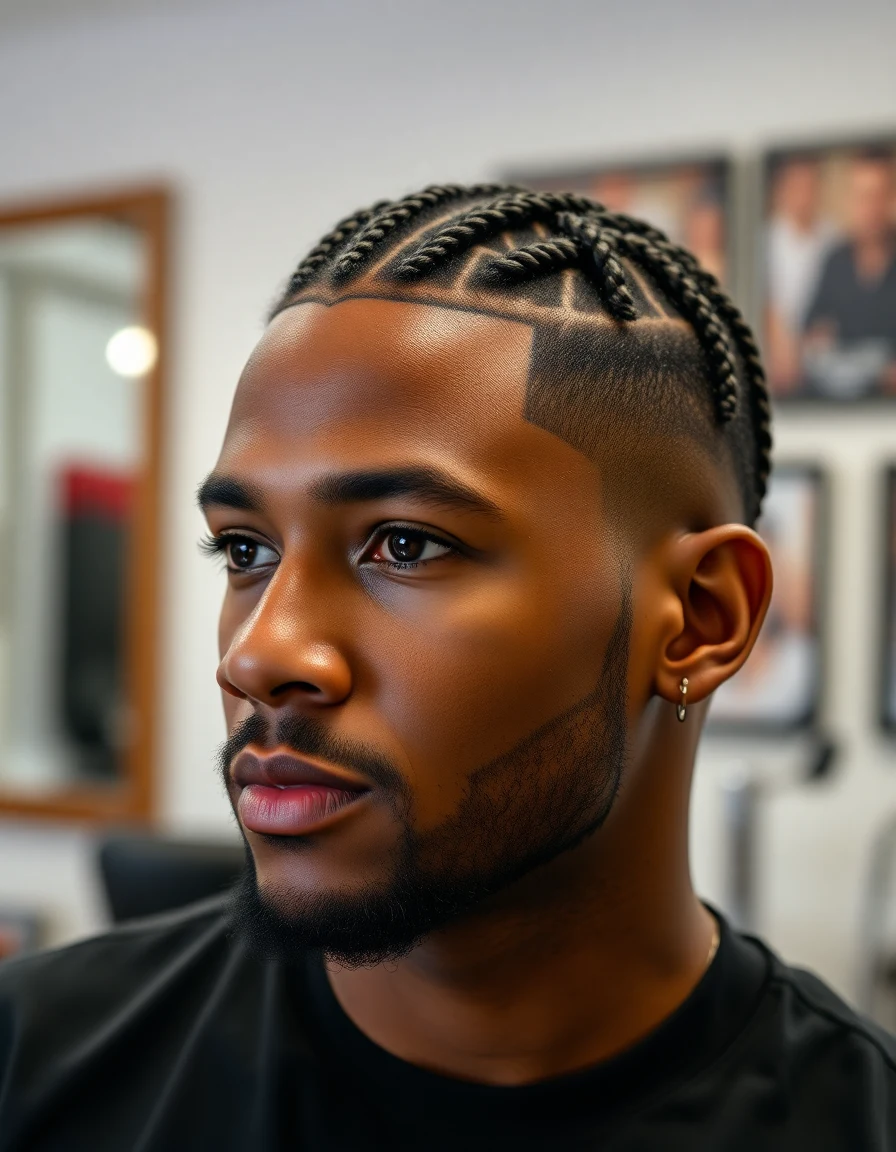
This is the foundation style. Straight rows running from the forehead straight back to the nape. Rocky’s version was always clean. Tight braids, no flyaways, sharp parts, and a crisp lineup. The key to this look is precision in the sectioning. Each row should be the same width, and the parts between rows should be razor-straight.
For this style, you do not necessarily need extensions. If your natural hair is at least three inches long, a skilled braider can work with what you have. The look is close to the head, low-maintenance compared to longer styles, and works in professional settings where longer braids might draw unwanted attention.
What to tell your braider: “Straight-back cornrows, even spacing, medium-width rows. I want clean straight parts and a tight braid. No design, just classic straight-back.”
Style 2: French Braid Pigtails (Two Braids)
Era: 2016 to 2018
Difficulty: Easy to moderate
Time in Chair: 30 minutes to 1 hour (with extensions, up to 2 hours)
Minimum Hair Length: 4 inches (6+ inches for no extensions)
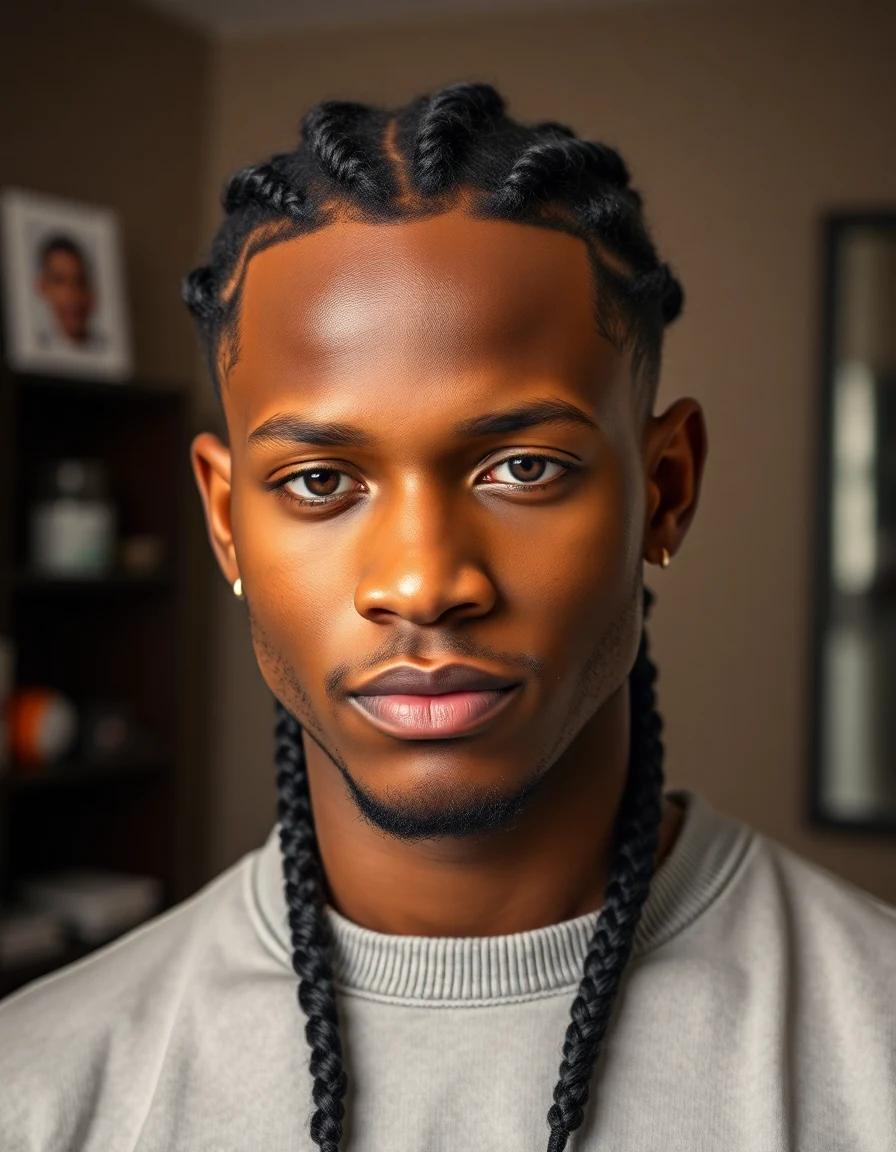
Two thick French braids, one on each side of a center part, braided from front to back and allowed to hang freely past the shoulders. Rocky’s version used extensions to get the length and thickness, with each braid being roughly two inches in diameter. The center part was always clean and defined.
This is one of the easier styles to maintain because there are only two braids to manage. Less sectioning means less potential for frizz and fewer edges to keep tamed. The tradeoff is that the style is bold. Two long braids hanging down make a strong visual statement, which is exactly what Rocky intended.
What to tell your braider: “Two French braids, center part, I want them thick and long, past my shoulders. Feed in some extensions for length and fullness. Keep the braids chunky, not thin.”
Style 3: Long Box Braids (The Signature)
Era: 2018 to present
Difficulty: Low (for the client; high skill for the braider)
Time in Chair: 4 to 8 hours
Minimum Hair Length: 4 inches (extensions required for full length)
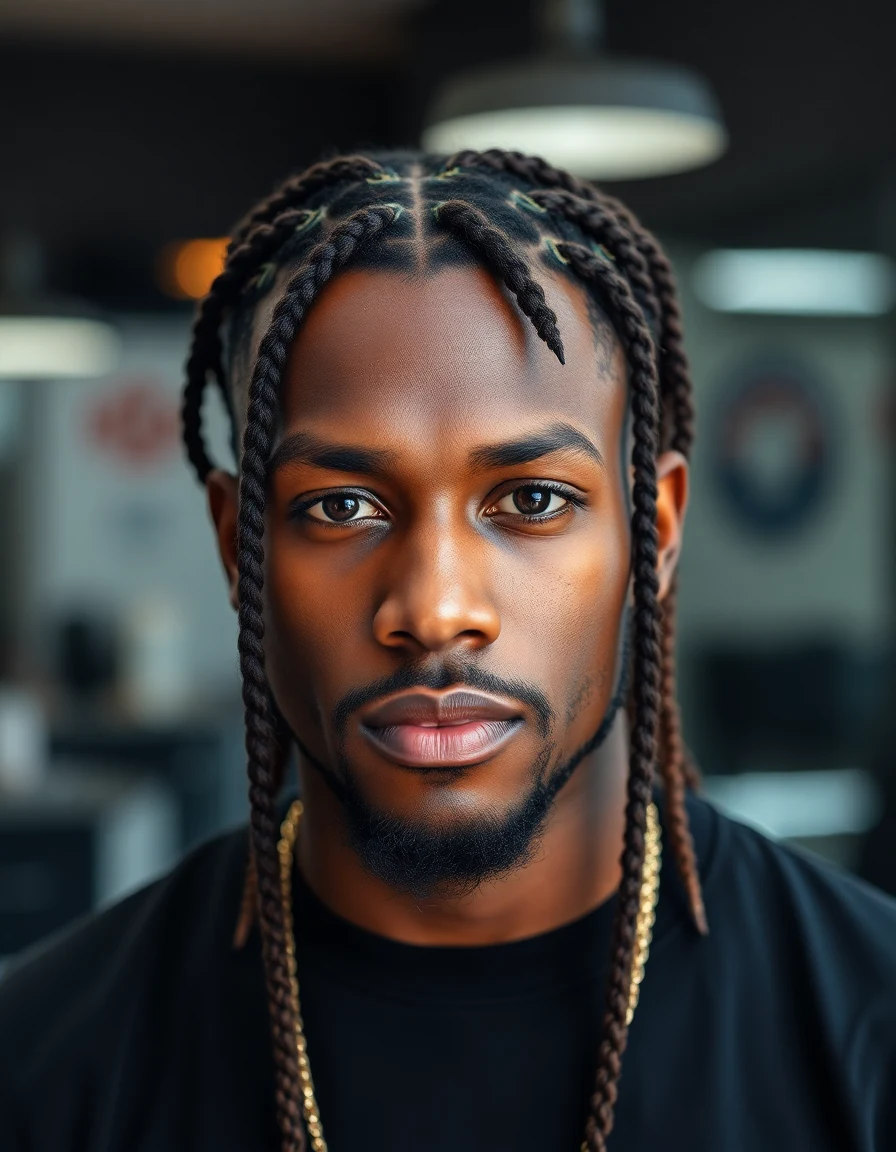
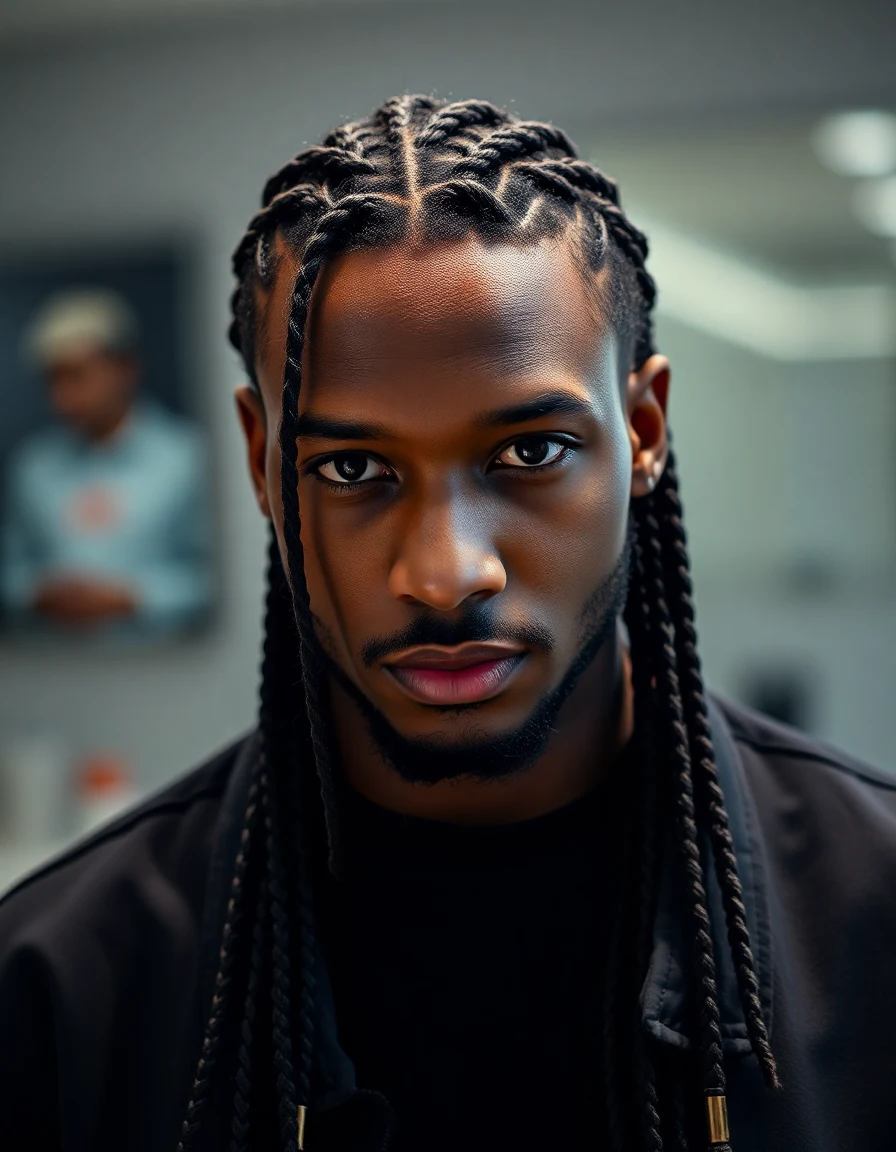
This is the look. Long box braids extending to the waist or below, with a center part and the braids hanging freely. Rocky typically wears medium-width box braids, not pencil-thin micro braids and not jumbo-thick braids. The medium width gives a balance between fullness and movement. The braids swing when he moves, which is part of the visual appeal.
To recreate this style, you need good braiding hair. X-pression Ultra Braid is the go-to for most braiders because of its texture, weight, and durability. Plan on buying six to ten packs depending on the desired fullness and your head size. The braids should all be roughly the same thickness, and the box-shaped sections at the scalp should be uniform.
Accessories are optional but encouraged. Gold braid cuffs, available at most beauty supply stores, slide onto individual braids and clamp in place. Rocky scatters them randomly throughout rather than placing them in a symmetrical pattern. That intentional randomness is part of the style.
What to tell your braider: “Medium box braids, waist length, center part. I want uniform box sections, consistent braid thickness all the way down. I’ll add cuffs and beads after. Use X-pression or similar quality braiding hair.”
Style 4: Micro Braids
Era: 2022 to 2023
Difficulty: Low for the client; extremely high skill and time for the braider
Time in Chair: 8 to 14 hours (often split across two sessions)
Minimum Hair Length: 3 to 4 inches
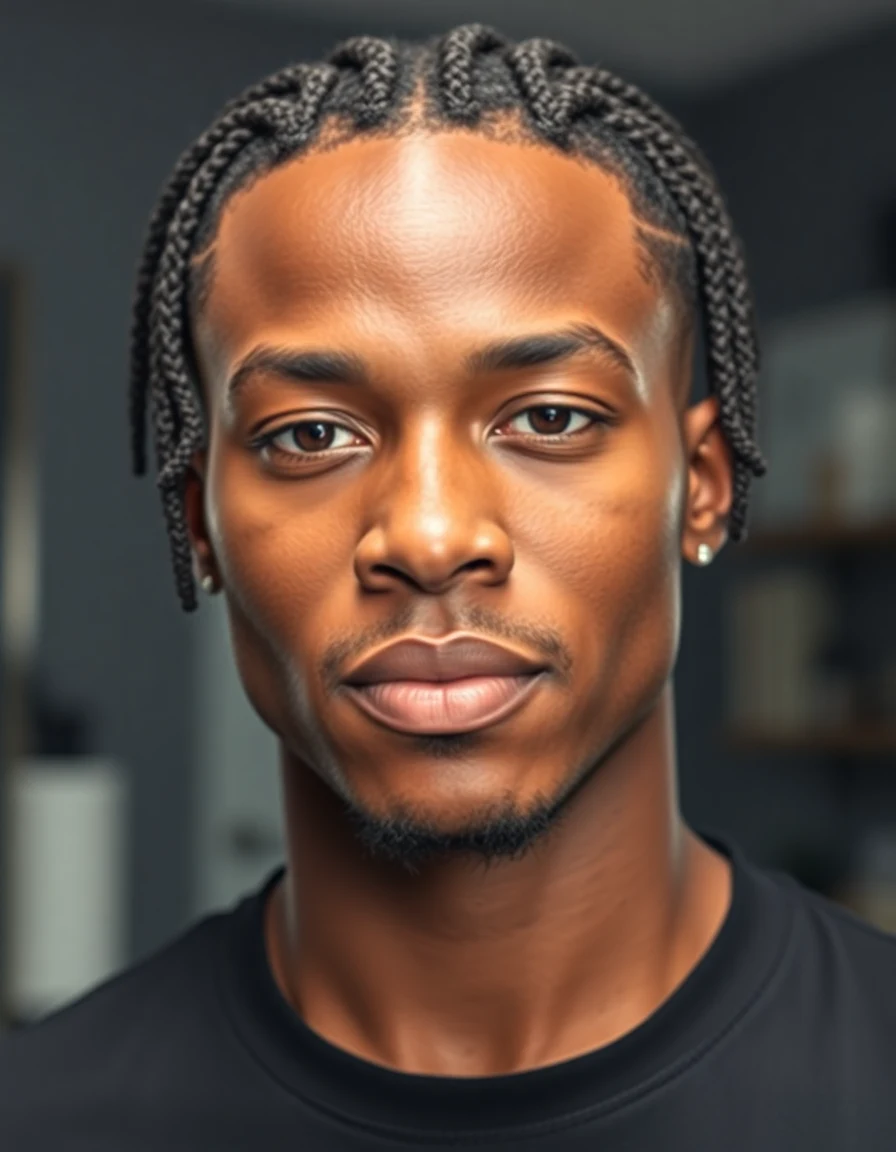
Micro braids are pencil-thin or thinner, creating a look that is almost like having loose hair because of how much movement and flow the tiny braids allow. Rocky’s micro braid appearances showed braids that fell across his face, moved with the wind, and created a texture that was completely different from his chunkier box braids.
The reality of micro braids is that they take a very long time to install. We are talking eight hours minimum for a full head, and some braiders split the job across two days. They also require a highly skilled braider because the small sections put more tension on each follicle. Done poorly, micro braids can cause traction alopecia. Done right, they last six to eight weeks and look incredible.
What to tell your braider: “Micro braids, pencil-thin, I want a lot of them. Full length, at least past my collarbone. Keep the sections small and the tension even. I want them to move like loose hair.”
Style 5: Braids with Color Accents
Era: 2022 to present
Difficulty: Same as the base braid style
Time in Chair: Same as base style plus 30 minutes for color placement
Minimum Hair Length: Same as base style
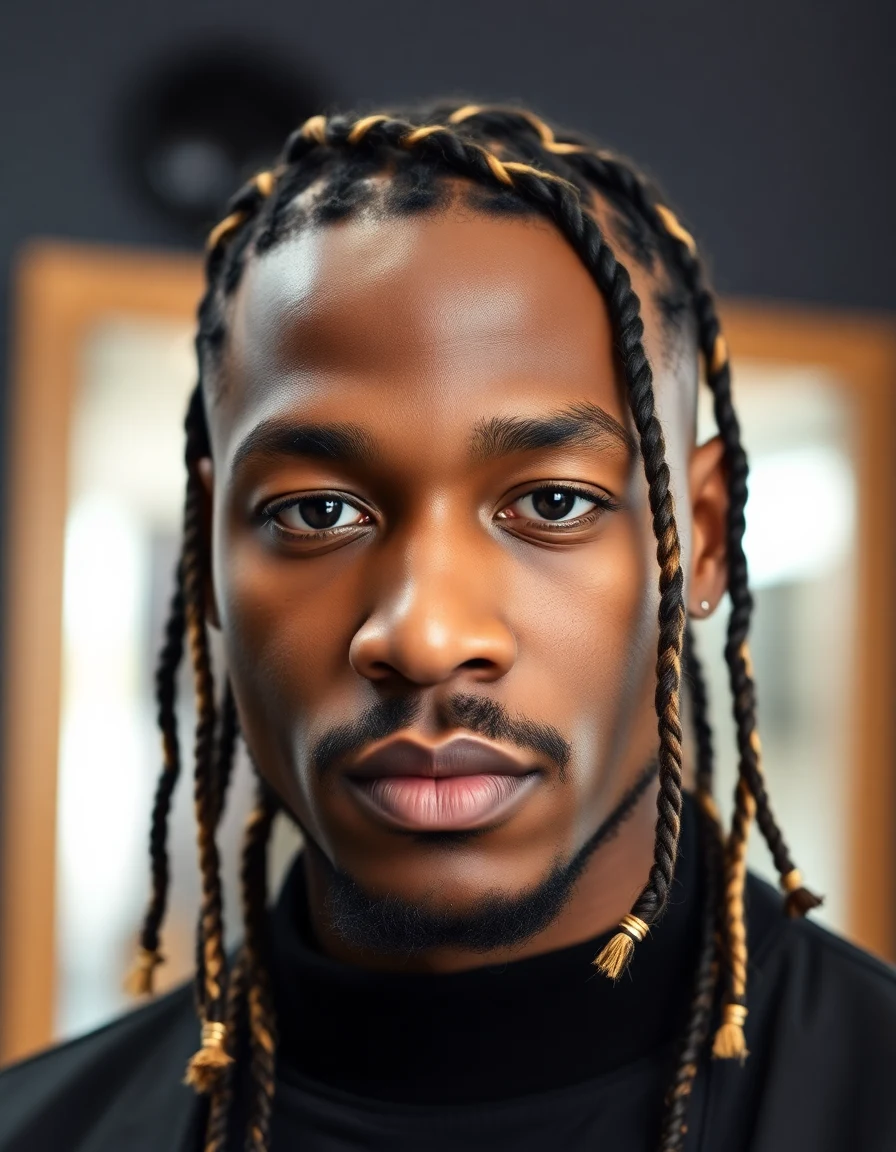
Rocky has incorporated color into his braids by using colored extension hair mixed with black hair. The colors are not uniform. He places burgundy, blonde, or caramel braids at random intervals throughout the style, creating a scattered highlight effect. This is not hair dye. It is colored braiding hair. That distinction matters because it means zero chemical damage to your natural hair.
To get this look, buy two to three packs of colored braiding hair in addition to your black packs. Tell your braider where you want the color placed, or let them scatter it randomly for a more organic look. The color braids blend in when the hair is together but pop when individual braids separate during movement.
What to tell your braider: “Same box braids as usual, but I want some color mixed in. I brought burgundy [or blonde, or caramel] packs. Scatter them randomly throughout, maybe every eighth or tenth braid. I don’t want a pattern, just random color pops.”
Style 6: Cornrows with a Fade
Era: Revisited periodically throughout his career
Difficulty: Moderate
Time in Chair: 2 to 3 hours (braids plus barber visit)
Minimum Hair Length: 3 inches on top
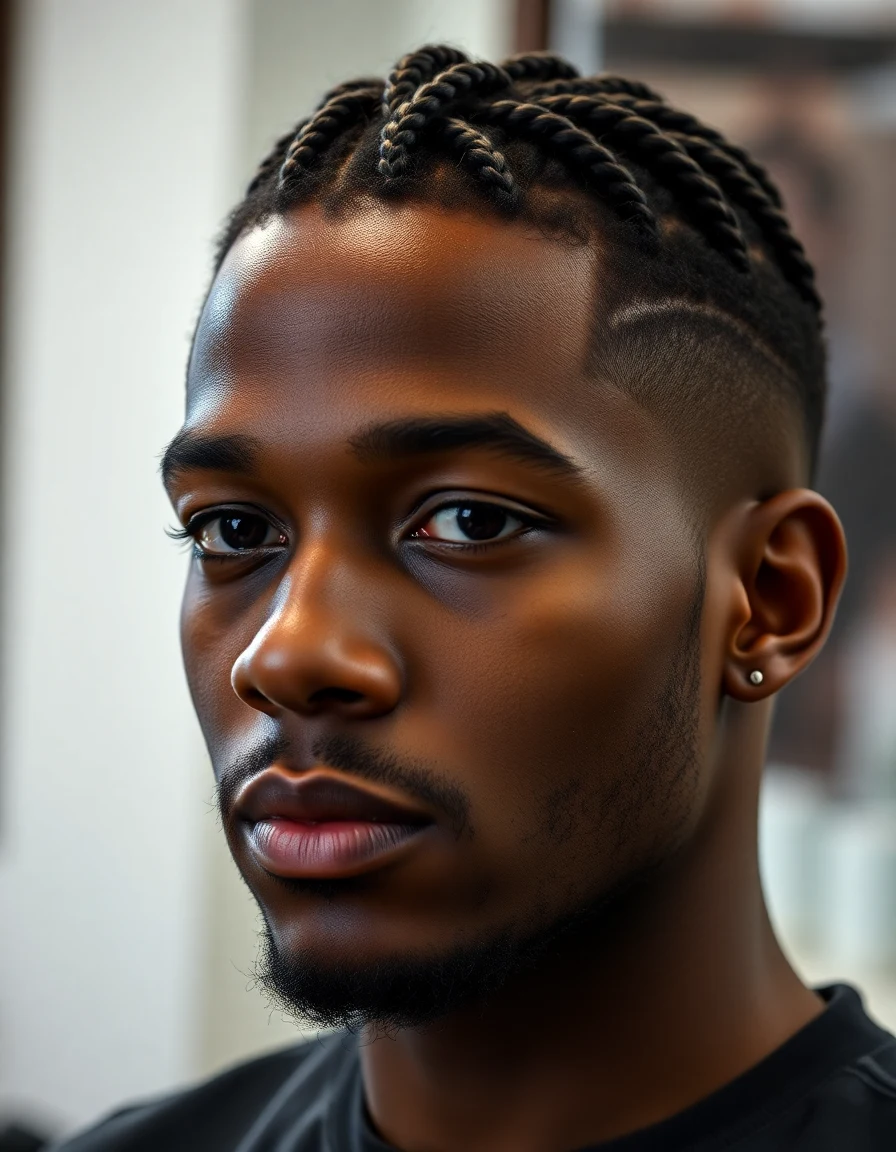
For a cleaner, more structured variation, Rocky has occasionally paired cornrows on top with a fade on the sides. This hybrid look keeps the braided texture where it is most visible while maintaining a sharp, polished silhouette on the sides and back. It works well for men who want the braided look without the full commitment of all-over braids.
This style requires two appointments: one with your braider for the cornrows and one with your barber for the fade. Some shops have braiders and barbers working together, which makes it easier to coordinate the transition between braided and faded sections. The key is making sure the lowest cornrow blends cleanly into the start of the fade.
What to tell your barber and braider: “I want cornrows on top, maybe six to eight rows, feeding back. Then a high fade on the sides that blends into where the braids start. I need the braider to leave space for the fade, and I need the barber to blend up to the braid line.”
How to Get ASAP Rocky-Style Braids
Getting the look right starts before you sit in the chair. Here is the full process from growing your hair out to walking out of the salon.
Step 1: Grow Your Hair Out
Most of Rocky’s braided styles require at least four inches of natural hair to anchor extensions securely. If you are starting from a fresh cut, that is roughly six to eight months of growth for most men. During the growing phase, focus on moisture retention and protective styling. Our guide on how to grow 4C hair covers everything from washing frequency to nighttime protection. The goal is to retain length, not just grow it. Breakage is the enemy.
If you have longer hair already, you are ahead of the game. Just make sure your hair is healthy. Dry, damaged hair does not hold braids well and can break during the braiding process.

Step 2: Wash and Prep
Always go to your braid appointment with freshly washed, conditioned, and detangled hair. Use a sulfate-free shampoo designed for 4C hair and follow with a good leave-in conditioner. Detangle section by section with a wide-tooth comb. Braiding on clean, conditioned hair reduces scalp irritation during the weeks you wear the style and gives the braider a better grip.
Do not apply heavy oils or butters before braiding. They make the hair slippery and cause braids to loosen faster. A lightweight leave-in is all you need.
Step 3: Buy Your Braiding Hair
For Rocky’s long box braids, buy six to ten packs of braiding hair. X-pression Ultra Braid is the most popular choice and the one most braiders prefer. It comes pre-stretched in many cases, holds well, does not tangle easily, and is affordable at $3 to $6 per pack. For micro braids, you may need twelve to fifteen packs because more hair is distributed across more braids.
If you want a softer, more natural feel, Sensationnel Ruwa Pre-Stretched braiding hair is a step up in quality. It has less synthetic sheen and feels closer to natural hair. The price is slightly higher, but buyers consistently report that it is worth the upgrade for comfort and appearance.
Step 4: Find the Right Braider
This is not a “walk into any shop” situation. Find a braider who specializes in the specific style you want. For box braids, look at their portfolio on Instagram or ask to see photos of previous work. Pay attention to:
- Consistent braid thickness from root to tip
- Clean, uniform box sections at the scalp
- Smooth braids without bumps or loose strands
- Client reviews mentioning comfort (no headaches, no excessive tightness)
A good braider will also know how to manage tension. Braids that are too tight cause traction alopecia, which means permanent hair loss at the hairline and temples. You should feel snug, not pain. If it hurts, speak up immediately.
Step 5: Communicate Clearly
Bring reference photos. Multiple angles if possible. Screenshot ASAP Rocky photos that show the specific era or style you want. Show the braider the length, the thickness, the parting, and any accessories. The more visual references you provide, the closer the result will be to what you envision.
Also discuss:
- Braid length (waist, mid-back, collarbone)
- Braid thickness (micro, small, medium, jumbo)
- Parting pattern (center, side, zigzag)
- Accessories (cuffs, beads, wraps, color)
- How you plan to style them (hanging free, pulled back, half up)
Products You Need for Braided Styles
You do not need twenty products. You need the right five or six, used consistently. Here is what keeps braids looking fresh from week one through week six.
Scalp Moisturizer
Your scalp dries out under braids because the braids reduce the natural oil distribution that happens when you brush or manipulate your hair. A lightweight scalp oil prevents itching, flaking, and that tight, dry feeling.

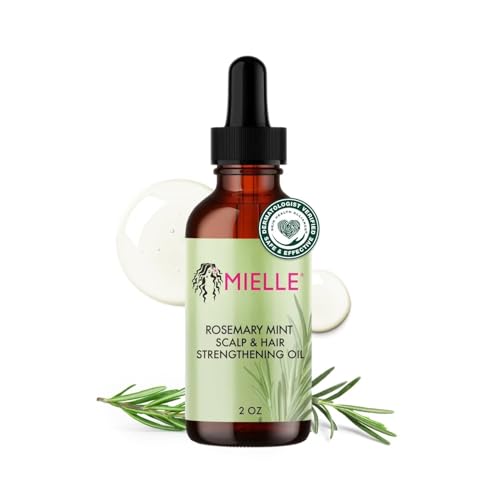
Mielle Rosemary Mint Scalp Oil is my top recommendation. The rosemary and mint combination stimulates blood flow to the scalp while the oil moisturizes. Apply it every other day along the parts between your braids. A few drops per part, rubbed in gently with your fingertips.
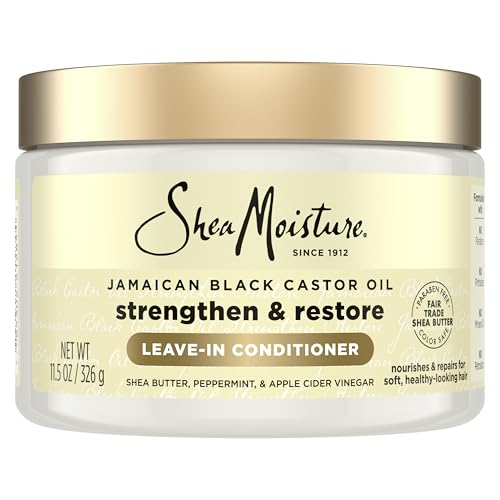
SheaMoisture Jamaican Black Castor Oil is a heavier option for men with very dry scalps. It provides deeper moisture but should be used sparingly to avoid buildup. Once or twice a week is enough.
Edge Control
Even the best braids look unfinished without clean edges. Edge control keeps the baby hairs along your hairline and temples laid smooth and defined.
Design Essentials Natural Honey and Shea Edge Tamer holds all day without flaking. It has a medium hold that keeps edges in place without making them look crunchy or stiff. Apply a small amount with a soft-bristle edge brush every morning or whenever you retie your durag.
Eco Styler Olive Oil Gel is the budget-friendly alternative. It provides strong hold and works well for edges, though it can flake in humid conditions. For most men, Design Essentials is the better investment.
Leave-In Conditioner
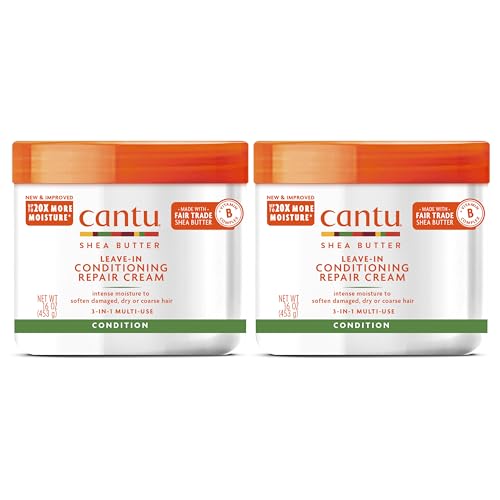
Cantu Shea Butter Leave-In Conditioner is a staple for pre-braid prep and mid-wear refreshing. Before braiding, use it to detangle and add moisture. While wearing braids, spray a diluted version (mix with water in a spray bottle) onto the braids every few days to keep the natural hair inside the braids from drying out.
Mousse for Flyaways
After the first week, you will start to see fuzzy new growth and flyaway hairs along the parts. A lightweight mousse smooths these down without making the braids stiff. Apply a small amount along the parts, smooth with your fingers, and tie a durag for 15 minutes to set.
Braid Gel or Wax (For Cornrow Styles)
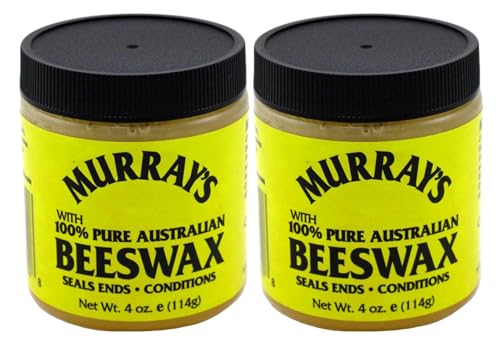
If you are going the cornrow route rather than box braids, Jamaican Mango and Lime Locking Gel provides the grip your braider needs to create smooth, tight rows. Murray’s Beeswax is a classic alternative that gives even more hold, though it is heavier and harder to wash out. For 4C hair specifically, the locking gel is the better choice because it works with the coil pattern rather than weighing it down.
Silk or Satin Durag
Non-negotiable. Sleep in a silk or satin durag every single night. Cotton pillowcases create friction that unravels braids, dries out your hair, and causes frizz. The durag compresses the braids against your head, prevents them from tangling while you sleep, and keeps the edges smooth. This one habit determines whether your braids last three weeks or six.
Maintenance and Care Guide
Getting braids is the easy part. Maintaining them is where most men drop the ball. Here is the week-by-week routine.
Week 1: The Settling Period
New braids feel tight. This is normal for the first two to three days. If you experience actual pain, persistent headaches, or see small white bumps along the parts, the braids are too tight and should be loosened by your braider. Do not tough it out. Excessive tension causes permanent hair loss.
During week one, your braids will look their freshest. Enjoy it. All you need to do is oil your scalp every other day and sleep with your durag.
Weeks 2 to 3: Active Maintenance
By week two, you will see some new growth at the roots and possibly some frizz along the parts. This is normal. Address it with:
- Scalp oil every other day (Mielle Rosemary Mint or similar)
- Edge control on the hairline every morning
- Mousse on frizzy parts as needed
- Durag every night, 15 to 20 minutes in the morning to reset
If you are working out regularly, the sweat will cause faster frizzing and more scalp buildup. Use a diluted apple cider vinegar rinse (one part ACV to four parts water) once a week, applied with a spray bottle along the parts. It cleans the scalp without disturbing the braids.
Weeks 4 to 6: Decision Time
By week four, you will notice significant new growth, looser braids at the hairline, and general frizz throughout. You have two options:
- Touch-up: Have your braider redo the front two to three rows and the edges. This extends the overall style by another two weeks without the time and cost of a full reinstall.
- Take them out and redo: If the braids are past their prime everywhere, it is time for a full removal and fresh set. Do not leave braids in past eight weeks. Extended wear causes matting, tangling, and potential hair damage.
How to Wash Braids
You can wash your braids, and you should. After two to three weeks, scalp buildup needs to be addressed. Here is the method:
- Mix a gentle, sulfate-free shampoo with water in a spray bottle or use a foam pump applicator
- Apply directly to the scalp along the parts
- Massage gently with your fingertips. Do not scrub the braids themselves
- Rinse by letting warm water flow down through the braids. Do not bunch them up
- Squeeze each braid gently from root to tip to remove excess water
- Air dry completely. Do not go to sleep with wet braids; they can develop mildew
Removing Braids Safely
When it is time to take them out, use a detangling spray or conditioner to soften each braid before unraveling. Cut the extension hair at the point where your natural hair ends (you can feel the transition). Then unravel from the bottom up. Never rip braids out. Detangle each section with your fingers before moving to a wide-tooth comb. Follow the removal with a deep conditioning treatment to restore moisture to your natural hair.
What to Know Before Your First Braid Session
If you have never gotten braids before, walking into a salon can feel intimidating. Here is what to expect and how to prepare.
The Time Commitment is Real
Simple cornrows take one to two hours. Long box braids take four to eight hours. Micro braids can stretch to twelve or more hours. Come prepared. Charge your phone, bring headphones, eat beforehand, and understand that braiding is a physical process that requires you to sit relatively still for extended periods. A good braider will give you breaks, but the bulk of the time is seated.
It Should Not Hurt
Tightness at the root is expected for the first day or two. Pain is not. If you feel sharp pulling, burning at the edges, or develop a headache within the first hour, tell your braider immediately. They can adjust the tension. Too-tight braids are the leading cause of traction alopecia in men who wear braided styles regularly. Protecting your hairline is more important than any aesthetic preference.

Your Hairline Matters More Than the Style
A skilled braider will assess your hairline before starting. If you have a receding hairline, thin edges, or previous damage from tight styles, the braider should adjust the approach. This might mean starting the braids slightly further back from the hairline, using less tension at the temples, or recommending a style that puts less stress on vulnerable areas. If a braider ignores these considerations, find a different braider.
Hair Length and Texture Affect the Outcome
The same braid style looks different on different hair textures. 4C hair holds braids the tightest and longest. 3C and looser textures may experience more slippage at the roots and need tighter sections. Very fine or thin hair may not support heavy extensions without tension damage. Be honest with your braider about your hair’s characteristics. They can adapt the technique accordingly.
If your hair is not long enough yet, refer to our 4C hair growth guide or our afro growing guide for the most effective length-retention strategies.
Tipping Etiquette
Braiders spend hours on your hair. A standard tip is 15 to 20 percent of the service cost. For a $200 box braid installation, that is $30 to $40. If your braider did an exceptional job, took extra time to perfect the style, or accommodated a last-minute request, tip above 20 percent. Braiding is skilled labor that takes a physical toll on the braider’s hands, wrists, and back. Respect that.
Aftercare Starts Immediately
Before you leave the salon, your braider should give you aftercare instructions. If they do not, ask. At minimum, you need to know: when you can wash, what to put on your scalp, and how to sleep. The answers should align with the maintenance guide above. If they contradict it, ask why. Different techniques may require different aftercare approaches.
Why Celebrity Braid Trends Matter for Black Men
There is a broader conversation here that goes beyond one rapper’s hairstyle. When Black celebrities wear braids on global stages, they normalize a hairstyle that Black men have been penalized for in workplaces, schools, and public spaces. The CROWN Act (Creating a Respectful and Open World for Natural Hair) exists because Black people were fired, suspended from school, and denied opportunities specifically because of braided and natural hairstyles. As of 2026, the CROWN Act has been passed in over 20 states, but it is not federal law.
Rocky wearing braids at the Met Gala does not fix systemic discrimination. But visibility matters. When a generation of young Black men see braids celebrated rather than stigmatized, it shifts the cultural conversation. When fashion editors praise the same hairstyles that school administrators penalized, the hypocrisy becomes harder to ignore. That is the context behind every ASAP Rocky braid article, whether the author acknowledges it or not.
Frequently Asked Questions
What type of braids does ASAP Rocky have?
ASAP Rocky has worn nearly every major braid style throughout his career. His most iconic looks include long waist-length box braids, straight-back cornrows, two French braid pigtails, micro braids, and cornrows with faded sides. His current signature is long box braids that extend past his waist, often accessorized with gold cuffs and beads. The specific style changes between albums, tours, and fashion appearances, but long braids with a center part have been his most consistent look since around 2018.
How long does your hair need to be for ASAP Rocky-style braids?
For his short cornrow looks, you need a minimum of three inches of natural hair. For his long box braids and French braid styles, you need at least four to six inches of your own hair to serve as an anchor, plus braiding extensions to reach the full length. Most men use Kanekalon or X-pression braiding hair to add length. If you are starting from a short cut, expect six to twelve months of growth before you have enough hair for a long braided style with extensions.
How long do ASAP Rocky-style braids last?
Cornrow styles typically last two to four weeks. Box braids with extensions can last six to eight weeks with proper care. The longevity depends on your hair texture, how well you protect the braids at night, and how often you moisturize your scalp. 4C hair tends to hold braids longer because the tight coil pattern grips the extensions better. Always sleep with a silk or satin durag or bonnet to extend the life of any braided style.
How much does it cost to get braids like ASAP Rocky?
Simple straight-back cornrows range from $50 to $100 at most braid shops. Long box braids with extensions typically cost $150 to $350 depending on the length, braid size, and your location. Micro braids are the most expensive, running $200 to $500 or more because of the time involved. In major cities like New York, Los Angeles, and Atlanta, expect prices at the higher end. The braiding hair itself costs $3 to $8 per pack, and you may need six to ten packs for a full head of long braids.
Can you get ASAP Rocky braids with short hair?
You can get cornrow styles with as little as two to three inches of hair. For box braids with extensions, you need at least four inches so the braider has enough hair to grip and anchor the extension securely. If your hair is shorter than that, the braids will slip out within days. Consider starting with cornrows while you grow your hair out, then transition to longer braided styles once you have the length.
How does ASAP Rocky maintain his braids?
Based on how consistently fresh his braids look in public appearances, he likely follows a professional maintenance routine that includes regular re-braiding every four to six weeks, daily scalp oiling to prevent dryness and itching, edge control to keep the hairline crisp, and silk or satin protection at night. Between full re-braids, a skilled braider can touch up the front rows and edges without redoing the entire head.
Are ASAP Rocky’s braids his real hair or extensions?
ASAP Rocky uses a combination of his natural hair and braiding extensions for his longer styles. His natural hair provides the anchor at the root, while synthetic or human hair extensions add the length that reaches past his waist. This is standard practice for virtually all men and women with very long braids. Even with healthy, long natural hair, most people add extensions to achieve uniform thickness and the dramatic length that defines his signature look.
What type of braids does ASAP Rocky wear most often?
ASAP Rocky has worn nearly every major braid style throughout his career, with his most iconic looks featuring long waist-length box braids and cornrows. He’s known for switching between different braid styles and lengths, making him a trendsetter in hip-hop fashion. His versatility with braids has inspired many men to experiment with protective styling options.
How can I get ASAP Rocky’s braided hairstyle look?
To achieve ASAP Rocky’s braided look, you’ll need quality braiding hair like X-pression Ultra Braid or Sensationnel Ruwa Pre-Stretched, a skilled braider experienced with longer lengths, and proper hair preparation including moisturizing with products like Cantu Shea Butter Leave-In Conditioner. The key is maintaining your natural hair health underneath the braids while working with a professional who understands how to create the sleek, polished aesthetic Rocky is known for.
How do I maintain braids and keep them looking fresh like ASAP Rocky?
Maintain your braids by washing your scalp regularly with gentle products, using edge control like Design Essentials Natural Honey & Shea Edge Tamer to keep the style sharp, and deep conditioning your natural hair underneath. You should also sleep with a silk or satin bonnet to prevent frizz and maintain the braid definition, just as Rocky does to keep his looks polished between touch-ups.
What products do I need to prep my hair before getting braids like ASAP Rocky?
Before getting braids, moisturize your hair with leave-in conditioners like Cantu Shea Butter Leave-In Conditioner and scalp oils such as Mielle Rosemary Mint Scalp Oil to ensure your natural hair stays healthy underneath. A healthy, moisturized base prevents breakage and helps your braids last longer while maintaining the sleek appearance that makes ASAP Rocky’s styles look so refined.