By Jack Brennan, Grooming Editor
Timothee Chalamet did something to men’s hair that nobody saw coming. In an era of skin fades, hard parts, and military-precision grooming, a French-American kid showed up to red carpets with a mop of unruly curls and made half the men under 30 rethink everything they knew about their hair.
No gel. No pomade. No visible effort whatsoever. That was the entire point.
Chalamet’s hair journey, from his early audition days through Call Me by Your Name, Dune, Wonka, and now A Complete Unknown, has produced some of the most requested hairstyles in barbershops across the country. His stylist has confirmed what anyone with eyes can see: the man has naturally curly hair in the 2C to 3A range, and most of his best looks come from simply letting it do its thing.
This guide breaks down every major Timothee Chalamet hairstyle by era, explains exactly how to ask your barber for each one, and covers the products and techniques that make each look work. Whether you have his exact curl type or something close to it, there is a version of these styles that can work for you.
If you need help communicating with your barber in general, our full how to ask for a haircut guide covers the fundamentals.
Understanding Chalamet’s Hair Type
Before diving into specific styles, you need to understand what you are working with and whether your hair can realistically do what his does.
Chalamet has Type 2C to 3A hair. That means loose, S-shaped waves that form defined ringlets when grown out and appear textured and wavy at shorter lengths. His hair has medium density, fine to medium strand width, and enough natural body to hold volume without product. It is also dark brown, which makes the curl definition more visible than it would be on lighter hair.
This hair type is relatively common among men of Western European and Mediterranean descent. French, Italian, Greek, Spanish, and Portuguese men frequently have similar curl patterns. If your hair dries with any kind of wave or curl after a shower, you are in the ballpark.
What if your hair is different?
- Straight hair (Type 1): You will not get his exact curl texture naturally. A men’s perm can create a similar pattern, but it requires commitment. A sea salt texturizing spray can add wave-like texture as a lighter alternative.
- Wavy hair (Type 2A-2B): You are close. Your waves are looser than his, but the right cut and products will get you 80% of the way there. Focus on enhancing your natural texture rather than fighting it.
- Curly hair (Type 3B-3C): Your curls are tighter than his. You can achieve a similar silhouette and vibe, but the curl definition will be different. That is not a bad thing. Check out our best curly hair products for men guide for products matched to tighter curl types.
His French-American heritage plays a role worth noting. French grooming culture has historically valued a natural, undone aesthetic over the highly sculpted approach common in American barbershops. Chalamet’s entire hair philosophy reflects this: less product, less manipulation, more trust in what the hair does on its own. It is a philosophy worth adopting regardless of your background.
The Complete Timothee Chalamet Hair Timeline
Here is every major phase of Chalamet’s hair, organized chronologically. Each section includes the era, what the style looks like, how to ask for it, and how to maintain it at home.
2014-2016: The Early Audition Curls
Before anyone outside of casting directors knew his name, Chalamet wore his hair in a relatively standard medium-length curly style. This was the pre-fame version: curls grown out to about 4 to 5 inches on top, minimal side tapering, and an overall shape that said “I am growing this out and have not decided what to do with it yet.”
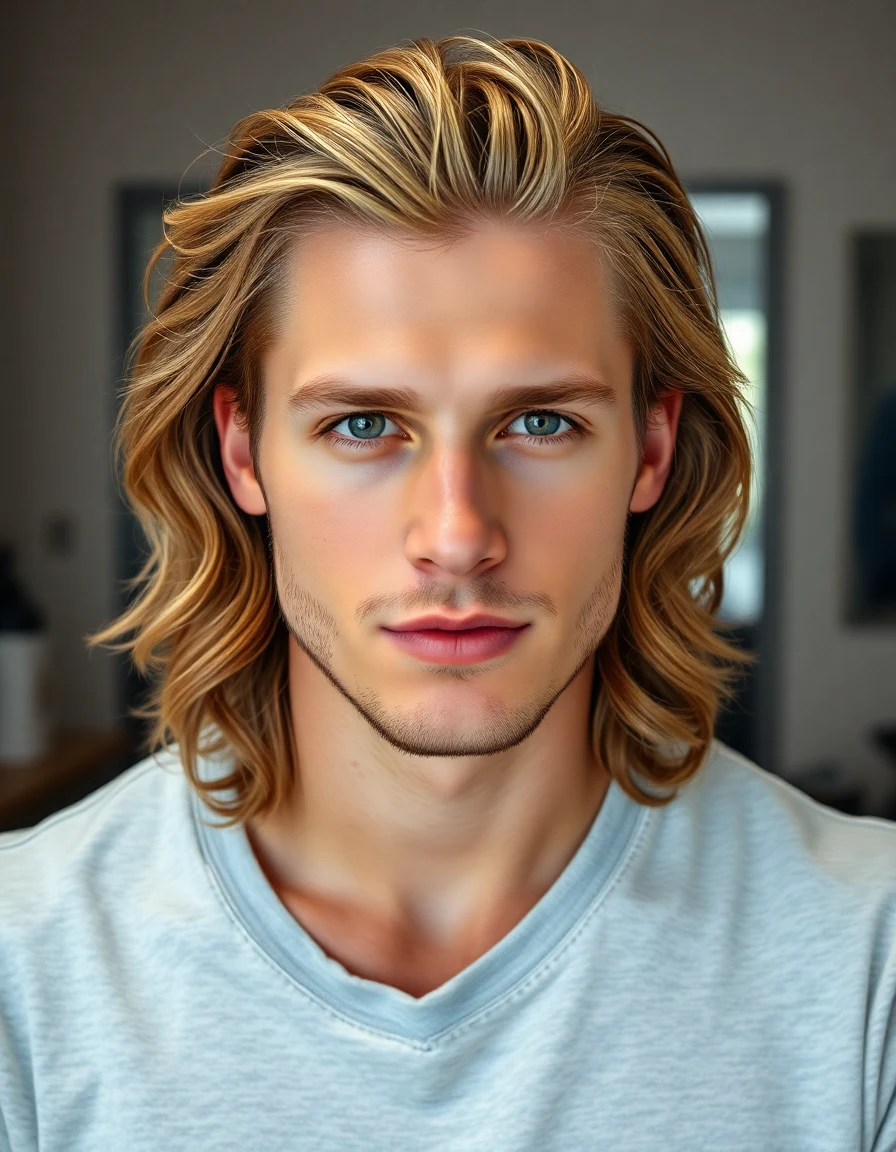
You can see this look in his early TV appearances on Homeland (2012) and the indie film Miss Stevens (2016). The hair sits lower on the forehead, the curls are less voluminous than his later looks, and there is a boyish quality to the overall shape.
The Cut:

- Top: 4-5 inches, natural curl length
- Sides: 2-3 inches, scissor cut, no fade
- Back: Tapered naturally into the neckline
- Part: None. Hair pushed loosely to one side or falling forward
How to Ask Your Barber:
“I want a medium-length natural cut. Keep 4 to 5 inches on top and blend the sides at 2 to 3 inches with scissors only. No clippers on the sides. I want a soft taper into the neckline, not a hard line. Leave the curl pattern alone; do not thin it out.”
Styling: Minimal. Wash with a sulfate-free shampoo every 2-3 days. Apply a small amount of leave-in conditioner to damp hair. Let it air dry. Done. This is a zero-effort style by design.
2017-2018: The “Call Me by Your Name” Mop Top
This is the one. The hairstyle that launched a thousand barbershop requests.
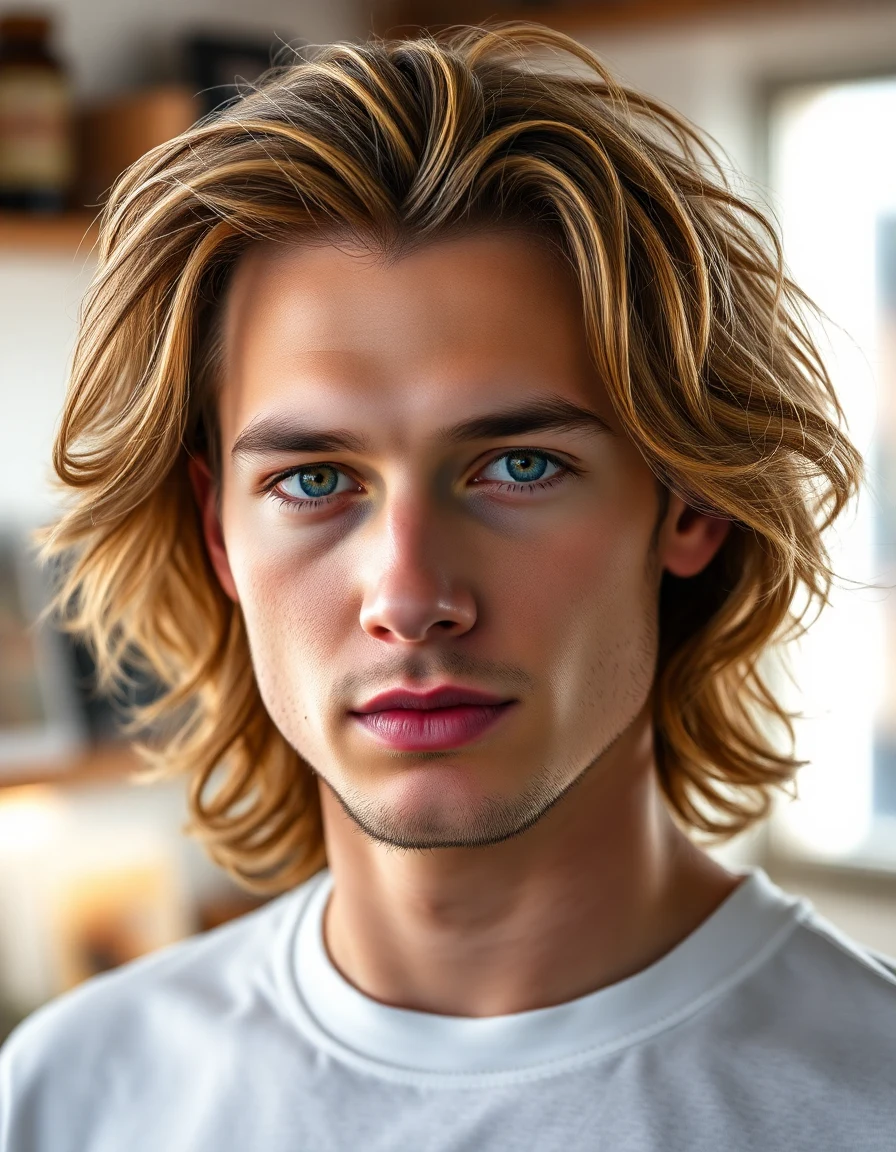
For Call Me by Your Name, Chalamet let his curls grow to their maximum natural volume. The result was a messy, sun-kissed mop of ringlets that looked like he had spent a summer in northern Italy doing absolutely nothing to his hair. Which, for the character, was essentially true.
This became the defining Chalamet look. The curls cascade down across the forehead, cover the tops of the ears, and have an organic, lived-in quality that no amount of careful styling could replicate. It is the gold standard for the “effortless curly hair” aesthetic.
The Cut:
- Top: 5-7 inches (appears shorter due to curl shrinkage)
- Sides: 3-4 inches, blended into the top with point cutting
- Back: Grown out to touch the collar
- Overall shape: Round, full, no angular lines anywhere
How to Ask Your Barber:
“I am growing out my curly hair and want to maintain the shape without losing length. Take off the minimum needed to keep it from looking like a triangle. Point cut the ends to reduce bulk without creating a blunt line. Keep the sides long enough to cover my ears. No layers shorter than 4 inches anywhere.”
Styling:
- Wash every 2-3 days with a sulfate-free, silicone-free shampoo
- Condition every wash. Leave conditioner in for 2-3 minutes before rinsing
- Squeeze excess water out with a microfiber towel or cotton t-shirt. Never rub
- Apply a dime-sized amount of Moroccanoil Treatment Oil to damp hair, focusing on the mid-lengths and ends
- Scrunch curls upward with your hands. This encourages the curl to spring up rather than hang flat
- Air dry completely. Do not touch it while it dries
Key detail: The mop top only works if you commit to the grow-out. There will be an awkward phase around months 3 to 5 where the sides stick out and the top has not gained enough weight to fall naturally. Push through it. Get the sides trimmed during this phase while leaving the top untouched.
2018-2019: The Curtain Curls and Red Carpet Era
As Chalamet became a fixture on awards circuits for Beautiful Boy and The King, his hair evolved into a more polished version of the mop top. The major change: a center part that divided the curls into two curtains framing his face.
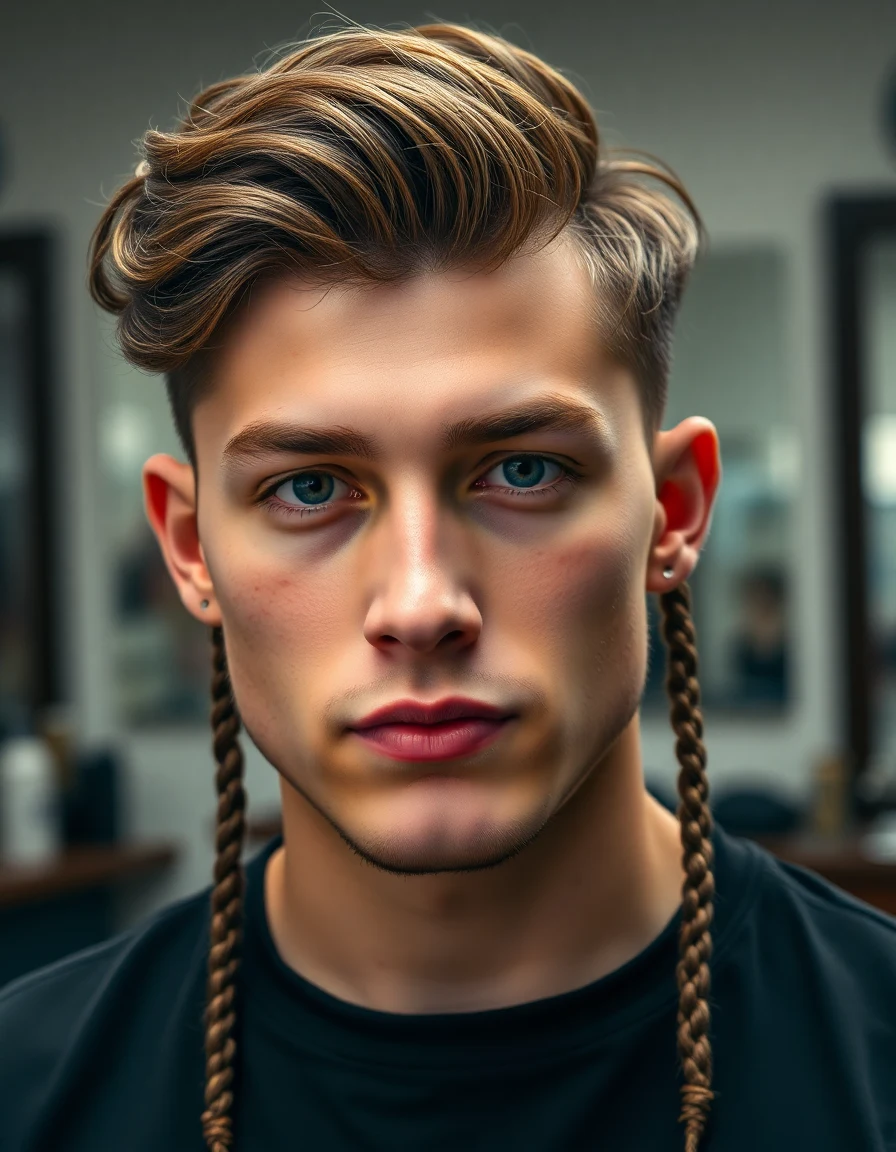
This is the same length and curl pattern as the mop top, but with more intentional direction. The curls fall to either side of a loose middle part rather than cascading randomly across the forehead. It reads as more mature, more deliberate, and slightly more fashion-forward than the pure messy look.
For The King specifically, Chalamet wore a modified version of this style: slightly shorter, with the curls pushed back more aggressively. A medieval bowl-cut shape emerged in some scenes, which his stylist achieved through strategic cutting rather than period-accurate medieval barbering.

The Cut:
- Top: 5-6 inches of natural curl length
- Sides: 3-4 inches, blended
- Part: Soft center part, not razor-sharp
- Framing: Curls cut to frame the cheekbones, not hang past the jawline
How to Ask Your Barber:
“I want to keep my curls at this length but create a center part. Can you remove some weight from the crown area so the hair falls to the sides instead of straight forward? I want the framing pieces around my face to hit my cheekbones. Keep the texture natural.”
Styling:
- Start with damp, freshly washed hair
- Apply a lightweight curl cream like Not Your Mother’s Curl Talk Cream
- Use your fingers to create the center part while hair is still wet
- Direct the curls to either side of the part, scrunching gently
- For the polished red-carpet version: use a diffuser on low heat to set the curl while maintaining volume. Hold the diffuser underneath the curls, pushing them upward
- Finish with a tiny drop of argan oil on your palms, pressed lightly over the surface to kill frizz without weighing curls down
2020-2021: The Grown-Out Romantic Waves
During the pandemic era, Chalamet did what many men did: he let his hair grow. But where most men looked like they had simply given up, Chalamet managed to make shoulder-adjacent length look intentional.
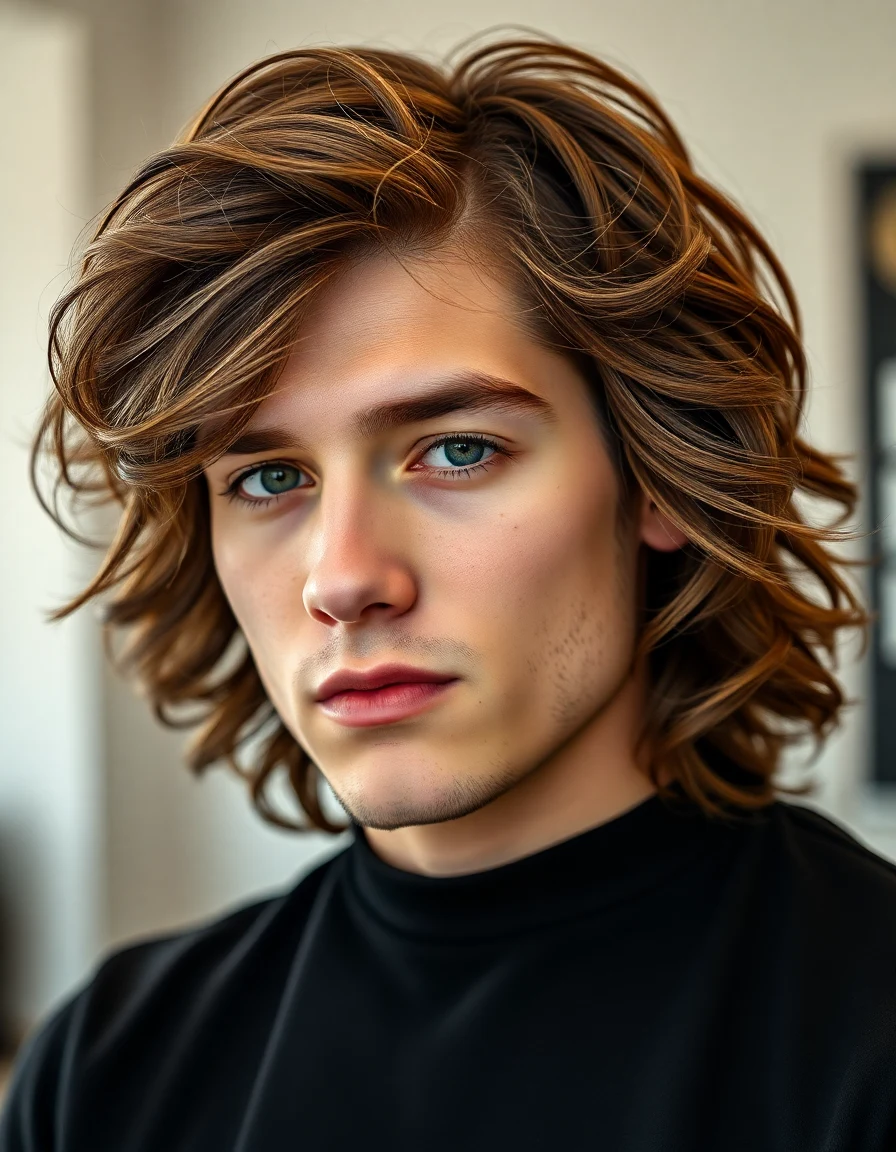
This was his longest phase. Hair past the ears, touching the collar, with the curls elongating into loose waves under their own weight. At this length, the curl pattern stretches out. Type 3A curls at 4 inches become Type 2C waves at 7 inches because gravity pulls the coil looser.
He wore this look at the Venice Film Festival for the premiere of Dune (2021), paired with a custom Haider Ackermann suit. The hair was parted loosely off-center, with pieces falling across his forehead and the rest tucked behind his ears.
The Cut:
- Top: 7-8 inches (pulled straight; appears 5-6 inches curly)
- Sides: 5-6 inches, long enough to tuck behind the ears
- Back: Collar length
- Shape: Long layers to reduce bulk without sacrificing length
How to Ask Your Barber:
“I am growing my hair out long. I need a shape-up cut that removes bulk through the sides and back without losing any length on top. Long layers throughout. I want to be able to tuck the sides behind my ears. Keep the back from getting mullet-shaped. Light point cutting at the ends for texture.”
Styling:
- Wash every 3-4 days. At this length, the hair needs its natural oils
- Deep condition once a week. Seriously. Long curly hair without deep conditioning becomes straw
- Apply Moroccanoil Treatment Oil generously to damp hair, mid-lengths to ends
- Let air dry. At this length, a diffuser takes too long to be practical
- On day-two or day-three hair, refresh by spritzing with water and scrunching. Add a tiny amount of oil to combat frizz
The awkward truth: Getting to this length takes patience. You are looking at 12 to 16 months of growth from a standard short haircut, with regular maintenance trims every 8 to 10 weeks to keep the shape from going haywire. Our guide on how to cut your own hair at home can help with light maintenance between barber visits, though for a full shape-up cut, always go to a professional.
2022-2023: The Buzzed Sides and Wonka Transformation
For Bones and All (2022), Chalamet showed up to the Venice Film Festival with noticeably shorter hair. The sides were buzzed shorter, the top was still curly but controlled, and the overall vibe shifted from romantic poet to something sharper and more modern.
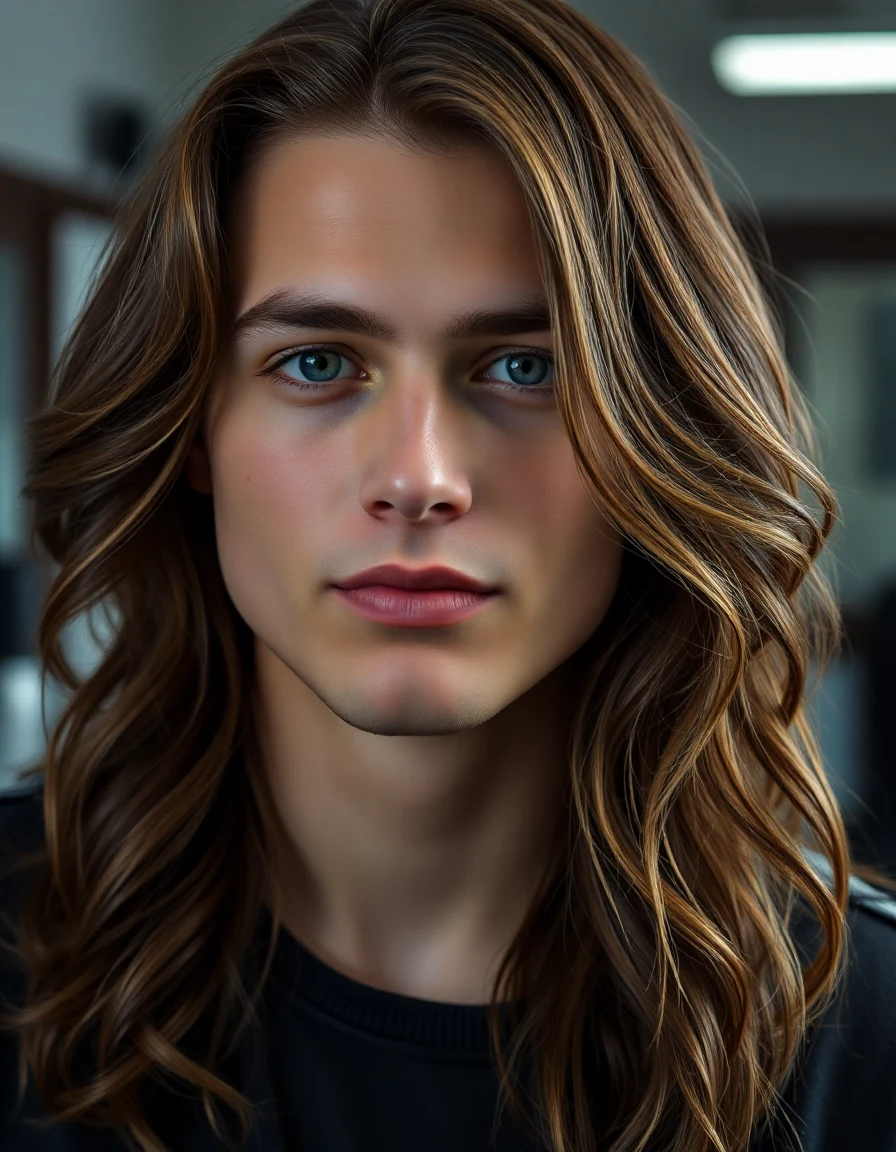
Then came Wonka. For the press tour in late 2023, Chalamet debuted what might be his most divisive look: a significantly shorter cut with the curls cropped down to 2 to 3 inches on top. Some outlets called it a “bro flow.” Others called it a textured crop. Whatever you call it, it showed his facial structure in a way the longer hair never did.
This phase was significant because it proved Chalamet’s style versatility. He did not need the signature mop to look good. The shorter curls highlighted his bone structure and read as more mature.

The Cut (Bones and All version):
- Top: 3-4 inches, natural curl intact
- Sides: 1-1.5 inches, buzzed with a taper fade
- Back: Tapered short
- Transition: Soft blend from short sides to curly top
The Cut (Wonka press tour version):
- Top: 2-3 inches, textured curls
- Sides: 1 inch, scissor-tapered
- Overall: A curly hair fade with more length on top than a standard fade
How to Ask Your Barber:
“I want a short textured cut that keeps my natural curl on top. Leave 2 to 3 inches on top and taper the sides down to about an inch. I want a soft blend, not a hard line. Use scissors on the top, and you can use clippers on the lower sides. Keep the curl pattern; do not straighten or blowout.”
If you want a reference for types of fades, check our full breakdown. For this specific look, a low to mid taper is the closest match.
Styling:
- Wash and condition
- Apply a small amount of Baxter of California Clay Pomade to damp hair for texture and light hold
- Use fingers to push the curls in the desired direction
- Air dry or use a diffuser on low for 2 to 3 minutes
This is the easiest Chalamet look to maintain. Shorter curls require less product, less drying time, and less anxiety about frizz. It is a great entry point if you are not ready to commit to the full grow-out.
2024: The Buzz Cut and Bob Dylan Transformation
In early 2024, Chalamet appeared with a near-complete buzz cut while preparing for his role as Bob Dylan in A Complete Unknown. The internet lost its mind.
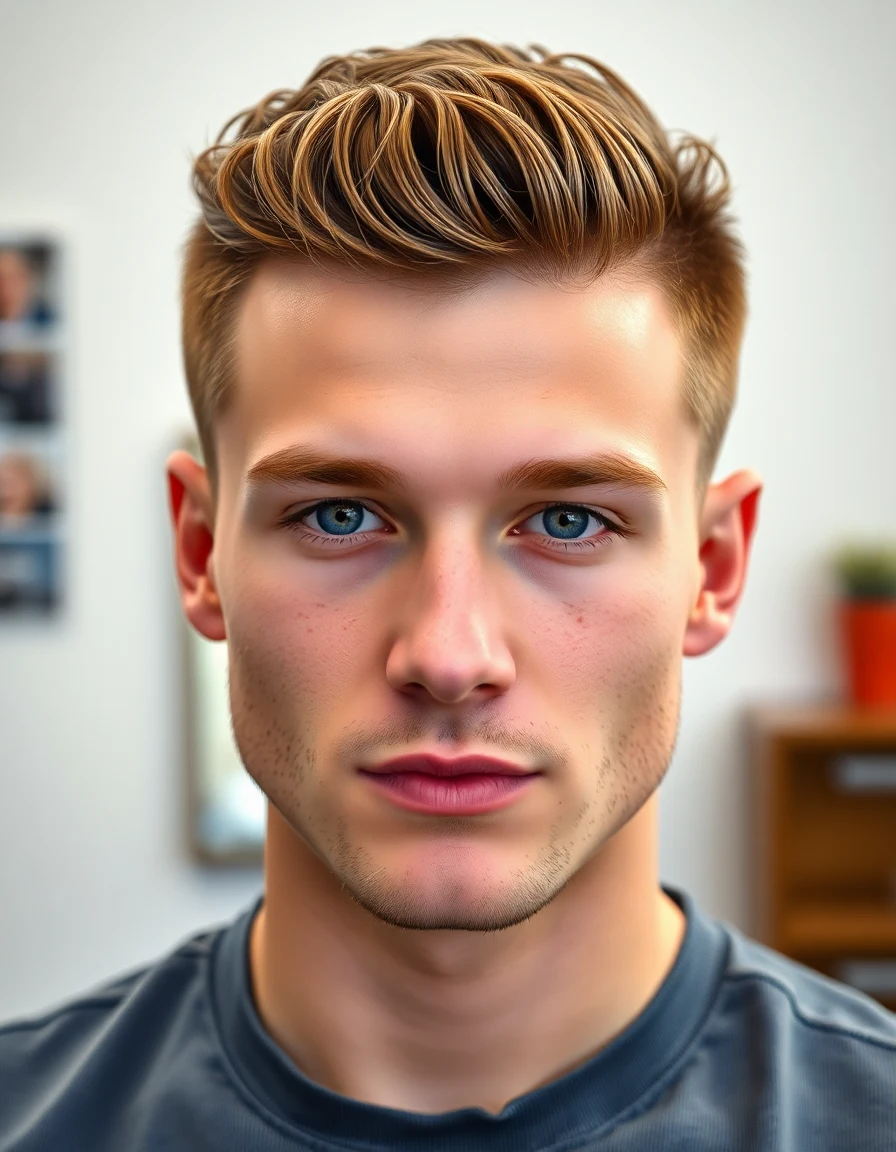
It was jarring. The curls that had defined his image for nearly a decade were gone, replaced by a number-2-guard buzz that left maybe a quarter inch of hair across his entire head. Without the curls, his features became the entire story: the angular jawline, the prominent cheekbones, the deep-set eyes.
Later, as filming progressed, the hair grew back into a short, tousled style reminiscent of Dylan’s own early-1960s look: wispy, slightly messy, parted loosely with a natural curl starting to reassert itself.
The Buzz Cut Specs:
- Guard: Number 2 all over (6mm)
- Shape: Uniform length, no fade
- Maintenance: Buzz every 2-3 weeks to maintain the length
If you are considering the buzz, our buzz cut hairstyles guide covers every variation and how to match the right one to your face shape. It also includes clipper guard sizes explained so you know exactly what you are asking for. And if you want to go the DIY route, cordless hair clippers are the tool for the job.
The Bob Dylan Grow-Back:
- Top: 2-3 inches of curly, wispy texture
- Sides: 1-2 inches, naturally grown out from the buzz
- Overall shape: Messy, intentionally imperfect, folk-singer energy
Styling the Dylan look:
- This one is genuinely low-maintenance. The short length limits what you can do
- A tiny amount of Gatsby Moving Rubber Grunge Mat worked through damp hair gives matte texture and slight separation
- Push hair loosely forward and to one side with your fingers
- Do not try to make it neat. The point is controlled chaos
2025-2026: The Current Era
As of early 2026, Chalamet is in a regrowth phase following the Dylan role. His hair is back to a medium length, with the signature curls returning to their full form. It is a looser, more relaxed version of the 2017 mop top: slightly less volume, a bit more sophistication, and a center-parted curtain style that he now defaults to for most public appearances.

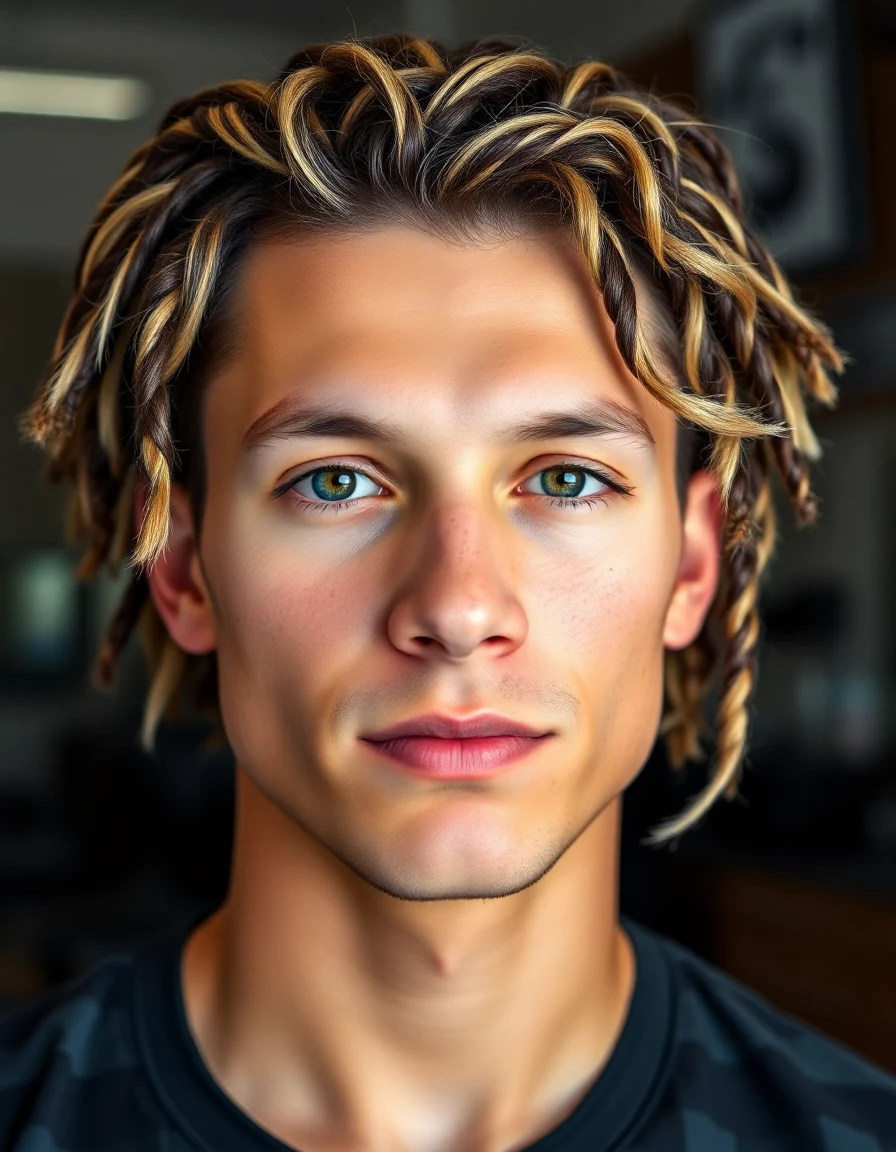
The current look reflects his maturation. At 30, the hair reads differently than it did at 21. Same curls, but styled with slightly more intention. Less “I just rolled out of bed” and more “I know exactly what I am doing and I want you to think I just rolled out of bed.”
The Current Cut:
- Top: 5-6 inches of natural curl
- Sides: 3 inches, blended with scissors
- Part: Soft center or slightly off-center
- Shape: Slightly more controlled than the 2017 mop, with face-framing pieces and the rest pushed back
The Product Toolkit for Chalamet-Style Curls
The paradox of Chalamet’s hair is that looking like you use no product actually requires using the right product. Here is the complete toolkit, organized by priority.
Essential: The Non-Negotiables
Sulfate-free shampoo. Sulfates strip the natural oils that curly hair depends on for definition and moisture. Without those oils, curls turn into frizz. Wash every 2-3 days, not daily. If your scalp gets oily between washes, rinse with water on off days.
Lightweight conditioner. Every single wash. Leave it in for 2-3 minutes. Rinse with cool water. Cool water closes the hair cuticle, which reduces frizz and increases shine. This is not optional for any of the Chalamet looks.
Moroccanoil Treatment Oil ($16-34). This is the closest thing to a universal Chalamet hair product. Argan oil adds moisture, reduces frizz, and gives the hair that healthy, light-catching sheen without any visible product. A dime-sized amount on damp hair, focused on mid-lengths and ends. It is the single most important styling product for recreating any of his looks.
For the Longer, Messier Looks
Sea Salt Texturizing Spray ($8-15). For the beach-tousled, Call Me by Your Name texture. Spritz on damp hair and scrunch. The salt crystals create gritty texture and enhance the natural wave pattern. Use sparingly; too much dries the hair out. One to two spritzes is enough for medium-length hair.
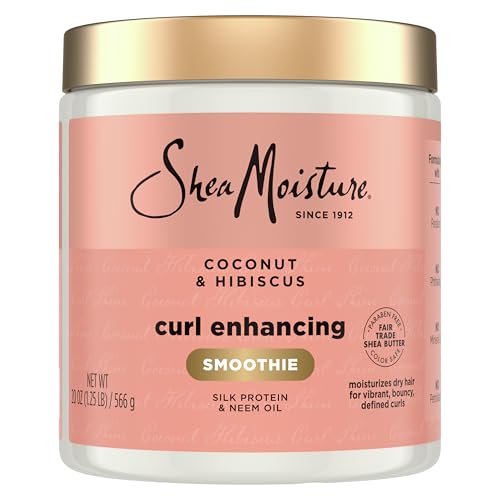
Not Your Mother’s Curl Talk Cream ($8). A lightweight curl definer that enhances curl shape without any crunch or stiffness. Apply to damp hair and scrunch upward. It gives definition to the curl without weighing it down, which is exactly what the longer Chalamet styles require. Men with tighter curls might also benefit from SheaMoisture Curl Enhancing Smoothie for extra moisture.
Olaplex No. 3 Hair Perfector ($30). A weekly bond-repair treatment. If you are growing your curls out long, the older hair at the ends takes daily damage from friction, sun, and general life. Olaplex repairs the disulfide bonds in the hair shaft, which translates to less breakage, more elasticity, and curls that hold their shape longer. Use once a week as a pre-shampoo treatment.
For the Shorter, Textured Looks
Baxter of California Clay Pomade ($23). For the Wonka-era short textured curls. Clay gives hold and separation without shine, which reads as natural and undone. A pea-sized amount worked through damp hair, directed with fingers. It is the right product when you want texture and control on shorter curly hair without the wet-look finish that gels create.
Hanz de Fuko Claymation ($23). Stronger hold than the Baxter clay. Use this if your curls are on the thicker or coarser side and need more control at shorter lengths. A matte finish that disappears into the hair. Work it between your palms until it is evenly distributed, then apply to damp hair.
Gatsby Moving Rubber Grunge Mat ($9). A budget-friendly option for the short, messy, Bob Dylan grow-back look. It provides a dry, matte finish with flexible hold. Good for creating piece-y separation in short curly or wavy hair.
Technique: How to Style Curly Hair the Chalamet Way
Regardless of which specific Chalamet era you are going for, the foundational technique is the same. Here is the step-by-step process that applies to all of his longer curly looks.
Step 1: The Wash
Shampoo every 2 to 3 days. On off-days, rinse with water or co-wash (use conditioner only). When you shampoo, focus it on the scalp. Let the suds run down through the lengths; you do not need to scrub the ends directly.

Condition every time your hair gets wet. Apply from mid-length to ends. Leave it in for 2 to 3 minutes minimum. Rinse with cool water. The cool rinse closes the cuticle, which is the single biggest factor in controlling frizz.
Step 2: The Dry
Never rub your hair with a towel. Ever. Rubbing creates friction that opens the cuticle, separates curl clumps, and creates frizz. Instead, scrunch your hair gently with a microfiber towel or a clean cotton t-shirt. The t-shirt method works better for most curl types because the smooth cotton fibers create less friction than terry cloth.
Your hair should be damp, not dripping, when you move to styling.
Step 3: Product Application
Apply your styling product to damp hair. This is critical. Product on dry curly hair creates crunch and surface-level coating. Product on damp hair penetrates the curl and distributes evenly.
For the full mop top: argan oil only. Dime-sized amount, rubbed between palms, pressed into mid-lengths and ends. Then scrunch upward.
For the curtain curls: curl cream, then a drop of oil on top. Part while wet. Direct curls to either side.
For the short textured look: clay or matte paste. Pea-sized amount. Work through damp hair. Direct with fingers.
Step 4: Air Dry or Diffuse
Air drying produces the most natural result and is Chalamet’s default approach. It takes longer (30 to 60 minutes depending on length and density), but the curls set with maximum definition and minimum frizz.
If you need to speed things up, use a diffuser attachment on your blow dryer. Set it to low heat and low speed. Cup sections of curl in the diffuser and hold underneath, pushing upward toward the scalp. This lifts the roots and sets the curl without disrupting the pattern. Do not move the diffuser around. Hold it still, let the heat do its work, then move to the next section.
The golden rule: do not touch your hair while it dries. Every time you touch drying curls, you break up the curl clump and create frizz. Hands off until it is 100% dry.
Step 5: The Scrunch (Day-Two Hair)
Day-two and day-three hair is where the Chalamet aesthetic really lives. First-day curls can look too defined, too perfect. The slightly undone quality of second-day hair is what makes it look effortless.
To refresh: spritz with water until damp, add a tiny amount of oil, and scrunch upward. Sleep on a satin or silk pillowcase to reduce friction overnight. A loose “pineapple” (gathering all your hair into a high, loose ponytail at the top of your head) preserves curl shape while you sleep.
Chalamet Style by Face Shape
Not every Chalamet hairstyle works for every face shape. Chalamet has an oval face with high cheekbones, which is the most versatile face shape for hairstyles. Here is how to adapt his looks to your face shape.
| Face Shape | Best Chalamet Era | Why It Works | What to Avoid |
|---|---|---|---|
| Oval | Any of them | Balanced proportions work with every style | Nothing; oval faces are the most versatile |
| Round | Short textured crop or curtain curls | Height on top and length at the sides elongate the face | The full mop top; too much volume at the sides makes a round face look wider |
| Square | Full mop top or grown-out waves | Soft curls balance angular features | The buzz cut; it accentuates the square jaw, which can look severe |
| Oblong | Short textured crop or buzz cut | Shorter styles avoid adding more vertical length | The grown-out romantic waves; too much length on top elongates further |
| Heart | Curtain curls or current era style | Curls at the cheekbone level balance a wider forehead and narrow chin | The buzz cut; it exposes the forehead width without balancing it |
| Diamond | Full mop top | Volume at the temples fills out the narrow forehead | Buzzed sides; they accentuate wide cheekbones |
The Grow-Out Guide: From Buzz to Mop Top
If you are starting from short hair and want to reach any of Chalamet’s longer looks, here is the realistic timeline and what to expect at each stage.
Months 1-2 (0.5 to 1 inch): The post-buzz phase. Not much to work with. Your curl pattern may not even be visible yet. Keep it clean. This is the easiest maintenance phase you will ever have.
Months 3-4 (1.5 to 2 inches): Curls start to appear. The top shows texture while the sides start sticking out awkwardly. Begin your curly hair routine now: sulfate-free shampoo, conditioner, and a light oil. Get a trim at month 3 that takes the sides down while preserving every millimeter on top.
Months 5-6 (2.5 to 3 inches): The true awkward stage. Your hair has enough length to look messy but not enough to look intentionally messy. The sides are the problem. Visit your barber and ask for a taper on the sides and back while keeping the top length. This is the Wonka-era length.
Months 7-9 (3.5 to 4.5 inches): The curls start to have enough weight to fall naturally. You can begin to create a part. The early-Chalamet look from 2014 to 2016 is achievable here. You will start getting compliments. Push through.
Months 10-12 (5 to 6 inches): The Call Me by Your Name mop top territory. Curls have full volume and definition. The awkward phase is behind you. Maintenance trims every 8 to 10 weeks to keep the shape. This is the goal for most guys.
Months 13-16 (6.5 to 8 inches): The grown-out romantic waves. Past the ears, collar-length in the back. Curls stretch into waves under their own weight. Deep conditioning is essential at this length. Trim the back every 6 to 8 weeks to avoid the mullet effect.
Throughout the entire process, resist the urge to cut it all off during the awkward stage. Every man with long curly hair has been through it. Every single one. It lasts about 6 to 8 weeks, and then it is over.
The Cultural Impact: Why Chalamet’s Hair Matters
This is not just about a celebrity haircut. Chalamet’s hair represents a shift in what mainstream Western culture considers attractive for men.
For decades, the dominant men’s hairstyle aesthetic in Hollywood and fashion was controlled, structured, and product-heavy. Think George Clooney’s Caesar cut, Brad Pitt‘s slicked-back styles, or the ubiquitous hard-part undercut of the 2010s. These were styles that required effort, product, and a clear intent to look groomed.
Chalamet broke that pattern by making natural texture the focal point. He did not fight his curls; he let them lead. And in doing so, he gave implicit permission to an entire generation of young men to stop fighting their own natural hair texture.
This matters more than it might seem on the surface. For years, men with curly or wavy hair were told, directly or indirectly, that their natural texture was “messy” or “unprofessional.” The go-to advice was to cut it short or gel it flat. Chalamet, simply by showing up with his natural curls on red carpets and magazine covers, challenged that assumption in the most visible way possible.
His French-American heritage is part of the story. French grooming culture has never shared the American obsession with military-precision haircuts. The French approach, broadly speaking, values hair that looks touchable, natural, and slightly imperfect. Chalamet, raised between New York and Paris, embodies both sensibilities. He is polished enough for American fashion and undone enough for European cool.
The result is a grooming aesthetic that works across cultural lines. His hairstyles have been adopted by men of virtually every background, adapted to work with everything from loose 2A waves to tight 3C curls. The principle transfers even when the exact curl pattern does not: trust your natural texture, use minimal product, and stop trying to make your hair do something it does not want to do.
Common Mistakes When Trying to Get Chalamet Hair
These are the mistakes that come up most often. Avoid them.
1. Using too much product. The entire Chalamet aesthetic is built on a “no product” appearance. If your curls look wet, shiny, or crunchy, you have used too much. Start with half of what you think you need and add more only if the curls are not holding shape.
2. Brushing or combing dry curly hair. This destroys curl clumps and creates a frizzy, undefined mess. Only detangle with a wide-tooth comb in the shower, with conditioner in your hair. Once you step out, fingers only.

3. Asking for a “Chalamet cut” without specifying which one. He has had at least six distinct styles. Bring a reference photo. Better yet, bring three photos from different angles of the same era. Your barber will appreciate the specificity.
4. Getting thinning shears used on your curls. Some barbers will thin out thick, curly hair with thinning shears. For Chalamet’s aesthetic, this is counterproductive. Thinning shears create uneven lengths within the curl clump, which leads to frizz and flyaways. Ask for point cutting instead, which removes bulk at the ends without disrupting the curl structure.
5. Blow-drying without a diffuser. A regular blow dryer nozzle blasts concentrated air that breaks up curl clumps and creates frizz. Always use a diffuser attachment. Or better yet, just air dry. Patience is the cheapest styling tool you own.
6. Skipping conditioner. If you take one piece of advice from this entire article, let it be this: never skip conditioner on curly hair. Curly hair is structurally drier than straight hair because the natural oils from your scalp have a harder time traveling down a coiled hair shaft. Conditioner compensates for that. Every wash. No exceptions.
7. Comparing your month-three grow-out to his finished look. Every photo you see of Chalamet’s hair is the result of 10 to 14 months of growth, professional maintenance cuts, and the natural advantage of being photographed by people whose job is to make him look good. Your awkward stage is normal. His awkward stage happened too; there just are no paparazzi photos of it.
Quick Reference: Every Chalamet Hairstyle at a Glance
| Era | Style Name | Top Length | Side Length | Key Product | Difficulty |
|---|---|---|---|---|---|
| 2014-2016 | Early Audition Curls | 4-5 in. | 2-3 in. | Leave-in conditioner | Easy |
| 2017-2018 | CMBYN Mop Top | 5-7 in. | 3-4 in. | Moroccanoil Oil | Medium (grow-out required) |
| 2018-2019 | Curtain Curls | 5-6 in. | 3-4 in. | Curl Talk Cream | Medium |
| 2020-2021 | Grown-Out Waves | 7-8 in. | 5-6 in. | Moroccanoil Oil + Olaplex No. 3 | Hard (12+ months grow-out) |
| 2022-2023 | Short Textured Crop | 2-4 in. | 1-1.5 in. | Baxter Clay Pomade | Easy |
| 2024 | Buzz Cut | 0.25 in. | 0.25 in. | None | Easiest |
| 2024 | Dylan Grow-Back | 2-3 in. | 1-2 in. | Gatsby Moving Rubber | Easy |
| 2025-2026 | Current Era Curls | 5-6 in. | 3 in. | Moroccanoil Oil | Medium |
Maintaining Curly Hair Health Long-Term
Whether you settle on the mop top or the textured crop, curly hair requires a fundamentally different maintenance approach than straight hair. Here are the rules that apply regardless of which Chalamet era you choose.
Wash less frequently. Two to three times per week maximum. Daily washing strips the oils that give curls their definition and moisture. If your scalp feels oily on off-days, rinse with water or use a co-wash.
Always condition. Every time water touches your hair, conditioner follows. No exceptions. Curly hair is structurally drier because the oils cannot travel down the curved shaft the way they can on straight hair.
Deep condition weekly. If your hair is past 3 inches, add a weekly deep conditioning treatment. Apply to clean, damp hair, put on a shower cap, and leave for 15 to 30 minutes. The difference this makes in curl definition and frizz control is significant.
Sleep on satin or silk. Cotton pillowcases create friction that disrupts curl clumps overnight. A satin pillowcase ($10-15) is one of the highest-return investments in curly hair care.
Trim regularly. Every 8 to 10 weeks, even while growing out. Trims remove split ends before they travel up the hair shaft and cause breakage. Ask your barber for a “dusting” if you do not want to lose any visible length.
Protect from heat. If you must blow-dry, always use a diffuser on low heat. Flat irons and straighteners should be used sparingly, if ever. Heat damage on curly hair is cumulative and eventually changes the curl pattern permanently.
Our complete guide to curly hair products for men goes deeper on the product side of long-term curly hair maintenance.
Final Thoughts
Timothee Chalamet’s contribution to men’s grooming is not any single hairstyle. It is the idea that natural texture is an asset, not a problem to solve. Every era of his hair, from the unruly mop top to the clean buzz cut, operates on the same principle: work with what you have, not against it.

Straightening it, gelling it flat or cutting it short because nothing else came to mind? Let it grow and see what it does. Use the least product that keeps it healthy and defined. There may be more under all that gel than you expect.
The best version of Chalamet hair is not an exact replica of his. It is your own natural texture, maintained properly and styled with confidence. His hair looks great because it looks like his. Yours will look great when it looks like yours.
Frequently Asked Questions
What is Timothee Chalamet’s hair type?
Timothee Chalamet has naturally curly to wavy hair, falling in the 2C to 3A range on the curl type chart. His hair has a loose, S-shaped wave pattern that forms full ringlets when grown out and appears wavy at shorter lengths. This hair type is common among men of French and European descent and responds well to lightweight curl-enhancing products applied to damp hair. The key characteristic is that his curls are loose enough to have natural movement but defined enough to hold shape without heavy product.
How do I ask my barber for a Timothee Chalamet haircut?
Ask for a medium-length textured cut with the top left at 4 to 6 inches and the sides at 2 to 3 inches with a scissor taper, not clippers. Tell your barber you want to keep the natural curl pattern intact and avoid thinning shears, which create frizz on curly hair. Specify that you want a soft blend between the top and sides rather than a hard line or disconnected undercut. The most important instruction is no blowout after the cut. Let your hair air dry to see how the curls naturally fall. Bring a reference photo from the specific era you want.
How do you style hair like Timothee Chalamet?
The key is doing as little as possible. After washing, towel dry gently by scrunching, never rubbing. Apply a lightweight curl cream or a small amount of argan oil to damp hair. Use your fingers to scrunch the curls upward and let them air dry completely. Do not use a brush or comb on dry hair. The entire style depends on natural texture, so the less you manipulate it, the better it looks. On non-wash days, spritz with water and scrunch to reactivate the curl pattern.
What products does Timothee Chalamet use on his hair?
While his exact products are not publicly confirmed, his hairstylists have mentioned using lightweight, natural-finish products. For his curl type, the best approach is a sulfate-free shampoo to avoid stripping natural oils, a lightweight conditioner, and a curl-defining cream or argan oil as the only styling product. Heavy gels, pomades, and waxes would flatten his natural curl pattern. A sea salt spray works well for the more tousled, undone versions of his style.
Can I get Timothee Chalamet’s hairstyle if I have straight hair?
Not naturally. His signature look depends entirely on his natural 2C-3A curl pattern. If you have straight hair, you cannot replicate the exact same texture without chemical treatment or heat styling. A perm designed for men can create a similar wave pattern, but it requires maintenance every three to four months and can damage hair over time. A more practical approach for straight-haired men is to use a sea salt spray and a texturizing product to create a tousled, wavy look that captures the spirit of the style without the exact curl definition.
How long does it take to grow hair like Timothee Chalamet?
For his most iconic longer looks, you need approximately 5 to 7 inches of length on top, which takes 10 to 14 months from a standard short haircut. Hair grows roughly half an inch per month on average. However, curly hair appears shorter than it actually is due to shrinkage. A curl that measures 6 inches when pulled straight may only appear 4 inches long when dry and coiled. Factor in the awkward middle stages around months 3 to 6, where the hair is too long to stay neat but too short to curl properly. Regular trims every 8 to 10 weeks during the grow-out keep the shape manageable.
How do I deal with the awkward stage when growing out curly hair?
The awkward stage typically hits between months 3 and 6 of growing out. Your hair sticks out at the sides, the top has no weight to fall naturally, and nothing looks intentional. The solutions are: use a headband or push hair back with a light-hold product during this phase, get strategic trims that take weight off the sides while leaving the top length intact, and use a curl cream to add definition so the shorter curls look styled rather than messy. Do not cut the top. The sides are the problem, and your barber can taper those while preserving your top length.
How often should I cut my hair to maintain a Timothee Chalamet style?
You should get a haircut every 3 to 4 weeks to maintain the structured yet textured look Timothee rocks, as this keeps the fade sharp and prevents your curls from becoming too weighed down. Regular trims also help manage the length on top and ensure your style doesn’t lose its definition between appointments.