
Last updated: February 2026 by Daniel Park, Licensed Cosmetologist. Daniel is a Korean-American cosmetologist with 12+ years of experience specializing in Asian men’s hair at his Manhattan studio.
If you’re an Asian man thinking about a buzz cut, know this up front: it does not look the same on you as it does on anyone else. I’ve had clients show me a photo of some blond guy with a #2 and ask for the same thing. They leave the chair looking completely different, and the shock on their face tells me nobody warned them. Asian hair is thicker per strand, darker in color, and grows at a steeper angle from the scalp. Your asian buzz cut will appear denser, more visible against the skin, and more textured than what you see on lighter-haired guys online.
That’s not a bad thing. It’s actually an advantage once you understand how to work with it. Asian men have been rocking buzz cuts for generations, from mandatory military service in Korea and Taiwan to the current clean-cut K-pop aesthetic. The buzz cut is low maintenance, comfortable in humidity, and sharp when done correctly. This guide covers which guard number works for dense, dark hair, how your face shape factors in, which variations suit Asian features, and exactly what to say at the barber.
[table-of-contents]Is a Buzz Cut Right for Your Face Shape?
A buzz cut removes all the styling tricks that longer hair provides. No fringe, no volume, no sweep. What you’re left with is your raw head shape on full display. For some face shapes, that’s a gift. For others, it requires picking the right variation.

Oval Face
You hit the jackpot. Oval faces have balanced proportions that work with every buzz cut length and variation. A classic #2 all around, an induction cut, a crew cut with faded sides. All of them look clean. Walk in, ask for a number, walk out sharp.
Round Face
This is where Asian men need to be careful. A uniform buzz cut can emphasize the width of a round face, especially with the fuller cheekbones common in East Asian bone structure. The fix: add a high fade on the sides. Shorter sides create the illusion of a narrower silhouette, while a slightly longer top (#3 or #4) adds vertical dimension. Avoid a #1 or #0 all over unless your jawline is well defined.
Square Face
Strong jawlines and angular features pair well with short hair. A buzz cut amplifies the sharpness of a square face, which reads as masculine and clean. A #2 or #3 all over works. If your jaw is very wide, consider a mid fade to soften the transition at the temples. Otherwise, keep it simple.
Oblong Face
Longer faces need to avoid anything that adds height on top. Skip the crew cut variation (longer on top, short on sides) because it elongates your face further. Instead, go for a uniform length (#2 or #3 all around) with no fade. The consistent length wraps your head evenly and avoids drawing the eye upward. A low fade at the neckline can work, but keep the sides the same length as the top.
Understanding Guard Numbers for Asian Hair
Guard numbers are universal, but how they look is not. A #2 guard cuts to 6mm regardless of ethnicity. But 6mm of thick, jet-black Asian hair looks dramatically different from 6mm of fine, light brown hair. Your hair will appear fuller, the contrast against your skin sharper, and scalp visibility less obvious because of the density.
My advice: start one guard number longer than you think you want. You can always go shorter; you cannot glue it back on. If you’re imagining a #1, start with a #2. Come back in a week if you want it shorter. For a full breakdown, check our clipper guard sizes reference chart.
Here’s how each guard looks specifically on dark, dense Asian hair:
| Guard | Length | How It Looks on Asian Hair | Best Face Shapes |
|---|---|---|---|
| #0 (no guard) | 0.5mm | Near-shaved. Dark shadow visible against skin because of the black pigment in each follicle. Looks clean but shows every bump, scar, and head shape imperfection. Five o’clock shadow effect on the scalp. | Oval, square (strong jaw required) |
| #1 | 3mm | Very short stubble. Dense enough that you won’t see skin through the hair on most Asian men. Creates a sharp, military-clean look. The contrast between dark hair and skin is strong. | Oval, square, diamond |
| #2 | 6mm | The most popular buzz cut length for Asian men. Full coverage, no scalp showing. Hair is short enough to require zero styling but long enough that the density of Asian hair creates a clean, soft-velvet texture. This is the sweet spot. | All face shapes |
| #3 | 10mm | Noticeably longer. At this length, the thick straight strands start to show their growth direction. On Asian hair, you might see the hair beginning to push outward rather than lying flat, especially at the crown. Still low maintenance, but you’ll notice the texture. | Round, oblong, oval |
| #4 | 13mm | The upper limit of what most people consider a buzz cut. Asian hair at this length starts to stand up, particularly at the sides and crown. You’re approaching crew cut territory. Good if you want the option to style the top slightly, but expect the sides to stick out within a week of your cut. | Round (with faded sides), oval |
Buzz Cut Variations for Asian Men
Not every buzz cut is the same length all over. I’ve listed these from shortest to most complex. For other short styles beyond the buzz, check our full Asian men’s hairstyle guide. Mastering asian buzz cut takes practice but delivers great results.
Classic Buzz Cut (#2 All Around)
What it is: One guard number, one length, entire head. No fade, no blend. The purest form of a buzz cut. Mastering asian buzz cut takes practice but delivers great results.
Why it works on Asian hair: At a #2, your head looks full and clean without any visible scalp. The dark hair creates a striking, intentional look. This is the cut every Korean man gets during military service, and there’s a reason it’s become a style statement beyond the barracks. Trim every 2 weeks; a #2 will look like a #4 within three weeks as the sides push outward.
Who should get it: Anyone who wants zero-effort grooming. Oval and square faces look best. Round faces should consider the faded variation below.
Induction Cut (#0 or #1)
What it is: The shortest buzz cut possible with clippers. A #0 (no guard) leaves 0.5mm; a #1 leaves 3mm.
Why it’s different on Asian hair: This is where the expectation gap hits hardest. On light-haired men, a #0 looks almost bald. On Asian men, the dark pigment creates a visible shadow effect across the entire scalp. You will not look bald. You will look like you have a deliberate five o’clock shadow on your head.
The honest truth: An induction cut exposes every contour of your skull. Flat spots, bumps, and asymmetry will be visible. If this is your first time going short, start with a #2 and work down. Trim every 7 to 10 days; even a few days of growth is noticeable at this length.
Crew Cut (Graduated Buzz)
What it is: Longer on top (#3 to #4), shorter on the sides (#1 to #2), blended with a taper or fade. The top shows a hint of texture and direction while the sides stay tight.
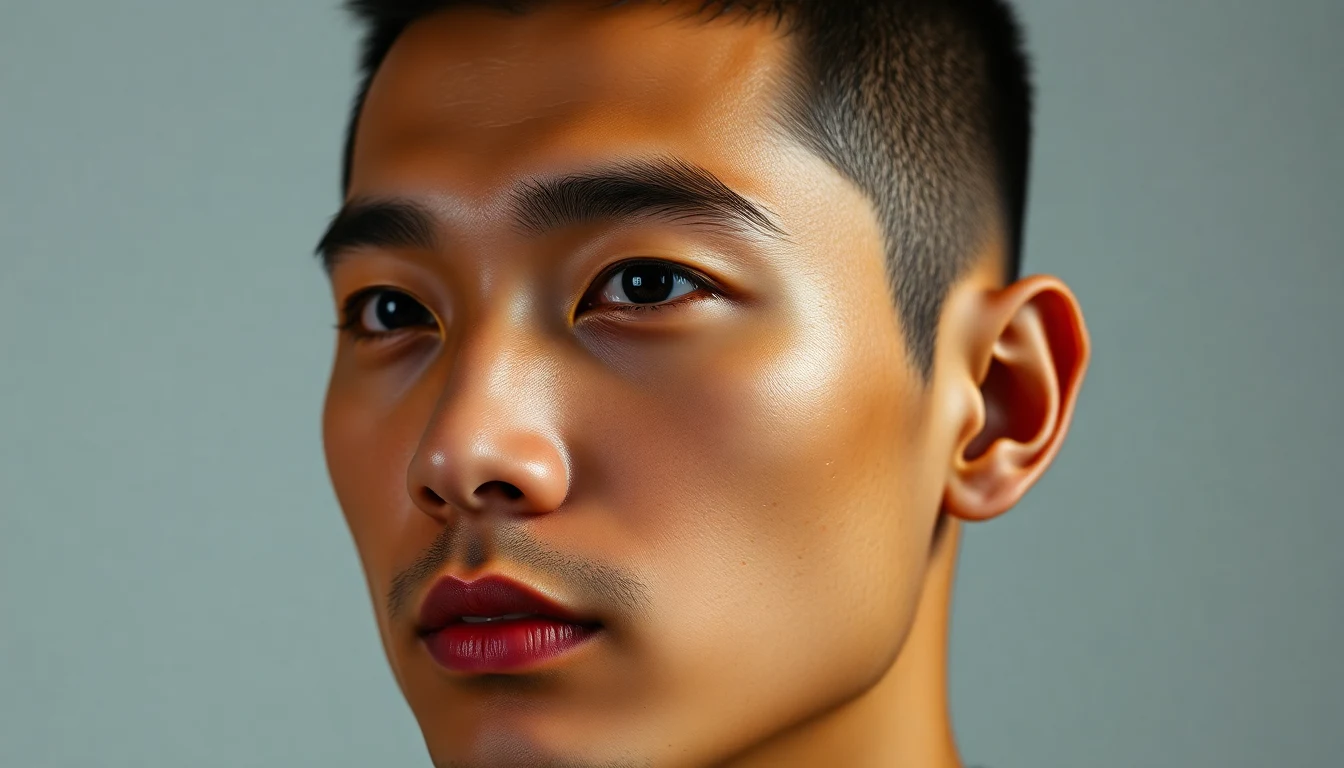
Why it works on Asian hair: The slight length on top gives thick Asian hair just enough room to lie in a direction rather than sticking straight up. A #3 or #4 on top, blended down to a #1 on the sides, creates contrast that adds dimension. This is my most-requested buzz cut variation for Asian clients because it combines low maintenance with the structure of a proper haircut. One caveat: at #4 on top, Asian hair may stand upright at the crown. A tiny amount of matte clay pressed forward solves that.
Maintenance: Trim every 2 to 3 weeks. The grow-out is more forgiving than a uniform buzz because the graduated lengths mask the transition period.
Butch Cut (#3 to #4, Soft Military)
What it is: A slightly longer uniform buzz cut, typically a #3 or #4 all over. The middle ground between a tight buzz and a short crop. Softer than an induction cut, more approachable for daily life.
Why it works on Asian hair: At #3 to #4, Asian hair shows its natural texture without being long enough to require styling. The density creates a full, clean look, and the extra length softens head shape irregularities. Watch out: at a #4, the sides will start sticking outward within 10 days. Commit to a 2-week trim cycle.
Best for: First-timers not ready to go full #2 or shorter. Also works for men growing out a longer style who want a clean reset.
High and Tight Variation
What it is: Sides taken to #0 or #1 up to the parietal ridge. Top left at #2 to #4. Sharp contrast, minimal blending. Understanding asian buzz cut is key to a great grooming routine.
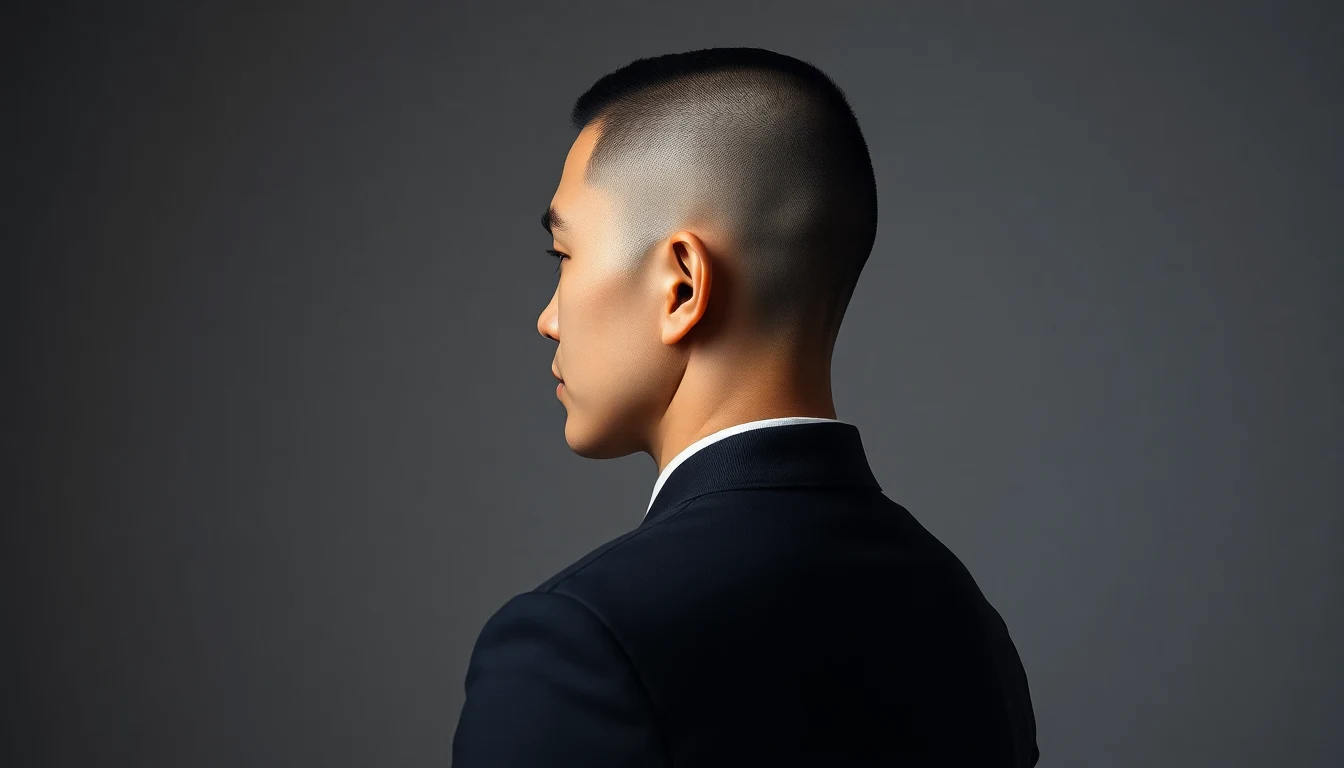
Why it works on Asian hair: The high and tight eliminates the problem area on the sides, where thick hair tends to stick outward. By taking the sides to a #0 or #1, you remove the hair before it pushes out. The dark top creates a strong contrast that defines the head shape. This is also the standard-issue military cut in the Republic of Korea Armed Forces. It’s become a fashion statement in Seoul streetwear circles. Understanding asian buzz cut is key to a great grooming routine.
Maintenance: The sides need a trim every 10 to 14 days. The top grows out more gracefully, so you can stretch it to 3 weeks between full cuts. Learn more about types of fades to decide how you want the sides handled.
Fade with Buzz Top
What it is: A short buzz on top (#2 or #3) that fades to skin at the temples and neckline. The most popular variation I see for Asian men under 30.
Why it works on Asian hair: The fade solves the biggest aesthetic challenge of an Asian buzz cut: the sides. Without a fade, thick Asian hair at the temples creates a boxy, helmet-like shape as it grows out. A fade eliminates that entirely, creating a gradient that looks intentional and polished.
Fade height options for Asian men:
- Low fade: Starts just above the ear. Subtle. Good for conservative workplaces or if you want a clean look without making a statement. Check our low fade guide for details.
- Mid fade: Starts at the temple. The most versatile option. Balances the head shape well for round and oval faces. See our mid fade breakdown.
- High fade: Starts above the temple, near the parietal ridge. More dramatic. Elongates the face, so it works for round faces but can make oblong faces look even longer. Full guide in our high fade haircut article.
Maintenance: A fade on Asian hair needs a touch-up every 10 to 14 days. The grow-out shows faster on dark hair because the contrast between the faded area and new growth is more visible. Budget for barber visits every two weeks.
How Long Does It Take to Grow Back?
Asian hair grows at roughly half an inch (12mm) per month, which is slightly faster than the global average. Here’s a realistic timeline for growing out a #2 buzz cut:
- Week 2: Your #2 now looks like a #4. The sides start to stick out. You’ll feel tempted to trim.
- Week 4: About an inch of growth. You’re in the awkward phase. The top sits flat but the sides push outward. A cap is your best friend.
- Week 8: Two inches on top. Enough length to start experimenting with a textured crop or short side part. The sides still need management. Get a taper to keep the shape clean while the top grows.
- Week 12: Three inches on top. You can now style it properly with product. Consider transitioning into one of the styles from our Korean hairstyles guide if you’re heading in that direction.
The biggest grow-out challenge is the sides sticking out before the top catches up. Regular side trims every 3 weeks while leaving the top alone is the only way through the awkward phase.
Maintenance Guide
Home Maintenance vs. Barber Visits
A uniform buzz cut (#2 or #3 all around) is one of the few haircuts you can maintain at home. Buy a quality clipper, set the guard, and run it over your entire head. Ten minutes. For picks, check the best clippers guide. Look for a motor strong enough to handle thick hair without snagging. Wahl and Andis both make professional-grade options under $60 that won’t stall on dense Asian hair. Any variation with a fade should be done by a barber. Don’t try fading at home.
Trim Schedule
| Variation | Trim Frequency | Where to Do It |
|---|---|---|
| Classic buzz (#2 all over) | Every 2 weeks | Home or barber |
| Induction cut (#0 or #1) | Every 7 to 10 days | Home or barber |
| Crew cut (graduated) | Every 2 to 3 weeks | Barber recommended |
| Butch cut (#3 to #4) | Every 2 weeks | Home or barber |
| High and tight | Every 10 to 14 days (sides) | Barber |
| Fade with buzz top | Every 10 to 14 days | Barber |
Products for Short Asian Hair
You need almost nothing for styling. But “almost nothing” is not “nothing.” Here’s what matters:
Scalp sunscreen. Your scalp is now exposed to UV. Use a lightweight SPF 30+ sunscreen when you’re outdoors for more than 20 minutes. A mattifying formula prevents the oily-head look.
Shine control. If you have oily skin, that oil extends to your scalp and can make a buzz cut look greasy by midday. A mattifying scalp spray handles this.
Scalp moisturizer. Going from longer hair to a buzz cut exposes your scalp for the first time. Dryness and flaking are common in the first two weeks. A lightweight, fragrance-free moisturizer after your shower prevents visible flaking against dark hair. When it comes to asian buzz cut, technique matters most.
Matte clay (crew cut and butch cut only). If you’re wearing a #3 or #4 on top, a pea-sized amount of matte clay pressed onto the top keeps it lying flat instead of spiking upward. When it comes to asian buzz cut, technique matters most.
What to Tell Your Barber
Here’s exactly what to say for each variation. Screenshot this table and show it on your phone.
| Variation | Exact Phrases to Use |
|---|---|
| Classic buzz | “Number 2 all around, squared off at the neckline.” If you want it rounded at the back instead: “Number 2 all over, rounded at the nape.” |
| Induction cut | “No guard, all over.” Or: “Zero all around, as short as the clippers go without a razor.” |
| Crew cut | “Number 3 on top, blended down to a 1 on the sides. Taper at the neckline.” If you want a fade instead of a taper: “Number 3 on top, mid fade on the sides.” |
| Butch cut | “Number 4 all around, clean up the neckline.” Keep it simple. |
| High and tight | “Number 3 on top, skin on the sides up to the parietal ridge. No blend, hard transition.” Bring a reference photo for this one. |
| Fade with buzz top | “Number 2 on top, mid fade to skin on the sides.” Specify your fade height: “Start the fade at the temple” (mid) or “Start the fade above the ear” (low). |
Pro tip: If your barber doesn’t have experience with Asian hair, add: “My hair is thick and sticks out on the sides as it grows, so take the sides a half guard shorter than you normally would.” That one sentence prevents the most common mistake: leaving the sides too long because they look full initially but push outward within days.
Facial Hair and the Asian Buzz Cut
I’ll be straight with you: the “buzz cut plus designer stubble” combo that looks effortless on some men is harder to pull off for many Asian men. East Asian facial hair tends to be patchier, with growth concentrated on the chin and upper lip rather than even cheek coverage. If your facial hair grows in evenly, short stubble (3 to 5 days) with a buzz cut looks sharp. If your growth is patchy, go clean-shaven. A patchy beard next to a clean buzz cut draws attention to the inconsistency. A clean face next to a clean head reads as intentional.
If you can grow a full goatee but not full cheeks, that works. A goatee adds chin length, which balances a round face. Combined with a buzz cut and a high fade, it’s a strong look for Asian men with rounder features.
Frequently Asked Questions
What guard number should Asian men use for a buzz cut?
Start with a #2. It’s the most universally flattering length for dark, dense Asian hair: short enough to require zero styling, long enough for full coverage without visible scalp. If you want shorter, try a #1 on your second or third cut after you know what your head shape looks like. Avoid jumping straight to a #0 on your first attempt.
Does a buzz cut look good on Asian face shapes?
Yes, but the variation matters. Oval and square faces work with almost any buzz cut style. Round faces benefit from a fade on the sides for vertical proportion. Oblong faces should stick with a uniform length and avoid high fades that elongate the silhouette. Match the cut to your proportions, not a reference photo.
How often do you need to maintain an Asian buzz cut?
Every 2 weeks for a standard #2 buzz cut. Asian hair grows about half an inch per month, and thick strands make growth more visually obvious than on finer hair. Faded variations need touch-ups every 10 to 14 days because dark hair makes the contrast more visible.
Will my Asian hair stick up with a buzz cut?
At a #2 or shorter, no. The hair is too short to stand upright. At a #3 or #4, the sides and crown may push outward because of the thick, round cross-section of each strand. Manage this with a fade on the sides or a small amount of matte clay on top. If sticking up is a concern, stay at #2 or shorter.
How long does it take for a buzz cut to grow out on Asian hair?
Roughly 3 months to go from a #2 to enough length for a styled haircut (about 3 inches on top). The awkward phase hits around weeks 3 to 6 when the sides stick out. Regular side trims keep it manageable. Full grow-out to styles like a two-block or comma hair takes 4 to 6 months.
Final Thoughts
The asian buzz cut is one of the cleanest, lowest-maintenance styles you can wear. But it only works if you account for the density, the dark pigment, the tendency to stick out on the sides, and the faster-than-average grow-out. Choose the right guard number, pick the variation that matches your face shape, and commit to a trim schedule.
If you’re on the fence, start with a #3 butch cut. Short enough for the buzz cut experience, long enough to not commit fully. If you like it, go shorter next time. If you want more structure, add a fade. Work with your hair instead of against it.
Further reading: For research-backed grooming advice, see Healthline Men’s Health.
Further reading: For research-backed grooming advice, see Healthline Men’s Health.
Frequently Asked Questions
What clipper guard size should I use for an Asian buzz cut?
For Asian men with thick, dark hair, a #2 or #3 guard typically works best to show texture and definition. Start with a #3 if you want more length, then go shorter with a #2 if you prefer a closer cut, since Asian hair appears denser and more visible than lighter hair types at the same guard size.
Does an Asian buzz cut look good on all face shapes?
Yes, the Asian buzz cut can work for most face shapes, but the key is understanding how your specific face shape interacts with the style. Oval and square faces tend to look sharp with a buzz cut, while rounder faces may benefit from slightly longer guards or adding definition with fades on the sides.
How often do I need to get my Asian buzz cut maintained?
Most Asian men need to maintain a buzz cut every 2-3 weeks to keep it looking sharp and even. Since Asian hair grows at a steeper angle and appears thicker, the regrowth becomes more noticeable faster than on other hair types, so regular trims help maintain the clean aesthetic.
Why does my Asian hair stick up after a buzz cut?
Asian hair grows at a steeper angle from the scalp and has thicker individual strands, which can cause it to stand up more noticeably than other hair types. Using a light hair cream or styling product after a buzz cut can help tame any flyaways and give you a smoother, more polished look.