
If you want to master best face wash for black, this guide covers everything you need to know. Last updated: February 2026 by Darius Washington, Black Men’s Grooming Editor
I grew up watching my uncle wash his face with the same Irish Spring bar he used on his whole body, then wonder why his skin stayed ashy and breaking out. Every “best face wash” list online seems written for someone who has never dealt with hyperpigmentation, razor bumps, or skin that gets oily and dry at the same time. If you are looking for the best face wash for Black men, you need a cleanser built around how melanin-rich skin actually works.
This guide covers six cleansers vetted against the specific needs of Fitzpatrick V-VI skin. Every pick addresses at least one of the big four: hyperpigmentation, razor bumps, oiliness, and sensitivity. I break down ingredients, explain why they matter for your skin tone, and tell you which ones to skip.
If you only read one section, jump to the comparison table. For the full ingredient science and routine breakdown, keep reading.
Our Top Picks at a Glance: Best Face Wash For Black
| Face Wash | Price | Key Ingredients | Best For | Skin Type | Rating |
|---|---|---|---|---|---|
| Bevel Face Wash | $13-16 | Tea tree oil, salicylic acid, witch hazel | Razor bump prevention | Oily, acne-prone | 5/5 |
| CeraVe Foaming Facial Cleanser | $15-18 | Ceramides, niacinamide, hyaluronic acid | Barrier repair and hydration | Normal, oily, combination | 4.5/5 |
| SheaMoisture African Black Soap | $10-13 | African black soap, tea tree oil, shea butter | Deep cleansing and acne | Oily, combination | 4.5/5 |
| Lumin Charcoal Cleanser | $12-15 | Activated charcoal, salicylic acid, green tea | Oil control and pore cleansing | Oily, combination | 4/5 |
| Jack Black Pure Clean | $22-28 | Aloe, sage, rosemary, chamomile | Sensitive and dry skin | Dry, sensitive, normal | 4/5 |
| Scotch Porter Restoring Face Wash | $11-14 | White willow bark, licorice root, aloe | Hyperpigmentation and tone evening | All types | 4.5/5 |
Why Face Wash Matters More for Melanin-Rich Skin
Black skin has structural differences that change how a cleanser performs. This is not opinion. It is dermatology.

Melanin-rich skin (Fitzpatrick types V and VI) has more melanosomes, the structures that produce and distribute pigment. When that skin gets irritated, those melanosomes go into overdrive. The result is post-inflammatory hyperpigmentation (PIH), dark spots that stick around for weeks or months after a breakout heals. PIH is one of the most common reasons Black patients visit a dermatologist (Taylor et al., 2002, Journal of the American Academy of Dermatology).
Every step in your routine either protects against dark spots or creates new ones. A face wash that is too harsh strips natural oils, triggers inflammation, and starts the PIH cycle before you even reach for moisturizer.
The Big Four: Skin Concerns for Black Men
1. Hyperpigmentation. Dark marks left behind by acne, razor bumps, or irritation. Affects nearly every Black man at some point. The cleanser’s job is to avoid causing new inflammation while gently removing dead skin cells that trap pigment.
2. Pseudofolliculitis barbae (PFB). Razor bumps. Up to 80% of Black men who shave experience PFB (Halder, 1983). Tightly curled hairs grow back into the skin after cutting, causing painful, inflamed bumps. A face wash with chemical exfoliants like salicylic acid helps prevent the dead skin buildup that traps those hairs. (We recommend this Jack Black Double Duty Mens Face.)
3. Oiliness. Research shows that Black skin produces more sebum on average than other skin types (Rawlings, 2006). That excess oil leads to clogged pores, breakouts, and the shine that has you blotting your forehead by noon. But stripping that oil with harsh sulfates triggers rebound oil production, making the problem worse.
4. Sensitivity and dryness. This sounds contradictory if your skin is oily, but transepidermal water loss (TEWL) is higher in Black skin (Berardesca et al., 1998). Translation: your skin loses moisture faster through the surface, even while producing excess oil. That is why combination skin is so common among Black men. Oily in the T-zone, dry everywhere else.
The 6 Best Face Washes for Black Men (Reviewed)
1. Bevel Face Wash
Best for: Razor bump prevention and acne-prone skin
Tristan Walker built Bevel because he was tired of razor bumps ruining his morning. The formula combines tea tree oil (antimicrobial), salicylic acid (chemical exfoliant), and witch hazel (astringent) into a cleanser that targets the exact cascade that leads to PFB.
I have used this one after shaving and the difference is noticeable within a week. The salicylic acid keeps dead skin from trapping freshly cut hairs. The tea tree oil controls the bacteria that turn a trapped hair into an inflamed bump. The glycerin base holds hydration while the actives do their work, so it does not strip you dry.
Key ingredients: Tea tree oil, salicylic acid (0.5%), witch hazel, glycerin
Pros:
- Designed specifically for Black men’s skin concerns
- Salicylic acid prevents ingrown hairs without irritation
- Black-owned brand (founded by Tristan Walker)
- Pairs seamlessly with the Bevel Shave System for full PFB prevention
Cons:
- Tea tree oil scent is strong if you are sensitive to it
- May be slightly drying for very dry skin types
- Less widely available in stores than CeraVe or SheaMoisture
Works for: Oily skin, acne-prone skin, men who shave regularly, men dealing with active razor bumps.
Skip if: Your skin is very dry or you have a known sensitivity to tea tree oil. Try Jack Black Pure Clean instead.
See Bevel Face Wash
2. CeraVe Foaming Facial Cleanser
Best for: Barrier repair and dermatologist-grade daily cleansing
CeraVe is the face wash dermatologists recommend more than any other. The formula is built around three essential ceramides (1, 3, 6-II) that mimic the lipids your skin naturally produces to hold moisture in. For Black men dealing with that oily-yet-dry combination, ceramides are the fix.
The niacinamide is especially relevant for us. Niacinamide (vitamin B3) reduces the transfer of melanosomes to skin cells, directly addressing hyperpigmentation (Hakozaki et al., 2002, British Journal of Dermatology). PIH prevention built into your daily cleanser. The hyaluronic acid draws water in, so your face feels clean without tightness.
Key ingredients: Ceramides 1, 3, 6-II, niacinamide, hyaluronic acid
Pros: Mastering best face wash for black takes practice but delivers great results.
- Ceramides rebuild the moisture barrier that harsh cleansers destroy
- Niacinamide helps prevent hyperpigmentation over time
- Fragrance-free, which means less irritation risk
- Available everywhere (Target, Walmart, CVS, Amazon)
- Affordable for the ingredient quality
Cons:
- No salicylic acid, so it will not directly address razor bumps or acne
- Foaming formula may still feel slightly drying for very dry skin
- Not a Black-owned brand
Works for: Normal to oily skin, combination skin, men focused on preventing dark spots, men who want a no-fuss daily cleanser.
Skip if: You need active acne or razor bump treatment. Pair it with a salicylic acid toner, or switch to Bevel if PFB is your main concern.
See CeraVe Foaming Facial Cleanser
3. SheaMoisture African Black Soap Face Wash
Best for: Deep cleansing, acne, and oily skin
African black soap, known as ose dudu in Yoruba, has been a cornerstone of West African skincare for centuries. The traditional soap is made from plantain skin ash, cocoa pod ash, palm kernel oil, and shea butter. SheaMoisture puts that tradition into a face wash that is less harsh than the raw bar but keeps the cleansing power.
The ash acts as a natural chemical exfoliant, breaking down dead skin cells without the micro-tears from physical scrubs. For Black skin, that distinction matters. Physical exfoliation causes micro-inflammation that triggers hyperpigmentation. Chemical exfoliation from the ash works without that risk. For more guidance, GQ provides expert resources on men’s grooming.
I reach for this on days when my skin feels congested. After a long day with pores collecting city grime and a visibly oily T-zone, this cleanser cuts through buildup. The shea butter prevents that stripped, tight feeling.
Key ingredients: African black soap, tea tree oil, shea butter, oat extract
Pros:
- Rooted in centuries of West African skincare tradition
- Effective on acne and congested pores
- Shea butter balances the cleansing action so skin is not stripped
- Widely available and affordable
- Black-founded brand
Cons:
- Can be drying if used twice daily on dry skin
- Fragrance from essential oils may irritate very sensitive skin
- The bar soap version is much harsher; make sure you get the liquid face wash
Works for: Oily skin, acne-prone skin, men who want a culturally rooted product with real efficacy.
Skip if: Your skin is dry or sensitive. The tea tree oil and deep-cleansing formula may be too intense for daily use. Try CeraVe or Jack Black instead. (We recommend this Jack Black Skin Saviors Set for.)
See SheaMoisture African Black Soap Face Wash
4. Lumin Charcoal Cleanser
Best for: Oil control and deep pore cleansing
Activated charcoal draws out impurities from pores like a magnet. Lumin pairs it with salicylic acid (BHA that penetrates the pore lining to dissolve sebum) and green tea extract, a potent antioxidant linked to reduced sebum production (Yoon et al., 2003, Journal of Investigative Dermatology).
The texture is a thick, dark gel that lathers into a light foam. It feels effective without that squeaky-clean finish that means your moisture barrier just got destroyed. For guys who blot their forehead twice before lunch, this is a strong contender.
Key ingredients: Activated charcoal, salicylic acid, green tea extract, vitamin E
Pros:
- Activated charcoal effectively draws out pore-clogging impurities
- Salicylic acid prevents ingrown hairs and acne
- Green tea antioxidants help reduce oil production over time
- Solid option for oily-skinned men in hot, humid climates
Cons:
- Can be drying for dry or sensitive skin types
- Charcoal can stain lighter washcloths and towels
- Not as widely available in physical stores
- Not a Black-owned brand
Works for: Oily skin, men living in humid climates, men dealing with frequent breakouts and congested pores.
Skip if: Your skin is dry or reactive. The charcoal and salicylic acid combination may over-dry your face. Scotch Porter offers oil control with more hydration.
See Lumin Charcoal Cleanser
5. Jack Black Pure Clean Daily Facial Cleanser
Best for: Sensitive and dry skin Understanding best face wash for black is key to a great grooming routine.
Not every Black man has oily skin. If you deal with tightness, flaking, or irritation after washing, most cleansers will make it worse. Jack Black Pure Clean is built for the guys who need a cleanser that cleans without taking anything away.
The formula leans on botanicals: aloe vera soothes irritation, rosemary and sage provide gentle antimicrobial action, chamomile calms reactive skin. No salicylic acid, no charcoal, no aggressive surfactants. A cream cleanser that rinses clean and leaves a slight hydrating film.
I keep this in rotation for winter months in Atlanta, when cold air and indoor heating dry out even oily skin. Your barber has probably told you that your skin changes with the seasons. He is right. A cleanser that works in July humidity might wreck your skin in January.

Key ingredients: Aloe leaf juice, sage extract, rosemary leaf extract, chamomile extract
Pros:
- Extremely gentle formula that will not trigger PIH
- Botanical ingredients soothe irritated, reactive skin
- Sulfate-free and fragrance-light
- Works well as a pre-shave wash for sensitive skin
Cons:
- Will not control heavy oiliness or treat acne
- Higher price point than drugstore options
- Not a Black-owned brand
- May not feel “clean enough” if you are used to foaming cleansers
Works for: Dry skin, sensitive skin, eczema-prone skin, men who react to most cleansers, winter skincare routines.
Skip if: You have oily skin and need oil control. This cleanser will not cut through heavy sebum production. Go with Lumin Charcoal or SheaMoisture African Black Soap.
See Jack Black Pure Clean Daily Facial Cleanser
6. Scotch Porter Restoring Face Wash
Best for: Hyperpigmentation and tone evening
Scotch Porter was founded by Calvin Quallis, a Black man who built a grooming line around the specific needs of Black men. The Restoring Face Wash targets uneven skin tone with white willow bark (a natural source of salicylic acid) and licorice root extract, which inhibits tyrosinase, the enzyme that drives melanin overproduction in dark spots (Amer and Metwalli, 2000, Journal of Cosmetic Dermatology).
Licorice root is the standout. Unlike hydroquinone, which can cause ochronosis (a permanent darkening condition) with prolonged use on dark skin, licorice root safely addresses hyperpigmentation over time. This is not a bleaching agent. It evens your tone by calming overactive melanocytes, not by reducing your melanin.
The aloe vera base keeps things hydrating. If hyperpigmentation from old breakouts or razor bumps is your number one concern, start here.
Key ingredients: White willow bark, licorice root extract, aloe vera, calendula extract
Pros:
- Licorice root safely addresses hyperpigmentation without harsh bleaching agents
- White willow bark provides natural, gentle exfoliation
- Black-owned brand built specifically for Black men
- Works across all skin types
- Pairs well with Scotch Porter’s full skincare line
Cons:
- Tone-evening results take consistent use (4-8 weeks minimum)
- May not provide enough oil control for very oily skin
- Less available in big-box stores than CeraVe or SheaMoisture
Works for: All skin types, men focused on fading dark spots and evening skin tone, men who prefer Black-owned grooming brands.
Skip if: You need heavy-duty oil control or acne treatment as your primary concern. Bevel or Lumin will serve you better for those needs.
See Scotch Porter Restoring Face Wash
The Science of Cleansing Melanin-Rich Skin
Understanding your skin is how you stop wasting money on products that do not work for you.
The melanosomes in Fitzpatrick V-VI skin are larger and more individually distributed compared to lighter skin types. When that skin gets irritated, melanocytes produce excess pigment that deposits in the surrounding tissue. That excess pigment is the dark spot you see weeks after a pimple heals. A face wash that irritates your skin is actively creating conditions for new dark spots. The “squeaky clean” feeling from harsh cleansers is your enemy, not your friend.
pH matters. Your skin’s natural pH sits around 4.5 to 5.5. Bar soap runs pH 9-10. That mismatch disrupts your acid mantle, the protective film of sebum that fights bacteria and locks in moisture. Research found that Black skin may have a slightly lower resting pH than lighter skin (Yosipovitch et al., 2000, International Journal of Cosmetic Science). Every cleanser on this list is formulated at skin-compatible pH (5.0-6.5).
Transepidermal water loss (TEWL). Black skin loses moisture through its surface faster than other skin types (Berardesca et al., 1998). A face wash that compromises the barrier starts a cycle: increased water loss leads to dryness, which triggers sebaceous glands to overproduce oil, which leads to breakouts, which leads to PIH. Break the cycle at step one with a cleanser that preserves the barrier.
How to Build a Basic Face Care Routine
The cleanser is step one. But a face wash alone will not fix hyperpigmentation, control oil long-term, or protect your skin from UV damage. Here is the three-step foundation that every Black man needs. This takes under five minutes. When it comes to best face wash for black, technique matters most.
Step 1: Cleanse (Morning and Night)
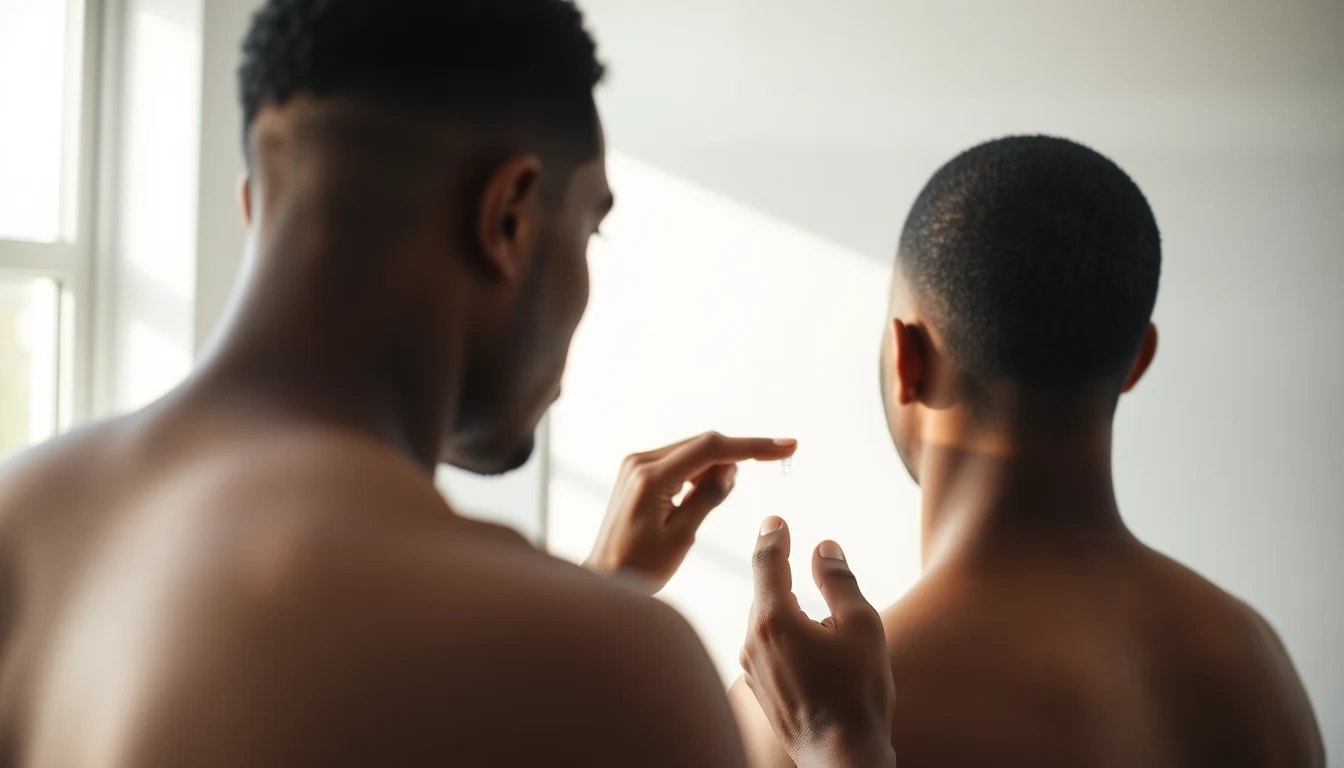
Wet your face with lukewarm water. Hot water strips oils and increases irritation. Dispense a nickel-sized amount into your hands and massage in gentle circles for 30-60 seconds, focusing on the T-zone. Rinse thoroughly. Pat dry with a clean towel. Never rub.
Step 2: Moisturize (Immediately After Cleansing)
Apply while skin is still slightly damp. This locks in surface water. Oily skin: lightweight, oil-free gel. Dry skin: cream with shea butter or ceramides. Combination skin: lightweight lotion, heavier cream only on dry patches. Look for niacinamide in the formula to continue PIH prevention.
Step 3: SPF (Every Morning, Non-Negotiable)
Sunscreen is the hardest sell in the barbershop. “I’m Black, I don’t need sunscreen” is something I heard for years. But melanin provides roughly SPF 13 of natural protection (Halder and Bridgeman-Shah, 1995). That is not enough. UV exposure worsens hyperpigmentation and increases skin cancer risk, which is often diagnosed at more advanced stages in Black men.
The real barrier is that most sunscreens leave a white or gray cast on dark skin. Look for tinted mineral sunscreens or chemical sunscreens that absorb without residue. Black Girl Sunscreen and Unsun Cosmetics both make SPF for melanin-rich skin.
Morning: Cleanse, moisturize, SPF. Three minutes.
Evening: Cleanse, moisturize. Two minutes.
Ingredients to Look For vs. Ingredients to Avoid
Print this list. Keep it in your phone. Check it before you buy anything.
Ingredients That Help Melanin-Rich Skin
| Ingredient | What It Does | Why It Matters for Black Skin |
|---|---|---|
| Salicylic acid (0.5-2%) | BHA that exfoliates inside the pore | Prevents ingrown hairs and PFB by keeping pores clear of dead skin |
| Niacinamide (vitamin B3) | Reduces melanin transfer, strengthens barrier | Directly addresses hyperpigmentation and prevents new dark spots |
| Ceramides | Repair and maintain the moisture barrier | Counteracts higher TEWL in Black skin; prevents the dryness-oiliness cycle |
| Glycolic acid (low %) | AHA that exfoliates the skin surface | Speeds cell turnover to fade dark spots; use cautiously at low concentrations |
| Hyaluronic acid | Draws and holds water in the skin | Boosts hydration without adding oil; ideal for oily-yet-dehydrated skin |
| Licorice root extract | Inhibits tyrosinase (melanin production enzyme) | Safely evens skin tone without bleaching or causing ochronosis |
| Tea tree oil | Antimicrobial and anti-inflammatory | Fights acne bacteria and calms post-shave irritation |
| Aloe vera | Soothes, hydrates, anti-inflammatory | Calms razor burn and reduces inflammation that triggers PIH |
Ingredients to Avoid
| Ingredient | Why It Is Bad for Black Skin | What to Use Instead |
|---|---|---|
| Sodium lauryl sulfate (SLS) | Strips natural oils, destroys moisture barrier, triggers inflammation and PIH | Sodium lauroyl sarcosinate or cocamidopropyl betaine (gentle surfactants) |
| Denatured alcohol (SD alcohol) | Dries skin rapidly, increases TEWL, causes rebound oiliness | Fatty alcohols (cetyl, cetearyl) which actually moisturize |
| Synthetic fragrance | Top irritant trigger; causes contact dermatitis that leads to PIH | Fragrance-free formulas or products scented with natural essential oils |
| Walnut shell / apricot pit scrubs | Jagged particles cause micro-tears that trigger hyperpigmentation | Chemical exfoliants (salicylic acid, glycolic acid) that dissolve, not scrape |
| Benzoyl peroxide (high %) | Effective on acne but can bleach dark skin and fabric at high concentrations | Salicylic acid or tea tree oil for milder acne; consult a dermatologist for severe cases |
How to Choose the Right Cleanser for Your Skin Type
Six options, one face. Here is how to narrow it down.
Razor bumps: Bevel Face Wash. Salicylic acid and tea tree oil target the PFB cycle directly.
Dark spots and uneven tone: Scotch Porter Restoring Face Wash. Licorice root and white willow bark. Give it 4-8 weeks.
Oily skin and breakouts: SheaMoisture African Black Soap for culturally rooted deep cleansing, or Lumin Charcoal for maximum pore-clearing power.
Dry or sensitive skin: Jack Black Pure Clean. Botanical formula, no harsh actives.
All-around daily driver: CeraVe Foaming Facial Cleanser. Ceramides, niacinamide, fragrance-free, available everywhere.
Black-owned brands: Bevel, Scotch Porter, and SheaMoisture. All built by Black founders who understand melanin-rich skin from personal experience.
Frequently Asked Questions
How often should Black men wash their face?
Twice a day, morning and night. If you have very dry skin, use just water in the morning and your cleanser at night. Overwashing strips the moisture barrier and can worsen hyperpigmentation.
Can face wash help with razor bumps?
Yes, as prevention. A face wash with salicylic acid (1-2%) exfoliates the dead skin cells that trap ingrown hairs, the root cause of PFB. For active bumps, you will also need a dedicated treatment like PFB Vanish or Tend Skin.
Is African black soap actually good for Black skin?
Traditional African black soap (ose dudu) is genuinely effective for oily and acne-prone skin. The ash acts as a mild exfoliant. Raw black soap can be drying if overused. Commercial formulations like SheaMoisture’s version are buffered with moisturizers. If you have dry or sensitive skin, a gentler ceramide cleanser may be a better daily option.
What ingredients should Black men avoid in face wash?
Sodium lauryl sulfate (SLS), denatured alcohol (SD alcohol), synthetic fragrance, and physical scrubs with abrasive particles like walnut shell. All of these either strip natural oils, dry the skin, or cause micro-tears that trigger hyperpigmentation in darker skin tones.
Do I really need a separate face wash, or can I use body soap?
Yes. Bar soap runs pH 9-10; your facial skin’s natural pH is 4.5-5.5. That mismatch strips the moisture barrier, increases water loss, and triggers either ashiness or rebound oiliness. The resulting inflammation can cause post-inflammatory hyperpigmentation. A proper face wash is formulated at skin-compatible pH.
The Bottom Line
Here is your recap:
- Bevel Face Wash for razor bump prevention and acne-prone skin
- CeraVe Foaming Facial Cleanser for reliable daily cleansing with barrier repair
- SheaMoisture African Black Soap for deep cleansing rooted in West African tradition
- Lumin Charcoal Cleanser for maximum oil control and pore cleansing
- Jack Black Pure Clean for dry and sensitive skin that reacts to everything
- Scotch Porter Restoring Face Wash for fading dark spots and evening skin tone
Your next step: Pick the cleanser that matches your primary concern, use it consistently for four weeks, and pair it with a moisturizer and SPF. That three-step routine is the foundation.
If your barber has ever told you to “take care of your skin” without telling you how, now you know how. Start tonight.
For more, check out our guide to types of fades, the best clippers for fades, or our taper fade haircut breakdown.
Further reading: For research-backed grooming advice, see Healthline Men’s Health.
Explore more tips at CulturedGrooming.com.
Frequently Asked Questions
What makes the best face wash for Black men different from regular cleansers?
The best face wash for Black men is specifically formulated to address melanin-rich skin concerns like hyperpigmentation, razor bumps, and uneven skin tone. These cleansers typically contain ingredients that maintain your skin’s moisture barrier while effectively removing oil and impurities without over-drying.
Can face wash help prevent razor bumps and ingrown hairs?
While face wash alone won’t eliminate razor bumps, using a gentle cleanser designed for Black skin helps reduce inflammation and prevent bacterial buildup that worsens bumps. Paired with proper shaving technique and post-shave care, the right cleanser is an essential part of preventing ingrown hairs.
Should I use a foaming or creamy cleanser if I have oily skin?
Foaming cleansers work well for oily skin as they help remove excess sebum, but you need to choose one that doesn’t strip your skin completely. Look for formulas with ingredients like ceramides or natural oils that cleanse effectively while maintaining your skin’s natural moisture balance.
How often should Black men wash their face?
Most dermatologists recommend washing your face twice daily, morning and night, with a gentle cleanser suited for your skin type. If you have sensitive or dry skin, you can reduce this to once daily and use lukewarm water to avoid further irritation.