A locking gel has a narrow job. Locs form as coily hair knots and interlocks over time, and a gel holds the sections in place and tidies the new growth between retwists. It does not create the lock. That distinction matters because most of the mistakes people make with locking products come from asking the gel to do more than hold, and from choosing a formula that leaves a residue the hair has to carry for weeks.
How this guide was produced: Cultured Grooming does not buy or test the products it covers. This guide draws on manufacturer specifications and ingredient lists, published guidance from dermatology and barbering sources, and publicly available owner reviews.
What’s Actually Happening When You Gel Locs
Coily hair is drier than other hair types and more prone to breakage, according to the American Academy of Dermatology (AAD). It recommends conditioning all of the hair, not just the ends, and washing at a minimum every 2 to 3 weeks for scalp and hair health. For anyone who styles with gels, oils, creams or pomades, the AAD suggests a clarifying shampoo before the moisturizing shampoo. That single line is the best practical guide to buildup: the more product you put on, the more a clarifying wash has to remove.
Research note: Tight buns or ponytails, attached weaves or extensions, and tight braids such as cornrows and dreadlocks are believed to be the highest-risk hairstyles for traction alopecia.[1] More research-backed grooming statistics
The second concern is tension. The AAD lists locs among the styles that can cause traction alopecia when they are too tight, and says the hairline is one of the first places it shows. Its advice for locs and braids is to loosen them around the hairline, to opt for thicker locs, and to keep them short because longer hair is heavier and pulls more. A strong-hold gel makes it easier to retwist tightly, so hold is something to use with restraint rather than maximize.
How to Read a Locking Gel Label
Brands do not publish test data for locking gels, so the comparison comes down to the ingredient list and what the maker says the product is for.
- Base. A water-first formula (the first ingredient is water or aqua) generally behaves like a gel. A formula that leads with oils, butters or wax behaves like a pomade and sits on the hair longer.
- What the product is made for. A product labelled for waves, edges or braiding is not automatically a locking product. Check what the maker says about locs specifically.
- Heavy ingredients. Oils and butters can leave residue, which is why the AAD points to clarifying shampoo for people who use gels, oils, creams or pomades.
- Fragrance. It appears on the label as fragrance or parfum, or as a vegetable aroma. It can irritate sensitive skin, so note it if your scalp reacts easily.
- Growth claims. A line about thicker hair growth is a marketing claim. A hold gel sits on the hair; it does not change the follicle.
The Two Products on This Page
SuperGro Hair Gel Extra Hold
SuperGro is made by Genuine African Formula, and its store describes the gel as a blend of plants, oils, vitamins, minerals, amino acids and herbal extracts. The Amazon listing in the card is the 4 oz size and names braiding, locking, twisting and retwisting as uses. The ingredient list on the maker’s store page, which is for the 16 oz size, leads with water, followed by coconut oil, virgin olive oil and safflower oil, then a run of plant extracts, glycerin, Jamaican black castor oil, honey, shea butter, hydrolyzed keratin, biotin and a fragrance component listed as vegetable aroma. Check the 4 oz label to confirm it matches.
Read as a spec sheet: this is a water-based gel with a lot of oils and butters further down the list. That combination suits a person who wants a moisturizing feel and a flexible hold. It is also the combination the AAD’s clarifying-shampoo advice anticipates, so a regular clarifying wash is part of the routine. The maker’s growth claims come without evidence on the page and should be treated as marketing.

Ocean View Deep Waves Pomade
This one needs an honest flag. The Amazon title calls it a wave grease and wave pomade for 360 waves, with a strong hold and a hydrating formula, in a 4 oz jar. It is positioned for waves, not for locs. The maker’s own website returned an expired-site page when it was checked for this guide, so no ingredient list or hold rating could be confirmed from the maker. A pomade positioned for waves is a poor default for locs unless the maker says otherwise, because the style depends on a heavy, long-lasting coat.
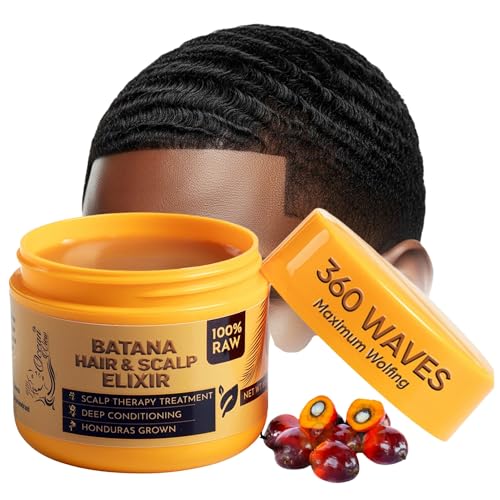
Pick it only if you already use it for waves and want a hair-care pomade in the house. For locs, start with a product its maker names for locking or retwisting. Shopping for a man with locs? See our gifts for men with locs, from hood dryers to loc jewelry.
Who Each Choice Suits
- SuperGro on paper: a water-based, oil-rich gel for someone who wants moisture and a flexible hold at a modest strength, and who will wash out buildup regularly.
- Ocean View on paper: a wave pomade. It fits a wave routine, not a loc routine.
- Skip both if you need a documented ingredient list for every product, a certified fragrance-free formula, or a gel the maker explicitly sells for locs.
A Simple Gel Routine for Locs
- Start from clean, damp hair so the gel spreads evenly rather than sitting in clumps.
- Use a small amount at the new growth, and work toward the roots rather than coating the whole loc.
- Keep the retwist loose enough that the hairline is not pulled, as the AAD advises for locs and braids.
- Moisturize the length with a leave-in or light conditioner; the AAD says to condition all of the hair.
- Wash with a clarifying shampoo before a moisturizing one when you have been layering gels, oils or pomades.
- Wash at minimum every 2 to 3 weeks, the AAD’s floor for curly and coily hair.
For related reading, see our guides to gel for 4C hair and hair moisturizers for Black men.
Frequently Asked Questions
Does a locking gel make locs form faster?
No. A gel holds the hair in place between retwists and keeps the new growth neat. The locking process itself comes from the hair knotting and interlocking over time.
Can locking gel cause buildup?
Yes, especially formulas heavy in oils, butters or wax. The AAD suggests a clarifying shampoo before a moisturizing shampoo for people who style with gels, oils, creams or pomades.
How tight should I retwist?
Loose enough that the hairline is not pulled. The AAD lists locs among the styles that can cause traction alopecia when too tight, and advises loosening them around the hairline.
Is a wave pomade safe to use on locs?
The maker of a wave pomade positions it for waves, so it is not designed or documented for locs. Choose a product its maker names for locking or retwisting, and check the ingredient list for heavy waxes and oils.
How often should I wash locs?
The AAD’s floor for curly and coily hair is a wash at least every 2 to 3 weeks. More often can dry the hair, so match it to your scalp and how much product you use.
The Short Version
Gel holds; it does not lock. Choose by base and ingredient list, keep the retwist loose near the hairline, and clarify regularly so product does not stack up. Of the two products here, SuperGro is the one whose listing names locking and retwisting, and Ocean View is a wave pomade that fits a wave routine better than a loc one.
References
- Traction alopecia: the root of the problem. Clinical Cosmetic and Investigational Dermatology, 2018