
I grew up in my uncle’s barbershop in Atlanta, watching men with beards of every length sit in that chair and ask the same question: “How do I keep this thing looking right?” Black men beard care is not the same game as the generic advice plastered across every grooming blog on the internet. Our beards grow differently. They curl tighter. They dry out faster. They catch ingrown hairs like no one else’s. And if you have been following a routine built for straight hair, you have probably been fighting your beard instead of working with it. This guide is the one I wish existed ten years ago. I am going to walk you through every step of a complete beard care routine built specifically for coarse, curly, and coily facial hair, from washing to oiling to trimming to shaping. Whether you are growing your first beard or maintaining one you have had for years, this is your playbook.
If you only read one section, jump to The Daily Routine for a step-by-step system you can start tonight.
Understanding Black Beard Hair: Why It Needs Different Care
Before we get into the routine, you need to understand what makes your beard hair different at a structural level. Black men’s facial hair typically falls in the 3C to 4C range on the Andre Walker hair typing system. That means tight coils, sometimes Z-pattern kinks, and strands that naturally curl back toward the skin.
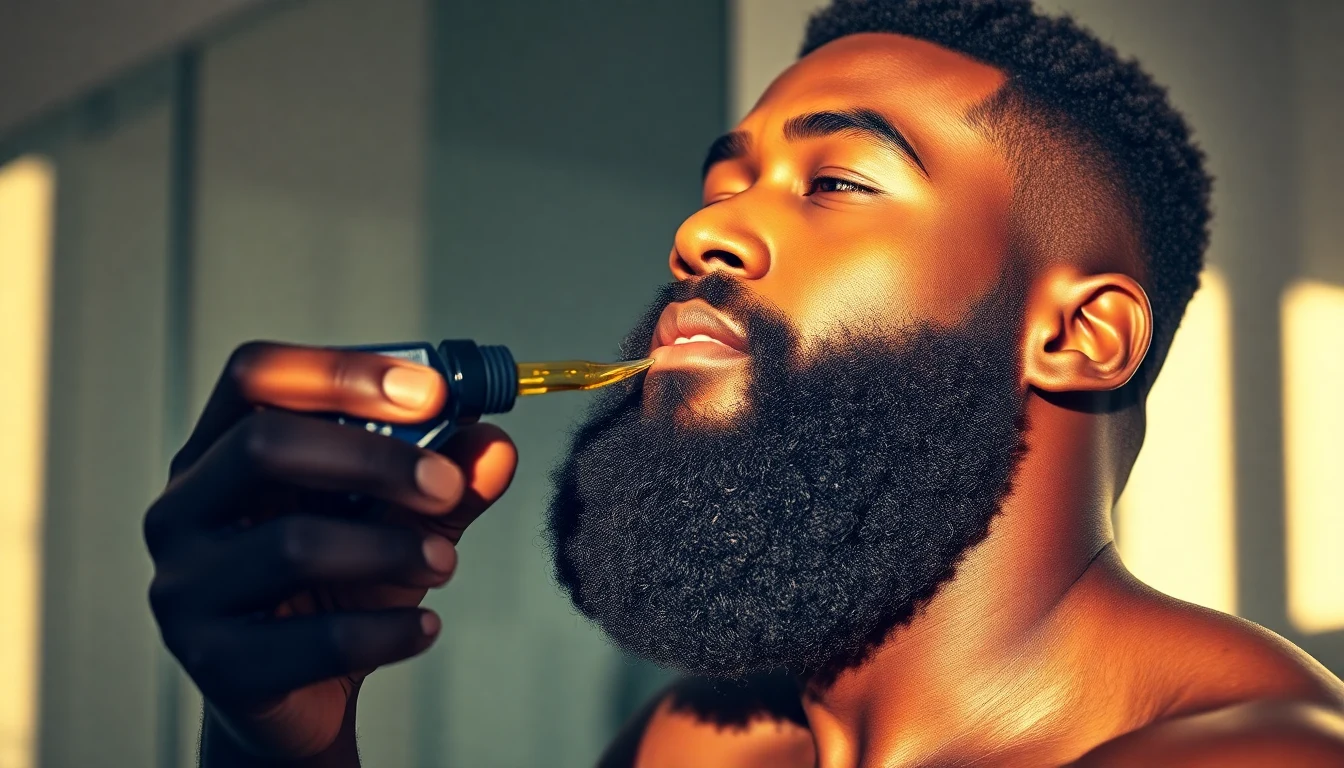
This creates three specific challenges that no amount of generic “beard balm” will solve:
- Moisture loss. Coily hair has more twists and bends per inch than any other hair type. Each bend is a weak point where the cuticle lifts, letting moisture escape. According to the Journal of Cosmetic Science, tightly coiled hair loses moisture at roughly twice the rate of straight hair.
- Ingrown hairs. When a tightly curled strand is trimmed or shaved, it curves back into the skin as it grows. This causes pseudofolliculitis barbae (PFB), which affects up to 80% of Black men who shave regularly (Halder, 1983; Journal of the American Academy of Dermatology). Even men who grow full beards still deal with ingrowns along the cheek line and neckline.
- Uneven growth patterns. Coily beards often appear thinner or patchier than they actually are because the curls shrink up to 75% of their true length. A beard that looks like half an inch could be two inches long when stretched.
Once you understand these three realities, the rest of the care routine makes sense. Everything we do, from washing frequency to oil selection to trimming technique, is designed to address moisture loss, prevent ingrowns, and work with your curl pattern instead of against it.
Beard Types and Growth Patterns for Black Men
Not every Black man’s beard grows the same way. Here is what I have observed in over 100 barber interviews and years of covering this topic:
| Growth Pattern | What It Looks Like | Best Approach |
|---|---|---|
| Full and dense | Even coverage across cheeks, chin, and jawline. Hair is thick and coily. | Focus on moisture and shaping. You have the canvas; keep it conditioned. |
| Strong chin, thin cheeks | Thick growth on the chin and jawline, sparse or patchy on the cheeks. | Keep cheeks short or lined up. Let the chin and jaw do the work. See our beard style guide for styles that complement this pattern. |
| Goatee-dominant | Growth concentrated around the mouth and chin, minimal sideburn connection. | Lean into it. A sharp goatee with a clean cheek line is one of the most classic looks. Check out our guide on what to do when your beard won’t connect. |
| Patchy and uneven | Scattered growth with visible gaps. Some areas thick, others thin. | Read our complete guide on how to fix a patchy beard for proven strategies. Shorter styles often look sharper than trying to grow through patches. |
| Slow grower | All areas grow, but slowly and thinly. Takes months to see real length. | Patience plus the right growth support. See our beard growth products roundup for options backed by actual evidence. |
Identify your pattern honestly. The best beard care routine starts with accepting what you are working with, not fighting to become something your genetics did not design.
The Complete Beard Care Routine for Black Men
This is the core system. I am breaking it into daily, every-other-day, and weekly steps so you are not spending an hour in the mirror every morning. Consistency matters more than intensity.
Step 1: Washing Your Beard (2-3 Times Per Week)
The biggest mistake I see? Washing the beard every single day. For Black men with coily facial hair, daily washing strips the natural oils your beard desperately needs. Those oils (sebum) have to travel down a coiled strand, which is much harder than sliding down a straight one. Washing too often means the oil never makes it to the ends.
Frequency: 2 to 3 times per week. If you work in a dusty or sweaty environment, rinse with water on off-days but skip the shampoo.
What to use: A sulfate-free beard wash or a gentle co-wash. Regular head shampoo is too harsh. Regular body soap is even worse. Look for products with glycerin, aloe, or shea butter as base ingredients.
How to wash:
- Wet your beard thoroughly with warm water. The warmth opens up the hair cuticle slightly, letting the cleanser actually work.
- Apply a quarter-sized amount of beard wash to your palms and work it into the beard using your fingertips, not your nails. Get down to the skin underneath.
- Massage for 30 to 60 seconds. This is also good for stimulating blood flow to the follicles.
- Rinse completely with lukewarm water. Leftover product causes buildup, which causes flaking, which looks like dandruff and is not the look you want.
- Finish with a cool water rinse to help close the cuticle and lock in moisture.
What I use: Scotch Porter Moisturizing Beard Wash. It is Black-owned, sulfate-free, and leaves the beard clean without that stripped, straw-like feeling. For the best shampoo options for Black men, check our full roundup.
Step 2: Conditioning (Every Wash Day)
If washing is step one, conditioning is step 1B. You never wash without conditioning. Think of it like this: washing removes dirt and excess oil, but it also removes some of the good moisture. Conditioning puts it back.
Types of conditioners:
- Rinse-out conditioner: Use every wash day. Apply after shampooing, let it sit for 2 to 3 minutes, then rinse. This is your baseline.
- Leave-in conditioner: Apply after towel-drying the beard on wash days and on non-wash days when the beard feels dry. This is your daily moisture insurance.
- Deep conditioner: Use once every 1 to 2 weeks. Leave on for 10 to 15 minutes, optionally under a warm towel. This is your heavy-duty restoration.
What to look for in a conditioner: Shea butter, jojoba oil, coconut oil, glycerin, and vitamin E. Avoid conditioners heavy in silicones; they coat the hair and create a barrier that blocks moisture over time.
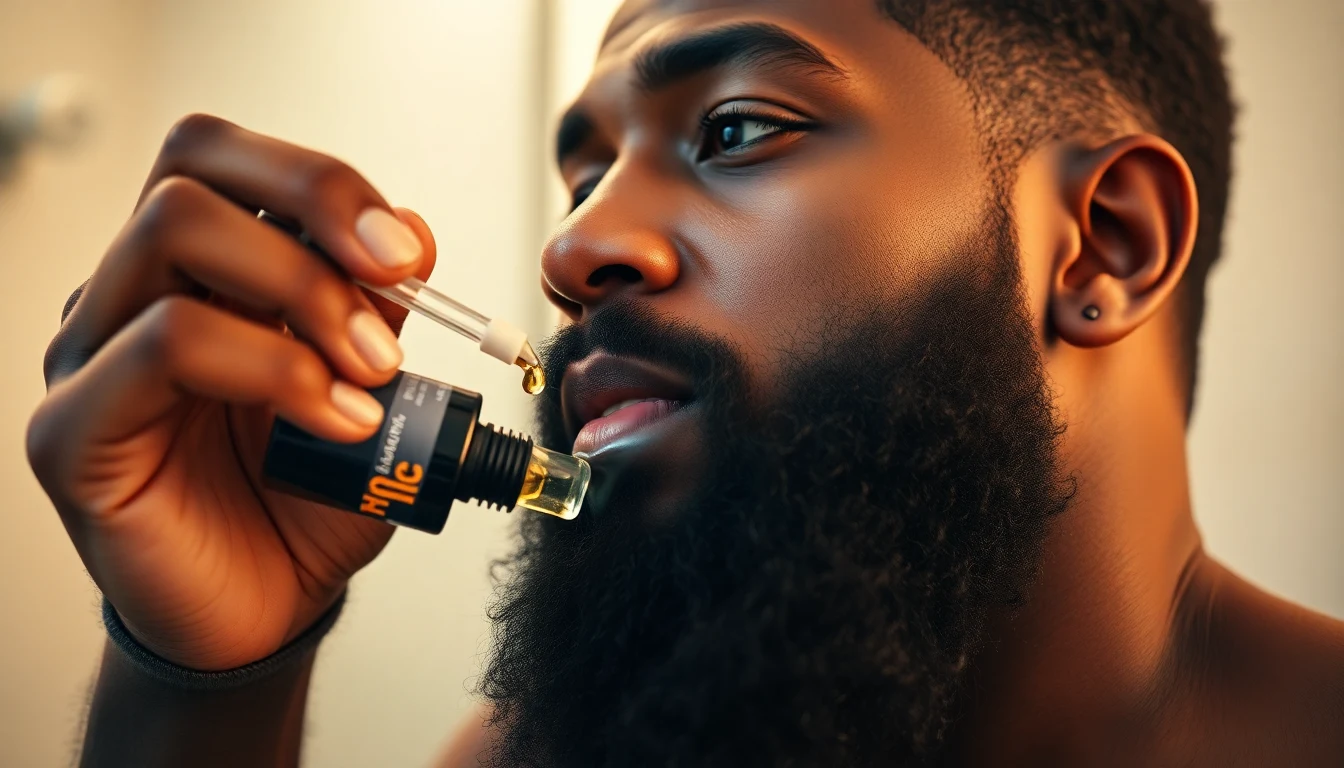
Mielle Organics and SheaMoisture both make solid conditioners that work well for coily beard hair. TGIN’s Honey Miracle Hair Mask doubles as a beard deep conditioner if your beard is medium to long.
Step 3: Oiling the Beard (Daily)
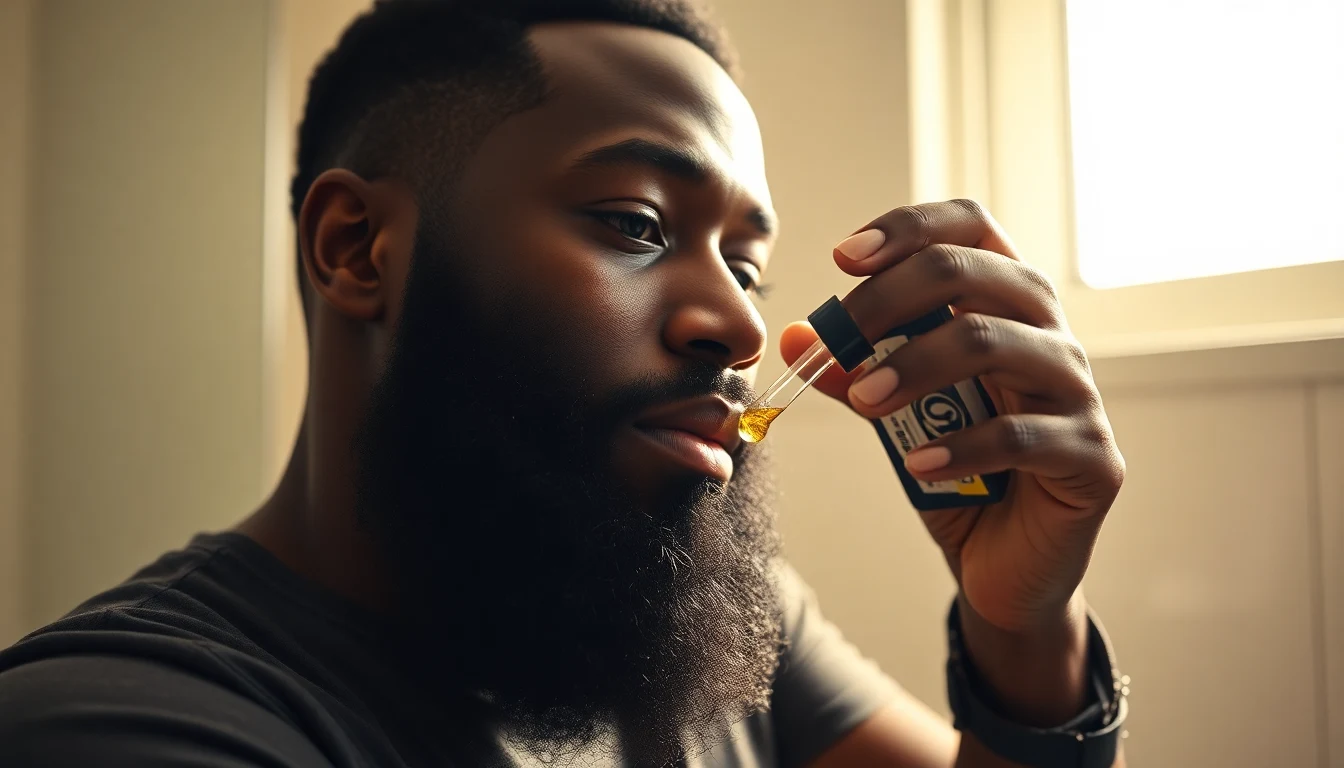
Beard oil is the single most important product for Black men with coily beards. Full stop. If you do nothing else from this guide, oil your beard every day. Mastering black men beard care takes practice but delivers great results. Mastering black men beard care takes practice but delivers great results.
Here is why it matters: the natural oil your skin produces (sebum) has a difficult time traveling down tightly coiled strands. The curves and kinks in each strand create friction points where oil gets stuck. Beard oil supplements what your body cannot distribute on its own.
How to apply beard oil:
- Start with a damp beard (after washing or after patting down with a warm, wet cloth).
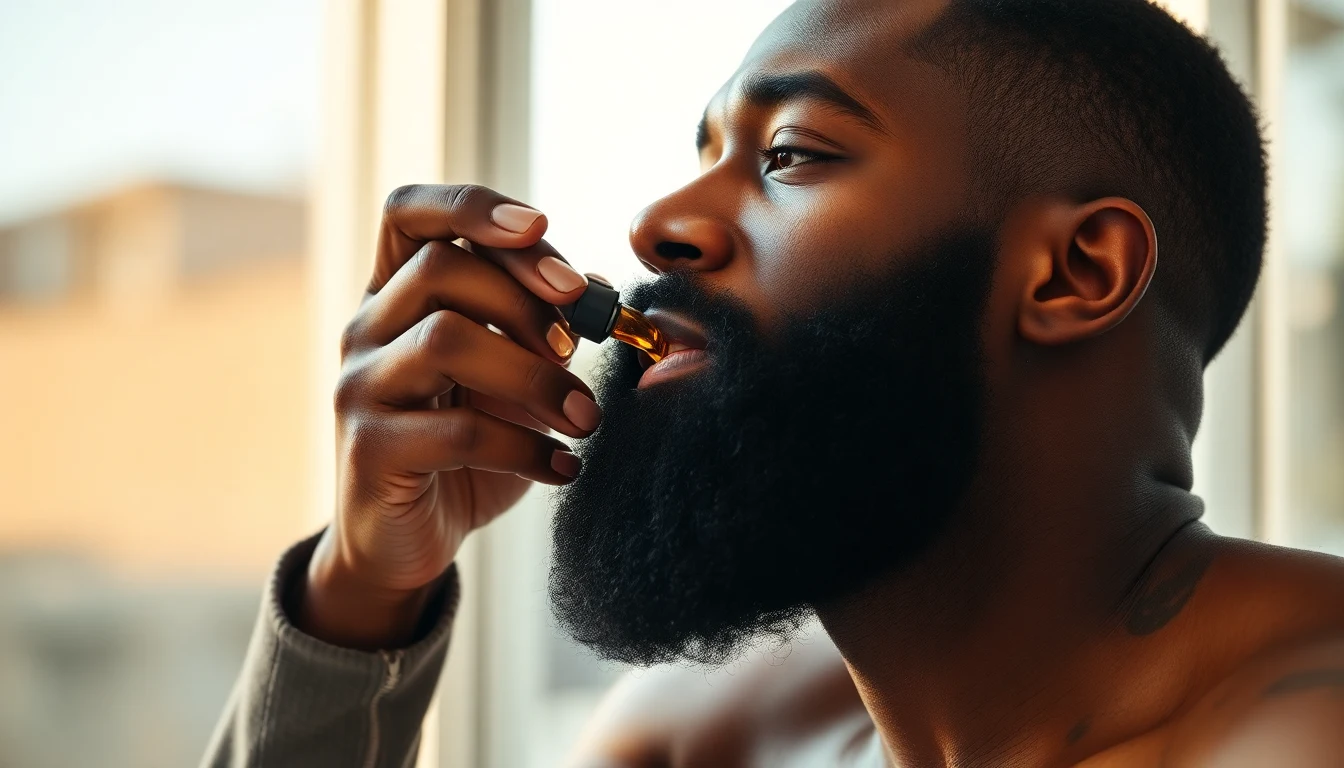
- Dispense 3 to 5 drops into your palm. For longer beards, use 6 to 8 drops.
- Rub your palms together to warm the oil.
- Work the oil into the beard starting from the chin and working outward. Use your fingers to get the oil down to the skin.
- Pay extra attention to the cheek line and sideburn area, where dryness and ingrowns hit hardest.
Best oils for coily beards:
- Jojoba oil: Closest to natural sebum. Lightweight, absorbs fast. Best for daily use.
- Castor oil (Jamaican Black Castor Oil): Thick, heavy, excellent for moisture sealing. Best for nighttime application. Traditionally used in the diaspora for hair growth.
- Argan oil: Rich in vitamin E and fatty acids. Good for reducing frizz and adding shine without greasiness.
- Sweet almond oil: Lightweight and mildly antibacterial. Good for men with sensitive or acne-prone skin beneath the beard.
For curated options tested on textured facial hair, check our best beard oil for Black men roundup.
Step 4: Brushing and Combing (Daily)
Brushing is not about vanity. It distributes oil, trains the hair direction, and prevents tangles that turn into knots that turn into breakage. For coily beards, the tool you use matters as much as the technique.
Brush vs. comb: For more guidance, AAD provides expert resources on Black hair care.
| Tool | Best For | When to Use |
|---|---|---|
| Boar bristle brush | Short to medium beards. Distributing oil. Training direction. | Daily, after applying oil. |
| Wide-tooth comb | Medium to long beards. Detangling. Preventing matting. | After conditioning on wash days. Before trimming. |
| Pick comb | Very tight coils (4C). Lifting and shaping an afro beard. | When styling. Use gently to avoid breakage. |
Technique for coily beards:
- Always brush or comb a damp, oiled beard. Never dry. Dry detangling on coily hair snaps strands.
- Start from the ends and work up toward the chin. This prevents you from dragging tangles into bigger knots.
- Brush in the direction you want the hair to lay. Downward for a sleek look, outward for volume.
- Short beards: 1 to 2 minutes of brushing daily. Longer beards: 2 to 3 minutes with a comb first, then a brush.
I keep a boar bristle brush and a Sandalwood wide-tooth comb. The comb goes through after my wash-day conditioning, and the brush handles daily oil distribution.
Step 5: Moisturizing the Skin Underneath (Daily)
Your beard sits on top of skin. If that skin is dry, flaky, or irritated, your beard will look and feel rough no matter how much oil you put on the hair itself. The skin underneath is where itchiness, beardruff (beard dandruff), and ingrown hairs originate.
What to use: A lightweight, non-comedogenic moisturizer. CeraVe Moisturizing Cream works well because it contains ceramides that repair the skin barrier without clogging pores. For our full breakdown, see the best moisturizer for Black men guide.
When to apply: After washing your face (before applying beard oil). Work the moisturizer into the skin under the beard, then apply oil on top to seal everything in. This two-layer approach, moisturizer for the skin and oil for the hair, is the key that most beard care advice misses.
Trimming and Shaping a Coily Beard
Trimming a coily beard is fundamentally different from trimming a straight one. The curls create an optical illusion where your beard looks shorter than it is, and they make asymmetry harder to spot until it is too late. Here is how to do it right.
Trimming at Home
Tools you need:
- A quality beard trimmer with adjustable guards. The best beard trimmers for Black men have fine-tooth blades that do not snag coily hair.
- Barber scissors for stray hairs and precision work.
- A hand mirror (to check your neckline from the side).
How to trim a coily beard:
- Trim when dry, not wet. This is critical. Coily hair stretches significantly when wet. If you trim wet, the beard will shrink up as it dries and look much shorter than you intended. Always trim dry.
- Start with a longer guard than you think you need. You can always take more off. You cannot add it back.
- Trim with the grain first. Go in the direction of growth for an even baseline. Then do a light pass against the grain only if you need more precision.
- Define your neckline. Place two fingers above your Adam’s apple. That is your neckline. Everything below gets trimmed clean. A neckline that is too high looks unnatural, especially on a fuller beard.
- Shape the cheek line. Follow your natural cheek line. Do not try to carve a perfectly straight line unless you are experienced. A natural, slightly curved cheek line looks better on most face shapes.
- Use scissors for outliers. After the trimmer pass, grab stray hairs that stick out at odd angles. Scissors give you single-strand precision.
How often to trim: Every 1 to 2 weeks for maintenance. If you are growing length, trim only the neckline and cheek line and leave the rest alone. Every 4 to 6 weeks, take it to your barber for a professional shape-up.
Working with Your Barber
I cannot overstate how important it is to find a barber who understands coily beard hair. Not every barber does, even at Black barbershops. Some are excellent with fades but have less experience shaping long, textured beards.
What to tell your barber:
- “I want to keep the length but clean up the shape.”
- “My neckline grows back fast, so take it a little lower than usual.”
- “I deal with ingrowns on my cheek line, so please do not go too close there.”
- Bring reference photos. Your barber is not a mind reader. Show them what you want.
If you are still looking for the right barber, that relationship is worth investing in. A good barber who knows your growth pattern saves you hours of frustration. Understanding black men beard care is key to a great grooming routine. Understanding black men beard care is key to a great grooming routine.

- 4oz Face Wash: Gently cleanse and refresh your face with this invigorating wash,
- 4oz Exfoliating Scrub: Exfoliate and renew your skin with this gentle scrub, rem
- 4oz Body Wash: Cleanse and refresh your skin with this invigorating wash, leavin
Common Beard Problems and How to Fix Them
Ingrown Hairs and Razor Bumps
This is the most common complaint I hear from Black men growing beards. Ingrown hairs form when a tightly coiled strand curls back and re-enters the skin, causing inflammation, redness, and painful bumps. It is especially common along the neckline and cheek line, where the hair direction changes.
Prevention:
- Exfoliate the beard area 2 to 3 times per week with a gentle scrub or a chemical exfoliant (salicylic acid or glycolic acid). This keeps dead skin cells from trapping hairs beneath the surface.
- Stop shaving against the grain on the neckline. If you must define the neckline, use a single-blade safety razor or an electric foil shaver with a light touch.
- Keep the beard moisturized. Dry skin creates a tighter barrier that ingrowns cannot push through.
Treatment:
- PFB Vanish (salicylic acid + glycolic acid) is the gold standard for treating active ingrown bumps.
- Tend Skin works as a daily post-trim treatment to prevent new bumps.
- If you are dealing with persistent, painful ingrowns that will not clear, see a dermatologist experienced with skin of color. Prescription-strength retinoids or antibiotics may be necessary.
For shaving around the beard, our guides on the best razors for Black men and best aftershaves to prevent bumps cover the products that actually work.
Beard Dryness and Brittleness
Dryness is the enemy of coily beards. When the hair dries out, it becomes brittle, loses its curl definition, and breaks off. Dryness is also the main cause of beard itch, especially in the early weeks of growth.
Causes:
- Overwashing (more than 3 times per week)
- Using sulfate-heavy shampoos or bar soap
- Not conditioning after every wash
- Skipping beard oil
- Cold, dry winter air or heavy indoor heating
Fix:
- Follow the wash, condition, and oil routine from the section above. Consistency is the fix.
- Add a beard butter or beard balm on top of oil during winter months for extra moisture sealing. Beard butter provides a heavier layer than oil alone.
- Sleep on a satin or silk pillowcase. Cotton absorbs moisture from your beard while you sleep. Silk and satin do not.
Beard Itch
Almost every man deals with beard itch in the first 2 to 4 weeks of growth. The freshly cut hair tips are sharp and poke into the skin as they curl. For Black men, this is amplified because the curl pattern brings those sharp tips back toward the skin faster.
Fix:
- Oil and moisturize daily, even during the stubble phase.
- Use the best face wash for Black men to keep the skin clean and clear beneath the stubble.
- Resist the urge to scratch. Scratching damages the skin and makes ingrowns more likely.
- If itch persists beyond the first month, you may have beard dandruff (seborrheic dermatitis). A gentle dandruff shampoo with ketoconazole, used once a week, can clear it up.
Patchy Growth
Patchiness is one of the most frustrating beard challenges, and it hits harder psychologically when you see other men with full beards. Here is the truth: most “full” beards you see on social media are either genetically gifted, years in the making, or strategically styled to hide gaps.
What to do:
- Give it time. Many men give up at 4 to 6 weeks. Full beard potential does not reveal itself until at least 3 months of uninterrupted growth.
- Choose styles that work with your pattern. A Van Dyke, extended goatee, or chin strap can look incredibly sharp with limited cheek growth.
- Consider growth aids. Minoxidil (the active ingredient in Rogaine) has shown results for beard growth in several studies, though it is an off-label use. Discuss with your doctor before starting. For a full breakdown, read our guide on how to get a thicker beard.
The detailed guide on how to fix a patchy beard covers every strategy in depth, from derma rolling to minoxidil to styling hacks.
Beardruff (Beard Dandruff)
Those white flakes falling from your beard onto a dark shirt? That is beardruff, and it is usually caused by dry skin underneath the beard or by fungal overgrowth (seborrheic dermatitis). It is more visible on darker skin, which makes it extra annoying.
Fix:
- Moisturize the skin underneath daily. Not just the hair. The skin.
- Use a beard wash with tea tree oil 1 to 2 times per week. Tea tree is a natural antifungal.
- If it persists, use a dandruff shampoo (Nizoral or Head & Shoulders Clinical Strength) on the beard once per week, followed by your regular conditioner.
- Brush daily to lift dead skin cells away from the surface.
Seasonal Beard Care Adjustments
Your beard does not need the same care in August as it does in January. Climate affects moisture levels, oil production, and even how fast your beard grows. Here is how to adjust:
| Season | Key Challenge | Adjustment |
|---|---|---|
| Winter | Cold air + indoor heat = extreme dryness | Add beard butter or balm on top of oil. Deep condition weekly. Use a humidifier if possible. |
| Spring | Allergy season. Pollen collects in the beard. | Rinse the beard with water daily (no shampoo). Keep nostrils and beard area clean. |
| Summer | Heat, sweat, and humidity increase oil production. | Use a lighter oil (jojoba only). Wash 3 times per week instead of 2. Keep the neckline extra clean. |
| Fall | Transition from humidity to dryness. Skin adjusts slowly. | Start adding heavier moisture products back in. Check for early signs of dryness and itching. |
The biggest seasonal mistake I see is men keeping the same winter routine through summer. Your face is sweating, your pores are producing more oil, and you are still piling on heavy butter every morning. Scale back in the warm months and scale up when the cold hits.
Product Recommendations by Beard Stage
Different beard lengths need different products. Here is a breakdown organized by where you are in your beard growth journey: When it comes to black men beard care, technique matters most.
Stubble to Short Beard (0 to 1 Inch)
| Product Type | What to Use | Why |
|---|---|---|
| Cleanser | Gentle face wash | Stubble does not need its own shampoo yet. A good face wash handles both. |
| Moisturizer | Lightweight daily moisturizer | Focus on the skin. The beard is too short to need its own products. |
| Oil | Light beard oil (3-4 drops) | Start the oiling habit early. It reduces itch and conditions new growth. |
| Trimmer | Precision trimmer | For neckline and cheek line cleanup. |
Medium Beard (1 to 3 Inches)
| Product Type | What to Use | Why |
|---|---|---|
| Beard wash | Sulfate-free beard shampoo | The beard is long enough now to need its own cleanser. |
| Conditioner | Leave-in conditioner | Daily moisture that stays in the beard. Non-negotiable at this length. |
| Oil | Beard oil (5-6 drops) | Increased length means increased dryness. Use more oil. |
| Brush | Boar bristle brush | Distributes oil and trains direction. |
| Balm | Beard balm (light hold) | Tames flyaways and adds a moisture seal without stiffness. |
Long Beard (3+ Inches)
| Product Type | What to Use | Why |
|---|---|---|
| Beard wash | Sulfate-free beard shampoo + co-wash rotation | Alternate between shampoo and co-wash to avoid stripping. |
| Conditioner | Deep conditioner (weekly) + leave-in (daily) | Long coily beards lose moisture fast. Double up. |
| Oil | Beard oil (8-10 drops) or Jamaican Black Castor Oil | Heavy-duty moisture for serious length. |
| Comb | Wide-tooth comb + boar brush | Comb detangles, brush distributes. Use both. |
| Butter | Beard butter (shea-based) | Maximum moisture lock. Apply after oil for a seal. |
Black-Owned Brands Worth Knowing
When equivalent quality exists, I prioritize Black-owned brands. This is not performative. These companies were built by people who understand our hair and skin from personal experience. When it comes to black men beard care, technique matters most.
- Scotch Porter: Full beard care line designed specifically for Black men. Their beard conditioner is one of the best I have used.
- Frederick Benjamin: Clean ingredients, sophisticated formulations, built for textured hair and melanated skin.
- Bevel: Founded by Tristan Walker. Their single-blade razor system was designed specifically to combat PFB. Excellent for neckline maintenance.
- Mielle Organics: Their rosemary mint oil works well on beards, not just head hair.
- Cantu: Budget-friendly, widely available at Target and Walmart. The Shea Butter Leave-In doubles as a beard leave-in for medium to long beards.
Choosing the Right Beard Style
Your beard care routine should serve your style, not the other way around. Here are the most popular beard styles for Black men and what each one demands in terms of care:
- The Corporate Beard: Short, neat, professionally shaped. Requires trimming every 5 to 7 days and daily oil to prevent dryness at this short length.
- The Full Beard: Maximum length, shaped at the barber. Requires the full routine: wash, condition, oil, brush, butter. Weekly deep conditioning.
- The Van Dyke: Mustache and chin beard connected, cheeks clean. Great for patchy growers. Requires precision trimming and a steady hand on the cheek line.
- The Goatee: Chin and mustache only. Low maintenance compared to a full beard, but the defined edges need regular cleanup.
- The Faded Beard: Beard that transitions seamlessly into a fade haircut. Requires a skilled barber and maintenance visits every 2 weeks.
- The Beard for Bald Men: A full or shaped beard paired with a clean or bald head. One of the sharpest combinations out there. See our dedicated guide on beard styles for bald men.
For a full gallery with photos and styling tips, read our 15 Black men beard styles that look sharp in 2026.
Mistakes That Are Killing Your Beard
I have seen every one of these in my uncle’s chair. Learn from other men’s mistakes.
- Using regular soap or body wash on the beard. Bar soap is alkaline. Your facial hair and skin are acidic. The mismatch strips moisture and disrupts the skin barrier. Use a proper beard wash.
- Trimming when wet. Coily hair stretches 50 to 75% when wet. You will cut too much. Always trim dry.
- Ignoring the skin underneath. The hair gets all the attention while the skin beneath it is dry, flaky, and irritated. Moisturize the skin and the hair.
- Overwashing. Your barber’s uncle’s cousin told you to wash your beard daily. He was wrong. Two to three times per week. That is it.
- Using products designed for straight hair. “For all hair types” almost never means “for 4C coils.” Read the ingredients. If it does not mention moisture-heavy components like shea, jojoba, or argan, it was not built for you.
- Neglecting the neckline. A great beard with a sloppy neckline looks unfinished. Define your neckline every time you trim.
- Giving up too early. Most men quit during the itchy phase (weeks 2 to 4) or the awkward phase (months 1 to 2). The beard you are growing at week 3 is not the beard you will have at month 3. Give it time.
Your Weekly Beard Care Schedule
Here is how to put everything together into a realistic weekly routine. This assumes you have a medium-length beard (1 to 3 inches). Adjust for your length.
| Day | Morning | Evening |
|---|---|---|
| Monday | Wash, condition, oil, brush | Light moisturizer on skin underneath |
| Tuesday | Oil, brush | Leave-in conditioner if needed |
| Wednesday | Rinse with water, oil, brush | Exfoliate cheek line and neckline |
| Thursday | Wash, condition, oil, brush | Light moisturizer on skin underneath |
| Friday | Oil, brush | Leave-in conditioner if needed |
| Saturday | Rinse with water, oil, brush | Deep condition (10-15 min) |
| Sunday | Trim/shape as needed. Oil, brush, balm or butter. | Rest. Your beard is a living thing; let it breathe. |
This schedule takes about 5 minutes on most days and 15 to 20 minutes on wash days. It is not complicated. It is just consistent.
Frequently Asked Questions
How often should Black men wash their beard?
Two to three times per week with a sulfate-free beard wash. Daily washing strips the natural oils that coily beard hair desperately needs. On non-wash days, rinse with water if needed, but skip the shampoo.
Why is my beard so dry and brittle?
Coily beard hair loses moisture faster than any other hair type because of the twists and bends in each strand. The fix is a consistent routine: condition after every wash, apply beard oil daily, and use a beard butter or balm during cold months for an extra moisture seal.
What is the best oil for a Black man’s beard?
Jojoba oil is the best everyday option because it closely resembles your skin’s natural sebum. For heavier moisture, Jamaican Black Castor Oil works well as a nighttime treatment. Argan oil is a strong middle ground. Look for blends that combine two or three of these oils.
How do I stop beard itch?
Beard itch in the first 2 to 4 weeks is normal; it happens when freshly cut hair tips poke the skin. Apply oil and moisturizer daily, even during the stubble phase. If itch persists beyond a month, it may be beardruff (seborrheic dermatitis), which responds well to a dandruff shampoo used once a week on the beard.
How can I make my patchy beard look fuller?
First, give it time. At least 3 months of uninterrupted growth. Patchy areas often fill in as surrounding hair grows long enough to cover gaps. If gaps remain, choose a beard style that works with your growth pattern. A Van Dyke or goatee can look sharper than a thin full beard. For growth assistance, minoxidil shows promise but should be discussed with a doctor first.
Should I trim my beard when it is wet or dry?
Always trim dry. Coily hair stretches significantly when wet, often 50 to 75% longer than its dry length. If you trim wet, the beard will shrink back as it dries and look much shorter than intended.
How long does it take for a Black man to grow a full beard?
Most men need 3 to 6 months to see their full growth potential. Genetics play the biggest role. Some men have dense coverage at 2 months, while others need a full year. Do not compare your month-one beard to someone else’s year-three beard. The timeline is personal.
Your Beard, Your Rules
Here is what to take away from this guide:
- Moisture is everything. Wash 2 to 3 times per week, condition every wash day, and oil daily. This alone solves 80% of beard problems.
- Work with your curl pattern, not against it. Trim dry, brush when oiled, and choose styles that match your growth pattern.
- Take care of the skin underneath. Moisturize the face, exfoliate the cheek and neckline, and treat ingrowns early before they become a problem.
- Be patient. Three months minimum before you judge your beard’s potential. Six months before you see it fully realized.
- Invest in the right products. Products built for textured hair, not “all hair types” formulas that ignore what your beard actually needs.
Your beard is part of your identity. It deserves care that respects what it is, not care that tries to make it something else. Start tonight: oil it, brush it, and stop washing it every day.
For your next step, explore our best beard oils for Black men to find the right daily oil, or browse 15 beard styles that look sharp in 2026 for your next look.
Last updated: February 2026
Further reading: For research-backed grooming advice, see Healthline Men’s Health.
Explore more tips at CulturedGrooming.com.
Further reading: For research-backed grooming advice, see Healthline Men’s Health.