
Last updated: February 2026 by Jack Brennan, Editor-in-Chief
There are men who wear great haircuts. Then there are men whose haircuts become the haircut. For white American men between 1991 and today, no single person has influenced what gets requested at the barbershop more than Brad Pitt. Not Clooney. Not Gosling. Not Beckham (who has his own claim, admittedly). Pitt has held that spot for over three decades because he did something almost nobody else has done: he wore every length, every texture, every era, and made all of them look like the definitive version.
Long surfer hair in 1991. A bleached mess in 1993. Slicked-back perfection in 1999. A flowing mane in 2004. A military undercut in 2014. A platinum buzz in 2019. A relaxed, salt-and-pepper crop in 2025. That is not just a career in Hollywood. That is a complete syllabus in men’s hair.
This guide breaks down every major Brad Pitt haircut from his early career to the present, with barber instructions, product recommendations, and face shape guidance so you can walk into your next appointment and get exactly what you want. No ambiguity, no guessing, no “give me the Brad Pitt” without knowing which one.
If you have ever struggled with how to ask for a haircut, this article will arm you with the vocabulary your barber needs.
Why Brad Pitt Is the Blueprint for Men’s Hair
Before we get into the timeline, it is worth understanding why Pitt, specifically, became the reference point.
First, longevity. His career spans from 1991 to 2026 with continuous A-list visibility. That is 35 years of red carpets, press tours, and magazine covers where his hair was photographed from every angle. Most actors hold the style icon position for a decade at most. Pitt has held it for three.
Second, range. Most male celebrities find one look and stick to it. George Clooney has essentially worn the same Caesar-into-short-crop for 25 years. Leonardo DiCaprio has cycled between two or three styles. Pitt has genuinely worn everything: long, short, buzzed, bleached, slicked, textured, parted, and unstyled. He treated his hair like a wardrobe, changing it completely for roles and personal phases. That meant every few years, a new cohort of men walked into barbershops with a new Pitt reference photo.
Third, approachability. Pitt is a white American man with straight to slightly wavy, medium-density hair. That is the most common hair type among Caucasian men in the U.S. and Europe. His styles were aspirational but not unrealistic. When he wore the Fight Club buzz, you could get that cut at any barbershop in any town for $20. When he grew it long, you just needed patience. There was no exotic texture or density requirement. His hair was, and is, fundamentally normal. That made him the perfect canvas.
Finally, cultural timing. Pitt rose to fame during the 1990s men’s grooming shift, when the metrosexual conversation was just beginning and men were starting to pay attention to their appearance without it being considered vain. His hair became permission for average guys to care about their cut.
Brad Pitt’s Complete Hair Timeline: 1991 to 2026
Here is the full evolution, broken into the distinct eras. Each one changed what men were asking for at the barbershop.
1991-1993: The Surfer Era (Thelma & Louise, A River Runs Through It)
This is where it started. Pitt’s breakout as J.D. in Thelma & Louise introduced the world to a young guy with chin-length golden-brown hair, swept back loosely with zero visible product. It was the California surfer look distilled into a single image: sun-bleached, layered, effortless. In A River Runs Through It the following year, the hair was similar but slightly more styled, parted loosely off-center.
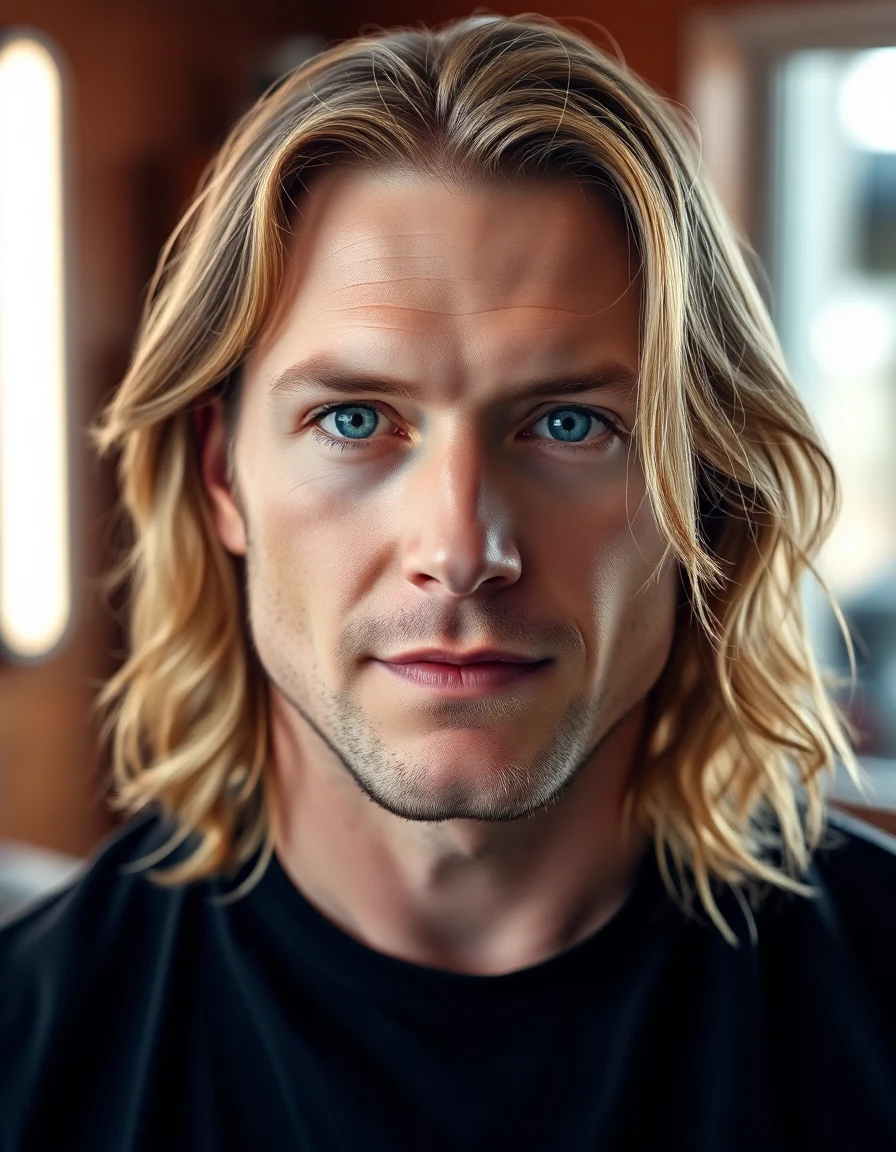
The cut: Chin-length all over (approximately 8 to 10 inches on top, 6 to 7 inches on the sides). Long layers throughout, not one length. No bangs in the traditional sense; the fringe was blended into the overall length and swept back or to the side.
The texture: Natural. Pitt’s hair has a slight wave (roughly Type 1C to 2A), which gave the longer length body and movement without needing product. If your hair is dead straight (Type 1A), you will need a sea salt spray to approximate the texture.
Why it mattered: Before Pitt, the mainstream male hair icons of the late 80s were either the Wall Street power cut or the rock and roll shag. Pitt’s surfer look introduced a middle ground: long enough to be rebellious, clean enough to be romantic. It launched a full decade of men growing their hair past the collar.
1994-1995: The Romantic Peak (Legends of the Fall, Interview with the Vampire)
If the surfer era was introduction, this was the crescendo. In Legends of the Fall, Pitt wore his longest hair ever on screen: shoulder-length, golden, flowing, with natural waves enhanced by the wilderness setting. In Interview with the Vampire, the hair was similarly long but styled in a more period-appropriate way, tied back or loose depending on the scene.
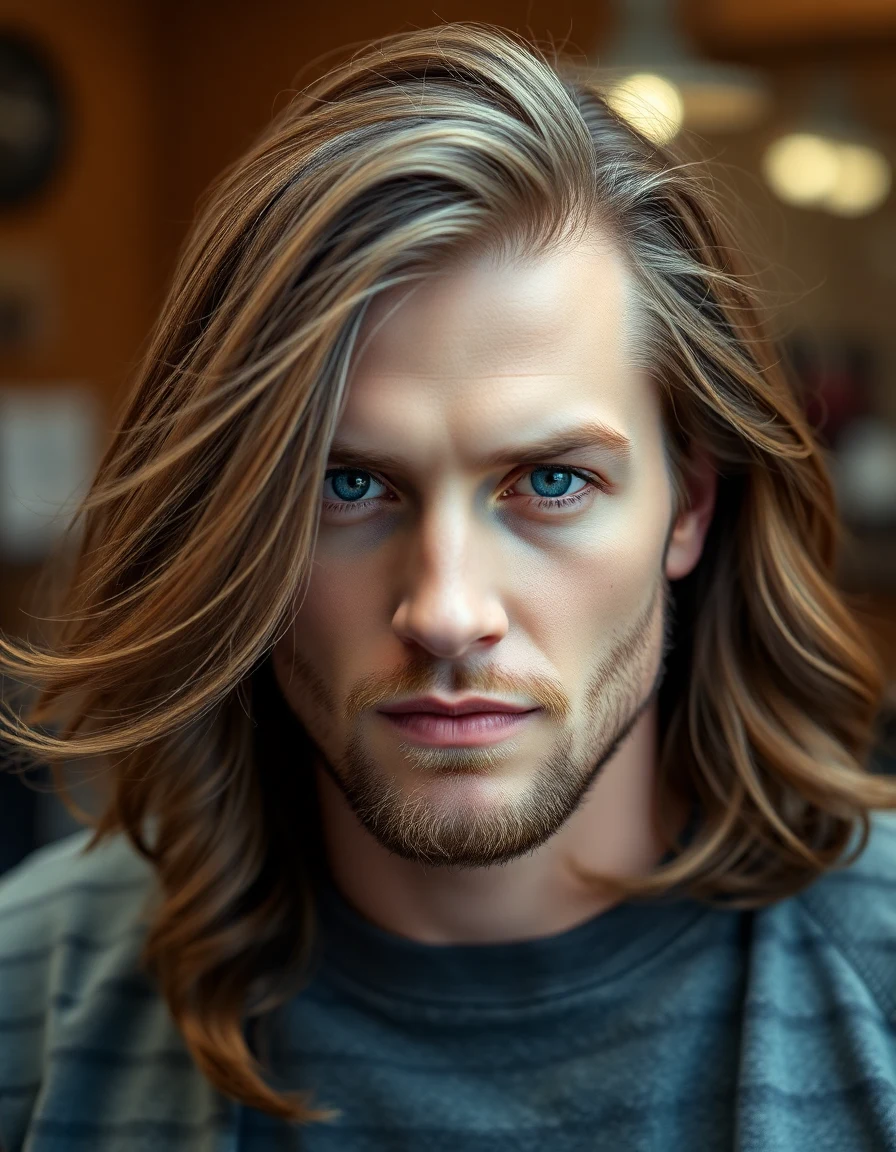
The cut: Shoulder-length (10 to 14 inches overall). Long layers with face-framing pieces. No undercut, no taper, no structural element at all. The shape came from the natural fall of the hair.
The texture: Enhanced natural wave. On set, this was likely achieved with braiding damp hair and releasing it before filming, plus some light product for definition without crunch.
Why it mattered: This is peak “long hair on a traditionally masculine man” in American cinema. It proved that shoulder-length hair could read as rugged rather than feminine, which was not a given in the mid-90s mainstream. Barbershops reported a significant uptick in men requesting “longer on top” and growing out entirely during this period.
1995-1997: The Experimental Phase (Se7en, 12 Monkeys, Sleepers)
This is where Pitt started showing range. For Se7en, he pulled his hair into a more controlled, shorter style, still with some length but more deliberately combed. In 12 Monkeys, he went completely off the map: a manic, unkempt look with hair sticking out in every direction. For Sleepers, it was back to something more conventional but shorter than the Legends era.
The cut (Se7en): Medium length, approximately 4 to 5 inches on top, swept back and to the side with a loose part. Sides trimmed shorter but not buzzed. Think of it as the long surfer hair at the halfway point of growing out.
The cut (12 Monkeys): An intentionally chaotic medium-length cut, roughly 3 to 5 inches with uneven layers and no cohesive shape. Pitt reportedly did not style it at all for the role, and the disheveled quality was the point.
Why it mattered: This phase showed that Pitt was not attached to the pretty-boy long hair identity. He was willing to look unhinged. For the average guy, the Se7en-era medium-length swept-back look became the transitional cut of the mid-90s: shorter than the surfer phase, longer than a corporate cut. Mastering brad pitt haircut takes practice but delivers great results.
1999: The Fight Club Revolution
This is the one. If you ask any barber what the single most referenced male haircut of the last 30 years is, the Fight Club cut is in the top three, alongside Peaky Blinders and the mid-2010s undercut (which, as we will see, Pitt also helped popularize).
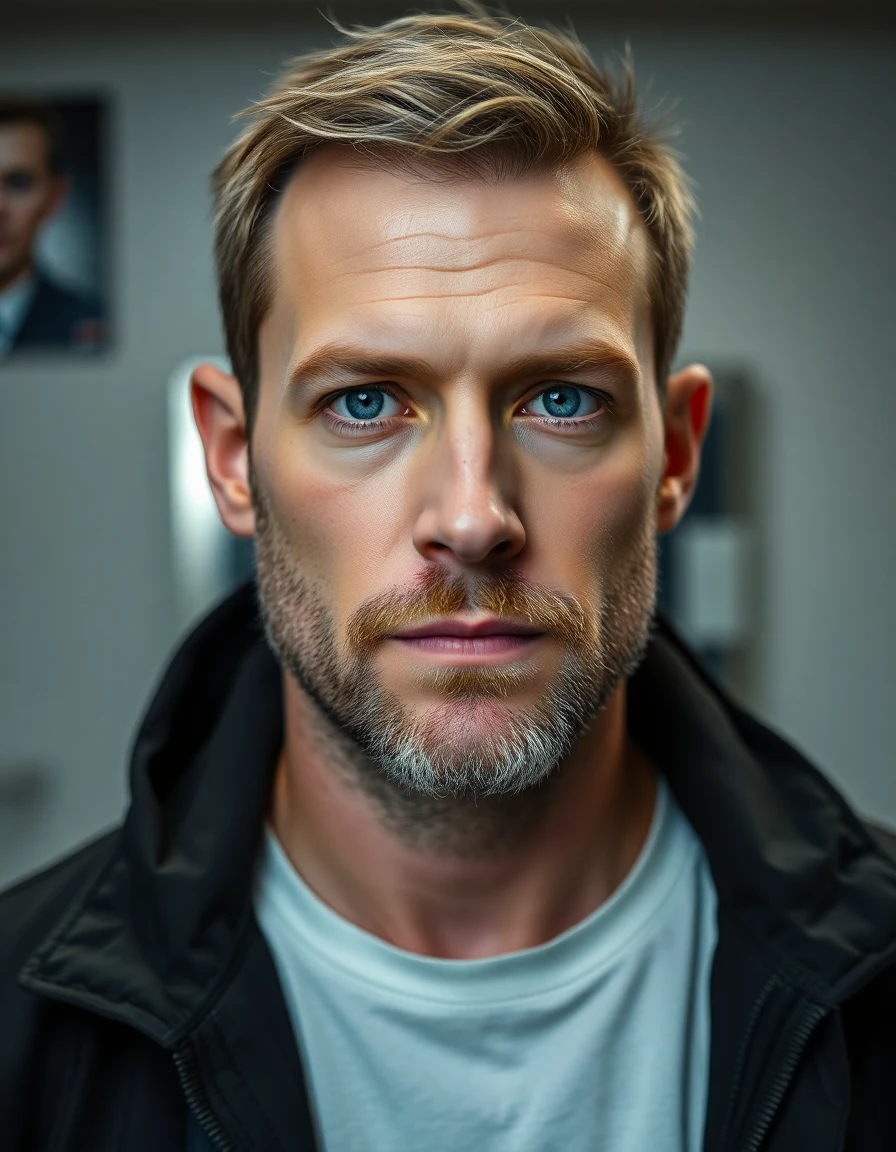
As Tyler Durden, Pitt shaved the sides and back to a number 2 guard and left the top at roughly 1.5 to 2 inches, styled forward and messy with a matte, piece-y texture. It was the complete opposite of everything he had worn before. No length, no flow, no romance. Just raw, stripped-down, utilitarian. The character was anti-consumerism personified, and the haircut matched.
The cut: Number 2 guard (6mm) on the sides and back, blended into the top with clipper-over-comb work. Top left at 1.5 to 2 inches with point cutting or razor cutting for a choppy, disconnected texture. No defined part. The fringe was cut short enough to fall forward naturally without covering the forehead.
The styling: Matte finish, probably achieved with a clay or wax. The look was textured and deliberately messy, not spiked. Think of it as “I rolled out of bed and it happened to look cool.” Hanz de Fuko Claymation or Baxter of California Clay Pomade would get you there today.
Why it mattered: Fight Club was released at the end of the boy-band era, when heavily gelled and spiked hair was the mainstream trend. Pitt’s Tyler Durden cut introduced the idea that men’s hair could look good by looking rough. The matte texture, the deliberate imperfection, the short-sides-long-top silhouette. These became the foundational elements of men’s hairstyling for the next two decades. The modern textured crop that every barber knows how to cut today is a direct descendant of this look.
2000-2004: The Refined Middle Ground (Snatch, Ocean’s Eleven/Twelve, Troy)
After the Fight Club reset, Pitt settled into what most men would call the “movie star” phase. In Snatch, he wore a variation of the short textured crop but with slightly more length on top. In the Ocean’s trilogy, the hair became more polished: a medium-length, textured, side-swept style with a bit of volume, tapered sides, and a product finish that looked effortless but obviously was not. This became the default “cool guy” haircut of the early 2000s.
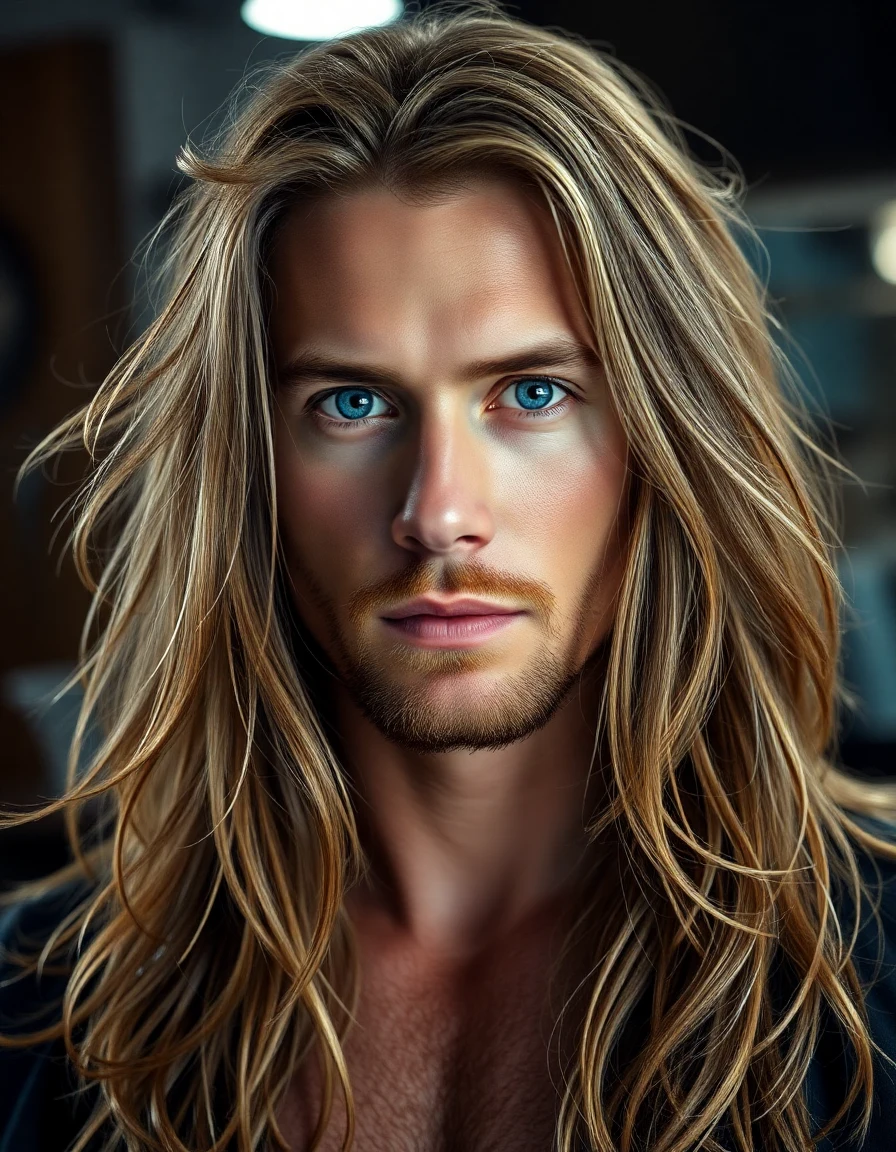
The cut (Ocean’s era): Top at 3 to 4 inches with layers for movement. Sides tapered (not faded) from about 1 inch at the bottom to 2 inches where they meet the top. No hard part; a natural division formed by pushing the hair to one side. The overall shape was a low-profile quiff with the fringe pushed up and back.
The styling: A medium-hold product with a natural or slight-shine finish. American Crew Fiber or BluMaan Original Styling Meraki would replicate this. Blow-dried for volume on top, then worked through with product and pushed into shape with fingers, not a comb.
The cut (Troy): Long again, shoulder-length, with braids and warrior-era styling. This was more costume than haircut trend, though it did inspire a small wave of men growing their hair out for the “warrior” look. The more lasting influence was confirming that Pitt could cycle between short and long seamlessly.
Why it mattered: The Ocean’s-era Pitt became the go-to reference for “I want to look put together but not like I tried.” It was the beginning of the “effortless” era in men’s grooming, where the goal was a style that looked natural but was actually the result of a good cut, a blow dryer, and the right product. That ethos still dominates men’s grooming in 2026.
2008-2012: The Distinguished Phase (The Curious Case of Benjamin Button, Moneyball, Killing Them Softly)
In this stretch, Pitt leaned into a more mature, side-parted look. The Benjamin Button styling varied across the film (the character ages in reverse), but the version most men referenced was the middle-age Benjamin: a clean side part, medium length on top combed to one side, tapered sides, and a classic silhouette that could have come from any decade between 1940 and today.
For Moneyball and the press tours of this era, Pitt often appeared with a slightly grown-out version of this: more relaxed, less structured, with the hair falling naturally rather than being combed into a rigid shape.
The cut: 3 to 4 inches on top, tapered or scissor-cut sides at 1 to 1.5 inches. A defined side part (not shaved in, but combed). The overall shape was a classic gentleman’s cut, updated with modern texturing and a slightly less rigid finish than the 1950s original.
The styling: Light pomade for a natural shine, or a light hold pomade like Suavecito Original for a cleaner finish. Comb to one side, let the natural fall do the rest. This is one of Pitt’s lowest-maintenance eras; the cut does the work.
Why it mattered: This phase showed men over 40 that they did not need to chase youthful, trendy cuts to look sharp. A well-executed side part with a good taper is ageless. It also coincided with the broader “classic men’s style” revival of the late 2000s and early 2010s, when pomade, side parts, and tailored clothing came back in force.
2014-2016: The Fury Undercut
This might be the single most influential men’s haircut of the 2010s, and it came from a World War II film. In Fury, Pitt played a tank commander with a severe disconnected undercut: sides buzzed to near-skin, top grown out to 6 or more inches and slicked straight back with a high-shine pomade. The disconnect between the shaved sides and the long, slicked top was dramatic and deliberate.
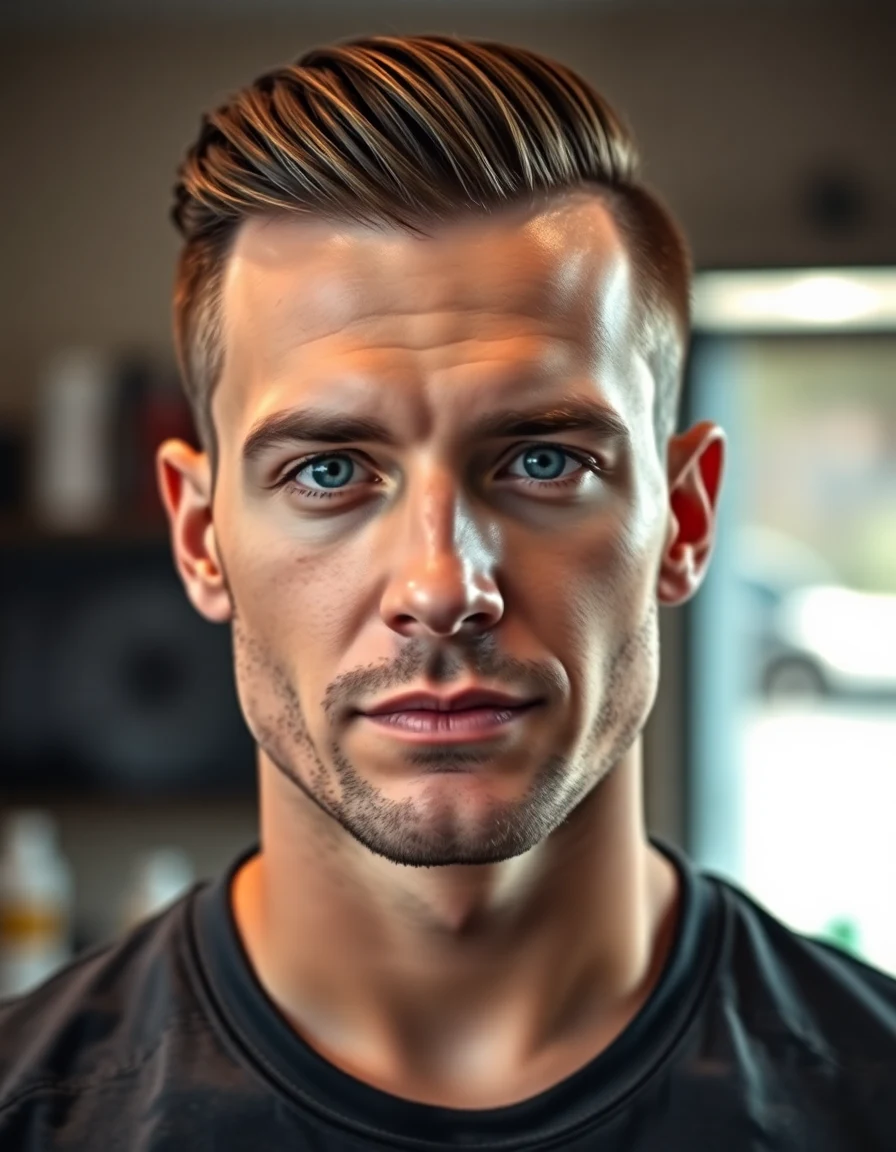
Barbers across the U.S., UK, and Europe reported that the Fury undercut became the single most requested cut in 2014 and 2015. Pinterest boards exploded with it. Instagram barbershop accounts built their followings on it. It was everywhere.
The cut: Sides and back at a number 0 to number 1 guard (skin to 3mm) with no blend into the top. This is a hard disconnect, not a fade. The top was left at 5 to 7 inches, long enough to slick straight back past the crown and lie flat. If you want to understand how to slick back hair properly, this is the benchmark.
The styling: High-shine, strong-hold pomade. The on-set look was almost certainly achieved with an oil-based pomade for maximum shine and all-day hold. For a modern, more manageable version, Layrite Super Hold or Uppercut Deluxe Pomade gives you the shine and hold without the difficulty of washing out an oil-based product. Apply to towel-dried hair, comb straight back, and blow dry on medium heat in the direction of the comb. Finish with a light coating of pomade on dry hair for extra shine.
Why it mattered: The Fury undercut did several things simultaneously. It brought the disconnected undercut into the mainstream (the style existed in the 1920s and resurfaced in the 2010s barbershop revival, but Fury pushed it into total ubiquity). It made pomade cool again after a decade of matte products. And it proved that a period-appropriate hairstyle could translate directly to modern everyday wear. Men were not wearing this as a costume; they were wearing it to the office, to weddings, to first dates. Knowing what clipper guard sizes to ask for was suddenly common knowledge among guys who had never cared about it before.
2019-2020: The Buzz and the Bleach
After years of medium and long styles, Pitt made headlines again by showing up to the 2019 and 2020 award seasons with radically short hair. First, a close buzz cut, then a variation that was slightly longer on top and buzzed even shorter on the sides. Then, in 2020, he appeared at the Oscars (where he won Best Supporting Actor for Once Upon a Time in Hollywood) with an incredibly short, nearly bleached-platinum buzz.
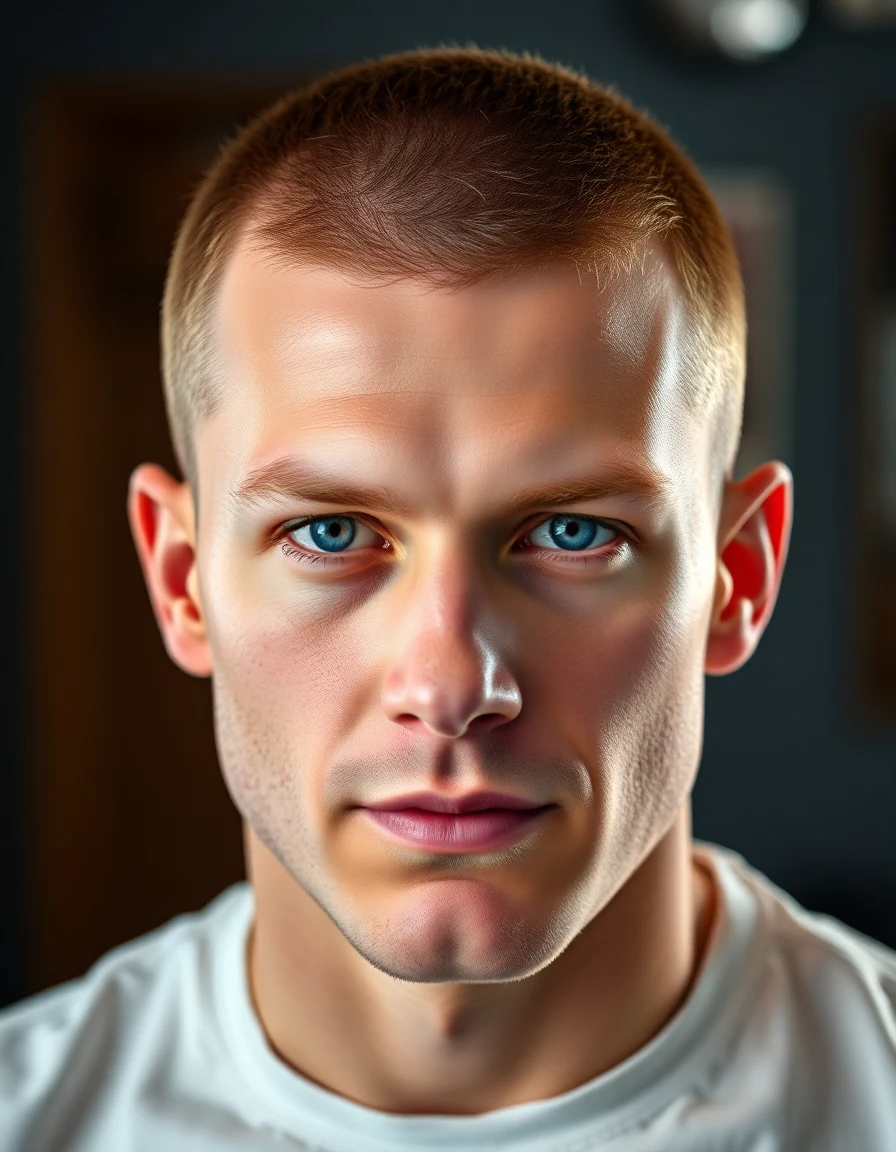
The bleached buzz was a statement. At 56, Pitt was not hiding behind hair. He was letting bone structure and confidence do the talking. For a full guide on the style and its variations, see our buzz cut hairstyles breakdown. Understanding brad pitt haircut is key to a great grooming routine.
The cut: A number 2 guard (6mm) all over, or a number 1 guard (3mm) on the sides with a number 2 or 3 on top. No defined part. No styling required beyond the initial clipper work. The bleaching was done to a near-platinum level, which on Pitt’s naturally dark-blonde hair required professional lightening rather than a box dye.
The styling: None. That is the point. A buzz cut this short does not need product. If you want the platinum color, go to a professional colorist. Do not attempt platinum at home; going from any shade darker than light blonde to platinum requires bleach, toner, and experience. A botched job turns yellow or orange, and fixing it is expensive.
Why it mattered: Pitt at 56 with a platinum buzz cut became a statement about confidence at any age. It also coincided with a broader trend of men over 50 embracing very short hair rather than trying to preserve the appearance of a full head. The buzz cut, once considered a concession to thinning hair, was reframed as a power move.
2023-2026: The Relaxed Crop
In his most recent public appearances and promotional work (including his role in the F1 racing film), Pitt has settled into what might be his most approachable look ever: a short textured crop with a natural side part, some salt-and-pepper coloring coming through, and a relaxed, finger-styled finish. No extreme lengths, no severe shaves, no dramatic color. Just a very well-cut, low-maintenance hairstyle that suits a man in his early 60s.
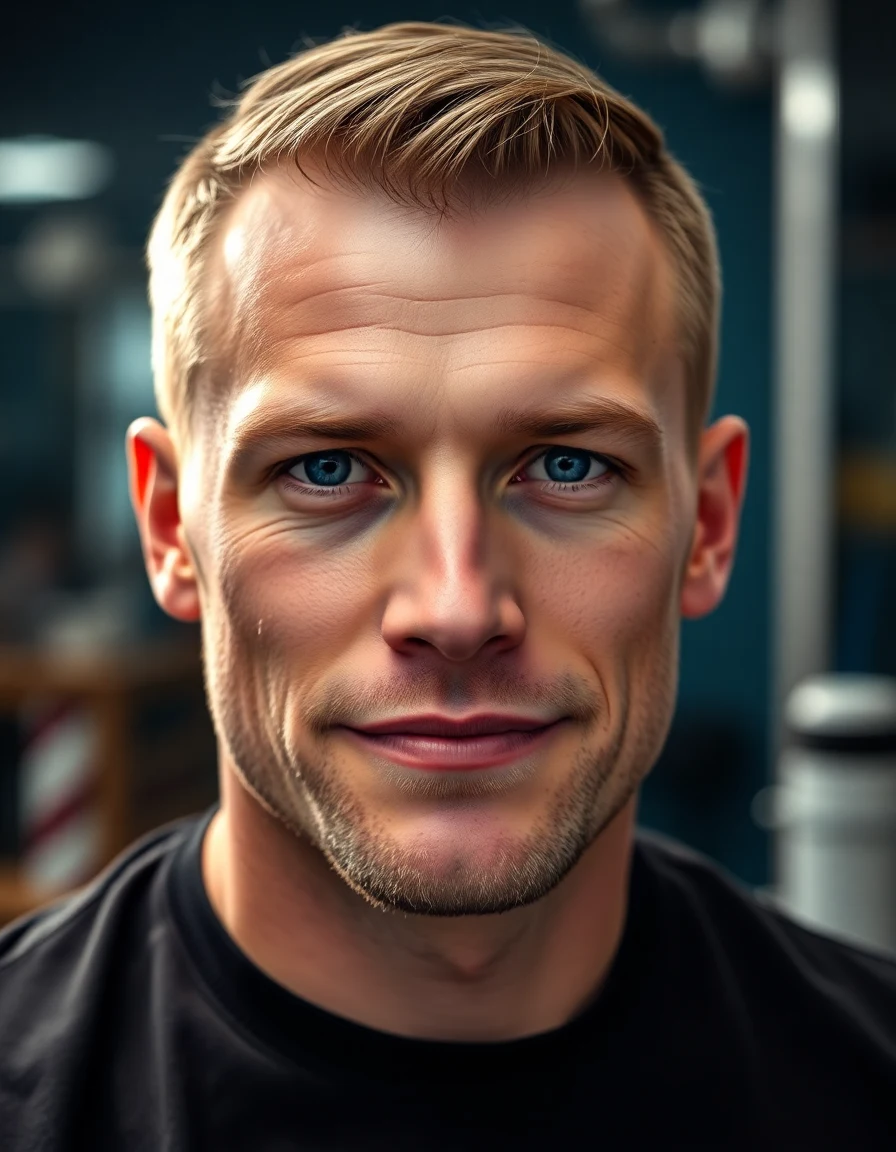
The cut: 2 to 2.5 inches on top with light layering for texture. Sides scissor-cut or clipped at about 1 inch, tapered naturally into the top (no hard line, no disconnect). A natural side part formed by the hair’s own growth pattern. The fringe is short enough to stay up and off the forehead without product, or can be pushed to the side casually.
The styling: Minimal. A small amount of light-hold product like American Crew Fiber or Hanz de Fuko Claymation worked through with fingers for separation and a matte finish. No blow drying required at this length. Towel dry, apply a small amount of product, push into shape with your hands, and go.
Why it mattered: This look is the proof of concept for aging gracefully with your hair. No desperate holds on a younger man’s style, no comb-overs, no denial. Just a good cut that works with what you have. It is, quietly, the most influential of all his looks for men over 50.
How to Get Each Brad Pitt Haircut at the Barber
Knowing what you want is half the battle. Communicating it clearly to your barber is the other half. Here are the exact instructions for each major style.
| Era / Style | What to Ask For | Key Details to Mention | Maintenance |
|---|---|---|---|
| Surfer (Thelma & Louise) | “Chin-length layers, no structure on the sides, center part or swept back.” | Long layers throughout. No bangs. Face-framing pieces. Natural texture. | Trim every 8-10 weeks. Sea salt spray for texture. No pomade. |
| Romantic (Legends of the Fall) | “Shoulder-length with long layers. I want movement and volume.” | Longest layer to collarbone. No undercut. Gentle face-framing layers around the jawline. | Trim every 10-12 weeks. Conditioning treatments weekly. Light oil on ends. |
| Fight Club | “Number 2 on the sides and back, 1.5 to 2 inches on top, choppy texture, no part.” | Point cut or razor cut the top for piece-y texture. Blend sides into top with clipper-over-comb. Matte finish. | Every 3-4 weeks to keep sides tight. Matte clay daily. |
| Ocean’s Eleven | “3 to 4 inches on top with layers, tapered sides, no hard part. Push up and back.” | Natural taper on sides (not a fade). Texturize the top with thinning shears if hair is thick. Low-profile quiff shape. | Every 5-6 weeks. Medium-hold product. Blow dry for volume. |
| Benjamin Button | “Classic side part. 3 to 4 inches on top, combed to one side. Tapered sides to 1 inch.” | No disconnect. Natural side part. Clean, classic silhouette. Minimal texture. | Every 4-5 weeks. Light pomade. Comb styling. |
| Fury Undercut | “Disconnected undercut. Number 0 to 1 on sides and back, 6 inches on top, slicked straight back.” | Hard disconnect line. No blend. Top must be long enough to reach past the crown. High shine finish. | Sides every 2-3 weeks. Top grows. Strong-hold pomade daily. |
| Platinum Buzz | “Number 2 all over.” (For the bleach: “Platinum blonde, professional lightening.”) | Uniform length. No fade. For bleach, go to a colorist separately from the cut. Toner to avoid yellow. | Buzz every 1-2 weeks at home with clippers. Color touch-up monthly. |
| Current Crop (2023-2026) | “Short textured crop, 2 inches on top, scissor-tapered sides, natural part.” | Light layers on top. No hard lines. Natural taper. Matte or natural finish. Low maintenance. | Every 4-5 weeks. Light matte product optional. |
Pro tip: Always bring a reference photo. “Give me the Brad Pitt” without specifying which era could get you anything from a buzz cut to shoulder-length layers. Pull up a specific image on your phone and show your barber. It eliminates 90% of miscommunication. If you want to maintain the cut between appointments, ask your barber what guard they used so you can clean up the sides at home.
Best Products for Brad Pitt-Inspired Styles
Different eras require different products. Here is the breakdown by style type.
For the Fight Club / Textured Crop Styles (Matte, Messy)
You need a matte-finish product with medium to strong hold that allows you to create separation and texture without any shine.
- Hanz de Fuko Claymation: Strong hold, completely matte. This is the closest thing to the Tyler Durden texture in a single product. A little goes a long way. Work it between your palms until it breaks down, then apply to dry or slightly damp hair and pinch individual pieces for that choppy look.
- Baxter of California Clay Pomade: Medium hold, matte finish. Slightly more forgiving than Claymation; easier to restyle throughout the day. Good for men with finer hair who do not want the stiffness of a strong-hold clay.
- BluMaan Original Styling Meraki: Medium hold, natural finish (not completely matte, not shiny). Versatile. Works for the textured crop and the Ocean’s-era quiff equally well.
For the Fury / Slick Back Styles (Shine, Strong Hold)
The slicked-back look requires a product that holds hair flat against the head in one direction and provides visible shine. This is pomade territory.
- Layrite Super Hold Pomade: Strong hold, high shine, water-based for easy washout. This is the modern equivalent of what was used on set for Fury. Apply to towel-dried hair, comb back, blow dry to set.
- Suavecito Pomade Original Hold: Medium hold, medium shine. Better for the Benjamin Button side-part look where you want some shine but the hair is not fighting to stay in place. Original hold is sufficient for side-combed styles; for a slick back, step up to Suavecito Firme Hold.
- Uppercut Deluxe Pomade: Strong hold, medium-high shine. An Australian brand that has become a barbershop staple. Excellent for the Fury undercut because it provides the hold needed to keep 6 inches of hair slicked flat without stiffening into a helmet.
For the Surfer / Long Hair Styles (Texture, Light Hold)
Long hair does not need strong hold. It needs texture, moisture, and something to prevent it from looking flat and lifeless.
- Sea salt spray: The essential product for replicating the Thelma & Louise wave texture. Spray into damp hair, scrunch with your hands, let air dry. Do not brush it out; the texture comes from the salt crystallizing as it dries.
- Leave-in conditioner: For the Legends of the Fall length, moisture is non-negotiable. Hair that long dries out at the ends. A lightweight leave-in conditioner applied from mid-shaft to tips after every wash keeps the hair looking healthy rather than straw-like.
- Argan oil or lightweight hair oil: A drop or two on the ends for shine and frizz control. Especially useful on second-day hair when the longer styles start looking dull.
For the Buzz Cut (No Product Needed)
At a number 2 guard or shorter, product is irrelevant. What you need instead is a good pair of clippers for maintenance at home. The Wahl Elite Pro handles buzz cut maintenance at home with precision, and the self-sharpening blades stay sharp through months of regular use. Our buzz cut guide covers the full DIY technique.
Which Brad Pitt Haircut Suits Your Face Shape
Pitt has a textbook oval face with a strong jaw, which is the most versatile face shape for hairstyles. Not everyone has that luxury. Here is how to match his styles to your proportions.
| Face Shape | Best Brad Pitt Styles | Avoid | Why |
|---|---|---|---|
| Oval | All of them. You lucked out. | Nothing, genuinely. | Balanced proportions work with every length and shape. |
| Square | Fury undercut, Ocean’s quiff, current crop | Buzz cut (can emphasize angularity too much) | Height on top softens the jaw. Strong jawline is an asset, not a problem. |
| Round | Fury undercut, Fight Club texture, Ocean’s quiff | Surfer/long hair with volume on sides | Need vertical height and short sides to elongate the face. Avoid volume that adds width. |
| Oblong / Rectangular | Surfer long hair, Benjamin Button side part, textured medium crop | Fury undercut (too much vertical emphasis) | Already long vertically. Avoid adding more height. Side volume and medium lengths balance the proportions. |
| Heart / Inverted Triangle | Ocean’s quiff, medium textured styles, side part | Buzz cut, Fight Club (exposes wide forehead) | Need some fringe coverage at the forehead. Medium-length styles with texture work best. |
| Diamond | Textured crop, side part, medium-length styles | Slicked-back styles (narrow chin, wide cheekbones exposed) | Goal is to add width at the forehead and jaw, minimize cheekbone emphasis. |
If you are unsure of your face shape, here is a quick test: look at yourself straight-on in a mirror and trace the outline of your face with a dry-erase marker (or take a photo and draw on it). Compare the outline to the shapes described above. Most men fall somewhere between two categories, which gives you flexibility.
The Growing-Out Problem: Transitioning Between Brad Pitt Eras
One of the most common questions barbers get is: “How do I grow my hair from short to long without looking terrible in between?” Pitt did this transition multiple times (Fight Club to Ocean’s, buzz cut to longer styles), so his timeline actually provides a natural roadmap.
Phase 1: Awkward Length (Weeks 4-10 after a short cut)
The top is too long for the original cut’s shape but too short to style in a new direction. The sides start to look shaggy. This is where most men give up and buzz it back down.
Solution: Get a cleanup cut every 4 to 5 weeks during this phase, but tell your barber you are growing the top out. They will trim only the sides and back (a taper or fade keeps the sides sharp while the top grows) and clean up the neckline without touching the top. This keeps you looking intentional rather than neglected.
Phase 2: The Mullet Zone (Months 3-5)
The back starts to outpace the top. If left unchecked, you end up with a mullet nobody asked for.
Solution: Tell your barber to trim the back to match the top length, keeping a consistent growth trajectory. The sides can stay tapered or buzzed; the back is what needs management.
Phase 3: Ear Coverage (Months 5-8)
The hair covers the ears, the top is long enough to start falling in your face, and you are fighting the urge to cut it all off. When it comes to brad pitt haircut, technique matters most.
Solution: This is when a styling product becomes essential. Use a light-hold product to push hair back or to the side. Headbands, hats, and the “push it back with your hand every 10 minutes” technique are all valid. You are almost through it.
Phase 4: Freedom (Month 8+)
The hair is long enough to tuck behind the ears or tie back. The shape starts to work. From here, you can let it grow to the Thelma & Louise chin-length or push all the way to Legends of the Fall shoulder-length. Get long layers cut in once you have enough length to work with.
How Brad Pitt Changed the Barbershop: A Decade-by-Decade View
To put the full scope of Pitt’s influence into perspective:
| Decade | Pitt’s Dominant Style | Barbershop Trend It Spawned |
|---|---|---|
| 1990s | Long surfer, flowing layers | Men growing hair past the collar became mainstream. Center parts and “curtain” hair. The beginning of men using conditioner regularly. |
| Late 1990s | Fight Club crop | Short-sides-longer-top as a structural concept. Matte products over gel. “Textured” as a descriptor entered barbershop vocabulary. |
| 2000s | Textured quiff, tapered sides | The “effortless” look. Products that provide hold without visible product. Blow drying as a standard part of men’s styling routine. |
| 2010s | Fury disconnected undercut | The undercut revival. Pomade renaissance. Instagram barbershop culture. “Disconnected” as a mainstream term. The golden age of barbershops as social spaces. |
| 2020s | Buzz cut, relaxed crop | Embracing gray and natural texture. Short, low-maintenance cuts as a power move rather than a concession. Age-appropriate styling gaining respect. |
Brad Pitt and the European-American Grooming Tradition
Pitt’s influence sits at the intersection of two grooming traditions. The American tradition prizes low-effort, rugged, “I did not try that hard” styling. The European tradition (particularly British and Italian) favors more deliberate, product-forward grooming with attention to detail and finish.
What makes Pitt unique is that he has occupied both positions at different points in his career. The Fight Club cut is pure Americana: rough, effortless, anti-product. The Fury undercut is closer to a classic European barbershop style: pomade, precision, and a deliberate silhouette. The Ocean’s-era quiff sits right in the middle.
This duality is part of why Pitt resonated globally and not just in the American market. A man in London could reference the Fury look as easily as a man in Kansas City could reference Fight Club. The styles transcend regional grooming culture because they cover the full spectrum.
For Caucasian men specifically, Pitt’s hair types and textures (straight to slightly wavy, medium density, light brown to dark blonde) represent the most common baseline. His styles are achievable with the hair most white American and European men naturally have, which is why they translate so directly from screen to barbershop chair.
Common Mistakes When Requesting Brad Pitt Styles
After three decades of men asking for “the Brad Pitt,” barbers have seen every possible miscommunication. Here are the most common mistakes and how to avoid them.
- Not specifying which era. “I want the Brad Pitt haircut” can mean anything from a buzz cut to shoulder-length hair. Always specify the film or era, and bring a photo.
- Ignoring hair texture differences. Pitt has naturally wavy hair with good density. If your hair is poker-straight and fine, the Fury slick-back will look different on you than on him. That is okay, but set expectations with your barber. They can adjust the cut to work with your texture.
- Skipping the grow-out period. Many of Pitt’s best styles require length that takes months to achieve. If you are starting from a buzz cut and want the Ocean’s quiff, you need 5 to 6 months of growth with regular maintenance cuts along the way. There is no shortcut.
- Using the wrong product finish. Fight Club is matte. Fury is high-shine. Ocean’s is natural. Using a shiny pomade on a Fight Club-inspired cut looks wrong because the product finish is part of the style. Match the product to the era.
- Attempting the Fury undercut on a round face without modification. The severe disconnected undercut with slicked-back top can emphasize a round face by creating a stark contrast. Ask your barber for a version with a slight blend rather than a hard disconnect. It provides the same silhouette with a more flattering transition.
- DIY bleaching for the platinum buzz. Going platinum from any starting shade other than very light blonde requires professional bleaching and toning. A box bleach kit from the drugstore will not get you there, and the orange-yellow intermediate stage can last weeks if done incorrectly. Invest in a colorist.
Maintenance and Cost Expectations
Every style has a different upkeep demand. Here is what to budget in both time and money.
| Style | Barber Visits | Daily Styling Time | Product Cost (Monthly) |
|---|---|---|---|
| Buzz cut | DIY every 1-2 weeks | 0 minutes | $0 (clippers pay for themselves) |
| Fight Club crop | Every 3-4 weeks ($25-45) | 2-3 minutes | $10-25 (clay or wax) |
| Ocean’s quiff | Every 5-6 weeks ($30-50) | 5-7 minutes (includes blow dry) | $15-30 (product + possibly hairspray) |
| Benjamin Button part | Every 4-5 weeks ($25-45) | 3-5 minutes | $10-20 (light pomade) |
| Fury undercut | Sides every 2-3 weeks ($20-35) | 5-10 minutes (blow dry + pomade) | $15-30 (strong-hold pomade) |
| Surfer / long hair | Every 8-12 weeks ($30-50) | 1-3 minutes | $15-25 (conditioner + sea salt spray) |
| Current crop | Every 4-5 weeks ($25-45) | 1-2 minutes | $10-20 (light matte product) |
If you are looking to save money on maintenance between appointments, learning how to cut your own hair for basic neckline and side cleanup can stretch a 3-week cut cycle to 5 or 6 weeks.
Frequently Asked Questions
What is Brad Pitt’s current haircut called?
As of 2025 and into 2026, Pitt wears a short textured crop with a natural side part. The top is approximately 2 inches long with subtle layering for texture, and the sides are tapered short with no hard lines. Some barbers call it a gentleman’s crop or a modern Caesar variation, though it is simply a well-executed short textured cut with a bit of length on the fringe.
How do I ask my barber for the Brad Pitt Fight Club haircut?
Ask for a short textured crop with a buzz on the sides and back at a number 2 or number 3 guard, blended into the top which should be left about 1.5 to 2 inches long. Tell the barber you want a choppy, piece-y texture on top, not a blended or smooth finish. The key to the Fight Club look is that the top should look intentionally messy and rough, not styled or polished. No defined part. The finish should be completely matte. Bring a reference photo.
What products did Brad Pitt use in Fury?
The Fury look was achieved on set using strong-hold pomade, likely oil-based products similar to what was historically available in the 1940s. To recreate it today, you need a high-shine, strong-hold pomade. Layrite Super Hold, Uppercut Deluxe, or Suavecito Firme Hold are all excellent options. Apply to towel-dried hair, comb straight back, and blow dry on medium heat to lock the direction.
Can I pull off Brad Pitt’s long hair if I have thin hair?
Long hair can work with thinner hair, but adjustments are necessary. Keep the layers longer to preserve the appearance of density rather than adding lots of short layers that can make thin hair look wispy. Use a volumizing shampoo, avoid heavy products, and consider a sea salt spray to add texture. The chin-length surfer look is more achievable for thinner hair than the shoulder-length Legends of the Fall look, because the shorter length puts less strain on the appearance of volume.
Which Brad Pitt haircut is best for a round face?
The Fury undercut or the textured quiff from the Ocean’s Eleven era. Both add height on top which elongates the face vertically, and the shorter or tapered sides slim the width. Avoid the long surfer hair on a round face because the length and volume on the sides adds width. The general rule: more height on top, less volume on the sides.
How often did Brad Pitt change his hairstyle?
Pitt has changed his hairstyle roughly every 1 to 3 years throughout his career, often coinciding with film roles. Between 1991 and 2026, he has worn at least 12 distinctly different hairstyles, ranging from shoulder-length to a number 1 buzz cut. Few male celebrities have explored as wide a range of lengths and styles over three decades.
Is the Fury undercut still in style in 2026?
The severe, fully disconnected undercut has softened in popularity since its 2014-2016 peak. However, the undercut as a structural concept (shorter sides, longer top) remains one of the foundational men’s haircut silhouettes. In 2026, most barbers recommend a version with a slight blend or skin fade rather than a hard disconnect, which reads as more modern and less costume-y. The style is absolutely still viable; it just benefits from a contemporary update to the transition between top and sides.
What hair type do you need for Brad Pitt’s styles?
Pitt has straight to slightly wavy hair (Type 1B to 2A) with medium density. This is the most common hair type among Caucasian men, which is part of why his styles are so widely replicated. If you have curly or very thick hair, you can still achieve most of these looks; your barber will just need to adjust the technique. Curly hair actually holds the quiff and slicked-back styles better because of natural texture and grip. Very fine hair may struggle with the Fury slick-back (the hair slides out of place), which a sea salt spray pre-treatment or texturizing spray can help address.
The Final Word
Brad Pitt has spent 35 years proving that great men’s hair is not about finding one perfect style and clinging to it forever. It is about understanding what works for your face, your age, your lifestyle, and your willingness to maintain it, and then having the confidence to change when the moment calls for it.
Whether you are 25 and growing your hair out for the first time, or 55 and considering the buzz cut you have been thinking about for a decade, there is a Pitt era that matches where you are right now. The timeline is not just a record of one man’s hairstyles. It is a blueprint for how to approach men’s grooming across a lifetime: experiment, commit, maintain, evolve, and never be afraid to start over.
Pick your era. Bring the photo. Trust your barber. And remember that the best haircut is the one you feel confident wearing out the door.
Further reading: For research-backed grooming advice, see Healthline Men’s Health.
Frequently Asked Questions
What is Brad Pitt’s current haircut called?
Brad Pitt’s 2026 signature style is a short textured crop with a natural side part, featuring approximately 2 inches of length on top with subtle layering for texture and tapered sides with no hard lines. This low-maintenance cut works with his natural hair texture and is age-appropriate for men across different ethnicities and hair types. It’s sometimes called a gentlemen’s crop or textured crop cut.
How do I ask my barber for a Brad Pitt haircut?
When requesting this Brad Pitt haircut, show your barber a recent photo and specify a textured crop with a side part, about 2 inches on top, and tapered sides. Use terms like ‘fade on the sides’ or ‘taper fade’ and mention you want texture and movement rather than a blunt cut. Our guide on how to ask for a haircut can help you communicate effectively with your barber about length and fade preferences.
What products do I need to style a Brad Pitt textured crop?
You’ll want a lightweight styling product like a clay pomade or fiber that provides hold without looking greasy, such as Suavecito Pomade Original Hold or American Crew Fiber. Apply the product to damp hair and work it through with your fingers, pushing the hair up and back to create the textured, tousled look Brad Pitt rocks. Start with a small amount and add more as needed, since this hairstyle depends on texture rather than a slicked appearance.
How often should I get this haircut trimmed?
The Brad Pitt textured crop requires a trim every 3 to 4 weeks to maintain the shape and prevent the sides from growing out of the tapered fade. Regular maintenance at this frequency keeps the cut looking sharp and prevents the top from becoming too long and losing its textured appearance. Our guide on how to maintain a fade provides detailed tips for extending time between haircuts if needed.