
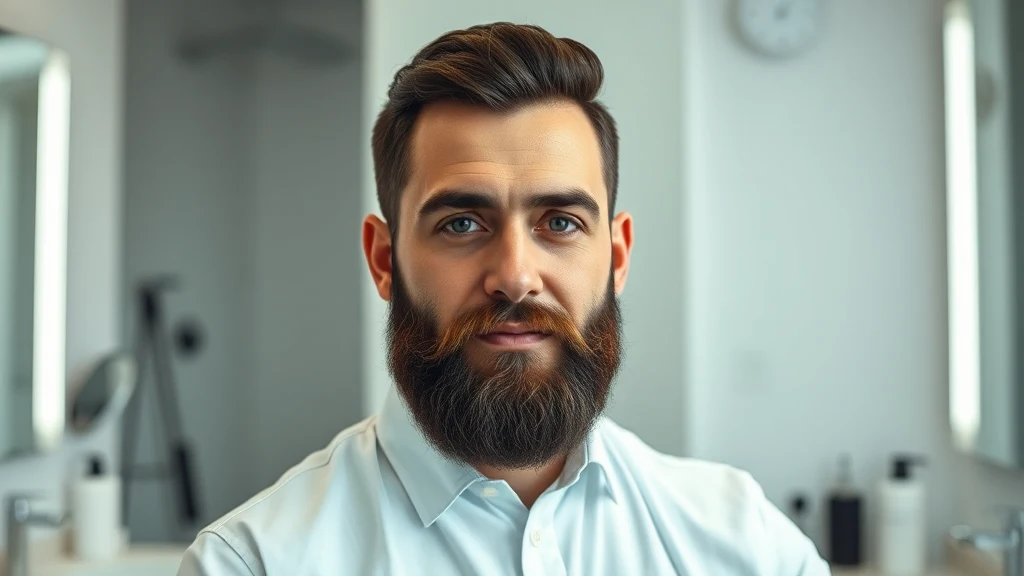
Beard During Avel: Grooming Through the Jewish Mourning Periods
Last updated: February 2026 by Avi Feldman, Grooming Columnist
Until now, Jewish men grooming resources have been virtually nonexistent. Browse any major grooming publication, scroll through any men’s lifestyle site, and you’ll find detailed guides for nearly every demographic imaginable — except for Jewish men navigating the intersection of halacha, tradition, and modern personal care. That gap was unacceptable to us. This section exists because we built what should have existed a long time ago: a dedicated, knowledgeable, respectful resource for Jewish men who deserve grooming guidance that actually reflects their lives.
One of the most immediately distinctive aspects of grooming for observant Jewish men is the care and styling of pe’ot — the sidelocks, commonly called payot, mandated by the Torah’s prohibition against “rounding the corners” of the head. Pe’ot are not monolithic. A Yemenite man may wear long, tightly coiled ringlets that fall in front of the ears, while a Hasidic man might cultivate longer, flowing curls tucked behind the ear or left to hang freely. Proper pe’ot care involves moisture management, detangling without breakage, and in many cases, techniques for enhancing or maintaining curl definition. We cover all of it, without treating these traditions as curiosities.
Beard practices vary significantly across Jewish communities, and understanding that diversity is essential to meaningful Jewish men grooming guidance. Haredi men in many traditions maintain full, untrimmed beards as a matter of deep religious significance, often citing kabbalistic reasons rooted in the Zohar. Ashkenazi practices differ across congregations, with some communities permitting careful trimming and others discouraging it strongly. Sephardic authorities have historically offered somewhat more permissive rulings on beard maintenance in certain respects, though this varies by posek and community. The halachic question of razors versus electric shavers is one of the most practically important in Jewish men’s grooming: because the Torah’s prohibition is understood to apply to blade-against-skin contact, many halachic decisors permit certain electric shavers that cut through a screen mechanism, functioning more like scissors than a blade. Navigating these distinctions requires reliable information, and we provide it without oversimplifying the nuance.
Seasonal observance also shapes grooming routines in meaningful ways. During Sefirat HaOmer — the 49-day counting period between Passover and Shavuot — many Ashkenazi and Sephardic men refrain from shaving and haircuts as a sign of mourning, with specific days of permitted grooming varying by community custom. We address how to maintain skin and beard health during extended no-shave periods, so men can honor observance without neglecting their skin.
Perhaps most importantly, this section recognizes that Jewish men are not a single demographic with a single hair type or skin tone. The Jewish world encompasses Ashkenazi men with fine, straight, or wavy European-textured hair; Sephardic and Mizrahi men with thick, curly, or coily Mediterranean and Middle Eastern textures; Yemenite men whose hair and features reflect the Arabian Peninsula; and Ethiopian Jewish men with tightly coiled Type 4 hair requiring its own specific care approach. Each community brings distinct needs to the grooming conversation. Our commitment is to serve all of them — knowledgeably, respectfully, and completely.
Last updated: February 2026 by Avi Feldman, Grooming Columnist
Last updated: February 2026 by Avi Feldman, Grooming Columnist
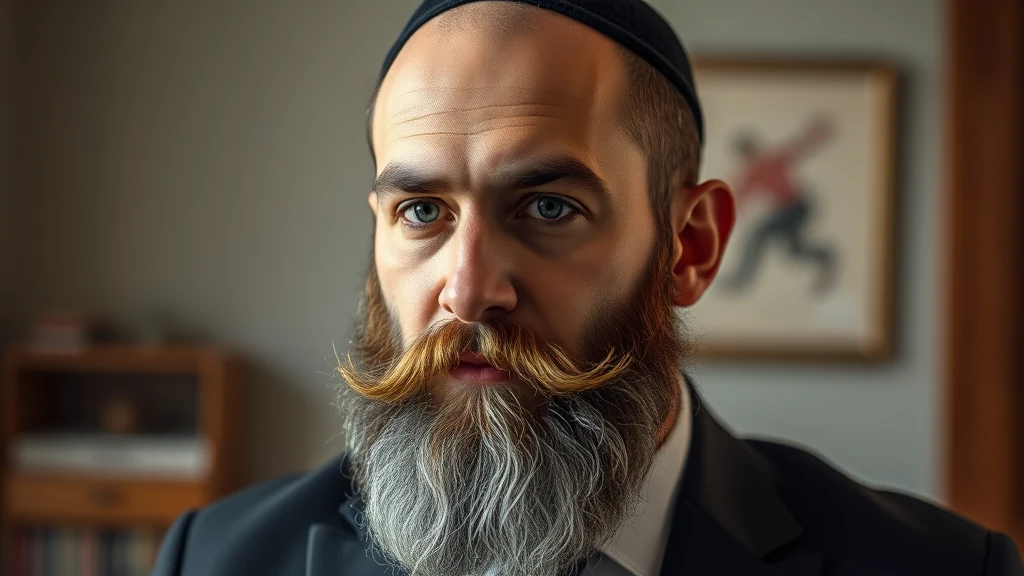
I was twelve years old when I first noticed that my peyot (sidelocks) did not look like anyone else’s. In my Flatbush neighborhood, there were boys with short peyot tucked neatly behind their ears, boys with long, tightly wound Chassidic curls, and boys with everything in between. My own peyot were…
You know the drill. It is 3:45 PM on a Friday in December, candle-lighting is at 4:12 PM, and you just walked through the door. Maybe the Q train was delayed. Maybe your chavrusa (study partner) ran late. Maybe you underestimated how fast the sun sets in Brooklyn in late December. Whatever the…
Last year, I sat in my rav’s office with a disassembled Braun Series 9 spread across his desk. Foil head in one pile, oscillating blade in another, and a printed cross-section diagram I had found in the manufacturer’s patent filing. He looked at the pieces, then looked at me, and said: “Avi, you…
I was sitting in a pizza shop on Avenue J when a Chassidish man with a magnificent, flowing beard sat down at the next table. Five minutes later, a clean-cut Modern Orthodox guy in a slim-fit suit walked in. Then a Yeshivish man with a neatly trimmed goatee. Three Jewish men, three completely…
Every year around Pesach, I get the same text from at least three friends: “It is day four and I am already itching. How do I survive this?” Sefirat HaOmer (the 49-day counting period between Pesach and Shavuot) means no shaving and no haircuts for many observant Jewish men, and for guys who…
It is 3:47 PM on a Friday in late December. You just got off the Q train at Avenue J. Candle-lighting is at 4:12 PM. You need to shower, shave, trim your nails, put on Shabbos clothes, and ideally not look like you did all of it in a panic. This is not a hypothetical. This is my life every winter…
I have a drawer in my bathroom that my wife calls “the shaver graveyard.” It contains fourteen electric shavers, each purchased because someone on a frum forum said it was “the one.” Braun, Panasonic, Philips, Remington, a random one from Costco that I cannot identify anymore. After years of…
I remember the first time I walked into a Judaica store on Coney Island Avenue looking for shaving advice. I was nineteen, freshly enrolled at Yeshiva University, and my father had handed me an electric shaver with zero explanation beyond “this one is fine.” Fine for what? Fine according to whom?…