
If you want to master clipper guard sizes, this guide covers everything you need to know.
If you want to master clipper guard sizes, this guide covers everything you need to know. Last updated: February 2026 by Marcus Chen-Williams, Founder & Editor-in-Chief
Clipper guard sizes should be simple. Number goes up, hair gets longer. And at the base level, that is true. But once you start actually using guards for a haircut, whether at home or trying to communicate with a barber, the details matter. A #3 on Wahl clippers is not identical to a #3 on Andis. The open versus closed blade position changes the effective length of every guard. And curly hair responds to guards completely differently than straight hair does.
This guide is the reference I wish existed when I first started testing clipper guard sizes across different brands and hair types. It covers every standard guard number with exact measurements, real-world visual references, brand-specific differences, and practical advice on how to use guards for blending and fading. Bookmark this page. You will come back to it.
If you only need the chart: jump to the Complete Guard Size Chart. If you want to understand how to use guards for blending and fading, start at Using Guards for Fading.
What Are Clipper Guards?: Clipper Guard Sizes
Clipper guards (also called guide combs or attachment combs) are plastic or metal attachments that snap onto the blade of a hair clipper. They hold the blade at a fixed distance from the scalp, which controls how much hair is left after cutting. Without a guard, the clipper blade sits almost directly against the skin, leaving hair as short as 1/16 of an inch. With a #8 guard attached, the blade sits about 1 inch from the scalp.
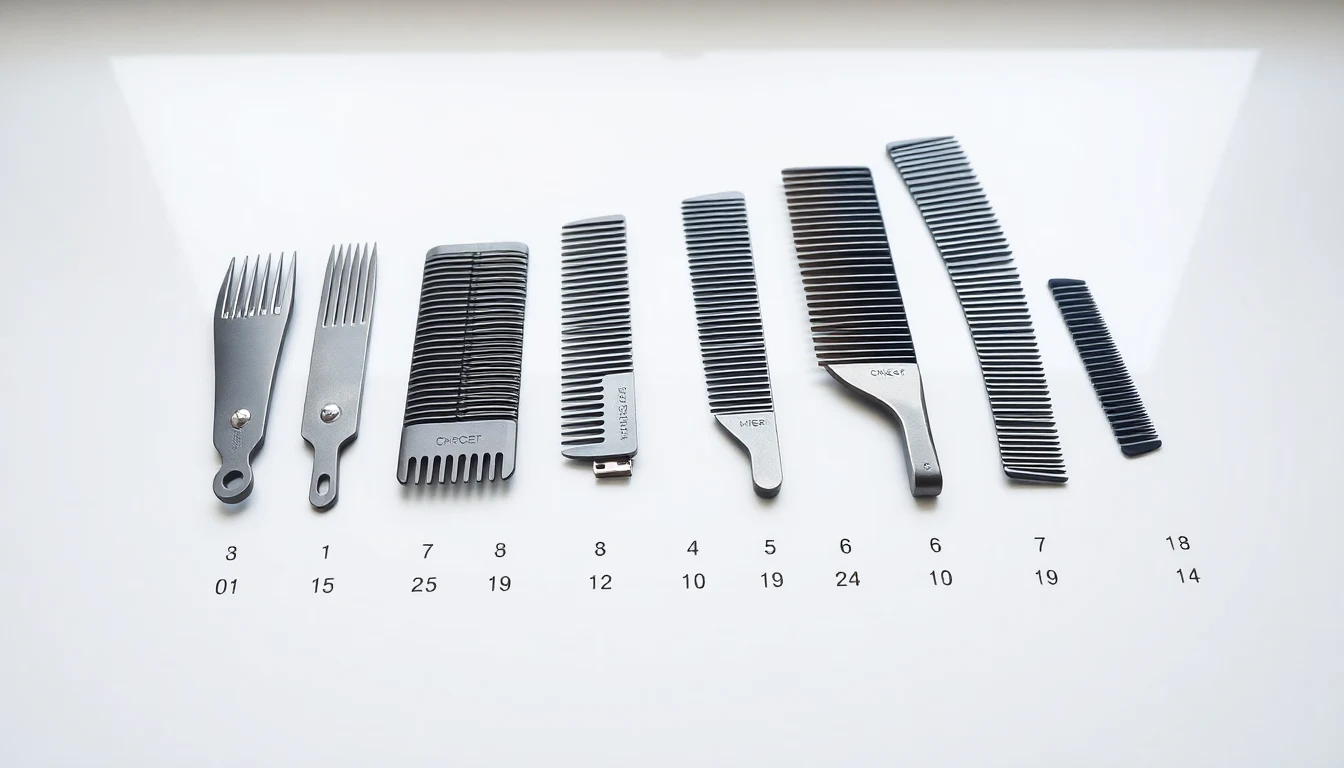
Each guard is assigned a number. Higher numbers mean longer hair. The numbering system is universal across brands, though the exact measurements vary slightly between manufacturers (more on that in the brand comparison section).
Guards serve two purposes. First, they let you cut hair to a consistent, predetermined length across your entire head. This is essential for buzz cuts and uniform clipper cuts. Second, they let you create gradual transitions between different lengths, which is the foundation of fading. By switching between progressively longer guards and blending where they overlap, barbers create the smooth gradient you see in a taper fade or skin fade.
Complete Clipper Guard Size Chart
This chart shows every standard clipper guard size from no guard (#0) through the longest standard guard (#12). Measurements are based on Wahl’s system, which is the industry standard. Andis and BaByliss measurements are noted where they differ.
| Guard Number | Length (Inches) | Length (mm) | What It Looks Like | Common Uses |
|---|---|---|---|---|
| #0 (No Guard) | 1/16″ | 1.5mm | Stubble. Scalp is visible. Similar to one day of growth after a clean shave. | Skin fades at the hairline, bald fades, creating a “shadow” at the base of a fade. |
| #0.5 | 1/16″ | 1.5mm | Slightly longer stubble. Minimal scalp visibility depending on hair color and density. | First step above skin in a fade. Blending between no guard and #1. |
| #1 | 1/8″ | 3mm | Very short crop. Scalp is visible on lighter skin tones and thinner hair. Looks like a very tight military cut. | Short buzz cuts, sides of a low maintenance cut, base of mid and high fades. |
| #1.5 | 3/16″ | 4.5mm | Between a #1 and #2. Still very short, but more hair coverage than a #1. | Blending step between #1 and #2 in fades. Common in gradual fade work. |
| #2 | 1/4″ | 6mm | Short buzz. Hair texture is visible. Scalp shows through on fine or light-colored hair but not on thick, dark hair. | Standard short buzz cut, sides of a crew cut, popular “default” men’s short sides length. |
| #2.5 | 5/16″ | 8mm | Between a #2 and #3. Slightly more coverage. | Blending step. Used when the gap between #2 and #3 creates a visible line. |
| #3 | 3/8″ | 10mm | The most popular buzz cut length. Hair texture and color are clearly visible. Scalp does not show through on most hair types. | Standard buzz cut, short all-over cut, sides of a casual clipper cut. The go-to “safe” length for first-time home cuts. |
| #3.5 | 7/16″ | 11mm | Between a #3 and #4. Rarely sold separately. | Fine blending work. Not commonly used outside of professional barbering. |
| #4 | 1/2″ | 13mm | A longer buzz. Hair lies flat on straight hair and starts to show wave or curl pattern on textured hair. | Longer buzz cuts, sides of a longer clipper cut, top of a short crew cut. |
| #5 | 5/8″ | 16mm | Getting into “short haircut” territory. Hair has enough length to style slightly on straight hair. Curl definition starts on wavy hair. | Top of a crew cut, sides of a longer style, transitional length for blending into scissor work. |
| #6 | 3/4″ | 19mm | Medium-short. Hair can be combed and has visible direction. Curl patterns are fully visible. | Top of a clipper cut, longer sides, casual medium-length style. |
| #7 | 7/8″ | 22mm | Medium length. Enough hair to part or brush to one side. Waves and curls are fully expressed. | Top of a clipper cut with longer top, medium-length all-over cut. |
| #8 | 1″ | 25mm | The longest standard guard. Full, textured look. Hair has enough length for basic styling with product. | Longest clipper-manageable top length, full crew cuts, all-over longer cuts. |
| #10 | 1 1/4″ | 32mm | Extended guard territory. Hair has significant movement and styling options. | Extended guard sets only. Top length for home clipper cuts when you want more than an inch. |
| #12 | 1 1/2″ | 38mm | The longest widely available guard. Substantial length. At this point, scissor cutting becomes more precise for most styles. | Extended guard sets only. Maximum length before most barbers switch to scissor-over-comb technique. |
Note on half-size guards: Half sizes (#0.5, #1.5, #2.5, #3.5) are not included in most standard clipper guard sets. They are sold separately as premium add-on sets. If you are doing any kind of blending or fade work, half-size guards are worth the investment. More on this in the premium guards section.
Visual Length References: What Each Guard Actually Looks Like
Numbers and millimeters are useful, but seeing what each length looks like on a head tells you more than any measurement chart. Here is a practical visual reference for the most commonly used guards. Mastering clipper guard sizes takes practice but delivers great results.
The Short Range (#0 to #2): Skin Visible to Very Short Crop
At these lengths, the scalp shows through to varying degrees depending on hair color, density, and skin tone. Dark hair on lighter skin shows more contrast (scalp is more visible). Light or blonde hair on lighter skin blends more. Thick, dark hair on darker skin provides more coverage even at very short lengths. (We recommend this Wahl Color Pro Cordless Rechargeable Hair.)
- #0 (no guard): Think five o’clock shadow, but on your head. This is the length you see at the very bottom of a skin fade.
- #1: Military induction cut. Just enough hair to see color and direction, but very tight to the scalp. This is the standard “high and tight” sides length.
- #2: The most popular short sides length. It is short enough to look clean and controlled but long enough that the scalp does not dominate the look on most hair types.
The Medium Range (#3 to #5): Texture Visible, Low Maintenance
This is where most home haircuts live. These guard lengths show hair texture clearly, require minimal styling, and provide a clean, intentional look without being as extreme as the shorter guards.
- #3: The “default” buzz cut length. If someone says “give me a buzz cut” without specifying a number, this is what most barbers reach for. It is universally flattering and forgiving of imperfect technique.
- #4: Half an inch. This is where wavy and curly hair starts to show its natural pattern. On straight hair, it lies flat and smooth. On curly hair, you see the curl formation, which adds visual texture.
- #5: Getting into “short hairstyle” territory rather than “buzz cut” territory. Enough length to run a comb through and direct the hair. This is the guard I recommend for the top section of a simple home clipper cut with shorter sides.
The Longer Range (#6 to #8): Styleable Length
At these lengths, you can part the hair, apply product, and create basic styles. This is the boundary between “clipper-only” territory and “needs scissors for precision” territory. Mastering clipper guard sizes takes practice but delivers great results.
- #6: Three-quarters of an inch. Hair has enough length to lie in a direction. You can create a basic side part or brush it forward. On curly hair, curls are fully formed and bouncy.
- #7: Almost an inch. Product works here. A dab of pomade or clay gives direction and hold. Most men who use a #7 on top are doing a clipper cut with shorter sides and a longer, styled top.
- #8: One inch, the longest standard guard. This is as long as most stock guard sets go. For anything longer, you need extended guards (#10, #12) or scissor work.
How Hair Type Changes the Appearance
This is critical and often overlooked. The same guard number produces dramatically different visual results depending on your hair type.
| Guard Number | Straight Hair (Type 1) | Wavy Hair (Type 2) | Curly Hair (Type 3) | Coily Hair (Type 4) |
|---|---|---|---|---|
| #2 | Very short, flat, scalp visible on fine hair | Very short, slight texture visible | Very short, curl barely forms | Very short, tight to scalp, looks shorter than measured |
| #4 | Short, lies flat, smooth appearance | Short, slight wave visible | Short, curls forming, looks shorter than straight hair at same guard | Curl pattern compresses; appears 1-2 sizes shorter than on straight hair |
| #6 | Medium, combable, clear direction | Medium, wave pattern adds volume | Curls fully formed, significant volume | Dense, full look; actual visual length is much less than 3/4″ |
| #8 | Longer, easily styled, lies flat | Wavy texture, noticeable volume | Lots of curl definition, appears much shorter than 1″ | Full afro texture at just 1″ of measured length |
The takeaway: If you have curly or coily hair (Types 3 to 4), expect to go one to two guard sizes longer than a straight-haired person to achieve the same visual length. A #4 on straight hair looks roughly equivalent to a #6 on tightly curled hair. For in-depth clipper recommendations for textured hair, see our guide to the best clippers for Black men.
Open vs. Closed Blade Positions
Most quality clippers have a taper lever on the side that adjusts the blade position between “open” and “closed.” Understanding this lever effectively doubles the number of length options available to you without changing guards. For more guidance, Consumer Reports provides expert resources on product testing.
How It Works
The taper lever moves the cutting blade relative to the stationary guide blade:
- Closed (lever all the way up): The cutting blade is fully aligned with the guide blade. This produces the shortest possible cut for any given guard. The measurements in our chart above assume the blade is closed.
- Open (lever all the way down): The cutting blade is offset from the guide blade, adding roughly half a guard size (approximately 0.5mm to 1mm) of extra length to the cut.
- Half-open (lever in the middle): Produces a length between open and closed, giving you a quarter-step increment.
Practical Example
With a #2 guard and the taper lever in different positions:
| Lever Position | Effective Length | Approximate Equivalent |
|---|---|---|
| Closed | 1/4″ (6mm) | True #2 |
| Half-open | ~9/32″ (7mm) | Between #2 and #2.5 |
| Open | ~5/16″ (8mm) | Close to #2.5 |
Why This Matters
For home users doing a uniform buzz cut, the lever position is less critical. Pick a position and keep it consistent throughout the cut.
For anyone doing blending work, the taper lever is essential. Barbers use the lever as an intermediate step between guard sizes. Instead of jumping from a #1 guard straight to a #2 (which can leave a visible line), a barber might go: #1 closed, #1 open, #1.5 closed, #1.5 open, #2 closed. That gives five distinct lengths to blend through instead of just two. This is what creates the smooth, gradual transition in a professional fade.
If you are trying a basic blend at home, start with the lever closed for the shorter sections and open for the longer sections. This gives you a basic half-step between each guard without buying additional half-size guards.
Brand Comparison: Wahl, Andis, and BaByliss Guard Systems
While the guard numbering system (#1 through #8) is universal, the actual measurements, attachment mechanisms, and included guard sets vary by brand. Here is how the three major brands compare.
Wahl
Wahl is the reference standard for guard sizes. When barbers and guides (including this one) cite guard measurements, they are typically referencing Wahl’s specifications. Wahl guards use a clip-on mechanism that clicks onto the blade.
- Standard set included with most clippers: #1 through #8 (8 guards)
- Premium set available separately: #0.5 through #8, including half sizes (13 guards)
- Color-coded option: The Wahl Color Pro Cordless uses color-coded guards, making it easier to grab the right one quickly. Each guard number has its own color.
- Fit: Wahl guards fit snugly on Wahl blades. They have a solid clip that rarely pops off mid-cut.
- Material: Standard guards are hard plastic. Premium sets are available in stainless steel.
Andis
Andis guards run very close to Wahl measurements but are designed specifically for Andis blade dimensions. They use a similar clip-on mechanism but are not interchangeable with Wahl guards without modification. (We recommend this For Wahl Professional #1 Guide Comb.)
- Standard set: #1 through #8 (varies by clipper model, some include fewer)
- Magnetic guard set: Andis offers a popular magnetic guard set where the guards attach via magnets rather than clips. These are easier to swap quickly and fit more securely during cutting. Available in half sizes.
- Size notes: Andis guards are within 0.5mm of Wahl equivalents at every size. For practical purposes, a Wahl #3 and an Andis #3 produce the same result.
- Popular with: The Andis Master Cordless is a top choice for fading, and its magnetic guard set is considered one of the best in the industry.
BaBylissPRO
BaByliss guards follow the same numbering convention and measurements. Their guards are designed for BaByliss blade widths and use a clip-on attachment. Understanding clipper guard sizes is key to a great grooming routine. (We recommend this Clipper Guards for Wahl 10 12.) Understanding clipper guard sizes is key to a great grooming routine.
- Standard set: Varies by model. Some BaByliss clippers include 8 guards, others include 5.
- Premium guards: BaByliss offers premium guard sets separately. These tend to be well-made with a secure fit.
- Compatibility: BaByliss guards do not fit Wahl or Andis clippers. The blade widths are different.
- Notable: The BaBylissPRO GoldFX includes a solid guard set out of the box.
Quick Brand Comparison Table
| Feature | Wahl | Andis | BaBylissPRO |
|---|---|---|---|
| Standard guards included | #1-#8 | Varies (#1-#8 on pro models) | Varies (5-8 guards) |
| Half-size guards available | Yes (premium set) | Yes (magnetic set) | Yes (premium set) |
| Attachment type | Clip-on | Clip-on or magnetic | Clip-on |
| Guard material | Plastic (standard), steel (premium) | Plastic (standard), magnetic polymer | Plastic |
| Cross-brand compatible | No | No | No |
| Color-coded options | Yes (Color Pro line) | No | No |
Bottom line: The guard numbering is universal. A #3 is a #3 regardless of brand. But always use guards made for your specific clipper. Cross-brand guards fit poorly and create uneven results.
Using Guards for Fading and Blending
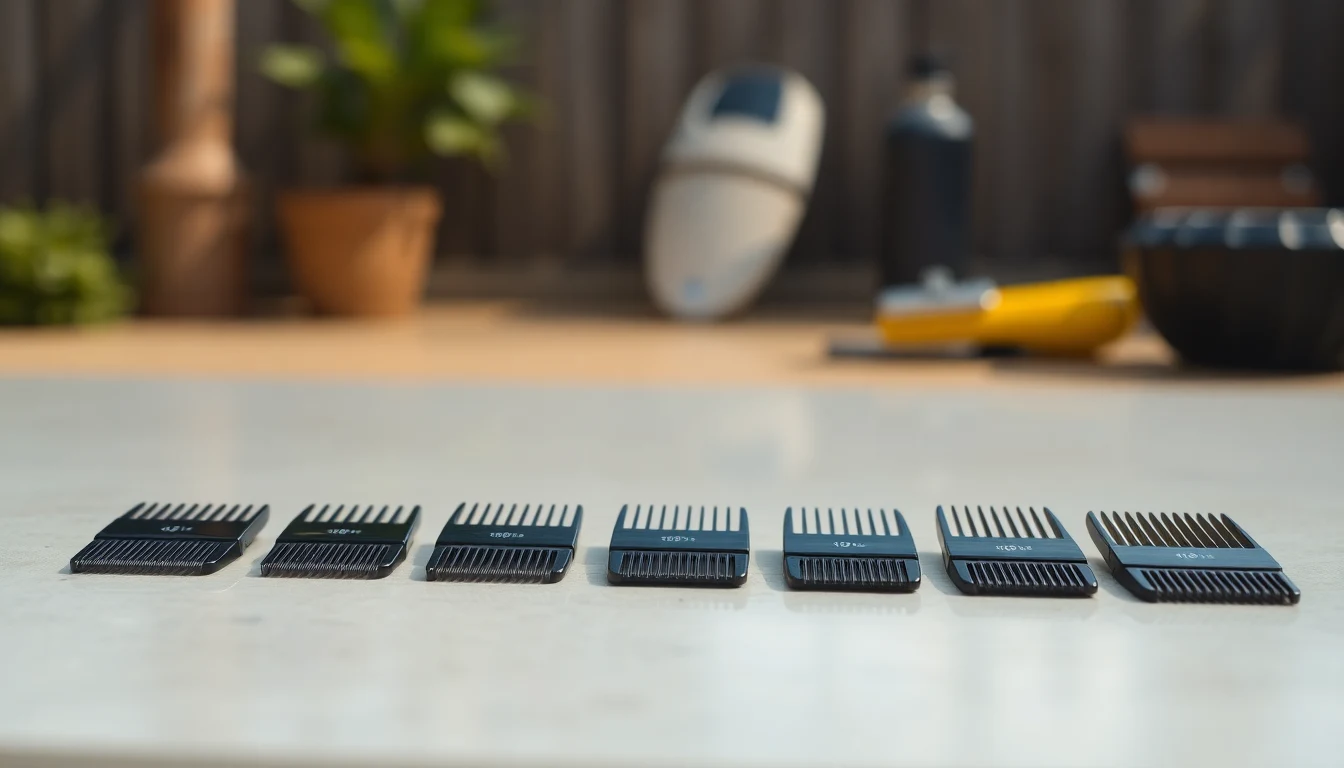
If you understand guard sizes but want to know how barbers use them to create fades, this section breaks it down. Whether you are communicating with your barber or attempting a basic blend at home (see our home haircut guide), understanding the fade process helps.
What a Fade Actually Is
A fade is a gradual, seamless transition from shorter hair at the bottom to longer hair at the top. The “grade” of the fade (skin fade, low fade, mid fade, high fade) refers to where the shortest point starts and where the transition happens on the head. See our types of fades guide for a visual breakdown of each style.
The Guard Progression for Common Fades
| Fade Style | Starting Guard (Bottom) | Blend Zone Guards | Top Length |
|---|---|---|---|
| Skin Fade | #0 (no guard, blade on skin) | #0.5 > #1 > #1.5 > #2 | #3 to #8, or scissor cut |
| Low Fade | #0.5 or #1 | #1 > #1.5 > #2 > #2.5 | #3 to #8 |
| Mid Fade | #1 | #1.5 > #2 > #2.5 > #3 | #4 to #8 |
| High Fade | #0 or #0.5 | #1 > #1.5 > #2 | #3 to #8 |
| Taper Fade | #1 or #2 | #2 > #2.5 > #3 | #4 to #8 |
| Shadow Fade | #0.5 or #1 | #1 > #1.5 > #2 > #3 | #4 to #8 |
The Blending Technique
Creating a smooth blend between guard sizes requires a specific technique:
- Cut each zone. Start with the shortest guard at the lowest zone and work upward, switching to progressively longer guards.
- Blend the lines. Where two zones meet, there will be a visible line. Using either the shorter guard with the blade open, or a half-size guard, work along this line with short, upward flicking motions. The clipper should “scoop” upward and away from the head, removing only the hair right at the transition.
- Use the lever. The taper lever gives you intermediate lengths. A #1 guard with the blade open is approximately equivalent to a #1.5 with the blade closed. Use these micro-steps to smooth any remaining lines.
- Cross-check. After blending, look at the fade from multiple angles. The transition should be gradual enough that you cannot identify exactly where one guard size ends and the next begins.
Honest assessment: Good fading is one of the hardest skills in barbering. Professional barbers spend months or years developing their blending technique. If you are cutting your own hair at home, a two-length blend (short sides, longer top, one blending step between) is a realistic goal. Multi-step fades with seamless gradients require professional hands. See our guide on the best clippers for fades if you are looking for tools optimized for this work.
Premium Guard Sets vs. Stock Guards
The guards that come with your clippers are functional, but premium aftermarket guard sets offer meaningful improvements. Here is what you get and whether the upgrade is worth it. (We recommend this Jack & Rose Clippers and Trimmers.)
What Premium Guards Improve
| Feature | Stock Plastic Guards | Premium Guards |
|---|---|---|
| Material | Hard plastic | Stainless steel, reinforced polymer, or magnetized |
| Fit | Adequate. May wobble slightly on some clippers. | Snug, precise fit. No wobble or shift during cutting. |
| Half sizes included | Rarely | Yes. #0.5, #1.5, #2.5 included in most premium sets. |
| Durability | Teeth can spread or snap over time | Longer-lasting. Metal guards are nearly indestructible. |
| Cutting consistency | Good for basic cuts | Better: tighter fit means more consistent length across the head. |
| Price | Included with clippers | $15 to $40 for a full set |
Recommended Premium Guard Sets
- Wahl Premium Cutting Guides ($15 to $25): Stainless steel construction, includes half sizes. The gold standard for Wahl clipper users. These fit the Wahl Cordless Magic Clip, Wahl Senior, and most other Wahl professional clippers.
- Andis Magnetic Guard Set ($20 to $30): Magnetic attachment eliminates the clip mechanism entirely. Guards snap on and off quickly and stay perfectly secure during cutting. Available in half sizes. Fits the Andis Master Cordless and most Andis professional clippers.
Who Should Upgrade?
- Definitely upgrade if: You cut your own hair regularly (twice a month or more), you do any blending work, or you find that your stock guards wobble or shift during cutting.
- Skip the upgrade if: You only do occasional buzz cuts with one guard size, or you are using budget clippers that may not fit premium guards.
How to Talk to Your Barber About Guard Sizes
Understanding guard sizes is just as useful for barbershop communication as it is for home cutting. Here is how to use this knowledge to get exactly the cut you want.
What to Say
Instead of vague requests like “short on the sides, longer on top,” try specific guard numbers:
- “Number 2 on the sides, number 6 on top, blended.” This is clear, specific, and leaves no room for interpretation.
- “Low fade from a 0 to a 2, with a 5 on top.” Tells the barber the exact fade gradient and top length.
- “Same as last time but take the sides down to a 1 instead of a 2.” If you have been before, reference the change in guard numbers.
What to Ask
If you are trying a new barber or a new style, ask these questions before they start cutting:
- “What guard are you planning to use on the sides?”
- “What guard or length on top?”
- “Are you blending with half guards or the lever?”
These questions show the barber you know what you are talking about, which typically results in a more careful, precise cut. They also give you the information you need to request the same cut in the future or maintain it at home between visits.
Common Miscommunications
| What You Said | What the Barber Heard | What to Say Instead |
|---|---|---|
| “Short on the sides” | Could mean anything from a #1 to a #4 | “Number 2 on the sides” (specific guard) |
| “Not too short” | Unclear. Barber will guess based on your current length. | “A number 4 or 5. I want to see the hair texture.” |
| “A fade” | Could mean skin fade, low fade, mid fade, or taper | “Low fade starting at a 1, blended to a 3 on the sides” |
| “Medium length” | Completely subjective | “About three-quarters of an inch. A 6 guard.” |
Bringing a reference photo is still the most effective communication tool. But combining a photo with guard-number specifics gives the barber the clearest picture of what you want.
Guard Size Quick Reference (Saveable)
Here is a condensed reference chart designed to be bookmarked or saved to your phone. Pull it up at the barbershop or when reaching for your clippers at home. When it comes to clipper guard sizes, technique matters most. (We recommend this Novah® Professional Hair Clippers for Men,.)
| Guard | Inches | mm | Quick Description |
|---|---|---|---|
| #0 | 1/16″ | 1.5 | Near skin. Stubble only. |
| #0.5 | 1/16″ | 1.5 | Slightly above skin. Fade starting point. |
| #1 | 1/8″ | 3 | Very short. Military cut. Scalp shows. |
| #1.5 | 3/16″ | 4.5 | Between #1 and #2. Blending step. |
| #2 | 1/4″ | 6 | Short buzz. Most popular short sides length. |
| #2.5 | 5/16″ | 8 | Between #2 and #3. Blending step. |
| #3 | 3/8″ | 10 | Standard buzz cut. Safe starting point. |
| #4 | 1/2″ | 13 | Longer buzz. Texture visible. |
| #5 | 5/8″ | 16 | Short hairstyle. Combable. |
| #6 | 3/4″ | 19 | Medium. Clear direction. Styleable. |
| #7 | 7/8″ | 22 | Medium-long. Easy to style with product. |
| #8 | 1″ | 25 | Longest standard guard. Full, textured look. |
| #10 | 1 1/4″ | 32 | Extended guard. Significant length. |
| #12 | 1 1/2″ | 38 | Longest available guard. Maximum clipper length. |
Remember: These measurements assume the blade is in the closed position. Opening the taper lever adds approximately half a guard size of extra length. When it comes to clipper guard sizes, technique matters most.
Frequently Asked Questions
What clipper guard is 1 inch?
A #8 guard cuts hair to approximately 1 inch (25mm). This is the longest standard guard included with most clipper sets. It leaves enough length for a textured, full look on top while still being a controlled, clipper-manageable length. If you need more than 1 inch, you need extended guard sets (#10 at 1.25 inches, #12 at 1.5 inches) or scissor-over-comb technique. (We recommend this Hair Clipper Guards Guide Combs.)
What is the difference between open and closed blade?
The taper lever on the side of most clippers adjusts the blade between open and closed positions. Closed produces the shortest cut for any given guard. Open adds roughly half a guard size of extra length. For example, a #2 guard with the blade closed cuts at about 1/4 inch, but with the blade open it cuts closer to 5/16 inch. Barbers use the lever as intermediate steps when blending fades. See the detailed breakdown above.
Are Wahl and Andis guards interchangeable?
No. Wahl and Andis guards are designed for their own clipper models and are not interchangeable. The blade widths and attachment mechanisms differ. Universal guard sets from third-party manufacturers exist but typically fit more loosely, which can cause shifting during cutting. For the best results, use guards made for your specific clipper brand. See our best cordless hair clippers guide for tool recommendations by brand.
What guard size should I use for a buzz cut?
A #3 guard (3/8 inch, about 10mm) is the most popular buzz cut length. It shows hair texture and color without looking shaved. A #2 gives a very short, military-style buzz. A #4 is a longer buzz with more coverage. For your first home buzz cut, start with a #3 or #4. You can always go shorter on the next pass. See our buzz cut styles guide for visual examples of each length.
What guards do barbers use for fades?
Most barbers use guards #0.5 through #2 for the fade zone, along with the open and closed blade positions for half-step increments. A typical low fade might start with no guard at the hairline, blend up to a #1, then #1.5, then #2, before transitioning to the top length. The taper lever gives roughly 8 to 10 distinct length increments in the fade zone. See our types of fades guide for details on each fade style.
Do I need half-size guards?
For basic home cuts (buzz cuts, single-length cuts), no. Half-size guards (#0.5, #1.5, #2.5) become important when you are blending between guard sizes. If the gap between a #1 and #2 on the sides of your home cut creates a visible line, a #1.5 guard smooths that transition. Most stock clipper sets do not include half sizes. The Wahl Premium Cutting Guides and Andis Magnetic Guard Set both include them. (We recommend this Clipper Guards for Wahl 10 12.)
Why does the same guard look different on curly versus straight hair?
Clipper guards cut at a fixed distance from the scalp, but curly and coily hair springs back after cutting, compressing the visual length. A #4 guard on straight Type 1 hair shows a clean half inch of length. On tightly coiled Type 4 hair, that same half inch curls up and appears significantly shorter. Men with curly or coily hair should go one to two guard sizes longer to achieve the same visual result as someone with straight hair at a shorter guard. (We recommend this Clipper Guards for Wahl 10 12.)
The Bottom Line
Clipper guard sizes follow a simple system: higher number means longer hair. But the practical details, including how hair type changes the results, how the taper lever adds intermediate steps, and how brands differ in their guard sets, make the difference between a mediocre cut and a clean one.
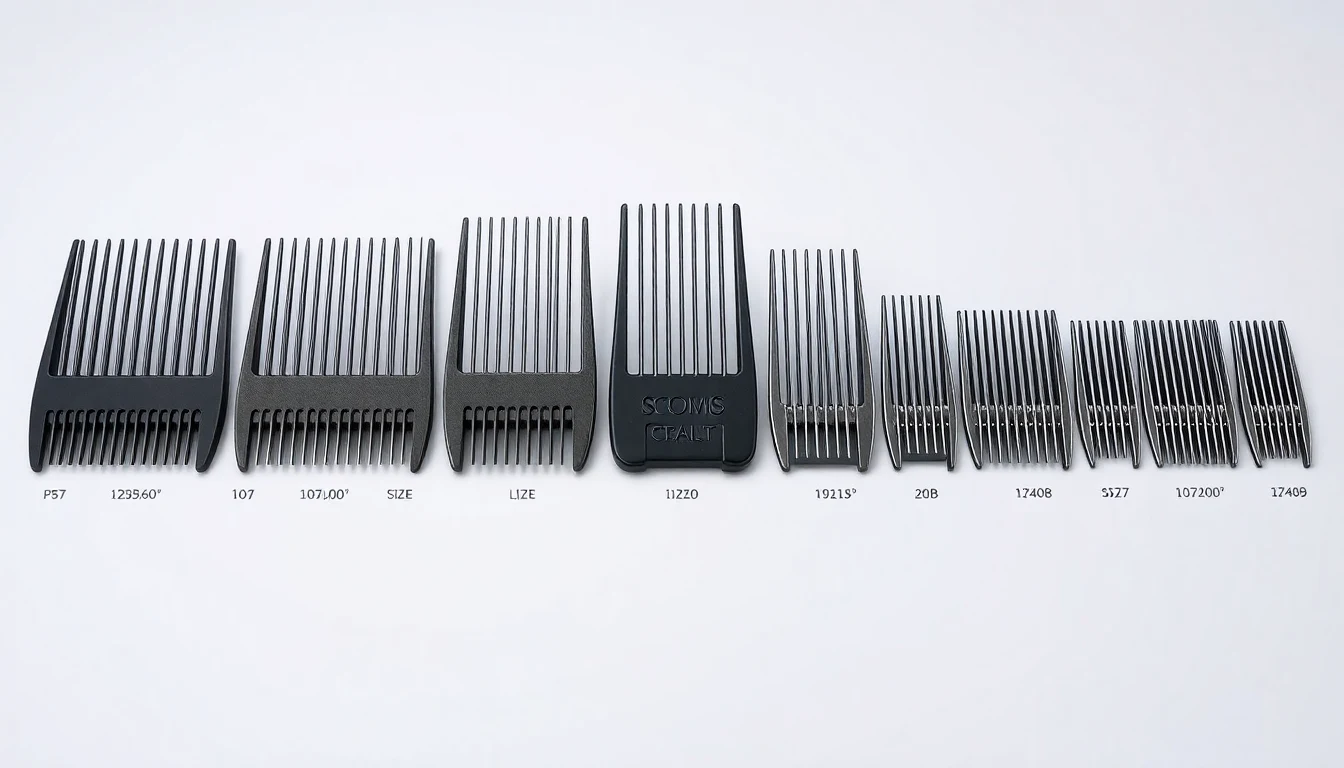
Quick recap:
- Guard #1 through #3 covers the short range (1/8″ to 3/8″). This is where most sides and short buzz cuts live.
- Guard #4 through #6 is the medium range (1/2″ to 3/4″). This is where hair texture becomes visible and basic styling is possible.
- Guard #7 through #8 is the longer range (7/8″ to 1″). This is the longest length most standard guard sets cover.
- The taper lever (open vs. closed) adds roughly half a guard size of length, effectively doubling your options without changing guards.
- Curly and coily hair always looks shorter than the guard measurement suggests. Go one to two sizes longer than you think you need.
- Wahl, Andis, and BaByliss guards are NOT interchangeable. Use the guards designed for your clipper brand.
What to do next: If you are shopping for clippers, our best cordless hair clippers guide covers every major model with pros, cons, and included guard information. If you are ready to cut your own hair at home, our men’s DIY haircut guide walks through the full process step by step. And if you want to understand how guards translate to specific fade styles, our types of fades guide shows each style with its guard progression.
Save the quick reference chart above. It is the one chart you will keep coming back to.
Further reading: For research-backed grooming advice, see Healthline Men’s Health.
Explore more tips at CulturedGrooming.com.
Further reading: For research-backed grooming advice, see Healthline Men’s Health.