
Last updated: February 2026 | Written by Carlos Espinoza, Latino Grooming Editor
I’ll never forget the day my primo (cousin) walked into Thanksgiving dinner with his first Edgar. My tio (uncle) looked at him for a solid five seconds, shook his head, and said, “You look like a coconut someone took clippers to.” Three months later, guess who was asking for the same barber’s number.
The Edgar haircut is the most talked-about, most memed, and most misunderstood cut in Mexican-American barbershop culture. It is also one of the most requested haircuts in the United States, period. Whether you call it the Edgar, the takuache cut, or “that one haircut all the cuhs get,” you’ve seen it everywhere: TikTok, Instagram, your local barberia (barbershop), and probably on at least two guys at your last family function.
This guide covers everything: where the Edgar came from, nine variations to choose from, exactly what to tell your barber in English and Spanish, the products that keep it looking right, and some honest talk about the memes. If you only read one section, jump to the variations gallery below to find your version.
What Is the Edgar Haircut?
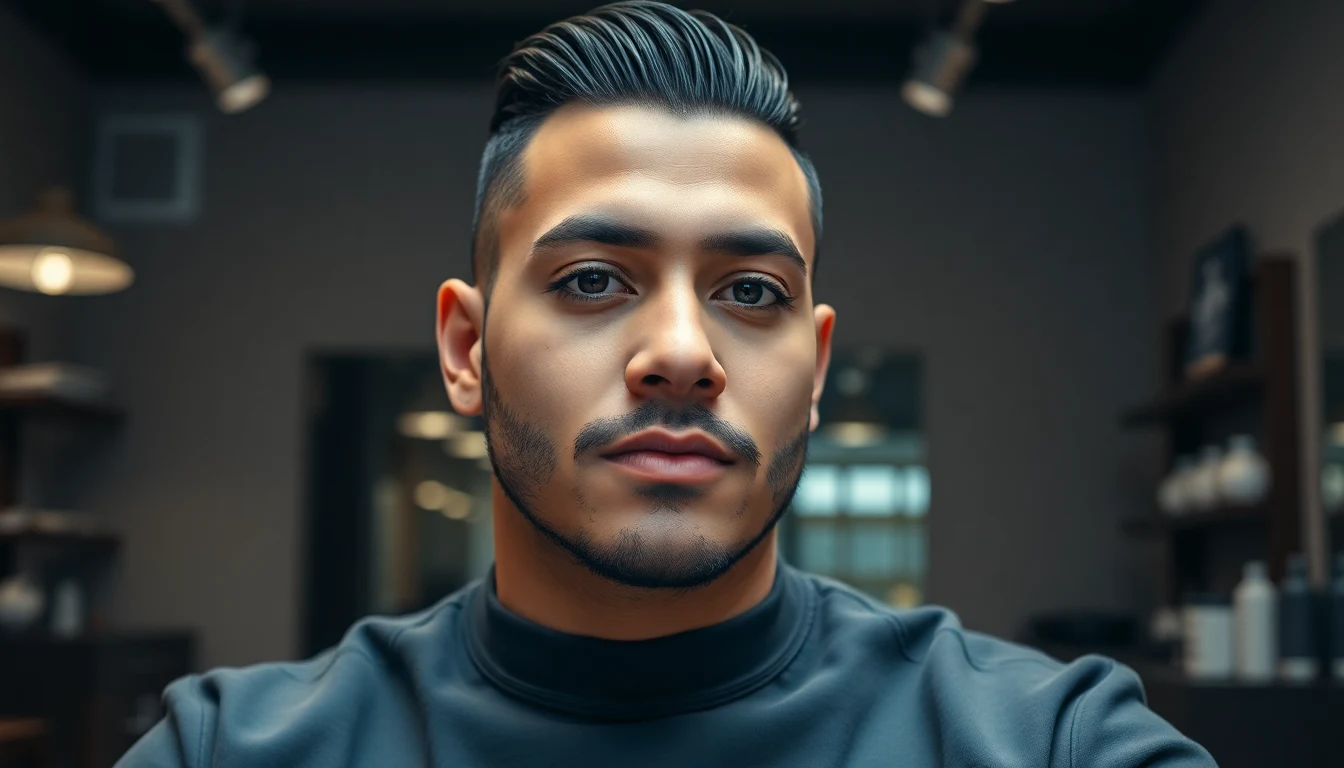
The Edgar is a men’s haircut defined by a straight-across fringe (bangs) that creates a sharp horizontal line across the forehead, paired with a fade or taper on the sides and back. The top is kept longer and typically styled forward, while the sides are blended down to skin or near-skin length.
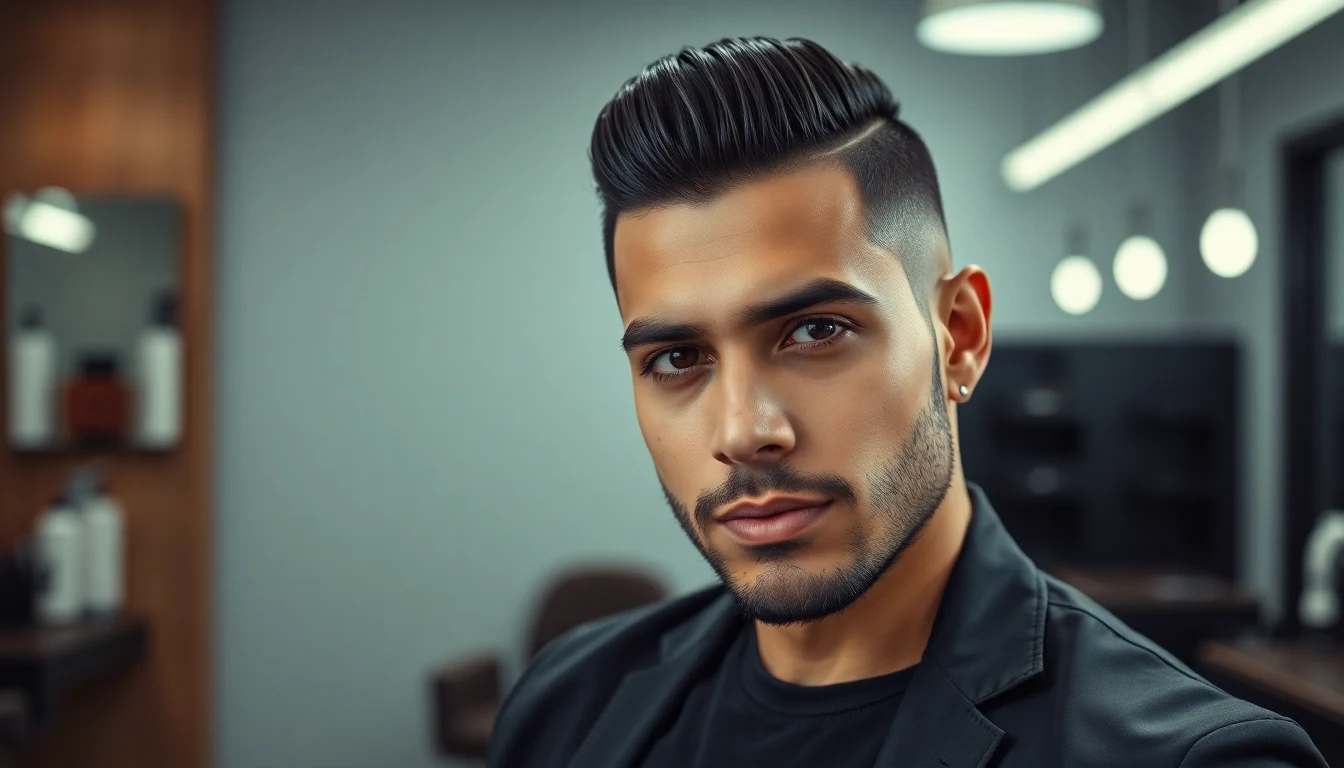
Think of it as a modern take on the Caesar cut, but with more contrast between the top and sides. The key feature is that blunt, clean fringe line. It is the hairline of the cut, the signature element that makes an Edgar an Edgar and not just “a fade with bangs.”
The cut works because of thick, straight hair. And if there is one thing many Latino men have in abundance, it is thick, straight hair. That natural density is what gives the fringe its weight and structure. Thinner hair can pull it off too, but the classic look relies on that heavy curtain of hair falling forward with purpose. (We recommend this Gelactica Max Control Hair Gel for.)
Where the Edgar Came From: A Cultural History
Let me set the record straight on this, because the internet gets it wrong constantly.
The Roots: Mexican-American Barbershop Culture
The straight-fringe-with-fade look did not appear out of thin air in 2019. Variations of this style have been part of Mexican-American barbershop culture since at least the early 2010s, particularly in Texas, California, and Arizona. Barbers in cities like San Antonio, Houston, Los Angeles, and Phoenix were cutting versions of this look years before it had a name. If you grew up on the West Side of San Antonio like I did, you saw this cut in high school hallways well before it hit your For You page.
The style draws on a longer tradition. The clean, geometric precision of the fringe connects to the Chicano emphasis on sharp, well-maintained haircuts. The lineup culture, the attention to symmetry, the pride in a fresh cut that says “I care about how I show up.” That is not new. That goes back generations.
The Name: A TikTok Moment
The name “Edgar” became attached to the cut around 2019 when TikTok videos featuring young Mexican-American men with this style went viral. The exact origin is debated, but the most widely cited story involves a user named Edgar whose haircut became the visual punchline and then, eventually, the visual standard. The memes came first. The respect followed.
Here is what is important to understand: the memes did not create the style. The memes named a style that already existed in the community. Calling it the “Edgar” gave the internet a shorthand for something barbers had been doing for years.
The Takuache Connection
You cannot talk about the Edgar without talking about takuache (opossum) culture. The takuache movement is a Mexican-American subculture centered around lowered trucks, regional Mexican music (especially corridos tumbados), specific fashion (Cuidado con el Perro brand, square-toe boots), and, of course, the Edgar haircut.
“Cuh” became the greeting. The dropped truck became the vehicle. And the Edgar became the haircut. It was an identity package, and for a lot of young Mexican-American men, it was the first time they saw their specific culture reflected back at them on mainstream social media.
The word takuache literally means opossum. As slang, it refers to someone who is part of this truck and ranch-culture aesthetic. The haircut became so associated with the movement that “takuache haircut” and “cuh haircut” became search terms in their own right.
Going Mainstream (2020 to Now)
By 2021, the Edgar had crossed over. Non-Latino barbers were learning it. Style guides outside the community started covering it. Athletes and musicians wore variations of it. And the cut kept evolving. The blunt, straight-line original branched into textured versions, curly adaptations, and creative design work.
In 2026, the Edgar is not a trend. It is a category. Just like “the fade” is not one cut but a family of cuts, the Edgar now encompasses a range of styles united by that forward-fringe, fade-contrast architecture. It is one of the top 10 most-searched men’s haircuts in English-speaking countries, and in barbershops from San Antonio to LA, it is a staple on the menu.
Edgar Haircut Variations: Find Your Version
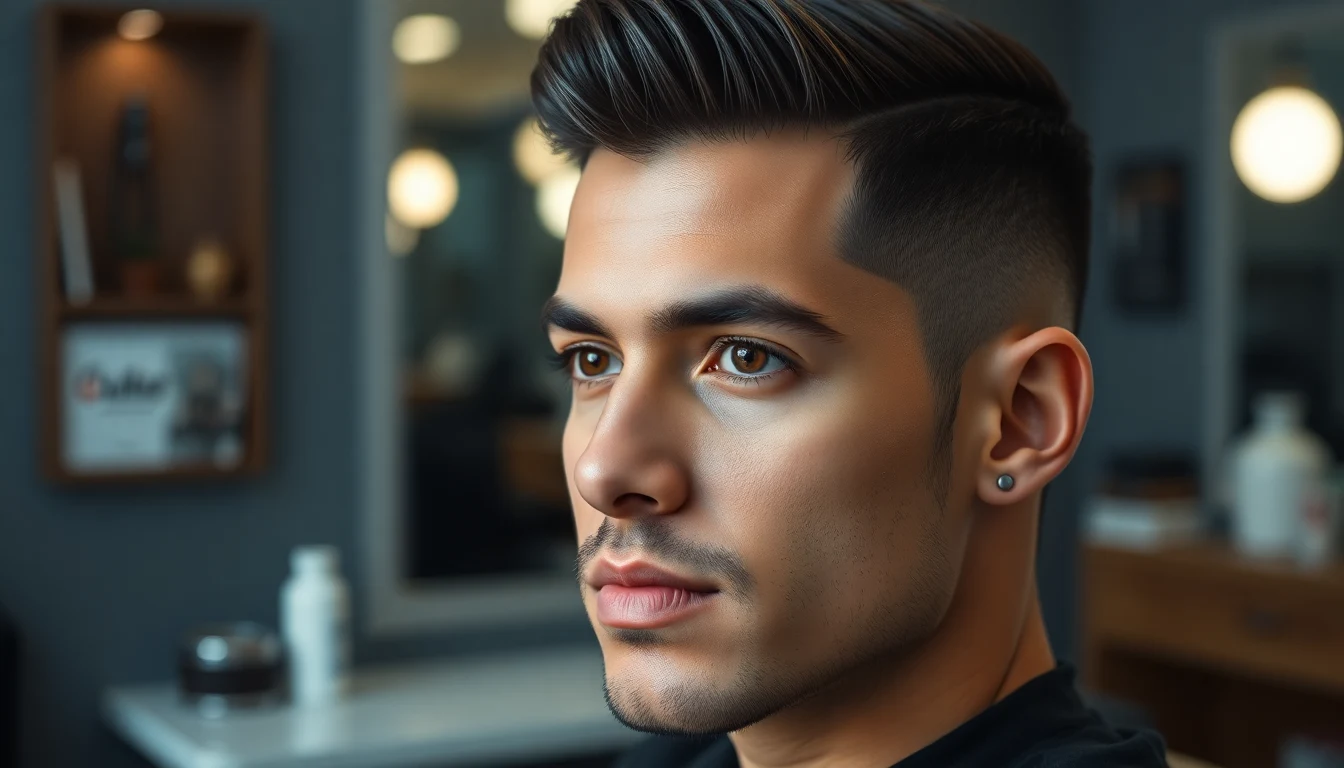
This is not a one-size-fits-all situation. The Edgar has evolved into at least nine distinct variations, and choosing the right one depends on your hair texture, face shape, lifestyle, and how much time you want to spend styling every morning. Here is your gallery. (We recommend this JOHNNY B. Mode Professional Hair Styling.)
| Variation | Fade Type | Best Hair Type | Best Face Shape | Maintenance | Style Difficulty |
|---|---|---|---|---|---|
| Classic Edgar | High skin fade | Thick, straight | Oval, square | Every 2 weeks | Easy |
| Textured Edgar | Mid fade | Thick, straight-wavy | Any | Every 2-3 weeks | Medium |
| Curly Edgar | Low taper fade | Wavy to curly (2B-3B) | Oval, diamond | Every 3 weeks | Medium |
| Edgar with Designs | High skin fade | Any | Any | Every 2 weeks | Easy (barber does the work) |
| Edgar with Taper Fade | Taper (gradual) | Thick, straight | Round, oval | Every 2-3 weeks | Easy |
| Edgar with High Fade | High skin fade | Thick, straight | Round, square | Every 2 weeks | Easy |
| Edgar with Mid Fade | Mid fade | Thick, any texture | Any | Every 2-3 weeks | Easy |
| Messy Edgar | Low to mid fade | Wavy, textured | Any | Every 3 weeks | Medium |
| Long Edgar | Low taper or no fade | Thick, straight-wavy | Oval, oblong | Every 3-4 weeks | Hard |
1. The Classic Edgar
This is the original. The OG. A straight, blunt fringe that sits across the forehead like a clean horizontal line, paired with a high skin fade on the sides and back. The top has 2 to 3 inches of length, all styled forward so the hair falls naturally into that signature fringe.
Who it suits: Men with thick, straight hair and oval or square face shapes. This is the variation that looks best when your hair naturally has enough density to hold that fringe line without gaps or flyaways. (We recommend this LA Looks Styling Hair Gel –.)
How to ask your barber:
- In English: “I want a classic Edgar. High skin fade on the sides, blend it tight. Keep 2 to 3 inches on top, all forward. Straight fringe across, blunt cut, no layers.”
- In Spanish: “Quiero un corte Edgar clasico. Degradado alto a piel en los lados, bien difuminado. Deja 2 a 3 pulgadas arriba, todo hacia adelante. Fleco recto, corte recto, sin capas.“
Products: A medium-to-strong hold gel or pomade to keep the fringe in place. Elegance Hair Gel is the barbershop standard for this look. Apply to damp hair, comb forward, and let it set.
Maintenance: Every two weeks for the fade. The fringe can go three weeks before it starts looking heavy. Bring a reference photo every time so your barber keeps the fringe line consistent.
2. The Textured Edgar
Same architecture as the classic, but the fringe is point-cut or razor-cut to add choppy, layered texture instead of a blunt line. This gives the cut more movement and a modern feel. It also makes the fringe look less “blocky” from the front, which some guys prefer.
Who it suits: Anyone who likes the Edgar shape but wants a softer, more editorial look. Works well on straight-to-wavy hair (1B to 2B). Also a good option for men who find the classic version too sharp for their workplace.
How to ask your barber:
- In English: “I want a textured Edgar. Mid fade on the sides. Point-cut the fringe so it has some choppiness. I want movement, not a straight line.”
- In Spanish: “Quiero un Edgar con textura. Degradado medio en los lados. Corta el fleco con punta para que tenga movimiento, no una linea recta.“
Products: A matte clay or texturizing paste. Pacinos Matte Paste gives hold without shine and lets you separate the layers with your fingers. A sea salt texturizing spray on damp hair before blow-drying adds grip.
Maintenance: Every two to three weeks. The textured fringe is more forgiving as it grows out compared to the blunt classic version. Mastering the edgar haircut takes practice but delivers great results.
3. The Curly Edgar
This variation threw the “Edgars are only for straight hair” assumption out the window. Instead of a blunt line, the curls fall naturally forward, creating a softer, wavy fringe that still reads as an Edgar because of the fade contrast and forward styling direction.
Who it suits: Men with wavy to curly hair, roughly 2B to 3B on the curl pattern scale. This is huge for Caribbean Latino and Afro-Latino men who love the Edgar aesthetic but have natural texture that will not lay flat. If your hair leans curly, check out our curl-specific styling guides for additional product tips.
How to ask your barber:
- In English: “I want a curly Edgar. Low taper fade on the sides. Leave enough length on top for my curls to fall forward naturally. Do not thin it out too much; I want volume.”
- In Spanish: “Quiero un Edgar rizado. Degradado bajo en los lados. Deja largo suficiente arriba para que mis rizos caigan hacia adelante. No lo desfiles mucho, quiero volumen.“
Products: A curl cream or light-hold gel to define the curls without crunchiness. Skip the heavy pomade; it will weigh down your curls and kill the bounce. A diffuser attachment on your blow dryer is your best friend for this style.
Maintenance: Every three weeks for the fade. The curly top is more forgiving with growth because the texture masks the length change. Deep condition weekly to keep curls healthy.
4. The Edgar with Designs
Take a classic or high-fade Edgar and add razor art: lines, geometric patterns, tribal-inspired designs, or even team logos shaved into the fade area near the temples or behind the ears. This is the statement version, and it is massive in the Latino barbershop competition scene.
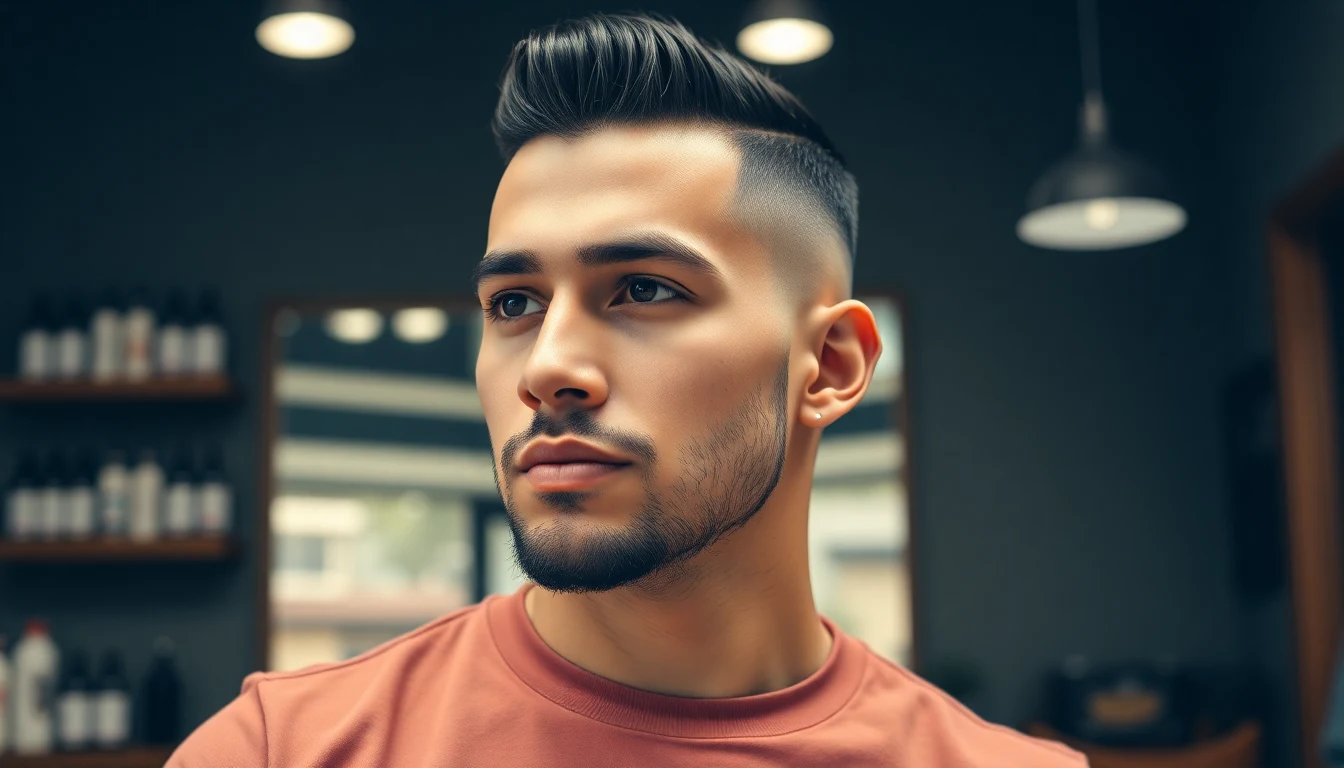
Who it suits: Anyone who wants to stand out. Face shape and hair type matter less here because the design work happens on the faded areas, not the top. This is the Edgar you get for a special event: quinceañera (15th birthday celebration), prom, concert, or just because it is Friday and you feel like showing off.
How to ask your barber: For more guidance, GQ provides expert resources on men’s grooming.
- In English: “I want an Edgar with a design. High skin fade. Add a razor line from the temple down, and maybe a geometric pattern behind the ear.”
- In Spanish: “Quiero un Edgar con diseno. Degradado alto a piel. Pon una linea de navaja desde la sien, y un diseno geometrico detras de la oreja.“
Pro tip: Bring reference photos of the specific design you want. Even the best barber needs a visual. And understand that design work adds 15 to 30 minutes and usually $5 to $15 extra to the price.
Maintenance: Every two weeks, minimum. The design fades fast as the hair grows back. Some guys go every 10 days to keep designs crisp.
5. The Edgar with Taper Fade
Instead of an aggressive skin fade, this version uses a gradual taper that blends the sides down slowly. The result is a more subtle, versatile look that works in professional settings while still keeping the Edgar shape on top. For a deep dive into fade mechanics, check out our complete guide to types of taper fades.
Who it suits: Men who work in business-casual or professional environments and want the Edgar look without the sharp skin-fade contrast. Great for round face shapes because the gradual taper adds vertical flow instead of a hard horizontal break.
How to ask your barber:
- In English: “I want an Edgar with a taper fade. Not skin; keep it gradual. Start the blend from a number two guard at the bottom and work into the top length naturally.”
- In Spanish: “Quiero un Edgar con desvanecido. No a piel; que sea gradual. Empieza desde un numero dos abajo y mezcla hacia arriba natural.“
Products: A light-hold pomade like Suavecito Original is enough. The taper version does not need heavy product because the contrast is softer.
Maintenance: Every two to three weeks. This variation is the most forgiving as it grows out.
6. The Edgar with High Fade
Maximum contrast. The fade starts high on the head, roughly two fingers above the ear, and goes down to skin. This leaves a dramatic separation between the longer top and the nearly bare sides. The high fade Edgar is the most popular version on social media because of how striking it looks from the front and side.
Who it suits: Men who want the boldest version of the Edgar. Works especially well on round faces because the high fade visually elongates the head. Thick, straight hair is ideal here because you need the fringe to hold its own against all that exposed skin below.
How to ask your barber:
- In English: “High fade Edgar. Skin on the sides, blend high. Keep the top 2 to 3 inches, all forward, blunt fringe.”
- In Spanish: “Edgar con degradado alto. A piel en los lados, difumina alto. Deja 2 a 3 pulgadas arriba, todo hacia adelante, fleco recto.“
Products: Suavecito Firme Hold or Elegance Hair Gel. You need strong hold because the high contrast means any flyaway is visible.
Maintenance: Every two weeks. The high fade grows out fast and loses its sharpness quickly.
7. The Edgar with Mid Fade
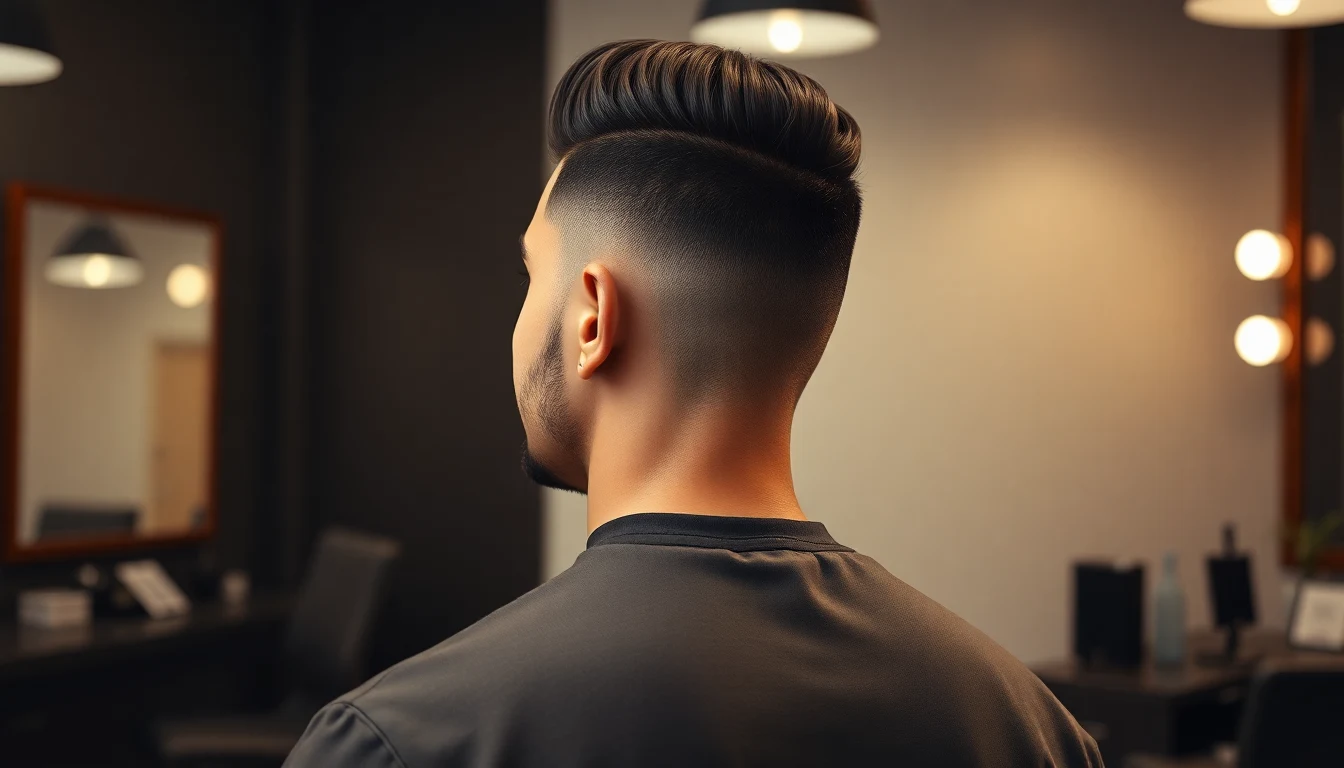
The Goldilocks version. The fade starts at the midpoint of the sides, right around the temple area. This gives you contrast without going full skin, making it the most versatile Edgar for day-to-day life. Most barbers will default to this level unless you specify otherwise.
Who it suits: Everyone. Seriously, if you are not sure which Edgar to try first, start here. It works on all face shapes, all hair textures in the thick-to-medium range, and transitions well from casual to professional settings. (We recommend this JOHNNY B. Mode Professional Hair Styling.)
How to ask your barber:
- In English: “Edgar with a mid fade. Start the blend at the temples, take it down to a one or half guard at the bottom. Fringe forward, 2 to 3 inches on top.”
- In Spanish: “Edgar con degradado medio. Empieza a difuminar a la altura de las sienes, baja a uno o medio abajo. Fleco hacia adelante, 2 a 3 pulgadas arriba.“
Products: Flexible. You can use anything from Suavecito Original for a natural feel to a strong gel for a locked-in look.
Maintenance: Every two to three weeks. More forgiving than the high fade, less forgiving than the taper.
8. The Messy Edgar
This is the Edgar for the guy who does not want to look like he tried. The fringe is styled forward but left deliberately tousled, with pieces going in slightly different directions. The “I woke up like this” version. Think more SoCal beach than San Antonio barbershop.
Who it suits: Men with wavy or naturally textured hair who want a low-effort style. Also great for anyone who finds the classic Edgar too structured or “done.” Works on any face shape.
How to ask your barber: Understanding the edgar haircut is key to a great grooming routine.
- In English: “I want a messy Edgar. Low to mid fade. Texture the top with point-cutting. I want it to look lived-in, not perfect.”
- In Spanish: “Quiero un Edgar despeinado. Degradado bajo a medio. Texturiza arriba con corte de punta. Quiero que se vea natural, no perfecto.“
Products: A texturizing spray or sea salt spray on damp hair, followed by a matte clay like Pacinos Matte Paste or Baxter of California Clay Pomade. Work through with fingers only. No comb.
Maintenance: Every three weeks. The whole point is that it grows out well. Less barbershop dependency.
9. The Long Edgar
The editorial version. The top is grown out to 4 to 5 inches, giving a longer, heavier fringe that can be styled to one side or left to fall dramatically over the forehead. The sides may have a low taper or sometimes no fade at all, just a clean disconnect. This is the Edgar for anyone who wants to bridge the gap between the cut and something like a curtain fringe or a K-pop influenced style.
Who it suits: Men with thick, straight-to-wavy hair who are comfortable with longer styling time. Works best on oval and oblong face shapes. Not recommended for men with very round faces because the length and weight of the fringe can emphasize width.
How to ask your barber:
- In English: “I want a long Edgar. Keep the top at 4 to 5 inches. Low taper on the sides, no skin. I want the fringe to have weight and fall over my forehead.”
- In Spanish: “Quiero un Edgar largo. Deja 4 a 5 pulgadas arriba. Desvanecido bajo en los lados, sin piel. Quiero que el fleco tenga peso y caiga sobre la frente.“
Products: Blow-drying is essential for this version. Use a heat protectant, blow dry forward, and finish with a light pomade or flexible-hold cream. Layrite Superhold works if you need extra hold in humidity; otherwise, go lighter.
Maintenance: Every three to four weeks. Growing this version out takes patience, so find a barber who understands the vision and does not take too much off the top during maintenance visits.
How TikTok and Instagram Made the Edgar Go Viral
You cannot tell the story of the Edgar cut without talking about social media. And I do not mean social media as a vague cultural force. I mean specific moments that changed how millions of people saw this haircut.
The Meme Phase (2019 to 2020)
The Edgar first went viral as a joke. TikTok and Twitter memes portrayed the cut as the universal hairstyle of a specific type: the truck-lowering, corrido-listening, “no quema cuh” (roughly: “it does not burn, bro”) young Mexican-American guy. The memes were affectionate within the community and, honestly, often made by guys who had the cut themselves. But they spread fast, and people outside the culture picked them up with less context and more mockery.
The “cuh” memes specifically created a stereotype: Edgar haircut plus dropped truck plus Takuache lifestyle equals punchline. And for a while, having an Edgar online meant getting clowned.
The Barber Transformation Phase (2020 to 2022)
Then the barbers took over. Instagram and TikTok barbers started posting before-and-after Edgar transformations. The production value went up. The skill on display was undeniable. You would watch a barber take a guy with a grown-out mess, spend 20 minutes with the clippers, and reveal this perfectly sculpted cut with a blended fade that was borderline artistic.
These videos racked up millions of views. The conversation shifted from “the Edgar is a meme” to “the Edgar actually looks clean when it is done right.” Barbers in LA, Houston, Dallas, Phoenix, and yes, San Antonio, were getting tagged and booked solid because of their Edgar work.
The Mainstream Adoption Phase (2023 to Present)
By 2023, the Edgar had broken out of the Mexican-American community. Non-Latino men were asking for it. Barbers who had never cut one started learning the technique. Style publications that normally ignored Latino grooming culture were writing about it. Athletes started wearing variations on the field and court.
Now in 2026, the Edgar is what the undercut was in 2015: a style so widespread that it has stopped being “trendy” and has become a permanent part of the men’s haircut vocabulary. The difference is that the Edgar brought Mexican-American barbershop culture into the mainstream conversation. That matters.
- Temporarily & instantly darkens white or grey hair without drying it out, giving
- Our dark shade option works with brown and black hair while our light shades wor
- Use like any other pomade and watch greys gradually disappear; wash off Menfirst
Real Talk: Addressing the Jokes and the Criticism
I’m not going to pretend the Edgar does not get clowned. It does. It is probably the most memed haircut of the last decade. And if you get one, somebody in your life (or in your comments section) is going to have something to say about it. So let me address this directly.
Yes, the Memes Are Funny
Some of them are genuinely hilarious. The “no quema cuh” videos, the truck edits, the Edgar-shaped objects spotted in nature. I laugh at them too. Humor within the community is part of how we process culture. That is normal.
No, the Memes Do Not Invalidate the Cut
Here is what people outside the community miss: the Edgar is one of the most technically demanding cuts a barber can do. Getting that fringe line straight, blending the fade seamlessly into the top, maintaining symmetry across the forehead. It requires precision. A bad Edgar looks terrible. A good one looks incredibly clean.
The memes also target the demographic, not just the haircut. A lot of the “Edgar hate” is really just coded cultural mockery aimed at young Mexican-American men. It is the same energy as every other time a minority community’s style gets ridiculed before it gets adopted by the mainstream.
The Numbers Do Not Lie
The Edgar is one of the most searched men’s haircuts in the US. “Edgar haircut” pulls over 10,000 monthly searches. Barbershops across the Southwest report it as a top-three most requested cut. The style has sustained for over six years, which is an eternity in haircut trends. Whatever your opinion on the memes, the people have spoken with their wallets and their barber appointments.
So if you want an Edgar, get one. If someone clowns you, send them a picture of their own haircut from 2017 and call it even.
How to Ask Your Barber for an Edgar Cut
Ordering the wrong cut because you could not communicate what you wanted is one of the worst feelings in the barber chair. I have been there. You sit down, say some vague words, and 20 minutes later you are staring at a haircut that looks nothing like what was in your head. Here is how to avoid that.
The Reference Photo Rule
Bring a photo. Every time. Even if you have been getting the same cut for years. A reference photo eliminates 90% of miscommunication. Save three to five pictures on your phone from different angles: front, side, and back. Show them to your barber before they start cutting.
English and Spanish Barbershop Terms
| What You Want | In English | In Spanish | Notes |
|---|---|---|---|
| The cut itself | Edgar / Edgar cut | Corte Edgar | Most barbers know it by name now |
| Straight fringe | Blunt fringe / straight bangs | Fleco recto | Specify if you want textured instead: “con textura” |
| High fade | High skin fade | Degradado alto a piel | Starts above the temple line |
| Mid fade | Mid fade | Degradado medio | Most common default for Edgars |
| Low fade | Low fade / low taper | Degradado bajo | Most subtle version |
| Lineup / edge-up | Clean up the edges / lineup | Delineado / perfilado | Essential for the Edgar’s clean forehead line |
| Texture on top | Point-cut / texturize | Texturizar / corte de punta | For the textured or messy Edgar |
| Razor design | Razor line / hair design | Diseno con navaja / linea | Bring a reference photo for designs |
| Thin it out | Thin / take weight out | Desfilar / quitar peso | Only if your hair is too thick for the fringe to lay flat |
Regional Naming Differences
Depending on where you live, the same cut might go by different names:
- Texas and Southwest: “Edgar” is universal. “Takuache cut” and “cuh haircut” are understood but more slang than formal terms.
- California: “Edgar” or “Edgar fade.” Some shops in LA also call it a “Mexican Caesar.”
- Midwest and East Coast: “Edgar” is known but less common. You might need to show a picture and describe it as “a straight fringe with a fade” if your barber is unfamiliar.
- Mexico: “Corte Edgar” or “corte de hongo” (mushroom cut), though hongo is also used for a different bowl-cut style, so be specific.
Common Ordering Mistakes
- Not specifying the fade level. Saying “I want an Edgar” without telling your barber where to start the fade is like ordering “a coffee” without specifying size or type. Be specific: high, mid, or low.
- Asking for too little length on top. The fringe needs at least 2 inches to fall forward properly. Under that, it sticks up instead of laying down.
- Skipping the lineup. The Edgar lives or dies by the delineado (lineup). If your barber does not clean up the edges around the forehead and temples, the cut looks unfinished.
- Changing barbers without a reference photo. Every barber interprets the Edgar slightly differently. What was a “mid fade” at one shop might be a “high taper” at another. Photos create consistency.
How to Style and Maintain Your Edgar at Home
Getting the cut is step one. Keeping it looking right between barber visits is step two. Here is your daily and weekly routine.
Daily Styling Routine (5 Minutes)
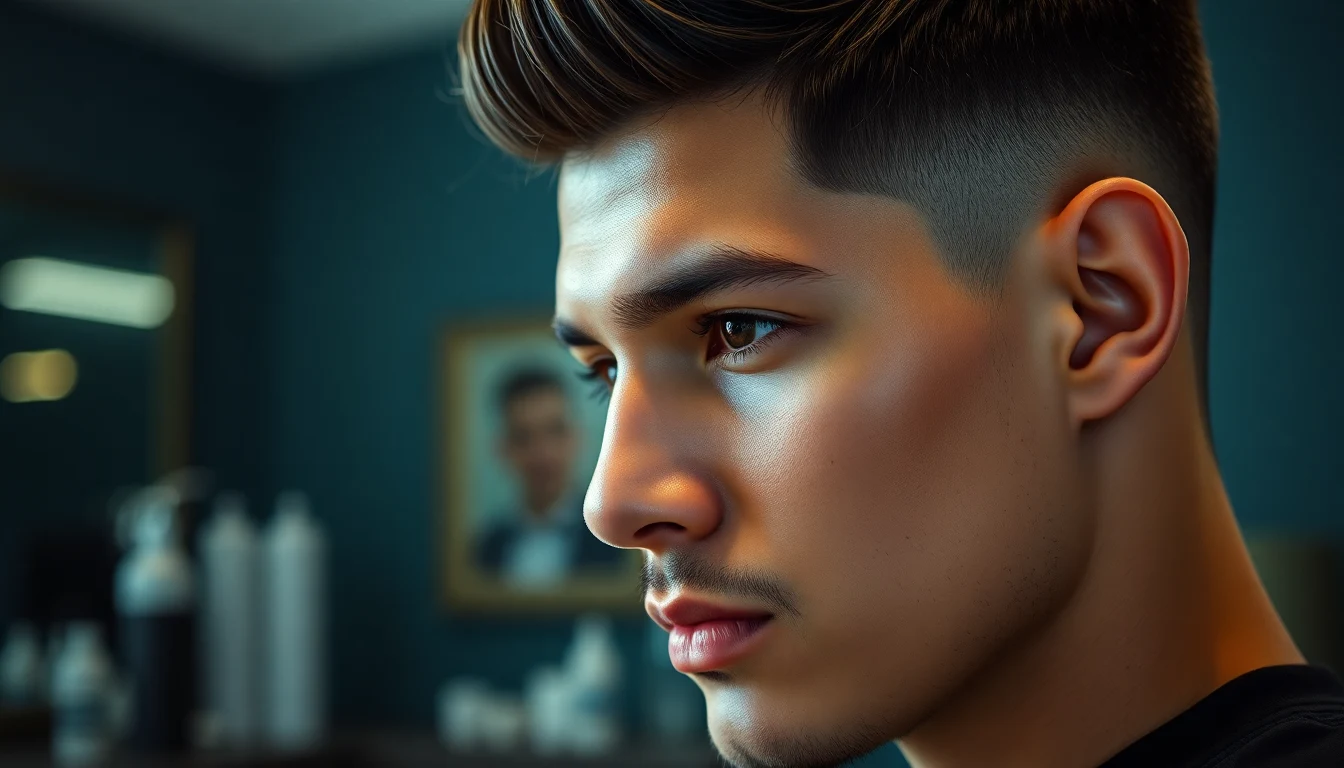
- Start with damp hair. Towel-dry after a shower until your hair is about 70% dry. Not dripping, not bone dry.
- Apply product. A dime-sized amount of pomade, gel, or clay depending on your variation. Work it between your palms until it is evenly distributed.
- Style forward. Using a fine-tooth comb or your fingers, push all the top hair forward toward your forehead. For the classic Edgar, comb straight down. For textured or messy versions, use fingers to break up the sections.
- Set the fringe. For a clean look, comb the fringe into place and press gently with your palm. For a textured look, pinch small sections and twist slightly for separation.
- Optional blow dry. If you want maximum volume or control, blow dry forward on medium heat while combing into place. This is essential for the long Edgar and helpful for the textured version.
Weekly Maintenance
- Edge cleanup: Between barber visits, you can maintain your lineup using a precision trimmer. Follow your existing lines carefully. Do not try to create new lines; just maintain what your barber established.
- Deep wash: Once a week, use a clarifying shampoo to remove product buildup. Heavy pomade and gel leave residue that makes the fringe look greasy if it accumulates.
- Condition: Thick hair needs moisture even if it does not feel dry. Condition after every wash to keep the hair flexible enough to style. Brittle, dry hair will not lay flat for the fringe.
Dealing with Grow-Out
The two-week mark is when most Edgars start losing their shape. Here is what happens and how to manage it:
- The fringe gets heavy: It starts falling past your eyebrows. Pin it back with product or schedule your trim.
- The fade grows in: The contrast between the top and sides softens. This is less noticeable on taper and mid-fade versions.
- The lineup fades: The clean edge around your forehead gets fuzzy. This is the first thing most people notice.
If you are on a budget and cannot get to the barber every two weeks, invest in a decent trimmer for edge maintenance. That alone extends the life of your cut by a week.
Best Products for the Edgar Haircut
The right product depends on your variation. A classic Edgar needs hold. A messy Edgar needs texture. A curly Edgar needs definition without stiffness. Here is what actually works, with recommendations I have tested on thick hair in San Antonio heat (if it survives a Texas July, it works everywhere). For a deeper dive into pomade options, check out our complete guide to the best pomade for thick hair. When it comes to the edgar haircut, technique matters most.
| Product | Hold (1-5) | Shine (1-5) | Best For | Price |
|---|---|---|---|---|
| Suavecito Firme Hold | 5 | 4 | Classic Edgar, high-fade Edgar | ~$13 |
| Suavecito Original Hold | 3 | 4 | Mid-fade Edgar, taper Edgar | ~$13 |
| Elegance Hair Gel | 4 | 2 | Classic Edgar, structured styles | ~$10 |
| Pacinos Matte Paste | 4 | 1 | Textured Edgar, messy Edgar | ~$14 |
| Layrite Superhold | 5 | 3 | Long Edgar, all-day hold in humidity | ~$18 |
| Reuzel Blue Strong Hold | 5 | 2 | Matte classic Edgar, professional look | ~$16 |
| Baxter of California Clay | 3 | 1 | Messy Edgar, natural texture | ~$23 |
Product Tips by Variation
- Classic or high-fade Edgar: Go with a strong-hold water-based pomade. Suavecito Firme Hold is the barbershop default for a reason. It holds the fringe flat, washes out easily, and costs less than a movie ticket.
- Textured or messy Edgar: Skip the shiny stuff. You want a matte clay or paste that gives hold without making your hair look wet. Pacinos Matte Paste lets you rework the style throughout the day.
- Curly Edgar: Use a curl cream or light gel. Avoid heavy pomade on curly hair because it weighs down the curl pattern and creates buildup. A diffuser on your blow dryer will give you volume without frizz.
- Long Edgar: Blow-drying is not optional. Use a heat protectant, dry on medium heat, and finish with a flexible-hold pomade. You need the hair to hold direction without going stiff.
- Any Edgar in Texas heat: Add a light hairspray as a finishing layer over your primary product. Heat and humidity will dissolve hold faster than you expect. I learned this the hard way walking into a Spurs game looking sharp and walking out looking like my fringe surrendered.
Budget Breakdown
- Budget (under $15): Suavecito Firme Hold (~$13) or Elegance Hair Gel (~$10). Either one handles 90% of Edgar styling needs.
- Mid-range ($15 to $20): Layrite Superhold (~$18) or Reuzel Blue (~$16). Better ingredients, slightly more refined hold, still barbershop-approved.
- Premium ($20+): Baxter of California Clay (~$23). The best matte finish in the game, but you are paying for it. Worth it for textured and messy variations.
My tio would tell you to just use Tres Flores and call it a day. And honestly, Tres Flores Brilliantine still gives beautiful shine on a slick-back. But for the hold requirements of a proper Edgar fringe, you need something with more grip. No disrespect to the classics.
Common Mistakes (and How to Fix Them)
I’ve seen every Edgar mistake in the book. At the barberia, on TikTok, and honestly in my own mirror a couple of times. Here are the most common problems and how to solve them.
1. The Fringe Is Uneven
What happened: The barber did not cut the fringe straight, or one side is slightly longer than the other.
How to fix it: Go back to your barber and ask for a correction. Most shops will fix it for free within a week of the cut. Do not try to fix it yourself with scissors unless you want to make it worse.
2. The Fade Does Not Blend
What happened: There is a visible line between the faded sides and the longer top instead of a smooth transition.
How to fix it: This is a technique issue. Your barber needs to spend more time blending with guards and shears. If this happens repeatedly, consider finding a barber who specializes in fades. Check Instagram for local barbers who post Edgar transformations.
3. The Fringe Will Not Lay Flat
What happened: Your hair is too thick, too coarse, or cut too short on top, and the fringe sticks out instead of falling forward.
How to fix it: Try blow-drying forward on medium heat while the hair is damp. If that does not work, ask your barber to thin the top slightly next time (“desfilar arriba”). Also, make sure you are using enough product; thick hair absorbs more than you think.
4. It Looks Like a Bowl Cut
What happened: The fringe is too heavy and the fade is not high or sharp enough, creating a rounded “mushroom” look instead of the angular Edgar shape.
How to fix it: Ask for a higher fade next time to increase the contrast. The Edgar’s visual identity comes from the difference between the long top and the short sides. Without enough contrast, it reads as a bowl cut.
5. Product Buildup Makes It Look Greasy
What happened: Too much gel or pomade, not enough washing, and now the fringe looks wet and heavy even when it is dry.
How to fix it: Use a clarifying shampoo once a week to strip buildup. Cut back on product amount. For most Edgars, a dime-sized amount is enough. If you are using more than a quarter-sized amount, you are using too much.
Face Shape Guide: Which Edgar Works for You
Not every Edgar variation works on every face shape. Here is a quick guide so you do not end up with a cut that fights your natural proportions.
- Oval face: Lucky you. Almost every Edgar variation works. The oval shape is balanced enough to handle both high-contrast and subtle versions. Start with the classic or mid-fade.
- Square face: The classic and high-fade Edgars complement your angular jawline. The straight fringe mirrors the strong jaw and creates a cohesive geometric look.
- Round face: Go with a high fade to elongate the face visually. Avoid the long Edgar; the weight of a heavy fringe on a round face adds width where you do not want it. The taper Edgar is also a good option.
- Diamond face: The textured or curly Edgar softens the angular cheekbones. A mid fade keeps things balanced without adding too much visual weight on top.
- Heart-shaped face: The textured or messy Edgar works best. The choppy fringe softens the wider forehead. Avoid the blunt classic; the straight horizontal line can make a wide forehead look wider.
- Oblong/long face: The long Edgar or a version with a heavier fringe can visually shorten the face. Avoid high fades, which add even more vertical length.
The Edgar Across Latino Communities
I want to be clear about something: the Edgar as a named phenomenon is rooted in Mexican-American culture specifically. That is where it emerged, that is where it went viral, and that is where its deepest cultural connections live. But the influence has spread.
In Dominican barbershops, you will see Edgar-adjacent styles adapted for curlier textures. Puerto Rican barbers have developed their own variations that blend the Edgar fringe with blowout techniques. Colombian barbershops, particularly in cities with large diaspora communities, have adopted the cut with their own regional flavor.
The common thread across all these communities is the same thing that made the Edgar take off in the first place: a commitment to clean, precise, limpio (clean, fresh) cuts as a form of self-expression and cultural pride. The specific technique varies. The energy is universal.
For readers with curlier or coarser textures who want to explore the Edgar family, check out our curl-specific styling guides for product and technique advice tailored to your hair type. For best products for thick hair management, we have a dedicated guide that covers styling tools and techniques across cultures.
Frequently Asked Questions
Why is it called the Edgar haircut?
The name comes from a viral TikTok video around 2019 where a young man named Edgar showed off his straight-fringe, high-fade cut. The name stuck as the style exploded across Mexican-American barbershop culture and social media. The cut itself existed before the name; barbers in Texas and California were doing versions of this look for years before TikTok gave it a label.
Is the Edgar haircut still in style in 2026?
Absolutely. The Edgar has evolved from a single look into an entire family of variations. Classic, textured, curly, and design versions are all being requested in barbershops from San Antonio to Los Angeles. It is one of the most-searched men’s haircuts in the US and shows no signs of slowing down. Trends fade; the Edgar has become a category.
What face shape works best with the Edgar?
Oval and square faces work best with the classic Edgar because of the strong horizontal fringe line. Round faces benefit from the high-fade version, which adds vertical length. Heart-shaped faces should consider the textured or messy Edgar to soften the forehead. There is a variation for every face shape if you match the right version to your proportions.
How often should I get my Edgar maintained?
Every two to three weeks for the fade, and every three to four weeks for the fringe trim. The lineup around your forehead and temples grows out fastest, so that is where the cut loses its shape first. If you are on a tight budget, invest in a precision trimmer for edge maintenance between barber visits.
Can I get an Edgar with curly hair?
Yes, and it looks incredible. The curly Edgar is one of the fastest-growing variations. Instead of a straight, blunt fringe, the curls fall naturally forward with texture and movement. It works especially well on 2B to 3B curl patterns. Use curl cream instead of heavy pomade, and let a diffuser do the work.
How do I ask for an Edgar at a Spanish-speaking barbershop?
Ask for “un corte Edgar con degradado” (an Edgar cut with a fade). Specify “degradado alto” for high fade, “degradado medio” for mid fade, or “degradado bajo” for low fade. For the fringe, say “el fleco recto” for straight fringe or “con textura” for a textured version. Always bring a reference photo regardless of the language.
What to Do Next
Here is your quick recap:
- The Edgar is a straight-fringe, fade-contrast haircut rooted in Mexican-American barbershop culture with nine major variations to choose from.
- Match your variation to your face shape and hair texture. When in doubt, start with the mid-fade Edgar; it works on everyone.
- Always bring reference photos to your barber and specify your fade level. Use the English-Spanish terminology table above if you visit a bilingual shop.
- Invest in one good product: Suavecito Firme Hold for classic looks, Pacinos Matte Paste for textured styles.
- Maintain your cut every two to three weeks. Keep a precision trimmer at home for lineup touch-ups between visits.
Ready to explore more? Check out our complete guide to Hispanic men haircuts for more styles that work with thick, coarse hair. If you are into the culture side, our Mexican mullet guide covers the other pillar of modern Latino barbershop style. And if you want to level up the full look (not just the hair), our Latino cologne guide will get your fragrance game right too.
The Edgar gets clowned online, but in the barber chair? It is a culture. Y la cultura no se negocia. (And culture is not up for negotiation.)
Written by Carlos Espinoza, Latino Grooming Editor at CulturedGrooming. San Antonio native. Thick hair survivor. Proud Edgar defender.
Further reading: For research-backed grooming advice, see Healthline Men’s Health.
Explore more tips at CulturedGrooming.com.
Frequently Asked Questions
What exactly is an Edgar haircut and who should get one?
The Edgar haircut is a clean, sharp style featuring a straight-across fringe with high fades on the sides, originally popularized in Latino communities. It works best for men with thick hair and straight to wavy textures who want a bold, defined look that requires regular maintenance at the barbershop.
How do I ask my barber for an edgar haircut if I don’t speak Spanish?
You can simply show your barber a photo of the classic Edgar style or describe it as a straight fringe with a high fade. The article includes barber scripts in both English and Spanish to help you communicate exactly what you want, whether you’re visiting a Spanish-speaking or English-speaking barbershop.
Are there different variations of the edgar haircut for different hair types?
Yes, the Edgar has multiple variations including textured, curly, and design options to work with your natural hair texture. Whether you have straight, wavy, or curly hair, you can adapt the classic Edgar style while keeping its signature clean fringe and sharp fade.
What products do I need to maintain my Edgar haircut between barber visits?
The guide recommends using a quality pomade or gel to style the fringe and maintain the shape between cuts, along with a good hair moisturizer since thick hair can dry out quickly. Regular lineups every 2-3 weeks will keep your Edgar looking fresh and sharp.