Last updated: February 2026 by Karim Haddad, Levantine Grooming Expert
The barbershop I stumbled into on a back street in the Zamalek district of Cairo was nothing like the sleek, Instagram-ready grooming lounges I was used to in Beirut. It had two chairs, a cracked mirror, and a radio playing Om Kalthoum so loudly the walls vibrated. But the barber, a man in his sixties who introduced himself only as “Amm Ahmed,” gave me the most precise, technically perfect haircut I have ever received. His straight razor work was surgical. His fade was flawless. And his line-up along my temples was so sharp it looked like it had been drawn with a ruler. When I asked him where he learned, he shrugged and said, “My father. And his father. And probably his father before that.”
Egyptian barbershop culture runs deeper than almost any other grooming tradition in the world, and that is not an exaggeration. The Egyptians were among the first civilizations to formalize barbering as a profession, with archaeological evidence of dedicated barber’s tools dating back over 5,000 years to the time of the pharaohs. This is not just history for the sake of history. The traditions, techniques, and attitudes that originated in ancient Egypt continue to influence how Egyptian men groom today, creating a barbershop culture that blends ancient respect for the craft with the energy and creativity of modern Cairo. For expert guidance on this topic, consult Healthline’s expert men’s grooming guidance.
This article explores Egyptian barbershop culture from its pharaonic roots to its contemporary expression, covering the grooming traditions that make Egypt unique, the modern haircut and style preferences of Egyptian men, the fragrance and personal care habits of the region, and what makes the Egyptian barbershop experience distinct from elsewhere in the Middle East.
The Pharaonic Roots of Egyptian Grooming : Egyptian Barbershop Culture
Egypt’s grooming history is, in many ways, the grooming history of civilization itself. Archaeological evidence from tombs, temple reliefs, and surviving artifacts reveals that personal grooming was deeply embedded in ancient Egyptian society, cutting across class lines and carrying both practical and spiritual significance.
Ancient Egyptian men, particularly those of the upper classes and the priesthood, maintained meticulously clean-shaven faces and often shaved their entire heads. Razors made from sharpened copper and bronze have been found in tombs dating to the Early Dynastic Period (around 3100 BCE), and these tools are remarkably similar in design principle to the straight razors used by Egyptian barbers today. The clean-shaven aesthetic was not merely fashion; it was associated with purity, cleanliness, and civilization itself. In the Egyptian worldview, excess body and facial hair was associated with the uncivilized and the unclean.
Paradoxically, while Egyptian men shaved their natural hair, they wore elaborate wigs made from human hair, wool, or plant fibers. These wigs served as fashion statements, status symbols, and protection from the intense Egyptian sun. The care and styling of these wigs constituted a specialized profession that was the precursor to modern hairdressing. Wig-makers and barbers were respected craftsmen who served both the living and the dead, with grooming implements placed in tombs to ensure the deceased would be properly maintained in the afterlife.
Cosmetics were equally important. Kohl, made from galena (lead sulfide) and other minerals, was applied around the eyes by men and women alike. The application was both aesthetic and practical: kohl reduced sun glare in the bright Egyptian environment and was believed to have protective and medicinal properties. Scented oils and unguents made from castor oil, moringa, and sesame were applied to the skin and hair for moisturizing, fragrance, and religious ritual. The Egyptians were, by any measure, the first civilization to develop a comprehensive approach to personal grooming.
The Evolution of Egyptian Barbershops Through the Ages
From the ancient period through the Islamic golden age and into the Ottoman era, Egyptian barbershops evolved but never lost their centrality to male social life. During the Islamic period, the barbershop became an important community gathering place. Friday grooming before Jumuah prayer was (and remains) a significant weekly ritual, and the barbershop served as the venue for this preparation. Barbers were trusted figures in the community, sometimes serving as informal dentists, surgeons, and confidants alongside their grooming duties.
The Ottoman period brought new influences from Turkish grooming culture, including the hammam (bath house) tradition that became integral to Egyptian urban life. The barber’s role expanded to include services within the hammam, such as body hair removal, skin treatments, and massage. Many barbershops were physically attached to or located near hammams, creating a comprehensive grooming destination that addressed all aspects of men’s personal care.
In the modern era, the Egyptian barbershop has maintained its role as a social hub while incorporating contemporary techniques and trends. Cairo alone is estimated to have over 30,000 barbershops, ranging from street-corner shops in popular neighborhoods like Shubra and Sayeda Zeinab to upscale grooming lounges in Zamalek, Maadi, and New Cairo. The accessibility is remarkable: in most Egyptian neighborhoods, a barbershop is never more than a five-minute walk away. Mastering egyptian barbershop culture takes practice but delivers great results.
Modern Egyptian Men’s Haircut Preferences
Contemporary Egyptian men’s hairstyles reflect the country’s position as a cultural crossroads, influenced by Gulf trends, European fashion, American hip-hop culture, and Egypt’s own celebrity and entertainment industry. Several distinct styles dominate the Egyptian market.
The Sharp Skin Fade
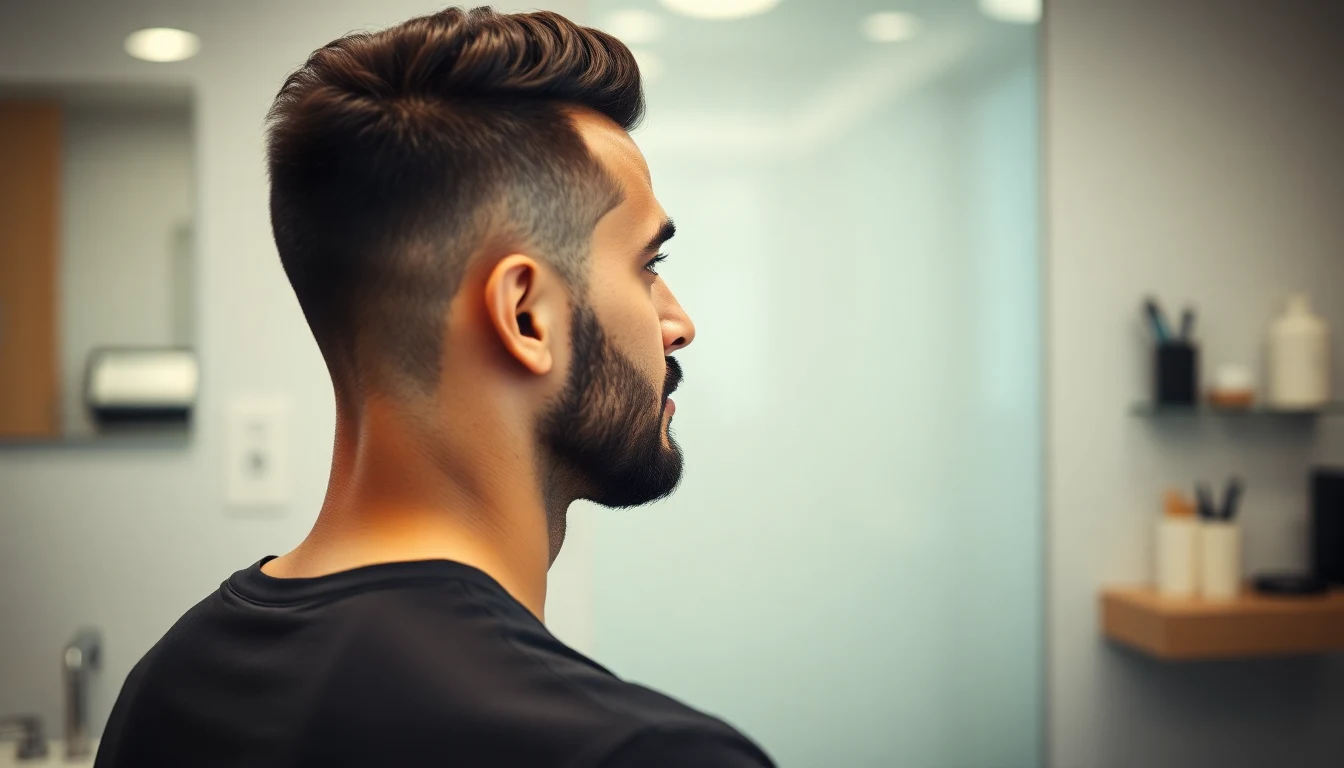
The skin fade is the most popular haircut in Egyptian barbershops, and Egyptian barbers execute it with a precision that rivals any barbershop in the world. The classic Egyptian skin fade starts at zero (bare skin) at the neckline and temples, blending gradually into the fuller hair on top over a distance of roughly two to three inches. The key distinguishing feature of the Egyptian version is the sharpness of the line-up: the hairline along the forehead, temples, and sideburns is defined with a straight razor to create edges so clean they look artificial.
Many Egyptian barbers take the line-up a step further by creating designed parts, geometric shapes, or subtle patterns shaved into the fade area. This decorative element is particularly popular among younger Egyptian men and has become a signature of the Cairo barbershop scene. The designs range from simple straight-line parts to complex geometric patterns that demonstrate the barber’s skill and creativity.
The Textured Crop
The textured crop, featuring two to three inches of textured hair on top with a faded or tapered side, is the second most popular style. Egyptian men’s hair, typically thick and straight to slightly wavy, holds the textured crop beautifully. The style is low-maintenance, professional, and versatile enough for both casual and formal settings. It is particularly popular among young professionals in Cairo’s business districts.
The Egyptian Side Part
The classic side part remains popular among more conservative Egyptian men and those in traditional professions. The Egyptian version features a razor-shaved part line for extra definition, medium-length top styled to one side with strong-hold pomade, and a low taper on the sides. This style pays homage to the golden age of Egyptian cinema, when leading men like Omar Sharif and Ahmed Ramzy popularized the clean, side-parted look that became synonymous with Egyptian male elegance.
The Clean-Shaven Head
Head-shaving has deep roots in Egyptian culture, and the clean-shaven head remains a popular choice, particularly among older men and those experiencing hair loss. The Egyptian approach to the shaved head involves a complete straight-razor shave that leaves the scalp perfectly smooth, followed by moisturizer and sometimes a light application of oil for a healthy sheen. The cultural acceptance of the shaved head in Egypt, rooted in its pharaonic associations with purity and status, means that Egyptian men embrace baldness more readily than men in many other cultures.
The Egyptian Clean-Shave Tradition
While beards are increasingly popular among Egyptian men (influenced by both religious sentiment and global fashion), the clean shave remains deeply embedded in Egyptian grooming culture. The tradition of the perfectly smooth, razor-close shave is one of Egypt’s most distinctive grooming practices, and the technique passed down through generations of Egyptian barbers is remarkably refined.
The Egyptian Straight-Razor Technique
Egyptian barbers are masters of the straight razor, using a technique that emphasizes multiple passes with minimal pressure. The process begins with a hot towel applied to the face for two to three minutes to soften the beard hair and open the pores. A thick lather is then applied using a shaving brush, working the soap into the stubble with circular motions.
The first pass follows the grain of the hair (with the growth direction), removing the bulk of the stubble. A second application of lather precedes the second pass, which goes across the grain for a closer cut. For the closest possible shave, a third pass against the grain may follow, though this is reserved for men with resilient skin that does not react to the additional irritation.
After the shave, a cold towel or a splash of cold water closes the pores. Aftershave, typically a traditional formula containing rose water and a mild astringent, soothes the skin. Some Egyptian barbers finish with alum block, a natural antiseptic crystal rubbed across the shaved skin to close any microscopic nicks and prevent infection.
Threading for Facial Hair Removal
Threading (fatleh in Arabic) is an ancient Egyptian technique for removing facial hair, particularly along the cheeks, between the eyebrows, and on the forehead. A twisted cotton thread is rolled across the skin surface, plucking hairs at the follicle level. The technique is faster and more precise than tweezing and causes less skin irritation than waxing. Egyptian barbers routinely offer threading as part of the standard barbershop service, using it to define eyebrows, clean up the cheek area above the beard line, and remove stray hairs on the forehead and neck.
Threading is one of those techniques that looks simple when performed by an experienced practitioner but requires years of practice to master. The thread must be twisted at the correct tension and rolled at the correct angle to pluck hairs cleanly without breaking them below the surface. When done correctly, the results are exceptionally clean and last longer than shaving because the hair is removed from the root. Understanding egyptian barbershop culture is key to a great grooming routine.
Egyptian Men’s Beard Styles
Egyptian men who wear beards tend toward two distinct styles that reflect the cultural duality of modern Egypt.
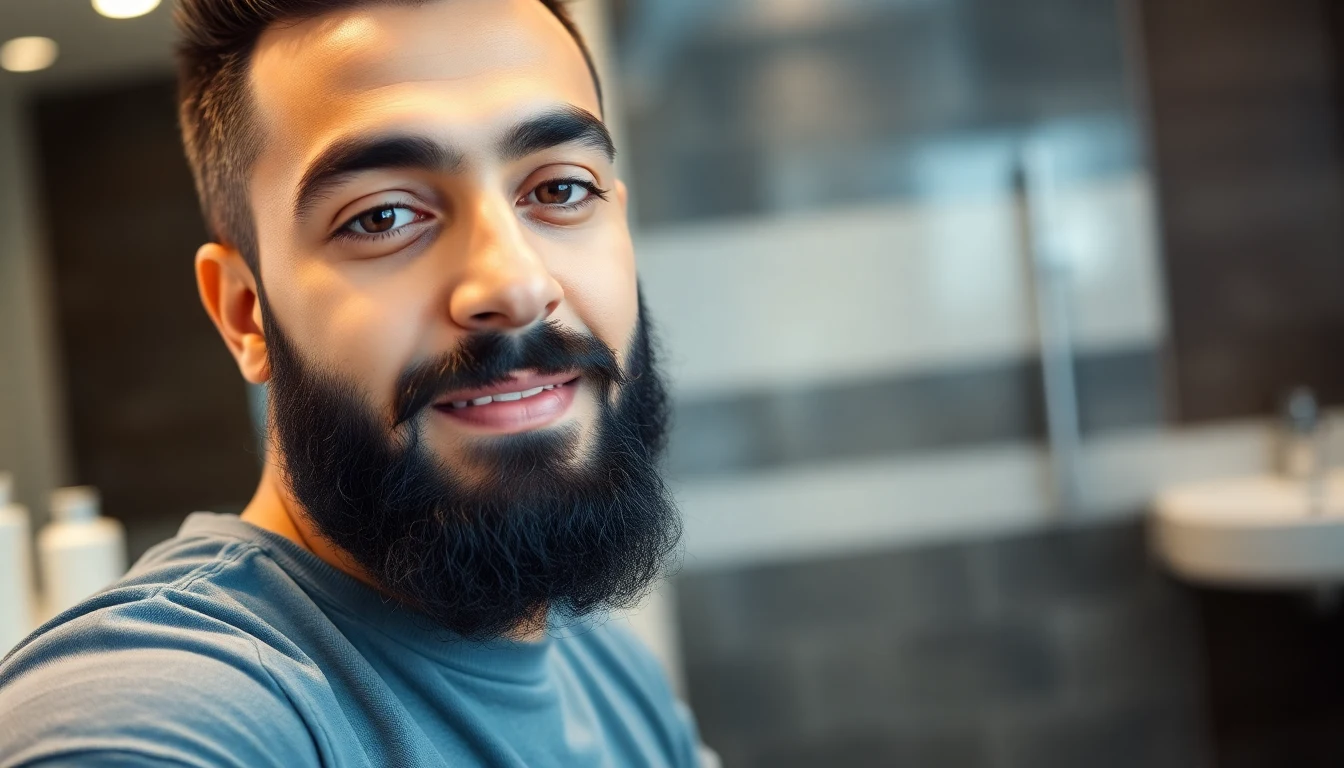
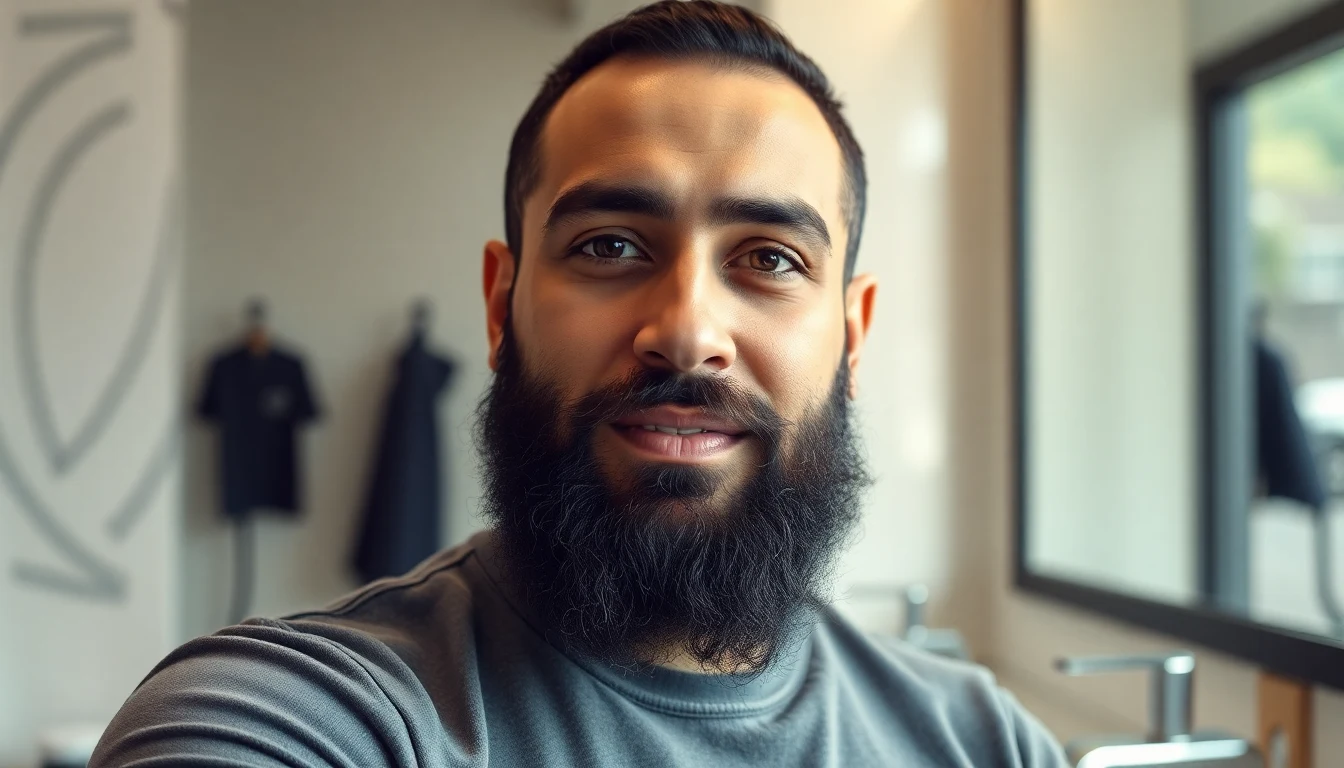
The full, untrimmed beard carries religious significance for devout Muslim men and is worn as a statement of faith. This style grows the beard to its natural length with minimal shaping, following the Sunnah practice. The mustache is typically trimmed short (above the lip line) while the beard grows freely. This style is most common among religiously observant men and is treated with respect across Egyptian society regardless of the observer’s personal religious practice.
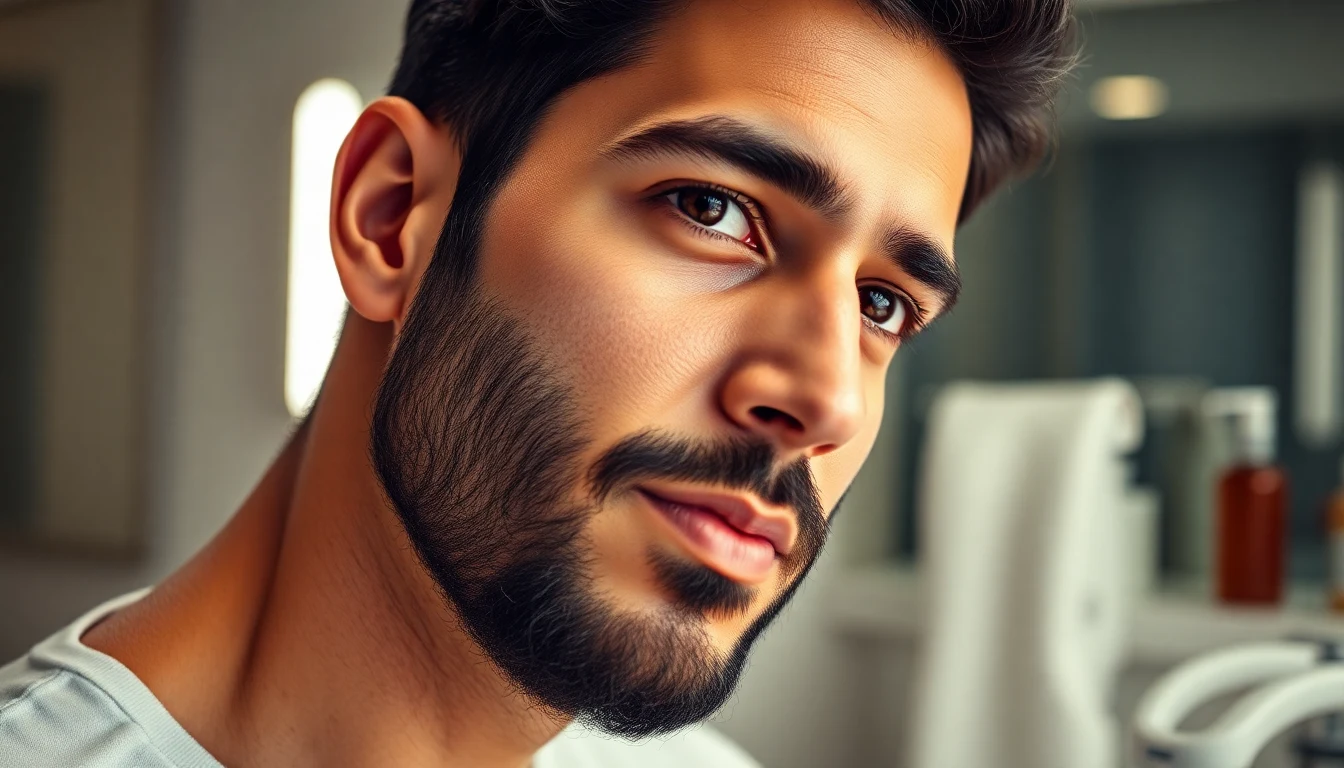
The shaped, modern beard is the style worn by most young urban Egyptian men who choose to grow facial hair. It features a mid-length beard (one to two inches), carefully shaped with defined cheek and necklines, and blended into a faded hairstyle. This style borrows elements from both Gulf and Western beard trends but is adapted to Egyptian sensibilities: slightly less formal than the Gulf style, slightly more defined than the Western hipster beard. Egyptian barbers are particularly skilled at creating the seamless transition between a faded hairstyle and a shaped beard, a detail that demonstrates high-level technical ability.
Fragrance Culture in Egypt
Egypt has one of the oldest perfume-making traditions in the world, and fragrance remains an important element of Egyptian men’s grooming. The ancient Egyptians produced perfumes, incense, and scented oils using techniques that laid the groundwork for the entire global fragrance industry.
Modern Egyptian fragrance preferences reflect both this ancient heritage and contemporary influences. Egyptian men tend to appreciate warm, sweet fragrances with notes of amber, musk, and oriental spices. Oud is appreciated but worn less heavily than in the Gulf, often in blended compositions that combine oud with lighter, more accessible notes. Egyptian-made fragrances from local perfumers, particularly those in the Khan el-Khalili market in Cairo, offer unique scent profiles that blend Arabian warmth with Egyptian sweetness.
Essential oils and attars are popular among Egyptian men who prefer traditional, alcohol-free fragrances. Musk, amber, and jasmine attars are commonly applied before Friday prayers and social gatherings. The jasmine note is particularly associated with Egyptian perfumery, as jasmine grows abundantly in the Egyptian climate and has been cultivated there since antiquity. A quality jasmine or musk attar is a staple in many Egyptian men’s fragrance collections.
Egyptian men also maintain the ancient practice of burning incense (bukhoor) to scent their homes and clothing. Frankincense and myrrh, both traded through Egypt since pharaonic times, remain the most popular incense materials. The ritual of burning incense before guests arrive or before heading to an important event connects modern Egyptian men to a practice that has been continuous in the Nile Valley for millennia.
Egyptian Grooming Products and Ingredients
Several grooming ingredients and products are distinctly Egyptian or have particular significance in Egyptian grooming culture.
Black seed oil (habba sawda, Nigella sativa) is deeply valued in Egyptian folk medicine and grooming. Used topically, it has anti-inflammatory and antimicrobial properties that benefit both skin and beard health. Many Egyptian men apply black seed oil to their beards as a conditioning treatment and to their scalps to promote hair health. The Prophet Muhammad’s reported endorsement of black seed has elevated its status in Egyptian Muslim culture beyond its practical benefits.
Castor oil has been used in Egyptian grooming since pharaonic times, with evidence of its use as a hair treatment found in ancient medical papyri. Modern Egyptian men use castor oil for beard growth and thickness, applying it to the beard before sleep and washing it out in the morning. While scientific evidence for castor oil promoting hair growth is limited, the traditional practice persists and many men report subjective improvement in beard thickness.
Egyptian musk, a famous fragrance ingredient, is actually a synthetic compound that bears little chemical resemblance to natural musk but has become iconic in its own right. Developed in the early 20th century and named for Egypt’s historical association with luxury and scent, Egyptian musk is a clean, subtle, skin-like fragrance that works beautifully as a daily wear or layering base. It remains one of the most popular fragrance choices among Egyptian men for everyday use. When it comes to egyptian barbershop culture, technique matters most.
The Social Dimension of the Egyptian Barbershop
Perhaps more than anywhere else in the Middle East, the Egyptian barbershop functions as a social institution that extends far beyond grooming. In Egyptian popular culture, the barbershop (mahall al-hallaq) is a gathering place where men discuss politics, sports, business, and personal matters in an environment of camaraderie and trust.
The relationship between an Egyptian man and his barber is often lifelong. It is common for a man to visit the same barber from childhood through old age, and for the barber’s son to take over the chair and continue serving the same family. This continuity creates a depth of trust and familiarity that allows the barber to understand not just hair and skin, but the person sitting in the chair, their preferences, their moods, and their style evolution over decades.
Egyptian barbershop conversation follows its own unwritten rules. Politics is discussed passionately but with an understanding that opinions stay in the shop. Personal problems can be shared with the barber in confidence. Football (soccer) generates the most animated discussions, with barbershops often serving as informal fan clubs for Ahly, Zamalek, or the national team.
The barbershop also serves as an entry point for young men into adult male social culture. Bringing a son for his first “real” haircut is a rite of passage in many Egyptian families, marking the transition from childhood to the beginning of a grooming and social awareness that will develop throughout adolescence and adulthood.
Frequently Asked Questions
How much does a barbershop visit cost in Egypt?
Prices vary dramatically between neighborhoods and service levels. A basic haircut in a popular (working-class) neighborhood barbershop can cost as little as 30 to 50 Egyptian pounds (roughly one to two US dollars). Mid-range barbershops in areas like Heliopolis or Nasr City charge 100 to 200 pounds. High-end grooming lounges in Zamalek, Maadi, or the Fifth Settlement can charge 300 to 800 pounds for a full service including cut, shave, and styling. At every price point, the technical quality tends to be remarkably high, reflecting the depth of barber training in Egyptian culture.
What should I ask for in an Egyptian barbershop?
If you speak Arabic, use specific terminology: “fade” is understood universally, “qassah” means haircut, “halaqah” means shave, “tahdeeb” means trimming/grooming. If you do not speak Arabic, reference photos work perfectly. Egyptian barbers are accustomed to international clients and will work from visual references. Be prepared for the barber to offer suggestions; Egyptian barbers take professional pride in recommending what suits your face shape and hair type, and their advice is usually excellent.
Are Egyptian barbershops welcoming to non-Egyptians?
Extremely welcoming. Egyptian hospitality is legendary, and barbershops are no exception. As a visitor, you may be offered tea or coffee, asked about where you are from, and treated with the warm curiosity that characterizes Egyptian social culture. The language barrier is manageable, particularly in urban areas where many barbers have some English proficiency. The universal language of photos and gestures fills any gaps.
How do Egyptian men deal with thick, dense hair?
Egyptian men generally have thick, straight-to-slightly-wavy hair, and Egyptian barbers are experts at managing this texture. The primary techniques are thinning shears (to remove bulk without reducing visible length), layering (to create movement in heavy hair), and the liberal use of texturizing techniques that break up the density into more manageable sections. At home, Egyptian men commonly use argan oil or other lightweight hair oils for conditioning, and strong-hold pomades or gels for styling.
Conclusion: A Living Tradition
Egyptian barbershop culture is not a relic of the past. It is a living, evolving tradition that connects modern Egyptian men to a grooming heritage stretching back to the dawn of civilization. The pharaonic emphasis on cleanliness and personal presentation, the Islamic tradition of Friday grooming, the Ottoman integration of hammam culture, and the contemporary energy of Cairo’s creative class all converge in the Egyptian barbershop, creating an experience that is at once deeply historical and thoroughly modern.
For Egyptian men in the diaspora, maintaining a connection to these grooming traditions is a way of carrying culture forward. For men of other backgrounds, the Egyptian barbershop tradition offers valuable lessons about craftsmanship, community, and the profound importance of taking care of yourself as an expression of self-respect and cultural identity. Five thousand years of grooming tradition cannot be wrong.
Frequently Asked Questions
What makes Egyptian barbershop culture different from other grooming traditions?
Egyptian barbershop culture has roots dating back over 5,000 years to the pharaonic era, making it one of the oldest formalized barbering professions in the world. This ancient heritage creates a unique blend of time-honored techniques like straight razor work and precise line-ups with the modern energy of contemporary Cairo, where barbers often pass down their craft through generations within families.
How can I find a barber who uses traditional Egyptian grooming techniques?
Look for barbershops in older neighborhoods and traditional districts where multi-generational barbers practice classical techniques. The best Egyptian barbers often learned their craft from their fathers and grandfathers, so asking locals for recommendations or visiting established shops in areas like Zamalek in Cairo will connect you with barbers who specialize in precise fades, straight razor work, and surgical line-ups that define the tradition.
What specific haircut techniques should I ask for at an Egyptian barbershop?
Request a traditional Egyptian fade with sharp temple line-ups that require precision straight razor work, which is a hallmark of the craft. Egyptian barbers are known for their technical precision in creating clean, geometric lines and flawless fades, techniques that have been refined over thousands of years and remain central to their grooming approach today.
Are Egyptian barbershop traditions still relevant for modern grooming?
Yes, Egyptian barbershop culture demonstrates how ancient grooming wisdom continues to influence contemporary men’s styling and personal care. The techniques developed in pharaonic times, combined with modern Cairo’s creative energy, produce grooming results that prove the lasting value of traditional craftsmanship in today’s grooming landscape.