
If you want to master faith and grooming, this guide covers everything you need to know. [affiliate-disclosure]
[table-of-contents]
My mother taught me about Shabbat prep. My father taught me about turban wrapping. Between them, I had more grooming knowledge at age twelve than most men have at thirty. But it took me another decade to understand what they had both been teaching me all along: that grooming, for people of faith, is never just grooming.
I grew up in Jackson Heights, Queens, in a household where a Sikh father and a Jewish mother somehow made it work. Friday evenings were a production in both directions: my mother preparing for Shabbat while my father prepared for a different kind of sacred weekend gathering. Both of them spent time on their appearance before those moments. Not vanity. Preparation. The kind of preparation that says “this matters to me.”
When I studied Comparative Religion at Columbia, I started to see the pattern everywhere. Sikh men caring for kesh (uncut hair, one of the Panj Kakar, the five articles of Sikh faith) as an act of devotion. Jewish men navigating the halacha (Jewish religious law) of shaving with the precision of legal scholars. Muslim men maintaining beards as a sunnah of the Prophet. Christian monks tonsuring as a sign of humility. Buddhist monks shaving their heads to renounce vanity. Every tradition has something to say about hair, about the body, about the relationship between physical appearance and spiritual life.
And mainstream grooming media has said almost nothing about any of it.
The Shared Thread: Grooming as Intentional Care
At first glance, the grooming practices of different faiths seem unrelated. Sikhs do not cut their hair. Many Jewish men debate which shavers are permissible. Muslim men often grow beards while maintaining specific hygiene practices. The surface-level practices point in different directions.
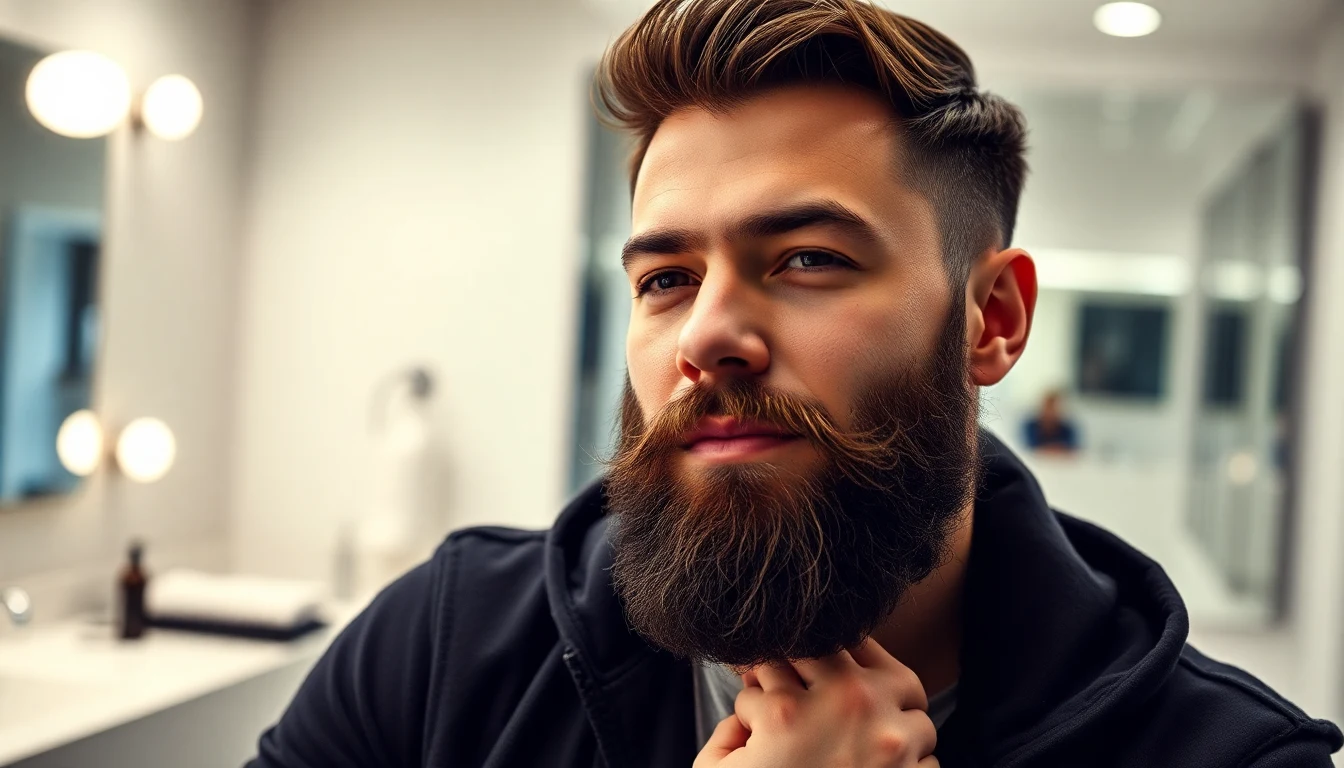
But underneath the visible differences, there is a shared conviction that runs through all of them: how you care for your body is not separate from how you serve the divine.
This is the insight that mainstream grooming brands have completely missed. They treat grooming as a cosmetic activity. For millions of men around the world, it is a spiritual one. The morning routine is not about looking good for colleagues. It is about showing up properly before God, before community, and before your own sense of purpose.
Grooming as Preparation for Sacred Time
In Judaism, pre-Shabbat grooming is an expression of kavod Shabbat (honoring the Sabbath). You bathe, shave (where halachically appropriate), dress in your best clothes, and apply fragrance. The Talmud records sages who considered this personal preparation a mitzvah. You prepare for Shabbat the way you would prepare for an honored guest, because Shabbat herself is the guest.
In Islam, the practice of ghusl (ritual bathing) before Jumu’ah (Friday congregational prayer) fulfills a similar function. The Prophet Muhammad (peace be upon him) emphasized cleanliness and pleasant appearance for communal worship. The preparation is both physical and spiritual: cleansing the body as part of cleansing the intention.
In Sikhism, the morning routine of bathing, combing the kesh with the kangha (wooden comb, one of the Panj Kakar), and wrapping the dastar (Sikh turban) is itself a daily meditation. My father does not rush through it. He takes fifteen minutes. He is intentional. The routine is not preparation for something sacred that comes later. The routine itself is sacred.
Three traditions. Three different practices. One shared principle: the act of grooming, performed with awareness and intention, becomes a bridge between the physical and the spiritual. Mastering faith and grooming takes practice but delivers great results.
Kesh: The Sikh Understanding of Uncut Hair
Kesh is one of the Panj Kakar established by Guru Gobind Singh Ji. For Amritdhari (initiated) Sikhs, the commitment to uncut hair is absolute. It applies to all body hair, though the visible expressions, the hair on the head and the beard, are the most prominent.
What outsiders often do not understand is that kesh is not about appearance. It is about acceptance. Accepting the body as Waheguru (the Sikh understanding of the divine) created it. Maintaining kesh is an act of faith that says: I do not need to alter what has been given to me. I will care for it as it is.
The daily care routine for kesh reflects this: washing, oiling, combing with the kangha, tying the joora (topknot/bun worn under the turban), and wrapping the dastar. Each step carries meaning. The kangha is not just a practical tool for detangling. It is one of the five articles of faith. Using it twice daily is both grooming and worship.
For more on the specific care techniques and products for long kesh, see our complete guide: Kesh Care: The Complete Hair Health Guide for Sikh Men.
The Jewish Beard and Shaving: Precision in Practice
The Jewish approach to facial hair demonstrates something characteristic of halachic tradition: intense precision about method. The Torah (Leviticus 19:27) prohibits destroying the corners of the beard. But the prohibition is specifically about the method of removal, not about the final appearance. A ta’ar (razor, the prohibited implement) that passes directly against the skin is forbidden. Misparayim (scissors, the permitted mechanism), where two surfaces cut the hair between them, are allowed.
This distinction has generated centuries of rabbinic analysis and, in the modern era, careful evaluation of electric shavers by poskim (halachic decisors/authorities). Does a foil shaver function like scissors or like a razor? The answer depends on the mechanical design of the specific device. This is not abstract theology. It is practical engineering analysis applied to Torah law.
I find this precision remarkable. My uncle on my mother’s side did not pick his shaver because of a marketing campaign. He picked it after consulting with his rav (rabbi) about the cutting mechanism. That level of intentionality, applying religious analysis to a consumer product, is something mainstream grooming culture does not have a framework for understanding.
For the detailed guide to halachic shaver selection, see: Halachic Electric Shavers: Complete Guide for Observant Jewish Men.
The Muslim Beard: Sunnah and Daily Discipline
In Islamic tradition, maintaining a beard is considered sunnah (following the practice of the Prophet Muhammad, peace be upon him). While scholarly opinion varies on whether the beard is obligatory or strongly recommended, the emphasis on grooming the beard is consistent. The beard should be kept clean, combed, and well-maintained. Excess length beyond a fist’s grip is trimmed by many scholars’ recommendation.

What is particularly notable about the Islamic grooming tradition is the integration of hygiene into worship. The concept of fitrah (natural disposition) includes a set of hygienic practices: trimming the mustache, maintaining the beard, cutting the nails, and using miswak (a teeth-cleaning twig from the Salvadora persica tree). These are not add-ons to religious life. They are woven into the fabric of daily practice.
The pre-prayer ablution (wudu) involves washing the hands, face, arms, and feet. Five times a day. This means that a practicing Muslim who prays five times daily is performing a comprehensive cleansing routine that most grooming brands would market as a “skincare system.” The ritual has been in practice for fourteen centuries, long before the modern grooming industry existed.
The “Explaining Yourself” Experience
There is an experience that men of faith share across traditions, and it is one that mainstream culture rarely acknowledges: the experience of having to explain your grooming choices to people who do not understand the religious context.
“Why don’t you just cut your hair?” directed at a Sikh man.
“Why can’t you just use a regular razor?” directed at an observant Jewish man. Understanding faith and grooming is key to a great grooming routine.
“Why don’t you just shave?” directed at a Muslim man who keeps a beard.
These questions, usually well-intentioned, reveal a cultural assumption that grooming is purely a matter of personal preference and aesthetics. The questioner assumes that the man would prefer to look “normal” (meaning: conform to the majority’s grooming norms) but is being held back by an inconvenient religious requirement.
The reality is the opposite. For most men of faith, the grooming practice is not a constraint. It is a chosen expression of identity and devotion. My father does not keep his kesh “despite” wanting short hair. His kesh is integral to who he is. My uncle does not use an electric shaver because he “can’t” use a razor. He uses the shaver he does because his relationship with Torah guides his choices, and he values that guidance.
This distinction matters for how we think about faith-based grooming: not as a limitation to work around, but as a framework that gives grooming deeper meaning than aesthetics alone can provide.
What Mainstream Grooming Media Misses
Pick up any men’s grooming magazine or visit any mainstream grooming website. The content follows a predictable pattern: product reviews, trend reports, “how to get the perfect fade,” and celebrity style breakdowns. The implicit audience is secular, Western, and primarily concerned with appearance.
There is nothing wrong with this content. But it represents a tiny fraction of how men around the world actually think about grooming. Here is what gets left out:
The Religious Product Gap
Where is the content about which beard oils work best under a turban? Which electric shavers have mechanisms that satisfy halachic requirements? Which skincare products absorb fast enough for pre-Jumu’ah preparation? These are not niche questions. They are daily realities for hundreds of millions of men worldwide.
The Cultural Context Gap
A recommendation to “trim your beard to shape it” is useless for a Sikh man who does not trim. A recommendation for the “closest shave possible” is counterproductive for a Jewish man whose rav has specified that razor-closeness is the problem. Generic advice fails when it does not account for the diverse frameworks within which men make grooming decisions.
The Meaning Gap
Mainstream grooming content treats grooming as a means to an end: look better, feel more confident, attract attention. For men of faith, grooming is also meaningful in itself. The act of preparation, of care, of intentionality, is part of the spiritual practice. This dimension of grooming has enormous depth, and it is almost entirely absent from the conversation.
Why Culturally Authentic Content Matters
When I started writing about faith-based grooming for CulturedGrooming, I received messages from men who said they had never found a grooming guide that spoke to their experience. A Sikh teenager in Surrey, BC, who had been using the wrong oils and getting scalp infections under his dastar. A Modern Orthodox man in Teaneck, NJ, who had been using a shaver his rav had not evaluated because he did not know the mechanical distinction mattered. A Muslim university student in London who had never found a beard care guide that acknowledged his beard was sunnah, not a fashion choice.

These men are not edge cases. They are a significant portion of the global male population. And they deserve grooming content that starts from their reality, not from a secular default that asks them to ignore or minimize their faith.
Culturally authentic grooming content does several things that generic content cannot:
- Respects the “why” behind the practice. It does not begin with “here’s how to look good” but with “here’s how to care for what your faith asks you to maintain.”
- Provides relevant product guidance. Evaluating products based on criteria that actually matter (turban-safety, halachic mechanism analysis, absorption speed for prayer prep) rather than generic consumer appeal.
- Reduces isolation. When a man sees his experience reflected in content, he knows he is not alone. He knows others are navigating the same questions.
- Educates across communities. A Sikh man reading about Jewish shaving practices, or a Jewish man reading about Sikh kesh care, builds understanding and respect. These are not competing traditions. They are parallel expressions of the same conviction that grooming can be sacred.
My Personal Story: Growing Up Between Two Faiths
I want to end on a personal note, because this is personal.
Growing up in Queens with a Sikh father and a Jewish mother meant growing up with a foot in two worlds of intentional grooming. Saturday mornings, my mother would not touch a comb or an electrical device. Friday evenings, she transformed into her Shabbat self: poised, radiant, intentional. Every morning, my father spent fifteen minutes with his kangha, his oil, his dastar. It was the most meditative fifteen minutes of his day. When it comes to faith and grooming, technique matters most.
I never felt caught between these worlds. I felt enriched by them. I learned from both that the body is not separate from the spirit. That the daily rituals of maintenance (washing, oiling, combing, dressing) are not chores to rush through but practices to inhabit fully. That how you present yourself to the world is, at its best, a reflection of how you present yourself before the divine, however you understand the divine.
When I write about Sikh kesh care or Jewish pre-Shabbat routines, I am drawing on both of my parents’ traditions. I am not a Sikh. I am not a practicing Jew. I am the product of two faiths that taught me, each in their own language, that grooming matters, and not for the reasons most people think.
For millions of men around the world, the morning grooming routine is not about trending hairstyles or the latest product launch. It is about faith, identity, and the daily practice of showing up, physically and spiritually, as the person they are called to be.
That is the story mainstream grooming media has been missing. It is the story we are here to tell.
Questions from the Community
As someone from outside these faith traditions, how can I be respectful when I notice someone’s faith-based grooming?
The simplest approach: treat it as normal, because it is. You do not need to comment on a Sikh man’s turban, a Jewish man’s beard, or a Muslim man’s prayer cap any more than you would comment on someone’s glasses or watch. If you are genuinely curious and have a relationship with the person, a respectful question (“I noticed you always look very put-together on Fridays. Is there a tradition behind that?”) opens conversation without making assumptions. Avoid questions that begin with “Why don’t you just…” as these imply the person’s practice is a problem to solve.
Are there grooming practices that cross multiple faith traditions?
Yes, several. The emphasis on cleanliness before worship or sacred time appears in Judaism (pre-Shabbat bathing), Islam (wudu and ghusl), Sikhism (morning bathing before prayer), Christianity (baptismal symbolism), and Hinduism (ritual bathing). The practice of maintaining a beard appears in Judaism, Islam, Sikhism, certain Christian traditions (Eastern Orthodoxy), and others. Fragrance use in worship appears across nearly all traditions. The specific practices differ. The underlying impulse toward presenting your best self in sacred contexts is remarkably consistent.
My workplace has grooming standards that conflict with my religious practice. What should I do?
In most Western countries (United States, Canada, United Kingdom, EU nations), workplace grooming policies must accommodate sincerely held religious beliefs unless the accommodation creates an undue hardship for the employer. In the US, this falls under Title VII of the Civil Rights Act. Document your religious practice, make a formal accommodation request in writing, and if needed, seek guidance from organizations that specialize in religious workplace accommodation (such as the Sikh Coalition, the Anti-Defamation League, or CAIR). You should not have to choose between your faith and your livelihood.
I am not religious but I admire the intentionality of faith-based grooming. Can I adopt that mindset?
Absolutely. The intentionality is the transferable principle. You do not need to subscribe to a particular theology to approach your morning routine with awareness and purpose. Slow down. Be present while you wash your face, apply your products, dress for the day. Treat the routine as a transition from private self to public self, a moment of preparation for what the day holds. The faith traditions have been practicing this for centuries. The principle works regardless of the theological framework behind it.
Where to Go from Here
If you are a Sikh man looking for specific care guidance, start with our Kesh Care Guide, our Turban Hair Care Guide, or our Sikh Beard Care Guide.
If you are an observant Jewish man, see our Halachic Electric Shavers Guide, our Pre-Shabbat Grooming Routine, or our Sefirat HaOmer Beard Guide.
If you are curious about how oil selection works for hair under a turban, visit our Best Hair Oils for Long Kesh ranking.
Every man’s grooming routine tells a story. For men of faith, that story is richer, deeper, and more meaningful than any product label can capture. We are here to honor that story.
Last updated: February 2026 | Arjun Singh-Goldstein
Further reading: For research-backed grooming advice, see Healthline Men’s Health.
Frequently Asked Questions
How does faith and grooming intersect in different religious traditions?
Faith shapes grooming practices across religions in distinct ways. For example, Sikh men maintain uncut hair (kesh) as an act of devotion, Jewish men follow halacha (religious law) regarding shaving, Muslim men grow beards following the sunnah of the Prophet, and Buddhist monks shave their heads to renounce vanity. Each tradition views grooming as a spiritual practice rather than purely aesthetic choice.
What should I do if I’m unsure whether a grooming practice aligns with my religious requirements?
You should consult with your rabbi, granthi, imam, or trusted religious authority in your community to confirm that any grooming suggestions align with your specific religious requirements. Religious practices vary significantly by community, tradition, and personal observance level, so personalized guidance from your spiritual leader is essential.
Can grooming be both a spiritual practice and personal care at the same time?
Yes, for many men of faith, grooming serves as intentional preparation that honors both spiritual principles and personal presentation. This isn’t vanity but rather a meaningful expression that says ‘this matters to me,’ connecting physical appearance to your relationship with your faith and community.
Why do mainstream grooming guides often ignore religious and cultural grooming practices?
Mainstream grooming media has historically focused on generic beauty standards rather than acknowledging how different faiths and cultures approach personal care. This oversight means many men lack grooming guidance tailored to their specific religious requirements, hair types, and cultural traditions, which is why resources like CulturedGrooming exist to fill this gap.