
How Often Should Black Hair Be Washed? (Expert Answer)
How often should Black hair be washed? The honest answer is every 7 to 14 days for most men, but the right number for you depends on your hair type, how active you are, and what style you are wearing. I grew up hearing two extremes in the barbershop: the old heads who said wash it every day, and the natural hair crowd who said once a month is fine. Both are wrong for most of us. Overwashing strips the natural oils our tightly coiled hair desperately needs. Underwashing leads to buildup, itching, and a scalp environment that actually slows growth.

If you only read one section, skip to the wash frequency chart below. It breaks down exactly how often to wash based on your hair type, activity level, and current style. Then come back for the why.
Why Black Hair Needs a Different Wash Schedule
This is not about Black hair being “harder” or “more difficult.” It is about physics and biology working differently on tightly coiled strands.
Sebum, the natural oil your scalp produces, is the same oil that keeps straight hair looking greasy by day two. On straight hair, sebum slides down the shaft like a water slide. On 4B and 4C coils, that oil hits a sharp bend every fraction of an inch. It gets stuck near the root and never reaches the mid-shaft or ends. A 2005 study in the International Journal of Dermatology confirmed that African-textured hair has significantly lower sebum levels along the hair shaft compared to straight and wavy types, despite similar scalp production rates.
What this means in practice: the very oil that makes straight hair look dirty and unwashed is the oil your hair is starving for. When you shampoo on the same schedule as someone with straight hair, you are removing moisture your strands never even received.
The Three Reasons Overwashing Hurts Textured Hair
- Moisture stripping. Sulfate-based shampoos are designed to cut through oil. On hair that is already oil-deficient at the mid-shaft, this creates extreme dryness. Dry 4C hair becomes brittle 4C hair, and brittle hair snaps.
- Cuticle disruption. Tightly coiled hair already has a raised cuticle layer compared to straight hair. Frequent washing and the mechanical manipulation that comes with it (scrubbing, rinsing, detangling wet hair) compounds this damage.
- Hygral fatigue. This is the repeated swelling and contracting of the hair shaft as it absorbs water and then dries. Over time, this cycle weakens the hair’s internal protein structure. Washing too often accelerates this process.
I remember a client at my uncle’s shop in Atlanta who came in frustrated because his hair was breaking off despite using “expensive” products. Turned out he was washing every other day with a clarifying shampoo because the bottle said “for all hair types.” We got him on a 10-day cycle with a sulfate-free shampoo designed for 4C hair, and within two months, the breakage stopped.
The Wash Frequency Chart: Find Your Schedule
This is not guesswork. I have spent years talking to barbers, dermatologists, and trichologists who specialize in textured hair. Here is the framework that works for most Black men.
| Hair Type / Style | Activity Level | Recommended Frequency | Notes |
|---|---|---|---|
| 4A coils, natural | Low to moderate | Every 7 to 10 days | 4A produces slightly more sebum than 4B/4C; may need more frequent washes |
| 4B/4C coils, natural | Low to moderate | Every 10 to 14 days | Co-wash at day 7 if scalp feels heavy |
| Short fade / buzz cut | Any | Every 5 to 7 days | Less hair means less moisture loss per wash; more scalp exposure means more environmental buildup |
| 360 waves | Any | Every 7 to 10 days | Wash and style method; time it with brush sessions |
| Locs (starter) | Low to moderate | Every 7 to 10 days | Residue-free shampoo only; applicator bottle method |
| Locs (mature) | Low to moderate | Every 7 to 14 days | ACV rinse monthly for deep cleaning |
| Protective style (braids, twists) | Any | Every 10 to 14 days | Diluted shampoo on scalp only; do not disturb the style |
| Any type, heavy gym schedule | Daily workouts | Every 5 to 7 days | Rinse with water on non-wash days; co-wash mid-week |
| Swimmer (chlorine exposure) | 3+ pool sessions/week | Every 5 to 7 days + pre-swim rinse | Always wet hair before the pool to reduce chlorine absorption |
Notice the pattern. Nobody on this chart needs to wash daily. And the guys washing less frequently are not being lazy. They are preserving what their hair needs most: moisture.
Overwashing vs. Underwashing: Know the Signs
Your scalp will tell you when your schedule is off. You just have to listen. Here is what to look for on both ends.
Signs You Are Overwashing
- Persistent dryness. Your hair feels dry and rough within 24 hours of washing, no matter how much moisturizer you apply.
- The “stripped” feeling. Your scalp feels tight and squeaky clean immediately after washing. That squeaky feeling is the absence of all natural oils, not cleanliness.
- Increased breakage. You are finding more shed hair on your pillow, in the shower, and on your comb. Dry hair snaps under minimal tension.
- Scalp overproduction. Your scalp gets oily faster than it used to. This is your skin overcompensating for the oils you keep removing. It is a cycle that feeds itself.
- Dull, lifeless appearance. Hair that should have some natural sheen looks flat and ashy.
Signs You Are Underwashing
- Persistent itching. Not the occasional itch. A consistent, distracting scalp itch that intensifies over days.
- Visible flaking or buildup. White or yellowish flakes at the base of the hair shaft, especially near the crown and hairline. This is dead skin cells mixed with product residue.
- Scalp odor. If you can smell your scalp, or worse, if someone else mentions it, you have waited too long.
- Product buildup that blocks moisture. Your leave-in conditioner sits on top of the hair instead of absorbing. Buildup creates a film that products cannot penetrate.
- Folliculitis. Small bumps or pimples on the scalp. This is bacterial or fungal infection from a scalp that stays dirty and warm for too long. If it persists, see a dermatologist experienced with skin of color.
The sweet spot is a scalp that feels clean but not stripped, hair that holds moisture between washes, and no itching or flaking before your next wash day.

Co-Washing Explained: The Mid-Week Reset
Co-washing (conditioner washing) is one of the most misunderstood concepts in textured hair care. Some guys hear “wash with conditioner” and think it sounds like skipping a step. It is not. It is a different tool for a different job.
What Co-Washing Actually Does
A co-wash product contains mild surfactants, just enough cleansing power to remove light sweat, dust, and surface oil without stripping the hair like a traditional shampoo. It also deposits conditioning agents that help detangle and soften the hair during the wash itself.
Think of it this way. Shampoo is a deep clean. Co-wash is a wipe-down. You would not power-wash your car every time it gets a little dusty, but you would grab a quick detail spray. Same principle.
When to Co-Wash
- Between full shampoo washes. If you shampoo every 10 days, a co-wash at day 5 keeps the scalp fresh without resetting your moisture levels.
- After a light workout. Sweat is mostly water and salt. A co-wash removes the salt residue without the full sulfate treatment.
- During protective styles. When you cannot fully manipulate your hair for a traditional wash, a co-wash lets you cleanse the scalp gently.
- In dry winter months. When the air is already pulling moisture from your hair, replacing one of your monthly shampoo sessions with a co-wash reduces drying.
When Co-Washing Is Not Enough
Co-wash is not a permanent shampoo replacement. You still need a full sulfate-free shampoo wash regularly because:
- Conditioner alone cannot remove heavy product buildup (pomades, gels, wave greases).
- Hard water mineral deposits require surfactants to dissolve.
- Fungal and bacterial overgrowth on the scalp needs proper cleansing, not just conditioning.
If you have been co-wash only for weeks and notice your hair feels coated, heavy, or limp, it is time for a clarifying shampoo session. A good dandruff or clarifying shampoo can reset things without setting you back.
Best Co-Wash Products for Black Men
| Product | Price | Best For | Key Feature |
|---|---|---|---|
| As I Am Coconut CoWash | $8-12 | 4B/4C hair, daily to weekly use | Coconut oil base, excellent slip for detangling |
| Cantu Complete Conditioning Co-Wash | $5-8 | Budget-friendly option, all coil types | Shea butter formula, widely available at Target and Walmart |
| Carol’s Daughter Black Vanilla Co-Wash | $10-14 | Dry, fragile hair | Aloe and rose for extra hydration without weight |

- All Your Grooming Basics in One: Beard & Hair Shampoo, Body Wash, Face Wash, Bod
- Gentle, Everyday Care: Cleans your face, beard, and body without drying you out
- Powerful Natural Ingredients: Shea Butter softens, Coconut Oil hydrates, Aloe co
The Complete Wash Day Routine (Step by Step)
Wash day is not just shampooing. It is a system. I have refined this routine over years of personal use and recommendations from barbers across Atlanta. Here is the full process. Mastering how often should black hair takes practice but delivers great results.
Step 1: Pre-Wash Oil Treatment (5 to 10 Minutes Before the Shower)
Apply a light oil to your hair before getting it wet. Jamaican Black Castor Oil or coconut oil both work. This creates a protective barrier that prevents the shampoo from stripping too aggressively. Focus on the mid-shaft and ends where dryness is worst. You do not need to soak your hair. A quarter-sized amount rubbed between your palms and smoothed through is enough. (We recommend this SFC Natural King Jamaican Black Castor.)
Step 2: Warm Water Rinse (2 to 3 Minutes)
Before applying any product, let warm (not hot) water run through your hair for a full two to three minutes. This does three things: it loosens dirt and product residue, opens the cuticle slightly to allow shampoo to work more efficiently, and hydrates the hair shaft before cleansing begins. Hot water strips oils even faster than shampoo does, so keep the temperature comfortable, not scalding. Mastering how often should black hair takes practice but delivers great results. (We recommend this Black Wolf Mens Shampoo for Oily.)
Step 3: Sulfate-Free Shampoo Application (Focus on the Scalp)
Apply a nickel-sized amount of sulfate-free shampoo to your fingertips. SheaMoisture Jamaican Black Castor Oil Shampoo or Mielle Organics Pomegranate & Honey Shampoo are two I return to consistently. Work the shampoo into your scalp using your fingertips (never your nails) in small circular motions. Start at the hairline, work back to the crown, then down to the nape. The suds that run down through the lengths of your hair as you rinse are enough to clean the strands themselves. You do not need to scrub the ends.
Step 4: Thorough Rinse (2 Minutes)
Rinse until the water runs completely clear. Shampoo residue left in textured hair causes itching, flaking, and buildup that blocks moisture. This step takes longer than most men give it. Count a full two minutes under running water.
Step 5: Condition (3 to 5 Minutes)
Apply conditioner generously from mid-shaft to ends. Your scalp does not need conditioner. The roots are closest to the oil source and receive the most natural moisture. Focus on the lengths and ends where dryness is most severe. Use a wide-tooth comb or your fingers to distribute the conditioner evenly and detangle while the hair is slippery. Let it sit for three to five minutes. If your hair is severely dry or you are deep conditioning, cover with a plastic cap and let it sit for 15 to 30 minutes.

Step 6: Cool Water Final Rinse
Rinse the conditioner out with cool (not cold) water. Cool water helps close the cuticle layer, locking in the moisture the conditioner just deposited. This step makes a noticeable difference in how soft and defined your coils feel after drying.
Step 7: Leave-In Conditioner and Seal
On damp (not dripping) hair, apply a leave-in conditioner. Then seal with a light oil or butter. This is the LOC method (Liquid, Oil, Cream) or LCO method (Liquid, Cream, Oil), depending on your hair’s porosity. Low porosity hair (water beads up and sits on your hair) does better with LCO because the cream opens the cuticle before the oil seals it. High porosity hair (absorbs water instantly but dries fast) does better with LOC because the oil seals in the water before it evaporates.
Step 8: Dry Gently
Do not rub your hair with a regular cotton towel. The friction causes frizz and breakage on textured hair. Use a microfiber towel or an old cotton T-shirt to gently squeeze excess water from your hair. Air drying is ideal. If you need to speed things up, use a blow dryer on the cool or low heat setting with a diffuser attachment. Never apply direct high heat to wet textured hair.
Adjusting Your Wash Schedule for Your Lifestyle
The 7 to 14 day baseline is a starting point. Your actual schedule needs to account for what you do between washes.
For the Gym Regulars
If you work out five to six days a week, sweat is your main concern. Here is the truth most people will not tell you: you do not need to shampoo every time you sweat. Sweat is mostly water and salt. It rinses out easily.
My recommendation for active men:
- Full shampoo wash: every 5 to 7 days
- Water rinse after workouts: daily (just rinse and go)
- Co-wash: once between shampoo washes
- Leave-in conditioner: after every rinse or co-wash to replace lost moisture
The water rinse removes the salt. The co-wash handles light buildup. The shampoo handles the deep clean. This three-tier system keeps your scalp fresh without drying out your hair.
For Swimmers
Chlorine is a whole different problem. It strips natural oils aggressively, can cause a green tint on lighter-toned hair, and dries out textured hair faster than almost anything else. If you swim regularly:
- Before the pool: Wet your hair with clean water and apply a light oil or leave-in conditioner. Hair that is already saturated absorbs less chlorinated water. This single step makes a massive difference.
- After the pool: Rinse immediately. Use a chelating or swimmer’s shampoo once a week to remove chlorine and mineral deposits.
- Deep condition: After every swim session, apply a deep conditioner for at least 15 minutes.
- Wear a swim cap: Silicone caps designed for natural hair (brands like Soulcap, now approved for competitive swimming after the initial FINA controversy) provide the best protection.
For Protective Styles (Braids, Twists, Two-Strand Twists)
Protective styles are not a pass on washing. I have seen guys keep braids in for eight weeks without cleaning their scalp, and the buildup situation is not something you want to deal with. Here is the adjusted schedule:
- Frequency: Every 10 to 14 days
- Method: Dilute sulfate-free shampoo with water in an applicator bottle (1 part shampoo to 3 parts water). Apply directly to the scalp between braids or twists. Massage gently with fingertips. Rinse thoroughly by letting water run through the style without agitating it.
- Follow up: Spray a light leave-in conditioner or braid spray onto the scalp and braids. Focus on the roots.
If your protective style does not allow water at all (certain silk press or heat-styled looks), use a witch hazel and tea tree oil scalp toner on a cotton pad to cleanse between the parts. It is not as thorough as a wash, but it keeps bacteria and fungal growth in check.
For Locs
Locs follow their own rules because of the matting structure, but the principles are the same. Clean locs are healthy locs. I break this down in detail in our full how to wash dreads guide, but here is the short version:
- Starter locs (0 to 6 months): Every 7 to 10 days with a residue-free shampoo. The squeeze method, not scrubbing.
- Mature locs: Every 7 to 14 days. An ACV (apple cider vinegar) rinse every four to six weeks removes deep buildup that shampoo cannot reach.
- Dry thoroughly. Locs hold water inside their core. Incomplete drying leads to mildew, which smells and is difficult to reverse. A hooded dryer is worth the investment if you wear locs.
If you are still in the early stages of your loc journey, check out our complete guide to getting dreads for everything from starting methods to first-year maintenance.
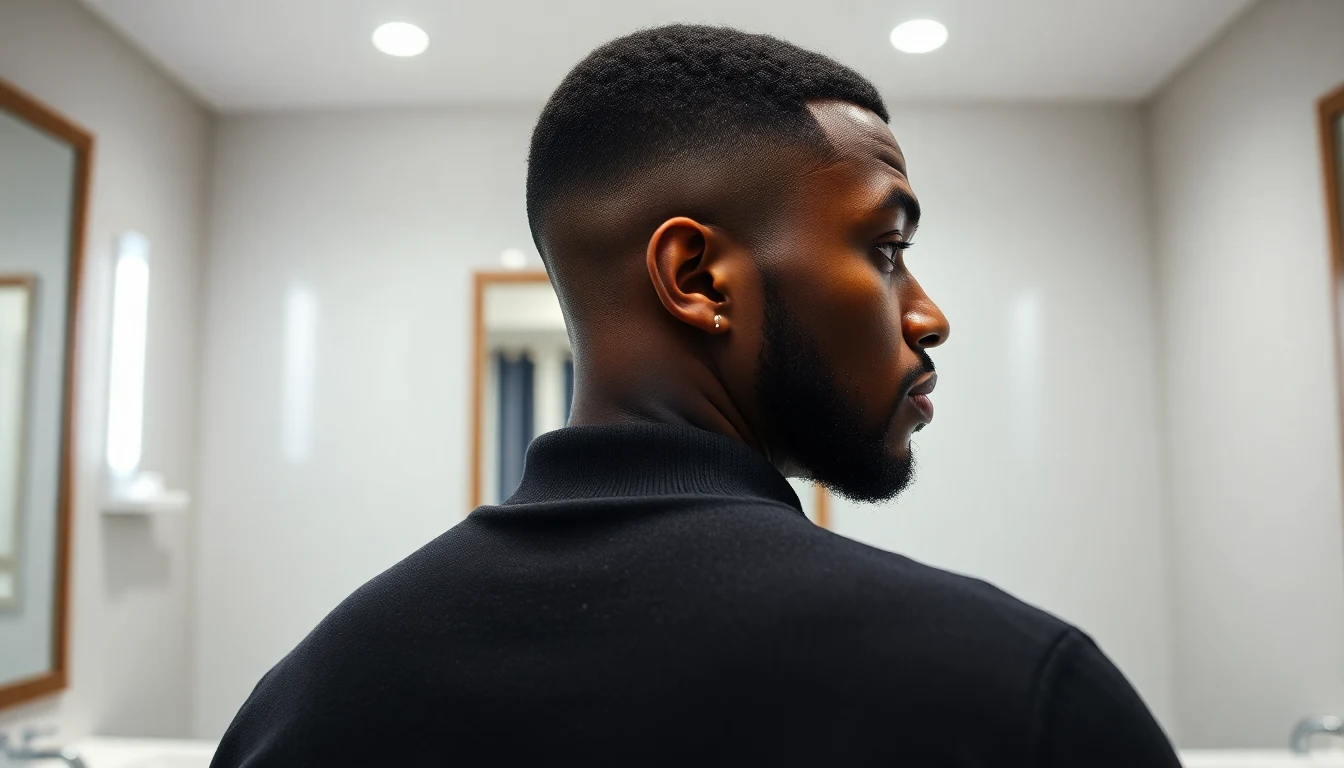
For 360 Waves
Wave maintenance has its own wash rhythm. Washing serves a dual purpose for wavers: cleaning the scalp and training the curl pattern. Most wave guides recommend washing every 7 to 10 days, timed with your brush sessions.
The wash and style method works like this: shampoo, then immediately brush in your wave pattern while the hair is wet and the cuticle is open. Apply a light pomade or wave cream, brush again, then durag. This trains the curl to lay in the direction you want. Washing too infrequently lets the pattern reset. Washing too frequently dries out the hair and makes it harder to lay down. For a full breakdown, check our guide to getting curly hair for Black men.
Choosing the Right Shampoo for Your Wash Frequency
The shampoo you use matters more than how often you use it. A harsh sulfate shampoo every 14 days can do more damage than a gentle sulfate-free formula every 7 days. Here is how to match your shampoo to your schedule. Understanding how often should black hair is key to a great grooming routine. (We recommend this Jack Black True Volume Thickening Shampoo.) Understanding how often should black hair is key to a great grooming routine.
For Weekly Washers (Every 5 to 7 Days)
You need a gentle, sulfate-free shampoo that will not accumulate on the hair over multiple uses. Look for formulas with mild surfactants like sodium cocoyl isethionate or cocamidopropyl betaine.
| Product | Price | Best For | Why It Works |
|---|---|---|---|
| SheaMoisture JBCO Shampoo | $10-14 | 4B/4C hair, weekly use | Strengthening formula with castor oil; gentle enough for frequent washing |
| Mielle Pomegranate & Honey | $10-13 | All coil types, moisture-focused | Honey is a natural humectant; helps hair retain moisture after washing |
| Cantu Cleansing Cream Shampoo | $5-7 | Budget option, 4A to 4C | Shea butter base; widely available at Target, Walmart, and drugstores |
For Bi-Weekly Washers (Every 10 to 14 Days)
Because you are going longer between washes, you need a shampoo with slightly more cleansing power to handle the accumulated buildup without being harsh. Sulfate-free shampoos designed for Black men hit this balance well.
| Product | Price | Best For | Why It Works |
|---|---|---|---|
| TGIN Moisture Rich Shampoo | $13-16 | 4C hair, bi-weekly washes | Amla oil and coconut oil for deep moisture; removes buildup without stripping |
| Carol’s Daughter Black Vanilla | $10-14 | Dry, fragile hair | Aloe leaf juice and rose; excellent for hair that needs extra gentleness |
Monthly Clarifying Wash (Every 4 to 6 Weeks)
Regardless of your regular schedule, use a clarifying shampoo once every four to six weeks. This removes stubborn buildup from products, hard water minerals, and environmental pollutants that sulfate-free shampoos leave behind. Neutrogena Anti-Residue Clarifying Shampoo is the go-to. It strips everything, so always follow with a deep conditioner. This is not an every-week product. Use it as a reset.
The Science Behind Black Hair and Water
Understanding porosity helps you understand why water behaves differently with your hair and how wash frequency plays into it.
Hair Porosity 101
Low porosity hair has a tightly sealed cuticle layer. Water beads up and sits on the surface before slowly absorbing. Products tend to sit on top of the hair rather than sinking in. If your hair takes forever to get wet in the shower and even longer to dry, you likely have low porosity hair.
High porosity hair has a raised or damaged cuticle that allows water to rush in quickly but also lets it escape just as fast. If your hair absorbs water almost instantly but feels dry again within hours, you have high porosity hair.
How Porosity Affects Wash Frequency
| Porosity | How Water Behaves | Wash Frequency Impact | Product Strategy |
|---|---|---|---|
| Low | Slow to absorb, slow to release | Can go longer between washes (10 to 14 days) because moisture stays trapped | Use lighter products; heavy butters sit on the surface and cause buildup |
| High | Quick to absorb, quick to lose | May need more frequent washing (7 to 10 days) because product absorption means faster buildup | Use heavier sealants (oils, butters) to lock moisture in after washing |
A simple porosity test: drop a clean, shed hair (no product on it) into a glass of room temperature water. Wait two to four minutes. If it floats, low porosity. If it sinks to the middle, normal. If it drops to the bottom, high porosity.
Wash Day Products by Budget
Your wash day does not need to cost $80. Here is what a complete routine looks like at three price points.
Budget ($15 to $25 Total)
- Shampoo: Cantu Cleansing Cream Shampoo ($5-7)
- Conditioner: Cantu Hydrating Cream Conditioner ($5-7)
- Leave-in: Cantu Shea Butter Leave-In Conditioning Repair Cream ($5-7)
- Sealant: Coconut oil from the grocery store ($3-5)
Cantu gets some criticism in the natural hair community for heavy fragrance and silicones, but for the price and accessibility, it is a solid starting point. You can find everything at Target, Walmart, or your local drugstore.
Mid-Range ($30 to $50 Total)
- Shampoo: SheaMoisture JBCO Shampoo ($10-14)
- Conditioner: SheaMoisture Raw Shea Butter Deep Treatment Masque ($10-14)
- Leave-in: Mielle Organics Pomegranate & Honey Leave-In ($9-12)
- Sealant: Jamaican Black Castor Oil ($8-10)
This is the range I recommend for most guys. SheaMoisture and Mielle are both Black-owned brands with formulas specifically developed for our hair textures. The ingredient quality jumps noticeably from the budget tier.
Premium ($60 to $80 Total)
- Shampoo: TGIN Moisture Rich Shampoo ($13-16)
- Conditioner: TGIN Honey Miracle Hair Mask ($15-18)
- Leave-in: Briogeo Don’t Despair, Repair! Leave-In ($25-28)
- Sealant: Mielle Rosemary Mint Scalp & Hair Strengthening Oil ($10-13)
TGIN and Briogeo both use higher concentrations of active ingredients and skip many of the fillers found in budget lines. If you have 4C hair that has been consistently dry and you have tried everything else, this tier is worth exploring.

Common Myths About Washing Black Hair
I have heard every one of these in the barbershop. Let me set the record straight.
Myth 1: “Black Hair Does Not Need to Be Washed Often Because It Is Naturally Clean”
No hair is self-cleaning. Your scalp produces sebum, sheds dead skin cells, and collects environmental pollutants regardless of your hair type. The difference is not whether Black hair gets dirty, it is how washing affects moisture levels. Less frequent washing is about preservation, not cleanliness being optional.
Myth 2: “If You Are Growing Your Hair Out, Stop Washing Entirely”
This myth has cost a lot of men a lot of length. A dirty, buildup-clogged scalp is not a healthy growth environment. Clogged follicles can lead to folliculitis, seborrheic dermatitis, and even traction issues. You grow hair from a healthy scalp. Keep it clean. The how to grow 4C hair guide covers this in full detail.
Myth 3: “Grease Is a Substitute for Washing”
Petroleum-based grease (the old-school blue jar your grandfather used) does not clean anything. It coats the hair and scalp, trapping dirt, dead skin, and bacteria underneath. If you use pomades, wave greases, or heavy styling products, you need to wash them out regularly. They do not evaporate.
Myth 4: “Water Dries Out Black Hair”
Water itself does not dry out your hair. Water is moisture. The problem is what happens after the water evaporates: if you do not seal the moisture in with an oil or cream, the water leaves and takes your hair’s existing moisture with it. This is why the LOC or LCO method exists. Wet your hair, condition it, oil it, and seal it. Water is the first step, not the enemy.
Myth 5: “Hot Water Opens Your Pores, So Wash With Hot Water”
Hair does not have pores. The cuticle layer does respond to temperature (warm water opens it slightly, cool water closes it), but scalding hot water strips oils from both scalp and hair. Warm water for washing, cool water for the final rinse. That is the formula.
When to See a Professional
Sometimes wash frequency adjustments are not enough. If you experience any of the following, consult a dermatologist experienced with skin of color: When it comes to how often should black hair, technique matters most.
- Persistent flaking that does not respond to dandruff shampoo after four to six weeks of consistent use. This may be seborrheic dermatitis or psoriasis, not just dry scalp.
- Hair loss in patches or at the hairline. Traction alopecia from tight styles, central centrifugal cicatricial alopecia (CCCA), or alopecia areata all require professional diagnosis.
- Scalp pain or tenderness. Inflammation that hurts to the touch is not normal and could indicate infection or an autoimmune condition.
- Bumps that do not resolve. Folliculitis (infected hair follicles) can become chronic if the underlying cause is not addressed.
Finding a dermatologist who specializes in treating patients with darker skin tones matters. Conditions like alopecia and scalp disorders present differently on melanated skin, and not every dermatologist has training in these presentations. The Skin of Color Society (skinofcolorsociety.org) maintains a directory of board-certified dermatologists with this expertise. When it comes to how often should black hair, technique matters most.
Building Your Personal Wash Schedule
Here is how to figure out your ideal wash frequency in four weeks.
Week 1: Establish a Baseline
Wash your hair on day one. Note the date. Pay attention to how your scalp and hair feel each day after. Write it down if you need to, even just a quick note in your phone. “Day 3: scalp feels fine. Day 5: slight itch near crown. Day 7: starting to feel oily.”
Week 2: Find Your Threshold
The day your scalp starts itching, smelling, or showing buildup is your natural threshold. If that is day 7, your base frequency is every 7 days. If it is day 12, that is your number.
Week 3: Add a Co-Wash
Now that you know your threshold, add a co-wash at the halfway point. If your threshold is 10 days, co-wash at day 5. See if this extends your threshold further or if it stays the same.
Week 4: Lock It In
By week four, you should have a repeatable schedule: full wash every X days, co-wash at the halfway mark, and a clarifying wash once a month. Write it down. Set a recurring reminder. Consistency matters more than perfection.

Frequently Asked Questions
How often should Black hair be washed?
Most Black men should wash their hair every 7 to 14 days. The exact frequency depends on your hair type, activity level, and styling choices. Men with 4C hair who wear their natural texture can often go 10 to 14 days between washes. Men who work out daily or sweat heavily may need to wash every 5 to 7 days. The key is reading your scalp rather than following a rigid calendar. If your scalp itches, flakes, or smells before your next scheduled wash, you are waiting too long. (We recommend this Natural Wave Pomade Strong Hold Easy.)
Can you wash Black hair every day?
Daily washing is almost never appropriate for Black hair. Tightly coiled hair types like 4B and 4C produce less sebum than straight hair, and what sebum the scalp does produce has a much harder time traveling down the coiled strand. Washing every day strips what little natural oil exists, leading to extreme dryness, breakage, and an overactive scalp that produces even more oil to compensate. If you need freshness between washes, use a co-wash or simply rinse with water and follow with a leave-in conditioner. (We recommend this Cremo Spice & Black Vanilla 2-in-1.)
What is co-washing and should Black men do it?
Co-washing means using a cleansing conditioner instead of shampoo. The conditioner contains mild surfactants that remove some dirt and sweat without stripping natural oils. For Black men, co-washing works well as a mid-week refresh between full shampoo washes. It is especially useful during protective styles when you want to keep the scalp clean without disturbing the style. Co-washing is not a permanent replacement for shampoo because conditioner alone cannot remove heavy product buildup or mineral deposits from hard water.
Does washing Black hair less make it grow faster?
Not directly. Reducing wash frequency preserves natural oils and reduces manipulation, both of which can reduce breakage. Less breakage means you retain more length over time, which makes it look like your hair is growing faster. The actual rate of hair growth, roughly half an inch per month, stays the same regardless of how often you wash. The goal is length retention, and washing less frequently is one piece of that puzzle alongside proper moisturizing, protective styling, and minimal heat use.
How do you know if you are overwashing Black hair?
Signs of overwashing include persistent dryness that returns within hours of washing, a tight or stripped feeling on the scalp immediately after shampooing, increased breakage and shedding, hair that feels rough and straw-like, and a scalp that becomes oilier faster than usual as it overproduces sebum to compensate. If you notice any of these consistently, extend the time between washes by two to three days and consider switching to a sulfate-free shampoo.
How often should you wash locs?
Locs should be washed every 7 to 14 days depending on the loc stage and your activity level. Starter locs in the first six months benefit from washing every 7 to 10 days with a residue-free shampoo. Mature locs can go up to 14 days comfortably. The old advice about not washing new locs for months is outdated. Clean hair actually locs faster because oil and buildup prevent strands from gripping each other. Use an applicator bottle to target shampoo at the scalp and squeeze the suds through your locs gently without rubbing.
Should you wash Black hair before or after a haircut?
Wash before the haircut, ideally the night before or the morning of your appointment. Clean hair gives your barber a better canvas to work with because product buildup, oil, and flakes can alter how the hair lays and how clippers move through it. Your barber can see your true hairline, texture, and any thin spots more clearly on freshly washed hair. If you cannot wash beforehand, at minimum rinse your hair and apply a light moisturizer so the barber is not cutting through dry, tangled hair.
Final Thoughts
Here is what to take away:
- Every 7 to 14 days is the right wash frequency for most Black men. Adjust based on your hair type, activity level, and style.
- Co-wash between full washes to keep the scalp fresh without stripping moisture.
- Use sulfate-free shampoo for regular washes and a clarifying shampoo once a month for a deep reset.
- Seal your moisture after every wash with the LOC or LCO method. Water alone is not enough.
- Listen to your scalp. Itching, flaking, and odor tell you when to wash. Dryness and breakage tell you when to slow down.
Your wash schedule is not about following someone else’s routine. It is about understanding how your specific hair responds to water, products, and time, then building a system around that. Start with the chart above, spend four weeks testing, and adjust until you find the rhythm that keeps your hair healthy, moisturized, and growing.
If you are looking for the right products to build your wash day routine around, start with our best shampoo for 4C hair roundup or the broader best shampoo for Black men guide. And if your scalp is giving you trouble between washes, our dandruff shampoo guide for Black hair covers the products that actually work without drying you out.
Last updated: February 2026
Further reading: For research-backed grooming advice, see Healthline Men’s Health.
Explore more tips at CulturedGrooming.com.
Further reading: For research-backed grooming advice, see Healthline Men’s Health.