
If you want to master how to get a thicker, this guide covers everything you need to know. Last updated: February 2026 by Darius Washington, Black Men’s Grooming Editor
I spent my twenties jealous of thick beards. Not because I could not grow facial hair, but because what I grew came in patchy on the cheeks and dense only on the chin. My barber in Atlanta told me, “Your follicles are there. You just haven’t woken them up yet.” He was right. Understanding how to get a thicker beard changed my entire grooming game, and I am going to walk you through every method that actually works.
This is not a generic “drink water and be patient” guide. We are going deep on minoxidil, derma rolling, targeted nutrition, and grooming techniques designed for Black men’s facial hair. Coarse, curly beard hair has specific challenges that most beard guides ignore. I am not going to ignore them.
Quick wins if you are short on time: Jump to the daily routine for a plug-and-play system you can start tonight. If you want to understand the science first, keep reading from the top.
Why Beard Thickness Differs for Black Men: How To Get A Thicker
Before you spend a dollar on any product, you need to understand what is happening under your skin. Black men’s facial hair is structurally different from straight-haired men’s beards, and that difference affects how thickness looks and how you build it.

The Curl Factor
4B and 4C facial hair grows in tight coils. Each individual hair covers less linear distance on your face compared to a straight beard hair. A man with straight facial hair and 1,000 follicles looks like he has a dense beard because those hairs lay flat and spread across the surface. A Black man with the same 1,000 follicles can look patchy because the curls bunch together and leave visible gaps between clusters.
This means two things. First, your beard might already be denser than it looks. Second, strategies that make each hair appear to occupy more space, like proper brushing and conditioning, have an outsized impact on your results.
Androgens and Genetics
Beard growth is driven by dihydrotestosterone (DHT), which converts vellus hairs (the fine, light peach fuzz) into terminal hairs (thick, pigmented, visible). Your genetic sensitivity to DHT determines where on your face this conversion happens and how quickly. This is why some men grow full beards at 18 and others are still filling in at 30.
Here is the part that matters: most men have not maxed out their genetic potential. Dormant follicles sit beneath the surface, waiting for the right stimulation. Minoxidil and derma rolling can push those follicles into the growth phase. Nutrition provides the building blocks. Grooming techniques maximize what you have while you build more.
The Ingrown Hair Problem
Curly facial hair grows back toward the skin. This causes pseudofolliculitis barbae (PFB), the razor bumps that affect up to 80% of Black men who shave (Halder, 1983, Journal of the American Academy of Dermatology). PFB is not just a shaving problem. It affects beard growth too. Chronic inflammation from ingrown hairs can damage follicles over time and create scarring that prevents new growth in affected areas.
Managing ingrown hairs is part of the thicker beard equation. If your face is constantly inflamed, your follicles cannot do their job. We will cover prevention in the grooming section. For existing razor bump issues, read our full aftershave guide for treatment options.
Minoxidil for Beard Growth: The Real Talk
I am going to be straight with you. Minoxidil is the single most effective tool for growing a thicker beard, and most of the clinical research on it did not include enough Black participants. I have spent time reading the available studies, talking to dermatologists, and observing real results in online communities. Here is what I know.
How Minoxidil Works
Minoxidil is a vasodilator. It widens blood vessels, which increases blood flow to hair follicles. More blood flow means more oxygen and nutrients reaching the follicle, which can push dormant vellus hairs into the active growth phase (anagen). Over time, those vellus hairs mature into terminal hairs.
A 2016 study published in the Journal of Dermatology confirmed that 5% topical minoxidil applied twice daily significantly increased facial hair count in men with sparse beards. The mechanism is the same whether it is on your scalp or your face. The FDA has only approved it for scalp use, which means facial application is off-label but widely practiced.
What to Expect: Realistic Timeline
| Timeframe | What You Will See | Notes |
|---|---|---|
| Weeks 1-4 | Possible shedding, dryness | Normal. Weak hairs shed to make way for stronger ones. |
| Weeks 4-8 | Vellus hairs appearing in sparse areas | Fine, light peach fuzz. Do not shave these off. |
| Months 2-4 | Vellus hairs thickening, some turning terminal | You will notice patches filling in. |
| Months 4-8 | Significant new terminal hairs | Visible thickness improvement. Keep going. |
| Months 8-12 | Full results becoming apparent | Most gains have materialized by this point. |
| Months 12-24 | Maturation and permanence | Longer use = higher chance gains are permanent. |
How to Apply Minoxidil for Your Beard
Use Kirkland Minoxidil 5% liquid or foam. The liquid is cheaper. The foam is less drying. I prefer the foam because Black skin tends to be more reactive to the alcohol base in the liquid formula.
- Wash your face with a gentle cleanser. Clean skin absorbs better. I use a salicylic acid wash because it also prevents ingrown hairs. Check our face wash guide for options.
- Apply a pea-sized amount of foam (or 1ml of liquid) to each cheek, chin, and jawline. Spread evenly with your fingers.
- Leave it on for at least four hours. I apply it in the morning after washing my face and at night before bed.
- Moisturize after it dries. Minoxidil can be drying. Apply a lightweight moisturizer once it has fully absorbed, usually 30 to 60 minutes after application.
- Apply twice daily. Consistency is everything. Missing days resets your progress.
Side Effects to Know About
Common side effects include skin dryness, mild irritation, and temporary shedding in the first few weeks. Less common but possible: headaches, dizziness, and unwanted hair growth on areas the product migrates to (your pillow touches your face, your face touches your hands, your hands touch other surfaces).

Wash your hands thoroughly after application. Do not apply before working out because sweat spreads it. If you have heart conditions or low blood pressure, talk to your doctor first. Minoxidil was originally a blood pressure medication.
For Black skin specifically: Watch for post-inflammatory hyperpigmentation at the application site. If you notice darkening, reduce to once daily. This is more common with the liquid formula. Mastering how to get a thicker takes practice but delivers great results. Mastering how to get a thicker takes practice but delivers great results.
When to Stop
The million-dollar question. If you stop before vellus hairs become terminal, those gains will likely fade. Most dermatologists recommend continuing for at least 12 months. After 18 to 24 months, the majority of converted hairs become permanent. The safest approach is to taper off gradually, going from twice daily to once daily to every other day over a few months, and see what sticks.
Derma Rolling for Beard Density
Derma rolling is the second-most effective clinical approach after minoxidil. You can use it alone or stack it with minoxidil for faster results. Here is the science and the method.
How Derma Rolling Works
A derma roller (also called a microneedle roller) is a small rolling device covered in tiny needles. When you roll it across your skin, the needles create controlled micro-injuries. Your body responds by increasing collagen production and blood flow to the area. This wound-healing response also stimulates hair follicle stem cells.
A 2013 study in the International Journal of Trichology found that microneedling combined with minoxidil produced significantly better hair regrowth than minoxidil alone. The study was on scalp hair, but the follicle biology is the same.
Derma Rolling Protocol for Beard Growth
| Parameter | Recommendation | Why |
|---|---|---|
| Needle length | 0.5mm | Deep enough to stimulate, shallow enough to avoid scarring |
| Frequency | 1-2 times per week | Skin needs 48-72 hours to heal between sessions |
| Direction | Vertical, horizontal, diagonal | Cover all angles for even stimulation |
| Pressure | Firm but not painful | Slight redness is good. Bleeding means too hard. |
| Sterilization | Isopropyl alcohol before and after | Prevents infection from micro-wounds |
| Replacement | Every 8-12 uses | Dull needles cause more damage than benefit |
Step-by-Step Derma Rolling
- Clean your face thoroughly. No products on your skin.
- Sterilize the roller with 70% isopropyl alcohol. Let it air dry.
- Roll vertically across each beard area (cheeks, jawline, chin) four to five times.
- Roll horizontally across the same areas four to five times.
- Roll diagonally across the same areas four to five times.
- Apply a gentle moisturizer. No minoxidil for 24 hours. No harsh products.
- Clean the roller again with alcohol and store it in its case.
Important Warning for Black Skin
Keloid-prone skin is more common in Black men. If you have a history of keloids or hypertrophic scarring, start with 0.25mm needles and test a small area first. Wait two weeks and see how your skin responds. Do not increase needle length without seeing clean healing from the shorter needles. If you keloid, derma rolling might not be for you. Talk to a dermatologist experienced with skin of color before starting.
Nutrition That Actually Affects Beard Growth
I am not going to tell you that eating salmon will give you a Viking beard. But I will tell you this: if your body lacks the raw materials to build hair, it will not build hair. Beard follicles are among the last to receive nutrients because your body prioritizes vital organs. That means even mild deficiencies show up on your face before almost anywhere else.
The Big Five Nutrients for Beard Growth
| Nutrient | Role in Beard Growth | Best Sources | Daily Target |
|---|---|---|---|
| Biotin (B7) | Keratin production, the protein that makes hair | Eggs, salmon, sweet potatoes, almonds | 30-100mcg (diet) or 5000-10000mcg (supplement) |
| Zinc | Follicle cell division, DHT metabolism | Oysters, beef, pumpkin seeds, chickpeas | 11mg |
| Vitamin D | Creates new follicles, activates dormant ones | Sunlight, fortified milk, fatty fish | 1000-4000 IU |
| Protein | Builds keratin structure of hair shaft | Chicken, fish, eggs, legumes, Greek yogurt | 0.8-1g per pound of body weight |
| Omega-3 Fatty Acids | Reduces follicle inflammation, improves blood flow | Salmon, mackerel, walnuts, flaxseed | 1000-2000mg EPA/DHA |
Vitamin D Deserves Special Attention
Here is something most beard guides will not tell you. Vitamin D deficiency is significantly more prevalent in Black men. Melanin reduces the skin’s ability to produce vitamin D from sunlight. A study in the Journal of the American Academy of Dermatology found that Black Americans are roughly twice as likely to be vitamin D deficient compared to white Americans.
Vitamin D plays a direct role in hair follicle cycling. Deficiency has been linked to alopecia and reduced hair growth. If you are a Black man living in a northern climate, you are almost certainly not getting enough from sunlight alone. Supplement with 2000 to 4000 IU daily and get your levels checked at your next physical. For more guidance, Healthline provides expert resources on Black men’s skincare.
Should You Take a Beard Growth Supplement?
Most beard growth supplements are overpriced biotin with a beard on the label. If you eat a reasonably balanced diet, you are probably getting enough biotin. Where supplements can help is filling specific gaps: vitamin D if you are deficient, zinc if your diet is low in animal protein, biotin if you eat very few eggs or nuts.
My recommendation: get a basic blood panel first. Supplement what you are actually low on rather than throwing money at a “beard vitamin” that includes 30 ingredients at sub-therapeutic doses.
Grooming Techniques That Make Your Beard Look Thicker
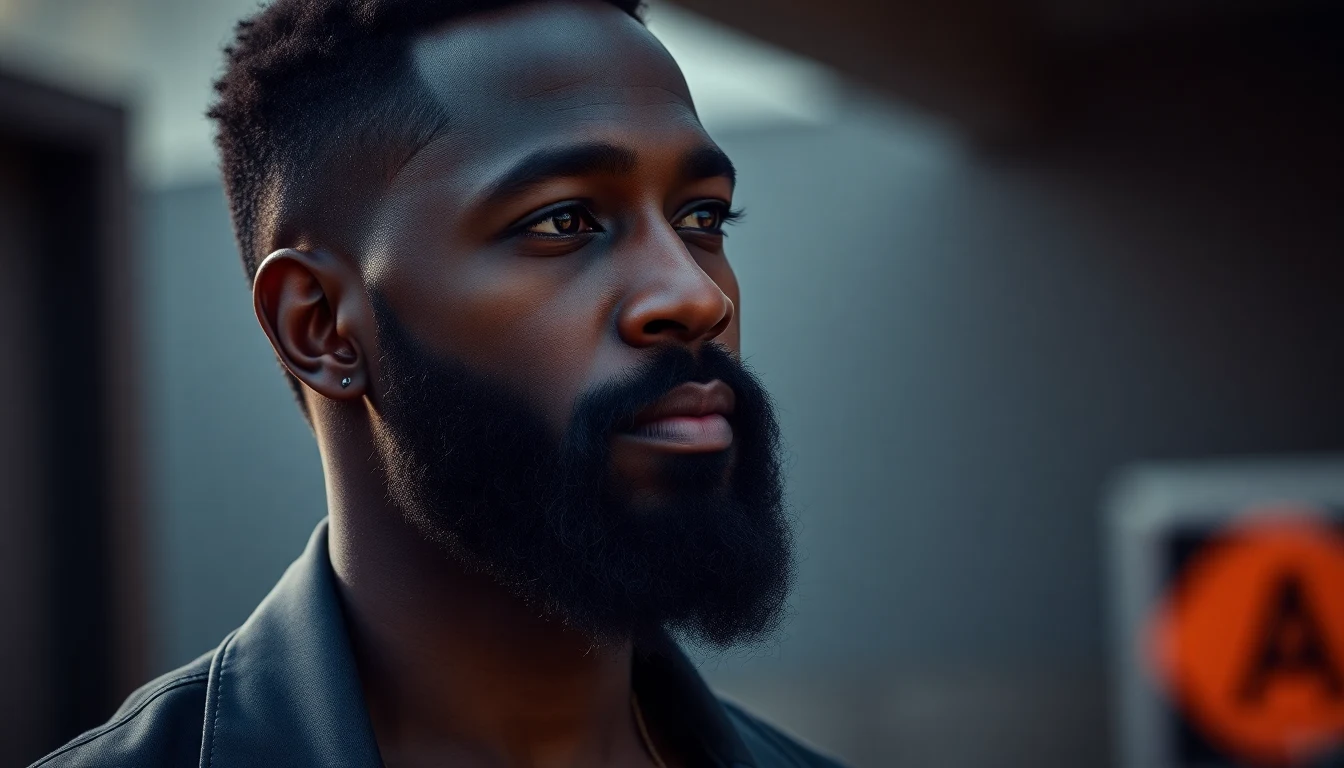
While minoxidil and derma rolling build new growth, grooming techniques maximize what you already have. For Black men with coarse, curly facial hair, the right grooming approach can make a thin beard look dramatically fuller.
Beard Brushing: The Underrated Move
A boar bristle beard brush does three things. It distributes natural oils from root to tip, reducing dryness that causes breakage. It trains hairs to lay in the direction you want, covering more surface area. And it stimulates blood flow to the follicles, which supports growth over time.
Brush your beard downward and outward for five minutes every morning. On curly beard hair, this is transformative. Each coiled hair, when brushed flat, covers more visual space on your face. A beard that looks thin unbrushed can look noticeably fuller after a proper brushing session.
Beard Oil: Protect Every Millimeter
Coarse facial hair breaks. Every broken hair is lost length and lost visual density. Beard oil hydrates the hair shaft, increases elasticity, and prevents the breakage that makes beards look thin. Apply three to five drops after showering when hair is still slightly damp. Work it through with your fingers, then brush.
For a complete breakdown of oils tested on textured beard hair, check our best beard oil for Black men guide.
Beard Balm: Add Volume and Shape
Scotch Porter Beard Balm is my go-to for adding volume to a thinner beard. The beeswax gives each hair a slightly thicker coating, and the hold keeps hairs fanned out rather than bunched together. Apply after oil, work it through evenly, then brush into shape.
The difference between a beard with and without balm is significant. Balm gives coarse curly hair enough structure to fill visual gaps without looking crunchy or artificial.
Line Up Your Neckline and Cheek Line
A defined neckline and cheek line make any beard look thicker by creating crisp boundaries. When your beard fades into your neck without a clean line, it looks unkempt and sparse. When the edges are sharp, the density inside those edges pops. Understanding how to get a thicker is key to a great grooming routine. Understanding how to get a thicker is key to a great grooming routine.
For your neckline: place two fingers above your Adam’s apple. That is where your neckline should be. Everything below gets shaved. For your cheek line: follow the natural growth line unless it is very uneven, in which case bring it down slightly to where you have consistent density. Use a quality beard trimmer for precision.
Keep the Length Even
Uneven length creates the illusion of patchiness. If your chin grows faster than your cheeks (common), trim the chin to match the cheek length while the cheeks catch up. A shorter, even beard looks thicker than a longer, uneven one.
Wash Smart
Over-washing strips natural oils and dries out beard hair. Dry hair breaks. Broken hair equals thin-looking beard. Wash your beard two to three times per week with a dedicated beard wash (not regular shampoo, which is too harsh for facial hair). On non-wash days, just rinse with water and condition.
The Complete Daily Beard Thickening Routine
Here is the system I recommend. This stacks all four approaches: topical treatment, microneedling, nutrition, and grooming into a daily and weekly structure you can actually follow.
Morning Routine (10 minutes)
- Wash your face with a gentle, salicylic acid cleanser.
- Apply minoxidil foam to sparse areas. Let it dry for 15 minutes.
- Apply moisturizer once minoxidil is dry.
- Apply beard oil (3-5 drops) and work through with fingers.
- Apply beard balm for volume and hold.
- Brush downward and outward for 2-3 minutes.
Evening Routine (5 minutes)
- Wash your face with your evening cleanser.
- Apply minoxidil foam to sparse areas. Let it dry.
- Apply a lightweight moisturizer after drying.
Weekly Additions
| Day | Addition | Notes |
|---|---|---|
| Monday | Derma roll (skip minoxidil this day) | Roll in the morning, moisturize only. Resume minoxidil Tuesday. |
| Wednesday | Beard wash day | Use a dedicated beard wash, not shampoo. |
| Thursday | Derma roll (skip minoxidil this day) | Same protocol as Monday. |
| Saturday | Beard wash day + deep conditioning | Leave conditioner on for 5 minutes before rinsing. |
| Sunday | Trim and line up | Even out length, clean neckline and cheek lines. |
Daily Nutrition Checklist
- 2-3 eggs (biotin, protein)
- A serving of fatty fish or 1000mg omega-3 supplement
- A handful of pumpkin seeds or almonds (zinc, biotin)
- 2000-4000 IU vitamin D supplement
- Adequate protein: at least 0.8g per pound of body weight
- 64+ oz water
What Does Not Work: Myths to Stop Believing
The internet is full of beard growth advice from people who have never dealt with coarse, curly facial hair. Let me save you some time and money.
Myth 1: Shaving Makes Your Beard Grow Back Thicker
No. Shaving cuts the hair at its widest point near the skin’s surface. The blunt cut feels coarser when it grows back, but the actual hair diameter is unchanged. No new follicles are created. No existing follicles get thicker. This myth has been debunked in dermatological literature for decades.
Myth 2: Testosterone Boosters Will Fill Your Beard
Over-the-counter “testosterone boosters” (usually fenugreek, ashwagandha, or D-aspartic acid) have minimal to no measurable effect on testosterone levels in men who are not deficient. Even if they did raise testosterone, it is DHT sensitivity at the follicle level that determines beard growth, not total testosterone. A man with average testosterone and high DHT sensitivity will outgrow a man with high testosterone and low sensitivity every time.
Myth 3: Beard Growth Oils Stimulate New Growth
Castor oil, coconut oil, jojoba oil. None of these create new hair follicles. They moisturize, they prevent breakage, and they can make your existing beard look fuller. That is valuable. But it is not growth stimulation. Do not confuse retention with generation. The only topical with clinical evidence for follicle activation is minoxidil.
Myth 4: You Need Expensive Beard Growth Kits
Most beard growth kits bundle a basic derma roller, a bottle of overpriced oil, and some biotin pills for $60 to $100. You can assemble the same components for a third of the price. A 0.5mm derma roller costs under $15. Kirkland Minoxidil is about $20 for a three-month supply. Generic biotin is $10. Do not pay for branding.
Products That Actually Help Build a Thicker Beard
Every product here serves a specific function. I am not listing ten beard oils to pad out a roundup. Each one does something different.
For Growth Stimulation
| Product | Purpose | Price Range | Key Notes |
|---|---|---|---|
| Kirkland Minoxidil 5% | Follicle activation | $20-25 (3-month supply) | Best value. Same active ingredient as Rogaine at a fraction of the price. |
| Derma Roller 0.5mm | Microneedling stimulation | $10-15 | Replace every 8-12 uses. Titanium needles last longer than stainless steel. |
| Biotin 10000mcg | Keratin production support | $8-12 (3-month supply) | Only helpful if you are actually deficient. Get levels checked. |
For Grooming and Volume
| Product | Purpose | Price Range | Key Notes |
|---|---|---|---|
| Scotch Porter Beard Balm | Volume, shape, hold | $12-16 | Black-owned. Beeswax base provides structure without stiffness. |
| SheaMoisture Beard Oil | Moisture, breakage prevention | $8-12 | Maracuja and shea oils. Excellent for coarse textures. |
| Bossman Beard Oil | Deep conditioning, softening | $15-20 | Jelly formula stays in longer than liquid oils. Good for very coarse hair. |
| Scotch Porter Beard Wash | Gentle cleansing | $10-14 | Black-owned. Sulfate-free, does not strip natural oils. |
| Honest Amish Beard Balm | Heavy-duty conditioning | $12-15 | All-natural ingredients. Best for very dry, brittle beard hair. |
Beard Growth by Age: What to Expect
Your age matters more than you think. Beard development continues well into your thirties.
| Age Range | Typical Beard Development | What to Focus On |
|---|---|---|
| 18-22 | Patchy, concentrated on chin and upper lip. Cheeks still filling in. | Patience. Good nutrition. Let it grow before judging density. |
| 23-27 | Cheeks start filling. Connectors (chin to sideburns) developing. | This is the best time for minoxidil if you want to accelerate cheek coverage. |
| 28-35 | Peak beard density for most men. Full pattern established. | Focus on grooming, maintenance, and maximizing what you have. |
| 35+ | Density typically maintained. Some grey hairs may appear. | Conditioning becomes more important as hair texture changes slightly. |
If you are 21 and frustrated with your beard, understand that your face is still developing. Most of the Black men I know with great beards did not hit full density until 26 or 27. That does not mean you should just wait. Use the growth strategies in this guide. But set your expectations against a realistic timeline.
Patchy Beard Strategies for Black Men
If your beard grows thick on the chin but sparse on the cheeks, you are not alone. This is the most common pattern for Black men, and it responds well to targeted treatment.
Target Sparse Areas with Minoxidil
Apply minoxidil specifically to the patchy areas. You do not need to cover your entire face. Concentrate on cheeks, jawline, or wherever the gaps are. The follicles are usually present. They just need stimulation to convert from vellus to terminal.
Focus Derma Rolling on Patches
Same principle. Roll more aggressively (within the protocol limits) on sparse zones. The micro-injury response is localized, so you want maximum stimulation where you need maximum growth.
Style Around the Gaps
While your beard is filling in, choose a style that works with your current density. A beard style like a goatee, chin strap, or extended goatee can look intentional and sharp while your cheeks catch up. Trying to force a full beard look with visible patches is the grooming equivalent of a combover. Own your current growth pattern and adjust as density increases.
For our complete guide on working with patchy growth, read how to fix a patchy beard. When it comes to how to get a thicker, technique matters most.
Never Compare to Straight-Haired Beards
I see this in forums constantly. Black men comparing their six-week growth to a white man’s six-week growth. It is not the same metric. Curly hair shrinks. A 4C beard hair that is half an inch long might only show a quarter inch of length on your face because of the coil pattern. You have more hair than it looks like. That is why the grooming techniques in this guide matter so much. Brushing, conditioning, and styling release the visual length that curl shrinkage hides. When it comes to how to get a thicker, technique matters most.
Managing Ingrown Hairs While Growing Your Beard
You cannot grow a thick beard on inflamed skin. Pseudofolliculitis barbae (PFB) is the enemy of beard growth in Black men. Here is how to keep it in check while you are building density.

Prevention During the Growth Phase
- Stop shaving with multi-blade razors. Multi-blade razors cut below the skin’s surface, which is precisely what causes ingrown hairs in curly hair. If you need to clean up edges, use a single-blade safety razor or a quality beard trimmer.
- Exfoliate twice a week. A gentle chemical exfoliant with salicylic acid or glycolic acid prevents dead skin from trapping growing hairs. Do this on non-derma-rolling days.
- Moisturize daily. Dry skin is less pliable. Hydrated skin allows hairs to break through the surface instead of curling back under.
- Brush daily. Brushing lifts hairs away from the skin and prevents them from embedding. This is one of the most underrated ingrown hair prevention strategies.
Treating Active Ingrown Hairs
If you already have bumps, do not pick at them. Apply a targeted treatment with salicylic acid or glycolic acid (PFB Vanish, Bump Patrol, or Tend Skin). These exfoliate the trapped hair out of the skin without causing the scarring that comes from manual extraction.
For severe or persistent PFB, see a dermatologist experienced with skin of color. They may prescribe topical retinoids or low-dose antibiotics to break the cycle.
When to See a Dermatologist
Growth strategies have limits. If you have tried minoxidil for six months, maintained good nutrition, derma rolled consistently, and still see no improvement, it is time for professional evaluation. Some conditions that affect beard growth require medical treatment.
- Alopecia barbae: Autoimmune condition that causes round patches of beard hair loss. Requires corticosteroid treatment.
- Hormonal imbalance: Low DHT or thyroid issues can suppress facial hair growth. A blood panel can identify these.
- Chronic PFB with scarring: Severe ingrown hairs can permanently damage follicles. Laser treatment may help.
- Fungal infections: Tinea barbae (ringworm of the beard) can mimic patchiness. Requires antifungal treatment.
Ask specifically for a dermatologist experienced with skin of color. Dermatological presentations vary by skin tone, and a provider who rarely sees Black patients may misdiagnose or under-treat pigmentation-related issues.
Frequently Asked Questions
How long does it take to grow a thicker beard?
Most men notice meaningful thickness improvements within three to six months of consistent effort. Minoxidil users typically see vellus hairs (peach fuzz) within four to eight weeks and terminal hairs (thick, pigmented) by months three through six. Derma rolling results take a similar timeline. Nutrition and grooming techniques show gradual improvement over the same period. Genetics set your ceiling, but most Black men have not reached their genetic potential because they have not addressed the specific challenges of coarse, curly facial hair.
Does minoxidil really work for beard growth?
Yes. A 2016 study in the Journal of Dermatology found that 5% minoxidil applied twice daily significantly increased facial hair count compared to placebo. The mechanism is vasodilation, meaning increased blood flow to hair follicles, which pushes dormant follicles into the growth phase. It works especially well on areas where you have vellus (fine, light) hairs that have not matured into terminal hairs. Results are not permanent unless you use it long enough for the follicles to fully mature, typically 12 to 24 months.
Is derma rolling safe for beard growth on Black skin?
Yes, when done correctly. Use a 0.5mm needle length and roll once or twice per week. Do not combine derma rolling and minoxidil on the same day, as the micro-channels increase absorption and can cause irritation. Wait at least 24 hours between treatments. Black skin is more prone to post-inflammatory hyperpigmentation from skin trauma, so start with once per week and increase only if your skin tolerates it well. Sterilize your roller before and after every session.
What foods help beard growth?
Foods high in biotin (eggs, salmon, sweet potatoes), zinc (oysters, beef, pumpkin seeds), and protein (chicken, fish, legumes) directly support hair follicle function. Omega-3 fatty acids from fatty fish reduce inflammation that can inhibit hair growth. Vitamin D from sunlight exposure and fortified foods also plays a role, and deficiency is especially common in men with darker skin because melanin reduces UV absorption. A balanced diet matters more than any single superfood.
Can Black men with patchy beards make them thicker?
Absolutely. Patchy beards are common in Black men because curly facial hair can create the illusion of less density, even when follicle count is normal. The curl pattern makes each hair cover less linear space compared to straight facial hair. Minoxidil can activate dormant follicles in patchy areas, derma rolling stimulates growth in sparse zones, and grooming techniques like using beard balm and brushing in the direction of growth can make existing hair appear significantly fuller. For a deeper dive, check out our complete patchy beard guide.

Should I shave my beard to make it grow back thicker?
No. This is one of the most persistent grooming myths. Shaving cuts the hair at its thickest point near the base, so regrowth feels coarser and looks darker temporarily. But the actual follicle diameter, density, and growth rate are unchanged. Shaving does not create new follicles or increase the thickness of existing ones. If you want a thicker beard, use the growth strategies in this guide. If you are starting from scratch, just let it grow for at least six to eight weeks before making any decisions about shape or density.
Does beard oil make your beard thicker?
Beard oil does not increase follicle count or hair diameter. What it does is hydrate the hair shaft, reduce breakage, and add volume that makes existing hair look and feel fuller. For Black men with coarse, tightly curled facial hair, this matters because dry beard hair breaks easily and loses length. Consistent oiling preserves every millimeter of growth you earn. Think of it as protecting thickness, not creating it.
The Bottom Line on Beard Thickness
Growing a thicker beard as a Black man is not about luck. It is a system. Minoxidil activates dormant follicles. Derma rolling accelerates that process. Nutrition provides the raw materials. Grooming techniques maximize what you have while new growth comes in.
Here is your action plan:
- Start minoxidil twice daily on sparse areas. Commit to at least 12 months.
- Derma roll twice a week with a 0.5mm roller. Skip minoxidil on rolling days.
- Fix your nutrition. Supplement vitamin D and ensure adequate protein, biotin, and zinc.
- Groom for volume. Oil, balm, brush, and line up weekly.
- Manage ingrown hairs to keep your skin healthy and your follicles functioning.
- Be patient. Real results take three to six months. Document your progress monthly.
Your barber can shape it. Science can stimulate it. But consistency is what builds it. Start the routine tonight.
For style inspiration once your beard fills in, browse our Black men beard styles guide. For the tools to maintain it, see our best beard trimmer for Black men roundup.
Further reading: For research-backed grooming advice, see Healthline Men’s Health.
Explore more tips at CulturedGrooming.com.
Further reading: For research-backed grooming advice, see Healthline Men’s Health.
Frequently Asked Questions
How long does it take to grow a thicker beard as a Black man?
Most men notice meaningful thickness improvements within three to six months of consistent effort. If you use minoxidil, you’ll typically see vellus hairs within four to eight weeks and thicker terminal hairs by months three through six.
Does minoxidil actually work for beard growth?
Yes. A 2016 study in the Journal of Dermatology found that 5% minoxidil applied twice daily significantly increased facial hair count compared to placebo. It works by increasing blood flow to hair follicles, pushing dormant follicles into the growth phase, and is especially effective on fine, light vellus hairs.
What products should I use to maintain a thicker beard?
Use a specialized beard wash like Scotch Porter Beard Wash to avoid stripping natural oils, followed by a beard oil such as SheaMoisture or Bossman to keep your coarse, curly hair moisturized and manageable. A beard balm like Scotch Porter or Honest Amish helps define and thicken your beard’s appearance.
Can derma rolling help with beard thickness?
Yes, derma rolling stimulates hair growth by creating controlled micro-injuries that trigger your body’s healing response. A 0.5mm derma roller produces results on a similar three to six month timeline as minoxidil and works well when combined with beard oils for optimal results.