Last updated: February 2026 by Daniel Park, Licensed Cosmetologist. Daniel is a Korean-American cosmetologist based in Los Angeles with over 12 years of experience in Asian men’s grooming. He has studied barbershop techniques in Tokyo and contributes regularly to K-beauty and J-beauty editorial publications.
[table-of-contents]
Japanese Hairstyles for Men: Precision, Texture, and Controlled Imperfection
Japanese barbershops operate on a different frequency. I spent three weeks visiting tokoya (traditional barbershops) and modern salons across Tokyo and Osaka in 2024, and the thing that hit me immediately was the razor work. Japanese barbers use straight razors the way Western barbers use thinning shears. They don’t just cut hair; they sculpt texture into every layer, creating movement in strands that would otherwise lie flat and lifeless.
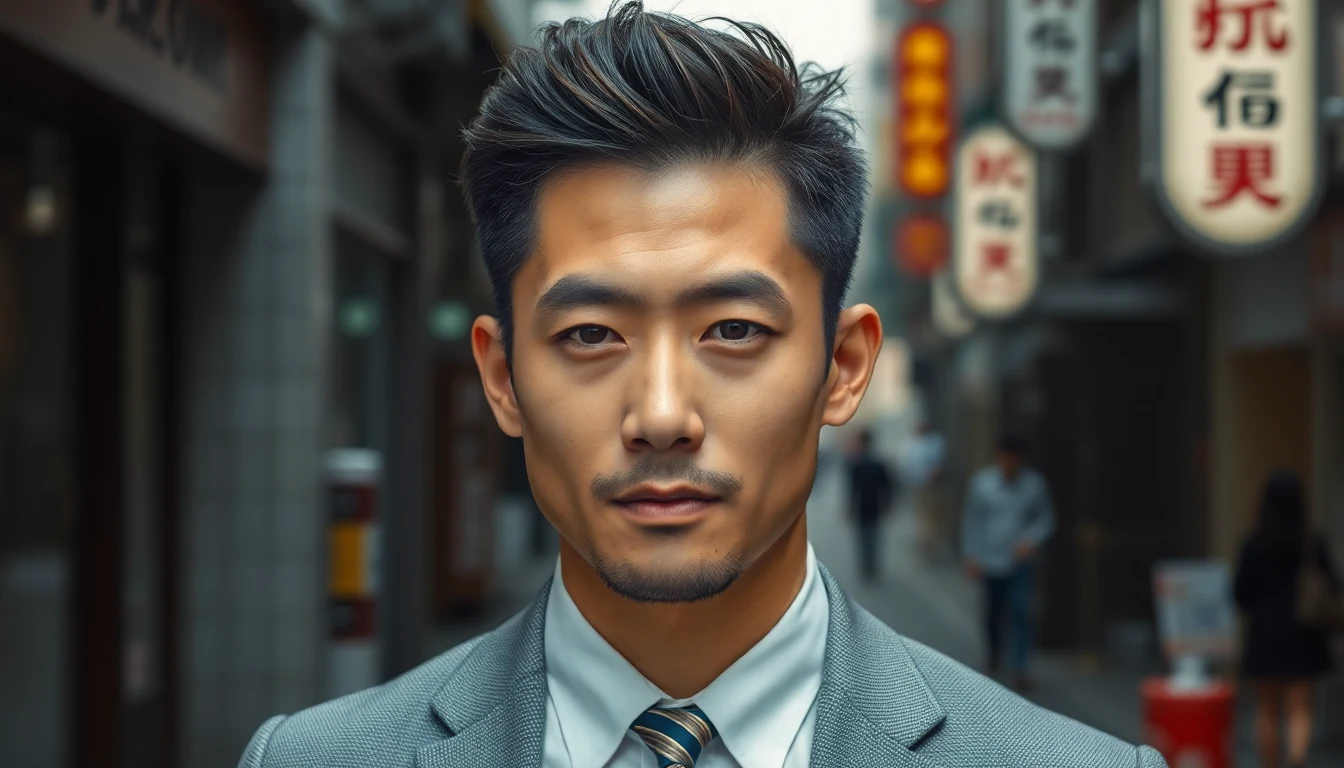
That attention to detail is what makes Japanese hairstyles for men stand apart. Where Korean haircuts tend toward polished softness and volume, Japanese cuts embrace controlled messiness. Think razored edges, piecey separation, and styles that look like you rolled out of bed looking effortlessly cool. The irony is that most of these “effortless” looks require precise cutting technique and the right products to pull off.
This guide covers 12 Japanese men’s hairstyles that are actually being worn in 2026, from traditional barbershop staples to modern street-fashion cuts. For each one, I’ll tell you exactly how to ask for it, which face shapes it flatters, and what products to use. If you’re exploring Asian hairstyles more broadly, start with our complete guide to Asian men’s hairstyles for the full picture.
Understanding Japanese Hair Texture
Before we get into specific styles, you need to understand what makes Japanese hair different from other East Asian hair types. This is the technical foundation that determines which styles work and which ones fight your hair all day.
Japanese hair is typically straight (Type 1A to 1B) with a finer individual strand diameter than Korean or Chinese hair. Where Korean hair averages 80 to 100 micrometers per strand, Japanese hair tends to sit at 60 to 80 micrometers. Fewer cuticle layers per strand. The result is hair that lies flatter, has less natural body, and is more responsive to texturizing techniques.
The good news: fine, straight hair holds razored texture beautifully. Japanese barbers exploit this with layered point-cutting and razor slicing that creates natural separation and movement. The challenge: volume is harder to achieve and maintain. Blow drying at the roots is non-negotiable for most of these styles. Without it, fine Japanese hair defaults to a flat, limp silhouette that no product can rescue.
One more distinction worth noting. Japanese hair tends to grow slightly slower than Korean hair and has less natural oil production. That means less frequent washing (every 2 to 3 days works for most guys) and lighter products that won’t weigh things down.
12 Japanese Men’s Hairstyles Worth Trying in 2026
These styles are organized from lowest to highest maintenance. I’ve included Japanese terminology where it helps, because walking into a Tokyo salon with the right vocabulary changes the experience. Even at Western barbershops, showing your barber the Japanese name and a reference photo together gets you closer to the cut you want.
1. Textured Crop (テクスチャークロップ)
The most popular everyday Japanese men’s hairstyle right now, and for good reason. The top is kept at 2 to 3 inches, heavily texturized with point-cutting or razor work, and the fringe falls forward in choppy, uneven pieces. Japanese barbers excel at this cut because their razor technique creates natural-looking separation that products alone can’t replicate.
I recommend this as a starting point for any guy who hasn’t tried a Japanese-influenced cut before. It’s forgiving on grow-out, works in offices and on weekends, and looks better with a little bit of mess.
Best for: Round and oval faces. The forward fringe narrows the face visually, and the texture prevents the flat helmet look that straight hair defaults to at shorter lengths.
How to ask your barber: “Textured crop, 2 to 3 inches on top, razored for texture. I want the fringe forward and choppy, not blunt. Short on the sides, blended, not hard-lined.” In Japanese: tekusuchaa kuroppu (テクスチャークロップ).
Maintenance level: Low. A fingertip of matte wax, 30 seconds of scrunching, and you’re done. Trim every 3 to 4 weeks.
Product recommendation: A dry matte wax like Gatsby Moving Rubber (grey tin, the “Grunge Mat” formula). Apply to dry hair, pinch and separate sections for definition.
2. Two Block Cut (ツーブロック)
Originally a Korean staple, the two block haircut has been fully adopted by Japanese men and adapted to suit Japanese hair texture. The Japanese version typically features more aggressive texturizing on top and sharper disconnection between the short sides and long top. Where Korean two blocks aim for softness, the Japanese interpretation leans into contrast.
The tsu burokku has been standard in Japanese salons since the early 2010s and shows no signs of fading. It’s practically the default cut for men in their twenties in Tokyo.
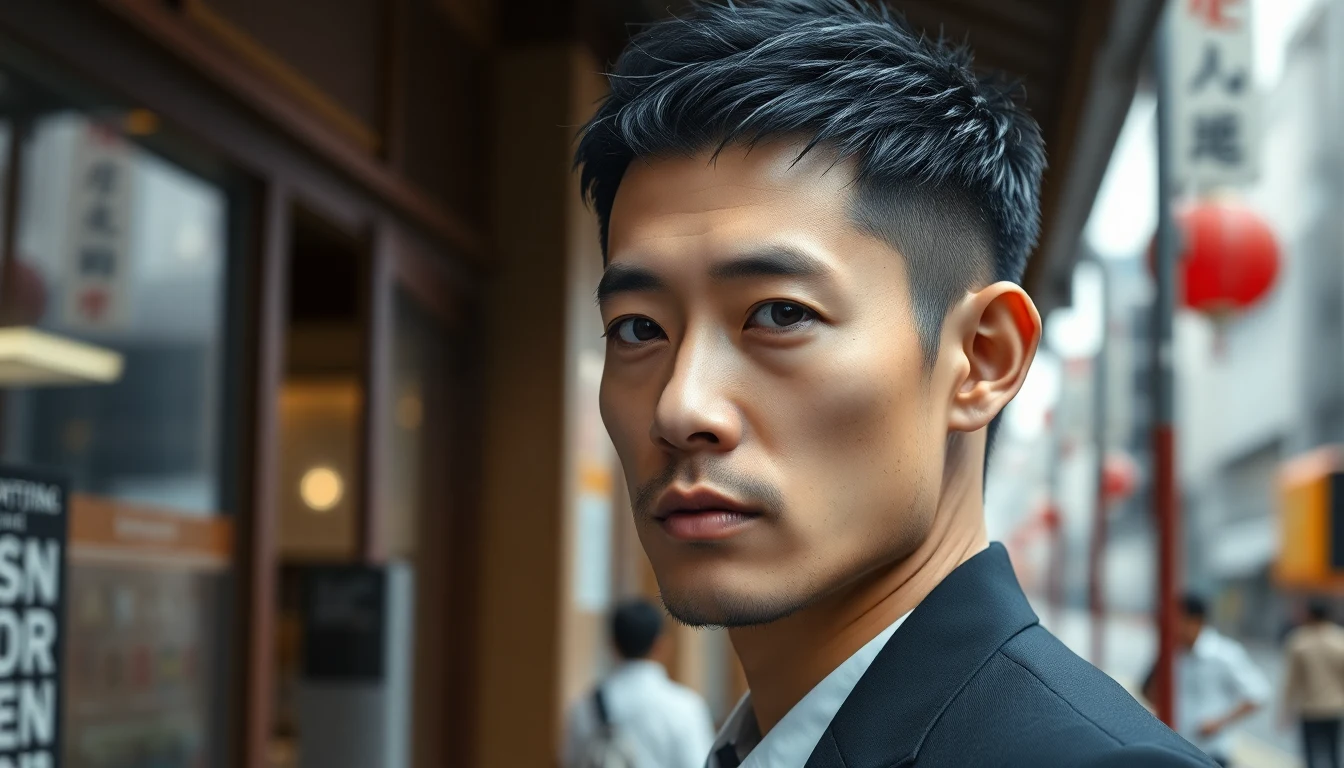
Best for: Every face shape. Oval faces wear it naturally. Round faces benefit from the vertical height on top. Square faces get the sharp angles softened by the textured top layer.
How to ask your barber: “Two block cut. Clipper the sides at a #3 or #4, leave 4 inches on top. I want the top texturized, not left blunt. Disconnect between the two sections, no blending.” In Japanese: tsu burokku (ツーブロック).
Maintenance level: Low to Medium. The disconnect grows out noticeably after 3 weeks on fine hair. Plan for trims every 3 to 4 weeks.
Product recommendation: A medium-hold wax. Lipps L08 Matt Hard Wax works well here. Apply to towel-dried hair after blow drying roots upward for volume.
Mastering japanese hairstyles for men takes practice but delivers great results. Mastering japanese hairstyles for men takes practice but delivers great results.
3. Wolf Cut (ウルフカット)
The urufu katto (ウルフカット) has been cycling through Japanese fashion since the 1980s, and the 2026 version is the most wearable iteration yet. It’s a layered cut with volume on top, shorter layers at the crown, and longer, wispy layers at the nape and sides. The name comes from the shaggy, “wolf-like” silhouette.
This is the cut you see on J-fashion influencers and Harajuku street style regulars. It references visual kei (ヴィジュアル系) aesthetics without going full costume. On fine Japanese hair, the layers create the illusion of thickness and movement that straight hair usually lacks.
Best for: Oval and oblong faces. The layers add width at the sides, which balances longer face shapes. Round faces should approach with caution; the volume can add width where you don’t want it.
How to ask your barber: “Wolf cut. Shorter layers on top for volume, longer layers at the nape and ears. I want it shaggy but intentional, not just grown out.” Show a reference photo. In Japanese: urufu katto (ウルフカット).
Maintenance level: Medium. Requires blow drying to separate the layers and prevent flatness. Trim every 4 to 5 weeks; the grow-out actually looks decent with this cut.
Product recommendation: A lightweight texturizing spray on damp hair before blow drying, followed by a small amount of matte wax on the tips for separation. Mandom Lucido-L works well as a texturizing base.
4. Pompadour (ポンパドール)
The Japanese pompadour has roots in the yankii (ヤンキー) subculture of the 1970s and 80s, but the modern version is polished and wearable. Japanese barbers adapted the classic Western pompadour to work with straight, fine hair by adding more internal texture and using lighter products that don’t weigh the quiff down.
The sanbashi-style barbershops (traditional Japanese barbers) still do this cut better than most modern salons. They use straight razors to thin the interior bulk while maintaining the surface shape, which keeps the pomp from collapsing by lunchtime on fine hair.
Best for: Round and square faces. The height on top elongates the face, and the swept-back sides create a slimming effect at the temples.
How to ask your barber: “Japanese pompadour. 4 to 5 inches on top, tapered sides, no hard undercut. I want the top swept back with volume, not slicked flat.” Ask for interior texturizing if your hair is fine. In Japanese: ponpadooru (ポンパドール).
Maintenance level: High. Daily blow drying is required. You need to blow dry the quiff forward and up, then train it backward with a round brush. Product application takes 5 to 10 minutes. Trim every 3 weeks to maintain the taper fade on the sides.
Product recommendation: A medium-hold pomade with natural shine, or Shiseido Uno Fiber Neo for hold without greasiness. Apply to damp hair, blow dry into shape, then finish with a light hairspray for all-day hold.
5. Buzz Cut / Crew Cut (坊主 / クルーカット)
The bouzu (坊主) has deep cultural significance in Japan. Historically associated with Buddhist monks, military service, and school sports teams, the modern buzz cut has shed its austere associations. In 2026, it’s a deliberate style choice. Japanese men with strong jawlines and well-shaped heads pull this off particularly well because fine hair creates a cleaner, more uniform buzz than thicker hair textures.
The crew cut variation adds a bit more length on top (half an inch to an inch) while keeping the sides tight. This tiny bit of extra length gives you just enough to style forward or to the side.
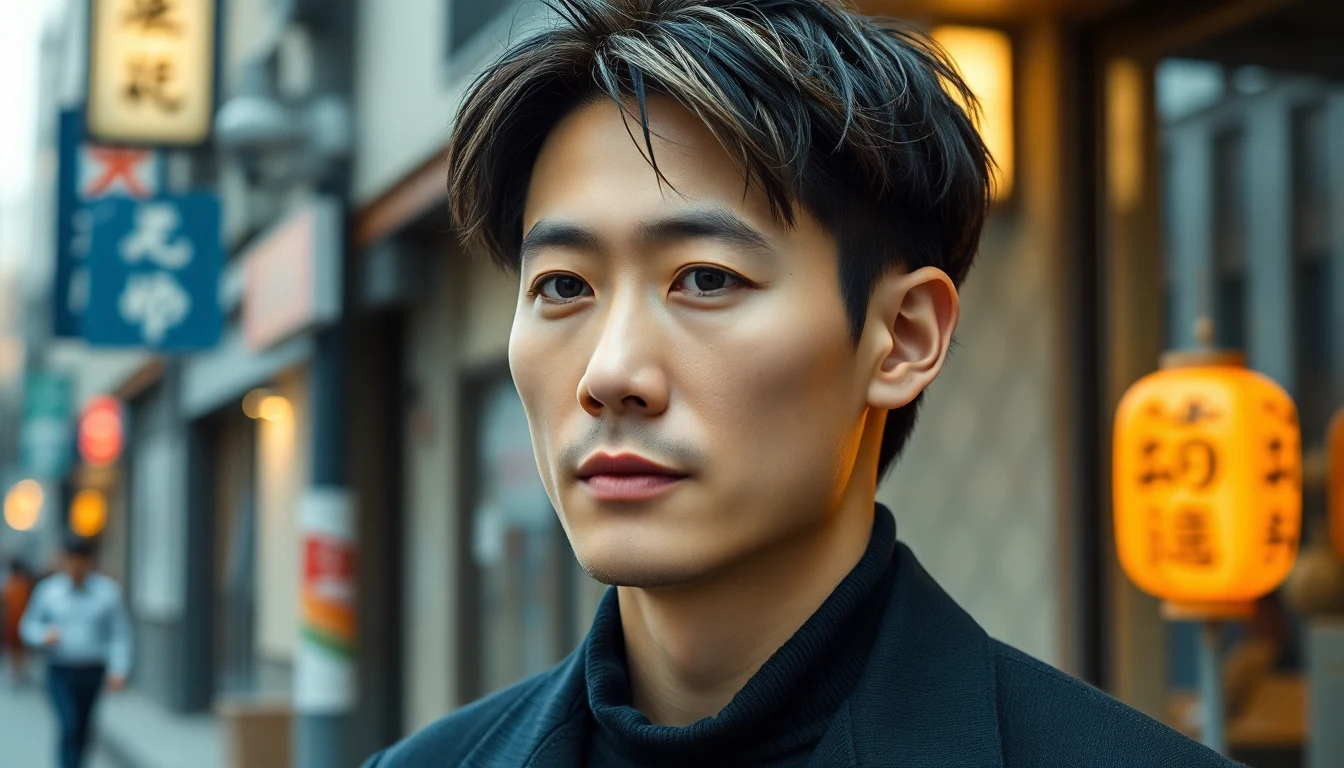
Best for: Oval and square faces with defined jawlines. If you have a round face, go with the crew cut variation rather than a uniform buzz; the extra length on top adds vertical proportion.
How to ask your barber: “Buzz cut, #2 all over” or “Crew cut, #1 on the sides, half inch on top, blended.” The buzz is simple enough that barber communication is rarely an issue. In Japanese: bouzu (坊主) for the buzz, kuruu katto (クルーカット) for the crew cut.
Maintenance level: Low. No daily styling needed. Trim every 4 to 5 weeks, or go longer if you don’t mind the grow-out.
Product recommendation: None needed for the buzz. For the crew cut, a tiny amount of matte clay rubbed between palms and pressed into the top for subtle texture.
6. Undercut (アンダーカット)
The Japanese undercut is sharper and more dramatic than the Western version. Japanese barbers tend to take the sides shorter (often a #1 or #0) and leave the top significantly longer (4 to 6 inches), creating a stark disconnect. The top is then styled with texture rather than slicked back, which is the key difference from a classic European undercut.
This cut works especially well on fine Japanese hair because the contrast between the buzzed sides and the textured top creates visual interest that the hair’s natural flatness would otherwise lack. You’ll see different types of fades incorporated into the undercut depending on the barber’s preference.
Best for: Oval and oblong faces. The short sides slim the profile, and the longer top adds proportional balance. Square faces can work with this if the top is styled with some softness rather than full slick-back rigidity.
How to ask your barber: “Undercut with a hard disconnect. #1 on the sides, 5 inches on top. I want the top textured and styled forward or to the side, not slicked back.” In Japanese: andaa katto (アンダーカット).
Maintenance level: Medium to High. The sides need buzzing every 2 to 3 weeks to maintain the disconnect. The top needs daily blow drying and product for shape.
Product recommendation: A strong-hold matte wax or clay. Gatsby Moving Rubber (purple tin, “Wild Shake” formula) for firm hold with dry finish. Pre-style with a blow dryer and concentrator nozzle to build root volume before applying product.
7. Caesar Cut (シーザーカット)
The Caesar has been a quiet favorite in Japanese salons for years. It’s a short, uniform-length cut with the fringe brought forward and cut straight across the forehead. Japanese hair’s natural straightness makes this one of the cleanest Caesar cuts you’ll see on any hair type. Where wavy or curly hair adds unintended texture to a Caesar, straight Japanese hair delivers the crisp, geometric line that defines the style.
This is also one of the most practical cuts for men who are starting to thin at the crown. The forward fringe and uniform length minimize the appearance of thinning without resorting to a full buzz. Understanding japanese hairstyles for men is key to a great grooming routine. Understanding japanese hairstyles for men is key to a great grooming routine.
Best for: Oval and square faces. The horizontal fringe line shortens longer face shapes and works with strong jawlines. Round faces should avoid it; the horizontal line emphasizes width.
How to ask your barber: “Caesar cut. 1 to 2 inches all over, fringe brought forward and cut straight across. I want a clean horizontal line at the forehead, not rounded or textured.” In Japanese: shiizaa katto (シーザーカット).
Maintenance level: Low. Almost no daily styling required. Trim every 3 to 4 weeks to maintain the fringe line.
Product recommendation: A light-hold matte wax or nothing at all. If the fringe won’t stay forward, a tiny amount of Gatsby Moving Rubber (green tin, “Air Rise”) pressed into the fringe from underneath is enough.
8. Side Part (サイドパート)
The classic saido paato (サイドパート) is the default professional Japanese men’s hairstyle. Walk through any business district in Tokyo or Osaka and you’ll see variations of this cut on half the men in suits. It’s a 3:7 or 2:8 part (Japanese barbers specify the ratio) with the longer side swept across and the shorter side combed down or lightly tapered.
Japanese barbershops have perfected this cut over decades. The precision of the part line, the razor-cleaned edges, and the graduated tapering at the temples are hallmarks of the tokoya tradition. It’s deceptively simple but reveals skill differences between barbers immediately.
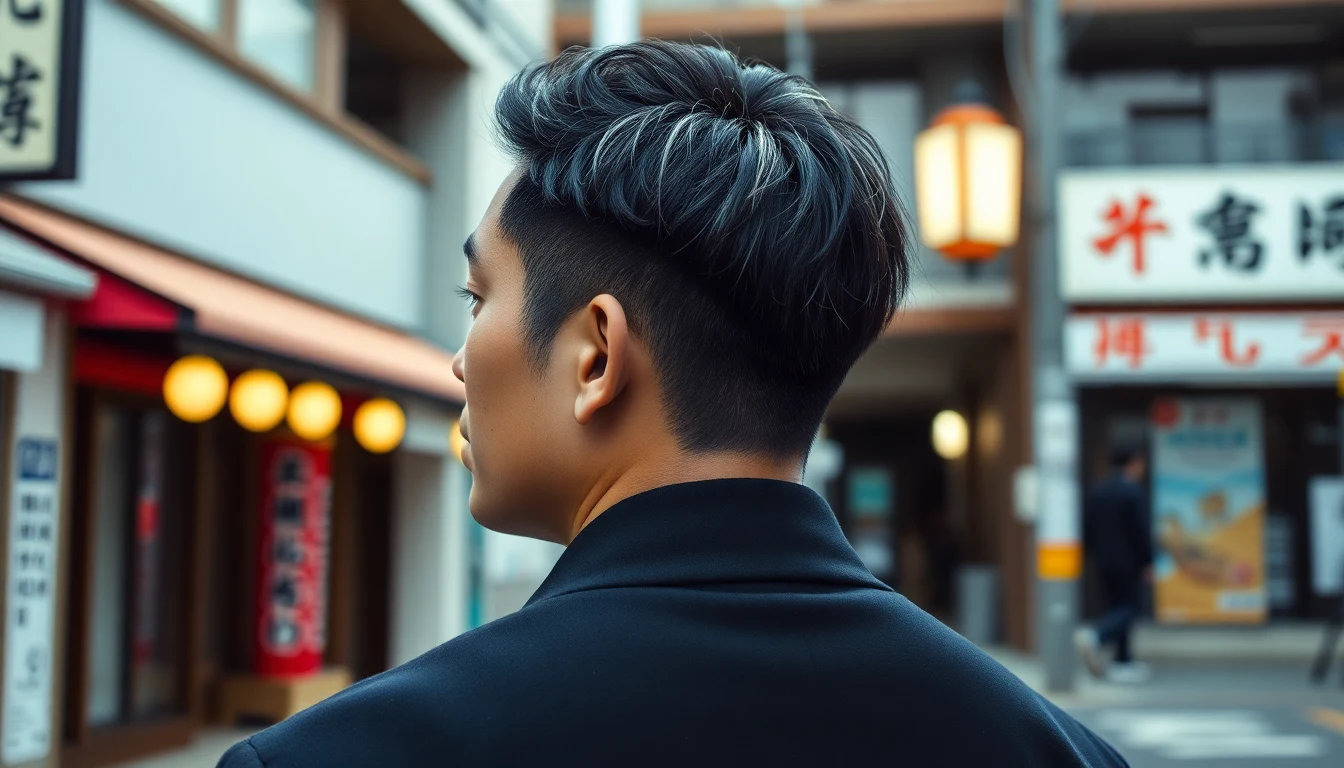
Best for: Every face shape. This is the universal flattering cut. The part creates an asymmetric line that works with oval, round, square, and oblong faces alike. Adjust the part ratio to fine-tune: deeper parts (2:8) suit round faces, standard parts (3:7) work everywhere.
How to ask your barber: “Classic side part, 3:7 ratio. 3 inches on the long side, tapered on the short side. Clean part line, razor-finished edges.” In Japanese: saido paato, san-nana no bunme (サイドパート、3:7の分目).
Maintenance level: Low. Blow dry into the part, apply a small amount of pomade or wax, comb into place. Two minutes. Trim every 4 weeks.
Product recommendation: A natural-shine pomade for the polished look, or a matte wax for a more casual finish. Shiseido Uno Fiber Neo is the go-to for Japanese salarymen; it provides hold without looking “done.”
9. Curtain Bangs (カーテンバング)
The kaaten bangu (カーテンバング) is a center-parted style where the fringe is layered to fall on both sides of the face, framing the forehead like curtains. It’s been a consistent presence in Japanese fashion magazines and anime-adjacent aesthetics. The key distinction from a simple center part is the layering; the fringe pieces are shorter at the center and gradually longer toward the sides, creating a soft V-shape over the forehead.
On fine Japanese hair, this style requires careful layering to avoid looking limp. The best versions have enough internal texture to create natural separation between the curtain pieces without visible product buildup.
Best for: Oval, heart, and diamond face shapes. The fringe frames the forehead without fully covering it, which flatters narrower faces. Round faces can work with this if the curtain pieces are kept longer (past the cheekbones) to create a lengthening effect.
How to ask your barber: “Curtain bangs. Center part, fringe layered shorter in the middle and longer at the sides. I want it to frame my face in a soft V-shape, not hang straight down like a flat curtain.” In Japanese: kaaten bangu (カーテンバング).
Maintenance level: Medium. Requires blow drying the fringe outward with a round brush to create the curtain shape. Without heat styling, fine hair falls flat against the forehead instead of separating. Trim every 3 to 4 weeks to maintain the layered fringe shape.
Product recommendation: A volumizing spray at the roots before blow drying, then a light wax on the tips for separation. Avoid heavy products; they’ll collapse the curtain shape within an hour on fine hair.
10. Soft Fringe (ソフトバング)
This is the Japanese counterpart to K-pop inspired styles, but softer and less sculpted. The sofuto bangu (ソフトバング) features a medium-length top (3 to 4 inches) with the fringe falling gently onto the forehead in a relaxed, slightly off-center direction. No hard lines, no dramatic volume. Just clean, natural-looking hair that frames the face without demanding attention.
I see this most often on Japanese university students and creative professionals. It’s the “I look put-together but I’m not trying too hard” cut, and it’s harder to get right than it looks. The difference between a good soft fringe and a bad one is entirely in the layering and the blow dry.
Best for: Round and heart face shapes. The soft downward angle of the fringe creates a slimming vertical line, and the relaxed styling softens sharp features.
How to ask your barber: “Soft fringe. 3 to 4 inches on top, fringe falling naturally to one side, not slicked or pushed back. Light layers, nothing heavy or blunt.” In Japanese: sofuto bangu (ソフトバング).
Maintenance level: Low to Medium. Blow drying with fingers (no brush) for 2 to 3 minutes is enough. The style is intentionally relaxed, so precision isn’t the goal. Trim every 4 weeks.
Product recommendation: A light-hold natural-finish wax. Gatsby Moving Rubber (pink tin, “Spiky Edge”) for subtle hold that doesn’t look like you’re wearing product. Less is more with this cut.
11. Messy Textured Medium Length (マッシュウルフ)
The masshu urufu (マッシュウルフ) sits between a mush (mash) cut and a wolf cut, combining medium-length hair (4 to 5 inches) with heavy razor texturizing throughout. The result is a deliberately tousled, lived-in look where individual strands separate and move independently. This is the cut that defined the Harajuku street style look for a decade.
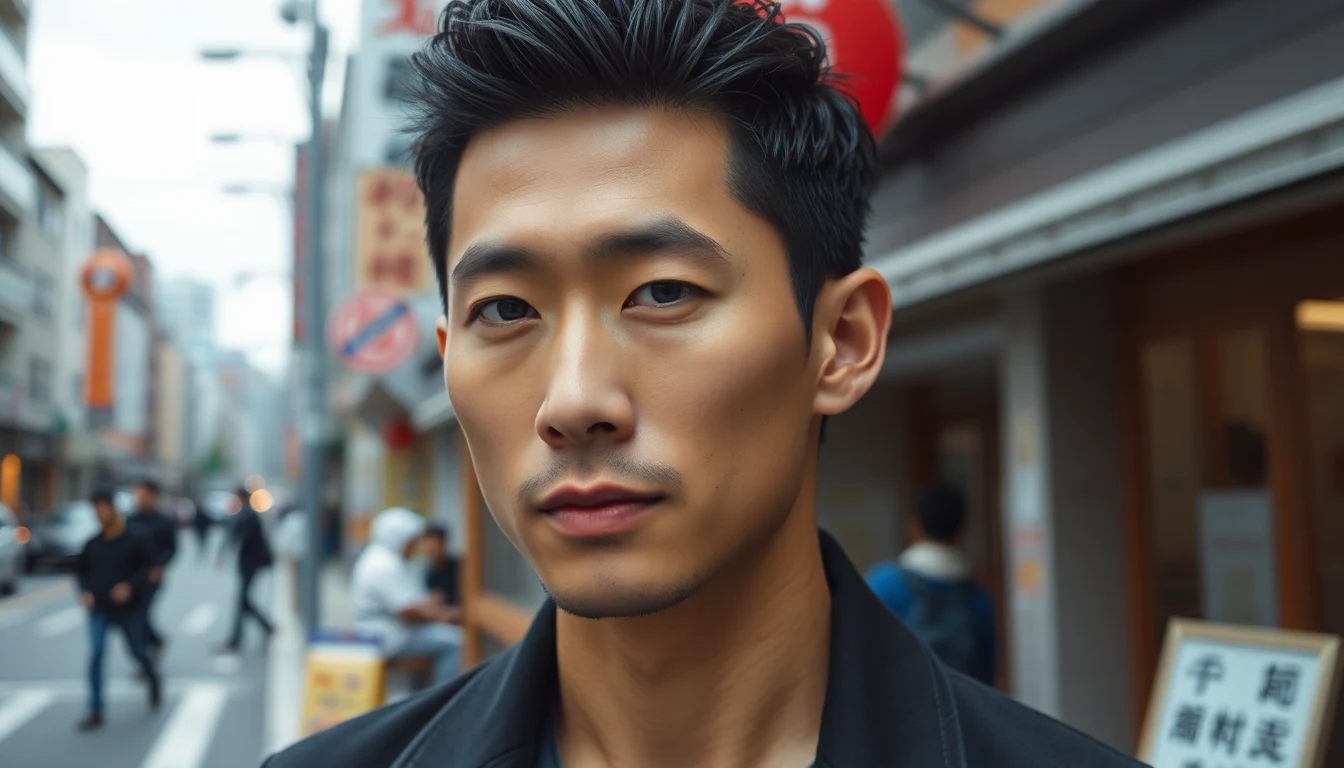
Japanese barbers treat this cut like sculpture. The razor work creates varying strand lengths within the same section, so the hair moves differently depending on how it falls. On fine Japanese hair, this creates the volume and dimension that thicker hair types get naturally.
Best for: Oval and oblong faces. The width and movement add fullness to narrower faces. Square faces work too if the texture is kept soft rather than spiky. When it comes to japanese hairstyles for men, technique matters most.
How to ask your barber: “Messy textured medium length, about 4 to 5 inches all over. Heavy razor texturizing. I want it to look tousled and layered, not uniform or neat.” Show a reference photo; this style is hard to communicate in words alone. In Japanese: masshu urufu (マッシュウルフ) or natyuraru masshu (ナチュラルマッシュ). When it comes to japanese hairstyles for men, technique matters most.
Maintenance level: High. Daily blow drying and product are required. Without them, fine hair collapses into a flat, shapeless mop. You also need to wash every 2 to 3 days to prevent product buildup from weighing the texture down. Trim every 3 to 4 weeks.
Product recommendation: A texturizing spray (sea salt spray works) on damp hair, blow dry with fingers for volume, then finish with a matte clay for separation. Lipps L08 Matt Hard Wax is the Japanese salon standard for this cut.
12. Classic Short Back and Sides (ショートバック&サイド)
The Japanese take on the British classic. Short back and sides, slightly longer on top (1.5 to 2.5 inches), graduated blending from the sides into the top. This is the most traditional Western-influenced cut on the list, and Japanese barbers execute it with a precision that rivals Jermyn Street. The straight razor edge-up around the ears and neckline is where the Japanese interpretation shines.
If you want a high fade haircut incorporated, Japanese barbers can accommodate, but the traditional version uses graduated clipper work rather than a stark fade line. The blending tends to be more seamless, reflecting the Japanese preference for subtle transitions.
Best for: Every face shape. Like the side part, this is universally flattering. The proportions can be adjusted; more length on top for round faces, tighter sides for square faces.
How to ask your barber: “Short back and sides. #2 at the bottom, graduated blend up to 2 inches on top. Clean around the ears and neckline with a razor. No hard lines.” In Japanese: shooto bakku ando saido (ショートバック&サイド).
Maintenance level: Low. Minimal product needed. A touch of matte wax or nothing at all. This cut looks clean even without styling. Trim every 3 to 4 weeks to maintain the graduated blend. A good pair of clippers for fades can handle the sides between professional cuts if you’re comfortable doing touch-ups at home.
Product recommendation: Optional. If you style the top, a natural-finish pomade or light wax. For a completely no-product look, just blow dry and go.
What to Tell Your Barber
Communication is the difference between getting the cut you want and walking out disappointed. Here’s a quick-reference table you can bring to your appointment. If your barber speaks Japanese, use the Japanese column. If not, the English script and a reference photo will get you 90% of the way there.
| Style | What to Say (English) | Japanese Term | Key Details to Mention | Show a Photo Of |
|---|---|---|---|---|
| Textured Crop | “Textured crop, 2-3 inches, razored fringe forward” | テクスチャークロップ | Choppy, not blunt fringe | Short textured crop with forward fringe |
| Two Block | “Two block, #3 sides, 4 inches top, disconnected” | ツーブロック | Texturize the top section | Two block with textured top layer |
| Wolf Cut | “Wolf cut, short crown, long nape, shaggy layers” | ウルフカット | Intentionally shaggy, not grown out | Layered wolf cut with movement |
| Pompadour | “Pompadour, 4-5 inches top, tapered sides” | ポンパドール | Interior texturizing for fine hair | Modern Japanese pompadour with volume |
| Buzz / Crew | “Buzz #2 all over” or “Crew cut, #1 sides” | 坊主 / クルーカット | Uniform or graduated blend | Clean military-style buzz or crew |
| Side Part | “Side part, 3:7 ratio, 3 inches long side, tapered” | サイドパート | Specify the part ratio | Classic side part with clean line |
| Curtain Bangs | “Center part, fringe layered in a V-shape” | カーテンバング | Shorter center, longer sides | Curtain bangs with natural separation |
| Messy Textured | “Medium length, 4-5 inches, heavy razor texture” | マッシュウルフ | Show a photo; hard to describe | Tousled medium-length Japanese cut |
Pro tip from my Tokyo barbershop visits: Japanese barbers respond well to specificity. Instead of saying “I want it shorter,” say “Take off half an inch from the top and one inch from the sides.” Numbers translate across language barriers better than adjectives.
Japanese Hairstyles by Face Shape
Not every style works for every face. Here’s a quick reference so you can narrow down your options before you even walk into the barbershop.
| Face Shape | Best Styles | Approach | Avoid |
|---|---|---|---|
| Oval | Textured Crop, Two Block, Side Part, Curtain Bangs, Short Back and Sides | Almost anything works. Oval faces have balanced proportions. | Nothing specifically; just avoid extremes (very long on top with very short sides can elongate an already proportional face). |
| Round | Pompadour, Textured Crop, Soft Fringe, Undercut | Add height on top, keep sides tight. Vertical volume slims the face. | Caesar Cut (horizontal fringe adds width). Avoid styles that add volume at the sides. |
| Square | Textured Crop, Side Part, Short Back and Sides, Soft Fringe | Softer textures on top balance strong jawlines. Graduated blends over hard disconnects. | Extremely sharp undercuts or hard-line disconnects that echo the angular jaw. |
| Oblong | Wolf Cut, Messy Textured, Curtain Bangs, Caesar Cut | Add width at the sides, cover part of the forehead. Avoid too much height on top. | Pompadour or any style that adds vertical height. Keep volume horizontal, not vertical. |
Best Products for Japanese Hair
Japanese hair product brands understand fine, straight hair better than anyone. These are the products that show up in every tokoya and salon I’ve visited in Japan, and they’re available internationally through most Asian beauty retailers.
Waxes and Clays
- Gatsby Moving Rubber (ギャツビー ムービングラバー): The most iconic Japanese men’s hair product. Comes in multiple colored tins, each with a different hold and finish. Grey (“Grunge Mat”) for strong matte hold. Pink (“Spiky Edge”) for lighter hold with natural finish. Purple (“Wild Shake”) for maximum hold. Green (“Air Rise”) for root lift on fine hair.
- Lipps L08 Matt Hard Wax: The professional-grade option used in Tokyo salons. Stronger hold than Gatsby, completely matte finish. Best for textured crops, undercuts, and messy styles that need to stay put all day.
- Shiseido Uno Fiber Neo: A fiber wax with flexible hold and slight sheen. The salaryman’s choice for side parts and pompadours that need to look polished without looking stiff.
Pre-Styling Products
- Volumizing spray or mousse: Essential for fine Japanese hair. Apply to damp roots before blow drying to create the lift that most of these styles require.
- Sea salt spray: For the messy textured styles. Creates natural-looking grit and separation on clean hair that’s too slippery for wax alone.
- Heat protectant: Non-negotiable if you’re blow drying daily. Japanese hair is fine and susceptible to heat damage over time.
Finishing Products
- Light-hold hairspray: For pompadours and side parts that need to hold shape through a full day. Look for flexible-hold formulas that don’t create a crunchy shell.
- Hair oil (lightweight): A drop or two smoothed over the finished style adds shine and tames flyaways without adding weight. Shiseido Tsubaki oil is a Japanese staple for this.
One rule for Japanese hair: less product is more. Fine strands get weighed down fast. Start with a pea-sized amount, add more only if needed. If your hair looks greasy or flat after styling, you’ve used too much.
Frequently Asked Questions About Japanese Hairstyles for Men
What is the most popular Japanese hairstyle for men in 2026?
The textured crop is the most popular everyday Japanese men’s hairstyle in 2026. It suits Japan’s straight, fine hair texture, needs minimal daily styling, and works in both casual and professional settings. The wolf cut is the most popular trend-driven style, especially among younger men influenced by manga aesthetics and street fashion.
Can non-Japanese men get Japanese hairstyles?
Yes. Most Japanese hairstyles translate well across hair types, though the styling approach changes. Japanese cuts are designed for straight, fine-to-medium hair, so men with curlier or thicker textures may need a flat iron or smoothing product to achieve the same silhouette. A barber experienced with Asian-inspired cuts can adapt any of these styles to your texture.
What is the difference between Japanese and Korean men’s hairstyles?
Korean styles lean toward softer, polished looks with volume and movement (comma hair, perms, center parts). Japanese styles favor texture, razored edges, and deliberate imperfection. The technical difference comes down to hair texture: Korean hair is typically thicker per strand, while Japanese hair tends to be finer with less natural volume. That changes the products, techniques, and maintenance required. Check out our Korean haircuts guide for a full comparison.
How often should I visit the barber for a Japanese hairstyle?
Every 3 to 5 weeks depending on the style. Short cuts like the buzz cut or caesar can go 5 weeks. Textured cuts and undercuts lose their shape faster and need attention every 3 weeks. Japanese hair grows at roughly 6 inches per year, and fine hair shows overgrowth quickly because there’s less bulk to mask uneven growth.
What products do Japanese men actually use for styling?
Japanese men favor lightweight waxes and clays over heavy pomades. The top sellers are Gatsby Moving Rubber (multiple formulas for different hold levels), Lipps L08 Matt Hard Wax, and Shiseido Uno Fiber Neo. These products are designed specifically for fine, straight Asian hair and provide texture without weighing it down. Heavy American pomades and gels are not standard in Japanese grooming.
Do Japanese hairstyles work in professional settings?
Most of the 12 styles in this guide are workplace-appropriate. Japanese business culture values neat grooming, and styles like the side part, textured crop, short back and sides, and caesar cut are standard in corporate Tokyo. The wolf cut and messy textured medium length read more casual and suit creative or relaxed office environments better.
Getting Your Japanese Haircut Right
Japanese hairstyling comes down to two things: precise cutting technique and the right products for fine, straight hair. The best cut in the world falls apart if you’re using heavy pomade on hair that needs a lightweight matte wax. And the best product can’t save a blunt, untexturized cut on hair that needs razored layers to create movement.
If you’re trying a Japanese-inspired cut for the first time, start with the textured crop or the classic short back and sides. Both are low-maintenance, universally flattering, and give you a feel for how Japanese cutting techniques work with your hair. Once you’re comfortable with the styling routine, move toward the wolf cut or messy textured styles for something more expressive.
Bring reference photos. Specify measurements. And if you find a barber who understands razor texturizing, keep going back. That’s the foundation of every great Japanese haircut.
Further reading: For research-backed grooming advice, see Healthline Men’s Health.
Frequently Asked Questions
What are the most popular Japanese hairstyles for men right now?
Japanese hairstyles for men range from classic short cuts and side-parts to modern trends like the wolf cut and textured crop. The textured crop is particularly popular in 2026, featuring a voluminous, tousled top with clean, tapered sides that works well with natural Asian hair texture.
How do I communicate what I want at a Japanese barbershop (tokoya)?
When visiting a traditional Japanese barbershop, it helps to bring reference photos of your desired style and use simple phrases like ‘sukkiri’ (clean/neat) or ‘texture wo tsukete’ (add texture). Japanese barbers are highly skilled and appreciate visual examples, which bridges any language barriers effectively.
What hair products do Japanese men use to style their hair?
Japanese men commonly use products like Gatsby Moving Rubber, Lipps L08 Matt Hard Wax, and Shiseido Uno Fiber Neo for styling. These products are specifically formulated to work with Asian hair texture and offer varying levels of hold and finish, from matte to natural shine.
Which Japanese men’s haircuts work best for my face shape?
The article includes a face shape guide to help you find your ideal cut: round faces suit longer crops with height, square faces benefit from textured styles that soften angles, and oval faces can pull off nearly any Japanese men’s hairstyle. Consulting with your barber about your specific face shape ensures the best customized result.