If you want to master latino men haircuts, this guide covers everything you need to know.
If you want to master latino men haircuts, this guide covers everything you need to know. Last updated: February 2026 | Written by Carlos Espinoza, Latino Grooming Editor
Let me tell you something. Walk into any barberia (barbershop) from San Antonio to East LA, and you will see the same scene playing out: a guy in the chair, phone out, showing his barber a picture he screenshotted at 2 AM. “I want this, but like, a little different.” The barber nods, fires up the clippers, and 30 minutes later that man walks out feeling like a whole new person. That transformation? That is what Latino barbershop culture is about. It is not just a haircut. It is identity.
I have been writing about latino men haircuts for three years now, and the one thing that frustrates me is how invisible our styles are in mainstream grooming media. Every “men’s haircut guide” out there covers the same undercuts and quiffs designed for medium-density, straight European hair. Meanwhile, we are over here with some of the thickest, most versatile hair on the planet, a barbershop tradition that runs generations deep, and styles that entire regions claim as their own. Nobody is writing that guide. Until now.
This is the complete guide to haircuts for Latino men. I am covering the Edgar, the Mexican mullet, the slick back, the low fade comb over, the burst fade, the textured crop, the pompadour, and more. I am breaking down the cultural context behind each style, teaching you how to communicate with your barber in English and Spanish, and giving you the product recommendations that actually work on thick, coarse hair. Whether you are prepping for a quinceañera (a girl’s 15th birthday celebration) or just want to look fresh for the weekend, this is your playbook.
Understanding Latino Hair: Why Generic Guides Fail You
Before we get into specific cuts, let me explain why most mainstream haircut guides do not work for us. Latino hair, specifically the thick, straight-to-wavy texture that is common in Mexican, Central American, and many South American communities, has characteristics that change how cuts look and behave. (We recommend this JOHNNY B. Mode Professional Hair Styling.)
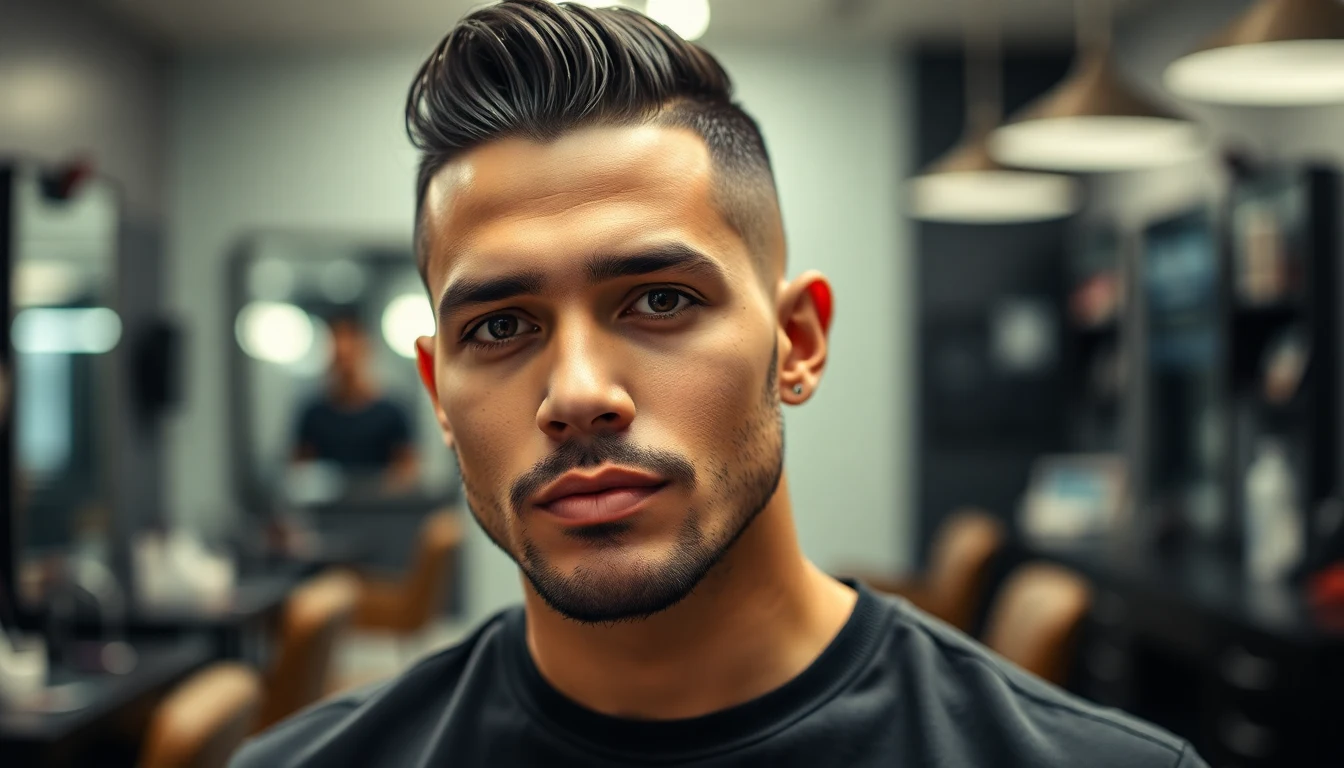
Our hair is typically high-density (lots of individual strands packed together), thick in diameter (each strand is wider than average), and tends to grow straight to slightly wavy (Type 1B to 2A on the hair chart). That combination gives us incredible volume and hold, but it also means lightweight products fall flat, thin fades grow out fast, and some styles that look great on fine hair just sit flat on ours.
And here is the thing most guides miss: Latino hair is not one thing. My hair as a Mexican-American guy in San Antonio is different from my Dominican friend’s curly texture, which is different from my Colombian coworker’s wavy pattern. The diversity within our community is massive. So while this guide defaults to the thick, straight-to-coarse type that most readers searching “latino men haircuts” are working with, I will flag where curly and wavy variations come into play.
Quick Hair Type Reference
| Hair Type | Common In | Key Traits | Best Styles |
|---|---|---|---|
| Thick, straight, coarse (1B-1C) | Mexican, Central American, many South American | Heavy, holds shape well, resists movement | Edgar, slick back, comb over, pompadour |
| Straight-to-wavy (1C-2B) | Mexican, Central American, Colombian | Some natural movement, frizz in humidity | Textured crop, messy quiff, taper fade |
| Wavy-to-curly (2C-3B) | Caribbean Latino, Afro-Latino, some South American | Defined curls, needs moisture, shrinkage | Curly top fade, blowout, defined curls |
| Curly-to-coily (3C-4A) | Afro-Latino, Dominican, Puerto Rican | Tight curls, dryness, needs heavy moisture | High top fade, twist out, curl sponge styles |
The 10 Essential Latino Men Haircuts
These are the cuts that define our barbershop culture right now. I have organized them from the most iconic to the most versatile, with full style breakdowns, barber instructions, and product picks for each one.
1. The Edgar (El Edgar)
Let me get this out of the way: the Edgar gets clowned online by people who have never set foot in a barberia on the South Side. But in the community? This cut is a full-on cultural movement. It started blowing up around 2019 through TikTok, but the style (straight-across fringe with a fade) has roots in Mexican-American barbershop culture that go back further than any meme.
The classic Edgar features a blunt, straight-across fringe that sits at or just above the eyebrows, paired with a high fade or skin fade on the sides. The contrast between the heavy top and the clean sides is what gives it that signature look. It works best on thick, straight hair because you need density in the fringe for that solid, clean line.
Who it works for: Oval, square, and diamond face shapes. Thick, straight hair (Type 1B-1C). Best on younger guys (teens to mid-20s), though I have seen older men pull it off with a textured variation.
Variations:
- Classic Edgar: Blunt straight fringe, high skin fade, sharp lineup
- Textured Edgar: Choppy, layered fringe with movement instead of a blunt line
- Curly Edgar: Wavy or curly hair falling forward naturally (works on 2A-3B)
- Edgar with designs: Razor lines, geometric patterns, or stars shaved into the fade
- Low-fade Edgar: Softer transition for a less dramatic contrast
For a deep dive into every variation, check out our complete Edgar haircut guide.
How to ask your barber: “I want an Edgar with a [high/mid/low] fade. Keep the fringe straight across, just above my eyebrows. Skin fade on the sides, clean lineup.”
In Spanish: “Quiero un corte Edgar con degradado [alto/medio/bajo]. El fleco recto, justo arriba de las cejas. Degradado a piel en los lados, con delineado limpio.”
Best products: Elegance Hair Gel for a structured, locked-in fringe. Suavecito Firme Hold if you prefer pomade over gel. For the textured version, use a matte clay like Pacinos Matte Paste. (We recommend this Suavecito Pomade Original Hold For Men.)
2. Low Fade Comb Over
If the Edgar is the cut that announces itself when you walk in the room, the low fade comb over is the one that earns you a promotion on Monday and compliments at the family cookout on Saturday. This is the most versatile cut in the Latino hair playbook, and there is a reason it has stayed popular for decades.
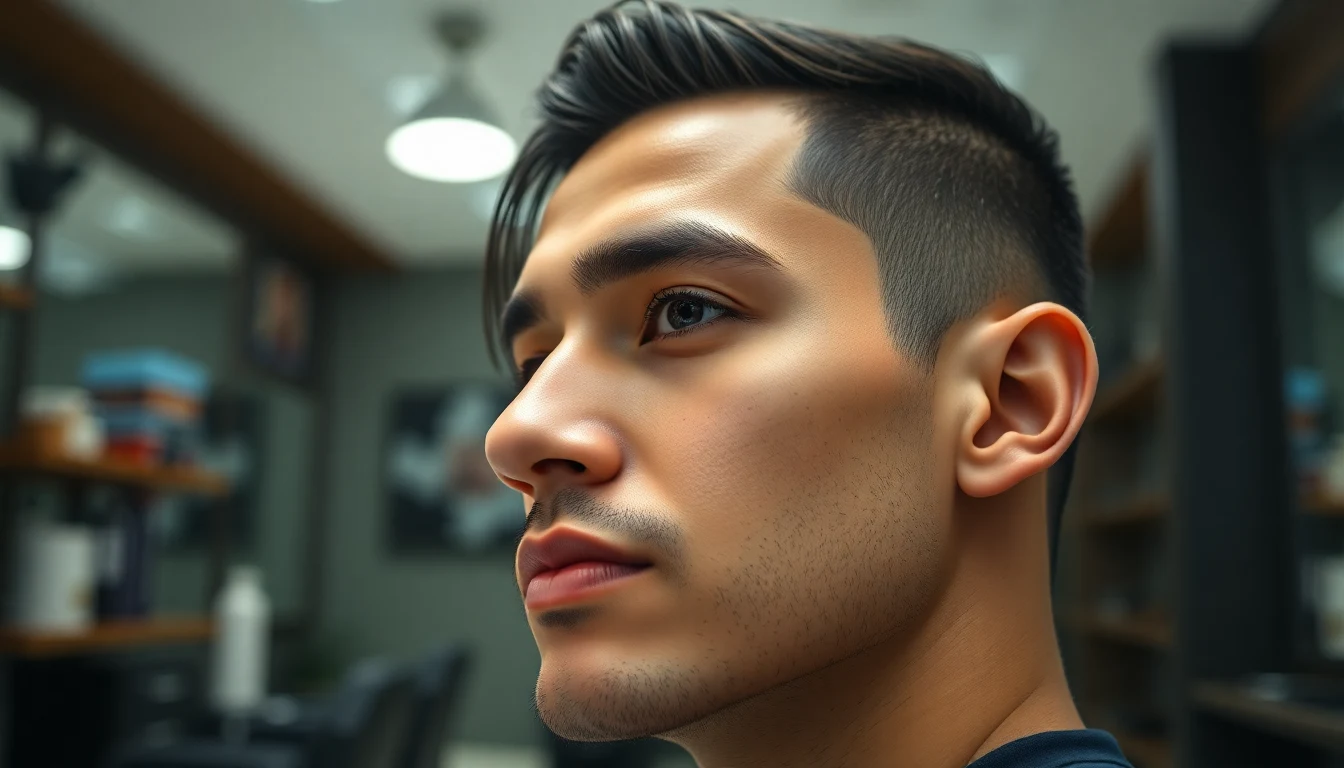
The setup: a low fade that starts just above the ear and gradually blends into 2 to 4 inches of length on top, swept to one side. You can add a hard part (a shaved line separating the side from the top) for extra definition, or keep it soft for a more natural look. On thick hair, this cut has incredible structure because the density on top holds the comb over shape all day.
Who it works for: Every face shape. Every age. Every setting from the office to the club. This is genuinely the most universal cut on the list.
Variations:
- Classic comb over with hard part: Shaved line for crisp separation, high shine pomade
- Textured comb over: Finger-styled with matte product for a casual, lived-in look
- Comb over with mid fade: Higher fade for more contrast and a more modern feel
- Long comb over: 4-5 inches on top for dramatic sweep and volume
How to ask your barber: “Low fade, comb over on top. Leave about [2-3-4] inches on top. I want a hard part on the [left/right] side. Blend the sides into the top gradually.”
In Spanish: “Degradado bajo, peinado hacia un lado arriba. Deja como [2-3-4] pulgadas arriba. Quiero una raya marcada del lado [izquierdo/derecho]. Que la transicion sea gradual.”
Best products: Suavecito Original Hold for a natural shine and medium hold. Layrite Superhold for all-day lock-in when humidity is not playing around.
3. The Mexican Mullet (Takuache Cut)
The takuache (opossum) haircut is what happens when ranch culture meets modern barbershop artistry. Named after the “takuache cuh” meme culture (think lowered trucks, botas picudas, and regional Mexican music), this modern mullet has crossed over into the mainstream Gen Z mullet revival while keeping its Mexican-American identity intact.
The structure: short to medium on the sides with a taper fade, textured and voluminous on top, and long in the back. The back can range from a subtle extension past the collar to a full-on party-length mullet. On thick Latino hair, the back has incredible body and movement that thinner hair types cannot replicate. Mastering latino men haircuts takes practice but delivers great results.
Who it works for: Oval and oblong face shapes. Any hair texture from straight to wavy. Best for guys who are comfortable making a statement. This is not a “blend in” cut.
Variations: Mastering latino men haircuts takes practice but delivers great results.
- Classic takuache: Short sides, voluminous top, medium-length back
- Mullet with skin fade: Dramatic contrast between clean sides and the long back
- Shag mullet: More layered and textured throughout, less structured
- Curly mullet: Lets natural wave or curl run wild in the back
How to ask your barber: “I want a modern mullet. Taper the sides, leave volume on top, and keep the back growing out. Texture the top with point-cutting so it has movement.”
In Spanish: “Quiero un mullet moderno. Desvanecido en los lados, volumen arriba, y que la parte de atras quede larga. Texturiza arriba con corte de punta para que tenga movimiento.”
Best products: Sea salt texturizing spray for natural, lived-in texture. Pacinos Matte Paste for hold without shine. Blow-dry the top with your head flipped forward for maximum volume.
4. The Slick Back
The slick back is the OG of Latino men haircuts. Before the Edgar, before the takuache, before Instagram barbershop reels, there was the Pachuco slick back. My tio (uncle) has been rocking some version of this since the 1980s, and his dad before him was doing it in the 1950s. The style has roots in the Chicano zoot suit era of the 1940s, when Mexican-American men in Los Angeles turned sharp dressing and slicked hair into a statement of cultural pride and resistance.
The modern slick back keeps that heritage alive while updating it for 2026. The basics: hair combed straight back from the forehead, held in place with a strong-hold pomade, with a mid fade or low fade on the sides. Thick hair is actually perfect for this cut because you get natural volume and lift that fine hair needs a blow dryer to fake.
Who it works for: Square, oval, and oblong face shapes. Thick, straight hair (1B-2A). Looks equally sharp on a 22-year-old heading to the club and a 40-year-old walking into a business meeting.
Variations:
- High-shine slick back: Classic pomade finish, Pachuco-inspired, formal
- Matte slick back: Same shape, zero shine, more modern and casual
- Slick back with skin fade: Maximum contrast between the top and sides
- Slick back with taper: Softer, more conservative blend for professional settings
- Slick back undercut: Disconnected sides for a bolder, high-fashion look
How to ask your barber: “Slick back on top, [mid/low] fade on the sides. Leave about 4 to 5 inches on top so I have enough length to comb back. Keep it blended, not disconnected.” For more guidance, American Academy of Dermatology provides expert resources on skin and hair care.
In Spanish: “Peinado para atras arriba, degradado [medio/bajo] en los lados. Deja como 4 a 5 pulgadas arriba para poder peinarlo. Que la transicion sea bien mezclada.”
Best products: Suavecito Firme Hold Pomade is the standard for a reason. For a matte finish, Reuzel Blue Strong Hold delivers all-day structure without the shine. My tio still uses Tres Flores Brilliantine for that old-school high-gloss finish, and honestly? The smell alone is worth trying once.
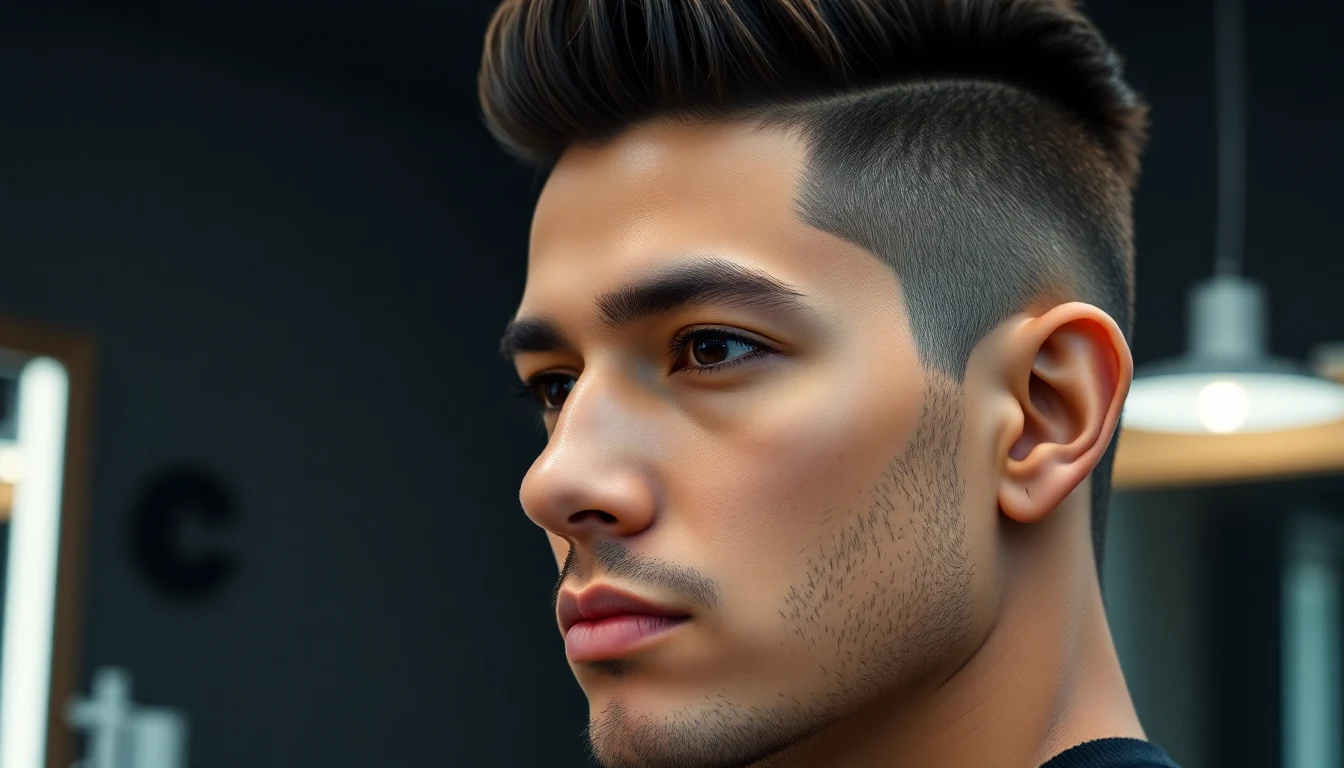
5. Textured Crop with Fade
The textured crop is the low-maintenance workhorse of modern Latino men haircuts. It is short enough that you do not need 10 minutes of styling every morning, but it has enough character to look intentional instead of boring. Think of it as the Edgar’s laid-back cousin who does not need the attention but still looks good.
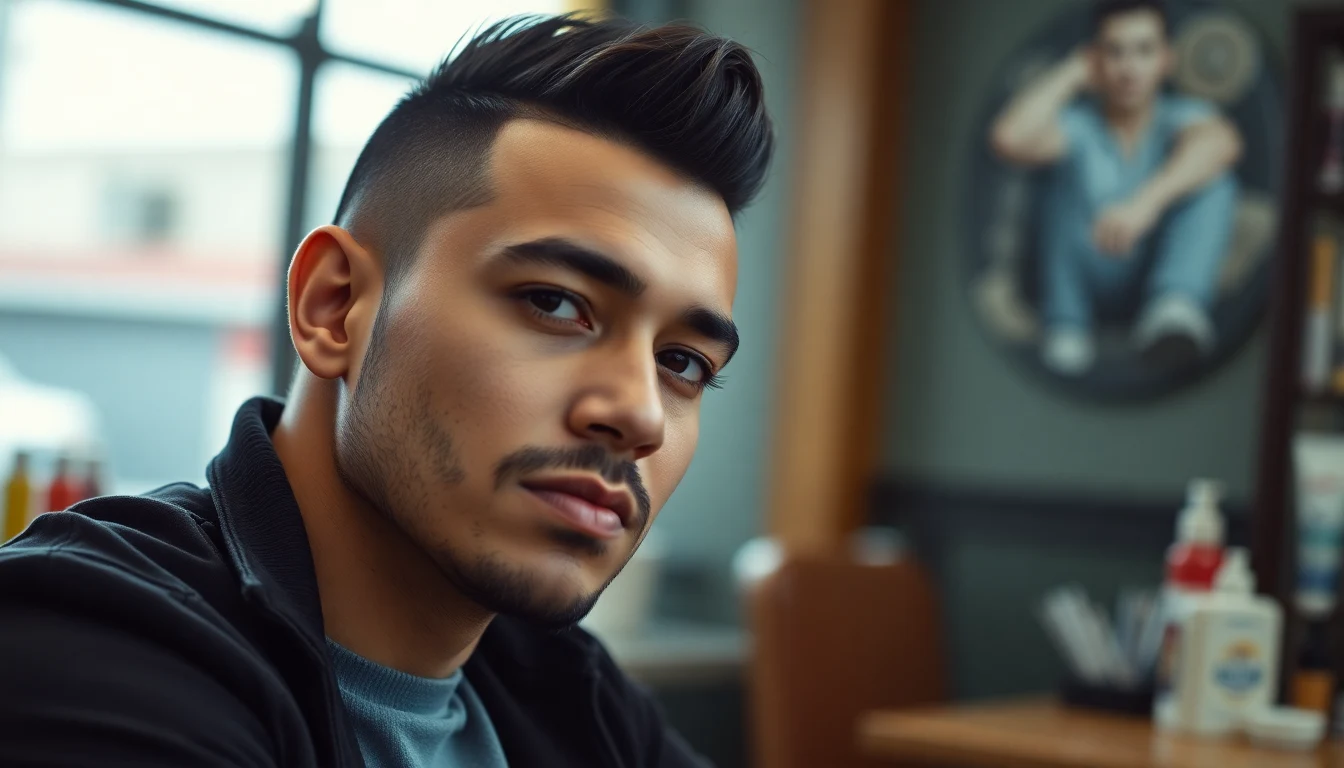
The cut: short, choppy, forward-styled hair on top (usually 1.5 to 2.5 inches) with a fade on the sides. The texture comes from point-cutting or razor work that removes weight and creates movement in the hair. On thick hair, this is crucial because without texturizing, a short crop can look like a helmet.
Who it works for: Round, oval, and square face shapes. Any hair texture. Great for guys who want a good-looking cut without daily maintenance. Also excellent for growing out an Edgar if you want to transition away from the blunt fringe.
Variations:
- French crop: Slightly longer fringe with a clean, blunt line (Edgar-adjacent)
- Messy crop: Intentionally tousled, finger-styled, casual
- Textured crop with skin fade: Maximum contrast, sharp and modern
- Crop with fringe: Longer pieces falling over the forehead for a softer look
How to ask your barber: “Textured crop on top, about 2 inches. Fade the sides [low/mid/high]. I want the top point-cut for texture, not blunt. Style it forward.”
In Spanish: “Corte texturizado arriba, como 2 pulgadas. Degradado [bajo/medio/alto] en los lados. Que el de arriba sea con corte de punta para textura, no recto. Peinado hacia adelante.”
Best products: Pacinos Matte Paste for hold with a natural, matte finish. Work a dime-sized amount through towel-dried hair, push it forward and to the side, and you are done in under two minutes.
6. Burst Fade
The burst fade is one of those cuts that makes people do a double-take. Instead of a straight horizontal fade line, the fade curves in a semicircle behind the ear, creating a “burst” or sunburst pattern. It adds serious visual interest to the side profile, which is why it is a favorite in barbershops where artistry is the standard, not the exception.
On thick Latino hair, the burst fade has incredible definition because the density creates a sharp contrast between the faded area and the longer hair on top. It pairs well with a mohawk, a faux hawk, or longer textured hair on top.
Who it works for: Oval and diamond face shapes. Works on straight, wavy, or curly hair. Best for guys who want something more distinctive than a standard taper.
Variations:
- Burst fade with faux hawk: Longer hair on top styled upward
- Burst fade with mullet: The fade curves into a longer back section
- Burst fade with design: Razor patterns carved into the faded area
- Low burst fade: Subtler curve for a less dramatic look
How to ask your barber: “Burst fade around the ears. Keep the hair longer on top and blend the fade in a curve behind my ear. I want it to taper down to skin behind the ear.”
In Spanish: “Degradado circular alrededor de las orejas. Deja el pelo largo arriba y que el degradado haga una curva detras de la oreja. Que baje a piel detras de la oreja.”
Best products: This depends on what you are doing on top. Suavecito Firme Hold for a faux hawk. Matte clay for textured, casual looks.
7. The Pompadour
The pompadour is the big brother of the slick back. Same DNA, more volume, more drama. While the slick back lays flat against the head, the pompadour lifts the front section up and back, creating height and shape that demands a second look. It has the same Chicano/Pachuco heritage as the slick back, and it is one of the most flattering cuts you can get on thick hair because that density gives you natural volume that other guys need to fake with blow dryers and volumizing spray.
Who it works for: Round, square, and heart-shaped faces (the height elongates the face). Thick, straight-to-wavy hair. Requires 4 to 6 inches on top minimum. Understanding latino men haircuts is key to a great grooming routine.
Variations: Understanding latino men haircuts is key to a great grooming routine.
- Classic pompadour: High volume, high shine, rockabilly meets Pachuco
- Modern pompadour: Lower volume, matte or low-shine finish, paired with a fade
- Textured pompadour: Loose, finger-styled volume instead of a slicked structure
- Disconnected pompadour: Undercut sides with no blend into the top
How to ask your barber: “Pompadour on top, leave 5 to 6 inches. [Low/mid] fade on the sides. I want to be able to blow-dry it up and back with some volume.”
In Spanish: “Pompadour arriba, deja como 5 a 6 pulgadas. Degradado [bajo/medio] en los lados. Quiero poder secarlo con secadora hacia arriba y atras con volumen.”
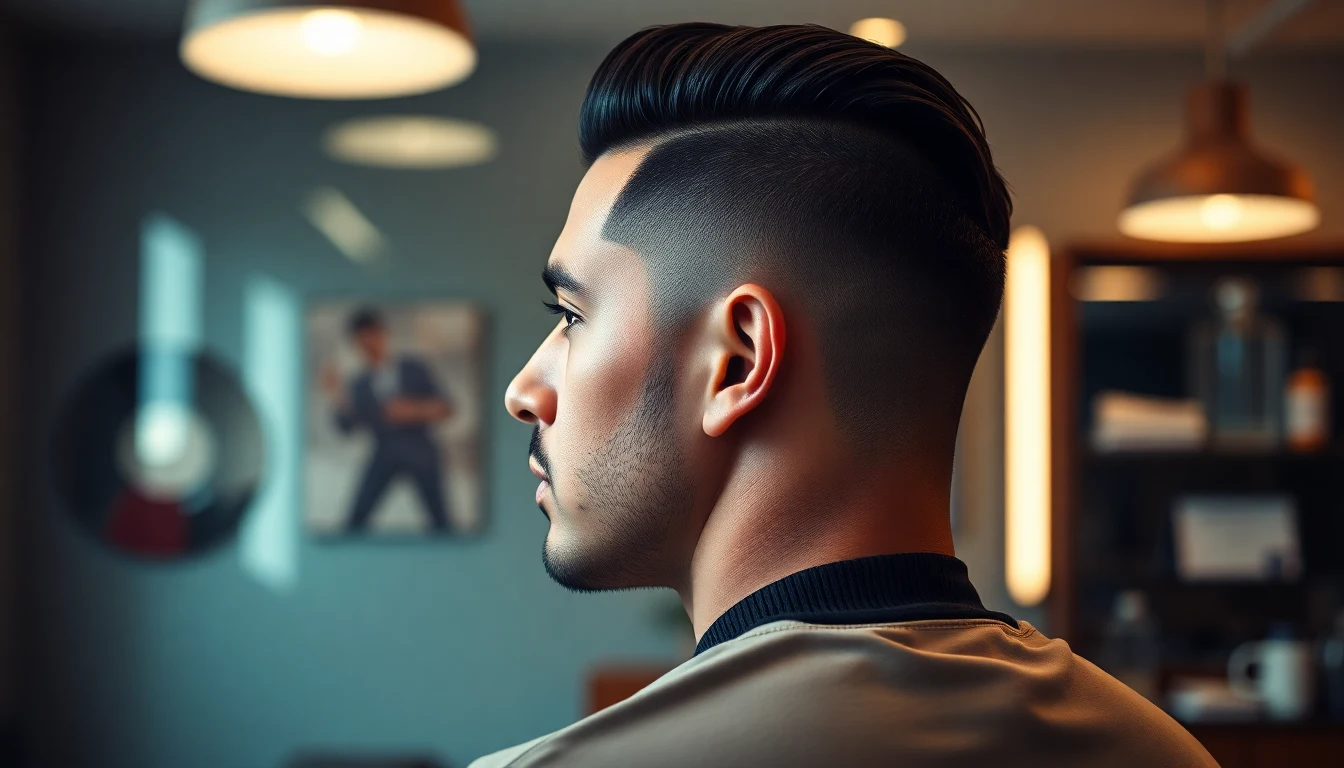
Best products: Blow-dry with a round brush for volume first. Then lock it in with Suavecito Firme Hold or Layrite Superhold. For a matte finish, Baxter of California Clay Pomade gives hold without the wet look.
8. The Drop Fade
The drop fade takes the standard fade and drops the fade line lower behind the head, following the natural curve of the skull. The result is a fade that is higher near the temples and lower at the back, creating a more natural, contoured look. It is incredibly popular in Latino barbershops because it flatters the head shape and works with just about any style on top.
Who it works for: Every face shape. Especially good for guys with rounder head shapes because it adds definition to the back of the head.
Variations:
- Drop fade with comb over: The everyday professional go-to
- Drop fade with textured top: Casual, easy to maintain
- Drop skin fade: Clean to the skin for maximum contrast
- Drop fade with curls: Lets natural texture sit on top while the sides stay clean
How to ask your barber: “Drop fade on the sides and back. Start higher at the temple and drop the line lower in the back. [Skin/low/mid] fade. Keep the top [length in inches].”
In Spanish: “Degradado caido en los lados y atras. Que empiece mas alto en la sien y baje en la parte de atras. Degradado [a piel/bajo/medio]. Deja [pulgadas] arriba.”
9. Taper Fade with Quiff
The quiff is essentially a less structured pompadour. Instead of the full, slicked-back volume of a pompadour, the quiff has a lighter, more natural lift at the front that flows back and slightly to the side. Paired with a taper fade, it is one of the most polished and universally flattering cuts you can ask for.
On thick Latino hair, the quiff has a natural advantage: your hair already wants to stand up. Where guys with fine hair need to fight gravity with product and heat, you just need to guide the direction and hold it there.
Who it works for: Every face shape. Every setting. This is a safe bet if you are not sure what to get.
How to ask your barber: “Taper fade on the sides, longer on top, about 3 to 4 inches. I want to style it as a quiff, up and slightly to the side at the front.”
In Spanish: “Desvanecido en los lados, mas largo arriba, como 3 a 4 pulgadas. Quiero peinarlo hacia arriba y un poco al lado en el frente.”
10. The Buzz Cut with Lineup
Sometimes the best haircut is barely a haircut at all. The buzz cut with a clean lineup is the ultimate low-maintenance option, and on Latino men, the sharp lineup transforms it from “I gave up” to “I made a choice.” The delineado (lineup) around the forehead, temples, and sideburns is what separates a buzz cut from just having short hair.
Who it works for: Best on oval, square, and diamond face shapes. Works on any hair texture. Great for guys who want zero styling time but still want to look clean. (We recommend this JOHNNY B. Mode Professional Hair Styling.)
How to ask your barber: “Buzz cut, number [1-2-3] all over. Clean lineup around the forehead, temples, and sideburns. Shape the neckline.”
In Spanish: “Corte con maquina, numero [1-2-3] parejo. Delineado limpio en la frente, sienes, y patillas. Que forme la linea del cuello.”
Regional Styles: Mexican vs. Puerto Rican vs. Dominican vs. Colombian
One of the things that makes Latino barbershop culture so rich is that it is not one culture. It is dozens. Walk into a Mexican barberia in San Antonio, a Puerto Rican shop in the Bronx, a Dominican salon in Washington Heights, and a Colombian shop in Miami, and you will see four completely different worlds with their own signature styles, tools, and techniques.
Mexican and Mexican-American Styles
This is my home turf, so I will start here. Mexican-American barbershops are defined by precision fades, structured tops, and a deep respect for the lineup. The most popular styles right now are the Edgar, the slick back, the low fade comb over, and the modern pompadour. Products lean toward pomade (Suavecito is basically a cultural institution) and firm-hold gel.
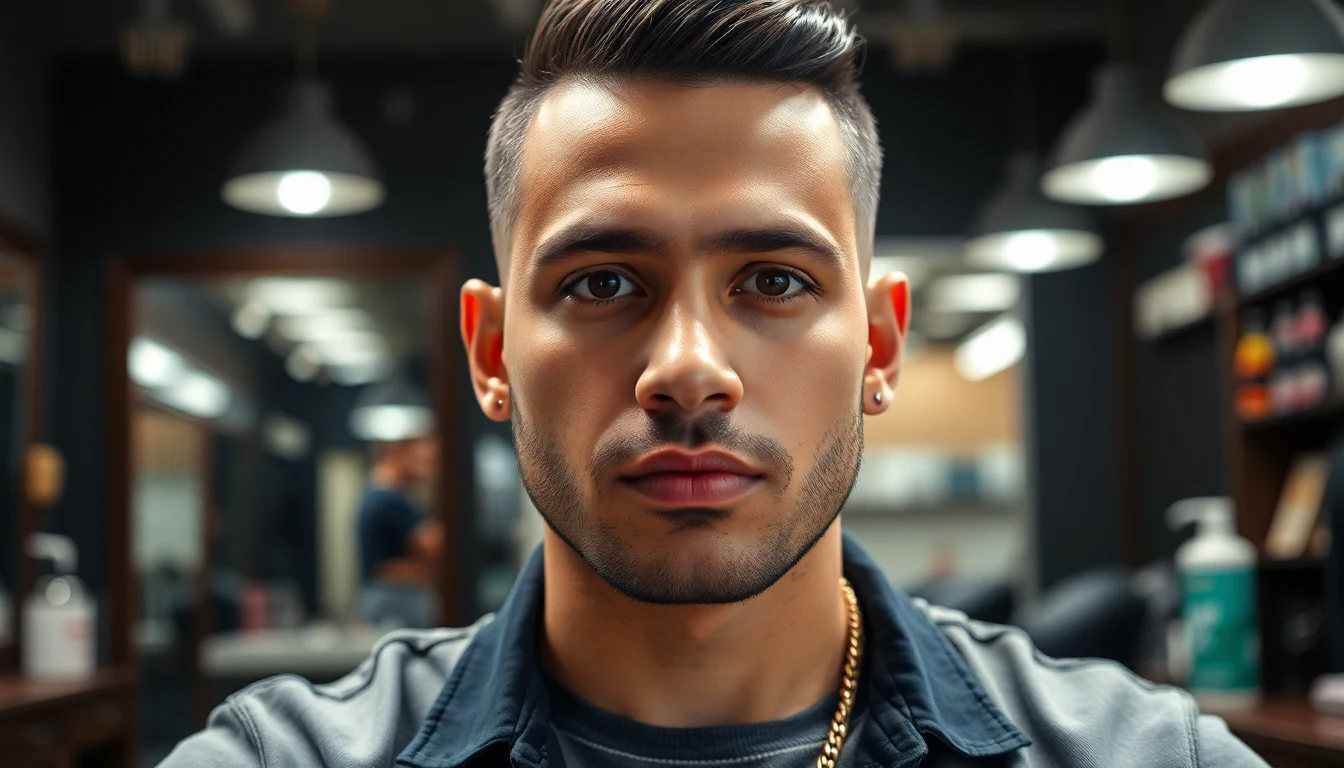
The heritage runs through Pachuco culture of the 1940s, Chicano culture of the 1960s-70s, and the modern takuache aesthetic. That is three generations of style evolution sitting in one barbershop. My barber in San Antonio has old photos on the wall from the 1960s next to TikTok screenshots. That is the vibe.
Puerto Rican Styles
Puerto Rican barbers are known for two things: impossibly sharp lineups and creative razor designs. The artistry level in PR barbershops is elite. You will see geometric patterns, stars, lightning bolts, and portraits shaved into fades. The linia (lineup) is treated as a near-sacred art form.
Popular styles include tight fades with creative designs, the blow out (hair dried and styled forward with volume), and sharp comb overs with hard parts. Products tend toward gels and edge control for that crisp, defined look.
Dominican Styles
Dominican barbershops operate differently because the hair texture in the Dominican community spans from straight to coily. The Dominican blowout (using a round brush and blow dryer to stretch curly hair straight) is a signature technique that has influenced barbershops across the US. Dominican shops are also known for keratin smoothing treatments and curl-stretching methods.
For men, the most popular styles are the blowout with a fade, defined curl tops with clean sides, and the classic degradado with a styled top. Products include heavy-duty gels, curl-defining creams, and smoothing serums.
Colombian Styles
Colombian barbershop culture has exploded globally in recent years. Colombian barbers are known for intricate fade work, geometric designs, and a very clean, almost surgical level of precision. The “Colombian fade” has become its own category on social media, typically featuring a seamless skin-to-length transition with razor-sharp edges.
Popular styles include ultra-clean skin fades with longer, styled tops, undercuts with slicked-back or textured styling, and the “peluqueria colombiana” (Colombian barbershop) aesthetic of high-contrast, editorial-level haircuts. When it comes to latino men haircuts, technique matters most.

- THE SHEARS 3.0: All your nail care grooming essentials come kitted in a travel-f
- EQUIPPED TO CLIP: Sized with men’s hands and feet in mind, both nail clippers ar
- TAKE THE EDGE OFF: The medium-grit stainless steel nail file has rounded edges t
How to Talk to Your Barber: The Complete Communication Guide
Look, I have been going to the same barber for four years, and he still asks me to clarify what I want. Clear communication is the difference between walking out feeling like a million bucks and walking out wearing a hat for two weeks. Here is your complete reference for talking to your barber, whether your barberia runs in English, Spanish, or both. When it comes to latino men haircuts, technique matters most.
Essential Barber Terminology: English and Spanish
| English | Spanish | What It Means |
|---|---|---|
| Fade | Degradado | Gradual blend from short to long |
| Low fade | Degradado bajo | Fade starts just above the ear |
| Mid fade | Degradado medio | Fade starts at the temple |
| High fade | Degradado alto | Fade starts near the top of the head |
| Skin fade | Degradado a piel / al ras | Faded all the way to the skin |
| Taper | Desvanecido | Gradual, subtle blend (less dramatic than a fade) |
| Lineup / edge-up | Delineado / perfilado | Clean, sharp edges around forehead and temples |
| Hard part | Raya marcada / linea | Shaved line separating side from top |
| Trim on top | Recorte arriba | Just take some length off the top |
| Thinning / texturizing | Desfilar / entresacar | Removing weight from thick hair |
| Layers | Capas | Cutting at different lengths for movement |
| Sideburns | Patillas | Hair in front of the ears |
| Neckline | Linea del cuello / nuca | How the back is shaped (squared, rounded, tapered) |
| Comb over | Peinado de lado | Hair swept to one side |
| Slick back | Peinado para atras | Hair combed straight back |
| Guard number | Numero de guarda | Clipper attachment (#1 = 3mm, #2 = 6mm, etc.) |
The 5-Step Barber Script
Use this framework every time you sit in the chair. It covers everything your barber needs to know in the right order.
- Name the style: “I want a [style name].” Start with the big picture.
- Specify the sides: “With a [low/mid/high/skin] fade.” Or taper, if you want something subtler.
- Specify the top: “Leave [number] inches on top” or “take about an inch off.”
- Add details: “Hard part on the left,” “texture the fringe,” “thin it out on top.”
- Show a reference photo: Always. Even if you think your description is clear. A picture eliminates 90% of miscommunication.
Pro tip: Save 3 to 5 reference photos from different angles (front, side, back) on your phone. Screenshots from Instagram barber pages work great. Most barbers appreciate seeing the look from multiple angles.
Common Mistakes When Ordering
- “Just clean it up” means something different to every barber. Be specific about how much to take off.
- “Same as last time” only works if you have been going to the same barber consistently. Even then, show a photo of when it looked right.
- Pointing vaguely at your head does not communicate what you want. Use the terminology from the table above.
- Saying “short on the sides” without specifying a fade level. “Short” to one barber is a 2-guard; to another, it is a skin fade. Say the guard number or fade type.
- Not mentioning hair texture when you have curly or wavy hair. Tell your barber about your natural texture so they can cut accordingly.
Best Products for Latino Hair
Thick, coarse hair needs products that are built for the job. Every product on this list has been tested on the kind of hair you and I actually have, in San Antonio heat and humidity. If it survives a Texas July, it will work anywhere.
Pomade and Styling Product Comparison
| Product | Hold (1-5) | Shine (1-5) | Best For | Price | Buy |
|---|---|---|---|---|---|
| Suavecito Firme Hold | 5 | 4 | Slick backs, pompadours, structured styles | ~$13 | Shop |
| Suavecito Original Hold | 3 | 4 | Comb overs, everyday styling | ~$13 | Shop |
| Layrite Superhold | 5 | 3 | All-day hold, humidity-proof styles | ~$18 | Shop |
| Elegance Hair Gel | 4 | 2 | Edgars, structured fringes, gel-finish styles | ~$10 | Shop |
| Pacinos Matte Paste | 4 | 1 | Textured crops, messy styles, casual looks | ~$14 | Shop |
| Tres Flores Brilliantine | 2 | 5 | Light hold, heritage finish, old-school shine | ~$5 | Shop |
| Reuzel Blue Strong Hold | 5 | 2 | Matte slick backs, structured styles without shine | ~$16 | Shop |
| Baxter of California Clay | 3 | 1 | Natural texture, matte finish, casual pompadours | ~$23 | Shop |
How to Choose the Right Product for Your Style
- Slick back or pompadour: You need a hold of 4-5 and a shine of 3-5. Go with Suavecito Firme or Layrite Superhold. If you want the old-school high-gloss look, layer Tres Flores on top as a finishing touch.
- Edgar or structured fringe: Gel gives the crispest hold for that straight-across fringe. Elegance Hair Gel is the barbershop standard. Apply to damp hair and comb into place.
- Textured crop or casual styles: You want hold without shine. Matte paste or clay. Pacinos Matte or Baxter Clay, applied to towel-dried hair and worked through with your fingers.
- Comb over: Medium hold with some shine looks most natural. Suavecito Original is the sweet spot. Apply to damp hair, comb to the side, and let it air-dry for the most natural finish.
Pro Application Tips for Thick Hair
- Start with damp hair, not wet. Towel-dry until your hair is about 80% dry. Product spreads more evenly and holds better this way.
- Warm the product. Rub pomade or clay between your palms for 10-15 seconds before applying. This breaks down the product so it distributes through thick hair instead of sitting on top.
- Work from back to front. Start at the crown and work forward. This prevents overloading the front where product buildup is most visible.
- Use a blow dryer for volume. For pompadours, quiffs, and slick backs, blow-dry your hair into the general shape first, then lock it in with product. The heat helps product bond to the hair shaft.
- Less is more, then add more. Start with a small amount. You can always add more product, but you cannot take it out without rewashing. For thick hair, a nickel-sized amount is a good starting point.
Clippers for Home Maintenance
If you are maintaining your fade at home between barber visits, you need clippers that can handle thick, coarse hair without pulling or snagging. The motor matters here. Skip pivot-motor clippers (they struggle with thick hair) and go for electromagnetic or rotary motors. Check out our best clippers for fades guide for the full breakdown.
My top pick for home use: BaBylissPRO GoldFX. Cordless, powerful rotary motor, and it cuts through thick hair like it is nothing.
Styling by Occasion: What to Wear Where
Your cut stays the same, but how you style it should shift depending on where you are headed. Here is a quick reference.
| Occasion | Recommended Style | Product | Vibe |
|---|---|---|---|
| Work / office | Low fade comb over, taper with quiff | Medium-hold pomade | Clean, professional |
| Weekend / casual | Textured crop, casual slick back | Matte paste or clay | Effortless, stylish |
| Date night | Slick back, pompadour | Firme-hold pomade | Sharp, confident |
| Wedding / formal | Pompadour, classic comb over | High-shine pomade + finishing spray | Polished, refined |
| Quinceañera / family event | Low fade comb over, clean slick back | Suavecito Original or Firme | Respectful, put-together |
| Gym / active | Buzz cut, textured crop | None or light clay | Functional, clean |
Common Mistakes and How to Fix Them
I have made every one of these mistakes. Learn from my suffering.
Mistake 1: Using Products Made for Fine Hair
If the label says “lightweight,” “volumizing,” or “flexible hold,” it was not made for your hair. Those products evaporate by lunchtime on thick hair. Stick with medium-to-strong hold products specifically designed for thick, coarse hair.
Mistake 2: Skipping the Blow Dryer
For slick backs, pompadours, and quiffs, blow-drying before product application is not optional. It is what gives you the shape and volume that product alone cannot create on thick hair. Three minutes with a blow dryer makes a 30-minute difference in your style.
Mistake 3: Waiting Too Long Between Cuts
A fade looks sharp for about 2 weeks. After that, the blend starts to grow out and the clean lines soften. Budget for a touch-up every 2 to 3 weeks. Your barber will appreciate the regularity, and some shops offer a discount for standing appointments.
Mistake 4: Not Asking for Thinning on Top
Thick hair is an asset, but if your barber does not thin it out or texturize it when needed, you end up with a heavy, mushroom-shaped top that no product can tame. Tell your barber to desfilar (thin) or texturizar (texturize) the top, especially for crops and comb overs.
Mistake 5: Choosing a Style That Fights Your Hair
Work with your hair’s natural tendencies, not against them. If your hair grows forward, an Edgar or textured crop will be easy to maintain. If it grows back, a slick back or pompadour is natural for you. Fighting your growth pattern means more product, more maintenance, and more frustration.
Maintaining Your Cut Between Barber Visits
Your barber gives you the shape. You maintain it. Here is how to keep your cut looking fresh between appointments.
Daily Maintenance (2 Minutes)
- Shower or wet your hair
- Towel-dry to damp
- Apply your product (follow the application tips above)
- Style with a comb or your fingers depending on the cut
- If needed, 60 seconds of blow-drying to set the shape
Weekly Maintenance
- Edge up your lineup if you are comfortable using a trimmer. Maintain the forehead and temple lines your barber set. If you are not confident doing this yourself, leave it to the professional.
- Deep clean your hair once a week with a clarifying shampoo. Pomade and gel build up over the week, especially on thick hair. A clarifying wash removes it all so your regular products work better.
- Condition after clarifying. Thick hair needs moisture. Use a conditioner every time you shampoo to keep it manageable and healthy.
Frequently Asked Questions
What is the most popular haircut for Latino men?
The low fade with a textured or styled top is the most universally requested cut in Latino barbershops. After that, the Edgar and the slick back are two of the most-searched styles specifically associated with Latino men. Your best bet depends on your hair texture, face shape, and personal style.
How do I ask for a fade in Spanish at the barbershop?
Ask for a “degradado” (fade). Specify “degradado bajo” for a low fade, “degradado medio” for a mid fade, or “degradado alto” for a high fade. If you want a skin fade, say “degradado a piel” or “al ras.” For the lineup, ask for a “delineado” or “perfilado.”
What products work best for thick, coarse Latino hair?
Heavy-hold pomades like Suavecito Firme Hold or Layrite Superhold are ideal for slick backs and pompadours. For textured styles, a matte clay or paste like Pacinos Matte works well. Elegance Hair Gel is a barbershop staple for structured styles like the Edgar. The key is choosing products designed for thick hair, not lightweight formulas made for fine hair.
What is the difference between Mexican, Puerto Rican, and Dominican barber styles?
Mexican-American barbershops tend to favor sharp fades with structured tops like the Edgar, slick back, and comb over. Puerto Rican shops are known for creative razor designs, sharp lineups, and bold fade work. Dominican barbershops specialize in blowout techniques for curly and coily textures, plus keratin treatments. Each tradition reflects different hair textures and cultural aesthetics within the broader Latino community.
How often should I get my fade maintained?
Every 2 to 3 weeks for the fade to stay crisp, and every 3 to 4 weeks for the top. The lineup around your forehead and temples grows out fastest. If you have a skin fade, you may notice regrowth within 10 days. Setting a standing appointment with your barber is the easiest way to stay on schedule.
Can I pull off a slick back with thick hair?
Thick hair is actually ideal for slick backs because you get natural volume and body. The key is using a heavy-hold pomade (hold level 4 or 5) and blow-drying your hair back before applying product. A mid or low fade on the sides keeps the proportions clean. Thick hair holds the shape all day once you find the right product. (We recommend this Gelactica Max Control Hair Gel for.)
Is the Edgar haircut only for Mexican guys?
No. The Edgar originated in Mexican-American barbershop culture but has crossed over to men of all backgrounds. You will see it in barbershops across the US, Latin America, and even parts of Europe. It works on any thick, straight hair. The style belongs to anyone who wants to rock it.
Find Your Cut: The Quick Decision Guide
Still not sure which cut is right for you? Here is the fastest way to narrow it down.
| If You Want… | Get This | Maintenance Level |
|---|---|---|
| Maximum impact, cultural statement | The Edgar | Medium (2-3 week barber visits, daily styling) |
| Versatile, works everywhere | Low fade comb over | Medium (2-3 week barber visits, easy daily styling) |
| Bold, head-turning, trend-forward | Mexican mullet / takuache | Low-medium (grow out period, minimal daily styling) |
| Classic, timeless, culturally rooted | Slick back | Medium-high (product every day, blow-dry recommended) |
| Low maintenance, clean look | Textured crop | Low (minimal product, quick finger-style) |
| Creative, unique side profile | Burst fade | Medium (2-3 week barber visits) |
| Maximum volume and drama | Pompadour | High (daily blow-dry and product) |
| Zero effort, still sharp | Buzz cut with lineup | Very low (lineup every 2 weeks, no daily styling) |
Final Thoughts
Here is what I want you to take away from this guide. Latino men haircuts are not a subcategory of some generic “men’s hairstyle” list. They are a whole world: styles with cultural history, regional traditions, family legacies, and barbershop artistry that most mainstream grooming media completely ignores. The Edgar has Chicano roots. The slick back carries Pachuco pride. The Dominican blowout is its own technical discipline. Every cut on this list has a story behind it.
So find the style that fits you. Learn the terminology so you can communicate with your barber in English, Spanish, or both. Invest in products that are actually made for thick hair instead of settling for whatever is on the shelf at the drugstore. And respect the barber’s craft. A good barber is not just cutting hair. They are carrying forward a tradition.
There is no shame in caring how you look. That is not vanity. That is self-respect. My tio figured that out decades ago, even if he will never admit it.
Next steps: If you want to go deeper on any specific style, check out our complete Edgar haircut guide, read up on all types of fades, or find the right tools in our best clippers for fades guide.
Further reading: For research-backed grooming advice, see Healthline Men’s Health.
Explore more tips at CulturedGrooming.com.
Further reading: For research-backed grooming advice, see Healthline Men’s Health.