Last updated: February 2026 by Marcus Chen-Williams, Founder & Editor-in-Chief
The mid fade haircut is the most requested fade in barbershops right now, and for good reason. It sits at the sweet spot between too subtle and too aggressive. Not as conservative as a low fade. Not as dramatic as a high fade. Just right. I have talked to barbers across Los Angeles, Atlanta, Houston, and New York over the past year, and when I ask them what their most-requested cut is, the answer is almost always some variation of a medium fade.
Here is the thing about fades that most guides miss: a mid fade on straight, thick Asian hair and a mid fade on coily 4C hair are two completely different haircuts, even though they share the same name. The fade line sits in the same place. Everything else changes. This guide covers the mid fade the way it actually works in the real world, across hair types, face shapes, and lifestyles.
If you only read one section, jump to the six variations to find the mid fade style that fits you. If you want to walk into the barber chair with confidence, read what to tell your barber.
What Is a Mid Fade?
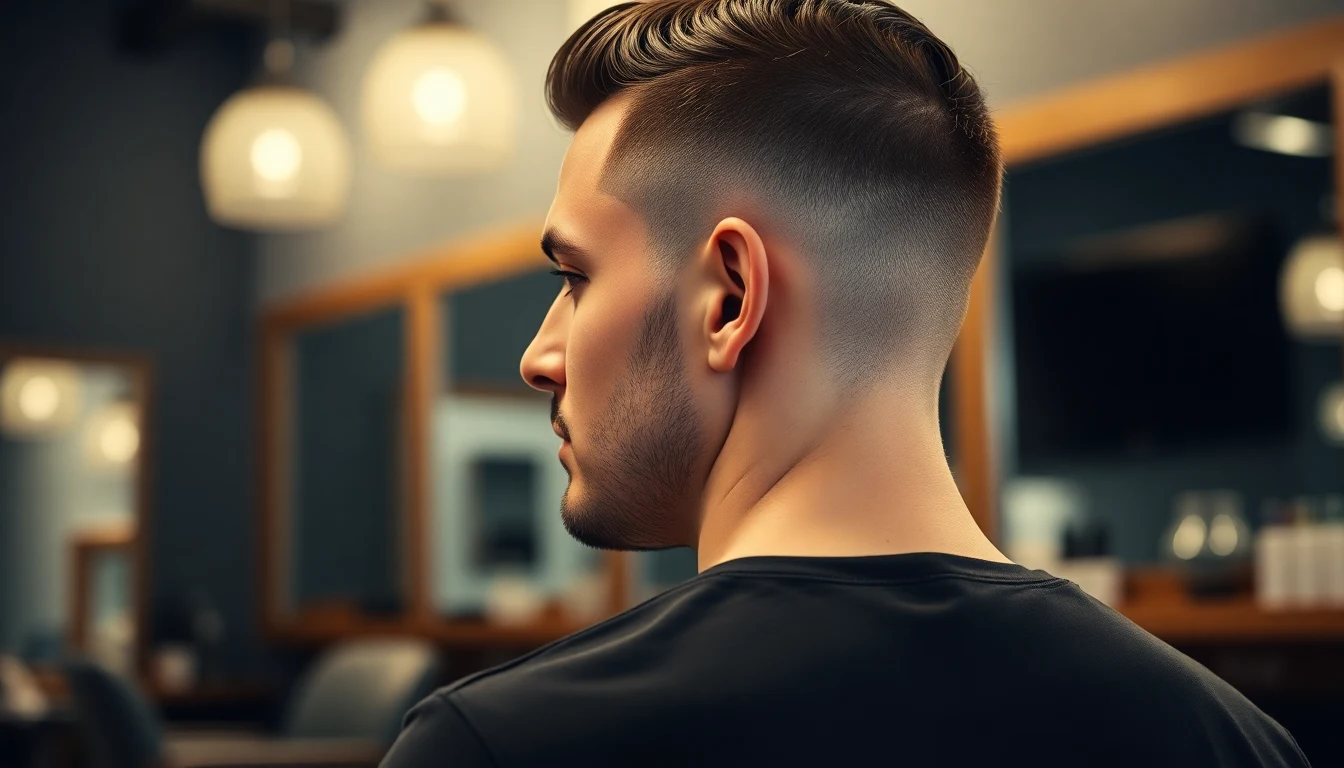
A mid fade is a haircut where the hair on the sides and back gradually blends from longer to shorter, with the fade line sitting at the temple, roughly two inches above the ear. That temple-level starting point is what defines a “mid” fade. Below that is low fade territory. Above it is a high fade.

Your barber creates the blend by working through multiple clipper guard sizes, from the length on top down through progressively shorter guards. Depending on the variation, the shortest point might be bare skin, a #0.5 guard, or a #1 guard. The key is the seamless gradient with no visible lines or steps.
Think of it as the Goldilocks fade. The low fade keeps so much hair on the sides that the contrast is subtle. The high fade strips so much away that the scalp does most of the talking. The mid fade gives you clean contrast without the dramatic commitment. It works for job interviews and Friday nights equally well.
Why the Mid Fade Is the Most Popular Fade
Walk into any barbershop on a Saturday morning and count the mid fades. They outnumber every other fade style combined in most shops I have visited. Three reasons.
It is universally flattering. The temple-level fade line works with nearly every face shape. It does not add too much vertical emphasis (the way a high fade does) and it does not leave too much weight on the sides (the way a low fade can).
The maintenance window is reasonable. A mid fade looks sharp for two to three weeks before growing out visibly. Compare that to a high skin fade (unkempt after 10 days) or a low taper fade (four-week stretch, but never particularly striking).
It pairs with everything. Textured crop on top? Works. Slick back? Works. Natural curls? Beautifully. The mid fade is the foundation; what you do on top is where your style shows up. That versatility is why barbers recommend it as the default for clients who are not sure what they want.
6 Mid Fade Variations (and Who Each One Is For)
The fade line starts in the same place across all six. What happens below it and on top changes everything.
1. Mid Skin Fade
The blend goes all the way to bare skin. Your barber transitions through progressively shorter guards until the hair disappears completely near the lower sides and back. High-contrast, sharp, intentional.
Best for: Men who want maximum definition and can visit the barber every two weeks. Works particularly well on men with darker skin tones, where the gradient from skin to hair creates a striking effect. If you have a strong jawline, the skin exposure emphasizes it.
Skip it if: You are prone to razor bumps or ingrown hairs on your neck and sideburns. Ask your barber for a half-guard instead of full skin.
Tell your barber: “Mid fade starting at my temple, taken down to skin. No guard at the bottom.”
Key product: Andis Slimline Pro Li detail trimmer for neckline maintenance between visits. Mastering mid fade haircut takes practice but delivers great results.
2. Mid Taper Fade
The conservative cousin of the skin fade. Instead of bare skin, the shortest point is a #1 or #0.5 guard. You get the gradual transition from the temple down, but there is always visible hair at the bottom. Softer contrast. More forgiving grow-out.
Best for: Professional settings. Men who cannot commit to biweekly barber visits (a mid taper still looks presentable at week three). If you are getting a fade for the first time, this is your safest entry point. For a deeper look at how taper fades work, read our taper fade haircut guide.
Tell your barber: “Mid taper fade, starting at the temple. Shortest point at a one-guard, no skin showing.”
Key product: Suavecito Firme Hold Pomade for a structured, professional look on top.
3. Mid Drop Fade
A standard mid fade follows a straight horizontal line around the head. The drop fade changes the geometry: the fade line “drops” as it wraps behind the ear, creating a curved arc that starts at the temple in front and descends lower in back. This follows the natural curve of your skull.
Best for: Round or wide faces. The curved line creates a slimming effect. Also pairs well with longer styles on top (pompadour, quiff) because the dropping line gives more room for the top to blend naturally into the back. For more guidance, Consumer Reports provides expert resources on product testing.
Skip it if: Your face is narrow or oblong. The downward curve can elongate it further. Stick with a standard straight-line mid fade.
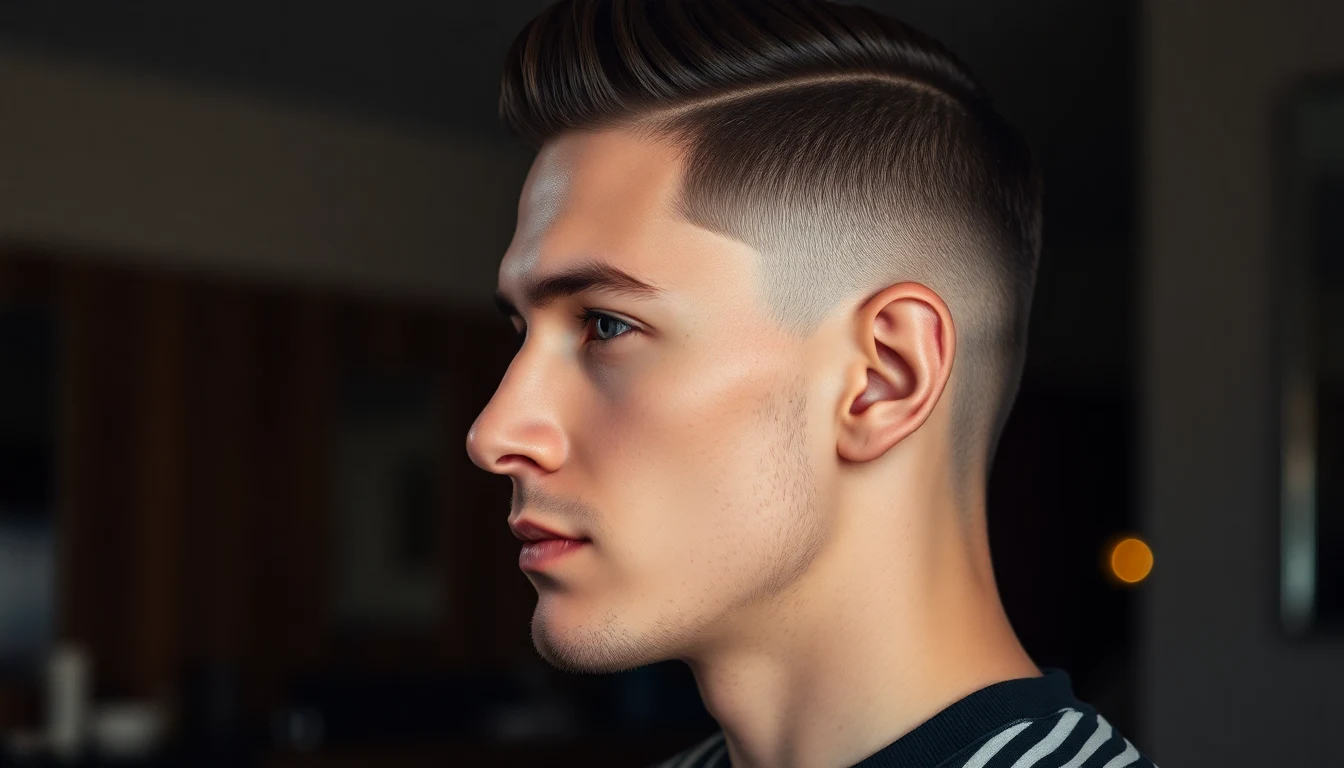
Tell your barber: “Mid drop fade. Fade line starts at my temple in front and drops down lower behind my ear.”
Key product: Baxter of California Clay Pomade for textured, lived-in styling on top.
4. Mid Fade with Textured Top
Clean, faded sides paired with a choppy, layered textured crop on top. No slicking. No sculpting. Just controlled messiness that looks effortless (it is not).
Best for: Straight to wavy hair (Type 1A through 2C). The contrast between the precise fade and the undone top creates visual tension that sharpens both elements. Skews younger, works well in creative or casual professional settings. (We recommend this Novah® Professional Hair Clippers for Men,.)
Skip it if: Your hair is very fine and thin on top; the textured crop can expose scalp rather than looking intentionally messy.
Tell your barber: “Mid fade on the sides. On top, textured crop, choppy layers, two to three inches. Point cut the ends.” Point cutting (cutting at an angle rather than straight across) creates the piecey texture.
Key product: Baxter of California Clay Pomade for matte-finish hold and separation.
5. Mid Fade with Slick Back
The classic slick back with a modern update. Sides fade cleanly. Top is combed or brushed straight back with a strong-hold product. Polished, intentional, works at a wedding or on a Tuesday.
Best for: Straight to wavy hair, at least three inches on top. Favors men with strong foreheads and defined features, since the style pulls everything away from the face. One of the few cuts that looks equally good at 22 and 55.
Skip it if: You have a receding hairline (slicking back puts it on full display) or very curly hair that fights the slick-back direction constantly. Understanding mid fade haircut is key to a great grooming routine.
Tell your barber: “Mid fade on the sides. Leave three to four inches on top for the slick back. Blend the top into the fade, no hard line.”
Key product: Layrite Superhold Pomade for all-day hold with shine. Apply to damp hair, comb back, let it set.
6. Mid Fade with Curls
The mid fade at its most visually dynamic. Faded sides create a clean frame that lets natural curls take center stage. Whether you have loose waves (Type 2B-2C), defined ringlets (Type 3A-3C), or tight coils (Type 4A-4C), the contrast makes the texture pop.
Best for: Any man with a natural curl or coil pattern. This is the single most popular style in Black barbershops and a go-to across Latin American and mixed-heritage communities. Works on every face shape because volume on top is adjustable; your barber can shape the curls to add height, width, or both. For more on pairing fades with curly textures, see our guide to curly hair fade styles.
Tell your barber: “Mid fade on the sides. On top, keep the curls at [X inches] when stretched out.” Always give the stretched measurement, not the curled length, because curly hair shrinks significantly when dry.
Key product: SheaMoisture Curl Enhancing Smoothie for moisture and curl definition. For tighter coils (4A-4C), layer it under a gel or use a curl sponge.
Hair Texture Tips for Every Mid Fade
I grew up between Chinese and Black grooming cultures, so I learned early that “just get a mid fade” is incomplete advice. Here is what you need to know based on your texture.
Straight hair (Type 1A-1C): Shows every blending imperfection because it lies flat. You need a precise barber. The upside: straight hair grows out more evenly, so your fade holds its shape longer. If your hair is fine, consider a shadow fade (softer transition) rather than a hard contrast.
Wavy hair (Type 2A-2C): The easiest texture to fade. Natural wave disguises minor blending imperfections, and the fade looks clean even as it grows out. This is why the mid fade with a textured top is so popular among men with Mediterranean, South Asian, and Latin American hair textures. Watch out for puffing at the two-week mark; a light pomade on the sides tames flyaways.
Curly hair (Type 3A-3C): Beautiful contrast with a mid fade because the texture on top differs so much from the cropped sides. Curl pattern hides slight blend imperfections. The critical thing: communicate your top length in stretched inches, not curled. Three inches of curl may require four to five inches of actual hair. And find a barber who knows clipper-over-comb technique for curly textures. (We recommend this 2 Pcs Blend Friend Fade Comb,.)
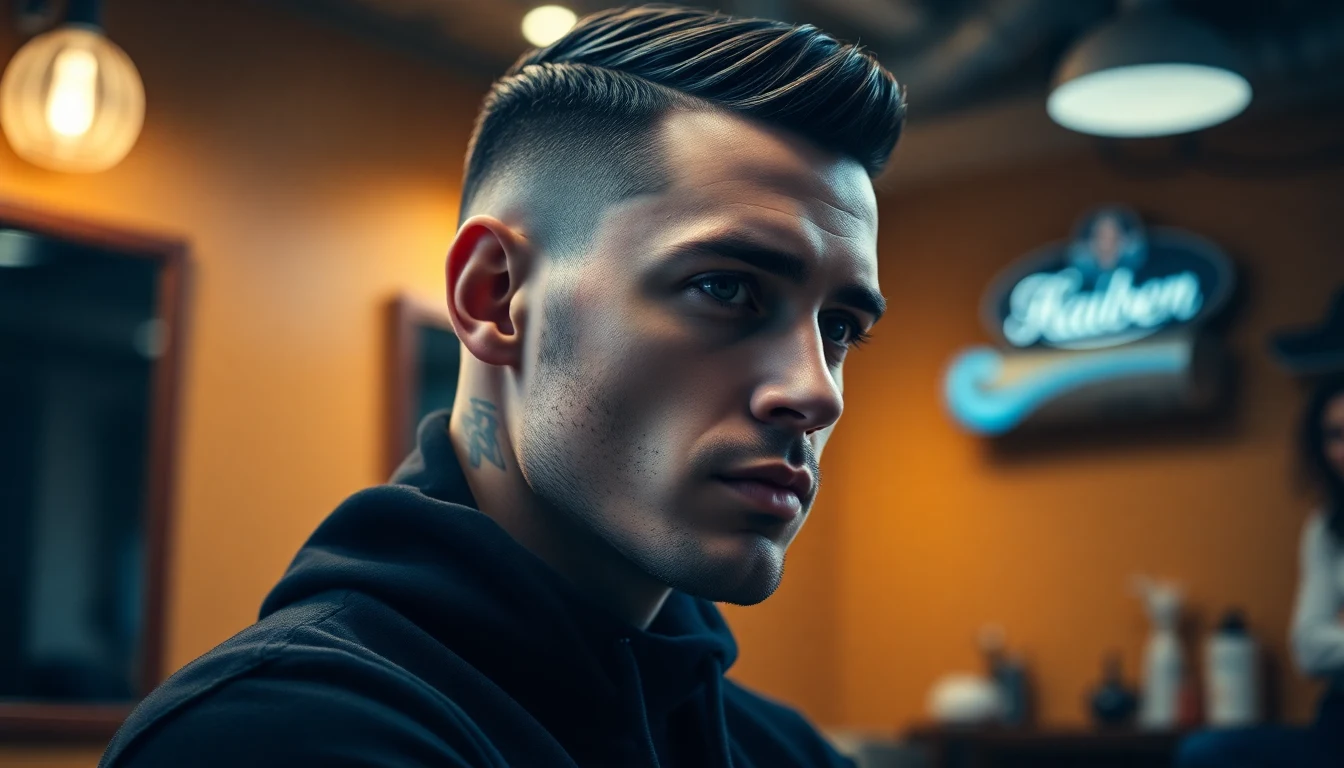
Coily hair (Type 4A-4C): This pairing originated in Black barbershops and remains one of the most iconic in men’s hair. Coily texture gives barbers incredible creative control when shaping the top. If you have sensitive skin, tell your barber to stop at a half-guard instead of full skin to avoid razor bumps. Never let anyone use a straight razor on your fade line if you are prone to pseudofolliculitis barbae (razor bumps); a foil shaver achieves a clean look with less irritation.

- NAIL CARE KIT from 3 Swords Germany with professional manicure and pedicure tool
- CONTENTS: Cuticle scissors, nail scissors, cuticle nipper, nail nipper, tweezers
- STEEL IMPLEMENTS: Hand made, bright nickel plated (protection against corrosion)
Which Mid Fade for Your Face Shape
| Face Shape | Best Mid Fade Variation | Why It Works | Avoid |
|---|---|---|---|
| Oval | Any variation | Proportionally balanced; all mid fades work | No restrictions |
| Round | Mid skin fade with height on top | Clean sides reduce width; top volume elongates | Curls adding side width |
| Square | Mid taper fade or textured top | Softens angular jawline with gradual blend | Tight skin fades emphasizing hard angles |
| Oblong | Mid drop fade or side-swept top | Drop fade adds width; side styling breaks vertical length | Tall styles (pompadour, high curls) |
| Diamond | Mid taper fade with volume on top | Adds width at forehead, softens cheekbone emphasis | Skin fades narrowing the sides further |
| Heart | Mid fade with textured top or slick back | Wider forehead balanced by narrowing faded sides | Very short top drawing attention to forehead |
Not sure about your face shape? Pull your hair back, look in the mirror, and trace your outline. Or ask your barber. A good barber evaluates face shape before picking up the clippers.
Mid Fade vs Low Fade vs High Fade
The most common question I get: “Which fade level should I choose?” Here is the honest comparison.
| Feature | Low Fade | Mid Fade | High Fade |
|---|---|---|---|
| Fade line starts | Just above the ear | At the temple (2″ above ear) | Upper temple / near crown |
| Contrast | Subtle | Balanced | Dramatic |
| Maintenance | Every 3-4 weeks | Every 2-3 weeks | Every 1-2 weeks |
| Professional suitability | Most conservative | Universally accepted | Casual to semi-professional |
| Best face shape | Oblong, narrow | All shapes | Round, wide |
| Grow-out forgiveness | High (tidy at 4 weeks) | Medium (good for 2-3 weeks) | Low (shows regrowth at 10 days) |
The mid fade lands in the middle on every metric. Not too much, not too little. If you want something safe and universally flattering, it is the Goldilocks choice.
For more detail on the alternatives, read our guides to the low fade haircut and high fade haircut. For the full family of fade styles, start with our complete guide to types of fades.
What to Tell Your Barber
The fastest way to get the wrong haircut is to say “just give me a mid fade.” That tells your barber where to put the fade line and nothing else. Use this script instead.
Step 1: “I want a mid [skin/taper/drop] fade, starting at my temple.” When it comes to mid fade haircut, technique matters most.
Step 2: “On top, I want [X inches / textured crop / slick back / curls at X inches stretched].”
Step 3: “I want a [soft blend / sharp contrast / shadow fade] at the transition.”
Step 4: Show two or three reference photos. One from the side (fade), one from the front (top). Photos eliminate 90% of miscommunication.
Example: “Mid skin fade starting at my temple. Three inches on top with a textured crop, point cut the ends. Clean blend, no hard lines. Here is a photo.”
Products and Maintenance
A mid fade looks its best for two to three weeks. Here is how to extend that window.
Between-Visit Maintenance
- Clean your neckline every 5-7 days. A detail trimmer removes the hair below your natural neckline in under two minutes. The Andis Slimline Pro Li is the industry standard. This single step extends the fresh-cut look by a full week.
- Touch up your lineup. Same trimmer, same cadence. Go slowly. A crooked line is worse than a soft one.
- Do not re-blend the fade at home unless you are experienced. A bad self-blend is worse than a slightly grown-out professional one. If you want to learn, start with the Wahl 5-Star Magic Clip and practice only on the neckline.
Essential Products by Style
| Product Type | Best For | Our Pick |
|---|---|---|
| Detail trimmer | All styles (neckline/lineup) | Andis Slimline Pro Li |
| Matte clay | Textured top, casual styles | Baxter of California Clay Pomade |
| Medium-hold pomade | Slick back, comb-over, side part | Suavecito Firme Hold Pomade |
| Strong-hold pomade | Slick back on thick, straight hair | Layrite Superhold Pomade |
| Curl cream | Mid fade with curls (3A-4C) | SheaMoisture Curl Enhancing Smoothie |
| Edge control | Coily hair (4A-4C) | Murray’s Edge Wax |
| Home clippers | At-home touchups (experienced users) | BaBylissPRO GoldFX Clipper |
Cost Expectations
| Service | Price Range (US) |
|---|---|
| Basic mid fade | $25-45 |
| Mid fade + lineup/edge-up | $30-50 |
| Mid fade + design or hard part | $40-65 |
| Fade cleanup (between full cuts) | $15-25 |
| Premium barbershop mid fade | $50-80+ |
Tip your barber. 15-20% is standard. 25% builds the kind of relationship that gets you squeezed in for a last-minute cut before an event.
Common Mistakes (and How to Avoid Them)
- Saying “mid fade” and nothing else. That tells your barber where the line goes. It says nothing about skin vs. taper, top length, or transition. Use the script above.
- Not bringing a reference photo. “Clean” means one thing to you and another to your barber. Photos bridge the gap.
- Going to a barber who does not know your texture. A barber who excels at straight hair may struggle with coily textures. Check their portfolio on social media before booking.
- Trying to stretch the fade past its window. A mid fade lasts two to three weeks. After that, budget for a visit or choose a lower-maintenance style.
- Ignoring the neckline. It is the first area to grow out and the first to make a fade look sloppy. Own a detail trimmer. Use it weekly.
- Confusing “fade” with “taper.” If you do not want visible skin on the sides, you want a taper, not a fade. Show your barber a photo and let them confirm which term matches your vision.
Frequently Asked Questions
What is a mid fade haircut?
A mid fade blends from longer on top to shorter on the sides, with the fade line starting at the temple, roughly two inches above the ear. It sits between a low fade (near the ear) and a high fade (near the crown). It is the most popular fade level because it balances contrast with enough visible hair to look natural on all textures.
How is a mid fade different from a low fade and a high fade?
The difference is where the fade line starts. Low fades begin above the ear for a conservative blend. Mid fades start at the temple for a balanced look. High fades start near the crown for dramatic contrast. The mid fade sits in the middle on every metric: contrast, maintenance, and versatility.
How often do I need to get a mid fade touched up?
Every two to three weeks. Skin fades grow out faster and may need attention at the two-week mark. Taper fades stretch closer to three weeks. A detail trimmer on your neckline and lineup buys you an extra week between visits.
Does a mid fade work with curly or coily hair?
Absolutely. The mid fade with curly or coily texture on top is one of the most popular combinations in barbershops. For Type 3B through 4C hair, many barbers recommend stopping at a half-guard instead of full skin to reduce razor bump risk. The contrast between textured curls on top and clean sides is striking. For more, read our guide to curly hair fade styles.
What should I tell my barber to get a mid fade?
Be specific. State the fade type (skin, taper, or shadow), the starting point (temple), your desired top length in inches or guard number, and your preferred transition style (soft blend, sharp contrast). Bring two to three reference photos. That level of detail eliminates the miscommunication that leads to haircuts you did not want.
Wrapping It Up
The mid fade is the most popular fade for a reason. It flatters every face shape, works with every hair texture, and fits every setting. But “mid fade” is a starting point, not a finished instruction.
Quick recap:
- The fade line sits at the temple, roughly two inches above the ear.
- Six variations give you options: skin fade for contrast, taper fade for subtlety, drop fade for curves, textured top for casual style, slick back for polish, curls for natural texture.
- Your hair type changes how the fade looks and grows out. Find a barber experienced with your texture.
- Face shape matters. Round faces benefit from height and skin fades. Oblong faces do better with drop fades and side styling.
- Maintenance runs two to three weeks. Own a detail trimmer. Use it weekly.
Your next step: Choose your variation, save a reference photo, and use the barber script. If you are getting your first fade, ask for a mid taper fade with a textured top. It is the most versatile starting point.
And remember: a good barber asks about your hair type, your face shape, and your lifestyle before picking up the clippers. If yours does not, that tells you something.
For a deeper look at every fade style, explore our complete guide to types of fades. Or check out our dedicated guides to the low fade, high fade, and taper fade haircuts.
Further reading: For research-backed grooming advice, see Healthline Men’s Health.
Explore more tips at CulturedGrooming.com.
Frequently Asked Questions
Is a mid fade haircut suitable for curly or textured hair?
Yes, the mid fade works excellently with curly and textured hair types, including 3C curls and coily patterns common in Black, Latino, and Middle Eastern men. The fade on the sides creates clean definition while allowing you to maintain volume and texture on top, making it a versatile option for diverse hair types.
How often do I need to get a mid fade touched up?
You should typically get a mid fade haircut touched up every 2 to 3 weeks to maintain clean lines and prevent the fade from growing out. The exact frequency depends on how fast your hair grows and how sharp you like to keep the fade, but regular maintenance keeps the cut looking fresh.
Which mid fade variation works best for my face shape?
The best mid fade for you depends on your face shape: oval faces can wear any variation, round faces benefit from longer hair on top to add length, square faces look good with textured tops for softness, and oblong faces work well with fuller sides. Check our face shape guide to see which mid fade style complements your features best.
What products do I need to style and maintain my mid fade?
To maintain a mid fade, you’ll need a good pomade or curl cream for styling the top, edge balm to keep your lines sharp, clippers for home touch-ups between barber visits, and a boar bristle brush for shaping. Product choice depends on your hair type and desired finish, with curly-haired men often preferring curl creams over heavy pomades.