If you want to master mizrahi grooming traditions, this guide covers everything you need to know. Last updated: February 2026 by Avi Feldman, Grooming Columnist
I grew up Ashkenazi in Brooklyn, where “grooming traditions” meant my father’s Barbasol and a Bar Mitzvah gift set of Old Spice. It was not until I moved to Chicago and started davening in a shul with a significant Mizrahi contingent that I realized how much I had been missing. The Yemenite men with their meticulously maintained beards. The Iraqi guy who always smelled incredible and, when I finally asked, explained a layered fragrance ritual that involved oud, rose water, and a base oil his grandmother used to make. The Moroccan family at Shabbos dinner whose table settings included a communal orange blossom water wash for guests’ hands. These were not just grooming habits; they were living traditions stretching back centuries through the Middle East and North Africa.
Mizrahi (Eastern) Jewish communities, including Jews from Yemen, Iraq, Iran, Morocco, Tunisia, Libya, Syria, Egypt, and other Middle Eastern and North African lands, have grooming traditions that are deeply intertwined with their religious practice, regional culture, and climate. Many of these traditions are experiencing a revival in Israel and diaspora communities as younger Mizrahi men reconnect with their heritage. This guide explores the major grooming traditions, their origins, and how they translate to modern practice. For expert guidance on this topic, consult Chabad’s overview of Jewish grooming laws and traditions.
Religious Note: Jewish grooming law (halacha) varies by community, tradition, and scholarly opinion. Always consult with your rabbi or posek (halachic authority) to confirm that any grooming practices described here are appropriate for your level of observance and family tradition.
Understanding Mizrahi Grooming Heritage : Mizrahi Grooming Traditions
The term “Mizrahi” encompasses a diverse range of Jewish communities that developed across the Middle East and North Africa over thousands of years. While each community has distinct customs, several grooming themes are shared across the Mizrahi world, shaped by common factors: hot, arid climates that demand specific skin and hair care; proximity to the ancient perfume and spice trades that made fragrance central to daily life; Islamic cultural environments that influenced but did not determine Jewish grooming practices; and halachic traditions that followed the Shulchan Aruch of Rabbi Yosef Karo (himself a Sephardi) rather than the Ashkenazi Rema.
It is important to distinguish between “Sephardic” and “Mizrahi.” Sephardic Jews trace their ancestry to the Iberian Peninsula (Spain and Portugal), while Mizrahi Jews originate from the Middle East and North Africa. In practice, the terms are often used interchangeably because both groups follow the Sephardic halachic tradition, but their cultural practices (including grooming) can differ significantly. Our Sephardic beard traditions guide covers the specifically Sephardic perspective in more detail.
The Yemenite Beard Tradition
Yemenite Jews have perhaps the most distinctive beard tradition in the Jewish world. The Yemenite community maintained an unbroken tradition of Torah observance in relative isolation for over two thousand years, and their grooming practices reflect this ancient continuity.
The Yemenite Curl
Yemenite peyot (simanim, as they are called in the Yemenite tradition) are iconic: long, tightly curled locks that hang in front of the ears, often reaching the shoulders or below. The curls are maintained through a daily ritual of wetting, oiling, and wrapping the hair around a finger or thin rod. The curling technique is passed from father to son, and the specific curl pattern can vary by family and sub-community within the Yemenite world.
The products traditionally used for Yemenite peyot care include sesame oil (shemen sumsum), which has been the primary hair oil in Yemen for centuries, and a pomade made from rendered fat or beeswax for hold. Modern Yemenite men often use beard oil as a replacement for traditional sesame oil, though some families still prepare their own blends using the traditional recipe.
For comprehensive peyot care techniques that apply to Yemenite-style curled peyot, see our peyot washing and maintenance guide.
Yemenite Beard Shaping
The Yemenite beard tradition is based closely on the Rambam’s (Maimonides’) interpretation of the halachic prohibition on shaving. The Rambam, who lived in the Middle East and whose rulings carry particular weight in Yemenite halacha, permits trimming the beard with scissors but prohibits using a razor. Yemenite men traditionally maintain full beards that are trimmed and shaped with scissors only, never shaved to the skin. The beard is kept neat and defined, shorter than many Chassidic beards but fuller than a typical Modern Orthodox trim.
The Yemenite approach to beard grooming is methodical: the beard is washed daily (often with a traditional herbal rinse), oiled with sesame or almond oil, and combed with a fine-tooth comb to remove tangles and distribute the oil evenly. This daily ritual keeps the beard soft, manageable, and presentable despite the hot climate that would otherwise make thick facial hair uncomfortable.
Iraqi Jewish Fragrance Culture
If there is one area where Mizrahi grooming traditions outshine their Ashkenazi counterparts, it is fragrance. The Jewish communities of Iraq (Bavel, as they called it, recalling the ancient Babylonian exile) developed a sophisticated relationship with fragrance that was influenced by their proximity to the historic perfume centers of the Middle East. Mastering mizrahi grooming traditions takes practice but delivers great results.
Oud: The King of Scents
Oud (agarwood) is the cornerstone of Iraqi Jewish fragrance tradition. Iraqi Jewish men traditionally applied oud oil as part of their Shabbos and Yom Tov preparation, and the scent became so associated with the community that it served as an olfactory identity marker. Walking into a Babylonian Jewish synagogue before Shabbos, the combined oud from dozens of congregants created an atmosphere that those who experienced it describe as unforgettable.
Iraqi Jewish fragrance practice involves layering: a base of oud oil applied to the skin (pulse points), followed by a lighter scent (rose water or orange blossom water) applied to the beard and clothing, and sometimes a final mist of musk. This layering creates a complex, evolving scent that unfolds over hours rather than announcing itself all at once.
Rose Water (Ma’ al-Ward)
Rose water plays a dual role in Iraqi Jewish grooming: as a fragrance and as a skincare product. Iraqi Jewish men traditionally used rose water as a facial toner (applied with the hands after washing the face), as a beard refresher (spritzed onto the beard to add subtle scent and moisture), and as a communal gesture of hospitality (offered to guests to wash their hands upon entering a home).
The rose water tradition extends to religious practice. Some Iraqi synagogues sprinkle rose water on the congregation during the priestly blessing (birkat kohanim), and rose water is used to scent the hadas (myrtle) branches during Sukkot. This integration of fragrance into religious life means that for Iraqi Jews, grooming and worship are not separate categories but overlapping expressions of the same commitment to honoring Hashem with beauty and intention.
Moroccan Jewish Grooming
Moroccan Jews are the largest Mizrahi community in Israel and one of the largest in the diaspora. Their grooming traditions reflect Morocco’s position at the crossroads of Arab, Berber, and European influences.
The Hammam Tradition
The Moroccan hammam (bathhouse) was a central institution in Moroccan Jewish life. Unlike the Ashkenazi mikvah, which is primarily for ritual immersion, the Moroccan hammam served both ritual and social purposes. Men would visit the hammam weekly (typically on Thursday or Friday before Shabbat) for a full grooming experience: steam to open pores, black soap (savon beldi) scrub to exfoliate, ghassoul clay mask for deep cleaning, and a finish with argan oil for skin and beard.
The hammam experience included beard grooming. After the steam and scrub, the barber (hallaq) would trim and shape beards with scissors, apply warm argan oil, and comb through. This weekly ritual kept beards in excellent condition and the skin underneath healthy despite the North African heat.
Modern adaptations of the hammam tradition can be practiced at home: a hot shower to create steam, a charcoal or clay face mask, exfoliation with a washcloth, and a finishing application of argan-based beard oil. The full experience takes about 30 minutes and leaves the skin and beard transformed. See our pre-Shabbat grooming routine for integrating this practice into your weekly preparation.
Argan Oil: Morocco’s Liquid Gold
Argan oil is to Moroccan grooming what olive oil is to the rest of the Mediterranean: the foundational product. Moroccan Jewish men have used argan oil for beard conditioning, skin moisturizing, and hair treatment for centuries. The oil is rich in vitamin E, fatty acids, and antioxidants, making it exceptionally effective for both skin and hair health.
Moroccan Jewish women traditionally prepared argan oil at home, roasting the argan nuts and pressing them by hand. The resulting oil was used for cooking, skincare, and grooming across the family. Today, high-quality argan oil is commercially available and is a key ingredient in many premium beard butters and oils.
Henna in Moroccan Jewish Tradition
Henna (al-hinna) plays a significant role in Moroccan Jewish grooming, particularly around celebrations. The henna ceremony (laylat al-hinna) before weddings is well known, but henna was also used by Moroccan Jewish men as a beard and hair conditioner. Applied as a paste, left for 30-60 minutes, and rinsed, henna strengthens the hair shaft, adds a reddish tint (which complements dark Moroccan beards rather than changing their fundamental color), and conditions the beard deeply. Some older Moroccan Jewish men continue this practice in Israel, and younger men are rediscovering it as part of the broader Mizrahi heritage revival.
Persian (Iranian) Jewish Grooming
Persian Jews developed grooming traditions influenced by the sophisticated Persian culture of beauty and personal care. Iran’s historic position as a center of the perfume trade (Persian attar, or “itr,” is the etymological root of “attar” across languages) shaped a grooming culture where fragrance and skincare were inseparable.
The Persian Beard Aesthetic
Persian Jewish men traditionally favored well-groomed, moderately full beards. The Persian aesthetic emphasizes neatness over length: a beard that is shaped along the jawline, full on the cheeks, and carefully blended with the hairline. This is achieved through regular trimming (with scissors, per halachic practice), daily combing, and the application of almond oil or walnut oil as a conditioner and light styling agent.
The Persian approach to beard grooming is notable for its precision. Persian barbers were (and in Iranian Jewish communities in Los Angeles, still are) renowned for their line work: the exact demarcation between where the beard ends and the clean skin begins. This attention to clean lines influenced Israeli barbershop culture when hundreds of thousands of Persian Jews made aliyah in the 1950s and onward. Our Israeli barbershop culture guide traces this and other influences on the modern Israeli grooming scene. Understanding mizrahi grooming traditions is key to a great grooming routine.
Persian Fragrance Layering
Like Iraqi Jews, Persian Jews practice fragrance layering, but with distinctly Persian scents. The classic Persian Jewish fragrance profile includes golab (rose water) as a base, sandalwood or saffron as a middle layer, and musk or amber as the top note. Saffron, in particular, is a uniquely Persian contribution to the grooming world: Persian Jewish men would infuse oil with saffron threads and apply the golden oil to their beards, giving both fragrance and a subtle warm tint to the hair.
Syrian Jewish Grooming
The Syrian Jewish community, with major diaspora centers in Brooklyn (SY community) and Mexico City, has grooming traditions rooted in the ancient culture of Damascus and Aleppo.
Aleppo Soap
Aleppo soap (sabun al-ghar), made from olive oil and laurel berry oil, is perhaps the most famous grooming product from the Syrian tradition. Syrian Jewish families used Aleppo soap for everything: body washing, beard washing, hair washing, and even laundry. The soap is exceptionally gentle, naturally antibacterial, and suitable for sensitive skin. It has been produced in Aleppo for over a thousand years and was a staple in Syrian Jewish households.
For beard care, Aleppo soap provides a clean, residue-free wash that does not strip natural oils. It is an excellent alternative to commercial beard washes for men who prefer a traditional, minimal-ingredient approach. Authentic Aleppo soap (with a high laurel oil content) is still available through specialty retailers and Middle Eastern grocery stores.
Syrian Fragrance Tradition
Syrian Jewish men traditionally used dehen al-oud (oud oil) for Shabbat and holidays, with lighter scents (jasmine, orange blossom) for daily wear. The SY community in Brooklyn has maintained this tradition, and it is not uncommon to walk into a Syrian shul on Shabbat morning and encounter a rich tapestry of traditional Middle Eastern fragrances that stands in marked contrast to the scent profile of an Ashkenazi minyan.
North African Jewish Grooming (Tunisia, Libya, Egypt)
The Jewish communities of Tunisia, Libya, and Egypt shared many grooming practices with their Moroccan neighbors while developing unique local variations.
Tunisian Jewish Beard Care
Tunisian Jews traditionally maintained close-trimmed, sculpted beards. The Tunisian aesthetic favors a shorter beard than the Yemenite or Iraqi traditions but a fuller one than many Persian styles. Olive oil (zit zeitoun) was the primary beard conditioning product, sometimes infused with rosemary or thyme for added fragrance and antiseptic properties.
Libyan Jewish Practices
Libyan Jews had a tradition of using date palm oil for beard and hair conditioning. The oil, pressed from date seeds, is lighter than olive oil and absorbs quickly into the hair, making it ideal for the hot Libyan climate. Date palm oil is still used in some Libyan Jewish households in Israel, and it is available as a specialty oil that works well as a beard conditioning treatment.
Egyptian Jewish Grooming
Egyptian Jews, particularly the wealthy Cairene community, had access to the cosmopolitan grooming culture of early 20th-century Egypt. This produced a grooming style that blended European elegance (many Egyptian Jews were educated in French or British schools) with Middle Eastern beard and fragrance traditions. Egyptian Jewish men were known for impeccable grooming: pressed clothing, manicured nails, carefully maintained beards, and sophisticated cologne collections. This standard of total grooming, where every detail from beard to shoes receives attention, is a legacy worth emulating.
Modern Mizrahi Grooming Revival
In Israel and across the diaspora, a Mizrahi grooming revival is underway. Younger Mizrahi men who grew up in Western-influenced environments are reconnecting with the grooming practices of their grandparents, blending traditional techniques with modern products and sensibilities.
The Israeli Context
In Israel, the Mizrahi grooming revival is part of a broader cultural renaissance. Mizrahi music, food, and fashion have moved from the margins to the mainstream of Israeli culture, and grooming traditions have followed. Israeli barbershops increasingly offer traditional Middle Eastern services (hot towel shaves, argan oil treatments, oud-scented aftershave), and Israeli grooming brands are incorporating Mizrahi ingredients and traditions into their product lines. Our Israeli barbershop guide explores how these traditions shape the contemporary Israeli scene.
DIY Traditional Treatments
Many Mizrahi grooming practices can be replicated at home with readily available ingredients:
- Hammam-style facial: Steam your face over a bowl of hot water for 5 minutes, apply a rhassoul or bentonite clay mask for 10 minutes, rinse, and finish with argan or beard oil.
- Rose water beard refresher: Mix food-grade rose water in a small spray bottle and spritz onto your beard between washes for subtle fragrance and moisture.
- Saffron beard oil: Steep 3-4 saffron threads in 30ml of jojoba or almond oil for a week. Strain and use as a luxury beard oil with a warm golden tint and subtle aroma.
- Henna beard treatment: Mix henna powder with warm water and a tablespoon of olive oil to form a paste. Apply to the beard for 30-60 minutes, rinse thoroughly. Provides deep conditioning and a subtle reddish warmth.
- Orange blossom water hand wash: Before Shabbat dinner, offer guests a bowl of warm water with a splash of orange blossom water for hand washing. This Mizrahi hospitality tradition doubles as a fragrant grooming touch.
Halachic Considerations Across Mizrahi Communities
Mizrahi communities follow the Shulchan Aruch as their primary halachic authority, which differs from Ashkenazi practice on several grooming-related points: When it comes to mizrahi grooming traditions, technique matters most.
Beard Cutting Methods
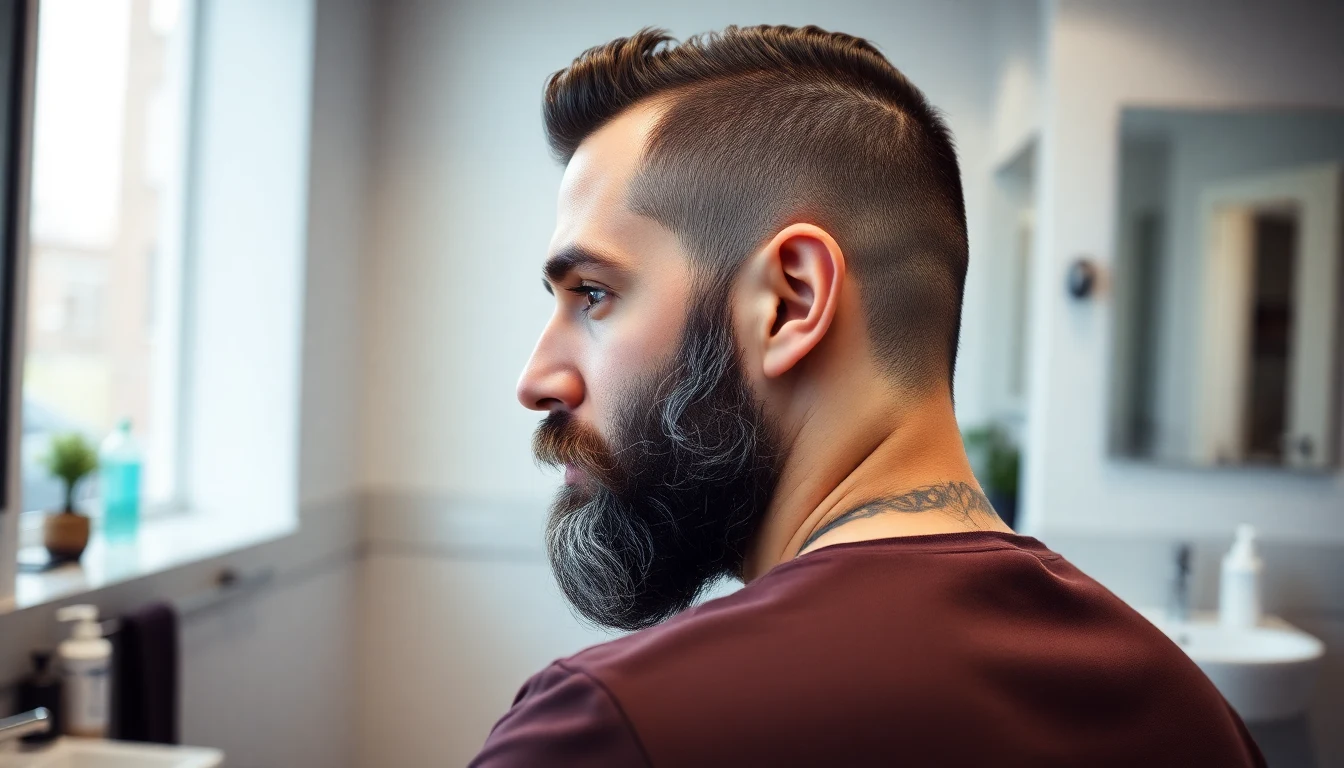
The Shulchan Aruch (Yoreh De’ah 181) follows the Rambam’s position that only shaving with a razor (ta’ar) is prohibited by Torah law. Scissor trimming is permitted. However, many Mizrahi poskim also restrict certain types of electric shavers that operate with a razor-like cutting action. The distinction between permitted and prohibited electric shavers is an area where Mizrahi and Ashkenazi authorities sometimes reach different conclusions. Your rav can advise on which devices are acceptable according to your community’s standard.
Mourning Period Grooming
Mizrahi communities generally follow the Shulchan Aruch’s more lenient position on haircutting restrictions during mourning periods. For example, during the Three Weeks before Tisha B’Av, many Mizrahi communities only begin haircutting restrictions from the week of Tisha B’Av (shavua shechal bo), not from the 17th of Tammuz. Our Tisha B’Av grooming guide explains the differences in detail.
Kabbalistic Beard Significance
The kabbalistic significance of the beard, based primarily on the Zohar’s discussion of the 13 tikkunei dikna (rectifications of the beard), is taken particularly seriously in Mizrahi communities that have strong kabbalistic traditions. Yemenite, Moroccan, and Iraqi communities all have deep kabbalistic roots, and for many men in these communities, the decision to grow a beard is as much a spiritual practice as a grooming choice. This kabbalistic perspective on the beard often leads to a more reverent approach to beard care: the beard is treated not just as hair but as a sacred attribute that deserves careful maintenance.
Products for the Mizrahi Grooming Tradition
Whether you are Mizrahi reconnecting with your heritage or simply drawn to these traditions, here are the product essentials:
- Beard oil: The modern equivalent of the traditional oils (sesame, argan, almond) used across Mizrahi communities. Apply daily after washing.
- Beard butter: For deeper conditioning, equivalent to the rich oil treatments traditionally applied during hammam visits.
- Fine-tooth comb: Essential for maintaining the neat, defined beard aesthetic common across Mizrahi traditions.
- Beard wash: Aleppo soap is the traditional choice; tea tree beard wash is a modern alternative with similar cleansing and antibacterial properties.
- Beard balm: For shape and hold, particularly for men maintaining the sculpted beard lines that characterize Mizrahi beard aesthetics.
- Rose water spray: Available at Middle Eastern grocery stores. Use as a beard refresher and facial toner.
- Oud oil: For Shabbat and special occasions. Apply sparingly to pulse points. A little goes a long way.
FAQ
I am Ashkenazi. Can I adopt Mizrahi grooming practices?
Absolutely. Grooming practices are not halachically bound to ethnicity. Using argan oil on your beard, incorporating rose water into your routine, or practicing fragrance layering are personal grooming choices that anyone can make. The halachic differences (around shaver types, mourning period timelines, etc.) should follow your own community’s rav, but the practical grooming techniques and products transcend ethnic boundaries. Many of the best grooming practices from any tradition are simply good universal care.
Where can I find authentic Mizrahi grooming products?
Middle Eastern and North African grocery stores often carry rose water, orange blossom water, oud oil, argan oil, Aleppo soap, and other traditional products. In areas with significant Israeli or Mizrahi populations (parts of Brooklyn, Los Angeles, and most Israeli cities), specialty shops carry a full range. Online retailers specializing in Middle Eastern products are another reliable source. For modern products that incorporate these traditional ingredients, quality beard oils and butters often contain argan, jojoba, and other oils used in Mizrahi grooming traditions.
Is Mizrahi grooming more elaborate than Ashkenazi grooming?
Traditionally, yes. Mizrahi communities placed more cultural emphasis on personal grooming as a daily practice, while Ashkenazi communities (particularly in Eastern Europe) tended toward more utilitarian grooming. This is a generalization with many exceptions, but the fragrance layering, beard oiling, and facial care traditions of Mizrahi communities are generally more elaborate than historical Ashkenazi practices. The modern grooming industry has narrowed this gap, as men of all backgrounds now have access to quality products and grooming education.
What is the best oud for a beginner?
Oud can be overwhelming for someone not accustomed to it. Start with a lighter, more accessible oud blend rather than pure oud oil. Look for oud combined with rose, sandalwood, or vanilla, which softens the intensity. Apply a very small amount (one drop) to one pulse point and see how it develops over the day before committing to more. Oud evolves significantly over hours, and the scent you smell at first application is not the scent others will experience two hours later. Give it time before deciding whether you like it.
Do Yemenite Jews still maintain traditional peyot styles?
Many do, particularly in communities that prioritize preserving Yemenite mesorah (tradition). In Israel, neighborhoods like Rosh HaAyin and parts of Bnei Brak have significant Yemenite populations where traditional peyot styles are common. Some younger Yemenite men in Israel and the diaspora have adopted shorter peyot styles while maintaining the characteristic curl. The Yemenite peyot tradition is alive but, like all minority traditions, requires conscious effort to preserve across generations.
Final Thoughts
Mizrahi grooming traditions represent thousands of years of accumulated wisdom about caring for the body in service of the spirit. The Yemenite elder who oils his peyot each morning, the Iraqi grandfather who layers his Shabbos fragrance with the precision of a perfumer, the Moroccan woman who prepares argan oil by hand for her family, these are not quaint relics of a vanished world. They are living practices that connect today’s generation to an unbroken chain of tradition.
Whether you come from a Mizrahi background and are reconnecting with practices your grandparents knew, or you are drawn to these traditions from outside them, there is deep value in grooming practices that treat personal care as an act of intention rather than mere maintenance. The Mizrahi approach to grooming says: you are not just cleaning your beard or applying fragrance; you are preparing yourself, body and soul, to meet the day, to honor Shabbat, to stand before Hashem. That is a grooming philosophy worth adopting, regardless of where your family comes from.
For more on Jewish grooming across communities, see our Sephardic beard traditions, Israeli barbershop culture, beard care essentials, and Jewish men’s skincare routine.
Frequently Asked Questions
What are the key components of Mizrahi grooming traditions?
Mizrahi grooming traditions focus on three main areas: fragrance rituals involving oud and rose water, meticulously maintained beards, and skincare practices rooted in Middle Eastern and North African customs. These traditions are deeply connected to religious practice, regional culture, and the hot climates of the communities’ ancestral homelands. They represent centuries-old grooming wisdom that many younger Mizrahi men are reviving today.
How do you use oud and rose water in a traditional Mizrahi fragrance routine?
Traditional Mizrahi fragrance rituals typically layer oud as a base note with rose water as the middle component, often combined with a base oil passed down through families for generations. This layered approach creates a complex, long-lasting scent that differs from Western single-fragrance application. The specific proportions and oils used vary by family and regional origin, from Yemenite to Iraqi to Moroccan communities.
Are there specific religious guidelines I should follow with Mizrahi grooming practices?
Yes, Jewish grooming law (halacha) governs many traditional practices and varies by community, scholarly opinion, and individual tradition. You should consult with your rabbi or posek (halachic authority) to confirm that any grooming practices align with your level of observance and specific community customs. This ensures you’re honoring both your heritage and your personal religious commitments.
Why are Mizrahi beard maintenance traditions different from other Jewish grooming customs?
Mizrahi communities, particularly from Yemen and Iraq, have distinctive beard traditions that emphasize meticulous maintenance and grooming rather than simple growth. These practices reflect both regional cultural norms and the hot climates of the Middle East and North Africa, where careful beard care prevents irritation and maintains cleanliness. The contrast with other Jewish traditions shows how geography and local customs shaped grooming practices across diaspora communities.