
If you want to master mohawk hairstyles for black men, this guide covers everything you need to know. Last updated: February 2026 by Darius Washington, Black Men’s Grooming Editor
The mohawk has never left the barbershop rotation in Atlanta. Not once. I have watched it evolve from the sharp, narrow strips my older cousins wore in the early 2000s to the wide, textured frohawks I see every Saturday morning in the chair next to mine. Mohawk hairstyles for Black men hit different because our hair texture gives the top section shape, volume, and personality that straight hair simply cannot replicate. Coils stand up. Twists spiral outward. Locs create a crown. The mohawk is not just a cut for us. It is a canvas.
This guide covers 15 mohawk variations with specific barber instructions, face shape recommendations, and product picks for each style. I have organized them from the most classic to the most creative so you can find the one that fits your personality and your maintenance tolerance.
If you only read one section, jump to the face shape guide to narrow down your options fast.
Why the Mohawk Works So Well on Textured Hair: Mohawk Hairstyles For Black Men
The mohawk is built on contrast. Short or bald sides. Height and texture on top. That contrast is what makes the style look sharp from every angle. And tightly coiled hair, specifically 4A through 4C textures, creates that top section height naturally. You do not need blow-outs or product overload to get volume. Your coils do the work.

Straight hair mohawks require gel, hairspray, and sometimes blow-drying to stand up. Our hair stands up on its own. That is a structural advantage. A 4C frohawk has natural volume that a 2A mohawk needs industrial product to achieve. Your barber knows this. The good ones design the cut around your curl pattern, not against it.
The other reason mohawks thrive on Black men is the fade. The types of fades available for textured hair create transitions that look sculpted and intentional. A burst fade curving around the ear into a mohawk strip has an architectural quality that flat hair textures cannot match. The fade is the frame. Your texture is the art.
15 Mohawk Styles That Go Hard
1. Classic Mohawk Fade
This is the foundation. A narrow strip of hair running from the forehead to the nape, with the sides faded down to skin. The strip is typically one to two inches wide and kept short enough to maintain its shape without product. Clean, aggressive, no-nonsense.
Who it suits: Oval and diamond face shapes. Men who want a bold look without heavy daily styling. Works on all 4-type textures.
Maintenance level: Medium. You need a barber visit every two weeks to keep the fade tight. The top needs minimal product if kept under an inch.
How to ask your barber: “I want a classic mohawk with a skin fade on the sides. Keep the strip about one and a half inches wide, short on top. Sharp lineup.” Bring a reference photo showing the width you want.
2. Burst Fade Mohawk
The burst fade curves around and behind the ear in a semicircle instead of fading straight down. This creates a softer, more natural transition into the mohawk strip. The burst shape follows the contour of your head, which is why it looks so clean on textured hair.
Who it suits: Round and square face shapes. The curved fade softens angular jawlines and adds visual flow. Excellent on 4B and 4C hair because the curve complements the natural roundness of tight coils.
Maintenance level: Medium. The burst fade needs precise barber work every two to three weeks. At home, keep the top moisturized and pick it out if you want extra height.
How to ask your barber: “Burst fade around the ears into a mohawk. I want the fade to curve, not go straight down. Medium length on top.” Your barber should know the burst fade technique. If they ask for clarification, show them a photo. If they have never done one, find a different barber.
3. South of France (Usher Cut)
Usher put this style on the map and it has not left since. The South of France is a wider mohawk with a distinctive horseshoe-shaped hairline that frames the temples. The top section extends further toward the sides than a traditional mohawk, creating a shape that sits between a mohawk and a standard fade.
Who it suits: Every face shape. The wider top section is more forgiving than a narrow mohawk. Heart-shaped faces benefit from the temple framing. Square faces get a softer look without losing edge. This is probably the most universally flattering mohawk variation.
Maintenance level: Medium to high. The distinctive hairline shape requires a precise barber who can maintain those curved temple lines consistently. Plan for every two weeks.
How to ask your barber: “South of France, like the Usher cut. I want the wider mohawk shape with the hairline curving in at the temples.” Most barbers who specialize in Black hair know this cut by name. If yours does not, bring at least two reference photos from different angles.
4. Frohawk
The frohawk lets your natural texture do all the talking. The sides are faded, and the top section is left long enough for your 4B or 4C coils to stand up in their natural state. No twist-outs, no product manipulation. Just your hair being your hair in mohawk form.
This is the style I recommend most often for men who are growing out their 4C hair and want a structured look during the process. The faded sides keep you looking intentional while the top grows.
Who it suits: Round faces get the most benefit because the vertical height elongates the face shape. Anyone who wants to celebrate their natural texture. 4B and 4C hair types create the best frohawk silhouette because the coils hold their shape vertically.

Maintenance level: Low to medium. The fade needs attention every two to three weeks. The top section needs daily moisture (leave-in conditioner and oil) and a pick to maintain fullness. No heat styling required.
How to ask your barber: “Frohawk with a mid fade on the sides. Leave the top natural, I just need the shape cleaned up.” If you want the frohawk taller, ask them to leave three to four inches on top. For a shorter, more conservative version, one to two inches works.
5. Curly Mohawk
The curly mohawk uses a twist-out, sponge curl, or natural 3C/4A curl definition on top to create visible curls in the mohawk strip. This style works best when the top is two to four inches long, enough length for the curl pattern to show without flopping over. Check our guide on curly hair fades for more context on pairing curls with faded sides. Mastering mohawk hairstyles for black men takes practice but delivers great results. Mastering mohawk hairstyles for black men takes practice but delivers great results.
Who it suits: Oval and oblong face shapes. The curl texture adds width on top, so it works best on faces that can handle the volume. 3C through 4B hair types with defined curl patterns get the cleanest result.
Maintenance level: High. You need to define those curls every day or every other day. A twist-out the night before with Mielle Pomegranate & Honey Curl Mousse gives you clean definition. A hair sponge works faster but gives less precision.
How to ask your barber: “Mohawk with a high fade. Leave three inches on top for curl definition. Taper the transition so the curls blend into the fade.” If your barber is not familiar with textured curly styling, that is a red flag for this particular cut.
6. Mohawk with Designs
Hair designs take a mohawk from a haircut to a statement. Your barber uses a straight razor or detailer to carve lines, geometric patterns, or custom art into the faded sides. The designs sit on the canvas created by the skin fade, and the mohawk strip on top provides the focal point.
Who it suits: Anyone with the confidence to wear it. Face shape matters less here because the designs draw the eye. This is popular with younger men and anyone who treats their barber visit like a creative collaboration.
Maintenance level: High. Designs grow out in seven to 10 days. You need a barber visit every one to two weeks to keep the lines crisp. The Bevel Trimmer can touch up simple lines at home, but complex designs need a professional hand.
How to ask your barber: “Mohawk with a skin fade and I want some line work on the sides.” Be specific about what you want. Simple parallel lines? Geometric shapes? A custom design? Bring references. Agree on the design before the razor touches your head. A skilled barber will freehand, but the design conversation should happen before the cut, not during it.
7. Wide Mohawk
The wide mohawk pushes the strip out to three or four inches across, sometimes wider. This softens the contrast between the faded sides and the top, giving you a cut that reads as a mohawk from the side but looks closer to a high fade from the front. It is a good entry point for men who want the mohawk shape without the full commitment. For more guidance, Healthline provides expert resources on Black men’s skincare.
Who it suits: Oblong and heart-shaped faces. The wider top avoids adding too much height, which balances longer face shapes. Also works for men transitioning from a standard fade who want to try something more structured.
Maintenance level: Low to medium. The wider strip forgives a few extra days between barber visits because the grow-out is less noticeable. Every two to three weeks keeps it looking sharp.
How to ask your barber: “Wide mohawk, about three to four fingers wide on top. Mid fade on the sides. I do not want it narrow, I want it full.” Use your fingers to show the width you have in mind.
8. Short Mohawk
The short mohawk keeps the top section under half an inch. You see the mohawk shape through the contrast between the skin-faded sides and the short textured strip on top, not through height. It is the most professional-friendly version of the mohawk because it reads as clean and intentional without being dramatic.

Who it suits: All face shapes. The low profile makes it universally safe. Ideal for men in corporate or conservative workplaces who want personality in their haircut without pushback. Also excellent for men with alopecia or thinning on top who want a structured style that does not require density.
Maintenance level: Low. A barber visit every two weeks keeps it crisp. No styling products needed on top. Just moisturize and go.
How to ask your barber: “Short mohawk, skin fade on the sides. Keep the top at a number two guard or shorter. Clean lineup.” This is a straightforward cut that any competent barber can execute.
9. Long Mohawk
The long mohawk lets the top section grow to four inches or more. At this length, you have options. You can wear the coils loose and tall for a frohawk effect, twist them out for defined curls, or slick them in one direction with a pomade for a sculptural look. The length creates drama and demands attention.
If you are growing your hair out, this is a destination style. Check our guide on how to grow an afro for tips on the growth phase that applies to the mohawk top section.
Who it suits: Round and square faces get the best proportional balance from the vertical length. You need the density to support the length, so 4B and 4C hair types produce the fullest results.
Maintenance level: High. The length requires daily moisturizing with a leave-in conditioner and oil. Detangling once or twice a week. The fade on the sides still needs biweekly barber visits. Products like SheaMoisture Curl Enhancing Smoothie help manage the length without weighing down your coils.
How to ask your barber: “Keep growing out the top. Clean up the mohawk shape and refresh the fade on the sides. Do not take any length off the top.” Emphasize this last point. Some barbers trim the top by default to “even it out.” If you are growing, be explicit.
10. Mohawk with Dreads
This style combines the mohawk silhouette with locs on the top section. The sides are faded, and the locs on top can be starter locs, mature locs, or anything in between. The locs add texture, movement, and cultural significance that a standard mohawk cannot match.
Read our full guide on how to get dreads if you are starting from scratch. The loc mohawk is one of the cleanest ways to wear locs during the early stages because the faded sides keep you looking sharp while the locs develop.
Who it suits: Every face shape, depending on loc length and direction. Short locs create a compact mohawk shape that works for round faces. Longer locs can be swept to one side or gathered up, which flatters diamond and oval shapes.
Maintenance level: Medium. The sides need fading every two to three weeks. The locs need retwisting every four to six weeks depending on your method. Keep the locs moisturized with a lightweight oil. Avoid heavy products that cause buildup, especially on newer locs.
How to ask your barber: “Fade the sides, leave the locs on top. Blend the fade into where the locs start.” If your barber also does locs, handle both in one visit. Otherwise, get the fade at your barber and the loc maintenance at your loctician. Understanding mohawk hairstyles for black men is key to a great grooming routine. Understanding mohawk hairstyles for black men is key to a great grooming routine.
11. Mohawk with Twists
Two-strand twists on the top section of a mohawk create defined, rope-like texture that holds its shape for days. This is one of the best protective styles in mohawk form because the twists lock moisture in and reduce daily manipulation.
Who it suits: All face shapes. The thickness and direction of the twists can be adjusted to complement your proportions. Thicker twists add width (good for oblong faces). Thinner twists create a sleeker profile (good for round faces).
Maintenance level: Medium. Twists last five to seven days before needing a re-twist. The fade needs attention every two to three weeks. Use a lightweight Cantu Shea Butter Styling Gel to set the twists and seal with an oil.
How to ask your barber: “Mohawk with a mid fade on the sides. I want the top left long enough for two-strand twists.” You can twist the top yourself at home or have your barber or stylist do it during the appointment. Specify twist size. Pencil-width twists give a classic look. Larger twists are bolder and quicker to install.

12. Temp Fade Mohawk
The temp fade (temple fade) is a subtle variation where the fade is concentrated at the temples, leaving more hair on the sides than a full skin fade. This gives you the mohawk shape through the contrast at the temples and forehead, not through completely bald sides. It is the mohawk for men who want structure without going all the way.
Who it suits: Heart-shaped and diamond face shapes benefit from the temple emphasis. Men who work in environments where a full mohawk might be too bold. Anyone who wants to experiment with the mohawk shape before committing to a full version.
Maintenance level: Low to medium. The temp fade is less dramatic, so grow-out is less noticeable. Every two to three weeks is fine. Minimal product needed on top.
How to ask your barber: “Temp fade into a mohawk shape. I do not want the sides completely faded, just the temples and the front. Blend it into the mohawk.” This is a common technique that any experienced barber handles routinely.
13. Mohawk with Lineup
Every mohawk benefits from a lineup, but this variation makes the lineup the co-star. The edges are razor-sharp: a geometric hairline across the forehead, crisp temple points, and a defined arch over each ear. The lineup frames the mohawk and gives the whole style a sculpted, intentional quality. A sharp lineup is the difference between a mohawk that looks planned and one that looks grown out.
A quality lineup trimmer is essential for touch-ups between barber visits. The BabylissPRO GoldFX Trimmer gives you the precision to maintain those edges at home without butchering them.
Who it suits: Square and rectangular face shapes get the most benefit because the sharp geometric lines echo their natural bone structure. But honestly, every face shape benefits from a clean lineup on any mohawk style.
Maintenance level: High. A razor-sharp lineup starts growing out in three to four days. Your barber can refresh it every two weeks, but home maintenance with a precision trimmer extends the clean look. Pair the mohawk with one of the Black men beard styles that complement the angular framing.
How to ask your barber: “Mohawk with a tight lineup all around. Straight across the front, clean arches, sharp temples. I want the lines to pop.” Your barber may use a straight razor for the final edge. Let them.
14. Kid Mohawk
The mohawk is one of the most requested styles for young Black boys because it looks sharp without requiring daily styling. A kid-friendly version keeps the top short to medium length, avoids skin fades (which can irritate young scalps), and uses a low or mid fade for a clean look that parents and kids both approve of.
Who it suits: Boys ages four to 14. Keep it age-appropriate. Avoid razor designs on very young kids unless the parents specifically request them. The frohawk version works particularly well for kids because it celebrates their natural texture.
Maintenance level: Low. A barber visit every three to four weeks is sufficient for most kids. Avoid heavy products. A light leave-in conditioner and a soft brush keep the top section neat between cuts.
How to ask your barber: “Kid mohawk, mid fade on the sides, nothing too aggressive. Keep the top about one to two inches, natural texture.” If your son has a sensitive scalp, mention it. A good kids’ barber adjusts the guard height and avoids the razor on the edges.
15. Mohawk with Color
Adding color to the mohawk strip takes the style from sharp to unforgettable. Blonde tips on dark coils, a full platinum strip, sunset orange on a frohawk, whatever your vision is, the mohawk concentrates the color in one defined area, which means less damage to your overall hair and more visual impact per dollar spent at the salon.
Who it suits: Anyone willing to commit to the upkeep. Color looks best on mohawk styles with two or more inches of length on top because the color has room to show. Short mohawks with color tend to look like mistakes unless the application is flawless.
Maintenance level: High. Colored hair needs sulfate-free shampoo, regular deep conditioning, and color refresh every four to six weeks depending on the shade and your hair’s porosity. 4C hair is more porous, which means color fades faster. Budget for the ongoing cost.

How to ask your barber (or colorist): “I want color on the mohawk strip only. What shades work best for my skin tone and hair texture?” This is a conversation, not a demand. A good colorist will suggest shades based on your undertone. Warm skin tones (golden, reddish undertones) look great with honey blonde, copper, or burgundy. Cool skin tones (blue, purple undertones) suit platinum, ash blonde, or deep blue.
How to Choose Your Mohawk by Face Shape
The wrong mohawk on the wrong face shape creates imbalance. The right one highlights your strongest features. Here is the breakdown.
| Face Shape | Best Mohawk Styles | Why It Works | Avoid |
|---|---|---|---|
| Oval | Classic, curly, short, long | Balanced proportions handle almost any width and height | Nothing is off limits |
| Round | Frohawk, long mohawk, classic (narrow) | Vertical height elongates the face | Wide mohawk (adds width) |
| Square | South of France, burst fade, mohawk with lineup | Curved fades soften angular features | Very narrow classic mohawk (emphasizes squareness) |
| Heart | South of France, wide mohawk, temp fade mohawk | Wider top balances a narrower chin | Long narrow mohawk (exaggerates top-heavy proportion) |
| Diamond | Classic, mohawk with designs, mohawk with dreads | The mohawk strip draws the eye upward, complementing cheekbone width | Overly wide styles at the widest point of the face |
| Oblong | Wide mohawk, curly mohawk, short mohawk | Width on top and shorter height avoids making the face look longer | Very long or tall mohawk (exaggerates face length) |
If you are not sure about your face shape, here is a quick test. Pull your hair back (or imagine it gone), look straight into a mirror, and trace the outline of your face with a dry-erase marker or your finger. The shape you see is your guide. Oval looks like an egg. Round is about equal in width and length. Square has a strong jawline roughly the same width as the forehead. Heart is wider at the forehead and narrower at the chin. Diamond is widest at the cheekbones.
Products You Need (By Mohawk Style)
Not every mohawk needs the same products. Here is what I recommend based on the style you choose. When it comes to mohawk hairstyles for black men, technique matters most.
| Mohawk Style | Key Product | Purpose | Alternative |
|---|---|---|---|
| Classic / Short | Scotch Porter Forming Pomade | Light hold, matte finish | Any water-based pomade |
| Frohawk | SheaMoisture Curl Enhancing Smoothie | Moisture and definition for natural coils | Mielle Pomegranate leave-in |
| Curly Mohawk | Mielle Curl Mousse | Curl definition and hold | Eco Styler Gel + oil |
| Mohawk with Twists | Cantu Styling Gel | Hold for two-strand twist sets | Jamaican Black Castor Oil gel |
| Mohawk with Dreads | Locking gel + lightweight oil | Loc maintenance without buildup | Pure aloe vera gel |
| Long Mohawk | SheaMoisture Curl Enhancing Smoothie | Deep moisture for length retention | TGIN Honey Miracle Mask (weekly) |
| Any style (lineup) | BabylissPRO GoldFX Trimmer | Home lineup maintenance | Bevel Trimmer |
One product that applies across all mohawk styles: a good scalp moisturizer for the faded sides. Those freshly faded areas are exposed skin. In the winter, they dry out and look ashy. In the summer, they burn. Use a lightweight, unscented moisturizer on the faded sections and apply sunscreen if you are spending time outdoors. I am serious about the sunscreen. Dark skin burns too, and a faded scalp is especially vulnerable. When it comes to mohawk hairstyles for black men, technique matters most.
How to Talk to Your Barber About a Mohawk
I have seen too many mohawks go wrong because of a communication gap. The barber assumed one width. The client meant another. Here is how to avoid that.
The Four Things to Specify
- Width of the strip. Narrow (one inch), standard (two inches), wide (three or more inches). Use your fingers to show the exact width on your own head.
- Fade level on the sides. Skin fade, mid fade, low fade, or temp fade. If you are not sure, read our types of fades guide first.
- Length on top. Specify in inches or guard numbers. “Leave three inches” is clearer than “leave it long.”
- Lineup style. Natural hairline, sharp lineup, geometric lineup, or soft blend. Some men prefer a razor-sharp edge. Others want a more natural transition.
Bring Reference Photos
I cannot stress this enough. Words mean different things to different barbers. “Mohawk” in one shop might mean a narrow strip with a skin fade. In another shop, it might mean a wide top with a taper. A photo removes the ambiguity. Show your barber two or three photos from different angles: front, side, and back. Point to the specific elements you want.
Ask Your Barber What Works for Your Head
Every head shape is different. The back of your skull, the position of your ears, your natural hairline, these all affect how a mohawk sits. A good barber will tell you if a certain width or fade level does not work for your head. Listen to them. They have cut more heads than you have seen. My barber once talked me out of a narrow classic mohawk because my head shape made it look like a fin. He was right. I went with a wider South of France and it hit.
Mohawk Maintenance: What Each Style Demands
The mohawk is not a one-visit style. It is a relationship with your barber. Here is a realistic maintenance schedule for each category.
| Style Category | Barber Visits | Daily Home Care | Weekly Home Care | Monthly Cost Estimate |
|---|---|---|---|---|
| Short/Classic | Every 2 weeks | Moisturize scalp, brush top | Shampoo and condition | $50-80 (2 cuts) |
| Burst/South of France | Every 2 weeks | Moisturize, light product on top | Shampoo and condition | $60-90 (2 cuts) |
| Frohawk | Every 2-3 weeks | Leave-in conditioner, pick out coils | Deep condition, detangle | $40-70 (1.5 cuts avg) |
| Curly/Long | Every 2-3 weeks | Curl cream or mousse, detangle | Deep condition, twist-out refresh | $50-80 + products |
| Twists/Dreads | Every 2-3 weeks (fade) + 4-6 weeks (retwist) | Lightweight oil, avoid buildup | Wash locs/twists, air dry thoroughly | $60-120 (fade + loc care) |
| Designs/Color | Every 1-2 weeks (designs) or 4-6 weeks (color) | Depends on base style | Sulfate-free shampoo for color | $80-150+ (premium maintenance) |
Real talk: the mohawk is not a budget-friendly style if you want it to look right. The fade grows out fast, and a grown-out mohawk looks sloppy. If you cannot commit to at least two barber visits per month, consider a wider version like the South of France. It ages better between cuts.
Styling Tips for Textured Mohawks
Volume Without Heat
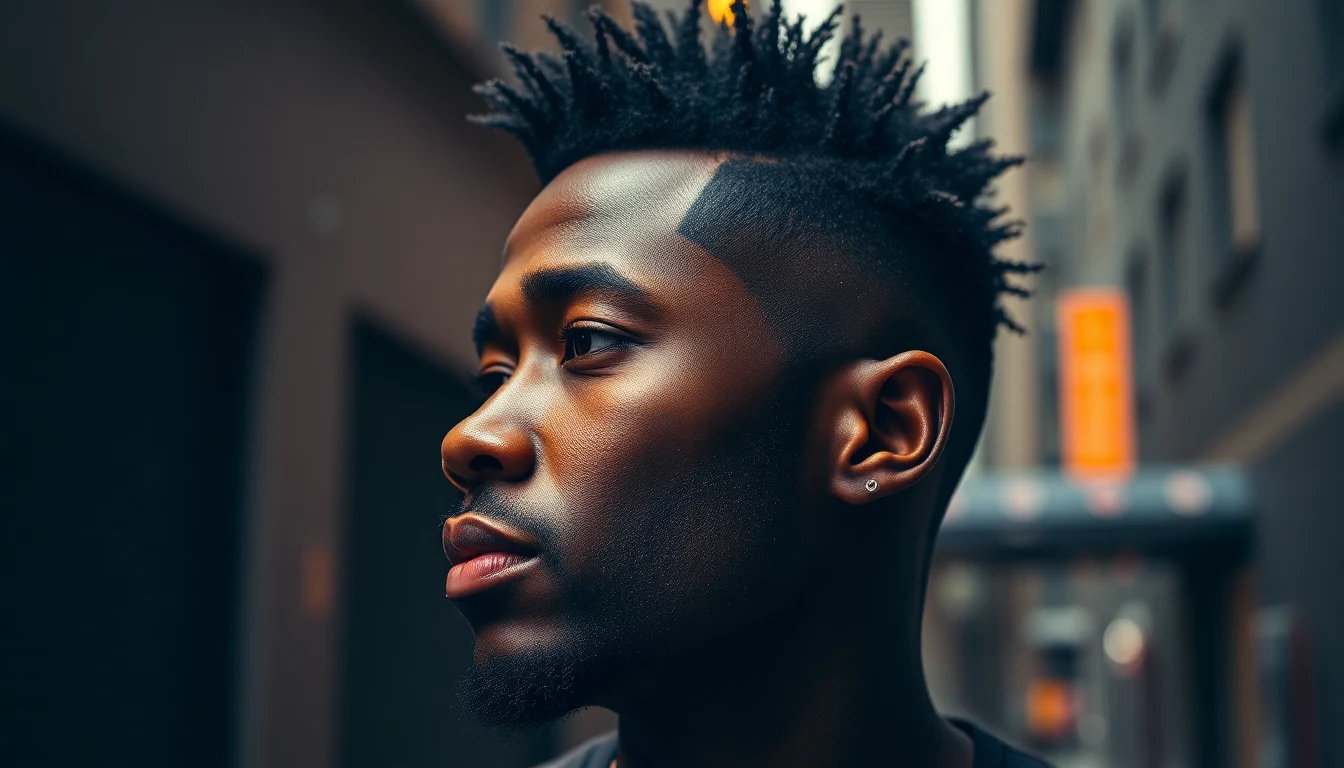
If you want maximum height on a frohawk or long mohawk, wash your hair, apply leave-in conditioner, and pick it out while it is still damp. The moisture adds stretch, and the pick separates the coils for maximum volume. Let it air dry. A blow dryer adds more volume but also adds heat damage over time. Save the dryer for special occasions.
Definition for Curly Mohawks
Twist-outs give the best definition for curly mohawk styles. Section the top, apply Mielle Curl Mousse to each section, twist overnight, and unravel in the morning. For faster results, use a curl sponge on damp, product-coated hair for two to three minutes per section. The sponge gives looser, less defined curls compared to a twist-out.
Hold for Short Mohawks
Short mohawk styles (under one inch) benefit from a matte pomade or forming cream that provides hold without shine. Scotch Porter Forming Pomade is my go-to. It holds the shape without making short 4C hair look wet or greasy. Apply to damp hair, shape with your hands, and leave it alone.
Edge Maintenance Between Barber Visits
Your lineup will start to blur within three to five days of a fresh cut. A precision trimmer lets you clean up the edges at home. The BabylissPRO GoldFX is the industry standard for a reason: zero-gap blade, cordless, lightweight. Start from the center of your hairline and work outward. Small, controlled passes. Do not try to redesign your lineup at home. Just maintain what your barber created.
Common Mistakes to Avoid
I have watched enough mohawk disasters in the chair to compile a list. Learn from other people’s mistakes.
- Going too narrow on your first mohawk. A one-inch strip looks bold in photos. On an untested head shape, it can look strange. Start with a standard width (two inches) and go narrower next time if you want to.
- Skipping the reference photo. I said it already and I will say it again. Bring photos. “Just give me a mohawk” gives your barber zero useful information about what you actually want.
- Ignoring the fade level. The fade makes or breaks the mohawk. A high fade creates maximum contrast. A low fade creates a softer look. Choosing the wrong fade level for your head shape throws the proportions off. Discuss the fade separately from the top section.
- Letting the fade grow out too long. A mohawk with a grown-out fade is not a mohawk. It is a hairstyle that gave up. Budget for regular barber visits before you commit.
- Using the wrong products for your style. Heavy pomade on a frohawk weighs down your coils and kills the volume. Lightweight mousse on a short mohawk does nothing because there is not enough hair to hold. Match the product to the style (see the product table above).
- Ignoring scalp care on the faded sides. Those freshly shaved areas are exposed skin that needs moisturizing and sun protection. Ashy faded sides ruin an otherwise sharp mohawk.
- Not trusting your barber’s advice. If your barber says a particular width or style does not work for your head shape, consider their opinion seriously. They see your head from angles you cannot.
The Mohawk in Black Culture: A Brief History
The mohawk has roots that go back thousands of years across multiple cultures, but Black men have transformed it into something entirely different from its punk rock association. Mr. T made the mohawk iconic in the 1980s. Odell Beckham Jr. pushed it into high fashion athleticism. Every generation of Black men has taken the mohawk and made it their own, adding fades, textures, designs, and cultural identity to a shape that was originally much simpler.
The natural hair movement of the 2000s and 2010s brought the frohawk into the mainstream, celebrating unprocessed 4C texture in a structured form. That matters. For decades, Black men were pressured to keep their hair short or processed to look “professional.” The frohawk says: my hair stands up and that is the point.
The CROWN Act (Creating a Respectful and Open World for Natural Hair), which has been adopted in over 20 states as of 2026, specifically protects hairstyles like locs, twists, and natural hair. While mohawks themselves are not typically the target of workplace discrimination, the natural textures often worn in mohawk form (frohawks, twist mohawks, loc mohawks) are protected under this legislation. Know your rights.
Frequently Asked Questions
What is the best mohawk style for Black men with 4C hair?
The frohawk is the best mohawk style for 4C hair because it works with your natural texture instead of fighting it. Your coils stand tall on top without heat or chemical processing, and the faded sides give the mohawk silhouette. A burst fade mohawk is another strong option because the curved fade follows your head shape naturally and pairs well with tightly coiled hair.
How do I ask my barber for a mohawk fade?
Tell your barber you want a mohawk with faded sides. Specify the width of the strip on top (narrow for a classic mohawk, wider for a South of France), the fade level on the sides (skin fade, mid fade, or low fade), and whether you want a lineup. Bring a reference photo. The most important detail is the width of hair left on top and how high the fade starts.
Can you get a mohawk with dreads?
Yes. A loc mohawk involves growing or maintaining locs on the top section while keeping the sides faded short. You can start with any loc method including two-strand twists, comb coils, or freeform. The locs on top can be styled upward, swept to one side, or tied back depending on length. Expect to visit your barber every two to three weeks to maintain the fade while your locs develop.
What face shape looks best with a mohawk?
Oval and diamond face shapes suit mohawks the best because the vertical height of the mohawk balances proportional features. Round faces benefit from mohawks because the added height elongates the face. Square faces work well with wider mohawk styles like the South of France. Heart-shaped faces should choose narrower mohawk strips to avoid adding too much width at the top.
How often do you need to maintain a mohawk haircut?
Most mohawk styles require a barber visit every two to three weeks to maintain the fade on the sides and keep the lineup sharp. The top section depends on the style. Short mohawks need trimming every two weeks. Longer styles like frohawks or mohawks with twists can go three to four weeks between maintenance visits. Home upkeep includes moisturizing the top daily and using a soft brush or pick to maintain shape.
What products do you need for a mohawk?
The products depend on your specific mohawk style. Short mohawks need a good pomade or styling gel for hold and a quality trimmer for edge maintenance. Frohawks need a leave-in conditioner and curl mousse to define the natural texture on top. Mohawks with twists or dreads need a locking gel and lightweight oil. Every mohawk style benefits from a good lineup trimmer and moisturizer for the scalp on the faded sides.
Final Word
The mohawk is not just a haircut. For Black men, it is a statement of creativity and confidence built on the structural advantage of textured hair. Your coils give you height, volume, and shape that no other hair type can replicate in this cut.
Here is what to remember:
- Start with the South of France or a wide mohawk if this is your first time. They are the most forgiving and universally flattering.
- Match the mohawk to your face shape. The face shape table above is your cheat sheet.
- Budget for maintenance. A mohawk that is not maintained is a mohawk that is giving up. Two barber visits per month is the minimum for most styles.
- Bring reference photos to your barber. Every single time. Even if you have gotten the same cut before. Photos prevent miscommunication.
- Use the right products for your specific style. Frohawk products are different from short mohawk products. See the product table above.
If you want to go even bolder, check out our guide on long hairstyles for Black men for styles that take the length even further. And if you need the right tools to maintain your fade at home, our best clippers for Black men guide has you covered.
Now go find your barber. Bring the photo. Get the cut.
Further reading: For research-backed grooming advice, see Healthline Men’s Health.
Explore more tips at CulturedGrooming.com.
Further reading: For research-backed grooming advice, see Healthline Men’s Health.