
Last updated: February 2026 by Carlos Espinoza, Latino Grooming Editor
Rauw Alejandro does not just make music. He makes barbers work overtime. Every time this Puerto Rican superstar drops a new album, steps onto a stage, or posts a single Instagram story, the DMs to barbershops across the Americas light up with “Can you do this?” And honestly? I respect it. Because Rauw treats his hair the way he treats his music: fearless, experimental, and always Puerto Rican to the core.
I am Carlos Espinoza, and I have been covering Latino men haircuts and grooming culture for years now. When it comes to reggaeton artists influencing how young Latino men walk into the barbershop, Rauw Alejandro sits in the top tier. Not because he invented any single style, but because he has cycled through more looks in five years than most men try in a lifetime. Buzz cuts, bleached platinum, mullets, braids, wild color experiments. The man has done it all, and he makes every single one look like it was designed specifically for him.
This guide breaks down every major Rauw Alejandro haircut from his early career to today. I am giving you the cultural context behind why these styles matter in Puerto Rican hair culture, the exact instructions to give your barber (in English and Spanish), the products that will actually hold these looks on thick Latino hair, and the honest truth about which styles will or will not work for your specific hair type. Let us get into it.
Who Is Rauw Alejandro? The Style Icon Context
Raúl Alejandro Ocasio Ruiz, known professionally as Rauw Alejandro, was born in San Juan, Puerto Rico in 1993. Before he became one of the biggest names in reggaeton and Latin pop, he was a soccer player and dancer. That athletic background matters for understanding his grooming aesthetic: Rauw has always leaned toward styles that are practical, bold, and camera-ready. No overthinking. Just confidence.
His breakthrough came with “Toda” in 2019, and since then albums like Afrodisíaco (2020), Vice Versa (2021), Saturno (2022), and Playa Saturno (2024) have each come with a new visual identity. And with every era, the hair changes. This is not accidental. In the reggaeton world, your look IS your brand. Rauw understands that better than almost anyone in the genre.
What sets Rauw apart from other reggaeton artists is his range. While some artists find one look and stick with it, Rauw is constantly reinventing. That approach mirrors Puerto Rican hair culture itself, where the barbershop is a place for creative expression, not just maintenance. If you grew up going to a barberia (barbershop) in Santurce, Bayamón, or Carolina, you know the culture: your barber is an artist, and your head is the canvas.
The Puerto Rican Hair Culture Behind the Styles
Before we break down each cut, you need to understand why Rauw’s styles hit different when you know the cultural context. Puerto Rican men have some of the most diverse hair textures in the entire Latino world. The island’s history of Taíno, African, and Spanish ancestry means you can find everything from pin-straight pelo lacio to tight coils in the same family. For a deeper exploration, check our full Puerto Rican men’s hairstyles guide.
Rauw himself has thick, wavy-to-curly hair, approximately a 2B to 3A texture. This is one of the most common textures among Puerto Rican men and is incredibly versatile. It holds a buzz cut clean, takes bleach well (with proper care), has enough grip for braids, and creates natural texture in longer styles without needing a ton of product. If you have a similar texture, congratulations. You can pull off virtually every style in his rotation.
The other piece of context is the reggaeton scene’s influence on grooming. Reggaeton has always been a visual genre. From Daddy Yankee’s bandanas in the early 2000s to Bad Bunny‘s nail polish and gender-fluid fashion, these artists do not just make music; they set the aesthetic agenda for millions of young Latino men. Rauw fits perfectly into this tradition. He is pushing boundaries, but he is doing it in a way that feels authentically boricua (Puerto Rican). His styles reference the island’s barbershop artistry, the Caribbean boldness with color, and the confidence that comes from growing up in a culture where looking good is not optional; it is expected.
Rauw Alejandro Haircut Timeline: Every Major Style
Here is the complete evolution, broken down by era. I am covering what each style looks like, why he chose it, how to recreate it, and who it works best for.
The Signature Buzz Cut with Razor Designs (2019-2020)
This is where most people first noticed Rauw’s hair game. During the Afrodisíaco era, he was consistently rocking a very short buzz cut (number 1 to number 2 guard) with clean razor line designs carved into the sides and temple area. Geometric lines, curved patterns, and occasionally small symbols or shapes shaved into the fade. Paired with a sharp lineup at the forehead and temples, this look was clean, low maintenance, and unmistakably Puerto Rican.
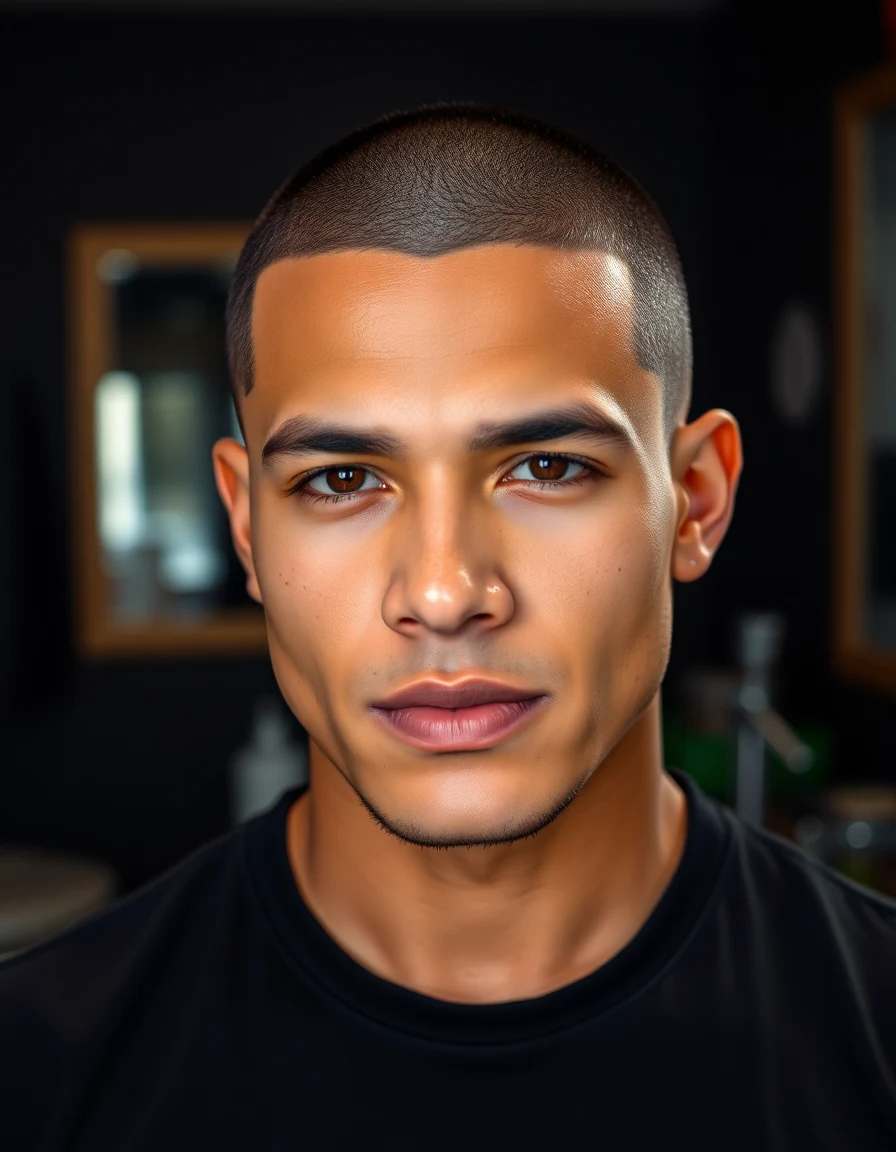
This style is deeply rooted in Latino barbershop culture, especially in Puerto Rico and the Dominican Republic, where razor artistry is practically a competitive sport. Every barberia in San Juan has at least one barber who specializes in designs, and the social media pages of Puerto Rican barbers regularly go viral for their precision work. Rauw wearing this style on major stages gave a global spotlight to a tradition that barbers on the island have been perfecting for decades.
The cut breakdown:
- Top length: Number 1 to number 2 guard (3mm to 6mm), uniform all over
- Sides: Skin fade (zero guard) blending into the top length
- Designs: Razor lines along the temple, geometric patterns, curved accents
- Lineup: Sharp, straight lineup across the forehead and temples
- Color: Natural dark hair (no bleach during this phase)
Who this works for: Every hair type. Seriously. The buzz cut is the great equalizer. Straight, wavy, curly, coily; it all looks sharp at this length. If you have a well-shaped head, this style is about as foolproof as it gets. If you are not sure about your head shape, ask your barber for an honest opinion before committing.
Maintenance: Trim every one to two weeks. The razor designs grow out in seven to ten days, so plan your barbershop visits around any events where you want the designs looking fresh. This is a low-product style. A light application of Elegance Hair Gel or a dab of moisturizer is all you need.
The Bleached Platinum Buzz (2020-2021)
Then Rauw went platinum, and the game changed. He took the same clean buzz cut silhouette but bleached the entire top section to a bright platinum blonde, sometimes icy white, while keeping the faded sides dark or slightly lighter. The contrast between the platinum crown and his natural dark eyebrows became one of the most recognizable looks in all of reggaeton. This was the Vice Versa transition period, and the platinum hair signaled that Rauw was stepping into a new level of stardom and artistic ambition.
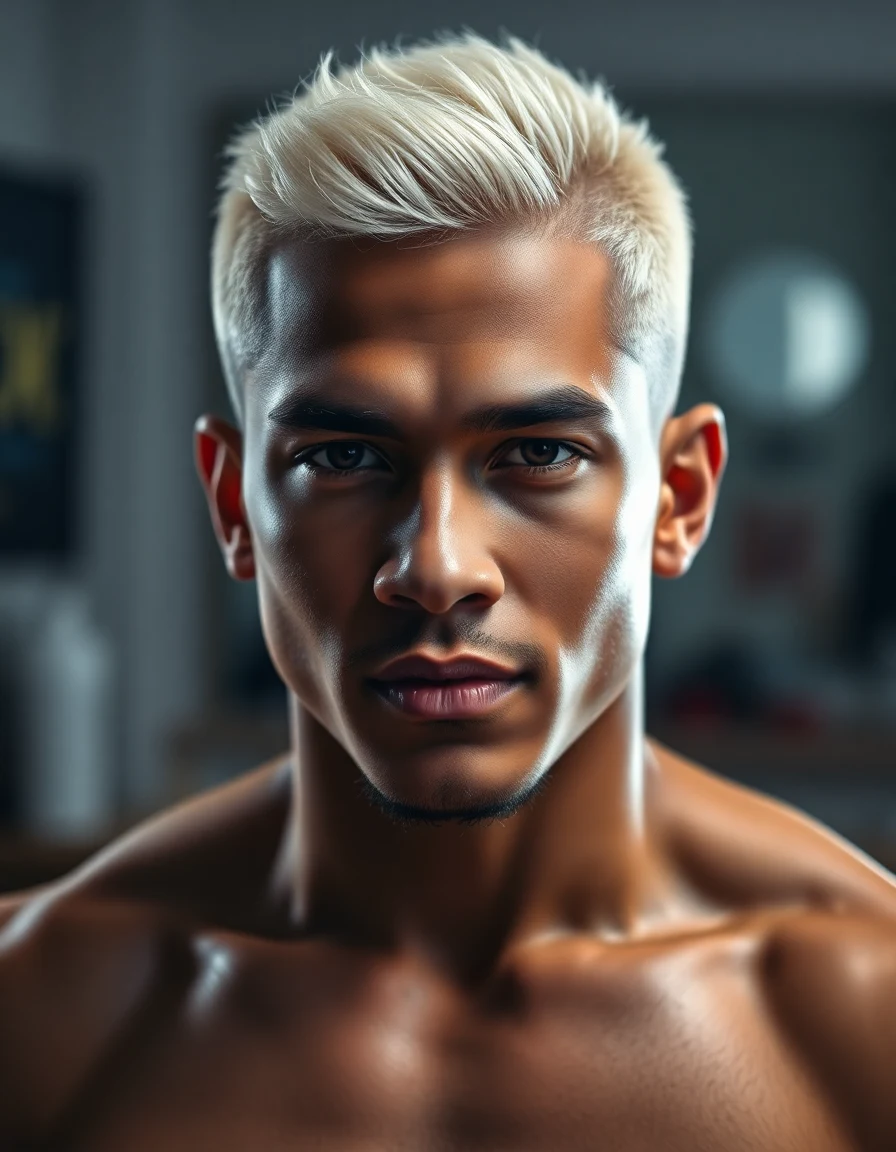
Platinum on dark Latino hair is a commitment. And I want to be real with you about what that commitment looks like, because too many guys bleach their hair at home, destroy it, and then wonder why it looks like straw. Here is the honest breakdown.
The bleaching reality for dark Latino hair:
- Starting point: Most Latino men with dark hair are at a level 1 to 3 (black to dark brown). Platinum is level 9 to 10.
- Process: You need to lift through six to nine levels. This takes two to three professional bleaching sessions spaced two weeks apart. Never try to do it in one session.
- Cost: $80 to $150 per session at a salon. Budget $200 to $350 total for the full lift.
- Maintenance: Root touch-ups every three to four weeks ($60 to $100 each). Purple shampoo two to three times per week to prevent yellow or brassy tones.
- Damage control: Bond-repair treatments (Olaplex No. 3 is the industry standard) between sessions and weekly deep conditioning. The buzz cut length helps because you are not dealing with long damaged strands, but the scalp still needs care.
- Do NOT bleach at home: This is not a suggestion. Dark Latino hair contains eumelanin that resists lifting. Box bleach kits from the drugstore will leave you with patchy orange results or chemical burns. Go to a professional colorist. Not your barber (unless they are also trained in color), a colorist.
The cut itself stays the same: number 1 to number 2 guard on top, skin fade on the sides. The bleach IS the style statement. Some variations include leaving the fade sides natural dark for maximum contrast, or bleaching the entire head for a uniform platinum look.
Who this works for: All hair types (since it is a buzz cut), but you need to consider your skin tone. Platinum blonde on warm, medium-toned Latino skin (like Rauw’s) creates a striking contrast that works beautifully. On very light skin, the contrast is softer. On very dark skin, the contrast is extremely bold, which can look incredible but is definitely a statement piece. The key is making sure the platinum leans cool (icy, silver) rather than warm (yellow, gold), which looks unintentional on dark-haired men.
The Modern Mullet Era (2021-2022)
Just when everyone locked in on the bleached buzz as Rauw’s signature, he grew it out. During the Vice Versa and early Saturno period, Rauw started wearing a modern mullet that combined short, textured hair on top with tapered sides and noticeably longer length in the back, sometimes reaching past his collar. This was not the 1980s hockey mullet. This was the reggaeton mullet: intentional, styled, and dripping with Caribbean swagger. Mastering rauw alejandro haircut takes practice but delivers great results.
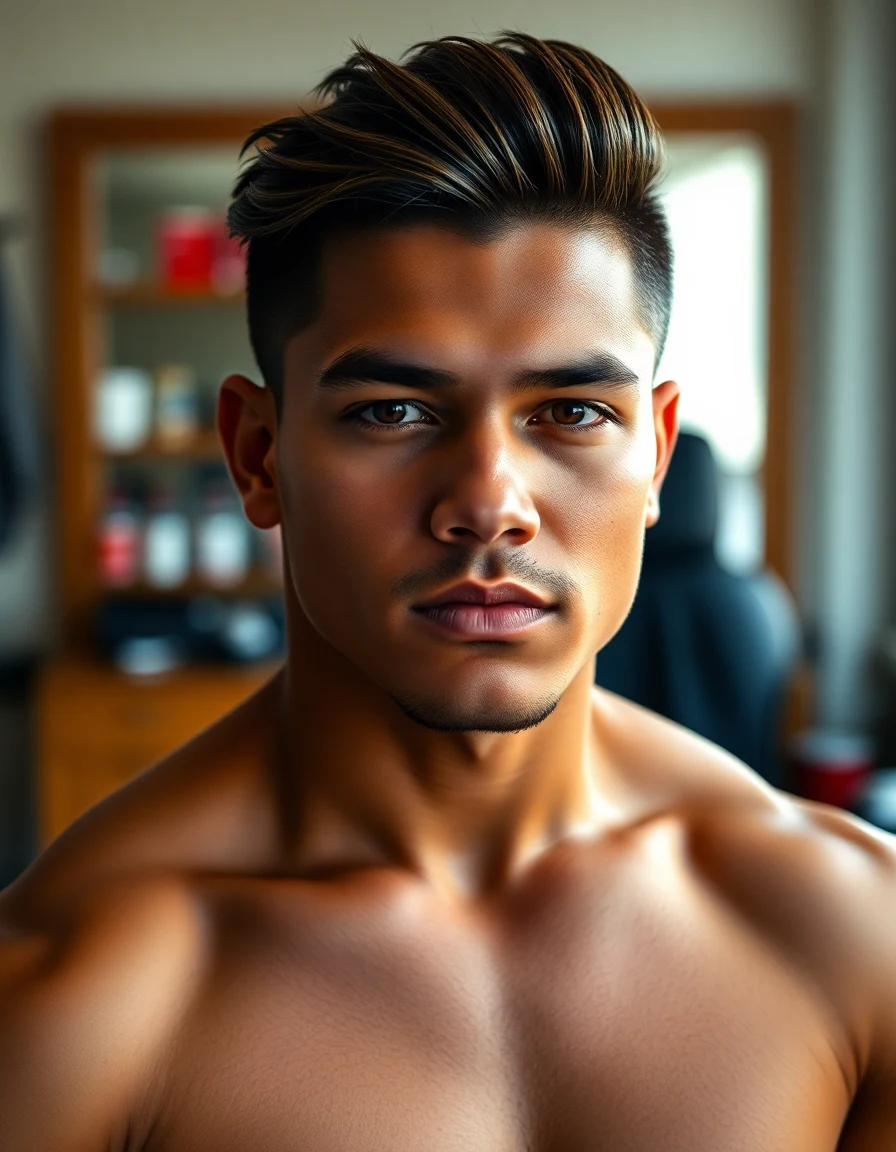
The mullet has had a massive resurgence across Latin America and Latino communities in the U.S. since around 2020, driven largely by reggaeton and regional Mexican artists. For our coverage of this broader trend, see our complete Latino men haircuts guide. What Rauw did differently was add texture and sometimes subtle color accents to his mullet, giving it a more fashion-forward, almost punk-influenced edge compared to the straighter, cleaner mullets popular in Mexican barbershop culture.
The cut breakdown:
- Top: 2 to 4 inches of textured, choppy hair, styled forward or tousled
- Sides: Tapered or mid fade, keeping the transition from short sides to long back gradual
- Back: 4 to 6 inches of length, sometimes longer, left to flow naturally or styled with texture spray
- Optional: Subtle highlights or color accents in the longer back section
- Lineup: Cleaner than the back suggests; the front remains sharp
Who this works for: This style works best on wavy to straight hair (Type 1C to 2B) because those textures allow the back section to flow without excessive shrinkage. If you have curly hair (3A and up), the back will look shorter than it actually is due to curl shrinkage, which can throw off the proportions. You will need more length to compensate. Face-shape wise, the mullet works well on oval and rectangular faces. Round faces should keep the sides tighter to add vertical emphasis.
How to style it: Apply a sea salt texturizing spray to damp hair and scrunch the back section for natural movement. On the top, work in a small amount of Pacinos Matte Paste for hold with a natural finish. Blow dry the top up and forward if you want more volume. Leave the back to air dry for a relaxed look.
Growth timeline: If you are starting from a buzz cut, expect four to six months to reach mullet length in the back. During the awkward grow-out phase (months two through three), your barber can keep the sides clean with regular fades while leaving the top and back untouched. This keeps you looking intentional during the transition.
Braids and Cornrows Phase (2022-2023)
During the Saturno era, Rauw leaned into braided styles. Straight-back cornrows, sometimes combined with a fade on the sides, became a regular part of his visual rotation. This was a meaningful shift. Braids in Puerto Rican culture carry specific significance because they connect to the island’s Afro-Caribbean roots. For a Puerto Rican artist at Rauw’s level to publicly embrace braided styles was both a fashion choice and a cultural statement, acknowledging the African heritage that shapes so much of Puerto Rican identity, music, and aesthetic.
Rauw’s braided looks typically featured six to ten straight-back cornrows running from the forehead to the nape, sometimes with a mid fade or taper on the sides for contrast. Other times, he wore the braids with the sides left natural for a fuller look. He also experimented with different parting patterns, including zigzag parts between the rows and braids that angled slightly rather than running perfectly straight back.
The cut breakdown:
- Braid pattern: Six to ten straight-back cornrows, medium width
- Sides: Mid fade or left natural, depending on the specific look
- Hair length needed: Minimum 3 to 4 inches all over (the longer the better for grip)
- Back: Braids extend to the nape; can end free or be gathered
- Extras: Occasionally accented with small beads or metallic cuffs at the ends
Who this works for: Braids work on all hair types, but the texture determines how long they last. Curly and coily hair (Type 3A and up) holds braids best, lasting three to six weeks. Wavy hair (2A to 2C), which is closer to Rauw’s texture, holds braids for one to three weeks before they start loosening. Straight hair can be braided but tends to slip out within a week. If you have straight hair and want this look to last, your braider can use a small amount of braiding gel or mousse at the root for extra grip.
Finding a braider: Do not ask your barber to do this unless they specifically offer braiding services. Cornrows are a specialized skill. Look for a braider (trenzista) with experience in men’s styles. In major cities with Caribbean Latino communities, you will find specialists at Dominican and Afro-Latino salons. Expect to pay $50 to $150 depending on the complexity and your location.
Maintenance: Wrap your braids in a durag or silk scarf every night to reduce frizz and keep the parts clean. Apply a light oil (coconut or jojoba) to the scalp every two to three days to prevent dryness and itching. Do not leave braids in longer than six weeks; the tension on the edges can cause traction alopecia if worn too long. For more fade maintenance between braiding sessions, see our fade maintenance guide.
The Textured Crop with Fade (2023-2024)
As the Saturno album cycle matured, Rauw moved toward a cleaner, more refined look: the textured crop with a high skin fade. This style features 1.5 to 3 inches on top, cut with texture shears to create choppy, natural-looking movement, with a high skin fade on the sides that blends to nothing above the ear. The top is styled forward and slightly messy, creating a youthful, effortless look that works on camera and in everyday life.
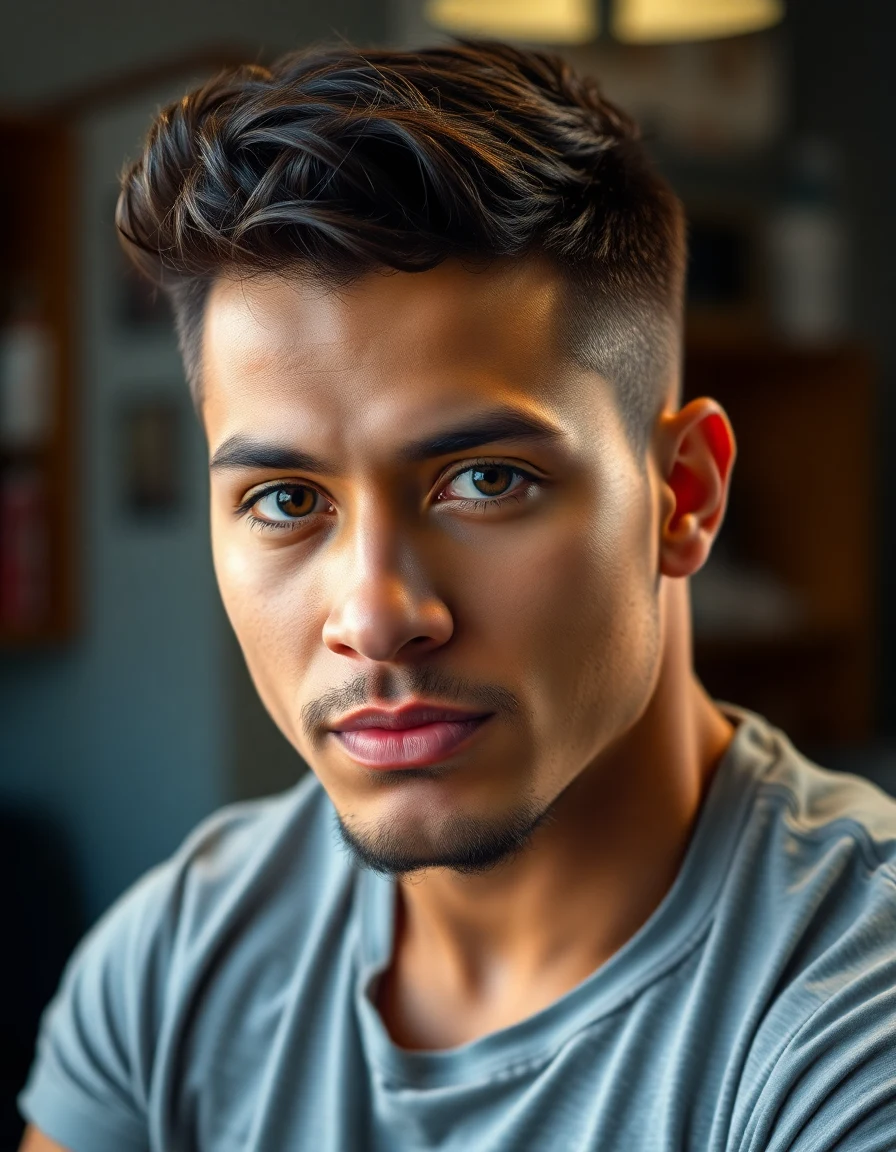
I think of this as Rauw’s “mature” phase. Not boring; refined. After years of platinum buzz cuts and mullets, the textured crop said, “I am still stylish, but I do not need to shout about it.” And that is a progression a lot of men go through. You experiment hard in your early-to-mid 20s, and then you settle into something that is still distinctly you, but does not require an appointment every ten days to maintain.
The cut breakdown:
- Top: 1.5 to 3 inches, cut with texture shears or point-cut for movement
- Sides: High fade or high skin fade, blending to zero above the ear
- Front: Styled forward with slight fringe, not blunt like an Edgar but textured and broken up
- Back: Tapered clean into the neckline
- Lineup: Sharp and defined at the forehead and temples
Who this works for: This is another incredibly versatile cut. It works on straight, wavy, and curly hair. Straight hair gives a choppier, more defined texture. Wavy and curly hair adds natural movement that reduces styling time. Oval, square, and heart face shapes all look great. Round faces should ask for a bit more height on top to elongate.
How to style it: Towel dry until about 80% dry. Work a dime-sized amount of Baxter of California Clay Pomade or Pacinos Matte Paste between your palms and work it through the top, pushing forward and slightly to one side. Use your fingers (not a comb) to create separation and texture. If your hair is particularly thick and resistant, blow dry upward first, then apply product for extra volume and hold.
The Colored Hair Experiments (Ongoing)
Throughout every phase of his career, color has been a constant variable in Rauw’s hair game. Beyond the platinum buzz cut era, he has experimented with copper and orange tones, dark blue-black washes, subtle brown highlights, and reddish accents. Sometimes the color is the main event; other times it is an accent that adds dimension to an otherwise standard cut.
This willingness to play with color is very Caribbean. In Puerto Rico, colored hair on men does not carry the same hesitation that you sometimes see in other Latino cultures. The island’s barbershop and salon culture embraces color as another tool in the styling toolkit. Walk through Condado or Santurce on a Friday night and you will see men with everything from subtle honey highlights to full neon. It is not considered feminine or unusual. It is just style.
Color options inspired by Rauw’s looks:
- Full platinum: The most dramatic option. Requires full bleaching (see the platinum buzz section above for the process).
- Copper/orange: A warmer alternative that does not require lifting quite as far. Dark hair needs to be lifted to level 6 to 7 before applying a copper tone. One to two sessions at a salon.
- Highlights or money pieces: Blonde or caramel streaks on a dark base. Lower commitment and lower maintenance than full bleach. The contrast looks especially good on wavy hair where the highlighted strands catch light differently.
- Dark blue or blue-black wash: A semi-permanent color applied over natural dark hair. This is the most subtle option. In direct light, it has a blue or teal shimmer. In low light, it reads as natural black. Minimal damage, washes out in six to eight weeks.
- Reddish-brown accents: A natural-looking option that adds warmth. Works without heavy bleaching on medium-dark hair. Complements warm skin tones particularly well.
My recommendation for first-timers: If you have never colored your hair, do not start with platinum. Start with highlights or a dark wash. See how you feel about it, how your hair reacts, and how it fits your lifestyle. Then level up from there. And always, always go to a professional. Hair color on dark, thick Latino hair requires specific knowledge that generic salons may not have. Look for a colorist who works with diverse hair types.
The Disconnected Undercut (Music Video Special)
Across several music videos and red carpet appearances, Rauw has also worn variations of the disconnected undercut: a hard separation between the longer top section and the shaved sides, with no gradient blending between them. This is a high-contrast, high-fashion style that photographs extremely well from every angle. In the disconnected version, the top is typically 3 to 5 inches and can be slicked back, pushed to one side, or worn forward with texture.
The cut breakdown: Understanding rauw alejandro haircut is key to a great grooming routine.
- Top: 3 to 5 inches, versatile enough to style in multiple directions
- Sides and back: Shaved to a number 0.5 or number 1, with a hard disconnect line where the top meets the sides (no blending)
- Styling options: Slicked back, side-swept, forward with texture, or pushed up with volume
- Optional: Razor line along the disconnection point for extra emphasis
Who this works for: Square, oval, and diamond face shapes. This style accentuates angular features and adds structure. Round faces can pull it off if the top has enough height to elongate. Hair type matters here: thick, straight to wavy hair holds this cut best because you need the top section to stay in place when styled. Very curly hair will have more volume on top, which can work but changes the silhouette significantly. For a complete reference on types of fades and disconnect techniques, check our full guide.
Styling: For the slicked-back version, blow dry back and apply Suavecito Firme Hold Pomade or Layrite Superhold Pomade for lasting hold with shine. For the textured version, use a clay or matte paste and work it through with fingers for separation. The disconnected undercut needs regular barber visits (every two weeks) because the contrast between the long top and shaved sides becomes less dramatic as the sides grow out.
Complete Style Comparison: Which Rauw Alejandro Haircut Is Right for You?
I created this table to help you find the right Rauw-inspired style based on your hair type, maintenance tolerance, and lifestyle. Be honest with yourself about the upkeep column. The coolest haircut in the world is worthless if you cannot maintain it.
| Style | Hair Type | Min. Length | Upkeep | Cost Per Visit | Best For |
|---|---|---|---|---|---|
| Buzz Cut + Designs | All types | 0.5 inches | Every 1-2 weeks | $25-$50 | Low maintenance, athletic, bold |
| Bleached Platinum Buzz | All types | 0.5 inches | Every 1-2 weeks + color every 3-4 weeks | $25-$50 + $80-$150 color | Maximum impact, willing to invest |
| Modern Mullet | Straight to wavy (1C-2B) | 4-6 inches (back) | Every 3-4 weeks | $30-$50 | Trend-forward, growing out phase |
| Cornrow Braids | Wavy to coily (2B-4C) | 3-4 inches | Redo every 2-4 weeks | $50-$150 | Cultural expression, protective style |
| Textured Crop + Fade | All types | 1.5-3 inches | Every 2-3 weeks | $25-$45 | Versatile, professional, everyday |
| Disconnected Undercut | Straight to wavy (1B-2C) | 3-5 inches (top) | Every 2 weeks | $30-$50 | High fashion, sharp contrast |
| Colored Accents | All types | Varies | Color refresh every 4-6 weeks | $60-$150 color session | Personal expression, on any base cut |
How to Ask Your Barber for Rauw Alejandro Haircuts
Let me be direct. Showing your barber a picture of Rauw Alejandro is the single most effective thing you can do. A picture eliminates guesswork. But your barber also needs to hear specific technical details so they can adapt the style to your head shape, hair type, and texture. Here is how to communicate each major style, in English and Spanish. For more general tips on communicating in the chair, see our Latino barbershop culture guide.
Buzz Cut with Designs
In English: “I want a buzz cut, number 1 (or number 2) on top, skin fade on the sides. Sharp lineup all around. And I want a razor design on the right temple. Something geometric, two or three lines.” Show a reference photo of the specific design pattern you want.
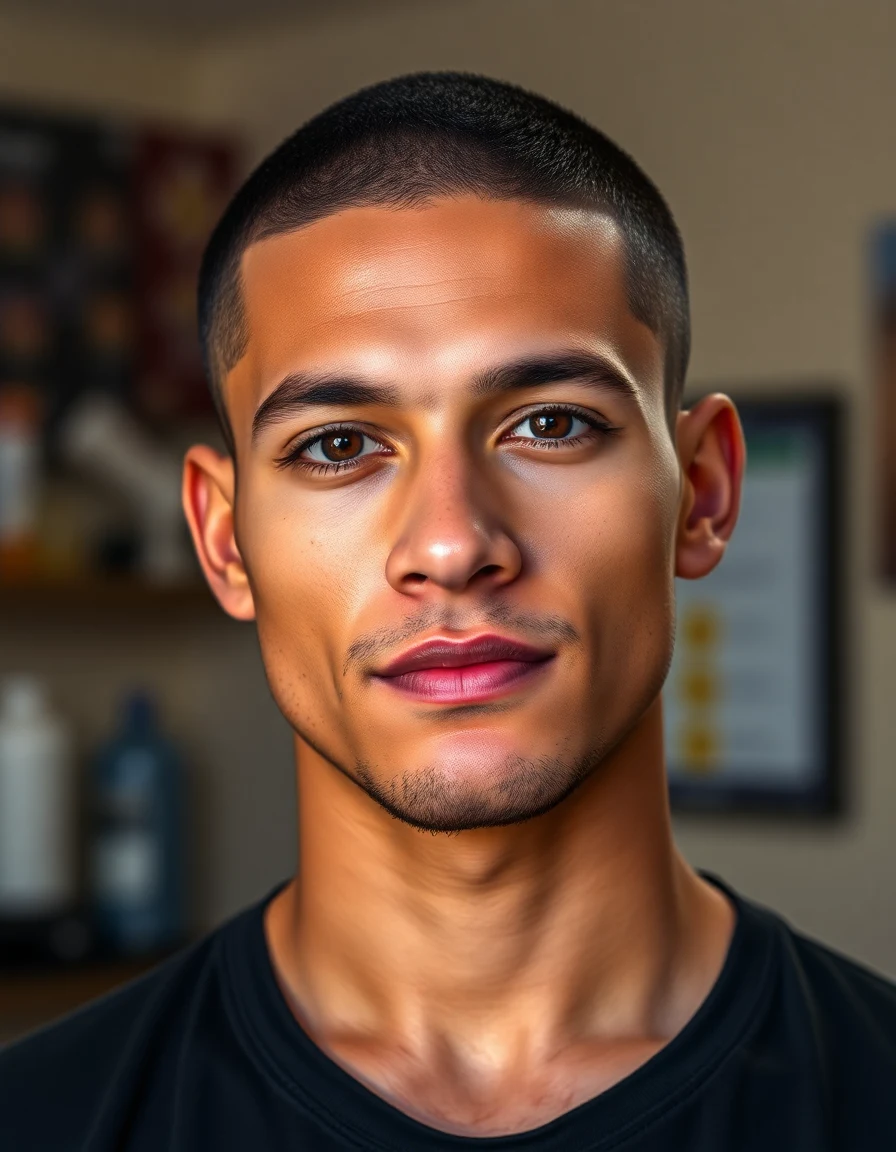
En español: “Quiero un corte al ras, número 1 (o número 2) arriba, degradado a piel en los lados. Delineado bien definido en todo el contorno. Y quiero un diseño con navaja en la sien derecha. Algo geométrico, dos o tres líneas.” Muestra una foto del diseño que quieres.
Bleached Platinum
In English (to the colorist): “I want to go platinum blonde on top, keeping it icy and cool-toned, not yellow. I know my hair is dark so this will take multiple sessions. I want the sides to stay my natural color with a skin fade.” Be prepared for the colorist to assess your hair health and possibly recommend a strand test first.
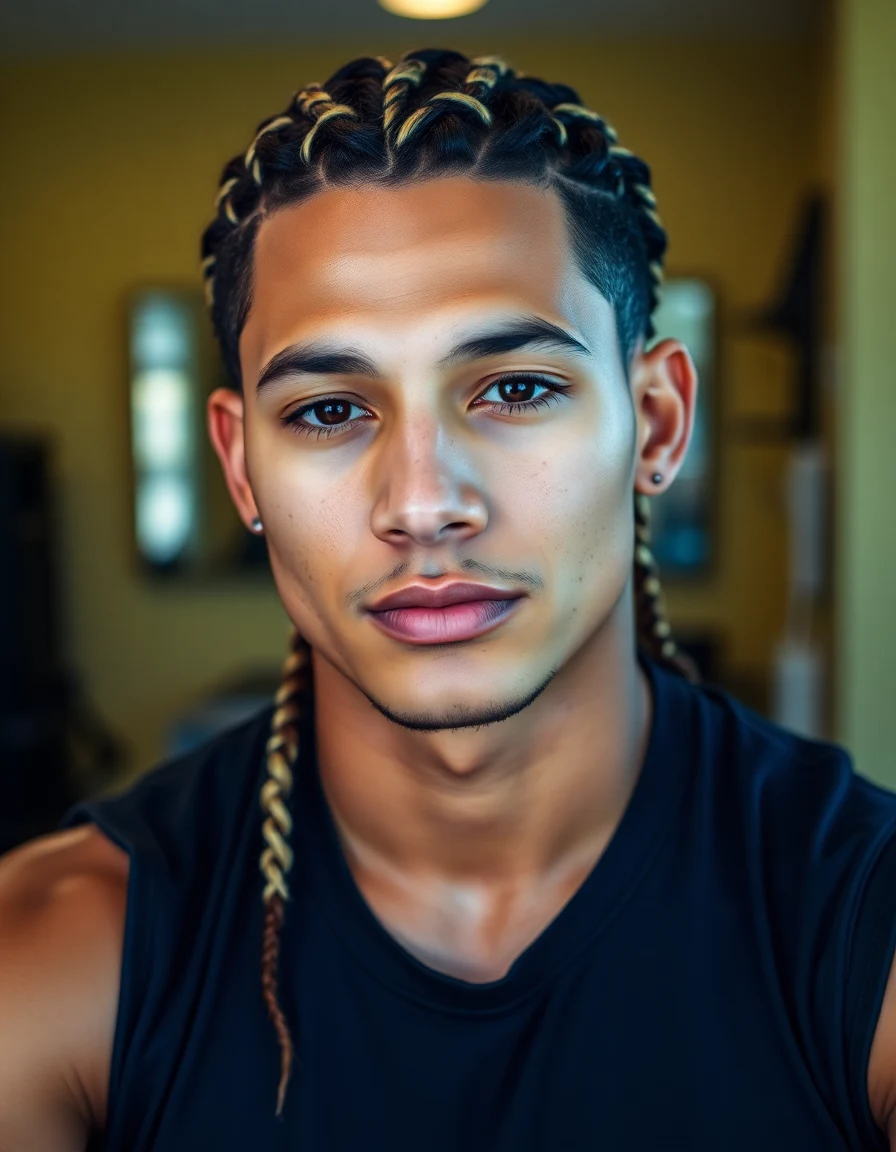
En español (al colorista): “Quiero platinar la parte de arriba, con un tono frío, tipo plata, no amarillo. Sé que mi pelo es oscuro y que necesita varias sesiones. Los lados los quiero en mi color natural con degradado a piel.”
Modern Mullet
In English: “I want a modern mullet. Short and textured on top, about 2 to 3 inches. Tapered on the sides, no skin fade. And leave the back long, past the collar. I want a gradual transition from the short sides to the long back, not a hard disconnect.”
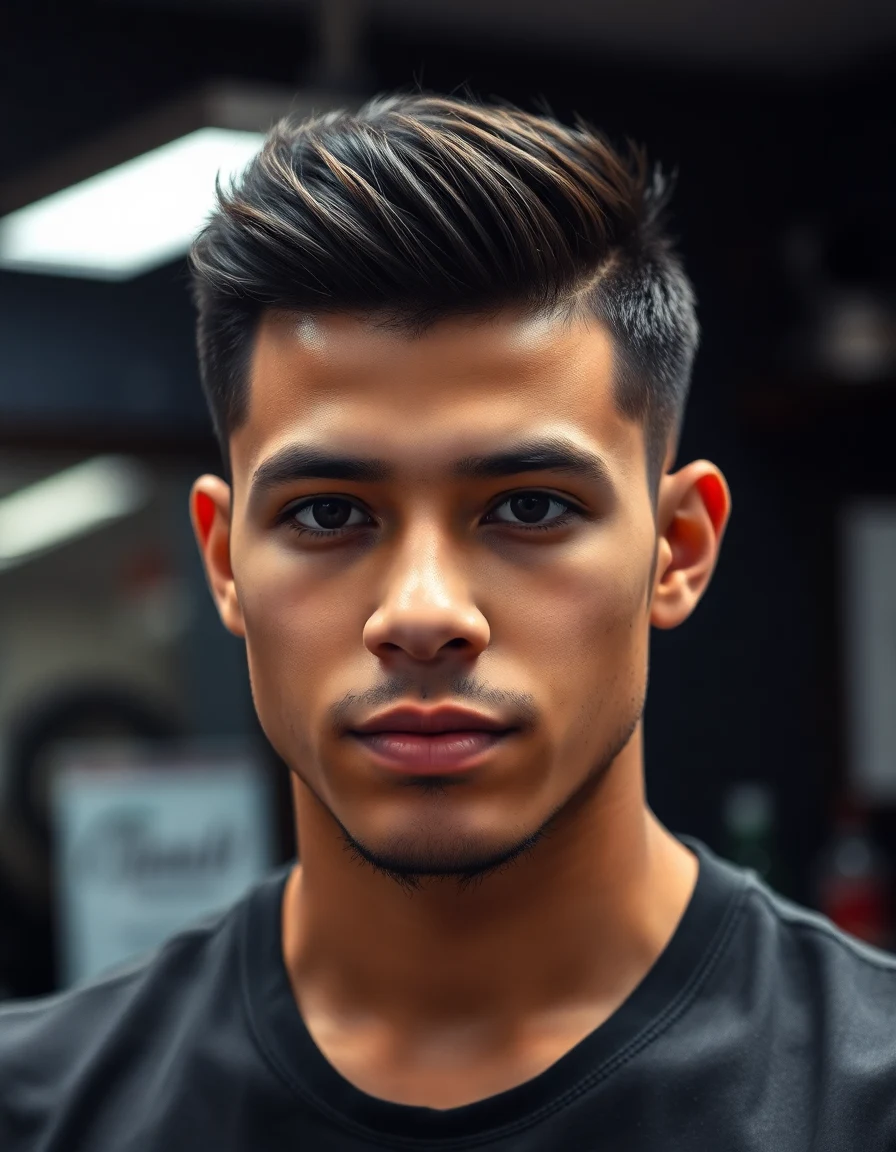
En español: “Quiero un mullet moderno. Corto y texturizado arriba, como 5 a 7 centímetros. Los lados en degradado, sin llegar a piel. Y atrás largo, que pase del cuello. Una transición gradual de los lados cortos al largo de atrás, sin corte duro.”
Cornrow Braids
In English (to the braider): “I want straight-back cornrows, about eight rows, medium width. Even spacing between each row. I want a mid fade on the sides. Start the braids above the fade line.” Note: you may need to visit the barber for the fade first, then the braider for the cornrows. Or find a shop that offers both services.
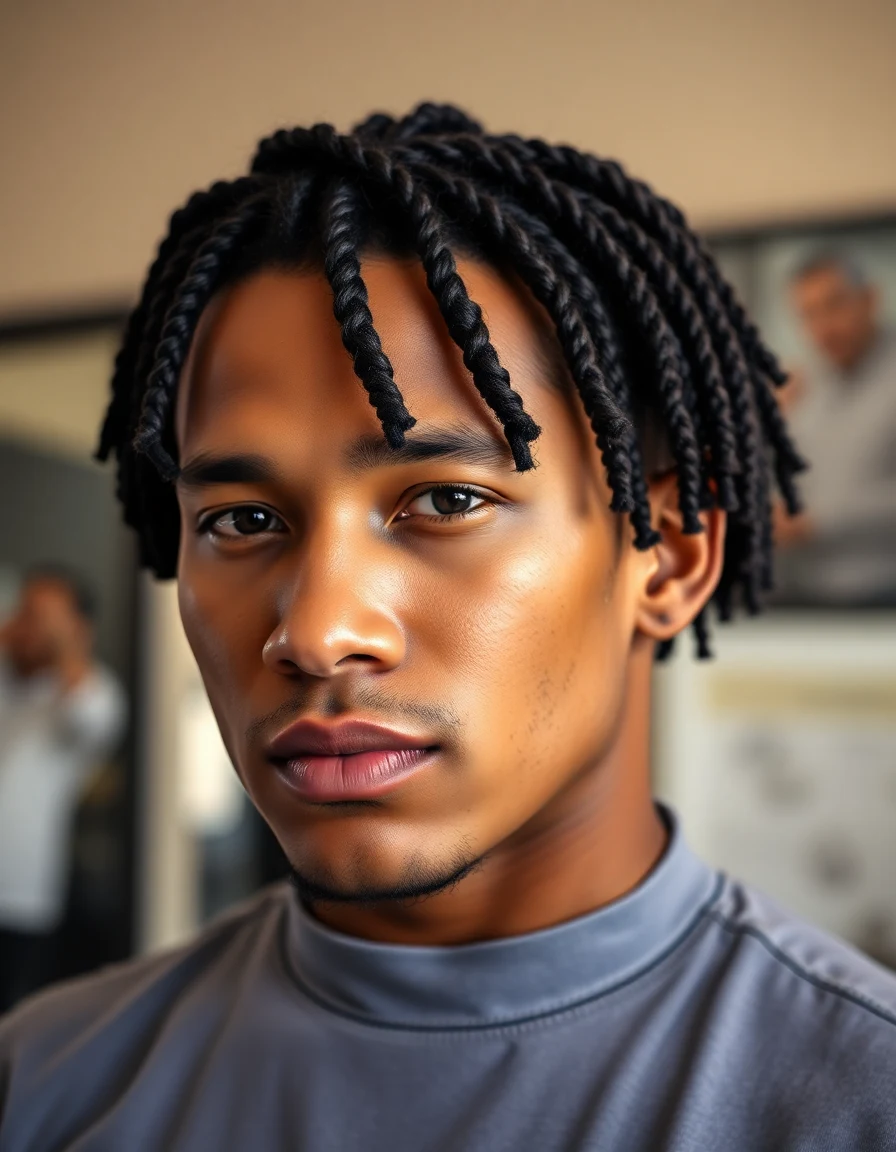
En español (al trenzista): “Quiero trenzas pegadas hacia atrás, como ocho filas, de ancho mediano. Espacio parejo entre cada fila. Quiero degradado medio en los lados. Las trenzas empiezan arriba de la línea del degradado.”
Textured Crop
In English: “I want a textured crop. High skin fade on the sides, 2 to 3 inches on top, point-cut or texturized for movement. Style the top forward with a bit of fringe, but not blunt like an Edgar. Keep it choppy and natural. Sharp lineup.”
En español: “Quiero un corte texturizado. Degradado alto a piel en los lados, 5 a 7 centímetros arriba, desfilado con textura. Peinar hacia adelante con un poco de fleco, pero no recto como un Edgar. Que se vea picado y natural. Delineado bien definido.”
Products That Actually Work for These Styles
Every style needs the right products to look right and hold all day. Here is what I recommend based on years of working with thick Latino hair. For a deeper breakdown, check our best pomade for Hispanic hair guide.
For the Buzz Cut (Natural or Bleached)
The buzz cut is beautifully low-product. You need three things:
- Scalp moisturizer: A light, non-greasy moisturizer to keep your scalp from looking ashy or dry. Especially important if you are bleached, as the lightening process dries out the scalp.
- Elegance Hair Gel: A thin layer adds subtle shine and keeps the short hair lying flat. This is a barbershop staple in Puerto Rican shops.
- SPF for your scalp: At buzz cut length, your scalp gets direct sun exposure. Spray sunscreen or a light SPF moisturizer is essential. Do not skip this; scalp sunburns are painful and damage the hair follicles.
For the Mullet and Textured Crop
- Pacinos Matte Paste: Medium hold with a matte finish. Perfect for the choppy, textured look on the top section. Works in damp or dry hair.
- Sea Salt Texturizing Spray: Spray into damp hair before air drying for natural, beachy texture. Essential for the back section of the mullet.
- Baxter of California Clay Pomade: Firm hold, matte finish, works well on thick hair. Better than Pacinos if your hair is very thick and needs extra control.
For the Disconnected Undercut and Slicked Styles
- Suavecito Firme Hold Pomade: The strongest hold in the Suavecito line. Water-soluble, so it washes out easily. Gives the classic slicked-back look with visible shine.
- Layrite Superhold Pomade: Slightly heavier hold than Suavecito Firme. Excellent for very thick hair that resists staying in place. Medium shine.
- Reuzel Blue Strong Hold: High-shine, water-soluble, heavy hold. Popular in Puerto Rican and Dominican barbershops. If your hair is the type that fights back against product, this is your answer.
For Braids and Protective Styles
- Light oil for the scalp: Jojoba oil or coconut oil, applied with a precision tip bottle between the braids every two to three days. This prevents dryness, itchiness, and flaking.
- Edge control: To keep the hairline and edges clean around the braids. A small amount along the lineup area keeps everything looking intentional.
- Satin or silk durag/bonnet: Sleep with your braids covered every single night. Cotton pillowcases create friction that causes frizz and loosens the braids faster.
For Bleached or Colored Hair
- Purple shampoo: Use two to three times per week to neutralize yellow and brassy tones on platinum hair. Alternate with a hydrating shampoo on other wash days.
- Bond-repair treatment (Olaplex No. 3): Use once a week. Apply to damp hair, leave for 10 minutes, then shampoo out. This reconnects the disulfide bonds that bleaching breaks, keeping your hair from turning brittle.
- Leave-in conditioner: A lightweight leave-in after every wash to maintain moisture. Bleached hair loses its ability to retain moisture naturally, so you need to add it back externally.
Tools Your Barber Should Be Using
A good barber with mediocre tools will give you a good cut. A good barber with great tools will give you a perfect one. If you are investing in a Rauw Alejandro style, especially the razor designs and skin fades, your barber needs precision equipment. Here is what the top Puerto Rican barbers are using.
- BaBylissPRO GoldFX Clippers: The gold standard (literally) for fades and precision work. The DLC titanium blade stays sharp and cuts through thick hair without pulling. If your barber is pulling out the GoldFX, you are in good hands.
- BaBylissPRO GoldFX Trimmer: The matching trimmer for lineups and detail work. The zero-gap blade is essential for those razor-sharp lineups Rauw always has.
- Straight razor or shavette: For the razor line designs. This is non-negotiable. No trimmer can replicate the clean, thin lines that a straight razor produces.
- Texture shears: For the textured crop and mullet styles. Regular scissors cut clean lines; texture shears remove weight and create the choppy, layered look.
If you want to maintain your buzz cut between barbershop visits, a pair of quality clippers at home is a worthwhile investment. Check our best clippers for fades roundup for our top picks at every price point.
Rauw Alejandro vs. Other Reggaeton Hair Icons
Rauw does not exist in a vacuum. The reggaeton and Latin trap scene is full of artists whose hair choices influence millions. Here is how Rauw’s approach compares to his peers.
Rauw Alejandro vs. Bad Bunny: Bad Bunny pushes hair into genuinely avant-garde territory. Heart-shaped shaved patterns, multicolored sections, intentionally “ugly” styles that become fashion statements. Rauw is more refined; his choices are bold but always aesthetically polished. If Bad Bunny is the punk of reggaeton hair, Rauw is the R&B. Both are influential, but they attract different sensibilities. Rauw’s styles are more adaptable for everyday wear because they stay within conventionally attractive boundaries while still being distinctive.
Rauw Alejandro vs. Peso Pluma: Peso Pluma’s signature is the modern Mexican mullet with curtain bangs, deeply rooted in regional Mexican and corridos tumbados culture. It is a specific, consistent look tied to a specific musical identity. Rauw, by contrast, is a chameleon. He does not have one signature style; he has a signature willingness to change. If you want to commit to one look and own it, Peso Pluma’s approach is your model. If you want to experiment and evolve, follow Rauw. When it comes to rauw alejandro haircut, technique matters most.
The takeaway: Rauw’s value as a hair icon is not any single style; it is the permission he gives to try everything. In a culture where men can feel pressured to pick one look and stick with it, Rauw’s constant reinvention says, “Your hair is a creative medium. Experiment.”
Common Mistakes When Copying Rauw Alejandro’s Hair
I have seen enough barbershop results to know where things go wrong. Here are the most common mistakes men make when trying to recreate a Rauw Alejandro haircut, and how to avoid each one.
1. DIY Bleaching
This is the number one disaster I see. A guy buys a box bleach kit, applies it to his dark hair, and ends up with patchy orange-yellow results and a fried texture. Dark Latino hair is resistant to lifting. It needs volume 20 or 30 developer applied by someone who knows when to rinse, how to section, and how to manage the heat buildup on the scalp. Go to a professional colorist. I cannot stress this enough.
2. Skipping the Reference Photo
Describing a haircut verbally always leaves room for misinterpretation. “I want a buzz cut like Rauw Alejandro” could mean ten different things to ten different barbers depending on which era of Rauw they are picturing. Screenshot the exact photo of the specific look you want. Show it at the start of the appointment. This eliminates confusion and gives your barber a clear target.
3. Ignoring Your Hair Texture
Rauw has thick, wavy-to-curly Puerto Rican hair. If you have fine, straight hair, the textured crop will look different on you. If you have tight coils, the mullet will behave differently. This is not a limitation; it is information. Your barber can adapt the style to your texture, but you need to have realistic expectations about how it will look on YOUR head, not Rauw’s.
4. Neglecting Maintenance
Rauw has a professional grooming team keeping his hair camera-ready at all times. In the real world, that razor design is going to grow out. That platinum is going to show dark roots. Those braids are going to get fuzzy. Every style in this guide has a maintenance schedule. Be honest with yourself about whether you will keep up with it. The best-looking haircut is one you actually maintain.
5. Choosing the Wrong Barber for Designs
Razor designs require a specific skill set. Not every barber who does great fades can do clean razor art. Before committing, check your barber’s portfolio for design work. Look at their Instagram or TikTok. If they do not post design work, they probably do not specialize in it. In that case, seek out a barber who does. Puerto Rican and Dominican barbershops in your area are a good starting point, as the razor design tradition runs deep in those communities.
The Rauw Alejandro Grooming Routine Beyond Hair
Hair is the headline, but the full picture includes skincare and grooming habits that complement the cut. Rauw consistently presents with clear, even-toned skin, well-maintained eyebrows, and a generally clean-shaven or light stubble look. Here is what that routine likely looks like and how to adapt it for yourself.
- Skincare: Cleanser, moisturizer with SPF, and a spot treatment for any breakouts. For Puerto Rican men, melanin-rich skin can be prone to hyperpigmentation from acne or irritation, so a vitamin C serum and sunscreen are essential. For a full routine, see our Latino men skincare guide.
- Eyebrows: Clean up stray hairs between the brows and along the bottom edge, but do not over-shape. Rauw keeps his eyebrows full and natural with just the unibrow area cleaned up. For men with thick, dark eyebrows (common in Puerto Rican men), this is the right balance; over-shaped brows read as unnatural.
- Facial hair: Rauw mostly goes clean-shaven or with very light stubble. If you are rocking any of his bolder hair styles, going clean on the face keeps the focus on the head. Too much happening on the face AND the head can look busy.
- Neck and neckline: Between barbershop visits, keep the neckline clean with a trimmer. The back of the neck is the first thing that grows out and looks unkempt. A weekly cleanup at home extends the life of any fade or taper.
Rauw Alejandro Haircut Trends to Watch in 2026
Based on Rauw’s trajectory and what is happening in the broader reggaeton grooming scene, here is what I expect to see in the coming year:
- More color experimentation: Rauw has not exhausted his color palette. Expect to see bolder tones like emerald, deep burgundy, or silver grey as he continues to push visual boundaries with future projects.
- Return to the buzz cut: Artists often come full circle. A return to the clean, bleached buzz with updated razor designs would be very on-brand for a new album cycle.
- Longer textured styles: The industry trend is moving toward slightly longer, more textured men’s styles. Rauw growing out into a medium-length textured look with his natural wave pattern would be a natural evolution.
- Braids with beads or accessories: Puerto Rican and broader Caribbean culture has a tradition of adorning braided hair with beads, shells, and metal cuffs. Rauw incorporating more of these elements would connect his modern style back to Afro-Caribbean heritage.
Frequently Asked Questions
What haircut does Rauw Alejandro have?
Rauw Alejandro rotates between several signature styles. His most iconic look is the bleached platinum buzz cut with razor line designs on the sides. He has also worn modern mullets, cornrow braids, textured crops, and various colored hair styles. His current rotation in 2025-2026 includes short textured cuts with color accents and clean fades.
How do I ask my barber for a Rauw Alejandro haircut?
Bring a reference photo from the specific era you want to replicate. For his buzz cut look, ask for a number 1 or number 2 buzz with a skin fade and razor line design on the temple. For the mullet, request a short textured top with tapered sides and length in the back past the nape. For braids, ask for straight-back cornrows with a mid fade. Always specify whether you want the bleached or natural color version.
Can I get Rauw Alejandro’s bleached buzz cut on dark Latino hair?
Yes, but it requires a professional colorist, not a DIY bleach job. Dark Latino hair (level 1-3) needs to be lifted to level 9-10 for platinum, which typically takes two or three sessions spaced two weeks apart. Budget $150-$300 total for the lightening process. Maintenance involves root touch-ups every three to four weeks and purple shampoo to prevent yellowing.
What hair type do you need for Rauw Alejandro’s hairstyles?
Rauw Alejandro has thick, wavy-to-curly Puerto Rican hair (approximately Type 2B-3A). His styles work on most Latino hair textures. The buzz cut works on every hair type. The mullet and textured crop work best on wavy to straight hair. The braids work best on curly to coily hair with enough length (minimum 3-4 inches) to grip. Straight hair may need product for the textured styles.
How much does a Rauw Alejandro style haircut cost?
A basic buzz cut with fade runs $25-$40 at most barbershops. Adding razor designs costs an extra $10-$25 depending on complexity. The bleaching or coloring is a separate service, typically $80-$150 per session at a salon. Braids range from $50-$150 depending on length and number of rows. Total cost for a full Rauw-inspired look with color can run $100-$250.
How often do I need to maintain Rauw Alejandro’s buzz cut?
The buzz cut itself needs a trim every one to two weeks to stay tight. The razor designs grow out within seven to ten days, so plan your cuts around events. If you have the bleached version, root touch-ups happen every three to four weeks. The fade on the sides should be cleaned up every two weeks. Setting a standing biweekly appointment with your barber is the easiest approach.
What products does Rauw Alejandro use in his hair?
Rauw has not publicly endorsed a specific hair product line. However, to recreate his styles, professionals recommend a matte paste or clay for the textured crop, a strong-hold gel for the slicked buzz cut, and a quality leave-in conditioner for the braided styles. For the bleached look, a purple shampoo and bond-repair treatment like Olaplex are essential to maintain color and prevent breakage.
Final Thoughts: Why Rauw Alejandro Matters for Latino Grooming
Here is what I want you to take away from this guide. Rauw Alejandro is not just a guy with cool hair. He is a Puerto Rican artist who treats his appearance as an extension of his art, and in doing so, he has expanded what Latino men feel comfortable trying in the barbershop chair.
Ten years ago, a lot of young Latino men would not have walked into a barberia and asked for platinum blonde hair or braids. Today, those same men have a reference point. “I want the Rauw.” And because they see an artist they admire making those choices, it becomes permission. Permission to experiment. Permission to fail (because not every Rauw look will work on every head, and that is fine). Permission to treat grooming as creative expression, not just maintenance.
That is the real legacy of the Rauw Alejandro haircut. Not any single style, but the mindset: your hair is yours to play with. Try the buzz cut. Bleach it if you want to. Grow it out into a mullet. Braid it. Cut it all off and start over. The barber’s chair is not a commitment; it is a playground. And with the right barber, the right products, and the confidence to walk in and say “let us try something new,” you can build a style evolution that is just as dynamic as Rauw’s own.
As always, if you need help finding the right tools and products for any of these styles, our clippers guide and Latino hair product roundup have you covered. Now go make your barber work overtime.
Carlos Espinoza is CulturedGrooming.com’s Latino Grooming Editor. He covers haircuts, products, and barbershop culture across all Latino communities.
Further reading: For research-backed grooming advice, see Healthline Men’s Health.
Frequently Asked Questions
What are the best products to maintain a Rauw Alejandro-style fade?
To maintain a Rauw Alejandro fade, you’ll need quality clippers like the BaBylissPRO GoldFX and a good pomade such as Suavecito Firme Hold or Layrite Superhold for styling. Regular trims every 2-3 weeks will keep your fade sharp and prevent the blended lines from becoming overgrown.
Can I get a Rauw Alejandro haircut if I have curly or textured hair?
Yes, you can absolutely rock a Rauw Alejandro-inspired look with curly or textured hair by opting for the shorter textured crop or curly fade styles he’s worn. Work with a barber experienced in Latino barbershop culture who understands how to blend fades with textured hair while maintaining definition.
How often should I get my Rauw Alejandro haircut touched up?
You should visit your barber every 2-3 weeks to maintain the clean lines, fades, and overall shape of a Rauw Alejandro haircut. If you’re keeping colored or bleached sections like his platinum blonde looks, you may need touch-ups more frequently to maintain the aesthetic.
What should I tell my barber when requesting this style?
Bring multiple reference photos showing the specific Rauw Alejandro style you want, whether it’s the buzz cut with designs, the textured crop, or the modern mullet variation. Describe details like fade type (skin fade or high fade), any color treatments, and line work so your barber understands your exact vision.