If you want to master slicked back hair for asian, this guide covers everything you need to know. Last updated: February 2026 by Daniel Park, Licensed Cosmetologist
The slicked back hairstyle is one of the most powerful looks an Asian man can wear. It takes our hair’s greatest challenge, the thick, straight strands that resist being pushed in any direction other than forward and down, and turns it into an asset. When Asian hair is slicked back properly, the density creates a full, dramatic silhouette that thinner hair types simply cannot replicate. The result is a look that communicates confidence, polish, and intention.
But here is the reality that most style guides skip: slicking back Asian hair is harder than slicking back Western hair. Our strands are thicker in diameter, have a round cross-section that resists bending, and the follicle angle pushes hair forward rather than backward. Without the right technique, products, and preparation, your slicked back style will collapse within an hour. I have spent years perfecting this technique for my Asian male clients, and this guide gives you everything I have learned, from product selection to the exact blow dry method that makes the style last all day. For expert guidance on this topic, consult Healthline’s dermatologist-reviewed hair care guide.
Why Slicked Back Hair Is Harder on Asian Hair : Slicked Back Hair For Asian
Understanding why Asian hair resists the slicked back style helps you overcome it. Three biological factors work against you.
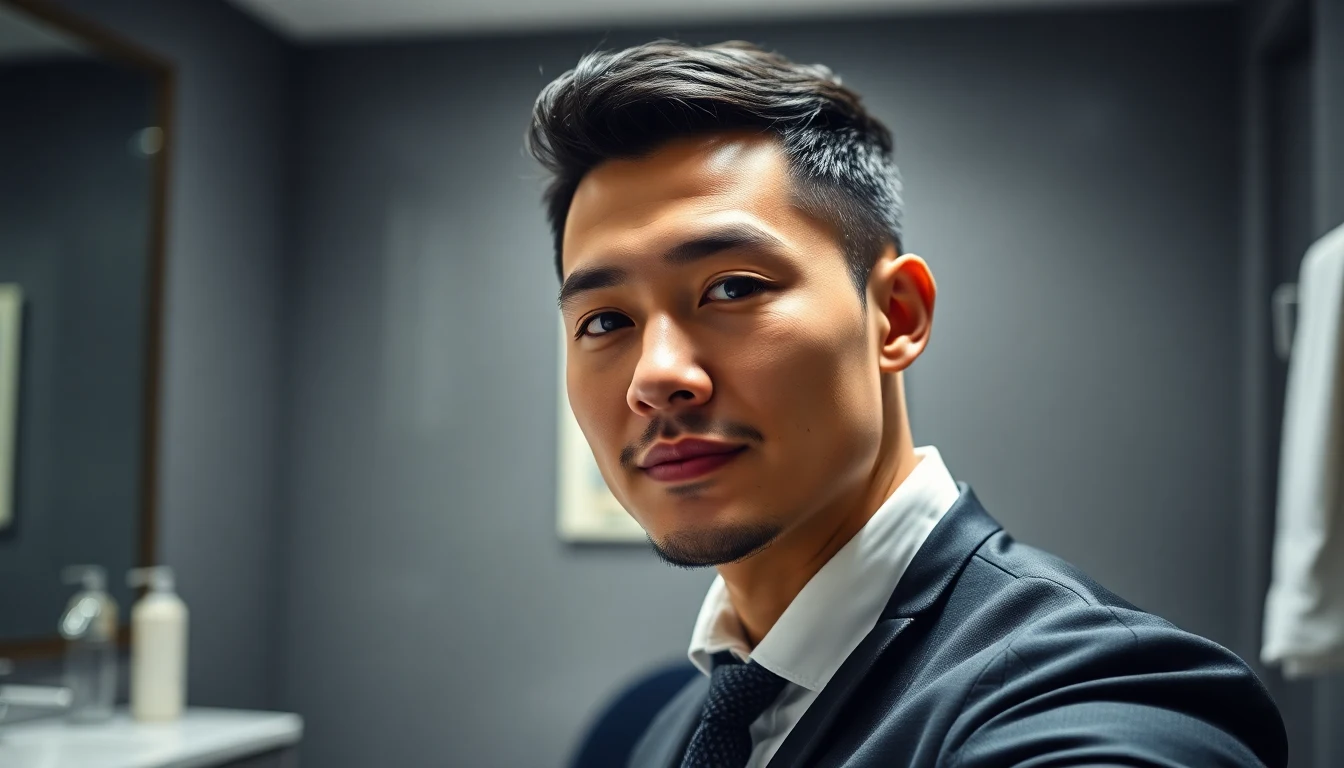
Forward growth direction: Most Asian men’s hair grows forward and downward from the crown. Western hair often grows backward from the forehead, which naturally supports a slicked back style. For Asian men, you are literally pushing the hair against its natural growth pattern. This is why blow drying is not optional; it is essential.
Thick individual strands: Each strand of Asian hair is roughly 30% thicker in diameter than Caucasian hair. Thicker strands are stiffer and have more “memory,” meaning they want to return to their natural position. You need products with stronger hold to keep them in place.
Round cross-section: Asian hair strands are perfectly round in cross-section, which makes them extremely straight and resistant to bending. Wavy or curly hair (which has an oval cross-section) naturally has more grip and texture. Your round strands are smooth and slippery, which means products slide off more easily and strands do not interlock to hold shape.
None of these factors make the slicked back style impossible. They simply mean you need the right approach. And once you master that approach, the thickness that makes it harder also makes it look better than on any other hair type.
Slicked Back Variations for Asian Men
1. Classic Slicked Back
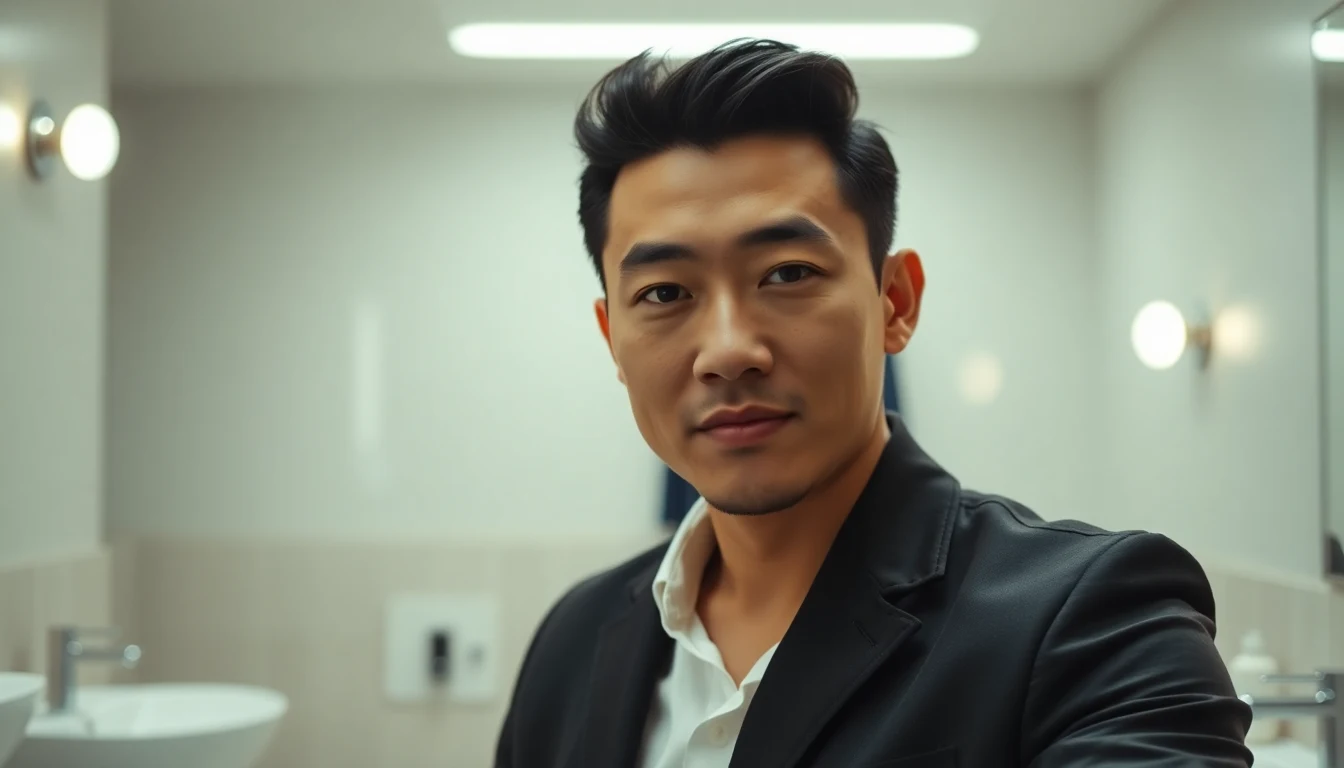
All hair swept straight back from the forehead with a smooth, polished finish. No part line. The hair lies flat against the head with a wet or semi-wet appearance. This is the traditional “Wall Street” or “K-drama executive” look. On Asian hair, the density creates a sleek, powerful silhouette.
Hair length needed: 4-6 inches on top. Best for: Oval and square faces. Hold required: Strong. Finish: High shine.
2. Textured Slick Back
Hair is swept back but with visible texture and separation between strands. Rather than a smooth, uniform surface, you see individual pieces and natural movement. This is the modern, relaxed version that dominates Korean and Japanese street style. It looks less formal and more effortlessly cool than the classic version.
Hair length needed: 4-7 inches. Best for: All face shapes. Hold required: Medium to strong. Finish: Matte or natural.
3. Slicked Back with Undercut
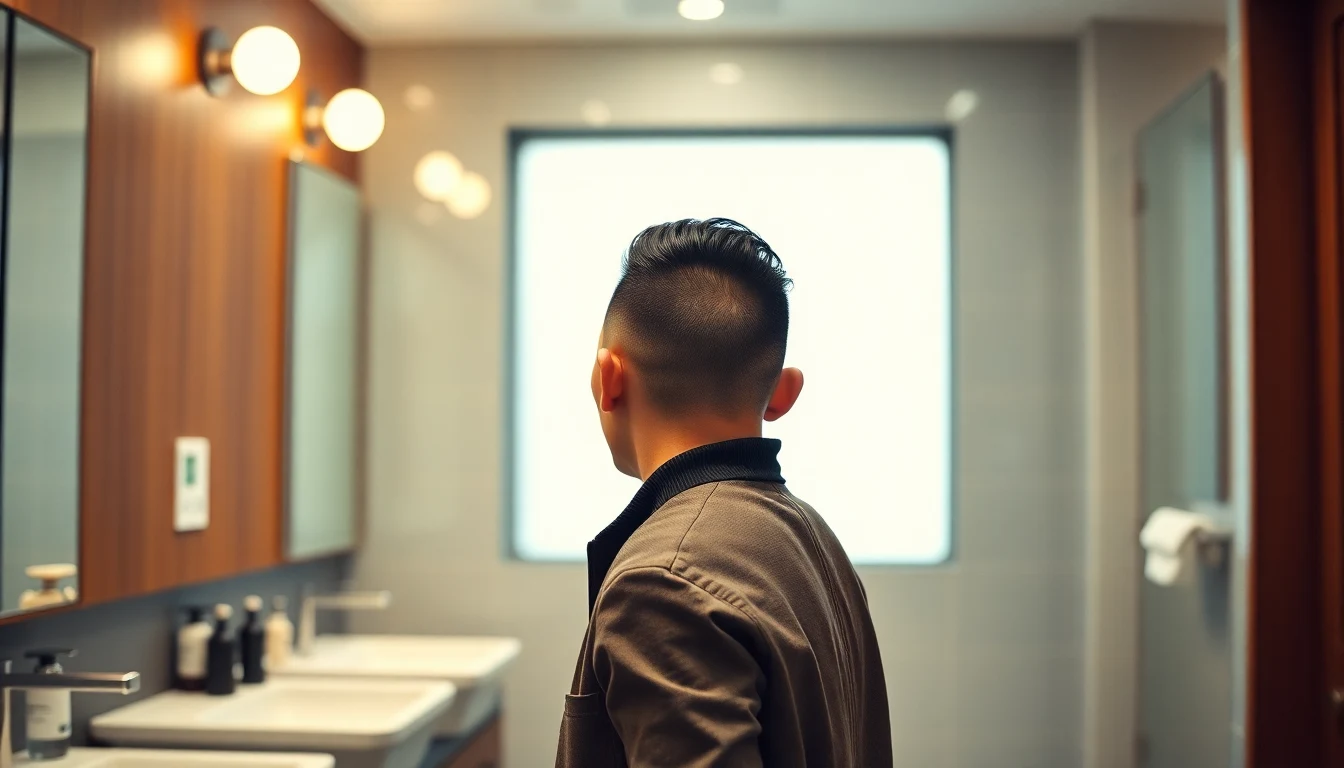
The top section is slicked back while the sides and back are cut short with an undercut or taper. The contrast between the long, swept-back top and the short sides creates a dramatic, structured look. This is the most popular slicked back variation for Asian men because the short sides eliminate the bulk that can make the style look heavy.
Hair length needed: 4-6 inches on top, 0.5-1 inch on sides. Best for: Round and square faces. Hold required: Strong. Finish: Any. Mastering slicked back hair for asian takes practice but delivers great results.
4. Slicked Back with Volume
Instead of lying flat, the hair is swept back with significant volume at the front. Think of it as a pompadour that flows into a slicked back style. The front section rises up before sweeping backward, creating height and drama. On thick Asian hair, this volume is achievable and sustainable with proper blow drying.
Hair length needed: 5-7 inches. Best for: Round and heart-shaped faces (the height elongates). Hold required: Strong. Finish: Shine or natural.
5. Slicked Back with Perm
Adding a body perm before slicking the hair back creates a wavy, textured sweep that has natural movement and grip. The perm solves two problems: it adds texture to naturally straight hair (making it easier to style backward) and creates visual interest that straight-back styles can lack. This is the “effortless Korean actor” look.
Hair length needed: 5-8 inches. Best for: All face shapes. Hold required: Medium. Finish: Natural or matte.
The Complete Slicked Back Technique for Asian Hair
This is the step-by-step method I teach every Asian male client who wants a slicked back style. It takes 10-15 minutes when you are learning and 7-8 minutes once you have practiced. Do not skip the blow dry step. On Asian hair, the blow dry is what makes or breaks this style.
Step 1: Wash and Prep (2 Minutes)
Start with clean, freshly washed hair. Use a volumizing shampoo if your hair is particularly flat, or a standard shampoo if your hair already has body. Towel dry until the hair is about 70-80% dry. The hair should be damp but not dripping. Apply a heat protectant, Mise en Scene Perfect Serum works well here because it adds smoothness and heat protection without weighing down the hair.
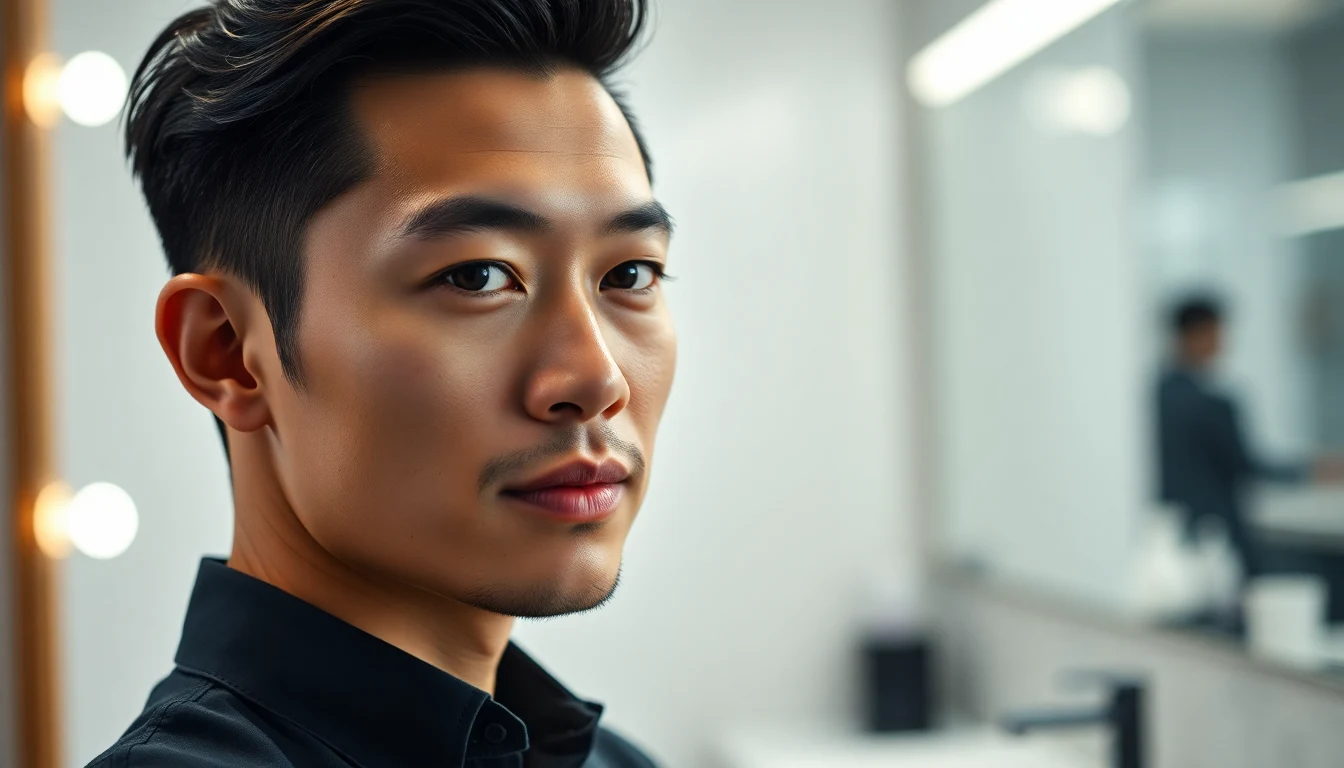
Step 2: Apply Pre-Styler (30 Seconds)
Work a small amount of mousse or lightweight styling cream through the damp hair. This gives the blow dryer something to “set” and provides the foundation for your final product. Distribute evenly from roots to ends, focusing on the front section that will be most visible in the finished style.
Step 3: Blow Dry Backward (5-7 Minutes)
This is the most critical step. Take a round brush (or a flat brush for a smoother finish) and begin blow drying the hair backward from the forehead.
- Start at the front hairline: Place the brush at the roots of the front section. Angle the blow dryer directly backward, following the brush as you pull the hair from front to back. Repeat this section 3-4 times until the front hair stays back on its own.
- Move to the crown: The crown area on Asian men often has a stubborn growth pattern (tsumuji in Japanese, 가마 or gama in Korean). Direct the blow dryer firmly over the crown, forcing the hair backward. This area requires the most attention.
- Address the sides: Blow dry the sides backward (or downward if you have short sides). The goal is to eliminate any forward-falling tendency.
- For volume: If you want the volumized slick back, use the round brush to lift the front roots upward while drying. Hold the hair in the lifted position for 5 seconds with hot air, then blast with cool air to set the volume.
- Cool shot: Finish the entire head with cool air. This closes the hair cuticle and sets the direction you have blown the hair into. This step alone adds 2-3 hours to your hold time.
After blow drying, your hair should already be sitting backward without any product. If it falls forward, you did not blow dry long enough or at a high enough heat. Go back and repeat the front section.
Step 4: Apply Styling Product (1-2 Minutes)
Now apply your main styling product. The specific product depends on the finish you want (see the product section below). General application technique:
- Scoop a thumbnail-sized amount of product.
- Rub between both palms until evenly distributed and slightly warm.
- Run your hands through the hair from front to back, starting at the roots of the front section.
- Use a fine-tooth comb to smooth the hair backward for the classic look, or your fingers for the textured look.
- Apply a second, smaller amount if needed for the sides or any areas that are not laying flat.
Step 5: Set the Shape (1 Minute)
For all-day hold, finish with a light mist of hairspray from 10-12 inches away. Do not drench the hair; two to three quick passes across the top is sufficient. The hairspray locks the product and blow-dried shape together, creating a style that resists humidity, wind, and the natural tendency of your hair to fall forward.
Product Recommendations by Finish
The right product makes or breaks the slicked back style on Asian hair. Here is what I recommend based on the finish you want.
| Desired Finish | Product | Hold Level | Best For |
|---|---|---|---|
| High shine, classic | Gatsby Moving Rubber (Grunge Mat + Spiky Edge blend) | Strong | Classic slicked back, formal events |
| Matte, textured | Lipps L08 Matt Hard Wax | Very strong | Textured slick back, casual settings |
| Natural shine, flexible | Uevo Design Cube (Hard Wax) | Strong | All-purpose, daily wear |
| Lightweight, natural | Arimino Peace Wax (Free Airy) | Medium | Permed slick back, effortless look |
| Maximum hold, all-day | Shiseido Uno Fiber Neo | Very strong | Long days, humid conditions, thick stubborn hair |
Product Layering Strategy
For maximum hold on thick Asian hair, layer products rather than using one product alone.
| Layer | Product Type | Purpose | When to Apply |
|---|---|---|---|
| Layer 1 | Heat protectant (Mise en Scene Serum) | Protect from blow dryer, add smoothness | On damp hair before blow drying |
| Layer 2 | Mousse or styling cream | Give blow dryer something to set | On damp hair before blow drying |
| Layer 3 | Wax or pomade (from table above) | Shape, hold, and finish | On dry, blow-dried hair |
| Layer 4 | Hairspray | Lock everything in place | After final shaping |
This four-layer approach sounds excessive, but it is the method used in Korean and Japanese salons for editorial and drama shoots. It creates a style that lasts 12+ hours even on the thickest, most stubborn Asian hair. For daily wear, you can skip Layer 2 (mousse) and still get great results with layers 1, 3, and 4.
Slicked Back by Face Shape
The slicked back style exposes your entire face. There is no fringe or side hair to hide behind, which means face shape matching matters more for this style than almost any other. Understanding slicked back hair for asian is key to a great grooming routine.
| Face Shape | Suitability | Recommended Variation | Adjustments |
|---|---|---|---|
| Oval | Excellent | Any variation | No adjustments needed; balanced proportions handle any version |
| Round | Good with volume | Slicked back with volume or undercut | Add height at the front to elongate face; keep sides very short to reduce width |
| Square | Excellent | Classic or textured | The slicked back style emphasizes strong jawlines; one of the best face shapes for this look |
| Oblong | Moderate | Classic (flat, no volume) | Avoid adding height; keep the style smooth and flat to avoid further elongation |
| Heart | Good | Textured or permed slick back | Some volume at the sides to balance a wider forehead; avoid too-tight sides |
| Diamond | Good with volume | Slicked back with volume | Add volume at the top and slightly at the temples to balance narrow forehead and jaw |
Common Mistakes and How to Fix Them
Mistake 1: Skipping the Blow Dry
This is the number one reason the slicked back style fails on Asian men. Without blow drying, you are relying entirely on product to hold your hair against its natural growth direction. No product is strong enough to do this alone on thick Asian hair for more than a couple of hours. The blow dry “trains” the hair into the backward direction, and the product maintains it. Skip the blow dry and you will spend the entire day pushing your hair back with your hands.
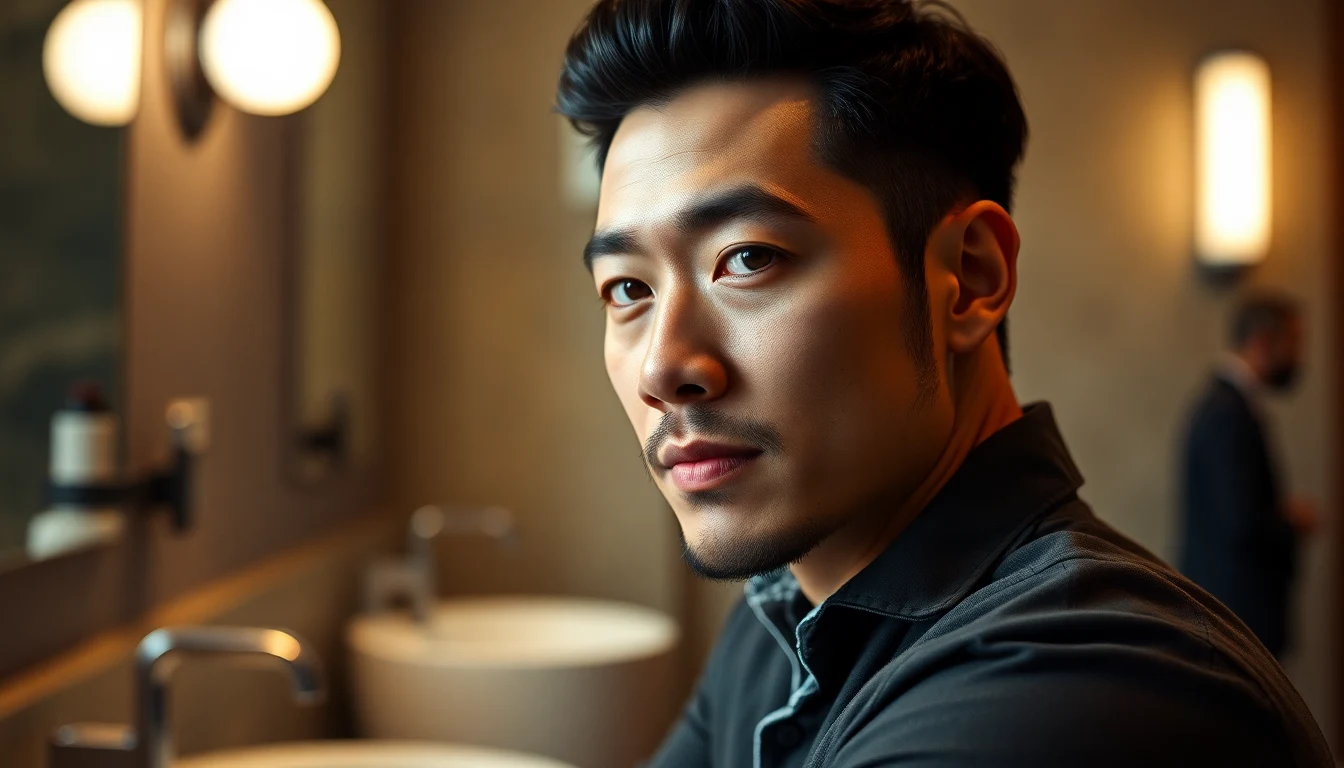
Mistake 2: Using the Wrong Product
Water-based gels that dry hard are a common choice because they create the “wet look” associated with slicked back hair. But on Asian hair, hard gels create a shell that cracks and flakes throughout the day. The hair underneath still wants to push forward, so the gel cracks along the stress points. Use a flexible-hold wax or pomade instead. Products like Uevo Design Cube or Shiseido Uno Fiber Neo provide strong hold with enough flexibility to move with the hair rather than cracking against it.
Mistake 3: Too Much Product
More product does not equal more hold. Excess product weighs down the hair, kills volume, and makes the style look greasy rather than polished. Start with a thumbnail-sized amount and add more only where needed. It is always easier to add more than to remove excess.
Mistake 4: Not Addressing the Crown
The crown whorl (gama) on Asian men often spirals in a direction that conflicts with the slicked back style. If your crown pushes hair to the left, for example, the right side of your slicked back style will look smooth while the left side fights you all day. During the blow dry, spend extra time on the crown area. Use the brush to physically flatten the whorl pattern and blow dry it in the backward direction until it stays.
Mistake 5: Wrong Hair Length
If your top hair is shorter than 4 inches, the slicked back style will not work. The hair is too short to reach backward from the front hairline. At 4 inches, you are at the minimum; 5-6 inches gives you the best results with enough length to create shape and movement. Longer than 7 inches becomes heavy and difficult to keep slicked back unless you have a perm for grip.
Slicked Back Style for Different Occasions
| Occasion | Variation | Product | Finish |
|---|---|---|---|
| Job interview / formal | Classic slicked back | Gatsby Moving Rubber | Polished shine |
| Office / business casual | Textured slick back | Uevo Design Cube | Natural shine |
| Date night | Slicked back with volume | Lipps L08 + hairspray | Matte or natural |
| Casual weekend | Loose, relaxed slick back | Arimino Peace Wax | Barely-there hold |
| Wedding / black tie | Classic with undercut | Shiseido Uno Fiber Neo + spray | High shine, bulletproof hold |
Haircut Guide for the Slicked Back Style
The slicked back style requires a specific cut to work properly. Here is what to tell your barber or stylist.
Barber Script
“I want to style my hair slicked back. Leave 5-6 inches on top with the length gradually decreasing toward the crown. On the sides, [choose one: taper to half an inch / undercut to a number 2 guard / fade to skin]. Thin the top slightly if it is too bulky, but do not take too much weight out because I need the density for the style. Texturize the ends with point cutting so they lay flat when swept back.”
Key phrases to use: “leave length on top for slicking back,” “thinning for weight reduction,” “point cut the ends,” “gradual length decrease front to back.”
Key phrase to avoid: “Razor thin the top.” Razor thinning removes too much internal weight from Asian hair and creates flyaways that stick up instead of laying flat when slicked back.
If you are going to a Korean or Japanese salon, ask for the “ol-baek” (all-back, 올백) style. This is the standard Korean term for slicked back hair, and any experienced Korean stylist will know exactly how to cut for it.
Maintenance Schedule
| Task | Frequency | Time Required | Notes |
|---|---|---|---|
| Full styling (wash, blow dry, product) | Daily on wash days | 10-15 minutes | Cannot skip blow dry |
| Touch-up styling (re-apply product, reshape) | Non-wash days | 3-5 minutes | Dampen with water spray, quick blow dry, product |
| Haircut to maintain shape | Every 3-4 weeks | 30-45 minutes at salon | More frequent than other styles because length at the back grows out of proportion |
| Deep conditioning | Weekly | 10 minutes | Blow drying daily is heat damage; condition to compensate |
| Product restock | Monthly | N/A | Slicked back styles use more product than other styles |
Midday Touch-Up Technique
Even with perfect morning styling, the slicked back style on Asian hair will loosen by midday, especially the front section. Here is the 60-second touch-up.
- Wet your hands with water (not soaking, just damp).
- Run your wet hands through the hair from front to back, reactivating the product already in your hair.
- Use a pocket comb to smooth the hair back into position.
- If needed, apply a pea-sized amount of product to the front section only.
- Pat down any flyaways at the crown.
Carrying a small comb and a travel-sized product is standard practice for maintaining the slicked back style throughout the day. Most Korean and Japanese men who wear this style keep a comb in their back pocket.
Slicked Back with Color
The slicked back style pairs exceptionally well with colored hair. When all the hair is swept in one direction, color becomes more visible and impactful. Ash brown or warm brown on a slicked back style creates a refined, editorial look. Even subtle dark chocolate brown on natural black adds depth that catches light beautifully when the hair is smooth and flat.
If you have bleached or colored hair, note that bleached Asian hair actually holds the slicked back style better than virgin hair. The bleaching process roughens the cuticle, creating natural grip and texture that makes the hair more cooperative. The trade-off is that you need to condition more aggressively to prevent dryness and breakage from the combination of bleaching and daily blow drying. When it comes to slicked back hair for asian, technique matters most.
Budget Breakdown
| Item | Cost | Lasts | Monthly Cost |
|---|---|---|---|
| Main styling product (Uevo Design Cube or equivalent) | $18-22 | 6-8 weeks | $10-14 |
| Heat protectant (Mise en Scene Serum) | $12-15 | 3 months | $4-5 |
| Hairspray | $10-15 | 2 months | $5-8 |
| Haircut (every 3-4 weeks) | $25-60 | 3-4 weeks | $25-60 |
| Total | $44-87/month |
The slicked back style is one of the higher-maintenance options for Asian men, primarily because of the more frequent haircuts (every 3-4 weeks versus 4-6 weeks for most other styles) and the higher product consumption from daily styling. The investment is worth it if you value the polished, commanding look it creates. For a more budget-friendly alternative with similar aesthetic impact, consider the soft taper, which requires less frequent cuts and less product.
Growing Into the Slicked Back Style
If your hair is currently short, you need to grow it out strategically. The top needs to reach at least 4 inches before you can attempt the slicked back style, and 5-6 inches is ideal. During the growing phase, keep the sides trimmed while letting the top grow. This avoids the “growing out a buzz cut” look and maintains a presentable shape throughout the transition.
The awkward stage happens around 2-3 inches, when the hair is too short to slick back but too long to style in its usual way. During this period, curtain bangs or a middle part can serve as transition styles. Once the front section reaches 4 inches, start practicing the blow dry technique to train the hair backward.
Slicked Back Hair and Skincare Connection
The slicked back style exposes your entire forehead and temples. This means your skincare routine becomes visible in a way it is not with bangs or fringe styles. Any forehead acne, uneven skin tone, or visible pores will be on display. Before committing to the slicked back style, ensure your forehead skincare is solid. Sunscreen is especially important because the exposed forehead receives direct UV that was previously shielded by hair.
Additionally, the styling products used for slicked back hair can migrate down to the forehead and cause breakouts along the hairline. Wash your face after styling your hair to remove any product that reached the skin. Use a CeraVe Foaming Facial Cleanser as part of your morning routine specifically to address product residue.
Frequently Asked Questions
How do I keep slicked back hair from falling forward on Asian hair?
The answer is blow drying. Without exception, the blow dry is what keeps Asian hair slicked back. Blow dry the hair backward from the front hairline for at least 3-5 minutes, using a round brush to direct the hair. Finish with a cool blast to set the direction. Then apply a strong-hold product like Lipps L08 or Shiseido Uno Fiber Neo. Finish with hairspray. The combination of heat-set direction + product + hairspray creates a hold that lasts 8-12 hours.
What is the best product for slicked back Asian hair?
For most Asian men, Uevo Design Cube (Hard Wax) offers the best balance of hold, finish, and workability. It provides strong hold with a natural shine that works for both professional and casual settings. For maximum hold on especially thick or stubborn hair, Shiseido Uno Fiber Neo is the strongest option. For a matte finish, Lipps L08 is the best choice. See our complete Asian hair product guide for detailed reviews.
Can I slick back Asian hair without blow drying?
Technically you can apply product to damp hair and comb it back, but on thick, straight Asian hair, this will not hold for more than 1-2 hours. The hair’s natural forward growth direction and round cross-section work against the product. I have never seen a client successfully maintain a slicked back style on Asian hair without blow drying. If you truly cannot blow dry, consider a body perm first, which changes the hair’s texture enough to make product-only slick backs more feasible.
How often should I wash my hair with the slicked back style?
Every day or every other day. The slicked back style requires strong product that builds up quickly. Leaving product residue in the hair for multiple days creates buildup that makes the hair stiff, dull, and harder to style. If you wash daily, use a gentle, sulfate-free shampoo to avoid stripping the hair. On non-wash days, you can dampen the hair with a spray bottle, blow dry it back into position, and apply fresh product on top of the previous day’s product for one day only. Beyond that, wash and start fresh.
Does the slicked back style damage Asian hair?
Daily blow drying does cause cumulative heat damage over time. The heat protectant (Layer 1 in the product layering strategy) mitigates this, and weekly deep conditioning repairs ongoing damage. Additionally, strong-hold products can dry out the hair if not washed out properly. To minimize damage: always use heat protectant, keep the blow dryer moving (never hold it in one spot), use the lowest heat setting that still sets the style, deep condition weekly, and wash out product completely every wash day. Following this protocol, the style is sustainable long-term without significant damage. See our hair care routine guide for a complete protection plan.
Final Thoughts
The slicked back style for Asian men is a high-impact, high-reward hairstyle. It demands more effort than a middle part or soft taper, but it projects a level of polish and intentionality that few other styles match. When an Asian man walks into a room with a properly executed slicked back style, it communicates that he cares about presentation, understands grooming, and has the discipline to maintain it.
The key takeaway: blow drying is everything. Master the 5-7 minute backward blow dry, invest in the right products (start with Uevo Design Cube or Lipps L08), and finish with hairspray. This three-part system, heat direction plus product hold plus spray lock, is what turns uncooperative Asian hair into the sleekest slicked back style in the room.
For more Asian hair inspiration and guidance, explore our Korean hairstyles guide, perm guide, curtain bangs guide, and complete product recommendations.
Frequently Asked Questions
Why is slicked back hair harder to achieve on Asian men compared to other hair types?
Asian hair has thicker strands with a round cross-section that naturally resists bending, and your hair follicles push forward rather than backward by default. Without the right technique and products, your slicked back style will collapse within an hour because your hair’s density works against the backward direction you’re trying to create.
What is the most important step in the slicked back hair technique for Asian men?
The blow dry backward step (5-7 minutes) is crucial because it trains your hair to bend against its natural growth pattern before you apply any products. This step creates the foundation that allows styling products to hold the shape throughout the day instead of reverting to your hair’s natural forward direction.
How long does a slicked back hairstyle typically last on Asian hair if done correctly?
When you use the proper blow dry method combined with the right styling products and pre-styler application, your slicked back hair can last all day. The key is following all five technique steps in order, which trains your hair’s shape and provides multiple layers of hold.
Are there different variations of the slicked back look I can try as an Asian man?
Yes, you have multiple options including the classic slicked back, textured slick back, slicked back with undercut, slicked back with volume, and slicked back with perm. Each variation works with your hair’s natural density to create different levels of polish and intensity while maintaining the core slicked back aesthetic.