
The beard has been part of Muslim male identity for over 1,400 years. The Prophet Muhammad (peace be upon him) kept a beard, cared for it with oil and a comb, and encouraged his companions to do the same. What varies, and what sparks a lot of debate, is the specifics: how long, what shape, where to trim, where not to. I am not going to wade into those scholarly debates. What I am going to do is give you a practical care guide that works regardless of your madhab (school of Islamic jurisprudence) or preferred beard length. Whether you keep a fist-length beard or a closely trimmed one, this guide helps you maintain it properly with products that are halal and compatible with your daily wudu.
The Sunnah Context: What We Know
The hadith literature includes multiple references to beard care. The Prophet (peace be upon him) instructed Muslims to trim the mustache and leave the beard to grow. He was observed using a comb and oil on his beard. He emphasized cleanliness and presentable appearance as part of faith.

Different madhabs interpret these narrations differently. The Hanafi school generally considers growing the beard wajib (obligatory) to a fist-length. The Shafi’i school considers it sunnah mu’akkadah (emphasized sunnah). The Maliki and Hanbali schools have their own nuances. Rather than arbitrating between these positions, this guide focuses on the practical care that all bearded Muslim men need regardless of their chosen length.
What is universal across all schools: the beard should be clean, well-maintained, and presentable. Neglecting your beard’s health is not piety. A scraggly, unkempt beard does not serve the sunnah; it undermines it.
Understanding Your Beard Type
Muslim men come from every ethnic background on earth: Arab, South Asian, African, Southeast Asian, European, Latin American, and every mix in between. Beard textures vary enormously. Your care routine needs to match your actual beard, not a generic template.
Straight to Wavy Beards
Common among men of Arab, Turkish, Persian, and Central Asian backgrounds. These beards tend to grow evenly, are easier to comb, and respond well to light oils. The main challenges: achieving fullness (patchy areas are common), managing strays and flyaways, and preventing the beard from looking flat or lifeless.
Curly to Coily Beards
Common among men of African, African American, and some South Asian backgrounds. These beards have tighter curl patterns, which means more tangles, more dryness (natural oils have a harder time traveling down curly hair shafts), and more shaping challenges. The main needs: intensive moisture, detangling with wide-toothed combs, and careful handling to prevent breakage.
Thick and Dense Beards
Common among men of South Asian, Middle Eastern, and Mediterranean backgrounds. These beards grow quickly and thickly. The challenges: managing bulk, ensuring wudu water reaches the skin beneath (a real concern with very dense beards), and preventing that “wall of hair” look. Regular trimming and thinning can help shape without reducing length.
Patchy or Thin Beards
Some brothers have naturally patchy beards, regardless of ethnicity. This is genetics, not a reflection of piety or masculinity. Work with what you have. A well-maintained shorter beard looks better than a patchy long one. If you prefer length, give it time; many beards fill in over 6 to 12 months of growth.
The Daily Sunnah Beard Care Routine
Morning (After Fajr Wudu)
1. Let it air dry briefly. After fajr wudu, pat your beard with a clean towel. Do not rub aggressively; rubbing causes frizz and can break hair, especially curly beards. Gently squeeze excess water out.
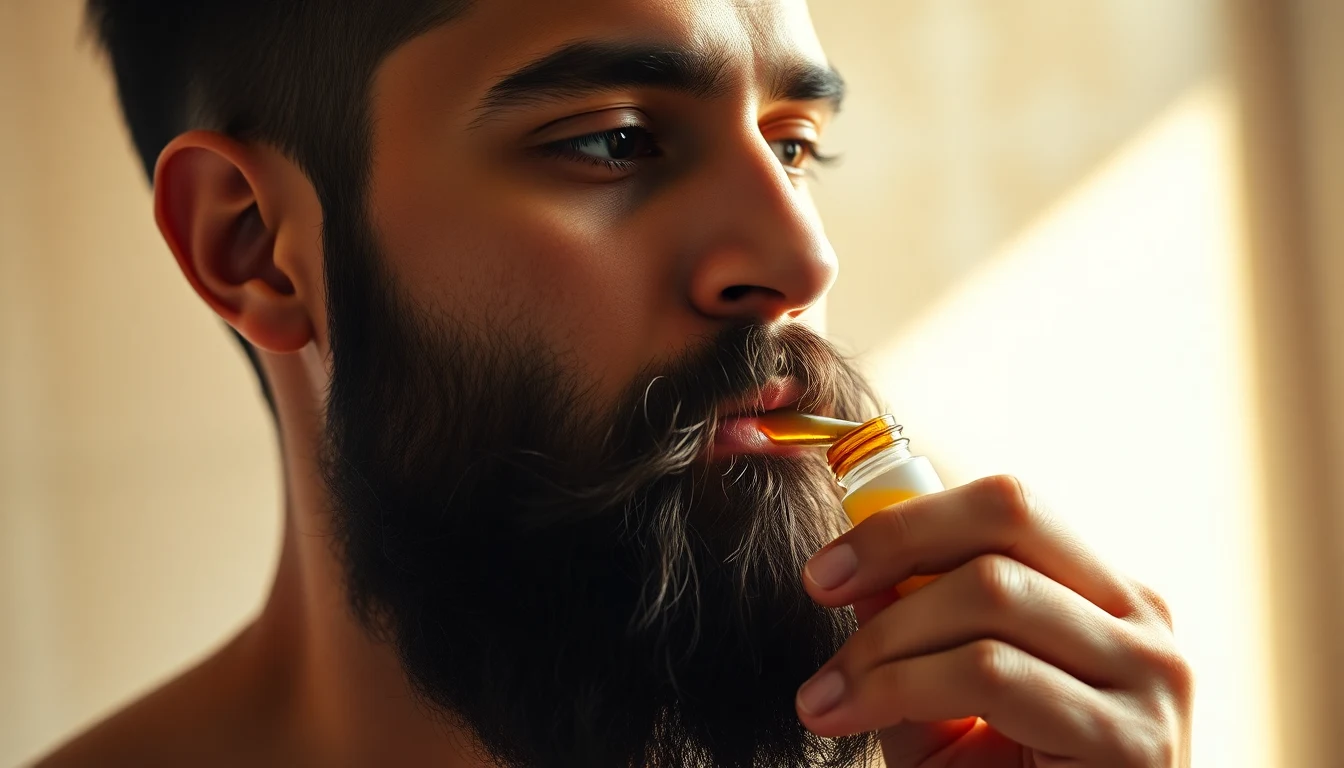
2. Apply beard oil. While the beard is still slightly damp, apply halal beard oil. Use 3 to 5 drops for short beards, 5 to 8 for medium, 8 to 12 for long beards. Work the oil from roots to tips, and make sure to massage it into the skin beneath the beard. The skin underneath is where dryness, flaking, and itching originate. Mastering sunnah beard care takes practice but delivers great results.
3. Comb through. Use a wide-toothed wooden comb for curly/coily beards or a finer-toothed comb for straight beards. Start from the bottom of the beard and work upward to detangle without pulling. Combing distributes the oil evenly, trains the beard to lay in one direction, and is itself a sunnah practice.
4. Shape if needed. If stray hairs are poking out, use your fingers or the comb to guide them into place. For serious shaping, see the trimming section below.
Midday (After Dhuhr or Asr Wudu)
A light reapplication of beard oil after one of your midday wudu sessions helps maintain moisture. Use half the amount of your morning application. Skip the comb unless tangles have developed. This takes 30 seconds and makes a difference by maghrib (sunset prayer).
Evening (After Isha)
The post-isha window is your deep care opportunity, just like with wudu-friendly skincare. If your beard is particularly dry or you are in a harsh climate, apply a heavier oil or beard balm after isha. You have the longest gap until fajr, so richer products have time to absorb fully. This is also the time for any beard washing or deep conditioning.
Beard Washing: Less Is More
Here is a mistake I see constantly: brothers washing their beard with shampoo or soap at every wudu. Your beard does not need soap five times a day. Wudu with water is sufficient for the ritual wash. Soap strips the natural oils from your beard hair, leading to dryness, brittleness, and that dreaded “straw” texture.
How Often to Wash
Wash your beard with a dedicated beard wash (not head shampoo, which is too harsh for facial hair) 2 to 3 times per week. In winter, you might drop to once or twice. If you work in a dusty or oily environment, daily washing may be necessary, but use a very gentle, sulfate-free formula.
What to Use
Beard-specific washes are formulated with milder surfactants that clean without stripping. Look for sulfate-free formulas with ingredients like coco-betaine or decyl glucoside. Avoid anything with sodium lauryl sulfate (SLS) or sodium laureth sulfate (SLES). These are the harsh detergents that destroy your beard’s moisture balance.
Conditioning
If your beard is longer than 1 inch, a conditioner or leave-in conditioner makes a noticeable difference. Apply after washing, leave for 2 to 3 minutes, then rinse. For curly beards, a leave-in conditioner applied to damp hair after wudu can replace or supplement beard oil. Check ingredients for halal compliance; conditioners often contain glycerin, silicones, and fatty alcohols (all generally fine, but verify glycerin source).
Trimming Within the Sunnah
Trimming is where personal practice and scholarly opinion intersect most directly. I will present the common approaches without prescribing one.
Fist-Length Approach
Many scholars recommend growing the beard to at least one fist-length (grab the beard beneath the chin; hair beyond the fist can be trimmed). This is the Hanafi position and widely practiced. With this approach, you trim the length below your fist line and shape the sides and cheeks for neatness.
Natural Growth Approach
Some brothers prefer to let the beard grow without trimming at all, only grooming for neatness (removing truly stray hairs, keeping the mustache trimmed). This approach requires more daily care because longer beards tangle more, dry out more, and need more oil.
Moderate Trim Approach
Some scholars permit trimming the beard to a shorter length as long as it is visibly a beard (not stubble). This approach prioritizes a clean, professional appearance while still maintaining a visible beard. It requires regular trimming every 1 to 2 weeks to maintain the shape.
Universal Trimming Guidelines (All Approaches)
The mustache: All four madhabs agree that trimming the mustache is sunnah. Keep it trimmed above the lip line so it does not hang over the mouth. This is both a sunnah practice and a hygiene consideration (food and drink do not get caught in the mustache). Understanding sunnah beard care is key to a great grooming routine.
The neckline: Most scholars permit cleaning up the neckline (the area below the jawbone where the beard meets the neck). A clean neckline makes any beard look more intentional and professional. Place two fingers above your Adam’s apple; that is roughly where your neckline should be. Trim or shave everything below that line.
The cheek line: If your beard grows high on your cheeks but you prefer a cleaner line, trimming the cheek line is generally accepted. Let the natural line guide you; trim only the clearly sparse hairs above your beard’s natural density.
Beard Care Tools
The Comb
Wooden combs are preferred over plastic because they generate less static electricity (which causes frizz) and distribute oil more evenly. Sandalwood combs add a natural fragrance. For curly beards, use a wide-toothed comb and never force through tangles.
The Brush
Boar bristle brushes are excellent for distributing oil and training beard hair, but boar bristle is an animal product. If you prefer to avoid it, wooden or plant-fiber bristle brushes work well. A brush is more effective than a comb for shorter beards (under 1 inch).
Scissors vs. Trimmers
For precise shaping, barber scissors give you the most control. For length maintenance, an electric beard trimmer with adjustable guards is faster and more consistent. Both are valid tools for sunnah beard maintenance. The tool does not matter; the intention and result do.
Beard Care in Different Seasons
Winter
Cold air outside, dry heating inside. This combination is devastating for beards. Increase your oil application by 50%. Use a heavier oil blend (argan-heavy). Apply a beard balm for extra protection against wind. Wear a scarf that covers your beard when outdoors in extreme cold. Consider a humidifier in your bedroom to prevent overnight drying.
Summer
Heat and humidity make beards oilier and more prone to acne beneath the beard (folliculitis). Wash slightly more often. Switch to a lighter oil (pure jojoba or grapeseed). Resist the urge to shave; a well-maintained beard actually protects your skin from sun damage.
Ramadan
Fasting dehydration affects your beard just like your skin. Increase oil frequency. Do a deep conditioning treatment weekly. See our complete Ramadan grooming guide for the full protocol.
The Professional Workplace Beard
One of the challenges many Muslim men face is maintaining a sunnah beard in professional environments where grooming standards lean toward clean-shaven or stubble. Here is the reality: a well-maintained, properly shaped beard is accepted and respected in virtually every professional setting. What causes friction is not the beard itself; it is an unkempt beard.
For professional settings, keep the neckline clean. Shape the cheek line. Use a light beard oil with a subtle or neutral scent (save the oud-heavy blends for the weekend). Trim stray hairs daily. If you are in a customer-facing role, your beard should look intentional, not accidental. This is not a compromise on sunnah; it is the sunnah itself. The Prophet (peace be upon him) emphasized that Muslims should present themselves with dignity and care.
Beard Growth Stages and Care Adjustments
Your care routine should evolve as your beard grows. Here is what to expect at each stage.
The Stubble Phase (Week 1 to 2)
This is when most brothers experience the worst itching. New growth pokes the skin, causing irritation. The solution: moisturize the skin beneath frequently. A lightweight face moisturizer works at this stage because there is not enough beard to warrant a dedicated beard oil. Resist the urge to scratch; scratching causes micro-abrasions that can get infected. When it comes to sunnah beard care, technique matters most.
The Awkward Phase (Week 3 to 6)
Your beard is long enough to look intentional but short enough to be unruly. Hairs grow in different directions. Patches become visible. This is when many brothers give up. Patience is required. Start using a light beard oil now. Comb daily to train the hairs. Do not trim for shape yet; let it fill in.
The Establishing Phase (Month 2 to 3)
Your beard starts to take shape. Patches may begin to fill in (or become clearly permanent). This is when you can start light shaping: cleaning the neckline, defining the cheek line if desired. Upgrade to a proper beard oil routine (morning and evening application). Introduce a beard comb if you have not already.
The Maintenance Phase (Month 4+)
Your beard has reached its natural pattern. You know your growth density, your natural shape, and your preferred length. Now it is about consistent maintenance: regular oiling, periodic trimming, and adjusting for seasons. This is also when you can experiment with beard balms for hold and styling.
Dealing with Beard Dandruff (Beardruff)
Flaking skin beneath the beard is extremely common, especially during winter and after wudu sessions. It is not head dandruff; it is dry skin being exacerbated by frequent water exposure and insufficient moisture. The fix involves three steps. First, make sure you are massaging oil into the skin (not just the hair) at least twice daily. Second, exfoliate the skin beneath your beard once a week using a soft boar bristle brush in gentle circular motions before your shower. Third, if the flaking is severe and accompanied by redness, you may have seborrheic dermatitis, which requires a medicated treatment. See a dermatologist if basic moisturizing does not resolve it within 2 to 3 weeks.
Under-Beard Skincare
The skin beneath your beard needs as much attention as the beard hair itself. This area is prone to dryness and flaking (often mistaken for dandruff), itching (especially in the first few months of beard growth), folliculitis (infected hair follicles, appearing as red bumps), and ingrown hairs (especially with curly beard textures).
The solution: when applying beard oil, make sure you are massaging it into the skin, not just coating the hair. During wudu, ensure water reaches the skin (run your fingers through the beard to help water penetrate). When washing, gently scrub the skin beneath with your fingertips. If flaking persists, use a beard oil with tea tree oil (natural antimicrobial) once a week.
Frequently Asked Questions
My beard is patchy. Should I shave it off?
That is a personal decision. Many brothers with patchy beards find that giving it 3 to 6 months of uninterrupted growth fills in many gaps. If it remains patchy, a shorter, well-shaped beard can look clean and intentional even with gaps. There is no sunnah requirement for a specific density of beard. Work with what Allah has given you.
Can I dye my beard?
Yes, with certain considerations. The Prophet (peace be upon him) encouraged changing gray hair to a color other than pure black, according to some narrations. Henna (producing reddish-brown tones) is the most traditional option and is plant-derived (halal). Synthetic dyes may contain questionable ingredients; check the INCI list. For more guidance on evaluating product ingredients, see our halal vs. halal-certified guide.
How do I ensure water reaches my skin during wudu with a thick beard?
Run your wet fingers through the beard during wudu, a practice known as “takhleel” (combing water through the beard with the fingers). This is a sunnah practice during wudu specifically designed for bearded men. Use all five fingers, starting from the chin and combing outward and downward. This ensures water penetrates a thick beard.
Is beard transplant surgery permissible?
Scholars differ on this. Some permit it as a corrective procedure (similar to other cosmetic corrections), while others caution against it as changing Allah’s creation. This is a question for your trusted scholar, not a grooming guide. From a practical standpoint, beard transplants use your own hair (typically from the back of the scalp) and require 6 to 12 months to see results.
What is the best beard length for wudu compatibility?
There is no specific length that makes wudu easier or harder; it is about technique. The “takhleel” practice works for beards of any length. That said, very long, dense beards may require more deliberate finger-combing to ensure water reaches the skin. Some brothers with very thick beards use slightly more water during the face-washing portions of wudu. The key is making a genuine effort to get water to the skin; perfection is not required where genuine effort exists.
Last updated: February 2026 | Omar Al-Rashid
Further reading: For research-backed grooming advice, see Healthline Men’s Health.
Frequently Asked Questions
Is it permissible in Islam to trim or shape my beard?
Yes, trimming and shaping your beard is permitted in Islamic practice. The Prophet Muhammad maintained his beard with care using oils and combs, and scholars across different madhabs generally agree that grooming your beard is encouraged, though they may differ on specific lengths and styles.
How often should I wash my Sunnah beard?
You should wash your beard less frequently than you wash your hair to avoid stripping natural oils that keep it healthy and conditioned. Most grooming experts recommend washing 2-3 times per week, or whenever your beard visibly needs cleansing, depending on your beard type and lifestyle.
What products should I use for Sunnah beard care if I need halal options?
You should look for beard oils, balms, and cleansers that are certified halal and free from alcohol, which can interfere with wudu. Products with natural ingredients like argan oil, coconut oil, and plant-based conditioners are excellent choices that align with both Islamic principles and effective beard maintenance.
How do I care for my beard during different stages of growth?
Your beard needs different care approaches depending on its stage: during the stubble phase (weeks 1-2), focus on gentle cleansing and light conditioning; in the awkward phase (weeks 3-6), use beard oil and combing to shape and define; and once established, maintain a consistent routine with washing, conditioning, and trimming that fits your preferred length and style.