
Last updated: February 2026 by Marcus Chen-Williams, Founder & Editor-in-Chief
The taper fade haircut is the most requested cut in barbershops worldwide, and it is also the most misunderstood. I have talked to barbers in Los Angeles, Atlanta, Houston, and New York, and the number one problem they describe is the same everywhere: a client sits down, asks for a “taper fade,” and what they actually want is something completely different from what those words mean together.
Here is the thing. A taper and a fade are two distinct techniques. A taper fade is a specific combination of both. If you do not understand the difference before sitting in that chair, you are gambling with your haircut. This guide breaks down exactly what a taper fade is, how it differs from a standard taper or a skin fade, which variation works best for your hair type, and the exact words to use when talking to your barber.
If you only read one section, jump to “How to Ask Your Barber”. That script alone will save you from the most common miscommunication that leads to a cut you did not want.
What Is a Taper Fade Haircut?
A taper fade is a haircut where the hair gradually decreases in length from the top of the head down to the sides and back, blending from a longer length into a very short or skin-close finish near the hairline. It combines two barbering techniques: the taper (a gradual reduction in length) and the fade (a seamless blend down to very short or no hair).
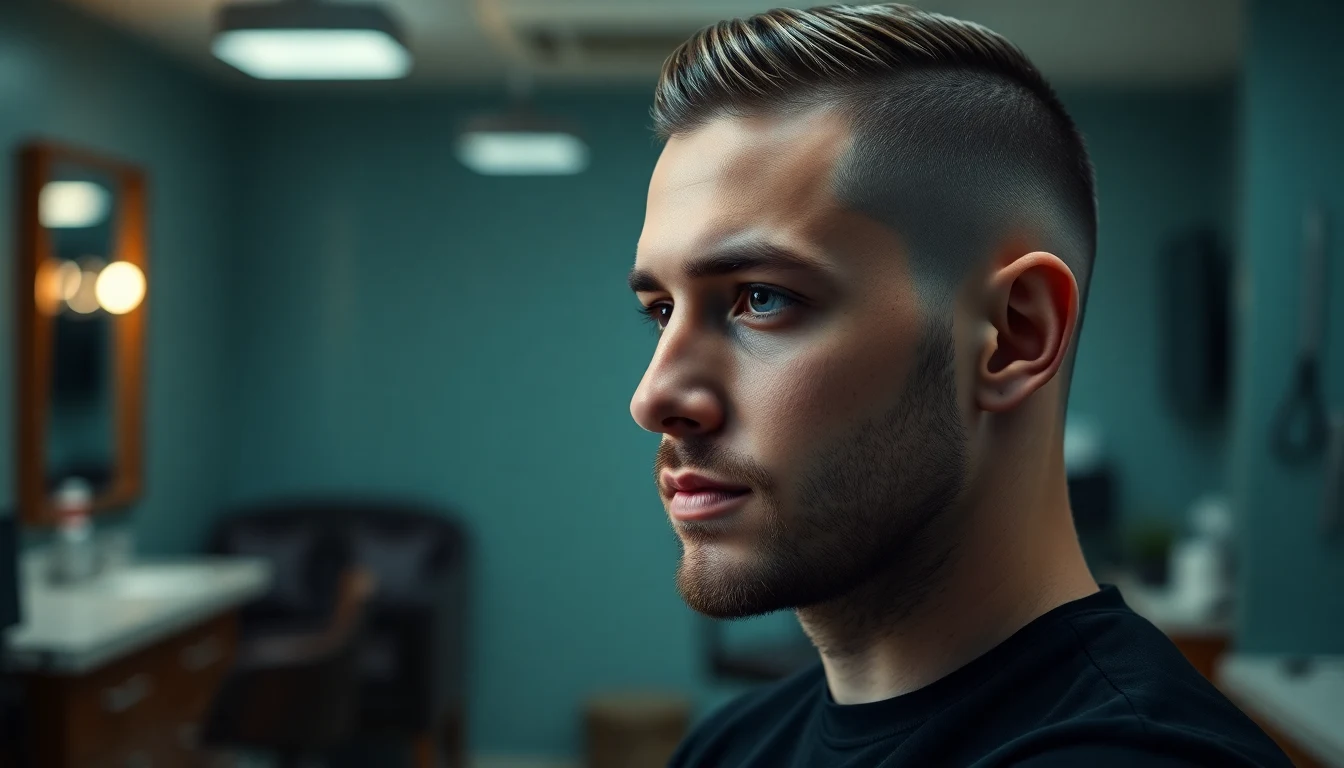
The key word is gradual. Unlike a hard chop where one length abruptly meets another, the taper fade creates a smooth gradient. Your barber achieves this by using multiple clipper guard sizes and blending techniques, working their way down from longer guards at the top to shorter guards, and eventually bare blade or skin, near the neckline and around the ears.
Think of it like a volume dial. The hair at the top is turned up to full volume. As your eye moves down the sides and back, the volume slowly decreases until it is barely a whisper at the edges.
Taper vs Fade vs Taper Fade: The Differences That Matter
This is where most confusion lives. Let me clear it up.
The Classic Taper
A taper is the most conservative of the three. The hair gets gradually shorter as it moves from the top toward the neckline and ears, but it never goes down to skin. The shortest point is typically a #1 or #2 guard length. It is subtle, professional, and works in any setting from a boardroom to a barbecue.
Visual cue: If you look at the sides, you can still see hair all the way down. There is no exposed skin at the edges.
The Fade
A fade takes the blending further. The hair transitions all the way down to bare skin (or very close to it). The “fade” refers to where and how aggressively that transition to skin happens. A skin fade goes right down to the scalp. A shadow fade stops just short, leaving the faintest shadow of stubble.
Visual cue: There is a clear point where you can see skin. The blend from hair to skin is seamless, but the skin is visible.
The Taper Fade (The Combination)
A taper fade takes the gradual, conservative approach of a taper and adds a fade finish at the very bottom. The bulk of the sides use a taper (gradual length reduction), but the lowest portion transitions into a fade (blending to skin or near-skin). You get the clean, polished look of a fade at the edges without the dramatic contrast of a full fade up the sides.
Visual cue: The sides have visible hair for most of their length, with a clean fade appearing only in the last inch or so near the ears and neckline.
| Feature | Classic Taper | Full Fade | Taper Fade |
|---|---|---|---|
| Shortest length | #1 or #2 guard | Skin / #0 | Skin / #0 at very bottom only |
| Skin visible? | No | Yes (significant area) | Yes (small area near hairline) |
| Contrast level | Low | High | Medium |
| Maintenance frequency | Every 4-6 weeks | Every 1-2 weeks | Every 2-3 weeks |
| Formality range | Very formal to casual | Casual to trendy | Formal to casual (versatile) |
| Best for | Conservative settings, first-timers | Bold, defined look | Most men, most settings |
The reason the taper fade is the most popular cut in barbershops is that it occupies the sweet spot. It is clean enough for a job interview. It has enough edge for a night out. It works across virtually every hair type and face shape. And it is forgiving enough that even a mid-level barber can execute it well.
The Three Levels: Low, Mid, and High Taper Fade
The “level” of a taper fade refers to where the fade begins. This single decision changes the entire character of the cut. Here is a breakdown of each.
Low Taper Fade
The low taper fade starts the blend just above the ear, typically within the bottom inch of the hairline. It is the most subtle version. From a few feet away, it almost looks like a regular haircut with very clean edges. (We recommend this Self Fade Haircut Kit | Fade.)
Where the fade line sits: Imagine a line running from just above the top of the ear around to the nape of the neck. The fade happens below this line only.
Who it suits:
- Men who want a polished look without an obvious fade
- Professional environments where bold cuts draw the wrong attention
- Rounder face shapes (the low fade adds subtle definition without making the head appear narrower)
- First-timers who want to test the taper fade without committing to a dramatic look
How to ask for it: “I want a low taper fade. Start the fade just above my ears and keep it tight to the hairline. Leave more length on the sides, and blend it down gradually.”
Maintenance: The low taper fade holds its shape the longest of all three levels. You can stretch visits to every three weeks before the blend starts looking grown out. Between visits, keep the neckline clean with a detail trimmer like the Andis Slimline Pro Li.

Mid Taper Fade
The mid taper fade starts the blend at the temple, roughly in line with the top of the ear or slightly above. It is the default taper fade. When most barbers hear “taper fade” without further specification, this is what they will give you.
Where the fade line sits: Imagine a line at your temples, running from the front of your head around to the back at that same height. The fade runs from this line down to the skin.
Who it suits:
- Most face shapes (the mid fade is universally flattering)
- Men who want a noticeable fade without going extreme
- The “daily driver” for guys who want one haircut that works everywhere
- Oval and square face shapes especially benefit from the balanced proportions
How to ask for it: “I want a mid taper fade. Start the fade around my temples and blend it down to skin. Keep the top [your preferred length or style].”
Maintenance: Plan on visiting your barber every two to three weeks. The mid fade shows growth faster than the low because there is more faded area. A good barber can do a quick cleanup of the fade line in 15 minutes between full cuts.
High Taper Fade
The high taper fade starts the blend well above the temples, sometimes as high as two to three inches above the ear. This is the boldest version. It creates maximum contrast between the top and sides, making whatever you have on top the undeniable focal point.
Where the fade line sits: Imagine a line running across the upper portion of your head, two to three fingers above your ear. Everything below that line fades to skin.
Who it suits:
- Men who want a bold, high-contrast look
- Longer face shapes (the high fade adds visual width)
- Thick hair on top that needs the sides pulled back to keep proportions balanced
- Styles that rely on top volume: pompadours, quiffs, tall curly tops
How to ask for it: “I want a high taper fade. Start the fade about two to three inches above my ear and blend it all the way down to skin. I want a strong contrast with the top.” Mastering taper fade haircut takes practice but delivers great results.
Maintenance: This is the highest-maintenance level. The high fade starts looking grown out within 10 to 14 days. Budget for visits every one to two weeks if you want it looking sharp. Some men learn to touch up the lower portion themselves between visits using quality clippers.
| Level | Fade Starts At | Contrast | Maintenance | Best For |
|---|---|---|---|---|
| Low taper fade | Just above ear | Subtle | Every 3 weeks | Professional settings, round faces, first-timers |
| Mid taper fade | Temple level | Moderate | Every 2-3 weeks | Most men, most situations (universal) |
| High taper fade | 2-3 inches above ear | Bold | Every 1-2 weeks | Bold style, long faces, volume on top |
Taper Fade Variations Beyond the Basics
Once you have chosen your level (low, mid, or high), there are several popular variations that add character to the standard taper fade.
Taper Fade with Hard Part
A hard part is a shaved line cut into the hair, creating a razor-sharp division between the top and the faded sides. It adds structure and definition to the cut. The line is typically placed where a natural part would sit.
Works best for: Straight to wavy hair that naturally parts to one side. Men with fine or medium-density hair get the cleanest line. If you have very thick or coily hair, the hard part may close up within a week as the hair grows in.
How to ask for it: “Add a hard part on my [left/right] side, starting from about an inch back from my hairline.”
Taper Fade with Design
Hair designs (also called hair art or hair tattoos) are patterns shaved into the faded area using a trimmer. Common designs include geometric lines, stars, arrows, and curves. This is where your barber’s artistic skill becomes the differentiator.
Works best for: Mid and high taper fades, where there is enough faded real estate for the design to be visible. Designs show best on darker hair against lighter skin, or on very close-cropped fades where the contrast is high.
How to ask for it: “I want a [design] shaved into the fade area on the [left/right] side. Do you have a portfolio I can look at?” Always ask to see your barber’s previous work before committing to a design.
Temp Taper Fade (Temple Fade)
The temp fade, short for temple fade, focuses the taper fade only around the temple and sideburn area. The back and sides may have a different treatment or remain at a uniform short length. It is the most minimal version of a taper fade and is especially popular in Black barbershops as a standard cleanup. For more guidance, Consumer Reports provides expert resources on product testing.

Works best for: Men who want clean edges without a full fade. It is a go-to for maintaining curly or coily hair without cutting into the bulk of the sides.
How to ask for it: “I just want a temp fade. Clean up my temples and sideburns with a taper, but leave the rest of the sides as they are.”
Taper Fade with Lineup
A lineup (also called a shape-up or edge-up) is when the barber uses a trimmer to create sharp, straight edges along the hairline at the forehead, temples, and sideburns. Combined with a taper fade, it creates an extremely clean, defined frame around the face. (We recommend this Taper King® Guide Combs 2.0 –.)
Works best for: Virtually everyone, but it is especially important for men with coily or curly hair where the natural hairline may be irregular. A good lineup makes the entire cut look intentional.
How to ask for it: “Give me a sharp lineup with the taper fade. I want the edges clean and straight across the front.”
Drop Taper Fade
A drop fade “drops” lower behind the ear, following the natural curve of the head rather than maintaining a straight horizontal line around the sides. The fade line arcs downward as it moves from the sides to the back of the head.
Works best for: Men with rounder head shapes. The curved fade line adds a natural flow and avoids the boxy look that a straight fade line can create on some head shapes.
How to ask for it: “I want a drop taper fade. Let the fade line drop lower behind the ear so it follows the shape of my head.”

- Professional Men’s Haircutting Kit: Bestbomg professional haircutting set includ
- Powerful Motor & Ultra Sharp Blades: Equipped with a quiet and powerful motor (M
- 220min Long Run-Time & Fast Charging: Hair clipper runs 220mins (3h charge), bea
How the Taper Fade Works Across Different Hair Types
Here is the thing nobody tells you about the taper fade: the same cut looks and behaves completely differently depending on your hair texture. I grew up with 3A curls on top and straighter hair on the sides, so I learned this the hard way. A taper fade is not one technique. It is a concept that your barber has to adapt to what is actually growing out of your head.
Straight Hair (Type 1A-1C)
Straight hair, common in East Asian, some South Asian, and many European men, creates the cleanest, most precise-looking taper fades. The hair lays flat against the head, so every clipper line is visible. This is both an advantage and a challenge.
Advantages:
- The fade lines are crisp and well-defined
- Hard parts look razor-sharp and hold their shape
- The gradient from long to short reads very clearly
Challenges:
- Any uneven blending is immediately visible (straight hair has nowhere to hide mistakes)
- Cowlicks, especially common in Asian hair, can push hair in unexpected directions around the fade zone
- Very thick, straight hair (common in East Asian and South Asian men) can stick out like a shelf if the transition is not blended carefully
Tips:
- Find a barber experienced with thick, straight hair. Not all barbers are. If they primarily cut curly or wavy hair, the blending technique is different.
- Ask for a slightly longer guard transition in the mid-section to avoid the “shelf” effect where thick hair pokes outward at the blend point
- A two block cut is a popular Asian variation that uses similar principles but with a more disconnected top
- Use a lightweight styling cream or clay rather than heavy pomade. Straight hair shows product buildup quickly.
Wavy Hair (Type 2A-2C)
Wavy hair, common in Latino, Mediterranean, Middle Eastern, and many mixed-heritage men, is arguably the most forgiving texture for a taper fade. The natural movement in the hair helps disguise minor blending imperfections while still showing the fade structure.
Advantages:
- Natural wave pattern adds texture and visual interest to the top
- The fade blends smoothly because wavy hair transitions between lengths naturally
- Holds styled looks (pompadour, slick back, textured crop) very well
Challenges:
- Thick, wavy hair can get poofy on the sides as it grows out, making the fade lose definition faster
- Humidity causes wavy hair to expand, which can shorten the lifespan of a clean fade
Tips:
- If you live in a humid climate, budget for more frequent visits (every two weeks instead of three)
- The Edgar haircut, hugely popular in Latino barbershops, is built on a taper fade foundation with a straight-across fringe
- A medium-hold pomade like Suavecito Firme Hold keeps wavy hair in place without flattening the natural texture
- Ask your barber to texturize the top with point cutting or thinning shears if your wavy hair tends to bulk up
Curly Hair (Type 3A-3C)
Curly hair, common in mixed-race, Afro-Latino, some Middle Eastern, and North African men, creates a distinctive look with the taper fade. The curls on top provide natural volume and shape, while the faded sides create a clean frame.
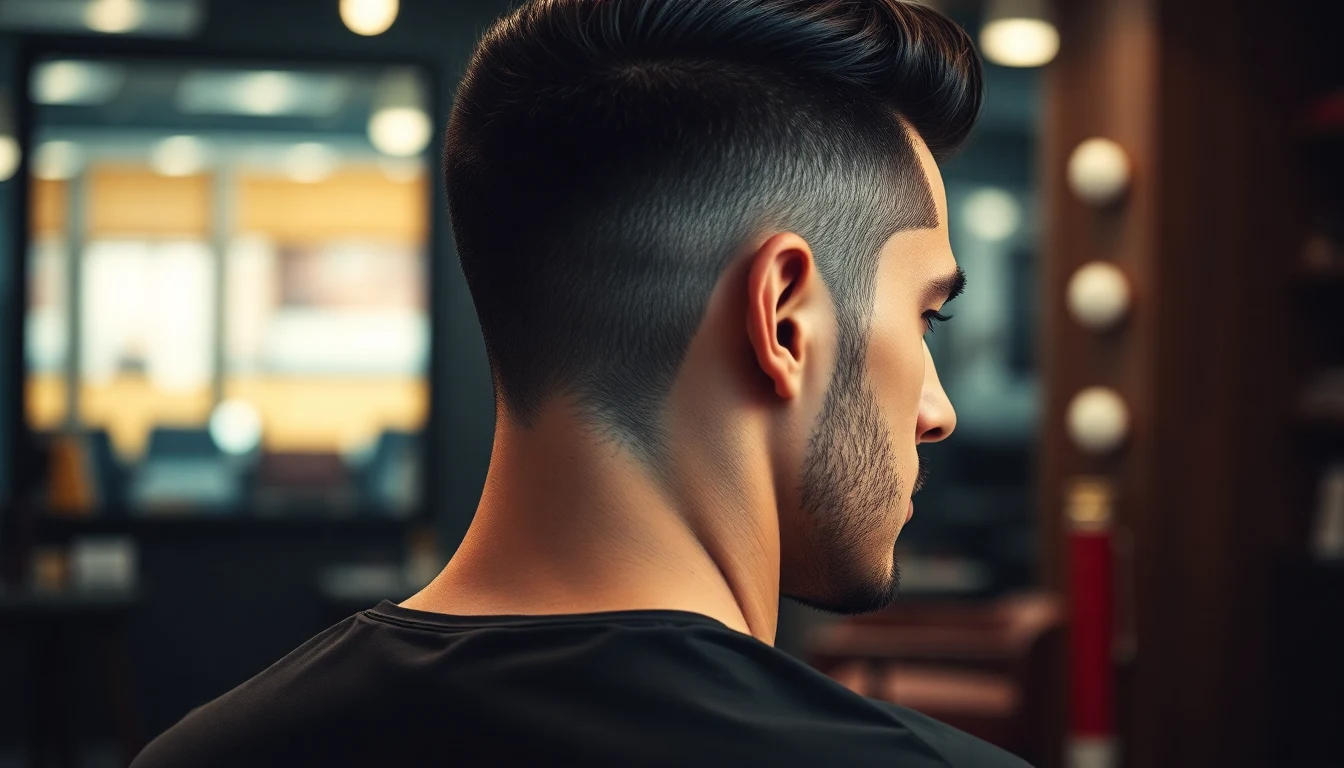
Advantages:
- Curls add automatic volume and style to the top without heavy product use
- The contrast between curly top and faded sides creates a striking, well-defined silhouette
- Minor blend imperfections are hidden by the curl pattern
Challenges: Understanding taper fade haircut is key to a great grooming routine.
- The transition zone between curly top and faded sides requires careful blending. A sloppy transition looks like a helmet sitting on top of a fade.
- Curl shrinkage means the top looks shorter than it actually is, so communicate length in terms of stretched-out measurement, not curled measurement
- Dryness is the enemy. Curly hair at the fade line can look ashy or dull if not properly moisturized.
Tips:
- Tell your barber your desired length when the curl is stretched, not as it sits naturally. “I want about four inches on top when pulled straight” gives them a clear target.
- Use a curl-defining product like SheaMoisture Coconut & Hibiscus Curl Enhancing Smoothie on top while keeping the faded sides clean
- A mid taper fade is the sweet spot for most curly-haired men. It provides enough contrast without the aggressive maintenance schedule of a high fade.
- Look for barbers who can handle both clippers and scissors confidently. Curly tops often need scissor work for shaping, while the fade is clipper work.
Coily Hair (Type 4A-4C)
Coily hair, common in Black and many Afro-Latino men, has the tightest curl pattern and the most unique relationship with the taper fade. The taper fade originated in Black barbershops, and this is where you will find the deepest expertise in executing it on coily textures.
Advantages:
- Coily hair creates naturally smooth fade transitions. The tight curl pattern blends beautifully between clipper lengths.
- The density of coily hair means the top holds its shape and height without product
- 360 waves, afros, high-tops, and locs all pair exceptionally well with taper fades
Challenges:
- Ingrown hairs and razor bumps are a real concern around the fade line, especially for men prone to pseudofolliculitis barbae. Let your barber know if you are bump-prone so they can avoid going too close to the skin.
- The fade grows out more uniformly on coily hair, which means the crisp lines soften faster. Budget for visits every one to two weeks if you want the lineup and fade to stay sharp.
- Not every barber knows how to work with 4C hair. This is not a skill you can assume.
Tips:
- If you are prone to razor bumps, ask your barber to stop at a #0.5 guard instead of going to skin. The slight stubble dramatically reduces irritation.
- Maintain the lineup between visits with a Bevel Trimmer, which is designed to minimize irritation on coily hair
- For 360 waves, the taper fade with a low to mid level keeps the wave pattern intact on top while maintaining clean edges
- Apply Murray’s Edge Wax to the hairline to keep edges laid and defined between cuts
| Hair Type | Best Fade Level | Key Concern | Maintenance Frequency | Recommended Product |
|---|---|---|---|---|
| Straight (1A-1C) | Any (low is safest) | Shelf effect, cowlicks | Every 2-3 weeks | Lightweight clay or cream |
| Wavy (2A-2C) | Mid (most versatile) | Puffiness in humidity | Every 2-3 weeks | Medium-hold pomade |
| Curly (3A-3C) | Mid (balanced contrast) | Curl shrinkage, dry fade line | Every 2-3 weeks | Curl cream or smoothie |
| Coily (4A-4C) | Low to mid | Razor bumps, fast regrowth | Every 1-2 weeks | Edge control, bump cream |
Taper Fade + Top Style Combinations
The taper fade is the foundation. What you do on top is where your personality shows up. Here are the six most popular pairings, each with guidance on who they work best for and how to maintain them.
Taper Fade + Pompadour
The pompadour sweeps the hair up and back from the forehead, creating height and volume on top. Paired with a mid or high taper fade, it is a classic look that balances old-school sophistication with modern edge.
Best hair types: Straight to wavy (Types 1B-2B). Thick hair holds the pompadour shape best. Fine hair needs a pre-styler and strong-hold product to maintain the volume. (We recommend this Suavecito Pomade Firme Hold.)
How to ask: “Mid taper fade on the sides, about four to five inches on top, and I want to style it into a pompadour.”
Key product: A strong-hold pomade like Layrite Superhold Pomade gives the hold needed for the pompadour shape while maintaining a workable texture. Blow-dry the top back and up before applying for maximum volume.
Taper Fade + Textured Crop
The textured crop keeps the top short (two to three inches) with choppy, textured layers and a fringe that falls naturally across the forehead. It is low-maintenance and works especially well for men who want a modern look without spending time styling every morning.
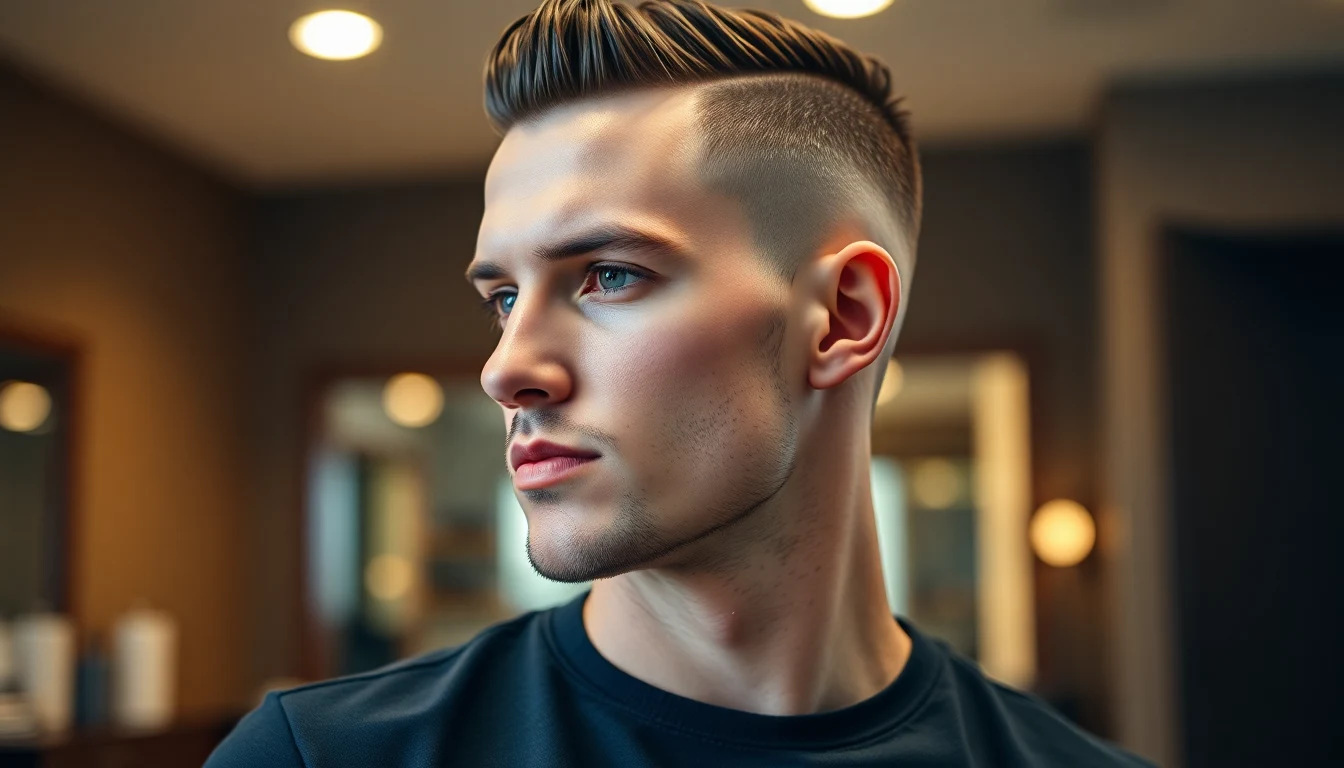
Best hair types: Works across all types. Straight hair gets a structured look. Wavy and curly hair add natural movement. Even coily hair works when kept shorter on top with defined texture.
How to ask: “Low to mid taper fade. Keep the top two to three inches long and add some texture with point cutting. I want a natural, messy fringe.”
Key product: A matte clay or texturizing paste. Work a small amount through damp hair, then let it air dry. The less effort this looks, the better.
Taper Fade + Slick Back
All the hair on top is combed straight back, creating a smooth, sleek surface. Paired with a taper fade, it is one of the most polished looks you can walk into a room with.
Best hair types: Straight to wavy (Types 1A-2B). Curly and coily hair can achieve this with a blow-dry and strong-hold product, but it requires more daily effort.
How to ask: “Mid or high taper fade. Leave five to six inches on top so I have enough length to slick it back smoothly.”
Key product: A high-shine, strong-hold pomade. Apply to damp hair, comb it back, and finish with a blast of cool air from your dryer to set the shape. (We recommend this Old Spice Hair Pomade for Men,.)
Taper Fade + Curly Top
This lets the natural curl pattern do the work. The curly top with a taper fade creates one of the most striking contrasts in men’s hair: defined, voluminous curls sitting on top of clean, tight sides.
Best hair types: Types 3A-3C (curly). This is the signature look for mixed-race and Afro-Latino men, though any man with natural curls can pull it off.
How to ask: “Mid taper fade on the sides. On top, I want to keep my natural curls. Leave about [desired stretched length] on top so my curls have room to form.”
Key product: A curl-defining cream or mousse. Apply to wet hair, scrunch, and let air dry (or diffuse on low heat). Avoid heavy gels that create a crunchy texture.
Taper Fade + Braids
Braids on top (cornrows, box braids, or freestyle braids) with taper-faded sides is a style rooted in Black barbershop culture that has crossed into the mainstream. The braids provide a low-maintenance top that can last one to two weeks, while the taper fade keeps the overall silhouette clean.
Best hair types: Types 3C-4C (curly to coily). The hair needs enough texture to hold the braids without slipping. Straight and wavy hair can be braided but tends to unravel faster.
How to ask: “Low to mid taper fade on the sides. I want [cornrows/box braids] on top. Make sure the braids start right at the transition line so there is no gap between the braids and the fade.”
Key product: A lightweight braid spray to keep the scalp moisturized and prevent itching. Apply every other day to maintain scalp health under the braids.
Taper Fade + 360 Waves
360 waves with a taper fade is a barbershop staple. The waves on top create a mesmerizing pattern, and the taper fade provides the clean border that makes the pattern pop. This style requires dedicated brushing and a du-rag routine, but the result is worth it.
Best hair types: Types 3C-4B. The waves need enough curl texture to form the pattern. Coily hair is ideal.
How to ask: “Low taper fade. I am growing waves, so keep the top at [your current wave length, typically a #1 to #2 with the grain]. Keep the fade subtle so it does not cut into my wave pattern.” When it comes to taper fade haircut, technique matters most.
Key product: A wave pomade (medium hold, light shine) and a brush. Brush in the pattern direction after applying product, then tie a du-rag to set the waves. (We recommend this American Crew POMADE FOR HOLD AND.)
How to Ask Your Barber for a Taper Fade (The Exact Script)
This is the section that will save you from a bad haircut. I have sat in too many barber chairs where “taper fade” meant something different to me than it did to the person holding the clippers. Here is how to communicate clearly.
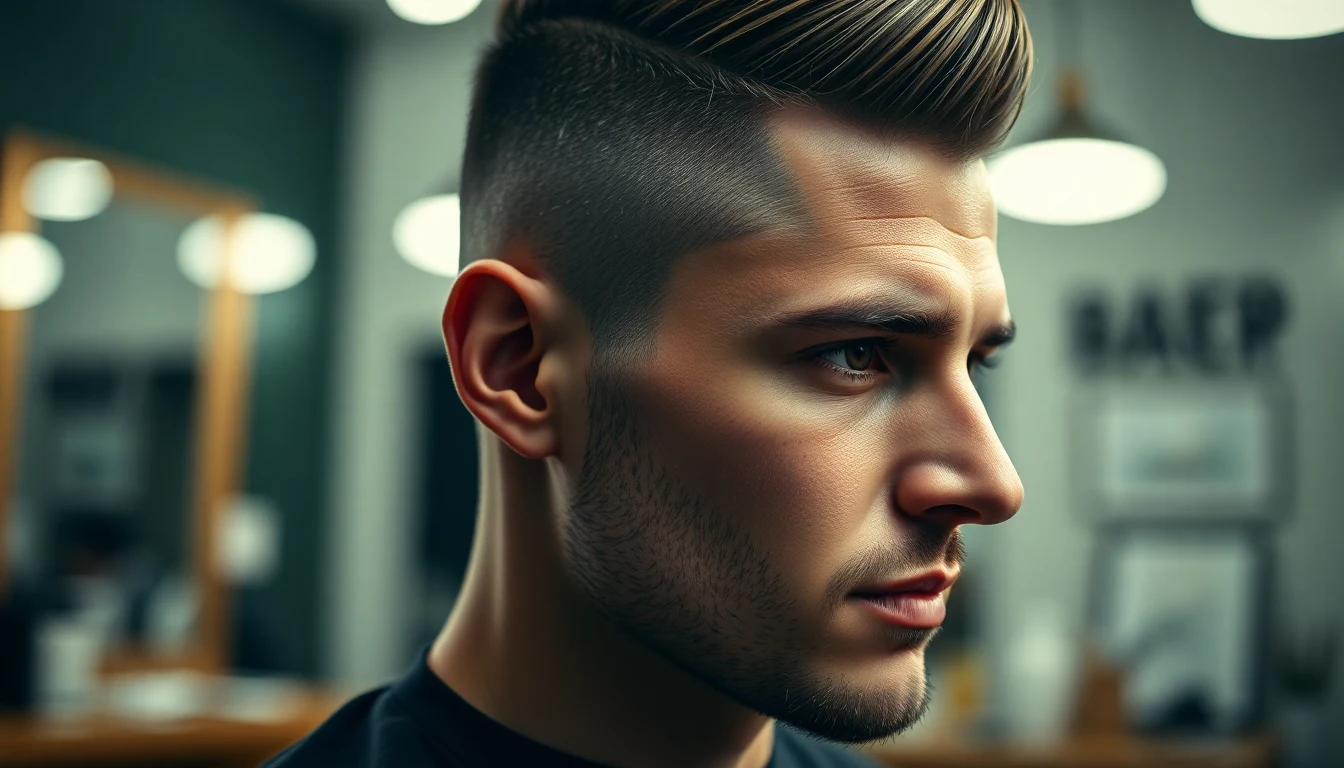
Step 1: Name the Level
Start with: “I want a [low / mid / high] taper fade.”
This immediately tells your barber where the fade starts. If you skip this step, they will default to their personal preference, which may not match yours.
Step 2: Specify the Bottom
“Fade it down to [skin / a #0 / a #0.5].”
Skin is the cleanest. A #0 guard is nearly skin but leaves the faintest stubble. A #0.5 leaves a visible shadow. If you are prone to razor bumps, request #0.5 or higher.
Step 3: Define the Top
“Keep the top [X inches long / at a #X guard / long enough to style into a pompadour].”
Give them a specific length or a reference style. Do not say “leave it long.” That means different things to different barbers.
Step 4: Add Details
“I [do / do not] want a hard part. I [do / do not] want a lineup. I want the neckline [tapered / squared / rounded].”
Step 5: Show a Reference Photo
I know. Some men feel awkward pulling up a phone photo at the barber. Get over it. A reference photo eliminates 90% of miscommunication. Find two to three photos that show the fade level and top style you want, ideally on someone with a similar hair texture to yours.
The Complete Script (Copy This)
“I want a [low/mid/high] taper fade. Fade it down to [skin / #0 / #0.5] at the bottom. Keep the top at [X inches / long enough for a pompadour / etc.]. I [want / do not want] a hard part. Give me a sharp lineup. [Tapered / squared / natural] neckline. Here are some reference photos.”
| What You Say | What the Barber Hears | Result |
|---|---|---|
| “Give me a taper fade” | “He wants some kind of fade” (vague) | Barber’s default, which may not be yours |
| “Low taper fade, #0.5 at the bottom, 3 inches on top, sharp lineup” | Exact specifications, no guessing | Exactly what you wanted |
| “Something like this” + reference photo | Clear visual target with texture context | Very close to the reference |
Choosing the Right Taper Fade for Your Face Shape
Your face shape determines which taper fade level creates the most balanced proportions. Here is a quick guide.
| Face Shape | Best Level | Why | Avoid |
|---|---|---|---|
| Oval | Any (you got lucky) | Balanced proportions work with all levels | Nothing specific |
| Round | Mid to high | The higher fade adds vertical length, making the face appear less round | Very low fades that add width |
| Square | Low to mid | The moderate fade softens the angular jawline | Very high fades that emphasize boxiness |
| Oblong / Long | Low | Keeping more hair on the sides adds width and shortens the face visually | High fades that make the face look even longer |
| Diamond | Mid | Balances the wider cheekbones with even proportions | Extreme levels in either direction |
| Heart / Triangle | Low to mid | Adds volume near the ears to balance a narrower jawline | High fades that emphasize wider forehead |
Not sure about your face shape? Here is a simple test: pull your hair back, look in the mirror, and compare your outline to the shapes above. Or just ask your barber. A good barber considers face shape automatically.
Products and Maintenance for Your Taper Fade
A fresh taper fade looks incredible. A grown-out one looks sloppy. Here is how to extend the life of your cut and keep it looking sharp between visits.
Between-Visit Maintenance
- Clean your neckline every 5-7 days. Use a detail trimmer (Andis Slimline Pro Li is the industry standard) to clean up the hair that grows below your natural neckline. This alone extends the “fresh cut” look by a full week.
- Maintain your lineup. If you have a sharp lineup, touch it up with the same detail trimmer. Go slowly. It is much easier to take off too much than to fix a crooked line.
- Do not attempt to redo the fade yourself unless you are experienced with clippers. The blending technique requires practice and the right angles. A botched self-fade looks worse than a slightly grown-out professional one.
Essential Products by Hair Type
| Product Type | Purpose | Best For | Our Pick |
|---|---|---|---|
| Detail trimmer | Neckline and lineup touchups | All hair types | Andis Slimline Pro Li |
| Edge control / wax | Laying down edges and baby hairs | Coily and curly hair | Murray’s Edge Wax |
| Medium-hold pomade | Styling slick backs, pompadours, wavy tops | Straight and wavy hair | Suavecito Firme Hold Pomade |
| Strong-hold pomade | Maximum hold for tall styles | Thick, straight hair | Layrite Superhold Pomade |
| Curl cream / smoothie | Defining and moisturizing curls on top | Curly hair (3A-3C) | SheaMoisture Curl Enhancing Smoothie |
| Home clippers | Full at-home maintenance (experienced users) | All hair types | Wahl 5-Star Magic Clip |
How Long Does a Taper Fade Last?
This depends on three factors: your hair growth rate, the fade level, and your tolerance for grow-out.
- Week 1: Fresh and sharp. This is the “just left the barber” window.
- Week 2: Still looking good. The fade lines are slightly softer. Most people will not notice.
- Week 3: The fade is visibly growing in. Low taper fades still look acceptable. High fades are starting to look unkempt.
- Week 4+: Time for a visit. The blend is gone and the sides are approaching a uniform length.
Pro tip: schedule your next appointment before you leave the chair. The best barbers book out two to three weeks in advance.
Cost Expectations
| Service | Price Range (US) | Notes |
|---|---|---|
| Basic taper fade | $25-45 | Standard barbershop price |
| Taper fade + lineup | $30-50 | The most common service |
| Taper fade + design | $40-65 | Depends on design complexity |
| Fade cleanup (between full cuts) | $15-25 | Quick service, 15-20 minutes |
| Premium barbershop taper fade | $50-80+ | Major cities, high-end shops |
Tip your barber. 15-20% is standard. If they nailed it, 25% builds a relationship that means better cuts over time. I have been tipping my barber 25% for years, and I never wait more than five minutes past my appointment time.
Common Mistakes (and How to Avoid Them)
After years of talking to barbers and hearing their frustrations, these are the most common taper fade mistakes men make.
- Saying “taper fade” without specifying the level. Your mid taper fade is your barber’s high taper fade. Always specify low, mid, or high.
- Asking for a taper when you mean a fade (or vice versa). If you want skin visible at the bottom, that is a fade. If you want hair all the way down, that is a taper. If you want both, say “taper fade.” Use the chart above to be sure.
- Going to a barber who does not know your hair type. A barber who primarily works with straight hair may not know how to blend coily hair, and the reverse is true too. Ask to see their portfolio or check their social media before booking.
- Trying to fix a bad fade at home. If your barber made a mistake, go back and ask them to fix it (most will, for free). Do not try to “even it out” with your own clippers. You will make it worse.
- Waiting too long between visits. A taper fade is not a “set it and forget it” haircut. Budget for regular visits based on your fade level. If you cannot commit to the maintenance, consider a classic taper instead.
- Ignoring the neckline. The neckline is the first thing to grow out and the first thing that makes a fade look sloppy. Own a detail trimmer. Use it weekly.
Frequently Asked Questions
What is the difference between a taper and a fade?
A taper gradually reduces hair length but never goes to skin. The shortest point is typically a #1 or #2 guard. A fade blends the hair all the way down to skin or near-skin. A taper is conservative and subtle. A fade is bolder and shows more contrast. A taper fade combines both: gradual tapering on the sides with a fade finish at the very bottom. For a deeper look at all the variations, check out our complete guide to types of fades.
How often should I get a taper fade touched up?
It depends on the level. A low taper fade can go three weeks before it needs attention. A mid taper fade looks best with a touch-up every two to three weeks. A high taper fade needs maintenance every one to two weeks. If you are between visits and the neckline is growing in, a detail trimmer can buy you an extra week.
Can I get a taper fade with curly or coily hair?
Absolutely. The taper fade originated in Black barbershops and works beautifully on curly and coily textures. The key is finding a barber experienced with your hair type and communicating the length you want on top in terms of stretched (pulled straight) measurement, not curled. Curly and coily hair also benefits from a slightly less aggressive fade (stopping at #0.5 instead of skin) to reduce the risk of razor bumps.
Is a taper fade appropriate for professional settings?
Yes. A low to mid taper fade is one of the most professional-looking haircuts available. It is clean, well-groomed, and universally accepted in corporate environments. Even a high taper fade is increasingly accepted, though very conservative industries may prefer the low version. The taper fade’s versatility is one of its biggest strengths.
What is a taper fade with a line?
A “line” in this context refers to a hard part, a razor-sharp line shaved into the hair to create a defined separation between the top and the faded sides. It adds structure and a modern, geometric element to the cut. Hard parts work best on straight to wavy hair and need a touchup every time you visit the barber, as the line grows in within two weeks.
Can I maintain a taper fade at home?
You can maintain certain elements at home, specifically the neckline and the lineup. A quality detail trimmer is essential for this. However, redoing the actual fade blend at home requires significant skill and practice. If you want to learn, start with a very conservative approach: only clean up below the fade line, never attempt to re-blend the transition. For full fade maintenance at home, invest in a professional-grade clipper like the Wahl 5-Star Magic Clip and watch technique videos specific to your hair type before attempting it. See our roundup of the best clippers for fades for more options.
Wrapping It Up
The taper fade is popular for a reason. It works across hair types, face shapes, and lifestyles. But getting the right one requires you to understand three things: what you want, how to communicate it, and how to maintain it.
Quick recap:
- A taper, a fade, and a taper fade are three different things. Know which one you actually want.
- Choose your level (low, mid, high) based on your face shape, your lifestyle, and how often you are willing to visit the barber.
- Your hair type changes how the taper fade looks and how it needs to be maintained. A technique that works on straight hair does not automatically work on coily hair.
- Use the barber communication script above. Specificity is your friend.
- Own a detail trimmer and use it weekly on your neckline and lineup.
Your next step: If you already know your preferred fade level, explore the specific guides for low fade, mid fade, and high fade haircuts. If you are still deciding, start with a mid taper fade. It is the most versatile, the most forgiving, and the safest entry point.
And if your barber does not ask you about your hair type, your face shape, or your styling preferences before picking up the clippers, find a new barber. You deserve better than a guessing game.
Explore more haircut guides on CulturedGrooming, or check out our Asian fade haircut guide for texture-specific advice.
Further reading: For research-backed grooming advice, see Healthline Men’s Health.
Explore more tips at CulturedGrooming.com.
Frequently Asked Questions
What’s the difference between a taper fade and a regular fade?
A taper fade haircut gradually blends your hair length from longer on top to shorter on the sides and back, while a regular fade cuts down to skin. A taper fade combines both techniques, tapering the length smoothly while fading the sides, giving you more versatility in styling and maintenance.
How do I ask my barber for the taper fade level I want?
Use the three standard levels: low (fade line sits at ear level), mid (fade line at temple level), or high (fade line above temples). Show your barber a photo or point to the specific placement on your head, then describe your desired top length separately so they understand exactly what you’re looking for.
Does a taper fade work with curly or coily hair?
Yes, taper fades work beautifully on all hair textures including curly and coily hair, though your barber may need to cut it shorter initially since curls shrink when dry. Let your barber know your hair texture upfront so they can adjust their technique and give you proper aftercare instructions for maintaining your cut.
How often do I need to get a taper fade haircut touched up?
Most men need a taper fade touch-up every 2-4 weeks depending on how fast their hair grows and how defined they want the fade to look. If you prefer a sharp, clean appearance, aim for every 2-3 weeks; if you like a more relaxed look, 4 weeks is usually sufficient.