
If you want to master thick hair management for men, this guide covers everything you need to know. I grew up with the thickest hair in every classroom, every team photo, every family portrait. In Honolulu, where I was raised, thick hair is more common than not among Pacific Islander kids. But even by those standards, my hair had a reputation. My mother called it “the hedge.” Barbers charged extra. Combs surrendered. And I spent most of my teenage years thinking something was wrong with me.
Nothing was wrong. Thick hair isn’t a problem to solve. It’s an asset to manage. The issue was never my hair. It was that I was using the wrong tools, the wrong products, and the wrong techniques. Once I figured that out, everything changed. This guide is what I wish someone had handed me at fifteen.
Understanding Thick Hair: Density vs. Coarseness
Before you can manage thick hair, you need to understand what “thick” actually means. There are two separate factors that contribute to what we call thick hair, and most men have one or both.
High density means you have more hair follicles per square inch of scalp. Where someone with average density might have 100,000 total hairs, high-density hair can reach 150,000 or more. This creates the appearance and feel of fullness, volume, and weight.
Coarse texture means each individual hair strand has a larger diameter. Coarse strands are physically thicker and stronger than fine strands. They are more resistant to styling, more prone to frizz in humidity, and require more force to cut.
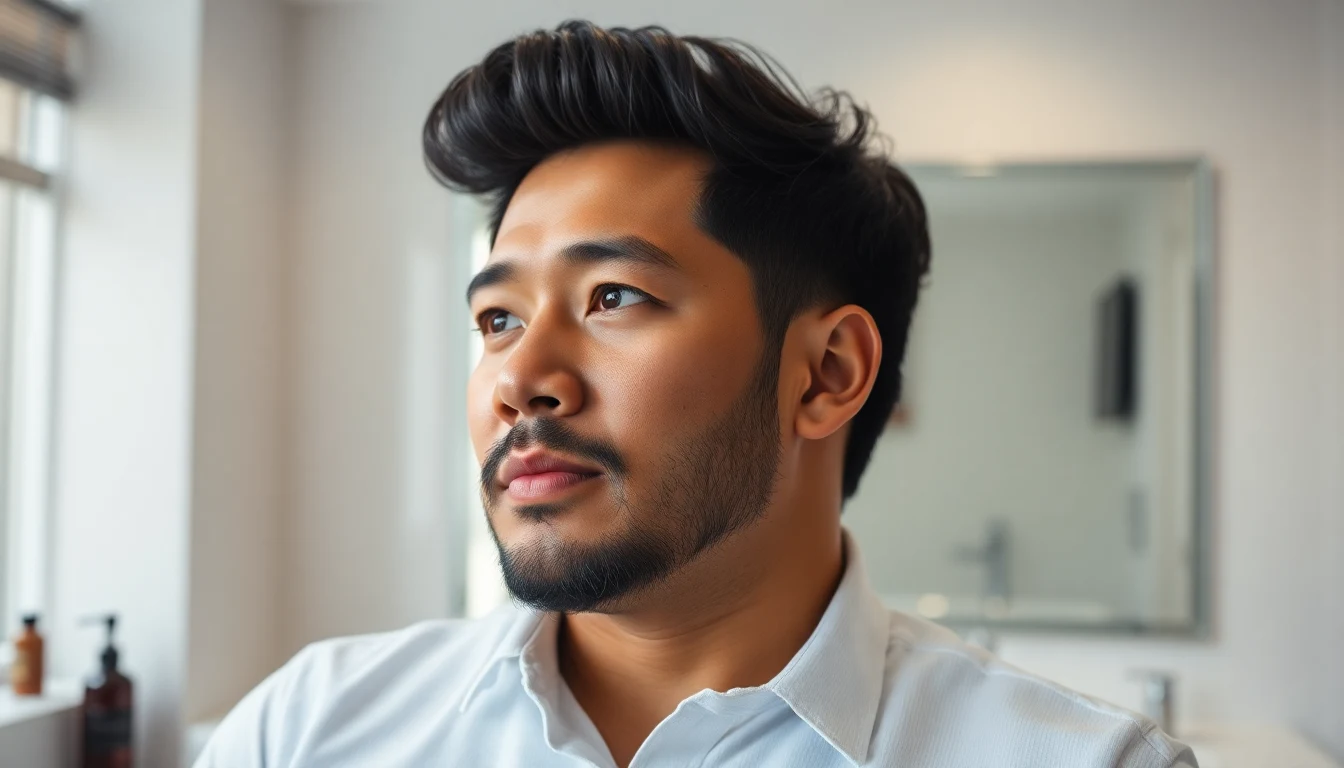
Many Pacific Islander, East Asian, South Asian, and Indigenous American men have both high density and coarse texture. If that is you, you have double-thick hair. The tools and products designed for “normal” hair will consistently fail you. You need gear and techniques built for your specific hair type.
Understanding which type of thickness you have (or both) helps you choose the right approach. High density needs volume reduction and thinning techniques. Coarse texture needs moisture, the right comb materials, and styling products with hold.
Essential Tools for Thick Hair
The right tools make the difference between a frustrating grooming experience and an efficient one. Here is what I recommend after years of trial and error.
| Tool | Why It Matters for Thick Hair | What to Look For |
|---|---|---|
| Wide-tooth comb | Detangles without breakage | Seamless teeth, wood or bone material |
| Boar bristle brush | Distributes natural oils through dense hair | Firm bristles, cushioned base |
| Detangling brush | Handles wet, thick hair without pulling | Flexible bristles, ergonomic grip |
| Hair dryer with diffuser | Dries thick hair faster, reduces frizz | Multiple heat settings, ionic technology |
| Quality shears or clippers | Standard tools struggle with thick hair | Professional-grade, sharp blades |
| Spiral hair ties | Hold thick hair without creasing or pulling | Coil design, no-metal construction |
The wide-tooth comb is the single most important tool. Standard fine-tooth combs catch on thick hair, causing breakage and pain. A quality wide-tooth comb in wood or bone glides through without snagging. I keep one in my shower and one on my dresser.
For brushes, boar bristle is the standard for thick hair. The natural bristles are firm enough to work through dense hair while distributing sebum (your scalp’s natural oil) from root to tip. This is especially important for thick hair because the oil has a harder time traveling down coarse strands on its own.
Washing Thick Hair: Less Is More
One of the biggest mistakes men with thick hair make is washing too often. Thick, coarse hair is naturally drier than fine hair because the sebum produced by your scalp takes longer to travel down each strand. Washing every day strips what little oil reaches the mid-lengths and ends. Mastering thick hair management for men takes practice but delivers great results.
Recommended wash frequency: Two to three times per week for most men with thick hair. If you exercise daily and sweat heavily, rinse with water on non-wash days and condition the ends.
Shampoo choice: Use a sulfate-free shampoo. Sulfates (sodium lauryl sulfate, sodium laureth sulfate) are aggressive detergents that strip too much oil from already-dry thick hair. Look for shampoos with gentle cleansing agents and natural ingredients. A quality sulfate-free shampoo made for thick or coarse hair will clean without over-stripping.
Conditioner: This is non-negotiable for thick hair. Use conditioner every time you wash, and consider a leave-in conditioner between washes. Thick hair drinks moisture. A good conditioner adds slip (making the hair easier to detangle), provides moisture, and reduces frizz.
Pre-wash treatment: Once or twice per week, apply coconut oil to your hair 30 minutes before washing. The lauric acid in coconut oil penetrates the hair shaft and reduces protein loss during the washing process (Rele and Mohile, Journal of Cosmetic Science, 2003). This is the single best thing you can do for thick, coarse hair that tends toward dryness.
Styling Products That Actually Work
Standard-hold products fail on thick hair. Here is a breakdown of what works.
Clay or matte paste: Best for thick hair that you want to style with a natural, textured look. Clay provides strong hold without shine, and its matte finish works well with the natural texture of coarse hair. Apply to slightly damp hair for best results.
Pomade (water-based): Good for slicked-back styles or more controlled looks. Choose water-based over oil-based; oil-based pomade is extremely difficult to wash out of thick hair. Water-based washes out easily while still providing solid hold.
Sea salt spray: Excellent for adding texture and reducing bulk in thick hair. Spray on damp hair and let air dry for a beachy, natural texture. Particularly effective in low-humidity environments. In high humidity, skip this; the salt can attract additional moisture and increase frizz.
Leave-in conditioner: More of a necessity than a styling product for thick hair. Apply after washing and before any styling product. It provides the moisture base that makes thick hair manageable.
Avoid: Gel. Traditional hair gel dries thick hair out further, creates a crunchy, unnatural finish, and flakes. If you need strong hold, use clay or a strong-hold pomade instead.
Climate consideration: In humid environments like Hawaii, Southeast Asia, or the Gulf Coast, use lighter products and less of them. Humidity adds natural volume to thick hair, so you need less product assistance. In dry climates, you can use heavier products and more moisture-focused formulations. Anti-humidity sprays can help as a finishing step in very humid conditions.

Haircuts and Barber Communication
Finding a barber who understands thick hair is worth its weight in gold. Not all barbers have experience with very dense, coarse hair. Here are some things to communicate clearly. Understanding thick hair management for men is key to a great grooming routine.
Ask about thinning: Thinning shears or point cutting can remove bulk from thick hair without changing the overall length or shape. This makes styling significantly easier. Ask your barber to thin the interior of your hair to reduce volume while keeping the outer layer intact for a natural look.
Discuss maintenance: Thick hair often needs more frequent trims to maintain its shape, typically every three to four weeks. Without regular trims, thick hair loses its shape faster than thin hair because of its volume.
Be specific about length: “Short on the sides” means different things depending on hair density. On thick hair, a number-3 guard still looks fuller than a number-3 on thin hair. Show photos of what you want rather than relying on guard numbers alone.
Find a specialist: Look for barbers who specifically mention experience with thick, coarse, or ethnic hair types. Ask Pacific Islander, Latino, or Asian friends for barber recommendations, as these communities often know who handles thick hair best.
Managing Thick Hair in Different Climates
Climate affects thick hair dramatically. The humidity and temperature where you live should influence your entire grooming routine.
High humidity (tropical, subtropical): This is my home environment in Honolulu. In humidity, thick hair expands, frizzes, and absorbs ambient moisture. Use lighter products, wash more frequently (the sweat factor is real), and focus on anti-frizz finishing products. Lighter oils like kukui or jojoba work better than heavy coconut oil for daily styling in humidity. Save coconut oil for pre-wash treatments. Check our full humidity-proof hair routine for a detailed approach.
Dry, cold climate: In low humidity, thick hair loses moisture rapidly and becomes brittle. Increase your conditioning frequency, use heavier oils like coconut oil for daily styling, and consider a humidifier in your home during winter months. A deep conditioning treatment every week is recommended.
Moderate climate: You have the most flexibility. Alternate between heavier and lighter products based on the season and adjust your wash frequency as needed.
Nighttime Routine for Thick Hair
What you do before bed affects how your hair looks in the morning. For thick hair, a nighttime routine prevents tangles, reduces frizz, and saves you time in the morning.
Brush or comb before bed: Run a wide-tooth comb or boar bristle brush through your hair to remove tangles and distribute oils. This takes thirty seconds and prevents the matting that thick hair is prone to overnight.
Satin or silk pillowcase: Cotton pillowcases create friction that causes frizz and breakage. Satin or silk reduces that friction significantly. This is not a luxury item; it is a practical tool for thick hair management.
Loose tie-up: If your hair is long enough, tie it in a loose bun or ponytail on top of your head using a spiral hair tie. This prevents tangles while you sleep without creating creases or pulling. When it comes to thick hair management for men, technique matters most.
Common Thick Hair Problems and Solutions
“My hair takes forever to dry.” Thick hair holds significantly more water than thin hair. Use a microfiber towel to squeeze (not rub) excess water out after washing. If you use a hair dryer, invest in one with a diffuser attachment and ionic technology. The diffuser distributes heat evenly, and ionic dryers reduce drying time by up to 30%.
“Products don’t hold my hair.” You need strong-hold products specifically formulated for thick or coarse hair. Standard-hold products lack the structure to tame high-density hair. Layer products if needed: start with a leave-in conditioner for moisture, then apply a clay or pomade for hold.
“My hair gets frizzy in humidity.” Frizz happens when dry hair absorbs ambient moisture unevenly. The solution is to pre-moisturize your hair so it does not need to pull moisture from the air. A leave-in conditioner or light oil applied to damp hair seals the cuticle and significantly reduces frizz.
“Combs and brushes break in my hair.” You are using the wrong tools. Cheap plastic combs are not built for thick hair. Invest in a quality wide-tooth comb made from wood, bone, or high-quality acetate. These materials flex instead of snapping under the stress of dense hair.
Frequently Asked Questions
Should I thin my thick hair?
Professional thinning with shears is an excellent option for reducing bulk while maintaining length. Do not attempt to thin your own hair at home with thinning shears; it is easy to create uneven patches. Have a barber experienced with thick hair do it during regular cuts.
How often should I condition thick hair?
Every time you wash, and consider a leave-in conditioner on non-wash days. Deep conditioning treatments (a heavy conditioner or oil left on for 20 to 30 minutes) should happen once per week for most thick hair types.
Is it bad to air dry thick hair?
Air drying is not inherently bad, but thick hair takes a long time to dry naturally, which can leave you looking unkempt for an extended period. The bigger concern is that wet thick hair is more prone to tangling and breakage. If you air dry, detangle while damp and apply a leave-in product to prevent frizz as it dries.
What is the best haircut for very thick hair?
Layered cuts work well because they remove bulk from the interior while maintaining shape. Undercuts and fades are popular because they reduce the volume on the sides. Discuss with your barber what level of maintenance you are comfortable with, as some thick hair cuts require more frequent trims.
Can I straighten thick hair?
Yes, with a quality flat iron and heat protectant. However, frequent heat styling damages thick hair over time, especially coarse hair that is already prone to dryness. If you straighten regularly, increase your deep conditioning frequency and use a heat protectant spray every time.
Does thick hair thin with age?
Yes, hair density naturally decreases with age for most men. Thick hair thinning with age often transitions to what most people consider “normal” density. Hormonal changes, particularly DHT levels, can also cause thinning. If you notice rapid changes, consult a dermatologist.
Last updated: February 2026 | Tane Matua, CulturedGrooming contributor
Further reading: For research-backed grooming advice, see Healthline Men’s Health.
Frequently Asked Questions
What’s the difference between hair density and coarseness, and why does it matter for thick hair management?
Hair density refers to how many follicles you have per square inch of scalp (high-density hair can reach 150,000+ total hairs), while coarseness describes the thickness of individual hair strands. Understanding which one applies to your hair helps you choose the right tools and products, since a man with high density but fine strands needs different care than someone with lower density but very coarse hair.
How often should I wash and condition my thick hair to avoid it looking greasy or weighed down?
You should wash thick hair 2-3 times per week with a gentle cleanser, as over-washing strips natural oils and can actually make your hair greasier. Conditioning should happen at least once weekly, focusing on the mid-lengths and ends rather than the scalp, to maintain hydration without flattening your hair.
What kind of haircut works best for men with very thick hair?
Short cuts (1-3 inches) with texturized layers or fades work best because they reduce bulk while showcasing your hair’s natural texture and movement. You should communicate clearly with your barber about thinning techniques and avoid blunt cuts, which can make thick hair look blocky and difficult to style.
Is it okay to air dry thick hair, or should I always blow dry it?
Air drying thick hair can work if you have a shorter cut, but blow drying gives you more control over style and helps prevent frizz and undefined texture. If you do air dry, use a quick-dry spray and scrunch your hair while it’s damp to encourage better shape and prevent it from drying flat or frizzy.