Last updated: February 2026 by Marcus Chen-Williams, Founder & Editor-in-Chief
Let me be direct: most “types of fades” guides on the internet are garbage. They list five or six fade styles with two sentences each, use the same stock photos for every hair type, and leave you no better prepared for your next barber visit than you were before. I know because I have read all of them.
This guide is different. We cover every major fade type, but more importantly, we cover how each one actually behaves across different hair textures, from pin-straight Type 1A hair to tight 4C coils. Because a mid fade on thick, straight Asian hair and a mid fade on coily Black hair are two fundamentally different haircuts, even if they share the same name. After talking to barbers in Los Angeles, Atlanta, Houston, and New York over the past year, I can tell you that this distinction matters more than almost anything else.
If you only read one section, jump to the master comparison table. If you want to walk into your next appointment with real confidence, read the How to Ask Your Barber section. And if you want the full picture, start here.
What Is a Fade Haircut?: Types Of Fades
A fade is a blending technique where hair gradually transitions from longer on top to progressively shorter on the sides and back, eventually reaching very short clipper lengths or bare skin. The “fade” refers to that gradient effect, the way hair seems to disappear as it moves downward.
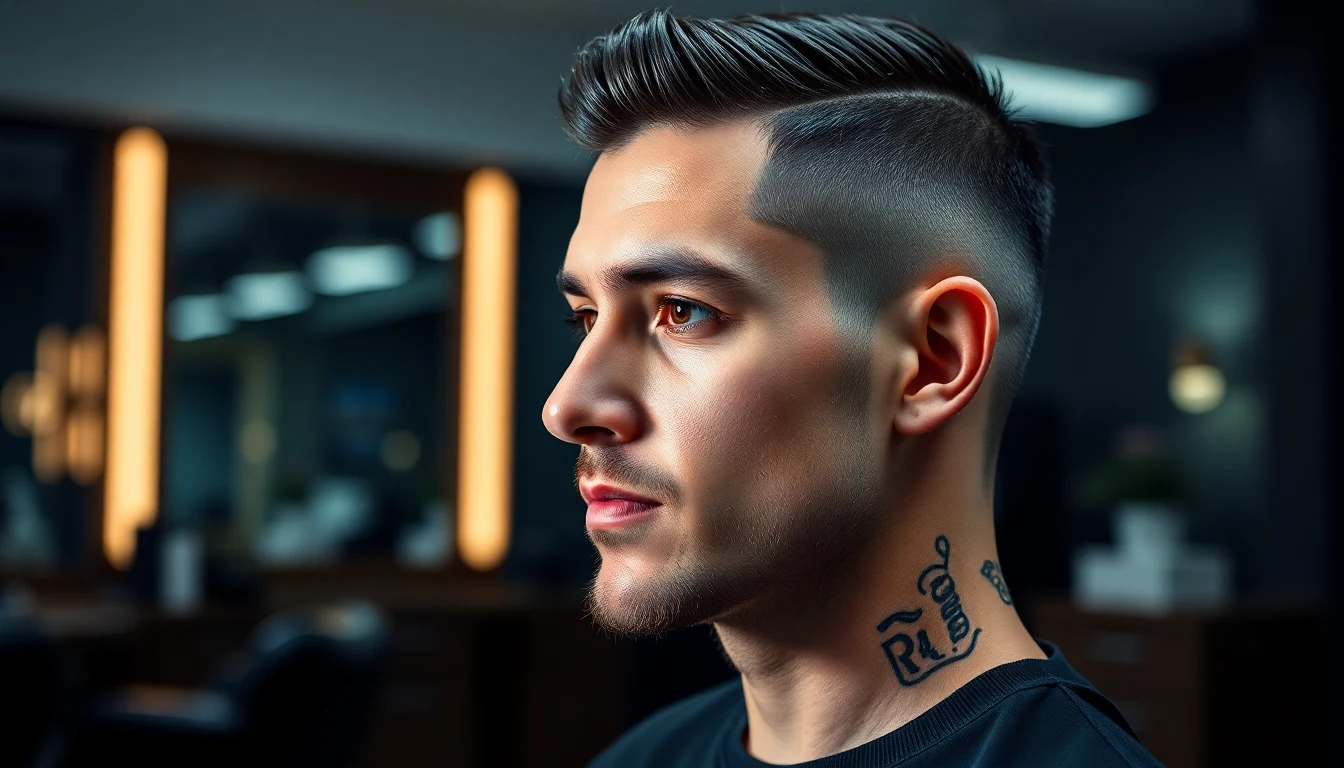
What separates a fade from a basic short-sides-long-top haircut is the precision of the blend. A skilled barber uses multiple clipper guard sizes, clipper-over-comb technique, and sometimes freehand cutting to create a seamless transition with no visible lines or steps between lengths.
The term covers a broad family of styles. Different types of fade haircuts are defined by three variables:
- Height: Where the fade starts (low, mid, or high on the head)
- Intensity: How short the shortest point goes (skin/bald vs. a shadow of stubble)
- Shape: The contour of the fade line (straight across, dropping behind the ear, radiating outward)
Understanding these three variables is the key to every fade style that follows. Let’s break this down.
Low Fade
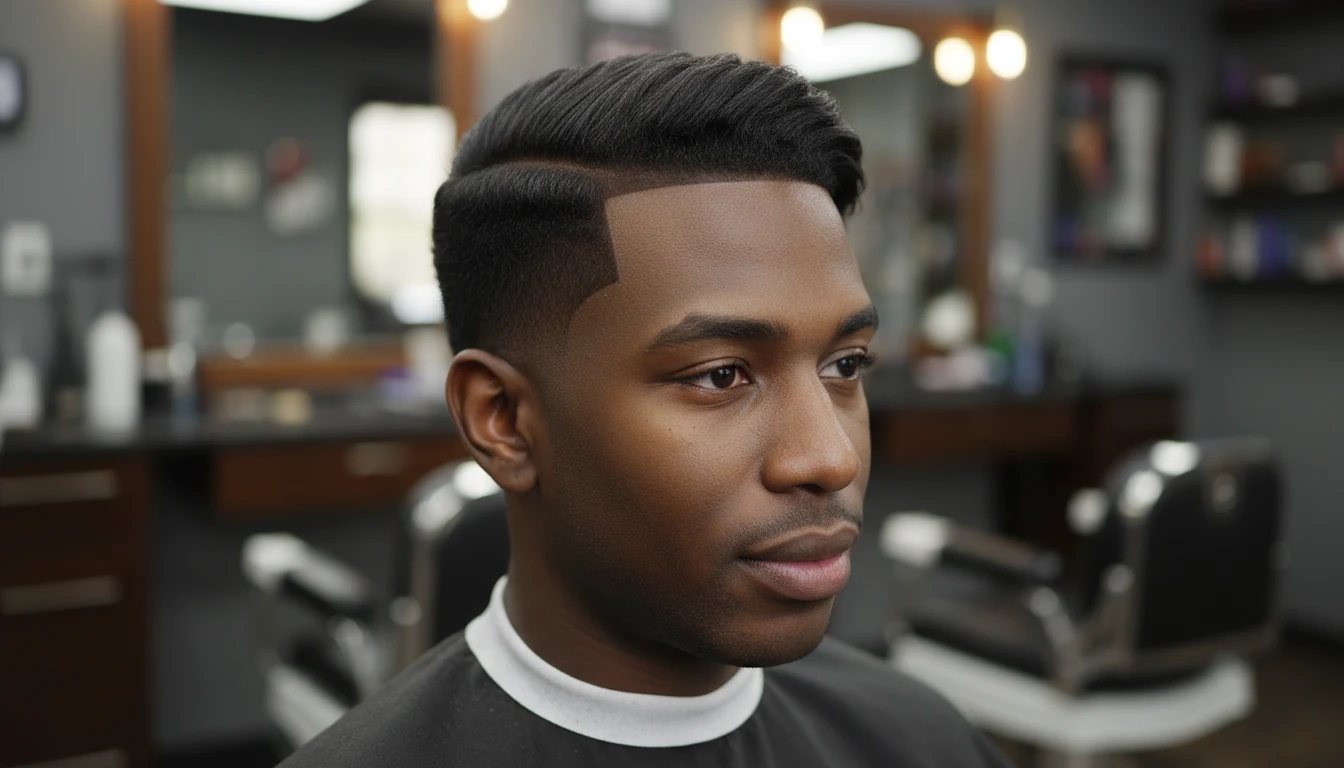
The low fade starts its blend about half an inch to one inch above the ear, sitting just above the natural hairline. It is the most conservative fade option, keeping the majority of the sides at a visible length before tapering down at the very bottom.
What It Looks Like
From the front, a low fade looks almost like a traditional men’s haircut. The blending happens so low on the head that you mainly notice it from the side or back. The transition zone is narrow, usually covering about one to two inches of vertical space, which gives it a subtle, refined appearance.
How It Differs from Other Fades
The low fade is the least dramatic of all fades. Where a high fade removes most of the hair on the sides, a low fade preserves it. Think of it as the “business professional” entry point into fade territory. It pairs well with conservative workplaces and situations where a more understated look is appropriate.
Hair Texture Breakdown
| Hair Texture | How It Performs | Notes |
|---|---|---|
| Straight, fine (Type 1A-1B) | Excellent | Fine European or East Asian hair blends smoothly. The low placement keeps enough density on the sides to avoid looking thin. |
| Straight, thick (Type 1C-2A) | Very good | Thick straight hair (common in Asian and Latino men) holds the shape well but may need more frequent trims as growth pushes the blend upward. |
| Wavy (Type 2B-2C) | Good | Waves can disguise minor grow-out, giving you an extra few days before a trim. |
| Curly/coily (Type 3A-4C) | Good, with caveats | The narrow transition zone means less room for the barber to work. Coily hair needs a barber experienced in freehand fading to avoid visible lines. |
Face Shapes It Flatters
Oval, oblong, and diamond face shapes benefit most from a low fade. Because it retains more hair on the sides, it avoids adding extra visual height. Men with oblong faces should especially consider a low fade because it provides balance without elongating the face further.
Men with round faces should typically avoid low fades, as the retained side volume can make the face appear wider.
How to Ask Your Barber
Say: “I want a low fade. Start the blend right above my ear, about half an inch up from my hairline. Keep it gradual. I want to see hair all the way down until the last inch or so.”
Maintenance Schedule
Every two to three weeks. The low placement means grow-out is relatively subtle, but the neckline will lose its shape first. Between visits, keep the neckline clean with a trimmer if you are comfortable doing so.
Mid Fade
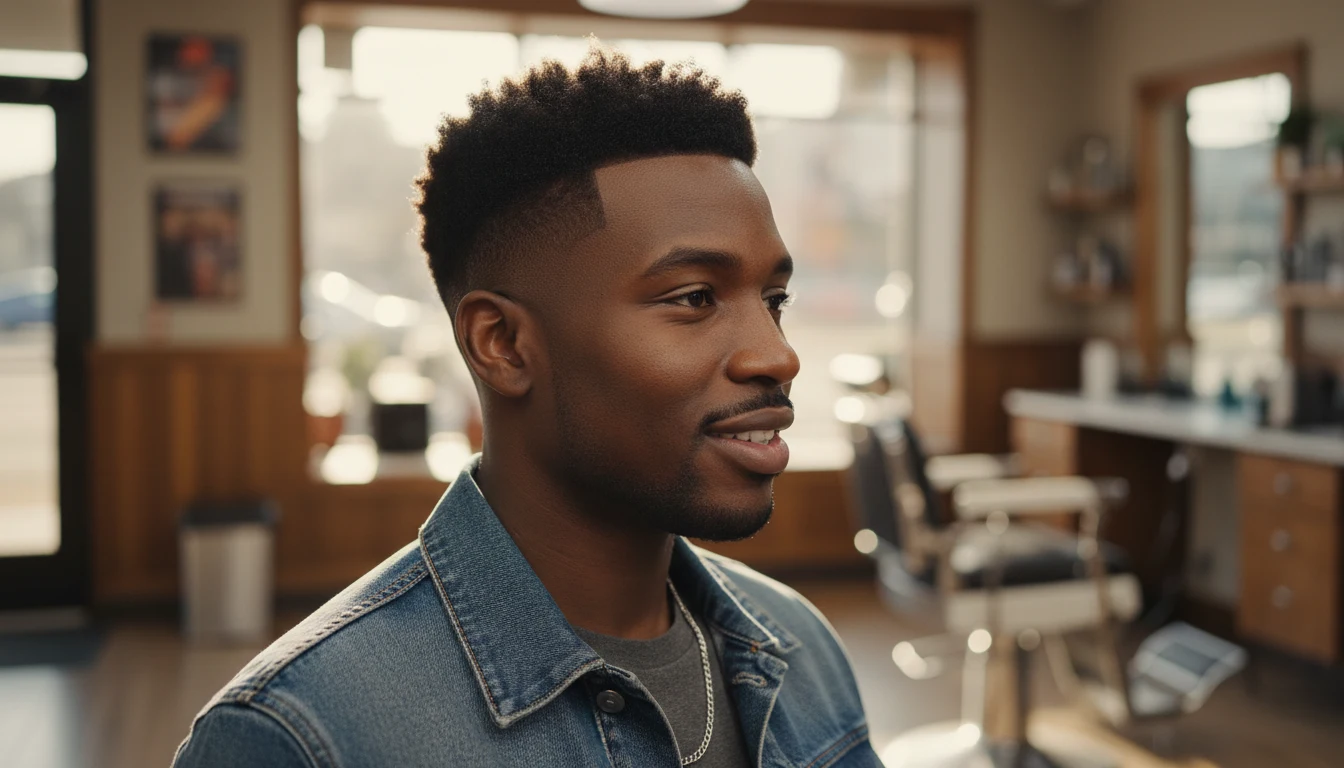
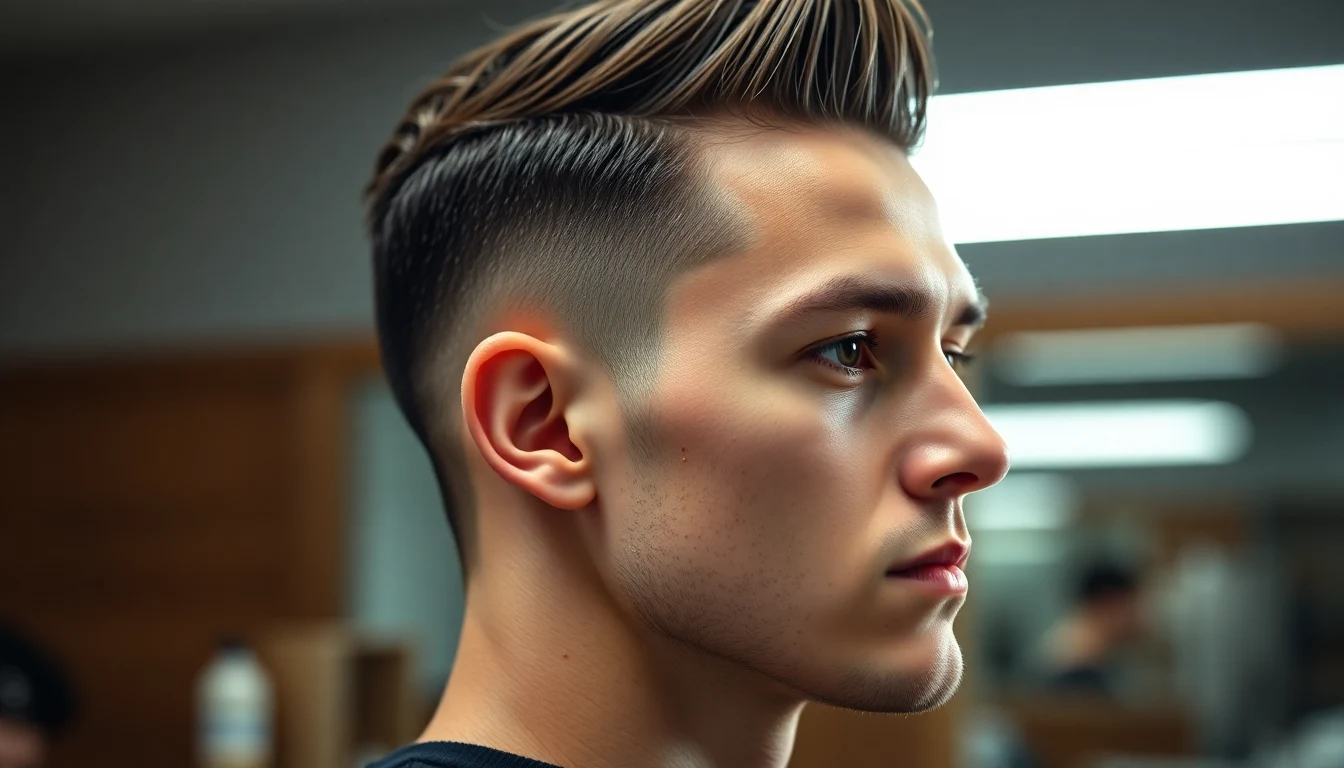
The mid fade is the workhorse of the fade world. It starts at the temple, roughly at the point where the top of your ear meets the side of your head. This placement hits the visual sweet spot: noticeable enough to look intentional, subtle enough to work in almost any context.
What It Looks Like
The mid fade creates a clean, balanced silhouette. There is enough bare or very short hair below the temple line to provide contrast, but enough graduated length above it to maintain structure. It pairs with nearly every style on top, from a textured crop to a pompadour to natural curls.
How It Differs from Other Fades
If the low fade is conservative and the high fade is bold, the mid fade is the Goldilocks option. It offers more contrast than a low fade without the high-maintenance demands of a high fade. This is why barbers across the board recommend it as the default fade for first-timers.
Hair Texture Breakdown
| Hair Texture | How It Performs | Notes |
|---|---|---|
| Straight, fine (Type 1A-1B) | Very good | Blends cleanly. May show scalp if hair is very fine or sparse at the temples, which some men prefer and others do not. Discuss with your barber. |
| Straight, thick (Type 1C-2A) | Excellent | This is the most common combination in barbershops. Thick straight hair holds the mid fade shape extremely well and grows out evenly. |
| Wavy (Type 2B-2C) | Excellent | Waves add natural texture to the top that contrasts beautifully with the clean mid fade sides. |
| Curly/coily (Type 3A-4C) | Excellent | This is one of the most popular combinations in Black barbershops. The mid placement gives the barber a generous transition zone to blend textured hair without harsh lines. |
Face Shapes It Flatters
Nearly all face shapes work with a mid fade. It is particularly effective for square and rectangular faces, where the balanced proportions complement strong jawlines. Heart-shaped faces also benefit because the mid fade does not add or remove too much side volume.
How to Ask Your Barber
Say: “I want a mid fade. Start the blend at my temples. I want a smooth gradient, nothing too abrupt.”
If you want more precision, add: “Fade down to a one guard at the bottom” (for a standard mid fade) or “Fade down to skin at the bottom” (for a mid skin fade).
Maintenance Schedule
Every two to three weeks. The mid fade is fairly forgiving during grow-out, especially on thicker or curlier hair types. Straight, fine hair will show the grow-out a bit sooner.
High Fade
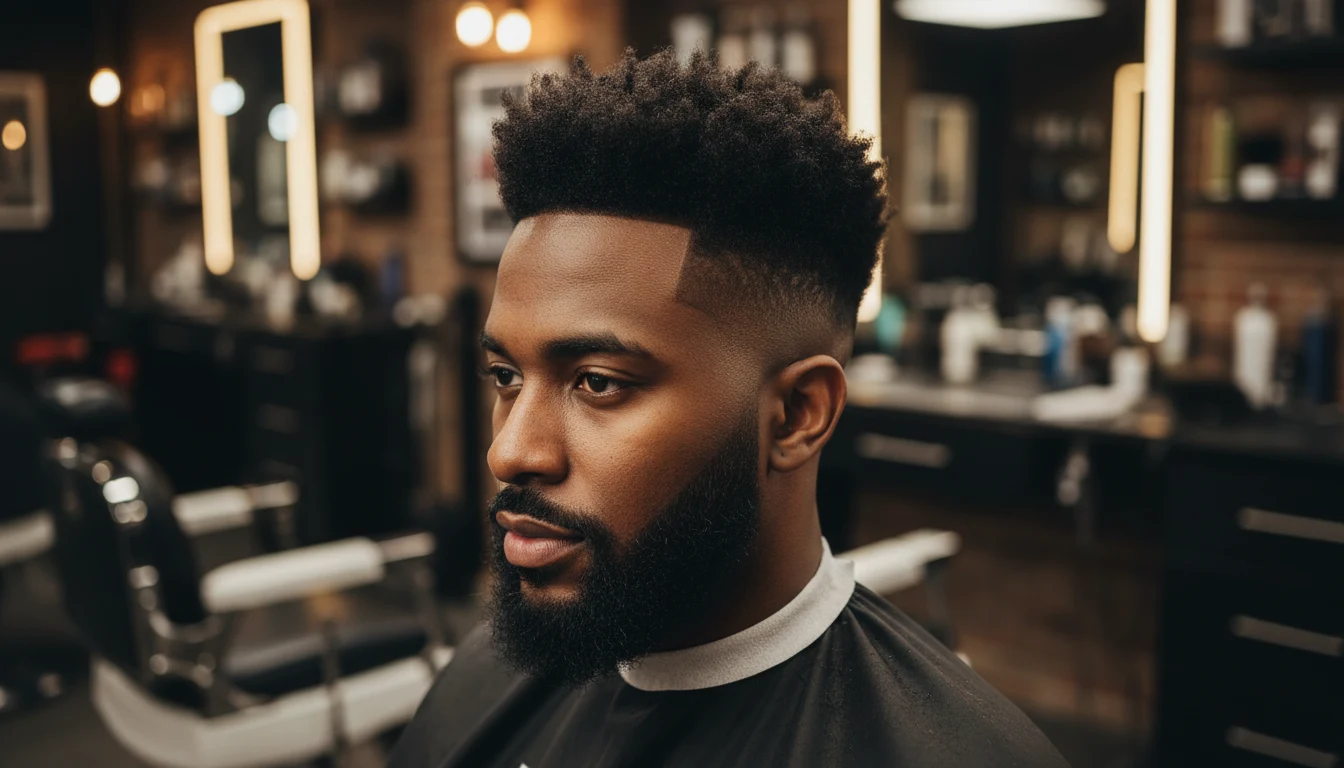
The high fade starts near the top of the sides, roughly two to three inches above the ear. This removes the vast majority of hair on the sides and back, leaving all the visual weight on top.
What It Looks Like
From the front, the high fade is dramatic. The sides appear nearly bare, with the blend occurring close to the crown. It creates maximum contrast between the top and sides, which is why it pairs so well with textured, voluminous styles on top. Think high-top fades, pompadours with undercut elements, or tight natural curls with clean sides.
How It Differs from Other Fades
The high fade is the boldest standard fade option. It shares territory with the undercut in terms of how much side hair is removed, but the key difference is the blend. An undercut has a hard, visible line where the long top meets the short sides. A high fade transitions gradually, even though that transition happens high on the head.
Hair Texture Breakdown
| Hair Texture | How It Performs | Notes |
|---|---|---|
| Straight, fine (Type 1A-1B) | Good, with caveats | Can look excellent but requires enough density on top to justify the contrast. If your hair is fine and thinning, a high fade can make the top look sparse. Consider a mid fade instead. |
| Straight, thick (Type 1C-2A) | Very good | Common in the Asian fade haircut tradition. Thick straight hair provides solid volume on top while the high fade keeps the sides ultra-clean. Popular in Korean and Japanese men’s styling. |
| Wavy (Type 2B-2C) | Very good | Wavy texture adds natural body on top that fills out the silhouette created by the stripped sides. |
| Curly/coily (Type 3A-4C) | Excellent | The high fade with natural curls or coils on top is a signature look in Black men’s grooming. The contrast between textured top and clean sides is striking. This is where the high-top fade lives. |
Face Shapes It Flatters
Round and square faces benefit the most from high fades. By removing side volume and emphasizing vertical height on top, the high fade creates an elongating effect that slims the face visually. It is less ideal for already-narrow face shapes (oblong, long oval) because it can make the face appear even longer.
How to Ask Your Barber
Say: “I want a high fade. Start the blend about two inches above my ear, close to my crown. Fade down to a half guard” (or “fade to skin” if you want a high skin fade).
Maintenance Schedule
Every 10 to 14 days. High fades grow out fast because the short areas are so close-cropped. Even a few days of growth is noticeable. This is the highest-maintenance standard fade.
Skin Fade (Bald Fade)
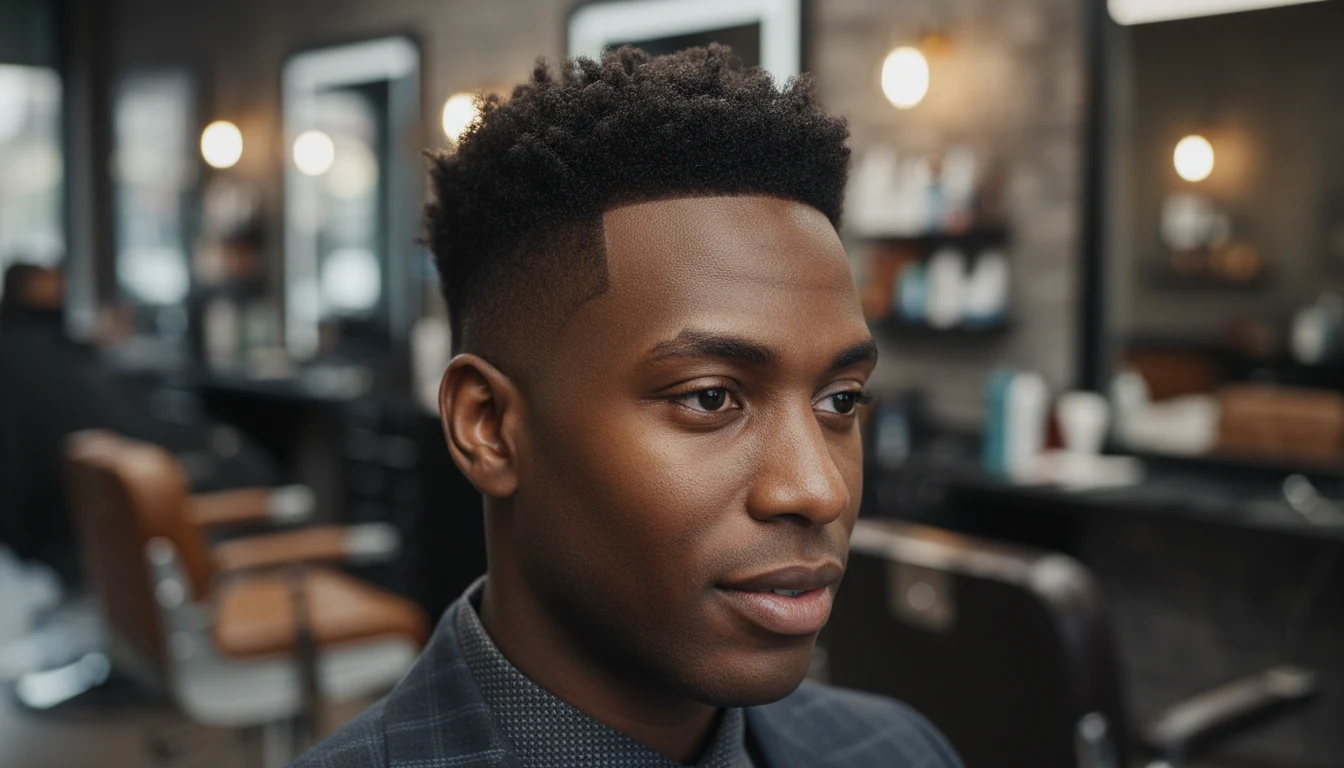
The skin fade, also called a bald fade, takes any fade (low, mid, or high) and brings the shortest point all the way down to bare skin. No guard. No stubble. Skin.
What It Looks Like
The skin fade is the sharpest, cleanest version of any fade. The hair literally appears to emerge from nothing, growing out of bare skin into the blend. It produces the most dramatic gradient effect and the crispest finish. When paired with a sharp line-up along the hairline, temples, and neckline, a fresh skin fade looks surgical.
How It Differs from Other Fades
A standard fade stops at the shortest clipper guard (usually a half or zero guard, which still leaves a shadow of stubble). A skin fade goes further, using a foil shaver or straight razor to take the lowest section down to bare scalp. This is a technique modifier that can be applied to any fade height. You can have a low skin fade, a mid skin fade, or a high skin fade.
Hair Texture Breakdown
| Hair Texture | How It Performs | Notes |
|---|---|---|
| Straight, fine (Type 1A-1B) | Good | The contrast between skin and fine hair can look sharp, but the transition zone is smaller on fine hair, giving the barber less room to work. The result depends heavily on barber skill. |
| Straight, thick (Type 1C-2A) | Very good | Thick hair provides a more visible gradient from skin to full density, making the fade more impactful. A staple in Hispanic men’s haircuts and popular across East Asian and South Asian communities. |
| Wavy (Type 2B-2C) | Very good | Waves create natural visual interest as the hair gains length through the blend zone. |
| Curly/coily (Type 3A-4C) | Excellent | This is where skin fades truly shine. The density and texture of coily hair creates a dramatic, high-contrast gradient from bare skin to full curls. This is one of the most requested styles in Black barbershops and is equally popular in Caribbean and African grooming traditions. |
Face Shapes It Flatters
The skin fade’s effect depends on its height. A high skin fade elongates (good for round faces). A low skin fade preserves side structure (good for oblong faces). The “skin” element itself does not change the face shape dynamics; it simply makes the fade more pronounced. Mastering types of fades takes practice but delivers great results.
How to Ask Your Barber
Say: “I want a [low/mid/high] skin fade. Take it all the way down to skin at the bottom. Use the foil shaver to clean it up.”
Important: not all barbers are licensed to use a straight razor, depending on your state. If you specifically want a razor finish, ask beforehand.
Maintenance Schedule
Every 10 to 14 days for high skin fades; every two weeks for mid skin fades; every two to three weeks for low skin fades. The bare skin area shows stubble within three to five days, so maintenance demands are real. If you cannot commit to frequent barber visits, a shadow fade (below) might be a better fit.
Taper Fade
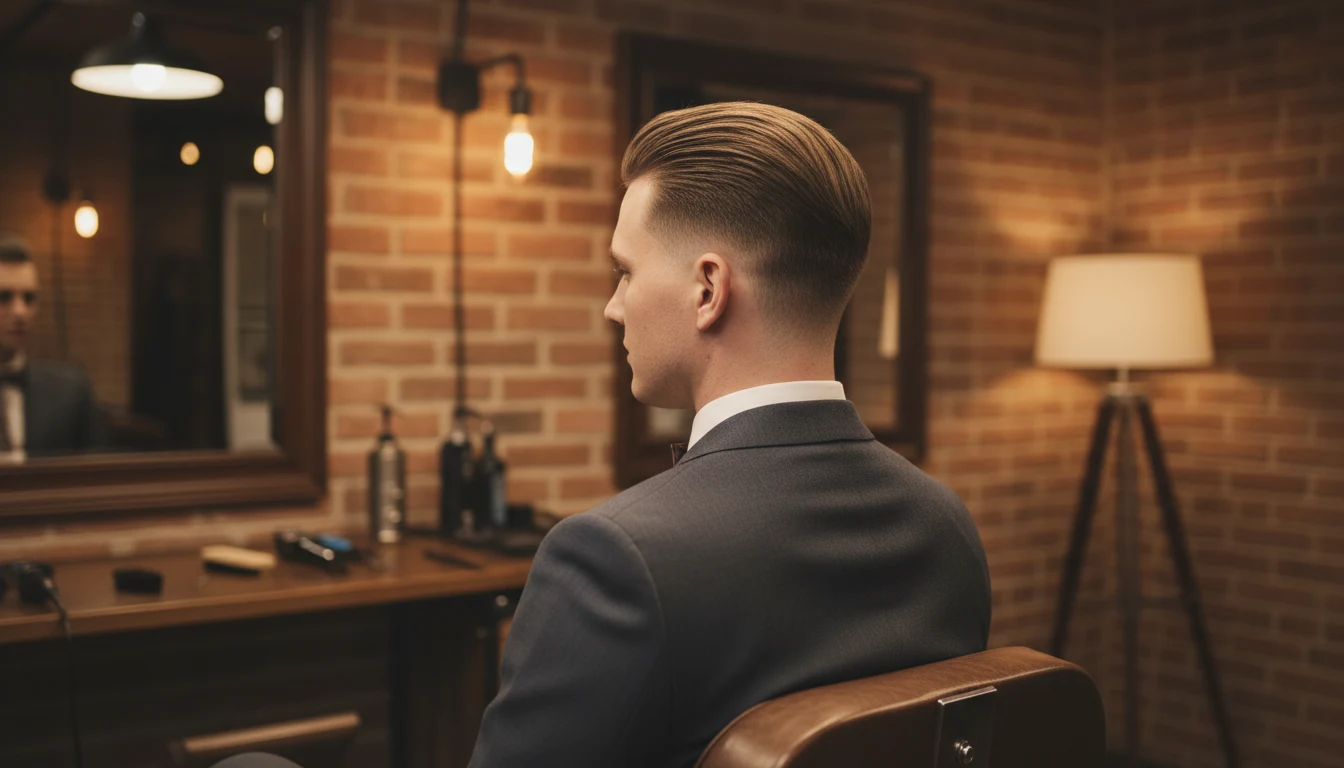
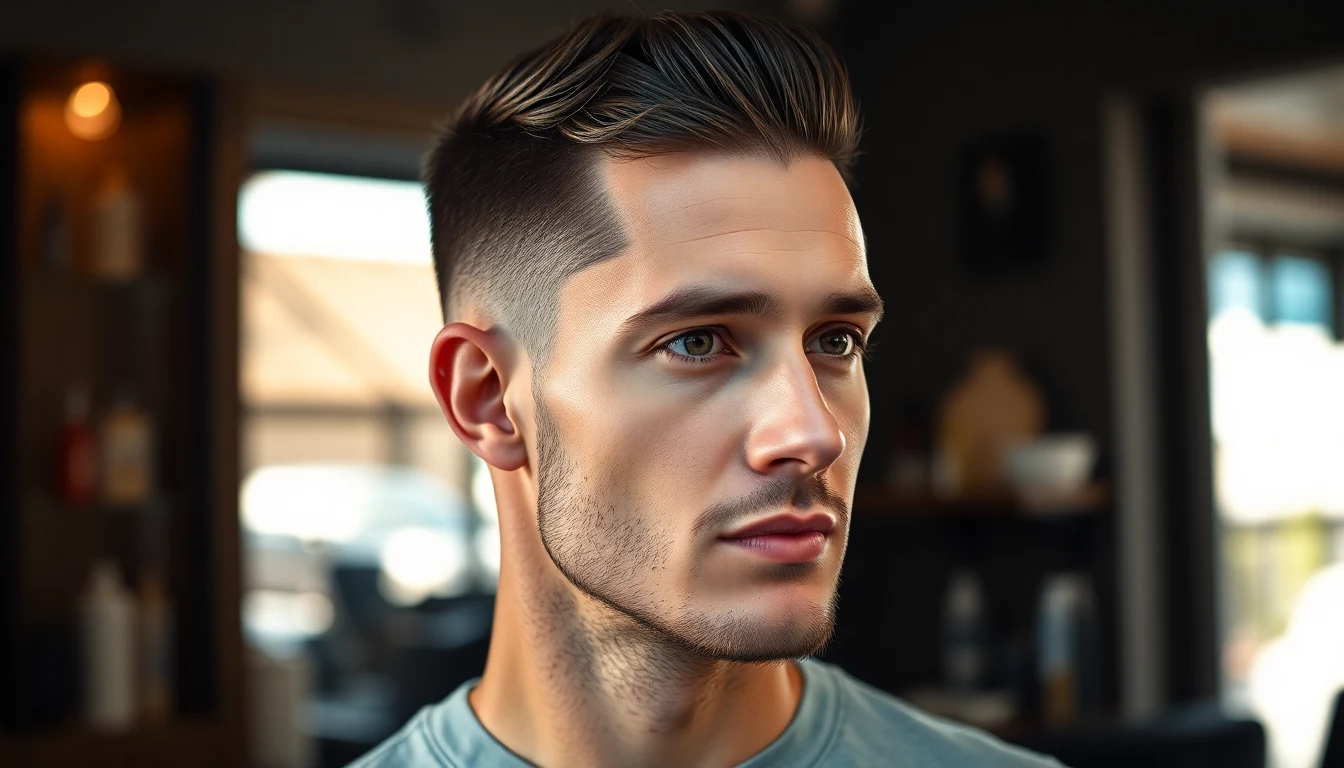
Here is where terminology gets confusing, and I want to clear it up because barbers themselves do not always agree. A taper fade is a fade with an extremely gradual, conservative blend that follows the natural hairline and tapers down to a very short length (but not skin). It is the gentlest fade on this list.
What It Looks Like
A taper fade is almost invisible to an untrained eye. The hair gradually shortens along the sideburns, around the ears, and down the neckline. There is no stark contrast or visible “fade line.” It looks like your hair just naturally gets shorter toward the edges of your head. Many men have this cut and do not even realize it qualifies as a fade.
How It Differs from Other Fades
The taper fade has the longest transition zone and the least contrast of any fade. While a mid fade might jump from a three guard to a one guard over two inches of head space, a taper fade stretches that transition over three to four inches. Think of it as a fade played in slow motion.
For a deeper dive into the nuances, see our dedicated taper fade guide.
Hair Texture Breakdown
| Hair Texture | How It Performs | Notes |
|---|---|---|
| Straight, fine (Type 1A-1B) | Excellent | Fine hair blends beautifully in a taper because the gradual transition hides any density changes. This is one of the best fade options for men with thin or fine hair who still want a clean look. |
| Straight, thick (Type 1C-2A) | Excellent | Thick straight hair holds the taper shape well. Common in professional settings across East Asian, South Asian, and Latino communities where a clean but understated look is preferred. |
| Wavy (Type 2B-2C) | Excellent | Waves enhance the gradual transition naturally. |
| Curly/coily (Type 3A-4C) | Very good | The taper fade on curly hair produces a classic, clean look without the drama of a skin fade. It is a solid choice for professional environments or men who prefer a more natural silhouette. |
Face Shapes It Flatters
The taper fade works with almost every face shape because it is so subtle. It neither adds nor removes significant volume from the sides. It is particularly good for diamond and heart-shaped faces, where you want to maintain some width through the temples without going overboard. For more guidance, American Academy of Dermatology provides expert resources on skin and hair care.
How to Ask Your Barber
Say: “I want a taper fade. Keep it gradual. I do not want a hard contrast between the top and the sides. Just clean it up around the ears and neckline and let it blend naturally.”
Maintenance Schedule
Every three to four weeks. The taper fade is the most forgiving of all fades. Its gradual nature means grow-out looks intentional rather than unkempt. This makes it ideal if you cannot get to the barber every two weeks.
Drop Fade
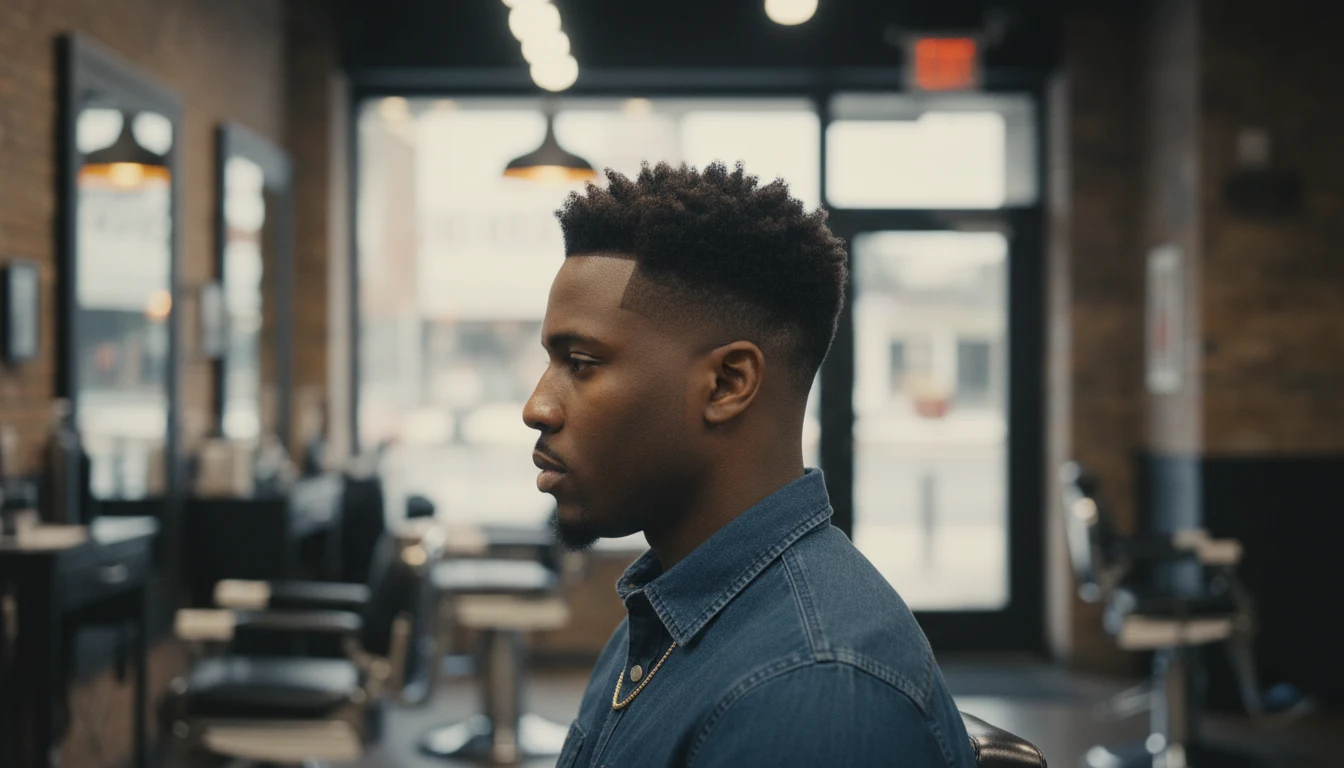
The drop fade gets its name from the fade line itself, which “drops” or arcs downward as it moves from the front of the head toward the back. Instead of following a straight horizontal line around the head, the fade dips low behind the ear and curves down toward the neckline.
What It Looks Like
From the front, a drop fade can look like a standard mid or low fade. The difference becomes apparent from the side and back, where the fade line follows a curved path that drops below the occipital bone (the bump at the back of your skull). This curved line follows the natural head shape more closely than a straight-line fade.
How It Differs from Other Fades
A standard fade follows a relatively consistent height around the head. The drop fade intentionally lowers the fade line in the back, creating more of an arc than a straight line. This preserves more hair on the back of the head and produces a fuller, more rounded silhouette when viewed from behind.
Hair Texture Breakdown
| Hair Texture | How It Performs | Notes |
|---|---|---|
| Straight, fine (Type 1A-1B) | Good | Works well but the curved fade line is less visually pronounced on fine, straight hair. It reads more subtle than on other textures. |
| Straight, thick (Type 1C-2A) | Excellent | Thick straight hair shows the drop contour clearly. Extremely popular in Hispanic men’s haircuts. The drop fade paired with a textured quiff or comb-over is one of the most requested styles in Latino barbershops. |
| Wavy (Type 2B-2C) | Very good | Waves complement the curved shape, creating a natural flow from top to sides. |
| Curly/coily (Type 3A-4C) | Excellent | The drop fade is a favorite with natural curls because the curved line mirrors the round shape of an afro or curly top. It creates a cohesive silhouette that looks intentional and sculpted. |
Face Shapes It Flatters
The drop fade adds fullness at the crown and back of the head, making it excellent for men with flatter back-of-head profiles (common across several Asian ethnicities). It also complements oval and heart-shaped faces by maintaining balanced proportions.
How to Ask Your Barber
Say: “I want a drop fade. Keep it mid-height at the temples but let the fade line drop down as it goes around the back. I want it to arc below the occipital bone.”
Maintenance Schedule
Every two to three weeks. The curved line can lose definition as hair grows, but the overall shape remains intact longer than a straight-line fade because the gradual curve disguises minor grow-out.
Burst Fade
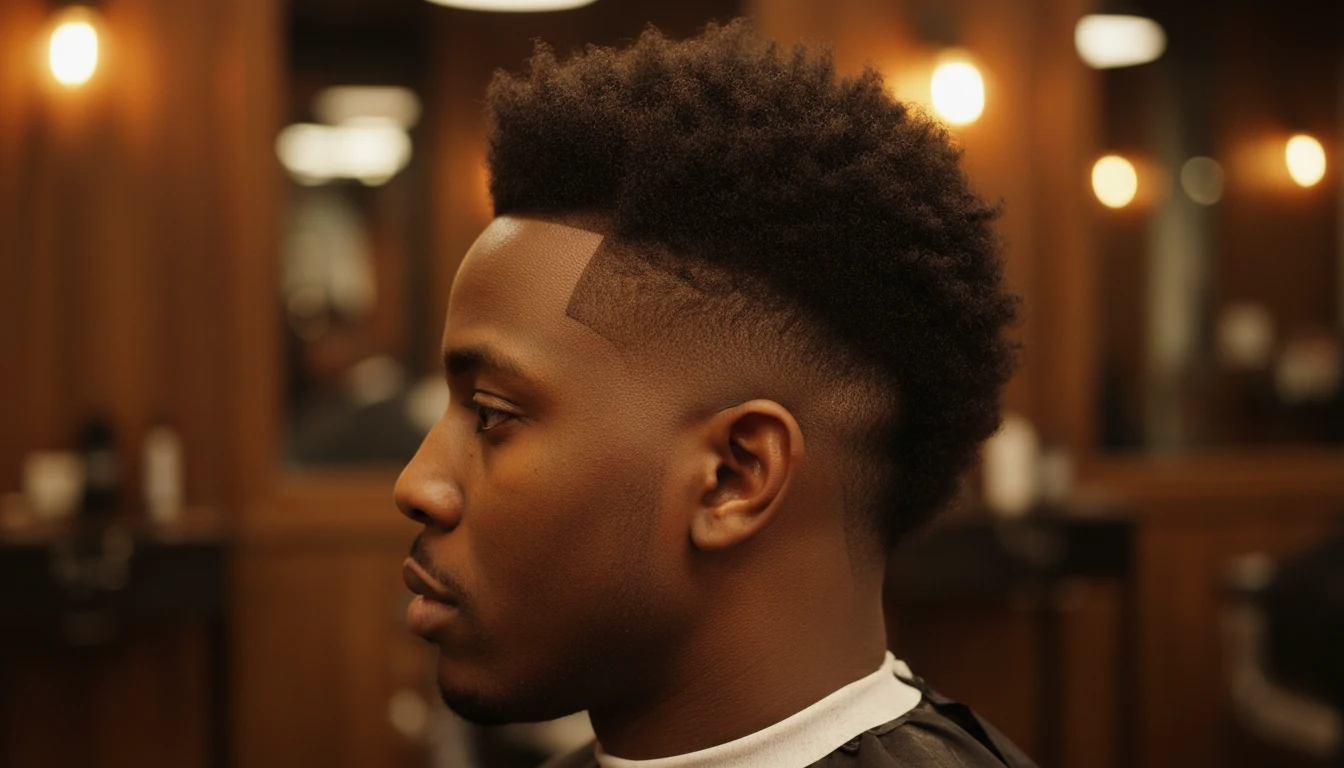
The burst fade creates a radial, sun-ray pattern that radiates outward from around the ear. Instead of fading in a vertical line from top to bottom, the burst fade blends in a circular pattern that fans out behind and above the ear.
What It Looks Like
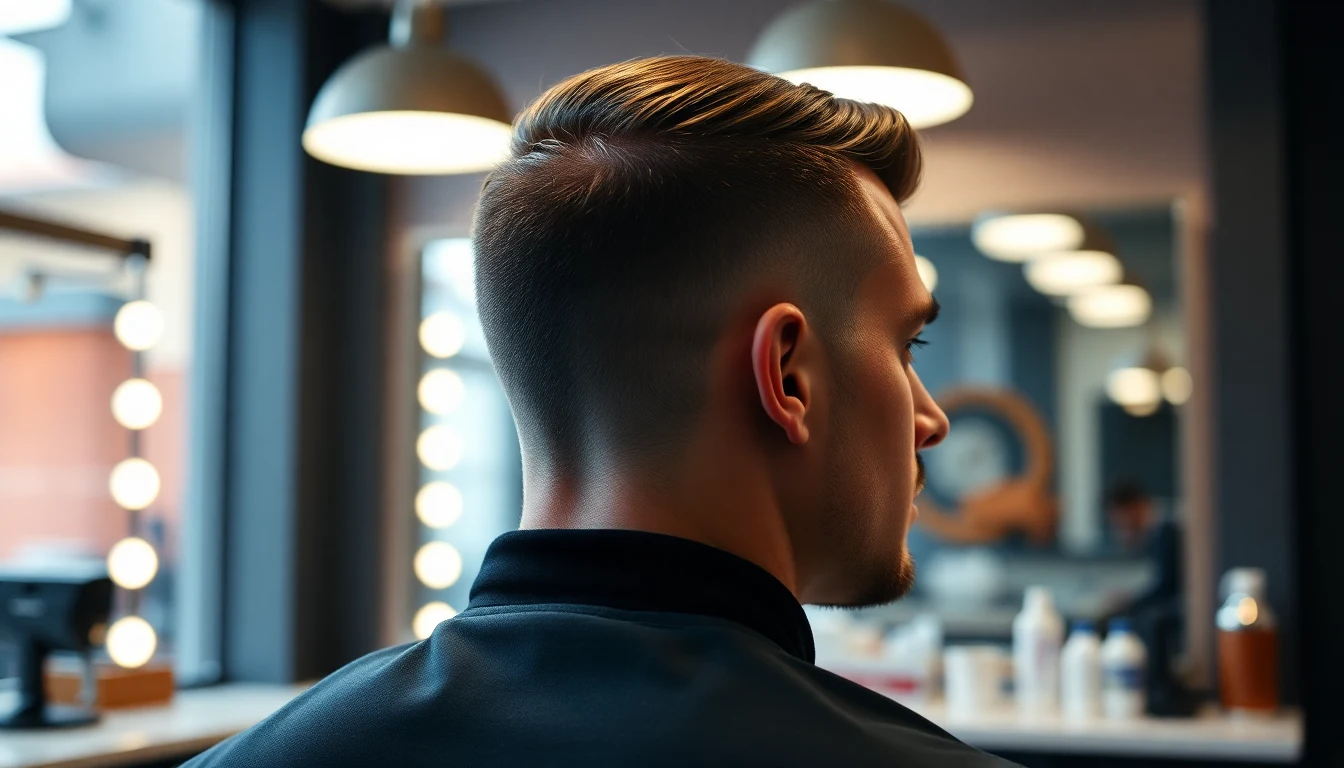
The burst fade is one of the most visually distinctive fades. From the back, you can see the curved, arcing blend that sweeps from behind the ear upward and outward. It leaves more hair at the crown and neckline compared to a standard high fade, creating a unique silhouette. It pairs naturally with mohawks, faux hawks, and styles that carry length down the center of the head.
How It Differs from Other Fades
While most fades blend vertically (top to bottom), the burst fade blends radially (outward from a central point near the ear). This means the shortest hair is around the ear itself, with length increasing as you move away in every direction. It is a fundamentally different geometry than any other fade on this list.
Hair Texture Breakdown
| Hair Texture | How It Performs | Notes |
|---|---|---|
| Straight, fine (Type 1A-1B) | Moderate | The radial pattern is less visible on fine straight hair. The burst effect needs density to really read. Consider a mid fade instead if your hair is very fine. |
| Straight, thick (Type 1C-2A) | Very good | Thick hair provides the density needed to make the burst pattern visible. Works well when combined with a textured or swept-back top. |
| Wavy (Type 2B-2C) | Good | Waves add a pleasant organic quality to the radial fade. The burst pattern can look slightly less geometric on wavy hair, which some men prefer. |
| Curly/coily (Type 3A-4C) | Excellent | The burst fade with a mohawk or faux hawk on curly and coily hair is a standout combination. The texture of the curls makes the radial pattern pop. This look has deep roots in Black barbering and South of France styles. |
Face Shapes It Flatters
The burst fade works well with oval and round face shapes. It creates width at the crown while tapering around the ears, which balances facial proportions without adding too much height. Be cautious with very long or narrow faces, as the crown volume can elongate the appearance further.
How to Ask Your Barber
Say: “I want a burst fade. Fade out from around my ear in a circular pattern. I want to keep length at the crown and the neckline.”
Specify the top style: “I’m pairing it with a mohawk” or “I want a faux hawk on top” so the barber can plan the proportions.
Maintenance Schedule
Every two to three weeks. The radial pattern holds its shape reasonably well during grow-out, but the contrast around the ear softens quickly. If you want the burst effect to stay sharp, lean toward the two-week end.
Shadow Fade
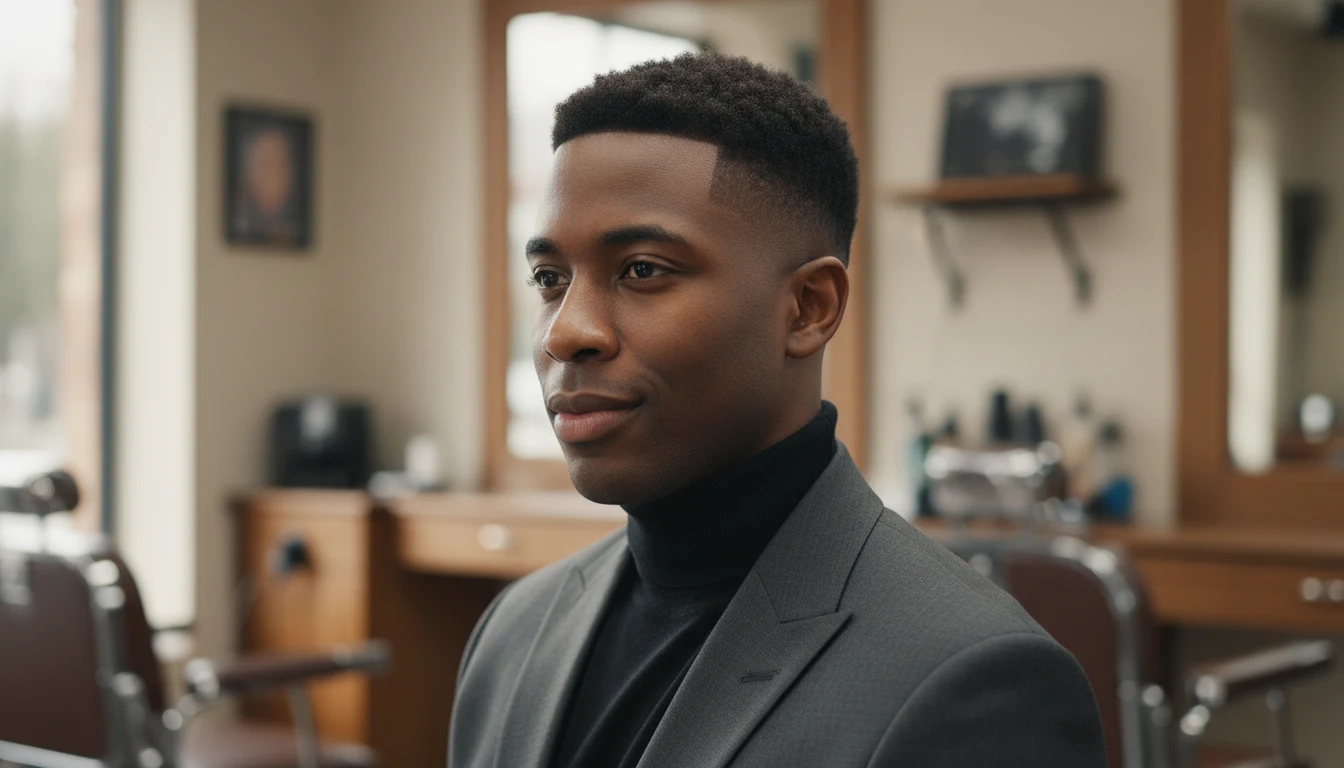
The shadow fade is essentially any fade that never reaches bare skin. The barber uses the shortest clipper guard (a zero or half guard) but never goes below it. The result is a faint “shadow” of stubble at the shortest point rather than exposed scalp.
What It Looks Like
Softer and more muted than a skin fade. The shadow fade has the same gradient structure, but the bottom of the blend retains a visible layer of very short hair. It looks like a five o’clock shadow on your scalp. The overall effect is a fade that reads as polished but not aggressive.
How It Differs from Other Fades
The shadow fade is defined by what it does not do: it does not go to skin. This single difference changes the look significantly. A skin fade is high-contrast and sharp. A shadow fade is smooth and understated. The shadow fade also grows out more gracefully because there is no stark skin-to-hair boundary to lose.
Hair Texture Breakdown
| Hair Texture | How It Performs | Notes |
|---|---|---|
| Straight, fine (Type 1A-1B) | Very good | The shadow of stubble provides a base layer that prevents the fade from looking sparse on fine hair. This is often a better choice than a skin fade for fine-haired men. |
| Straight, thick (Type 1C-2A) | Excellent | Thick hair makes the shadow effect more visible and textured. The stubble base looks fuller and more intentional. |
| Wavy (Type 2B-2C) | Very good | Wavy hair blends naturally into the shadow zone, softening the transition further. |
| Curly/coily (Type 3A-4C) | Good | On very coily hair, the shadow effect can be subtle because the short curls naturally stand up from the scalp. Some men prefer the higher contrast of a skin fade on 4B-4C hair. It comes down to personal preference and how bold you want the look. |
Face Shapes It Flatters
All face shapes. The shadow fade is so neutral in its visual effect that it does not significantly alter face shape perception. It is a safe choice if you are unsure.
How to Ask Your Barber
Say: “I want a shadow fade. Fade it down to a zero guard but do not go below that. I want to see a shadow of hair at the bottom, not skin.”
Maintenance Schedule
Every two to three weeks, sometimes stretching to four. The shadow fade is one of the easiest to maintain because the stubble base disguises grow-out. You will not wake up three days later with a visible line the way you would with a skin fade.
Temple Fade (Temp Fade)

The temple fade, often called a temp fade or Brooklyn fade, is the most minimal fade possible. It only fades the hair at the temples and sideburns, leaving the rest of the sides and back at their natural length. It is less a full fade and more a precision cleanup of the edges.
What It Looks Like
A temple fade looks like a very clean, sharp hairline around the temples and ears. The sides of the head retain their natural length. It is a subtle detail, not a dramatic transformation. Many men get temple fades as a finishing touch on a longer hairstyle, cleaning up the perimeter without committing to a full fade. Understanding types of fades is key to a great grooming routine.
How It Differs from Other Fades
Coverage. Every other fade on this list affects at least the entire side of the head. The temple fade is localized to the front corners and sideburns only. It is the minimum viable fade.
Hair Texture Breakdown
| Hair Texture | How It Performs | Notes |
|---|---|---|
| Straight, fine (Type 1A-1B) | Good | Cleans up the hairline effectively but the effect is subtle on fine hair. |
| Straight, thick (Type 1C-2A) | Very good | Commonly paired with longer styles in Asian men’s hairstyles, including the two-block cut and textured side-parts. The temple fade cleans up the edges without sacrificing the density these styles require. |
| Wavy (Type 2B-2C) | Good | Works well as a subtle detail on medium-length wavy styles. |
| Curly/coily (Type 3A-4C) | Very good | The temple fade paired with a natural afro or twist-out is a classic combination. It provides structure without removing the volume that defines the style. A well-executed line-up along the temples makes a significant difference. |
Face Shapes It Flatters
All face shapes, but especially wide or round faces. By cleaning up the temple area, it creates a slightly more defined perimeter without changing the overall hair volume. The effect is subtle.
How to Ask Your Barber
Say: “I just want a temple fade. Clean up my sideburns and temples. Fade them down to skin. Leave everything else as is.”
Maintenance Schedule
Every two to four weeks, depending on how quickly your hairline grows. The small area means maintenance is quick, often just a five-minute cleanup during a regular trim.

Scissor Fade
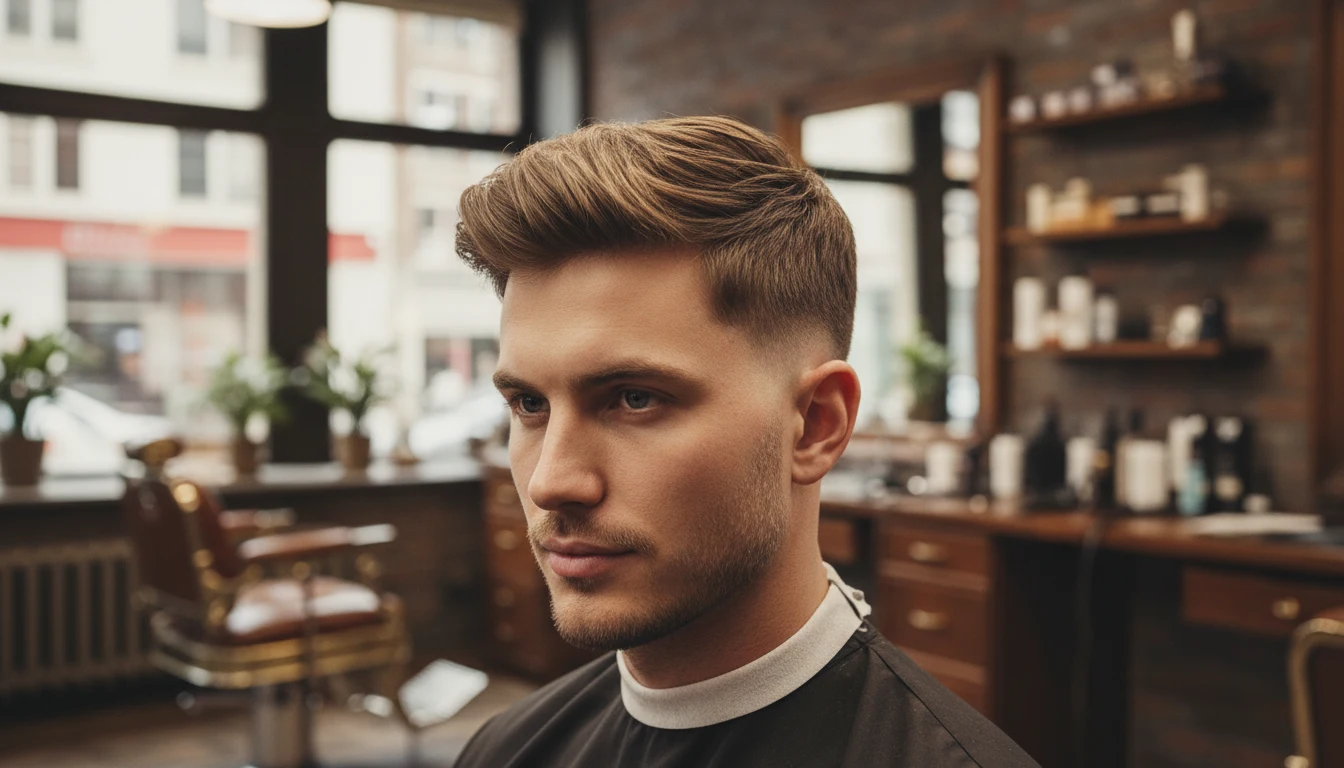
The scissor fade replaces clippers with scissors (and comb) for the entire blending process. Instead of mechanical guard sizes creating the gradient, the barber hand-cuts the transition using shears and a comb. This is old-school barbering technique at its finest.
What It Looks Like
Softer and more textured than a clipper fade. The scissor fade has a more organic, less geometric appearance. The transitions between lengths feel more natural, almost like the hair was always that way. It works particularly well on longer styles where you want faded sides but not the buzzed, clipper-cut look.
How It Differs from Other Fades
The tool changes the texture. Clippers cut hair bluntly at a uniform length per guard setting. Scissors cut at varied angles, creating point-cut texture and a softer visual transition. The scissor fade also starts at a longer minimum length than a clipper fade, typically nothing shorter than about half an inch.
Hair Texture Breakdown
| Hair Texture | How It Performs | Notes |
|---|---|---|
| Straight, fine (Type 1A-1B) | Excellent | Fine hair responds beautifully to scissor work. The soft blend prevents the scalp-show-through that clippers can cause on thin hair. This is often the best fade technique for men with fine European or East Asian hair who want faded sides without going short. |
| Straight, thick (Type 1C-2A) | Excellent | Thick hair gives the barber plenty of material to work with. Scissor fades on thick straight hair can achieve extremely smooth transitions. Popular in upscale barbershops and traditional gentleman’s barbers. |
| Wavy (Type 2B-2C) | Excellent | This is the ideal texture for scissor fades. The natural wave pattern disguises any minor inconsistencies in the hand-cut blend, making the result look effortlessly clean. |
| Curly/coily (Type 3A-4C) | Good | Possible but less common. Scissor fading on tight curls requires significant barber skill. Most barbers working with 3C-4C hair prefer clipper techniques because they offer more control on very curly textures. If you want a scissor fade on coily hair, find a barber who specifically offers this service. |
Face Shapes It Flatters
All face shapes, with a slight edge for oblong and long faces. Because the scissor fade keeps more overall length on the sides (it cannot go as short as clippers), it avoids the elongating effect that high or skin fades can produce.
How to Ask Your Barber
Say: “I want a scissor fade, no clippers. Use your shears to blend the sides down. I want a soft transition, not a hard clipper line.”
Note: not every barber is comfortable with scissor-over-comb fading. If your barber hesitates, it may be worth finding a stylist or traditional barber who specializes in this technique.
Maintenance Schedule
Every three to four weeks. Scissor fades grow out more gracefully than clipper fades because the longer starting lengths and textured cuts blend into new growth naturally. This is the lowest-maintenance fade option alongside the taper fade.
Master Comparison Table: All Fade Types
| Fade Type | Height of Fade Line | Shortest Length | Blending Technique | Best Hair Textures | Maintenance Frequency | Barber Difficulty |
|---|---|---|---|---|---|---|
| Low Fade | 0.5-1 inch above ear | 0.5-1 guard | Clipper blend, narrow zone | All; especially straight and wavy | Every 2-3 weeks | Moderate |
| Mid Fade | Temple line | 0.5-1 guard | Clipper blend, medium zone | All textures equally | Every 2-3 weeks | Moderate |
| High Fade | 2-3 inches above ear | 0.5-1 guard | Clipper blend, wide zone | Thick, curly, coily | Every 10-14 days | Moderate-High |
| Skin Fade | Varies (low/mid/high) | Bare skin (0) | Clipper + foil shaver/razor | Curly, coily, thick straight | Every 10-14 days | High |
| Taper Fade | Natural hairline | 1-1.5 guard | Gradual clipper blend, long zone | All; especially fine hair | Every 3-4 weeks | Moderate |
| Drop Fade | Mid-front, drops to low-back | 0.5-1 guard | Curved clipper blend | Thick, curly; excellent for flat occiput | Every 2-3 weeks | High |
| Burst Fade | Radial from ear | 0.5 guard to skin | Circular/radial clipper blend | Curly, coily, thick | Every 2-3 weeks | High |
| Shadow Fade | Varies (low/mid/high) | 0 guard (stubble, not skin) | Clipper blend, no razor | All; especially fine hair | Every 2-4 weeks | Moderate |
| Temple Fade | Temples and sideburns only | Skin at temples | Localized clipper/trimmer | All textures | Every 2-4 weeks | Low-Moderate |
| Scissor Fade | Varies | ~0.5 inch (scissors only) | Scissor-over-comb, no clippers | Straight, wavy, fine | Every 3-4 weeks | Very High |
Choosing the Right Fade for Your Face Shape
Your face shape determines how different fades alter your proportions. Here is a quick decision guide.
Round Face
Goal: create the illusion of length. Go with a high fade or high skin fade. The stripped sides draw the eye upward and slim the face visually. Pair with a textured top, pompadour, or any style that adds height. Avoid low fades and temple fades, which maintain side volume and can make a round face appear wider.
Oval Face
Lucky you. Almost any fade works. The oval face is proportionally balanced, so you can choose based on personal style rather than corrective needs. A mid fade or drop fade are particularly sharp on oval faces. Experiment freely.
Square Face
Goal: complement strong features without adding bulk. A mid fade maintains the masculine jawline while keeping the sides clean. A high fade also works if you want a more dramatic look. Avoid very low fades that add width at the jaw level.
Oblong (Long) Face
Goal: add width, avoid adding height. A low fade or taper fade keeps more hair on the sides, creating the impression of width. A scissor fade also works well because it retains length. Avoid high fades and high skin fades, which strip the sides and make a long face look even longer.
Diamond Face
Goal: balance narrow forehead and chin with wider cheekbones. A taper fade or low fade works well, keeping some volume through the temple area. Pair with a style that adds width at the forehead (side-swept fringe, textured bangs) to balance the diamond proportions.
Heart-Shaped Face
Goal: balance a wider forehead with a narrower chin. A mid fade is your best friend. It does not exaggerate the forehead width (like a low fade might) or create too much top-heaviness (like a high fade can). A drop fade also complements heart-shaped faces nicely.
Quick Reference
| Face Shape | Best Fades | Avoid |
|---|---|---|
| Round | High fade, high skin fade | Low fade, temple fade |
| Oval | Any (mid fade, drop fade are ideal) | None |
| Square | Mid fade, high fade | Very low fades |
| Oblong | Low fade, taper fade, scissor fade | High fade, high skin fade |
| Diamond | Taper fade, low fade | High skin fade |
| Heart | Mid fade, drop fade | Very high fades |
How to Ask Your Barber for the Right Fade
This is the section I wish existed when I was 16 and sitting in a barber’s chair for the first time with no idea what to say. I grew up going between a Chinese barber in Flushing who did precise scissor work and a Black barbershop in Brooklyn where the lineup game was on another level. Neither one used the same vocabulary. Here is what I have learned from a decade of sitting in chairs across the country.
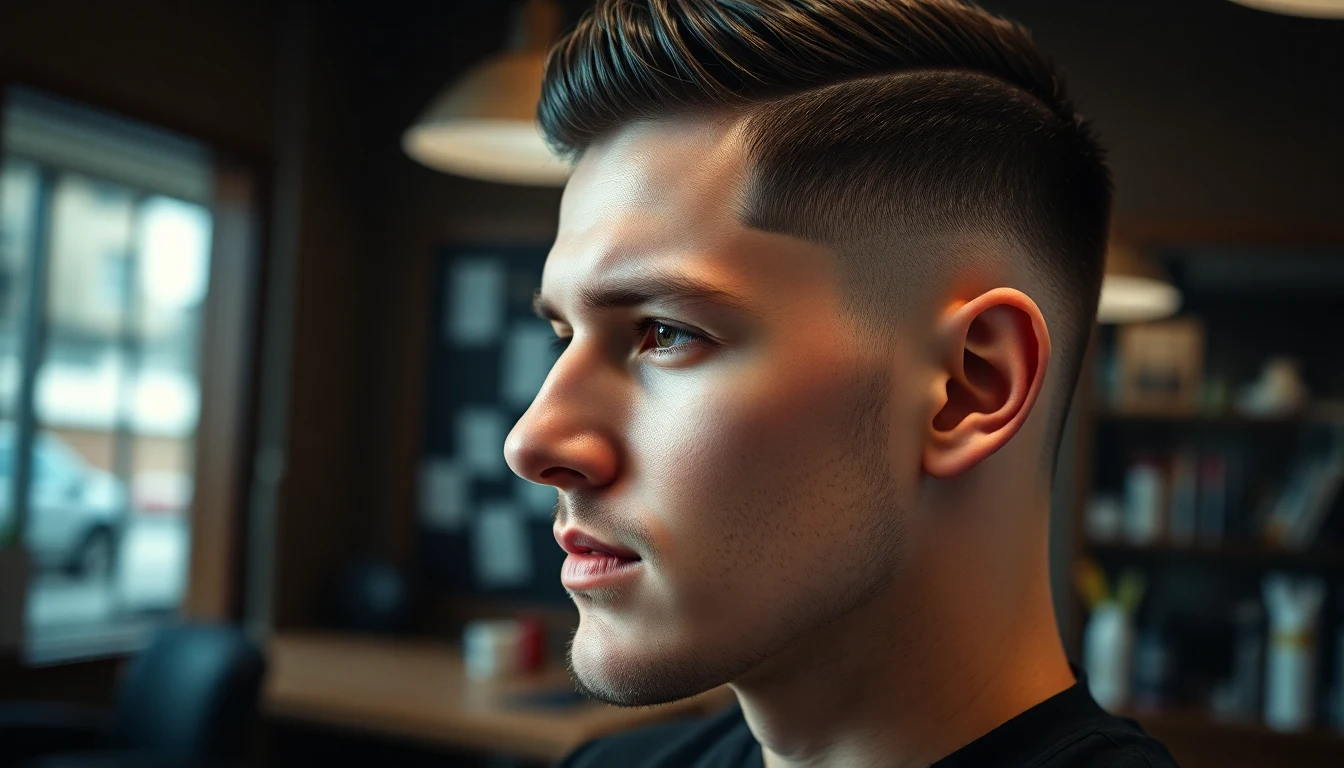
The Three Things Every Barber Needs to Know
- Fade height: Where do you want the blend to start? Low (above the ear), mid (at the temple), or high (near the crown).
- Shortest length: Do you want it to go to skin (skin/bald fade), stubble (shadow fade), or keep a short guard (standard fade)?
- Top style: What are you doing on top? This affects how the fade transitions into the longer hair.
Exact Phrases to Use
These phrases are barber-universal. They work in any shop, regardless of the barber’s background or specialty.
| What You Want | What to Say |
|---|---|
| A subtle, conservative fade | “Low taper fade. Keep it gradual. I want to see hair all the way down.” |
| A balanced, all-purpose fade | “Mid fade, down to a one guard. Smooth blend.” |
| A bold, clean fade | “High skin fade. Take it to skin at the bottom. Sharp line-up.” |
| A fade that arcs behind the ear | “Drop fade. Start mid-height at the temples, drop the line behind the ear.” |
| A circular fade around the ear | “Burst fade around the ears. I want to keep length at the crown and nape.” |
| A soft fade, no skin showing | “Shadow fade. Zero guard at the shortest, no foil shaver. I want to see stubble.” |
| Just a cleanup around the edges | “Temple fade only. Clean up the sideburns and around the ears. Leave the sides.” |
| A soft, longer fade (no clippers) | “Scissor fade. No clippers on the sides. Blend it with shears.” |
Bring Reference Photos
This is the single most effective thing you can do. Save two or three photos on your phone that show the fade you want from the side and back angles. When you show a barber a photo, the conversation shifts from abstract vocabulary to concrete visual agreement.
One critical detail: find reference photos of someone with a similar hair texture to yours. Showing your barber a photo of a skin fade on 4C coils when you have 1B straight hair will lead to a conversation about adjustments. That conversation is good, but it starts better when the reference is close to your actual hair.
Questions to Ask Your Barber
- “What fade type do you think works best with my head shape and hair type?”
- “How will this grow out? When will I need to come back?”
- “Can you blend this with [top style] or should I adjust something?”
- “Do you use a foil shaver for skin fades, or a straight razor?”
A good barber will appreciate specific questions. If they seem annoyed by your requests, find a new one. Your barber should know this. If they do not, that tells you something.
Fade Maintenance Between Visits
A fresh fade looks incredible for about 72 hours. After that, maintenance determines whether it still looks intentional or just unkempt. Here is how to extend the life of your fade between barbershop visits.
Week 1: The Sweet Spot
Your fade looks its best during the first week. Focus on keeping the hair on top styled and the skin around the fade moisturized. If you have a skin fade, the shaved area can dry out, especially in cold weather or low humidity. A lightweight, unscented moisturizer applied to the faded area keeps it looking healthy and prevents flaking.
Week 2: The Grow-Out Begins
By week two, you will notice the blend softening. The lines between guard lengths start to blur as hair grows in. This is normal. For most fade types, week two still looks clean enough for professional settings.
If you are comfortable with a trimmer, you can maintain the neckline and clean up the edges around the ears yourself. Stick to the very bottom of the fade only. Do not attempt to re-blend the fade itself; that requires a barber’s skill and eye.
Week 3 and Beyond: Decision Time
By week three, most fades are visibly grown out. High fades and skin fades will show it the most. Low fades, taper fades, and scissor fades are more forgiving. At this point, you either book your next appointment or accept a transitional look for a few more days.
Between-Visit Maintenance by Fade Type
| Fade Type | DIY Maintenance | Products to Use | How Long It Looks Fresh |
|---|---|---|---|
| Skin Fade | Moisturize shaved area daily; clean neckline with trimmer | Unscented moisturizer, precision trimmer | 5-7 days |
| High Fade | Trim neckline, edges around ears | Trimmer with guards | 7-10 days |
| Mid Fade | Clean neckline, minor edge cleanup | Trimmer with guards | 10-14 days |
| Low Fade | Clean neckline only | Trimmer | 14-18 days |
| Taper Fade | Minimal; neckline only if needed | Trimmer (optional) | 18-25 days |
| Shadow Fade | Neckline cleanup | Trimmer | 14-21 days |
| Drop Fade | Neckline and behind-ear cleanup | Trimmer | 12-16 days |
| Burst Fade | Behind-ear cleanup (careful with the radial shape) | Trimmer | 10-14 days |
| Temple Fade | Sideburn and temple cleanup | Trimmer or razor | 14-21 days |
| Scissor Fade | Minimal; grows out naturally | Styling product for texture | 21-28 days |
Essential Tools for Home Maintenance
You do not need a full barbershop setup. These three items cover most between-visit maintenance:
- A quality precision trimmer: For neckline and edge cleanup. Look for T-blade trimmers from brands like Andis, Wahl, or BaByliss. Visit our best clippers for fades guide for specific recommendations.
- A hand mirror: You need to see the back of your head. A simple handheld mirror angled against your bathroom mirror solves this.
- A lightweight moisturizer: For skin fades and any area where the hair is very short. Keeps the scalp healthy and prevents irritation.
Understanding Fades Across Hair Textures
This is the section that every other “types of fades” article on the internet skips, and it is arguably the most important. A fade is not just a fade. The same technique produces dramatically different results depending on your hair texture. Let me explain why.
Why Texture Changes Everything
Hair texture affects three critical aspects of a fade: When it comes to types of fades, technique matters most.
- Blend visibility: Thick, coily hair creates a denser visual gradient than fine, straight hair. The same fade height looks more dramatic on 4C hair than on 1A hair.
- Grow-out pattern: Straight hair grows out uniformly, revealing lines and steps quickly. Curly and coily hair grows outward and upward, which can disguise grow-out or create new shape challenges.
- Blending technique: A barber blending straight, fine hair uses different clipper angles, guard progressions, and finishing techniques than one blending coily, dense hair. The skill set is not interchangeable.
Straight, Fine Hair (Type 1A-1B)
Common among: Northern European, East Asian, and some Central Asian men
Best fades: Taper fade, scissor fade, low fade, shadow fade
Watch out for: High fades and skin fades can expose the scalp through fine hair, creating a “thinning” appearance even on a full head of hair. If your hair is fine but dense, you have more options. If it is fine and sparse, stick with lower, more gradual fades that maintain coverage.
Barber tip: Ask your barber to use clipper-over-comb through the transition zone rather than raw clipper work. This creates a softer blend that is more forgiving on fine strands.
Straight, Thick Hair (Type 1C-2A)
Common among: East Asian, South Asian, Latino, Mediterranean, and Middle Eastern men
Best fades: Mid fade, drop fade, skin fade, any fade with a sharp line-up
Watch out for: Thick straight hair can create a “wall” effect if the fade is not blended carefully. The density means that even a small length difference between guard sizes can appear as a visible line. Your barber needs to spend more time blending than they would on fine hair.
Barber tip: Ask for a “blended” approach rather than hard guard transitions. A skilled barber will use the lever on the clipper (opening and closing the blade) to create micro-gradients between guard sizes. This is especially important for the thick, straight hair common in the Asian fade haircut and Hispanic men’s haircut traditions.
Wavy Hair (Type 2B-2C)
Common among: Mediterranean, Middle Eastern, South Asian, Latino, and many mixed-heritage men
Best fades: Mid fade, drop fade, scissor fade, shadow fade
Watch out for: Waves can hide problems in the blend, which sounds like a good thing until the wave pattern shifts and reveals an uneven fade underneath. Make sure the fade looks clean with the hair both natural and styled.
Barber tip: Ask your barber to check the blend by pushing the hair in multiple directions. Waves sit differently day to day, and the fade should hold up regardless of which way the hair falls.
Curly Hair (Type 3A-3C)
Common among: Black, Afro-Caribbean, mixed-heritage, Latino, and some Middle Eastern and Southern European men
Best fades: High fade, mid fade, skin fade, drop fade, burst fade
Watch out for: The curl pattern creates natural volume that plays with the fade silhouette. Loose curls (3A) act somewhat like waves, while tighter curls (3C) start to behave more like coily hair in terms of density and blend dynamics.
Barber tip: Ask your barber if they use freehand clipper technique for the blend zone. On curly hair, the standard guard-stepping approach can leave visible steps because the curls do not lie flat against the head. Freehand blending follows the curl pattern rather than fighting it.
Coily Hair (Type 4A-4C)
Common among: Black, Afro-Caribbean, and many mixed-heritage men
Best fades: High fade, skin fade, burst fade, drop fade
Watch out for: Coily hair is the densest hair type, which makes for stunning fades when done well and visible problems when done poorly. The tight curl pattern means the barber is essentially sculpting a three-dimensional shape. This is why the tradition of fade cutting in Black barbershops is so technically advanced; the precision required is extraordinary.
Barber tip: If you have 4B or 4C hair, find a barber who specializes in your texture. A barber trained primarily on straight hair may not understand the density, shrinkage, and curl pattern dynamics that coily hair requires. This is not a criticism of their skill; it is an acknowledgment that different textures demand different expertise.
Frequently Asked Questions
What is the most popular type of fade?
The mid fade is the most universally popular fade because it works across nearly every hair type and face shape. It sits at the temple line, creating a balanced look that is neither too subtle nor too dramatic. If you are getting your first fade and are unsure what to ask for, a mid fade is the safest starting point.
What is the difference between a fade and a taper?
A taper gradually reduces hair length from top to bottom, usually ending in a natural hairline with some hair still visible. A fade takes the blend further, transitioning down to very short clipper lengths or bare skin. Every fade includes a taper, but not every taper qualifies as a fade. Tapers are more conservative; fades are more dramatic.
Which fade is best for curly or coily hair?
High fades and skin fades tend to work best with curly and coily hair (Type 3B through 4C) because they create a strong contrast between the textured top and the clean sides. Drop fades and burst fades also complement natural curl patterns. Your barber should use a combination of clipper-over-comb and freehand techniques to blend textured hair smoothly.
How often do I need to maintain a fade?
Most fades need a touch-up every two to three weeks to look sharp. Skin fades and high fades grow out the fastest and may need attention every 10 to 14 days. Low fades and taper fades are more forgiving and can stretch to three or four weeks. Straight, fine hair shows regrowth faster than thick or curly hair.
Can I fade my own hair at home?
You can maintain a fade between barbershop visits with quality clippers and a hand mirror, but creating a fade from scratch requires significant skill. If you want to try, start with the neckline and around the ears using a lower guard, and avoid going above the temple line until you are confident. For the initial cut, see a professional.
Which fade is best for a round face?
A high fade or high skin fade adds vertical emphasis that balances a round face. The extra length on top combined with closely cropped sides creates the visual effect of an elongated face shape. Avoid low fades on round faces, as they keep more volume on the sides and can make the face appear wider.
Choosing Your Fade: The Bottom Line
Here is the recap:
- First fade or unsure? Start with a mid fade. It works on every texture and every face shape.
- Want something subtle and low-maintenance? Go with a taper fade or scissor fade.
- Want maximum contrast and drama? Choose a high skin fade.
- Have thick straight or curly hair and want shape? Look at a drop fade or burst fade.
- Need it to last between visits? The shadow fade and low fade grow out the most gracefully.
The most important thing I can tell you: find a barber who understands your hair texture. A technically perfect fade on the wrong hair type in the wrong hands will not look the way you want. A great barber who knows your texture will make almost any fade style work for you.
Bring reference photos. Ask specific questions. And if you want to go deeper on any individual style, we have dedicated guides for taper fades, high fades, low fades, mid fades, and skin fades that break each one down in full detail.
Your next barber visit starts with knowing what to ask for. Now you know.
Have questions about fades or want to share what works for your hair type? Drop a comment below. We read every one.
Further reading: For research-backed grooming advice, see Healthline Men’s Health.
Explore more tips at CulturedGrooming.com.
Frequently Asked Questions
What’s the difference between a skin fade and a regular fade?
A skin fade (also called a bald fade) blends all the way down to bare scalp for a smooth, dramatic gradient, while a regular fade typically stops at a short stubble length. The skin fade creates a crisper, more defined look that’s popular for a bold aesthetic.
Which type of fade works best for curly or textured hair?
High fades and skin fades work particularly well with curly or textured hair because they create sharp contrast between the closely cut sides and longer textured hair on top. This style showcases the natural curl pattern while maintaining clean definition at the blend points.
How do I choose the right fade for my face shape and hair type?
Consider your hair texture first: drop fades work well for wavy hair, while burst fades complement rounded faces and work with most hair types. Then choose your fade height based on preference: mid fades offer versatility, high fades create drama, and taper fades give a more subtle, gradual transition.
What’s a drop fade and why would someone choose it?
A drop fade features a curved fade line that arcs down and drops behind the ears rather than following a straight line, creating a more natural, face-framing effect. You might choose this style if you want a modern look that’s slightly more conservative than a high fade while still maintaining sharp definition.